Spotify CEO Daniel Ek
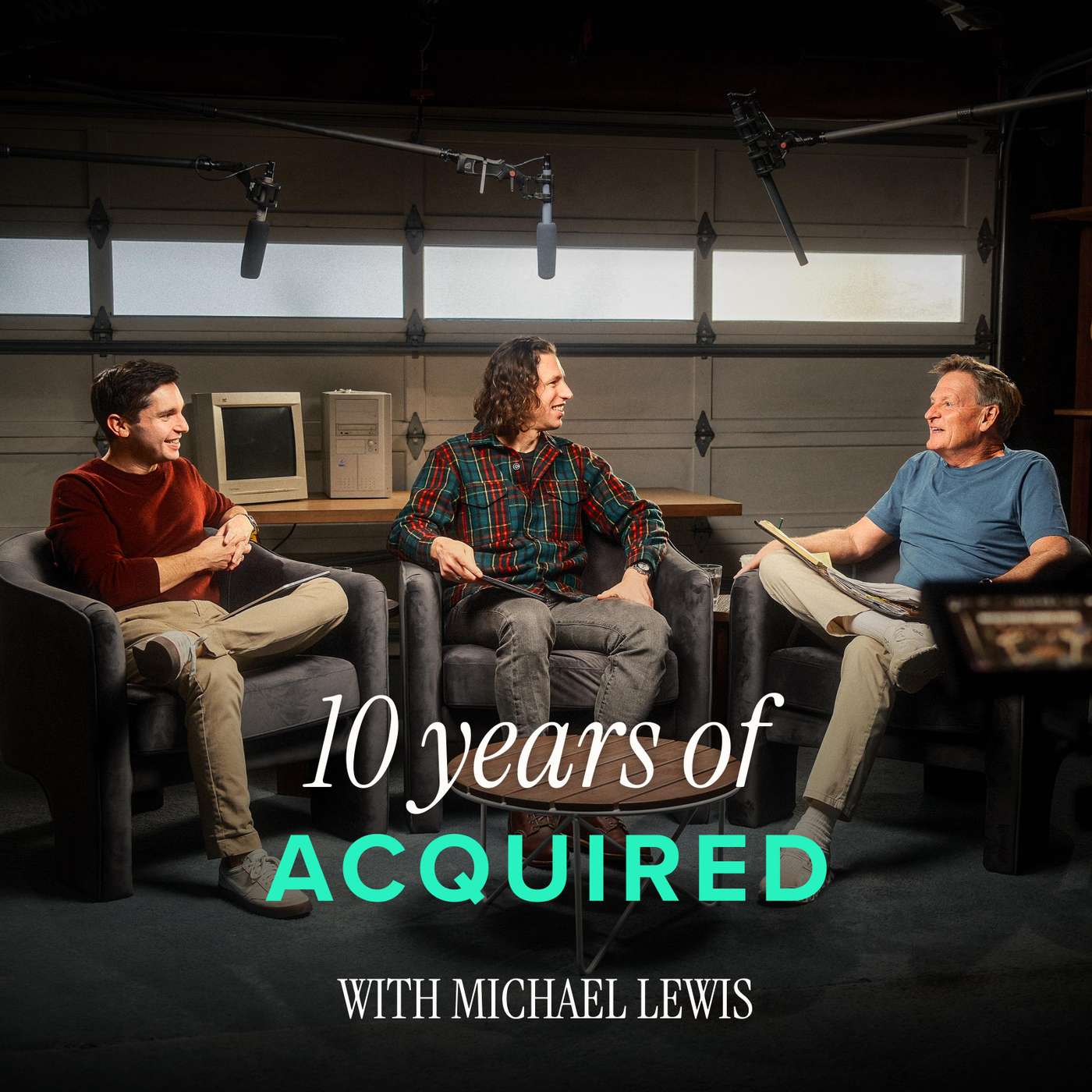
We sit down with Spotify CEO Daniel Ek live in Stockholm at Spotify’s amazing HQ studio (check out the video version of this episode — which plays natively on Spotify!). This was an incredibly special and timely conversation: for those who haven’t been paying attention over the past few years, after revolutionizing music Spotify has now ALSO completely transformed our own industry in podcasting. Starting from way behind with ~zero market share in 2018, Spotify has now aggregated the listener market and amazingly surpassed Apple as the world’s largest podcast platform — including close to home with the Acquired audience, where it has 60%+ market share among you all!
We discuss the origins of this “second act” strategy with Daniel, the vision to move from a music company to an audio company, and what’s coming next with Spotify’s entry into Audiobooks. And of course we relive some key moments from the Acquired canon that Daniel was involved in, including his pivotal conversations with Taylor Swift and her team convincing her to come back to streaming following the release of 1984. Tune in!
Links
Sponsors:
Anthropic: https://bit.ly/acqclaude
Huntress: https://bit.ly/acqhuntress
Statsig: https://bit.ly/acquiredstatsig24
More Acquired!:
- Get email updates with hints on next episode and follow-ups from recent episodes
- Join the Slack
- Subscribe to ACQ2
- Merch Store!
© Copyright 2015-2025 ACQ, LLC
Note: Acquired hosts and guests may hold assets discussed in this episode. This podcast is not investment advice, and is intended for informational and entertainment purposes only. You should do your own research and make your own independent decisions when considering any financial transactions.
Press play and read along
Transcript
Speaker 1 It is impossible to flawlessly execute a podcast of this style.
Speaker 1 And that's the beauty of it.
Speaker 1 You come up with a bunch of stuff you want to talk about, and then you end up having a real organic conversation, and then it turns into a product, and that product is totally different than what you envisioned in your head, but can still be great.
Speaker 2 But I think the amazing thing is, unlike you talking to a journalist, et cetera, it's truly a conversation one.
Speaker 2 And the second part is there's enough time to actually elaborate on the thought and the idea.
Speaker 2 Whereas you have to be so succinct in how you express your idea and truly get it across in 30 seconds, or like you lose the moment and the journalists want to move on. And Brian Chesky is an example.
Speaker 2 He's like the master on it. He just switches it on and he's like so good.
Speaker 2
For some reason, he and I always end up getting on the same panels. And I'm like, it's game over even before it started.
You're going to have all the great stuff.
Speaker 3 Who got the truth?
Speaker 3 Is it you? Is it you? Is it you? Who got the truth now?
Speaker 3 Is it you, is it you, is it you? Sit me down, say it straight. Another story on the way.
Speaker 1 Who got the truth? Welcome to this episode of Acquired, the podcast about great technology companies and the stories and playbooks behind them. I'm Ben Gilbert.
Speaker 3 I'm David Rosenthal.
Speaker 1
And we are your hosts. This episode, we sit down with Daniel Eck, the man who saved the music industry after Napster and the piracy era killed the CD business.
Some of of the stats are mind-boggling.
Speaker 1 Spotify has paid $40 billion to artists over their lifetime. They're now the single largest source of revenue for the entire music industry.
Speaker 3
That's crazy. Spotify also has over 500 million monthly active listeners, over 200 million of which are paid subscribers.
Both of those numbers are bonkers.
Speaker 1 And in today's conversation, we're talking about one, how Spotify managed to get to this 500 million number by stacking all these these different expansion strategies on top of each other over the years.
Speaker 1 And two, we're going to dive into the current moment that Spotify is in.
Speaker 1 They've entered podcasting in a huge way that has not only changed the experience for consumers, but Spotify's business and their future as a company, which is, of course, very interesting to David and I as Acquired's growth has really exploded on Spotify.
Speaker 3 Totally. As I think we referenced early on in our conversation with Daniel, over 60% of Acquired's audience is now on Spotify, which is up from basically zero four years ago.
Speaker 1 It's wild.
Speaker 1 In fact, we were so interested in having this conversation that when Spotify asked if we wanted to fly to Stockholm and record in person with Daniel in the Spotify studio, we jumped at the chance.
Speaker 1 Daniel also foreshadowed some of what's to come with the cousin of podcasting, audiobooks.
Speaker 1 We can't wait to hear what you think. Come discuss it after you listen to this episode in the Acquired Slack, acquired.fm slash slack.
Speaker 1 You should subscribe to our interview show, our second show, ACQ2.
Speaker 1 You can find it in any podcast player, and we've had some killer back-to-back discussions with the CEOs of Retool and AngelList, both about AI.
Speaker 1 Now, without further ado, this show is not investment advice. David, myself, and our guest may have investments or many shares in the companies that we discuss.
Speaker 1 And this show is for informational and entertainment purposes only. Now on to our conversation with Daniel Eck.
Speaker 3 We wanted to start with like something kind of incredible has happened in podcasting.
Speaker 1 If you look at January 1st, 2019, we had less than a thousand listeners on Spotify. Yeah.
Speaker 2 Crazy.
Speaker 3 And now it's by far the majority of our listeners.
Speaker 1 And unless you're us and you're looking at the data all the time or other podcasters, I think it's easy to underestimate how seismic of a shift has happened in the podcasting ecosystem since you guys dove in.
Speaker 1 And I just wanted to sort of acquired style, go to a moment in time and say, How did that happen? And how did you guys decide to become an audio company instead of a music company?
Speaker 2 I like to say that there was probably this genius insight at some point in moment, but that's
Speaker 2 certainly not in the case of Spotify true.
Speaker 2 It is often quite serendipitous.
Speaker 2 And for a long time, you know, I was kind of fighting the urge on this, but we were oftentimes trying to not think of ourselves as the users and customers, because once you got to kind of 100 million users, you're kind of like, well, obviously I shouldn't be the target demo.
Speaker 2 I need to kind of listen to what the actual users are telling me. And there's some part that's true with that.
Speaker 2 But then more and more, what I've realized is also that actually internally, we probably have the best sounding board of a quite representative Spotify user and what they might like.
Speaker 2 And so one of my favorite topics is how often people game our platforms.
Speaker 2 For instance, in Germany, unbeknownst to us, but one of the sort of crazy things that ended up happening was just people started uploading audiobooks because it turns out that these music labels actually own a bunch of audiobook rights.
Speaker 2 And so, as the platform was taking off, they realized what else can we put on this platform that gives us a leg up and creates more revenue for us.
Speaker 2 And they realized that they have this catalog of audiobooks sitting on there.
Speaker 2 So, I think that was kind of one realization where we kind of realized, hey, this platform, it doesn't seem to matter all that much what we're putting on it. People just like consuming content.
Speaker 2 And then I and others at Spotify, we were big podcast listeners ourselves. And we love that, but we hate the fact that we had to switch app from our normal one.
Speaker 2 We hate the fact that we couldn't get the recommendations working.
Speaker 2 We hate the fact that we couldn't get this to work on my car speaker or my home speaker and all these things that we've spent literally a decade building for the music industry.
Speaker 2 So it kind of dawned upon us that podcasters have sort of the same problems that the music creators have. And we should be able to play a pretty big role.
Speaker 2 And all the primitives that we built for music should work really well in terms of discoverability, in terms of ubiquity that we call, which is sort of our ability to play on any device.
Speaker 2 And of course, our freemium model where the ad supported and eventually paid models as well should be able to all work together.
Speaker 2 And so the craziest thing in the beginning was probably when we started talking about it as building it in the same app.
Speaker 2 That was what the biggest resistance was because the common wisdom at the time was obviously, well, podcasting has to be a distinct own thing.
Speaker 3 I mean, this was like the, you've talked about this before, the constellation of apps was, you know, oh, the like hall the rage.
Speaker 3 Facebook's got all these different apps and Apple has all these different apps.
Speaker 1 And unless I'm a person who already defines myself as into podcasting, I'm never going to click a podcast app to try and get into podcasting. You can't expand the TAM if they're all in separate apps.
Speaker 3 Which Which still is a super nerdy thing.
Speaker 2 Even merchandising, podcasting is a very different problem than music. And it's actually one of the things that we're still working on, trying to crack the code on.
Speaker 2 But that was probably the most contrarian, both inside and outside. But to us, it was probably the most obvious one because we had already seen the behavior happening in Germany.
Speaker 2 And
Speaker 2 once we had tried onloading it for ourselves so that we could play around with the product, it was kind of obvious that this would be a a great experience.
Speaker 2 And it's probably been the most interesting one for me where,
Speaker 2 and what I often tell other entrepreneurs is like,
Speaker 2 well,
Speaker 2 the fact that people doubt you in the beginning, you kind of need to pay attention to that and hear what valid concerns they may have.
Speaker 2 But a bunch of that is just like they're not used to the concept and it's going to change. But by the time it changes, it will have already passed over.
Speaker 2 And not that you were right, but actually, well, of course, this is kind of obvious, right?
Speaker 2 So my favorite one obviously is streaming music where when we we began doing it i always got this sort of pushback of like why would i want to rent my music i want to own my music and the phrase streaming did not exist yeah uh people were not talking about it and and people actually conceptualized more around sort of renting things and what why is that good for me this is horrible um and you know that means that technically what happens uh if you guys don't want to have that song anymore the song disappears.
Speaker 3
And people care so much about their music, like their identity. Like, I want to own this.
I want my record collection.
Speaker 2 Yeah, exactly. And we were fighting against it, where it was so obvious to us that,
Speaker 2 because I grew up with piracy, that, no, actually, all you want is access to it.
Speaker 2 And it was such a hard notion for people to get conceptually because we've been spending 30 years just getting people into that.
Speaker 2 And I feel like most of the tech industry had spent a decade plus learning about having separate apps. And we kind of said, no, no, no, it doesn't really matter.
Speaker 2 We can put it in the same app and actually people will love it even more because we're solving the same sort of user needs.
Speaker 3 Where did that insight come from? Was it you as a user? Was it elsewhere in the company?
Speaker 2 Well, it was really a lot more of a first principles kind of thinking around it. It didn't really make sense if you looked at sort of like, what are we trying to solve for?
Speaker 2 And was it truly so different in terms of a consumer experience? No, it was the same playing view, slightly different sort of modalities, but totally possible.
Speaker 2 And if you thought about it as a discovery, okay, well, that's a similar problem. Ubiquity being able to play it on all these speakers made a lot of sense of having the same thing.
Speaker 2 Search, all of these things were basically shared infrastructure that we could utilize. And
Speaker 2 again, if you're searching for content, why you don't really care all that much about about it on YouTube. And on one end, you're listening to music on one side.
Speaker 2
You had all these other short form videos and sports and so on. You don't think that those are distinctly different behaviors.
So why do you think about it that way?
Speaker 2 And it's because you really think podcasting is a different format. But actually, it's audio, right?
Speaker 3 I mean, if you go back to the radio days, talk radio and music and sports, they were all on the same device.
Speaker 2 Yeah. I mean, that's the thing with audiobooks too, right? Like, what's the difference between an audiobook and a podcasting?
Speaker 2 Well, you would say chaptering and some of those stuff.
Speaker 3 I mean, we think of ourselves as like right on that line between a audiobook and a podcast.
Speaker 1 Actually, we'd love your help trying to solve this for ourselves. So we have recently realized that Acquired is the canonical episode,
Speaker 1 Nvidia episode or TSMC or Taylor Swift.
Speaker 1
These are more like conversational audiobooks between David and I than they are podcasts. They're four hours long.
They drop infrequently. How does that kind of fit into
Speaker 1 what you imagine is the job to be done by audio? And is it an audiobook? Is it a podcast?
Speaker 2 My view, I guess, is the boundaries are, from a format side, is definitely being blurred quite a lot and for right reasons.
Speaker 2 But the better way to think about audiobooks and podcasting is it's really around a business model mostly.
Speaker 2 So one way to frame it instead would be podcasting is ad-supported audio and audiobooks is paid audio.
Speaker 2 So for you guys, I mean, I also happen to know you spent so much time and effort on the research of that side.
Speaker 2 You could imagine that in the future, you have the ad-supported side of your podcast be certain types of episodes and you'd have for your subscribers
Speaker 2 the unlock where they get access to,
Speaker 2 you know, these kind of deep dives, et cetera.
Speaker 2 And obviously the subscription thing could be as simple as, like, hey, you're part of our other network and it doesn't cost money, or you could paygate it all the way through.
Speaker 2 But I think it's more of a business model that's the big format differentiation. Because as we said, like the quality, the mics we're using relative to an audiobook, there's no difference here.
Speaker 2 You're using like high-quality camera equipment,
Speaker 2 also very similar to more professional style than sort of do-it-yourself kind of equipment, editing, all these things. It's getting more and more blurry.
Speaker 3 Yeah, which is so interesting. Like to us, like we've lived this over the past eight years.
Speaker 3 Like what podcasting has unlocked and now with Spotify bringing so many more people to the medium that weren't consuming before is like a mass audience for niche products.
Speaker 3 Like if we were authors and we wrote a book. And we get pitched all the time on writing a book, like
Speaker 3
the business model for us does not make sense anymore. Sure.
Given the audience size that we have and a particular type of audience,
Speaker 3
we monetize so much better with the ad-supported content. But like to make that unlock happen, it needed to become a mass medium.
Yep.
Speaker 3 It's interesting to think about would that change if audiobooks can access a mass audience in the same way?
Speaker 2 Yeah. And obviously our view is we eventually think audiobooks should be much, much larger than what it is today.
Speaker 2 Hundreds of millions of people who are actually listening to audiobooks because the content is great, rather than today, what's tens of millions of people.
Speaker 3 Is that the market size today?
Speaker 2
Yeah, we believe it's like tens of millions. It's one of the fastest-growing categories, which makes it interesting.
But
Speaker 2 it's again, fundamentally, it's both a business model problem, it's
Speaker 2 again a discovery problem, and all those other stuff.
Speaker 3 You either got to pay a lot of money for a one-off purchase,
Speaker 3 or you need to have a pretty expensive subscription to a service that you may or may not use that and get value out of.
Speaker 1 It reminds me of music in 2008.
Speaker 3 Exactly.
Speaker 2 You guys are exactly right. And there probably needs to exist a different business model for all of these things.
Speaker 2 But you could even, in your case, I mean, you guys have probably right now a pretty defined audience, I would guess, and probably a very high value audience, which makes ad supported monetization probably better than the average creator for you guys, just given the type of audience that people people want to want to get to.
Speaker 2 But you could even contemplate like some of your deep dives. Like I've, I've heard of like actual hedge fund investors literally have that as the sole input to their entire process.
Speaker 1 Which is terrifying.
Speaker 2 Yeah. Well, not investment advice.
Speaker 3 Yeah, exactly.
Speaker 2 But I mean, you know, it is one of the areas that I'm kind of.
Speaker 2
the most intrigued about. I think Ben Thompson had this piece very recently.
I think he called it like the unified content business model piece.
Speaker 2 I don't necessarily agree with everything he said, but I think his main takeaway is obviously that all media models ought to move to freemium. It's as someone who's been saying that for 15 years,
Speaker 2 I obviously agree with him there. But I think that's true in all formats, right? Like as I said, I think, you know, what's the difference between audiobooks and podcasting?
Speaker 2
There are definitely differences, but the formats are blurring. But the main one is the business model, as I said.
So it's just, it's talk audio, but with a paid or an ad-supported business model.
Speaker 2 And I guess my advice to you guys would just be, I think you should kind of like explore both and see to an extent what's possible. Yeah.
Speaker 1 Okay, listeners, now is a great time to introduce a new friend of the show who many of you will be familiar with, Claude.
Speaker 1 Claude is an AI assistant built by Anthropic, and it's quickly become an essential tool for us in creating, acquired, and the go-to AI for millions of people and businesses around the world.
Speaker 3 Yep. We're excited to be partnering with them because Claude represents exactly the kind of step change technology that we love covering here at Acquired.
Speaker 3 It's a powerful tool that fundamentally changes how people work. I know, Ben, you have used Claude for some acquired work recently.
Speaker 1 Yes. So listeners, I used to take four plus hours the day before recording to take all the dates from my raw notes and put them in a table at the top of my script for recording day.
Speaker 1 On the Rolex episode, I actually fed my raw notes into Claude and asked it if it could do that for me, which was amazing.
Speaker 1 I just got my most important 100 dates for the episode done in like 20 seconds.
Speaker 3 You texted me this table. It was awesome.
Speaker 1 Yeah, that freed up an extra half day that I used instead to focus on explaining how a mechanical watch works, which I'm so glad I got to spend the time doing that instead of making the table.
Speaker 2 Totally. So cool.
Speaker 3 I was actually just chatting with Claude to brainstorm ideas for something big that you and I are working on for later this summer, and it was insanely helpful.
Speaker 3 Listeners, stay tuned to hear all about that.
Speaker 1 Yes. So listeners, by using Claude as your personal or business AI assistant, you'll be in great company.
Speaker 1 Organizations like Salesforce, Figma, GitLab, Intercom, and Coinbase all use Claude in their products.
Speaker 1 So whether you are brainstorming alone or you're building with a team of thousands, Claude is here to help.
Speaker 3 And if you, your company, or your portfolio companies want to use Claude, head on over to claude.com. That's C-L-A-U-D-E dot com or click the link in the show notes.
Speaker 1 Speaking of the podcasting business model, there's the potential for podcasting to be a far better
Speaker 1 business at scale than music streaming. Obviously, with music streaming, you take 30% and you share 70% with the labels.
Speaker 1 With podcasting, there's the potential for real operating leverage, especially if you own the content to build a fantastic ad network network or, you know, however you want to monetize it, but you actually can take advantage of the scale of your audience in a way that it's sort of hard to outrun your costs in the music world.
Speaker 1 I'm curious, how early in your sort of dreaming about becoming a podcasting platform, did you start thinking about that?
Speaker 1 Or was it purely product driven?
Speaker 2 Well, I think it was a bit of both. And you have to contemplate that if you're making moves like certainly of our size, because many of these investments that we're making are multi-year ones
Speaker 2 and pretty substantial from a signaling point of view, too. And obviously, public market investors want to know, like, well, is this ultimately a good business? And why do you think that is?
Speaker 2 And for me to have said, well, we've bought a bunch of companies, but I don't really know what kind of business it'll be, it's probably not going to be the right answer.
Speaker 2 So obviously we contemplated that and we thought about that.
Speaker 2 But the reality is there's a lot of the grass is greener on the other side when when you go too deep in that so obviously on the one hand if you deal with a lot of licensed content and um you know in this case from some major labels and obviously a lot of indies uh as well but still relatively supply constrained from from some big ones the natural tendency is for you to think well this is much better because all of a sudden you have this sort of much wider scope of different creators that matters it's great um you can aggregate a fragmented market yeah you you can do the aggregation theory that's that's all good great what you don't really contemplate all that much is obviously there's other challenges with that business model uh moderation all of a sudden becomes a massive thing um you have to build an actual ad network that probably then scales so in theory yes you're right uh you may have an opportunity to gain um more
Speaker 2
margin over time in this model. But fundamentally, you have to do many more steps along the way.
Like we don't have to contemplate content moderation as much when it comes to music.
Speaker 2 We certainly don't have to have these very elaborate systematic processes about what constitutes speech and
Speaker 2 violence. And we knew that because I'd seen enough of these, obviously, platforms.
Speaker 2 But it is important because if you think about it from a P ⁇ L, so on the surface of this, these models are great, right? Because very high gross margins and so on and so forth.
Speaker 1
Great at scale. Great at scale.
Expensive at small scale.
Speaker 2 Yes. But even at scale, if you think about it, is the cost increasing or decreasing? And if you think about, you know, right now, obviously AI will come in and it will be massive.
Speaker 2 But I think at one point in time,
Speaker 2 Facebook or now Meta had over 100,000 content moderators actually working for them.
Speaker 1 What? 100,000?
Speaker 2 I believe so. I don't know an insane amount of people.
Speaker 1 So it's tempting to believe that that's a fixed cost and that they're running this like unbelievably high gross margin advertising business and they can outrun those fixed costs, no problem.
Speaker 1 But in reality, what you're saying is actually they build up a whole bunch of variable costs too that don't fit into this.
Speaker 1 platonic form of ideal social media business model.
Speaker 2 Yeah, for sure. And
Speaker 2 even today, if you think about it, it's all right. Well, maybe that's not 100,000 anymore because they've been able to automate some of that process.
Speaker 2
But it's kind of mouse game as well. So the other side is now using quite sophisticated AI.
They use open AI too. Yeah, exactly
Speaker 2 to do that. And that means that your AI models have to be a lot more
Speaker 2 sophisticated.
Speaker 2 And that still adds cost.
Speaker 2 So I think the best case scenario, I was looking at this.
Speaker 2 This is very old data, but
Speaker 2 I believe at the time of Facebook's IPO, it was something like the cost for Facebook to onboard a user was like a dollar a user or something like that in like hardware cost and all that stuff, basically to have lifetime value of a customer.
Speaker 2 And so at that time, obviously the monetization wasn't as advanced. So that was what was burning cash for quite a while.
Speaker 2 And then eventually their growth rate probably slowed down enough where their monetization started kicking in and kind of scaled up enough where those two effects kind of took out each other and they became very profitable.
Speaker 2 But if you look at it now,
Speaker 2 I don't know what the cost would be, but if I would guess, if I would start a social media company today,
Speaker 2 the cost may be an order of magnitude more, right? Because of all the other things you now have to do.
Speaker 2
The ad platforms are way more sophisticated. They have to build.
The moderation tools are way more sophisticated.
Speaker 2 Now, the good news, so you may then come to this and say, well, was that a mistake then? Well, we knew a lot about that going in, and we weren't entirely new.
Speaker 2 It wasn't like we were starting an ad business from the scratch.
Speaker 3 So we had already. You've been working with Facebook for a long time.
Speaker 2 Yes, that too. So we had a relatively good idea of what type of problems we would encounter.
Speaker 1 And to give you some credit for listeners, I think at the time you probably had maybe 200 million people on the ad-supported tier who weren't in premium when you launched podcasting, maybe something like 150 million, but you had a gigantic scale advertising business.
Speaker 1 You just didn't have user-generated content being the content that it was advertising against.
Speaker 2 Yes, that's accurate. And the amount of inventory, obviously, that we were
Speaker 2 monetizing it against was relatively small.
Speaker 2 And one of the big things right now is obviously this is a huge thing, perhaps even more so than music for us to offer monetization to a lot of these podcasters that perhaps, unlike yourself, can't sell ads.
Speaker 3 Unless you're in a niche like ours,
Speaker 3 if you're sub scale, you're never going to be able to access Unilever or PNG or Coke, you know, on your own or Nike.
Speaker 2
So I want to ask you about that because I saw the episode you guys did with David Senro, by the way. Oh.
So
Speaker 2 he's interesting because like, in my opinion, he seems to almost dig in more in what made him successful and tries to not at all veer to broadening the base. So how do you think about that?
Speaker 2 Because you could just go serve your niche even better, or you could try to, well, let's try to include other forms of content.
Speaker 2 How do you decide what type of content to go after?
Speaker 3 Oh, man, we are right in the middle of figuring this. I mean, you always said for a long time, you're like, I would rather not have growth and keep our audience who they are.
Speaker 1 I'm not sure I'd go that far, but I would rather saturate our niche and then at some point stop growing than expand the niche.
Speaker 3 And then, which I think we have three to four X headroom on our current yes, we still can expand in our niche, but but then we did our Taylor Swift episode, we did the NBA, we did the NFL, and then we did LBMH.
Speaker 3
And LBMH, we got 40,000 new subscribers. Wow.
And we were like, okay,
Speaker 3 to your point about like something is hacked here. Like there's a, there's a new phenomenon happening.
Speaker 1
So we, we have had to redefine what acquired is basically once a year since we started. It used to be technology acquisitions that actually went well.
And then it was acquisition.
Speaker 3 You would never be talking. We're still that.
Speaker 1
And then it was, you know, and, and, and so at some point, um, we expanded beyond just tech founders and engineers. It became venture capitalists also.
And then it became their LPs.
Speaker 1 There's a bunch of university endowment folks that listen. And now we're realizing as long as we keep making these really deep, really long, really esoteric stories and analysis.
Speaker 1 you can create smart content for smart people that is not scoped to a particular industry. And I think that that's our new sort of
Speaker 1 definition of the job to be done from acquired.
Speaker 2 Yeah.
Speaker 2 I think it's brilliant how
Speaker 2 you're able both to satisfy your own curiosity, I guess, and at the same time, sort of it doesn't seem that far-fetched, some of the ideas you're trying.
Speaker 2 Obviously, I would probably assume the Taylor Swift one was more out there than something else, but the LVMH one actually felt to me supernatural.
Speaker 2 And it's funny, you know, how well talked about it it's been, even among like what I would would have not assumed would have been your crowd.
Speaker 2 Like I had a bunch of like really old school value investors that I honestly didn't even realize listened to podcasts been ping me about it. Like, have you listened to this one?
Speaker 2 It's like, which is pretty cool. So I think there's a way where there's probably some overlap between the audiences, but also kind of clearly attracts a new younger.
Speaker 3 I mean, it's kind of like, it's a very, very different scale and different business, but
Speaker 3 it's a little bit like the Spotify adding podcasts to a music, but like we have this audience that is like traditionally very tech focused. We have this format that we've refined.
Speaker 3 And now we're like, well, okay, if we bring something else into it, is that going to expand it?
Speaker 2 Yeah.
Speaker 1 But I will say, unlike Spotify, which you can, by virtue of being a tech platform, you can aggregate a bunch of different audiences and then let them choose their own adventure on a really broad platform.
Speaker 3 We choose the adventures.
Speaker 1 We create these serial episodes.
Speaker 1 And so if we go on a bender and do, like we just did Lockheed Martin and it hasn't come out yet as we speak, but we could have done eight Lockheed Martin episodes and we chose two particular stories to tell and we called that the Lockheed Martin episode.
Speaker 1 If we went on a bender and did eight, then like we did this underserving a lot of our other niches.
Speaker 3 We did two and a half episodes on Nintendo, two on Nintendo, one on Sega, and we had a blast. And people who love video games had a blast.
Speaker 3 But by the time the Sega episode came out, the people who don't love video games and video game history had stopped listening. Right.
Speaker 2 But sort of diving deeper on that, I'm curious then,
Speaker 2 would it have been that much more effort for you guys to produce the eight, or did you have the content, but it just didn't make sense from an audience point of view?
Speaker 1 I think we had high-level concepts in our head for for eight, but it it turns out uh most of the work is the last 10%.
Speaker 1 It's like software engineering where like there's the first 90% and then there's the second 90%.
Speaker 1 And I think so much of the work is the last 10, 20%.
Speaker 1
There's usually one thing on the cutting room floor, though. So we're playing with this idea of shorts, what we did for Sega.
If in approximately one hour,
Speaker 1 can we take one thing that just we couldn't squeeze it in and
Speaker 2 tell one more story?
Speaker 2 Yeah, I was just thinking about sort of touching upon where we sort of were a little while ago about sort of paid versus ad supported.
Speaker 2 I bet you that there would be a very small one, but there would be an audience that would listen to all eight. Whether you want to spend all the time doing the eight is a totally different question.
Speaker 2
It seems to me like the best creators just pursue whatever they're interested in. And some of it will work, some of it won't work.
They don't really seem to care all that much.
Speaker 2 Obviously, they'll learn from what seems to be resonating and all, but that's the cool part.
Speaker 2 Like we're living in an internet where, on the one hand, everyone talks about this 15 second kind of clips thing and everyone's sort of getting down in that rabbit hole.
Speaker 2 But then at the same time, you could have like three, four, five hour long conversations in super esoteric, very, very deep topics. And people love that too.
Speaker 1 It's funny, us, Joe Rogan, Lex, at the same time that short form is having a breakout moment, extreme long form is also having a breakout moment.
Speaker 3 We want your views on this. On our very small scale, like we're struggling, like we haven't acquired TikTok, we're on YouTube Shorts, we post on Twitter, and like
Speaker 3
none of that drives the needle for us. Like we've had videos on TikTok get a couple million views, and we don't know if it translated to a single new subscriber.
Right.
Speaker 1 Or in many cases, we do know it translated to a single new subscriber.
Speaker 3 A single new subscriber.
Speaker 1 Welcome both of you
Speaker 3
Welcome both of you. Thank you for staying with us.
At the same time, like you got, you know, you are, at least on the podcasting side, the home of long-form content.
Speaker 3 And you just launched the new, Wall Street all thinks it's the TikTokification of podcasts.
Speaker 1 It's the new home screen.
Speaker 3 The new home screen. Yeah, yeah.
Speaker 2 Both extremes seem to work. I believe one of the biggest problems we have in this new creator economy is
Speaker 2 the one of attribution, right? So, you know, many creators like you have or try try many of these different platforms and they use it but
Speaker 2 um you know and they can they can see on each individual platform how well they're doing but it's very hard for them to understand what actually drives what and i actually see both i see some creators who are like under investing in other platforms and probably too singularly just because they have success on one they kind of ignore all the others which my advice to all of those is that feels kind of dangerous to do because if there would be a an algorithm change or any of the kind,
Speaker 2 even
Speaker 2 unanticipated by the platform, because
Speaker 2
they may see that something resonates, watch time resonates better with some other metric. It doesn't have to be skewed as an evil thing.
It just could be something that actually benefits the user.
Speaker 2 But if you built your entire livelihood of that one platform, that could be a big problem for you. So I see them underinvesting in other platforms.
Speaker 2 And then the other one also be true, which is they're overinvesting in too many and not realizing that that actually they probably would do better in just focusing more on one or two.
Speaker 2 And so I think that there's two different problems.
Speaker 2 I believe
Speaker 2 that
Speaker 2 for us and why we care about this and certainly why we designed the home feed the way we did is
Speaker 2 because fundamentally, how we merchandise content has to be very different for music than it is for an audiobook or a podcast.
Speaker 2 And if you think about it, it's kind of logical because in a song, it's a three-minute commitment of your time.
Speaker 2 And you can actually probably tell within the first 10-15 seconds whether this is worth investing your time in or not.
Speaker 1 Unless it's a Radiohead song.
Speaker 2
That is true. That is true.
But you probably then know the brand and you know how to give it the time and attention to it because you're like, well, I love Radiohead.
Speaker 2
So I'm going to give this song a chance. And maybe not just once chance.
I'll listen to it a few times before I make up my mind.
Speaker 2 And obviously, if you now think about that with podcasting, I mean, if I'm listening to you guys, and even if it's a topic I don't necessarily know that I'm interested in, I might give it a shot because it's you guys.
Speaker 2 And I trust you because I built up this rapport with you.
Speaker 3 It's a much bigger commitment, though.
Speaker 2 It is a much bigger commitment for sure, but I may give it 10, 15, 20 minutes, right?
Speaker 2 Because I have that relationship but if i've never listened to you guys before yeah that one hook that gets me in the how many people you you know in marketing you usually had and in early spotify we had uh eight people needed to have heard about spotify before we were able to sign someone up oh interesting and so we realized that the geographical density in which that happened was actually a key sort of contributor and a timeline.
Speaker 2
So much of our early marketing efforts were in college cities in the U.S. Makes sense.
You have like consumers who are probably more attuned to music being a big part of their life,
Speaker 2
small geographical areas. So we kind of bombarded it.
We did a bunch of different things. It was hugely successful.
Speaker 3 In retrospect now,
Speaker 3 God, how long, 15 years later,
Speaker 3 was it almost like a benefit that you had to launch geographically specifically because of the label negotiations like that you could really saturate Sweden, the UK before moving to, oh, yeah, for sure.
Speaker 2 We all believe that these like sort of internet companies that go global day one, that's like the right approach. I actually think 99.9%,
Speaker 2
this is just untrue and false that entrepreneurs have to revise. We all are benefited from constraining ourselves to finding what our first audience is.
And it could be geographically niched.
Speaker 2 It could be that it actually is,
Speaker 2 you know, again, a subset of a
Speaker 2 demographic or whatever. But but
Speaker 2 more often than not, it's actually geography helps limiting yourself to a city, to a state, to a country, whatever it might be. And so that was a huge part.
Speaker 2 I can tell you definitively, Spotify would not have been alive today had it not been that we couldn't launch in the US as our first market.
Speaker 2
And if you asked me at the time, it was like... a huge kind of step back to say, well, I can't launch in the most biggest market in the world.
And I'm running an internet company. Like, come on.
Speaker 3
You told the stories of you believed and you told investors, like, oh, we're going to be live in the U.S. in like three months.
We're having the conversations. Yeah.
And then it was three years later.
Speaker 3 Oh, yeah.
Speaker 3 You must have been so stressed.
Speaker 2 Yeah.
Speaker 2 Well, I had many,
Speaker 2 many of those episodes.
Speaker 2 And
Speaker 2 it always followed with enormous weight gains and hair loss.
Speaker 3 So that was basically.
Speaker 3 You literally ripped your hair out.
Speaker 2 Yeah, pretty much like i i started when i started i had hair and then like two three years later i didn't have when you started spotify you had hair yeah whoa yeah there's like old pictures um of me with hair like from the first um year or something and then it kind of all disappeared wow uh and i don't know anything was it worth it was it worth the trade um well
Speaker 2
um so obviously i i i think it has been but obviously i i can't recommend um it is an emotional roller coaster. You guys know this, being an entrepreneur.
It's not for the faint-hearted.
Speaker 2 And I think every really successful entrepreneur, in my opinion, has had at least three near-death experiences with their company, right?
Speaker 2 Where you just feel like, I'm not sure whether this thing is going to work or not work, whether we're going to be alive tomorrow or not.
Speaker 2 And I kind of hate how media portrays this and sometimes how entrepreneurs
Speaker 2
were supposed to be sort of like, we're so big. We're like we understood everything from day one.
It's certainly not been my journey. Like, my journey was, you know, I had a lot of luck.
Speaker 2 I worked insanely hard
Speaker 2 to get to even half of where we were today. And then it's been a true sort of emotional roller coaster.
Speaker 2 And it is true what you say, but like for me, had you told me how hard this would have been, I would have never done it. I'm happy I went through it, but I would have never done it.
Speaker 1 Now is a great time to thank good friend of the show, ServiceNow.
Speaker 1 We have talked, listeners, about ServiceNow's amazing origin story and how they've been one of the best performing companies the last decade.
Speaker 1 But we've gotten some questions from listeners about what ServiceNow actually does.
Speaker 1 So today, we are going to answer that question.
Speaker 3 Well, to start, a phrase that has been used often here recently in the press is that ServiceNow is the quote-unquote AI operating system for the enterprise.
Speaker 3 But to make that more concrete, ServiceNow started 22 years ago focused simply on automation.
Speaker 3 They turned physical paperwork into software workflows, initially for the IT department within enterprises. That was it.
Speaker 3 And over time, they built on this platform, going to more powerful and complex tasks.
Speaker 3 They were expanding from serving just IT to other departments like HR, finance, customer service, field operations, and more.
Speaker 3 And in the process, over the last two decades, ServiceNow has laid all the tedious groundwork necessary to connect every corner of the enterprise and enable automation to happen.
Speaker 1 So when AI arrived, well, AI kind of just by definition is massively sophisticated task automation.
Speaker 1 And who had already built the platform and the connective tissue within enterprises to enable that automation? ServiceNow. So to answer the question, what does ServiceNow do today?
Speaker 1 We mean it when they say they connect and power every department. IT and HR use it to manage people, devices, software licenses across the company.
Speaker 1 Customer service uses ServiceNow for things like detecting payment failures and routing to the right team or process internally to solve it.
Speaker 1 Or the supply chain org uses it for capacity planning, integrating with data and plans from other departments to ensure that everybody's on the same page.
Speaker 1 No more swivel chairing between apps to enter the same data multiple times in different places.
Speaker 1 And just recently, ServiceNow launched AI Agents so that anyone working in any job can spin up an AI agent to handle the tedious stuff, freeing up humans for bigger picture work.
Speaker 3 ServiceNow was named to Fortune's World's Most Admired Companies list last year and Fast Company's Best Workplace for Innovators last year. And it's because of this vision.
Speaker 3 If you want to take advantage of the scale and speed of ServiceNow in every corner of your business, go to serviceenow.com slash acquired and just tell them that Ben and David sent you.
Speaker 1 Thanks, ServiceNow.
Speaker 3 We wanted to ask about,
Speaker 3 I wonder if you consider this one of those near-death moments. But because we did the T-Swift episode, we talked a lot about it on the show.
Speaker 3 The week that 1989 dropped and Taylor pulled off the platform. Like, do you consider that one of those moments?
Speaker 3
This was 2014. 2014.
Yeah. October 2014.
Speaker 2 Weirdly enough, no.
Speaker 2 That's the crazy part with it.
Speaker 2 It was one of those where if you'd asked us
Speaker 2 externally, it felt like this massive event. but if you if you were inside of spotify at that moment um there was no one who
Speaker 2 thought that that was sort of the defining moment uh we certainly worried about okay well is this the beginning of right like more artists um sort of pulling out etc
Speaker 2 um for a few days um and and then you know i spoke to a lot of artists but um
Speaker 2 I think there was certainly a lot of skepticism about Spotify at the time.
Speaker 2 But generally speaking, there had been enough things in Europe where people really saw, like, no, actually, this kind of works. Maybe it doesn't work yet in the U.S.
Speaker 2 Maybe it's better for her to do this thing. But there was enough people that believed at that time that
Speaker 2 it was only a matter of time before the U.S. would be majority streaming to the sort of.
Speaker 2 way it's been portrayed oftentimes with Spotify in particular has been like this sort of dogmatic it has to be
Speaker 2 all in with me or not. And actually, that's not how I advise artists or creators.
Speaker 2 I always tell them like this kind of, and it's kind of an unusual thing because everyone wants to build their own platform and
Speaker 2
so on. But my firm view is that truly, I believe in open as the model at its core.
And so my view has been like,
Speaker 2 there's some artists that at that time, I don't believe it's true anymore, but like the adele's of the world, that probably benefited from physical scarcity, that probably didn't need to be on streaming, that probably
Speaker 2 should have done a windowing type model.
Speaker 2 The number of those artists
Speaker 2
were going to be very, very small. Yeah.
But she was certainly one of them.
Speaker 3 Was that because of the demographics of her audience?
Speaker 2 I think so, but also she on her own
Speaker 2
can basically control the zeitgeist, right? Like she can decide that this is a big cultural moment. Taylor Swift.
Yes. Yeah.
Speaker 2 It is remarkable. Not a lot of people in the world can get hundreds of millions of people around the world to wait
Speaker 2 for a moment. And she did it brilliantly with this album launch too.
Speaker 1 I stayed up till midnight.
Speaker 3 Yeah.
Speaker 3 A lot of,
Speaker 2 I don't know if it was hundreds of millions, but certainly tens of millions of people literally waited and sort of, she got them in on the hour. And it was like each hour was another sort of give.
Speaker 2 So she played that to perfection.
Speaker 2 And she's really remarkable at understanding how to speak to her audience.
Speaker 2 And she does it authentically.
Speaker 2 So she can do that. And there's definitely other artists that can do the same.
Speaker 2 But
Speaker 2 what's rare is for her to have that kind of zeitgeist and connection with that
Speaker 2 deep connection with that audience,
Speaker 2 the fan base that she has, how vigorous and how intense they are at that scale. That's the unique thing, right?
Speaker 1 Was there something that changed between 2014 and when she came back on Spotify
Speaker 1 where it may have made sense for her not to be here in 2014, but then in 2017 or whenever that was that she came back, that the world had changed enough where it did make sense?
Speaker 1 And how did the relationship between,
Speaker 1 like, did you actually talk to her? Like, how did that all go down?
Speaker 2 Yeah, I think the predominant thing that changed was streaming just became the majority majority of the industry in a bigger way. So if the option was like, hey, am I on streaming or not on streaming?
Speaker 2 Do I think she could have reached number one at that point without streaming?
Speaker 2
Probably not would have been the answer. And she's super smart.
So she understood that.
Speaker 3 And kind of to your point, like even in 2014 in Europe, that had already happened, but it hadn't happened in the US.
Speaker 2
No, it definitely hadn't happened in the U.S. We were much earlier.
I mean, Spotify at that time was like shy of of three years in the U.S.
Speaker 2
Streaming penetration was relatively low. Radio was like the predominant thing.
At that time, physical sales was still very big.
Speaker 2 You know, I remember, I think it was Lil Wayne that sold like three million albums in that year
Speaker 2
on Costco out of all places. No way.
Yeah, it's
Speaker 2 some sort of demographic connection thing was going on.
Speaker 3 I love that. The intersection of like
Speaker 3 Charlie Munger and Lil Wayne in Costco. Costco sells more chickens than anyone in the U.S.
Speaker 2 In the world, actually.
Speaker 1 Costco just is an unbelievable distribution channel if you can get it.
Speaker 2 Yeah. And we were talking about it before, but Starbucks and Howard Schultz was actually one of the biggest retailers of CDs in the U.S.
Speaker 2 That's actually how I met him the first time. Oh, really? Yeah, because they were
Speaker 2 becoming a partner of ours. That's right.
Speaker 3 You did a partnership with Starbucks.
Speaker 2 Exactly at that moment and got to know him,
Speaker 2
spent some time with him. So yeah, I mean, the world just looked very different back at that time.
And I think that changed. And yeah, I mean, ever since she's been great with the team and
Speaker 2 she's super smart.
Speaker 3 That was our big takeaway from the episode. It was just like, she is really, really smart.
Speaker 1 Dave and I were talking before this episode. Are there other artists that you've gotten to interface with where you walk away and you're like,
Speaker 1 better business acumen than any founder I've met, any investor I've met?
Speaker 3 We've kind of become obsessed with like who are people who are top of their game artists and top of their game business people.
Speaker 2 There's quite a few of them because I actually believe these days, if you consider a mega artist of that stature, it's like they're their own enterprise and they're the CEO of that enterprise.
Speaker 2 They certainly have people who help them. But at this level today, there's almost no one of them that's not very active as well
Speaker 2 on the business side and understand deeply what their audience wants, what's authentic to them
Speaker 2 by making move X, how does that affect that relationship? And what's super cool to me is that,
Speaker 2 you know, you have everything from the Taylor Swifts of the world,
Speaker 2 and then you have
Speaker 2 something like BTS,
Speaker 2 which is like insane.
Speaker 1 And how are they different? Because
Speaker 1 they're same order of magnitude scale, right?
Speaker 2 I don't pretend to know all of taylor swift's business sites and who's involved in everything um but from from
Speaker 2 what i would guess is she probably runs with a pretty lean team um that's what we heard when we were researching the episode yeah um and that's certainly been our interaction with with her it's like very tight uh very lean um and then you if you think about um uh something like bts but i actually quite a lot of the korean artists it is like an industry it's huge just on the songwriting side, it's the difference between if in Taylor Swift's camp, it's like two, three, four, maybe at the top.
Speaker 2 In some Koreans, it's 200 writers
Speaker 2 involved, and that's like a small part.
Speaker 3 And then you have like everything from merchandising, there's another few hundred the talent development too, like the pipeline to go from you enter into the k-pop system to you become a member of XYZ group.
Speaker 2 Yeah, well, that could be your next deep dive because honestly, it is fascinating how they do it and the 360, how they think about it, not just from sort of maximizing their recorded side, but actually thinking about sort of fan development,
Speaker 2 all the digital platforms. They have their own developers, programmers, building specific platforms.
Speaker 2 It's pretty cool.
Speaker 3 One thing I'm really curious on that we hadn't thought about before, we came here yesterday to Stockholm and we were talking with other folks on the Spotify team.
Speaker 3 I'm curious, in this lens, what the past few years have been with Bad Bunny and Reggaton. And I've heard you talk about that.
Speaker 3 You knew from the data on Spotify that this was going to be huge. And now I think it's the largest genre on Spotify.
Speaker 1 And many of our listeners will not know either of those two terms you just threw out.
Speaker 2 And I think this is a broader trend, right? We're now living in a very global world when it comes to culture.
Speaker 2 At At the same time, there's still a lot of local nuances, right?
Speaker 2 So it's this extremity that we talked about. On the one end, you have these super, super niches that exist.
Speaker 2 But then, once every blue moon, one of these niches kind of develops into something that's actually quite sizable, and you kind of start realizing that maybe this has a global appeal on top of it.
Speaker 2 So, in Latin, as an example,
Speaker 2 gospel music is quite big.
Speaker 2 And funk music is also quite big. Okay, well, that's probably not what you associate with popular music,
Speaker 2
but there are real things. And obviously, they exist in microcosms elsewhere.
Like you could probably guess in the South, in the US, gospel might be a larger genre, etc.
Speaker 2 So it's not like it's totally kind of isolated and just happening there.
Speaker 2 But there's something that creates a sort of cultural resonance
Speaker 2
with those types of styles. And then you have something like reggaeton.
And it usually starts pretty small.
Speaker 2 And then actually in each cluster, it's kind of like starts developing more broadly.
Speaker 2 And when you really look at it, like it has oftentimes a pretty huge diaspora outside of that sort of near region as well.
Speaker 2 So, I mean, the Hispanic population in the US would be kind of an obvious one, right?
Speaker 2 And so many years ago, we kind of started seeing them breaking out of their natural clusters and becoming a pretty big thing. And it was, for me, at that time, it was just pretty obvious that
Speaker 2 if we invested in that genre
Speaker 2 on a global basis, we thought that that would have a global appeal.
Speaker 3 And yeah, because before a platform like that,
Speaker 3 Obviously, like it could happen. And maybe there are examples where it did, but like that's like, it's just so wild.
Speaker 3 Maybe the acquired audience, not as many people people know Bad Bunny or like know the lyrics to his songs, but like a large portion of non-Spanish speaking Americans and like non-Spanish-speaking people around the world know all the lyrics in Spanish to Bad Bunny's songs.
Speaker 2 They may not know what the lyrics are about, though, right?
Speaker 2 Yeah, that would be a very different thing. There's a lot of local cultural things that seems like, what?
Speaker 2 He's talking about, you know, someone cheating with this one and all this kind of relationship stuff.
Speaker 2 That's the sort of local nuances.
Speaker 2 But yeah, I mean, yeah, that's the fascinating thing, right?
Speaker 2 But at the same time, you probably wouldn't have imagined MSG being sold out and like 20,000, if not more, people singing Korean lyrics that doesn't look Korean, by the way.
Speaker 2
Like, know every word to every lyric. And that's the amazing thing, right? Like, when things catch on, it's music.
It makes people feel there's something about the artist.
Speaker 2
There's something about how they're communicating that resonates with you as an individual. And it is the foundational of storytelling.
We've always used music. It is so hard to describe art, right?
Speaker 2 Like we can objectively describe, oh, there's art, but how you feel. Why do you feel a certain way when you're looking at a painting? Why do you feel a certain way when you're listening to a song?
Speaker 2 It's really hard to describe that.
Speaker 2 And that's the amazing thing about what we're able to do. And the really cool thing is you're able to take artists that otherwise, you know,
Speaker 2
perhaps may not even have been able to be professional. And now they have a global audience.
I don't know how to express it other than that they have some sort of God-given talent.
Speaker 2 That's the best way I can describe this kind of genius when they're able to express these things in a way that it just resonates with people all over the world.
Speaker 2 Just instantly, it's like, how do you do that?
Speaker 1 It's clearly they're tapping something innate to humans, independent of culture, which absent data, if you were to ask me and say, hey, do you think that
Speaker 1 someone is inventing a brand new genre of music today? Do you think it's going to appeal to people similar to them or all humans equally in some way?
Speaker 1 I would probably tell you, like, no, it's more about nurture than nature.
Speaker 2 Yeah.
Speaker 3
Yeah. It's like we were talking about on the Nintendo episode.
Like there are always only going to be a handful of Shigeru Miyamotos in the world.
Speaker 3 But until recently, and in the gaming industry, it's still pretty much the case.
Speaker 3 Like, you need to also have the luck of being, be in the Venn diagram of a Shigeru Miyamoto who happened to be the arcade cabinet designer at Nintendo in order for the possibility of Mario and Zelda to happen.
Speaker 3 And like in music and podcasting now and this where like
Speaker 3
everybody has the opportunity. Not everybody's a Shigeru Miyamoto.
Not everybody is, you know, a bad bunny. Most people aren't, but you have the opportunity to be one.
Speaker 2 I think that's so interesting.
Speaker 2 I was talking to Ted Sarandos about this. Um, he's on our board, and um, this was a number of months ago.
Speaker 2 But, like, if you think about filmmaking, it's still, as you said, one of the things about a Nintendo is you have to have the resources enabled to build a game, and that's still not cheap.
Speaker 2 Um, and it's expensive. And back in the day, maybe you had to build the entire console in order to even have a chance of doing it.
Speaker 2 Um, but these days, you still like a triple-A game is a few hundred million dollars, yeah, very big productions.
Speaker 3 Five years.
Speaker 2 Very big productions, right? And
Speaker 2 sure, you can build an indie game and so on and so forth, but it's still a very limited number of people that are able to do that.
Speaker 2 But even in filmmaking or in TV series, the amount of people that used to be able to be showrunners or like producing or directing these things, it was fairly limited. group of people, right?
Speaker 1 Yeah, very socially connected, people hanging out in back lots in LA, part of the studio.
Speaker 2 And And it probably mattered a lot, not to diminish any of their talent, but it probably mattered who you knew
Speaker 2
was an integral component and having talent. So you kind of had two different things.
But in the last few years, as the budgets have expanded, and certainly in the Netflix case,
Speaker 2 it would have been physically impossible to just keep this
Speaker 2 same set of producers, directors, et cetera, right? Because they're just trying to make so much more content.
Speaker 2 So one of the interesting things is the same thing is happening now, where there's LATAM directors and producers, not just doing sort of local productions, but actually now coming to Hollywood
Speaker 2 and doing that as well. And I've seen it in my case,
Speaker 2 there's been a bunch of Swedish writers and producers and actors now that are getting into Hollywood productions. And it's been
Speaker 2 fun to see.
Speaker 2 And not just the usual names, but actually some more unknown talent making its way as well. And there are more people trying, but there are also more opportunities.
Speaker 2 And then obviously, as you mentioned, on the podcasting side, the same is true there, but it's true on both sides.
Speaker 2 That's the crazy thing. But there's also more competition, which is, I think, when people are
Speaker 2 talking about Spotify and criticizing it, that's the part I think is the biggest misconception.
Speaker 2 Because they hear so many, many people who are trying and it doesn't work where they're not making a lot of money of it.
Speaker 2
They're naturally sort of drawing the conclusion that, hey, there has to be something wrong with the model. This model can't work.
But in reality, both things could be true at the same time. Right.
Speaker 3
There are a lot more people who are failing, but there are also a lot more people who are succeeding. Like the total pool is so much bigger.
Yeah.
Speaker 2
And I think that's podcasting, it's like much earlier in its maturity. Yeah.
So we may not hear it. Plus, we don't have this sort of,
Speaker 2 I'm not sure a podcaster sees it as
Speaker 2 uh it's a sort of given that monetization is there and it needs to be there from day one whereas i think obviously with the professionalization of music that's a much bigger part of the expectancy but that's actually a kind of a
Speaker 2 relatively limited part of our human history it's not been
Speaker 2
you know, it's probably even less than 100 years that we've had recorded music and it being a forum. And yet it's part of the copyright regime.
It's part of like some pretty important laws.
Speaker 2
So I think it comes with a different expectancy. I'm not saying that's wrong.
I'm just saying just the arc of history.
Speaker 2 And I was actually going to latch on to something you talked about sort of being creative too.
Speaker 2 One of the things I often think about when you think about sort of the history of music, going back to it, at the time of Mozart, if I wanted to create music, the reality is I had to be a musical genius because I needed to hear every single tone in my head,
Speaker 2
every single note. I needed to hear all the different instruments, how they would all play together.
I could write them down, but I could never hear them all being played at once, right?
Speaker 2 Many times, the composers of that era, they were only able to listen to their actual compositions like a few days before the actual concert that they were doing and then making small tweaks.
Speaker 2 But by that time, it had to be pretty perfect. And so, sure, they could play a little bit on the piano, but then they kind of needed to not visualize, but somehow internalize
Speaker 2 what that ended up being.
Speaker 1 Having a whole orchestra is the AAA game equivalent.
Speaker 2 Yes, exactly.
Speaker 2 And so, obviously, very few could do that, but also the process.
Speaker 2 The creation process was insane because you needed to do so much.
Speaker 2 And then, you know, you move forward and think about sort of the era of playing instruments and take jazz, which is highly technical, right?
Speaker 2
Like every single member in a jazz band is excellent at their instrument, right? Like really excellent. And it's really hard.
Like it's really hard to be that good of a musician and play jazz.
Speaker 2
And then, you know, fast forward a little bit more and take someone like, you know, Swedish Avici as an example. He he was a brilliant composer.
He truly was.
Speaker 2 But he didn't really know how to play any instruments.
Speaker 3 It turns out that technical musical proficiency may or may not be correlated with making great music.
Speaker 2
Exactly. Exactly my point.
But he actually had a different tool.
Speaker 2 He had software, right? And he's actually, he was really good at that software. He knew all the knobs and
Speaker 2
plug-ins and all that stuff and how it worked. And a lot of musicians are that way today.
Like, if you actually look at the workflow, it's very technical. It's very detailed.
It's very nuanced.
Speaker 2 Like, I have this thing that I do where I probably shouldn't admit this, but like, I sit on YouTube on evenings, I look at music producers, their workflows, and like when they get into the weeds of like
Speaker 2 decoding how they do stuff.
Speaker 3 Yeah, we were, we were like having just like our faces lit up. We walked in this studio and we're like, we think we are like highly technical podcast producers.
Speaker 3 We think we're like like top 0.1% of the well,
Speaker 3
I think we are. You know better.
And then we walk into this studio here, you know,
Speaker 3 in Stockholm and we're like, this is just a scale beyond our imagination.
Speaker 2
Yeah. Yeah.
We're, we're very fortunate. And it's a lot of fun because artists love just hanging out there too, because we've got kind of everything that they like to use and to do.
Speaker 2 But my point is, I mean, if you think about it, it is a kind of a very technical workflow that takes a lot of time to get into and some of the parts of that workflow you'd have to watch probably hundreds of hours of YouTube videos to even decode or how to do it and like start getting into it.
Speaker 2 And a lot of these
Speaker 2 today's composers are experts in their workflows, right?
Speaker 2 Like they've they've kind of had their plug-in sets, they've got like these 16 things that they see chain together in order to create that one effect that defines them and so on and so forth.
Speaker 2 So the barrier still, like if you said today, I want to start making music and I want to make something that sounds pretty good, it's still quite high, that barrier.
Speaker 2 And it's getting lower and lower and it's getting easier and easier. But I would still argue the bar for you to make something that sounds professional would actually be
Speaker 2 a high quality song. It requires a lot of time and a lot of effort.
Speaker 1 And it might be less capex and less equipment. I mean, you hear the rise of the apartment music producer on the laptop.
Speaker 1 But it still takes an enormous amount of self-training, mastery, creativity.
Speaker 2 My opinion is it takes a little bit too much to get started. Like it's quite a barrier to entry still.
Speaker 2
I mean, if you just want to make something like super simple, it doesn't take a lot. There's all Smoothle and all these other apps.
You can probably make something.
Speaker 2 But from there on to actually compose something, getting into the
Speaker 2 ID of the workflows, the plugins, all that kind of concept, it's quite a lot to master. And I think that's the potential power with something like AI, obviously, right? Which is
Speaker 2 we're most likely going to have another order of magnitude of simplicity. You know, on a personal level, if you liken that to coding, I used to code, but I haven't now for
Speaker 2 about 10 years. And so probably a little bit embarrassing to admit, but the barrier to entry or re-entry for me was so high with all, you know, Node, all of these different frameworks,
Speaker 2 even setting up my own workflow, for me to be able to do something in the Spotify ecosystem. This is hundreds of hours probably for me to kind of re
Speaker 2 acquaint myself with all the stuff, right?
Speaker 1 How do I install the PHP server? Yeah,
Speaker 1 I got bad news for you.
Speaker 3 Yeah,
Speaker 2 it's changed a lot, right? And so, the amazing thing is,
Speaker 2
I just for the fun of it, like, wanted to start doing stuff and I asked ChatGPT to help me. And pretty much on a few hours on a Sunday afternoon, I was up and running.
And
Speaker 2
because of that sort of starter help, I had my own sort of environment set up. I was contributing code.
I was iterating.
Speaker 1 Did you contribute code to the Spotify code base?
Speaker 2 No, they won't let me do that yet. So I got a little bit more work to do before they allow me to do it.
Speaker 3 You got to pass a coding test.
Speaker 2 Yeah, I think out of spite, they probably won't let me do that anyway. They pride themselves on not,
Speaker 2 I don't have any access to
Speaker 2 any of the actual systems.
Speaker 2 But it was such a liberating feeling because it made the re-entry for me
Speaker 2 so much easier and so much more enjoyable. And so I think about that.
Speaker 2 So if you think about the world of music now, there are tens of millions of people in the world that probably are recording stuff, but there's 100, 200 million, something like that, that's playing some kind of instrument and expressing themselves musically.
Speaker 2 There's nothing that says that it wouldn't be possible for those hundred million plus people to make something that actually sounds pretty good. Now,
Speaker 2 again,
Speaker 2 What is that going to do with the music industry? And is it really going to be that all of a sudden everything becomes commoditized?
Speaker 2 I don't believe so, because we've seen time and time again that quality rises to the top and actually becomes even more valuable in that world, photography being the sort of key reference point.
Speaker 2
When Instagram came, oh, no, no one's going to want photography. But the price of fine art photography actually increased, not decreased.
So my view is you're going to see both extremes.
Speaker 2 You're going to see the middle getting wiped out, more people participate, but the very, very top is probably going to increase in value as well.
Speaker 2 And they'll figure out other things to do with this technology. But it is pretty cool for humanity.
Speaker 2 And we talked about that, being able to relate and like, you know, expressing ideas, every permutation of every cultural idea will finally be able to be expressed.
Speaker 2 We've never been in a world where that's been possible before.
Speaker 2 And it'll be really fascinating to see.
Speaker 2 what that means for our understanding of other cultures, our ability to relate to other people, some really cool stuff.
Speaker 3 This has kind of like already happened over the past few years in podcasting, too, right? Like, there are, I don't know, you probably know better than me, millions of podcasts out there.
Speaker 1 Two million?
Speaker 2
Two million plus, I'm sure, at this point. It's about a little bit more than double that now.
Really?
Speaker 3
Yeah, yeah. Whoa.
So, like, it's kind of like these are numbers like you're talking. There are four to five million people out there that are like, I can make a podcast.
Yeah.
Speaker 3 And yet, the very, very top ones are still like of a quality bar that is so high and getting higher. Yep.
Speaker 3 But like, I've heard you guys talk about this, that you now can take shows that are in a specific language in a specific region that you can identify based on the data.
Speaker 3
There's something really cool happening here. Yeah.
And then bring them to other, around the globe, to other audiences.
Speaker 2 Yeah.
Speaker 2 And right now, obviously, that's a manual
Speaker 2 process where, you know, we have to hire voice actors that reenact that. We have to kind of tweak the script a little bit to make it culturally relevant.
Speaker 2 And obviously, this won't be news to you, but perhaps to some of your listeners that,
Speaker 2 I mean, already probably today, it won't be as high quality, and the cost would be too expensive to express this.
Speaker 2 But there's no reason technically why you guys and I, this podcast couldn't be done right now in Chinese with our voices.
Speaker 3 Well, I was going to say, as a, so you have X now,
Speaker 3 the AI DJ
Speaker 3 that speaks many languages?
Speaker 2 Well, we've had him speak Swedish for sure, and he obviously doesn't know Swedish,
Speaker 2
but it's only today available because the intonation is a little bit off. So it's really only English language content.
And honestly, that's probably just a training problem.
Speaker 2 So if we were training the models on specific languages and not just X-voice per se, I think that would have been totally possible.
Speaker 2 And again, the largest problem today is the cost per minute would be too high for most podcasts.
Speaker 2 I think you guys could actually support it probably with your model, but the average podcaster couldn't. You know, I don't know if you guys have seen this, but like Mr.
Speaker 2 Beast has like a Spanish language channel.
Speaker 2 I don't know if he has like a
Speaker 2 French one, et cetera, but he certainly has a Spanish language.
Speaker 1 Computer translated or humans re-recording?
Speaker 2 I think it's humans re-recording it at the moment uh but it's huge uh i think it may have like 15 20 more subscribers uh additional subscribers not more than what the english language one has um so so it's it's it's like a really um
Speaker 2 a really big deal and i think that's like the next step right like where where you know in your case like why wouldn't you
Speaker 2 take the LVMH episode and make it all in French or whatever.
Speaker 3 It used to be in French. Yeah.
Speaker 1 All right, listeners, this is a great time to thank our longtime friend of the show, Vanta, the leading agentic trust platform that helps you automate compliance and manage risk.
Speaker 1 David, I caught up with Christina and the Vanta team to get the latest.
Speaker 3 Ooh, nice.
Speaker 1 So listeners probably know Vanta started by focusing on compliance automation. So helping companies to get their SOC2, ISO 27001, GDPR, and HIPAA.
Speaker 1 The big insight was to build a system that could monitor all of your compliance and risk continuously, not just once a year for your audit, so you could feel confident in your security posture all the time.
Speaker 1 But now they have realized that the business that they're really in is making it easier for you to earn the trust of your customers.
Speaker 1 Yep, makes sense. So when you start scaling, you end up with more compliance and security requirements and more tools, which can get very chaotic.
Speaker 1 Vanta has become the always-on AI-powered security expert that scales with you. And as Vanta puts it, they are the best security hire you'll never have to make.
Speaker 1 And of course, the fastest growing companies in the world like Cursor, Snowflake, Replit, Linear, and Ramp all use Vanta to make sure that their security programs are always a step ahead and function as a real driver of growth for the business.
Speaker 3
Makes total sense. It's funny.
When we first started working with Vanta almost five years ago, I think it was,
Speaker 3 we thought, oh, this is one of those great acquired universe products that lets you focus only on what differentiates your product and outsource the things that don't.
Speaker 3 But over the last couple of years, their product has advanced so much that it's not just Vanta does that for you. It's now actually Vanta does that better.
Speaker 3 Without a real-time monitoring system, there's just no way that you could give your vendors and customers this level of confidence and trust. Yep.
Speaker 1 So if your company is ready to go back to making your beer taste better and leave the compliance and security reviews to Vanta's AI-powered automation, join their now 12,000 customers around the globe.
Speaker 1
You can just head on over to Vanta.com slash acquired and tell them that Ben and David sent you. And you'll earn $1,000 of free credit.
That's vanta.com slash acquired.
Speaker 1 I've been uncomfortable until now
Speaker 1 using any sort of AI for any seconds of audio in our podcast.
Speaker 1 Like we always played around with the D script replacement of certain words, but then we never shipped it to production because I was always like, eh, it doesn't sound quite as good.
Speaker 1 And, you know, everything should be hand mastered and acquired.
Speaker 1 And then for the first time on a recent episode, we used an AI tool that dramatically, our editor found it dramatically increased the quality, the sound quality of the episode based on the mic that the guest was using.
Speaker 1 And once you start doing that, you're like, well, I mean, well, what's shouldn't AI do all sorts of things to our audio? Yeah.
Speaker 2 Yeah, I mean, I think we're only in the beginning, obviously, and that's
Speaker 2 hugely exciting for creators like yourself. But it's also scary, right?
Speaker 2 Because it's totally possible for us to make an entire episode where we're saying totally different things than what we're saying now.
Speaker 2 And it at some point in the future might be virtually indistinguishable from the real thing.
Speaker 1
Yeah. And platforms probably have a role to play in verifying authenticity.
Like that actually raises the value of platforms because
Speaker 1 platforms like Spotify, YouTube, you actually can point to, we know for a fact that this was created by the creator and we can stamp it and say that this, you know,
Speaker 3 approved by the creator.
Speaker 2 creator yeah yeah no no i think you're you're entirely right which is why you know um
Speaker 2 there's been a lot of sort of debate around the elon musk the subscriber uh thing uh and actually as usual when you tease it out there's many different
Speaker 2 things in that controversy But perhaps the most potent and most interesting one has been the one around the notion and idea around like staking as a way of reducing the bot thing.
Speaker 2 And I feel like so much has just ended up being sort of, hey, do I have to pay in order to reach my audience now? That kind of switcheroo.
Speaker 2 But I think the more interesting one was kind of like, well, forget about if it's paid or not, but just increasing the cost of spam, but also increasing kind of the quality of verification and being able to truly understand what's what in the end.
Speaker 3 Twitter is so interesting that
Speaker 3 we were talking with a friend who's a creator peer but um his platform is twitter and you can't monetize twitter like there's no rep share yeah traditional social platforms like that you've kind of got them on one end of the spectrum you've got spotify well maybe spotify podcasting and then spotify music at the far end of the spectrum and then you've got youtube kind of in the middle how do you think about what role for monetization, maybe especially on the podcasting side,
Speaker 3 Spotify should play for creators.
Speaker 2 Yeah, I mean,
Speaker 2 our goal is to be the best partner of creators.
Speaker 2 No, not the only partner, but just the best.
Speaker 2 And win by basically
Speaker 2 not forcing the creator to do something, but just offering a really good way for creators to work, low friction, but also lots of potential to customize their business the way they would like to.
Speaker 2 I think for some creators, the monetization aspect is absolutely critical. It may even be a gatekeeper or a gate between them doing something on that platform or not.
Speaker 2
And maybe they have switching costs relative to what other stuff they're doing. Think about a creator that's in a traditional media ecosystem.
If they want to take their thing, okay, well, maybe my
Speaker 2 this would, I would be less valuable on cable or whatever other thing I'm on. That would be one end of the spectrum, right?
Speaker 2 And then you have another creator that may have an entirely different business model. I I don't know about your other Twitter creator friend, but
Speaker 2 perhaps that creator either has a different business model somewhere else. Well, you have to.
Speaker 3 You can't have a business model on Twitter.
Speaker 2 Yeah, you can't do that. But, you know, the question is if that's truly a creator or
Speaker 2 you could argue VCs, a lot of them have Twitter as their marketing channel, right? Just top of phone.
Speaker 3 And podcasts. Yeah.
Speaker 2 There are many different ways and the needs are different, which is why, you know, for some of them, they would probably happily forfeit all the monetization because they feel like they have such a strong other business model
Speaker 2 on the business.
Speaker 3 The customization point is really interesting too. And I think that's the
Speaker 3 really interesting nuance about YouTube because like, on the one hand, I think YouTube for creators is amazing because you can completely abstract the business.
Speaker 3 Like you just make the content and they take care of the business and you get a check. Yep.
Speaker 3 On the other hand, like, you know, I can't even remember if if we have ads on, YouTube ads on acquired content or something like that. I think we don't.
Speaker 3 Because like, do we want a sprite ad in the middle of this? Like, no, like we want creative control.
Speaker 3 And like, you lose that in a, if the platform is like too opinionated about what's happening with monetization. Yeah.
Speaker 2 Most of us as platforms go, we have to start out.
Speaker 2 very simple with our models, right? And it takes a long time to then change that default setting.
Speaker 2 But but i mean um as i i even talked about in music um it had to be like very binary you had to be on or you had to be off there was kind of no in between uh like uh well let's do windowing let's do this and that etc because that was the only way my biggest problem was getting everyone off of piracy into this other model and i needed the consistency of user experience That was the model.
Speaker 2 Now, the next decade of music may look very different. It may look like something where there's going to be a lot more options for what a creator chooses to do.
Speaker 2 I certainly would hope so, and we're certainly going to work towards that avenue.
Speaker 2 But any change that we're doing with the scale that we're having is going to be, there's going to be winners and losers.
Speaker 2 It's almost impossible to find a single thing we could do that's just universally going to help. And that
Speaker 2 naturally creates the constraint that it's more of a one-way door than a two-way door where we can kind of like iterate iterate and invest on it.
Speaker 2 So I'm fairly certain that like what you're seeing now in this world of platforms and creator ecosystems is if you asked YouTube
Speaker 2 like, hey,
Speaker 2 if you could redesign the platform right now, would you just make all the same decisions you made about discovery and monetization all over again? The answer would probably be not.
Speaker 3 Almost assuredly no.
Speaker 3 Right.
Speaker 2 As evident actually by shorts, that works a little bit different on their platform, right?
Speaker 2 And they're all different too, because shorts, obviously, you have many more potential impressions over a shorter period of time.
Speaker 2 And, you know, an average YouTube video has been X minutes, and that means more interstitial ads.
Speaker 2 And then we have host-red ads or the equivalent of sort of more native ads or paid promotional ads that both Instagram and YouTube have.
Speaker 2 So we're living in an ecosystem where, on the one end, 10, 15 15 years ago,
Speaker 2 we were very primitive in terms of monetization. And today,
Speaker 2 it is very, very different.
Speaker 2 And I kind of think about it in a way, like this is not too dissimilar from mom and pop shops, the sort of like coming up in the U.S. as a cultural norm.
Speaker 2 You know, on the one hand,
Speaker 2 you had physical infrastructure, urbanization, driving these kind of things, where we both created these mega Walmarts of the world as a direct consequence.
Speaker 2 But actually, the complete opposite was also true. We had this hyper-local thing, et cetera.
Speaker 2 And if you think about it today, these mom and pop stores, the ones that are still around, they're hyper-distinct in what they're offering.
Speaker 2 They're really focused on community, many cases, really knowing your customer. They're offering events around their stores.
Speaker 2
They're offering obviously online things through Shopify and so on and so forth. And in a way, I think about it in a very similar way for the creator economy too.
We had to start very simple.
Speaker 2 It was based on a very simple model where there were free platform, ad-supported platforms, and paid platforms. All of that is kind of not merging together.
Speaker 2 In addition to that, just monetizing the content in itself, it's probably becoming auxiliary revenue sources around them. 360.
Speaker 2 Very similar again to mom and pop shops, like where you could do live events,
Speaker 2 you could be doing merchandising, you could build another business like Kylie Jenner or something on the side of the business.
Speaker 3 And what's cool is like, this is true at scale now, too. I mean, Taylor Swift
Speaker 3 monetizes through everything you're talking about the same way a mom and pop coffee shop does. She just does it at scale.
Speaker 1 And it's necessarily had to be because streaming, while at first it looked risky and then turned out to be, I don't think it's blowing smoke to say, you guys save the music industry.
Speaker 1 Like it is the thing that while the industry was in dramatic decline, ended up making it so that the music industry now generates more revenue than it ever has before, with by far the largest thing being streaming.
Speaker 1 At the same time, if you're a Taylor Swift or you're any big artist, you're not making as much money streaming as you would have on CD sales in the CD sales heyday.
Speaker 1 So you sort of have to figure out what the new business model looks like as a creator and you have to figure out what your sort of unique constellation of revenue streams are, because it's not just going to be Walmart or Target is going to cut me the check from selling CDs.
Speaker 2 Yeah, the music industry is healthier than it's ever been before.
Speaker 2 But
Speaker 2 certainly when you think about it from a singular artist point of view,
Speaker 2 you know, there was a point in time where the majority of the revenue could be derived from recording music.
Speaker 2 But the challenge to that, what I would say is that the time in history where that that was true was actually very, very short.
Speaker 3 It was the heyday of the CD era, right? Yes. And it wasn't true back in the radio era.
Speaker 2 And so the question is, what's the analogy? Was it that that's the right model? Or was it actually that having multiple revenue models was always the answer?
Speaker 2
But there happened to be a moment in time when recorded music was sort of the prevalent revenue source. And I don't know.
I mean, I certainly don't say that to try to shy away from sort of our role.
Speaker 2 And my goal is just like, I
Speaker 2 think these people generally,
Speaker 2 whether you're a podcaster, whether you're a musician,
Speaker 2 are insanely creative people. And I love seeing people like yourself or David or Sandra or Taylor Swift or whoever.
Speaker 3 Or Joe Rogan or
Speaker 2 Rogan or whoever. that are like really deep
Speaker 2 on whatever they're passionate about and they're able to get across the microphone and having lots of people that can resonate with them.
Speaker 3
Well, that opens up like so much more opportunity. One of the things we learned on the LVMH episode is that Rihanna became the first female recording artist billionaire.
because of Fenty Beauty.
Speaker 3
And like, imagine that in the CD era. Like that wouldn't have happened.
Oh, yeah.
Speaker 2 And that's the insane part too, right? Because that fame, in a way, it doesn't necessarily, if you think about it, Elvis Presley,
Speaker 2 what time did it take for Elvis Presley to get to a billion people that had heard him? I don't know, but I would venture to say
Speaker 2 it probably took a decade at the very least, maybe two, for him to do that. And sure, it was worth a lot, that billion then, but it was hard to scale to that.
Speaker 2 And then you think about it, how many artists today get to be heard by a billion people? And actually, that number is way higher and it's way faster for you to do it.
Speaker 2 Now, but because it's not a scarce anymore, perhaps the societal value slash monetary value, whatever you want to put it on it, maybe isn't the same because it's not a scarce.
Speaker 2 But as you said, if you're smart in how you do it,
Speaker 2 and this is the sort of the side guides on how you execute it, it doesn't work when it's not authentic. So you take the Rihanna example.
Speaker 2 It worked because she had a way to do it, which was authentic to her, but also authentic to her audience. If she would have tried to
Speaker 2 flog something else that she didn't care about, it probably wouldn't have worked. And that's the unique thing when you realize and you think about yourself as an enterprise.
Speaker 2 And you know, JC, um, you know, I'm not from
Speaker 1 a businessman, exactly.
Speaker 3 He's understood. Jay sold his sold his champagne company to LBMH recently or 50% stake.
Speaker 2 Yeah. But back to that, they're incredibly talented
Speaker 2 artists and they're incredibly talented business people as well. Yeah.
Speaker 1 Well, as we start to wrap up here, there's one question that I've really wanted to ask you, which is, as I've studied Spotify over the last month and a half preparing for this, it seems like you guys have been very intentional about the way that you grow and having a completely different strategy to add each next 100 million users.
Speaker 1
You guys are now over 500 million users. A, I didn't know the scale of that before I started researching.
It's pretty unbelievable.
Speaker 1 And B, I sort of thought that, well, you know, they just let compounding do its thing. But I think you guys,
Speaker 1 it's not well understood by the public, or certainly wasn't by me. how you change strategy in order to go get that next group of people each time.
Speaker 1 And I'm curious, as you reflect back, what advice would you have for founders who are scaling to sort of continually stack these S-curves on top of each other and do completely new different business activities while maintaining the cohesiveness of one platform?
Speaker 2 Yeah, I think it's a very astute observation that you're making that
Speaker 2 it's not been sort of being able to just ride on this macro tailwind and just do that,
Speaker 2 but actually it's been many different things that's driven the success of Spotify. And the way I oftentimes talk about it is
Speaker 2 if you think about an exponential curve,
Speaker 2 if you really zoom in on that exponential curve, it actually is like a lot of different linear curves stacked on top of each other that creates that kind of exponential curve.
Speaker 2 And this will sound like a little bit of a cliche, but what I've really realized, perhaps even in just the last two, three years, more,
Speaker 2 i i i knew it and i could talk about it but i hadn't truly internalized it is
Speaker 2 um
Speaker 2 to be uh intentional about the culture you're building right
Speaker 2 there are many different cultures that can be successful but there are trade-offs with each cultural expression and oftentimes today
Speaker 2
what I see with younger entrepreneurs is that they're unintentional about what type of culture they are. So they flip-flop between them.
So as an example, you know, we all,
Speaker 2 you know, many years ago, I was certainly enamored with Google, right? Like the 20% projects and all these different things. Those are cultural expressions.
Speaker 2 It's not the culture itself, but it's the cultural expressions.
Speaker 2 So that's where
Speaker 2 the early innings of Spotify's culture was. like I'm sure almost every Silicon Valley company of that era.
Speaker 2 And then we all switched, maybe became Facebook for a while. And we all kind of took that of like moving fast and breaking things and so on and so forth.
Speaker 2 And then you had like an Amazon kind of model where on the one end, it was incredibly long term, but also maybe a little bit more bottoms up innovation than top down.
Speaker 2 And then you see another cultural expression with like a Tesla, where incredibly top-down, incredibly focused company, actually, for this type of scale that they're doing.
Speaker 2 And my point is, I think the most important thing is to really, really think through and be really, really diligent about the culture you create.
Speaker 2 And we certainly were victims of that at Spotify because we had taken all these different things. There were certainly things that were Spotify,
Speaker 2
but we kept talking about all these other companies and we're like, well, we like this thing that Amazon's doing. So we should copy that.
And then, oh, we like this thing that Google's doing.
Speaker 2 So we should copy that.
Speaker 2 And actually, what ended up happening was we were at one point in time almost like a little bit of a Frankenstein monster because we had some of the stuff from everyone and we had some of the bad stuff from everyone too,
Speaker 2
instead of sort of really leaning into that. And then sort of without really being intentional about it, we started iterating and improving on that culture.
And I often get this question.
Speaker 2 For instance, you know, when we launched certain things, people are like, well,
Speaker 2 you know, this thing wasn't very great.
Speaker 2 And they have a mental model of what they expect of Spotify. And the mental model may be,
Speaker 2 hey, your music app is so amazing. How come
Speaker 2 in 2019, your podcast just sucked? And so that must mean that podcasting won't work. Having a separate app must be the right thing to do, et cetera.
Speaker 2 And what people didn't realize is we're actually one of these companies that happily will release something out that's not great.
Speaker 2 It's probably have the right strategy, but execution isn't super crisp and perfect.
Speaker 1
You said this about audiobooks at StreamOn. You got on stage to the public and said, we have audiobooks.
I don't think it's great right now.
Speaker 2 Yeah.
Speaker 2 And it's true. And it's not great right now, but we will make it great.
Speaker 2 But that's a different culture, right? And that's one where we're iterating on. But then the flip side of that would be something like AI DJ, where actually
Speaker 2 I think it is really high quality. And unlike a lot of other products that are AI, where it's really kind of wonky, we've made something that's actually working and is working on very large scale.
Speaker 2 Probably one of the most popular AI products out there now in terms of reach. We don't really tout it all that much, but it's huge in terms of like moving our metrics in a pretty substantial way.
Speaker 1 Like Discover Weekly huge?
Speaker 2 Yes.
Speaker 2 And I think it'll even outdo Discover Weekly.
Speaker 2 So it is really cool, but we had to be super intentional about it because we knew that it was an area where
Speaker 2 we had to think through the consequences of this because it would be highly scrutinized. So as you can imagine, one of the benefits by choosing to do it for music and not for podcasting was
Speaker 2 obviously that it would have been horrible if we somehow summarized or said something based on a podcast that wasn't safe or or or culturally attuned to say and yet with music it's kind of the the primary candidate plus it's it's the one where we have a huge audience that's listening in the background every day uh and there really wants more context and and my point being is um
Speaker 2 understanding when to do which um and understanding that there's there's both of these cultures are perfectly fine um but just being very intentful about when you're choosing to do what and having the right mental models and and not sort of becoming half-assed in everything but actually becoming really good at what makes you you and i would say that probably other thing that's been hugely important and that i wish more people talked about it is there are not many of us but there's a few of our few companies like spotify which in a way has been heavily influenced by Silicon Valley, but we are not Silicon Valley first.
Speaker 2 So that sort of notion of being on the side and watching
Speaker 2 and sort of iterating in a corner, Spotify is definitely sort of not the overnight success. It's been a sleeper for many, many years.
Speaker 1 And when you started, the common wisdom was: anybody who's starting an online music thing, it will die. And I think you saw an advice from hundreds of people who all told you, don't do this.
Speaker 1 This category is toxic. Yep.
Speaker 2 You're exactly right. And
Speaker 2 but, but also because we were kind of doing this in Europe for the first few years, we started getting some real
Speaker 2 first learnings. And I think this is like really key because if you think about the ones we talk about as iconic companies, the Apples, the Amazons of the world, we all tend to forget a few things.
Speaker 2
But one is that many of them are quite old at this point. They're 20 plus years old.
So they've had a time to refine their cultures and getting that right.
Speaker 2 And the other thing is they almost started in empty ecosystems. And Amazon, sure, there was Microsoft, but they started an internet company in Seattle, right?
Speaker 2 Where there was a software company that was really big, but it's not the same culture. They didn't start it in Silicon Valley.
Speaker 2 And I like to believe that that culture became very distinct also by having to figure out its own things from first principles and from learning rather than just being able to gather through osmosis.
Speaker 2 And that might have been going slower in the beginning to then go faster. But
Speaker 2 I think it's been hugely important for Spotify's journey.
Speaker 2 And I feel like we're just right now getting into our own of like what is our culture in a very unique way that it's probably the most exciting thing for me at the moment still being here at Spotify 17 years.
Speaker 3 This is Suku. I love this as a final thought from you because it so matches something that surprised us from the LVMH episode.
Speaker 3 It's just like all of those brands, which are like, you know, the most iconic things, you know, both owned by LVMH and ones that aren't like Hermes and, you know,
Speaker 3
they are all N of one. You can't copy them.
They don't copy anybody else. They are their own thing.
If you're going to be around for 400 years, that is by necessity the case.
Speaker 3 You're not taking from anybody else. Yeah.
Speaker 1 And I have to imagine it's hard for you internally, and that it takes a decade or two to figure out what it is that makes you special too.
Speaker 1 Because when you started, you were the company that figured out how to make it so music felt like it was on your hard drive and play fast when it wasn't through a hybrid of peer-to-peer and client-server solutions.
Speaker 1 Yep. And that's not at all.
Speaker 3 Thank you
Speaker 3 for summarizing that so successfully, by the way.
Speaker 1 It has to be a very like
Speaker 1 methodical individual journey too, to figure that
Speaker 2 out.
Speaker 2 Yeah.
Speaker 2 and that's why i said i mean i i used to talk about culture but but i would honestly say uh it was probably two three years ago where it for
Speaker 2 where it really clicked for me like oh that's what it actually means it's not 20 work time that's just an expression of a culture the more interesting thing is um the true culture of what makes google google or um an amazon amazon etc and and
Speaker 2 i don't even know whether that's possible to change. Going a decade forward, that's probably the most exciting thing for me to still contribute to and work on is the culture.
Speaker 2 And I think that's what's driving at the moment pretty much every major decision we're making.
Speaker 1 Well, Daniel, thank you so much.
Speaker 2 Thank you, guys, for coming. Really appreciate it.
Speaker 3 Thank you for hosting us.
Speaker 2 Of course.
Speaker 1 All right, listeners, it's time to talk about another one of our favorite companies, StatSig. Since you last heard from us about StatSig, they have a very exciting update.
Speaker 1 They raised their Series C, valuing them at $1.1 billion.
Speaker 3
Yeah, huge milestone. Congrats to the team.
And timing is interesting because the experimentation space is really heating up.
Speaker 1
Yes. So why do investors value StatSig at over a billion dollars? It's because experimentation has become a critical part of the product stack for the world's best product teams.
Yep.
Speaker 3 This trend started with Web 2.0 companies like Facebook and Netflix and Airbnb.
Speaker 1 Those companies faced a problem.
Speaker 3 How do you maintain a fast, decentralized product and engineering culture while also scaling up to thousands of employees? Experimentation systems were a huge part of that answer.
Speaker 3 These systems gave everyone at those companies access to a global set of product metrics, from page views to watch time to performance.
Speaker 3 And then every time a team released a new feature or product, they could measure the impact of that feature on those metrics.
Speaker 1 So Facebook could set a company-wide goal like increasing time in app and let individual teams go and figure out how to achieve it.
Speaker 1 Multiply this across thousands of engineers and PMs and boom, you get exponential growth. It's no wonder that experimentation is now seen as essential infrastructure.
Speaker 3
Yep. Today's best product teams like Notion, OpenAI, Ripling, and Figma are equally reliant on experimentation.
But instead of building it in-house, they just use StatSig.
Speaker 3 And they don't just use StatSig for experimentation.
Speaker 3 Over the last few years, StatSig has added all the tools that fast product teams need, like feature flags, product analytics, session replays, and more.
Speaker 1 So if you would like to help your teams, engineers, and PMs figure out how to build faster and make smarter decisions, go to statsig.com slash acquired or click the link in the show notes.
Speaker 1 They have a super generous free tier, a $50,000 startup program and affordable enterprise contracts for large companies. Just tell them that Ben and David sent you.
Speaker 1 Well, listeners, thank you so much for tuning in for this conversation with Daniel. We'd love to hear what you think.
Speaker 1 Of course, in the Slack at acquired.fm slash Slack, where we're always hanging out, discussing episodes after we release them.
Speaker 1 But there's a new Spotify feature that we've been playing around with too. David, what is it?
Speaker 3 Yeah, Spotify just launched this at StreamOn recently. There is a question on the page in the Spotify app for this episode that says, what did you think of this episode?
Speaker 3 And you can reply and leave your thoughts right there.
Speaker 1
Awesome. Well, thank you so much, listeners.
Check out an Any Podcast Player ACQ2
Speaker 1
with awesome recent interviews and many more to come. I think we have the best interview lineup that we've ever had here on Acquired coming up.
So subscribe to ACQ2 to get access to that. And
Speaker 2 I think that's it.
Speaker 1
Listeners, thank you so much. Thanks to Spotify and Daniel.
We'll see you next time.
Speaker 3 We'll see you next time. Who got the truth?
Speaker 3 Is it you? Is it you? Is it you? Who got the truth now?