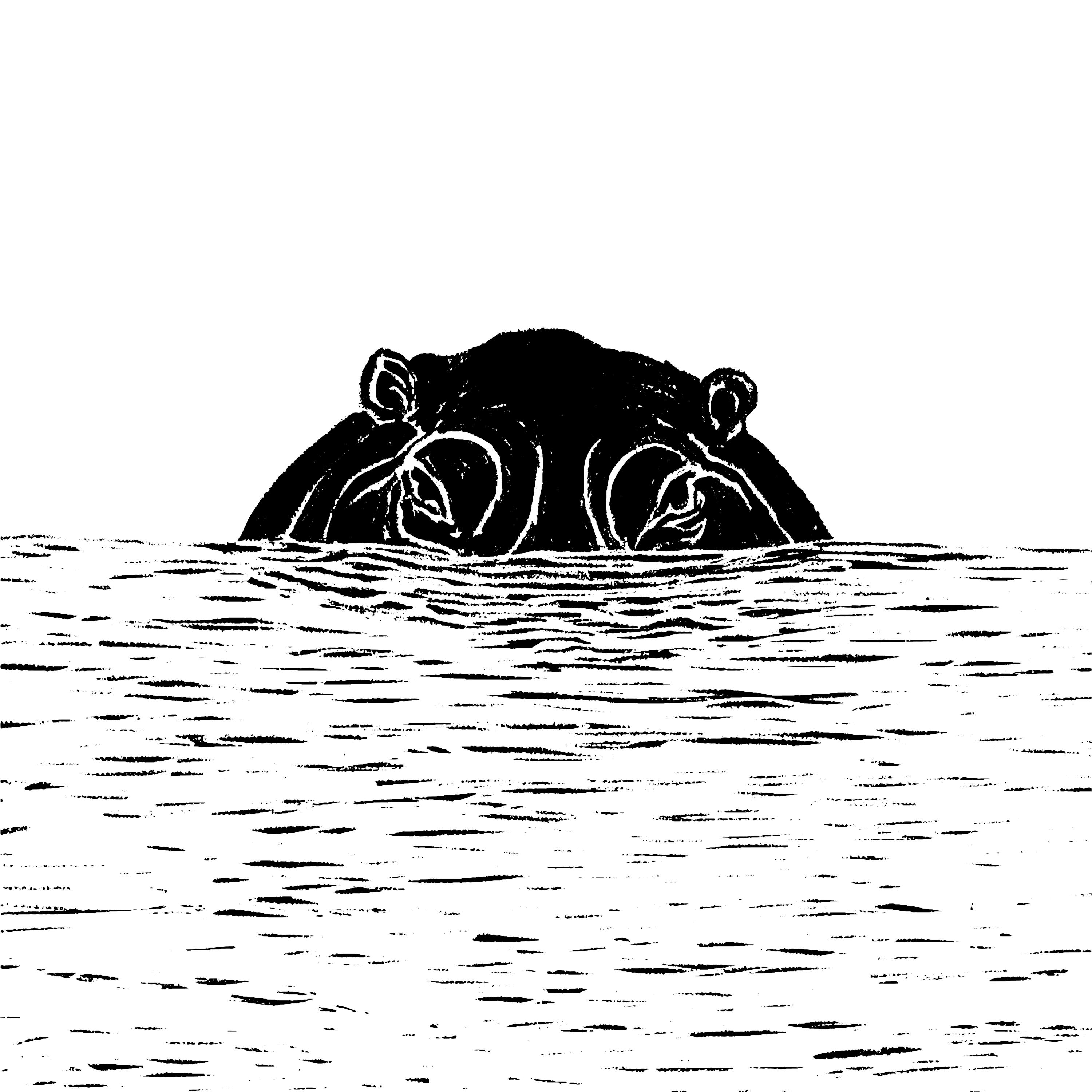
Los Hipopótamos
Listen to Jorge Caraballo’s Radio Ambulante episode about narco tours here.
Say hello on Twitter, Facebook and Instagram. Sign up for our occasional newsletter, The Accomplice. Follow the show and review us on Apple Podcasts: iTunes.com/CriminalShow.
Sign up for Criminal Plus to get behind-the-scenes bonus episodes of Criminal, ad-free listening of all of our shows, members-only merch, and more. Learn more and sign up here.
Listen back through our archives at youtube.com/criminalpodcast.
We also make This is Love and Phoebe Reads a Mystery.
Artwork by Julienne Alexander. Check out our online shop.
Episode transcripts are posted on our website.
Learn more about your ad choices. Visit podcastchoices.com/adchoices
Press play and read along
Transcript
Speaker 1 Support for criminal comes from BetterHelp. Many American adults get the blues this time of year, sometimes as a result of seasonal affective disorder.
Speaker 1 But BetterHelp wants to encourage you to reach out, get coffee with an old friend, write a letter to a family member, and take that first step to connect with a licensed therapist using BetterHelp.
Speaker 1 This month, don't wait to reach out. Whether you're checking in on a friend or reaching out to a therapist yourself, BetterHelp makes it easier to take that first step.
Speaker 1 You can get 10% off your first month at betterhelp.com slash criminal. That's betterhelp.com/slash criminal.
Speaker 2 With a Spark Cash Plus card from Capital One, you earn unlimited 2% cash back on every purchase. And you get big purchasing power so your business can spend more and earn more.
Speaker 2 Capital One, what's in your wallet? Find out more at capital1.com slash spark cash plus.
Speaker 3 Terms apply.
Speaker 4 What is it like being so close to a hippo?
Speaker 4 What do they smell like? What are they...
Speaker 4 What's their skin like?
Speaker 5 The skin is not so nice.
Speaker 1 Sorry.
Speaker 5 When they get hurt in the wildlife, hippos,
Speaker 5 they have this
Speaker 5 thing in the skin like like blood, but it's not blood.
Speaker 4
Dr. Gina Paolo-Serna is a wildlife veterinarian.
She spoke to us from her apartment building where there was a lot of construction.
Speaker 4
The name hippopotamus comes from the Greek for river horse. Hippos spend most of their life in water, in rivers and lakes.
When they're out of the water, their skin dries out and can burn.
Speaker 4 They make a fluid to protect their skin.
Speaker 1 So
Speaker 5 they are like sweaty all the time.
Speaker 4 Hippos can grow to be over 16 feet long and about five feet tall. Male adults weigh about three or four tons, about as much as a large SUV.
Speaker 4 They're the second largest land mammal on the planet, after elephants.
Speaker 4 Hippos are very territorial. They've been known to attack lions and hyenas, and sometimes people.
Speaker 4 In 1996, during a canoeing trip, a man was partly swallowed by a hippo.
Speaker 4
He said later, he could feel the water from his waist down, but from the waist up, he said, quote, I was warm, and it was just incredible pressure on my lower back. I tried to move around.
I couldn't.
Speaker 4
The hippo spit him out. He survived.
Many hippo attacks are fatal. Across Africa, it's estimated that 500 people are killed by hippos every year.
Speaker 4 Were you scared the first time you got close to one?
Speaker 7 Um, yes.
Speaker 5 Yes.
Speaker 5 They are not nice, so I'm always really, really careful about how I work with them. And I'm really, really scared every time I'm approaching a hippo.
Speaker 4 Scientists think that the hippos' ancestors were one of the first large mammals on the African continent, before lions, giraffes, and buffalo. Most wild hippos are still found in Africa.
Speaker 4 But there is a group of wild hippos in South America, in Colombia, where Gina lives.
Speaker 5 We have hippos in Colombia because Pablo Escovar brought four hippos and the actual population of hippos that are here in Colombia are from these animals.
Speaker 4 How many hippos are there now?
Speaker 5 About two years ago, I participated in
Speaker 5 study
Speaker 5 and we count more or less 160 people.
Speaker 4 So from three to 160.
Speaker 5 Yeah, and that's, I think, now are more.
Speaker 4 Pablo Escobar bought the land to build his ranch, Hacienda Nópolis, in the 1970s. It contained a mansion and several separate residences, a sculpture garden, a motocross track, 27 artificial lakes.
Speaker 4 It had its own gas station, an airfield. He kept a collection of classic cars there and built life-size dinosaur sculptures.
Speaker 4 And then, Pablo Escobar got the idea to build his own zoo.
Speaker 4 For his zoo, Pablo Escobar smuggled in over a thousand animals from wildlife breeders in other countries like Brazil and the United States.
Speaker 4 Most of them had to be flown into the country late at night on military transport planes. Black parrots, ostriches, elephants, rhinoceroses, camels, dolphins, kangaros,
Speaker 1 and hippos.
Speaker 4 I'm Phoebe Judge. This is Criminal.
Speaker 4 Growing up, Gina used to visit the zoo at Hacienda Napolis. She was always interested in animals.
Speaker 4 She went with her father when he drove out to their cattle farm, but her father never let her do any work.
Speaker 5 He said that girls are not made to be in the farms, but look at me, I'm a while I've bet. So
Speaker 4 the farm was in Doradal, a few hours outside of Medellín, near Haciendanopoulos.
Speaker 5 So every time we go to the cattle farm, we stop in the
Speaker 5
Haienda Annapolis Zoo because it was open to the public. So anybody can go there and visit the animals.
So
Speaker 5 because of my love for animals, I always always say to my dad that please stop there. So we were going like every
Speaker 5 two weeks, more or less.
Speaker 5
I did not remember the hippos. My mom remembered it, but I did not remember because for me it was not like so cool.
for me we're more cooler big animals like um elephants and giraffes
Speaker 4 so you always went straight for the elephants yes
Speaker 5 well what did the zoo look like um it was an open zoo
Speaker 5 did not have a lot of um cages so you can go through the road and you you can stop and see the animals and touch the animals well the animals that you can interact with the wild animals were like
Speaker 5 far, you can see it, but it was not like in big cages. No,
Speaker 5 it was like completely different from the other zoos that I used to visit in Medellin or in other cities.
Speaker 4 Did you know that it was owned by Pablo Escobar?
Speaker 5 No, I was like a small girl, and at that time,
Speaker 5 Pablo didn't have
Speaker 5 this bad image.
Speaker 5 For the people of Colombia, especially in the Medellin zone, Pablo Escobar was like a hero. So for me, it was only a nice guy who have a lot of animals and you can see it free.
Speaker 4 Pablo Escobar said, This zoo belongs to the people. As long as I'm alive, I'll never charge an entrance fee.
Speaker 4 This is a big question to ask, but tell me, who was Pablo Escobar?
Speaker 7
Pablo Scobar was born in Mbigal. Mbigalo is a city next to Medellín.
Right now, they're the same metropolitan area, like it's the same thing.
Speaker 7 But in those days, Mbigalo has its own thing, has its own vibe.
Speaker 7 It's a city that
Speaker 7 it's like, I don't know, Manhattan and Brooklyn, right? You know where you are when you are there.
Speaker 4 Jorge Caraballo is a journalist from Medellín.
Speaker 7
And Paolo Scuaro was from a family that was very humble. Eventually, when he was young, he started leading this little gang and they used to steal cars.
That's what they started doing.
Speaker 7 And then eventually, he got connected to
Speaker 7
the big business in those years. This is the 70s.
The big business in those years, which was marijuana and later cocaine.
Speaker 7 he started dealing with these drugs moving these drugs and i say that it was a big business because it was not that huge problem in the public health in the newspapers in the politicians agenda like i i i know people for example that in those years told me that they carried cocaine from a plane from medellin to miami in a suitcase like no hiding it no nothing and there was no problem there was no problem in taking drugs from the Colombia to the US because there was like not that security infrastructure that you see today so so he started doing that Pablo Scovar started moving drugs from Colombia to the US mainly
Speaker 7 and he started making a lot of money
Speaker 7 and he was not hiding it I mean how much money are we talking about we're talking about millions of dollars, eventually billions of dollars.
Speaker 4
In 1987, Forbes magazine listed Pablo Escobar as one of the richest men in the world. He would stay on the list until his death.
He made so much money that he didn't have time to launder at all.
Speaker 4 Instead, he would bury stashes of money around Colombia.
Speaker 4 Pablo Escobar's brother and accountant, Roberto Escobar, said that every year he would write off 10% of the cartel's profits from cash being lost or damaged from water or rats.
Speaker 7 Pablo Scovar started building complete neighborhoods for poor people and like developing neighborhoods for like people that had no money.
Speaker 7 He started building houses, buying planes, buying farms, helicopters, animals. Like this is something that was kind of
Speaker 7 like he was extravagant. And everyone in the city
Speaker 7 knew that and they they they people said that this is a incredibly
Speaker 7 smart businessman he knows how to do business that's what that's why he's rich he's a developer and
Speaker 7 if you i was yesterday i was talking to this woman who told me that in the 70s she
Speaker 7 she heard about pablo scavara she had nothing she she was living basically on the street.
Speaker 7 And she went with this friend every single day to a shopping mall that he had built in downtown Medellin just to see if they found him and ask him for money because that's what he was famous for.
Speaker 7 Like if
Speaker 7 you met him, he was so
Speaker 7
warm, he was so helpful, he was so generous that he would give you money. He would just give you money away.
Like he would give you a pack of bills
Speaker 7
for you and your family. He could even give you a house.
Like he was that. He had so much money that he was just giving it away in
Speaker 7
ways that people found almost fantastic. Like, is this real? Yes, it was real.
He was giving that much money to people in the city.
Speaker 7
There were covers of magazines talking about him, talking about him as Paisa Robin Hood. Paisa is the way that people call people in Medellin, in my region.
We are the Paisas.
Speaker 7 So he was the Paisa Robin Hood.
Speaker 7 And eventually what happened is that
Speaker 7 in his plan, it was not enough for him to be extremely rich, to be extremely popular. He wanted more.
Speaker 7 So in the 80s, early 80s, he started a new campaign, a new mission for himself. He wanted to become Colombia's president.
Speaker 4 He started by running for Congress.
Speaker 4 He won as an alternate representative in 1982.
Speaker 4 He pushed for the Colombian government to back away from a treaty that would allow the United States to extradite drug traffickers.
Speaker 7 And there was nothing, nothing
Speaker 7 that a drug dealer in Colombia feared more than going to the United States justice system because they had no power there, right?
Speaker 7 If they were caught in Colombia, there was a way, there was usually a way for them with so much power, with so much cash, to get out.
Speaker 7 But if they were caught and they were extradited to the United States, that was the end of them.
Speaker 4 As a member of Congress, Pablo Escobar had parliamentary immunity. He was also still running the Medellín cartel's operations.
Speaker 4 The Minister of Justice, Rodrigo Lara Bonilla, criticized Pablo Escobar for being a drug trafficker.
Speaker 4 But in public, Pablo Escobar responded that he had no record of any drug trafficking charges.
Speaker 4 Then, the Colombian newspaper, El Espectador, ran a front-page article about him, saying that in 1976, he'd been arrested for possession of 39 pounds of cocaine, and that afterwards, the government agents who arrested him were killed.
Speaker 4 After the article came out, a judge reopened the investigation into their deaths. Pablo Escobar's immunity was revoked, and shortly after, he resigned from his post in Congress.
Speaker 4 A few months later, while on his way home, Justice Minister Rodrigo Laura Bonilla was shot by two gunmen on a motorcycle. It was believed to have been retaliation from the drug cartels.
Speaker 4
The Colombian president declared war on drug traffickers. He promised to arrest and extradite all drug traffickers to the United States.
Pablo Escobar went into hiding.
Speaker 7 He was so powerful that
Speaker 7 he was like, okay,
Speaker 7 you think I'm hiding? I'm going to show you that I'm here. So he started this cruel war against everyone, against
Speaker 7 the government, against the army, the cops, against the judge.
Speaker 7 Every judge, if he needed something and a judge resisted, he would kill the judge, he would kill the journalists. He started this war
Speaker 7 to pressure Colombian government to not be extradited.
Speaker 4 In 1985, guerrillas took over the Colombian Palace of Justice and held 300 people hostage, including the country's Supreme Court justices.
Speaker 4 The United States and Colombian governments suspected that the guerrillas were working with Escobar.
Speaker 4 In the end, after the Colombian army retook the building, 100 hostages had been rescued, but many had been killed, along with many of the guerrilla fighters.
Speaker 4 In the 1980s, many officials involved in investigating and prosecuting drug traffickers were killed. In 1987, the New York Times estimated that 50 judges had been killed because of drug violence.
Speaker 4 Some Colombian judges resigned in protest, and even more threatened to resign if the government didn't give them more protection.
Speaker 4 Eventually, Colombia granted anonymity to judges. They were called faceless judges.
Speaker 4 What did your parents tell you about what was going on? How did they explain it to you?
Speaker 7
It was complicated. It was complicated because, of course, I was too little.
So they didn't say that much. I knew that we were in a dangerous territory.
And I knew it because I saw it.
Speaker 7
I knew it because I heard the bombs. I remember one night when this huge explosion, this tremendous explosion blew out the windows of our house.
We are surrounded by mountains.
Speaker 7
So this loud bomb resonated for seconds, let's say 10 seconds. So it exploded and then you were inside of it.
for 10 seconds.
Speaker 7 I was sleeping in the bedroom next to my parents and I ran to their bed and I was shaking and they were like, don't worry, we're fine, we're fine. And then we went out to the street after the shock.
Speaker 7 We went out to the street and all of our neighbors were coming out of the houses. And I remember this woman who had blood on her face because the windows, the glass of the window cut her.
Speaker 4 Later, Jorge's family heard that the explosion was from a car bomb at an army base near their house. People said that the Medellín cartel had put it there.
Speaker 4 In 1988, Time magazine reported more than 3,000 people had been murdered in the past year in Medellin, a rate five times higher than in New York City.
Speaker 4 In 18 hours, the police reported 13 murders.
Speaker 4 Time called the city of Medellín the most dangerous in the world.
Speaker 4 We'll be right back.
Speaker 1 Support for criminal comes from BetterHelp. The holidays can be a wonderful, but often hectic and sometimes lonely time of year.
Speaker 1 Therapy can help you make sure you're taking care of yourself, no matter what.
Speaker 1 BetterHelp does the initial matching work to find the right therapist for you so you can focus on your goals in the short and long term. This December, start a new tradition by taking care of you.
Speaker 1 Our listeners get 10% off at betterhelp.com slash criminal. That's betterhelp.com slash criminal.
Speaker 2 With the Spark Cash Plus card from Capital One, you can earn a limited 2% cash back on every purchase. And you get big purchasing power so your business can spend more and earn more.
Speaker 2 Stephen Brannon and Bruno, the business owners of SandCloud, reinvested their 2% cash back to help build their retail presence. Now, that's serious business.
Speaker 2 What could the Spark Cash Plus card from Capital One do for your business?
Speaker 1 Capital One, what's in your wallet?
Speaker 2 Find out more at capital1.com/slash spark cash plus. Terms apply.
Speaker 4 In the 1990s, Jorge Karabayev's father was a doctor, and his mother did x-rays and ultrasounds and other diagnostic tests on patients.
Speaker 7 Every single day, her patients were wounded people, wounded people by gunshots, wounded people by knife, wounded people by bombs, explosions. And my mom has something in her, is that
Speaker 7
she is the best person I know asking questions. Like she can get into intimate conversations in one minute.
So she was seeing patients that were hitmen of Pablo Scovar. She was seeing cops.
Speaker 7
She was seeing military. She was seeing civilians.
And then she would get home. And every day
Speaker 7
at dinner time, she would tell me about these hitmen, how they were scared when they were doing what they were doing. My mom would reprimand them.
And they would say,
Speaker 7
yes, but there is no alternative for me. If I don't do this, I will also be dead.
They would say to her how much they loved their mothers or their children, and how what they were doing was for them.
Speaker 7 She was seeing how everyone was involved, was part of it, either as perpetrators or as victims. But there was no way in Medellin in the late 80s, early 90s.
Speaker 7 There was no way to be outside of the conflict. It was impossible.
Speaker 5 When the war began in Medellin, especially with these narcotraffic people
Speaker 5 and all the bombs started and all the problems in the city that you cannot go anywhere because it was a bomb or a shooting something like that
Speaker 5 in one of that bombs my dad died my mom was also in that bomb but she didn't get uh injured well it was only my dad
Speaker 4 Gina Serna was 14 years old after her father died her family sold their farm in the country.
Speaker 5 I'm the oldest of four
Speaker 5 siblings.
Speaker 5 So
Speaker 5 I have to help my mom with my brother and my two sisters. And
Speaker 5 for me, it was like,
Speaker 5
how do you say it? I did not see my family again. My family was with my dad.
That was my feeling. When my dad was gone, my feeling of having a family disappear
Speaker 4 did you were you still after he died really interested in animals what
Speaker 4 did that change at all and and what what were you like as a teenager
Speaker 5 um i think that's why i decided to study philosophy
Speaker 5 because uh
Speaker 5 uh my interested in my interest in animals like disappear well a lot i love animals but it was not like that time
Speaker 5 when I was little and
Speaker 5 how I was
Speaker 5 a little bit rebel, punk rock rebel.
Speaker 5 You can say like that.
Speaker 4 In 1989, a Colombian presidential candidate named Luis Carlos Galon was shot and killed.
Speaker 4 A group called the Extraditables said now the fight is with blood, and that they plan to continue targeting Colombian officials.
Speaker 4 The extraditables were drug traffickers, including Pablo Escobar, who had declared total war on the Colombian government unless they outlawed extradition.
Speaker 4 They said, we prefer a grave in Colombia to a prison in the United States.
Speaker 4 Less than a month later, A van parked next door to the offices of the newspaper El Espectador exploded. The explosion left a 10-foot-deep crater in the street.
Speaker 4 One person was killed and 80 people were wounded.
Speaker 4 In November, a passenger plane flying from Bogota to Kali exploded just after takeoff.
Speaker 4 TV and radio news stations received calls that said the extraditables were responsible for both bombs.
Speaker 4 In 1990, police in Medellin estimated that over 4,600 people had been murdered in the city and that many had been killed because of violence related to the cartels.
Speaker 4 The next year, Pablo Escobar began speaking with a priest. He said he might be willing to surrender under certain conditions.
Speaker 4 In June of 1991, the Colombian government rewrote the country's constitution to make extradition illegal. A few hours later, Pablo Escobar turned himself in.
Speaker 4 He said he would would go to jail, but he wanted it to be a jail that he had built.
Speaker 7 And
Speaker 7 that jail was called the Cathedral, La Cathedral. And the cathedral was apparently a jail, like a very
Speaker 7 high-security jail, but inside of it, it was just another mansion for Pablo Escobar, where he could do whatever he wanted and where he controlled everyone, even the militaries that were supposedly guarding him, right?
Speaker 7 So he was there for some months, and there were some scandals in those months because he was bringing friends, he was bringing prostitutes, he was bringing
Speaker 7 anything he wanted. It was like his house.
Speaker 7 So when the scandal became so big for the government that Cablos Coar was living in luxury,
Speaker 7 they tried to move him, to move him to a regular prison and the day that the operation was meant to to happen to move him to another prison he escaped of course
Speaker 7 i remember like that's the year when i started remember things more clearly i'm four years old and i remember
Speaker 7 that there were helicopters all day long on the city there were like strong military presence on the streets.
Speaker 7 You would see on the news these advertisings like we are it like wanted and you would see Pablo Scovar picture and they were offering dos miles milliones de pesos which is like 2,000 million pesos.
Speaker 4 Pablo Escobar had been on the run for 16 months when the Colombian government traced phone calls from him to a building in the middle of Medellín.
Speaker 4 His family had tried to seek political asylum in Germany, but had been turned away.
Speaker 4 Pablo Escobar had been trying to pressure the government to provide protection for his family in exchange for his surrender.
Speaker 4 Colombian special forces shot Pablo Escobar on the roof of the building where he had been hiding.
Speaker 7 He was killed December 1993.
Speaker 7 And
Speaker 7 that day, I remember that day.
Speaker 7 It was
Speaker 7 the craziest thing in the city.
Speaker 7 Because
Speaker 7
it showed how fractured we were as a city. In part, like in the middle class, in the high-class neighborhoods, people started shouting with joy.
They killed Pablo Scovar, they killed him.
Speaker 7
And people were celebrating. People felt that they had been freed of this monster, of this threatening presence that had made their life impossible for a decade.
So there was a huge celebration.
Speaker 7 I was in that part of the city.
Speaker 7 But the other part of the city, the neighborhoods that were excluded systematically by the state, those neighborhoods were crying, literally crying, because they had killed Pablo Scovar.
Speaker 7 And on his funeral, and you can watch the videos, on his funeral, there are thousands of people crying next to his body, next to the
Speaker 7 case, because he was loved. He was loved by many.
Speaker 4 What did you think when you heard that Escobar was killed?
Speaker 5 I have that not in my memory.
Speaker 5 I
Speaker 5 don't know in what moment my mind decides that all the narcotraffic and narcotrophic war stayed out of my system.
Speaker 5
So I don't remember that. I don't remember when the war finished.
I really didn't care about that because it was like really painful for me.
Speaker 5 Actually, I don't see movies or series or read books about narcotraffic or Pablo Escovar or drugs. I don't, I'm not interested in that.
Speaker 4 35 years after Time magazine called Medellín the most dangerous place in the world, in 2023, they called it one of the greatest places to visit in the world. Jorge still lives there.
Speaker 4 What is the city like today?
Speaker 7 Medellín is a city that
Speaker 7 is extraordinary in its transformation. I still can't believe it.
Speaker 7 I have been here most of my life.
Speaker 7 Millions of dollars were invested in great public transportation, public transportation that allowed neighborhoods that were pretty far away and that were pretty different in income to be connected.
Speaker 7 They did that by investing a lot in parks, in neighborhoods that were very disadvantaged. They did that by investing in libraries.
Speaker 7 So the investment in the urban design of the city that lasted from the early 2000s to let's say 2012, 2014
Speaker 7 was what made medellin
Speaker 7 known today as a city that changed itself that transformed itself and that became a real city right a city that
Speaker 7 has been struggling to
Speaker 7 understand what happened that's still an issue that's still something that it's in the process because
Speaker 7 many people don't want to go back to see those years and remember those years and analyze or interpret those years and to understand the history of the city.
Speaker 4 I mean, does it still feel like his city?
Speaker 7
Yeah, I do think that Pablo Scovar is still very present in Medellín. You will see it in stickers, in the street, in graffitis, everywhere.
In the most popular neighborhoods, he is kind of a god.
Speaker 7 Like, I don't know, if you go to Buenos Aires,
Speaker 7
you will see Maradona or you will see Messi in Argentina as semi-gods. Well, that's Pablo Scuar Emedin.
Of course, all this tourism has arrived because the city,
Speaker 7 there are a lot of drugs, and Medellín is still that. Medina is still a city that has a deep connection with drug trafficking and all those problems.
Speaker 4
Jorge started noticing ads for something called Narco Tours. promising to tell the story of Pablo Escobar.
Some let you hike Pablo Escobar's escape route from jail.
Speaker 4 Some are run by a man known as Popeye, one of Pablo Escobar's hitmen.
Speaker 4 A few years ago, Jorge decided to go on one himself.
Speaker 7
It was me and a German tourist. It was only the two of us.
And it was a driver and a woman. Both of them said that they had worked with Pablo Escobar.
Speaker 7 And they took us first to Edificio Monaco, which is the building that he built in the heart of El Polado, the richest neighborhood neighborhood where he lived with his family and it was the building where the first car bomb exploded in Medellín because the first car bomb in Medellín exploded next to that building because the Cali Cartel wanted to kill Pablo Scovar and his family.
Speaker 7 So they took us to that building which was empty. by the time there was nothing there so we were not able to get in we were just like parked outside of the street watching an empty white building
Speaker 7 and they were telling all the stories. The woman and the driver were telling all the stories about Pablo Scovar and all the money he had, and all the cars that he had on the parking lot.
Speaker 7 Then they took us to the cathedral, to that jail, and it was funny because that jail in 2018 was a nursing home for all people.
Speaker 7 So they took us there. And the first thing I saw when they took us there was a sign on the parking lot saying, do not believe what the tourist guides are telling you.
Speaker 7 If you need real information, come to the administration. So the nursing home was so tired of people going to their
Speaker 7 place
Speaker 7 to listen to the most outrageous lies that they were like, if you really want information, just come to us.
Speaker 4 After Pablo Escobar was killed, the Colombian government had to figure out what to do with his estate, including the zoo.
Speaker 4 While Pablo Escobar was alive, the government would sometimes raid the zoo. Once they confiscated the zebras that lived there.
Speaker 4 He bribed a guard to let him take the zebras back in exchange for 12 donkeys that had been painted black and white.
Speaker 4 The government relocated many of Escobar's animals to zoos, but they left the hippos.
Speaker 5
They leave hippos in the lake because hippos were really difficult to manage. They are really aggressive.
They
Speaker 5 people. I think they thought they are going to die.
Speaker 5 And 10 years later, when
Speaker 5 they called the local environmental office to go and see what is happening there,
Speaker 5 they saw there was like a small population of hippos. They reproduced them and then they
Speaker 5 started to spread out all over
Speaker 5 the region.
Speaker 4 We'll be right back.
Speaker 1 Support for criminal comes from Saks Fifth Avenue. Saks Fifth Avenue makes it easy to do holiday shopping your way, whether you're looking for the right gift or the right outfit.
Speaker 1 Saks is where you can find everything from a Jimmy Chew bag for a sister who's hard to shop for to a Prada jacket for yourself to dress up for holiday dinner.
Speaker 1 If you don't know where to start, Sachs.com will filter just for items that match your personal style so you can save time shopping and spend more time just enjoying the holidays.
Speaker 1 Make shopping fun and easy this season and find gifts that suit your holiday style at Saks Fifth Avenue.
Speaker 1
Time. It's always vanishing.
The commute, the errands, the work functions, the meetings, selling your car.
Speaker 1 Unless you sell your car with Carvana, get a real offer in minutes get it picked up from your door get paid on the spot so fast you'll wonder what the catches there isn't one we just respect you and your time oh you're still here move along now enjoy your day sell your car today
Speaker 1 pickup fees may apply
Speaker 4 gina paolo serna says after her second year of college she decided she wanted to become a vet after all in 2013 when gina finished school she started working at a government environmental office on conservation of big cats, like jaguars and pumas.
Speaker 5 But the Magdalena Medio region, where these animals are, also the region where the hippos are. They told me, like, you are in the zone, like,
Speaker 5 please
Speaker 5 see
Speaker 5 where they are, how they are moving, where can you find them. So I started to see how these animals move, well,
Speaker 5 et cetera.
Speaker 4 Gina set up trail cams to see where the hippos lived and how they behaved.
Speaker 5
It's like hippo paradise here. They have water and food all year long.
They have no predators and people love them. So
Speaker 5 they can do whatever they want.
Speaker 5
At night, they go out and they eat. They are looking for food.
So imagine a
Speaker 5 three tons hippo going out of the water and eating grass so they compact the floor so now we have some
Speaker 5 sites around the lake that we cannot see grass or you can see nothing because the the it's so compact that nothing can grow they displays animals they are from our country wildlife animals like the manatee where the hippos are because they are so territorial the manatees decided to go all all to other place
Speaker 5 because of the hippos are all day in the water. They
Speaker 5 do all the natural things in the water. So the feces
Speaker 5 imagine
Speaker 5
10 or 20 animals in a lake doing feces all day. So the quality of the water go really, really low.
So all the fishes and all the animals that are
Speaker 5 all around this lake die. And also all the birds that
Speaker 5 go and take fishes for food go to other lakes because they are not fishes. So there's a lot of problems for the environmental.
Speaker 5 They are really, really aggressive. They attack people.
Speaker 5 So
Speaker 5 in some regions of Colombia, for example, the Magdalena River, they destroyed all the boats where the locals go to fish.
Speaker 5 So there's a really, really big risk for the families, for the children.
Speaker 4 Some of the hippos were still living at Hacienda Napolis years later.
Speaker 4
Some families who had lost their homes during the war were given places to live on the estate. One man said the hippos, quote, used to be nice and tame.
Now they are wild.
Speaker 4
The government also turned part of the estate into a theme park. They put up a sign that warned people to stay in your vehicle after 6 p.m.
Hippopotamus is on the road.
Speaker 4 But some of the hippos had followed the Magdalena River and made homes miles away.
Speaker 4 In 2009, the government declared the hippos in the area of Porto Berrio, a town 80 miles from Haciendanopolis, a danger to the people living there. They'd killed several baby cows and destroyed crops.
Speaker 4 The Environmental Ministry approved an order for a special hunt of the hippos.
Speaker 4 That summer, the Colombian Army and professional hunters killed one. He was known as Pepe.
Speaker 4 When photos of soldiers posing with Pepe's body appeared in the news, there was a public outcry.
Speaker 4
People in the area said they considered him a neighbor. They said he would spend his mornings in the river and his afternoons grazing.
One resident said he was a beauty.
Speaker 4 Then a judge ruled that the Colombian government had to stop hunting hippos,
Speaker 4 but they could stop them from reproducing. They decided to try to sterilize the hippos.
Speaker 4 Gina was one of the vets who had to figure out how to do it.
Speaker 5 They asked me what
Speaker 5
do I think we can do if we can start to sterilize them. Say, okay, we can try it.
Then we started to capture them. To capture the hippos are not easy.
You have to like take it to a boma and then or
Speaker 5 a coral, and then you can do all the procedures there.
Speaker 5 But it's not easy.
Speaker 5 Hippos are the most difficult animal to put in anesthesia in the wildlife.
Speaker 4 Gina talked to veterinarians in Africa to get advice. She asked if they'd ever sterilized a hippo.
Speaker 5 All the vets
Speaker 5 told me, why?
Speaker 5
Because I cannot kill them. No, are you crazy? So we started to do these procedures.
that are really risky and they cost a lot of money.
Speaker 4 After tracking the hippos, Gina would set up corrals with food the hippos liked. Once the hippos were inside, the corral would be shut.
Speaker 5
They have this automatic door. When the hippo it's inside the closed door and it's really high, so they cannot jump.
When they are in the bowman and the corral, you cannot be by the
Speaker 5 door
Speaker 5 because they start to fight with with the door
Speaker 5 to try to get out.
Speaker 4 Because hippos are so large the surgeries have to happen wherever the hippos are caught.
Speaker 5
So we have to do all the surgeries in the open field. I have to take all my people there.
We have to take all the instruments. In the open field we don't have electricity, we don't have
Speaker 5 like potable water, so we have to take everything there.
Speaker 5 And so it's a lot of people and a lot of the medications are really, really expensive because we don't have animals of that size in Colombia.
Speaker 5 So for us, it's like the double of difficult to do that here.
Speaker 4 And how long does the actual surgery take? Is it a difficult surgery?
Speaker 5 If it's a male, only the surgery is like three hours, three or four hours. If it's a female, it's like five or six hours.
Speaker 1 To
Speaker 5 do a surgery in a female, it's really difficult because most of the time you're cutting all the skin and then the muscles to go inside where you can find all the organs.
Speaker 5
So they have a really, really big skin. And then you have to stay with the hippo until he's up in his four feet and then he's in four paws.
Sorry.
Speaker 5 And he's really, really alert because you cannot
Speaker 5 liberate a hippo that is still processing the anesthesia because he can
Speaker 5 drown.
Speaker 4 Gina estimates that each surgery costs about $10,000
Speaker 4 and that catching and operating on and releasing a fully recovered hippo takes about three days.
Speaker 5 But you have to prepare the procedure, so it's weeks of work, weeks of following them with the trail cameras, and then putting the food in the corral so they can eat.
Speaker 5
For one surgery, it's like two months of work. Everything is difficult, expensive, and hippos.
Name it, and I told you why it's difficult and expensive.
Speaker 5 Every time I'm saying, this is the last time, why are we doing this? This is not the solution.
Speaker 5 They are keep growing. The population is keep growing.
Speaker 7 Everyone knows that hippos are
Speaker 7 Pablo Scoara hippos, right? Like there is no, whenever people talk about hippos, Pablo Scovar comes after
Speaker 7
every couple months. A new story comes up, and of course, los hippopotamos de Pablo Quar, Pablos escoara hippopotamus.
So, yes, everyone knows that this is
Speaker 7 a problem that started with him, and it's interesting because
Speaker 7
these are animals that are huge, that are powerful, that are voracious. These are animals that are into hiding, right? They're not easy to detect.
They attacked from nowhere.
Speaker 7 And
Speaker 7 somehow they are like
Speaker 7
his echo, right? They are like his resonance on Colombia. This somehow is like, you cannot forget me.
I am always there.
Speaker 7 And it's fascinating that we still don't know what to do.
Speaker 4 The Colombian government is hoping to sterilize 40 hippos a year. They're also considering relocating some of the hippos to sanctuaries and zoos in Mexico, India, and the Philippines.
Speaker 4 In 2023, Gina stopped working with hippos.
Speaker 4 She now works for Panthera, an organization working on big cat conservation in Colombia.
Speaker 4 Do you think you're really done with hippo surgeries now? Or do you.
Speaker 5 Yeah, I don't want to do. No.
Speaker 4 Is it harder to catch a hippo or a jaguar?
Speaker 5 A jaguar.
Speaker 1 Harder.
Speaker 5 It's harder, yeah.
Speaker 4 But you'd rather do it.
Speaker 5 You'd rather be catching a jaguar than a hippo.
Speaker 1 Yeah.
Speaker 1 Yes.
Speaker 4
Criminal is created by Lauren Spohr and me. Nadia Wilson is our senior producer.
Katie Bishop is our supervising producer.
Speaker 4
Our producers are Susannah Robertson, Jackie Segico, Lily Clark, Lena Sillison, and Megan Kinnane. Our show is mixed and engineered by Veronica Simonetti.
Special thanks to Stan Alcorn.
Speaker 4 Julian Alexander makes original illustrations for each episode of Criminal. You can see them at thisiscriminal.com.
Speaker 4 Jorge Caraballo reported an episode about narco tours for the podcast Radioambulante. You can listen at radioambulante.com.
Speaker 4 And you can sign up for a newsletter at thisiscriminal.com slash newsletter.
Speaker 1 We hope you'll join our new membership program, Criminal Plus.
Speaker 4 Once you sign up, you can listen to criminal episodes without any ads, and you'll get bonus episodes with me and criminal co-creator Lauren Spohr too.
Speaker 4 To learn more, go to thisiscriminal.com slash plus.
Speaker 4 We're on Facebook and Twitter at Criminal Show and Instagram at criminal underscore podcast. We're also on YouTube at youtube.com slash criminal podcast.
Speaker 4 Criminal is part of the Vox Media Podcast Network. Discover more great shows at podcast.voxmedia.com.
Speaker 4 I'm Phoebe Judge. This is Criminal.
Speaker 3 This episode is brought to you by OnInvesting, an original podcast from Charles Schwab. I'm Kathy Jones, Schwab's chief fixed income strategist.
Speaker 3 And I'm Lizanne Saunders, Schwab's chief investment strategist.
Speaker 3 Between us, we have decades of experience studying the indicators that drive the economy and how they can have a direct impact on your investments.
Speaker 3 We know that investors have a lot of questions about the markets and the economy, and we're here to help.
Speaker 3 So, download the latest episode and subscribe at schwab.com/slash on investing or wherever you get your podcasts.
Speaker 8 Support for this show comes from Capital One. With the VentureX business card from Capital One, you earn unlimited double miles on every purchase.
Speaker 8 Plus, the VentureX business card has no preset spending limit, so your purchasing power can adapt to meet your business needs.
Speaker 8 Capital One: What's in your wallet?