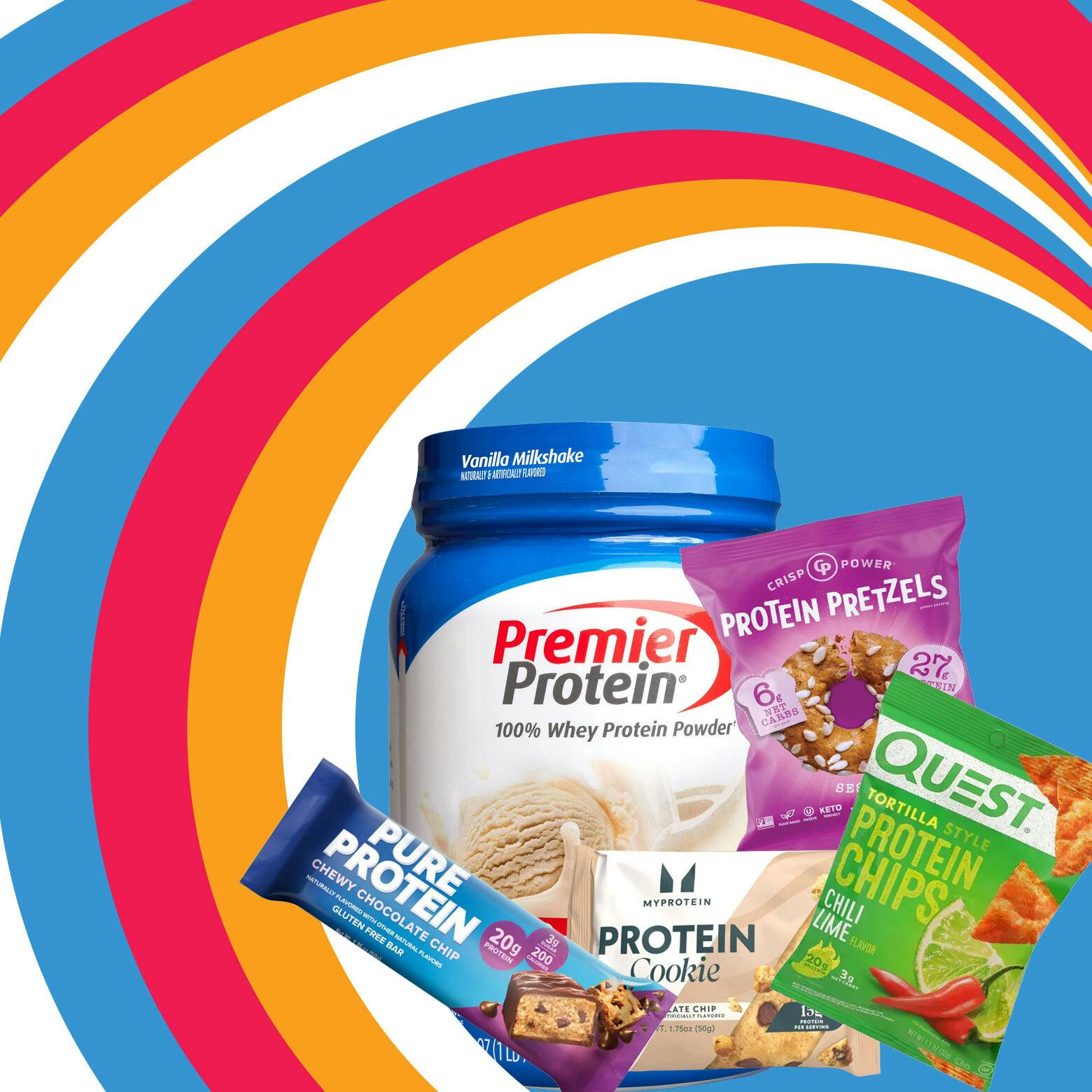
How Protein Muscled Its Way to the Top
But as frenzied as we currently are about protein, this is not the first protein boom—or even the second. Protein has been promoted as a charismatic, cure-all nutrient for nearly two centuries. In this episode, with the help of Samantha King and Gavin Weedon, the authors of Protein: The Making of a Nutritional Superstar, we look closely at all our protein crazes and their associated protein products—from beef tea to whey powder—and see what they can tell us about our current protein mania.
This episode was produced by Max Freedman. Decoder Ring is also produced by Willa Paskin, Katie Shepherd, and Evan Chung, our supervising producer. We had editing support from Josh Levin and fact-checking by Sophie Summergrad. Merritt Jacob is Senior Technical Director.
If you have any cultural mysteries you want us to decode, email us at DecoderRing@slate.com or leave a message on our hotline at (347) 460-7281.
Get more of Decoder Ring with Slate Plus! Join for exclusive bonus episodes of Decoder Ring and ad-free listening on all your favorite Slate podcasts. Subscribe from the Decoder Ring show page on Apple Podcasts or Spotify. Or, visit slate.com/decoderplus for access wherever you listen.
Sources for This Episode
King, Samantha and Gavin Weedon. Protein: The Making of a Nutritional Superstar, Duke University Press, 2026.
Baker, Ryan. “Protein has become America's latest obsession. Companies like General Mills and PepsiCo are capitalizing on it,” CNBC, July 22, 2025.
Brock, William H. Justus von Liebig: The Chemical Gatekeeper, Cambridge University Press, 1997.
Callahan, Alice. “The More Protein, the Better?” New York Times, April 9, 2025.
Draper, Kevin. “America’s Protein Obsession Is Transforming the Dairy Industry,” New York Times, July 16, 2025.
Gayomali, Chris. “Big Food Gets Jacked: How protein mania took over the American grocery store,” New York Magazine, Feb. 12, 2025.
“The Great Protein Fiasco,” Maintenance Phase, Aug. 31, 2021.
Liebig, Justus von. Researches on the Chemistry of Food, Taylor and Walton, 1847.
McLaren, Donald S. “The Great Protein Fiasco,” The Lancet, 1974.
Oncken, John. “Stingy, 'half-way' dairy farmer's curiosity changed the world,” Wisconsin State Farmer, April 27, 2022.
“Subject of Whey Disposal Discussed in UW Bulletin.” Wausau Daily Herald, Aug. 28, 1965.
Torrella, Kenny. “You’re probably eating way too much protein,” Vox, Jan. 30, 2024.
Wilson, Bee. “Protein mania: the rich world’s new diet obsession,” The Guardian, Jan. 4, 2019.
Wu, Katherine J. “Should We All Be Eating Like The Rock?” The Atlantic, Aug. 28, 2023.
Learn more about your ad choices. Visit megaphone.fm/adchoices
Press play and read along
Transcript
Speaker 1 Hey, Dakota Ring listeners, you know how much I love a good deep dive.
Speaker 3 And since you're tuning into the show, I know you do too.
Speaker 5 This holiday season, you can give the gift of endless exploration to like-minded friends and family with Apple Gift Card.
Speaker 9 They can use it for research apps on the App Store, documentaries on the Apple TV app, or even ad-free podcasts.
Speaker 12 It's the perfect present for the curious mind.
Speaker 8 Visit applegiftcard.apple.com to learn more and gift today.
Speaker 1 Hey, Dakota Ring listeners, you know how much I love a good deep dive.
Speaker 3 And since you're tuning into the show, I know you do too.
Speaker 5 This holiday season, you can give the gift of endless exploration to like-minded friends and family with Apple Gift Card.
Speaker 9 They can use it for research apps on the App Store, documentaries on the Apple TV app, or even ad-free podcasts.
Speaker 12 It's the perfect present for the curious mind.
Speaker 8 Visit applegiftcard.apple.com to learn more and gift one today.
Speaker 8 All right,
Speaker 15 let's see what happens when we go into the supermarket.
Speaker 19 A couple of weeks ago, I took a trip to my local grocery store.
Speaker 20 Do you know what you're having for dinner tonight?
Speaker 15 No, actually.
Speaker 21 I was looking for something in particular. Okay, so I'm now in the soup aisle.
Speaker 22 I've got a Progresso.
Speaker 23 I was looking for protein.
Speaker 16 20 grams of protein on a Mediterranean-style meatball and chicken.
Speaker 22 17 grams of protein on a chickpea and noodle.
Speaker 16 These are all right on the front of the Progresso.
Speaker 26 It's like 19 grams of protein. It's like actually the biggest piece of text on the can, including Progresso.
Speaker 16 It's bigger than Progresso.
Speaker 28 When I say I was looking for protein, I don't mean I was trying to find some steak or chicken or beans or tofu.
Speaker 31 I mean, I was trying to get a sense of the products bragging, like all of those Progresso soups, about how many grams of protein they contain.
Speaker 28 And boy, did I find them.
Speaker 16 Oop, Chobani Zero Sugar, 12 grams of protein, selling me right on the packaging.
Speaker 26 Ooh, Ratio's got 25 grams of protein.
Speaker 15 All these yogurts, every, like most of them have. On them, how much protein they have.
Speaker 19 Oof, bumblebee tuna, albacore, 18 grams of protein in water.
Speaker 20 And then protein plus rigatoni from Barilla, the pasta taste you love.
Speaker 33 Protein plus.
Speaker 15 Look at that.
Speaker 35 These are like lunchables and they're yellow top, nice big lunchables font.
Speaker 36 And then the protein is in a big red circle on them.
Speaker 18 20 grams of protein in hardwood smoked oysters.
Speaker 23 Oh, protein crackers.
Speaker 6 Milton's protein crackers. Lean cuisine even.
Speaker 19 Protein kick. Swedish protein.
Speaker 37 Here's protein pints.
Speaker 16 There we go.
Speaker 19 Mint chip. 30 grams of complete protein in the pint.
Speaker 38 Wild.
Speaker 23 There were also frozen dinners, bone broth and chilies, veggie burgers and beef burgers, stouffers, hot pockets.
Speaker 41 I was in the grocery store for over an hour and I'm sure I didn't see it all.
Speaker 18 And I'm also sure I'm not alone in noticing protein's proliferation.
Speaker 44 Protein-packed food now seems to be everywhere you turn.
Speaker 45 Adding protein to everything from ice cream, pancake mix, to Starbucks latte.
Speaker 47 Searches for protein have doubled in the last year alone.
Speaker 27 The truth is, though, I didn't even need to leave the house to observe protein being sold to me.
Speaker 52 I could have just gone on the internet.
Speaker 29 I listened to a podcast.
Speaker 53 This episode is brought to you by Kachava. Each serving delivers 25 grams of plant-based protein code DAX for 15% off.
Speaker 17
Americans are currently besotted with protein. The protein supplement market alone is $21 billion and growing.
And according to some studies, as many as 85% of Americans want to consume more of it.
Speaker 50 It's touted as being good for basically everything.
Speaker 17 Strength and muscle growth, but also weight loss, nicer skin, mental acuity, toning, and longevity.
Speaker 56 And while men who are really into fitness make up the bulk of the market, protein is getting sold to all kinds of different people.
Speaker 57 Protein provides a number of amazing benefits for women of all different shapes and sizes.
Speaker 20 I want to show you three ways your kids can boost their protein intake.
Speaker 58 There is not one macronutrient more important to an elderly person than protein.
Speaker 50 Personally, I know so many people thinking and talking about protein.
Speaker 60 They're eating more of it.
Speaker 30 They're trying to eat more of it.
Speaker 27 Someone told them they should eat more of it.
Speaker 26 And earlier this year, when Chloe Kardashian started selling popcorn dappled with protein powder like some nutritional fairy dust, I finally decided, I gotta figure out what's going on here.
Speaker 22 Cloud of popcorn, my protein popcorn.
Speaker 33 Thanks.
Speaker 37 Capitalism has a knack for taking things we genuinely need and selling them back to us as though we need them even more than we really do.
Speaker 62 We've talked about this before, namely in our episode about the modern-day fixation on hydration.
Speaker 40 And a quick scan of the lattes, face creams, and frozen foods currently boasting about their protein content supports the idea that's happening right now with protein too.
Speaker 63 But what I've learned by looking at protein is that there really is something unique about it.
Speaker 18 It turns out, when it comes to protein, we've done this before.
Speaker 34 This is Decoder Ring.
Speaker 26 I'm Willa Paskin.
Speaker 17 What's happening right now is not the first protein boom.
Speaker 68 It's not even the second protein boom.
Speaker 51 Instead, it's something we've been doing with protein for nearly two centuries.
Speaker 54 And with the help of two authors of a forthcoming book all about protein, we're going to look closely at our past protein fixations and and see what they can tell us about our current one.
Speaker 73 Because though each protein mania is unique in its own way, they also have a lot in common.
Speaker 20 Not only does each one feature people getting very passionate about a charismatic nutrient, they also have at their centers products made out of garbage, like actual waste we decide to eat.
Speaker 55 And these crazes have also, up to now at least, always ended.
Speaker 59 So today, on decodering, let's get to the meat of the matter.
Speaker 34 What's so irresistible about protein?
Speaker 17 Quince delivers everyday essentials that feel luxurious, look timeless, and make holiday dressing effortless.
Speaker 71 I recently got a pair of jeans from Quince that I have basically worn every single day since.
Speaker 10 They just have really good flat front pockets, a crop wide leg.
Speaker 32 I don't know. I'm into them.
Speaker 26 I also have a nice boxy cotton fisherman sweater in blue and brown.
Speaker 74 And they have $50 Mongolian cashmere sweaters too.
Speaker 71 They're good for everyday wear, and so is the denim that never goes out of style, silk tops and skirts that add polish, and down outerwear built to take on the season.
Speaker 78 Step into the holiday season with layers made to feel good, look polished, and last.
Speaker 10 From Quince.
Speaker 71 Perfect for gifting or keeping for yourself.
Speaker 10 Go to quince.com/slash decoder for free shipping on your order and 365-day returns.
Speaker 68 Now available in Canada, too.
Speaker 71 That's q-u-i-n-ce-e.com/slash decoder to get free shipping and 365-day returns.
Speaker 41 Quince.com/slash decoder.
Speaker 76 This podcast is brought to you by Progressive Insurance.
Speaker 29 You chose to hit play on this podcast today.
Speaker 55 Smart choice.
Speaker 6 Progressive loves to help people make smart choices.
Speaker 76 That's why they offer a tool called Audio Quote Explorer that allows you to compare your progressive car insurance quote with rates from other companies.
Speaker 21 So you can save time on the research and can enjoy savings when you choose the best rate for you.
Speaker 80 Give it a try after this episode at Progressive.com. Progressive casualty casualty insurance company and affiliates.
Speaker 21 Not available in all states or situations.
Speaker 12 Prices vary based on how you buy.
Speaker 67 So, as I just said, we've gone nuts for protein before.
Speaker 36 And to talk us through exactly when and where and why are the two authors of the forthcoming book, Protein, The Making of a Nutritional Superstar.
Speaker 84 My name is Samantha King, and I'm a professor in the School of Kinesiology and Health Studies at Queen's University in Kingston, Ontario, Canada.
Speaker 48 And my name is Gavin Whedon. I'm an associate professor at Nottingham Trent University in the sociology of sport, health and the body.
Speaker 26 And for both of them, their curiosity about our protein obsession began in the same place.
Speaker 48 I remember going to the gym and having kind of protein promoted to me as obviously something that would benefit me irrespective of what my goals were, because it seemed like there weren't really any goals that wouldn't be boosted by not just protein consumption, but supplementation.
Speaker 17 A few thousand miles away, Sammy saw the same thing happening at her gym.
Speaker 84 And I just thought that was really strange. Here we were, a relatively privileged bunch of people going to this private gym with personal training and eating very well.
Speaker 84 And I was just curious why they thought that we needed more protein.
Speaker 65 The idea that we need more protein is one you hear all the time.
Speaker 22 I can guarantee you you are not getting enough enough protein.
Speaker 85 There is no point in exercising if you're not eating enough protein.
Speaker 19 Sweetie, you need to eat more protein.
Speaker 27 And yet Sammy found need to be an odd phrase here because protein deficiency is almost unheard of in people who are getting enough food.
Speaker 84 If you have enough to eat, you're getting enough protein.
Speaker 65 So if you're talking about what we need to live, most people already get what they need just by consuming food.
Speaker 26 Any food, basically.
Speaker 87 And to understand how we simultaneously have as much protein as we need, but also apparently need more, we need to do a little protein primer.
Speaker 88 Proteins make possible this incredibly complex organization that we call life.
Speaker 56 In 1838, a Dutch chemist theorized that there was a universal substance found in all animal and plant tissues.
Speaker 40 He gave the substance a name, protein, from the Greek word proteos, meaning primary or first.
Speaker 31 But it would take scientists many more decades to understand what proteins actually are.
Speaker 29 And simply put, they are complex molecules made up of smaller molecules.
Speaker 88 These small molecules are called amino acids.
Speaker 59 Our DNA is basically a set of instructions for how to make amino acids.
Speaker 17 When they link together into proteins, they perform a dizzying amount of functions.
Speaker 48 There are millions, if not billions, of proteins. They play at least some part, maybe a pivotal part, in almost every cellular process within our bodies.
Speaker 73 So we need proteins and we need amino acids to make proteins.
Speaker 17 We make some amino acids ourselves, but there are others we only get from our food.
Speaker 40 Meat, dairy, vegetables, bread, they all contain protein.
Speaker 48 So when someone says it's really important to have enough protein in your diet, it would be difficult not to get enough protein in your diet if you've got access to enough food.
Speaker 65 It would be difficult not to get enough to live.
Speaker 26 But protein has become about something other than survival.
Speaker 40 In fact, when someone says you need more protein, survival is almost surely not what they're talking about.
Speaker 82 They're talking about how you need it to live longer, stay sharper, and especially to get bigger muscles.
Speaker 65 But even then, there is quite a lot of debate about what exactly it means to need protein in these ways.
Speaker 29 How much protein you should eat in a day, when you should eat it, what it can help with, how much it can help, whether or not protein really makes you feel more full.
Speaker 34 Nutrition scientists are still debating these things, and they have been for close to 200 years.
Speaker 48 All these different debates, sometimes fierce debates, I think you can pull that thread back to the mid-19th century, to the beginnings of protein as a category.
Speaker 17 So let's let's head back there to what Gavin and Sammy think are the roots of our protein-dusted Kardashian popcorn age.
Speaker 66 Let's head back to the first protein boom.
Speaker 17 And we're going to pick it up with a bunch of foxes in the lab of a scientist named Justus von Liebig.
Speaker 84 Eustace von Liebig was a larger-than-life German biochemist, entrepreneur who is recognized as one of the founding fathers of organic chemistry.
Speaker 17 And like many of his contemporaries, he was fascinated by the question of what our bodies are made of.
Speaker 62 So in the 1840s, he conducted some experiments on animals, including on two different kinds of foxes. Some had been shot and killed while being chased, and one was slaughtered after far less exertion.
Speaker 84 They had had a fox that they had kept in a cage for 200 days and fed only meat.
Speaker 17 Liebig examined all the foxes' muscles under a microscope, and he observed that the muscles of the ones killed while on the run look different from the captive one.
Speaker 17 Specifically, they had more of the amino acid creatine.
Speaker 84 10 times more creatine.
Speaker 73 And he concluded from that what?
Speaker 84 He concluded that proteinous compounds must be responsible for muscle action.
Speaker 84 That protein provided not only the substance of our muscles, what they're made of, but also the energy required to fuel their work.
Speaker 28 He was not entirely right.
Speaker 94 We actually get most of the energy to move our our muscles from carbohydrates, and fats are important too.
Speaker 26 But Liebig didn't have the tools or techniques to figure that out.
Speaker 37 All he could see when he looked at muscle tissue under a microscope was protein.
Speaker 17 And so he decided that protein was everything.
Speaker 24 Based on this not complete information, he assumed that protein was the most important nutrient.
Speaker 17 And this idea spread very quickly.
Speaker 70 That's because Liebig was not just some cloistered scientist, he was was an evangelist.
Speaker 84 He was a dogged self-promoter, running around all over Europe, you know, giving lectures, writing for popular audiences, and promoting a model of how we should eat.
Speaker 17 And for Liebig, the key thing we should be eating was meat.
Speaker 84 Liebig helped cement the link between meat and protein and meat as the most desirable form of protein.
Speaker 34 Liebig was making his case to the powerful.
Speaker 17 He convinced many European governments that it was, in today's language, a question of their national security to keep their newly industrialized workers hail and hearty and full of meat.
Speaker 84 Liebig's quite explicit about that. He called it a matter of conscience for Western governments.
Speaker 84 But where to get that meat from and how to make it affordable for this growing population was a big question.
Speaker 66 And so Liebig did not stop at spreading the gospel of animal protein.
Speaker 26 He also decided to spread the stuff itself.
Speaker 84 He developed this thick, black, syrupy liquid in his lab that he called extract of beef.
Speaker 40 Extract of beef was made by separating cow flesh from fat, pulverizing it into very small particles, and then boiling it in water for so long that the water largely evaporated, leaving behind a kind of tari substance, a gooey bouillon.
Speaker 73 Liebig paraded around Europe, telling heads of states and large crowds that this meaty black sludge could solve the problem of getting workers extra protein.
Speaker 73 And word of his extract eventually reached a German railway engineer living in Uruguay, who had an idea.
Speaker 84 He had come across this scene of great waste as he described it in his letter to Liebig.
Speaker 17 What he'd seen was a bunch of dead cows.
Speaker 84 Piles of carcasses of cattle.
Speaker 63 They'd been killed for their hides to make leather, but then left to rot in the sun.
Speaker 84 We didn't have refrigeration, so meat was not easily shipped around the world.
Speaker 62 And this German in Uruguay saw these piles of rotting cattle and thought, maybe we can do something with them.
Speaker 84 What if we actually use this flesh in this product that Liebig has been shopping around?
Speaker 51 And so he wrote to Liebig with a proposal.
Speaker 65 Why not set up your beef syrup business here with me in Uruguay?
Speaker 24 And Liebig did.
Speaker 84 By the end of 1864, they were exporting 50,000 pounds of extract.
Speaker 56 Liebig's extract of meat was sold under the very creative brand name Liebig's Extract of Meat.
Speaker 84 We think of it as the first protein supplement.
Speaker 7 Why?
Speaker 84 Because it was developed and marketed with the idea that it could be added to
Speaker 84 food in order to make that food more nutritious. It wasn't seen as something that would suffice on its own, but it was seen as something that would optimize what you were already eating.
Speaker 84 Liebig marketed as a kind of medicine, a cure-all that promised all sorts of benefits: muscle, and strength, and vim, and vigor, and vitality.
Speaker 67 And he offered a lot of ideas for how to consume his paste.
Speaker 84 People might spread it on their toast, or they might drink it with hot water as a beef tea, or it's a flavor enhancer, like MSG or something like that.
Speaker 33 Just how popular was this?
Speaker 36 It was very popular.
Speaker 84 It was a household name for many, many decades.
Speaker 27 There is just one wrinkle with Liebig's extract of meat, though.
Speaker 72 One way that it does differ from contemporary protein products.
Speaker 65 How much protein is in Liebig's extract of meat?
Speaker 84 Too small to be measured.
Speaker 96 Protein is in everything but this.
Speaker 33 Yes, exactly.
Speaker 17 Turns out boiling pulverized beef down into a gooey substance was not, in fact, a great way to extract protein.
Speaker 95 But it didn't matter.
Speaker 63 Liebig's protein proselytizing had had its intended effect.
Speaker 17 Other products similar to Liebig's crowded into the marketplace, some of which are still with us today.
Speaker 26 Spreads and bouillons like the British staple OXOCubes, as well as the beef tea Bovril.
Speaker 97 Bovril, delicious, warming, reviving.
Speaker 98 There's nothing quite like Bovril's beefy taste to put new heart into you.
Speaker 97 Fast.
Speaker 44 By the late 19th century, protein's connection to strength and health had become entrenched.
Speaker 23 Scientists were avidly studying it.
Speaker 32 Physicians were recommending it.
Speaker 56 And governments were trying to get people to eat more of it.
Speaker 84 In fact, meat consumption increases exponentially among people, especially who couldn't previously afford it.
Speaker 28 The public had gotten the message that extra protein is a crucial part of a healthy diet.
Speaker 84 So that's the first protein boom.
Speaker 63 But with every boom comes a bust, or at least a fade.
Speaker 17 In the 1910s and 20s, newly discovered molecules called vitamins began to grab all the attention.
Speaker 29 As they became nutritional superstars, protein took a back seat, waiting for our scientific understanding to catch up to its complexities.
Speaker 26 But the idea that eating more protein would help make us strong was out there, and so was its corollary, that not eating enough might make us weak.
Speaker 17 When we come back, the fear of a protein deficiency spreads.
Speaker 1 Hey, Dakota Ring listeners, you know how much I love a good deep dive.
Speaker 3 And since you're tuning into the show, I know you do too.
Speaker 6 This holiday season, you can give the gift of endless exploration to like-minded friends and family with Apple Gift Card.
Speaker 9 They can use it for research apps on the App Store, documentaries on the Apple TV app, or even ad-free podcasts.
Speaker 12 It's the perfect present for the curious mind.
Speaker 14 Visit applegiftcard.apple.com to learn more and gift one today.
Speaker 46 This podcast is brought to you by Progressive Insurance. Do you ever think about switching insurance companies to see if you could save some cash? Progressive makes it easy.
Speaker 46 Just drop in some details about yourself and see if you're eligible to save money when you bundle your home and auto policies.
Speaker 46
The process only takes minutes and it could mean hundreds more in your pocket. Visit progressive.com after this episode to see if you could save.
Progressive Casualty Insurance Company and affiliates.
Speaker 46 Potential savings will vary. Not available in all states.
Speaker 42 If the first protein boom was occasioned by European countries fretting about their industrial workers, the second was driven by their concern for their colonial subjects.
Speaker 89 The wide stretches of forest on the Gold Coast in British West Africa provide the right surroundings for the cocoa treas which have been introduced into the country and which flourish there.
Speaker 40 In the 1930s, Ghana was under British colonial rule and known as the British Gold Coast.
Speaker 66 One of the colonial officials working there was an Oxford-educated physician named Cicely Williams.
Speaker 24 And she grew concerned about the children she was seeing in her clinic.
Speaker 73 Many had swollen bellies and limbs, diarrhea, and discolored hair and skin.
Speaker 84 It was a condition that would show up in infants who were being weaned from breastfeeding when the mother had to start feeding the newly born child.
Speaker 39 There was a name for this condition in the Ga language already, Kwashiorkor.
Speaker 26 And in Cicely Williams' writings, she began to speculate as to what might be causing it.
Speaker 84
She wondered if a lack of protein was responsible. She had many other theories.
She mentioned that in passing.
Speaker 17 But other colonial researchers picked up on the idea and took it further.
Speaker 82 Over the next couple decades, they became convinced there existed a gap in the amount of protein the inhabitants of rich and poor countries were getting, and that this was a problem not just in Ghana, but across the British Empire.
Speaker 84 Protein deficiency came to explain not just a set of symptoms, but the whole problem of underdevelopment in the global south.
Speaker 27 Much of what was driving the idea of a protein gap was racism. Colonial officials believed they were dealing with a problem created by uneducated mothers with unhealthy diets.
Speaker 71 They were skeptical that women in these places could properly care for themselves and their children, and they were disdainful of the food they ate, to boot.
Speaker 84 There's this mentality of what we eat should be what everyone eats. What we eat is the best.
Speaker 32 And unlike a lot of people in India and sub-Saharan Africa, what the colonial nations ate was meat.
Speaker 17 Especially after the first protein boom, meat signified strength, vigor, the ideal Western body.
Speaker 84 The counterpart of that is that other bodies that don't conform to that diet or don't conform to that appearance and constitution are somehow defective.
Speaker 65 Even as the British Empire and other colonial powers began to splinter and former colonies gained their independence, new international organizations like the UN and the WHO sprung into action to fight protein deficiency.
Speaker 84 A surge of energy and resources was poured into the idea that a deadly protein gap existed between the world's world's rich and poor.
Speaker 56 Throughout the 1950s, global conferences were held, task forces were formed, and eventually a plan emerged to flood poor countries with protein products.
Speaker 17 Products that, unlike meat, could be kept for lengths of time without refrigeration.
Speaker 61 It began with dried milk, but soon they settled on another idea.
Speaker 95 developing a new kind of synthetic food, products engineered to be chock full of protein.
Speaker 94 Like alien techno-foods.
Speaker 84 They include a fish protein concentrate that was made from offal left over from filleting fish. There's a single-cell protein developed by BP, British Petroleum, that was cultivated in oil.
Speaker 84 And they include chlorella, which is an algae grown on sewage.
Speaker 50 So it's basically like a free-for-all for people who are like, can I turn my waste into another product?
Speaker 84 Exactly. Thus continuing this long tradition of trying to capitalize on waste.
Speaker 96 But less appetizing even than meat tea, it sounds like.
Speaker 84 Absolutely less appetizing and so far removed from the culture and tradition of the context in which they lived.
Speaker 17 Into the 1970s, the international development community kept a laser focus on the protein gap instead of larger systemic issues brought on by colonialism.
Speaker 84 Protein was really convenient.
Speaker 84 Like it was much more convenient to have a theory that a single nutrient was in short supply and the cause of malnutrition and not have to address the social and economic roots of poverty and malnourishment.
Speaker 75 Protein was presented as a simple solution to a big problem.
Speaker 31 But over time, it revealed itself to be a bogus solution to a misdiagnosed problem because it turned out there was no protein gap.
Speaker 84 New science started to emerge that suggested that the problem was actually lack of calories, not a lack of protein.
Speaker 65 In 1974, a nutritionist named Donald McLaren published a paper called The Great Protein Fiasco.
Speaker 27 He said that all the time and resources that had been spent trying to close the supposed protein gap were a tremendous waste.
Speaker 1 After decades of this, more children were suffering from hunger and malnutrition than ever before.
Speaker 84 It's not just the fact that they'd failed to assist the people they were supposed to be assisting, but they had done so with very racist rhetoric.
Speaker 40 The fallout from McLaren's paper was swift.
Speaker 31 The idea of a protein deficiency as the cause of global malnutrition was discredited.
Speaker 29 But as you already know, the fear of not getting enough protein was hardly gone forever.
Speaker 47 Just about everyone is deficient in quality protein in their diet.
Speaker 9 There's a lot of people out there that are undereating their protein.
Speaker 46 Without enough protein, you're really not going to go that far.
Speaker 100 If I listen to one more girl tell me that they don't have energy, they feel off, they're fatigued, and they are not eating remotely enough protein, I'm going to, I'm going to lose my mind.
Speaker 61 Protein anxiety heads for the 21st century after the break
Speaker 4 hey Dakota Ring listeners you know how much I love a good deep dive and since you're tuning into the show I know you do too This holiday season, you can give the gift of endless exploration to like-minded friends and family with Apple gift card.
Speaker 9 They can use it for research research apps on the App Store, documentaries on the Apple TV app, or even ad-free podcasts.
Speaker 12 It's the perfect present for the curious mind.
Speaker 8 Visit applegiftcard.apple.com to learn more and gift one today.
Speaker 76 This episode is brought to you by Saks Fifth Avenue.
Speaker 75 Saks makes it easy to find the perfect gifts and holiday looks that suit your personal style.
Speaker 10 The holidays can be a lot of things, fun, relaxing, heartwarming, and yes, sometimes even a little stressful.
Speaker 10 That's why it's fun to go to Saks.com, where shopping feels easy and exciting, whether it's for me or my family and friends, or even the pickiest person on my list, who also happens to be me.
Speaker 75 Sax actually has truly so many designers to choose from.
Speaker 10 It is an incredibly robust amount. I had a number of nice-looking Vince sweaters, including one with a very wide neck that looks chic and cozy.
Speaker 74 Also, I've been toying with the idea of button-downs.
Speaker 79 And boy, does sax.com have button downs.
Speaker 10 Everything from a classic white version from Max Mara to a Ralph Lauren pussybow version to an Alice and Olivia silk number in, I'm not kidding, Willa style.
Speaker 56 If you're looking for shopping to be personalized and easy this holiday season, then head to Saks Fifth Avenue for inspiring ways to shop for everyone on your list.
Speaker 50 I hope you're starting to see all the history that has been leading us to the third great protein boom, the 21st century one we are in right now.
Speaker 82 But there is one more origin story I want to tell you about.
Speaker 81 It's about the beginnings of the product without which our current protein boom could never have happened.
Speaker 36 And like Eustace von Liebig's extract of meat made from cow carcasses rotting in the sun, and like products made from fish guts and oil and algae during the Great Protein Fiasco, It too is tied up with garbage.
Speaker 26 Garbage made by cows again.
Speaker 27 Only this time the issue was not their carcasses.
Speaker 21 It was their milk.
Speaker 26 It all starts around the two world wars.
Speaker 48 That's when dairy farmers first start ramping up production to help soldiers to get sustenance.
Speaker 102
The job of supply gets more difficult as a million men go overseas. Space is saved through dehydration.
Thus one ship can carry the load of ten.
Speaker 26 Milk was powdered and evaporated and sent to soldiers on a massive scale.
Speaker 32 But when the wars ended, demand for milk immediately started to decline.
Speaker 48 You never really reached those heights again. But dairy farmers have already ramped up their modes of production and they're left with the surpluses and all this other stuff.
Speaker 27 Farmers had too many cows making too much milk and not enough customers to turn a profit.
Speaker 70 The federal government started heavily subsidizing the dairy industry, which continues to this day.
Speaker 17 But the farmers still needed to figure out what to do with all that extra milk.
Speaker 31 And you know what they tell you to say.
Speaker 89
Say cheese and you please. The family agrees.
They love every way you serve cheese. Every day for breakfast, lunch, dinner, and tea.
Restore lost protein and energy. Make the most of cheese.
Speaker 48 The amount of cheese that people started to eat in the post-war era grew significantly at the same moment that there was this downtrend in milk consumption.
Speaker 89 Cheese, glorious cheese.
Speaker 48 The turn to cheese and away from milk was so successful that the amount that Americans eat had almost tripled by 1970.
Speaker 87 Making cheese on on an industrial scale solved the immediate problem of having too much milk, but it created another one.
Speaker 48 With the industrialization of that production, you get an unprecedented scale of whey.
Speaker 23 So what is whey?
Speaker 48 Whey is the thick, yellowy liquid that remains after cheese production.
Speaker 26 I think I've seen whey. It's like maybe I've seen it in a Sesame Street video about like making mozzarella or something.
Speaker 103 When the milk curdles, it turns into curds and whey.
Speaker 103 Curds are like the lumps and cut into cheese. And whey is the thin milky liquid.
Speaker 48 That's the stuff, yeah.
Speaker 103 Cheese is made from the curds, and the whey is poured off.
Speaker 26 Only about 10% of the milk used in the process actually gets turned into cheese.
Speaker 49 The 90% that's left over is the whey.
Speaker 26 That is a lot of excess, basically just runoff to have to deal with.
Speaker 31 In the thousands of years before this, that humans had been making cheese, they'd always found uses for all the whey they were left with.
Speaker 48 You might use it as fertilizer, you might use it as feed elsewhere on your farm, you might use it in some artisanal recipes.
Speaker 70 If you were a little Miss Muffet sitting on your Tuffet, you might even have some for yourself.
Speaker 32 But as cheese production exploded in the 50s and 60s, dairy farmers were now dealing with way more whey than anyone could manage.
Speaker 93 At the time, a normal cheese-making factory in Wisconsin would typically be producing 100,000 gallons of whey per day.
Speaker 17 By 1965, the state was producing 7 billion pounds a year.
Speaker 48 So it presents people on these dairy farms with the question, well, what do we do with this vastly accumulating substance that we previously didn't have to think too much about?
Speaker 96 And they start to do what with it?
Speaker 48 They start to dump it. They dump it in local rivers and lakes and streams.
Speaker 36 Fully half of the 700 cheese factories in the state were dumping all of their whey into local bodies of water.
Speaker 35 And this was doing something far worse than raising the water levels.
Speaker 48 Liquid whey, untreated, it's extremely potent. It's about 175 times more toxic than untreated human sewage.
Speaker 104 175 times?
Speaker 48 I know. I really, we have checked that number.
Speaker 33 Why? What's so toxic?
Speaker 48 Well, it's nitrogen density is extremely high.
Speaker 72 And its nitrogen levels are so high because whey is really high in protein.
Speaker 87 Amino acids, the molecules that make up protein, are full of nitrogen.
Speaker 17 Often, we measure how much protein something contains by measuring the amount of nitrogen in it.
Speaker 73 Nitrogen is also a key element in fertilizer, which makes it a problem when you dump it into rivers and lakes.
Speaker 48 It would stimulate plant growth and ultimately rob fish of the oxygen they need to survive. And as you can imagine, this was environmentally devastating to the aquatic life in those bodies of water.
Speaker 26 In places like Wisconsin, those way-filled bodies of water started to reek and turn scummy, and there were huge die-offs of local fish.
Speaker 94 Recreational fishermen and environmentalists complained in newspapers and town halls, and local and state government would hand out fines.
Speaker 48 And so you have these waves of activism and investigative journalism.
Speaker 73 And so the pressure was on for dairy farmers to find some use for all that excess whey.
Speaker 48 Maybe there's something that you could do with this substance that wouldn't be just wasting it, but that could actually create value.
Speaker 37 To preserve whey for any length of time, it has to be dried into a powder.
Speaker 62 But at this time, the process was expensive and the results were unappetizing.
Speaker 40 On its own, the dried powder was so clumpy and gross that it was not considered suitable for human consumption, just for animal feed.
Speaker 50 Whey powder that was better, or at least somewhat edible.
Speaker 66 That was the Holy Grail.
Speaker 48 And so that's the point at which you see this enormous investment in desiccation and filtration technologies.
Speaker 17 In the early 1970s, a handful of technicians working in Wisconsin's dairies made the fateful leap forward using techniques that had first been developed to desalinate water.
Speaker 27 The result was a more affordable, easier to produce, finer-grained, less clumpy, edible, very high-in-protein whey powder.
Speaker 26 It was heralded immediately as a breakthrough, or as a Wisconsin paper put it, a minor revolution.
Speaker 65 Finally, here was a method to take whey, something literally being dumped into streams and turn it into a potential revenue stream.
Speaker 27 And the thinking was mostly to use it as a dried milk substitute to go in things like cake mixes and baby food.
Speaker 19 And perhaps subbing in for dried milk would have remained whey powder's primary use case if a subculture hadn't come up with their own use for it.
Speaker 90
Mighty men of muscle from many countries flexed, tensed, and pulsed biceps in a bid to become Mr. Universe.
Each and every one looking like the ancient Greek idea of a god.
Speaker 27 Bodybuilders have always been looking for help bulking up.
Speaker 63 And so for as long as professional bodybuilding has existed, they have been dabbling in protein.
Speaker 48 Protein has always had this association with growth, right? And growth of muscle, particularly. So it was naturally going to find this home, maybe, in bodybuilding subcultures.
Speaker 17 In the mid-1970s, bodybuilders began to take notice of this new dried whey powder, which was full of protein and now not totally disgusting.
Speaker 17 And they took notice just as the bodybuilding community started to swell.
Speaker 105
You are the top bodybuilder. Right, yeah.
How long have you been the top bodybuilder? Well, I've not been beaten for the last seven years.
Speaker 62 That's a clip from Pumping Iron, a 1977 documentary about bodybuilding that made Arnold Schwarzenegger a star.
Speaker 106 I don't have any weak points. My goal always was to even out everything to the point that everything is perfect.
Speaker 34 Bodybuilding, while absolutely still a subculture, was now more popular than ever before.
Speaker 22 Big enough, in fact, to be worth selling to.
Speaker 18 which is exactly what dairy farms started to do. This is how cheese waste, dried into a powder, started to make its way onto health food store shelves.
Speaker 32 Muscle men and gym rats wanted to buy tubs of protein.
Speaker 82 But at the time, not that many other people did.
Speaker 32 Because outside the bodybuilding subculture, another substance was hoovering up all the attention.
Speaker 48 Carbohydrates was having its moment in the 1970s because that's the source of energy, right? That's what helps you do marathon running, which is really popular then.
Speaker 107 Whether in training for the marathon or just jogging around the block, millions of Americans have got the running fever. Tonight, I'll look at the running craze.
Speaker 107 Is it good for the health or dangerous?
Speaker 83 Jim?
Speaker 48 Carb loading was a thing. People would try and work out, based on the knowledge available to you, how long before you run the race that you should be eating an enormous plate of pasta.
Speaker 65 You know, it's so funny, Gavin, because of course I know about carbo loading, but it never really occurred to me that it was born out of a moment when people were like, no, carbs are good for you.
Speaker 104 Because Because as a person born in the very early 1980s, I feel like the only thing I've ever, anytime I've ever heard about carbs, it was like, Absolutely, we should all be eating so many less of them.
Speaker 96 Like the idea that there could have been a craze for carbs cast into sharp relief just how mercurial and changeable we are about all these things.
Speaker 48 Yeah, you're right. When you start to look at it over long periods of time, it's hard not to see them just sort of vying for nutricentric status.
Speaker 24 And protein didn't take over for carbs for quite some time.
Speaker 44 time.
Speaker 61 Even as the carb backlash set in during the 90s and 2000s, carbs were still taking up all the attention.
Speaker 61 People were fixated on them, as you can hear in this talk show interview with the creator of the infamous no-carb Atkins diet.
Speaker 99 What we're trying to do is restrict carbohydrates.
Speaker 92 Exactly what you mean when you say low-carbohydrate.
Speaker 99 Potatoes and bread and what? What else is a carbohydrate? Wheats and fruit and milk.
Speaker 51 But restricting what you eat sucks.
Speaker 81 Who wouldn't prefer to eat more, even if in an extremely regulated way?
Speaker 94 And so, as carbs and fats continued to be vilified, as nutritionists and doctors did research about the importance of muscle to overall long-term health, and as more and more Americans started to care about fitness, protein was ready to re-enter the spotlight.
Speaker 17 The new diets were very similar to the Atkins diet, just now rebranded as high in protein instead of low in carbs. And they also offered a tool for getting as much protein as you could possibly want.
Speaker 17 Whey protein powder.
Speaker 85 The right way to supplement protein is with whey protein, a protein source naturally found in milk.
Speaker 108 Today I'm going to share with you guys the 10 really unique benefits of whey protein powder and why I use it as nutritionist.
Speaker 57 Got some fitness goals you're looking to hit?
Speaker 93 Find your way with whey.
Speaker 55 It took a couple of decades to become omnipresent, but all that cheese waste didn't just find a market.
Speaker 17 it created one.
Speaker 56 Desiccated whey powder is now the most visible form of supplemental protein, and it and other protein powders are slipped into a wide variety of products.
Speaker 48 You start to see it in bars and gels and gummies and yoglets and breads and all these weird and wonderful products.
Speaker 84 Yeah, the Starbucks protein latte, the whey-infused beer.
Speaker 48 I mean, the dissonance of the whey-infused beer. What are you trying to achieve in that moment?
Speaker 17 But the argument that Sammy and Gavin are making is that cold foam lattes and whey-infused beer are just new fangled interpretations of something old.
Speaker 48 It begins with Justus von Liebig's extract of meat all the way back to the mid-19th century.
Speaker 18 And now 200 years later, protein is more ubiquitous and popular than ever before.
Speaker 86 It's for men and women, the old and the young, the protein-obsessed and the merely protein-curious, and more besides.
Speaker 84 I also think it's the one thing that unites the left and the right and everyone else in between. Right? We're so polarized politically.
Speaker 84 This seems like the one thing on which we can all agree.
Speaker 35 Have more protein.
Speaker 84 Have more protein.
Speaker 65 Alone among the nutrients, protein is undinged.
Speaker 50 It falls out of favor, but never out of grace.
Speaker 84 It doesn't have that history of stigma that cobs and fats have. So even though it's definitely gone through peaks and troughs, it's never been demonized, it's never been pathologized, right?
Speaker 84 It doesn't come with all that baggage.
Speaker 15 But what all this history suggests is that maybe there ought to be a little baggage.
Speaker 34 That without disdaining or dismissing protein or anyone's protein regimens, we might still stand to get something from looking at it more holistically.
Speaker 30 That we might see then that the way we talk about protein breaks food down into strange parts.
Speaker 34 We might observe that protein like water and sleep is a necessity now being commodified and oversold to us.
Speaker 52 We might notice that we are always looking for one magic thing to solve complicated nutritional problems.
Speaker 67 And we might realize that when something is as cyclical as protein seems to be, we won't feel this way about it forever.
Speaker 84 It's hard to predict the future, but history would suggest that this is not permanent. Nothing's permanent.
Speaker 67 This is Decoder Ring.
Speaker 26 I'm Willa Paskin.
Speaker 30 If you aren't already a Slate Plus member, please subscribe now from the Decoder show page or Apple Podcasts or Spotify.
Speaker 29 Or visit slate.com slash Decodering Plus to get access wherever you listen.
Speaker 17 Slate Plus members get access to our bonus episodes and they get to hear our show and every other Slate podcast without any ads.
Speaker 27 This episode was produced by Max Friedman. Decodering is also produced by me, Katie Shepard, and Evan Chung, our supervising producer.
Speaker 56 We had editing help from Josh Levine, fact-checking from Sophie Summergrad, and Merritt Jacob is Senior Technical director.
Speaker 56 Samantha King and Gavin Whedon's book, Protein: The Making of a Nutritional Superstar, will be out in March.
Speaker 68 Go get it.
Speaker 27 If you have any cultural mysteries you want us to decode, please email us at decodering at slate.com.
Speaker 55 You can also call us now at our Decodering phone number.
Speaker 17 That is 347-460-7281.
Speaker 26 Give us a shout, and we'll see you in two weeks.
Speaker 76 This episode is brought to you by Saks Fifth Avenue.
Speaker 75 Saks makes it easy to find the perfect gifts and holiday looks that suit your personal style.
Speaker 10 The holidays can be a lot of things: fun, relaxing, heartwarming, and yes, sometimes even a little stressful.
Speaker 10 That's why it's fun to go to Saks.com, where shopping feels easy and exciting, whether it's for me or my family and friends, or even the pickiest person on my list, who also happens to be me.
Speaker 75 Sacks actually has truly so many designers to choose from.
Speaker 10 It is an incredibly robust amount. I had a number of nice looking Vince sweaters, including one with a very wide neck that looks chic and cozy.
Speaker 74 Also, I've been toying with the idea of button downs.
Speaker 10 And boy, does Saks.com have button downs. Everything from a classic white version from Max Mara to a Ralph Lauren pussybow version to an Alice and Olivia silk number in, I'm not kidding, Willa style.
Speaker 56 If you're looking for shopping to be personalized and easy this holiday season, then head to Sacks Fifth Avenue for inspiring ways to shop for everyone on your list.
Speaker 26 This is an Etsy holiday ad, but you won't hear any sleigh bells or classic carols. Instead, you'll hear something original.
Speaker 109 The sound of an Etsy holiday, which sounds like this.
Speaker 109 Now that's special.
Speaker 84 Want to hear it again?
Speaker 26 Get original and affordable gifts from small shops on Etsy.
Speaker 109 For gifts that say, I get you, shop Etsy. Tap the banner to shop now.