Eating the Rainbow: Or, the Mystery of the Orange Oranges, the Red M&Ms, and the Blue Raspberry
Learn more about your ad choices. Visit podcastchoices.com/adchoices
Press play and read along
Transcript
Speaker 2 With a Spark Cash Plus card from Capital One, you earn unlimited 2% cash back on every purchase and you get big purchasing power. So your business can spend more and earn more.
Speaker 2 Capital One, what's in your wallet?
Speaker 1 Find out more at capital one.com/slash spark cash plus terms apply.
Speaker 1 With a Spark Cash Plus card from Capital One, you you earn unlimited 2% cash back on every purchase.
Speaker 2
And you get big purchasing power. So your business can spend more and earn more.
Capital One, what's in your wallet?
Speaker 1 Find out more at capital1.com slash spark cash plus terms apply.
Speaker 3 I mean, now I think we can all sort of picture what a blue raspberry flavored thing tastes like.
Speaker 3 I think that it kind of has more of an acid, acidic kick than regular raspberry flavors, or at least the standard blue raspberry, but really there's no, as long as it has a sort of basic fruitiness and maybe some of the kind of characterizing raspberry component, you know, it doesn't have to fool, it's not like somebody is going to consume a blue raspberry soda, for instance, and say,
Speaker 3 Yeah, this is pretty good, but I wish that I was actually eating real blue raspberries.
Speaker 5
So I love raspberries. They are the best berry.
Don't at me because I'm right. But are we really doing a whole episode about them?
Speaker 4 Nope, it's the blue part of the raspberry because this episode is all about the color of our food.
Speaker 4 And this, of course, is Castropod, the podcast that looks at food through the lens of science and history. I'm Cynthia Craeper.
Speaker 5 And I'm Nicola Twilley. And this episode, we're following the rainbow.
Speaker 5 I can't promise pots of gold, especially in this economic climate, but we will get answers to important questions such as why are all our bananas yellow and not red? What happened to the red ones?
Speaker 4 How did oranges become orange?
Speaker 5 Why did the red M ⁇ M disappear for most of the 1980s? Is there some juicy gossip there? Was it, quote, spending time with its family?
Speaker 4 And finally, what in the world is a blue raspberry? And is it really that shade of fluorescent blue?
Speaker 5 Plus, are all these wonderful colors actually killing us?
Speaker 3 Well, color is incredibly important because it's one of the fundamental ways in which we understand or perceive the flavor of the food that we're eating.
Speaker 4
Nadia Berenstein is a flavor historian. You might remember her from our episode on flavor called Savor Flavor.
If you didn't hear it the first time, you should go check it out.
Speaker 5 In that episode, we talked a lot about how flavor is mostly taste plus smell. But actually, Nadia says that color affects the flavor of food too, more than you'd think.
Speaker 5 When people are served sprite that's colored brown, they think it's cola.
Speaker 4 This trick even works on famous wine critics. Give them white wine colored red with food coloring and most of them will think it's red wine and they'll wax poetic about its berry notes.
Speaker 3 In 1936 a Scottish baker tried this experiment with jellies among his own staff. He was trying to find kind of like a worker in his factory or workers in his factory who had reliable senses of taste.
Speaker 3 So he gave them, for instance, red dyed pineapple jellies and green dyed lemon jelly and tried to find the people among his staff who could correctly identify the flavor even though the color contradicted their understanding of what the flavor should be.
Speaker 3 And he was actually surprised to find that very few people could pull this off.
Speaker 4 Color can change the perceived flavor of a food so much that it actually becomes inedible.
Speaker 4 There was an experiment in the 70s where people were fed a meal of steak, fries, and peas and the light masked the color of the food.
Speaker 4 But then that color masking light was turned off and normal light was turned back on and the steak was blue, the fries were green, the peas were red, and the subjects got sick to their stomachs.
Speaker 4 One puked.
Speaker 5 But it's not that color has traditionally been more important than other senses when it comes to food. After all, vision is just one of the ways our senses evolved to figure out what was good to eat.
Speaker 5 In the past, when you were deciding whether to eat, say, a peach, you might smell it and feel its weight in your hand, as well as look at the color of its skin to see whether it's ripe.
Speaker 5 You wouldn't just judge with your eyes.
Speaker 4 But even though color has always been one way that our brains have made sense of what we're we're about to eat, foods appearance started to become particularly important over a century ago.
Speaker 3 So late 19th, early 20th century, when all kinds of foods or foods packaged or produced in new ways, right, in distant factories rather than at home, started to appear on the market.
Speaker 3 And the question with those was not just how should these new kinds of foods taste, but also what should they look like.
Speaker 5 By the late 1800s, America's foodscape was changing really fast. You've heard us talk about this before, but this was the time of the rise of industrial food processing and manufacturing.
Speaker 5 And then, thanks to refrigeration, aka my life's great passion, food was increasingly shipped long distances from where it was grown to the people who were going to eat it.
Speaker 4 All of that meant that people didn't see food growing or pick it or hunt it themselves.
Speaker 4 They might not have had any way to know what something should feel like when it's ripe, and so they had to rely even more on the look of food. And they were soon helped out by another new technology.
Speaker 7 So people had been using printing technologies, but the important change was the invention and increasing use of color printing, which became more popular in the 1920s and 1930s in the United States.
Speaker 4 Aihasno is a lecturer in economics at Kyoto University, and she wrote a book on food and color called Visualizing Taste, How Business Changed the Look of What You Eat.
Speaker 4 Her book tells the story of how color became increasingly important over the last century and how big business actually shaped our expectation of what the color of our food should be.
Speaker 5 Hand in hand with the rise of affordable color printing came the rise of national magazines and these magazines were filled with full color ads for food and distributed from coast to shining coast.
Speaker 7 So consumers say in New York City and in San Francisco were looking at the same image in the same color.
Speaker 4 Around the same time food packaging became more common. Yes, we did an entire episode on that too called Outside the Box and then cellophane was invented, so now packaging was also see-through.
Speaker 5 Of course, cellophane meant you could no longer touch or smell your food before you bought it, but you could definitely see what color it was.
Speaker 4 Like we said, we'd always used color as one of the ways we figured out what food should taste like.
Speaker 4 Just think about the color of a ripe strawberry or the disgustingly blue steak or the white wine that was tinted red.
Speaker 5 But now with this new long-distance packaged food, color was everything.
Speaker 4 And then finally, one last technology was invented, a way to actually measure color.
Speaker 4 New machines such as the spectrophotometer could evaluate the very particular and specific color of food, and so they replaced the subjective and individual judgment of some random person's eyes.
Speaker 5 Suddenly, you could actually scientifically say whether your apple was redder than the apples from upstate.
Speaker 7 Standardizing color would allow traders to communicate easily and also
Speaker 7 give them the standard for reference to grade the agricultural produce and other processed food products.
Speaker 4 And so, the more perfectly uniformly red apples could get a higher grade, which meant a higher price.
Speaker 5 These tools, these spectrophotometers and color grade charts, they were all part of the process of making something as inherently variable as food fit into a modern industrial assembly line kind of system.
Speaker 3 What food manufacturers and the research industries that support them are aspiring to do is to quantify and measure and control all of these sensory properties of food in order both to guarantee standardization, right, to make sure that every Oreo, every can or bottle of orange crush that rolls off the assembly line is indistinguishable from the previous and from the one after, but also not just to standardize, but also to optimize, right, to create flavors that are memorable and perhaps even irresistible, that kind of create the sort of maximal amount of pleasure.
Speaker 5 This shift, the increased importance of color, its standardization, even its optimization, it had some weird effects on our food.
Speaker 5 And to explore them, this episode we're going to tell you the story of three different colors, starting with orange.
Speaker 4 Nadia mentioned that these new technologies allowed food manufacturers to standardize things like Oreos, but they also allowed people in the new industrial food system to standardize fruits and vegetables too.
Speaker 5 So to begin, the story of how oranges became orange.
Speaker 4 The first thing you need to know is not all oranges are actually orange.
Speaker 6 What happens is that mature oranges in tropical areas have more green sort of tinge to them or patches to them than they do in the areas that are subtropical like California, where they're more brightly colored orange when they're mature.
Speaker 6 And so when they turn orange, it doesn't actually tell you exactly what they taste like inside.
Speaker 4 Tracy Khan is the curator of the Givodin Citrus Variety Collection at the University of California Riverside, which I got to visit for our citrus episode.
Speaker 4 I'm getting the feeling that we've done a lot of episodes.
Speaker 5
We're only five. Well, five and a half, I guess.
A lifetime in gastropod years.
Speaker 4
Yes, and a lot of episodes in that lifetime. So until the early 1900s, citrus was a luxury in a lot of the world.
It was so special that kids would get an orange in their stockings at Christmas.
Speaker 4 Just one orange.
Speaker 5 But with the rise of refrigerated rail shipping, Florida oranges and California oranges started to be able to reach the rest of the country, and oranges were suddenly all the rage.
Speaker 4 But they didn't all look the same.
Speaker 6 And in fact, I remember, I have a distinct remembrance when the first time I went to Florida after I was a citrus scientist to visit some Florida scientists.
Speaker 6 They were walking me around and showing me even blood oranges and different things. And I was struck by how much paler everything was.
Speaker 4 Florida oranges have always been less brightly colored than California oranges, but maybe even more importantly, they've also been kind of green.
Speaker 7 California, where the climate conditions were different from Florida, had a better appearance of oranges.
Speaker 7 And they distributed, they published advertisements and leaflets with bright orange images, which facilitated the idea that orange color was the sign of good delicious oranges.
Speaker 4 The images, the packing crate labels and ads created by California growers, they were gorgeous. They were usually on a dark blue background so that the oranges would really pop bright orange.
Speaker 4 They're all as bright as can be, almost red. They look super juicy, and there is not a hint of green tinge anywhere.
Speaker 5 And consumers were sold. Orange oranges were clearly the best oranges, which meant that green oranges were not.
Speaker 4 As a result, the greenish ones weren't as lucrative for the growers. In 1909, orange oranges sold in New York City for $2 a box, while greenish ones fetched only $1.25.
Speaker 5 Which was a problem for orange growers in Florida, where, like Tracy said, the climate conditions mean that even ripe, juicy oranges aren't necessarily super orange.
Speaker 4 And so Florida growers fought back. They published advertisements claiming that Florida fruit were the juiciest.
Speaker 7 Florida growers published an advertisement in a major newspaper showing a woman holding orange in her hands and saying buy grapefruits and oranges not by looks but by feel suggesting that consumers should use their hands rather than eyes to judge the court of fruits and this message was that because fruit oranges contained more juice than oranges from other regions they should be heavier so if you use your hands you can feel the difference it is true the juicier oranges weigh more it's how i select citrus at the supermarket but mr and ms average consumer were not convinced.
Speaker 5 They had been told ripe oranges were orange and they believed it.
Speaker 7 So in the 1930s, Fourier growers began using this method called the Harvey process invented by plant physiologist at the University of Minnesota Rodney Harvey.
Speaker 7 He created this method using synthetic dyes to color oranges. So growers put oranges in a coloring solution for about five minutes and then color their skin.
Speaker 4 Yes, it's true. Florida growers resorted to dyeing their oranges orange.
Speaker 4 At the time, this particular synthetic dye was considered safe, and anyway, dying oranges was perfectly legal because the growers weren't actually changing the food.
Speaker 5 It wasn't like these Florida growers were selling unripe oranges dyed to look ripe. They were selling ripe oranges that just needed a little help to look as ripe as they actually were.
Speaker 7 So the government could not regulate the coloring of oranges by saying this is the adulteration of of food products.
Speaker 4 The government did say that the growers had to label these dyed oranges as, yes, dyed, but the Florida growers were totally fine with that.
Speaker 7 At the first, orange growers in Florida believed that or hoped that this color-added symbol or color-added sign would serve as a symbol of product quality because the inside of the oranges are perfectly ripe.
Speaker 5
I love how optimistic these Florida growers were. Sadly, once again, Mr.
and Ms. Average Consumer were not on board with the Florida messaging.
Speaker 5 They thought there was something fishy about oranges that needed a dye job.
Speaker 4 And then the government became a little concerned about the health effects of the particular dye the Florida growers were using.
Speaker 4 But still, in the 40s, 21 million out of the 30 million total oranges shipped out of the state of Florida were dyed.
Speaker 7 But there was a big shift in the citrus industry in Florida in the 1950s when Florida growers or Florida citrus industry shifted to frozen concentrate orange juice.
Speaker 7 So many of the oranges in Florida went to the processing factories like canned oranges and frozen concentrate orange juice, which became quite popular after World War II.
Speaker 5
The juice of Florida oranges was orange after all, even if the skin wasn't. So selling them as juice worked.
Problem solved.
Speaker 4 But there's something weird in this story. Some oranges are orange, and apparently some oranges are kind of green, and actually some oranges like blood oranges, they're almost purple.
Speaker 4 But isn't orange orange? Aren't the color and the fruit the exact same thing?
Speaker 8 I mean, when I first started to think about this, I guess I was interested in the question: you know, was there orange before there were oranges? And weirdly, the answer is no.
Speaker 5 This is David Castan. He's a professor of English at Yale and the author of a book about color called On Color.
Speaker 8 And one of the things I had known before I started to think about this was in Old English and even in Middle English, there's no word orange. It's always a compound word.
Speaker 8 And this is true for almost all European languages. It's a compound word that's essentially yellow-red.
Speaker 8 So Chaucer, for instance, in one of his tales, he's describing a fox. And he says that the color of the fox is between yellow and red.
Speaker 8 So, you know, visually, there's a sense of what orange must be, but there is no word. And then by the 17th century, there is a word.
Speaker 5 So what happened between the late 1300s when Chaucer was writing and the 1600s?
Speaker 8 The answer turned out to be oranges.
Speaker 4 What happened at the time was Portuguese traders. They were circumnavigating the globe, bringing all sorts of exotic and delicious things with them as they traveled.
Speaker 4 The sailors reached the Indian subcontinent, and when they were there, they loaded up and brought back to Europe the very first sweet oranges.
Speaker 5 And Europeans loved them. They decided that these must be the golden apples of ancient myth.
Speaker 4 And actually, in modern Hebrew, which was revived in the 19th and 20th centuries by Europeans, the fruit is called tapuz, which smushes together the words apple, tapuach, and gold, zahav.
Speaker 5 But in Sanskrit, on the Indian subcontinent, these brightly colored round fruit were called narang. And a lot of European languages just borrowed that word.
Speaker 8 You probably know in Spanish the word for orange is naranha. But I think what happened in languages like English or French or Italian, where the article often has an N attached to it.
Speaker 8 I think the N just broke off over time as people thought it was part of the article. So, you know, how would you hear the difference in English between an orange
Speaker 8 and a norange? You know, you might not hear it.
Speaker 4 So I guess that means the color should theoretically be narrange, too.
Speaker 5 Orange or norange. The point is, now Europeans had this word, so when did they start using it for the color and not just the fruit?
Speaker 4 At first, orange was a description of another color. Shakespeare used it as a colour, but only to add shades of meaning.
Speaker 8 And it's usually for him, it's a phrase, he'll say, like a bird or a leaf is orange tawny.
Speaker 4 But, and again, this is a really weird bit of orange history. It doesn't become a canonical color until Isaac Newton.
Speaker 5 When he wasn't busy having apples fall on his head, Newton was splitting white light with a prism and trying to figure out how many different colors he could see in that rainbow, which is trickier than it sounds.
Speaker 8 Then he says, well, sometimes I think they're five and sometimes I think they're 11.
Speaker 8 And then Newton decides that there have to be seven, not because he's sure of it as a scientific fact, but it's almost a religious fact for him. The world was created in seven days.
Speaker 8 There are seven notes in the diatonic scale.
Speaker 4 There were five pretty obvious ones to him: red, yellow, green, blue, and purple, or violet. But Newton needed two more to make that perfect seven.
Speaker 8 So he adds orange between red and yellow, and it's really not till that point that orange is truly a color as we think it.
Speaker 8 And then he adds indigo at the other end of that spectrum, which at the time he added it, indigo was known just as a dye. It wasn't a color at all.
Speaker 8 And if you look at the way people talked about the dye, they would say things like, indigo is a dye to color things blue. But Newton was just committed to getting seven colors in the rainbow.
Speaker 8 So orange and indigo suddenly had a prestige and a certainty that they really didn't have before.
Speaker 5 So that's how orange became a real color as well as a fruit.
Speaker 4 And this whole story was also how oranges became so perfectly orange in the supermarket, even if they actually might be green on the tree.
Speaker 4 Food growers and companies in the new industrial food system actually determined what colors our foods should be.
Speaker 7 This control of color in the food business,
Speaker 7 in the food industry, kind of trained our eyes to look at food with certain expectations, which are quite standardized and uniform, like yellow color for bananas or orange color for oranges.
Speaker 5 Wait, what? Now it tells us that bananas aren't necessarily yellow either?
Speaker 7 So until the late 19th century, around the 1870s, American shipping companies imported bananas, both red and yellow varieties, from Central America and South America to the United States.
Speaker 7 But red variety had a thinner skin and it was easier to get bruised and easier to get overripe before it got to the American poor.
Speaker 4 So American companies only sold the yellow varieties and they created beautiful, catchy, bright yellow advertisements for yellow bananas.
Speaker 4 And as a result, consumers expected yellow bananas and that's why bananas are yellow.
Speaker 5
We may not have red bananas in our supermarkets, but we have plenty of red foods, both natural and artificially colored. which is exactly where we're going next.
Chapter 2, Red.
Speaker 9 Let's be honest. Are you happy with your job? Like, really happy? The unfortunate fact is that a huge number of people can't say yes to that.
Speaker 9 Far too many of us are stuck in a job we've outgrown, or one we never wanted in the first place. But still, we stick it out, and we give reasons like, what if the next move is even worse?
Speaker 9 I've already put years into this place.
Speaker 9 And maybe the most common one, isn't everyone kind of miserable at work? But there's a difference between reasons for staying and excuses for not leaving. It's time to get unstuck.
Speaker 9 It's time for strawberry.me. They match you with a certified career coach who helps you go from where you are to where you actually want to be.
Speaker 9 Your coach helps you get clear on your goals, create a plan, build your confidence, and keeps you accountable along the way. So don't leave your career to chance.
Speaker 9
Take action and own your future with a professional coach in your corner. Go to strawberry.me slash unstuck to claim a special offer.
That's strawberry.me slash unstuck.
Speaker 10 All right, remember, the machine knows if you're lying. First statement, Carvana will give you a real offer on your car all online.
Speaker 10
False. True, actually.
You can sell your car in minutes. False? That's gotta be.
True again. Carvana will pick up your car from your door, or you can drop it off at one of their car vending machines.
Speaker 9 Sounds too good to be true, so true.
Speaker 10
Finally caught on. Nice job.
Honesty isn't just their policy, it's their entire model. Sell your car today, too.
Carvana! Pickup fees may apply.
Speaker 4 People have always loved the color red, and they wanted to make foods red, so they'd find ways to do so, like using insects that stain clothing and food a deep crimson.
Speaker 4 The insects are called cochineal. They're found in South America, up through Mexico, and the southwestern U.S.
Speaker 4 And the Mayan and Aztec civilizations used these bugs to turn things red starting about 2,000 years ago.
Speaker 5 In Europe, saffron was often used to color food orangey-yellow. It's mentioned in Homer's Iliad.
Speaker 5 But cochineal and saffron are both expensive, so these food colors were only really an option for the elite.
Speaker 7 For more popular use, for the cheaper substitute, people used, for example, spinach or carrot juice as.
Speaker 4 But it took a really long time and a ton of work to get food coloring from spinach and carrot juice. And then at the end of it all, the dyes weren't particularly bright and they didn't last very long.
Speaker 3 There was a time when,
Speaker 3 maybe in the 19th century, when achieving a colorful cake or a colorful pastry really demanded the intensive labor of somebody like laboring in the kitchen, making all of the different colored dyes from natural sources when they weren't commercially available, and creating a kind of like spectacle for the table to kind of cement the host's class standing
Speaker 3 and the elegance of the meal that people had just had.
Speaker 3 And then when bright colors become commercially available, synthetic dyes, for instance, the kind of elite status of being able to have brightly colored food diminishes or the cultural meaning of it shifts.
Speaker 5 Yep, once everyone can have something, it's no longer quite as special. The first synthetic dye was actually Mauve.
Speaker 5 It was invented in the 1850s by chemists looking to make artificial quinine of all things.
Speaker 4 And yes, of course, I'm now going to send you all to yet another gastropod episode. You should go listen to Move Over Gin, We've Got Tonic Fever, to find out why quinine was so important.
Speaker 5 By the late 1800s, scientists had created a range of artificial colors, mostly from coal tar and other petroleum derivatives.
Speaker 5 One of the earliest adopters for these synthetic food dyes was the butter industry. Dairy farmers wanted their butter to have that lovely yellowish glow of spring butter all year round.
Speaker 4 The other early adopter of these bright new synthetic dyes were confectioners.
Speaker 4 This is around the same time as artificial flavors were introduced, and candy companies wanted to create a signpost for consumers.
Speaker 4 Hey, this bright green color represents this new artificial lime flavor. So people came to associate bright green with lime, even though limes aren't always that shade of almost neon green.
Speaker 5 And honestly, limes don't really taste like artificial lime either. But the point is, the rise of artificial food colorings really coincides with the industrialization of food.
Speaker 5 I says that by 1900, a full third of the food sold in the U.S. was manufactured.
Speaker 5 And during processing, that food often lost its color or turned brown and sludgy, so artificial colors were essential to make these new processed foods look appetizing.
Speaker 4
For decades, the food industry was totally enamored with these artificial colors. They used them generously and expansively.
Artificial reds and yellows and greens could be found in nearly all foods.
Speaker 5 At first, consumers were more or less on board with these shiny new chemicals in their food.
Speaker 5 The government started regulating them in 1907, and people enjoyed being able to bring a pop of color to their table without all the work of juicing spinach or carrots by hand.
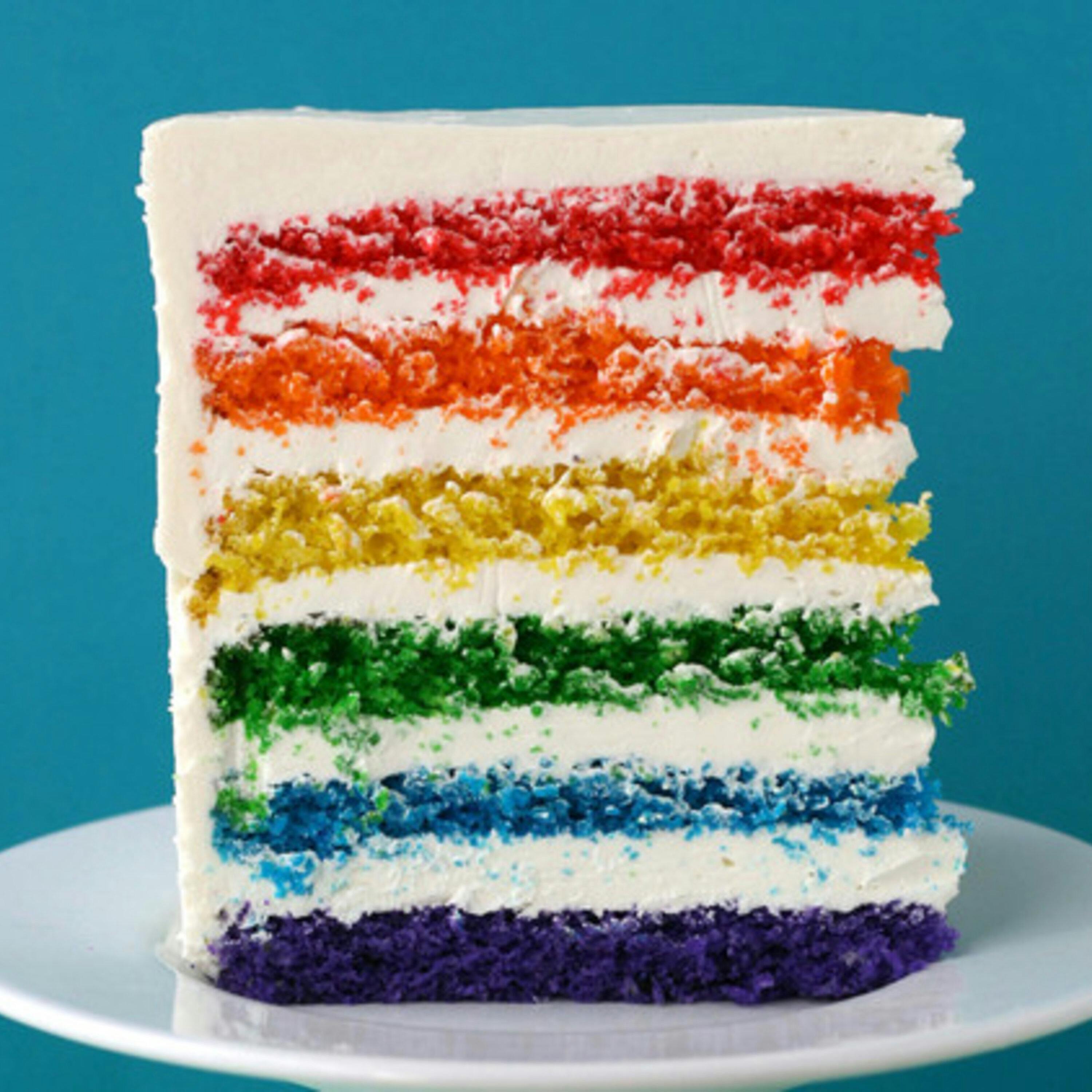
Speaker 5 Before synthetic dyes were invented, most cake frosting was white. Now ordinary people could make gorgeous decorated cakes and desserts at home.
Speaker 4 But the tide of public opinion started to turn in the 1950s.
Speaker 7 There was an incident where a number of children became ill after eating orange-colored Halloween candy and later, several years later, also many people became ill after eating red colored popcorn which were sold for Christmas candies and these incidents were primarily due to synthetic dyes used for these candies.
Speaker 5 In response the government formed a special committee to investigate the safety of artificial food colors and between 1955 and 1960 they banned 11 previously popular colors including the one that made Florida oranges so orange.
Speaker 5 Fortunately, those oranges were mostly being turned into juice by then.
Speaker 4 But that wasn't the the end of the synthetic dye scares. The next big concern was around, can you guess?
Speaker 4 If you're not one of our younger listeners, you might know that we're about to talk about red number two.
Speaker 7 This is a synthetic dye which became one of the most controversial food dyes during the 1960s and 70s. So until then, this red dye number two had been considered one of the safest synthetic dyes.
Speaker 5 But in the 1970s, Soviet scientists published a paper saying red number two caused cancer in rats. So maybe it should be banned too.
Speaker 7 But this red dye number two was quite profitable for many dye companies and food companies because it was cheaper to use than many other red dyes.
Speaker 7 And also it could be used many different products like candies, soft drinks and many other food products.
Speaker 4 Other red dyes were kind of orangey red, but red number two was a bluish red and it was super super useful for food companies. It was stable and cheap and bright.
Speaker 5 And it was used in everything, the things you would expect, like cakes and confectionery and soft drinks and canned fruit, but also processed meat and vinegar and even white fish.
Speaker 5 A little bit of red number two apparently made white fish look whiter.
Speaker 4 The FDA decided that because of the Soviet tests, they should check red number two out.
Speaker 4 There were a lot of tests done on their food diet, and yes, some of the FDA tests did seem to show that it caused cancer in rats when they consumed like the equivalent of the amount of red number two you'd get in thousands of cans of soda per day.
Speaker 5 A lot of these tests seem to have been kind of badly done. The FDA apparently accidentally mixed up the control rats with the red number two rats at one point.
Speaker 5 But anyway, they finally decided the evidence was enough to ban red number two in 1976.
Speaker 7 But the safetiness of this red dye number two is still controversial because in the United States as well as other some countries, red dye number two is prohibited still.
Speaker 7 But some countries like Japan, Australia, New Zealand, and some other countries still allow the use of red dye number two.
Speaker 4 So it's unclear how dangerous it really is, but it did disappear from American food companies' palette.
Speaker 5 You know what else disappeared in 1976? Red Ms.
Speaker 7 After the government banned the red dye number two, Mars stopped making red candies. And instead they added, I believe, orange candies.
Speaker 7 And they claimed that they had not been using red dye number two, but the color red itself would confuse consumers.
Speaker 5 But wait, I hear you say, there are red M ⁇ Ms in my candy bag today.
Speaker 5 Yes, there are. The red M ⁇ M made a triumphant comeback in 1985 due to customer demand using a different artificial dye, of course.
Speaker 4 Even though many people enjoy these brightly colored M ⁇ Ms, a lot of consumers are still worried about synthetic dyes. There was a study out of the the UK that seemed to link them to hyperactivity.
Speaker 5 That study also had its flaws, but honestly, these things are really hard to study because we consume food colorings in tiny doses and combinations of lots of different foods over years and years.
Speaker 5 So it's almost impossible to actually pull out any individual chemicals' effects in humans over time.
Speaker 4 But one thing this whole synthetic dye hoopla did was, of course, reinvigorate the public's interest in natural dyes, those dyes that in the past had been so incredibly expensive or difficult to produce.
Speaker 4 Scientists in recent decades have found ways to make it a little easier to dye food from natural substances.
Speaker 5 But there's one color that they still can't really make, blue, which is our next story. True blue, we love you, but why oh why are you so difficult?
Speaker 11 Avoiding your unfinished home projects because you're not sure where to start? Thumbtack knows homes, so you don't have to.
Speaker 11 Don't know the difference between matte paint finish and satin, or what that clunking sound from your dryer is? With thumbtack, thumbtack, you don't have to be a home pro, you just have to hire one.
Speaker 11 You can hire top-rated pros, see price estimates, and read reviews all on the app. Download today.
Speaker 12 Support for this show comes from Odo. Running a business is hard enough, so why make it harder with a dozen different apps that don't talk to each other? Introducing Odo.
Speaker 12
It's the only business software you'll ever need. It's an all-in-one, fully integrated platform that makes your work easier.
CRM, accounting, inventory, e-commerce, and more.
Speaker 12
And the best part, Odoo replaces multiple expensive platforms for a fraction of the cost. That's why over thousands of businesses have made the switch.
So why not you? Try Odoo for free at odo.com.
Speaker 12 That's odoo.com.
Speaker 13 So the fun thing with natural colors is that you have to remember they are coming from different natural sources. So each color is going to have its own set of challenges within it.
Speaker 4
Katie Roundtree is a senior scientist with DDW The Color House. They're a natural food color company.
And when Katie says fun, she's saying it like teachers at the gym might do.
Speaker 4 It means it's going to be pretty hard.
Speaker 13 So for example, if we're looking at turmeric, that is not a very light stable compound. So it may be great in a cracker that's going to be sealed and in a bag and in a cardboard box over time.
Speaker 13 But we wouldn't use turmeric in a beverage that's going to be in a clear bottle because if we waited a couple days to weeks, it would completely fade out and be a clear beverage.
Speaker 5 Katie says natural, yellow, and orange are hard, but the hardest of all is blue. Our final color story.
Speaker 13 So one of the cool colors that I love in natural colors is spirulina. It's a protein-based natural color from algae.
Speaker 13 So when we're trying to make a dairy product like ice cream or a beverage that's milk-based into a blue color, we can have a a really pretty soft blue color and make it look really nice and fun to drink but when we're trying to use spirulina in a baked good the batter will look really nice and that really pretty blue color but then when we bake it we're denaturing the protein by exposing it to that heat and the color will completely fade over time so blue in bakery is definitely a challenge katie is being as upbeat as possible about making blue from natural sources she has to be because she works for a natural color company.
Speaker 4 But Kathy Martin is a bit more blunt about the challenge. She's a professor at the University of East Anglia and a specialist in all things naturally blue.
Speaker 6 The problem for the blue range, and green is also a bit of a problem, is that there aren't very good natural alternatives.
Speaker 6 So at the moment, the only really strong, you know, commercially strong colorant is from Spirulina, which is an alga. And it's much more greeny than blue.
Speaker 4 Blue as a color is actually really rare in nature. There are very few truly blue flowers or fruits, other than maybe blueberries.
Speaker 6
Blueberries are not really naturally blue. It's a purple color.
They're certainly not blue, in my view. But that's a matter of debate.
I mean, we would call that a purple color.
Speaker 5 We can agree to disagree here, but of course, overall, Kathy's right. Blue is extremely rare in nature.
Speaker 5 Most of the time, when you see blue flowers, like on a hydrangea, well, A, they're kind of more lilac-y than deep blue, and B, they're actually only blue thanks to a chemical reaction with the alkaline soil they're growing in.
Speaker 4 The fact that blue is rare in plants has to do with a couple of factors. First, most plant color chemicals absorb light in that bluish spectrum instead of reflecting that light as a color.
Speaker 5 It's also a hard color to produce biologically. Natural blue molecules have these decorated ring structures that Kathy says are quite fussy.
Speaker 6 Most of the flowering plants have colours that come from anthocyanins, and anthocyanins are very interesting phenolic molecules and they're quite unstable.
Speaker 4 Kathy is actually particularly obsessed with anthocyanins. She's been researching them for 35 years and because of that obsession she started looking into how to turn food blue.
Speaker 6 Okay so
Speaker 6 it was completely by accident really that we were interested in trying to increase the antioxidant capacity of tomatoes significantly to make higher antioxidant foods that might have health benefits.
Speaker 5 Kathy's first blue breakthrough came when she tried to breed a tomato that had super high levels of these healthy anthocyanins as well as regular lycopene. And her tomato turned out blue.
Speaker 6 So
Speaker 6 that's really a royal blue. And when you cut the tomatoes open, then everyone goes, wow.
Speaker 6 So
Speaker 6 I'm looking forward to making a royal bloody Mary.
Speaker 5 I will be honest, looking at the photos, Kathy's blue tomatoes are actually more indigo. I hate to say it, but they're about as blue as a blueberry.
Speaker 4 Still very pretty, though. But because of those royal blue, or maybe more indigo-y tomatoes, Kathy started to meet with companies that were interested in better natural blue food dye.
Speaker 5 Which is when she realized that a really bright blue was kind of a holy grail for natural food coloring. And so she started trying to make one using her favorite chemicals anthocyanins.
Speaker 6 So you can extract natural blues, say from cornflour or delphinium, but they don't have a very long shelf life, you know, at high pH and under normal conditions.
Speaker 6 You have to keep them frozen, otherwise, the colour disappears within about a day.
Speaker 4 Kathy and her colleagues looked through about 40 or 50 species of blue flowers. At one point, her postdoc was investigating delphiniums from his mom's garden, and then finally they found the winner.
Speaker 6 This wonderful plant that's called butterfly peak. I'm not going to call it by its scientific name, by the way, because
Speaker 6 its scientific name is Clitoria tonata,
Speaker 6 and it does look like a clitoris so that's why it's called that and you can edit that out.
Speaker 5 Why would we edit that out?
Speaker 6 Yeah,
Speaker 6 we could call it butterfly pea.
Speaker 5 Yeah, the butterfly pea or Clitoria Ternata looks like, well, it looks like what it sounds like, except that it's a really deep, intense blue.
Speaker 6 And you can buy it through Amazon to make a beautiful blue tea. You know, you can just put the dried leaf material into your Nespresso machine and you can get the blue tea coming out.
Speaker 4 The clitoria flower, I just like saying its scientific name, it's actually used to make tea in Thailand and it's used in dishes in Southeast Asia as well.
Speaker 5 With some work, Kathy figured out how to extract the blue from the clitoria flower and then turn it into crystals to make it more stable. And then she started using it to color food.
Speaker 6 Had some very nice cupcakes and ice cream, ice cream tree.
Speaker 4
And based on photos, actually blue. The biggest turtle is just growing enough of the flowers to meet industry demand.
Kathy says a company in Spain is working on that.
Speaker 5 Apparently this blue is fully kosher and quite stable in most applications, but it can't do everything.
Speaker 6 I don't think it wouldn't create a blue in a soda, you know, because that pH is very low, so it would change to a red color. Yeah,
Speaker 6 it's not good for fizzy drinks with rather low pH.
Speaker 4 Kathy does think she and other scientists might be able to improve the color and make it even more useful.
Speaker 4 And she thinks using these types of natural colors based on anthocyanins is a good way to get even more of that beneficial chemical into our diets.
Speaker 5 So one thing that's curious is that raspberries, yes, my favorite berry again, they're a good natural source of anthocyanins, but regular raspberries are red.
Speaker 5 Maybe a little bluish tint to the red, but not the electric blue of blue raspberry.
Speaker 3 I mean every all of us, everybody,
Speaker 3 I would wager that everybody in the United States who grew up in the United States has a pretty good idea of what blue raspberry is, of the kind of electric turquoise color of Rocket Pops or ICs or Jolly Ranchers and the kind of like acid tang of it and the way that it dyes your tongue.
Speaker 3 I think that's one of the best parts of it, right? That you eat this blue candy and then your tongue is this lurid shade of turquoise purple.
Speaker 4 As we mentioned earlier, Nadia Berenstein is a flavor historian, but as a side hustle, she has spent a lot of time trying to figure out how raspberries, at least least the fake ones, became blue.
Speaker 3 And
Speaker 3 usually there's a story about blue raspberry or the history of it that gets repeated often. And it basically goes like this,
Speaker 3 that in the early 1970s,
Speaker 3 FDA
Speaker 3 started to become concerned about the toxicity or the potentially harmful effects of a approved and commercially available and widely used dye.
Speaker 5 A widely used dye called red number two. This is a story we just told you in our red section.
Speaker 4 And as you know, red number two was used in all sorts of treats, especially those that were flavored to taste like cherries and raspberries, and then it was banned.
Speaker 3 Another dye that was available on the market but was rarely used alone was blue number one.
Speaker 3 And blue number one is the color of what we now know as blue raspberry. It's that kind of crazy electric blue.
Speaker 3 And so either Flavor Ice, right, this maker of kind of frozen, slushy ice particles and plastic sleeves, or Icy in the early 70s decided to forego the red coloring and make their raspberry flavor with only blue number one.
Speaker 3 And from then on, it took off and became a sensation.
Speaker 5 But like so many of the great food origin stories, this blue raspberry origin story might not be 100% true. Nadia has her doubts.
Speaker 3 It's a really appealing story, and it kind of makes sense. But the thing is, when you start looking
Speaker 3 into
Speaker 3 the historical record, blue raspberry as a flavor exists before then.
Speaker 3 There's also the problem that FDA didn't outlaw the red coloring until the mid-70s.
Speaker 3 And so you have to explain why these icy manufacturers would have kind of abandoned it before then.
Speaker 3 So I started looking through, trying to figure out if I could find the like original blue raspberry and
Speaker 3 found a bunch of examples of blue raspberry flavors in ice cream and popsicles in the early 50s,
Speaker 3 including a blue raspberry popsicle from 1955.
Speaker 4 So if the red number two ban is not the origin story for blue raspberry, what was the real story? Nadia did some digging.
Speaker 3 And I was trying to sort of figure out like what the deal with this was.
Speaker 3 And I found that it seems like blue raspberry started as a flavor in order to give ice cream vendors in the early 50s a way of creating a patriotic midsummer 4th of July, like Neapolitan style ice cream, except with red, white, and blue.
Speaker 3 You need a blue flavor, right? There were no other widely available blue flavors, so blue raspberry sort of comes out of that.
Speaker 5 Once again, I'm thinking, what about the blueberry? Why not be patriotic with the blueberry? I know Kathy doesn't think they're really blue, but surely they're blue enough to celebrate the flag.
Speaker 4 Turns out there just weren't a lot of blueberries around at the time. They hadn't yet become the sensation they are today.
Speaker 5 So the blue raspberry was really the only blue fruit that a flag-loving American could consume on his or her national holiday.
Speaker 3
Many of the ice cream advertisements that I found seem to be linked to this kind of patriotic notion. And there's also like rocket pops.
So it comes out of this, I don't know, Cold War
Speaker 3 US, like let's respect and celebrate the flag by eating it mentality.
Speaker 4 Totally remember eating those red, white, and blue rocket pops when I was a kid in the 70s with the blue raspberry at the very bottom. So patriotic and so very Cold War.
Speaker 5 I ate them in England thinking they were the colors of the Union Jack, but never mind.
Speaker 4 But whatever whatever flag you fly, the fact remains it was because of this weird need for patriotic food that the food industry taught us to expect something electric blue to taste like, well, that acidic fruity blue raspberry flavor, just like the food industry taught us to expect bright orange oranges and yellow bananas.
Speaker 5 This is the story that I tells in her book.
Speaker 5 Color became more important in how we choose food as the role of our other senses diminished because of advances in technologies like printing and packaging and food coloring.
Speaker 5 It was just easier for companies to standardize and optimize color than smell, for example.
Speaker 4 That transition and that influence has always been eyed with some suspicion, but we've kind of gone along with it, at least in the US.
Speaker 5 But today, we're in kind of a weird place.
Speaker 4 People want more natural dyes, but they also still want brightly colored foods.
Speaker 5 The best example of this dilemma is probably the Trix debacle of 2016.
Speaker 5 Trix, for those of you who haven't had the pleasure, is a fruity, pebble-shaped breakfast cereal, and it used to be very brightly colored.
Speaker 8 Tricks, lemon,
Speaker 4 But then people started clamoring for naturally dyed cereals, including the not very naturally flavored tricks.
Speaker 4 So instead, General Mills used dyes that were made from radishes, turmeric, and purple carrots. And the resulting bowl of tricks was more muted than the original.
Speaker 5 Pastel at best, if you were being kind.
Speaker 4 And people really didn't like it. They always said they wanted natural dyes, but really they wanted their tricks to look the way it had always looked.
Speaker 4 And so, now you can buy both the natural version and the synthetically dyed one.
Speaker 5
I says today, the U.S. is still by far the largest market for synthetic food colors.
And the rise of Instagram and rainbow unicorn lattes has only fueled that.
Speaker 4 Just like the technologies of the early 1900s allowed people to see the same colors in advertisements and expect that color in their food, today with Instagram filters and the idea that we should eat the rainbow of super bright fruits and vegetables, and because we have lots of bright synthetic dyes, people expect their foods to be more colorful than ever.
Speaker 5 But while it might be be easier than crushing insects and cheaper than saffron, no one said making unicorn-colored food was easy.
Speaker 14 I have never been so stressed out in my entire life.
Speaker 15 This guy is losing it, and you won't believe why.
Speaker 14 I have never made so many Frappuccinos in my entire life.
Speaker 15 Brayden Burson is a Starbucks barista in Colorado, and he's had a rough day making dozens of the new and wildly popular unicorn frappuccino drink.
Speaker 15 It may look look like a dreamy concoction, but apparently it's a nightmare to make.
Speaker 14 I have unicorn crap all in my hair and on my nose, and people were coming in left and right, drive-through and in the front.
Speaker 14 So for the love of God and everything that is good, don't get the unicorn for Rappuccino.
Speaker 4 Once again, you listeners might have noticed that we have almost no ads this episode because companies have pulled their advertising in the wake of of the coronavirus.
Speaker 4 This is just a reminder in these challenging times, we are a two-woman team and Gastropod is our full-time job and we rely on listeners like you to make the show now more than ever.
Speaker 4 We hope you're all safe and healthy and if you're in a position to help support us, you can find out more at gastropod.com slash support or on Patreon.
Speaker 5 It makes all the difference, especially right now. The other thing that really helps is spreading the word about the show.
Speaker 5 A lot of folks don't have a commute right now and maybe are juggling a lot more than usual, but listening to Gastropod is a pretty fun distraction from the news, we hope.
Speaker 5 Plus, who else is going to tell you the true story behind Blue Raspberry's?
Speaker 4
So please tell your friends, co-workers, family, everyone you know who needs a little break. Thanks.
We appreciate each and every one of you.
Speaker 5 Thanks also this episode to Ai Hisano, the author of a new book called Visualizing Taste, How Business Changed the Look of What You Eat, and to Raymond at Kyoto University for helping us tape her.
Speaker 4 Thanks so much to flavor historian Nadia Berenstein and her husband Robbie Lee, who is a musician and recorded her so beautifully for us. We have a link to Nadia's website at gastropod.com.
Speaker 5 And thanks also to Tracy Khan at the UC Riverside Citrus Variety Collection, David Kastan, author of On Color, Kathy Martin of the University of East Anglia, and Katie Roundtree at DDW The Color House.
Speaker 5 We've got links to all of them, plus some beautiful blue tomato pictures at gastropod.com.
Speaker 4 Huge thanks, as always, to our wonderful intern, Ashley Beluncher. And that video you heard at the end of the show, that was from Inside Edition from April 2017.
Speaker 16 Saks Fifth Avenue makes it easy to holiday your way.
Speaker 16 Whether it's finding the right gift or the right outfit, Saks is where you can find everything from the perfect Chloe bag for your hard-to-shop for sister to a Prada jacket for a fancy holiday dinner.
Speaker 16 And if you don't know where to start, Saks.com is customized to your personal style so you can save time shopping.
Speaker 16 Make shopping fun and easy this season and find gifts and inspiration to suit your holiday style. At Saks Fifth Avenue.
Speaker 17 As marketing channels have multiplied, the demand for content has skyrocketed. But everyone can make content that's on brand and stands out with Adobe Express.
Speaker 17 You don't have to be a designer to generate images, rewrite text, and create effects. That's the beauty of generative AI that's commercially safe.
Speaker 17 Teams all across your business will be psyched to collaborate and create amazing presentations, videos, social posts, flyers, and more.
Speaker 17 Meet Adobe Express, the quick and easy app to create on-brand content. Learn more at adobe.com/slash express/slash business.