Forget Plain Vanilla: You'll Never See The World's Favorite Flavor the Same Way Again
50m
Today, 'vanilla' often means boring, and yet the edible seedpod of this Central American orchid is one of the most expensive spices in the world, not to mention one of the most popular flavors globally. So how did this coveted bean get such a ho-hum reputation? Listen in this episode as Gastropod travels to vanilla's homeland in the highlands of Veracruz, Mexico, to investigate. It's a tale of botanical piracy, beaver butts, and ice-cream barges, in which an ingenious enslaved tween and the product of pulp paper waste combine to transform vanilla from a complex and sophisticated elite treat into the single-note synonym for dull. Plus, we meet the thrilling alternative vanillas we're all missing out on, and serve up the recipe for a vanilla tasting party that's guaranteed to make you fall back in love with the world's favorite flavor. You'll never see vanilla as plain again!
Learn more about your ad choices. Visit podcastchoices.com/adchoices

Press play and read along

Runtime: 50m

Transcript

I like vanilla. I'm boring.
I like very plain things.

That's perfect. Life isn't that simple, Andre, and maybe that's what you couldn't handle.
Maybe that's why you ran off to someone so basic she makes vanilla seem spicy. You think vanilla is dull?

I think vanilla's playing a little bit safe.

You know that I love you.

I know that you love me too.

But we both know that our marriage

was kind of a low.

Vanilla

vanilla just can't get a break, huh? Anything boring or bland or basic, it's all just plain vanilla. And yet, vanilla is one of the most popular flavors in the world.

It's the most popular flavor for ice cream. It's clearly beloved.
So, what gives? That's just what we're going to find out this episode.

This is indeed Castropod, the podcast that looks at food through the lens of science and history. I'm Cynthia Graeber.
And I'm Nicola Twilley.

And this episode, we've got the story story of how one of the world's most expensive and rare spices became utterly ubiquitous.

And how we might be missing out on some of vanilla's most exciting flavors as a result.

This episode was supported in part by the Alfred Peace Loan Foundation for the public understanding of science, technology, and economics.

Gastropod is part of the Vox Media Podcast Network in partnership with Eater.

Support for this episode comes in part from Visit California. I am a big fan of California, obviously, because I choose to spend my life living here.
But here's the pitch.

Play brings out the best in us. It fuels our creativity, lifts our spirits, and connects us both to ourselves and to each other.
And the ultimate form of play is a California vacation.

It's the perfect place to savor your next unforgettable experience, or more specifically, your next unforgettable meal.

From vineyard picnics and farmers markets to tacos by the beach, flavor is part of every adventure.

With so many iconic iconic landmarks to visit and new tastes to try, you can discover endless ways to play in California, the Ultimate Playground.

Start planning your trip to the Ultimate Playground at visitcalifornia.com.

Amazon has everything for everyone on your list. Like your sister, who refuses to accept that she does not have a face for bangs.
Get her a lovely hat.

Amazon has a huge selection of fashionable gifts, and with holiday deals, you can save big on hats, home decor, even the hottest toys. Grab some barrettes while you're at it.

For that, oh, so awkward, sweep your hair to the side until your bangs grow outstage.

So, vanilla, is it a spice? It's actually a very good question. I say yes.

Eric Jennings is a historian at the University of Toronto and is the author of the book Vanilla, The History of an Extraordinary Bean. It's weird.

When I add cinnamon or cardamom to something I'm baking, I do think of them as spices. But when I add a few drops of vanilla extract, I don't think of it as a spice.

And I certainly don't think of it as a rare and precious thing.

One way of defining it that I think is sort of interesting is that it's probably the most expensive spice along with saffron and probably

the most expensive crop to produce per gram. But it's not just a food.
It's also a perfume, a fragrance. So it's many things wrapped in one.
Vanilla is also a flower and not just any flower.

It's in the same family as some of the most finicky and expensive flowers around.

It's an orchid and it's the most commercially important orchid. Miguel Angel Lozano Rodriguez is a researcher at the University of Veracruz in Mexico.

His family also owns a farm in the region, mostly growing coffee and sugar cane and lemons. But he took us to visit where he grows vanilla as part of a research institute at the university.

Veracruz is on the east coast of Mexico on the Gulf of Mexico. It's an incredibly lush tropical region.
It's super green and also very mountainous, with long winding roads pitted with giant potholes.

It was unsurprisingly hot and humid when we visited, and we did also get caught in the occasional downpour.

All of that makes it perfect for growing vanilla, and in fact, the region is the center of Mexico's vanilla production.

Heat, humidity, and extremely dubious roads aside, we were excited because, as norm-core as vanilla seems, neither of us had ever seen a vanilla plant in real life. I truly didn't know what to expect.

A fragrant forest, a field of creamy flowers, all was about to be revealed.

Here, we can see what the vanilla plant looks like. The vanilla plant is a climbing plant.
It's a vine. We touch the vine to see what it feels like.

It's thick and tough and kind of rubbery, and it can grow up to about a hundred feet long. In the wild, they climb and attach themselves to trees like palm and cacao using aerial roots.

At Miguel's farm, they're trained onto a wooden trellis. He told us he grows two different species.

There's vanilla all over the world, but

only the vanilla species that grows in the Americas produce aromatic fruits. All orchids, all 26,000 different species of orchids in the world, they all produce seeds, mostly in seed pods.

There are 120 different species of vanilla orchids, and they all produce pods too. The The name vanilla actually comes from the Spanish for little sheath or pod.

As Miguel said, those aromatic seed pod-producing vanilla orchids are all originally from the Americas, from southern Mexico, Central America, and the northern part of South America.

For most of human history, if you wanted to taste vanilla, that's where you had to go. And that's why we went there to go back to vanilla's origins.

Miguel told us there are 30 American vanilla orchids that produce aromatic fruits or pods, but only three of them produce the aromatic pods that we think of and use as vanilla today.

And these days, those three species are grown all over the world.

The main species is vanilla planifolia. That's the species that's widespread throughout the world.
It's in the Indian Ocean, it's in Asia, it's all over.

From Mexico to South America to Brazil, there is vanilla planifolia. It's the most important.
Si, la principal species de cultivo is vanilla planifolia.

Yes, the main cultivated species is vanilla planifolia.

The second is vanilla pompona. There is a third one called vanilla tahitensis, but that's a hybrid.
It's a hybrid of two Mexican species.

That first voice, that's Miguel's colleague, Araceli Perez Silva. She's a professor at the National Technological Institute of Mexico in Oaxaca, and she's also a vanilla researcher.

If you buy a pod in the grocery store, or if you buy vanilla extract, it's basically all made from planifolia.

Pompona originally grew further south in Central and South America, and it's used in food and also perfume.

In Titensis, nobody knows exactly what wild vanilla orchids it came from originally, but it's mostly grown in the Pacific today and it's mostly used in perfume.

Each of these species is recognizably vanilla, but they are different. For one, their flowers smell really different.

We saw those flowers at Miguel's farm, and one of the most noticeable things about them is that they don't smell anything like vanilla. In El Caso de Vanilla Planifolia, the aroma is differente.

In the case of vanilla plonifolia, the aroma is different.

We say that the aroma smells like grass, like a plant, like green.

And that's the scent that attracts the natural pollinator. Miguel showed us a flower growing on one of the planifolia vines.
It was not super spectacular, if I'm being honest.

Just a little creamy green-colored orchid flower. But we sniffed.

Planifolia doesn't smell.

It's like a peppery green, not a. I actually think it's lovely.
It's very light, but it's more than just the leaves. Like, it has a very lovely, light, slightly floral scent.
But yes, green.

Although, for us, that aroma isn't as perceptible as the aroma of a rose or a jasmine. For bees, the flowers have fragrances and aromatic compounds that attract them.

These serve as a signal for them to identify a flower. The pompona orchid flower is significantly larger and a little yellower, a little more trumpet-shaped, and a lot stronger smelling.

Oh my gosh, it smells like gum.

It smells exactly like chewing gum.

It's like it's spearmint chewing gum. This was so, so weird.
Sniffing a vanilla orchid and having it smell of spearmint instead of vanilla. But of course, the vanilla flavor is all in the pod.

And the pods have different flavors too. A pompona pod does not taste exactly like a planifolia pod.

Planifolia is the most common today because it tends to have the highest percentage of the chemical that makes vanilla, particularly vanilla-y.

Typically, vanilla taitensis and vanilla pompona have a little less of that pure vanilla note and a little more of other flavors and aromas.

Tahitansis and vanilla pompona are characterized by the presence of anise compounds. That's what dominates in the species.

But actually, the amount of vanilla or anise compounds, or even the percentage of the other hundreds of aromatic compounds in a vanilla bean, this all changes depending on how and where the bean is grown and treated.

The terroir has a lot to do with the aromatic potential. Climatic conditions, agricultural management, it all has a super important effect on the final aroma of the product.

It's like wine. If the producer processes it in a certain way, the aroma changes.
If it's from a certain region, it can also change. So everyone has their own vanilla aroma.

This question of terroir is why you sometimes get a choice between vanilla from Madagascar or Sumatra or even Papua New Guinea in the store.

They're the same species, planifolia, just grown in different places. According to vanilla connoisseurs, the Madagascan beans are very traditionally vanilla-flavored.

The Sumatran are typically more woody and smoky, and the Papua New Guinea ones are sweeter and more floral.

But, like Miguel and Araceli say, that also depends on how the beans are grown and processed.

Mexican vanilla is known for being a little more complex, a little spicier, and more sophisticated than the Madagascan beans, which I guess is as it should be because that's obviously the OG vanilla.

Mesoamerica is where the story of vanilla begins.

It's been used since pre-Hispanic times, not only in Mexico, but in all the cultures of the American continent.

They each have their own vanilla varieties and have used them to send their clothes, to make necklaces.

In what's now Veracruz, the Totonac people are considered to be the first to really intentionally cultivate vanilla, going back at least as far as the 1100s.

But earlier cultures had already been enjoying it for centuries. The Mayans, for example, traditionally used it to flavor their chocolate drink.
That's something the Aztecs copied.

So, that important was vanilla back then

that, you know, Moctezuma, the great leader in Mexico City, let's call it Mexico City. Back then was a tenas seatland.

He used to claim vanilla as a tribute. You know, back then they used to make chocolate, you know, cacao, vanilla, and corn into a drink that only the warriors and the high leaders used to drink only.

Luis Mora is a vanilla farmer in Veracruz, and he's incredibly proud of the long history of vanilla in the region.

That's the same feeling that motivated Rebecca Alicia Menchaca Garcia, who directs the vanilla research at the University of Veracruz, to devote her entire 30-year career to this particular orchid and its flavorful fruit.

She grew up in the region and she remembers vanilla-flavored shaved ice as a huge treat.

I was won over, so I started asking, What is that?

What are those pots? And I started to get interested.

There aren't a lot of written records of how vanilla was used in the region, and the beans themselves didn't leave many traces at archaeological sites.

The earliest written account of vanilla was in a catalogue of herbal remedies. It was written in 1552 by an indigenous Nahua who had converted to Catholicism and translated Nahua knowledge into Latin.

It's reported in the Badiano Codex that it was used as a medical plant for travelers, for headaches, to heal infected wounds, to speed up childbirth.

The Codex was, of course, written after the Spanish conquistadors arrived, and unlike, say, the tomato, which, as regular listeners will know, took a while to catch on in Europe, vanilla was an instant hit with Europeans, at least among those who were lucky enough to get a hold of it.

By the 18th century, it is known as an elite fragrance and flavor used by the nobility and the rising middle class in port cities, for instance.

The first Europeans who were wealthy enough to try vanilla, they copied the Aztec rulers and elites.

It would have involved at first a cold drink, really resembling the Aztec chocolate, and then gradually over time it gets warmed.

Like the Totonacs and Mayennes, wealthy Europeans also used vanilla as a scent.

Marie Antoinette apparently perfumed her garments with vanilla at Versailles, and it was so valuable that a Spanish king presented the Pope at the time with a special gift of vanilla pods in a gold casket.

Clearly vanilla was incredibly expensive. And also imagine a vanilla pod.
It's so small and light, it was pretty easy to steal. So it's the ideal thing to smuggle and not declare it customs.

It's not just piracy though, there's also all sorts of other skullduggery, right?

There's fraud, there's theft at the point of harvest, which has been the bane of vanilla producers for centuries, right? And this is true for all groups.

Totonoc people complain about it, Malagasy cultivators complain about it. It is still true today.

Given how valuable vanilla was, it's not surprising that Europeans wanted to go beyond just importing vanilla and instead get control at the source.

People in various empires describing how this is a luxury crop and it can be very lucrative. And wouldn't it be great if we could produce it just like the Spaniards do in New Spain?

But there were some problems. In theory, people could just get some seeds from the pot and plant them.
That'd That'd be logical.

But it turns out that's really, really difficult to do, in part because the seeds are so tiny.

The seeds are microscopic. They are called seed powder.
They are among the smallest seeds that exist.

Fortunately, you can also get vanilla to grow from cuttings. You take a piece of an existing vanilla vine and you can grow a whole other plant that's a clone of the original.

But the problem is that they never bear fruit. They'll even, you know, grow and thrive, seemingly.
They'll flower, but nothing ever happens after that.

And the reason for that is that the different species of vanilla orchids in the Americas each depended on their own particular local pollinator.

With most plants, when they're taken out of their native habitat, some other local bee or bug would fill the pollination gap. But in vanilla's case, when they moved overseas, that never happened.

Nothing filled the niche. And so while Europeans were able to plant vanilla orchid vines all over the world, the flowers basically never produced any fruit.
Which was extremely frustrating.

And so things remained in the vanillaverse for quite a while until a botanically minded tween living on a far-flung island in the Indian Ocean came up with a solution.

We've got that story next after a quick break.

Support for this episode comes in part from NetSuite. There is a lot of talk about AI nowadays and how to actually make use of it.

Especially if you're running a business, the possibilities seem endless, so your research might just leave leave you with more questions. Well, you can start finding answers with NetSuite by Oracle.

NetSuite offers a clear picture of how you can put AI to work for your business. It's a top-rated AI cloud ERP trusted by more than 43,000 businesses.

It brings together your financials, inventory, commerce, HR, and CRM into a single source of truth. And all that connected data is what makes NetSuite's AI smarter.

So it doesn't need to guess, instead, it can automate routine tasks, deliver helpful insights, and help you cut costs and make decisions quickly and confidently.

It's AI built into the system that runs your business. Right now, get the free business guide demystifying AI at netsuite.com slash gastropod.
The guide is free to you at netsuite.com/slash gastropod.

Netsuite.com/slash gastropod.

Fox Creative. This is advertiser content brought to you by Vitamix.

Throughout human history,

in homes and restaurants in every corner of the planet, kitchens have always been full of noises.

Okay, so long before the buzz of the fridge and the whir of the Vitamix, the story of kitchen noise started with the sound of fire.

Its crackle has been part of the essential kitchen soundtrack for over 1.5 million years.

With the Stone Age came essential kitchen tools like the mortar and pestle, rolling pin, the knife, and even the humble spoon. Skip ahead a bit and we have the modern kitchen.

Following the Industrial Revolution of the 1850s, electricity brought a whole concert of beeps and buzzes.

First, there was a dishwasher in the late 1800s, the garbage disposal in the 1920s, the electric blender in the 1930s, and the microwave shortly after that.

But all these sounds from across kitchen history, the clank of the mortar and pestle, the buzz of the Vitamix, the click of the stove, form the course of experimentation, nourishment, and love that fill the kitchen up.

Kitchen noise is nothing short of the sound of joy. Dinner is served.
Vitamix knows your blender is one of your kitchen's essential noisemakers.

Its worrying is the sound of making your family's famous hummus, the creamiest strawberry smoothie, or that perfect summer pesto to enjoy around a crowded, noisy table.

Add a little more joy to your kitchen and shop only the essential. Like the new Vitamix Ascent X5 at Vitamix.com.

Support for this episode comes in part from Visit California.

Whether it's a spontaneous stop for oceanside ceviche, made, of course, with the freshest ingredients, or an unforgettable five-star meal in a bustling city, California truly has it all.

For your next vacation, you can experience its breathtaking scenery, vibrant culture, and the spirit of play that flavors it all.

And in my delightful home state of California there's room for everyone to play their own way. Your outdoorsy sibling can hike through redwood forests before refueling at a local cafe.

Your kid craving more than just a dip in the Pacific can learn to surf and then grab the ultimate post-beach burrito.

And if you're listening to Gastropod, you'll probably be on the hunt for the best tacos, wine tastings, or delicious roadside pie while doing a little taste test research along the way.

Every day in California offers endless adventures and endless flavors. It's a place where you can play your way, where people come from all walks of life for the adventure and meals of a lifetime.

Start planning your trip to the ultimate playground at visitcalifornia.com.

The tale of how people figured out how to get a pod from their vanilla orchids without the right bee starts with a man named Charles Morin. He was a botanist living in Belgium in the early 1800s.

He's actually a typical man of science of his era, which is to say he's really touched on just about every discipline, right?

He's worked on the reproduction of plants, but he's also interested in fossils, he's interested in maps, he's interested in just about every dimension of science.

At the time, Europe was in the grip of orchid fever, and so Charles turned his attention to them. As far as we can tell, he was able to achieve manual pollination of other kinds of orchids.

Charles then got a hold of a cutting of a vanilla vine from a botanical garden in Antwerp, and he started growing it in a greenhouse in Liege. He experimented on it.

He tried out the techniques he'd been able to apply to non-vanilla orchids. And lo and behold, nine months later, because yes, just like humans, vanilla takes nine months to grow and mature.

Nine months later, he has the same number of fruit as he did flowers. And so the method was a success.

Now, you might be thinking, wait a minute, Charles Morin does not sound like a tween, and Liege is not in the Indian Ocean. And you're right.

Charles does not get the credit for figuring out how to hand pollinate vanilla, even though he did it. There's a few reasons for that.

There's many problems, one of which is he's achieved this in sort of laboratory conditions in a greenhouse. The other is that he's extremely mysterious about what he did.

We don't actually, to this day, know exactly what Charles Moran's method was. He wrote down some very vague descriptions about orchid lady parts and what should be done to them.

They're really quite disturbing in a way. But anyway, it doesn't bring us any closer to knowing what he actually did to the orchids.

Charles was deliberately cagey about his process because he wanted to monetize it.

He applied to the Belgian government, but academics had to get special permission to monetize their work, and the government didn't seem too interested.

He mailed his pods around the world, trying to drum up excitement, but that didn't work either. His big dream was to set up vanilla production at scale in greenhouses across Belgium.

And honestly, even with his pollination breakthrough, that would not have worked out. Growing vanilla in greenhouses in Northern Europe is not a viable business model even today.

Charles seems to have moved on to other projects and let his vanilla successes slide.

Meanwhile, thousands thousands of miles away on a small island at the time called Bourbon off the coast of Madagascar, off the coast of Africa, a 12-year-old enslaved African named Edmund was making discoveries of his own.

What do we know about this enslaved 12-year-old? We know what we do because others have written about him. He was non-literate.
That in itself isn't super surprising.

He was an enslaved child living on a plantation on an island. At the time, Bourbon, which is a mountainous, lush, tropical island, was a French colony.

It's still part of France today, although it's been renamed Réunion.

And in the 1830s and 40s, it was still being run as a plantation economy.

Wealthy Frenchmen owned large plantations growing tropical crops like cacao and sugar cane, with enslaved Africans doing the hard labor in the fields.

Some of those enslaved Africans were what was called specialized slaves.

They might have been skilled in areas like baking or fishing, or they might have acted as translators for visiting missionaries. Edmund seems to have been a specialist in plants.

Billy Beaumont, who is his de facto owner, describes him as an expert botanist who knew the Latin names for plants. Edmund clearly knew a lot about plants, including how to pollinate them.

And so a lot like Charles Moraine, he was able to apply that knowledge gleaned from other examples onto vanilla.

In 1841, the way the story goes, Ferriol Bellier-Beaumont went out for a walk in his garden, and he apparently found a pod on one of his vanilla plants.

And he asked Edmund, well how did this come about? Was this some kind of miraculous spontaneous vanilla reproduction? And Edmund said, no, no, I did this. I pollinated this some months ago.

And Beli Bomo didn't believe him. And then the next morning he sees another and he asks him again.

And that is when, when asked, Edmund was able to reproduce the method, show him exactly how he did it.

With this little twig, he was able to push back the membrane that separates the male and the female part of the orchid, putting them into dialogue.

So with just the right deft touch, he put the two parts together, and lo and behold,

a pod later appeared. It's actually quite hard to do this, to get the male and female parts of the vanilla orchid flower to join up.

We should know because we watched Miguel doing just this on his family farm in Mexico. Miguel had armed himself with a special pollination wand, aka the thorn from an agave.

It was a couple of inches long, like a thin, pointy toothpick.

To get at the orchid's male and female parts, the first thing Miguel had to do was kind of peel away most of the orchid's petals and leave just one of them.

It's a little thicker than the others, and at the top of it, it has a little almost tube that's covered with a tiny piece of the flower like a veil.

In order to carry out artificial pollination, what we have to do is remove this veil to expose the reproductive structures.

So, what I'm going to do is break the veil to expose the reproductive structures that are in here.

Every single vanilla flower has both male and female parts in it. They're just kept separate by other plant parts so it can't self-pollinate.

The male part is at the top, and you kind of have to lift up a flap to get at it.

So, what I'm going to do here, very slowly, is expose all these parts. Here, at the top, is the vanilla pollen.
And down here, this structure that looks like a small fold is called the rustellum.

The rustellum is a layer of tissue that prevents the pollen from coming into contact with the female part. Now, I'm going to remove the pollen so you can see it.

After he touched the thorn to the flower part, you could see a tiny little mustardy yellow blob on the end of the agave thorn.

And here it is. That's the pollen.

Naturally, what would happen is that the bee would enter, and when it leaves, it picks up this pollen on its back and carries it with it until it visits another flower.

So let's pretend we are the bee visiting another flower.

We made the appropriate buzzing sounds and wandered over to another willing flower.

Once again, Miguel peeled away the petals to expose the thicker tube-like part with the reproductive organs on it, and then this time he lifted a different flap, a little lower down the tube thing than the male part.

And here, I don't know if you can see this tissue, it's the Rustellum,

and below the Rustellum is the stigma, which is the female part.

So, what I'm going to do is lift it with the same thorn and deposit the pollen. And that's it.
It's pollinated. I like how you give it a little stroke down.

See?

Yes, to ensure that the pollen is sealed with the Rustellum.

Wow. It's pretty fiddly.
It's delicate, isn't it? See? Yes, of course. I'm doing it slowly, so you can see.
But the producers do this on the same flower, so it's very fast.

It's more rapido. In nature, this is just what would happen with a little stingless bee taking the place of Miguel and the agave thorn.

But in a commercial vanilla field, as Miguel said, growers pollinate each flower with its own pollen, human-assisted self-pollination.

What Miguel was showing us is essentially Edmund's method, the way he described doing it nearly 200 years ago. It's still the way it's done today.

Of course, we wanted to have a go ourselves, although having seen Miguel do it, I was not confident that I had what it took to be a successful vanilla matchmaker.

Pollination, especially at the beginning, is very much about practice. It's about practicing and practicing because it's not easy.

Once people know how to pollinate, the success rate goes up to 90 to 100%.

When we are learning, it might be around 50-50.

So, our expectations weren't too high. Miguel headed over to another flower and handed Nikki the agave thorn.
I can see the structure, so I'm trying to pull this down. Yes? Yeah.

Okay.

If you want, you can remove these petals. I can see the pollen.
Oh my god.

Okay, and now I want to grab the pollen. Exactly, just like that.

Oh,

excuse my friend.

I was doing so well. I did eventually get the pollen on the thorn, which was very exciting.
And so now I'm going to try and pollinate. Wow, this is harder than it looks, Cynthia.

Okay, so now I need to lift this up

and tuck this under.

Okay, well that was

going great until it wasn't, basically.

But it is your first time. Yeah, yeah.
Thank you. I gave it a try on Luis's farm, and he had me do it without the agave thorn, just with my finger and fingernail.

Okay, so then I'm going to push this up here. Yeah,

the little membrane right here, the little thing right here? Underneath here? Lift it. Okay.
Oh, there we go.

Yeah, right here.

Right there. And then

your finger. Uh-huh.

Right there. Push it together.
And then just push it together like that? Yes. Ooh, this is different.

It was a slightly different technique than the one Miguel had showed us, but this also was not easy.

And Luis needed to help me seal up the flower so that the pollen actually stayed inside where it was supposed to. And imagine you have to do like 3,000 flowers yourself.
You have to be quick.

Having tried this ourselves, we had a whole new respect for Edmund for coming up with it. And frankly, it took him a while to teach others how to do his magical orchid pollination trick.

His owner sent him out to teach all the local landowners how to pollinate their vanilla orchids, and eventually it did catch on.

Within a few decades, Réunion was the largest vanilla producer in the world, larger even than Mexico.

Edmund is known as the father of the world vanilla industry today, but his breakthrough didn't lead to fame and riches for him. His owner didn't free him.

That was something that sometimes owners did when their slaves were particularly helpful, like Edmund was. Instead, he wasn't freed until slavery itself was abolished seven years later.

He died in relative poverty, even though he was the one who cracked the vanilla code. He really unleashes the globalization of vanilla.
Vanilla requires some conditions, right?

It can't grow in areas where there's frost at night. It does, however, require some cool consecutive evenings to flower.

And so once vanilla was untethered from its insect pollinators, it could really grow in any of those areas that met those natural conditions.

Vanilla plantations sprang up on Tahiti and Madagascar and other Indian Ocean islands like the Seychelles. Unsurprisingly, the price of vanilla fell.
It was cut in half.

And so more and more people started using it. By the nineteenth century, sort of, you know, everyday women and men are starting to encounter vanilla for the first time.

Particularly in France, where vanilla had always been popular with the elites, but post-Edmund's pollination revolution, vanilla started popping up in recipes aimed squarely at the middle classes.

There were more mentions of vanilla than pork in one 1867 French recipe book: vanilla sauces and vanilla souffle and vanilla tartlets and vanilla ice cream.

The vanilla ice cream craze spread to the U.S., and that obsession actually took root before the manual pollination discovery, and it has to do with one of America's founding fathers.

How does this start? Well, by all accounts, it's with Thomas Jefferson in 1780s Paris.

And it is there that he sees and tastes vanilla ice cream for the first time, and he clearly falls in love with it. He's totally under vanilla's charm.

And so he starts, upon his return to Philadelphia, going into a kind of withdrawal, for lack of a better word.

And he writes letters asking people to arrange shipment of vanilla sticks for him in Philadelphia from France.

Back when Jefferson was importing vanilla and introducing his fellow Americans to the joys of vanilla ice cream, vanilla was still very much an elite flavor.

But again, after the 1850s, once the price of vanilla fell thanks to Edmund's pollination breakthrough, Jefferson's favorite dessert became much more accessible.

And the price also fell further because people started making vanilla extract. They were soaking the vanilla pods in booze.

That had long been known as a way to capture flavors and scents, but it also made vanilla even cheaper.

And vanilla extract starts going into everything, and you need relatively little vanilla to produce the extract, which is mostly water and alcohol.

All of this combined to make vanilla just much more common. Coca-Cola had vanilla extract in it.
We've made an episode all about Coke.

It was introduced in the 1890s and was already hugely popular by the early 1900s.

So a lot of Americans were tasting a little vanilla in their Coke, but they were also most definitely enjoying it in their ice cream.

Vanilla ice cream becomes the quintessential American flavor, right? There's evidence that one in two ice creams in the early 20th century are vanilla flavored.

The military was apparently so vanilla ice cream obsessed that during World War II, there was even an ice cream-making barge that was deployed to the South Pacific to make that cold, sweet vanilla treat for the soldiers there.

There's an anecdote of a ship going down and of U.S. servicemen basically raiding the freezers to make sure they got some vanilla ice cream before the thing went down.

That may be apocryphal, but it's oft repeated. And there's an example of an ad from Life magazine that I provide in the book of

GIs being finally freed from POW camps in Western Europe after the Allied landings in Normandy and of their first desire being for vanilla ice cream.

It is the sort of quintessential thing that they've been missing all of this time, or at least it becomes a kind of shorthand for home and for what they've been missing.

So vanilla was clearly popular amongst the rank and file, which makes it seem as though vanilla production must have boomed.

And it had, but that's relative, because a little vanilla goes a long way, especially in extract form.

Vanilla production had definitely expanded since the days of natural pollination in Mexico, but it was still pretty tiny and extremely labor-intensive. It still is.

Vanilla is produced basically the same way today that it was a century ago. The whole process start

when you pollinize the orchid and the orchid only opens half a day and you have to be here six o'clock in the morning all the way through noon and pollinize as much orchids as you can.

Even in Mexico after Edmunds' discovery, they stopped relying on bees to do the pollination and turned to hand pollinating because you get a far more reliable yield that way.

Experts are obviously quicker than we were, but it takes a while to do thousands of plants.

You do that every day for the two-month flowering season, and then you have to wait nine months for the pods to ripen. You just can't rush vanilla.

But those mature pods the growers harvest still don't really taste or smell like anything. They're not ready.
They have to be processed. Vanilla gets prepared in a really intense way, right?

There's a short boiling phase, there's a blanketing phase, there's a sun-drying phase. You have to boil the pods to stop them from continuing to ripen.

That's the signal to the enzymes in the pod to start producing flavor molecules. In the blanket phase, the enzymes are getting to work.

In the heat under the blankets, they continue to produce and develop all the vanilla flavors we love. And then on to the sun-drying phase to get rid of a bunch of moisture and concentrate the flavor.

Starting from there, every day is more intense. I mean, when we're dehydrating vanilla, it's crazy.
It's funny, I tell you what.

In the three-month period of the vanilla dehydration process, I smell like vanilla like 24 hours. Luis told us that at some point over that three-month drying phase, he ran into a friend at the store.

He was like, oh man, I just want to eat you. And I started laughing so hard, I was like, stay away from me, man.
Luis's dad originally taught him how to process vanilla.

It had taken him years to perfect the method that he passed along, and Luis still remembers his first time doing it solo. I was so nervous.
I was like, what am I doing? Am I doing the right thing?

Am I gonna

lose this lot of vanilla? But that's always there. That's always it.
Every day you're thinking, and you go to bed and you're like, Is my vanilla doing okay?

There's a lot that can go wrong in all of these stages. At the end of it all, you want just the perfect pod with the right aromas and just the right amount of moisture still in it.

It has to be just supple enough. If it's too dry, it's not good.
If it's too soft, it's gonna mildew. So there's a lot of work that goes into it and a lot of expertise.

And if you look online, there's wildly different temperatures and durations for this. And then at the end, you have a cured dark brown or black leathery vanilla-scented seed-filled pod.

All of this adds up to make vanilla expensive.

Even after Edmund's discovery meant that vanilla production could spread around the world, that may have democratized access to vanilla flavor and vanilla extract, but vanilla and vanilla pods themselves never became cheap.

There's too much work and too much risk. But today you can buy a really cheap synthetic version of vanilla in the store.
What is this? And is the real thing still worth it?

That's coming up after the break.

I know I do love jelly beans. Trust me.
Now you can switch to T-Mobile in just 15 minutes. Plus, you'll get America's best network.
No.

No. 15.
Maybe I should switch to T-Mobile right now, this holiday. Switch to T-Mobile in just 15 minutes from your phone.
Check out in 15 minutes or less per live.

T-Mobile is the best mobile network in the U.S. based on analysis by Google's Speed Test Intelligence Data 1H 2025.

Support for this show comes from S. Steve Johnson.
We've all been there. Choosing not to wear your new white shoes because there's a 10% chance of rain?

Bending awkwardly over the tiny coffee table to enjoy a sip of your latte.

Not ordering the red sauce. Those feelings of dread are what we call stainsiety.

But now you can break free from your stain ziety with Shout's Triple Acting Spray that has stain-fighting ingredients to remove a huge variety of stains so you can live in the moment and clean up later.

Just breathe and shout with Shout Triple Acting Spray. Learn more at shoutitout.com.

Let's be honest, are you happy with your job? Like, really happy? The unfortunate fact is that a huge number of people can't say yes to that.

Far too many of us are stuck in a job we've we've outgrown, or one we never wanted in the first place. But still, we stick it out, and we give reasons like, what if the next move is even worse?

I've already put years into this place. And maybe the most common one, isn't everyone kind of miserable at work? But there's a difference between reasons for staying and excuses for not leaving.

It's time to get unstuck. It's time for strawberry.me.
They match you with a certified career coach who helps you go from where you are to where you actually want to be.

Your coach helps you get clear on your goals, create a plan, build your confidence, and keeps you accountable along the way. So don't leave your career to chance.

Take action and own your future with a professional coach in your corner. Go to strawberry.me/slash unstuck to claim a special offer.
That's strawberry.me slash unstuck.

So the key molecule in vanilla is something called vanillin. First of all, I have been saying this incorrectly my whole life.
Farewell, vanillin.

I thought I knew you, but you turned out to be vanillin all along. So, flavors that we enjoy are typically made up of lots of different chemicals that affect that final flavor.

Some foods have one kind of dominant note, and that's true for vanilla. It's this molecule called vanillin, which, yes, I too had been mispronouncing.

And vanillin was first identified in 1858 by a French chemist by the name of Theodore Nicolas Goblé.

However, it was only isolated and then synthetically produced a few decades later in 1874 by two German scientists. They found a way to make vanillin from a chemical in pine bark.

And so what they were able to do basically is come up with the very same molecule that naturally occurs in vanilla.

To the point where it is impossible to discern in a molecule what comes from a plant and what comes from one of the synthetics. It is the identical molecule.

This was an impressive breakthrough in chemistry, but their particular process didn't make even artificial vanilla flavoring any cheaper.

It was still wildly expensive, even more expensive than real vanilla.

Over the years, various other substitutes for vanilla pods were trialed and sometimes used, including infamously beaver butt secretions.

Don't ask me who first figured out that a gland of a beaver produces something that smells a lot like vanilla, but apparently it does.

So it was literally cheaper to find and kill a beaver and secrete this thing from its glen than it was to produce a vanilla pod, which tells you something about vanilla pod production.

That was briefly used as a flavoring in the early 1900s in food, but it is not used at all today. It has thankfully been replaced.

By the 20th century, new types of synthetics are coming up, which are much cheaper.

And then by the 1930s, a chemist at McGill University in Montreal by the name of Harold Hibbert, building on the work of German scientists and Scandinavian scientists, comes up with a way of deriving vanillin from pulp paper waste.

And this means that all of a sudden there's a way of disposing of the Chicago Tribune, the New York Times, the Globe and Mail's waste, literally.

Canada, the U.S., Scandinavia, Northern Europe become top producers of the synthetic stuff in the second half of the 20th century. And vanillin made from wood pulp is ridiculously cheap.

Way, way, way cheaper than vanilla pods or even extract made from those pods. So why would you introduce real vanilla into something today when it's, say, 150 times more expensive than the fake stuff?

Artificial vanilla. Oh my god, price.
I'm selling my liter of vanilla, natural vanilla extract on like about 1,000 pesos. And you'll find the artificial in 60 pesos a liter.

So it's a whole difference right there. All this means that vanilla flavoring is everywhere these days.

You can get any and every type of sweet treat in a vanilla flavor and nearly all of it is synthetic.

The synthetic banolin revolution really got going after the wood pulp method was discovered in the 1930s. Like we said, the price plummeted and the flavor became even more ubiquitous.

But something else happened too. The word vanilla acquired a whole new meaning.
By the 1940s, plain vanilla has come to mean boring, right?

I see examples in the press of chocolates that are being advertised as either, you know, fancy or, comma, plain vanilla. Well, that would have been unthinkable 150 years earlier, right?

Vanilla would have been the summit of sophistication. Now, all of a sudden, it's come to mean ordinary, mundane ho-hum.
It is really kind of shocking.

Vanilla was and is one of the most expensive crops in the world. It's an orchid, for heaven's sake.
Every single flower is hand-pollinated, and it's also still the most popular flavor in town.

I think it's safe to say that it's perhaps the most universally appreciated flavor.

There's evidence of it being used to sell houses, you know, the smell of vanilla wafting out of baked good. And yet, somehow, now, weirdly, it also means boring.

Eric tried to figure out why, what happened, and when he looked at the rise in print of vanilla being used to mean boring, it seemed to increase as the use of vanillin rose.

Eric thinks they're connected. It's the absolute homogeneity, the blandness, the routineness, the constantness, if you will, the flatness of the fake stuff.
But also it's its availability.

The fact that all of a sudden anybody can have it. It becomes the sort of white bread of spices.
That in turn becomes a reason for it to go bland.

To Luis, the idea that English speakers use vanilla to mean bland and boring is honestly kind of offensive. To me, it does not make sense.
You know, you say vanilla to me is something very important.

Like Eric, Louise thinks that maybe Americans call boring things vanilla because vanillin all by itself is kind of boring. Artificial is way more

loud. You know, like natural vanilla has its own, it's got 200 compounds, more than 200 compounds of aroma.

And artificial has only one and it's just one hit. But that one note flavor, that is vanilla for most people.

Eric says nine out of ten consumers can't tell the difference between synthetic vanillin and vanilla flavor from a real bean.

Well, I think most people just don't know what the true flavor of vanilla tastes like.

Natural vanilla is still grown and appreciated, even though it's only a tiny fraction of the world's vanilla flavor market.

Chefs often use it, home cooks often use it, but it's becoming more expensive these days because the orchid is threatened, in part because all of those vanilla orchids all around the world are grown from cuttings.

Miguel told us that researchers have found that all the commercial vanilla grown all around the world comes from maybe only five or six original plants total.

And that's why its genetic capacity is greatly diminished to cope with pests or a disease.

So what we are doing here is securing genetic biodiversity to be able to have alternatives against climate change or disease.

Rebecca runs a vanilla gene bank in Jalapa, which is the capital of Veracruz. They have about 90,000 tiny little orchid plants in a crowded, warm room.

It's lit with fluorescent lights, and small glass jars are stacked all around on steel shelves.

This is the incubation room, and what we do here is incubate the seeds so they can germinate and grow.

Each little jar has a layer of brown, slimy goo at the bottom, and then a little tangle of green vine growing above it. There's a label saying the accession number and a QR code for more information.

And we were completely surrounded by these tiny little vines curling around on themselves in sealed jars, like a weird set from Little Shop of Horrors.

Rebecca and Miguel have samples of vanilla orchids representing seven species of vanilla.

We said that there are three main edible ones, but the team at the Gene Bank is interested in collecting and cultivating samples from other vanilla species too, because those might be able to help with disease resistance and the impacts of climate change.

They even recently found a new species on the Yucatan Peninsula. This germplasm bank is super important because there are almost no wild vanilla vines left.

It's officially classified as critically endangered in its homeland. Miguel told us their strategy for hunting down new specimens.
They know vanilla likes to grow near rivers.

They know it can't grow well above 2,700 foot in elevation. And they know it needs pretty sparse tree cover so it can get enough sun.

Then they combined that ecological information with historical data about where vanilla has traditionally grown to make a map of where it might be, and they set off to track it down.

But even that is a real crapshoot. It's basically never easy to randomly find a vanilla vine in the wild.

Vanilla populations are very small. When we find a vanilla plant, we try to rescue a section of the plant to cultivate it in vitro and preserve the material, because they are practically unique.

Rebecca and Miguel are not only focused on saving these precious vanilla genes, they're also doing a lot of research and breeding.

So much about vanilla remains to be discovered, from the kind of fungus it needs in the soil to germinate outside of the lab, to which kind of bees pollinate different vanilla species.

There is very little research on vanilla. Almost everything is focused on vanilla planifolia, which is the cultivated variety.
And even then, there isn't much information.

And of the other species, well, we know practically nothing. And those other species aren't just valuable for their potential to help planifolia survive its genetic bottleneck.

Some of them are extremely delicious in their own right.

We have 14 or 15 species under investigation, and we're looking at other alternatives. We're never going to displace vanilla planifolia.
No, that's the queen.

Even though Planifolia is queen, Aracelia is particularly excited about two vanilla species that do produce aromatic pods, even though they haven't been grown commercially.

They're called vanilla cribiana and vanilla odorata.

The odorata species can have two or three times a higher percentage of vanillin. Cribiana can have the same amount of vanillin as planifolia, and Araceli says it has some nice anise notes too.

I tell them all they're my favorites. But between you and me, Cribiana and Odorata, the new ones.
And if she's being honest, maybe her absolute favorite is Cribiana.

It's a gem because it's a very rich vanilla with a high level of fatty acids. So it combines very well with fatty things, with molle, and with chocolate.
It's extraordinary.

On his farm, Luis grows pompona. It turned out that his pompona plant survived a fungal disease that killed all his planifolia vines, so he went with it.

Pompona has traditionally been considered less valuable than planifolia because it has less vanillin, but Luis says it has great culinary potential, particularly with savory dishes.

I cook with pompona vanilla and it takes you to another world. Oh my god, it's exquisite.

Luis is a vanilla grower, not a chef, but he told us he always has pompona beans in his kitchen and he adds them to everything. I made a, we call it tortita, or gordita, of plantain.

I mix with some flour and eggs, and I smash it. And then I place some vanilla pompona in it and mix it with the whole thing.

I make moly paste with vanilla, which it doesn't taste like vanilla, but vanilla it's a very smart product because when it competes with other spices, it potentializes flavors, you know.

So our molly is great. And something as simple as a fresh salad, lettuce, tomato, probably some berries or some goat cheese and avocado.

And then I chop the vanilla bean and then just put it on top of the salad, a little bit of vanilla pompona.

So when you are eating it and then you bite the small pieces of vanilla, it's an explosion of flavor. It's just incredible.

It's funny to think about eating an entire vanilla pod because if you were to bite into a plantifolia pod that you buy at the supermarket, it's really bitter.

It has a strong vanilla scent, of course, but it's not something you'd want to just eat. But when Luis handed us one of his cured pompona beans and told us to chow down, we did.

Oh. What do you feel?

A lot of fruit. It's so funny, it looks like a dried fruit.

I feel like I'm eating dried fruit in a way that I didn't expect. I get the vanilla,

but not nearly, as you say, the like the vanilla extract is like vanilla. And this is like fruit and vanilla.
It's sweet and fruity.

It tastes much less like vanilla. There's even some tarts like a plum

and some like cherry-ish notes.

Yeah, it's a little like gi, it's sweet like a dried cherry, but a little more tart even. I love it.
As Luis said, he likes to use it in salad.

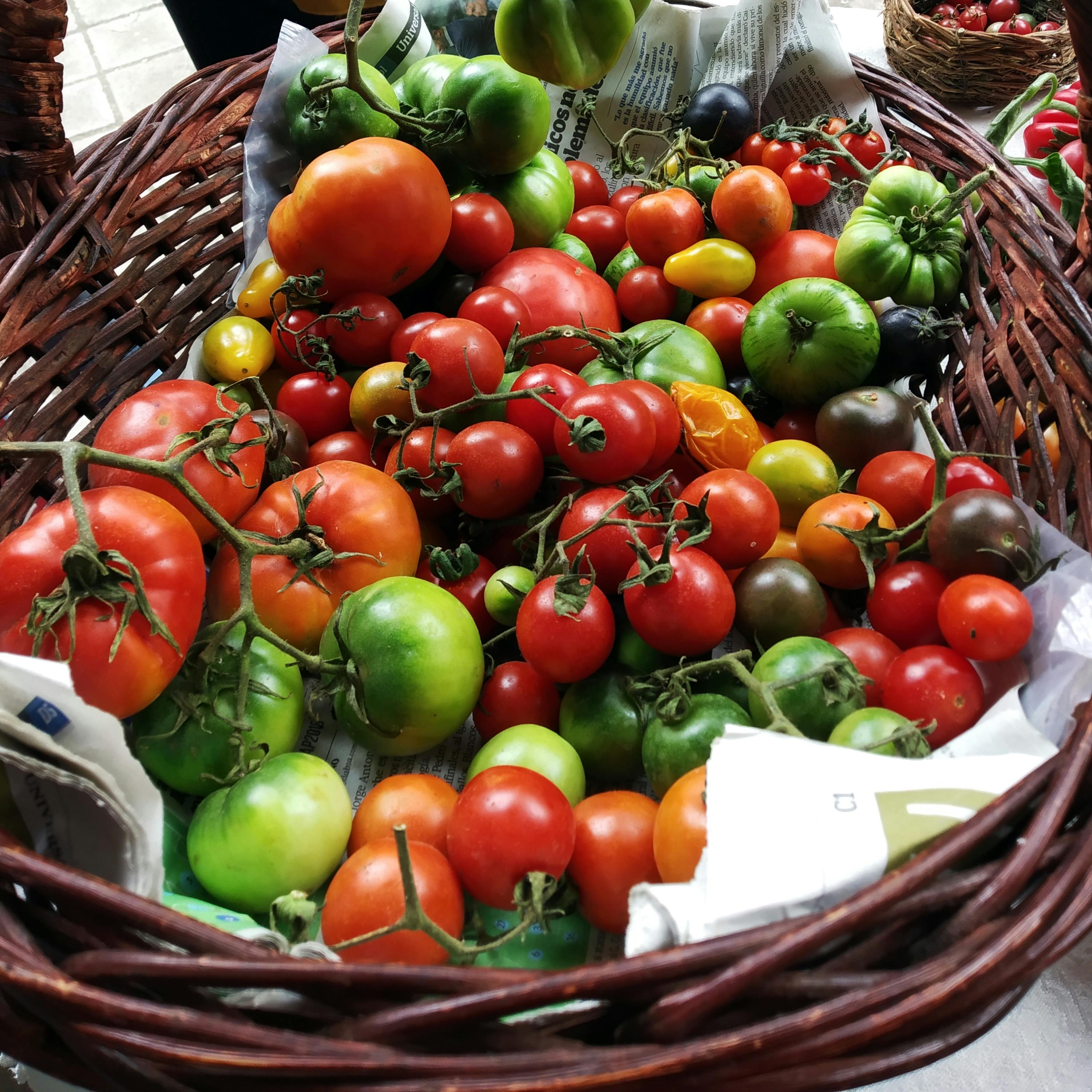
And as it happens, he had some small tomatoes growing at his farm. So we picked the tomatoes and tried them with a bite of vanilla.
Okay, so I have one tomato and one pompona. Which first?

First, the tomato and then right away the pompona. Or make them together.

How about that? That's pretty great, actually. That's pretty great.
They go well together. A bite of tomato and a piece of pompona here.
Together. Mmm.

It completely transforms the taste of the vanilla and the tomato. But the vanilla tastes totally different than when I tried it on its own.
It tastes like more anise or fennel, like a more licorice.

There's so many interesting flavors going on. Yeah, there's a lot more like herbaly, fennel-y,

and a little vanilla-y. It's really great.

If you want to try these amazing different vanillas for yourself, you don't have to fly to Veracruz.

Vanilla pompona is not on the shelves at most grocery stores in America, but you can find it at specialist spice retailers.

Vanilla Caribbeana is even more rare, but again, the internet is your friend.

And of course, you can try all the various terroirs for planifolia too, and see whether you can pick up the differences between Mexican, Madagascan, and Indonesian.

Have a vanilla tasting party, tag us on social, and let us know what you think.

We told you that in dishes where vanilla plays a supporting role, like say chocolate chip cookies, few people can tell whether the baker has used natural vanilla or the artificial stuff.

So is it worth shelling out for the more expensive variety? We think it is if you can afford it. We want to live in a world with great vanilla and vanilla biodiversity and farmers who are paid well.

If it's within your budget, we think it's part of the joy of the dessert and savory dishes too. Thanks this episode to Rebecca Menchaca, Miguel Lozano, Aracele Perez, Luis Mora, and Eric Jennings.

We have links to their research and Eric's book at our website gastropod.com.

Thanks once again to Rodrigo Perez-Ortega who is a fantastic science journalist and a great friend of the show and who was super helpful on our trip to Jalapa. Thank you.

While we're busy thanking people, we also want to give a huge, huge thanks to some of our supreme fans, listeners who support the show at a particularly generous level.

You make the kind of reporting we do possible.

Thank you, Kylie Chen, Monica Edwards, Sally and Todd Cutler, Van Jensen, Alice Kuo, Casey Hill, Ian Burke, Peggy Toulis, Laura Heisler, Jordan Barom, Todd Cooperman, Jarmila Noid Liebrock, Valerie Baudreaux, and the self-titled anonymous donor Wink Wink.

And thanks as always to our producer Claudia Guy. We'll be back in a couple of weeks with our last episode of 2025.
Stay tuned.

Support for this show comes from Nature Sunshine All-New Marine Glow Collagen. How much time do you think you spend with a screen in front of your face on any given day?

Well, if you're anything like the average American, you probably spend about seven hours staring at a screen. Nature Sunshine knows that contact with blue light is unavoidable.

That's why they've combined the skin-enhancing power of marine collagen and blue light-fighting lutein to support your eyes and skin in a blue light-filled world.

Experience more radiant skin and proven eye protection with Nature Sunshine New Marine Glow, the only collagen product clinically proven to support eye and skin health and defend against blue light.

Try Nature Sunshine New Marine Glow now at nature sunshine.com.

Support for this show comes from Volkswagen. As the U.S.

gets ready to host soccer's biggest moment on a worldwide stage, Volkswagen is helping people discover new turfs and new ways to play the beautiful game right here in the U.S.

From deaf and power wheelchair soccer to beach and futsal, Volkswagen is actively supporting all the communities and teams within the U.S. soccer ecosystem.

They're supporting talent from across the U.S. soccer extended national teams and are focused on helping to give these less widely known forms of soccer a platform moving forward.

From the pitch to the sand and everything in between, welcome to our turf.