Bud Day: A POW’s Incredible Story
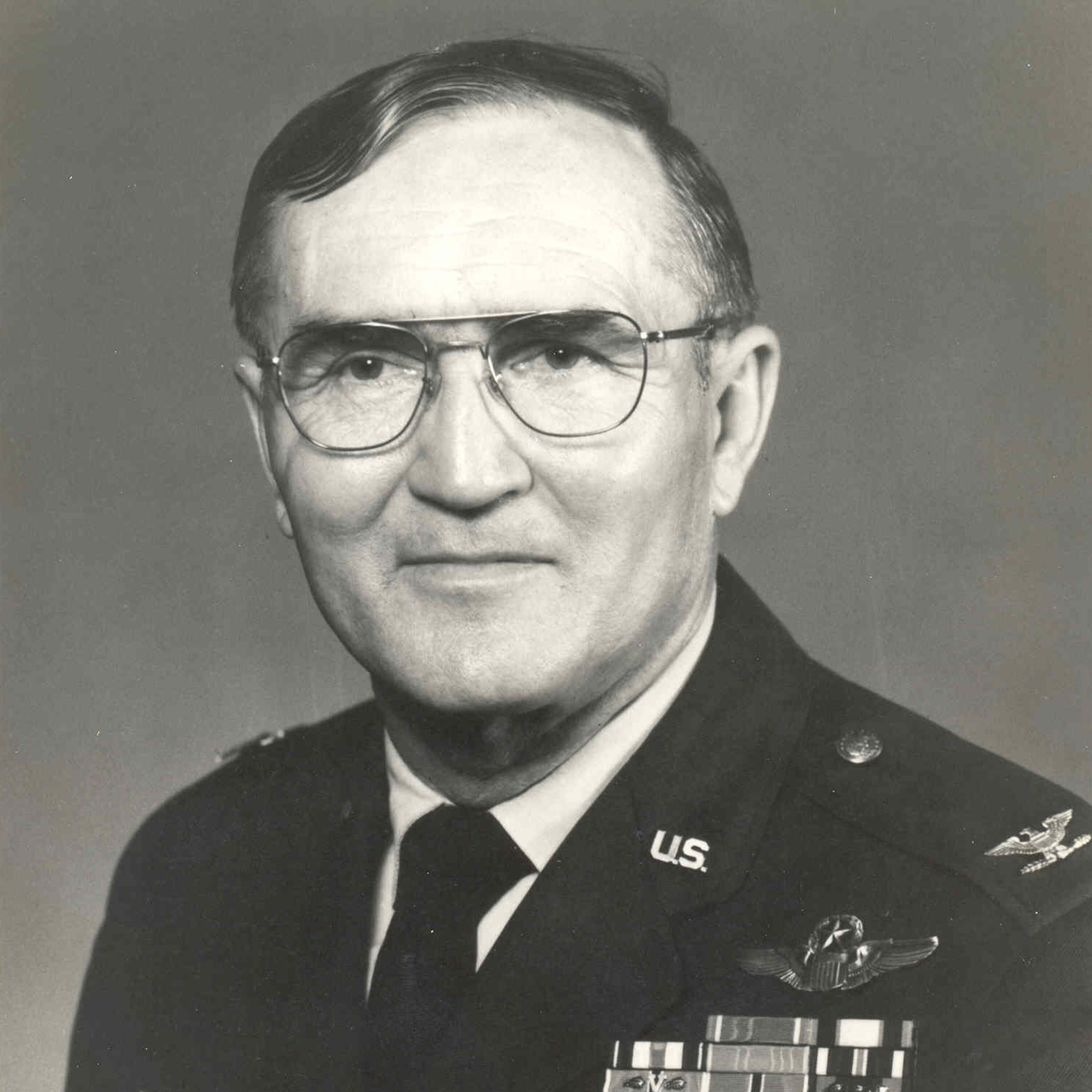
Shot down over Vietnam, Bud Day escaped from a prison camp and ran barefoot and wounded through the jungle. What happened to him over the next five long years is a brutal testament to his strength and heroism. And what his wife did while she waited for his return is proof of the power of hope– and love.
Episode bibliography:
Coram, Robert. “American Patriot: The Life and Wars of Colonel Bud Day.” Back Bay Books, June 2, 2008. https://www.amazon.com/American-Patriot-Life-Wars-Colonel/dp/0316067393.
See omnystudio.com/listener for privacy information.
Press play and read along
Transcript
Speaker 1 This is an iHeart podcast.
Speaker 4 American Military University, where service members like you can access high-quality, affordable education built for your lifestyle.
Speaker 9 With online programs that fit around deployments, training, and unpredictable schedules, AMU makes it possible to earn your degree no matter where duty takes you.
Speaker 13 Their preferred military rate keeps tuition at just $250 per credit hour for undergraduate and master's tuition.
Speaker 4 And with 24-7 mental health support plus career coaching and other services, AMU is committed to your success during and after your service.
Speaker 16 Learn more at amu.apus.edu slash military. That's amu.apus.edu slash military.
Speaker 20 This episode is brought to you by Navy Federal Credit Union.
Speaker 12 Navy Federal can help you find and finance the right vehicle with ease.
Speaker 24 With Navy Federal's Car Buying Service powered by TrueCar, you can find the vehicle that's right for you as you search through inventory and compare models.
Speaker 16 And you can get an amazing rate when you finance with Navy Federal.
Speaker 28 Visit NavyFederal.org slash TrueCar to learn more.
Speaker 2 Navy Federal is insured by NCUA credit and collateral subject to approval.
Speaker 21 Visit navyfederal.org true car to learn more.
Speaker 32 In today's super competitive business environment, the edge goes to those who push harder, move faster, and level up every tool in their arsenal.
Speaker 7 T-Mobile knows all about that.
Speaker 31 They're now the best network, according to the experts at OoCla Speed Test, and they're using that network to launch Supermobile, the first and only business plan to combine intelligent performance, built-in security, and seamless satellite coverage.
Speaker 30 That's your business, supercharged. Learn more at supermobile.com.
Speaker 31 Seamless coverage with compatible devices in most outdoor areas in the U.S.
Speaker 33 where you can see the sky.
Speaker 37 Best network based on analysis by OOCLA of Speed Test Intelligence Data 1H 2025.
Speaker 18 Pushkin
Speaker 18 Dusk was falling in the jungles of North Vietnam. It was late August 1967.
Speaker 18 An Air Force colonel, Bud Day, was lying in a muddy pit about the size of a coffin.
Speaker 18
He had been there for days. One of his arms was broken in three places.
His left knee was badly damaged. and he couldn't see out of his right eye.
Bud Day had been captured in enemy territory.
Speaker 18 He was a prisoner of the North Vietnamese Army, but he wasn't in a prison.
Speaker 18 This was a little militia camp in the middle of the wilderness. His guards were a couple of teenage boys with rifles, and like most teenage boys, they were getting bored.
Speaker 18 In the short amount of time that Bud had been in the camp, He had already been tortured again and again.
Speaker 18
But he followed a code of conduct. The same code of conduct that the U.S.
military required of every person who becomes a prisoner of war. Give away no information.
Speaker 18 Accept no special favors from the enemy. And make every effort to escape.
Speaker 18 Bud hadn't told his captors anything. even when they strung him up by his ankles and he could feel the bones in his broken arm stretch further apart.
Speaker 18
Special favors certainly didn't seem forthcoming. Not that he would have accepted any.
His sense of honor would never allow it. But then there was a part of the code about escape.
Speaker 18 That, Bud thought, was something he had to try.
Speaker 18 Darkness crept closer. The two kids who were supposed to be watching him wandered a little further from the pit, chatting and laughing about something.
Speaker 18 Using his good hand, Bud worked away at the rope that was wound around his legs.
Speaker 18 He had convinced his captors that he was unable to walk, so the rope was only tied in granny knots, easy to get out of, even with one arm.
Speaker 18 Bud knew this would be his only chance.
Speaker 18 They were planning to move him to a real prison, and that would be impossible to escape. He quickly untied one knot and then another
Speaker 18 and another.
Speaker 18 He loosened the ropes around his legs and he listened to the boy's distant laughter. His mind flashed to his wife, Dory, and four little kids waiting back in Arizona.
Speaker 18 He sent a silent, Help me, Father, up to heaven.
Speaker 18 And then Bud Day crawled out of the bunker and into the night.
Speaker 18 I'm J.R. Martinez, and this is Medal of Honor, Stories of Courage.
Speaker 18 The Medal of Honor is the highest military decoration in the United States, awarded for gallantry and bravery in combat at the risk of life above and beyond the call of duty.
Speaker 18 Each candidate must be approved all the way up the chain of command, from the supervisory officer in the field to the White House.
Speaker 18 This show is about those heroes, what they did, what it meant, and what their stories tell us about the nature of courage and sacrifice.
Speaker 18 Bud Day would be the only American serviceman ever to escape from a North Vietnamese prison and make it all the way to South Vietnam.
Speaker 18 He would stumble for days through the jungle with no shoes, no food, and terrible injuries.
Speaker 18 passing within inches of enemy soldiers, knowing all the while that if he were captured again, he would have to fight like hell to stay alive and to keep the code of conduct.
Speaker 18 Bud's story is one of toughness and grit and fortitude, the kind of fortitude that can only come from a deep set faith in country and family and in the concept of honor.
Speaker 18 While this episode is about that stoic silence in the face of brutal enemy pressure, it's also about the power of speaking out.
Speaker 18 Because while Bud stayed mute to protect his fellow aviators, his wife Dory was shouting from the rooftops, using her voice to win freedom for prisoners of war.
Speaker 18 As Americans, we take free speech for granted.
Speaker 18 How Bud and Dory Day used their voices, frankly, how this whole country used their voices during the Vietnam War proves just how powerful that right really is.
Speaker 18 The morning of August 26, 1967 started as usual for Bud Day.
Speaker 18 He woke up at the Air Force Base in Phu Cat, just south of the demilitarized zone in South Vietnam. The day would have been hot and muggy, as always.
Speaker 18 He recorded a message to be sent to Dory and the kids. The couple had two boys and two girls, three of them under the age of five.
Speaker 18 At 4 a.m., Bud had breakfast, and then he got ready to fly.
Speaker 18 Bud had been flying over North Vietnam for several months, one of the most dangerous and top-secret missions of the entire war.
Speaker 18 He was commander of a team of supersonic jet pilots flying over territory dotted with anti-aircraft artillery. Here he is talking about it.
Speaker 29 It was a really hairy mission because probably 60% of the time that you were in the North, you were getting shot at. And so I lost 42% of my airplanes in the first six months we operated.
Speaker 18 He had been born to a poor, hard-scrabble family in Iowa and grown up during the worst of the Great Depression. He served in World War II, then Korea.
Speaker 18 One time, he bailed out of an airplane and his parachute didn't open, but he survived. He finished seven years of schooling, college, plus a law degree in only four years.
Speaker 18
He was just tough and disciplined and driven beyond belief. So to him, this morning in August was nothing special.
He sized up his aircraft, not his favorite, the harness in the back was wonky.
Speaker 18
He settled at the controls in the back of the plane, and a pilot named Kip was at the front. Bud was older than Kip, but then he was old for Vietnam.
He had volunteered to go at the age of 41.
Speaker 18 A farewell tour at the end of a long career. One more round before he hung up his flight suit for good.
Speaker 18 He'd initially been assigned to the 309th Squadron, but loved their motto, return with honor. But pretty quickly, He'd been given this insanely treacherous top secret mission.
Speaker 18 As commander, it was up to Bud to pick the code name. Other units were called things like Gunsmoke, or Typhoon, or Tiger.
Speaker 18 Not Buds.
Speaker 29 Our call sign was Misty. That was a song I liked, and so that was our call sign.
Speaker 18 And in case this doesn't ring a bell for you, Misty is a romantic ballad by the crooner Johnny Mathis.
Speaker 18 Look at me,
Speaker 40 I'm as helpless as a baby
Speaker 18 of a tree.
Speaker 18
As helpless as a kitten up a tree. It doesn't quite scream, we're going to shoot you out of the sky, does it? But it totally works.
Maybe it's because Bud was an older guy, a classic.
Speaker 18 Or because he missed his wife. Or maybe it just goes to prove when you're as famously tough as Bud Day,
Speaker 18 you can call your unit anything you want.
Speaker 18 Soon, Kip and Bud were ripping through the sky over North Vietnam at almost 500 miles per hour. But when they were about a mile away from their planned target, explosions ripped through the air.
Speaker 18
Bud couldn't remember when he'd seen so much anti-aircraft artillery. It was like the sky was on fire.
They made it through the barrage somehow without being hit.
Speaker 18 Bud told Kip to take another pass over the target, so they flew over it one more time.
Speaker 18 Their plane was hammered with explosions again and again.
Speaker 18 Still, it looked like they were gonna make it out.
Speaker 18 And then Bud saw the missile.
Speaker 18
He knew what was coming. The aircraft took a direct hit.
Every warning light on the instrument panel lit up, and Bud yelled, eject! Eject! Eject!
Speaker 18
They parachuted down. They were deep in enemy territory, falling into the jungle.
Bud blacked out during the fall, but he came to with a jolt of searing pain.
Speaker 29 My arm was fractured, damaged my knee, and
Speaker 29 my oxygen mask didn't separate right and hit me in the eye and damaged my eye so I wound up on the ground.
Speaker 18
Bud broke his arm in three places. A bone was sticking through his skin.
He had dislocated his knee and he couldn't see out of his right eye.
Speaker 29 I just cut my radio up and got a call off and told him I was on the ground alive and young Vietnamese popped through the brush and captured me.
Speaker 18 His message had gotten through just in time.
Speaker 18 Help was on the way.
Speaker 18 But he was surrounded by teenage boys with rifles, and they pulled him further into the jungle, further away from where his parachute was left, further away from Kip, whom they hadn't spotted.
Speaker 29 A few minutes later, as they were moving a lot, a helicopter came in and tried to rescue us, and I was gone.
Speaker 18
The chopper got so close that he could see Kip in its doorway. But the boys had their rifles trained on Bud.
He couldn't go anywhere. He watched as the helicopter dipped, then lifted away.
Speaker 18
The teens were euphoric. They had their prize.
Bud was heartsick.
Speaker 18 He had been paraded into a village that had been destroyed by American bombardments.
Speaker 18 From there, into the makeshift militia camp that you met him in, he could see rice patties and just beyond, a dense expanse of jungle.
Speaker 18 He was pushed into a muddy bunker, just a hole in the ground, really, barely larger than his wiry, five-foot, nine-inch frame.
Speaker 18 His captors tied him up with a rope, and Bud started coming up with that escape plan almost immediately.
Speaker 29 So I decided that because it was obvious my eye was all bloodshot, I was blind,
Speaker 29 and my knee was pretty big, And of course my arm was busted. And
Speaker 29 so they concluded I was no threat.
Speaker 29 And when they tried to get me to move around or do anything, I faked that I couldn't move at all. And they began to buy that.
Speaker 18 A doctor arrived and set his arm in a makeshift cast, but Bud could tell the bones weren't properly aligned. Things got progressively worse from there.
Speaker 18 The soldiers wanted him to talk, to give them intel.
Speaker 18
They beat him with rifle butts. They staged a mock execution, holding a gun to his head.
They hung him from his ankles for hours.
Speaker 18 To them, he wasn't an enemy combatant protected by the rules of war.
Speaker 29 The Vietnamese never recognized the Geneva Convention, so their position was that you were a criminal. They could do anything to you they wanted to do.
Speaker 18 Bud knew the torture would get worse when the real soldiers arrived. And they were coming soon.
Speaker 18 One of his jailers had drawn a jeep in the mud and said a word that Bud understood. Hanoi, the capital city of North Vietnam.
Speaker 18 So he decided he had to run that night, loosening the rope on his leg, waiting for his teenage guards to look the other way.
Speaker 29 First time both of them were facing a different direction. I slipped out of this hole and over the rice paddy.
Speaker 18
He was dressed in only his undershorts. He had no shoes, and he was weak from hunger.
He ran towards the jungle, his bare feet sliding on the mud.
Speaker 29 My foot hit the bottom of that silt, it was just like stepping on a banana peel.
Speaker 29 My feet went out from under me and I landed right on the busted dorm.
Speaker 29 And I'd almost bit my tongue off to keep him screaming when I hit the deck.
Speaker 29 I couldn't believe they didn't hear it.
Speaker 29 Waited about a minute, minute and a half, and nothing.
Speaker 29 So at that, I got up and headed south.
Speaker 18 He would have to travel roughly 30 miles to get to South Vietnam and safety. He was just beginning to pick his way through the jungle when a shrieking sound cut the air.
Speaker 18 American B-52s were soaring overhead, not to look for Bud, but to drop bombs on the enemy encampments.
Speaker 18
One landed 100 yards from Bud. He was hit with shrapnel.
Now, his bare feet were lacerated and bleeding. The next day brought another bomb.
and his eardrums were ruptured. Still, he pressed on.
Speaker 29
I survived basically on water because there was no food. The best I could do was capture a couple of these frogs.
I ate them and that's not a good deal.
Speaker 18 After several days in the jungle, he made it to the river that separated North and South Vietnam. He crept down the bank and lowered himself into the water.
Speaker 18
fighting the current to make it to the other side. His fingers touched the far bank.
Unbelievably, he had reached South Vietnam. By then, he was so starving that he was delusional.
Speaker 29 I lost track of time. I'd lost my ability to sort things out.
Speaker 18
He saw two Marine Corps helicopters in the sky, not too far away. They were replenishing supplies.
It could only mean one thing. A base was nearby.
He could get there. He knew it.
Speaker 18 He got closer and closer, hobbling and stumbling.
Speaker 29 I was within about a mile of Marine Corps base at Cotien when some enemies popped out of the brush.
Speaker 18 At this point, Bud Day could barely walk. But he was also Bud Day.
Speaker 29 I just said to myself, I come this far to surrender to these bastards, so I took off running.
Speaker 18 He ran as best as he could, but the NVA fired at him. Bud took a bullet in the left thigh and the left hand, and he collapsed.
Speaker 18
His escape was over. He was going back to North Vietnam.
He had been close to freedom. He wouldn't be that close again for five and a half years.
Speaker 21 This episode is brought to you by Navy Federal Credit Union.
Speaker 12 Navy Federal can help you find and finance the right vehicle with ease.
Speaker 41 And this summer, you're in the driver's seat with savings.
Speaker 24 You can get a $250 bonus when you buy your next car through Navy Federal's Car Buying Service, powered by TrueCar and financed with Navy Federal.
Speaker 25 With this tool, you can find the vehicle that's right for you as you search through inventory and compare models.
Speaker 16 And you could get an amazing rate when you finance with Navy Federal.
Speaker 41 Navy Federal strives to support all active duty veterans and their families to achieve their personal and financial goals.
Speaker 10 And this partnership with TrueCar is one of the many tools Navy Federal uses to help its members.
Speaker 24 Make your plan with Navy Federal and TrueCar today.
Speaker 21 Navy Federal Credit Union.
Speaker 26 To qualify for the $250 bonus, car purchase and financing must be completed by September 2nd, 2025.
Speaker 21 Terms and conditions apply and are available at navyfederal.org slash truecar. Credit and collateral subject to approval.
Speaker 26 Navy Federal is insured by NCUA.
Speaker 32 In today's super competitive business environment, the edge goes to those who push harder, move faster, and level up every tool in their arsenal.
Speaker 34 T-Mobile knows all about that.
Speaker 31 They're now the best network, according to the experts at UCLA Speed Test, and they're using that network to launch Supermobile, the first and only business plan to combine intelligent performance, built-in security, and seamless satellite coverage.
Speaker 22 With Supermobile, your performance, security, and coverage are supercharged.
Speaker 32 With a network that adapts in real time, your business stays operating at peak capacity even in times of high demand.
Speaker 30 With built-in security on the first nationwide 5G advanced network, you keep private data private for you, your team, your clients.
Speaker 37 And with seamless coverage from the world's largest satellite to mobile constellation, your whole team can text and stay updated even when they're off the grid.
Speaker 30 That's your business, Supercharged. Learn more at Supermobile.com.
Speaker 31 Seamless coverage with compatible devices in most outdoor areas in the US where you can see the sky.
Speaker 37 Best network based on analysis by OOCLA of Speed Test Intelligence Data 1H 2025.
Speaker 19 This message is a paid partnership with AppleCard.
Speaker 13 I was just at a theme park in Florida with my almost four-year-old.
Speaker 12 Between enjoying the sunshine and the rides, the last thing I wanted to worry about was my wallet.
Speaker 20 That's why AppleCard with Apple Pay saved my vacation. One tap, a check-in, and I was off to see the attractions.
Speaker 2 Every purchase from hot dogs, and oh, we had hot dogs, to t-shirts earned me daily cash.
Speaker 31 Unlike waiting in line for a ride, there is no waiting until the end of the month for rewards.
Speaker 24 And my daily cash is automatically deposited into the savings account I opened through Apple Card, where it earns interest.
Speaker 26 With Apple Pay's secure technology built right into my iPhone and Apple Watch, I pay to shops, restaurants, and attractions without ever digging from my wallet.
Speaker 28 The best part?
Speaker 2 No fees.
Speaker 27 No hassles.
Speaker 13 I spent less time managing my money and more time doing nothing short of epic.
Speaker 21 Apply for AppleCard in the wallet app on your iPhone.
Speaker 42
Subject to credit approval. Savings available to AppleCard owners, subject to eligibility.
Variable APRs for AppleCard range from 18.24% to 28.49% based on credit worthiness.
Speaker 42
Rates as of July 1st, 2025. Savings on AppleCard by Goldman Sancts Bank, USA, Salt Lake City Branch.
Member FDIC. Terms and more at AppleCard.com.
Speaker 18 It was 1969.
Speaker 18 Two years since Bud's capture. He had been moved from prison camp to prison camp, beaten and starved, his broken arm purposely re-broken, and time and time again
Speaker 18 interrogated.
Speaker 18 He refused to give any information other than what the code of conduct stipulated. His name, his rank, his date of birth, and his serial number.
Speaker 29
They really tortured me, hung me by the arms and crippled me pretty badly. Both my hands were curled up.
I couldn't feed myself. I couldn't do anything.
Speaker 18 He told himself he had to keep the faith. He couldn't break.
Speaker 18 It was better to die than to say something, even the name of his unit, Misty, that might harm the aviators that were still flying over Vietnam.
Speaker 18 He remembered the motto of his first squadron, return with honor.
Speaker 18 He was determined to do just that.
Speaker 18 Every night he prayed for strength and he prayed for Dory and the kids. He hoped they knew he was still alive.
Speaker 18 Bud spent most of his time in a prison in Hanoi, nicknamed the Hanoi Hilton. It housed hundreds of POWs and it was miserable.
Speaker 29 It was just absolute filth, you know, with lats all over the place and
Speaker 29 and rat droppings and so everybody had dysentery and diarrhea. We were at about 700 calories calories a day.
Speaker 29 So you're all emaciated and big stomachs and big sunken eyes, and your health was very precarious. So the living conditions were just really at the bottom.
Speaker 18
The prison was a series of long, interconnected brick buildings. The windows were covered with batting, so light barely crept in.
The air was trapped and stale. The heat was unbearable.
Speaker 18 Bud spent months in solitary confinement as punishment for not talking.
Speaker 18 And those cells were as small as six by six feet.
Speaker 18 When he wasn't in solitary, he shared his cell with the young John McCain.
Speaker 18 Bud and another pilot had nursed McCain back to health when he first arrived in prison, broken and close to death.
Speaker 18
That was one of the ways prisoners resisted their terrible situation. They took care of each other.
Another way was by being organized. The prison guards forbade organization of any kind.
Speaker 18
But the men in the Hanoi Hilton were military pilots. Hierarchy gave them a sense of normalcy.
And because of his rank, Bud was a commander within the prison.
Speaker 18 This meant he was dealt even harsher punishments.
Speaker 18
The first to feel the wrath of the guards. Second problem, to get organized.
You have to be able to communicate. But the POWs weren't allowed to talk between cells.
And to disobey meant torture.
Speaker 18
So they developed a tap code. It's kind of like a Morse code.
Each letter of the alphabet except K was given a short set of two taps. They would spell out words letter by painstaking letter.
Speaker 18 It was life's blood for the POWs.
Speaker 29 So, despite where they might have you, unless they had you so wrapped up in irons that you absolutely could not move, well, you could communicate, you could tap.
Speaker 29 And so you always knew what was going on.
Speaker 18 Every Sunday morning, Bud as commander of his prison unit used his knuckles to tap out CC,
Speaker 18 which stood for church call.
Speaker 18 That same tap would be sent down the whole line of cells in his section.
Speaker 18 Then the men stood in their cells, said the Pledge of Allegiance, the Lord's Prayer, and prayed for the safety of their fellow POWs.
Speaker 18 Bud and his men had to keep the faith somehow. At the Hanoi Hilton, there was a total lack of contact with the outside world.
Speaker 18 They had no way of knowing what was happening in the war or how close they might be to freedom.
Speaker 29 I believed that the country was going to come and get me. I never, ever came to the conclusion that my country was just going to dump me like some used ammo.
Speaker 18 The only news in prison came from a steady stream of propaganda piped in over a loudspeaker. The POWs called it CBS,
Speaker 18 short for, you ready for this?
Speaker 18 Camp Bullshit System.
Speaker 18 There was no way for the prisoners to sort fact from fiction. CBS reported on devastating natural disasters in America and on implausible triumphs in the North Vietnamese Army.
Speaker 18 And it reported that back in the U.S., while Bud was keeping his mouth shut and being tortured for it, countless others were speaking out against the war.
Speaker 18 Bud thought it was lies. Just one more thing the prison guards made up in order to torment the POWs.
Speaker 29 As we started hearing about the hippies and the anti-war demonstrations, all that stuff, I basically discounted all of that.
Speaker 29 What else could the communists tell you that would hurt you more or would be more demoralizing than for you to think that back on the home front, no one's supporting you?
Speaker 18 That, of course, was far from the truth. But because more and more Americans were starting to question the war, the government was trying to keep the plight of the POWs a secret.
Speaker 18 They worried it would add more fuel to the anti-war fire. And so the military ordered the wives of POWs to observe a code of conduct similar to Bud's.
Speaker 18 Keep to yourself.
Speaker 18
Don't speak to the press. Don't ask too many questions about where your husband was or what was being done to rescue him.
They called it the Keep Quiet Policy.
Speaker 18
So back in Arizona, Dory was living in a kind of a nightmarish limbo. She knew Bud had been shot down.
She knew he had survived his initial crash, but that's it.
Speaker 18 Because North Vietnam refused to officially acknowledge holding any POWs,
Speaker 18 it was impossible to know for certain if Bud was still alive or where he was.
Speaker 18
Dory and Bud had been together at that point for decades. They had met as teenagers in Iowa.
She was the little sister of one of his friends. Her family was Norwegian, so Bud nicknamed her the Viking.
Speaker 18 The two had started writing letters back when he had gone off to World War II.
Speaker 18 Dory told him she was waiting for him and praying for him to be safe.
Speaker 18
Now she couldn't write to Bud. She couldn't do anything but keep praying.
Just wait and hope.
Speaker 18 Exactly what Bud was doing.
Speaker 29 I didn't intend to die in that crummy place if I could avoid it.
Speaker 18
But the prison guards didn't make survival easy. In the summer of 69, the torture got worse.
They introduced something called the fan belt, a four-foot-long rubber strip cut from a tire.
Speaker 29 I had some absolutely brutal torture sessions, and two or three times, frankly, I would have preferred to die. I was in leg irons, and they were beating me with a fan belt.
Speaker 29 And I can remember counting until 300th stroke. And I just said,
Speaker 29 Why am I wasting my time counting here? They're going to kill me, you know, and I hope they do.
Speaker 18 Here's what Bud Day didn't just tell you.
Speaker 18 That intensive beating lasted more than six days.
Speaker 18 By the end, he was close to death.
Speaker 18 Bud believed that if he managed to live, his physical suffering would stop eventually.
Speaker 18 But his mental anguish would never end if he gave up even a scrap of important information to his tormentors.
Speaker 18 That was Bud.
Speaker 18 Back in the States, Dory had reached a totally different conclusion.
Speaker 18 The Viking decided she had to start talking.
Speaker 21 This episode is brought to you by Navy Federal Credit Union.
Speaker 12 Navy Federal can help you find and finance finance the right vehicle with ease.
Speaker 41 And this summer, you're in the driver's seat with savings.
Speaker 12 You can get a $250 bonus when you buy your next car through Navy Federal's Car Buying Service, powered by TrueCar and financed with Navy Federal.
Speaker 25 With this tool, you can find the vehicle that's right for you as you search through inventory and compare models.
Speaker 24 And you could get an amazing rate when you finance with Navy Federal.
Speaker 41 Navy Federal strives to support all active duty veterans and their families to achieve their personal and financial goals.
Speaker 10 And this partnership with TrueCar is one of the many tools Navy Federal uses to help its members.
Speaker 24 Make your plan with Navy Federal and TrueCar today.
Speaker 21 Navy Federal Credit Union.
Speaker 26 To qualify for the $250 bonus, car purchase and financing must be completed by September 2nd, 2025.
Speaker 21 Terms and conditions apply and are available at navyfederal.org/slash TrueCar. Credit and collateral subject to approval.
Speaker 26 Navy Federal is insured by NCUA.
Speaker 32 In today's super competitive business environment, the edge goes to those who push harder, move faster, and level up every tool in their arsenal.
Speaker 34 T-Mobile knows all about that.
Speaker 30 They're now the best network, according to the experts at an OOCLA speed test, and they're using that network to launch Supermobile.
Speaker 33 the first and only business plan to combine intelligent performance, built-in security, and seamless satellite coverage.
Speaker 22 With Supermobile, your performance, security, and coverage are supercharged.
Speaker 32 With a network that adapts in real time, your business stays operating at peak capacity even in times of high demand.
Speaker 30 With built-in security on the first nationwide 5G advanced network, you keep private data private for you, your team, your clients.
Speaker 37 And with seamless coverage from the world's largest satellite-to-mobile constellation, your whole team can text and stay updated even when they're off the grid.
Speaker 30 That's your business, supercharged. Learn more at supermobile.com.
Speaker 31 Seamless coverage with compatible devices in most outdoor areas in the U.S.
Speaker 33 where you can see the sky.
Speaker 37 Best network based on analysis by OOCLA of Speed Test Intelligence Data 1H 2025.
Speaker 4 American Military University, where service members like you can access high-quality, affordable education built for your lifestyle.
Speaker 9 With online programs that fit around deployments, training, and unpredictable schedules, AMU makes it possible to earn your degree no matter where duty takes you.
Speaker 13 Their preferred military rate keeps tuition at just $250 per credit hour for undergraduate and master's tuition.
Speaker 3 And with 24-7 mental health support plus career coaching and other services, AMU is committed to your success during and after your service.
Speaker 16 Learn more at amu.apus.edu slash military. That's amu.apus.edu slash military.
Speaker 18
Dory was through with keeping quiet. She wanted to feel like she was maybe making a difference.
She began to fight. by speaking out.
Speaker 18 Her friend, Mike Newhouse, remembers how hard the Viking fought for her husband.
Speaker 43 I thought Monday was the bravest, toughest, most determined SOV I'd ever met until I met Doris.
Speaker 18 We've been calling her Dory,
Speaker 18 but her name was Doris,
Speaker 18 as in Doris Day.
Speaker 18 Not that Doris Day, the famous actress, which is why the Viking went by Dory.
Speaker 43
She was an absolute tiger. You know, the State Department, after her continued and persistent pleas, pretty much told her to go home, do your knitting, and kind of stay out of our hair.
And she
Speaker 43 wasn't about to accept that.
Speaker 18 She banded together with other POW and missing in action wives to form the National League of Families.
Speaker 18 The public believed that any prisoners of war were being treated according to the Geneva Convention.
Speaker 18 But the wives had learned the truth about the torture, so they defied the keep-quiet policy and the hopes of putting pressure on Washington.
Speaker 18 They spoke to the press and gave speeches, sometimes being heckled by people who hated this war and believed, as the NVA prison guards did, that these men weren't POWs. but criminals.
Speaker 18 Around the country, wives pleaded on behalf of their husbands, asking for the world to pay attention.
Speaker 18 Their activism worked. For the first time, the United States publicly listed the number of men it believed to be held prisoner.
Speaker 18 Millions across the nation, including many who opposed the war, bought metal bracelets with the names of American prisoners as a show of support.
Speaker 18 President Nixon promised the WISE that he would hold North Vietnam accountable for the POW's treatment, regardless of what was happening in the conflict itself.
Speaker 44 What I have assured these very courageous women is this government will do everything that it possibly can to separate out the prisoner issue and have it handled, as it should be, as a separate issue on...
Speaker 44 a humane basis.
Speaker 18 Doria was working non-stop, writing letters to the North Vietnamese government, speaking passionately to the press. She had the governor of Arizona on speed dial.
Speaker 18 She bought a plane ticket to the Paris peace talks to confront the North Vietnamese diplomatic mission.
Speaker 43 She colored everybody, ours, theirs, anybody associated with the talks, and just said, damn it, bring my husband home.
Speaker 18 She and other wives brought thousands of letters to give to the North Vietnamese delegation, all from citizens pleading for the humane treatment and return of the POWs.
Speaker 18 The public pressure embarrassed the North Vietnamese, and all the way over in Hanoi, Bud could feel something starting to shift.
Speaker 18 Some of the worst torture abated, and after years of no contact at all, Dory was able to send a package of photographs to Bud.
Speaker 18 He poured over the pictures of his children, growing up without him.
Speaker 18 Their oldest, Stephen, was a teenager, not a kid anymore.
Speaker 18
Bud's hands still didn't work. The whippings had left him stooped, barely able to walk.
But he remained unbroken. He hadn't said a word to his captors that he was ashamed of.
Speaker 18 By 1970, three years into his captivity, captivity, Bud was moved to room 7. It held the prisoners considered to be the hardest cases, the ones who were the most defiant.
Speaker 18
James Stockdale was there. You might remember him as Ross Perot's running mate during his 1992 presidential campaign.
And a pilot named Robbie Reisner, who had been a POW since 1965.
Speaker 18 And John McCain, of course.
Speaker 29 Where you live with somebody for as long as we did, you build up a kind of a relationship that is just undescribable. I know more about John than his mother, his father, and his wives
Speaker 29 in total.
Speaker 18 One day in February of 71, Robbie Reisner decided he was going to give a church service for the men in that room. The guards forbade it.
Speaker 18 But it's hard to forbid something to men who've got little to lose.
Speaker 18 They were midway through the service when the guards came storming in.
Speaker 18 They seized Reisner and led him off to a torture session.
Speaker 18 Bud jumped on one of the concrete bunks, he waved his hands in the air and started singing the Star-Spangled Banner.
Speaker 18 The other men in the room turned to look at him, and at first they were stunned, silent.
Speaker 18 And then they joined in.
Speaker 18 They sang at the top of their lungs. The melody traveled through the dank, filthy building, and soon all of the POWs, hundreds of them, were singing.
Speaker 18
They sang every song they knew, one after the other. The guards were stymied.
They couldn't punish all of them. Eventually, they lined them up at the point of bayonets.
Speaker 18 It made an impression on John McCain.
Speaker 29 Witness him sing the National Anthem in response to having a rifle pointed at his face. Well,
Speaker 18 that was something to behold.
Speaker 18 By now, Bud was 46.
Speaker 18 He had been a prisoner for four and a half years.
Speaker 18 But his defiance and his silence stayed true, not just for himself, but for his men in even worse shape than he was, like McCain.
Speaker 45 They bathed me, fed me, nursed me, encouraged me, and ordered me back to life.
Speaker 45 But more than that, Bud showed me how to stick my self-respect and my honor. That is a debt I can never repay.
Speaker 18 Dory, meanwhile, was telling her story in even wider circles. After Paris, she went to Switzerland to speak to the Red Cross and Sweden to the North Vietnamese embassy.
Speaker 18 And she kept Bud alive for her kids, playing home movies, telling stories, making sure they believed, really believed, that someday he could make it home.
Speaker 18 By Christmas of 72, Five and a half years after Bud had been captured, that homecoming felt within reach.
Speaker 18 The prisoners at the Hilton heard bombs screaming close, then closer. American B-52s were bombing Hanoi.
Speaker 29 Suddenly, at 9 o'clock at night, literally hundreds of bombers over Hanoi dropping bombs, and it was just the earth was vibrating.
Speaker 18 The ground began to shake. Debris started to fall off the ceiling, but Bud was elated.
Speaker 29
But that was a wonderful sound of freedom. My people were just really ecstatic.
Everybody knew we were free.
Speaker 29 We started getting released in February of 1973.
Speaker 18 Bud and John McCain were together on the plane to Clark Air Base in the Philippines. Bud had been in prison for five and a half years.
Speaker 18
He had just turned 48 years old. His teeth were broken.
He was deaf in one ear. His arm was permanently bent.
but he left the medical facility at Clark with his uniform pressed and his back straight.
Speaker 18
He was returning with honor. A plane took him to California.
He was told that as the most senior officer in the group, he would need to give a speech.
Speaker 18 Bud stood in the doorway of the airplane, scanning the crowd for the faces of his family. He walked down the steps, saluted the officers waiting there, and stepped to the microphone.
Speaker 18 He started by thanking God, his country, and President Nixon. And then he heard the click of heels racing across the tarmac.
Speaker 18
It was the Viking. There's a photo of what happened next.
I can't show it to you. But I swear, if you want to know what pure elation looks like, you should look it up.
Speaker 18 It was like an orchestra was was playing that only they could hear. Just like Bud's favorite song, with its beautiful, super romantic lyrics.
Speaker 18 When I see the photo, even I get misty.
Speaker 18
Dory rushing forward, arms out, Bud in a crouch, railed thin, stretching out his hands to catch her. A wide-eyed, radiant years and the making smile on his face.
I get misty
Speaker 18 the moment you're near.
Speaker 18 When Bud and Dory got back home to Arizona, they renewed their wedding vows. They had been married for 24 years.
Speaker 18 Bud worked tirelessly on behalf of the men who had been POWs along with him, writing them up for medals, helping them get back to work, to a somewhat normal life. He spoke about his experiences.
Speaker 18 Mostly, he just wanted to fly again.
Speaker 18
Soon, he was the vice commander of a fighter wing. That's where he was when he learned he would receive the Medal of Honor.
He was awarded it in 1976 from President Gerald Ford.
Speaker 29 I felt quite humbled. I had seen enough combat to know there were certainly a lot of acts of courage that probably far exceeded what you
Speaker 29 saw yourself doing.
Speaker 18 He retired in early 77 and went to work as a lawyer, representing pilots that had bumped up against Air Force bureaucracy.
Speaker 18 He helped POWs, including his old roommate, James Stockdale, receive disability payments. He was in and out of the hospital himself.
Speaker 18 Some of his pain faded, though his sense of defiance did not.
Speaker 18 After the Hanoi Hilton was torn down, Bud got his hands on some of the bricks. He mounted them in his garage.
Speaker 29 I thought that's kind of the ultimate triumph, you know.
Speaker 29 They got no jail and I got the bricks.
Speaker 18 In the summer of 1995, Bud saw a news story that made him, for lack of a better word, furious.
Speaker 18 It said that the U.S. government was no longer allowing military retirees over the age of 65 into military hospitals.
Speaker 18
They would have to rely on Medicare, which meant that they would have to pay for part of their health care. Bud was 70 years old.
He was disabled.
Speaker 18 And when he signed up for the military back in in 1942, he had been told that if he served 20 years, he'd have free lifetime medical benefits.
Speaker 18 He'd kept the code of conduct, but had the government kept up with their end of the bargain? He didn't think so.
Speaker 18
He loved his country. He loved it.
But this was wrong. And as an American, he had the right to speak out, to fight for what he believed.
So Bud Day decided to sue the government.
Speaker 18 That battle would take five years.
Speaker 18
He appeared in courthouse after courthouse. He stood on the Capitol steps in the rain.
He got John McCain, by that point a senator from Arizona, and a future presidential candidate involved.
Speaker 18 He wouldn't let it go.
Speaker 18 And finally, In 2000, his advocacy paid off with the passage of the TRICARE for life bill.
Speaker 18 Military veterans would be able to use military and civilian hospitals for their care and have access to low-cost prescriptions for as long as they lived.
Speaker 18 Bud and his persistence made it happen. He took care of his squad once again.
Speaker 18 Over his military career, Bud Day received 70 medals for his service.
Speaker 18 But until the end of his life, when asked what he was proudest of, Bud invariably answered, my wife.
Speaker 18 Bud died at the age of 88. Dory lived to 95.
Speaker 18 She passed earlier this year. Theirs was a marriage of equals, the Viking and the Commander.
Speaker 18 They were strong together and just as strong apart because they shared a core belief in duty to others and honor.
Speaker 18 They were tireless and defiant.
Speaker 18 No wonder they made such a difference. And no wonder they were so much in love.
Speaker 18 I'm too lifty
Speaker 1 and too much in love.
Speaker 1 Look
Speaker 1 at
Speaker 1 me.
Speaker 18
Medal of Honor, Stories of Courage is written by Meredith Rollins and produced by Meredith Rollins and Jess Shane. Our editor is Ben Nadaf Hoffrey.
Sound design and additional music by Jake Gorski.
Speaker 18
Our executive producer is Constanza Gallarto. Fact-checking by Arthur Gompertz.
Original music by Eric Phillips. Production support by Suzanne Gabber.
Speaker 18 Special thanks to the Congressional Medal of Honor Society, the Brigadier General, Bud and Doris Day Interpretive Center in South Sioux City, Nebraska.
Speaker 18 And the film, The Keep Quiet Policy, How Vietnam POW Wives Were Silenced by the American Story.
Speaker 18 If you want to learn more about this story, take a look at our show notes, where we have some of the resources we use to put together this episode. We want to hear from you.
Speaker 18 Send us your personal story of courage or highlight someone else's bravery. You might hear your stories on future episodes of Medal of Honor or see them on our social channels.
Speaker 18 Just email us at medalofhonor at pushkin.fm.
Speaker 18 I'm your host, J.R. Martinez.
Speaker 19 This episode is brought to you by Navy Federal Credit Union.
Speaker 12 Navy Federal can help you find and finance the right vehicle with ease.
Speaker 24 With Navy Federal's car buying service powered by TrueCar, you can find the vehicle that's right for you as you search through inventory and compare models.
Speaker 16 And you can get an amazing rate when you finance with Navy Federal.
Speaker 14 Visit navyfederal.org slash truecar to learn more.
Speaker 12 Navy Federal is insured by NCUA credit and collateral subject to approval.
Speaker 21 Visit navyfederal.org slash truecar to learn more.
Speaker 4 American Military University where service members like you can access high quality, affordable education built for your lifestyle.
Speaker 9 With online programs that fit around deployments, training, and unpredictable schedules, AMU makes it possible to earn your degree no matter where duty takes you.
Speaker 13 Their preferred military rate keeps tuition at just $250 per credit hour for undergraduate and master's tuition.
Speaker 3 And with 24/7 mental health support plus career coaching and other services, AMU is committed to your success during and after your service.
Speaker 16 Learn more at amu.apus.edu slash military. That's amu.apus.edu slash military.
Speaker 1 Ah, smart water alkaline with antioxidant. Pure, crisp taste, perfectly refreshing.
Speaker 18 Whoa, that is refreshing.
Speaker 1 And a 9.5 plus pH. For those who move, those who push further, those with...
Speaker 18 A taste for taste? Exactly. I did take a spin class today after work.
Speaker 34 Look at you.
Speaker 1 Restoring like a pro.
Speaker 18 I mean, I also sat down halfway through.
Speaker 1
Eh, close enough. Smart water alkaline with antioxidants.
For those with a taste for taste, grab yours today. This is an iHeart Podcast.