The Unbreakable Chain of Douglas Munro
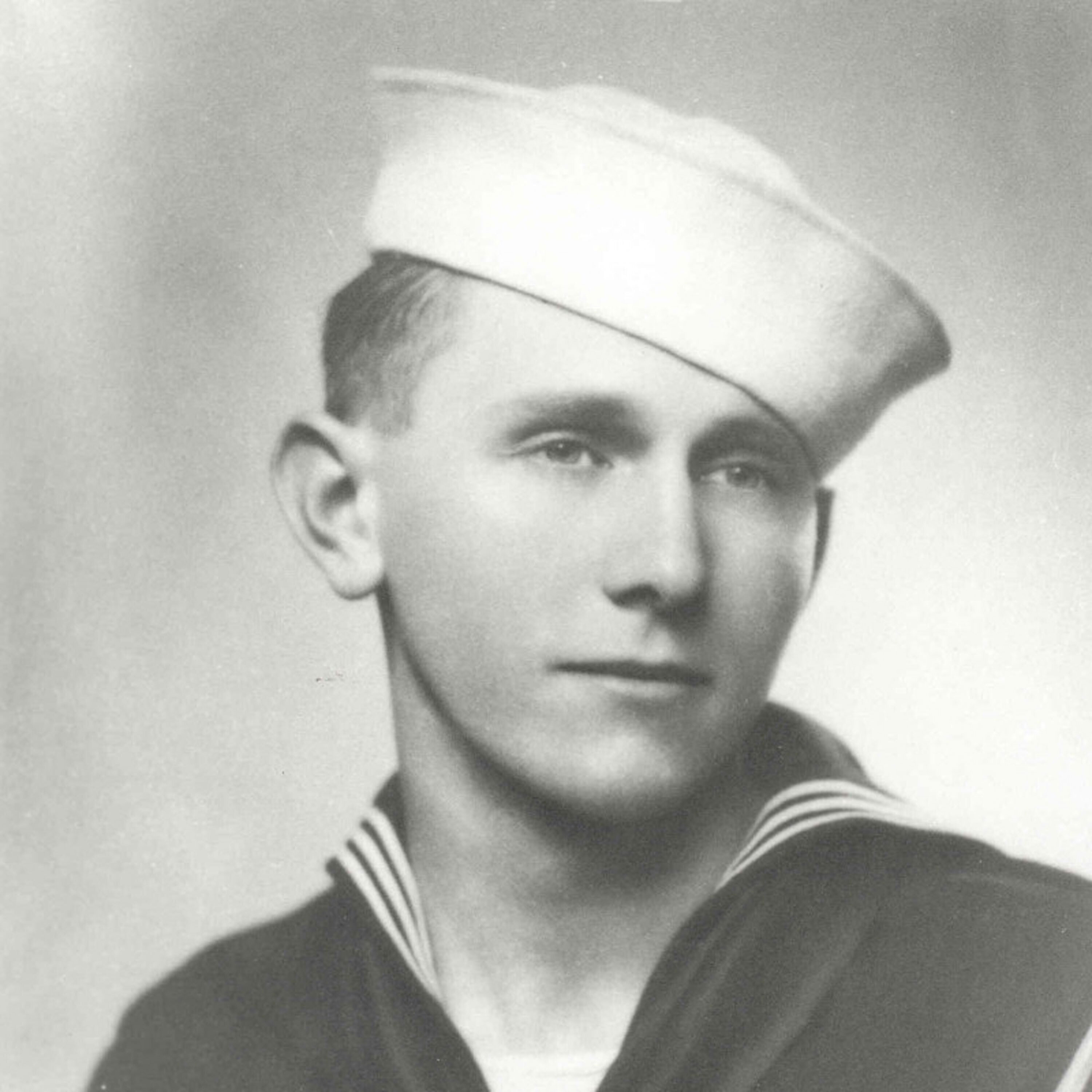
The story of Douglas A. Munro’s heroism is told to every man and woman who joins the United States Coast Guard. In 1942, he led a dangerous rescue that saved an estimated 500 Marines from death on the island of Guadalcanal. He is the only member of the Coast Guard to have received the Medal of Honor. But Doug’s story isn’t just about his incredible heroic act. It’s also about a surprising kind of leadership with lessons for all of us.
The appearance of the U.S. Department of Defense (DoD) visual information does not imply or constitute DoD endorsement.
See omnystudio.com/listener for privacy information.
Press play and read along
Transcript
Speaker 1 Pushkin.
Speaker 2 This is an iHeart podcast.
Speaker 1 On Fox One, you can stream your favorite news, sports, and entertainment live, all in one app. It's f ⁇ ing roll.
Speaker 4 In Unfiltered.
Speaker 2 This is the best thing ever.
Speaker 4 Watch Breaking News as it breaks. Breaking tonight, we're following two major stories.
Speaker 11 And catch history in the making.
Speaker 1 Gibby, meet Freddy, debates, drama, touchdown.
Speaker 4
It's all here, baby. Fox One.
We live for live.
Speaker 1 Streaming now.
Speaker 14 American Military University, where service members like you can access high-quality, affordable education built for your lifestyle.
Speaker 16 With online programs that fit around deployments, training, and unpredictable schedules, AMU makes it possible to earn your degree no matter where duty takes you.
Speaker 24 Their preferred military rate keeps tuition at just $250 per credit hour for undergraduate and master's tuition.
Speaker 30 And with 24/7 mental health support plus career coaching and other services, AMU is committed to your success during and after your service.
Speaker 15 Learn more at amu.apus.edu slash military. That's amu.apus.edu slash military.
Speaker 37 In today's super competitive business environment, the edge goes to those who push harder, move faster, and level up every tool in their arsenal.
Speaker 40 T-Mobile knows all about that.
Speaker 39 They're now the best network, according to the experts at OoCla Speed Test, and they're using that network to launch Supermobile, the first and only business plan to combine intelligent performance, built-in security, and seamless satellite coverage.
Speaker 39 That's your business, Supercharged.
Speaker 36 Learn more at supermobile.com.
Speaker 39 Seamless coverage with compatible devices in most outdoor areas in the US where you can see the sky.
Speaker 31 Best network based on analysis by OOCHLA of SpeedTest Intelligence Data 1H 2025.
Speaker 1 Hello, hello.
Speaker 13 Before we get on with our show, I want you to know that your Pushkin Plus subscription grants you early access to Medal of Honor episodes one week before they're released to the public.
Speaker 16 That's one week of exclusive access.
Speaker 50 If you want to listen to more episodes a week before they're widely available, sign up for Pushkin Plus on Apple Podcasts or by visiting pushkin.fm slash plus.
Speaker 6 Now, on to the episode.
Speaker 14 On a warm day in spring 1943, a woman stepped forward, raised her right hand, and took an oath.
Speaker 25 She was dressed in a neatly tailored uniform, sharp shoulders, an insignia pin on each lapel.
Speaker 54 Her dark hair was carefully curled, her mouth a slash of red lipstick.
Speaker 51 She was in her late 40s, slim with perfect posture.
Speaker 56 Her face was lined with grief.
Speaker 58 Just an hour before, she had received the Medal of Honor on behalf of her only son.
Speaker 1 He had been a member of the Coast Guard, killed in battle at just 22 years old.
Speaker 59 It was the middle of wartime, so there was no big medal ceremony.
Speaker 19 She had met with President Franklin Delano Roosevelt in the Oval Office.
Speaker 56 From behind his desk, FDR had dropped the medal into her outstretched hand.
Speaker 13 And then, she traveled three short blocks to the headquarters of the United States Coast Guard, where she stood and swore an oath to support and defend the Constitution of the United States against all enemies, foreign and domestic.
Speaker 13 It was the same promise her son had made.
Speaker 53 He had given his life to serve his country.
Speaker 11 Now his mother was entering the fight.
Speaker 17 I'm Malcolm Globwell and this is Medal of Honor, Stories of Courage.
Speaker 7 The Medal of Honor is the highest military decoration in the United States, awarded for gallantry and bravery in combat at the risk of life above and beyond the call of duty.
Speaker 65 Each candidate must be approved all the way up the chain of command, from the supervisory officer in the field to the highest office in our nation.
Speaker 56 Not just approved by the Secretary of Defense, it has to be agreed to by the President.
Speaker 65 This show is about those heroes, what they did, what it meant, and what their stories tell us about the nature of courage and sacrifice.
Speaker 12 Today we're telling the story of Douglas Monroe.
Speaker 55 Out of the 250,000 members of the United States Coast Guard who served in World War II, he was the only one awarded a Medal of Honor.
Speaker 17 In In fact, he is still the only member of the Coast Guard to have gotten the medal because of one simple fact.
Speaker 53 In 1942, he saved an estimated 500 Marines from death on the island of Guadalcanal.
Speaker 33 And yes, yes, you heard that right.
Speaker 67 500.
Speaker 56 The story of Doug's heroism is told to every man and woman who joins the United States Coast Guard. The Coast Guard's headquarters are named after him.
Speaker 28 A legend-class cutter ship is too.
Speaker 57 He's the only non-Marine honored in the Wall of Heroes at the National Museum of the Marine Corps.
Speaker 65 And every year, for the past five decades, the Navy League has given out the Douglas A.
Speaker 10 Monroe Inspirational Leadership Award to the person whose leadership and selflessness reflects the essence of who Doug was.
Speaker 56 And there's a reason that his story resonates so deeply.
Speaker 16 It's about more than what he did that day in Guatemal.
Speaker 52 Usually, the Medal of Honor celebrates a particular kind of leader, the lone man out on the front lines.
Speaker 64 In this episode, I want to think about a different kind of leadership, a quieter kind, one that isn't built on enforcing a hierarchy, but on the opposite: service to others, and a depth of connection that lasts for decades.
Speaker 54 The day after the attack on Pearl Harbor, FDR addressed Congress.
Speaker 69 December 7, 1941, a date which will live in infamy. The United States of America was suddenly and deliberately attacked by naval and air forces of the Empire of Japan.
Speaker 49 Japan had launched attacks on Hong Kong, the Philippines, Guam, Wake Island, and Midway.
Speaker 1 It was war.
Speaker 69 As Commander-in-Chief of the Army and Navy, I have directed that all measures be taken for our defense, no matter how long it may take us
Speaker 69 to overcome this premeditated invasion. The American people in their righteous might will win through to absolute victory.
Speaker 29 All this set the stage for the conflict Doug Monroe would find himself in.
Speaker 23 Right away, the military focused on the Pacific Ocean.
Speaker 18 It was a race between the Japanese forces and the Allies to dominate strategic South Pacific islands, because whoever controlled those would control the supply and communications lines between the U.S.
Speaker 14 and our allies in Australia. One of America's first targets was the Solomon Islands, a tiny chain a thousand miles east of Papua New Guinea.
Speaker 16 In particular, a small airfield on the biggest of those islands, Guadalcanal.
Speaker 16 For the forces that control Guadalcanal, command the approaches to Australia, hold mastery of the skies over the vitally important Solomon Islands.
Speaker 48 Japanese troops were already there, gaining a stronger foothold by the day.
Speaker 67 The Americans had to stop their progress.
Speaker 68 In the early hours of August 7th, 1942, a fleet of more than 50 U.S.
Speaker 65 Navy warships silently converged on the Solomon Islands.
Speaker 49 As the sun rose, Allied planes bombed the enemy.
Speaker 70 Then, Marines stormed ashore.
Speaker 48 Within a couple of days, the smaller islands were under Allied control.
Speaker 33 But not Cordo Canal.
Speaker 10 The Allies secured the airfield, but the enemy soldiers just regrouped, moving back further inland.
Speaker 65 Japanese aircraft tangled with Navy flyers overhead, dropping bombs on battleships and transport boats.
Speaker 15 The U.S.
Speaker 65 was losing valuable planes and warships, so the Naval Aircraft Carrier Fleet decided to withdraw from the battle, days before they were supposed to.
Speaker 23 With no air cover, the remaining ships were dangerously exposed, bombed constantly.
Speaker 56 So the rest of the battleships had no choice but to retreat to safety as well.
Speaker 54 Here's the thing.
Speaker 23 The Solomon Islands campaign was a logistical nightmare, thousands of miles away from Allied land.
Speaker 50 When the battleships retreated, they left so fast they took half the supplies for Guadalcanal with them.
Speaker 48 Food, medicine, equipment, the works.
Speaker 56 The remaining troops were essentially stranded.
Speaker 11 They were going to have to make do with what little they had for weeks.
Speaker 59 The military planners had optimistically named the Solomon Islands invasion Operation Watchtower.
Speaker 23 But as the Marines started scavenging for gear and food, they renamed it Operation Shoestring.
Speaker 50 It would prove to be one of the trickiest, most disorganized, and most lethal battlegrounds of the entire war.
Speaker 5 The Allied forces on Guadalcanal came down with dengue fever and dysentery.
Speaker 61 There were clouds of malaria-bearing mosquitoes.
Speaker 3 And most crucially, they faced an enemy whose home country was much, much closer, which meant that the Japanese were constantly getting fresh troops.
Speaker 28 If the U.S.
Speaker 24 couldn't hold its operation together on a logistical level, there was no chance of victory.
Speaker 56 And at Guadalcanal, responsibility for the most important logistical question of all, moving men into battle, fell to the Coast Guard and one man in particular.
Speaker 57 The only member of the Coast Guard ever to win a Medal of Honor, Douglas Monroe.
Speaker 61 Doug Monroe was born in 1919 and grew up in the little town of South Clayllum, Washington.
Speaker 16 He did all the usual all-American kid stuff.
Speaker 53 Boy Scout, basketball, terrific dancer, a skinny kid with slick back hair and a big devilish grin.
Speaker 65 But he was maybe best known for one thing, his friendships.
Speaker 29 He always had super close pals, and that gift for connection extended to a deep sense of community.
Speaker 13 He was in the Bugle Corps, and he volunteered to play taps at the South Clay Ellum Cemetery to honor local veterans.
Speaker 50 His older sister, Patricia, remembers it well.
Speaker 71 And he used to go out up at the cemetery on Veterans Day and he would go way out in the woods and he would play the echo on the bugle to taps.
Speaker 71 And he said he used to enjoy doing that for the vets.
Speaker 56 This to me is a quintessential Doug story.
Speaker 53 He's doing something out of a sense of duty and obligation for a group of people.
Speaker 66 But they can't even see him.
Speaker 7 It's not about the recognition.
Speaker 13 This was during the Great Depression, remember, and the little town of South Clayellum was hit hard.
Speaker 65 So Doug recruited recruited one of his best buddies, Mike Cooley, to gather and split firewood and deliver it to people who couldn't afford it. Then he watched as the war began in Europe.
Speaker 50 He already had the instinct to serve his country.
Speaker 29 His mom, Edith, came from a military family.
Speaker 10 One of her brothers had fought in World War I and served for years as lieutenant colonel in the Canadian Army.
Speaker 48 But the idea of her son willingly enlisting came as a rather unwelcome surprise.
Speaker 50 When Doug mentioned it one night at dinner, she dropped her fork under her plate.
Speaker 56 He knew enough to change the subject.
Speaker 65 But Doug was undeterred.
Speaker 19 The only question to him was which arm of the military to join.
Speaker 71 So he had pals in various branches of the service who wanted him to come with them. And he checked it all out and he said he was going to join the Coast Guard because he said they saved lives.
Speaker 29 Saving, not taking lives.
Speaker 55 That's what Doug believed in.
Speaker 53 And that's what the Coast Guard had been doing since 1915.
Speaker 50 It was and still is the smallest of the armed forces, a nimble force focused on marine safety, search and rescue, maritime law enforcement.
Speaker 5 If the Navy ruled the seas, the Coast Guard protected them.
Speaker 16 Doug joined up, and so did a young man named Ray Evans.
Speaker 55 Here's Ray.
Speaker 9
They called me back in September and said, are you still interested? We've got seven openings. And I said, yes, I am.
When I got to the Federal Building on September 18th, Doug Monroe was there.
Speaker 9 And that's how it started.
Speaker 48 That's how it started.
Speaker 66 Doug met Ray, the man who would be his best friend, and the person who would be in the boat with him the day he saved those 500 Marines.
Speaker 52 We'll get to that after the break.
Speaker 37 In today's super competitive business environment, the edge goes to those who push harder, move faster, and level up every tool in their arsenal.
Speaker 40 T-Mobile knows all about that.
Speaker 39 They're now the best network, according to the experts at an OOCLA Speed Test, and they're using that network to launch Supermobile, the first and only business plan to combine intelligent performance, built-in security, and seamless satellite coverage.
Speaker 36 With Supermobile, your performance, security, and coverage are supercharged.
Speaker 41 With a network that adapts in real time, your business stays operating at peak capacity even in times of high demand.
Speaker 44 With built-in security on the first nationwide 5G advanced network, you keep private data private for you, your team, your clients.
Speaker 23 And with seamless coverage from the world's largest satellite-to-mobile constellation, your whole team can text and stay updated even when they're off the grid.
Speaker 39 That's your business, supercharged.
Speaker 36 Learn more at supermobile.com.
Speaker 39 Seamless coverage with compatible devices in most outdoor areas in the US where you can see the sky.
Speaker 31 Best network based on analysis by UCLA of Speed Test Intelligence Data 1H 2025.
Speaker 14 American Military University, where service members like you can access high-quality, affordable education built for your lifestyle.
Speaker 16 With online programs that fit around deployments, training, and unpredictable schedules, AMU makes it possible to earn your degree no matter where duty takes you.
Speaker 24 Their preferred military rate keeps tuition at just $250 per credit hour for undergraduate and master's tuition.
Speaker 30 And with 24-7 mental health support plus career coaching and other services, AMU is committed to your success during and after your service.
Speaker 15 Learn more at amu.apus.edu slash military. That's amu.apus.edu slash military.
Speaker 2 Every business has an ambition. PayPal Open is the platform designed to help you grow into yours with business loans so you can expand and access to hundreds of millions of PayPal customers worldwide.
Speaker 2 And your customers can pay all the ways they want with PayPal, Venmo, Pay Later, and all major cards so you can focus on scaling up.
Speaker 2 When it's time to get growing, there's one platform for all business: PayPal Open.
Speaker 1 Grow today at paypalopen.com.
Speaker 2 Loan subject to approval in available locations.
Speaker 13 Just before his 20th birthday, Doug Monroe joined the Coast Guard and met Ray Evans.
Speaker 19 He and Ray were inseparable.
Speaker 65 They were so close that everyone referred to them as the Gold Dust Twins.
Speaker 9 In those days, the SOAP was called the Goldust Twins, you know, they had the twins on the label, and that's what they called us. They many times couldn't tell us apart.
Speaker 9 I mean, we didn't look alike, but they would mix us up.
Speaker 13 The U.S., meanwhile, was inching ever closer to war. In 1941, the Navy, preparing for the conflict, tapped a Coast Guard to train on their best weapon for amphibious warfare, Higgins boats.
Speaker 65 Higgins boats had just been developed as a new way to get troops and needed supplies onto beaches quickly and nimbly.
Speaker 74 You all know by now the nature of amphibious war, a combined land and sea operation against the enemy.
Speaker 74 Landing craft furnished that vital link between sea and shore, between the transports and the enemy beach.
Speaker 49 You could run them right up on the sand.
Speaker 11 They're those boats you see in D-Day footage.
Speaker 16 They could hold 36 fully armed men, with a ramp at the front to let the troops off quickly, and two machine guns at the rear.
Speaker 57 The problem was that the Navy crews couldn't handle maneuvering the Little Hagen's boats into the surf.
Speaker 50 It just wasn't what they did.
Speaker 16 Coast Guardsmen, however, were the most expert small boat handlers in government service.
Speaker 28 So, in an amphibious attack, the Coast Guard wasn't just part of the battle.
Speaker 49 Without them, there wouldn't have been a battle at all.
Speaker 14 It wasn't the most glamorous role, of course.
Speaker 62 It's all logistics, no glory.
Speaker 16 But glory wasn't what the Coast Guard was about.
Speaker 49 Connection was.
Speaker 57 Doug raised his hand to be part of the Higgins boat training.
Speaker 55 He always wanted to be more useful.
Speaker 57 Ray volunteered as well.
Speaker 13 And according to Ray, Doug wasn't just great at it.
Speaker 50 He was legendary. They called those specialized sailors coxswains.
Speaker 48 Coxswain is spelled like it ought to be pronounced coxswain, but actually, it's an old English word.
Speaker 65 Like a lot of old English words, it's pronounced in a totally nutty way.
Speaker 31 Like Worcestershire sauce.
Speaker 1 Look it up.
Speaker 65 Is that how you thought Worcestershire is spelled?
Speaker 66 Anyway, coxswain has an old English definition.
Speaker 64 It means literally boat servant.
Speaker 12 And that makes sense.
Speaker 50 A coxswain is the person who steers the boat and is responsible for taking care of everyone on the boat.
Speaker 53 It's a mix of two things, a leader and a servant.
Speaker 50 These days, if you're in the business world, you've probably heard it called servant leadership.
Speaker 5 But if you were in the Coast Guard world, it didn't come with all the business branding.
Speaker 51 It was just something that you did.
Speaker 70 I mean, here's Admiral Linda Fagan, Commandant of the U.S.
Speaker 48 Coast Guard.
Speaker 75 I define leadership as showing up, as confidence leavened with humility, and creating the environment where others can succeed and eliminating any barriers to their success.
Speaker 50 Linda Fagan is just a badass, the first woman to lead the Coast Guard.
Speaker 57 But she's not talking about barking orders and basking in the glory.
Speaker 21 She's talking about creating an environment where leaders serve others and create positive change.
Speaker 51 That's the Coast Guard in a nutshell, protecting people.
Speaker 50 And in doing so, making connections that become part of a lasting, long-reaching chain of good works.
Speaker 56 It's a creed that came naturally to Doug, and he was about to have to put it to test at Guadacanal.
Speaker 56 It was six weeks into the invasion of Guadalcanal. Supplies were short, and men were surviving on rice and dried fish the Japanese troops had left behind.
Speaker 63 There were torrential rains, swarms of black flies and mosquitoes, leeches and scorpions, crocodiles.
Speaker 57 Doug Monroe's friend Ray Evans remembers exactly how bad it was.
Speaker 9 You ended up with malaria, and there was a lot of dysentery and dengue fever, and it's jungle, you know.
Speaker 9 It was a mean place.
Speaker 9 It was a mean place.
Speaker 56 The Goldust twins both had malaria, but it didn't seem to slow them down.
Speaker 14 They built themselves a little house out of scrap materials and packing boxes, one of the only houses on the base with actual screens in the windows.
Speaker 16 Doug was in charge of Guadalcanal's contingent of Higgins boats and was the go-to person whenever anyone had questions about them.
Speaker 62 The Marines loved him, how skilled he was, how seriously he took the responsibility of protecting them.
Speaker 10 Everyone trusted him as a leader despite the fact that he was only 22.
Speaker 27 But it was clear that things on Guadalcanal couldn't keep going the way they were going.
Speaker 56 The Allies worried that the Japanese forces might eventually get strong enough to run them off the island. So the commanding officers decided it was time to take decisive action.
Speaker 11 On September 27th, 1942, the Marines launched an attack on enemy-held territory along the Metanico River at a spot called Point Cruz.
Speaker 9 The next thing I know,
Speaker 9 Commander is telling us that Doug and I, that they were going to send this battalion, I guess it was a battalion of Marines, to land at Point Cruz.
Speaker 66 The Marines loaded onto the Coast Guard's little Higgins boats and they headed out.
Speaker 56 Things went sideways from the start. The troop transports couldn't land where they were supposed to.
Speaker 9 Unfortunately, they were supposed to land at the head of the cove and we found a coral would not allow us to do that so we had to make an abrupt right turn and land on the beach.
Speaker 67 The fleet of boats led by Doug dropped the Marines and headed back to base.
Speaker 55 The men who landed were supposed to meet up with two other of the groups of Marines, the Fifth and the Raiders, but those two groups couldn't make it to the meeting point.
Speaker 72 They had been decimated and driven back by Japanese troops.
Speaker 51 Because here's the thing, the Allies had thought there were only roughly 400 enemy soldiers on the whole island.
Speaker 14 They were closer to 4,000.
Speaker 30 The Marines had been dropped into a situation that was way worse than they imagined.
Speaker 13 The Japanese had anticipated their arrival and prepared battalions of infantry and machine guns on the ridge overlooking their landing site.
Speaker 66 William Shanahan, one of the Marines who was there that day, remembers it clearly.
Speaker 8 The Japanese had moved in behind us,
Speaker 5 between us and the beach, so we were effectively trapped there.
Speaker 14 Shots were coming from every corner.
Speaker 66 Mortar shells exploded all around them, blasting men through the air.
Speaker 24 Their leader, Major Rogers, was killed instantly.
Speaker 51 And then, a seemingly endless number of Japanese soldiers was coming over the hill.
Speaker 76 Even worse, the Marines didn't have any way to call for help.
Speaker 57 Here's another Marine who was there that day, Mac McLeod.
Speaker 77 We didn't bring a radio with us.
Speaker 77 And we didn't know that the 5th Marines couldn't get across and that the Raiders couldn't get across.
Speaker 77 So, in effect, we were laying there and...
Speaker 77 before God, man, and everybody without any help.
Speaker 57 But the Marines are nothing if not resourceful, right?
Speaker 33 They took off their white undershirts and spelled out help on the ground, and a dive bomber flying overhead saw it.
Speaker 51 Doug and Ray had just gotten back to the base when they saw their commander running towards them.
Speaker 24 He was waving a piece of paper and yelling something they couldn't hear over the throttle of the engines.
Speaker 65 Doug turned to Ray with a sardonic smile and said, whatever he's yelling about, it ain't good.
Speaker 49 The commander wanted to know, would they be willing to go back and rescue the Marines?
Speaker 10 It wasn't an order.
Speaker 56 It was a question.
Speaker 9 Word came down that they had to be evacuated, and so back we go.
Speaker 5 As usual, Doug led the boats, a group of about 10 landing craft.
Speaker 63 He knew exactly what kind of nightmare he was going into.
Speaker 77 And the beach at that time was just the most chaotic place you would have imagined with all the shells falling in, machine gun fire, water fire.
Speaker 77 Nobody in his right mind would start a boat to come in voluntarily to get us, but they did. They came in.
Speaker 7 As the landing craft approached the beach, enemy mortar fire caused giant eruptions of seawater that towered over the Higgins boats. One hit, another.
Speaker 62 Doug and Ray were in the same boat, and they braced themselves as the water crashed down on them. Machine gun fire strafed the hull.
Speaker 28 One of the other boats pulled next to Doug and Ray.
Speaker 59 and someone yelled that they should return to base.
Speaker 27 Doug pointed his finger at the beach and yelled back, we're not leaving them there.
Speaker 56 We're going in. The group of boats pulled as close to the shore as they could get.
Speaker 60 Within minutes, nearly 500 Marines poured out of the jungle and dove into the water.
Speaker 53 They were exhausted, dragging the dead and the wounded.
Speaker 72 And they were still under attack from Japanese machine guns along one side of the beach.
Speaker 29 So Doug positioned his craft in between the incoming enemy fire and the Marines.
Speaker 57 He pointed the boat's machine gun to shore and began firing firing at the enemy and giving the Marines cover as they swam to the waiting boats.
Speaker 9 Doug said we had two air-cooled Lewis machine guns between us.
Speaker 9 So we elected to stay on one boat with the two guns and act as a kind of a covering fire while we sent the rest of the boats in to load these people.
Speaker 13 Here's William Shanahan again.
Speaker 8 Our people would have been sitting ducks going out to the boats and so when he engaged them them it gave us the leeway to get the rest of our people off the beach.
Speaker 65 The boats were finally loaded with rescued Marines.
Speaker 67 They started back to base. Doug and Ray were the last to leave but as they turned around they realized one of the boats had gotten stuck on a coral reef.
Speaker 7 Those Marines were back in the water trying to rock it loose, back in the line of fire again.
Speaker 56 Doug steered his boat over to help.
Speaker 10 They had to move quickly.
Speaker 65 The enemy was repositioning their guns, getting them in their sights.
Speaker 14 Finally, the boat was free.
Speaker 48 But then...
Speaker 9 I saw this line of water spouts coming across the water and I yelled at Doug to get down. He couldn't hear me over the engine noise.
Speaker 62 A stream of bullets ran across the surface of the ocean, straight towards their boat.
Speaker 9 And it hit him. It was one burst of fire.
Speaker 67 Doug was shot in the back of the neck, at the base of his skull.
Speaker 64 He crumpled to the deck.
Speaker 55 Ray took the wheel and raced the boat back to base.
Speaker 49 He drove it up on the beach, and then he knelt down and cradled his best friend's head in his lap.
Speaker 56 Doug opened his eyes.
Speaker 9
He said, did they get off? And that's about all he said. And then he died.
I don't think he ever heard me answer.
Speaker 1 That's the kind of guy he was.
Speaker 9 He wanted to complete things.
Speaker 65 Doug wanted to finish the mission he had volunteered to lead.
Speaker 70 He made certain the men were ferried home to safety.
Speaker 16 He was serving those men in his boat, the men on the beach.
Speaker 56 Even when he couldn't stand at the wheel, he was still acting on their behalf.
Speaker 52 The definition of a servant leader.
Speaker 77 Without him and the leadership that he exhibited in bringing those boats in and assembling them to begin with and bringing them in, I saved a hell of a lot of lives, including my own.
Speaker 37 In today's super competitive business environment, the edge goes to those who push harder, move faster, and level up every tool in their arsenal.
Speaker 40 T-Mobile knows all about that.
Speaker 39 They're now the best network, according to the experts at an OOCLA speed test, and they're using that network to launch Supermobile, the first and only business plan to combine intelligent performance, built-in security, and seamless satellite coverage.
Speaker 36 With Super Mobile, your performance, security, and coverage are supercharged.
Speaker 41 With a network that adapts in real time, your business stays operating at peak capacity even in times of high demand.
Speaker 34 With built-in security on the first nationwide 5G advanced network, you keep private data private for you, your team, your clients.
Speaker 23 And with seamless coverage from the world's largest satellite-to-mobile constellation, your whole team can text and stay updated even when they're off the grid.
Speaker 39 That's your business, supercharged.
Speaker 36 Learn more at supermobile.com.
Speaker 39 Seamless coverage with compatible devices in most outdoor areas in the U.S.
Speaker 38 where you can see the sky.
Speaker 31 Best network based on analysis by OOCLA of Speed Test Intelligence Data 1H 2025.
Speaker 27 American Military University is the number one provider of education to our military and veterans in this country.
Speaker 27 They offer something truly unique, special rates and grants for the entire family, making education affordable not just for those who serve, but also for their loved ones.
Speaker 21 If you have a military or veteran family member and you're looking for affordable, high-quality education, AMU is the place for you.
Speaker 15 Visit AMU.apus.edu/slash military to learn more. That's amu.apus.edu slash military.
Speaker 2 Every business has ambition. PayPal Open is the platform designed to help you grow into yours with business loans so you can expand and access to hundreds of millions of PayPal customers worldwide.
Speaker 2 And your customers can pay all the ways they want with PayPal, Venmo, Pay Later, and all major cards so you can focus on scaling up.
Speaker 2 When it's time to get growing, there's one platform for all business: PayPal Open.
Speaker 1 Grow today at paypalopen.com.
Speaker 2 Loan subject to approval in available locations.
Speaker 65 Doug Monroe saved an estimated 500 Marines the day he died.
Speaker 56 He was two weeks shy of his 23rd birthday.
Speaker 65 Three weeks later, on the afternoon of October 19th, Edith Monroe looked out her living room window and saw three uniformed officers, two Navy and one Coast Guard, approaching her front door.
Speaker 56 They knocked. She pretended not to hear it.
Speaker 65 Doug's father, James, entered the room.
Speaker 56 They They knocked again. Edith begged James not to open the door.
Speaker 49 She knew what this visit meant.
Speaker 65 Edith waited until the officers had left, before she broke down in tears.
Speaker 56 She wanted to channel her grief into something positive, to honor her son's service. In November of that year, she learned that the Coast Guard would start accepting women in their ranks.
Speaker 62 They called them Spars.
Speaker 66 Edith immediately asked to join.
Speaker 13 She was 47, a grieving Gold Star mother.
Speaker 50 The Coast Guard brass were skeptical, to say the least.
Speaker 65 But Doug got his persistence from his mom, I guess.
Speaker 63 She wore them down.
Speaker 56 Within weeks, Edith was traveling across the country to officer Canada training at the Coast Guard Academy in New London, Connecticut.
Speaker 66 She was one of the first women to show up, and the oldest by a couple of decades.
Speaker 16 The training included not tying military drills, seamanship, and small boat operations.
Speaker 50 Edith's first letter to Doug's sister Patricia read, Pat, this would kill you and it might kill me.
Speaker 65 And then, in May 1943, the same day Doug was awarded his Medal of Honor, she took the Coast Guard oath of office, the same one her son had taken just four years earlier.
Speaker 48 She was a lieutenant, junior grade.
Speaker 66 The Coast Guard was happy to have her as a kind of spokeswoman, but Edith insisted on a bigger contribution.
Speaker 48 Are we surprised?
Speaker 56 She was the one who raised Doug Monroe.
Speaker 55 So they made her the commanding officer of the Seattle barracks. Affectionately nicknamed the old lady, she established new regulations to make it easier for women recruits.
Speaker 50 She was one of the Coast Guard's first gender policy advisors.
Speaker 18 She was way ahead of her time.
Speaker 27 Like her son, Edith was always game to do more.
Speaker 51 In November of 1943, she was quoted in the LA Times saying, if legislation is acted upon which will let Spars serve overseas, I want to be one of the first to go across.
Speaker 29 We women can fight.
Speaker 28 We're proving that every day here on the home front.
Speaker 56 By the time the war was over, she'd won a commendation medal.
Speaker 48 And then of course, there's Ray, Doug's gold dust twin.
Speaker 16 Ray was awarded the Navy Cross for his actions at Guadalcanal.
Speaker 29 He stayed on in the Coast Guard, eventually retiring as a commander.
Speaker 65 He died in 2013 at the age of 92.
Speaker 56 He missed Doug until the end.
Speaker 9 Never have had as good a friend since then.
Speaker 9 You know, one that close.
Speaker 9 You never think about dying. Even in that situation with the war going on and bullets flying around, you don't really think about it.
Speaker 9
You just do the job, and I guess you anticipate that you're going to be okay. And then one day one of you isn't okay.
And it's pretty tough.
Speaker 57 Ray would tell tell you what any member of the military would tell you.
Speaker 56 Doug might technically have volunteered for that rescue mission, but he didn't see it as a choice.
Speaker 59 He and Ray were coxswains, they're to lead and to serve.
Speaker 56 They put themselves in harm's way because that was the promise they had made to the men in those boats and to themselves.
Speaker 9
We were asked to take them over there. We were asked to bring them back off of there, and that's what we did.
That's what the Coast Guard does.
Speaker 65 This is the thing about servant leadership.
Speaker 49 It's not about leading by fear or even by example.
Speaker 68 It's about protecting the people you're leading and protecting the connection between them, the way a coxswain coordinates the action of a boat.
Speaker 56 That's who Doug was, pointing his ship home even when he could no longer stand at its wheel.
Speaker 28 The long chain of Doug's connections started even before his time in the Coast Guard.
Speaker 13 Remember Mike Cooley, the friend who gave away firewood with Doug during the Depression?
Speaker 68 He served his country in the Army and years later returned to South Clayellum.
Speaker 65 He visited Doug's grave and was surprised and saddened to see that the American flag flying over it was tattered.
Speaker 67 So he honored his friend by buying a new flag and raising it at the grave site in the morning, lowering it in the evening, walking a six miles round trip to the cemetery twice a day, every day, for 40 years.
Speaker 65 He did it until well into his 80s, inspired by what Doug stood for, his sacrifice, his caring.
Speaker 56 That to me is the essence of servant leadership.
Speaker 49 I think maybe Mike put it best.
Speaker 78 You know, the old saying, when you do a favor for somebody, you do something good, you feel good inside.
Speaker 66 That makes me feel good inside, see?
Speaker 7 Medal of Honor, Stories of Courage, is written by Meredith Rollins and produced by Meredith Rollins, Constanza Galardo, and Izzy Carter.
Speaker 7 The show is edited by Ben Nadaf Hafrey, sound design and additional music by Jake Gorski.
Speaker 58 Recording engineering by Nina Lawrence, fact-checking by Arthur Gompertz, original music by Eric Phillips.
Speaker 7 If you want to learn more about our Medal of Honor recipients, follow us on Instagram and Twitter.
Speaker 27 We'll be sharing photos and videos of the heroes featured on this show.
Speaker 17 We'd also love to hear from you.
Speaker 7 DM us with a story about a courageous veteran in your life.
Speaker 17 If you don't know a veteran, we would love to hear a story of how courage was contagious in your own life.
Speaker 20 You can find us at Pushkin Bods.
Speaker 1 I'm your host, Malcolm Gladwell.
Speaker 14 American Military University, where service members like you can access high-quality, affordable education built for your lifestyle.
Speaker 20 With online programs that fit around deployments, training, and unpredictable schedules, AMU makes it possible to earn your degree no matter where duty takes you.
Speaker 24 Their preferred military rate keeps tuition at just $250 per credit hour for undergraduate and master's tuition.
Speaker 30 And with 24-7 mental health support plus career coaching and other services, AMU is committed to your success during and after your service.
Speaker 15 Learn more at AMU.apus.edu slash military. That's amu.apus.edu slash military.
Speaker 79 Witness the new season of Reasonable Doubt streaming on Hulu September 18th. LA's most successful attorney, Jack Stewart, defends a young actor accused of murder.
Speaker 79 Follow Emayati Coronaldi, Morris Chestnut, Joseph Socora, and guest stars Cash Daw and Lori Harvey as they face off in the year's most sensational trial. In the pursuit of justice, every move counts.
Speaker 79
Reasonable Doubt Season 3 is streaming on Hulu and Hulu on Disney Plus September 18th. Hulu on Disney Plus for bundle subscribers.
Terms apply.
Speaker 80 This is Justin Richmond, host of Broken Record. Starbucks pumpkin spice latte arrives at the end of every summer like a pick-me-up to save us from the dreary return from our summer breaks.
Speaker 80 It reminds us that we're actually entering the best time of year, fall. Fall is when music sounds the best.
Speaker 80 Whether listening on a walk with headphones or in a car during your commute, something about the fall foliage makes music hit just a little closer to the bone.
Speaker 80 And with the pumpkin spice latte now available at Starbucks, made with real pumpkin, you can elevate your listening and your taste all at the same time. The Starbucks pumpkin spice latte.
Speaker 80 Get it while it's hot or iced.
Speaker 2 This is an iHeart podcast.