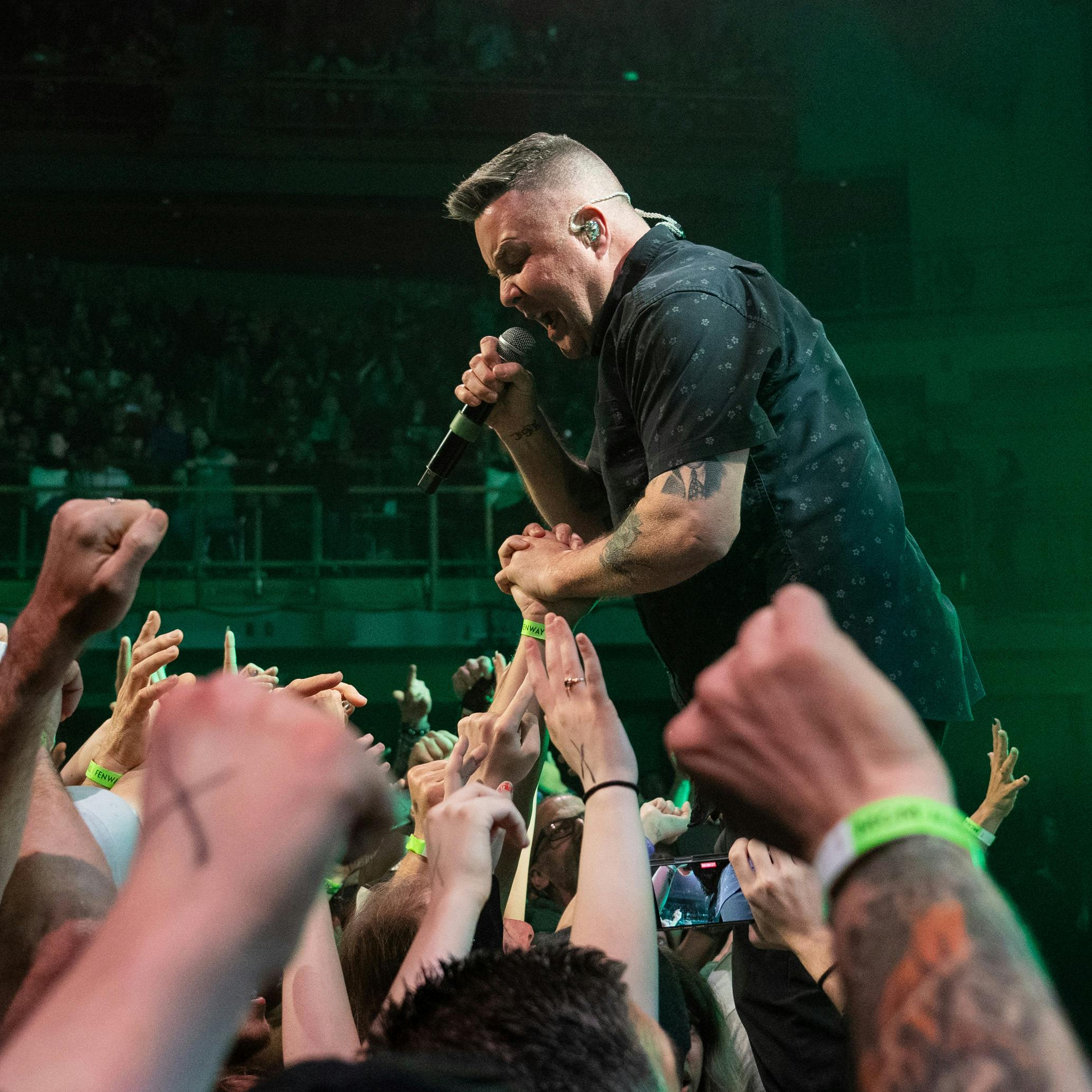
The Patriotic Punk
Get more from your favorite Atlantic voices when you subscribe. You’ll enjoy unlimited access to Pulitzer-winning journalism, from clear-eyed analysis and insight on breaking news to fascinating explorations of our world. Atlantic subscribers also get access to exclusive subscriber audio in Apple Podcasts. Subscribe today at theAtlantic.com/listener.
Learn more about your ad choices. Visit megaphone.fm/adchoices
Press play and read along
Transcript
Speaker 1 You're cut from a different cloth.
Speaker 1 And with Bank of America Private Bank, you have an entire team tailored to your needs with wealth and business strategies built for the biggest ambitions, like yours.
Speaker 1 Whatever your passion, unlock more powerful possibilities at privatebank.bankofamerica.com. What would you like the power to do? Bank of America, official bank of the FIFA World Cup 2026.
Speaker 1 Bank of America Private Bank is a division of Bank of America NA member FDIC and a wholly owned subsidiary of Bank of America Corporation.
Speaker 2 This is an Etsy holiday ad, but you won't hear any sleigh bells or classic carols. Instead, you'll hear something original: the sound of an Etsy holiday, which sounds like this.
Speaker 2 Now that's special.
Speaker 4 Want to hear it again?
Speaker 2
Get original and affordable gifts from small shops on Etsy. For gifts that say, I get you, shop Etsy.
Tap the banner to Shop Now.
Speaker 5
I'm Hannah Rosen. This is Radio Atlantic.
And the Atlantic's editor-in-chief, Jeffrey Goldberg, is really into Celtic punk music.
Speaker 3 Who knew?
Speaker 5 He listens to one band in particular when he's getting ready for work.
Speaker 4 I listen to them in the morning when I'm trying to wake up. You know, the boys are back and smash shit up or whatever are good songs to listen to in the morning when you're trying to get motivated.
Speaker 5 Those songs are by Dropkick Murphys, who, by the way, have an album out this week. Their front man is Ken Casey.
Speaker 5 And Jeff saw a clip one day of Casey doing something interesting at one of his shows. Something Jeff thought was unusual, risky, maybe even brave.
Speaker 5 Wait, you just called up Ken Casey one day. Why were you interested in him?
Speaker 4 If you actually want to know the real reason why, do you want to know the real reason why?
Speaker 5 I do, because I don't pin you as a hardcore fan, you know?
Speaker 4 There is no bigger fan of Celtic punk music in this podcast studio than this guy. But the real reason I'm interested in this is
Speaker 4 I admire people who
Speaker 4 try to say something.
Speaker 4
explicit with their music. Obviously, explicit to a degree.
If it becomes just a platform, then it's not very interesting music, right? Not very interesting lyrically.
Speaker 5 Aaron Powell, so your interest is in the music being political, not like a musician being political. Because it's actually really tricky to make political art.
Speaker 5 It's like a legitimate question that a lot of artists face, like, do I say anything about the election?
Speaker 4 I mean, yes. In this case, in Dropkick Murphy's case, it's both.
Speaker 4 It's Ken Casey will go out on stage and talk overtly politically about even trade policy, but also the music, especially in this latest album.
Speaker 4 So, yeah, and by the way, it's kind of easy for performers to go out and make anodyne statements about this or that in politics and have their music be about things other than the politics.
Speaker 4 Obviously, when you make political music, you're going to drive away some people.
Speaker 4 You know, that's just the nature of it. And it's not in the nature of commercial music to drive away anyone.
Speaker 5 Okay, that's enough of me. Here's Jeff talking to Casey.
Speaker 4 Are you sick of talking about shipping up to Boston and the departed?
Speaker 3
Not really. People say, Do you get sick of that song? And I say, No, the key to that song is it's two minutes.
It's actually when we play it live, it's one minute, 50 seconds.
Speaker 3 So it's over before it starts. You know, like if I would hate to have like your biggest hit be Stay Away to Heaven.
Speaker 3 Yeah, like, I mean, even our second most popular song, Rose Tattoo, is over five minutes.
Speaker 3 And I can see, you know, sometimes by the end of that, as much as I love the song, I'm like, fuck, I wish this was shorter, like shipping out to Boston.
Speaker 3 But no, I mean, I think if there's any way for a punk band to kind of break through another level of success, it's pretty cool when it's an Oscar-winning movie by, you know, one of your favorite directors about the city you're from.
Speaker 4 Talk about Woody Guthrie and how you built on Woody Guthrie to write that song.
Speaker 3 You know, one of the things that attracted me to punk rock and attracted me to Irish music
Speaker 3 was that protest element, you know, and rebel element to a lot of it.
Speaker 3 And then that's how I stumbled on to
Speaker 3 a lot of, you know, the American
Speaker 3 protest singers and Woody being, you know, the leader of that pack.
Speaker 3 And then
Speaker 3 we get a phone call one day,
Speaker 3 early 2000s, from
Speaker 3 Woody's daughter, Nora. And she said, I'd like to offer the band the opportunity to come down and see my father's archives of unpublished lyrics that he never put to music.
Speaker 3 And I was like, is this a joke? Is someone like punking us here?
Speaker 3 And I got to go down, the archives at the time were still in New York City. And,
Speaker 3 you know, the original papers he wrote the songs on. You could see the stains on the papers.
Speaker 3 You could literally, Nora says you can smell, like, did he write this near the ocean? Did he write this some, you know, in Oklahoma or whatever? And so it was just a really unique look into
Speaker 3 his whole work. And
Speaker 3 we don't often write music first. It's usually lyrics first and a melody, and then we shape the song around it.
Speaker 3 But we had written the music to ship it up to Boston, and we were just waiting to put the
Speaker 3 find for me to write some words. And I flipped through and here's this song, Shipping Up to Boston, which stood out so much because it was so short and so kind of silly.
Speaker 3 And one of the keys to that song's success is there's a huge instrumental sections in the song that really make you wait for the chorus.
Speaker 3 And I know that if I was writing the lyrics to that, I would have never left that space. I would have wrote a pre-chorus there and you wouldn't have had that wait for the payoff.
Speaker 3 But obviously when we chose to put Woody's
Speaker 3 lyrics in there, there were no other lyrics to add in.
Speaker 3 So you had the four-line verse, and then you had the shipping up the Boston chorus, which I wish he had a note of what he was singing about on that song.
Speaker 3 I was
Speaker 4 interviewing Bruce Springsteen once on the subject of Stevie Van Zandt. And
Speaker 4
I was writing about Lil Steven and about how he was doing overtly political music. And I'll always remember what Bruce said.
He said, writing political music is a hard slog through muddy waters.
Speaker 4 You know, I mean, he was praising Stephen. And
Speaker 4 guys are one of the few bands that goes right at it.
Speaker 4 I mean, you use metaphor and you use illusion, but like you're you're you're really going at it, especially on this new album. And I'm wondering,
Speaker 4 is it a hard slog? Are you giving up something commercially by
Speaker 4 voicing your actual opinions about the world?
Speaker 3 Well, I do think from a from a timelessness sense, we do try to do it, you know, in a not
Speaker 3 naming names and dates.
Speaker 4 No, I know you're not going to come out against tariffs on a Tuesday or something, yeah.
Speaker 3
But everyone knows what we're talking about when we do it and why we do it. And yes, I like to say that the band started in 96.
Our goal was to be
Speaker 3 a little bit different in the sense that we spoke for people that were like living life in the middle class or working class people. And
Speaker 3 so if you start your band on that and you've held to those ideals
Speaker 3 for coming next year, it'll be 30 years
Speaker 3 and you've done that the whole 30 years and then you get to this era and you're going to back down from it, it's almost like the whole thing seems like it was.
Speaker 3 meant to be a test run for the time we're in now. So for us to not go out on a limb about it would sell like our whole career short, you know, and will, will it eventually hurt us or whatever?
Speaker 3 Who's to say? I kind of look at it the way I look at like
Speaker 3
reviews or comments on your social media. It's like you can't pay attention to it.
You just got to do what feels instinctually right and right in your heart.
Speaker 3 And I say this to Trumpers all the time that,
Speaker 3 you know, that I know enough to have a conversation with at least or bother to. I'll say, listen, you don't like our opinion, you don't like what we have to say.
Speaker 3 Most of you used to, by the way, before, you know, everything changed when that guy came down the escalator.
Speaker 3 But regardless of what you think of our message, you got to know that this band wouldn't exist if it wasn't for these core beliefs. And so a lot of music that you do like came out of that fire.
Speaker 3 And the new single, like, Who'll Stand With Us, like, look at the words. It's like, we're singing about people being oppressed by those in power with wealth that we could never imagine.
Speaker 3 Who's got a problem with that?
Speaker 3 Who stand with us?
Speaker 3 Don't tell us everything is fine. Who stand with us?
Speaker 6 Because it's not.
Speaker 4 You have gotten into direct confrontations with fans at shows
Speaker 4 over your politics and their politics.
Speaker 4
In today's age, that's pretty rare. Money comes first.
Popularity comes first.
Speaker 4 Any doubt ever about the path you now set yourself on?
Speaker 3 I get back to the fact that we're singing these songs that I believe in my heart of hearts are what represents,
Speaker 3 you know, regular ordinary people.
Speaker 3 And when I see someone,
Speaker 3 and by the way, I'm not out there saying, hey, you in the front row, who'd you vote for? You know what I mean?
Speaker 3 But like when someone comes to be protest back with a MAGA shirt in the front row, it's like.
Speaker 4 They know what they're doing, and you know that they know what they're doing.
Speaker 3 Sure, yeah. And then, and then, and, and of course, those are the ones that have gone viral, but there's other nights when I just talk from the stage.
Speaker 3 And I do get, listen, I understand there's an amount of people that will say, this is the counter-argument,
Speaker 3
is, hey, you know what? I worked all week. I paid my money to come see music.
I don't want to hear you shove your politics down my throat. And I can respect that to a degree.
I've always had a
Speaker 3 and for the most part of our career, we've always said,
Speaker 3 we'll leave our politics to the lyrics because you you know, we've been pretty overtly political. So, if you read the lyrics, you know.
Speaker 3 And I do think sometimes you get more people to your side that way because you, you know, it's like fishing, you're just dangling the carrot, you're not clubbing the fish over the head.
Speaker 3 However, at this point in time, it's like you know, the alarm bells are ringing.
Speaker 5 So, what's interesting to you about Ken Casey is he is taking a risk. Like, essentially, he's putting himself out there, possibly
Speaker 5 like turning off his own fan base.
Speaker 4 He literally does turn off some of his own fan base and doesn't seem to care, which I admire these days. I happen to admire anyone who will risk alienating, let's say,
Speaker 4 MAGA America for a point.
Speaker 4 right?
Speaker 4 I'm not trying to be,
Speaker 4
I'm not trying to be overly partisan or political here. I'm just saying that it's very interesting that he'll put his money where, and the whole band will put their money where their mouth is.
And
Speaker 4 he also has, and this is what I admire about him, he has a large-heartedness about it.
Speaker 4 You know, he doesn't,
Speaker 4 he's not one of these, they're all deplorable kind of people.
Speaker 4 You know, I was having a hard time adjusting to the idea that Trump had won yet again
Speaker 4 after all the ink we had spilled about the dangers of Trumpism, right?
Speaker 4 And then I realized that I just like Americans and I like America. And so we're gonna I'm just gonna figure my way through this and and
Speaker 4 not going to sort of
Speaker 4 be
Speaker 4
hard-hearted about it. And what I saw in Ken Casey was a model of how one could be in these circumstances.
He's a, he, I find him to be
Speaker 4 a thoughtful person and a patriotic person,
Speaker 4 and a guy who makes really loud, interesting music, even though he's already in his 50s, I guess. So I admire that, being personally in my 50s.
Speaker 5 After the break, Casey makes a wager with a fan.
Speaker 7 Some tech leaders question whether we're in an AI bubble, but others say the best of what AI has to offer is yet to come.
Speaker 8 Maybe in 10,000 years, AI will be based on physics that we don't even understand right now, and we'll have many different approaches.
Speaker 7 Join us weekly starting October 15th for the most interesting thing in AI, brought to you by Rethink, the Atlantic's creative marketing studio, in collaboration with PWC, wherever you get your podcasts.
Speaker 5 Okay, we're back. Jeff is asking Casey what it's been like for him to watch friends and loved ones shift from being moderate Democrats to fully embracing Trump.
Speaker 3 Even when my friends, for example, would have been considered center-left Democrats,
Speaker 3 I think I was probably a little bit more on the more progressive side of them, partially partially because of my world travels. You know what I mean?
Speaker 3 Like, you know, you change when you see the world and you see things outside of your own backyard.
Speaker 3 But
Speaker 3 as I noticed that shift happening, it was the classic example of
Speaker 3 the playbook of division in politics, where the right
Speaker 3 told
Speaker 3 white Senate Democrats that these people don't care about you.
Speaker 3 They're not there for you.
Speaker 3 White men are on the way out.
Speaker 3 And then they started to use,
Speaker 3 of course, the other tropes of race and sexuality and trans. It's like, you know,
Speaker 3 and just little by little, I feel like a lot of these white working class Democrats just crept over saying, well, at least these guys want to want me.
Speaker 3 And yeah, they want you, but they really just want to use you.
Speaker 4 Do you think the Democrats don't want them?
Speaker 3 I don't think it's that. I think that the Republicans have just done a great job at
Speaker 3 lying to them to make them feel, you know, and listen, obviously, we can't speak this broadly for this many people. There's some people that just chose racism above all.
Speaker 3 Holy crap, this guy makes it okay for me to say the horrible things I used to have to whisper to my friends.
Speaker 3 Yeah, I'm voting against what's best for my family, my pension, everything else, but I want to be able to speak loud about this stuff, you know. But they've been, you got to tip your cap, man.
Speaker 3 They've pulled it off. They've tricked a lot of people.
Speaker 4 Well, look, recognizing that you're actually, your job is to be a Celtic punk rocker and not a Democratic political party strategist, I will ask you nevertheless, there's a crisis for the Democrats in that white men, especially, but also black men and Hispanic men.
Speaker 4 don't think that the party is pro-male. I recognize what you're saying about the Republicans and the plays that they're running.
Speaker 4 But if you were telling the Democrats what to do, what plays would you run to counteract that?
Speaker 3 Well, by the way, it gets back to that point. And I often say this when you did mention you're a guy from a band, there's really nothing I'd rather be talking about less, you know what I mean, than
Speaker 3 where we're at right now. So, like, when people think like I'm on stage yapping away because I want to be talking about it,
Speaker 3 trust me, I don't. But anyway, if I was to say, as someone who has a,
Speaker 3 you know, know, majority white male fan base, the band, I would say that,
Speaker 3 I mean, we're talking about what's right or wrong, are we talking about what you need to win an election?
Speaker 3 If we're talking about what you need to win an election, I guess you do have to bring the olive branch out to say that like, you know, masculine guys in the trades are not vilified, you know, and I don't necessarily think they have been, but I mean, I look at a guy like a friend of mine, you know, Sean O'Brien from the Teamsters, you know, and spoke at the Republican convention.
Speaker 3 And he'll say, I'm not a Republican.
Speaker 3 I'm a Democrat, but I'm a Democrat of what the party used to stand for, and that he's going to go rogue to wherever he has to, that's best for his members and his people.
Speaker 3 And, you know, so when you see people like that. saying that the Democratic Party isn't working for them anymore, then there is something to listen to because that guy has
Speaker 3
a million people that he's representing. And I think there's there's room for everybody.
You know what I mean? I think that the policies of the Trump administration and its
Speaker 3 frankly just cruelty should, if anything, unite anybody that's center left and far progressive because the things we want at this point should just be freedom and kindness and civility and treating people with dignity.
Speaker 3 I mean, if that shouldn't unite the country that wants to do good things, then but it's the funny thing about the left, even with all that going on, there'll still be that division and bickering sometimes.
Speaker 4 Tell me the story from your perspective.
Speaker 4 There's a very famous clip
Speaker 4 from a show. You have this colloquy, essentially, this discourse with a guy wearing
Speaker 4
a Trump shirt, a MAGA shirt. Like, how do you make the decision? You're on stage in front of several thousand people.
You're doing your very high-velocity show.
Speaker 4 How do you decide that you're going to pause and you're going to like uh
Speaker 4 educate i mean i think that's what you're is in your mind like i'm going to teach this guy about about domestic uh clothing production in the middle of a punk show sure
Speaker 3 well so sometimes you know sometimes when someone's trying to make a statement of being
Speaker 3
for just for example in the front row with a mega shirt on you'd say they're dying for attention right now. I'm not going to give them the attention they crave.
So I might totally ignore them.
Speaker 3
But the one you're talking about, there was a blow-up of Trump's head. Like, you know, like.
This is in Florida. Yeah, Florida.
I'm going to say a guy, maybe, and I'm just guessing, you know,
Speaker 3
late to mid-60s and a kid in his 30s. And they both had MAGA shirts and gear.
So it was clear. Controlling you.
Yeah, so it was clear.
Speaker 3 But it taught me a big lesson, though, that night because, you know, we had this interaction where I made a bet with them.
Speaker 9 I'd like like to propose a friendly a friendly wager you can't lose this wager would you in the name of dialogue and discourse and I appreciate you being here would you agree to a friendly wager he says sure that's a good sport well first of all do you support American workers of course you do of course you do okay
Speaker 9 So and you support American businesses obviously okay,
Speaker 9 so I don't know if you guys are aware because we don't go around fucking bragging about it, but Dropkick Murphy's always sells proudly made in America merchandise only.
Speaker 3 I told him Dropkick Murphy's merchandise is all made in America because I feel like, hey, we put our money where our mouth is, you know,
Speaker 3 and
Speaker 3 I find that MAGA often doesn't.
Speaker 3 And so I made a bet. Like,
Speaker 3 I'll give you $100 and the shirt if your shirt's made in America.
Speaker 3 And if it isn't, you just get the shirt.
Speaker 9 All right, Matt, can we get a little drum roll, please?
Speaker 9
Sir, could you both turn backwards? Don't worry. No one's gonna, he just needs to check your tags on your shirt and your hat.
Just need to see where they're made.
Speaker 9 It's made in Nicaragua.
Speaker 3 And I kept it respectful. And
Speaker 3 when he lost the bet because the shirt was made in Nicaragua, he took it off and we gave them shirts and they laughed. And I'm like, oh, wow, that doesn't often go like that with MAGA.
Speaker 3 And I went down after and I said, hey, thanks for being a good sport. And he said, hey, I've been coming to see you guys for 20 years.
Speaker 3 I consider you family and I don't let politics come between me and family. And I was like,
Speaker 3 wow, what a lesson that guy just taught me to not look at any person in a MAGA shirt and automatically think that they're the worst of the worst of the worst.
Speaker 3 I still think that if you're willing to sport a shirt that for a guy
Speaker 3 who is doing what he's doing now,
Speaker 3 you certainly don't have my love and devotion, but in my mind, oftentimes if I see someone in a MAGA shirt,
Speaker 3 I'm all but thinking in my head he's burning crosses, you know what I mean? And this guy, man,
Speaker 3 he was ready to have some civil discussion and laugh about it a little bit. And I have a few friends like that, you know, that
Speaker 3
they'll still, I swear, sometimes I think they'll just stay MAGA just because they don't want to admit they were wrong. It's hard for a guy to just say, I got played.
Right.
Speaker 4 And that's something that you've been arguing is that this is fundamentally a grift.
Speaker 3 Is that fair? Yeah, and that
Speaker 3 I don't look at most people and say, like, hey, you know, I don't even know Donald Trump. You know what I mean?
Speaker 3 Like, I don't want to fall out with someone for life that I, especially that I knew my whole life over this guy.
Speaker 4 Have you lost friends?
Speaker 3 I've definitely lost peripheral friends and my closer friends that have gone MAGO. We've done our best to avoid the subject, but we don't really hang out.
Speaker 3 How do you hang out with someone when, you know, but we can stay cordial? You know what I mean? But yeah, it's gotten the way with a lot of,
Speaker 3
yeah, I mean, I'm lucky in my family, at least. I don't have that.
Like, everyone's on the same page. I don't have anyone throwing the turkey at me across the table, at least, you know.
Speaker 4 Right, right, right.
Speaker 4 Talk a little bit about the new album and the goal of the album.
Speaker 4
Obviously, there are aesthetic goals. You're trying to make great music, and you do.
I'm admitting my bias here, but there's some songs here that are very straight ahead,
Speaker 4 leave no room for doubt.
Speaker 3 I mean, you know, you're right about what you're passionate about, and I'm pretty passionate about what's happening to the country that I'm a citizen of.
Speaker 3 I just, I can't see writing about something else.
Speaker 3 I feel like if we were, if we, you know, like I said, it would be one thing if we wrote 13 songs about the situation, people might be like, all right, we get it.
Speaker 6 But
Speaker 3 that's why it's authentic for us, because we do live our lives, right? There's songs about our children. There's songs about a friend from another band.
Speaker 3 But there's also these songs about the rage we feel inside right now, you know? So
Speaker 3 if we didn't write about that right now, people would be like,
Speaker 3 what's wrong with Dropkick Murphy? They're trying to, you know, stuff it down and not deal with it, you know, and it's just not who we are.
Speaker 4 I guess the final question is, do you think the fever is just going to break? You see anything that makes you think, okay, they're going to understand that this is a grift.
Speaker 4 They're going to understand that
Speaker 4 class issues are more important than gender issues and race issues and so on.
Speaker 3 I keep, you know, I always say I'm never one to root against America, so I don't want to say I hope it gets so bad that they see it.
Speaker 3 But I think that's what it might take.
Speaker 4 Ken Casey, Dropkick Murphy, thank you very much for joining us. I appreciate it.
Speaker 3 Thank you.
Speaker 5 Thank you to Jeff Goldberg for bringing us this conversation. Dropkick Murphy's new album, For the People, is out tomorrow, July 4th.
Speaker 5
This episode of Radio Atlantic was produced by Rosie Hughes. It was edited by Claudina Bade.
We had engineering support from Rob Smirciak and fact-checking by Alex Mironio Porto.
Speaker 5 Claudina Bade is the executive producer of Atlantic Audio, and Andrea Valdez is our managing editor.
Speaker 5 Listeners, if you like what you hear on Radio Atlantic, you can support our work and the work of all Atlantic journalists when you subscribe to the Atlantic at theatlantic.com/slash listener.
Speaker 5 I'm Hannah Rosen. Talk to you next week.
Speaker 6 The holidays mean more travel, more shopping, more time online, and more personal info in more places that could expose you more to identity theft.
Speaker 6 But LifeLock monitors millions of data points per second. If your identity is stolen, our U.S.-based restoration specialists will fix it guaranteed or your money back.
Speaker 6
Don't face drained accounts, fraudulent loans, or financial losses alone. Get more holiday fun and less holiday worry with Life Lock.
Save up to 40% your first year. Visit lifelock.com/slash podcast.
Speaker 6 Terms apply.