Hitler’s Olympics, Part 9: A Plague on Both Your Houses.
In the season finale, we turn back the clock four years, take a side trip to Alabama, meet an extraordinary man named Billy Garland, and ask: What is the right way to reconcile something pure with the messiness of the real world?
See omnystudio.com/listener for privacy information.
Press play and read along
Transcript
Speaker 1 This is an iHeart podcast.
Speaker 5 In today's super competitive business environment, the edge goes to those who push harder, move faster, and level up every tool in their arsenal.
Speaker 8 T-Mobile knows all about that.
Speaker 8 They're now the best network, according to the experts at OoCla Speed Test, and they're using that network to launch Supermobile, the first and only business plan to combine intelligent performance, built-in security, and seamless satellite coverage.
Speaker 13 That's your business, supercharged.
Speaker 14 Learn more at supermobile.com.
Speaker 16 Seamless coverage with compatible devices in most outdoor areas in the U.S.
Speaker 4 where you can see the sky.
Speaker 7 Best network based on analysis by OOCLA of Speed Test Intelligence Data 1H 2025.
Speaker 22 American Military University is the number one provider of education to our military and veterans in the country.
Speaker 27 They offer something truly unique: special rates and grants for the entire family, making education affordable not just for those who serve, but also for their loved ones.
Speaker 29 If you have a military or veteran family member and are looking for affordable, high-quality education, AMU is the place for you.
Speaker 35 Visit amu.apus.edu slash military to learn more. That's amu.apus.edu slash military.
Speaker 38 On my last trip to London, I had dinner at my favorite spot in Clerkenwell.
Speaker 2 It's been in continuous operation for something like 150 years, which means it predates automobiles, radios, and the zipper. I had the Mangalitza loin chop and the potatoes confi.
Speaker 40 Yum.
Speaker 19 You need to go there.
Speaker 41 Although, I don't know if I'm allowed to say the name.
Speaker 38 Let's just say it starts with a Q, then a C,
Speaker 41 and then an H.
Speaker 8 If you're planning a trip of your own, consider hosting your home on Airbnb.
Speaker 25 Your place could become part of someone else's story while simultaneously earning you extra cash for the Mangalitza loin chop.
Speaker 29 Your home might be worth more than you think.
Speaker 38 Find out how much at airbnb.com/slash host.
Speaker 44 The thing I'm really, really interested in is the kind of way the case was received around the country and the world. That's where I want to get to.
Speaker 46 Okay.
Speaker 44 But starting with,
Speaker 44 so this train that's going to run right out there right is coming from where from chattanooga right going where to nashville memphis going to memphis yeah
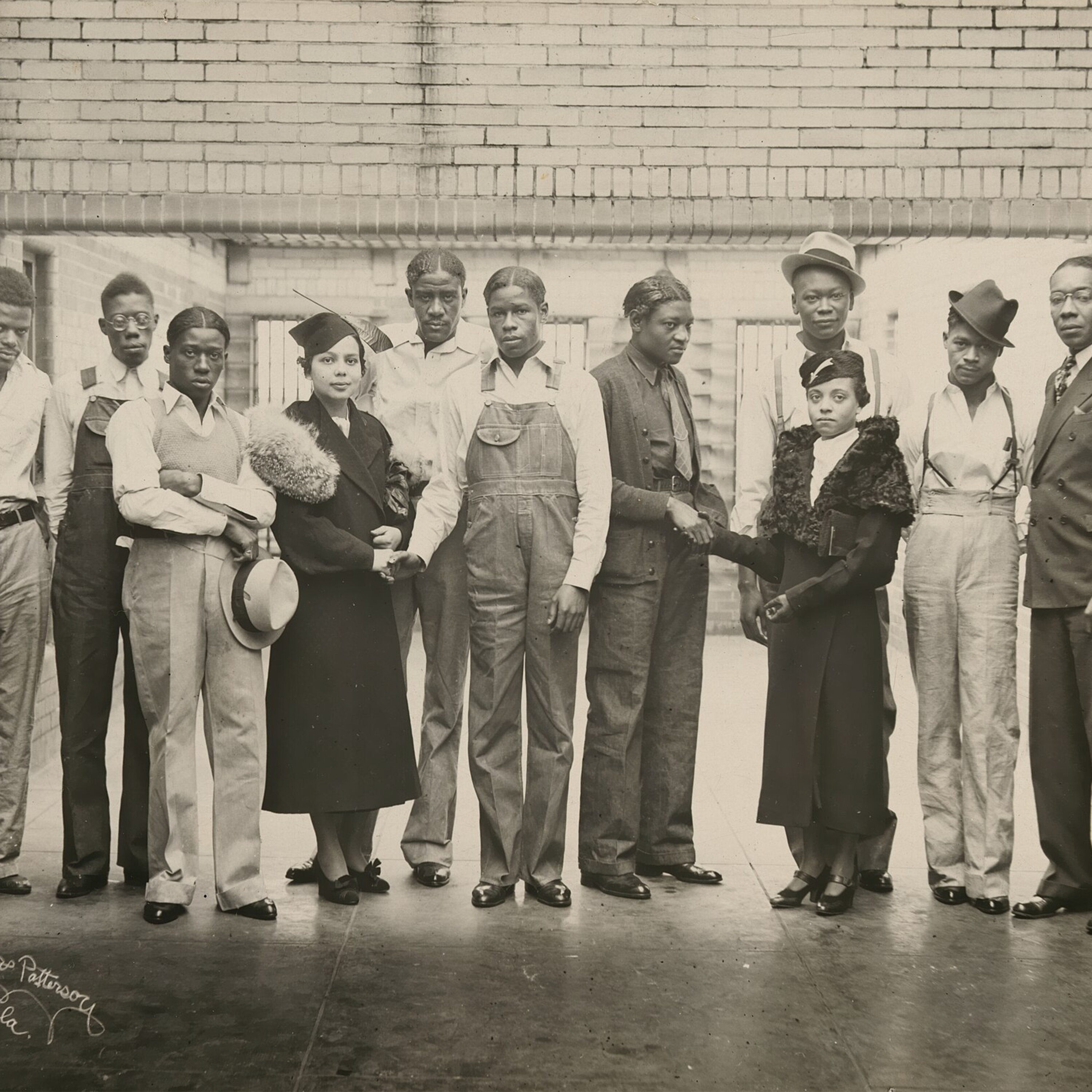
Speaker 52 i'm in a little town in northeast alabama called scottsboro sitting in an old african methodist episcopal church built in 1878 by former slaves the church is now a museum and ben nadaff halfrey and i are talking to the director tom ready about what happened on the chattanooga to memphis train at the peak of the great depression it's 1931.
Speaker 47 People are hoboing all over the country.
Speaker 47 And on the morning of March 25th, the nine defendants, along with two young ladies from Huntsville, along with dozens of others, we'll never know who else was on that train.
Speaker 47 Between here and Chattanooga, there was an altercation on the on the train. And at Stevenson, which is a town about 20 miles from here,
Speaker 47 six white guys were thrown off the train by
Speaker 54 a group of African Americans.
Speaker 47 This is probably one part of the story everybody agrees on, that
Speaker 47
six came off and these other guys stayed on. It was a fight.
Yeah, it was a fight over space.
Speaker 50 This is Alabama at the height of Jim Crow.
Speaker 44 So
Speaker 47 the white guys that got off the train went back to the
Speaker 47 agent at the Stevenson Depot and said, hey, we just got thrown off this train, which they were illegally on, right? They were unticketed.
Speaker 47 But
Speaker 47 there's all these black guys, of course, they didn't call them black guys. And oh, by the way, two white women.
Speaker 53 We have white women and young black men together on a train.
Speaker 30 The station master at Stevenson Depot calls ahead to the Paint Rock station.
Speaker 47 By the time they get to Paint Rock,
Speaker 47 there's anywhere from 100 to 150
Speaker 46 men,
Speaker 47 horses, ropes, waiting for the train.
Speaker 31 Everyone's pulled off the train. The two women say they've been raped.
Speaker 43 The nine young men, some of them just kids, 12 and 13 years old, get shipped directly to Scottsboro, which is the county seat.
Speaker 31 By the time they get there, another mob is waiting.
Speaker 47 And there's this...
Speaker 47 wonderful Atticus Finch moment in the story where the sheriff of Scottsboro, Matt Wong, comes comes out with
Speaker 47 his shotgun and says the first one that tries to cross me is going to get their head blown off.
Speaker 47 And
Speaker 47 that apparently held the crowd back a little bit because I guess they believed him.
Speaker 46 And
Speaker 47 two weeks later, on April 6,
Speaker 47 and three hours after they met their attorney, the trial started.
Speaker 44 I'm Malcolm Gladwell.
Speaker 48 Welcome to Revisionist History, my show about things overlooked and misunderstood.
Speaker 48 This is the ninth episode in our series about Hitler's Olympics, the games behind the games.
Speaker 5 We've spent the last eight episodes exploring the many rationalizations, self-justifications, and delusions triggered by the Berlin Olympics.
Speaker 59 Berlin kicked off cognitive dissonance on an international scale.
Speaker 60 Hitler's wave of anti-Semitism focused the world's attention on Germany.
Speaker 52 But in 1931, something happened across the ocean from Germany that held the world's attention in the same way.
Speaker 43 The Scottsboro Boys trial.
Speaker 31 In this, our series finale, let's turn the clock back to 1931.
Speaker 68 The Scottsboro trial was a farce.
Speaker 61 There was no evidence of rape, and one of the women would later retract her accusation.
Speaker 15 Neither fact made a difference.
Speaker 70
Nine Negro youths are hurriedly arrested, promptly marched off to Scottsboro for trial. Six days later they are indicted on charges of assault.
Seven of them are sentenced by Justice John C. Anderson.
Speaker 70 To hang by the neck until dead.
Speaker 70 Subsequent motion for a new trial is overruled as the Alabama Supreme Court affirms the convictions.
Speaker 53 This kind of thing had been happening in the South for years, but something about Scottsboro and the brazenness of all white juries saying guilty, guilty, guilty, really touched a nerve.
Speaker 70 Thousands of telegrams pour into Alabama from all over the world asserting that the Negroes had been denied a fair trial.
Speaker 70 The case is finally carried to the highest court in the land, the Supreme Court of the United States.
Speaker 69 There was public pressure. There were appeals, retrials.
Speaker 71 Goody, Alabama, and you better watch out. The landlords will get you going to jump in, shout.
Speaker 74 Scott, boys, Cotton Boys.
Speaker 71 They can tell you what what it's all about.
Speaker 47 Everybody's writing about it.
Speaker 47 Everybody knows the Scottsboro Boys.
Speaker 47 People are starting to have radios in their house, but it's just remarkable how fast the word did spread on this.
Speaker 60 Reedy was sitting inside the old church as we spoke, and behind him, there was a poster.
Speaker 64 It was a list of names linked in some way to the public campaign to get justice for the Scottsboro Boys.
Speaker 78 There was Ida B.
Speaker 61 Wells, the great African-American activist, Jimmy Cagney, one of the biggest names in Hollywood, and then Albert Einstein.
Speaker 47 Einstein was in Germany when they were arrested, and he in the summer of 1931 wrote a letter with a bunch of German scientists to the Governor Miller saying, we, well, they were intellectuals, they called them, so German intellectuals demand the release of
Speaker 47 the Scottsboro Boys because they're innocent.
Speaker 55 Einstein,
Speaker 44 Einstein is like
Speaker 44 physicist living in Germany,
Speaker 81 who
Speaker 44 is somehow so moved by the press accounts of this.
Speaker 2 Right.
Speaker 31 Two years before Hitler became chancellor, thousands of Germans were out in the streets protesting American white supremacy.
Speaker 47 And they had people throwing rocks through the American embassy with notes taped onto them that was to say, they shall not die.
Speaker 45 And that is why Ben and I were in in scottsboro i remember when you sent me an email with one line and it was like we're going to do an episode on scottsboro and i was like why would we talk about scottsboro and then i realized what year it was and what happened the year after oh right 1932 an olympic year as well and where were those games held
Speaker 49 i think you can guess where this is headed
Speaker 6 In today's super competitive business environment, the edge goes to those who push harder, move faster, and level up every tool in their arsenal.
Speaker 9 T-Mobile knows all about that.
Speaker 8 They're now the best network, according to the experts at an OOCLA speed test, and they're using that network to launch Supermobile, the first and only business plan.
Speaker 11 to combine intelligent performance, built-in security, and seamless satellite coverage.
Speaker 13 With Supermobile, your performance, security, and coverage are supercharged.
Speaker 6 With a network that adapts in real time, your business stays operating at peak capacity even in times of high demand.
Speaker 8 With built-in security on the first nationwide 5G advanced network, you keep private data private for you, your team, your clients.
Speaker 79 And with seamless coverage from the world's largest satellite-to-mobile constellation, your whole team can text and stay updated even when they're off the grid.
Speaker 3 That's your business, supercharged.
Speaker 14 Learn more at supermobile.com.
Speaker 16 Seamless coverage with compatible devices in most outdoor areas in the U.S.
Speaker 4 where you can see the sky.
Speaker 7 Best network based on analysis by OOCLA of Speed Test Intelligence Data 1H 2025.
Speaker 26 The year is 776 BC.
Speaker 12 Imagine you're an athlete who's traveled to Athens for the first Olympic Games.
Speaker 24 It's the night before the big event, and you're tossing and turning on your woven reed mat.
Speaker 12 Meanwhile, the guy two houses down, Karabas of Elis, is sleeping soundly on his more comfortable mattress.
Speaker 3 The next day, Karabas goes out and wins it all.
Speaker 66 Coincidence?
Speaker 41 Perhaps.
Speaker 62 But science has proven that sleeping well is essential to performing at your peak.
Speaker 29 Which is why Satfa is proud to be named the official mattress and restorative sleep provider for the U.S.
Speaker 12 Olympic and Paralympic teams.
Speaker 34 They'll help the U.S.
Speaker 2 Olympic and Paralympic Committee highlight the essential role of sleep in recovery and performance.
Speaker 22 For the LA 28 Games, SATFA will provide athletes with mattresses, linens, and pillows to help ensure they get the restorative sleep that's crucial to their recovery.
Speaker 76 Of course, you don't have to be an elite athlete to enjoy that kind of deep restorative sleep.
Speaker 83 Just visit satfa.com and save $200 on $1,000 or more at satfa.com/slash Gladwell.
Speaker 12 That's soulatba.com slash gladwell.
Speaker 19 American Military University, where service members like you can access high-quality, affordable education built for your lifestyle.
Speaker 34 With online programs that fit around deployments, training, and unpredictable schedules, AMU makes it possible to earn your degree no matter where duty takes you.
Speaker 42 Their preferred military rate keeps tuition at just $250 per credit hour for undergraduate and master's tuition.
Speaker 30 And with 24-7 mental health support plus career coaching and other services, AMU is committed to your success during and after your service.
Speaker 9 Learn more at amu.apus.edu slash military to learn more.
Speaker 35 That's amu.apus.edu slash military.
Speaker 31 In April of 1923, a real estate developer from California named Billy Garland traveled to Rome for the annual meeting of the International Olympic Committee.
Speaker 61 Garland was good friends with Avery Brundage.
Speaker 38 They were cut from the same cloth, men from humble beginnings with outsized ambition, dreamers, builders.
Speaker 73 But where Brundage was grim and angry, with a chip on his shoulder the size of Lake Michigan, Garland was all sunny optimism and charm.
Speaker 61 Billy, everyone called him Billy, had life force.
Speaker 51 Billy grew up poor and married money.
Speaker 65 Billy was the embodiment of Los Angeles, a city in the 1920s, half a million strong and growing by the day, a city on the verge of stardom.
Speaker 65 Billy watched the sunrise every morning over the San Bernardino Mountains, but never bothered to look to see if it set at night.
Speaker 87 LA was really controlled and run by a coterie of a shadow government comprised of bankers, financiers, but really above all, the real estate men.
Speaker 50 Barry Siegel, the author of a wonderful book about Billy Garland, Dreamers and Schemers.
Speaker 87 Of which Billy Garland was premier, the prince of realtors.
Speaker 27 Billy owned huge swaths of downtown Los Angeles.
Speaker 2 His best friend was the publisher of the L.A.
Speaker 38 Times, the most powerful man in the city.
Speaker 43 His brothers in the shadow government kept out of the spotlight.
Speaker 41 Not Billy.
Speaker 87 Billy was the front man,
Speaker 46 a very
Speaker 87 outgoing personality,
Speaker 87 making speeches, arriving at the railroad station, press conferences, writing columns of his own for the L.A. Times,
Speaker 69 always, always
Speaker 44 promoting, promoting the city, promoting the future.
Speaker 40 So in 1923, Billy sails to Italy for his biggest pitch yet, to the International Olympic Committee.
Speaker 43 The IOC was meeting that year in the old Capitol building across from the Forum, a venue worthy of a group obsessed with antiquity.
Speaker 86 To start the day, the King of Italy said a few words.
Speaker 52 Then the king is opening things and like, here's this guy from, I mean, from what their perspective must have been the middle of nowhere.
Speaker 87 Absolutely. They literally were asking him where Los Angeles is.
Speaker 85 What's his Trump card?
Speaker 25 Hollywood.
Speaker 87 By that time, Hollywood films were widely popular all around the world. And that's one of the things he was asked at that meeting is, is
Speaker 47 L.A. anywhere near Hollywood?
Speaker 87 And Billy was smart enough to say, yes, L.A.
Speaker 41 is a suburb of Hollywood.
Speaker 67 He understood that that glamour,
Speaker 64 the emerging glamour of the region could play to his advantage.
Speaker 31 Yes. Yeah.
Speaker 67 I'm just thinking back to the IOC, though, because
Speaker 42 the IOC really is. It's like every faded aristocrat in Europe is.
Speaker 46 Yes.
Speaker 55 Every fuddy-duddy you can find with their wax mustaches is around the table.
Speaker 38 And then this like this
Speaker 52 kind of charismatic, wide-open, extroverted Californian shows up.
Speaker 60 I'm just imagining, it's such a fantastic scene.
Speaker 87
I've imagined it too. And I think that's part of how he was effective.
I mean, he was a breath of fresh air. He knew how to talk to them.
Speaker 7 The idea, when he rose to give his talk, his pitch,
Speaker 87 he's pitching America. He's pitching the culture of America, which is still, which is strange and exotic to them.
Speaker 59 They're there amidst all of this sort of 18th century grandeur.
Speaker 87 And the american stands up and says there's this brand new country across the ocean you guys need to go there next kind of this kind of yeah it's and that that's exactly that's an exact sort of exactly how he put it too he says if the games are to be truly international in character they must also be held in other parts of the universe
Speaker 49 the olympics should come to Los Angeles.
Speaker 43 The room is silent.
Speaker 86 No one says a word.
Speaker 82 Then, one delegate stands up and says, so moved,
Speaker 52 let us take our beloved creation to the shores of the Pacific.
Speaker 2 Someone else seconds the motion.
Speaker 62 It goes to a vote.
Speaker 14 It carries unanimously.
Speaker 80 The whole group celebrated at the Coronal Palace, home to the country's royal family.
Speaker 2 Billy spotted a bald man speaking passionately to a group of onlookers.
Speaker 63 It was Mussolini, the newly installed fascist leader of Italy.
Speaker 41 Billy wandered over, shook his hand.
Speaker 61 The next day, Billy had an audience with Pope Pius XI at the Vatican.
Speaker 26 Pius said how much he believed in the Olympic tradition, and Billy kissed his ring.
Speaker 43 Billy convinces the IOC to bring its temple of human idealism to the United States, and just as the whole dazzling spectacle is about to launch, Nine black kids in northern Alabama get swept up in a miscarriage of justice so outrageous that it sparks a wave of protest around the world, marches in Germany, South Africa, Cuba, and the world finds itself in the same position as it would four years later on the eve of the Berlin Olympics, contemplating a pure competition in an impure place.
Speaker 43 With one difference, no one ever threatened to boycott the Los Angeles Games.
Speaker 74 Mr. President,
Speaker 74 in the name of the President of the United States,
Speaker 74 I proclaim open
Speaker 74 the Olympic Games of Los Angeles,
Speaker 74 celebrating the 10th Olympiad of the modern era.
Speaker 45 Well, so if the world is upset about Scottsboro in 1931, then why is there not a boycott of the LA Games in 32?
Speaker 32 I think, you know,
Speaker 2 the obvious reason is
Speaker 41 the nature of American transgressions in civil rights are, on the surface, so different from the nature of Nazi transgressions.
Speaker 67 American transgressions are 300 years old.
Speaker 25 They're embedded in the kind of culture of the country.
Speaker 15 And
Speaker 90 I can't stress this enough.
Speaker 50 They involve black people.
Speaker 91 And
Speaker 49 it's just, it is simply the case, and continues to be the case in some sense, that a transgression against a black person is not considered the same as a transgression against a white person.
Speaker 45 Part of the difference is that Nazism is a new thing, whereas what's happening in Alabama is just not new at all.
Speaker 75 Yeah.
Speaker 62 What's important is it's because it wasn't
Speaker 22 a one-off, right?
Speaker 52 Why does America get go up in, and the black community in particular get so up in arms about George Floyd?
Speaker 55 Because it had happened too many times, right?
Speaker 78 And Scottsboro is kind of like that.
Speaker 67 There's been this steady drumbeat of this kind of stuff coming out of the South.
Speaker 76 And there's, you know, the
Speaker 56 world seizes on that because they're like, you can't
Speaker 88 keep doing this.
Speaker 20 It wasn't system malfunction. It was system function.
Speaker 41 And that's a lot more kind of outrageous.
Speaker 43 I don't think you can make sense of what happened with the Scottsboro Boys unless you take a step back and look at the Alabama Constitution.
Speaker 59 I mean, look at
Speaker 38 the kind of legal infrastructure that was in place in Alabama at the time.
Speaker 58 So why did the LA Games escape moral scrutiny?
Speaker 27 It's puzzling.
Speaker 83 Maybe it's as simple as the fact that the world holds America to a different standard than everyone else.
Speaker 38 If you're a young upstart of a country, you get away with more.
Speaker 67 Or maybe the world cares less about crimes against black people than it does about crimes against white people.
Speaker 79 Or maybe the Nazis were making the Olympics so much about Nazism that it was really easy to see the contradiction between the games and its host in a way that didn't seem as obvious with the LA Olympics.
Speaker 67 Or maybe it's all three.
Speaker 82 But Scottsboro was not some strange outlying event.
Speaker 62 It touched a raw nerve because people understood that it was typical.
Speaker 72 It was how the South worked.
Speaker 62 Discrimination was baked right into American law.
Speaker 59 I called up a law professor at the the University of Alabama, Susan Hamill, and the first thing she brought up was Alabama's state constitution at the time, which had been rewritten in 1901 with one thing in mind.
Speaker 95 There was no
Speaker 91 doubt
Speaker 95 as to what the intent was.
Speaker 76 As one delegate said, they were driven by, quote, the necessity of relieving the black belt of the incubus resting on it.
Speaker 48 Another delegate was more blunt.
Speaker 95 We are here to get rid of the NIGGER.
Speaker 77 The 15th Amendment to the U.S.
Speaker 61 Constitution bars states from denying people the right to vote.
Speaker 88 So the framers of the Alabama Constitution devised a bunch of workarounds.
Speaker 90 First, a poll tax.
Speaker 51 You had to pay $1.50 to vote, which was a lot of money back then.
Speaker 50 Right there, you've gotten rid of a lot of sharecroppers, but they kept going.
Speaker 38 Adding every obstacle they could think of.
Speaker 86 They had to
Speaker 95 own property. There were literacy tests.
Speaker 95 And there was
Speaker 95 the overall discretion of the white voting registrars. The voting registrars, in terms of who was actually registering folks, had a great deal of discretion.
Speaker 95 If you had a white person that kind of met the requirements,
Speaker 95 but also maybe didn't, they could get waved through.
Speaker 51 The 1901 Alabama Constitution Constitution would end up being the longest Constitution in the world.
Speaker 59 388,882 words, about 850 times longer than the U.S. Constitution.
Speaker 95 When African Americans went to register after the 1901 Constitution was ratified, they were just turned away.
Speaker 38 In 1900, there were 181,471 African American men of voting age.
Speaker 60 After the Constitution, fewer than 3,000 of those men could vote.
Speaker 95 You know, we did not have a black electorate in this state worth speaking of until the 1970s.
Speaker 43 It gets worse.
Speaker 60 In 1902, a black janitor named Jackson Giles files suit against the state.
Speaker 76 Jackson says, I meet all the requirements.
Speaker 41 I can read.
Speaker 26 I understand the Constitution.
Speaker 19 I paid my poll tax.
Speaker 50 I own property.
Speaker 38 But they still won't let me vote.
Speaker 38 The case goes all the way to the Supreme Court in 1903, where, rotting for the majority, the legendary Justice Oliver Wendell Holmes, one of the greatest legal minds the Supreme Court has ever produced, writes, and I'm not making this up.
Speaker 67 The defendant, Mr.
Speaker 38 Jackson, alleges that the state of Alabama has constructed a voting system that is in open violation of the Constitution of the U.S.
Speaker 67 But he is asking to be registered to vote under the very same rules that he says are an open violation of the Constitution of the United States.
Speaker 85 If we rule in his favor, we are complicit in the violation.
Speaker 50 It's one of the all-time great Supreme Court catch-22s.
Speaker 95 Justice Holmes disingenuously said, oh, if Giles, if Jackson Giles wants a remedy, he needs to seek his member of Congress to do something about it.
Speaker 95 But Jackson Giles had been denied the right to vote
Speaker 95 for any member of Congress.
Speaker 43 Mr.
Speaker 56 Giles, if you don't like the system that keeps you from voting, then vote to change it.
Speaker 95 The U.S. Supreme Court, like the rest of the country, just wanted to wash their hands of,
Speaker 95 if I can put it this way, the dirty South.
Speaker 77 Now we can understand what happened in Scottsboro.
Speaker 84 The jury pool in Alabama is drawn from the voting pool.
Speaker 41 And since the voters are basically all white, then the juries are all white.
Speaker 48 Which means that when nine black kids are accused of some bogus crime on the Chattanooga to Memphis train, those nine kids are out of luck.
Speaker 31 All told, the Scottsboro boys would end up serving more than 100 years behind bars for something that never happened.
Speaker 77 And in Giles v.
Speaker 56 Harris, the Supreme Court of the United States signs off on the whole arrangement.
Speaker 83 And what, so do you, do you study that case in, at law school in Alabama?
Speaker 95 No, isn't that a shame?
Speaker 83 Scottsboro was an embarrassment, an outrage, exposing the very dark heart of the country that was about to host the purest of athletic spectacles.
Speaker 37 If the world shouldn't have gone to Berlin, in 1936 for moral reasons, then the world shouldn't have gone to Los Angeles in 1932 either.
Speaker 41 Where can you go?
Speaker 6 In today's super competitive business environment, the edge goes to those who push harder, move faster, and level up every tool in their arsenal.
Speaker 9 T-Mobile knows all about that.
Speaker 8 They're now the best network, according to the experts at OOCLA Speed Test, and they're using that network to launch Supermobile, the first and only business plan to combine intelligent performance, built-in security, and seamless satellite coverage.
Speaker 13 With Supermobile, your performance, security, and coverage are supercharged.
Speaker 6 With a network that adapts in real time, your business stays operating at peak capacity even in times of high demand.
Speaker 8 With built-in security on the first nationwide 5G advanced network, you keep private data private for you, your team, your clients.
Speaker 79 And with seamless coverage from the world's largest satellite-to-mobile constellation, your whole team can text and stay updated even when they're off the grid.
Speaker 3 That's your business, supercharged.
Speaker 14 Learn more at supermobile.com.
Speaker 3 Seamless coverage with compatible devices in most outdoor areas in the U.S.
Speaker 4 where you can see the sky.
Speaker 7 Best network based on analysis by OOCLA of Speed Test Intelligence Data 1H 2025.
Speaker 22 American Military University is the number one provider of education to our military and veterans in the country.
Speaker 27 They offer something truly unique, special rates and grants for the entire family, making education affordable not just for those who serve, but also for their loved ones.
Speaker 29 If you have a military or veteran family member and are looking for affordable, high-quality education, AMU is the place for you.
Speaker 35 Visit amu.apus.edu slash military to learn more. That's amu.apus.edu slash military.
Speaker 92 Hey there, Malcolm Glabo here.
Speaker 38 I was just in London and I spent most of my time doing what I love most there, walking, miles and miles.
Speaker 92 Through Clerkenwell and Covent Garden and Shoreditch, stopping for espresso, thinking, writing, hanging out in Proof Rock Coffee, my favorite coffee shop in the city.
Speaker 58 Then I had dinner at my favorite restaurant in Clerkenwell.
Speaker 59 It's been open for about 150 years.
Speaker 42 You can feel the history in the floorboards.
Speaker 31 That's what I love about traveling.
Speaker 42 It slows you down and gets you out of your usual rhythm.
Speaker 17 And if you're looking to switch up your everyday routine, consider hosting your home on Airbnb while you're away.
Speaker 34 It's an easy way to earn a little extra and offer someone else a meaningful stay.
Speaker 29 Your home might be worth more than you think.
Speaker 92 Find out how much at Airbnb.com slash host.
Speaker 67 In the lead up to the Berlin Games, a group known as the Jewish Labor Committee set out to solve the problem of what to to do about impure places and peer competitions.
Speaker 90 The organizers were the same people who had been up in arms over the Scottsboro Boys four years earlier, who helped fund their legal defense, who were fighting for the rights of working Americans.
Speaker 80 Their hands were clean.
Speaker 51 They called their Games the World Labor Athletic Carnival.
Speaker 38 It was held in New York City on Randall's Island in August of 1936, overlapping with the last two days of the Berlin Olympics.
Speaker 79 Invitations went out.
Speaker 66 The carnival will function as a show of protest against the iron heel of Nazism.
Speaker 77 New York Mayor Fiorello LaGuardia signed up to be co-chair.
Speaker 27 The governor of New York agreed to hand out prizes.
Speaker 48 Proceeds from the event will go to supporting the anti-Nazi movement and, eventually, to helping Jews escape from Eastern Europe.
Speaker 80 The Labor Games represent the first solution.
Speaker 38 to the dilemma of the Olympics. Carve out a little corner of ideological purity.
Speaker 19 Don't compromise.
Speaker 78 Align your political values with the ethic of amateur sport.
Speaker 20 Be an absolutist.
Speaker 29 Ed Gordon was there.
Speaker 61 He was the winner of the long jump in the 1932 Olympics.
Speaker 67 George Veroff, the so-called jumping janitor, was there too.
Speaker 49 His gold medal jump beat the winning mark in Berlin by a full inch and a half.
Speaker 92 The women's 40-yard dash was won by a member of the dressmakers union, Wanda Olzuska, another Olzuskwa Mitzi, competed with her on on the winning relay team.
Speaker 41 When a reporter asked Mitzi how she trained, she responded, oh, picketing and throwing stones through windows.
Speaker 61 And nobody came to watch.
Speaker 38 The stands were half empty.
Speaker 41 Why?
Speaker 77 Well, the games were supposed to draw their support from the labor movement, but the Jewish Labor Committee was an anti-communist socialist group, so some communists felt left out and stayed home.
Speaker 32 Then came a second disagreement, this time between the American Socialist Party, the Olga, and some upstart progressives led by Norman Thomas.
Speaker 48 Let me just read to you from A History of the Labor Games by Edward Shapiro.
Speaker 31 The struggle came to a head at the party's annual convention in 1936 in Cleveland, when the old guard left the party, took the magazine The New Leader with Them, and created the Social Democratic Federation.
Speaker 8 The New Leader viewed viewed Randall's Island as virtually a New York Social Democratic Federation event, copiously discussing its progress from its inception in May through the games themselves in August.
Speaker 77 The pro-Norman Thomas Socialist Call, in contrast, merely printed a pro forma announcement of the Games.
Speaker 11 More to its liking was a track and gymnastic demonstration on July 4th, 1936, in Taborville, Ohio, near Cleveland.
Speaker 64 Sponsored by the Czechoslovak Socialist Federation of America, the Czechoslovak Labor Gymnastic Union, the American Workingmen's Socal of New York, the Workingmen's Gymnastic Association, and the Workers' Sports League of America.
Speaker 60 This is the problem with the pursuit of purity.
Speaker 26 At a certain point, it starts to get absurd.
Speaker 26 Because The communists get upset at the socialists, and then the socialists get upset at each other, and sooner or later, your athletic spectacle that was intended to showcase the greatest talent in the world is in Taborville, Ohio under the aegis of the Czechoslovak Socialist Federation of America.
Speaker 84 I mean
Speaker 43 with all due respect to the Czechoslovak Socialist Federation of America.
Speaker 82 Who wants to watch that?
Speaker 30 So what's the solution?
Speaker 94 Option two.
Speaker 49 Take that absolutism down a notch.
Speaker 80 Be willing to compromise.
Speaker 38 Remember Charles Sherrill, the American delegate who fought so hard for America to stay in the Berlin Olympics?
Speaker 61 Just before the Games, someone sent him a news clipping about the killing of a Jewish footballer who had apparently been dragged off the field by Nazis in the middle of a match.
Speaker 60 Sherrill wrote back, Your September 23 letter about the Prague press story of a Jewish football player killed at Radispor, Silesia, arrived today.
Speaker 58 If true, it is as bad as as Negro lynchings in our South.
Speaker 78 Cheryl had ideals.
Speaker 77 He was perfectly willing to compromise around the edges.
Speaker 82 Yes, the American South is a nasty place, but so what?
Speaker 65 Show me a country without nasty places.
Speaker 27 You have to hold a pure competition in an impure place because there aren't any pure places.
Speaker 40 Here's how Cheryl finishes the letter.
Speaker 58 Answering your clipping, let me ask you what you would have said if any foreign team had boycotted our Los Angeles 1932 games because of our Negro lynchings in the South.
Speaker 53 Oh, right.
Speaker 38 The endless boycott.
Speaker 50 Ben and I thought about this.
Speaker 45 I think you're right that
Speaker 45 probably if you boycott 36, you also have to boycott 32. And then you're looking at there is no Olympics in 1940 because it was planned for Tokyo.
Speaker 45 And then obviously World War II cancels that and not in 44 either. So then that's a huge stretch of time.
Speaker 45 what is that? It's 20 years?
Speaker 46 20 years without Olympics?
Speaker 48 28.
Speaker 45 To 48.
Speaker 45 So could the Olympic movement have survived 20 years of no Olympics?
Speaker 75 Probably not.
Speaker 81 Yeah.
Speaker 38 So it starts to seem like you can only keep the Olympics alive at a cost.
Speaker 90 After the Berlin Games, the Germans put out a report, and there's a quote on the title page.
Speaker 50 It goes like this.
Speaker 79 Sporting and chivalrous competition awakens the best human qualities.
Speaker 61 It does not sever, but on the contrary, unites the opponents in mutual understanding and reciprocal respect.
Speaker 62 It also helps to strengthen the bonds of peace between the nations.
Speaker 43 May the Olympic flame, therefore, never be extinguished.
Speaker 63 Signed, Adolf Hitler.
Speaker 57 That's where you end up when you casually mix the pure and impure.
Speaker 49 your ideals in the mouth of a monster.
Speaker 59 Idealism does not survive the journey to an impure place.
Speaker 48 So where does all this confusion leave you?
Speaker 31 Option 3.
Speaker 46 Billy Garland
Speaker 79 In the fall of 1918, Los Angeles was in a rough batch.
Speaker 53 The war in Europe was taking its toll on the economy.
Speaker 48 The 1918 flu, which had claimed millions of lives around the world, had shut down the city's streets.
Speaker 65 Tourism, the great lifeblood of Los Angeles, was at a standstill.
Speaker 38 Billy Garland and his friends needed a plan to get the city back on track.
Speaker 76 So Billy calls a meeting in his office, gathers together the power brokers.
Speaker 87 They were meeting there basically to try to figure out ways to
Speaker 87 promote Los Angeles, above all to
Speaker 89 avoid future lulls in business.
Speaker 43 Barry Segal again.
Speaker 87 And somewhere in that meeting came up the idea of bidding for and staging the Olympics as a way to put LA on the map and draw investors.
Speaker 38 The third way to resolve the dilemma of the Olympic Games is just to be a realist.
Speaker 25 You say, whatever, let's not complicate things.
Speaker 78 The games are really useful.
Speaker 31 And if we play our cards right, we can all get rich.
Speaker 51 So Billy got his games.
Speaker 25 Here he is announcing them.
Speaker 96 the spirit of the purest sportsmanship,
Speaker 96 dozen and one-half centuries or more before Christ, these Olympic games are today,
Speaker 96 the one living heritage handed down to us from those distant times.
Speaker 48 Billy didn't write those lines, believe me.
Speaker 2 Someone at IOC headquarters in Switzerland did, but I'm guessing this is the part Billy did write.
Speaker 96 Many thousands of visitors of these games will come to Los Angeles and California from all parts of of the globe and from every portion of our country.
Speaker 96 Let me add that California recognizes her responsibility as host. The stranger within her gates will be treated with that cordial hospitality and welcome so traditional of our wonderful state.
Speaker 44 Bring the kids.
Speaker 53 Stay at one of my hotels.
Speaker 96 Come then to California, host of the world. for the 16-day period beginning on July 30th to witness for yourselves the ultimate and highest manifestation of modern sportsmanship known to mankind.
Speaker 39 Billy builds a magnificent stadium, the Coliseum, just south of downtown.
Speaker 38 He builds the first true athlete's village up in Baldwin Hills. Billy recruits the two biggest movie stars of the day, Douglas Fairbanks and Mary Pickford, to be his spokespeople.
Speaker 26 Billy creates a spectacle.
Speaker 51 Billy even makes a profit on the Games, a million dollars.
Speaker 80 A few years later, Billy would be all in favor of the Olympics in Berlin, but not because he'd performed some elaborate political analysis.
Speaker 86 Please, more like, love the Kaiserhof Hotel.
Speaker 41 Can we have one in Hollywood?
Speaker 26 How much do the Nazis look to 32 for kind of inspiration on...
Speaker 49 I mean,
Speaker 49 they take that kind of, that notion of the games as a spectacle and run with it.
Speaker 87 They were inspired by the 32 Olympics very much so. It was a 32 Olympics were a model,
Speaker 87 a model for them.
Speaker 87 And that way, Billy Garland and his gang, you know, showed them the way.
Speaker 82 There was a point deep into this series where I found myself more and more sympathetic to Billy Garland, to the guy who just made things work.
Speaker 50 Ben never went that far.
Speaker 31 We argued about it.
Speaker 30 I started this
Speaker 44 whole
Speaker 94 investigation way back when,
Speaker 86 believing that we should have boycotted in 36.
Speaker 41 And now,
Speaker 56 I'm not sure I agree.
Speaker 15 And now I think I'm glad we went.
Speaker 92 Everyone involved in this debate back then, and everyone involved in a debate like this today,
Speaker 50 at the core of all of it is everyone takes sports really, really, really, really, really, really seriously.
Speaker 90 And I kind of realized halfway through that I'm one of those people.
Speaker 45 You're a person who thinks sports really matter.
Speaker 90 Yeah, I didn't think I was.
Speaker 67 I was like, I thought I was the guy who
Speaker 27 said, why are we spending all this time and attention arguing about, you know, running a race against each other?
Speaker 56 And then I'm like, wait a minute, I am that person who cares passionately about the people running on a race each other.
Speaker 45 With your foil, me as a person who is just sort of like unable to recognize even an Olympic level runner.
Speaker 89 And so like,
Speaker 31 you know, the question we have to ask ourselves is, if we want to boycott in 36,
Speaker 80 do we really want an Olympics?
Speaker 56 Because the only way to have an Olympics is
Speaker 50 to hold your nose from time to time.
Speaker 69 And I realized, oh, actually,
Speaker 46 I think I would be willing to hold my nose.
Speaker 41 I think, though,
Speaker 45 I feel in some ways like the less intellectually curious member of this team, because I started feeling like we should boycott the 1936 games, and I still feel like we shouldn't have gone into the 1936 games.
Speaker 45 So I don't know what I was really investigating then, having not, I guess, maybe just like to confirm my position. I think if you think sports and the Olympics really matter, which admittedly,
Speaker 45 I do love the Olympics, but I'm not that person.
Speaker 45 I think if you think sports really, really, really matter, then it's even more incumbent on you to boycott the 1936 Olympics.
Speaker 45 Because the myth that everyone buys into is that this is a festival celebrating the best of what makes us human.
Speaker 45 Everybody's going to come together and try their hardest and have a defining moment of their life in a place with a government that can then cage all of that moral authority and beauty and excellence and put it in the service of their own project, which is the defilement of what it is to be a person.
Speaker 45 Like one of the most inhumane things in the 20th century. So, if you really think that sports matters that much, then I think it's incumbent on you to not lend it to that project.
Speaker 45 And not all, in a way, this is just a false question because the IOC 100% could have moved the Olympics. Yeah.
Speaker 31 So
Speaker 32 I am incredibly skeptical of the idea that a boycott of Berlin would have, in any way, have accelerated our opposition
Speaker 15 to Nazism.
Speaker 64 My guess is the opposite would have happened, that we would have said, okay,
Speaker 43 we've said our peace.
Speaker 92 We don't like the man and we're not going to go and participate in his little games.
Speaker 80 And like, I strikes me you could make a completely alternate scenario that just allows the Germans to feel like, okay, the rest of the world is like, that's you guys don't like what we're doing.
Speaker 25 We're just going to go off on, you know, be even worse.
Speaker 8 I don't know.
Speaker 25 I'm not, I'm just not, I don't buy that premise about, I never have bought that premise about symbolic acts of protest.
Speaker 45 But don't you think that the record shows that having the Olympics in Berlin in 36 is helpful to the Nazis?
Speaker 45 Like Goebbels says this is a really big breakthrough for us, and foreign currency floods into the country. I think
Speaker 50 they're happy that they got away with it.
Speaker 81 Yeah.
Speaker 81 But
Speaker 15 Ben, on the scale of things that were happening in the 1930s that had an effect on the progress of Nazism, this is so far down the list.
Speaker 55 Yeah, you're right.
Speaker 45
But I still feel like the boycott makes sense. And I agree, it's incredibly low down on the list of things.
that you should do in the 1930s to combat Nazism.
Speaker 45 But like, why wouldn't you do all the things? Like, it makes sense to do.
Speaker 31 We're not doing any of the other things.
Speaker 41 We're not doing the other things.
Speaker 4 This is why I get so, I lose patience with this kind of
Speaker 85 precious view of our moral responsibilities because it misses the point.
Speaker 94 If you spend more than five minutes taking a look at the way that Dorothy Thompson does and examining what's going on there, you realize this is a deeply evil man who we need to do something about, right?
Speaker 14 Something real about.
Speaker 80 My point is, boycott in the games is not real.
Speaker 2 It's just, I'm sorry, it's a substitute for actual behavior.
Speaker 45 But it doesn't need to be a substitute. It's a substitute if you take that action in bad faith.
Speaker 41 But
Speaker 49 I think any kind of useful reading of human nature suggests that nine times out of 10, symbolic actions discharge our responsibility.
Speaker 48 They don't turbocharge them.
Speaker 45 I 100% agree with that.
Speaker 45 However, What is the connection between the like daily reality that most of us live and the systems level action.
Speaker 45 And the answer can't be that there is no connection, that one of these things happens in like the ether and the other one happens on the ground and we can do whatever we want on the ground because the thing is in the ether is going to take care of itself.
Speaker 45 Like there is some obscure bridge between those two levels of existence. And it might be that you yourself run for office and then try and change things.
Speaker 45 But like that isn't the only way you can affect these issues. And one of the ways plausibly many boycotts, absolute nonsense.
Speaker 45 A boycott of the 36 games based on what the Olympics do for the Nazis, like that one probably would have meant something.
Speaker 45 There are two sets of morally disingenuous actions: one that actually happened and one that we're describing that could have happened.
Speaker 45 And I would just prefer that one, the one of not going maybe for like complicated reasons, and then hope that it puts the right kind of pressure on this sort of ethereal systems-level realm, which is not taking the action it needs to do.
Speaker 84 Ben and I do not agree.
Speaker 55 Three options.
Speaker 48 Absolutism, soft idealism,
Speaker 61 realism.
Speaker 53 Are you going to fight, compromise, or shrug?
Speaker 66 Is your true north Dorothy Thompson, Avery Brundage, or Billy Garland?
Speaker 44 The absolutists end up in Taborville.
Speaker 49 playing to an empty stadium.
Speaker 2 The quasi-idealists end up with Hitler stealing their thunder.
Speaker 82 And the realists give us the games, but with so much Coca-Cola and memorial t-shirts and mixed-use urban construction that we forget why we wanted the Olympics in the first place.
Speaker 33 The last interview Ben and I did for this series was in Los Angeles, at UCLA.
Speaker 50 with Millen Tiff, that wonderful triple jumper who knew Jesse Owens.
Speaker 82 It was hot, one of those hazy Los Angeles mornings.
Speaker 31 A helicopter was hovering somewhere overhead.
Speaker 50 We were standing on the track at Drake Stadium right by the long jump pit.
Speaker 88 There were a handful of athletes milling about, and then a young woman came running past us.
Speaker 20 She was doing 200-meter intervals, halfway around the track hard with a jog recovery.
Speaker 92 Around and around.
Speaker 57 and around.
Speaker 60 And she was magical.
Speaker 86 Ben's not a track and field obsessive like I am.
Speaker 78 I wanted Ben to see what I was seeing.
Speaker 89 You want to see what how beautiful runners are? I don't think she's going to run first, but if you see her sprinting, it's just like,
Speaker 89
it's just like unlike any running you've discovered. I don't know who she is, but she's a real runner.
If you watch her run, just a gorgeous,
Speaker 43 and she was flying.
Speaker 20 Most people have seen runners at high school track meets or maybe world-class athletes on television.
Speaker 49 But to really appreciate this kind of performance, you have to witness it in real life, up close, like we were, at eye level, five feet away.
Speaker 20 Then you can see the full beauty of what a human being can do, propelling themselves with such elegance and effortlessness.
Speaker 50 Just the tap, tap, tap of their shoes landing lightly on the track.
Speaker 67 You can just tell with someone's...
Speaker 85 I don't know who she is.
Speaker 39 Then Milan Tiff said,
Speaker 80 that's Sidney McLaughlin.
Speaker 55 Sidney McLaughlin.
Speaker 53 Sidney McLaughlin Lavroni.
Speaker 59 Two-time Olympic gold medalist in the 400-beter hurdles.
Speaker 27 The world record holder.
Speaker 62 One of the greatest sprinters in history.
Speaker 43 We walked towards her.
Speaker 38 I felt the way an art student would feel if they randomly ran into Picasso on the street.
Speaker 41 No, that's not quite right.
Speaker 61 I felt the way an art student would feel if they stumbled across some amazing painting at a garage sale.
Speaker 38 stared at it in awe, and then realized, it's a Picasso.
Speaker 62 We were standing right next to her, so I started to whisper to try and play it cool.
Speaker 85 At first, I thought she was much taller.
Speaker 89 She's one of the greatest female athletes. I'm like.
Speaker 89 I mean, I can't believe I didn't.
Speaker 66 I didn't, it didn't ever occur to me that it was her.
Speaker 26 Ben and I had spent months trying to solve the moral puzzle presented by the Berlin Olympics, trying to see clearly through the fog of 1936.
Speaker 27 First, should we go?
Speaker 53 And then, more importantly, if you have ideals, how do you hold on to them in an ugly, messy world?
Speaker 43 And that day at the UCLA track, by some miraculous twist of fate, we got a glimpse of the sublime gliding past us, clear as day, close enough to touch, showing us the way.
Speaker 26 We will have many more arguments in the future, just as we had in 1936.
Speaker 20 We continue to live in a very impure place, and we should have those arguments.
Speaker 60 That's our job, to engage with what is difficult, to try and pick a safe path through the minefield.
Speaker 89 But the epiphany I had as Sidney McLaughlin swept past us is that we need to be clear about what we're arguing for.
Speaker 66 Charles Sherrill was protecting some archaic notion of amateurism.
Speaker 61 Avery Brundage was furthering his own ambitions.
Speaker 59 Jesse Owens was navigating the impossible complexity of life as a black man.
Speaker 82 Billy Garland just wanted to build stuff.
Speaker 66 Altogether, they loaded up the Olympic movement with so much excess baggage that it's a miracle it didn't sink.
Speaker 76 And we don't need any of it.
Speaker 26 It's just getting in the way.
Speaker 2 The pure place that everyone was looking for is not a country or a city.
Speaker 33 It's a feeling.
Speaker 48 It's the awe that comes from watching someone perform an athletic feat better and faster than anyone else.
Speaker 90
Sydney McLaughlin is bringing it to Dallala Muhammad. Muhammad's trying to hold on.
McLaughlin on the inside to the line. It's gonna be Sydney's time again, and it's a world record again.
Speaker 90 McLaughlin 51-47 blows her 51-91.
Speaker 2 Revisionist History is produced by Ben Nadaf Hafri, Tali Emlin, and Nina Bird Lawrence.
Speaker 48 Our editor is Sarah Nix.
Speaker 43 Fact-checking by Arthur Gompertz and J.L.
Speaker 50 Goldfein.
Speaker 48 Original scoring by Luis Guerra.
Speaker 60 Mastering by Sarah Bruguer and Jake Gorski.
Speaker 53 Engineering by Nina Bird Lawrence.
Speaker 62 Our executive producer is Jacob Smith.
Speaker 66 Special thanks to Karen Shikurji.
Speaker 53 Additional thanks to Michael Yashinski, Meredith Rawlins, Michael Spector, and Michael Linton.
Speaker 31 At Pushkin, special thanks to Jake Flanagan, Owen Miller, Eric Sandler, Kira Posey, Jordan McMillan, Nicole Optenbosch, and Brian Schrebenek, Christina Sullivan, Kerry Brody, and Greta Cohn.
Speaker 65 I'm Malcolm Gablo.
Speaker 23 American Military University is the number one provider of education to our military and veterans in the country.
Speaker 27 They offer something truly unique: special rates and grants for the entire family, making education affordable not just for those who serve, but also for their loved ones.
Speaker 29 If you have a military or veteran family member and are looking for affordable, high-quality education, AMU is the place place for you.
Speaker 35 Visit AMU.apus.edu slash military to learn more. That's amu.apus.edu slash military.
Speaker 1 Time for a sofa upgrade? Visit washable sofas.com and discover Anibay, where designer style meets budget-friendly prices with sofas starting at $699.
Speaker 1 Anibay brings you the ultimate in furniture innovation with a modular design that allows you to rearrange your space effortlessly.
Speaker 1 Perfect for both small and large spaces, Anibay is the only machine-washable sofa inside and out. Say goodbye to stains and messes with liquid and stain-resistant fabrics that make cleaning easy.
Speaker 1 Liquid simply slides right off. Designed for custom comfort, our high-resilience foam lets you choose between a sink-in feel or a supportive memory foam blend.
Speaker 1 Plus, our pet-friendly stain-resistant fabrics ensure your sofa stays beautiful for years. Don't compromise quality for price.
Speaker 1
Visit washablefas.com to upgrade your living space today with no risk returns and a 30-day money-back guarantee. Get up to 60% off plus free shipping and free returns.
Shop now at washable sofas.com.
Speaker 1 Offers are subject to change and certain restrictions may apply. So what do this animal
Speaker 1 and this animal
Speaker 72 and this animal
Speaker 72 have in common?
Speaker 1 They all live on an organic valley farm.
Speaker 1 Organic valley dairy comes from small organic family farms that protect the land and the plants and animals that live on it from toxic pesticides, which leads to a thriving ecosystem and delicious, nutritious milk and cheese.
Speaker 1 Learn more at OV.coop and taste the difference.
Speaker 1 This is an iHeart Podcast.