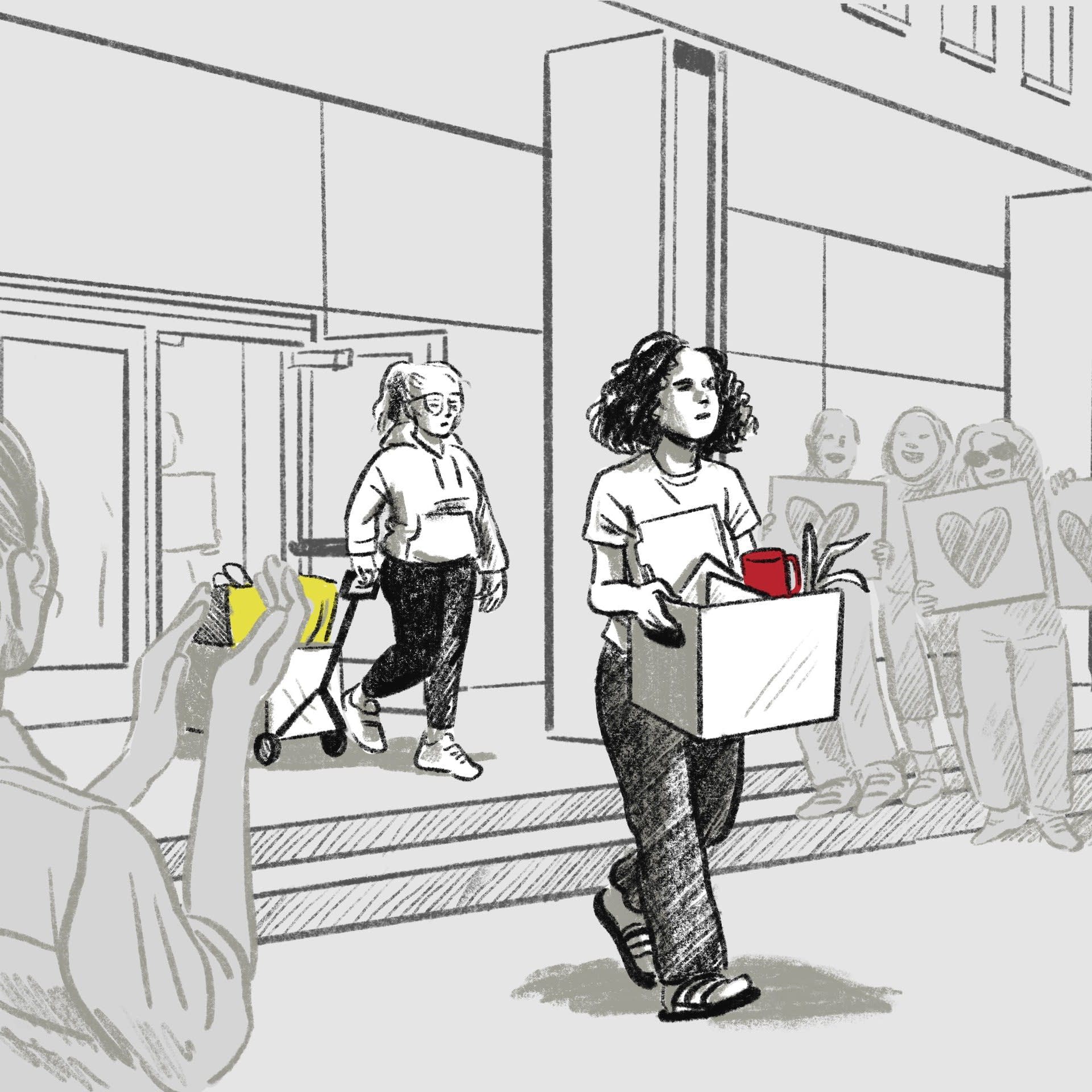
9: The Aftermath
Schools around the country are changing the way they teach reading. And that is having major consequences for people who sold the flawed idea we investigated in Sold a Story. But Lucy Calkins, Irene Fountas and Gay Su Pinnell are fighting back — and fighting to stay relevant. And so are organizations that promoted their work: the Reading Recovery Council of North America and the publisher Heinemann.
Read: Two universities stick with a discredited idea
- Transcript of this episode
- The story behind Sold a Story
- Donate to APM Reports
- soldastory.org
Dive deeper into Sold a Story with a multi-part email series from host Emily Hanford. We’ll also keep you up to date on new episodes. Sign up at soldastory.org/extracredit.
Press play and read along
Transcript
Speaker 1
October brings it all. Halloween parties, tailgates, crisp fall nights.
At Total Wine and Moore, you'll find just what you need for them all. Mixing up something spooky?
Speaker 1 Total Wine and Moore is your cocktail central for all your Halloween concoctions.
Speaker 1 With the lowest prices for over 30 years, you'll always find what you love and love what you find only at Total Wine and Moore. Curbside pickup and delivery available in most areas.
Speaker 1
See TotalWine.com for details. Spirits not sold in Virginia and North Carolina.
Drink responsibly. B21.
Speaker 8 Walmart's the place to start.
Speaker 9 And these who added headphones, TVs, and games to their carts.
Speaker 10 With Walmart, their shopping was done in a flurry.
Speaker 6 They cried out, who knew, and ordered their gifts in a hurry.
Speaker 3 Shop the latest tech gifts in the Walmart app.
Speaker 1 At the beginning of the school year.
Speaker 11 So it's hard to believe that it's already September.
Speaker 1 The guy in charge of the largest school system in the country held a back-to-school press conference.
Speaker 1 He talked about a bunch of things facing the schools, a looming bus driver's strike, and the growing number of asylum seekers entering the school system. And then he said this.
Speaker 11 We have not taught the kids the basic fundamental structures of how to read.
Speaker 1 David Banks is the chancellor of the New York City Public Schools.
Speaker 11 We have gotten this wrong in New York and all across the nation and many of us follow the same prescript of balanced literacy.
Speaker 1 Balanced literacy is the approach to teaching reading we focused on in Solda's story.
Speaker 11 And like the dance of the lemmings, we all marched right off the side of the mountain.
Speaker 11 And generations of kids have been hurt by that.
Speaker 1 The chancellor says that all schools in New York City will have to get rid of balanced literacy. People across the country are asking their school districts to get rid of balanced literacy too.
Speaker 1 I urge the school committee to follow the neuroscience and vote not to accept the grant to reading recovery. My question is: why are we still using leveled readers?
Speaker 17 I implore you to vote against the Heinemann materials purchase tonight.
Speaker 18 I urge the members of this board to do what is right for our children and to vote no on the Lucy Cockins curriculum.
Speaker 1 I'm Emily Hanford and this is Solda's Story, a podcast from APM Reports. It's been more than a year since Solda's Story caused a bit of an earthquake in education.
Speaker 1 In this episode, we're going to focus on the people who are at the center of our investigation. Lucy Cockins, Irene Fountis, and Gay Sue Pinnell.
Speaker 1 We're also going to hear about the Reading Recovery Program and the publisher, Heinemann. What's happened to them since the podcast came out?
Speaker 1 None of them wanted to talk to us, but we were able to piece together what's happened through other sources. We're going to start with Lucy Cockins.
Speaker 15 One of the things I would say is: no one person gets to own the word science.
Speaker 1 Lucy Cawkins is the professor at the prestigious Teachers College at Columbia University.
Speaker 20 She was like a rock star walking into that building.
Speaker 1 Who founded an influential teacher training institute and created a popular reading curriculum rooted in the flawed theory we told you about in the podcast.
Speaker 21 If Beyoncé came and gave a private concert in my district, it would not have been a bigger deal for many of my teachers.
Speaker 1 Cockins once estimated that a quarter of elementary schools in the country used her curriculum, including lots of schools in New York.
Speaker 1 So when the chancellor said that schools in the city have to get rid of balanced literacy, he was telling them they have to get rid of Lucy Cockins' reading curriculum.
Speaker 1 Solda's story was a big blow to Cockins. After the podcast came out, she didn't say much.
Speaker 15 I had been advised to be to be quiet, but she changed her mind. I made the decision to kind of come out from underneath the bushel basket.
Speaker 1 This is Lucy Cockins on Zoom last year. It's a meeting of a new study group she started for teachers and school leaders.
Speaker 1 The announcement on her website said the group was for people who want guidance in responding to the national conversation around reading instruction.
Speaker 15 What I finally came to believe is that if I'm quiet, I'm not really helping any of you to speak up and to
Speaker 15 stand strong and to reach out to others.
Speaker 1
She also launched a new website. It's called Rebalancing Literacy.
It's branded as a site for educators who want to, quote, put aside the reading wars and focus on helping kids.
Speaker 22 People are asking, why this site?
Speaker 1 There's a series of videos on the website.
Speaker 22 I tell kids, you're the author of your life. And I'm making these videos in part because I decided that I need to tell my own story.
Speaker 1 The videos feature Lucy alone in a room talking into the camera.
Speaker 22 In the last year, there have been a lot of podcasts, articles, editorials, programs that are scaring the public into thinking that somehow half the teachers in America have been hoodwinked into teaching reading in a way which deprives kids of the essentials that they need.
Speaker 22 They're actually suggesting that kindergarten and first grade teachers are not teaching kids their ABCs. That is absolutely inaccurate.
Speaker 1 In the videos, she's defending herself, but she's also saying to her followers, look, I know you're grumpy about the science of reading. She uses that word, grumpy.
Speaker 1 But she says, there's stuff here to pay attention to.
Speaker 22 At this point, there is a line of research that's come to be known as the science of reading.
Speaker 1 She talks about what she's learned.
Speaker 22 We can be grateful for the reminder that teachers need professional development in the teaching of phonics.
Speaker 1 And about changes she's made to her curriculum.
Speaker 22 Let me tell you how one particular unit has been revised.
Speaker 22 In Superpowers, the first decoding unit in kindergarten, a new imaginary character sends messages to the kids to rally them to use their reading powers to decode words.
Speaker 22 Mighty Reader gives the kids a special.
Speaker 1 In her revised curriculum, the queuing strategies are gone, and she's now selling books designed to help beginning readers practice sounding out written words. It's a big turnaround.
Speaker 1 A turnaround that had begun before sold a story, but a turnaround that's more urgent now because of the school districts dropping her curriculum.
Speaker 22 I find I'm in a position to answer a few questions, to share a few facts, and maybe to open a dialogue among people who care about kids and teachers and education.
Speaker 1 What I hear Lucy Cockins saying in these videos is, I'm still relevant.
Speaker 1 She presents herself as someone who knows the science of reading now and can help school districts get up to speed.
Speaker 1 But when she talks about the science of reading, she gets some important things wrong.
Speaker 22 The research has been developed mostly in clinics with a researcher working with a little group of two or three kids with a diagnosed reading problem engaged in the very beginning stages of reading.
Speaker 1 This isn't true.
Speaker 1 The big body of research known as the science of reading includes hundreds of studies that have been done with entire classrooms of children and not just beginning readers and not just kids with reading problems.
Speaker 1 I think it's important to understand this because what I'm hearing in some of the pushback to our reporting is that all of this fuss about the science of reading is overblown, that it's a narrow narrow body of research, that it's not relevant to most kids, and that calls for wholesale changes to how kids are taught are not warranted.
Speaker 1 And that's what I hear Lucy Cockins saying on her new website, that she learned something from the science of reading, she fixed up her curriculum, and it's time to move on.
Speaker 1 Lucy Caulkins launched her new website on the last day of August. The very next day, September 1st, there was an announcement from her employer, Teachers College Columbia.
Speaker 1 The college announced that Cawkins would no longer be in charge of the teacher training institute she founded there back in the 1980s.
Speaker 1 She's still a professor at Teachers College, but she's out as head of the institute where she built her brand.
Speaker 16 It's just like watching one of those statues being pulled down from the Cold War.
Speaker 1 This is Kathleen Goulding. She went to Teachers College and is now an instructor there.
Speaker 16 I mean, she was such a domineering force in this school, not even as a professor, but mostly as an entrepreneur and business owner and consultant.
Speaker 1 Teachers College announced the news in a written statement. The college said the decision was part of an effort to ensure that its programs are, quote, informed by the latest research and evidence.
Speaker 1 I wanted to ask Teachers College about this. Hadn't their programs always been informed by the latest research and evidence? But the college wouldn't make anyone available for an interview.
Speaker 12 Yep, Thomas Ruler.
Speaker 15 Thank you, thank you, thank you for your student work.
Speaker 1 Just a month after the announcement from Teachers College, Lucy Cawkins was launching that study group you heard at the beginning of the episode, the one for people who want guidance in responding to the national conversation around reading instruction.
Speaker 1 As that meeting was wrapping up, Lucy Cawkins noticed a familiar face on the Zoom screen.
Speaker 15 Is that Gay?
Speaker 1 It's Gay Sue Pinnell.
Speaker 12 Hi.
Speaker 15 I'm so honored to have you here, Gay.
Speaker 23 Oh, I had to unmute. Okay.
Speaker 15 So lovely. How are you doing?
Speaker 12 I'm okay.
Speaker 15 I'm just doing great.
Speaker 1 Gay Sue Pinnell was the professor at Ohio State who helped bring the Reading Recovery Program to America.
Speaker 1 She's also the person who came to Teachers College to help Lucy Cawkins when Caucins was writing her first book about teaching kids to read.
Speaker 23 We're all in a dilemma.
Speaker 12 Yeah. Yeah.
Speaker 15 Absolutely.
Speaker 15 You know, I think we're in the aftermath after a war. We hope it's the aftermath.
Speaker 23 Well, I hope so. It could be
Speaker 23 a beginning of the end or the end of the beginning.
Speaker 1 This is the first time I've heard Gay Supinal talking about what's been going on in the wake of our reporting. She's been keeping quiet and staying out of the spotlight.
Speaker 1 But on the Zoom call with Lucy Cawkins, she vents some frustration.
Speaker 23 People don't really know what they're talking about when they say cueing is bad.
Speaker 23 They don't know what it is. I understand what it is, but
Speaker 23 it's not the devil that
Speaker 23 they think.
Speaker 1 Pennell and her co-author, Irene Fountess, aren't backing down on cueing the way Caucins has. And they're not embracing the science of reading the way Caucins has either.
Speaker 1 In a webinar Irene Irene Fountis did last fall.
Speaker 15 Okay, everyone, people are starting to come in.
Speaker 1 She characterized changes that are happening in response to the science of reading as something potentially harmful.
Speaker 15 In this current conversation about literacy, which I'm hoping will be productive, not destructive for schools.
Speaker 15 Sometimes I've seen teachers in schools think that there is a right way to do something one right way, and it's because it says it in the lesson or in the script.
Speaker 15 And in schools that are over-scripting teaching,
Speaker 15 what we may have are teachers who think they're supposed to do something instead of they have good rationales for what they say and what they do.
Speaker 1 There's a lot to unpack in what she just said.
Speaker 1
She's expressing concern about new curriculum many schools are adopting. I share her concern.
We talked about this in episode 8.
Speaker 1 And I agree with Irene Fountis that teachers should have good rationales for what they are doing.
Speaker 1 But as you heard in Solda's story, she participated in providing teachers with a faulty rationale for how to teach reading.
Speaker 1 That's what many teachers are coming to understand as they learn about the science of reading. And that's one reason schools are turning away from experts they once relied on.
Speaker 1 We wanted to know about the universities that Fountis and Pinnell are affiliated with. Are they making changes the way teachers college is?
Speaker 1 Gay Sue Pinnell retired from Ohio State back in 2007. She's still an emeritus professor there, but Ohio State wouldn't make anyone available to talk with us for this episode.
Speaker 1 We did get an interview with someone at Leslie University. That's the teachers college in Massachusetts where Irene Fountis is a professor and where she runs a center for reading recovery.
Speaker 24 We're very proud of our history and affiliation with Reading Recovery.
Speaker 1 This is Stephanie Spadorsha. She's the Vice Provost of Education at Leslie University.
Speaker 24 I actually remember when Marie Clay came to our campus many, many, many years ago and we got to hear about this unbelievable program.
Speaker 1 Marie Clay was the woman from New Zealand who created the Reading Recovery program. Spadorsha says Leslie University continues to teach Clay's ideas.
Speaker 24 So we teach the students about the three-curmane system because that is one methodology, that's one theory, that's one way, and our teachers do have to be prepared for that because there's lots of schools that use that strategy.
Speaker 1 Spadorsha says she listened to Solda's story. She didn't criticize our reporting directly, but she said the media has gotten things wrong.
Speaker 1 And she says while the university isn't making changes because of the reporting, there is one way they've had to respond.
Speaker 24 If anything, we've had to teach our candidates how to navigate this political time of what, you know, when a parent says to them, well, do you teach the science of reading?
Speaker 24 So how does a teacher say, let me tell you what I know about the science of reading and what my curriculum does?
Speaker 24 So if anything, we've had to teach our teacher candidates to be more politically savvy in those arenas.
Speaker 1
So we've got two universities. Teachers College Columbia is backing away from the work of its star professor.
Leslie University is not.
Speaker 1 And we've got the professors themselves. Lucy Cockins is speaking up and trying to embrace the science of reading.
Speaker 1 Foundis and Pinnell are sticking with their core principles and staying out of the spotlight.
Speaker 1 There are other big players in the mix here: the publishing company, Heinemann, and the Reading Recovery Program. We're going to find out what's happening with them after the break.
Speaker 1
Let's listen listen in on a live, unscripted second-grade Challenger School class. They're studying Charlotte's Web.
What words did this author use to describe this barn? Descriptive words. Wonderful.
Speaker 1
Can you find some adjectives in there? New is an adjective describing rope. Rubber is an adjective and it modifies boots.
Those students are seven.
Speaker 1 Starting early and starting right makes a real difference. Learn more at challengerschool.com.
Speaker 2 Tis
Speaker 3 When suddenly a who yelled, Walmart's the place to start.
Speaker 9 And these who added headphones, TVs, and games to their carts.
Speaker 10 With Walmart, their shopping was done in a flurry.
Speaker 6 They cried out, who knew? and ordered their gifts in a hurry.
Speaker 3 Shop the latest tech gifts in the Walmart app.
Speaker 1 Hi, it's Emily. And I'm here to remind you that Sold a Story is a product of independent public media journalism.
Speaker 1
This kind of rigorous, long-form investigative reporting involves a lot of people and a lot of time. It's expensive to produce.
But we do it because the work has impact.
Speaker 1 You can support our ongoing reporting right now by making a donation at soldastory.org slash donate or clicking on the link in the show notes.
Speaker 25 Did you know 39% of teen drivers admit to texting while driving? Even scarier, those who text are more likely to speed and run red lights. Shockingly, 94% know it's dangerous, but do it anyway.
Speaker 25 As a parent, you can't always be in the car, but you can stay connected to their safety with Greenlight Infinity's driving reports.
Speaker 25 Monitor their driving habits, see if they're using their phone, speeding, and more. These reports provide real data for meaningful conversations about safety.
Speaker 25
Plus, with weekly updates, you can track their progress over time. Help keep your teens safe.
Sign up for Greenlight Infinity at greenlight.com/slash podcast.
Speaker 1 Remember this from episode two of Sold a Story?
Speaker 26 I'm a big fan of the Reading Recovery Program.
Speaker 1 Back in the 90s, President Bill Clinton used his bully pulpit to promote Marie Clay's Reading Recovery Program.
Speaker 26 And if you look at the research, It has about the best long-term results of any strategy.
Speaker 1 At its height in the early 2000s, the Reading Recovery Program was in more than 3,000 school districts in all 50 states. But things have changed, and it seems to have a lot to do with our reporting.
Speaker 1 Our reporting on the Reading Recovery Program began years before the Solda Story podcast.
Speaker 1 Back in 2019, I wrote a story that named Reading Recovery and Mari Klay's ideas as part of the problem with the way many schools were teaching reading. That story got a lot of attention.
Speaker 1 What I didn't know is that in the aftermath of that reporting, the organization that promotes reading recovery in the United States was beginning to experience financial strain.
Speaker 1 And things have gotten worse since Solda's story came out at the end of 2022.
Speaker 1 I'm going to bring in my colleague, Christopher Peake. He's been trying to figure out what's been going on inside Reading Recovery.
Speaker 19 Hi, Chris. Hey Emily.
Speaker 1 So you've been trying to figure out what is up at the organization known as the Reading Recovery Council of North America.
Speaker 19 I was hoping to talk to someone about what's been going on inside Reading Recovery.
Speaker 19 I emailed back and forth with the executive director, but they haven't liked our reporting and he ended up declining to talk to me.
Speaker 19
But I did hear from an unlikely source who gave us a look at what's been going on behind the scenes at Reading Recovery. Hi.
Hey Chris.
Speaker 3 Hi, Monday.
Speaker 19 Nice to meet you. Nice to meet you.
Speaker 19 In December, I hopped on a plane and I went to Columbus, Ohio to meet with a guy named Michael Leemaster. Oh man, I love this perfect.
Speaker 19 He was the chief financial officer for the Reading Recovery Council for more than two decades.
Speaker 1 So why was this guy talking to you?
Speaker 19
Michael was laid off last year. There have been a bunch of layoffs at Reading Recovery recently.
They had 12 employees just a couple years ago. They're down to five now.
Speaker 19 And he wanted to share some information about what was happening inside.
Speaker 1
So you're in Ohio. That's where the Reading Recovery Council is based.
And you go to this guy's house.
Speaker 19 And he has a handful of papers laid out on his dining room table.
Speaker 19 What we have laid out here.
Speaker 27 We had a group within our leadership that was interested in the finances of Reading Recovery shortly.
Speaker 19 And he wanted to talk about the challenging financial situation the organization is now facing.
Speaker 27 Budget versus action.
Speaker 1 This organization is the group that champions reading recovery, that helps to get the program into schools. They do things like host conferences and try to win political support for reading Recovery.
Speaker 19
And it's a non-profit. We're not talking about some big corporation that's trying to maximize profits for investors and shareholders.
They're not making lots of money off Reading Recovery.
Speaker 1 And so what did you learn from Michael Lee Master about what's going on with the finances at the Reading Recovery Council?
Speaker 19 So Michael's main concern was that for the last few years, the organization has been overspending and that's draining their reserves.
Speaker 19 They were posting deficits every year, hundreds of thousands of dollars, which is a sizable chunk of their annual operating budget.
Speaker 19 Their conference attendance was down, their membership dues were down, all indicators were red.
Speaker 19 And Michael told me he thought Reading Recovery's leadership was not paying enough attention to what was happening.
Speaker 27 There was almost an attitude like everything's just going to be okay. We're going to get money from some outside source.
Speaker 27
There was kind of a joke going around. We had to wait for someone to die to get a big bump in revenue.
We get it from their estate.
Speaker 27 And I kind of felt like we were almost relying on things like that to bail us out.
Speaker 19 And it's happened before. They did get a bailout from none other than Gay Sue Pinnell.
Speaker 1 That's the professor at Ohio State who helped bring Reading Recovery to America and then went on to make millions of dollars writing books and curriculum rooted in Mari Clay's ideas.
Speaker 19 Yep. In 2020, the year after your first story on Reading Recovery, Gay Sue Pinnell gave the organization more than a million dollars.
Speaker 27 That was huge. Gay Sue Pinnell is the Reading Recovery Council of North America.
Speaker 27 Without her, this would have probably ended already.
Speaker 19 And according to Michael Leimaster, the organization decided to spend a lot of that money, close to half a million dollars, to hire a PR firm.
Speaker 19 Michael told me a big focus of the PR firm's work was to push back on reporting about them, our reporting in particular.
Speaker 1 So when Solda's story came out at the end of 2022, did people at the Reading Recovery Council listen to it? Were people talking about it at the office?
Speaker 19 Michael said people were definitely talking about it. They were listening to the podcast, they were buzzing about it, and they were figuring out what they should do.
Speaker 27 The communications director would send out something and say, okay, what's our strategy to refute? And it was a little chaotic for a while.
Speaker 19 Chaotic and what were?
Speaker 27 Chaotic, and there was a lot of people that wanted to drive how the discussion would go and the response.
Speaker 19
Reading recovery is on defense right now. We got data that show a lot of school districts are getting rid of it.
The number of districts using the program is down 40% just since 2019.
Speaker 1 And some states are effectively banning reading recovery with these new laws that are designed to get rid of the queuing idea that we focused on and sold a story.
Speaker 19 That's even happening in Ohio, Reading Recovery's home state. Ohio passed one of those queuing bans, and that's a big threat to reading recovery.
Speaker 19 It's a big enough threat that the Reading Recovery Council filed a lawsuit against the state and the governor to try to stop it.
Speaker 19 And one of the things that's really fascinating is that Gay Sue Pinnell was actually a big campaign contributor to the governor, Republican Mike DeWine.
Speaker 19 She gave him more than $25,000 when he first ran for governor.
Speaker 1 And now the organization that she founded and has bankrolled is taking him to court.
Speaker 19 After they filed that lawsuit, reporters caught up with the governor.
Speaker 19 He was asked about it after an event.
Speaker 19 I got this clip from an Associated Press reporter.
Speaker 20 Yeah, I think it's really a shame.
Speaker 19 The governor just rips into Reading Recovery.
Speaker 20 Now we have a lawsuit being filed by people who just say the lawsuit isn't about what's good for kids.
Speaker 19 He thinks it's about adults trying to protect their business.
Speaker 20 I think Ohioans ought to be pretty angry about that type of a lawsuit.
Speaker 1 So that's what's been going on with the organization that supports reading recovery.
Speaker 1 What about Heinemann, the company that published Marie Clay's books and books by Gay Su Pinnell and Irene Fountis and Lucy Cockins? What's going on at Heinemann these days?
Speaker 19 All this new legislation and regulation about the science of reading, the same kind of stuff Reading Recovery is fighting back against in Ohio, it's affecting Heinemann too.
Speaker 19 The company has taken a big hit financially, and we know that because they told us.
Speaker 19 We got a letter from an attorney representing them, and it said our reporting has caused enormous financial damage to Heinemann. And we can see that in some data I got.
Speaker 19 We got access to a database that tracks spending from government agencies, and it includes schools. And we can see in that database just how much money districts are spending on Heinemann products.
Speaker 19 And it's really changed since our podcast came out.
Speaker 1 All right, so what'd you find?
Speaker 19 Here, this will be easier for I just share my screen. Can you see that?
Speaker 1 Yep, I can see it. Okay.
Speaker 19 So this is GovSpend. They've been tracking basically every purchase order that comes out of a public agency that they're able to get their hands on since 2015.
Speaker 19 And it has everything from your state highway patrol all the way down to your local trash pickup.
Speaker 1 Wow. So you can go in here and you can just type in some terms, like the term Heinemann, and come up with which schools are buying what Heinemann products.
Speaker 19
Exactly. So I put in right here, you can see this says Heinemann and it's LLC's name.
And this is tracking purchases since 2015. It's more than a billion dollars worth of sales.
Speaker 19 And we know that school districts spent most of that money on Heinemann's reading products.
Speaker 19 Heinemann built its brand largely around Clay, Fountis and Pinnell, and Cockins and their way of teaching reading. That's been the bulk of their business for decades.
Speaker 1 Okay, so what I'm looking at here is a graph that shows sales have really cratered.
Speaker 19 It's a big change. What we can see here is the company was consistently breaking its own sales records every year, just going higher and higher until 2019.
Speaker 19 That big mountain there in May 2019, that's their peak. And if you look at last year, 2023, it's now more like a little hill.
Speaker 19 So from what we can see in the data collected so far, sales last year were down to less than a fourth of what they were in 2019.
Speaker 19 And we're seeing this play out in school board meetings all across the country. It's not just New York City that's changing its curriculum.
Speaker 19 Superintendents are replacing Heinemann programs in lots of places. In Portland, San Francisco, Fargo, Louisville, Philadelphia.
Speaker 19 Change is happening statewide through new laws in places like Ohio, Indiana, Connecticut, just so many other states. So it's no wonder we're seeing a drop in sales.
Speaker 1 So what is Heinemann doing to try to turn things around?
Speaker 1 How are they responding?
Speaker 19
They have tried to discredit our reporting. They put out a statement disputing our findings, but at the same time, they're also making changes.
Lucy Cockins has her new curriculum.
Speaker 19 As we heard earlier, it no longer has those queuing-based strategies in it. And Fountis and Pinel are revising their curriculum as well.
Speaker 19 They said they're going to add more phonics practice and new instructional routines. And it seems like the company Heinemann's at this inflection point.
Speaker 19 This is something their president's talked about.
Speaker 14 Matthew, thanks for joining me today. Great to have you.
Speaker 1 We listened to this podcast episode that the president of Heinemann, Matthew Mugo Fields, was on.
Speaker 13 Hey, Stephen, great to be with you.
Speaker 19 He said that Heinemann's been strengthening its programs and that the company is trying to reposition itself for almost a new era.
Speaker 13
You know, I think at this moment in time, we need all hands on deck in our field. We need everyone to be at the table and we need to be helping each other.
That's why.
Speaker 13 I think it's important that we not get distracted by divisiveness. You know, there's resurgence and things like reading wars, all that kind of stuff.
Speaker 13 No, we need everyone at the table focused on helping us address what is undoubtedly a big challenge that we face.
Speaker 1 So it sounds like the president of Heinemann is saying something similar to what we heard Lucy Cockin saying in the first part of this episode.
Speaker 1
Which is basically, we're relevant. We have a role to play here as this whole science of reading movement sweeps the nation.
We're still here. Don't count us out.
Speaker 19 And what we can tell at the moment is these two institutions, one, this nonprofit that's been around for decades supporting the spread of reading recovery, and the other, this company that has brought in a lot of money from the products we focused on in Solda Story, they're both facing major challenges.
Speaker 19 They've lost a big share of their business because school districts all across the country are rethinking their approach to teaching reading.
Speaker 1 In the next episode, we're going to talk about the new direction schools are taking and concerns that some scientists have about how the science of reading is becoming a movement.
Speaker 14 What I'm fearful of, because I've seen it so many times, is
Speaker 14 movements
Speaker 14 sometimes gloss over detail.
Speaker 14 And here's the details are so critical.
Speaker 1 If you like this show and you want more people to hear it, leave a review on your favorite podcast app. And be sure to follow the show to keep new episodes coming into your feed.
Speaker 1 You can also sign up for our email newsletter. There's a link in the show notes.
Speaker 1 You can find our website there too, where we have lots more, including articles, transcripts, a discussion guide, and a version of this podcast in Spanish.
Speaker 1
This episode of Solda Story was produced by me with Christopher Peake. Our editors are Curtis Gilbert and Chris Julin.
Mixing and and sound design by Emily Hovick and Chris Julin.
Speaker 1 Our theme music is by Wonderly.
Speaker 1
Final mastering of this episode by Josh Savageo. We had reporting help on this episode from Annika Best, Kate Martin, and Emily Hovick.
And Fact-Checking by Betsy Towner-Levine.
Speaker 1 Special thanks to Chris Haxel and Margaret Goldberg. Andy Cruz is our digital editor, Tom Scheck is our deputy managing editor, and our executive editor is Jane Helmke.
Speaker 1 Support for Solda's story comes from the Oak Foundation, IBIS Group, and the Hollyhawk Foundation.
Speaker 3 They shouted.
Speaker 6 Would they find it in one place?
Speaker 7 This they questioned and doubted.
Speaker 3 When suddenly a who yelled, Walmart's the place to start.
Speaker 9 And each who added headphones, TVs, and games to their carts.
Speaker 10 With Walmart, their shopping was done in a flurry.
Speaker 3 They cried out, who knew? and ordered their gifts in a hurry. Shop the latest tech gifts in the Walmart app.