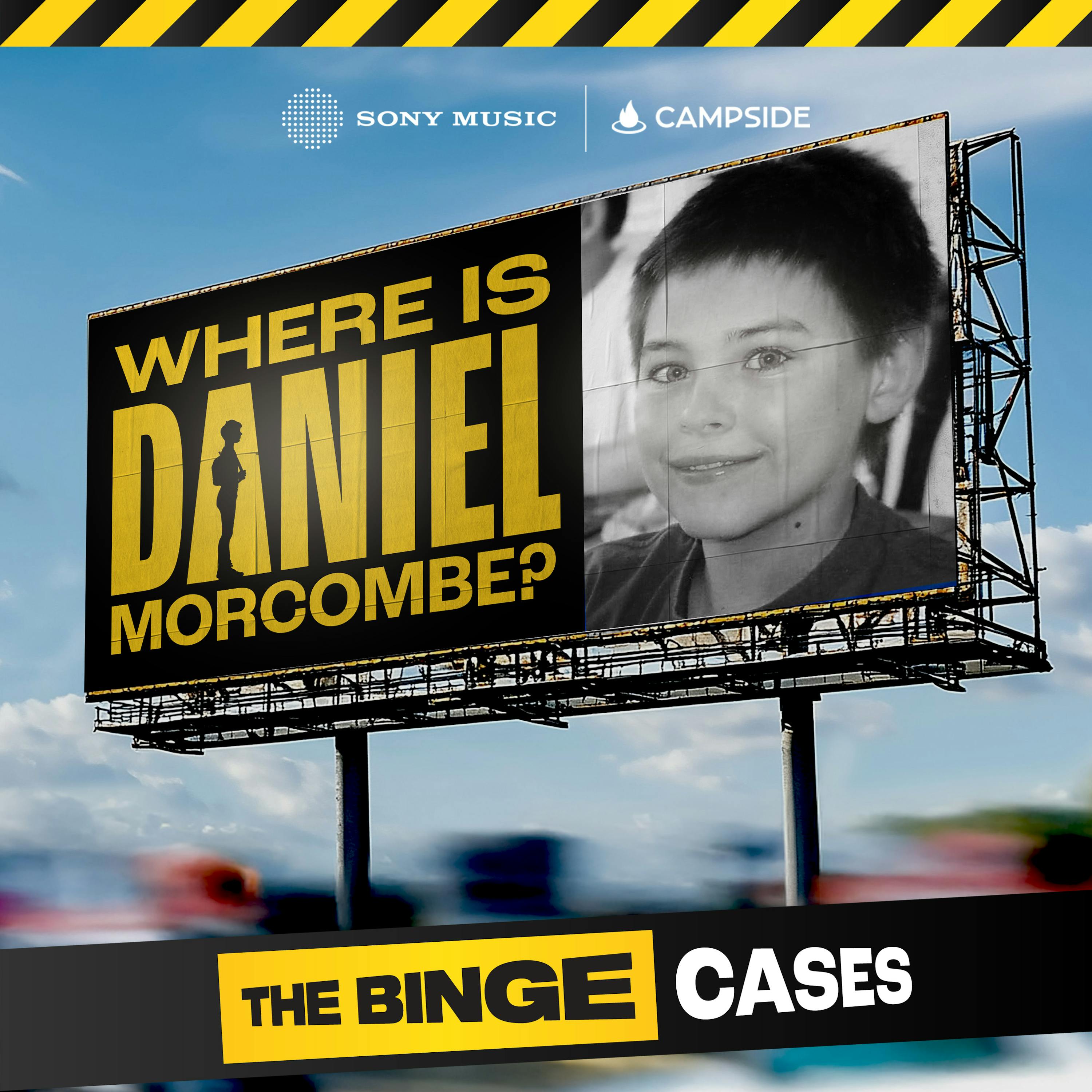
Where is Daniel Morcombe? | 3. Foundation
Binge all episodes of Where is Daniel Morcombe? ad-free today by subscribing to The Binge. Visit The Binge Crimes on Apple Podcasts and hit ‘subscribe’ or visit GetTheBinge.com to get access.
From serial killer nurses to psychic scammers – The Binge is your home for true crime stories that pull you in and never let go.
The Binge – feed your true crime obsession.
A Sony Music Entertainment and Campside Media production.
Find out more about The Binge and other podcasts from Sony Music Entertainment at sonymusic.com/podcasts and follow us @sonypodcasts. Learn more about your ad choices. Visit podcastchoices.com/adchoices
Learn more about your ad choices. Visit podcastchoices.com/adchoices
Press play and read along
Transcript
Does anyone really know what hormones do? There is so much talk about women's hormonal health, but most women are left even more confused about what it means for them and what to do about it.
This confusion ends now. Hormone harmony is a game changer for women struggling with hormonal imbalances that leave them exhausted both physically and mentally.
It contains science-based ingredients that bring back comfort, energy, clarity, confidence, and a sense of balance.
Happy Mammoth, the company behind this phenomenal formula, has helped over 2.4 million women get their lives back and feel like themselves again after years or even decades of hormonal imbalances.
The company surveyed 1,831 women to see how hormone harmony helped them. And the results are mind-blowing.
86% of women started losing weight, 77% say it improved their mood, and 100% say they're feeling like themselves again.
Hormone harmony has already sold over 6 million bottles with more than 50,000 rave reviews from women worldwide, and 98% of them say they'd recommend it to their friends and family.
For a limited time, you can get 15% off your entire first order at happymammoth.com. Just use the code happy15 at checkout.
This episode is brought to you by Progressive Commercial Insurance. Business owners meet Progressive Insurance.
They make it easy to get discounts on commercial auto insurance and find coverages to grow with your business. Quote in as little as eight minutes at progressivecommercial.com.
Progressive Casualty Insurance Company, coverage provided and serviced by affiliated and third-party insurers. Discounts and covered selections not available in all states or situations.
Listen to all episodes of Where is Daniel Morecombe ad-free right now by subscribing to The Binge. Visit the Binge channel on Apple Podcasts and hit subscribe at the top of the page.
Or visit getthebinge.com to get access wherever you listen. The binge.
Feed your true crime obsession.
This episode includes descriptions of the exploitation and sexual abuse of children. and is in part about the background and psychology of convicted sex offenders.
Please listen with care.
An unmarked cop car makes its way down the dirt driveway, past homes and macadamia trees. It was quite a nice green leafy area.
Detective Dennis Martin has the rough edges of a man who's seen too much too soon. He's the kind of guy who never sits with his back to a door.
He spots the destination up ahead. I can remember quite clearly he was living in one section of the property on a smaller home.
Dennis's partner, Ken King, is more buttoned up, quieter, but he's just as present as he takes in the surroundings.
Somewhat isolated and certainly not well kept kind of lower socioeconomic, very modest sort of a house. There was a shed to the left and a carport.
His vehicle, which was a white four-wheel drive with a black snorkel, was on the left-hand side of the house.
As they approach, they clock a scattering of colourful, childlike windmills dotted about the yard. They spin and then stutter in the breeze.
A wave of unease hits both men at the same time.
There's this sort of vibe that's difficult to describe. Ken and I looked at each other and we saw it.
There's something funny here.
I'm Matt Angel,
and from Sony Music Entertainment and Campsite Media,
this
is Where is Daniel Morcombe?
Episode 3:
Foundation.
My name is John Rouse. I'm 62 years old.
I worked in the Queensland Police Service for 39 years.
Not every cop has some epic story about their decision to join the force. But John Rouse does.
It's straight out of a movie.
It was the early 1980s, and John was working a shift at the Commonwealth Bank in Paddington, Queensland. Suddenly, an armed robber made his move.
I remember this guy pointing the gun at the teller and the rest of us on the floor and I remember looking at him and just taking every detail I could about him.
You know, like what he was wearing, the way he spoke, everything.
The man ran for the exit. John jumped the counter and went after him.
He made it outside just in time to see the robber speed off in his getaway car.
20 minutes later, some very old Sipowitz-looking-like detectives... For those of you who don't know, Andy Sipowitz is a famous fictional detective from the TV show NYPD Blue.
He was gruff, mustachioed, a little schlubby. They pulled up interviewed us, cigarettes in mouths, bought their own typewriters.
It was just hilarious.
And that was it. He'd caught the bug.
John enlisted in 1984. By 1995, he'd been promoted to Detective Sergeant.
But the new title came with an unsettling reassignment. I'd be going to the child abuse unit.
He pushed back.
He didn't want to confront those things, the things he knew he'd inevitably see in that unit. His daughter had just been born.
But in those days, you went where you were needed. It was really bad.
It was really hard because I was dealing with every range of violation that you can commit upon a child. Emotional abuse, physical abuse, neglect, infant homicide.
It was everything.
And I just remember just feeling,
I'm never going to stop this. It was as dark a world as you can encounter as a cop.
And with the dawn of the social internet just around the corner, it was about to get a hell of a lot darker.
Fortunately, John Rouse had something of a superpower. I was building PCs in the 90s.
I was an online gamer as the internet emerged. Built my first web page in 96 for my band.
So I was right kind of on the cusp of the evolution. I was a bit of a geek.
I got a, I'm just going to call it a lifeline thrown to me.
He was assigned to Task Force Argos, a branch of the Queensland Police Service formed in 1997. It was formed out of what was the pedophile unit.
The name comes from Greek mythology.
Argos was a giant with 100 eyes. He could see everything.
He was always watching.
The unit's original mandate was to investigate systemic issues around child exploitation and abuse in a historical sense. For example, abuse that had been happening in the church or foster homes.
If you said in the 1980s, if you said anything bad about a priest back then, you know, you wash your mouth out with soap, these pillars of society.
I don't think anybody would second guess now a priest being arrested for crimes against children. But it would have been headline news, you know, really not that long ago.
But behind those headlines was a disturbing reality. There's a proportion of humanity, I've always thought 4-6%,
that have got the propensity to have a sexual attraction to children.
Wow, sorry. That's right.
That's just a fact. The statistics are there to support it.
All I know is in the time that I was at Argos, the better we got at what we did, the more we found. That was it.
For child predators, the expansion of the internet in the late 90s was a new frontier. It was lawless.
They had unfettered access and anonymity. They had new ways to connect with like-minded people.
John's promotion to Task Force Argos in 2001 was revolutionary because he was brought in to lead a brand new team, an internet team.
We're the first policing law enforcement agency in Australia to start looking at this. We were just finding our own way as we went.
It was uncharted territory.
We were taking on the internet in every way that we possibly could. The unit was in a constant battle against people determined to offend who were always making use of this new technology.
To be a success, Argos would need to stay one step ahead. Legislation did not exist to support what what we were doing.
Here's a little example of something Argos tackled that succinctly captures that evolving legislation game. Child sex dolls, the importation of child sex dolls, is a thing.
Okay?
People are importing dolls into this country that look like children. The offenders are agile, so they start getting the dolls shipped in parts.
So what you have to do then is make sure that the legislation is amended to include parts of a doll.
Pedophiles found ways to communicate online and exchange content long before social media as we know it today, even before AOL Instant Messenger.
There's a lot of information we're getting from the US that cops were going online undercover proactively and just getting inundated by child sex offenders wanting to meet them because they were pretending to be young, young girls.
Internet service providers were detecting this child sexual abuse material and reporting it. And if someone in the US was swapping content with someone in Australia, Task Force Argos was notified.
This is how they were able to build a growing database of offenders in Australia, which brings us back to December 2003. Back to the Sunshine Coast, back to Daniel Morecombe's case.
It's not a quantum leap for a case like that once it's been going for a while and we don't have a recovered child to start exploring all of the different avenues around what could have happened.
A logical one is to look at the registered sex offenders that are in the
geographical location of the abduction. And that takes manpower.
John Rouse was going to put his best officers on the case.
Want more true crime? Subscribe to The Binge to get all episodes of Watching You ad-free today and get instant access to over 50 other jaw-dropping true crime stories.
Plus, subscribers get a binge drop of a brand new series on the first of every month every month. Search for the binge channel on Apple Podcasts or head to getthebinge.com to subscribe today.
The binge, feed your true crime obsession.
By the second week of the investigation, Task Force Argos had created a list of registered sex offenders on the Sunshine Coast.
John Rouse deployed a team of officers from their unit at QPS headquarters in Brisbane up to Maruchador.
What you want them to do is to absolutely nail down where that person of interest was, their movements before and after that offence, you know, the abduction.
Every single thing that they said that they were doing in that timeframe then has to be checked. Detectives Dennis Martin and Ken King were part of that team.
They had different styles of policing, but they worked well together.
When we got there, it's when we were given little manila folders, and each folder would contain a pedophile that we had to go and investigate.
And look, some people on the list, there was the most tenuous of information, but sometimes that's a starting point.
This was King's first assignment with Argos, and it was something of a rude awakening. I was shocked by how big that list was on the Sunshine Coast.
That was shocking to me in one region.
The names inside those little manila folders, they were some of the worst humanity has to offer.
The first man Martin and King questioned swore he didn't abduct Daniel. He said he couldn't have, because at the time of Daniel's disappearance, he was parked outside of a school.
Then there was the trio of pedophiles they found at a caravan park. The men kept a small, felt-lined coffin in the trunk of a van, a place to trap a child and mute the screams.
The trio also claimed they couldn't have abducted Daniel because they were down at the beach that afternoon, scouting their next victim.
Dealing with these people day in and day out, it got to Dennis. And sometimes he just had enough.
There was one other fellow that comes to mind.
And he was trying to play hardball, and he wouldn't provide DNA, he wouldn't provide where he was, he wouldn't provide anything.
And then I got a call and they said, oh, this fellow's put himself inside the child's playground at Sunshine Plaza where Daniel was going to go. And he's looking at children and won't leave.
So I went over there and just dragged him out by the hair. I remember taking him to the Maridor police station.
I held him down. I shoved him a swab in his mouth, took his DNA.
and then unarrested him and kicked him out the front door. Would that have been admissible in court?
Probably not, no.
No, certainly not. Some things happen in the heat of the moment that, you know,
some people deserve what they get in life. Was it lawful? I'll let that up to the people that think that, you know.
But it got him out of the playground at the time.
There was no children hurt or harmed.
Dennis is a great guy. I think if you had...
many more officers like him in Queensland, you could probably halve the crime rate very quickly.
On December 21st, 2003, exactly two weeks after Daniel disappeared, Dennis Martin and Ken King pulled up to that home off Alf's Pinch Road in Birwa.
They were there to question a twice-convicted violent sex offender, a man named Brett Peter Cowan.
They took in the green surroundings. the childlike handmade windmills, the white four-wheel drive near the carport.
Dennis remembered that amongst the dozens of accounts of blue cars, one eyewitness claimed to have seen a white four-wheeled drive on the side of the road, not far from the underpass.
He made a mental note of it. Then they knocked.
And then when he came to the door, I just felt it, you know what I mean? You could feel the slime fall off him.
You obviously can't do police work or run your life just on first impressions, but I had this disgust, I guess, and this concern that he was someone that could do some horrible things.
Cowan was tall, defined, yet wiry. He had an angular face, and they noted a vacantness behind his blue eyes.
You know, he was clean-shaven. He was just very suave.
And then we told him what we were there for, and he was very accommodating, very happy that we were there, very happy for him to participate and be eliminated.
The men got to work, drilling Cowan with questions about what he was doing on December 7th.
He apparently left home around about lunchtime and he was going to get a mulcher from a bloke on Keel Road Overpass. Lunchtime.
The overpassing question.
Ken King was astonished by the admission. He is someone with this kind of history who admits that he was in the vicinity where Daniel went missing from at about the time when Daniel went missing.
Dennis kept on with the questions. I said, did you see a little boy under the overpass standing where the bus would pick him up? No, I never saw anybody.
I said, well, look, that's pretty much bullshit, mate. I said, because you like little boys, I said, and I like blonde-haired girls with big breasts.
I said, so I'm telling you now, if I went under an overpass and I saw a girl sitting up against the fence and she was blonde-haired with big breasts, I would tell you that she was there.
So you're telling me now that you couldn't see a little boy that was there on his own?
Standing behind Cowen, holding their baby son, was Brett's wife. Brett Brett left the room to find something, and the detectives shifted their focus.
We had an interaction with her separately then. She was the opposite to him at that time.
She was disheveled. She was overweight.
She was everything that you could think I wouldn't like to chat up.
She had shoulder length, dark hair, very subdued. I thought there was a naivety to her.
I don't hold back. You know, I said, who changes the nappies? I remember that clearly.
And you go, oh, Brett does. What do you think he's doing when he changes the nappy, you dickhead?
Anyway, so she's getting upset with me and calling me names. And I said, look, just go away.
I said, I can't put up with people like you. You're just stupid, you know, just stupid.
She was one of these born-again Christians, I think, that thought that she could change him and all that sort of stuff. You can't change pedophiles.
Brett's wife spent a lot of her time at the Christian Outreach Center, which was just behind the Keel Mountain Road overpass.
She'd been there the morning of the 7th, actually, but she was home later in the day. She said Brett arrived back home around 3pm.
I said, well, what did he seem like? I seemed okay,
but I had to wash his clothes. I said, do you normally wash his clothes at 3.30, 4 o'clock in the afternoon?
Not really, but I just do it on top. When Brett returned to the room, Dennis quizzed him about his appearance.
I said to him, he looked reasonably well presented.
I don't always go a bit if I clean myself up and that, you know. So clearly, he had a shave.
It was clean shaven. He had a haircut.
Some eyewitnesses said that the man behind Daniel was scruffy with long hair. Dennis had unfortunately worked around pedophiles long enough to know that this contradiction in appearance meant nothing.
In fact, it may have been
something.
And I liken that to the honeymoon period they called him. So he was, you know, would be a bad pedophile in relation to mind thinking.
And he'd just let his grooming go, he'd let his hygiene go whilst he was planning these things or whilst he was looking at porn at night time and, you know, masturbating himself or whatever he wasn't doing.
And then after the job's finished, he feels good to himself and then he starts to clean himself up for a period of time again. And then it would disintegrate again as
his urges, you know.
Ken King now felt that they had a credible suspect standing in front of them. But it wasn't as easy as just throwing handcuffs on the man and taking him in.
We've got to do what is appropriate at that time, but not overstep the mark. Do we have a search power? Is Daniel still alive? And will we do something to risk his life by mishandling the matter?
So they stuck to procedure, gathered evidence. Through it all, Cowan was nothing but calm and cooperative.
He let them take what they needed. Took pictures of him, took some DNA from him.
At that time, it was just a mouse bobbing to either side of the cheeks, put it in the container, and away you'd go.
When I got back in the police car afterwards, I said to Dennis something along the lines of, if he's not good for this, he's good for something.
The moment detectives Dennis Martin and Ken King left Brett Peter Cowan's home, they set out to verify his alibi. We did these two days of inquiries to go and run out the alibi.
We drove the exact route and we timed the route to get an indication of the true travel time that Cowan would have had according to his alibi.
They found the drive didn't take as long as Cowan had claimed. And we're also confirming with the owner of the mulcher that, in fact, it was picked up.
Cowan had told them that he chatted with the owner of the mulcher for 20 minutes, but that wasn't how the man remembered it. He said, no, he never even got out of the car.
He said, I was going to a party with my wife. He said, so I put the mulch in the back of his vehicle and he took off.
So Ken and I looked to each other and said, well, there's 20 minutes that he can't account for. In total, Dennis and Ken found that there was about a 45 minute gap in Cowan's alibi.
That's a significant amount of time. After we did our drive-through, Ken and I were that convinced that it was him that
we went to where he was working at a tow truck business after hours and sneaked in and took pictures of his tire treads and of the vehicle.
I crawled underneath and I took high resolution photos in case there were tire tracks either at the initial crime scene where Daniel was abducted from or a subsequent crime scene.
Then they headed to the underpass to see if there were any tire treads taken from across the road to match it up, but there wasn't.
It wasn't lost on them that it had been two weeks since the abduction. Two weeks of traffic, of searches, of photographers and forensic officers moving around the scene.
But they had to try.
What they had at the end of two days was a person with a violent criminal history traveling down the exact road where Daniel went missing at the right time with a gap in his alibi.
You put all that together and we have what we thought was a red-hot suspect. With that, Dennis and Ken returned to the station.
About 8, 8.30 quarter nine, we put the report together, which was quite lengthy. We had done the job logs, which are a record of your inquiries that you were tasked to do and you've completed.
And then decided we'd present it to the MIR the next day and put it forward anyway, push it forward more so than anybody else we'd spoken spoken to.
The major incident room was the nerve center of the investigation. It's where tip lines rang, where information was shared, where critical briefings were held with all senior officers.
Ken stood in a circle with his superiors and presented their findings. Wanted to highlight it so people would take it seriously and make our colleagues aware in case there was a crossover.
Perhaps one of them had spoken to a co-offender. Perhaps one of them already had some knowledge of Cowan.
Who knows?
But that's why you do it, is so that those in charge know, but also all your colleagues know that
this is worthy of your attention. And we also recommended that the car be seized and all of this sort of stuff, his computers be seized, his phones be seized, and forensically checked.
One of the senior people said in the MIR that the homicide squad would look at it further. So that's the reassurance you're looking for.
With their assignment on Operation Bravo Vista complete, Martin and King returned to Argos HQ.
The next day, Detective Inspector Mike Condon sent two of his homicide detectives back to Cowen's house. They seized his car.
Forensic testing was done, but negative results were noted in the file.
With regards to any circumstantial evidence, it would seem Condon stood on the opposite end of the spectrum from King and Martin.
It is true that one eyewitness had reported a car closely resembling Cowan's white Paijero, but nearly 100 tips had come in about a boxy blue car seen near the underpass.
And the estimated 45-minute gap in Cowan's alibi? It didn't check out for Mike Condon. It just wasn't enough time to commit the type of crime that police suspected had occurred.
Someone who did check out was that other other violent offender on the list, Douglas Jackway,
who had a boxy blue car, seen broken down on the side of the road just meters away from the underpass.
Maybe they hadn't found that irrefutable piece of evidence to nail Jackway yet, but Condon was sure that it was out there somewhere.
Get a jump on next summer with Verbo's early booking deals. Don't wait to claim your dream summer spot, whether that includes a good porch swing or a poolside lounger.
When you book early, you get the best places at the best prices. But back to the poolside loungers.
With Verbo, you don't have to reserve any loungers. They're all yours.
In fact, the whole private home is yours. Book with early booking deals and you can lounge around all summer long, however you please at Verbo.com.
The team of skilled officers were working day and night. But everything being done on the investigation, Bruce and Denise Morecombe knew none of it.
They were kept almost entirely in the dark.
Before they knew it, 2005 arrived. Daniel had been missing for over a year.
Their hope of finding their son alive was now all but gone. But the Morecombs weren't ones to waste their pain.
So they used it.
Denise had an idea.
We drove past the underpass where Daniel had been abducted from and I turned around to Bruce and I said, I'd like to start a foundation to assist children and educate them on child safety and abduction.
They didn't know where to begin, but they had the support of their new friend, Tim Ryan, the man who had helped get Daniel's name on LED headboards across Australia's highways, who helped launch the Where's Daniel campaign.
We just garnished a few people to start. There was Julie Elliott and another lady, Sam Knight.
They were both police, and I think Julie was with Police Media, and Sam was a child liaison person with the Marucci High School. Peter Boyce was, of course, the knowledge.
We'd met him only a few weeks prior. I was able to bring him on the journey with us.
He is the man you want in your court. Yeah, he's a dear friend.
Probably the most special human being I've ever met in my life.
Attorney Peter Boyce was a well-known figure locally. I did everything.
Family law, every crash and bash that was on, every personal injuries that came to the firm, I did. I did a lot of crime.
I had to be jack of all trades. Peter had lived in the area since 1977.
He raised his six kids there. What happened to Daniel changed everything for families, and Peter's family was no exception.
We didn't really have any security fears about kids. We kept a control on them, but
let's put it this way, when it became fact that Daniel had been abducted, we're a lot more vigilant than we'd ever been. Peter, like Tim, was inspired by the Morecambs.
He became a regular at events organized to raise money and awareness in the search for Daniel. He jumped at any opportunity to help.
Tim told me that they were wanting to set up a foundation.
for child safety and as a result of Daniel's disappearance and would I help out and would I be involved and I said of course I will.
He handled the formalities and on May 6th 2005 the Daniel Morcombe Foundation was born.
We'd have three main aims, continue the search for Daniel, educate children on child safety and we wanted to assist young victims of crime and these were children that had been physically or sexually abused or had a family member murdered.
Their first meeting was held around Bruce and Denise's kitchen table. They decided on a logo, a red t-shirt, the words Daniel Markham Foundation written in a childlike handwriting.
These were Bruce's ideas, of course. He was the ideas man, but everyone had their role.
Denise stood at the helm. Peter kept everything above board.
Tim was a financial supporter and linked to the community. And Julie and Sam were the connection to the police.
We're on the periphery, but still in there to do whatever we could from a police perspective to make things with child safety attainable and acceptable.
They helped Denise with the Foundation's first act.
Just days after his twin brother disappeared, Bradley Morcombe had found himself at the police station, alone in the child witness room. He was there to provide his DNA.
The room was cold. Bland, sterile.
Poor kid just felt guilty. You just feel guilty when you've got a camera staring down at you.
You don't know what's going on.
Denise hadn't forgotten the effect it had on him. And she didn't think it was right for kids to have to go through that anymore.
So she fixed it.
Bruce bought some shelves and we bought a whole lot of stuffed toys, books, stickers, colouring books, all these different things, so it could go in that interview room.
The camera was in the shelves with the stuffed toys around him. so that it wasn't just staring at the poor kids in those interview rooms.
It was a modest but important first mission.
And then things really got going.
The foundation managed to raise enough money to launch a massive TV campaign across Queensland.
The ads highlighted the sketches of the suspect, the blue car, and a historic reward being offered by police. $250,000.
Then, the Morecames announced that they would create a child safety education program. one that they would strive to integrate into schools nationwide.
So it just grew.
It grew and it grew and it grew. There was then, let's do a dance for Daniel, let's have a walk for Daniel.
Ride for Daniel, golf day for Daniel. The list goes on and on.
These events weren't always easy to pull off. Luckily, there was some serious dedication from the team.
I nearly offered one of the entertainers to come because we could never pay them any money.
Look, I'll give you a blowjob if you come. You know, that's all I can do.
But there was no doubt that Denise and Bruce were leading the charge. Every time you'd leave, you'd say to yourself, can't believe their drive, their passion.
And Denise saying she wakes up every day and she's not going to let Daniel down. She'll keep doing this so she doesn't let him down.
The Foundation gave the Morecamps purpose. But like anything they did back then, it was strategic.
It kept Daniel's name in the the headlines. Denise and Bruce were sending cops a message.
Don't you dare give up.
2005 was passing them by, and Bruce and Denise heard nothing of substance from investigators. They began to quietly wonder, and then openly question
whether enough was being done. We would ask for meetings like every
eight, ten weeks maybe. They would tell us that they were doing reviews and they were doing this and they were doing that.
We knew we were talking to brick walls.
Like they were never going to give us information. It's just a build-up of frustration.
I just needed to know the police service is doing all they could to find Daniel and to find out who's responsible.
Julie's relationship with the family was growing. I had
embedded myself with the Morecombe's
probably too much. This put her in a difficult position with her colleagues.
There were things that they didn't want the Morecoms to know about and they were wondering could they trust me?
Eventually senior investigators stopped telling her anything at all. To an extent Julie understood it but that didn't make it easy.
I felt my integrity was probably being questioned that I couldn't just breezily pop into the station and be welcomed when the walls are lined with different things.
And it got to a point where the Morcoms weren't welcome either because Bruce pushed so hard.
He wanted to drive the bus. Understandable, but he wasn't a detective.
He wasn't an investigator. He was the father.
Bruce didn't subscribe to that.
There's a lot of untidy, shadowy people. that
hang around the toilet blocks at night time. He started in the seediest parts of town, the parks.
So I went to the toilet block, nighttime,
standing in a cubicle thinking, what the hell am I doing here?
And then someone had come in, and then someone else had come in, and I thought, what am I doing here? I didn't have a plan. I didn't know what to expect.
I presume it was just
an acquaintance. or a drug deal going down.
I can remember just opening the door and walking out thinking, well, it's like stupid. But that was probably the start of it.
For nearly two years, the Morecamps had played by the rules. They didn't feel it had gotten them anywhere.
And Bruce was done sitting on the sidelines.
Members of the public would contact us, often me in particular, and supply information.
Sometimes people just wanted to talk. Maybe they saw something suspicious on that December day, or they overheard someone saying something that they thought could be helpful.
Other times, anonymous tips would come in, like maps, suggesting locations where Daniel's body may have been dumped. Bruce followed every tip, went to every potential dump site.
And I would do those searches, you know, for
hours and days. Often I wouldn't tell Denise where I was going.
Sometimes he would just say, I'm going for a drive and then he would come back and say, I bet somebody.
And I would get a little bit worried saying, you need to tell us where you're going and what you're doing and who you're talking to.
Of course you get worried because you don't know who the hell these people are.
Sometimes I'd jump in a car with them, I'd go for a walk with them, I'd go to their house or their factory, I was there to find an answer. Where's Daniel? What do you know?
Then Bruce developed a more tactical approach. He'd scout meeting locations in advance.
I would get there like an hour and a half early and drive around the block.
I'd park this side, that side, you know, look over the fence, minimising the risk, I suppose, is all I'm trying to do. He bought a tiny device to covertly record each rendezvous.
Just a little pocket pen with the camera inbuilt in the top of the pen that you would put in your top pocket. If someone wanted to take him somewhere, he would drive.
And he stashed a weapon in the trunk to protect himself. Let's call it a blunt instrument.
It was just a piece of plumbing pipe. with a tap on the end of it so it had a bit of weight on it I suppose.
In case the police pulled a vehicle over they could hardly say oh what are you doing?
That's an offensive weapon because it's a piece of pipe with a tap on it like I'm getting it fixed.
One day Bruce got a call from a man who'd just gotten out of prison. He asked Bruce to come to his house.
Fresh out of jail and he wanted to share a story that he'd heard in jail.
The place was a mess. Linen and clothing over there and cushions thrown over there and food scraps on a plate over there.
They sat in the kitchen. The untidy, nervous man began talking.
But Bruce struggled to focus.
He was fixated on something.
Nearby, where once there had been a door, was a curtain, a partition, separating two rooms. And you're thinking to yourself, there's someone behind the curtain.
Because I can can see it moving just ever so slightly.
And while you can assess the people you're chatting to, sometimes it's just one or two, you can't assess the person that might be standing behind that curtain that's listening, obviously, you know, and whether they got a blade, whether they're in a drug-affected state, you know, you feel as though, wow,
this could end very badly, very quickly.
You make a quick assessment in the room thinking, how would I get out of here if it turned ugly? And I would be looking at the windows thinking, yep, I'm going through the window if it turns bad.
Bruce ended the conversation as quickly as he could and managed to get out. Honestly, I would walk through a wall of fire to find the answer.
I had no fear.
It just, I don't have it. It's just evaporated away from me.
I think investigators saw this. I think they knew that nothing was going to stop this boy's father from finding the truth.
And frustration among some of them had reached a fever pitch. I remember a police officer on the steps of Maruchador Police Station saying, look, you can't do that.
You're going to place yourself in danger. You never know what these people are up to.
And you're also breaking the law. You're withholding information from police.
I said, I'm not withholding information. I'm just checking it out first.
And then I'll give it to you. So, you know, you work away at it your way.
I'll work it away my way. But we're both on the same side.
There's only good people and bad people.
Police, Morecambe's, we're on the same side. Different game plan, but we're looking for Daniel.
That's what the mission was.
It's August, 2006.
A prison officer at the Woolston Correctional Center, assigned the task of opening inmates' incoming mail, notices the name on an envelope. They tear it open and begin to read.
The guard immediately picks up the phone and asks to be put through to the police station at Maruchador.
Mike Condon and Operation Bravo Vista,
they're going to want to hear about this.
Unlock all episodes of Where is Daniel Morecombe ad-free right now by subscribing to the Binge podcast channel.
Not only will you immediately unlock all episodes of the show, but you'll get binge access to an entire network of other great true crime and investigative podcasts, all ad-free.
Plus, on the first of every month, subscribers get a binge drop of a brand new series. That's all episodes all at once.
Search for the binge on Apple podcasts and hit subscribe at the top of the page.
Not on Apple? Head to getthebinge.com to get access wherever you listen.
If you'd like to make a donation to the Daniel Morecambe Foundation, please visit danielmorecom.com.au.
Where is Daniel Morcombe is a production of Sony Music Entertainment and Campside Media. It was hosted, reported, and co-written by me, Matt Angel.
Joe Barrett is the managing producer and co-writer.
Grace Valerie Lynette is the associate producer. Additional production support from Tiffany Dimack.
The series was sound designed, composed, and mixed by Garrett Tiedemann. Our studio engineer is Trino Madriz.
Fact-checked by Tracy Lofgren-Lee.
A special thanks to Ashley Ann Krigbaum and Doug Slawin. And our operations team, Ashley Warren, Sabina Mara, and Destiny Dinkle.
Campside Media's executive producers are Josh Dean, Vanessa Gregoriadis, and Matt Scher.
Sony's executive producer is Jonathan Hirsch. For Pace Hetter Productions, the executive producer is Jessica Rhodes.
Allison Momassey and Brian Daly are the associate producers.
For Mad Jimmy Productions, the executive producers are Me, Matt Angel, and Suzanne Coote. Consulting producers are Dan Angel, Lee Parker, and Andrew Fairbank.
If you enjoyed Where is Daniel Morecombe, please rate and review the show wherever you get your podcasts.