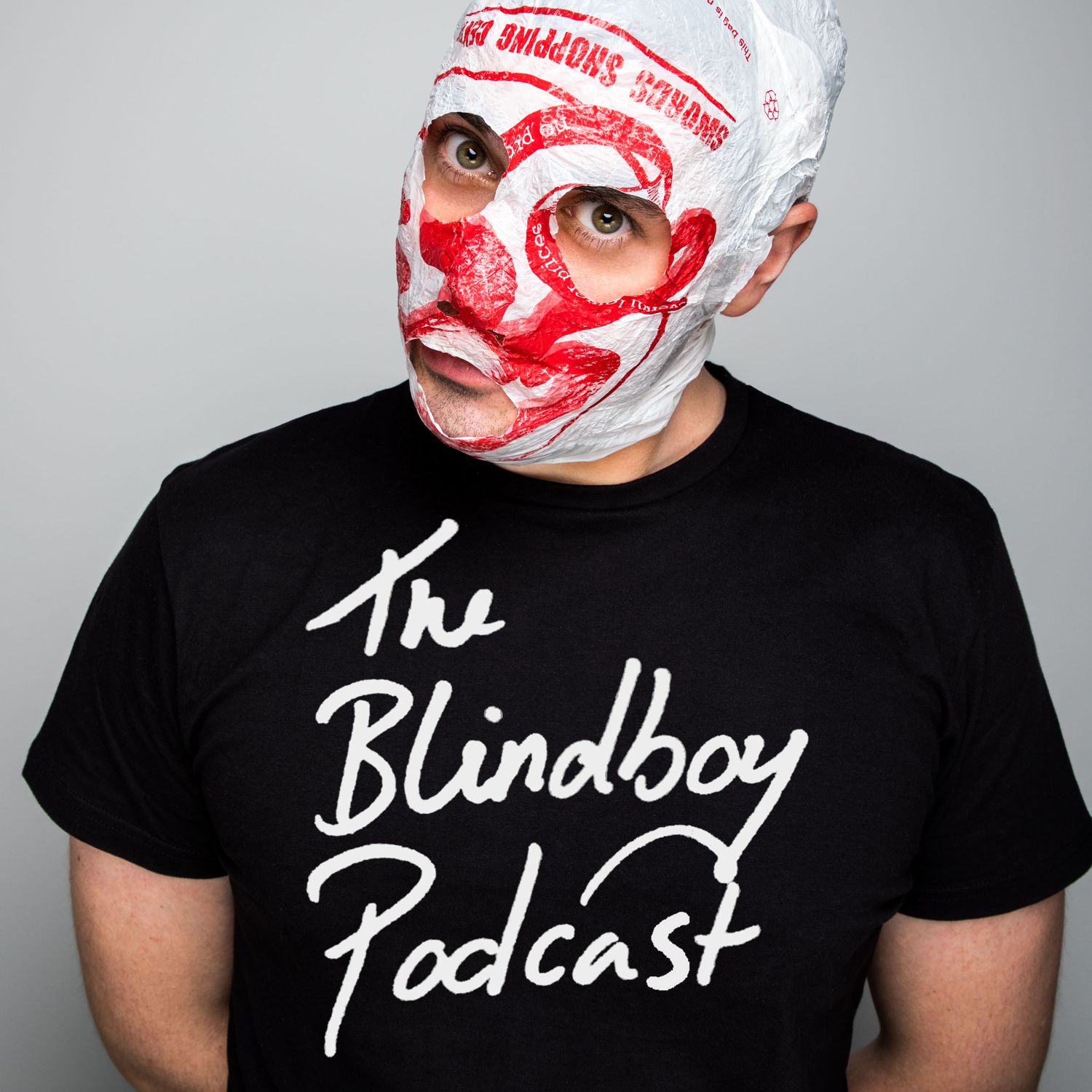
A rivetting chat about art and writing with Patrick Freyne
Hosted on Acast. See acast.com/privacy for more information.
Press play and read along
Transcript
Speaker 1 Struggling with managing high volumes of learners, products, and orders? With built-in commerce features, ThinkIFIC handles everything from bulk sales and group orders to automatic payment processing.
Speaker 1 The centralized dashboard lets you manage multiple courses, cohorts, and certification programs without increasing administrative overhead.
Speaker 1 To learn more about how you can reduce churn and drive revenue with learning, visit thinkific.com, T-H-I-N-K-I-F-I-C.com. Built for the business of learning.
Speaker 2 This episode is brought to you by Progressive Insurance. Do you ever think about switching insurance companies to see if you could save some cash?
Speaker 2
Progressive makes it easy to see if you could save when you bundle your home and auto policies. Try it at progressive.com.
Progressive Casualty Insurance Company and Affiliates.
Speaker 3 Potential savings will vary, not available in all states.
Speaker 5 Ever find yourself bored or trying to kill time?
Speaker 7 We have finally found a solution for you. Royal Match.
Speaker 8 Don't believe me?
Speaker 7 Let's hear what people say.
Speaker 6 Royal Match is such a fun puzzle game.
Speaker 9 There are over 10,000 levels, also a bunch of mini-games, which makes it super exciting.
Speaker 10
My favorite part? It doesn't need Wi-Fi. I play on my commute, on flights, even while waiting in line.
And honestly, no ads, not a single one. That's why I'm so into it.
Speaker 6 So there you have it: a relaxing, challenging, totally ad-free game that goes wherever you go.
Speaker 7 Download Royal Match and see why everyone loves it.
Speaker 9 Unhinge your chins, you whispering Vincents.
Speaker 9
Welcome to the Blind Boy Podcast. If this is your first episode, consider going back to an earlier episode.
To familiarise yourself with the lore of this podcast.
Speaker 9
I'm sure you can tell there's something up with my voice. I'm in the throes of seasonal cold or flu, whatever the fuck it is.
The whole shebang. Sore throat, chills, pains in my bones.
Speaker 9
So, I need to be horizontal. I need to be horizontal today.
I don't have a full podcast in me. I'll be grand in a couple of days.
But I do have an absolutely magnificent chat for you
Speaker 9
with a journalist and writer by the name of Patrick Frayne. This one is from the Vaults.
I recorded this,
Speaker 9 I think, 2023 at the Dalky Book Festival. Maybe earlier, maybe even 2022.
Speaker 9
Today I was like... I'm really sick.
I'm not going to be able to do a monologue podcast. So I went listening through just live live podcasts I'd done over the years.
And this one from 2022 jumped out.
Speaker 9
I was like, fuck it. This was great crack.
This was wonderful crack. Why did I not put this out yet? I think the reason is.
Speaker 9 So I'd recorded this,
Speaker 9 I'd say, two months after the after lockdown ended. And I think this was my first, like, normal gig.
Speaker 9
Like, No restrictions. Although, no, it wasn't.
It was outdoors. So I think this was still recorded under the parameters of COVID lockdown.
So
Speaker 9 I'd kind of forgotten how to interact with human beings. I'd forgotten how to chat with people.
Speaker 9 So one thing I want to apologize for with this chat that you're about to hear, I'm quite interrupty.
Speaker 9 I interrupt quite a bit. Something I need to say around that is,
Speaker 9
so I'm neurodivergent. And people who are autistic and ADHD, we have serious trouble when it comes to not interrupting people when we're having conversation.
Because it's perceived as incredibly rude.
Speaker 9 It's a rude thing to do.
Speaker 9
It's perceived as arrogant. It's like what I have to say is more important than what you have to say.
It lacks courtesy. Interrupting people during a chat
Speaker 9
and speaking over people is a real social faux pas. When you're neurodivergent, it's incredibly difficult to not do it.
Neuro-divergent people...
Speaker 9 nor a divergent people interrupt other people in conversations when when we don't
Speaker 9 we just miss those little social cues we miss the little the social cues we are supposed to stop and let the other person speak so it's not arrogance or rudeness the reason i'm doing a disclaimer is If ever I put out a chat and I interrupt people, I do get very negative comments.
Speaker 9
People get really triggered by interrupting. And I just want to ask you to give me a break when it comes to this.
I'm not being rude. I'm not trying to speak over.
My guest,
Speaker 9 I'd just done three years of fucking lockdown and I'd forgotten how to talk to people. So it was, I was going off on rants and everything.
Speaker 9
And now, now, now I'm back. Now I'm masked again.
Now, I don't interrupt as much. I actively listen when I speak to people.
Masking, I mask when I speak to people. I don't enjoy conversation
Speaker 9 because
Speaker 9 instead of enjoying the conversation, I'm thinking about not interrupting or
Speaker 9 their eye contact or facial expressions and shit like that. So I do that in social interactions because it's the polite, proper thing to do.
Speaker 9 But that then makes It makes conversation kind of stressful, stressful and not enjoyable.
Speaker 9 Whereas what I'd like to do is make no eye contact, be looking all up and down the room and then ranting about what, whatever the fuck is important to me. This is just a disclaimer.
Speaker 9 Please nobody, nobody write on Instagram. Um, you interrupted a lot blind by.
Speaker 9 Trust me, I fucking know, I know when I do this because I have to listen to the conversations afterwards and then feel like a prick. I even had someone write before on Instagram.
Speaker 9 I know that you're autistic and autistic people have difficulty interrupting people, but you sure do interrupt a lot. I know, I know so much that I go out of my way to avoid people.
Speaker 9 So please bear that in mind. But other than that,
Speaker 9 so I think that's the reason
Speaker 9
this conversation I had, it was the Docie Book Festival 2022. And I listened back to it today and I'm like, this is fucking great.
I had a wonderful chat with Patrick Frayne.
Speaker 9 We just spoke about art for 90 minutes. Patrick is an incredibly interesting person.
Speaker 9 He's a writer for the Irish Times.
Speaker 9 His articles frequently go viral just because they're so funny.
Speaker 9 He wrote a brilliant memoir called Okay Let's Do Your Stupid Idea and this coming June he's releasing his first novel called Experts in a Dying Field.
Speaker 9 On top of Patrick being incredibly talented, he's just
Speaker 9 a very warm, kind, compassionate person who I loved speaking with.
Speaker 9 And I just have to play this chat because it's too much crack it's too much crack for me to not put out because I'm self-flagellating over interrupting you don't need to listen to my fucking voice when it's like this look here's the interview with Patrick Frayne at the the dogy book festival from about three or four years ago so that was uh yeah that was from my first book of short stories I'm currently writing uh I'm writing my third book of short stories at the moment.
Speaker 6 I was writing, I'm writing a story about a woman who gets addicted to eating photographs.
Speaker 6 I don't know where it's going to go,
Speaker 6 but it'll figure itself out in the end.
Speaker 6 I have a fantastic guest tonight.
Speaker 6 He is a journalist, a critic, a writer, and an all-around sound man in funny cunt.
Speaker 6 Patrick Flain.
Speaker 6 I think someone's choking him.
Speaker 6 All right, all right, Pat. You had to wear one of those fucking
Speaker 6 mics that dangerous.
Speaker 8 They're really weird.
Speaker 8 Because they get stuck in my hair, and I'm not really like I have long hair, but I'm not really good at having long hair. So my hair kind of gets stuck in everything.
Speaker 6 And I've never interviewed someone who's wearing one, and now I'm starting to worry if I'm hearing your voice in my head, which isn't great.
Speaker 8 I'll be honest.
Speaker 6 I had a small bit of happy grass beforehand.
Speaker 8 Okay.
Speaker 6 So, yeah.
Speaker 6 I couldn't wear one because I have a plastic bag in my head.
Speaker 8 Have you tried wearing one with the plastic bag? Oh, yeah.
Speaker 6 Man, I.
Speaker 6 The experiences I've had with microphones over the years, the worst experiences are on the late, late show. Are you shushing me at my own gig?
Speaker 8 It's probably just a con opening.
Speaker 6 We want to hear Patrick's beard against the microphone.
Speaker 6 This is an ASMR audience.
Speaker 8 I love ASMR.
Speaker 6 Yeah, I have multiple terrible problems with microphones because of this plastic bag.
Speaker 6 When I go onto the late late show,
Speaker 6
they usually give you a microphone that goes onto your chest. Yeah.
And it's RTE, so they're fucking aegits. So I say to them, don't put a microphone on my chest.
I have a plastic bag on my head.
Speaker 6
That's not in their manual. So they're like, we have to put it.
And so, okay, Grant. And any interview with me on the late late, listen to it.
Speaker 6 I go out, all you hear is crinkle, crinkle, crinkle like you're eating potatoes.
Speaker 6 And then immediately they cut off that microphone and they have to resort to this emergency shotgun microphone that looks like a teenager's penis that's on tough
Speaker 8 table.
Speaker 6 And
Speaker 6 that's what happens. And then I can't wear those.
Speaker 8
I can't wear those. Yeah, I find them really strange and they hurt my ears.
But
Speaker 6 they didn't have a second one of these. I'm being greedy.
Speaker 8 Yeah, but
Speaker 6 that story was great.
Speaker 8 I was kind of listening to that going,
Speaker 8 I was listening to that going, I'd love if that was the news. Like, if you turned on the radio and that came on, here's the news, and then you're talking about being a horse, goat, guitar player.
Speaker 6 I picture someone thought of it. Like, I mean, what I end up getting ideas like that is
Speaker 6 people always say to me, Why the fuck are your stories so fucked up?
Speaker 6 And for me,
Speaker 6 I'm making my anxiety my friend okay
Speaker 6 so the thing with me is I have I'm mentally ill
Speaker 6 I'm mentally ill so I have tremendous problems with my mental health I'm doing alright now yeah but when I was like 18 19
Speaker 6 I couldn't go to gigs because I would get ferocious anxiety and when you have anxiety And I'm also autistic, which I only found out a month ago. Anxiety, autism, and also being creative.
Speaker 6 Not a great combination. So I'd be there at a gig trying to enjoy it and then I'm looking up at the person on stage going,
Speaker 6 what if I went up and killed him?
Speaker 6 Do you know what I mean? And anyone who has bad anxiety, you'll know, yeah, I can relate to that. So I used to, because when you get an anxiety attack,
Speaker 6 one of the themes for me was, what if I do something in public that would make everyone look at me?
Speaker 6 You know, and i'm doing all right now up on stage with a bag in my head i know when i was younger it was like what if i do something crazy it was either what if i vomit in public or do something that'll create a spectacle so i would be at a gig thinking what if i went up and and skinned it was a flaming lips gig what if i went up on stage and skinned wayne kind
Speaker 6 and then i'd get a panic attack but
Speaker 6 Writing for me is therapeutic because when you're presented with that type of irrational anxiety anxiety and it can take over your threat analysis in your brain, a fun thing for me to do is to laugh at it because that's kind of hilarious as well.
Speaker 8 I think that's why I try to write funny stuff. So, I had a similar thing when I was- Because you're fucked in the head as well, you've mentally
Speaker 6 done, but you've mental health issues. Yeah, I do.
Speaker 8 I have an essay in my book
Speaker 8 called Brain Fever, and there's a bit about just that sort of thing.
Speaker 8 I did a thing in my 20s where I'd kind of imagine doing something terrible and then I'd go that would ruin my whole life yeah and I'm gonna and and then I would spiral and I could think about it for weeks and weeks and weeks yeah and I had this thing where you through the touch of OCD as well didn't you yeah so I had this thing where
Speaker 8 in this happened in my late 20s I kind of became obsessed with the idea you know in action movies where Stephen Segal or somebody just reaches over to a guard and goes
Speaker 8 and breaks his neck yes i swear to like it's funny now but uh at the time i was going what if i did that to my girlfriend yeah and then i that's him cancelled and i that's patchy cancelled now
Speaker 6 someone's recorded that now and they've taken it out of context yeah and you're cancelled yeah
Speaker 8 so and i don't want to interview people who are cancelled so it was a very short interview thanks uh for the opportunity um but i went on and i started thinking about everyone i loved and i'd go um what if if i did it i'd be with my mother and she'd be driving me somewhere and i'd go what if i reached over and broke her neck like stephen sagal
Speaker 8 that would be awful we'd probably crash and i might survive and i'd have to go to jail yeah and then i'd think about my sister and my brother and i ended up going to a counselor and i was explaining this to them and the counselor said um
Speaker 8 so You've mentioned your mom, your girlfriend, your sister, your brother, your best friends, but you've never mentioned your dad.
Speaker 8
And I went, oh, yeah, you see, my dad's a commando, so I wouldn't be able to do it to him. But he trained in his.
Yeah, and the counsellor went, you couldn't do it to anybody.
Speaker 2 That's impossible.
Speaker 8 That's like a TV trick.
Speaker 8 So
Speaker 8 it didn't quite end it, but that was the start to me going, all right, the mad shit I imagine mightn't be real.
Speaker 6 But you know what? These are the mental health conversations we need to have. Because I'm sick of going on to the late late and just saying, I'm sad.
Speaker 6 You know what? What you're speaking about there is very real. It is real.
Speaker 6 But it's also hilarious.
Speaker 6 So you can bring that into your creativity and then that irrationality then be, I call it making it my friend. Okay.
Speaker 6 So the terrifying thing which can give me an anxiety attack, I can turn my creativity, because essentially it is creativity.
Speaker 6 It's the part of your brain that thinks laterally, except it's deciding to attack you.
Speaker 6
Instead of it attacking you, you go, fuck it, I'm going to, it's not real. I'm going to put it on a page and turn it into entertainment.
And then there's a healing around that.
Speaker 6 Like, I'm not worried about skinning people at gigs anymore.
Speaker 8 Yeah. Because it's now in a book.
Speaker 8
I found a lot of the stuff in my book writing about it. Like, some people who write, my book is called, Okay, Let's Do Your Stupid Idea.
And it's a series of memoir essays, some of which are funny.
Speaker 6 My job is to say that.
Speaker 8 Okay, yeah, no, no, no, no.
Speaker 6 That's me being a shit interviewer.
Speaker 6
That's me being self-critical. I'm supposed to come out and say, Patrick, you wrote a book called Let's Do Your Stupid Idea.
Tell us about that.
Speaker 6 Rather than I forgot to say it, and now you have to say it yourself.
Speaker 8 I'm just glad you didn't skin me when I came onto the stage. So don't worry about it.
Speaker 8 But I did find that writing about some of the more difficult things, what, like it's, I spoke to other people who've written memoirs and they go, ah, no, it's not catharsis, it's like my creative art.
Speaker 8
But for me, there was definitely a bit of psychotherapy involved in it. Because the part of it is psychotherapy is retraining your brain to think of the same thing.
Not neurotasticity. Yeah.
Yeah.
Speaker 6 And also
Speaker 6 journaling. When you experience mental health difficulties, one of the problems is that these irrational thoughts are posed entirely in your own brain.
Speaker 6 And they get in the way of nice thoughts like making your dinner. So I'm worried about skinning someone when I should be worrying about a stew.
Speaker 6 But once you put that...
Speaker 6 Do you know what it's like?
Speaker 6 Do you know when your friend is having mental health difficulties and your friend tells you this is what I'm worrying about recently and then you go that's fucking ridiculous but in your own head it's not ridiculous but when you put it on the page you go actually that is a bit ridiculous when you first came out and I couldn't see your microphone and I heard your voice in my head
Speaker 6 like
Speaker 6 15 years ago I'd have to get off stage
Speaker 6 but instead I just say I named it I took ownership of it and now I know no I can see the microphone there underneath your beard
Speaker 6 You're not magically inside in my own mind.
Speaker 8 Although it would be a really good way to interview people, is if I just stayed over there and you heard it in your head and you put it to the audience.
Speaker 6 Yes, distant Patrick.
Speaker 8 We're going to have a little echo in the voice. Can we put echo in my voice?
Speaker 6 Or just like a megaphone on my head that produces...
Speaker 6 I think someone took you literally there.
Speaker 8 Yeah, I know.
Speaker 6 We don't actually need echo on Patrick's voice.
Speaker 8 Well, I could go over and see what it's like.
Speaker 6
See, that's the thing. They ironically told him to bring cans.
So now we're ironically saying he needs an echo on his voice.
Speaker 8 We don't actually require an echo. Is it ironic?
Speaker 6 We're sick of this docky shit.
Speaker 8 Yeah. I could go over and just see what it's like.
Speaker 6 How do you mean?
Speaker 11 Yeah, fuck it, actually.
Speaker 8 Dude, yeah, yeah, yeah, yeah, yeah, yeah. Can you put echo on my voice?
Speaker 6
Go behind there, so there's a burlap sack there. The audience cannot see beyond the burlap.
Okay.
Speaker 6
All right, Patrick. Hello.
Is Jerry Adams in the your hold on a second, Patrick? You work for the you work for the Irish Times.
Speaker 6 Patrick works for the Irish Times. As an Irish Times journalist, is Jerry Adams in the IRA?
Speaker 8 We can't quite know.
Speaker 8 I think it was good.
Speaker 6 He is.
Speaker 6 He is in the IRA, and you heard that from Patrick.
Speaker 8 Irish Times.
Speaker 8 A lot of people under my TV column, my favorite comment, we don't have comments anymore, but my favorite comment was when I'd write something ridiculous in a TV column and about three people would go, Why is this news?
Speaker 8 Which I always thought would be a great name for a column. Why is this news?
Speaker 6 Why is it news, though?
Speaker 6 The Irish Times is a bit of a does news really mean north, east, west, south?
Speaker 6 I should have gone like this out.
Speaker 6 I'll have to make this after the question. Really deep question.
Speaker 6 Does it though?
Speaker 8 No.
Speaker 6 That's like golf means gentlemen only, ladies forbidden.
Speaker 6 That's real schoolyard shit. That's like fucking Prince Prince removed his rib to suck his own dick.
Speaker 6 So the PG version of that was, did you know that news means north, east, west, south, and golf means that?
Speaker 8 I'm so confused.
Speaker 6 It's called a backronym.
Speaker 8 I've been doing regular docky events, like where you kind of sit in and going, okay, we're going to talk now about
Speaker 8 the future of the American culture war, and four people
Speaker 8
discuss it. Yeah.
Yeah, but this feels like... It feels like an upgrade
Speaker 8 but
Speaker 6 did you know
Speaker 6 if you mention throughout any talk at the docky book festival if you mention five books david mcwilliams gives you a back massage
Speaker 8 i didn't know that is he here
Speaker 6 but actually one thing i did want to mention because do you know what i'm going to give you a wonderful compliment um so i enjoyed your book thank you.
Speaker 6 And what I really like, your book is a memoir, but to me, you write it like fiction. It's the right of a fiction writer.
Speaker 9 It's the right of a fiction writer.
Speaker 6 Yeah, that's that literary stuff.
Speaker 6 It's the right of a fiction writer. But your prose reminds me of Ernest Hemingway in that
Speaker 6 you have your the way that you do short sentences is beautiful. And
Speaker 6
Hemingway jumped out of the page when I was reading it. And one thing, the reason Hemingway's sentences are short is Hemingway first trained as a journalist.
And
Speaker 6 he brought the prose of journalism to his literary prose. And do you see a parallel between those two things?
Speaker 8 So we've got Hemingway, we've got this.
Speaker 6 It's someone who's. Yeah.
Speaker 6
When you write your memoir, you're writing prose. You're thinking about the sentence and you're thinking about the beauty of that sentence.
But there's a brevity to your sentences that is beautiful.
Speaker 6 It's really short and to the point, and
Speaker 6 you do it in a way
Speaker 6 who else fucking does it? That
Speaker 6 Carmen McCarthy, that's the second book.
Speaker 6 Carmen McCarthy does it as well. He uses beautiful short sentences.
Speaker 8 When you say the five books, does David appear in the stage with a massive state book?
Speaker 8 Okay, yeah,
Speaker 6 private carry on inside in that stone building.
Speaker 8 Yeah, okay.
Speaker 6 McWilliams is
Speaker 6 capable of photosynthesis. Most people don't know.
Speaker 6
That's a greenhouse purely for David McWilliams. Wow.
And he's got photosynthetic chemicals on his skin in the back. He had it done in Croatia.
Speaker 6 So he's able to lie down and the sun comes in through the greenhouse onto his back. And
Speaker 6 the plants take the sun
Speaker 6 and they turn carbon dioxide into sugars.
Speaker 6 The sun goes into his back and he turns it into economics.
Speaker 8 I don't know whether to answer the question.
Speaker 6 The question was.
Speaker 8 Yeah, I remember.
Speaker 6 So the question was.
Speaker 6 I find parallels between your writing and Mr. Hemingway's
Speaker 6 both use sentences in brevity. Hemingway does it because of his history of being a journalist.
Speaker 6 How does your training and work as a fucking journalist, as someone who has to be concise, how does that inform your process?
Speaker 8 I never thought about that before. So when I was,
Speaker 8 as a journalist, I never really wrote about myself.
Speaker 8 Like I used to kind of write, I do a lot of reporting, a lot of interviews, and I do a column every Friday that's about kind of telly or pop culture where I'm being funny. And the thing with
Speaker 8 when I started to do the book, there was like loads of kind of personal stories kind of backed up. I'd never really, I'd never had a personal column.
Speaker 8 So I think you're probably right that like one of the things when you're doing reporting is you kind of have to get out of the way of the story. Like
Speaker 8 sometimes I love writers like John Ronson who are kind of in there in the story.
Speaker 8 And I can do that. I like doing that sometimes when it's a kind of lighter subject.
Speaker 8 But if you're interviewing people about really serious shit that's happened to them, you kind of want to do it in kind of as straightforward a way as possible.
Speaker 8 So I definitely think it probably comes from that. But I never really thought about it in terms of the essays before.
Speaker 8 And I like, so I think the reporting stuff
Speaker 8 is really good for me as a journalist. I think it's probably a good thing for people to do, like general curiosity anyway,
Speaker 8 because it teaches you to kind of get out of the way of stuff. And there's a lot of the stuff we do that is a little bit more like this, like it's like jazz hands and
Speaker 8 being interviewed by Blindboy, which is kind of cool.
Speaker 8 So, yeah, it's definitely connected.
Speaker 6 And when you're reporting, like what is the number one skill of a reporter? Like
Speaker 6 I'm up here as a person using a mic, so my number one skill is I don't talk from back here. I make sure that I'm here.
Speaker 6 What is the journalistic or the reporting equivalent of that?
Speaker 6 What's the basic trick that you learn in reporting school or whatever the fuck? I failed my leave-ins or I don't know.
Speaker 8
Typing is the basic skill. Okay.
Genuinely, the basic skill is
Speaker 8 being trying to be genuinely curious because there's this weird thing that happens when you're doing a job where you're kind of really
Speaker 8 conscious of the end product and you're really conscious of, and you kind of need to be. But when I was a younger journalist, I was thinking too much about the article.
Speaker 8 I was like, I'd be interviewing people and I like...
Speaker 8 as well as doing kind of funny stuff or pop cultural stuff, I like to write about serious things. I like to write about, you know, social justice stuff.
Speaker 6 So are you saying, Patrick, that when you're doing your research and your reporting, you shouldn't be thinking about the NPC?
Speaker 8 You kind of try and put that on automatic, which you can do after a certain point.
Speaker 8 And when you're sitting there talking to somebody, this sounds really high-falutin, but it's kind of simple and it's part of life. You kind of have to be present with them.
Speaker 8 So if somebody is telling you something very,
Speaker 8 like I did some interviews over the years that i thought were kind of important because of the people i was highlighting people who've been through care or refugees or undocumented workers and when you're talking to those people you've got a bigger responsibility than when you're talking to famous people like to be honest if i interview a writer or an actor or a politician i'm not that worried about them yeah you know but if you're talking to somebody who's vulnerable in any way you kind of have to worry about the ethics of it you have to worry about how they're going to appear you've got to explain to them what it's all about because they don't really know.
Speaker 8 Like as soon as you interview somebody who's media savvy, they understand everything. They understand that what they say is going to end up in an article.
Speaker 8 And the thing I've learned over the years is to kind of be pre, like, it sounds a bit hippie, but you have to be present with the person in the moment.
Speaker 8
And you have to allow them to say what they need to say. And then you have to be brave enough to ask the follow-on question.
That can be difficult.
Speaker 8 And it needs to feel to me like a conversation where there's some sort of connection being made.
Speaker 6 So in psychotherapy, because I trained as a therapist years ago, that's known as congruence. So a therapist, when they're with a client, has three things that they need to have.
Speaker 6 The first one is, what is it? Empathy. So empathy means that you're genuinely
Speaker 6 trying to feel the other person's emotion. The second one is unconditional positive regard, which means that whatever the person says, their words are merely an aspect of the behavior.
Speaker 6
So a therapist must never ever judge somebody. And that's quite important.
When you or I were speaking there,
Speaker 6 I'm thinking of snapping my man's neck. A therapist at that moment needs to not go, fuck off.
Speaker 6 Seriously, that is one of the core conditions of a therapist. Cannot do that.
Speaker 8 So is that the main skill of therapy, like the mic skill?
Speaker 6 100%.
Speaker 6 100%.
Speaker 6 When someone presents with an idea that to them is irrational, a therapist must not give the social reaction, which is to go, that's mad, really.
Speaker 6 The therapist has to go, oh, really? Tell me more about that. And what that does to the client is it allows them to go, fuck it, this person isn't judging me.
Speaker 6 This person isn't judging me the way I'm judging myself. I now feel safe.
Speaker 6 And then they explore, why do you think that? And then the third thing that a therapist has to have is what's called congruence.
Speaker 6 And congruence is what you're speaking about there when it comes to reporting. And congruence basically is that
Speaker 6
what you feel inside and the words that come out of your mouth are the one. Yeah.
That you're not spoofing. You're not bullshitting.
Speaker 6 If you feel sad or you feel angry that this comes out in your voice, you don't pretend because that creates an environment for the client that's unsafe.
Speaker 6 So what I'm hearing there from reporting, congruence is an important part of that job.
Speaker 8 Yeah, and
Speaker 8 the mistake you can make as a new reporter or a younger reporter, I think, is that you've got a list of questions and you're treating it very much as A, B,
Speaker 8 C.
Speaker 8 What you need to do, or what I feel, actually, it's more that for me, it makes it more authentic, which makes it easier to write about, is that it becomes a conversation.
Speaker 8 And some of that's about building trust.
Speaker 6 Like, you interviewed me for
Speaker 6
my last book. Yeah.
And we spent about four hours together. And I I would say three of those hours had nothing to do with what ended up on paper.
It was me and you chatting as a pair of human beings.
Speaker 6 Yeah, we talked about books, and we talked about our lives, and we had lovely crack. And by the end of it, I was like, Yeah, I'll speak to this fella, he's sound as fuck.
Speaker 6 And it was lovely for me because that was great to have that in the Irish Times. Because there was a second review in the Irish Times about my book where they said,
Speaker 6 I don't believe in gatekeeping literature, but
Speaker 8 now don't tell anyone i said this but that's very irish times yeah yeah yeah yeah
Speaker 6 and and then the exam the examiner reviewed it and had to delete the the review why
Speaker 8 because
Speaker 6 some fucking cunt
Speaker 6 some some person in the examiner reviewed my book And they didn't read the book
Speaker 6
because they just assumed, oh, it's that fucking idiot with the bag in his head. And this is just a Christmas book.
So instead of reading the book, he assumed what I would have written.
Speaker 6 So he wrote a review of the book that he thought I wrote, which was, I didn't like this book, there wasn't enough female characters.
Speaker 8 One stars.
Speaker 6 Which I then went, actually, lads, it's mostly female characters. And I specifically got a female editor to avoid any internalized misogyny that I have, you pricks.
Speaker 6 And then they deleted it and it's gone. And they're pretending it didn't happen.
Speaker 8
That's a really interesting thing. So you got a female editor.
So, there's a kind of debate in books about sensitivity.
Speaker 6 Sensitivity readers, which I 100% agree with.
Speaker 8
They're a good thing. Yeah.
Like, it's really important if you're writing something about which you have no experience,
Speaker 8
it's important that you show it to somebody who has some experience of it. Absolutely.
So, they can point, not because it's censorious or they're going to go, oh, you can't do that.
Speaker 8 It's more you show it to them and go, is that realistic? And they'll go, no, that just never happens.
Speaker 6
And I call that good writing. Yeah, me too.
Do you know what I mean? Seriously, if you're.
Speaker 8 Even Charles Dickens did it charles dickens used to show things to people who were different i mean he wrote about i'm trying to remember the details but he definitely so he went to fagan
Speaker 6 he went to a victorian prick yeah
Speaker 8 i need to know now what did dickens do because all i'm thinking about honor twist i'm just realizing now that i'm being a bit of a modern jackass because i can't remember the details but i know that it wasn't invented in the last years it's something something good writers did.
Speaker 6 That's good writing. And if a writer is to write about something that is deeply outside of their experience,
Speaker 6 you want to portray that with care, sensitivity, and realism. Like I was speaking to, I was gigging in London there on Wednesday, and I spoke to the podcaster Scrubious Pip.
Speaker 6
And Scrubius Pip is someone who has a stammer. And stammering is a huge part of his life.
And he's consistently reading scripts.
Speaker 6 And the script is written by a person who doesn't have a stammer and tipped just he turns up as an actor and goes lads this is not how a stammer works so that's an example right there of higher people who actually have a stammer like for me
Speaker 6 autism for me when i read any fiction about autism that's written by a person who isn't autistic i'm like go fuck yourself you silly boy this is not what it's like at all Did getting the diagnosis make a big difference to your under self-understanding?
Speaker 6 So it's only two months ago. So
Speaker 6
it's like finding out I've had a big kick-me sticker on my back for my entire life. Like that's kind of what it's like.
I mean, the thing is,
Speaker 6 all that's happened is I've found a new word to describe how I've been my entire life. So the weird thing is that I receive a diagnosis and it's kind of like, all right, I have a disease now.
Speaker 6
And it's like, no, it's not a disease. It's not going to get worse.
This is just how you are. And here's some new words to describe it.
For me,
Speaker 6 the one thing I'm struggling with is I failed my leave-in cert.
Speaker 6
I did terribly in school. I was hugely misbehaved.
My time in school was fucking rotten. And I'm in my 30s now.
And I've squared that with myself.
Speaker 6 Up until this point, I'd said to myself, you fucked up school because you were unruly and you were a ball boy. Now,
Speaker 6
no, I was actually victimized by the system. And that's a different thing because now I have to go, shit.
Yeah. I could have been a doctor.
I could have been a scientist.
Speaker 6
I could have pursued things that I actually care about. These things, I did not have access to any of these things.
So I had to become an artist.
Speaker 8 I interviewed Sung Bang.
Speaker 6 I didn't have to pass maths to get into art college.
Speaker 6
Well, that's. But it's sad.
It's genuinely sad. I love science.
There's so many things I'm interested in. And these, like, you studied literature in Trinity.
Yeah. I would have loved to do that.
Speaker 6
Not a fucking hump, man. I got 200 points in my leave insert.
And I was demonized. And
Speaker 6
I wasn't even allowed to repeat my leave insert because I was so poorly behaved. I was expelled.
I was fucked.
Speaker 8 So
Speaker 6
now I'm angry about that. I can't take ownership of that because it's because I was autistic.
And I was called bold, wrong, misbehaving, all of this shit from the earliest age.
Speaker 6
And that's not how it was at all. I just had a different brain.
And the system didn't accommodate it.
Speaker 8 And how did the how, when you look back now,
Speaker 8 what were the things that they should have been doing in school to help you?
Speaker 6 So, the thing with being autistic is for me,
Speaker 6
so I'm what's called autistic spectrum disorder level one, which is I require the least amount of support. So, I present as someone who doesn't really appear autistic.
But the thing with my autism is
Speaker 8 I
Speaker 6
will focus on an interest intensely to the point that I'll forget to eat. And now I fucking love it.
To me, this is a superpower. This is why my podcast exists.
Speaker 6
I'll talk for one hour about pineapples. I'll go into the history of pineapples.
I'll freak myself out.
Speaker 6 about and that's my autism I love it to bits but when I'm in school and I'm being forced to learn about maths and this,
Speaker 6 I would be shit in school and then I'd go home and my focus that month would have been hip-hop music. My focus would have been art.
Speaker 6 All of these things that I was deeply interested in, I was told that's disruptive.
Speaker 6 And instead, what they should have done was, okay, if this is where your brain is going this week, let's figure out a way to incorporate that into what you're doing. Because what I did find in school,
Speaker 6 any teachers that were good with storytelling, they were the ones that got to me. And one of the things that used to break my fucking heart about school,
Speaker 6 do you remember punishment essays?
Speaker 6 Do you remember when you were really bored in school, what would happen is the teacher would say,
Speaker 6 oh, your job now is you have to come in tomorrow and you have to write about the inside of a tennis ball.
Speaker 6 I fucking want to write about the inside of a tennis ball.
Speaker 6
So I used to get in trouble, so I'd have to write about the inside of a tennis ball. Yeah.
And what used to,
Speaker 6 they then would get my short story about the inside of a tennis ball, and they'd go, I thought this fellow was thick. What's going on here? You know?
Speaker 6
So all of that stuff is quite hurtful for me now looking back, whereas it wasn't hurtful before. I was able to go, you were bold, that's grand, you're an adult.
Now it's different. I'm a victim.
Speaker 8 So
Speaker 8 would autism be classed as a disability or is it?
Speaker 6 So it is classed as a disability, but
Speaker 6 a lot of people who are autistic would disagree with that.
Speaker 6 I certainly don't experience it as a disability at all. It's a disability depending on the environment that I'm in.
Speaker 6 So I once worked in a call center and I was fired after one week for printing out 92 pages about CIA crack cocaine smuggling.
Speaker 6 So if you put me into an office, then because of the environment, it's a disability.
Speaker 6 But if you give me a podcast or get me to write short stories or wear the bag in my head, then it is not a disability.
Speaker 6 It's like what I compare it to is: you know, that swimmer, Michael Phelps. So, Michael Phelps won a shit ton of gold medals.
Speaker 6 He's a great swimmer, but also his body, he's got unnaturally long arms, he happens to have very large lungs. These are things that made him a great swimmer.
Speaker 6 So, for me and my autism, this is what makes me really good at what I do.
Speaker 8 So, have you come across? So, I interviewed some young
Speaker 8 disabled men because of the lack of,
Speaker 8 they were looking for personal assistance and there's a huge problem in Ireland with people who need personal assistance to get around their lives they're just not there's not enough of them they don't get funded for it and I was introduced to the idea that there's kind of different ways of looking at it so there's the medical model of disability which is oh it's all you and then there's the sociological political model of disability which is why people who have
Speaker 8 people who are disabled now prefer disabled to I have a disability because they see it as I am disabled by society.
Speaker 8 That's the kind of political way of looking at it, which is kind of what you, I'm not
Speaker 6 talking about your experience.
Speaker 6 It's
Speaker 6 I am disabled. The environment does not suit my needs.
Speaker 6 And the other thing too is
Speaker 6 the severe social anxiety that I experienced, the depression that I experienced, my autistic brain didn't make me
Speaker 6
anxious or depressed. The pressure of society and trying to fit in and be normal, that's what caused that shit.
So it's not me.
Speaker 6 It is difficult for me to survive in a world that is designed for neurotypical people. But here's the other thing.
Speaker 6
Autism is referred to as neurodivergent. And it is estimated that 40% of people are neurodivergent.
So 40% is fucking a lot of people. So therefore, that is not abnormal.
Speaker 6 And within neurodivergence, you have autism, ADHD, dyspraxia, dyslexia, Tourette syndrome, all of this stuff.
Speaker 6 So instead of looking at it as a disorder, you go, no, there's people with different brains. And the person who assessed me,
Speaker 6 the way that they assess autism is they have to use a manual called the DSM, which is the American Psychiatric Association. And that's the only way to diagnose it.
Speaker 6 But up until 1973, being gay was in that manual as an actual mental illness. which is absurd.
Speaker 6 And the person who diagnosed me reckons in 10-15 years time, autism autism is not going to be in that manual.
Speaker 6 It's just going to be, here's some people with different, there's no such thing as a different brain.
Speaker 6 There's multiple types of brains, but the majority of neurotypical brains have defined the rules of what society is. And everyone else has to try and fit in.
Speaker 8
And there's some things that should be in the DSM, like being a billionaire. That should be in the DSM.
Like, that's a deeply fucking weird thing
Speaker 8 to be. Like, you're hoarding.
Speaker 8 100%. You're hoarding stuff.
Speaker 8 Like, if you were hoarding, I've said this before, but if you were hoarding like pizza boxes or fucking cans or action figures people would diagnose you as a hoarder even millionaires are hoarding not even billionaires
Speaker 6 something that is perfectly normal in society and that's a big problem people getting themselves into personal debt because they need to have a Mercedes because this Mercedes communicates something about them to other people that's not healthy and it's harmful but within capitalism that's seen as oh that's grand absolutely of course you have a Mercedes to tell everyone how great great you are.
Speaker 8 Fuck that.
Speaker 6
Yeah, but here's an example I always use regarding neurodivergence. Let's take dyslexia as an example.
So, dyslexia is neurodivergence.
Speaker 6 A dyslexic person is someone who has difficulty with the written word.
Speaker 8 Okay,
Speaker 6 300 years ago, most of society couldn't read.
Speaker 8 Okay,
Speaker 6 do you know the way pubs are called things like the dog and duck or the horse and hound? You know that?
Speaker 6 The reason pubs are called these names is because many, many years ago, when people couldn't read, the pub literally just had a painting of a dog and a duck.
Speaker 6 And within an oral culture where people can't read, you'd say, Yeah, the pub, the one with the painting of the dog and duck. And that's why pubs are called the dog and duck today.
Speaker 6 But within that society where it was normal to not be able to read, dyslexic people existed and no one knew. They just lived happy, normal lives.
Speaker 6
And then around the Industrial Revolution, we equated the capacity to read with intelligence. Now, all of a sudden, dyslexic kids are called stupid.
Yeah. Because, you know what I mean?
Speaker 6 So that's society has created that issue. I'm not saying we should all become illiterate, but I'm just saying that's an example.
Speaker 6 Society was more accommodating to dyslexic people 300 years ago when writing wasn't equated with intelligence.
Speaker 8 The larger thing, like the sociological thing, is like I get really kind of annoyed by general conformity. Sorry.
Speaker 8 I had to check the frame.
Speaker 8 Is there a is there? What's that?
Speaker 6
No, that's a fucking countdown timer, man. Okay.
It's like Jerry Adams has come in and planted a bomb, and it's
Speaker 6 because you said earlier on in your capacity as an Irish Troops journalist that he's in the IRA.
Speaker 8 Yeah.
Speaker 8 Like a lot of the problem is conformity, right? So there's a society that kind of prizes everyone doing the same thing. So like another
Speaker 8
chapter in my... Not to bring everything back to my book, but in no, dude, you're here at the Docie Book Festival.
So, um, I have an essay about not having kids.
Speaker 6 Patrick's book is called Normal People.
Speaker 8 You have it.
Speaker 8 You should, you should have just called me Sally Rooney, and I'd have come out and I'd have been Sally Rooney.
Speaker 6 I saw Sally Rooney backstage earlier on. I didn't introduce myself because I referred to her book on a podcast as something very neurotypical.
Speaker 6 So, I felt, but I didn't mean that as a, I was using it as
Speaker 6 I I love Sally Rooney's writing but
Speaker 6 it it is very neurotypical in that the thing with Sally's writing is that it's very much about human relationships and me as an autistic person I don't give a fuck about that
Speaker 6 so I prefer but to take
Speaker 6 but you know what it what I consider to be neurodivergent writing yeah we both love an author called Ted Chang oh yeah have you heard of Ted Chang? Do you know that film Arrival?
Speaker 6 Where, like, who's in it?
Speaker 8 I don't know names.
Speaker 6 What's your one's name? Jennifer Lawrence, is it?
Speaker 6 That's a lot of American names all at once, lads. I'm sorry.
Speaker 6 But Arrival is that film where all of a sudden these aliens arrive and they're like these weird squid creatures and they have to try and translate.
Speaker 6 That came from a Ted Chang short story.
Speaker 6 Ted Chang is a science fiction writer who will write the most bizarre, hard-to-comprehend ideas, and then he will write it in as much detail that you fucking understand.
Speaker 8 They're long. They're like 70-page stories.
Speaker 6 And he has spent 15 years writing it.
Speaker 8 Yeah, he writes like one of them a year or less.
Speaker 8 Until recently, he had a day job. But the interesting thing about sci-fi, do you know Ian Banks?
Speaker 8 So I was a big fan of Ian Banks.
Speaker 6 And Ian M. Banks.
Speaker 8 So I asked him, because I got to interview him shortly before he died.
Speaker 6 Ian Banks wrote The Wasp Factory.
Speaker 8
Incredible book. And he wrote under two names.
So one was...
Speaker 6 Four books, man. We're getting our fucking massage.
Speaker 8
Could he do us both at the same time? Because we couldn't. I don't want that.
I want to.
Speaker 6 No, no, no, no. If I get Devin McWilliams, I get him on his own.
Speaker 6 But go on. Ian Banks.
Speaker 8
So I asked him because I'm really interested. I'm really interested in kind of genre snobbery as well.
Yes.
Speaker 8 The snobbery around humor, too.
Speaker 6 This is how I look at the snobbery within literature, right?
Speaker 6 it's if someone says it's satire what they mean is it's comedy but for smart people
Speaker 6 if someone says magical realism it's fantasy but for smart people
Speaker 8 if someone says speculative fiction it's science fiction but for smart people yeah and they're not that and they're not that smart yeah like so ian and banks i got he died a few years ago and i got to interview him before he he died he didn't know he was ill which is very sad but um he was so the other thing is some of the best people I've ever interviewed writers have been sci-fi or fantasy people and that's partly because it's a kind of overlooked looked down upon genre and they are so appreciative of their fans like I did it with Ben Win Gaiman and he spent like an two and a half hours signing autographs it's a bit like metal it is kind of like very similar because metal within music is looked down upon unless you're the death tones and you're like oh well you're the radio head of metal
Speaker 8 but most
Speaker 6 but most metal is like, this is not music. We have to rely upon these fans.
Speaker 8 So, tying into what you were saying about not being interested in
Speaker 8 personalities, characters, what was it?
Speaker 6 I'm so what I don't like about not that what I don't like, what I find difficult to relate with Sally Rooney's books is it's all about human relationships.
Speaker 6 And as an autistic person, I don't see the world that way. I don't care about friends.
Speaker 8 Ian Banks put it really,
Speaker 6 but that sounds awful but like literally I don't really have a lot of friends I've got acquaintances my friends are ideas and I know that might sound lonely but it's not I fucking love ideas I love music and listening to an album for me is how other people if someone else goes to a wedding and has crack that's me alone with an album and it's not lonely it's lovely I love it that's my life so he said because I asked him because he did he did both he did kind of literary fiction as Ian banks and he did sci-fi as Ian M.
Speaker 8 Banks so he thought a lot about it And I was asking him about the snobbery, and he said that
Speaker 8 the literary novel is the psychological novel,
Speaker 8 and the science fiction novel is the philosophical novel, which fits right into what you're saying because it's all about ideas.
Speaker 8 It's about like, imagine if I skinned a horse and
Speaker 8 you know, like sci-fi stuff is often about imagine if the world worked this way, yeah.
Speaker 6 Or I'm at like Ted Chang's stuff is like he's got if our knees were on the backs of our legs like ostriches, what would bicycles look like?
Speaker 6 It's my new science fiction novel.
Speaker 8 I'm trying to think about it.
Speaker 6
I know. So am I, man.
I haven't figured it out. As soon as I figure it out, it's going to be a story.
Speaker 8 Can anyone picture that?
Speaker 8 Try to see if I can.
Speaker 6 But that's science fiction.
Speaker 6 I'd love to know if that's a Ted Chang. Ted Chang would take that.
Speaker 8 Ted Chang would spend a year and a half on that and he would work out what would the world. So first what would the bicycles look like? And then what would the world look like?
Speaker 8 He would be the political party
Speaker 8 in a world where our knees bent.
Speaker 6 That is Ted Chang in a nutshell.
Speaker 8 It kind of is.
Speaker 8 He's got one about,
Speaker 8 I'm really bad with names, but he's got an amazing one about a world in which
Speaker 8 kind of religious events happen all the time.
Speaker 8 You know, the one where like angels appear and then like some of the people in the audience here will be healed but other people will like go straight to hell and and he kind of works through what would the world be like he obviously had a mad idea like you just had and he went i'm gonna spend a year and a half on this because i have a publisher that will publish this yeah that's what he does yeah and yeah read ted chiang if that sounds
Speaker 6 he's one of those people too as well though that snobs try to take him as if
Speaker 6 when someone brings up ted chiang you almost get someone saying it's not science fiction though, it's like a little bit more. It's like the death tones.
Speaker 8 Yeah, it's the radiohead of science fiction, they say.
Speaker 6 And I don't know, like, I just think it's Ted Chang and he's fucking amazing. And I love Ted Chiang.
Speaker 8 So how do you write like your stories? You start with something like that. How long do you work away at that?
Speaker 6 So what I do is a huge part of my creative process is embracing failure.
Speaker 8 So
Speaker 6 what will stop you from writing is the fear of failing. The part of yourself that's like, I have to write a good story.
Speaker 6 As soon as they start thinking, I must write something good, I'm going to write something shit. So, the way that I get out of that is
Speaker 6 then let's write something shit.
Speaker 6
So, I will start with an idea. Like, for me, I was having a bit of block.
So, I wrote a story. I said, what if Eamon de Valera had Holy Mary's immaculate womb in his bowels and
Speaker 6 Michael Michael Collins had to get him pregnant in his arse so that they would give birth to these weird basketball skin children that will save Ireland as alternative history.
Speaker 6
That's a fucking terrible idea. Let's stick with it for 12,000 words.
So that's what I do. Similarly, I have another story about
Speaker 6 What if a woman just goes to Barcelona and becomes convinced that her neighbor is actually Donald Duck, like actual Donald Duck?
Speaker 6 And this is such a terrible idea that I say, yeah, let's stick with that for fucking 7,000 words, man. And when I do that, I've begun with failure.
Speaker 6 I've begun with a terrible idea, and now I have to work myself out of it. And that frees me up to write something which is about mental health, about the human experience, about the human condition.
Speaker 6 And then I'm thrilled with it. Whereas if I start off going, let's write something class, I just end up writing an episode of Peaky Blinders.
Speaker 8 Like, is there a problem? Like, one of the things I'm fascinated by.
Speaker 6
We're supposed to do an interval four minutes ago. Jerry Adams said so, man.
We're supposed to be in flames, blown to bits right now. No, I haven't met.
Listen, these people need a pint. Okay.
Speaker 6 Go and have a look. Before we leave, can we have a communal pint, a can opening, please?
Speaker 6 All right, get your cans out.
Speaker 6 Three,
Speaker 8 two,
Speaker 8 one.
Speaker 8 Yes. Lovely.
Speaker 6 All right, we'll be back in about 15 minutes. God bless
Speaker 9 I'd forgotten about that there. I wish I'd recorded that in stereo.
Speaker 9 I love doing that whenever I play a gig and the gig is it's very rare, but sometimes something you could be playing somewhere and it doesn't have a liquor license.
Speaker 9 So people are invited to bring their own drink. See, what happens is
Speaker 9 you end up with
Speaker 9 like everyone in the audience has cans.
Speaker 9 And something I've found over the years is if I'm up there conversing with someone and there's cans being opened,
Speaker 9 my ears hear it as toting. It sounds like
Speaker 9
toting and that distracts me. So whenever I'm at a gig where everyone is drinking cans, I collectively get everyone to open the cans at once.
And it's actually a beautiful sound. It's wonderful.
Speaker 9 I wish I recorded that in stereo. You cons.
Speaker 9 Okay, I don't have a...
Speaker 9
I don't have a... Let's do an ocarina pause, but I don't have an ocarina.
What I do have is a little VIX vapor rub inhaler that I'm using for my illness. So maybe I'm just gonna sniff this.
Speaker 9 I'm gonna snort this wonderful eucalyptus and menthol bam.
Speaker 12 You know how everything's a subscription now? Music, movies, even socks. I swear if it.
Speaker 13 To continue this ad, please upgrade to premium plus platinum.
Speaker 12
Uh, what? No. Anyway, blue apron.
This is a pay-per-listen ad.
Speaker 13 Please confirm your billing.
Speaker 12
Oh, that's annoying. At least with the new Blue Apron, there's no subscription needed.
Get delicious meals delivered without the weekly plan.
Speaker 8 Wait, no subscription?
Speaker 11 Keep the flavor.
Speaker 12
Ditch the subscription. Get 20% off your first two orders with code APRON20.
Terms and conditions apply. Visit blueapron.com slash terms for more.
Speaker 1 Diversify revenue streams and sell your trading through courses, communities, memberships, digital downloads, or other learning experiences, all supported on one platform.
Speaker 1 Education might be only one part of your broader business model, but we'll make sure it's running as smoothly as the rest of your operation.
Speaker 1
To learn more about how you can reduce churn and drive revenue with learning, visit thinkific.com. T-H-I-N-K-I-F-I-C.com.
Built for the business of learning.
Speaker 2 This episode is brought to you by Progressive Insurance. Do you ever think about switching insurance companies to see if you could save some cash?
Speaker 2
Progressive makes it easy to see if you could save when you bundle your home and auto policies. Try it at progressive.com.
Progressive Casualty Insurance Company and Affiliates.
Speaker 3 Potential savings will vary, not available in all states.
Speaker 10 When you think about meal kit companies, what do you see? Probably long, complicated recipes and subscriptions you can't escape. But with the new Blue Apron, we're doing meal delivery differently.
Speaker 10
No subscription needed. Faster, easier meals.
And the same dedication to quality we've always had. Shop 100 plus meals at blueapron.com.
Speaker 11 Get 50% off your first two orders with code APRAN50.
Speaker 10
Terms and conditions apply. Visit blueapron.com slash terms for more.
This holiday season, connection with the kids we love is the best gift of all.
Speaker 10 Right now, kids on average are spending between five to nine hours a day on screens, and studies link heavy use to rising anxiety and depression, with social media being at the center of it all.
Speaker 10
That's why Gab makes kids safe phones and watches. No internet, no social media, just the right features for their age.
With Gab's tech and steps approach, kids get the right tech at the right time.
Speaker 10
So if a phone is on your child's wish list, make it a Gab, the gift of safe connection. For an exclusive holiday offer, visit gab.com/slash get gab and use code get gab.
That's gabb.com/slash get gab.
Speaker 10 Gab, tech in steps, independence for them, peace of mind for you.
Speaker 4 Hi folks, it's Mark Bittman from the podcast Food with Mark Bittman.
Speaker 4 Whole Foods Market is your holiday headquarters with everything you need, whether you're a guest or hosting the big dinner, with show-stopping centerpiece means like bone-in spiral cut ham or bone-in rib roast or even king crab.
Speaker 4 And if you want to take a few shortcuts, no one is looking after all, try the heat-neat sides from the prepared foods department.
Speaker 4 Shop for everything you need at Whole Foods Market, your holiday headquarters.
Speaker 9
That's too much, no. That's too much.
Wait, is this VIX or no? It's Albus. Albus Isle.
And there's actually a warning on the Albus Isle that you're supposed to do it every three fucking hours.
Speaker 9 And I've been hoofing into it non-stop all day, which apparently I'm not supposed to do. But it's the only thing that's given me a modicum of relief.
Speaker 9 Alright, support for this podcast comes from you, the listener, via the Patreon page, patreon.com forward slash the blind by podcast.
Speaker 9 this podcast is my full-time job it's how I earn a living it's how I rent out my office it's how I buy my albaz ale when I'm unwell it's how I feed myself it's how I have multiple underpants this podcast is it's my actual career and job so if you listen to it regularly please consider paying me for the work that I'm doing If it brings you mirth or merriment, enjoyment, distraction, whatever the fuck has you listening to the podcast, please consider paying me for the work.
Speaker 9 All I'm looking for is the price of a pint or a cup of coffee once a month that's it and if you can't afford it don't worry about it listen for free you listen for free because the person who's paying is paying for you to listen for free so everybody gets a podcast and I get to earn a living it's a wonderful model I wouldn't change it and it's also it's why I show up and and put out a podcast even though I need to be on the fucking couch right now.
Speaker 9 I'm really unwell.
Speaker 9 I'm gonna show up.
Speaker 9 If I can show up and put out a a podcast it's going to happen and it's going to happen because gratitude i'm so grateful unbelievably grateful thankful and aware of how lucky i am that this podcast that i can earn a living from this podcast that i can earn a living from from art and creativity because i'm doing this for nearly 25 years it's only the past eight years with this podcast that i'm actually earning a living, that this is my full-time job.
Speaker 9
So that's why I show up every single week regardless. Also because this is listener funded.
I'm not beholden to any advertisers. Advertisers can come on here and they play by my rules.
Speaker 9
They can't tell me what to speak about, what to talk about. They can fuck off.
Alright? Because this is a listener-funded podcast.
Speaker 9 Okay, I'm contractually obligated to to call out the the following gigs that I'll be playing in 2026. Beginning at the end of January, I'm in Waterford in the Theatre Royal.
Speaker 9 Then I'm in Kildare, Nace, right, at a thing called the Spirit of Kildare Festival. Then I'm up in Dublin in Vicar Street in February, which is a Wednesday gig, gorgeous.
Speaker 9
Belfast, Belfast nearly sold out. Waterfront Theatre there in February.
Leisureland in Galway, you glamorous, glamorous Galway cunts. Let's go to Leisureland.
Speaker 9 Galway with your bloated footfall and tourism and working economy. We envy you down here in Limerick.
Speaker 9
And then, what have we got? Kerry, INEC. We envy Killarney as well.
A lot of money down in Killarney. Very, very wealthy down in Killarney.
All the fucking Yank tourists. The Ineck.
Speaker 9 Strange old venue there.
Speaker 9 They don't have a dressing room in that venue that's close to the stage.
Speaker 9 They, They
Speaker 9 see there's a hotel attached. So they're like,
Speaker 9 we'll give you a dressing room for the gig, but it's up in a hotel room. Which means that in order for me to get to stage, I have to walk through the foyer of the hotel with a plastic bag on my head.
Speaker 9
Which I don't do. I refuse to do that.
Because I can't assume that everybody in the foyer of that hotel knows who the fuck I am. So...
And this has happened. This has happened.
Speaker 9 You can have tourists who just see a grown man with with a plastic bag in his head in the foyer of the hotel and then they start screaming because they think I'm ISIS or something.
Speaker 9
So that happens. Not that specific thing.
But when I gig in the iNeck in Killarney because it's attached to a hotel, I never stay in the dressing room that they give me.
Speaker 9 So what I do is I st I stand upright
Speaker 9 in in a fucking a broom closet basically like a vampire and I quite like the humidity of it. So every time I gig down there in that venue in Killarney,
Speaker 9 for like a half an hour before going on stage, I'm just standing upright in a tiny broom closet with the door closed in the dark, pure nasferatu.
Speaker 9 And you'd think that's shit, but no.
Speaker 9
Again, I enjoy the humidity of it. I like the.
You think it's glamorous to be gone off doing gigs.
Speaker 9 You know, there's no glamour in standing up in a dark broom closet with your head beside a mop and that that
Speaker 9 the cheesy violence
Speaker 9 of
Speaker 9 a mop a mop that's been used to clean wet floors and hasn't had a chance to dry you know so i look forward to gigging the ineck there down in killarney what the fuck else have we got
Speaker 9 march carlo we'll deal with carlo when it comes carcop brows
Speaker 9
Limerick there in fucking April in the University Concert Hall. Look loads of shit.
And then I'm over in England like a mad cunt.
Speaker 9 In October 26.
Speaker 9 Brighton, Wales, Coventry.
Speaker 9
Fucking Guildford, London, Glasgow, Gateshead, Nottingham. Alright? We're figuring out when it happens.
A lot of those gigs are selling quickly.
Speaker 9 Most of them are up at 50% or over because people are purchasing them as Christmas presents. Alright, so don't be waiting until February to get a ticket.
Speaker 9 If you're coming to a gig in February, get your ticket now because some prick is going to get it for their sister as a Christmas present. Alright, God bless.
Speaker 9 Back to the chat with the magnificent Patrick Frayne.
Speaker 9 This second half is just about me and him talking about art and having crack.
Speaker 6 I had a load of fucking questions, but there's no point.
Speaker 6 Before you got into journalism or anything like that, you started off in a band.
Speaker 8 Yeah.
Speaker 6 Like, tell us about the music that you used to make in your 20s.
Speaker 8 So I was so when I was in my teens I was really into dire straits and middle of the road music and I used to write I used to try and write songs but they were all from the perspective of a middle-aged man going through a divorce.
Speaker 8 Basically
Speaker 8
like I wrote I wrote songs like about I had one called like Skies of Blue which was about looking back at your youths from the age of 50 or 60. But you're 20.
I was 14.
Speaker 8 I had another one called,
Speaker 8 I could probably play it if I had a guitar, but it's
Speaker 8 another one about.
Speaker 6 Why don't you bring out your guitar and play it?
Speaker 6 You have, you have it.
Speaker 8
I have a ukulele, but it's not. I have a mandolin, but I can't really play anything on it yet.
Okay. Yeah.
Speaker 8 You're welcome to if you want.
Speaker 8 But then I formed a band in school, and then I met my friend Dara, who I formed my later band with, who was really into punk.
Speaker 8 and he gave me like he was like there was this thing like i was oh i'm into eric clapton dire straits uh genesis still into them but he was like oh no no you can't be doing that and he was like he gave me like the dead kennedys and crass and all these like punk bands what about the fall
Speaker 6 he wasn't into the fall because he thought that was too arty oh for fuck's sake are you familiar with the fall marky
Speaker 8 yeah okay crazin band but um so we formed a band when i when we were in college and we kind of started to release records when we were in our early 20s because there was a really good kind of DIY scene in Dublin.
Speaker 8 It was kind of po, like it's years after U2, so no one was trying to get signed anymore.
Speaker 8 Everyone was just trying to release records and be part of a community and we couldn't play, which is the best way to start a band.
Speaker 8 And like, I strongly believe everyone should start a band, no matter what age they are. Like, I think you should all do it.
Speaker 6 Even if you can't play instruments.
Speaker 6 Like, seriously, because what what is an instrument just bang pots and pans and come up with something it's just something that moves air into your ears yeah i was yeah because i was thinking about what i love about music is music is abstract art that uses symmetrical vibrations of air and time
Speaker 8 that is what music is like what i love about music now is it like music doesn't we don't really know why music evolved and we don't really know like there's theories theories about how it was used to bond people together, and that maybe
Speaker 6
it must be part of who we are. Ironically, this sounds like name-dropping, but before you arrived, I was literally shouting at Bono.
Was Bono?
Speaker 6 Bono was backstage there, and I was sitting down with him.
Speaker 8 Yeah.
Speaker 6 And
Speaker 6 I was shouting at Bono
Speaker 6 about
Speaker 6 the evolution of Gregorian Chant.
Speaker 6 He was into it.
Speaker 6 This sounds like a joke. No, literally, Bono was there backstage, and I was chatting to him about Gregorian chant.
Speaker 6 But one of the things that I love about,
Speaker 6 so do you know I said there that music is symmetrical vibrations of air, right? So are you familiar with Gregorian chant? It's like what monks do.
Speaker 6 So Gregorian chant came about about the 1100s. And the thing with music and the human voice, it's very related to the spaces that we made it in.
Speaker 6 So monks used to sing in monasteries in the 1200s to 1300s.
Speaker 6 A monastery back then was like a warehouse, just a very simple room with a roof, and the monks would sing in a way that they want to hear their voice coming back to them.
Speaker 6 So there's this big echo, and they'd all sing together. And how they used to sing in the 1200s and 1300s was
Speaker 6 long notes because they're into the echo. Then, and this is fucking beautiful, They built, do you know, Notre Dame Cathedral in France?
Speaker 6
So, Notre Dame Cathedral, the one that burnt down there a couple of years ago. Notre Dame Cathedral, the mathematics of its architecture went in fives.
So, it's
Speaker 6 here's the main church, then it goes up and then it goes up and up in fives until it goes into a conical shape.
Speaker 6 So, the monks started singing in Notre Dame, and what fucking happened was they started to harmonize with
Speaker 8 the mathematics of
Speaker 6 the fucking building.
Speaker 8 So they'd sing a note and
Speaker 8 it would stay echoes. They go, oh.
Speaker 6 But then that doesn't work anymore in Notre Dame. So then someone else goes, oh,
Speaker 6 and then someone else goes,
Speaker 6
And it's the fucking mathematics of the building. And no one told them because music is symmetrical vibrations of air.
So why would it not correspond with the mathematics of the space?
Speaker 6 That is fucking amazing.
Speaker 8 So I love this shit. So what would Bonno loved that?
Speaker 6 He probably didn't, because that was just me shouting at him.
Speaker 8 So what used to happen was they'd sing a note, but it would stay echoing.
Speaker 6 And every time we mention a band, that takes away from the book we mentioned. So
Speaker 6 you can end up getting a minus massage,
Speaker 6 which is just David McWilliams kicking you into the testicles.
Speaker 8 But I think Bono gives you a massage if you mention five bands. Isn't that what happens to you?
Speaker 6 I don't want the massage from Bono.
Speaker 6 i'll take a massage from david mcwilliams because of his beautiful blue eyes but i don't want bono who looks a little bit like a fly
Speaker 6 giving me a massage i hope he's here it's his he wants to look like a fly that he did a whole tour where it's like i'm a fly now
Speaker 6 that was his thing i'm a fly
Speaker 8
So the thing I when I did a course in music years ago and all this stuff was like psychoacoustics was part of it. Yes.
So if you in Western culture, what happened was these big cathedrals.
Speaker 8
So if you sang a note and somebody else sang the next note, your notes stayed echoing. So harmony developed.
And what happened in Indian music was they played outside a lot.
Speaker 8 So rhythm became more important. And they have really, really complex rhythms.
Speaker 8 So all this shit, like the thing I love about art is it's a combination of people who are kind of non-conformist, but also working with the physics of space and the accidents of the real world.
Speaker 6 It's kind of outside of the awareness. Like I find this with
Speaker 6 East Coast and West Coast hip-hop. So if you think of East Coast hip-hop from the 90s like
Speaker 6 fucking public enemy Wu-Tang,
Speaker 6 the beats are quite close. It's quite claustrophobic because this music was created in New York where they're debuting the music outside to their friends and the tower blocks all around.
Speaker 6
So the music is quite close. But then you listen to like Dr.
Dre from the West Coast, where they don't have high-rise buildings, and now the music has all this space.
Speaker 6 And no one decided that it just fucking happened.
Speaker 8 That's beautiful. That's really beautiful.
Speaker 6 Isn't it though? Do you know
Speaker 6
when you think about music from that respect? Yeah. And it makes perfect sense.
It's symmetrical vibrations of air. Like I did a podcast before on
Speaker 6 the discovery of stereo sound.
Speaker 6 So, and this is hard to explain now because we take stereo sound for it for granted stereo sound is is you've two headphones on and there's separate sounds coming from each headphone this wasn't always the case it used to be mono mono is if you listen to it on your phone with no headphones it's one speaker so when stereo sound became a thing in the 1950s one of the things that drove it was
Speaker 6
In New York, people used to live in the city of New York and they had access to live venues. So, when you're at a live event, it's naturally stereo.
It's the entire room and it's multiple instruments.
Speaker 6 But when people in New York moved to the suburbs, they no longer had access to live music. So, now they started to want to recreate the sound of live in their own homes via two speakers.
Speaker 6
But the human mind had not figured out what stereo was. So, the first ever stereo records that were released, they weren't music.
Do you know what they were? Recordings of ping-pong matches.
Speaker 6 Seriously.
Speaker 6
Because if you said to a human back in the 1950s, what do you mean? Like they tried it with musicians. What do you mean? Stereo.
Do you want me to get the guitar and move around stage?
Speaker 6
They couldn't understand it. So they would record a ping-pong match, bang, bang, bang, bang.
And you go, wow, left speaker, right speaker. But what I compared it to was how humans also discovered
Speaker 6
stereo visuals, which is linear perspective. This one is hard to explain.
Do you know that Father Ted scene where
Speaker 6 these cows are in the distance?
Speaker 6 So that right there, that is perspective. But if you look at the history of visual art, we didn't have perspective only up until the 1300s.
Speaker 6 Humans have been creating art for 30,000 years and we only discovered those horses are small because they're in the background and the first person to do it was an artist called Giotto he was a um an Italian artist in the 12th century frescoes and giotto was the first person to paint a painting and it was a battle scene and giotto said those horses are small therefore they're in the distance it took the human mind years to figure this out Giotto figured it out because he lived in a city.
Speaker 6 So because he lived in a city, there was architecture.
Speaker 6 And as soon as there were buildings, he was able to go, oh, linear perspective the buildings helped his eye to go things in the background are smaller
Speaker 6 this is it's it's hard to understand but i'll give you a beautiful example of it um
Speaker 6 when the french were colonizing the middle east in the 1700s the french were uh
Speaker 6 trading with
Speaker 6
Islamic tribes and these islamic tribes were strict Islam okay and this was the 1700s. And these Islamic tribes also they dealt with horses as part of their life.
They lived and bred horses.
Speaker 6
Horses was all they give a fuck about. But within strict Islam, you're not allowed to paint anything that God created.
That's why when you see Islamic art, it's mostly just geometrical designs.
Speaker 6 Because within Islam, mathematics is the language of God. But you don't paint a man, you don't paint a horse, you don't paint a cow because God created that.
Speaker 6 So it's a sin to paint that thing so the french in the 1700s the french were doing a type of art called neoclassicism which is a very realistic type of art is anyone familiar with the paintings of jacques louis david
Speaker 6 okay
Speaker 6 let's just say he was able to paint horses really well if you if you if you saw a jacques louis david painting of a horse you'd go fuck me that's a good horse Wow, that is the best horse I've ever seen painted.
Speaker 6 When the French, French went to the Islamic tribes in the desert and brought them the gift of a beautiful Western painting of a horse, they couldn't see it.
Speaker 8 Yeah.
Speaker 6 They literally, here's a class painting of a horse, lads. Their brains could not see it as a horse.
Speaker 6 They saw it as just a lump of brown because they had never been exposed to a painting of a 2D representation of a 3D object. So that's the human brain.
Speaker 8 We need to learn how to do it. We need to learn how to see stuff.
Speaker 8 And when we were kids, you're exposed to all this stuff and you think it's really natural, which is where cultural differences come in. And then you kind of learn how to do it and then you can do it.
Speaker 8
But it's not natural. It's just.
It's not natural.
Speaker 6 It's learned and taught to us.
Speaker 6 That was a bit of a fucking tangent.
Speaker 8 No, it was good. Like, actually.
Speaker 8
You were saying earlier about, like, you'd have loved to have gone to Trinity to do literature. But I don't think you lost anything by not going to Trinity.
I think one of the, like,
Speaker 8 like one of the things, I was saying it to you outside, like one of the things I find fascinating is a lot of the people I knew over the years who did those courses, they kind of just stopped learning.
Speaker 8 I was talking to Simon Cooper about his book Chums here yesterday, and he is really critical of, say, the Oxford education.
Speaker 8 And he says, the problem with it is when you go to an inverted commas elite school,
Speaker 8 what happens is a lot of people leave at 21 and go, I'm done. You know, I've learned everything now.
Speaker 8 And the thing that's um really important like i'm kind of fascinated with what i was going to say about everyone should start a band
Speaker 8 like lifelong learning lifelong creativity is not encouraged you're encouraged to just kind of
Speaker 8 find your space become that thing and then just work away at that yoke but learning being able to do creative stuff is something everyone is capable of but it's kind of been bet out of us like do people recognize that like do you know why it's been bet out of us yeah because and if so
Speaker 6 every single person in this audience played with crayons or lego as a kid isn't that correct
Speaker 8 yeah
Speaker 6 then what happens is you go to school at about three years of age and the teacher decides you're good at crayons and you're shit
Speaker 6 and then some people go oh i guess i'm shit and then you have the arty kids and the not arty kids but the fact of the matter is creativity and when i say creativity I don't mean creating something, I mean the act of play because that's what's like my job now.
Speaker 6
And I'm a professional fucking artist. My job is not to create good art, but to find myself in a place of playing.
And if I'm playing, and the beauty of play means
Speaker 6 when you're playing with Lego as a kid, you're not thinking about making something good, you're thinking about I'm doing Lego, and doing Lego feels amazing.
Speaker 6 If I can do that with a short story, with a podcast, podcast, it will end up good. But if I start thinking I need to make something good, I'm going to write Peaky Blinders.
Speaker 6 Seriously.
Speaker 8 Do you not like Peaky Blinders?
Speaker 6 Season one was good, and then
Speaker 6 it turned into like just a perfume commercial.
Speaker 6 What I don't like about Peaky Blinders is if instead of like writing a script, they go, Why don't we just have people walking in slow motion to a Jack White song instead?
Speaker 6 And that's all they've fucking done. And now it's like, how about we sell our own brand of Peaky Blender Blender Jin as well? Yeah.
Speaker 6
I'm being a bit harsh now. And I know fucking Killian Murphy as well, so I shouldn't be talking about this shit.
Name dropping again. That's one point less from the David McWilliams massage.
Speaker 8 You were not going to get that massage.
Speaker 6 If you name drop,
Speaker 6 you end up getting a massage from Finton O'Toole.
Speaker 8 Yeah.
Speaker 8 I'm in the Irish Times, so I've had his massages and they're like he's quite an important thinker, but he's not great at massage.
Speaker 8 What I was going to say.
Speaker 8 Yeah, yeah.
Speaker 6
I can't. I'm imagining Finton O'Toole giving me...
No, I'd have a chat with him.
Speaker 8 So when they, well, they've done studies, right? There's this kind of...
Speaker 8 Studies and Fintinatul's massage technique. Sorry.
Speaker 8 I keep getting distracted from my point. But
Speaker 8
making art, they've done studies on people. And so consuming art is good for it.
Like, it's good good to an extent.
Speaker 8 You kind of get solace from it, but they have done studies and they've put things in people's brains. And when you're making stuff, it's properly good for you.
Speaker 8 And there was this kind of weird thing at the start of the 20th century when the Arts Council was being started in Britain. Where I read a book called What Good Are the Arts by John Carey.
Speaker 8 He was talking about this, and you were.
Speaker 6 This is the fifth book, Let's
Speaker 8 Go on.
Speaker 8 And at the start, when they were starting the Arts Council in Britain and all the other Arts Councils kind of copied it,
Speaker 8 they had a debate about whether art should be for the people, like to improve them. You know, because the people are Egypts.
Speaker 6 That's the CIA
Speaker 6 out there shaking up the can so you don't deconstruct society with your artistic message.
Speaker 8 So the debate was arts for the people or arts by the people. And they went with arts for the people, which is nice, but it's a bit patronising and paternalistic.
Speaker 8 And the more I think about it, the more I think that it should have been arts by the people.
Speaker 8 Arts Council should have been about encouraging like people all over the country or the Arts Council is in to do stuff and create and make stuff, not because they might be the best artist in the world, but because making art is,
Speaker 8
it feels good and it feels amazing. And there's this weird thing in our culture where it's decided that there are people up on stages.
It's a bit of a self-destruction.
Speaker 8
And then there's the people who watch them. And the reality is, art was never meant to be that.
Like the professionalization of art.
Speaker 8 If you look at the history in that sense, it's the proximity of art with power.
Speaker 6 So, if you look at the 20th century Western art, you look at who were the patrons. So, for most of from the 1100s onwards, the patrons were the church.
Speaker 6 And the church's job was employ a lot of artists. Like, if you're kind of thinking, how come there's so many paintings about the Bible
Speaker 6 it wasn't necessarily a bunch of artists going I'm into Christ loads
Speaker 6 like no it's like the person who's paying for this is a bishop or a canon or a pope so I gotta paint some Bible shit to earn a living so that's why and and
Speaker 6 the thing with art
Speaker 6 In the Middle Ages is that people who were artistic were considered it wasn't their artistic ability, God.
Speaker 6 It was God channeled themselves through a human being because they didn't have fucking iPads, didn't have photographs.
Speaker 6 If you could paint a painting in the 1200s, first of all, not many people would see it. The only people who would see it would be rich people.
Speaker 6 So they would find people who are artistic to go, God is channeling himself through this person. They're touched by God and I am their patron.
Speaker 6 And here's the wonderful painting of this scene from the Bible. And aren't I great that I funded this?
Speaker 6
And then you get to the Renaissance, and it moves away from the Pope and the canons to bankers, the Medici family. And then you get Renaissance art.
But at all times, art has a proximity to power.
Speaker 6 And what you have with that is the capitalistic relationship of.
Speaker 8 You're deconstructing the talkie festival. I know, I know, I know.
Speaker 8 But
Speaker 6 you have
Speaker 6 there is the art, you are the observer, and there is no fucking in-between.
Speaker 6 There is the art, you are the observer, and the art is something that can be bought with money. Whereas
Speaker 6 before that, if you look at the fucking Stone Age onwards,
Speaker 6
but seriously, art was participatory. Every member of society got together with art.
The Soviets got it right.
Speaker 6 But they did.
Speaker 6 After the Russian Revolution of 1917, if you look at before it got really toxic, when they were idealistic, the Soviets had the dilemma of, right, okay, we're starting a communist society here, which means that we need to get a bunch of people from the countryside to come and work in factories.
Speaker 6 So, what they would do, they would stage plays in factories where every single member of the factory was part of the play.
Speaker 6 There's no such thing as being talented, there's no such thing as being an artist. Everybody participates, and the art isn't about one piece that you admire, it's process-based.
Speaker 6 This is what I try to do with them.
Speaker 6 Have you ever seen the shit I do on Twitch with Red Dead Redemption?
Speaker 8 I haven't. I've seen your Twitch stuff.
Speaker 6 So, over lockdown, I do this thing where I go onto Twitch, and the thing with Twitch is everybody can put, I'm gonna knock the poor old doggy wine.
Speaker 6
Everybody on Twitch can participate. Everybody is looking, and everybody can comment.
So, what I do on Twitch is I play the game Red Dead Redemption. You know that game, yeah? Yeah, you do.
Speaker 6 So I play that game, but then I have a bunch of instruments with me and I have a looping pedal.
Speaker 6 So I write songs and record them in the moment to the events of the video game with people in the comments suggesting things to me. So therefore, there's no more artist and observer.
Speaker 6 Everybody is involved collectively in the art.
Speaker 8 Have you ever come across Cornelius Cargo?
Speaker 6 Four claps at the back there.
Speaker 8 He was like a really political avant-garde musician in the 60s, and he became kind of, he was like a student of Stockholm, and he became a little bit disenchanted by how much it was controlled by the academics and the bourgeoisie.
Speaker 8 And he wanted to bring it to factories.
Speaker 8 So he decided that he started this thing called the Scratch Orchestra, which was, it would be made up of people like him who were like musically trained, but anyone else could be part of it.
Speaker 8 And then everyone was involved. And the the job of the musically trained people was to bring someone who wasn't musically trained along.
Speaker 8
So there could be an amazing fiddle player and there could be somebody banging stones. And the fiddle player would go, yeah, yeah, good, that's good.
That's good. On the off-beat, yeah.
Speaker 8 And there'd be like this big collective endeavor.
Speaker 6 Trained and untrained.
Speaker 8 Well, trained and untrained. Yeah.
Speaker 6 The story of hip-hop is similar enough to that because so if you look at how hip-hop emerged in New York in the 1970s, so there used to be quite a lot of African-American inner-city artists in the 50s and 60s who were jazz players.
Speaker 6
They had instruments, they would play. But also, at that same time, there was actually funding for the arts within those communities.
Then in the 1970s, they removed this funding.
Speaker 6
So you had a group of kids growing up in areas like Harlem where they didn't have access to a fucking trumpet. They didn't have a trombone.
It didn't exist. They'd taken the funding out of schools.
Speaker 6
So what happens is there's no instruments. So what we do have is my dad's records.
And what we do have is a set of turntables. So they made that the thing that they use as an instrument.
Speaker 6 And what makes that revolutionary for me as well is
Speaker 6
those artists were effectively stealing music from other artists before. When you sample, you're stealing someone else's work.
But within the African-American community, it's not really stealing.
Speaker 6 And here's why.
Speaker 6 Throughout the 40s, 50s, and 60s, especially with like duop music or soul music, what used to happen with African-American musicians is
Speaker 6 some African-American musician would create a song, then they'd go to a record label, and the label would say to this person who's poor, I love this song. Here's a hundred quid.
Speaker 8 And the person who's poor is going, oh my god, a hundred quid. Wow.
Speaker 6 They signed the song away, and then the record label steals it and it makes fucking fucking millions that the artist never sees. So that was happening with soul, funk and doo-op.
Speaker 6 So when hip-hop artists were sampling soul and funk from the 60s and 70s, they weren't stealing. They were re-appropriating shit that was stolen from their community.
Speaker 6 Isn't that amazing? Yeah.
Speaker 8 It's also how folk culture works. So
Speaker 8 a few...
Speaker 8 Maybe a month ago, I interviewed a really good folk band, Two Brothers,
Speaker 8
Ye Vagabonds. They're a really good band.
Where are they from? They're from Carlo. Okay.
But they're
Speaker 8 one person from Carlo.
Speaker 6 I couldn't have tell if that was one person or one person who could make themselves sound like two people.
Speaker 6 It was like their vocal cords split.
Speaker 8 So what
Speaker 8 so they got really into the traditions from where their parents are from and are in Morin, Donegal, and they started going into the archive.
Speaker 8 And what a lot of folk musicians do is they find older songs.
Speaker 8
The tradition isn't about writing new music. the tradition is about a new interpretation of an old song.
So they'd be sitting in a folk session and they'd hear an amazing song.
Speaker 8 And then they'd go into the traditional music archive in Dublin and they listened to all these versions.
Speaker 8 And the thing they realized is when you find the earliest version, and sometimes it's sheep music written by some guy in the 19th century, because there was always these collectors, the earliest version wasn't great.
Speaker 8 And what happened is every singer who sang that song added a twist, changed a verse, added a new verse. So it was like this cumulative collective endeavor.
Speaker 8
So when I was at a festival, so it's a consistent conversation. It's a constant conversation.
It's collective. It's not music, it wasn't owned, music was passed on.
Yeah.
Speaker 8 Which is how it used to work before things were commercialized.
Speaker 6 Like recipes of food.
Speaker 6
Yes. Because we don't, food is grand.
It's like you can pass those things on and we don't try and take it.
Speaker 8 And we don't go, you just plagiarize that sound. Yeah.
Speaker 8 I want to ask you, like, music is kind of where you started with creativity?
Speaker 8 So is music at the bedrock of what you do? Like, it's still a big part of what you do. Is it different how you write?
Speaker 6 So the first thing I actually started with was painting. So I started painting and then I got into making music when I was like 15.
Speaker 6 But when I started making music, I used to make music the way I used to paint. So when I used to paint, I haven't painted now in fucking years because I just don't have time for it.
Speaker 6 But if I was painting a landscape, if I wasn't great at painting a tree, I wouldn't call up my friend who's good at painting trees and say, can you paint this tree in my painting?
Speaker 6 I'd simply learn how to paint trees. So then when I started producing music, the concept of I can't play bass, let's bring my buddy in who's good at bass, didn't work.
Speaker 6 So I was like, I need to learn to play bass myself.
Speaker 6 So I made music the the way I painted paintings which is I do every single thing myself but now that I'm writing I write short stories the way that I made music and I consider a lot of the rubber bandit stuff to be short stories like a song like dad's best friend it's a short story that's a fucking short story not just the lyrics the music the music is it there is not one snare beat or bass sound in that song that doesn't mean something and that isn't in a conversation with another piece of work.
Speaker 6 Like dad's best friend, it's half prodigy and half sepaltura.
Speaker 6 Do you know what I mean? And if someone was to say to me, what about that hi-hat? What about that noise? I could tell you straight away, that's exactly that album that came from.
Speaker 6 That's what that came from. And it was me bringing those influences in.
Speaker 8 So
Speaker 6
I write stories. the way I make music and the way I paint.
And I make music the way I paint. And this all makes total sense to me inside my brain.
Speaker 8 So do you feel differently when you're making a bit of music than when you write, or do you have the same feeling?
Speaker 6 So the thing for me is the feeling of flow. And flow for me is when I literally leave my body and I exist as
Speaker 6 like a vibrational thing.
Speaker 6
It's amazing. It's the...
That to me is the greatest feeling in the whole world. And it's what I chase at all times.
It's when I leave this world and I'm creating. And
Speaker 6
I can't describe it. It's beautiful.
It's wonderful.
Speaker 6
When I make music, the flow that I feel is bodily. So it's a bodily flow.
It's not very cognitive. When I write, it's a cognitive flow.
Speaker 6 So music to me, I can't describe how it feels because it's a bodily vibration. But when I write a story, it feels like I'm sitting in a cinema and I'm watching a film that's been made just for me.
Speaker 8
And humor. So I'm also fascinated.
So one of the things I really like about your podcast and like you generally, is some people who make art don't like to analyze it.
Speaker 8 Like, some people, I've interviewed people and they just go, I don't like to think about it. I've interviewed funny people, I don't like to think about it.
Speaker 8 I fucking love thinking about it, and you love thinking about it, right? So, with humor, where it does,
Speaker 8 were you always funny? Yeah, and where does that come from?
Speaker 8 I'd love if you went, No, I was dead serious till 19 and a
Speaker 6 um
Speaker 6 I was always funny because that was my way of survival and
Speaker 6 when I was in school because I was called stupid because I was called disruptive
Speaker 6 I was thrown into the worst class in school and the worst class in school in Limerick contained quite a lot of people who were heavily traumatized kids who came from environments where there was a lot of violence in their communities or the parents might have been violent or kids who came from their uncle might have been in a gang.
Speaker 6 And I got thrown into these classes because
Speaker 6 I couldn't be put anywhere else because I was disruptive and I was called stupid. And when I found myself in these classes about the age of 12, I looked around and I said, Well, I'm not fucking hard.
Speaker 6 I can't fight, and I don't want to fight. And within this community, violence was a language, and there was a lot of fighting.
Speaker 6 So, the one way around that is you'd be a mad bastard. So if I don't want to get picked on, I have to be funny.
Speaker 6 So I learned at a young age, be the person who makes everybody laugh and then no one will kick your head in.
Speaker 8 That's
Speaker 6
pretty much. And from there, then I turned my creativity towards humor.
So humor has always been a thing for me. And as well.
Speaker 6
Humor is just amazing. Like the feeling of once you laughing is a fucking orgasm of the brain.
Like laughing and and coming are quite similar. They really are, though.
Speaker 8 You should try doing both at the same time. You can't.
Speaker 6
You can't, unfortunately. You can't.
You can't.
Speaker 6 But laughter is a form of emotional ejaculation.
Speaker 6
It just happens out of nowhere. It has a lot of bodily release.
You don't control it. You feel amazing afterwards.
I can't wank out a laugh, though. Can I?
Speaker 8 I think that's worth pursuing.
Speaker 6 That'll be my massage from David Williams afterwards. Can you make me laugh, David?
Speaker 6 Five minutes. All right.
Speaker 6
Oh, shit. Okay.
We got to put a microphone out into the audience now. So,
Speaker 6
kindly, the RB singer, Usher, has come all the way from Los Angeles to hold a microphone tonight. So, Usher is here.
We do have a mic for the audience, don't we?
Speaker 6 One minute, Usher.
Speaker 8 Where's Usher?
Speaker 6 I tried to get Cisco, but he wasn't available.
Speaker 8 Can I ask, did you have you figured out when humor is useful and when humor isn't useful?
Speaker 8 Because that's just something I find fascinating when I was writing my book.
Speaker 6 Two seconds, Usher. I'm sorry.
Speaker 6 Humor is useful in diffusing tension.
Speaker 6 Humor is useful when
Speaker 6 humor is useful in diffusing tension. Humor isn't useful in any environment for solemnity as a rule.
Speaker 6
So, solemnity, which is something I have a serious problem with, solemnity is the outward performance of seriousness. And we see this a lot in society.
You see it in the art world,
Speaker 6 you see it in the doggy festival. You see it, you know what I mean? You see it in the literature world,
Speaker 6 you see it in religion, you see it in the monarchy, you see it in the military.
Speaker 6 The Jubilee there recently, fucking ridiculous.
Speaker 6 Like, seriously, My great-great-great-great great great grandfather was a violent, violent bastard. And now I own everything.
Speaker 6
And the way to show you all that I own everything is I'm going to wear this silly hat. And you have to act dead fucking serious.
And you can't last.
Speaker 6 You can't last.
Speaker 6
That is solemnity. Monarchy uses it.
Military uses it big time.
Speaker 6 So any situation where solemnity is a given, you must not let laughter in.
Speaker 6 Art galleries, go to a fucking art gallery, a modern art gallery, and you've got a plaster cast of someone's cock up on the wall with a big long essay beside it.
Speaker 6 I was interrogating the mechanics of society, and this is why I plaster casted my cock.
Speaker 6 The one thing you're not allowed to do is laugh. So the art world uses solemnity.
Speaker 8 But surely that's where it's most useful.
Speaker 8 Oh, yeah.
Speaker 6
Go straight. Go into it.
Like Marcel Duchamp of the Dada movement had the right idea. He said, go into a gallery with a fucking hatchet.
Marcel Duchamp, Marcel Duchamp,
Speaker 6 he was the person who put a toilet in a gallery and called it art. So he was part of the Dada movement and he went in and said, all right, World War I is happening.
Speaker 6
This is mad. This is the first time we've ever seen...
industry involved in war. We have machine guns that can take down 100 people at once.
We've never seen this before.
Speaker 6
This is so profoundly irrational that art is useless. And the only rational response is to put a toilet in a gallery.
And that's dada, that's absurdity, that's surrealism.
Speaker 6 And
Speaker 6 so, humor.
Speaker 8 I love the way like sporadic people really get certain things.
Speaker 6 So, humor is
Speaker 6 useless in any situation where solemnity is the rule.
Speaker 8 So, I find it really useful. I love funny stuff, and I'm really defensive.
Speaker 6 You use humor a lot in your college.
Speaker 8 Yeah, so humor is a really good way of explaining things, which you do a lot.
Speaker 8 So humor is a really good way of giving people an alternative framework for something solved to just go, here's the insane version of that.
Speaker 8 And I think humor, I think humor is a teaching tool.
Speaker 6
It's a teaching tool. And also I use humor quite a lot when I speak about mental health.
I use humor when I'm speaking about suicide because here's the thing with solemnity.
Speaker 6 Sometimes mental health conversations demand solemnity, and all that solemnity does is it keeps us disconnected from ourselves.
Speaker 6 Here's a classic example: you go to your best friend's dad dies, and you go to the funeral, and this is your best friend who you've known your whole fucking life.
Speaker 6 So, you go to the funeral, you go to the front row where your best friend is sitting, someone you know your whole life, who you have a lovely, intimate relationship with, and you're expected to go, Sorry for your troubles.
Speaker 6
That is solemnity. What you should be doing is having a hug.
What you should be doing is having crack, but instead, sorry for your troubles. That's solemnity.
So
Speaker 6
sometimes when someone says, I've got anxiety, I have depression, I'm suicidal, all of us go, uh-oh, it's really serious. Better behave seriously.
But all that does is it creates...
Speaker 6 an unauthentic relationship with the issue. So what I do is let's, I can still be very serious about something while also being humorous about it.
Speaker 6 I can care deeply about something while also being humorous. And the example I use is that we do have a healthy relationship with injuries.
Speaker 6
If your pal breaks their leg and they get a cast, what do we do? We fucking sign it. Like, that's gas.
You draw fucking cock and balls on their cast. That is amazing.
Speaker 6 Why can't we do that for someone's depression? Do you get what I'm saying?
Speaker 6 Let's put a microphone into the audience. You can ask me a question about anything in the whole world.
Speaker 6 As long as we do it with five minutes. And don't ask any questions about the massage in case we jeopardise it.
Speaker 8 Can I go first? Anyone?
Speaker 8 No, can I go first with the massage?
Speaker 6
Yeah, yeah, yeah, yeah. Someone throw your hands up.
What are we? In 50 or?
Speaker 6 I see something. Look, do you know what? The person who
Speaker 6
reluctantly went like that. Oh, you're putting your jacket on.
Okay.
Speaker 6
Come on, lads. Has anyone got a...
There we go. This gentleman.
Hold on, we'll give him a mic phone.
Speaker 6 You have to say it into the mic, or else the people listening to the podcast won't hear it.
Speaker 8 Are you left-handed or right-handed?
Speaker 6
I'm right-handed. I seem like a left-handed person, but I'm right-handed.
Alright, any more questions?
Speaker 6 Are you for real?
Speaker 6 How has this veil of solemnity come across the entire room where you're scared? Why are you feel like we're back in school?
Speaker 8 We need to put a cock and balls in this cast.
Speaker 6 You can ask a
Speaker 15 Sari, just when you were saying, I forget the name and it was hard to pronounce anyway, but the artist who first came up with the
Speaker 6 distance and Giotto, G-I-O-T-T-O, and another fellow is Paolo Ucello.
Speaker 8 Yeah.
Speaker 15 And he said it was based on because you lived in the city and buildings.
Speaker 8 Yes.
Speaker 6 But were we not looking at trees and mountains and stuff? So the thing is, no, but the thing is, nature, nature is chaotic. So, nature,
Speaker 6
trees don't form in beautiful, perfect lines. Only human-made buildings do.
So, human-made buildings that had to adhere to the mathematics of architecture, all of a sudden, now you had a perfect line.
Speaker 6
Perfect lines don't exist in nature. So, that's what's caused that advance, that leap in thinking.
Holy shit, there's a perfect line, and that's what caused the human eye to attach to that.
Speaker 6 Any more questions?
Speaker 8 There's a question in the front row.
Speaker 6
We've got the three. Oh, yeah, over yonder here.
How long we get them over. Where's Usher gone?
Speaker 6 Thank you, Usher.
Speaker 8 Well, there's someone in the front row.
Speaker 6 I really wish that Timberland produced some of your songs, and he never Timberland never got a chance to work with Usher, and I don't know why.
Speaker 6 Go on.
Speaker 10 So, when you were diagnosed with autism,
Speaker 10 why did you ask the question?
Speaker 14 What were you looking to find out?
Speaker 6 I was sick of
Speaker 6 people calling me eccentric in my real life, in my non-plastic bag wearing life.
Speaker 6
Everyone who knows me kind of just was like, oh, he's mad. He's mental.
He's insane. He's mad.
And not in a bad way, not in a way that he's harmful or he's mean. It's just he's fucking crazy.
Speaker 6 And the thing is, when everybody says that to you all the time, it's not very nice. I'd quite like to be normal,
Speaker 6
especially at things like weddings. Like one thing I found, weddings was a big example for me.
Every time I'd get
Speaker 6 invited to weddings in Ireland, I would slowly begin to realize that I'd go to the wedding and I'd sit down at the table and I'd look around and I'd go, where are my friends?
Speaker 8 I don't know you. I don't.
Speaker 6
Oh, I'm sitting with every fucking lunatic. I'm at the lunatic table.
This This man has a ferris.
Speaker 6 And literally, every wedding, it's like a dude with a ferris. I think this fella's a fucking
Speaker 6 dissident Republican.
Speaker 6 This person is clearly an alcoholic. And I realized slowly, every single wedding I got invited to, even my friends' weddings, I was separately at a table with a group of misfits.
Speaker 6
And I'd realized slowly what had happened when the person was planning their wedding. They're thinking of who sits where.
And then when it came to me, it's like, Can't sit him behind an Auntie Mara.
Speaker 6 No, no, he's gonna start talking about art. No,
Speaker 6
you can't sit him, but no, no, no, no, no. And slowly but surely, I'm sitting at the lunatic table with every wedding.
And the more normal I tried to act, the more fucking insane I came across as.
Speaker 8 So
Speaker 6 in my 30s, I just said, fuck it, maybe I'm autistic.
Speaker 6
So I went and found out, and it turns out I am. So that's what did it.
Just consistently, continually being referred to as eccentric and me saying to myself, I'm not trying to be eccentric.
Speaker 6
I'm trying my best to be normal. I don't want to be eccentric.
I can be eccentric with a bag in my head. That's my job.
But not when I'm at weddings. I want to just be a nice, normal person.
Speaker 6
I think we'll call it. Yeah, we got to call it a night.
All right. Thank you so much to my guest, Patrick Frayn.
Speaker 9 Thank you.
Speaker 6 That was magnificent, Patrick.
Speaker 8 That was lovely. Yeah.
Speaker 6 We didn't get to talk about your career at all, but
Speaker 6 we had a beautiful chat about art.
Speaker 8 We did.
Speaker 6
Thank you to all of ye wonderful people from Dogworlds. This is the Blind By Podcast.
God bless.
Speaker 9 That was a bit of a long one, wasn't it?
Speaker 9 But that's the beauty of podcasts. You don't have to listen to that in one sitting.
Speaker 9
You can dip into it throughout the week. That's what I like about a long podcast.
Alright, I'm absolutely fucked.
Speaker 9
I need to take some Panadol and be horizontal. I'm...
I'm not well.
Speaker 9 So,
Speaker 9
rubber dog. Chain your fleck to a swan.
Wink at a snail. I'll be back next week, hopefully with a hot take.
Speaker 9 You glorious Christmas bastards.
Speaker 9
I'm not blowing kisses at you because I'm sick. Alright, I know that doesn't make any fucking sense.
Doesn't make any sense at all, but it just doesn't feel right.
Speaker 9
Doesn't feel right to blow kisses while I'm sick. I'll hug the microphone.
I'll bring you into my my breast.
Speaker 9 Although you don't want to be doing that when I'm sick either. I'm just gonna wave at you.
Speaker 9 You can't hear that. Would you can if I put my hand in front of my voice like that? Oh,
Speaker 9 that's the sound of me waving in front.
Speaker 9 You'd still get sick if I did that, wouldn't you? Because I'm making noise.
Speaker 9 All right, look, I'll catch you next week. God bless.
Speaker 14
I'm Anna Lynn Guzik, founder of the Anti-Nihilist Foundation, publisher of The Conversationalist. We're truly independent non-profit media.
No overlords, no corporate agenda, just stories that matter.
Speaker 14 From climate justice to reproductive freedom to fighting back against kleptocracy. Now, we're bringing those stories and voices directly to you with season two of the Conversationalist Podcast.
Speaker 14 Subscribe now, wherever you get your podcasts.
Speaker 4 Hi, folks. It's Mark Bittman from the podcast Food with Mark Bittman.
Speaker 4 Whole Foods Market is your holiday headquarters with everything you need, whether you're a guest or hosting the big dinner with show-stopping centerpiece means like bone-in spiral cut ham or bone-in rib roast or even king crab.
Speaker 4 And if you want to take a few shortcuts, no one is looking after all, try the heat-neat sides from the Prepared Foods Department.
Speaker 4 Shop for everything you need at Whole Foods Market, your holiday headquarters.
Speaker 5 AI agents are everywhere, automating tasks and making decisions at machine speed. But agents make mistakes.
Speaker 5 Just one rogue agent can do big damage before you even notice. Rubrik Agent Cloud is the only platform that helps you monitor agents, set guardrails, and rewind mistakes.
Speaker 5
So so you can unleash agents, not risk. Accelerate your AI transformation at rubric.com.
That's r-ub-b-r-i-k.com.