Easey Street Murders: What we know so far
Last year a man was arrested in Italy, charged over the murders of Suzanne Armstrong and Susan Bartlett in Melbourne, almost 50 years ago. Tomorrow the path to his potential trial begins in a Melbourne Magistrates Court.
In this episode, ABC Reporter Alexandra Alvaro joins Stephen Stockwell to explain what we know about the crime, what this committal hearing is and who the key players are.
If you have any questions you'd like Alex or Stocky to answer in future episodes, please email thecaseof@abc.net.au.
The Case Of is the follow-up to the hit podcast Mushroom Case Daily, and all episodes of that show will remain available in the back catalogue of The Case Of.
Press play and read along
Transcript
Speaker 1
For decades, a mystery has haunted Tamworth. Mark Anthony Haynes's body was discovered on an isolated stretch of train tracks.
No one talked about it because he was just another little black fella.
Speaker 1
An ABC True Crime podcast was followed by a fresh inquest. Trump is just holding their breath.
If he didn't do it directly, he knows what happened.
Speaker 1
With the truth closer than ever, hear the whole story now. Search for Unravel Blood on the Tracks.
It's on the ABC Listen app or wherever you get your podcasts.
Speaker 2 ABC Listen. Podcasts, radio, news, music, and more.
Speaker 1
Two bodies left undiscovered for three days and the case unsolved for 50 years. These murders are finally getting their day in court.
I'm Stephen Stockwell.
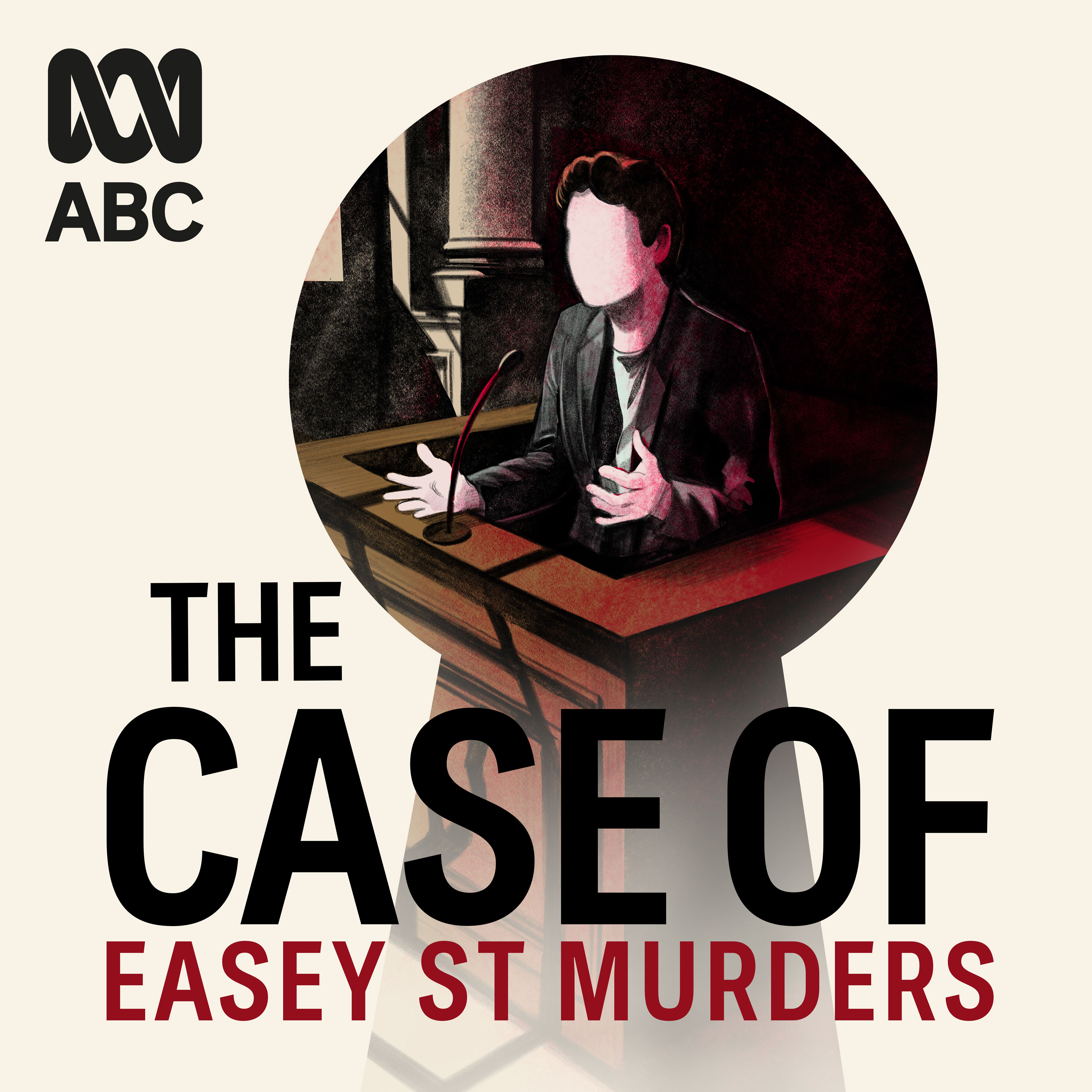
Speaker 1 Welcome to the case of the Easy Street Murders. Police said the killings were the worst they'd encountered.
Speaker 2 The crime baffled investigators and gripped the state.
Speaker 1 The Easy Street murders have always been a priority for Victoria Police.
Speaker 2 After a breakthrough arrest, Victoria Police are closer to solving one of the state's oldest cold cases.
Speaker 1 There is simply no expiry date on crimes that are as brutal as this.
Speaker 1 This is a murder that still has name recognition in Melbourne 50 years after it happened.
Speaker 1 It has gone unresolved for almost half a century, but this week we are seeing seeing the court process finally kick into gear. And taking us through it is ABC reporter Alexandra Alvaro.
Speaker 1 Alex, welcome to the case of.
Speaker 2 Thanks, Docie.
Speaker 1 This case is a bit of a deal in Melbourne, right? Every time I talk to someone about the fact that we're covering this, you know, there's this recognition and this conversation starts straight away.
Speaker 1 Because these murders are, you know, they're kind of a big deal in Melbourne, right?
Speaker 2
Yeah, it was incredibly defining. It still is an incredibly defining case.
It really rattled Melbourneians back then. These were two friends from very quiet families.
Speaker 2 And if you mention the words Easy Street to a Melburnian of a certain generation, they'll know exactly what you're talking about.
Speaker 2 People have not forgotten about Susan and Suzanne, and their families have been waiting for answers for a very long time.
Speaker 1 Yeah, absolutely. One of the things I'm keen to unpack in this episode as we start figuring out what's unfolding over the next couple of days is, you know, who Suzanne and Susan were.
Speaker 1 Also talk about, you know, your connection, how you heard about this case as well, because there's some really interesting detail in that as well.
Speaker 1 And we have the committal hearing for this starting tomorrow. So this is a slightly different process to a trial and we'll explain how.
Speaker 1 But also I want to talk a little bit about the hearing that you were kicked out of yesterday. So we won't miss that, don't worry.
Speaker 1 But first, yeah, we are here because two women were murdered in 1977. Who were they? Tell me about them.
Speaker 2 Suzanne Armstrong and Susan Bartlett. They were housemates, 27 and 28 years old.
Speaker 2 Susan Bartlett was an arts and crafts teacher at the local school and Suzanne Armstrong, a single mum to 16 month old baby boy.
Speaker 2 Gregory Armstrong, they were friends from Banala, a country town in northeast Victoria, and they lived in their home in Easy Street, a home that is still standing today.
Speaker 2
It's had a bit of a modern facelift. If you look at the ad on real estate, a very Collingwood facelift.
It's got polished concrete floors now.
Speaker 1 There's a real story of what's happening in that area as well. I mean, this was a working class area area when these two women were living there in 1977, you know, in their late 20s.
Speaker 1
And yeah, still there. People still go past.
And, you know, I go to yoga not far from where it is.
Speaker 1 What do we know about what happened in that house?
Speaker 2 So on the 13th of January 1977, the women were discovered dead in their share house. Both women had been stabbed multiple times.
Speaker 2 Police alleged that Suzanne Armstrong had been sexually assaulted, and police even recently have described these murders as a frenzied attack and it was the cries of Ms.
Speaker 2 Armstrong's baby boy Gregory that raised the alarm. He was found in his cot distressed, dehydrated, but otherwise well.
Speaker 1 Yeah, and, you know, Gregory in his cot being the person that kind of alerted the neighbours.
Speaker 1 And I mean, a lot of time had passed, we think, you know, it seemed to be a number of days before the bodies were discovered, right?
Speaker 2
Yeah, and those timelines are kind of muddy as well. Even on the charge sheets for Mr.
Coromblis, these are modern-day court documents.
Speaker 2 Police allege that the women were murdered sometime between the 10th and the 13th of January. So even today, that timeline is a little muddled.
Speaker 2 And police didn't have the same technology that they do now. So I think we're going to learn a lot about what policing was like and what life was like in general in the 1970s in Melbourne.
Speaker 1 Yeah, that again is going to be this really interesting insight as well because as you say, policing so different.
Speaker 1 And you know, thinking about charges that we would see today, you know, when police are investigating a crime, you know, the times are usually so specific.
Speaker 1 The point we're at with science now is they can track when someone may have died based on body temperature, all sorts of little bits and pieces.
Speaker 1 And yeah, for this case, for it to be a window,
Speaker 1
just I think, yeah, says a lot about the investigation and the policing at the time. So it'd be really interesting to hear how that unfolds.
And I mean, we do need to be very careful with details.
Speaker 1 We're going into a committal hearing. And am I right in thinking that this is a process where they're going to kind of test the evidence?
Speaker 1 They're going to work out what will and won't be allowed in front of a jury. So with that in mind, we need to be quite careful about what we talk about, right?
Speaker 2
Yeah, we do. So we know a lot of background about this case, but some of it might not be ever put in front of a jury.
So we have to be really careful at the moment.
Speaker 2 We're in that crucial sub-judicy period, especially as we get so so close to a trial if that trial does eventuate
Speaker 2 to not say anything that might not be put before a jury which might be seen as prejudicial yeah yeah yeah and you say a trial you know if a trial eventuates right like because this is a process to decide or part of a process to decide if a trial happens at all yeah so put very simply it's to figure out whether there's sufficient evidence for the accused to stand trial and that decision is made by a magistrate yeah and with all that in mind as i'm sure you've had this whole time,
Speaker 1 what do we know about the police investigation at the time that it unfolded, that it was being done in 1977?
Speaker 2 So in the initial investigation, there were no signs of forced entry into the home.
Speaker 2 There were two notes at the home, one from neighbours who had found the women's dog wandering around the street that was pinned to the front door.
Speaker 2 And then there was also another one from one of the women's boyfriends who had come looking for her. But until very recently, of course, no arrests had been made.
Speaker 1 Yeah, it's really, really interesting. And I mean, as you say, this case was kind of cold for a very long time.
Speaker 1 We saw a reward offered in 2017 on the 40th anniversary of the murders, but it seems to be kind of unclear if that's helped or if that's formed a part of any of this, right?
Speaker 2 Yeah, and that was a really emotional plea by police. They wheeled out Gail Armstrong, Suzanne Armstrong's sister, and they were offering a $1 million reward for information.
Speaker 2 And they said at the time that they had 130 persons of interest and they were ruling them out through DNA testing but then it went quiet again and it wasn't until September of 2024
Speaker 2 that almost out of nowhere police called a press conference and they said that they'd made an arrest in Italy and I was producing the 7 p.m.
Speaker 2 bulletin that day for Telly and I got to work just before the press conference and that was beamed back live into the newsroom and it was watched very intently by all of us journalists.
Speaker 2 And this was an announcement that police were really proud of. They said, you know, if you think that cold cases sit on a shelf gathering dust, you are wrong.
Speaker 1 Yeah. And I mean, we were talking about how big a story this is in Melbourne.
Speaker 1 What was it like for you on that day, you know, coming in and seeing this kind of what appeared to be a breakthrough in the case?
Speaker 2 It was very busy.
Speaker 2 We sent a reporter to that press conference, but it was all hands on deck, really.
Speaker 2 And as someone who was born in the 90s, I had never heard about this case before but I was so lucky that we had some old hands in the office and we were all trawling through this amazing archival vision that you know the ABC has this amazing library of just you know stacks and stacks of archives and it was so interesting trawling through it all all of this black and white vision seeing the house as it looked like at the time
Speaker 2 press conferences by police at that time. It was super interesting.
Speaker 1 Yeah, I mean, some of the audio that you hear in the montage at the start of the the case of the Easy Street murders is drawn from some of those stories at the time and so you get a sense of just the the time that's passed because of the the difference in the accents of the people that you're hearing.
Speaker 1 You know, so much has changed in this country and in Melbourne and in the inner north of Melbourne, specifically in Collingwood as well in that time, not least the way that everyone is talking.
Speaker 1 Now, the guy who was arrested, the guy that was extradited in relation to this, Perikrumblis, who is he?
Speaker 2 So Perikrumblis is a 66-year-old Greek Australian national.
Speaker 2
He was 17 at the time of the alleged murders. He was a teenager.
He was a student at the school that Susan Butlet taught at.
Speaker 2 And police say he's been living in Greece for several years.
Speaker 2 They say he's been a suspect for a number of years, but they weren't able to arrest him due to a statute of limitations in Greece which requires charges to be laid within 20 years of an alleged offence.
Speaker 2
So that time had obviously expired. So police had to wait until he left the country to make that arrest.
And so that opportunity finally presented itself when he left Athens for Rome.
Speaker 2 Victorian police put out an Interpol red notice and Italian police arrested him at the airport and from there he was extradited back to Australia.
Speaker 1 Yeah, and I mean Corumbulus was a man who was in his teens at the time of the murders. He's now in his late 60s, as you say.
Speaker 1 And he's going to be in the room for these hearings this week as well, right?
Speaker 2
Yeah, that's right. So Magistrate Brett Sonnet has told the court that it is his strong preference that Mr.
Corumblis is in the room.
Speaker 2 And from memory, I believe that was just due to tech issues that could arise from someone being on a video link.
Speaker 1
Right, okay, cool. Well, it looked very sensible.
It's good to know that Magistrate Sonnet is thinking of the logistics of this room. Exactly.
No, I appreciate that.
Speaker 1 But this has already been delayed as well i mean as we've been making the case of the thing i've learnt uh among you know an insight into the judicial process is that um time frames and schedules change regularly with court
Speaker 1 um this has already been delayed uh we were expecting this to actually start yesterday but we're now waiting until tomorrow till wednesday what's going on
Speaker 2 so mr korumblis's legal team requested a delay in proceedings uh his barrister told the court that he'd only just been briefed he He didn't have access to all the materials yet, and those materials included a sizable DNA file which spanned many, many years.
Speaker 2 The prosecution, as you can probably predict, wasn't as excited by this delay.
Speaker 2 They said, we want to start. There are witnesses who are of older age now, who have health issues.
Speaker 2 And the prosecution essentially said, we want to prioritise them.
Speaker 1
Yeah, right. And I mean, I say things have been delayed.
We did have, I had an administrative hearing yesterday that you you were kicked out of.
Speaker 1 Not because you're you, because you were just generally misbehaving.
Speaker 2 It wasn't personal.
Speaker 1 You weren't misbehaving like I would have been if I was there.
Speaker 1 You know, you were kicked out because it was closed to the media.
Speaker 1 Is there anything we can talk about with that or you can give us an insight into?
Speaker 2 So we've had a couple of brief hearings ahead of this committal. I'll share with you what we learned.
Speaker 2 So firstly, there was a public interest immunity claim by the legal teams representing the AFP and the Victorian Police Chief Commissioner.
Speaker 2 And essentially what that means is there's sensitive material or documents in relation to this case that they don't want disclosed to the Defence.
Speaker 2 And they're applying to keep it secret because they believe it would be detrimental to the public interest.
Speaker 2 So sometimes that information that government entities want to be kept secret can be around police methodology, maybe a covert operative.
Speaker 2 I'm not saying that that's relevant to this case in particular, but those are some examples. So we don't really really know what the material is at the heart of this claim.
Speaker 2 The defence made some arguments before the court was closed. They said they wanted disclosure around information that Victoria Police gave to Interpol.
Speaker 2
And they also want information about where a forensic sample was taken from, but there was no further detail provided on that. I can't illuminate that anymore.
It was really that vague.
Speaker 1
Yeah. And disclosure is just a fancy word, a fancy lawyer word for can we have that? Exactly.
Okay, great, just checking.
Speaker 1
And I desperately want to ask you what they were talking about, but I mean, I don't think you know. No, I don't.
And even if you did, we wouldn't be able to talk about it.
Speaker 1 So I'm sorry that we can't give you more detail on that.
Speaker 1 You know, we'll be keeping across whatever we're allowed in the room for.
Speaker 1 And again, you know, as with a normal trial, there are going to be things that we can't talk about during the proceedings that we may be able to talk about afterwards as well.
Speaker 1 So, you know, stay around because this might all come back a couple of months or maybe we'll need to wait for the end of the trial, but, you know, we'll keep all this. Don't worry.
Speaker 1 Alex, when we do get going,
Speaker 1 you know, the whole purpose of a committal hearing is to test the evidence against Mr. Crumblis.
Speaker 1 What do we know about that evidence? Do we have any idea what it is?
Speaker 2 Not really. All we really know at the moment is that there are 19 witnesses.
Speaker 2 We don't know much about what is set to be heard at the minute.
Speaker 1 Okay, yeah. And again, not a trial, so we won't have a jury in this room.
Speaker 1 We will just have have not a judge, because I've been caught out by this, we'll have a magistrate, because it's in the magistrate's court, and then we'll have the barristers as well watching over this.
Speaker 1 Do we get our usual kind of, you know, witness examination and then a cross-examination, you know, afterwards, or is this done a little bit differently?
Speaker 2
So it will look a little bit different to a trial. Sometimes the evidence might not be fleshed out in full.
Sometimes the evidence in chief is tendered as statements. It means we won't get to hear it.
Speaker 2
But at other times, the defence will want to test the evidence, and this is their opportunity to do so. And that's where we might hear some cross-examination.
So it could be difficult to follow.
Speaker 2 Obviously, the lawyers know what they're talking about amongst themselves.
Speaker 2 But because there's no jury in the room, it doesn't have to be set out cleanly for a jury to understand or for us to understand.
Speaker 1 Okay, great. So the normal confusion that I experienced when I'm in a courtroom will be amplified greatly.
Speaker 1 So what a joy
Speaker 1 for all of this.
Speaker 1 Who are we dealing with? I mean, you mentioned the magistrate, Brett Sonnet, but who are the lawyers on each side? Who's defending Perry Korumblis and who's prosecuting him?
Speaker 2 Well, the defence team, that's easy.
Speaker 2 His defence lawyer is Bill Dug, and it's a familiar name to both of us, Stocky, because we covered the Patterson trial. He was Aaron Patterson's defence lawyer.
Speaker 2 And then there's Barrister Dermott Dan Casey, another big name in the Melbourne legal sphere. He represented Greg Lynn, so he will be Perry Korumblis' advocate in the courtroom.
Speaker 2 I I don't really know much about the prosecution. Hopefully we'll find out a little bit more soon.
Speaker 2 And then in court, during these administrative hearings, there have also been legal teams representing the AFP Commissioner and the Victoria Police Chief Commissioner.
Speaker 1 Yeah, all right. Well, it's a bit of a crew.
Speaker 2 It's a full bar table.
Speaker 1
Yeah, great. Very busy.
Everyone packed around the table in the middle. I mean, we're going to be in the magistrates' court for this one.
Speaker 1 You know, we were in the Supreme Court for the trial of Aaron Patterson. I mean, does that room look broadly the same? Is it going to feel the same when I get into it tomorrow?
Speaker 2 Yeah. So obviously the magistrate will be sitting at the back of the room facing everybody else, the bar table and then the public gallery behind that.
Speaker 2 And Stocky, we were in Morewell together again covering the Patterson trial and the courtroom will look pretty similar to that.
Speaker 1
Okay, great, cool. At least I know what I'm getting myself into when I walk into this room tomorrow.
And yeah, look, we'll be back in your feed on Thursday.
Speaker 1 I mean, mean, do we know what's going to happen tomorrow? What we might be able to be talking about in that episode on Thursday?
Speaker 2 So there'll probably be openings from the prosecution's side. It'll give us a nice summary of what we're set to hear, hopefully, and what the prosecution's case is.
Speaker 2 And then it'll get into evidence as we were talking about that evidence-in-chief and cross-examination.
Speaker 2 Hopefully, we'll be able to make sense of it.
Speaker 1 Yeah, really looking forward to jumping into this with you, Alex. We'll be in the courtroom together tomorrow, back in the studio on Thursday for an episode.
Speaker 1
And if you've got any questions, please get in touch. The KSOV email exists.
It is there for you.
Speaker 1 It is one of my favorite parts of making this podcast is reading all the wonderful questions and thoughts that you send through.
Speaker 1 So if you have any questions about the case of the Easy Street murders, anything we've talked about in this episode, committal hearings, process, you know, what may or may not come up in this trial.
Speaker 1 I mean, if we can't talk about it, we can't talk about it.
Speaker 1 But please get in touch, theksov at abc.net.au because, yeah, we really want to answer as many of your questions as we can through this process to bring you along with us.
Speaker 1 And yeah, Alex, into court tomorrow and underway. Can't wait.
Speaker 1 The case of the Easy Street Murders is produced by ABC Audio Studios and ABC News. It's presented by Alexandra Alvaro and myself, Stephen Stockwell.
Speaker 1 Our executive producer is Claire Rawlinson, and this episode was produced on the land of the Rundry people.