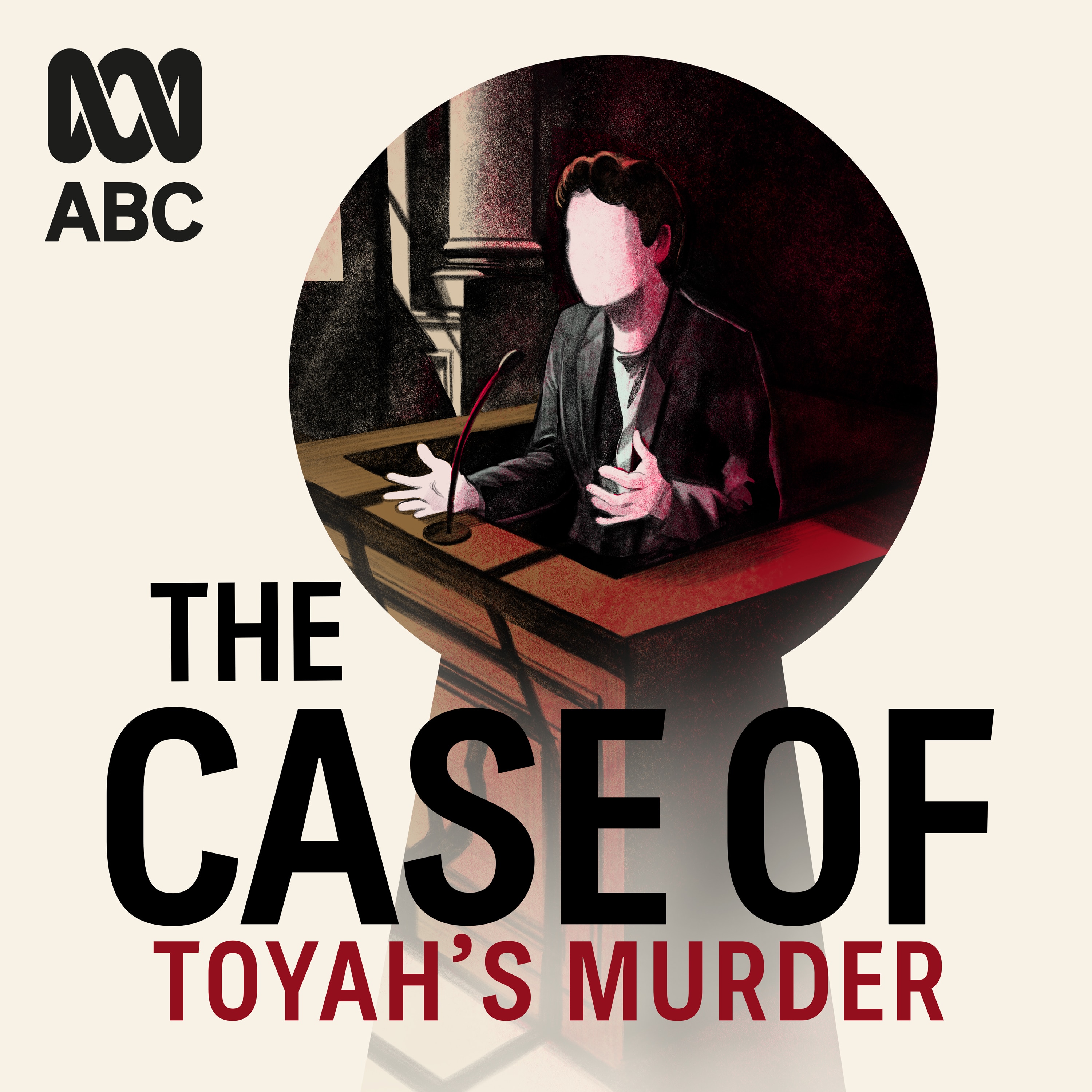
Toyah's Murder: The jury's excursion to Wangetti Beach
The jury in the murder trial of Rajwinder Singh is walking up Wangetti Beach, where Toyah Cordingley's body was found in 2018. In this special episode we take you there too.
With waves crashing in the background, Chris Testa speaks to Stephen Stockwell from the beach, explaining what the jury saw, how the excursion worked and whether the robes and wigs of the courtroom made the journey too.
If you have any questions you'd like Chris and Stocky to answer in future episodes, please email thecaseof@abc.net.au.
The Case Of is the follow-up to the hit podcast Mushroom Case Daily, and all episodes of that show will remain available in the back catalogue of The Case Of.
Press play and read along
Transcript
Speaker 1
In Canada, you see his work everywhere. An original by Novell Morrison.
Priceless. But...
It became clear that there were more and more fakes. A story that impacts Indigenous artists around the world.
Speaker 1
How has nobody ever looked into this? Forgeries, fakes, and fortunes to be made. An art fraud of epic proportions.
I either have to let this go or try to find out what the truth is.
Speaker 1
Binge the full series now on the ABC Listen app or weekly wherever you get your podcasts. ABC Listen.
Podcasts, radio, news, music and more.
Speaker 1
The jury in Rejwinder Singh's murder trial is walking along the sand where Toya Cordingley's body was found. Court is in session, but on the beach.
I'm Stephen Stockwell.
Speaker 1
Welcome to the case of Toya's murder. The body of Toya Cordingley was found at Wongeti Beach, north of Cairns.
Her face adorns billboards and stickers across the region.
Speaker 1 Searching for clues in the murder of the 24-year-old pharmacy worker alongside the idyllic and isolated beaches. This should not happen to a young woman out there walking her dog on a Sunday.
Speaker 1 The death of Toya Cordingley is tied so closely to Cairns and the places around it.
Speaker 1 So much so that the jury in the trial of Raj Winder Singh is being taken along the beach where Toy Accordingly was killed, Wongetty Beach.
Speaker 1 They're there right now and these sort of excursions are not completely unprecedented in trials but they are unusual.
Speaker 1 So we wanted to take this opportunity to take you with the jury to explain what they're seeing and what they're doing as they leave court. And Chris Tester is on the beach with them at the moment.
Speaker 1 Chris, what's it like out there?
Speaker 2 It's a warm day, not as warm as it can get here in far north Queensland, but certainly a warm day to be walking four kilometres up Wongetty Beach as the jury is doing today.
Speaker 2
And look, it's quite a long, expansive beach. You really have to squint your eyes to see from one end to the other.
This walk started in the southern car park.
Speaker 2 And as we've heard, there's a southern and a northern car park that feature in this trial.
Speaker 2 And I guess it's that mixture of seclusion and feeling connected to the surroundings, because on the one hand, you can stand here and just look at these tall rainforested mountains that surround us.
Speaker 2 And then on the other hand, you can faintly hear the traffic going by because, of course, this beach runs alongside the main highway between Cairns and Port Douglas.
Speaker 1 Now, as I mentioned, this isn't a completely unprecedented part of a trial, this public viewing, but yeah, it doesn't happen all the time.
Speaker 1 So we wanted to take you to the beach to record while court is in session, which is something that we are not allowed to do when it is inside a courtroom.
Speaker 1 Chris, can you explain a bit about what the jury is looking at on this walk?
Speaker 2 Well, the jury's got a few stations that they're being shown, and it's a bit tricky to describe exactly what they're looking at because we have to keep quite a far distance from them, and there's good reasons for that.
Speaker 2 Justice Lincoln Crowley has ordered that the media be cordoned back, and that's being managed by the police because it's really important that the jury has an opportunity to view
Speaker 2 the spots along this beach, I guess, in the privacy and
Speaker 2 protection from any outside interference. So, there are some courtroom rules that do make their way down here to the beach as well, but essentially they're being taken to a few different stations.
Speaker 2 The first is the location where Toy Accordingly's car was parked in the southern car park of Wongetty Beach, not far from the Captain Cook Highway.
Speaker 2 We've heard during this trial that that car park is where her boyfriend Marco Hardenreich spotted the car unattended as he was driving back to Cairns from Port Douglas, where he'd been hiking with his friend Joel Hewman that day and was distressed about losing his dog.
Speaker 2 So the jury can see up close and personal, I guess, the distance where the car was parked in relation to that main highway. The jury's then made its way down onto the sand and walking up the beach.
Speaker 2 Remember, it's a walk of more than one kilometre.
Speaker 2 And the first spot where they stop is actually beneath the tree, which has now fallen, the spot where Troy accordingly stopped to rest that morning when he was looking for his daughter and noticed that unusual looking mound.
Speaker 2 And you might recall the court heard that he kneeled down and scraped away some of the sand from that mound and reeled back as he realised that he'd found a foot,
Speaker 2 which later proved to be the foot of his daughter Toy Accordingly.
Speaker 2 Not too far away, just some meters inland from the scrub, was the tree where Toy Accordingly's dog Indy, the Tibetan mastiff husky cross, was found
Speaker 2 tied really tightly. So the jury gets an opportunity to look at these locations and I guess see with their own eyes some of the distances involved and the positioning.
Speaker 2 The idea is that it helps them kind of picture and understand the context around the evidence that they're going to be hearing at the trial.
Speaker 1 Yeah, and I mean, we can hear the waves crashing in the background, Chris, as you talk to us from the sand of Wongetty Beach. How's the jury know where these various things are?
Speaker 1 Is this all sort of marked out and signed as they're walking up and down the beach?
Speaker 2 It is, that's right.
Speaker 2 And they would have seen probably as soon as they pulled into the car park a lot of witches' hats because that's what the police and the courts have used to mark out some of these these locations i'm just going to seek a bit of shelter because uh some raindrops have actually just started falling here as uh as we make our way along wongetty beach um so each each location of significance i guess that the court and the uh and and the council want to draw the jurors attention to is marked out with these witches hats um there are some witches hats where uh toya's body was allegedly found and there are witches hats where the dog was tied up to the tree and there is actually one spot further along that the jury is being taken to as well which is is a culvert at a place called Rifle Range Road, a bit further up the northern end of Wongetty Beach.
Speaker 2 We haven't yet heard too much in court about the significance of that particular location.
Speaker 1 Yeah, right. It'd be interesting to see kind of, yeah, what we hear about that location as the trial of Rojwinder Singh continues.
Speaker 1 And I mean, Chris, usually these things are heard in court, or usually, you know, the legal arguments and all that are heard in court. How did all this work today?
Speaker 1 How's the jury, you know, made their way to Wongetty Beach?
Speaker 2 Well, I guess each day of a trial, the jury is given a time that they need to be at court for.
Speaker 2 Only this time, instead of going into the jury room and waiting to be called into the courtroom, they're actually put on a bus and driven out here from Cairns.
Speaker 2
It's probably about a, you know, roughly a 40-minute drive from Cairns, depending on the traffic. So they've pulled in.
Counsel and the judge were already here.
Speaker 2 There is a bit of a police presence to ensure that the location is secure and that there's going to be no interference from any members of the public or or anything like that.
Speaker 2 And they're kind of escorted in a way.
Speaker 2 So there is a degree of protection around the jury and the court process, making sure that, yeah, there's no outside interference, both counsel, defense, and prosecution, you know, overseeing what's going on.
Speaker 2 So it is a very well-protected operation.
Speaker 1 Yeah. And I mean, how's this running in kind of, I guess, a procedural sense?
Speaker 1 Because, I mean, usually we would have the, you know, examination and then the cross-examination of witnesses is, I can't imagine that's happening here what are they being you know how's the counsel involved are they saying anything or is it simply just an observational process
Speaker 2 yeah look it's it's not considered evidence in the trial it's more contextual information around um you know to help them understand all of the locations and things that they they're hearing about in these days sitting in the courtroom so we heard some instructions from justice lincoln crowley that was given to the jury about this viewing on friday afternoon before coming here um he essentially reiterated that look it's not evidence in and of itself, but it's to help you understand.
Speaker 2
Counsel, follow along. Like I said before, we haven't been able to follow with them for very good reasons.
So I can't tell you exactly what is being said to the jury by both sides.
Speaker 2 However, there are no witnesses as such, so there are no questions to be asked.
Speaker 2 Any conversation would merely be around pointing things out, essentially. That's the tree where you've heard that the dog was tied up, for instance.
Speaker 1 Yeah. I mean, you might not be able to hear them, but you can see them.
Speaker 1 Are the various counsel, is Justice Crowley, are they in their robes? Are they wearing their wigs for this excursion or are they in more casual attire?
Speaker 2 Yeah, shorts and joggers are the order of the day.
Speaker 2 Jurors were warned before coming here, or they were warned at the onset of the trial, be prepared for a four-kilometre walk. You know, have a think about physically whether you can do that.
Speaker 2 I can tell you it's a bit, especially in the tropical heat of the day, it can be a bit slow going. The rain might bring some relief, actually.
Speaker 2 But everyone was also warned to bring their most appropriate beach attire because they might get their feet wet, wet and in fact probably will. A couple of creeks along the way.
Speaker 2 So shorts and joggers, a few people wearing crocs. Yeah, it's a bit more like Far North Queensland in November.
Speaker 1 Yeah, fair enough. I mean, look, crocs on a North Queensland beach are very familiar, both types, I imagine.
Speaker 1 I mean, Chris, this is a public beach that you're walking up at the moment on Getty Beach.
Speaker 1 This is a beach that is frequented from, you know, people from both Port Douglas and Cairns in between both of those towns.
Speaker 1 I mean, are there many members of the public around, like sticky beaking and the like?
Speaker 2 No, look,
Speaker 2 there was a non-publication order from the courts preventing us from mentioning before the fact that this viewing was happening today.
Speaker 2 We could say in general terms that the jury would be taken to the beach, but we couldn't say when that would happen.
Speaker 2 And that was, of course, all part of the courts' protection of this outdoor courtroom environment, ensuring there's no outside interference.
Speaker 2 And as I mentioned before, there are some police stationed at the entrance, the car park, essentially making sure that everyone who is here needs to be here.
Speaker 2 A helicopter, a police helicopter, actually flew over the beach beforehand, just a bit of a security check as well.
Speaker 2 So it is a public beach, but it is also a very secure environment at this point in time.
Speaker 1 Yeah, yeah, yeah. And I mean, I do apologise to the case of listeners for us not letting you know that this episode was going to be coming your way.
Speaker 1
We couldn't mention that the jury would be heading to the beach. We knew they would be.
We could tell you they would be, but we just couldn't give that timing.
Speaker 1 So that's why this one's appeared in your feed without warning on a Monday afternoon.
Speaker 1 Chris, what happens for the rest of the day? Jury heading back, hearing more evidence this afternoon?
Speaker 2 Well, Justice Lincoln Corrali gave the jury an option late last week.
Speaker 2 He asked them to consider whether they would feel up to returning back into the courtroom to hear from some more witnesses in the afternoon session of today.
Speaker 2 They replied that they would like to see how they felt after the walk and let him know. So we're still waiting for that
Speaker 2 answer to come back.
Speaker 2 Might depend on
Speaker 2
how each juror is feeling. Remember, there are 15 of them, 12 jurors and three in reserve.
They all need to be,
Speaker 2 you know, it's one in all in cases like this. So we'll wait and see whether they're feeling up to it after a four kilometre walk along a tropical beach in far north Queensland in November.
Speaker 1 Chris, thank you so much for joining us from Wongeti Beach as the jury is walking up there, taking us
Speaker 1 into this courtroom as it is happening outside of court in Cairns, looking at the locations, the key locations in the trial of Rajwinda Singh relating to Toy Cordingley's death.
Speaker 1
Chris, hopefully the rain has stopped. You're able to get somewhere dry.
But yeah, thank you for taking us there.
Speaker 2 Thanks, Stoki.
Speaker 1 We'll be back in your feed tomorrow with our normal episode, be recording with Chris in the morning.
Speaker 1 So anything happens this afternoon, we'll have all the details of that for you, as well as everything from Thursday and Friday last week as well. If you've got any questions, please get in touch.
Speaker 1
Email the case of at abc.net.au. Surely you'll have questions about the jury leaving the courtroom and walking up this beach.
So get in touch.
Speaker 1 We'll do our best to answer them tomorrow in our other episodes.
Speaker 1 and also don't forget to jump onto the ABC listen app it's the best place to listen to the case of and we drop little episodes like this that you might not be expecting they appear there before they appear anywhere else
Speaker 1 The Case of is produced by ABC Audio Studios and ABC News. This episode was reported by Chris Tester and presented by me, Stephen Stockwell.
Speaker 1 Our executive producer is Claire Rawlinson and supervising producer for this episode is Yasmin Parry. This episode was produced on the land of the Jabagai and Wurundjeri people.