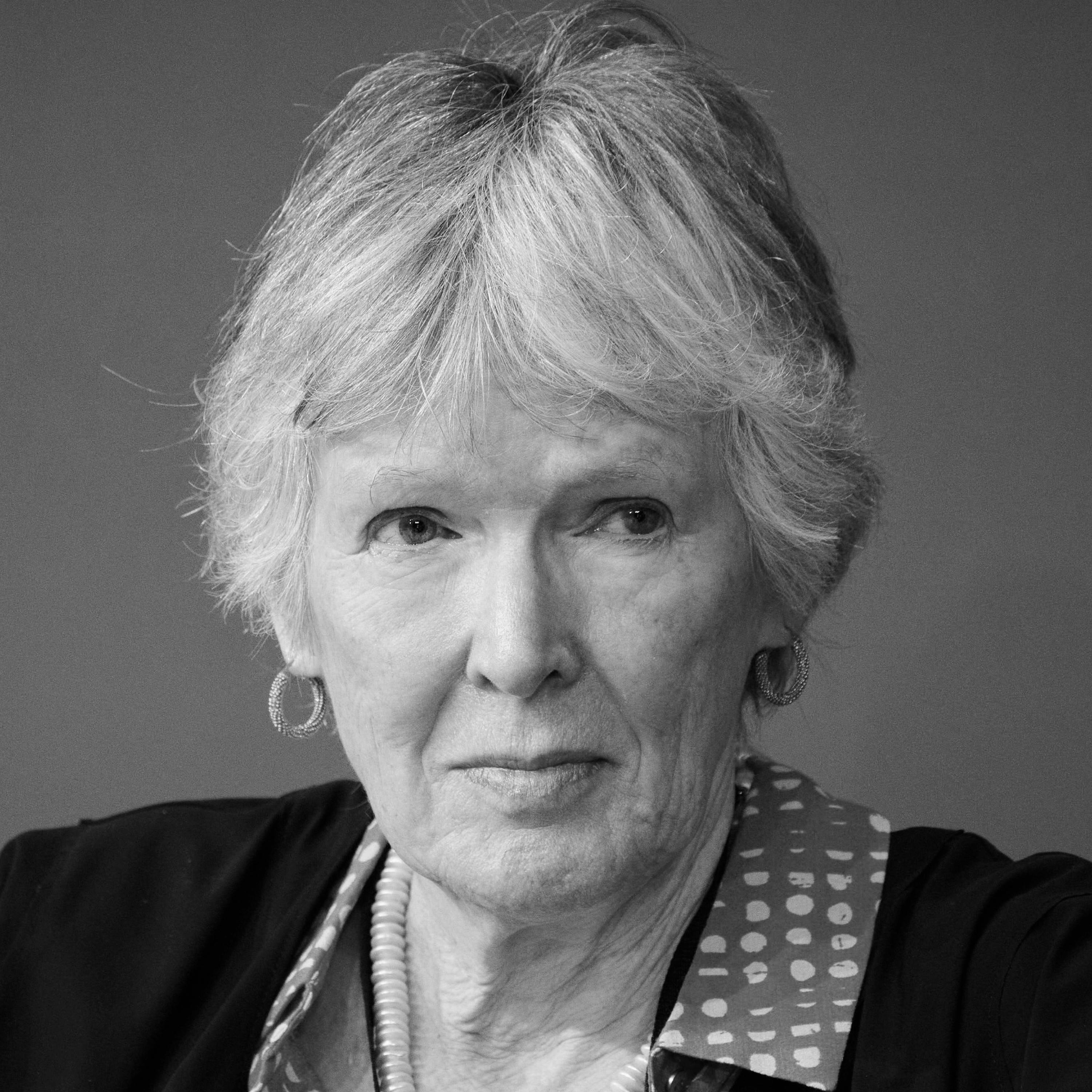
Why Has Comedy Become So Right-Wing?
Then David is joined by his Atlantic colleague Helen Lewis to talk about the proliferation and importance of right-wing “comedy” podcasts. They discuss why some comedians seem to go right-wing and why a growing audience is drawn to their uninformed rhetoric. Lewis also addresses the complicity that comedians and their audience share in the rise of MAGA.
Finally, David closes the podcast with a discussion on Edith Wharton’s Autres Temps and how it speaks to moral panics, social pariahs, and so-called cancel culture.
Sign up for David Frum’s newsletter alert.
Get more from your favorite Atlantic voices when you subscribe. You’ll enjoy unlimited access to Pulitzer-winning journalism, from clear-eyed analysis and insight on breaking news to fascinating explorations of our world. Atlantic subscribers also get access to exclusive subscriber audio in Apple Podcasts. Subscribe today at TheAtlantic.com/Listener.
Learn more about your ad choices. Visit megaphone.fm/adchoices
Press play and read along
Transcript
When was the last time you indulged your desires, felt true Range Rover refinement? The last time you felt total serenity, total confidence, no matter the terrain? Limitless, effortless, peerless.
How far can Range Rover take you? Range Rover, designed for distinction.
Tu mereces dis frutartus favoritos por menos. Ja sel na Big Mac, Mick Nuggets.
O un sausage egg and cheese, make cradles. Pidetuantojo como un mio y ya hora.
Oof, nava comodarto un gustaso, por tam poco. The extra value meals are regressed.
Gana por la mañana con el extra value meal, sausage, mac, muffin with egg, hash browns, yun cafe cadiente pequeño por solo 6 dolaris. Ba-a-ba-ba-ba.
Preses y participación pueden varía.
Loss preces de la promomión pueden serminors que lo de las comidas.
Hello, and welcome to another episode of the David Fromm Show. I'm David Fromm, a staff writer at The Atlantic.
My guest this week will be my Atlantic colleague, Helen Lewis, and we'll be talking about comedy and politics and how the two combine.
My book this week will be not a book, but a short story, Autretemp by Edith Wharton.
Before I turn to either, I'm going to anticipate something that will be said in the dialogue with Helen Lewis, where she talked about one of our challenges.
in the face of the way modern media works is to keep rediscovering old truths. And so I want to open this show this week by talking about an old truth.
If you've been reading in the news, you may seen that the NATO alliance is under even more intense pressure than ever before.
The Russians are demanding from the Trump administration not only that Ukraine not be invited into NATO, but that NATO actually step back.
And the Trump administration is very hostile to NATO, the vice president even more than the president. Trump has often speculated about quitting NATO entirely.
And the new national security strategy published by the Trump administration is seething with hostility to Europe and NATO allies.
So I thought today I would talk about NATO, the North Atlantic Treaty Organization, and a little bit of rediscovering the old truths. How did it happen? Why was it a good idea? What's it for?
Why do we care? Now, let me recapitulate a little bit some history that probably we all know somewhere in our brains, but have lost sight of.
At the end of World War II, Europe was in ruins and the Soviet Union was the dominant military power on the continent of Europe and in the Middle East and Asia too, was menacing, threatening, and aggressing against the shattered remains of a war-torn continent.
Americans realized they had two urgent tasks if they were to ever enjoy any peace, security, and prosperity for themselves.
They had to rebuild the economy of their defeated enemies, Germany and Japan. They had to rebuild the larger economies of Europe and Northwest Asia.
And they had to provide some measure of security.
Because the last thing anybody wanted was to get Europe and Northwest Asia back into the game of arms racing for security, army against army.
America would provide security for all, guarantee security for all, prevent the rise of independent security threats within these zones, and would use peace as a way to bring prosperity and use prosperity as a way to secure peace.
And so NATO came into being. It was formally declared in April of 1949, and originally it had 12 members.
Belgium, Canada, Denmark, France, Iceland, Italy, Luxembourg, Netherlands, Norway, Portugal, the United Kingdom, and the United States.
This group pledged that an attack by any one of them would be an attack on all of them. Now, this was a very unequal pledge.
Obviously, I mean,
if the United States were attacked, it would be nice to have Luxembourg by your side. Everyone would appreciate that, but it wouldn't help.
But if Luxembourg were attacked, it would make a great deal of difference to have the United States by its side.
So, although it was a mutual defensive pledge of mutual aid, because in 1949 the United States was the only nuclear power of the group, the United Kingdom would soon follow.
But in 1949, the United States was the only one. Ultimately, NATO was a one-way military guarantee.
American power, including American nuclear weapons, would protect the other members of the alliance.
NATO gradually grew. And along the way it grew, it took on new forms.
In 1952, Greece and Turkey, neither of them on the Atlantic Ocean, joined. And NATO then sent a message.
Greece and Turkey had been historic enemies.
And NATO now became an institution that said, not only are we defending our members against the threat from the Soviet Union, but we're also pledging that we're going to impose peace and security on our members, that Greece and Turkey are coming in together to signal that they will end.
They may not love each other any better than they used to do, but there will be no more hostilities between them.
And indeed, except for a brief clash in 1974, NATO has done a pretty good job of keeping the peace between Greece and Turkey with so many historical grievances between those two countries.
In 1955, West Germany joined. And NATO was saying that the enormous strength of West Germany, indispensable to European
security, but also a potential threat to people who remembered fighting the Germans in two world wars, West Germany would come in and join a collective club, and that NATO would become a way for the strength of some to become a resource and a source of security for others and not a threat to them.
You didn't have to fear German power if West Germany belonged to the same alliance that was guaranteed by the United States. In 1982, Spain joined.
Spain had been a dictatorship since the Spanish Civil War until the middle 1970s. Then Spain made a transition to democracy.
When NATO was founded in 1949, there was one non-democracy among the 12 members. That was Portugal.
But from then on, NATO said,
it became a rule, you can't be a NATO member unless you're a democracy. And Spain had to wait until it democratized to become a NATO member, which it did in 1982.
NATO achieved its greatest triumph in 1989 with the end of communism in Central Europe and the beginnings of the peaceful reunification of the continent.
After 1991 and the end of the Soviet Union and the breakup of the the Soviet Union into its constituent republics, Russia and others, NATO became a way to secure the loose nuclear material to make sure that there were no bombs that went off, but that the Soviet Union had break up, I think it had something like 50,000 nuclear warheads, very poorly secured, and many scientists who had nuclear know-how that could be sold.
NATO became the instrument by which the warheads were secured. Many of them were converted into peaceful electric power.
And the scientists were provided with gainful employment so they would not be tempted to sell their skills to some bad actor.
In 1999, the Czech Republic, Hungary, and Poland joined NATO, as if to say that Europe was no longer accepting the border imposed on it by the Stalinist division of Europe at the end of World War II, that Central Europe would join Europe and would be protected by Europe in the same way that other European democracies were.
In 2004, NATO got its largest expansion, Bulgaria, and then the three Romania and the three Slovakian Slovenia and the three Baltic republics, Estonia, Latvia, and Lithuania.
Now, this last, the joining of the Baltic republics, is now a big mega talking point that Newt Gingrich and Donald Trump will say it was so terrible that we allowed Estonia to join.
They forget that in 1994, the biggest advocate of those countries joining was Newt Gingrich.
In fact, letting Estonia, Latvia, and Lithuania into NATO was point number six in the 1994 Republican contract with America.
They listed 10 things they wanted Bill Clinton to do, and number six was admit Estonia, Latvia, and Lithuania into NATO. Forgotten now, but important to remember.
More members joined Albania and Croatia, Montenegro, and North Macedonia, and in 2022, Finland and Sweden.
The record of NATO is that once you're in NATO, you are safe, home-free. You no longer have to fear the Russians.
Those Russian neighbors, Georgia and Ukraine, who are not admitted to NATO, were both attacked.
The Georgians by Russia in 2008, Ukraine first in 2014 when the Russians took Crimea, and then again in 2022, when they made their lunge at Kiev and tried to take over the whole country.
There are people who want to forget all this history and forget the incredible achievements. And they're usually motivated by two things.
I get it that the leaders of Russia and China prefer to see their neighbors isolated, weak, and defenseless.
And I get it too, unfortunately, that there are people in the United States, in allied countries, and certainly...
posing as Americans and Europeans on social media who want the Russians and Chinese to have what they want, isolated, defenseless, vulnerable, weak neighbors.
But I think there's something that is going on that is much more, much less obvious, much less rational, and much more sinister.
And that is there are people in American life, American politicians, including at the highest levels of this country, who say, one of the things that happened when the United States became committed to defending freedom abroad after World War II was it became committed to reforming itself at home.
During the civil rights movement, it was again and again an argument for why the United States had to end racial segregation inside the United States.
How could the United States champion democracy abroad, which all Americans in 1962 wanted to do, if it defended segregation and the denial of the vote based on race at home?
And so the need to defend democracy abroad, the shared consensus that the United States should do that, led to social changes at home that made America a freer and more equal society.
Well, supposing you want to undo those changes.
Supposing you think the United States is on the wrong track and it needs to be more authoritarian, more reactionary, more hierarchical, more oppressive at home.
Well, obviously then, just as the desire to project and protect democracy abroad led to social changes at home, the undoing of those social changes at home requires withdrawal from those commitments abroad.
And so it's not an accident that isolationism and reaction and authoritarianism go together. They're the same project.
And when people are attacking America's obligations, both through NATO to European allies and through other treaty agreements, Japan's not a member of NATO, but there's a NATO-like treaty with Japan.
Australia is not a NATO member, but there's not a NATO-like treaty with Australia, DATO, New Zealand.
The United States is drawing closer and closer to countries in Southeast Asia, and many are contemplating some kind of collective security agreement for that region too.
But the people who are opposing all of this, they're not just saying, I wish China would rule the world. I wish Russia could dominate its neighbors, although some of them think that.
What they're saying is, I don't like the kind of country America is going to have to be if it's going to be a force for freedom in the world.
I want a different America, a more brutish America, a more reactionary America, more authoritarian America, more racist, more sexist, more corrupt America.
And in order to achieve that end, I need to unravel the foreign policy that is pressing us to do more and do better.
So when you defend NATO, you're not just defending the peace and security of the world, although you are.
And when you speak for NATO, you're not just speaking for the ideals of collective security that have made this planet such a better place since 1945 than it was before 1945.
You are upholding and vindicating the best American ideals for Americans here at home. And those who are on the other side are trying to unravel the best American ideals for Americans here at home.
And now my dialogue with Helen Lewis. But first, a quick break.
Want to take your gallery experience to the next level?
Hauser and Worth On Film brings you behind the scenes with artists like Rita Ackerman, George Kondo, Amy Sherrold, and Henry Taylor, offering an intimate look into their creative processes.
Step into into the studio and explore the lives and work of groundbreaking figures like Philip Gustin, Louise Bourgeois, and Marcel Duchamp.
Plus, preview upcoming exhibitions and hear from influential voices like Thelma Golden and Legacy Russell. To watch, visit youtube.com backslash adhauserworth and subscribe today.
Starting your business isn't just about opening the doors, it's keeping the dream you built secure. With New York Life, you get the financial guidance to make it real.
Start today at nyl.com.
Helen Lewis is the author of two books, Difficult Women, published in 2020, and The Genius Myth, published in 2025.
A graduate of Oxford, a past deputy editor of The New Statesman, she joined the staff of The Atlantic in 2019, where we are all very proud and pleased to call her a colleague.
Earlier this year, she attended the Riyadh Comedy Festival, and that is going to be the jumping off point for our discussion today. Helen, welcome to the David Fromm Show.
Thank you very much for having me. So, okay, Riyadh.
Yes, Riyadh.
It is probably more exotic in my imagination than it is in real life. I think it was more exotic about 20 years ago.
I talked to our colleague Graham Wood, who obviously interviewed Mohammed bin Salman, the crown prince for the magazine, a couple of years ago. And he's someone who's been to the region a lot.
And, you know, he talked about the speed of the transformation. So, you know, when I was there,
yeah, it felt very, it felt very particular, but it felt very
different in ways I wasn't expecting. So I was expecting, for example, to be for it to be a very conservative Islamic country.
So the standard Saudi dress for men is a long white robe and a headdress.
The standard Saudi dress for women is
either a full face veil or a hijab and covering like all of your body in an abaya. But the thing I wasn't quite expecting was that obviously there's been a huge influx of migrant workers.
So, actually, what you also have is a class of Indian, Bangladeshi, Pakistani, perhaps men who are dressed in what you think of as kind of Western dress, but are all of a particular age and obviously all male, they're to work on the huge amount of construction projects that are happening.
And that really underlined to me the fact that this is a country that is trying to do something, it's trying to speed run modernity, one of my interviewees put it. Yeah.
Did you see unveiled women?
Some very occasionally. I mean, so, okay, so you see tourists who are unveiled, who are moving around.
And of course, one of the reforms by Mohammed bin Salman is that he's stepped down the religious police. So you don't get hassled.
I didn't get hassled. I walked around.
You know, I initially turned up with everything just on the basis that you want to be as you know, respectful and discreet as possible when you're reporting.
And then I realized it wasn't really necessary. And very occasionally, you do see a Saudi woman with her face, although not her hair, usually uncovered.
And at the comedy festival, was alcohol served?
No, no,
that's the one thing that they, well, I mean, I'm sure it happens privately, but that's the one big
Sharia taboo that is not being bust open publicly. Along with, of course, famously the two rules for comics performing at the festival, right?
One, we don't criticize religion, although actually Louis C.K. had a few pops at Catholicism.
So what we really mean is we don't criticize Islam. And two, we don't criticize the royal family.
Although I noticed that my royal family came in for some stick. That's apparently fine.
Yes, no, no, that remember the old Cold War joke about the Americans saying to the Soviet, I can criticize the President of the United States and nothing happens to me.
And the Soviet replies, I too can criticize the President of the United States and nothing happens to me. So the same way.
Although the ban on
the lopsidedness of which religions you can criticize applies outside Saudi Arabia as well as inside. Were the comedians as funny without alcohol?
It's a very good question. I mean, I don't drink very much anyway, but I do think there is a reason why comedy clubs have a two-drink minimum.
And it's not just to get their profits up, right?
It's to get everybody kind of loosened up. The atmosphere was odd.
I mean, it was held in the box arena in Riyadh, which is used for, it's an in-the-round.
So, you know, like a wrestling arena, essentially, 360-degree audience. And there was a kind of,
it was a bit like people were just excited to be there that it was happening, which I guess if you are, imagine being a 21-year-old. in Saudi today.
And you can, you know, this huge burst of Western culture is coming at you from the outside. You can probably get it through through a VPN.
And now, for the first time in your country, you're going to be able to hear a stand-up comedian, even when you can remember from your childhood what Saudi Arabia was like.
So, there was that kind of people were laughing. Louis C.K.
Set was one of the most morbid comedy sets I've ever heard. It was all about death and decay.
So, I felt that was a real challenge if you turned up your big night out in Riyadh. So, but this is a large venue.
Yeah, several hundred people. So, it doesn't have that kind of intimate feel that we sometimes associate with comedy clubs in New York or Los Angeles.
Right, and it could not have been less underground. I mean, Andrew Maxwell, who performed there, described the fact that he and Louis C.K.
went to a Riyadh comedy club the night before and they listened to comics performing. But this was more like
a kind of classic arena show, more like Madison Square Garden type feeling, which you've always got a slightly odd feeling in those shows, right?
You know, it's people who've come for a kind of big night out rather than people who are massive comedy fans, basically. Were women allowed to perform?
I mean, this is the funny thing. There were a couple of women who did perform at the festival, not very many, but then, you know, you could say that about American comedy clubs, to be quite honest.
You know,
I looked into the gender ratio of guests on Joe Rogan's show, and it's less than one in 10 of them were women.
Comedy in the podcasting circuit that spun off comedy, whether that's in Saudi, you know, the Saudi Arabian gender ratio, actually not that different to what you might see in Austin or Los Angeles.
Well, that's actually the main thing I wanted to talk to you you about. So I am not a big comedy consumer.
I get most of my comedy insights at secondhand from members of my family who like it more than I do.
It isn't that I dislike wit and humor, but I don't like the sort of the constraint of it and the idea that
I'm a consumer of your wit, which may or may not be witty.
So it's not been my thing, but I'm interested in it as a social artifact because Believe it or not, not so long ago, it wasn't a big deal in North American culture, and suddenly it is.
The idea of of filling a stadium that would, I would think of as a music venue with consumers of spoken word performance like this, that would not very often have happened when I was younger.
Oh, right. Yeah, I think I'm, it didn't seem that strange to me because I grew up on people already doing comedy tours.
But you're right.
It was more when I grew up, more people touring kind of regional venues rather than some of the kind of mega, mega.
I mean, one of the reasons that this has happened is that Netflix, for example, has a whole strand called Netflix is a joke that they pour huge amounts of money into.
You know, they had Dave Chappelle performing for that.
Just the amount of money, I think particularly as, you know, DVD sales have created and everything's gone to streaming, live performance has become more and more important to people.
So that part of that does account for the rise of, I think, comedy in the culture. And the second thing is the growth of this kind of alternative anti-woke.
I know that's a phrase that will probably make some people want to claw their eyeballs out. But, you know, the kind of anti-woke comedy scene that has formed in Austin around Joe Rogan.
Yeah, that's, I think, the main thing I want to talk to you about today is what
we have. Something has happened, and it's hard to come up with a vocabulary for it.
But I used to be a quite frequent guest on the Bill Maher show. I haven't been on for a while.
And I don't have the dates at hand, but I'm guessing I would have started in the late double zeros and appeared for the last time sometime before COVID.
And one of the things I became aware of over time was that I had begun to be invited on the show as sort of a token Republican.
And by the time my appearances on the show came to an end, I was noticing that Bill Maher was frequently much more right-wing than I was.
And now, partly I had shifted in some of my political views, but so had he. And I don't think he was shifting alone.
So whatever we, and maybe right-wing is not the correct word because Maher remains very forceful in his opposition to President Trump.
But I noticed with many of the comedians, and maybe COVID was the decisive moment, or maybe wokeness, whatever we mean by that, something happened in the second half of the 2010s where suddenly comedy became something you would criticize, you would categorize as of the right rather than of the dissident or the left or the progressive or some other form.
Yeah, I've been thinking about this because I think my career probably tracks that change exactly.
You know, when I first started writing in the 2000s, that was the time in which your view of Republicans was they were
family rights conservatives.
You know, it was kind of finger-wagging, very churchy guys who were telling you not, you know, that gays were going to hell and, you know, and women should kind of stay at home.
And there was a sense of that that, you know, I mean, I'm not saying that, I mean, this is very offensive to you, as somebody who was around the Republican Party at this time.
I'm not saying that was a true and accurate depiction. I'm saying that's what it felt like to somebody who was 18, 20 at that time, right?
That the Democrats were the cool party of, you know, Bill Clinton and maybe smoked a little pot, whereas the Republicans were very straight-laced.
You know, they were the party of kind of eating your greens and starching your shirt.
And then what's kind of flipped, and I think, you know, what we can discuss what we mean by wokeness, was that we went through a period
where the kind of cultural dominance of the left meant that you had this kind of hyper-fixation on kind of purity
and
people getting cancelled, which I know is still something that people will deny ever happened. But the example I would give is maybe the example of this.
Shane Gillis is a comedian.
Incredibly funny, just naturally very, very funny guy. And does some extremely good material about what it's like to get a bit older and start kind of complaining and grumbling about stuff.
He says he has this worry about like early-onset republicanism, where you get very annoyed about the fact there's a black guy in every advert.
But so he's, you know, he's not coming from a particularly right-wing point of view.
But when he got hired for the cast of Saturday Night Live back in, I think, 2019, 2020, you know, they found some old sketches in which he had put on kind of, I think, like a sort of comedy Chinese voice.
And so what he did was he went away and he built up a podcast, and it became Matt and Shane's secret podcast phenomenally successful, maybe one of the top earning ones on Portrayon.
He then got offers from Netflix to do his specials there. He performs a lot of the comedy Mothership.
And sure enough, what happened?
He was invited back maybe a year ago now to host Saturday Night Live.
So he describes that arc that we're talking about where actually the mainstream became the kind of bit that young people maybe felt was preachy became the left.
Now, I think the people who disagree with me on this, you know, people from that sort of more blue skyish tendency would say, what's actually happened is that a lot of these guys have hit middle-aged and they're very rich and they want lower taxes.
Or they don't like being talked back to. And I do think that is not an unfair criticism in some of these cases.
Some of these guys, you know, have just had a lot of fame and attention and money.
And you would kind of expect them to get a bit more annoyed with the youth of today, like shaking their fists like Grandpa Simpson.
You raise a lot of points there.
And there's a story, as you say, there's a story that I think a lot of the people in this world would like to tell, which is it's not about left versus right.
It's about conformity versus non-conformity. It's about
the hypocrisies of society versus the dissent and truth-telling.
And just whoever is in charge, we're against them. So when the people are in charge are,
and it was never thus, but let's pretend it was thus. And it was important to some people.
If the church lady is in charge, I'm against the church lady. And when the wocus scold is in charge, I'm against the wocus scold.
But I'm still me. I'm the same person, same pot-smoking,
norm-defying, Lenny Bruce figure I always was. Right.
And I don't want to say that that's completely wrong.
But I think one of the moments, again, I'm over-projecting from my Bill Maher experience, but one of the moments where I really I soured on the whole experience of being on the program was I was there with my younger, with my elder daughter, who
much missed, and she was in the audience. And Maher had a whole bit where he was just railing on young people.
And what was going on here was not just a rebellion against the wokest school.
It was also something, as you say, what happens when you get older.
And it's not a universal rule because I find as I get older, and I'm a pretty materially comfortable person, and I don't like paying taxes. I do it, but I don't love it.
As you get old, you also can become more sympathetic to the struggles of the young that they have, as you get more distant from, you know, find who are you? What are you going to do on this earth?
Who are you going to do it with? All those problems that you, one hopes, have settled in your life by the time you're in your 50s and 60s.
You then have a little bit more scope for compassion for those who are not settled in these situations in their 20s.
It's very hard not to know who you are and what you're doing and who you're going to do it with.
You can go in that way too, but there seemed to be sort of a mood of not going that way, of being contemptuous and disdainful. And I mean, sometimes the young.
like anybody else are I mean as we we had a big story in the Atlantic about how the young in America are much more anti-Semitic than the people over 60. That's not good.
But sometimes they also are telling you about new things that you need to know about, whether you like it or not. And it's worth listening.
Yeah, I think that's you capture exactly the debate and where it is. And so you have to be very careful about picking apart what the different currents are.
I do think it is probably true to say that the people who are most likely to be offended,
you know, when I kind of came up, one of the big things that happened here was the Jerry Springer, the musical.
And the people who were protesting against that were essentially fundamentalist Christians. And then I think now, when I think of stuff getting protested, actually,
it's probably more likely to get protested by radical trans activists, for example, who think that perhaps you shouldn't have a cisgender actor playing a trans character or whatever it might be.
And so there is a kind of that that's the feeling of balance that I think some of the arts.
You know, you had the rise of sensitivity readers, where essentially a kind of professional class of witch finders who were all one person designated to be the representative of an entire swath of a minority group came in and ruled on what language was acceptable and what wasn't.
You had the rise of this kind of own voices in young adult literature, which was the idea that nobody really should write stories about people who weren't like them.
And so I do think there was a movement where lots of artists found that their creative freedom was being impinged upon. And now maybe some of that, like you say, some of that was justified.
It wasn't particularly great for American comedy when Saturday Night Live was only written by white men who'd been to three universities, right?
It's actually benefited enormously from expanding the pool of its talent. But with that, did came a kind of what people experience as a kind of finger-wagging censoriousness, undoubtedly so.
And one of the things to go back to Riyadh that really struck me was that a number of people who were there taking the Saudi money were kind of the council comedians.
So Dave Chappelle being a really obvious example. Somebody who had, you know, literal protests outside Netflix because of his special.
Kevin Hart, who was ditched from hosting the Oscars because of past homophobic comments. Aziz Anzari, who went on one very bad date and got me too'd in a way that I think, you know,
almost everybody now acknowledges was a massive overreaction to what actually happened, or as described by both people in that situation.
So I think there was a kind of, you know, people felt that they'd been kind of exiled and there was no way back.
And actually, what was waiting for them was the warm embrace of a whole new ecosystem, particularly through YouTube, even Rumble, that was going to make them very, very, very good money.
And they didn't need to ask Lorne Michaels or whoever it was for permission to be a comedian anymore.
Well, we all prefer applause to criticism.
That's huge. And
we tend to feel more warmly toward people who applaud us than to people who don't. And that's understandable.
And we can also, if we're not careful, become more like the people who are applauding us.
So if the people who are applauding us are very anti-vaccine, if they are just asking questions about World War II, then we find ourselves being drawn, as some comedians have been, into the anti-vaccine crackpot world, or in some cases, outright Nazi apologetics, or worse, I mean, outright pro-Nazism.
And that is something that you see too. And kind of the, there's this conveyor belt from anti-woke to outright demented crazy.
Yeah, and I think it was a really good example of that.
What you're describing is this feeling like if people are telling you not to do something, that that itself is a reason to to do it.
I think that became a really toxic and poisonous thing, as is the idea that if everybody's against you and the establishment is against you, you are by default Galileo.
And again, both of those are very intensely narcissistic things because they're all about putting you at the center of this. So I think what happened during COVID, again,
that's kind of important to this story too, because some of the things that were Americans and British people too were being told actually didn't have a great deal of scientific reckoning behind them.
They were the best guess at the time, but people people experienced them as very illiberal. And that tipped over into sometimes just like actual quack stuff.
But it was this kind of valorization of, as you say, they call it jacking off, just asking questions. Well, let me just say something about Galileo.
So the reason Galileo is Galileo was he was the greatest astronomer of his time. And the repressive apparatus of the church, for its own reasons, said, we want you to recant.
some of your theories.
But what if Galileo were not the greatest astronomer of his time? What if he were just some guy and all the astronomers were saying, you're out of your mind?
Then it would be a different, then you're just a crank. Like it's one thing to say, I'm going to defy the government or the church on vaccines.
But when you say, I'm going to defy everyone who knows anything about vaccines on vaccines,
you're not a brave truth teller. I mean, you're somewhere on the spectrum between an antisocial menace and just a crackpot crazy person.
Yeah. You probably don't know what you're talking.
You can't pass the exam in grade 10 biology. And you're telling the head of the National Institutes of Health that he's wrong.
Yeah, yeah, yeah.
I mean, I have a whole chapter on this in the genius myth, which you might have noticed.
I'm subtly advertising behind me, but exactly this point, which is there's a great quote from Hans Isink about Isaac Newton.
People often fancy themselves, you know, the Isaac Newton of science, and they actually find themselves the Isaac Newton of alchemy.
Even very smart people do make these catastrophic errors, you know, and they have a saying in the social sciences: when you hear hoof beats, think horses, not zebras.
But that mythology, that like, I am John Proctor, I am Galileo, you know, saying in Silic moves, I am Ignace Semmelweis, the guy who, you know, believed in the germ theory of disease and got laughed at, is so potent for a class of people who already had fairly large egos, have been through some kind of rejection or trauma by what they see as the liberal establishment.
And then if you're now presented with the chance to say, you know, maybe they're all wrong and I'm the only one who's right, I think that is why so many of them went bananas during COVID.
Do you follow comedians under the age of 40, people, the next generation? Can you make any comments about the future trends?
One of the things that's really interesting is obviously the move from, sadly, well, I mean, you're embracing the brave new video world, but some of us are still very text-based.
And the move from consuming text-based content on the internet to video
is one of the most profound shifts of this kind of current decade we're living through. Comedy is very well placed to take care of that.
So I'm going to butcher both their names, but Vittorio Angelone, who's an Irish comedian, comedian, has become very popular through that short form video.
In the US, there's a guy called Gian Marco Serazi who posts lots and lots of stuff online. He's incredibly popular.
And the thing that's interesting about them is that they're both under 40, I think.
I wouldn't classify them as either kind of woke or anti-woke comedians. They are people who are of the generation where it's all, you know,
this argument has sort of already happened for them, right? They know that Donald Trump is a menace, and that's kind of taken for granted.
But they also know that the kind of people who make you sit in a pronoun circle are very annoying.
One of the reasons I like comedy is that it is a way of testing where people actually are.
And so, I don't know if you do this when you write a long feature. When I write a long feature, I always try and have one word in my mind that is the kind of uniting theme.
And for Riyadh,
that theme was complicity. Because when you laugh at something, you're complicit with it.
If someone tells a racist joke and you laugh at it, you have signaled that that's okay, right?
An anti-Semitic joke, you've laughed, you know, like the comedian has brought you into a communion with them.
And then I felt the same thing about, you know, taking money from Mohammed bin Salman to kind of whitewash the reputation of his country. It's also it's complicity.
And that's why, you know, comedy poses these quite big ethical questions.
And there's also a really good test of whether or not it's any good in a way that there isn't, you know, theatre, maybe you can rate how many people have fallen asleep by the end, but a comedian is either funny or not.
And so they're either in tune with the mood of their audience at that particular time. And it dates so incredibly quickly that it's always kind of contemporary and energetic.
You help me understand why I don't love it so much. I don't like the idea of being in a big hall with people and someone says something and you go, that's the signal, you're all to laugh.
Everybody here laugh. And I was like, you're all laughing.
And maybe I'm now guilty of the same thing, the anti-woke people.
I need to take my time on this and think it over. I'll laugh at what I damn well please to laugh at and not what the crowd tells me to laugh at.
And so maybe that, maybe I am my own narcissistic anti-woke monster monster all on my own.
No, but I think that's probably why you not to put you on the couch and psychoanalyze you here, but I think that's why, unlike a lot of people in your intellectual milieu, you ended up being very early and very strongly anti-Trump in an uncompromising way, because you just didn't want to be one of the crowd and do things for the easy life, right?
I know exactly that feeling you mean, because I feel it too. I always sit there like the guy in Life of Brian, you know, like we're all individuals.
And I'm like, I'm not.
Like, that's how I, that's how often how I feel about comedy. I feel like I'm sort of resistant.
fighting it, which is why when it's good,
I appreciate it more. Yes.
So the people, were you able to talk to any of the people who'd been at the Riyadh Festival? Did they give you their thoughts on your one-word complicity?
I talked to Andrew Maxwell, who I knew already. He and I have both appeared on BBC shows.
And he was, you know, one of the things that I always try and do.
for the Atlantic is give you the best version of the opposing argument. Now, I wouldn't go to Saudi Arabia and take government money in order to perform there.
As a moral thing, that was,
I just wouldn't do it. But I wanted to hear in good faith from somebody who had done it what their rationale for doing it was.
And clearly, for some of them, it was just like, I'd like, you know, to redo my conservatory or like get a new patio or pay off my fifth ex-wife or whatever it might be.
But Andrew did make a very sterling case, which was... Saudi Arabia is changing fast in a more socially liberal direction.
It's becoming less, you know, overtly misogynistic, for example.
It is becoming a more normal Gulf Arab country within that kind of, you know, by that metric. And I want to help that process.
You know, I want to be part of the enlightenment, I guess, reaching there. People hearing that actually you can keep pushing and pushing and pushing and push a tiny bit and push a tiny bit.
And maybe one day they'll be making jokes about Mohammed bin Salman over there without getting locked up. It's not going to be
immediately, that's for sure.
Well, that's so interesting because if they had had the Riyadh concert music festival and you were interviewing a great concert musician, they could legitimately say, look, I'm an artist.
I don't do politics. If people want to hear music, I will go and I obviously have to make a living, but I also want to share the unspoken language of the arts, the non-political message of the arts.
And you think, that's not a crazy thing to think. But the whole point to comedy is because it's spoken, because it's a commentary on human life, it inevitably has social and political content.
And so these so-called political podcasters, these so-called comedy podcasters, who you described at the beginning, inventing their new way, they are some of the most important political voices.
And they play a double game.
I think Jon Stewart invented this, where on the one hand, they're holding people to moral standards. That's their job, in a kind of irreverent way.
But then when anybody says, well, what about your moral standard? Oh, I'm just telling jokes. None of the rules I'm applying to others apply to me.
And so you get the Joe Rogans and others
who are encouraging people not to take life-saving vaccinations. And then when you say, you know,
you're doing a really bad thing here. You're to blame.
If people die of measles, you have an important part of the blame. And what are you talking about? I was just asking questions or making jokes.
Yeah, that's the bit where I get up on my moral high horse, definitely.
You know, Red Scare, which is one of these very popular podcasts, had Nick Fuentes, you know, the GROIPA leader and anti-Semite in chief on. And, you know, they said, well, we're such big fans of you.
And there's this kind kind of nihilism, this kind of lol, nothing matters, as if this is all happening purely at the realm of discourse.
And someone asked me about it, and I got into a small rant about the fact that it is only two generations since
young American boys were dying on the beaches of Normandy in order to stop Europe succumbing to Nazism. Like, how unbelievably disrespectful is this to the incredibly comfortable life that you have?
That you can't even hold yourself back from criticizing some weird virgin on the internet. Like, this is, you know, you're not being asked to storm, like, you know, Storm Normandy.
You're merely being asked not to do podcasts with an avowed anti-Semite. And even that is too much to ask of you.
But notice something else about Nick Fuentes.
He did this clip with Piers Morgan, where Piers Morgan asked him a bunch of questions about his sex life. And so when you call him a virgin, it's based on that.
Where I don't think what Piers Morgan understood when he was doing that grilling was Nick Fuentes was playing the part of a podcast comedian.
That Nick Fuentes, every time he answered him, Piers Morgan question, do you think women should vote? Do you think black people should be property?
You know,
have you ever touched a woman? If you watched it, you realize that Fuentes was doing an ironic double spin, as if to say, maybe this is true, maybe this is not. What is happening here is
I'm in the comedic, comedic zone where
there are no moral implications to my words. And this old duffer doesn't understand the game that is being played on him.
He's trying to take me as if text still mattered, as if words still mattered, when what we all know is that it's only affect that matters.
Yeah, that's that Sartre quote about how difficult it is to debate with anti-Semites, right? Because they don't have to be sincere. You know, everything for them is a joke and a game.
And you're the one who's left kind of trying to enforce standards and rules.
When we talk about podcast comedians, I guess the sphere that I'm talking about is Joe Rogan, Lex Friedman, who was a researcher at MIT, is now a very popular podcaster. You know, that's
Theo Vaughan. Yeah, Theo Vaughan.
But aren't Candace Owens and Nick Fuentes basically doing comedy too?
Like when Candace Owens comes before the courts of law to say, you owe the Macron family so much money for your outrageous lies,
isn't that going to be ultimately her fallback to I was engaging in satire?
Yeah, you know, I spent the first 10 years of my career writing about feminism and a lot of it, there was a lot of, oh, can't you take a joke from people who were playing that exact double game of like, you know, there was a poll like, oh, you know, get me a sandwich.
And it was always kind of like, no, no, the joke's on you if you take it too seriously that we mean this seriously.
But we do mean this seriously and we are trying to intimidate you out of public life. There's a huge amount of that goes on.
And you're right, there's another thing that happens, which is, I call it wounded baby bird syndrome, where someone like a Joe Rogan or a Lex Friedman will interview Trump, right?
They both of them interviewed him in the run-up to the election. So they are performing the role of a journalist interviewing a politician.
But they will go, and on some of the most popular platforms in the world, more popular than the platform that you or you or I have, but they will still act like they're just like in their little shed, like they're a kind of mom and pop store, right?
Like this kind of like, oh, little old me, like, I can't be expected to do any research or prep. Like, I'm just a podcaster.
I'm just a little birthday boy. And I find that so despicable as well.
Like, take this job seriously. Take your audience seriously and be respectful to them.
And don't kind of constantly say, why is everybody attacking me? I'm just doing my best. Yes.
So
that's back to your one word, complicity. Yeah.
Because you first make the office audience complicit. Well, also, there was something that was embarrassing about all that Trump podcast tour, right?
Which was it was just sort of celebrity, you know, mutual masturbation in the sense they were just excited to have Donald Trump on the show.
Like, I get to sit next to Donald Trump, which is a, you know, as a journalist is just,
I think we should really bring back that being that, like, that being very uncool, right? Just being overawed by your subjects.
You're there to do a job, you know, you don't like, if you're, you know, going to be a plumber, you don't get to kind of act like this.
There's an audience failure here, too, because in the end, the audience doesn't demand more.
Because what we all thought was the check,
what one would have thought in, if you were on a host on 60 Minutes in 1985 and you were interviewing a candidate for president or vice president and you didn't do any research, didn't do any preparation.
But now, I mean,
the politician comes on, the host doesn't know anything, hasn't read anything, doesn't ask any serious questions. And the audience says, we love this.
We love this a lot more than we ever did having the hard question asked. Yeah,
I think it's taken as being authentic. Being amateurish is taken as being more authentic.
And that is just a kind of cultural reaction against very high production, very choppy news, you know, the kind of the intense artificiality, I think, of a lot of TV journalism, that this is seen as being more authentic.
And you know what? There are, there are things to be said for it.
I will defend the Theo Vaughan interview of Trump because what he did, he didn't try and massively press him on his potential tariff policy.
He talked to him about his overbearing, you know, violent father and his alcoholic brother, and who seemed to be quite sensitive, and what an effect it had on a young boy to watch his sensitive older brother get bullied by a father and then die of alcoholism.
And I
actually, from that, I understood a little bit more about the psychology of Donald Trump. But there is, look, I agree with you about the artificiality.
I mean, there was, in the olden days, there was a lot of
politician comes in and says something, and then the interviewer, using a host of recent college graduates, produces the video montage that says, but you said something completely different 16 years ago in Schenectady.
And you think, so what you're punishing the politician for is not saying exactly the same thing at exactly all times, at exactly all places, for not being even more of a robot than they already are.
That's kind of a dumb gotcha and not a helpful gotcha.
Because
in the olden days, the host would never admit to having any standards, never believing that free trade is better than protectionism.
The only way you could hold a politician to account was by discovering some inconsistency with the politician's own views. And then the response to that was become a super robot.
So that was bad.
And there was a point where you needed the host actually to be willing to at least implicitly say, protectionism is bad and free trade is good.
And that's why we're going to ask you these questions about tariffs. And if they won't do that, then it's useless.
But we've now drifted into a world in which most people who get most of their information are getting it in these ways from these sort of found experiences with people who pridefully don't know anything and and are often intoxicated while not knowing anything.
I was really surprised, actually. I was looking at Joe Rogan's daughter's Instagram feed for
various reasons. And there's a photo of her and her sister and her mom and Joe Rogan in the
Oval Office. And they're all grinning because they've been invited in by Trump.
And
I find this kind of fascinating. And I guess it's something that as journalists, we have to reflect on, like, what have our failures led us to this moment?
But I constantly hear, you know, journalists are far too cozy with power, so cozy with power.
And so we've been usurped or replaced by people who are literal friends with the people that they're reporting on. You know,
the new Pentagon briefing room that's full of MAGA influencers whose only qualification for that job is access, right? Is groveling that leads to access.
Or the mad influencer-only briefing that Caroline Leavitt had, where she got asked kind of questions that were sort of like, you know,
by how many percent is tractor production up this year, great leader? Or that incident with,
speaking of complicity, where MAGA influencers came to the, I think the White House to receive binders about the Epstein and to pretend that there had been some release when what was in the binders was old information and everybody knew it was old information.
And they agreed to be props in a fake show of fake transparency by a White House that was actively engaged in.
covering up President Trump's connections to Epstein, about which we continue to learn more and more all the time.
Yeah, that was, I think that was quite a sobering experience for some of them because they were publicly humiliated.
You know, an experience that happens to many people who come into the Trump orbit, right?
Which is that they, you know, you think other people are the marks and then you discover that you're a mark as well.
And sure enough, most of them have just pivoted straight back to being the, you know, doing the con job themselves. Well,
I've been stressing this point about audience responsibility. So what, for people who want to enjoy...
comedy more than I do and who enjoy these podcasts, how do you become, if you're going to keep watching them, how do you become a better consumer of them?
Is it just a matter of smoking less or are there what is there a filter you can put on the end of the cigarette to make it less harmful?
I mean, I always try and consume both content and the opposition to that content. I think that's a quite a good habit.
You want to consume the popular content and the best criticisms of it.
So quite a lot, what's kind of a fascinating dynamic that's happened is if you go on Reddit, quite a lot of the subreddits, the forums that discuss these particular shows, have really turned on their hosts in a way that's really quite lively and energizing.
The Lex Friedman subreddit, you know, someone who can say who moderates that incredibly, in an incredibly North Korean style. So any criticism of him is removed.
But the Joe Rogan subreddit is just full of people going, why are you such a sellout? You know, we came to you because you were anti-establishment and now you're, you're sucking up to this guy?
Like, what's happening? So I find, you know, that's. Is that opposition or is that just intensification? You know, Joe Rogan, the problem is you're doing too much homework.
No, but it's the idea is that, you know, these people thought they presented themselves as the great challenge for all of them was that they presented themselves as anti-establishment and they become the new establishment.
I'm sorry, I'm asking not about them. I'm asking about their audience.
Isn't the challenge for their audience to say, you know what?
You're not actually going to go read the New England Journal of Medicine yourself.
But if you want to know what's in it, you should get your information from people who really do take it seriously. And not that it's always right because it's often wrong.
That's the nature of science. But the challenge is not to complain about Joe Rogan for not being stupid enough, not defiant enough, indifferent enough, but to say,
how do I, as a user, connect myself to something true and deep and written by people who are not bad faith actors? Yeah.
And I think the other thing that's got to happen, and it's quite painful, and I don't know about you, but I feel quite resistant to do it, is that people who are coming from that main, more mainstream point of view have got to go and fight for things that, you know, questions that they thought maybe were long settled.
I mean, I know you've written this in relation to anti-Semitism. I've written this in relation to the prosecution of sex crimes.
You know,
bad.
Was it bad? Very, very fundamental questions that you may have thought were long settled.
Unfortunately, you know, are do vaccines help more people than they harm? Like very simple thing. And there's a guy called Dr.
Mike who's very good at doing this. And actually, just
fundamentally acknowledging that what we thought were settled questions aren't settled and they have to be re-litigated, which for me has been a kind of painful thing to accept.
But, you know, the gatekeeping is over, is broken. And who has the most compelling story and is competing in the arena is going to win.
So people who believe in the things that I believe have got to get into that arena.
I would say the true counterculture, and I think that's a little bit why I'm doing this thing that I'm doing here today and why I wear a necktie when I'm doing it, is to say, you know, the real counterculture is to say we have to rediscover.
One of the comments on this podcast that I saw in one of the comments that I really treasure, he said, when I watch this show, I feel like it's 1963 again.
I'm not sure whether he meant that in a bad way or a good way, but
I understand there's a part of me that says, I think I understand what you mean, that the way we're going to deal with the Theobons and Joe Rogans is not by mocking them for not being ignorant enough or
being cozy when they shouldn't be cozy. So, you know what? We want real information and we want good faith.
There is a real hunger for that.
Like, of everything that I've done in my career, the most instantly, wildly, virally successful thing I've ever done was that 2018 interview I did with Jordan Peterson for GQ.
Something like 70 million people. And that's seen by tens of millions of people, right? 70 million views on YouTube last time I checked.
And that was like an hour and a half of two people from incredibly different perspectives having a serious, sustained, engaged podcast conversation.
And sure enough, people did actually, I mean, you know, you couldn't pay me to watch, I mean, I can watch it back again. But, you know, but people wanted, craved it and they wanted it.
They wanted to hear the articulation of both sides and those sides interacting. So I think there's, you know, I don't think we should write off the audience.
And I also agree agree with you.
For me, about having a good life is
having your own experiences that aren't mediated through a corporation. You know,
have friends who you're actually friends with, where you eat meals with them, where you do activities with them.
Not everything is making somebody a profit at some point. And that, you know, that to me is
my kind of...
New Year message of how to reclaim your life and, you know, just to kind of live actual real life rather than providing content or, you know money for social media companies what a great place to pause let me let that be the last word that's fantastic thank you so much helen thanks for making time today thank you bye-bye
did you know you can opt out of winter with verbo save up to fifteen hundred dollars for booking a month-long stay When thousands of sunny homes are waiting for you, why subject yourself to the cold?
Put the snow shovel down, put the parko back in the closet, and don't you dare scrape another windshield.
Slip into some flip-flops, consider a sunless tan, and use the monthly stays filter to save up to $1,500.
Book your warm getaway at Verbo.com. Thanks so much to Helen Lewis for joining me today on the David Fromm Show.
For the December 17th episode, I selected as my book of the week, Joseph Conrad's Lord Jim.
Lord Jim is a novel that addressed themes of duty and courage and their failure.
The selection was inspired, I said, by early eyewitness reports that Australian police had been slow or even reluctant to act against the two gunmen who carried out the anti-Semitic massacre on Sydney's Bondi Beach.
I recorded the day after the massacre when information was still fragmentary.
I cautioned in the episode that these eyewitness reports were collected in the immediate aftermath and must be handled with care.
The world now has has a fuller picture of the shooting and the police response. From beginning to end, according to Australian police reports, the shooting lasted about six or seven minutes.
Multiple police officers exchanged fire with the gunmen. One of the gunmen was killed by a police officer.
Two police officers were seriously wounded in the gunfight.
The officers were armed only with sidearms and had to aim carefully so as not to injure innocent people.
It's important to do justice to the police officers who faced deadly danger that terrible day. And so I here correct the reports I referenced in my book discussion of December 17th.
And now this week's book, Edith Wharton's Autretom.
And I chose it because I anticipated that the dialogue with Helmuts would bring up the subject of cancellation and its consequences. And this short story is a precursor on that very theme.
Autre Tom, Other Times, is a long short story. It was originally published in 1911 in a magazine, and then it was revised and published in book form in 1916.
And you'll see the, as I go, I think you'll see the relevance, but I'll circle back just to pound the point home. It tells the tale of a woman named Mrs.
Lidcote, who is a wealthy expatriate New Yorker now resident in Florence. She's been traveling the world.
She's made trips to Siam, and she's made trips to India. Florence is her base.
We meet her on board a ship. hastening back to her native New York City, just a few days out of harbor.
And she's on an emergency mission because her daughter, her only child, is in trouble, or so she believes.
And she was responding to a telegram that she received that has summoned her back from her travels to go comfort her daughter. And the trouble we discover is this.
Mrs.
Lidcote is an expatriate because,
although this is never quite made explicit in the story, 18 to 20 years before, she left her husband for another man. She never married the other man.
That's why she's still Mrs.
Lidcote, her name of the husband she ran away from. And she caused an enormous scandal in her world of upper-class capital S New York society.
So much so that the only thing for her to do when whatever relationship she'd entered into failed was to leave the country. Now her daughter has broken up with her husband and has...
remarried another man. And Mrs.
Lidcote knows exactly what to expect, knows how terrible this is going to be, knows how it destroyed her own life.
Here's Mrs. Lidcote on board ship as she's getting ready to meet her daughter.
When she was was alone, it was always the past that occupied her.
She couldn't get away from it, and she didn't any longer care to.
During her long years of exile, she had made her terms with it, had learned to accept the fact that it would always be there, huge, obstructing, encumbering, bigger and more dominant than anything the future could ever conjure up.
And, at any rate, she was sure of it, she understood it, knew how to reckon with it. She had learned to screen and manage it and protect it, as one does an afflicted member of one's family.
There had never been any danger of her being allowed to forget the past. It looked out at her from the face of every acquaintance.
It appeared suddenly in the eyes of strangers when a word enlightened them. Yes, the Mrs.
Lidcott, don't you know?
But something strange begins to happen, even on ship, even before she returns to New York. There begin to appear clues that her daughter's experience, in fact, will be very different from her own.
The first clue is she catches a conversation among some wealthy people who are also in first class in the boat with her, and the name of
her daughter comes up, and she catches one of the other Americans in first class, a snatch of conversation, where this woman says of her daughter, Layla? Oh, Layla's all right.
That phrase, all right, and the implicit contrast between Layla and Mrs. Lidcote will recur again and again through the story.
Layla has, in fact, remarried the man she ran off with, and no one seems to take it amiss. And the phrase, all right, recurs again and again through the story.
Everybody says it's all right, and everything is all right, except for Mrs. Litcote herself.
And Layla's new husband, maybe this helps, comes from a wealthy family. He's on his way to a diplomatic career, assisted by an uncle who has a place in the cabinet.
And when Mrs.
Litcott is finally escorted to the couple's country house, the friend of the daughter who escorts her explains, the house is modest, it has only 10 spare bedrooms.
And we learn that Layla is having her marital pearls reset and that her portrait will be painted by Sargent. And as truth dawns on Mrs.
Litcote, she gives vent in her interior monologue to a little bit of bitterness. If such a change was to come, she thinks to herself, why had it not come sooner?
Here was she, a woman not yet old, who had paid with the best years of her life for the theft of the happiness that her daughter's contemporaries were taking as their due.
There was no sense, no sequence in it. She had had what she wanted, but she had had to pay too much for it.
She had had to pay the last bitterest price of learning that love has a price, that it is worth so much and no more.
She had known the anguish of watching the man she loved discover this first, and of reading the discovery in his eyes.
It was part of her history that she had not trusted herself to think of for a long time past. She always took a big turn about that haunted corner.
But now at the sight of the young man downstairs, that is Layla's husband, so openly and jovially Layla's, she was overwhelmed at the senseless waste of her own adventure, and wrung with the irony of perceiving that the success or failure of the deepest human experiences may hang on a matter of chronology.
So other times, other customs, other ways, the world is different in 1910-ish than it was in 1880-ish or 1890-ish, and Layla gets away with what doomed the mother.
Only, and here's the kicker to the story. It turns out that while Layla is forgiven, Mrs.
Litcott is not. No one anymore quite remembers why she was so scandalous.
They just remember that she was so scandalous.
And while visiting her daughter, with all these people who are completely at ease with their daughter having left left one man and married another, that company of younger people still continue to snub and slight and disapprove of Mrs.
Lidcott for reasons they don't know why. The other time has not just passed into time, it also remains present.
And that's the reason that I wanted to circle back to the story in light of my conversation with Helen Lewis. You know, America went through a moral panic.
It's sometimes called wokeness.
You can call it cancel culture. You can call it a lot of things.
But over that period of time, people lost careers, were sometimes made pariahs, lost friends, lost families, for reasons that, in retrospect, don't seem very substantial, often seem quite outright crazy, often seem as harsh and unjust as the reasons that led to Mrs.
Lidcote's banishment from New York society. But that change of mind doesn't change anything for them, even after the moral panic subsides.
You probably know your own version of Mrs. Lidcot.
Ask that person their story. You may hear a tale out of literature.
Thanks so much for watching or listening to the David Fromm Show today. I hope you will continue.
I hope you'll subscribe and share the program on whatever platform you like best.
Remember always that the best way to support this podcast is to subscribe to The Atlantic. You can support the work of all of my colleagues that way.
I hope you will consider following me on social media at David Fromm on both X, Twitter, and Instagram. I so appreciate you being here.
And I wish everyone who celebrates a very happy Christmas.
Be sure to join us next week for another episode of The David From Show.
This episode of The David Frum Show was produced by Nathaniel Frum and edited by Andrea Valdez. It was engineered by Dave Grine.
Our theme is by Andrew M. Edwards.
Claudine Abayed is the executive producer of Atlantic Audio, and Andrea Valdez is our managing editor. I'm David Fromm.
Thank you for listening.
They say, if you're the smartest person in the room, you're in the wrong room. My name is John Dick, and I'm never, ever in the wrong room.
So I started a podcast to introduce you to some of the brilliant people I've encountered along the way. But we'll also keep it real.
So we'll ask these incredibly successful people to share some of their most embarrassing stories, their dumbest mistakes.
Mark and I talked about his inspiration and audacious goals for the business, how he's succeeding without spending a penny on marketing, and how he would fix our broken healthcare system if he had a magic wand.
We also talked about how sports has changed since he walked away from the Mavs, what we're learning from our Gen Z kids, and why eggs are always better when dipped in ketchup.
So I hope you'll enjoy the latest quadrennial conversation with Mark Cuban and me, the dumbest guy in the room.