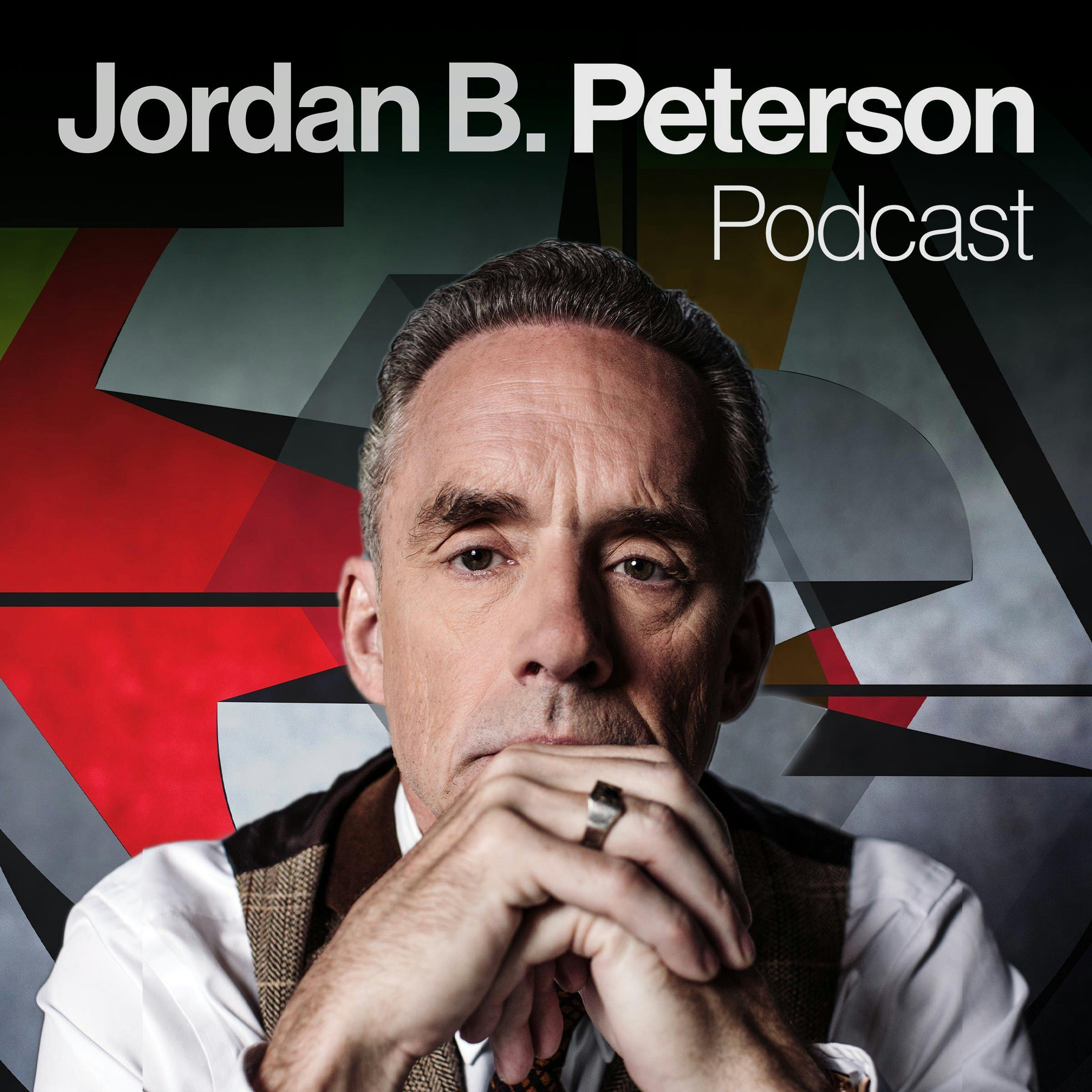
535. Is It Too Late for the UK? A Candid Talk with Winston Marshall
Winston Marshall is a writer, musician, and host of “The Winston Marshall Show.” In 2007 Winston co-founded folk-rock band Mumford & Sons. In their fourteen years together the band won 2 Grammy Awards, 2 Brit Awards, an Ivor Novello and performed with the likes of Bob Dylan, Bruce Springsteen, Neil Young, Willie Nelson and Elton John. In 2017 he released the techno-fusion album ‘Silk’ in collaboration with HVOB. His remix work includes Maggie Rogers and Jack Garrett. His written work has been published by The Free Press, The Jewish Chronicle, The Spectator, The Daily Mail. Through 2022 and 2023 he hosted the podcast ‘Marshall Matters’ at The Spectator.
This episode was filmed on February 22nd, 2025.
| Links |
For Winston Marshall:
On X https://x.com/mrwinmarshall?lang=en
Youtube https://www.youtube.com/@winston_marshall
Substack https://www.winstonmarshall.co.uk/
Press play and read along
Transcript
Speaker 1 As you pointed out, after the horrors of World War II, there was a consensus around the world that we should never forget.
Speaker 1 The problem with never forget is that you can't remember what you don't understand.
Speaker 2
That sort of to me explains everything. That's, by the way, what we're seeing crumbling now.
That's why people are so upset about J. D.
Vance's speech in Munich.
Speaker 2 Anything that is goes against the open society ideology, if you're against that, you must be for the Holocaust.
Speaker 1
Diversity without unity is indistinguishable from chaos. National identity is shared participation in the same stories.
The story is everything.
Speaker 1 And this is why I think we're at the end of the Enlightenment.
Speaker 2 The famous tolerance paradox. Buried within there was the seed for a new type of totalitarianism.
Speaker 2 How can we work out what the correct relationship is with the nation where we don't can't even identify what the nation is?
Speaker 1 We could ask ourselves what's the essence of civilization. It seems to me that the proper story for free societies is.
Speaker 1 hello everybody
Speaker 1 I'm here in Cambridge in the UK today at the end of the ARC
Speaker 1 convention I have as my guest today
Speaker 1 Winston Marshall and I have a long and storied history with Mr. Marshall.
Speaker 1 I in part, was in part responsible for the destruction of his musical career because he had the audacity to indicate to the public at large that he didn't think I was entirely despicable, and that didn't go so well for him or for the band.
Speaker 1 And so that's on me.
Speaker 1 However, the upshot of that has been that Winston has become an emerging star in the alternative media landscape in the UK,
Speaker 1 which is behind the curve in the alternative media department, but coming on quite strong with people like Konstantin Kissen, for example.
Speaker 1 And Winston's become a very astute or has shown his ability as a very astute political commentator and cultural analyst.
Speaker 1 And we spent our discussion today talking about, well, partly about the conference, the Alliance for Responsible Citizenship Conference, but more as a means of interrogating the relationship between the story that sits at the base of a culture, that necessarily sits at the base of a culture and that provides people with psychological integrity and social unity, and the political structure that is nested within that.
Speaker 1 And we delved further into that and discussed the relationship between
Speaker 1 the presuppositions of Christianity, or more broadly, Judeo-Christianity, and the free, abundant, and productive societies of the West, trying to think through the causal relationship between those two, if any, and to delineate that.
Speaker 1 And so that's part of an ongoing conversation, you might say, about the reinvigoration of the West on first principles and something that's of
Speaker 1 extreme necessity, particularly in the UK and Europe, and perhaps in Canada and Australia as well. The tide has turned to some degree in the US, maybe,
Speaker 1 but the rest of the West is in relatively dire straits, existentially speaking. And so we spent our time discussing why that is and what conceivably, if anything, might be done about it.
Speaker 1 So join us for that.
Speaker 1 So we just spent three interesting days more or less together, or at least in the same environs in London at the Alliance for Responsible Citizenship, the second convention.
Speaker 1
4,200 people as opposed to 1,500. We had people from 90 countries.
What do you think?
Speaker 2 Well, first, congratulations.
Speaker 1 Oh, well, thank you.
Speaker 2 It's a great success.
Speaker 1 It seemed to be, yes.
Speaker 2 Which you think only you could have pulled off and pulled everyone together. Such disparate people from across the world, unified
Speaker 2 by a common, at least appreciation that things have gone wrong, even if they don't know. We don't all each know exactly how it's gone wrong.
Speaker 1 And it was overwhelmingly positive.
Speaker 2 It was not, there's a problem we've got in our space, I think, is a lot of people try to take things down or angry or anti-things.
Speaker 2 You've actually created an environment that is for something, that is, that is not just countering, but trying to offer and proffer a positive vision for the future, which we need.
Speaker 1 So part of the problem that conservatives have,
Speaker 1 perhaps less so classic liberals, is the formulation of a vision. The visionary types tend to tilt in the liberal direction, traditionally, so to speak.
Speaker 1 And so conservatives do find themselves very frequently playing something approximating a reactionary role.
Speaker 1 They can see when we've wandered off the path, but aren't very good at specifying what the proper path might be. Okay, so we've noticed some things as we've run these two conventions.
Speaker 1 We've observed our speakers. We've had, I don't know, maybe 150 speakers across both conventions.
Speaker 1 also monitored the social media network responses to our broadcasts. So, so, and maybe you can tell me what you think about this.
Speaker 1 If we invite a politician, regardless of their stature,
Speaker 1 and they do what you just described, which is to only point out problems, which would often be a critique of the people across the aisle, let's say,
Speaker 1 or if they speak in a partisan manner,
Speaker 1
they disappoint the audience that's there and they get zero views on social media. It doesn't matter who they are.
They can be very well known as politicians.
Speaker 2 Well, Kami Bain, our leader of of the Conservative Party, actually did that. And what bothered me is she used the term populist in a pejorative sense in her speech.
Speaker 2 And as soon as she did that, I was like a bit bothered because I was like, again, this is the anti, this is the negative, which is not exactly what ARCA is about.
Speaker 1 Yeah, when we opened our first convention a year and a half ago, Kevin McCarthy spoke and it was pretty partisan, pretty Republican, American Republican.
Speaker 1 And it was a perfect fine speech from the political perspective, but it wasn't a good opening to the conference and it didn't do well, either at the conference or online.
Speaker 1 We had Kami and Badnock and Mike Johnson open this time, and Kami's speech was more political. And
Speaker 1 although she's very articulate, and it was a good political speech,
Speaker 1 it wasn't as effective, I didn't think, as Mike Johnson's. And Johnson's worked because he stuck to ideas.
Speaker 1 And I mean, that's what we're trying to do: we're trying to operate at the level of culture, let's say,
Speaker 1 which is, I think, the right space for conservatives to operate in. We're looking at the preconditions for a civil and free society, trying to sort out what those are.
Speaker 1 Now, we've also noticed something on the press side. So,
Speaker 1 if we offer an invitational vision and we specify something positive and we aren't partisan,
Speaker 1
then the speeches do very well in person and online. But also it's very interesting in relationship to press coverage.
Mostly the press has been neutral to us or positive.
Speaker 1
Both times. There's some exceptions like The Guardian, but, you know, what do you expect from The Guardian? And that's mostly like second-rate carping anyways.
It's nothing substantive. But we...
Speaker 1 It appears that the reason we've escaped from maybe serious protest as well, because there were no protesters.
Speaker 2 One or two.
Speaker 1
Yeah, yeah. Barely.
Yeah, yeah, yeah. A pretty weak showing on the protest front.
But I think the reason for that, again, is that
Speaker 1 if we're true to our mission and we are offering a positive alternative, then we get something approximating a hall pass. And people are excited about it and interested.
Speaker 1 Now, you said that you thought that the conference was very positive. And so what do you mean by that exactly?
Speaker 2 What I mean is that it's, if you get tied into the cultural wars and the dialogue online, it's all a lot of, no, you're wrong, no, you're wrong, no, you're wrong.
Speaker 2 And here it was, this is wrong, but here's actually an alternative. Like, this is wrong, and this is why it's wrong, and here's a better alternative to that.
Speaker 2 I'd say on, I found it interesting with regards to the media and your idea of culture, is that one of the headlines, I think, from an Australian paper was that it's the culture stupid playing off the Bill Clinton thing.
Speaker 2 And
Speaker 2 that, I think, is partly because of what you describe. It's the culture
Speaker 2 is upstream from politics.
Speaker 2 I think as you're sort of implying that, the Andrew Beitbart thing.
Speaker 2 But I would also say, and perhaps this is why some people like this, is that there's been such an attack on our culture for so long that even being in a place where it's okay to feel like it's
Speaker 2 even being in a place where culture isn't negative.
Speaker 2 Like one's...
Speaker 1 Right, just outright, just its utility, outright denied, does not have that.
Speaker 2 Exactly.
Speaker 1 So that might be more important than the specific
Speaker 1 recommendations on the cultural side. The mere fact that we can gather together and say, well, there is clearly something here that's not destructive and worth preserving.
Speaker 1
That's a relief in and of itself. Exactly.
Right. And then we can figure out what it is, which is what we're trying to do.
Speaker 2 But that, by the way, I think is really crucial because I think that there has been a concerted effort since the end of the Second World War to crush our culture.
Speaker 2 And I think this ties in with the populist thing, which I was keen to talk to you about.
Speaker 2 And a lot of populists will think, or a lot of people who frame the populist age,
Speaker 2 it's sort of over the last 30 years. You look at failed Iraq wars, trillion dollars spent there, the Wall Street bailout, 2008.
Speaker 2
turbocharged by COVID and the failure of elites there. But I think you can actually go back to the post all the way to the end of the war.
And
Speaker 2 this attack on the culture, which has inspired what I think is the worldwide populist movement, is been deliberately because we learned the wrong lessons at the end of the Second World War. So
Speaker 2
this is what writer N. S.
Lines has called the long 20th century, which we're now coming out of.
Speaker 2 And so at the end of the Second World War, you have writers like Karl Popper writing about the open society, and they create this dichotomy between the open society and the closed society.
Speaker 2 And the motivation is never again, of course, like after the Holocaust. The lesson seems to have been in Europe that
Speaker 2 these national cultures are wrong, nationalism is evil, and
Speaker 2
the dichotomy that's created was the, those were the closed societies. negative and we need to aim for an open society.
And so
Speaker 2 that sort of to me explains everything that's going on. It explains everything from mass migration, explains everything from the clampdown of free speech.
Speaker 2
It explains even the failure to address the British Pakistani rape gang scandal. It all comes from that.
And
Speaker 2 even within that, there's been an attack
Speaker 1 on
Speaker 2 British national identity, which another thing I'd like to get into with. So there has been this onslaught on culture, which we could perhaps talk about, but
Speaker 2 what
Speaker 2 so there's this relief at ARC at the conference where it's like, oh, it's not,
Speaker 2 we need not be ashamed about these things, but also it doesn't go into the, because I do see an emerging reaction to this attack on our culture that is negative. And
Speaker 2 there is a
Speaker 2 some people are calling it sort of the post-modernist riot or the woke riot.
Speaker 2 There's a fraction which has got some elements to it that are
Speaker 2 not so pretty, I think.
Speaker 2 So what ARC is to me is a positive
Speaker 2 contention
Speaker 2 with
Speaker 2 the failure of the post-war consensus.
Speaker 1 So let's unpack some of that. So let me see if I get your diagnosis right, first of all.
Speaker 1 So as you pointed out, after the horrors of World War II, there was a consensus around the world that we should never forget, that was one phrase, and never again.
Speaker 1 The problem with never forget is that you can't remember what you don't understand.
Speaker 1 And so you could say, well, we obviously don't want to replicate the horrors of the Holocaust, but that to manage that successfully means that we've mapped the causal chain that led to the Holocaust and that we did that accurately so that we're solving the proper problem.
Speaker 1 And
Speaker 1 your contention, as far as I can can understand it at the moment, is that we reflexively identified something like nationalism as the core of the problem, maybe for the war as such, but also for the exacerbation of ethnic identity that produced the Holocaust.
Speaker 1 And that the antidote was something like a borderless open society that transcended national identity.
Speaker 1 Okay, so let's take that apart a little bit. So the first thing that I've done is that.
Speaker 2
I can actually, sorry, cut that in just to explain how bad it is. Right.
So at the end of last year, I was speaking at Oxford University for a Roger Scruton lecture.
Speaker 2 And the topic was, what is English and British identity? And it was a room full of students, presumably all conservative.
Speaker 2 And I was discussing that topic, what it is to be British, what it is to be English, the differences, and what have you in the history. And then at the end, I asked the room, what do you think?
Speaker 2 Every single student in the room gave a different answer as to what it is to be English, which ranged from ethnicity, i.e., it was an ethno-nationalist argument, all the way to there's no such thing as Englishness and Britishness.
Speaker 2 And everything,
Speaker 2
no one agreed. That's the conservatives.
Now, to add color to that,
Speaker 2 our mutual friend Konstantin Kisson has just gone viral
Speaker 2 on Twitter a week or two ago because there was an argument he had had with Fraser Nelson where he argued that Rishi Sunak, our former prime minister, might indeed be British, but that he, he, as a brown Hindu, was not English.
Speaker 2 Now, that erupted where he was smeared by left-wingers, you know, the classic types,
Speaker 2 saying that he was arguing for ethno-nationalism, which he was absolutely not. But even within the right, there was no consensus on what that is.
Speaker 2 Now, I'll just tie it back to my thesis about open society. In 1944, there was a writer called Hans Pern,
Speaker 2 who just it was similar to Karl Popper, that there's a
Speaker 2 that they're thinking about how do we separate the good and the bad here about what a national identity is.
Speaker 2 And he didn't coin the phrase civic nationalism, but his thesis basically was what would become civic nationalism, which is civic nationalism, good,
Speaker 1 is
Speaker 2 democracy,
Speaker 2 I guess, geographic sovereignty or lands, you know, sovereignty, and
Speaker 2 a sort of civic duty.
Speaker 2 And then on the other side, they have ethnicity, which we probably all, it's different from country to country, but we all agree that it's a bad idea to say just ethnicity is on the other side of
Speaker 2 the ethno-nationalism. But they also lumped in culture.
Speaker 2
So they put the cultural side in the ethno bucket. So you have this growth now.
So people,
Speaker 2 fast forward 80 years, and you have diversity is our greatest strength when actually I happen to believe unity is our greatest strength.
Speaker 2 Or rather I should say diversity without unity, it all kind of crumbles apart. So Britain now is in a place where we can't identify.
Speaker 1
Diversity without unity is indistinguishable from chaos. Exactly.
Right. And the world is a multicultural place and it's rife with conflict and war.
Right.
Speaker 1 And there's some naive presumption that if you bring people from all corners of the world to a particular geographical locale they'll leave all the strife behind them and only bring the fruits of their culture and that's in well i guess partly what we're trying to do in this discussion is to determine why people believe that well they did that as a reaction to the holocaust yes yes that was to the war to the war that's also and that's by the way what we're seeing crumbling now that's why when people are so upset about jd vance's speech in munich it's because they can't anything that is goes against the open society ideology yeah they have this dichotomy which is a a false dichotomy, which means that if you're against that, you must be for the Holocaust.
Speaker 1 Right. You must be a fascist.
Speaker 2
You must be a fascist. That's why they use the term fascism because they actually can't code it any other way.
They don't even know they have this ideology. They've been swimming in it for so long.
Speaker 1 Well, this is partly why we've introduced a stream into ARC
Speaker 1 that's specifically focused on identity, and it's also associated with our concern about the better story, narrative identity. And so
Speaker 2 the
Speaker 1 classic catholic
Speaker 1 alternative to
Speaker 1 you could say that what the open society people did was replace tyranny with chaos right say so remove all the unifying institutions nation-state identification for example there's something like an assault on marriage there's an assault on the family there's the assault on local identification it's like all those layers of social identification get associated with something like oppression and fascism.
Speaker 1 That would be a variant of the patriarchy critique, right? The patriarchy, which as far as I can tell, is something like any form of hierarchical social arrangement,
Speaker 1 is in essence oppressive.
Speaker 1 Now, the problem with that hypothesis is that
Speaker 1 something
Speaker 1 can become oppressive when it degenerates without being oppressive in its essence. And I think part of the reason that people are so lost now,
Speaker 1 and perhaps part of the reason that the ARC movement has become successful, is that
Speaker 1 people understand that the destruction of those hierarchical identities has left them bereft.
Speaker 1 So, and I think that psychologists have actually contributed to the problem in a major way, sort of regardless of their philosophical orientation, because
Speaker 1 clinical psychologists, including the famous psychologists like Freud and Jung, say,
Speaker 1 had this implicit idea that mental health was
Speaker 1 something that characterized the individual, that it was something like brain health, except it was the psyche, and that you carried it around inside you.
Speaker 1
And so that means if you were a well-constituted individual, you had a well-organized mind. But that's not right.
It's seriously not right
Speaker 1 because
Speaker 1 it eliminates the fact of our social being in a profound way.
Speaker 1 Freud sort of thought of the human being, let's say, as a collection of id-like drives and instincts, right?
Speaker 1
And that those were suppressed by the superego. So it's sort of, it's almost a, it's a combination of the viewpoints of Rousseau and Hobbes.
Hobbes would have said
Speaker 1 the human being left to his own devices is an internecine war of conflicting impulses. There has to be a leviathan to impose restraint on that.
Speaker 1 And Freud thought the same thing in relationship to the superego: the superego is an inhibitory structure, and that the relationship between the natural human being and the constraining elements of the social world is inhibitory.
Speaker 1 You inhibit aggression, you inhibit sexuality, and that's not true either. And it's not true in a very profound way.
Speaker 1 If you are married,
Speaker 1 your sexuality is not inhibited. It's integrated into a higher order structure that's contractual, long-term, and social.
Speaker 1 We know it's not inhibited partly because in the 60 years after the sexual revolution, the people who are having most sex are married religious couples.
Speaker 1 So no one would have saw that coming, but that happens to be the case. It isn't that sex is inhibited or that
Speaker 1 you're subject to the
Speaker 1 patriarchal oppression of marriage as a contractual obligation. It's that sexuality finds its place in a higher order game.
Speaker 1 Well,
Speaker 1 if you're in a marriage,
Speaker 1 who you are
Speaker 1 compared to who your wife is starts to become extremely blurry, right? Part of your identity is husband, maybe 30% of it. And then
Speaker 1 the integrity of your psyche, which might be the balance of your emotional function, is actually dependent not on something that's going on in your head, but on the integrity of the relationship, right?
Speaker 1 If the relationship is well negotiated, then you're not
Speaker 1 overwhelmed by existential angst and you have some hope.
Speaker 1
But the dynamic is external. And then you could add, well, children to that.
And the same thing happens.
Speaker 1 Now you're a father and your psychological health is dependent on the integrity of the social structure. The same with town, the same with state, the same with nation.
Speaker 1 And then you could ask, well, what's all that nested in? And the conventional answer to that is something like one nation under God. And that would be the ultimate superordinate principle.
Speaker 1
And then the identity becomes the harmony across those levels. It's not internal.
And when you lose all that, which it
Speaker 1 now that is something you'd lose if this open society idea is taken to its limit, because all of those social arrangements become part of the...
Speaker 1 fascist patriarchy and have to be dispensed with, but that leaves people with nothing.
Speaker 2
So that's exactly what happened. And they deliberately got rid of any relationship with the nation, with the country, even though these are ancient things.
The English people are an ancient people.
Speaker 2 This is deep within our psyche.
Speaker 1 I believe, although, I mean,
Speaker 2 you better answer how, I'd like to know from your point of view,
Speaker 2 what is the correct relationship to have with one's nation? Because it seems that the lesson after World War II was that there is no correct relation.
Speaker 2 This wasn't the same lesson in America, by the way, because I think that their lesson was, we Americans ended, we defeated the Nazis. And we we kind of had that a little bit.
Speaker 1 Without being responsible for them. Without being responsible.
Speaker 2 But Europe had a completely different
Speaker 2 story for itself about what happened.
Speaker 1
Yeah, the Americans didn't emerge from the Second World War with guilt. Right.
Not really. Yeah.
In fact, quite the contrary, right?
Speaker 1 Because as you said, they stepped in as saviors, so to speak, and quite successfully.
Speaker 2 And you'd think the British would have had the same response, seeing as even at one point, we were the only ones standing in the Nazis.
Speaker 1 But
Speaker 1 and you did to some degree, like there was that strain of pride in that victory, but it did get suppressed across time.
Speaker 2 Okay, well, suppressed across time to the point now that if you even have an England flag draped across your front door, you're besmirched and belittled
Speaker 2 as far-right and racist.
Speaker 1 Right, so the glory of the World War II victory for Great Britain was eclipsed by the shame of the colonial enterprise. You might say something like that.
Speaker 1 Okay, so you might ask, we could inquire into the nature of national identity.
Speaker 1 Now, I think identity works the same way at all the levels we described, but to the degree that there is a national identity, I think the technical definition of a national identity is
Speaker 1 shared participation in the same stories.
Speaker 1 So one of the things I figured out, and we're trying to promote this view, let's say at ARC, because we want to get the story right.
Speaker 1 Well, the first thing you need to know is that the story is everything.
Speaker 1 And there's a technical reason for that. So, and this is why I think we're at the end of the Enlightenment.
Speaker 1 The Enlightenment folks believe that you could orient yourself in the world as a consequence of the facts.
Speaker 1 But the problem with that is that there's an infinite number of facts and combinations of facts.
Speaker 1 And so you drown in a landscape of unmediated facts.
Speaker 1 So you have to prioritize facts.
Speaker 1 And that's what a value, that's what a value a system of values does a system of values prioritizes the attentional significance of the facts so if you go to a movie and you watch the protagonist
Speaker 1 you map what he attends to what he gives attentional priority to and that enables you to duplicate his emotions in your own body And then you evaluate the consequence of that value structure as it plays itself out across time.
Speaker 1 And the reason we find that gripping gripping is because there isn't anything more important to us
Speaker 1 than how to determine how to prioritize the facts.
Speaker 1 So a story is a description of the way someone prioritizes their facts. Okay.
Speaker 1 Once you know that, the next question that emerges is what then is the correct story? But even independent of that, it leaves you with another conclusion, which is that
Speaker 1
You and I share an identity only insofar as we participate in the same story. Yes.
It's the definition of, it's like with your wife, for example, we might say, well, what unites you? Well,
Speaker 1
a shared vision of the past, present, and future. It's a shared story.
Yeah. You know, and
Speaker 1 you can understand that if you also understand how it might fracture. So
Speaker 1 one of the
Speaker 1 shared
Speaker 1
axioms of the story might be sexual fidelity. Okay, so that gives you a foundation.
Because we're true to each other, all of these other things remain true.
Speaker 1
We understand our commitment to the past. We understand where we are now.
We understand where we're going. If you violate that, the story falls apart.
Speaker 1
And, well, the whole relationship is plunged into chaos. There's no identity.
There's nothing that's unifying. And so
Speaker 1 a culture is the union of people around a story.
Speaker 2 Yeah, and we have lost our story.
Speaker 1 We've lost our story. It's been destroyed.
Speaker 2 It's been destroyed not only by the open society ideologues but also by the marxists and you can you can see what's going on in in in the schools with that they've completely twisted our story so that instead of it being that we are the people that stood up against the nazis we are the people that defeated hitler we are the people the british i'm talking about that ended slavery at great cost the cost in billions and of thousands of british men we are the people that defeated napoleon you instead young children are coming out of school thinking british englishness it's it's evil and And so
Speaker 2 the whole country, I believe, is falling apart because of that.
Speaker 2 We're really in the period of chaos. And that's why also you have Sadiq Khan banging on, as I said, diversity is our greatest strength.
Speaker 1 That's intentionally because
Speaker 2
that's their proposition. That's the best they've got.
But it can't last.
Speaker 1 And so
Speaker 2
again, back to the arc, it was a feeling like, okay, maybe it's okay. Maybe it's okay to actually feel these things.
But
Speaker 2 the question that hasn't been answered is:
Speaker 2 what is
Speaker 2 the correct relationship with the British, with their story, that includes all of these people that have come here, who have their own stories?
Speaker 2 And without answering that question, we won't find unity as a nation.
Speaker 1 Right, right. And that's the same question: what are the core values?
Speaker 1 Well, okay, so what the this is an argument that runs parallel to your observation of the consequences of the open society philosophy so it's a marxist presupposition that the fundamental uniting story is one of power now we could take that apart marx himself
Speaker 1 actually approached that in a relatively simple and in some ways straightforward and in some ways even accurate manner He posited that the fundamental dimension of differentiation
Speaker 1
between people was socio-economic position. And that is a fundamental differentiator.
And it might even be the fundamental differentiator, you know, among many. But that was the Marxist proposition.
Speaker 1 And then once you knew that
Speaker 1 the fundamental determinant of the interrelationship between people was comparative socioeconomic status, you could divide people into the oppressors and the oppressed.
Speaker 1
You could tell a story about virtuous revolution on the part of the oppressed, and away you went. You had the whole ball of wax, let's say.
Now, the problem with that is that
Speaker 1
the basis of socio-economic differentiation in a non-corrupt society isn't power. It's productive competence, right? So that's a big problem.
Now it can degenerate in the direction of power.
Speaker 1 But it was obvious that Marx was wrong because capitalism ended up being so productive because it didn't free up genuine productive resources and it was a voluntary game that the impoverished pulled themselves out of poverty, even though the distinction between rich and poor remained.
Speaker 1 And so.
Speaker 2 So there's a,
Speaker 2 if you don't mind, a slight side, but the irony is that Karl Popper actually spoke more about totalitarian
Speaker 2 Marxism in his open societies, his famous open societies in the Air News, than he did about Nazism. Of course, he was criticizing Nazism as a refugee in New Zealand, a Jewish refugee from Austria.
Speaker 2 But the irony of
Speaker 2 that is that
Speaker 2 it's the famous
Speaker 2 tolerance paradox,
Speaker 2 which is actually buried in a footnote in that book, where he writes, we should consider it criminal those who
Speaker 2 he doesn't use the word inspire intolerance, but that essentially inspire intolerance.
Speaker 2 So even though he wrote against both Marxist and fascist totalitarianism, buried within there was the seeds for a new type of totalitarianism that I think emerged.
Speaker 1 Yeah, well, the paradox of what you do about
Speaker 1 whether you tolerate intolerance is that that's a terrible paradox.
Speaker 1 It's a place where, what would you say, the axioms of a tolerant society start to devour themselves. All right, so let's return to that in a moment.
Speaker 1 What happened to the postmodernists is they took that narrative of oppression by power and they made it multi-dimensional. Right.
Speaker 1 So in fact, they even deprioritized the economic because if you're white and poor, say in the U.S., you don't get any attention from the postmodern neo-Marxists. But they're playing the same,
Speaker 1 they have the same assumption. Their assumption is that the orienting dimension of the world is power.
Speaker 1 There's nothing but power. And Foucault, of course, is famous for this because Foucault denied the very existence of the goodwill that would enable genuine transformative dialogue.
Speaker 1 His sense was, you have your poor power orientation and I have mine, and our dialogue is nothing but a zero-sum game between
Speaker 1 competing ethos. There was no neutral or transcendent territory between us that we could appeal to and like move forward to a higher mode of resolution.
Speaker 1 That was all delusion or maybe justification of our own power claims.
Speaker 1 Now, it seems to me, and this is something that I've been working out, and I tried to clarify this to some degree at ARC, that there's something that the West has got
Speaker 1 that has got
Speaker 1 canonically correct
Speaker 1 that makes a hash of relativistic claims or multicultural claims.
Speaker 1 Because we could ask ourselves what's the essence of civilization, which is what we are asking if we ask what's the core of our identity or the core of our story, or if we're asking how we could have unity without the pathology of nationalism or of patriarchy, let's say.
Speaker 1 Is there a principle that could unite us? Now, power is one. You see that reflected in the mythology in the Lord of the Rings, right?
Speaker 1 Because the one evil ring that binds them all together is the ring of power. And
Speaker 1 power can unite, but it's fragile and it requires force.
Speaker 1 So it seems to me that the proper story for free societies, so free and voluntary societies, is not the story of power, but the story of voluntary self-sacrifice.
Speaker 1 And that's antithetical to the claim of power.
Speaker 1 You know, so
Speaker 1 let's see, is this a good way of explaining it?
Speaker 1 One of the things we've noticed, my family and I, as I've become more notorious, let's say, or more well-known, is that people approach me for a lot of different reasons.
Speaker 1 And some of those reasons aren't so good. They're self-serving, let's say.
Speaker 1 One of the ways we've determined how to distinguish between people who are
Speaker 1 after their own ends and people who are interested in a productive partnership is that
Speaker 1 they come with an offer and not a request. The point is, is that
Speaker 1 the basis of a genuine social interaction is something like an offering. Right?
Speaker 1 So if you and I want to establish a relationship, it's a good idea for me to bring something to the table and give it to you.
Speaker 1 From what I understand, this is how warring tribes in the default tribal condition of humanity started to trade.
Speaker 1 So what seems to happen, human beings have been around for about 350,000 years, and we didn't seem to get our act together until about 20,000 years ago.
Speaker 1 You might ask what the hell we were doing for the 330,000 years before that. And one answer is tearing down anyone who had any modicum of success whatsoever and fighting endless tribal battles.
Speaker 1 And so then you might ask, how the hell do you get out of that? Because that's kind of a self-sustaining dead end.
Speaker 1 So imagine a tribal group here and a tribal group here. And this group is watching this group and vice versa.
Speaker 1 And this group sees that this group has some cool stuff that they maybe would like to have and vice versa. Then imagine there's a no-man's land of disputed territory between them.
Speaker 1 Sometimes a tribe will get the bright idea of taking some of their valuable stuff and leaving it in the no man's zone, just abandoning it, and then retreating.
Speaker 1 Then the other tribe will come in and take the stuff. Now,
Speaker 1 they could just take the stuff and leave. But now and then, the other tribe figures out, well, if they left some cool stuff, then maybe there would be more valuables forthcoming.
Speaker 1 But the interesting thing about that initiation, that process is there's a sacrificial offering at the beginning, right? You have to give something up.
Speaker 1 And I do think it's that act of giving something up voluntarily that actually defines,
Speaker 1
well, I think it defines the psyche with integrity, but even more importantly, it defines society. It's not power.
It's not power.
Speaker 2 It's within as well as between societies.
Speaker 1
Within the individual and between society. Yeah.
I think we establish psychological integrity
Speaker 1 by having each of our internecine drives
Speaker 1 give something up in relationship to an emergent totality. That's what happens when you mature, right?
Speaker 1 You start sequencing your whims in a way that allows each of them to attain their end, but in some order over some time period in relationship to some goal.
Speaker 1 Some of that goal would be the establishment of actual
Speaker 1
genuine social interactions. All that's sacrificial.
Now,
Speaker 1 it looks to me like the biblical stories are an examination of sacrifice, like
Speaker 1 an interrogation of sacrifice.
Speaker 2 And Christ being the sacrifice.
Speaker 1 Exactly, exactly, exactly. Because
Speaker 1 once you understand
Speaker 1 that voluntary sacrifice is the basis of civilization and community, the next question that emerges is, well, what's the highest possible form of sacrifice? And
Speaker 1 that's actually the...
Speaker 1 quest, you might say, that the biblical stories arrange themselves around.
Speaker 1 because you establish the principle of sacrifice actually with Adam and Eve, right at the end of that story, but certainly with Cain and Abel.
Speaker 1 There's two patterns of sacrifice established there: the pattern of Abel and the pattern of Cain. But then that's fleshed out as all the stories progress.
Speaker 1 And in principle, that culminates in the, well, what we construe as the ultimate sacrifice, which is something like a total sacrifice, right? So then you might ask yourself, is it true that
Speaker 1 a totalizing sacrifice is the basis of social abundance.
Speaker 1 This is why Christ is the miraculous provider of the water that eternally replenishes and the fish that multiply and the bread that doesn't end.
Speaker 1 The idea is that if you establish the right pattern of sacrificial identity, you produce a society that is endlessly abundant.
Speaker 1 It's like a meta-principle, it's a meta-principle of provision, and it's based on the idea of sacrifice. And it seems to me, I think what's revolutionary about our time is that
Speaker 1 I think we can now understand that
Speaker 1 explicitly instead of it being buried in our stories.
Speaker 2 With regard to the national identity, forgive me for going there, and what I'm reading from what you're saying, but maybe I've got this wrong, is that there's a correct interplay, a correct sacrifice that the nation should have for the individual and the individual should have had for the nation.
Speaker 2 There's a certain amount of the individual should give to the nation and the nation in return.
Speaker 1 Yes, yeah. Well, that would be something like
Speaker 1
you see that also in the biblical stories, say in the story of Abraham with the establishment of the idea of covenant. Yes, exactly.
Right.
Speaker 1 So what happens with Abraham, this is dead relevant as far as I'm concerned. So
Speaker 1 God comes to Abraham as the voice of adventure. He says to Abraham, if you leave your zone of comfort and venture out into the terrible world, I'll make you four offerings.
Speaker 1 And one is your life will be a blessing to yourself.
Speaker 1 Another is that
Speaker 1 your reputation will become enhanced among your compatriots for valid reasons.
Speaker 1 The third is that you'll establish something of multi-generational permanence. And the fourth is you'll do it in a way that will increase universal abundance.
Speaker 1 And I think those four offerings each speak to the heart of man, you might say.
Speaker 1 People want status, for example. So, what the story does is it stacks, it's so interesting, it's so interesting.
Speaker 1 It stacks the developmental instinct, which might be that search for expansive adventure that would take a child away from his home and then turn him into a teenager and then a man, that
Speaker 1 willingness to venture into the world.
Speaker 1 It hypothesizes that that's a divine instinct and that its full manifestation will produce the proper social ordering.
Speaker 1
So it unites the instinct for individual development with the social, the pattern of social interaction that produces permanent abundance. And that seems to me to be right.
And so,
Speaker 1
well, so a national identity in part is going to be a variant of that offering. It's right.
You're going to offer something to the community wholeheartedly.
Speaker 1 And the consequence of that will be, be, there'll be an offering in return.
Speaker 2 So there's just on that, because you can add a problem, I think, for the for the British and the English, if we're going to use biblical terms, is that is that covenant, you use that. Now,
Speaker 2 Israel, the Israelites,
Speaker 2 are going in and out of, if you read through the Old Testament, they're in and out of covenant. They break their covenant with God.
Speaker 1 Continually, yeah.
Speaker 2 Even after Moses brings them to the promised land, then you have, yeah, I guess you have Joshua, but then the book of Judges,
Speaker 2 they break their covenant, they have false gods, and they have this chaos.
Speaker 1 They fragment as they pursue power, they pursue hedonism.
Speaker 2
Yeah, exactly. So I think that that's kind of what we're experiencing now.
But
Speaker 2
we can't quite agree what that covenant is. I mean, it's even taboo now to suggest we're a Christian country.
So
Speaker 2 even though, you know, our flag is Christian, even though our national anthem starts with the word.
Speaker 1 Your king is head of the church.
Speaker 2 Our king is head of the church.
Speaker 1 Nominally.
Speaker 2 That has been tied in with one of the, it's not quite taboo, but it actually was taboo to even say you were Christian until the last five years or so.
Speaker 2 When I started in the music industry, I was told, whatever you do, don't tell anyone you're Christian, even though I wasn't at the time.
Speaker 2 And that might have changed, but
Speaker 2 we are so lost. We have so broken our covenant as a nation with who we were, who founded us,
Speaker 2 that I guess it's the period of judges.
Speaker 1 So not only have we, how can we
Speaker 2 work out what the correct relationship is with the nation where we don't we can't even identify what the nation is?
Speaker 1 Right, right. Well, we have exactly the same conundrum in Canada.
Speaker 1 I mean, it's so interesting watching Canada's response to Trump's proclamation that our nation should become the 51st state, because one of the consequences of that is that the same Justin Trudeau who announced formally that Canada had no national identity, that we were a post-national state, and that we had no unifying history, nothing but a legacy of
Speaker 1 oppression and and racism, is now flying the flag, you know, even though he has stated in no uncertain terms that there is no unifying force behind the Canadian project.
Speaker 1 But there is no difference between that and the kind of fragmentation that makes you
Speaker 1 desperate psychologically and unbelievably weak as a nation, right? Because there is nothing pulling you together. But the fundamental question, obviously, the fundamental question is:
Speaker 1 well, what is the proper unifying principle? Yes. Right.
Speaker 1 And so you said, for example, that we threw out the nation and even intermediary patriarchal structures after World War II because we were afraid of the proclivity of those arrangements to degenerate into, say, fascism or communism.
Speaker 1 And fair enough.
Speaker 1 But you can't throw the baby out with the bathwater. One of the things that you might ask yourself is, how do you stop national identity from sliding into fascist ethno-nationalism?
Speaker 1 And while the American solution to that has been one nation under God.
Speaker 2 Or pluribus unum
Speaker 1 of 21.
Speaker 2 Right. But they founded as a multicultural nation where they found a
Speaker 2 meta-narrative to unite all the subcultures. Europe has a completely different way of thinking.
Speaker 1 Well, the strange thing is, though, that the Americans only managed that because they were British. Right?
Speaker 1 I mean, America gave more explicit voice to the principles that English common law, for example, and English identity for that matter had already established.
Speaker 1 The Canadian take on the American War of Independence was always Englishmen fighting for their rights.
Speaker 1 You know, the Americans think about it really as a revolution in quality, but Canadians think of it as, no, it's a return to the Americans of the rights of
Speaker 1
the British that they were denied. And I think that's more accurate.
Now, the thing about Britain that makes it maybe somewhat different than the U.S., or one of the ways, is that that identity
Speaker 1 that unites the many and that is oriented towards God is more implicit. It's more coded in English common law rather than being part of a Bill of Rights.
Speaker 1
It's coded in the manner in which the monarchy evolved across time and in the relationship between the monarchy and parliament. But it's there.
But still, the question is what's at its core.
Speaker 1 And this is where I think we can talk about the union between
Speaker 1 Christianity and
Speaker 1 the transcendent,
Speaker 1
the transcendent reality that puts the nation in its proper place. It shouldn't be the nation uber allis.
The nation shouldn't be worshipped like God.
Speaker 1 Well, then the question would be, what's above the nation? Well, the idea would be God. And then you might ask, well, what's God? Well, the Christian idea is that God is Christ.
Speaker 1 For all intents and purposes, well,
Speaker 1 Christ is at minimum, this you could speak psychologically or politically, Christ is at minimum the principle of maximal voluntary self-sacrifice. And that should be the superordinate end.
Speaker 1 So what that would mean, for example, is that the true king serves the poor, right? Because that would be how power would
Speaker 1
manifest itself sacrificially. And you see that.
That's part of the Christian drama is that the king of kings
Speaker 1 was in service to the lowest of all. And you see that echoed in the Old Testament stories continually, too, where lowly people, so to speak, are given their due regard as
Speaker 1 made in the image of God.
Speaker 1
Right. And that seems to me to be an appropriate principle of sovereignty.
Like what
Speaker 1
I don't, I don't know, you could replace it with the classic vision, like the Roman vision, which would be, if I can crush you, then you're weak enough so that I should. Yeah.
Right.
Speaker 1
That that actually makes me moral. The fact of my power is an indication of my morality.
And there's a logic in that, right? I mean, that's the attraction of the strong man, right?
Speaker 1 That might be the attraction of someone like Andrew Tate. If I can hurt you, why shouldn't I?
Speaker 1
But, well, then you think, well, we're not going to. turn to that principle.
Well, what do you have as an alternative? The abdication of any sort of authority or power?
Speaker 1 And then you get nothing but weakness. The alternative seems to be something like the inversion of power so that the true sovereign serves the most dispossessed.
Speaker 1 That's certainly core to the Christian ethos.
Speaker 2
Aaron Powell, but that's maybe where we've got that. So back to the post-war period.
Yeah.
Speaker 2
We can't let the Holocaust happen again. Obviously, we all agree on that.
So then we must prioritize those minorities.
Speaker 2 We must prioritize those minorities over the majority, which which is part of the motivation to kind of kill that common culture that we had, I think.
Speaker 2 Which is also why, I don't know if you saw the Ordo Amoris argument come up between there's a sort of English,
Speaker 2
I guess I would say, open society ideologue called Rory Stewart against J.D. Vance, and they're arguing about the correct order of love.
And the open society types want to prefer the other over the
Speaker 2 conservatives want to prioritize this
Speaker 1 yeah the open society types prioritize the periphery over the center that's a classic postmodern move yeah yeah well i think
Speaker 2 yep we'll carry on with that also i think that you could tie in the environmental stuff is that yes i agree they go all the way that they even prize prioritize uh animals and and the environments and not just all sentient beings but all living life and rocks you know that yeah they they go so much to the extreme there and that's where you have the rise of veganism and all this other stuff Possibly.
Speaker 1 But no, no, I think that's, I think that, and that is a,
Speaker 1 I've had extensive discussions with Jonathan Pagio about this problem.
Speaker 1 And it's the problem of the center versus the periphery. Okay, so here's something cool.
Speaker 1 The
Speaker 1 original church, the...
Speaker 1 The center of the temple is the Holy of Holies, and the priests can only go in there once a year. And that's where
Speaker 1 the ark was held. And the ark had, I think, Aaron's staff in it and some manna, something like that.
Speaker 1 And so Aaron's staff would be something like the living staff of tradition,
Speaker 1 right? The staff that can mutate and
Speaker 1
transform, but maintain its integrity. So that's like the living force of tradition.
And manna is the descent of the food from heaven that nourishes the soul. It's something like that.
Speaker 1 So then that's in the sacred box, and that's at the center of the
Speaker 1 tabernacle. Okay, now then the center is surrounded by peripheral structures, veils, right?
Speaker 1 So the Holy of Holies is veiled, and then the veils eventually end and that's the boundary of the tabernacle. And then you have the periphery, which becomes the community.
Speaker 1 Well, that pattern, that's the pattern of perception itself. This is something very interesting to know because it's germane to the point that you just made is that
Speaker 1 Every perception has a center and a periphery, and the perception itself is defined by the center.
Speaker 1 And so, that like the center for the perception of this glass would be the union of function and matter that makes this a drinking vessel.
Speaker 1 Now, if this, if I crack this and there is a piece taken out of it, it would still be a glass, but now it's kind of a monstrous kind of glass, right? It's it's lost its ideal integrity.
Speaker 1 Okay, so if you know that perception has a core, an ideal at the center, that's like Moses' staff, and then it's surrounded
Speaker 1 by
Speaker 1
increasingly distal peripheries till it merges, say, with another perception. There's monstrous forms on the outside.
That gives you some sense of the proper ordering of your priorities.
Speaker 1 The central has to be prioritized over the distal because otherwise you can't even see. Yes.
Speaker 1 Okay, so the problem, part of the problem of the open society concept is, you know, you might say, well, in principle, you should care as much for the stranger, the unknown stranger in a foreign land as you should for your own child.
Speaker 1 Well, the problem with that, a problem with that is
Speaker 1 your finitude makes that impossible.
Speaker 1 There's no way I can pay attention to 3 billion children.
Speaker 1 I wouldn't have a second for each of them.
Speaker 1 So there's no way of distributing my attention equally across the infinite landscape of possibility. So I have to localize it.
Speaker 1 Now then the question is, well, how best to localize it without ignoring the periphery? And it seems to me that's something like a circle of responsibility, which is the argument Vance made.
Speaker 1 It's like, well, I can't take care of all women, but I could take care of my wife. And I could establish the pattern of taking care.
Speaker 1 in my relationship with her and that would propagate through my children and be example for the community. And I can't take care of all children, but I could take care of mine.
Speaker 1 And if I can do, take care of my wife and I can take care of my children and then maybe I can take care of some other people in my community.
Speaker 1 You can expand your domain of concern as your expertise grows, but you can't flatten out the bloody hierarchy and say you owe the same amount to everyone.
Speaker 2 Well, it's actually worse because they don't say that you owe the same amount as everyone, but they actually even prioritize the other. So, it's not right.
Speaker 2 It's kind of an inversion, which I think goes back to this ick, this post-war ick.
Speaker 1 I think part of that's I think that's part of the problem of the Pharisee.
Speaker 1
So it's the Pharisees who crucify Christ fundamentally. And they do that because he really insults them, really effectively.
He says to them,
Speaker 1
they're the religious hypocrites. So you have three categories of enemy.
These are the classic enemies of
Speaker 1
what would you say, of the sacrificial ideal. Yeah, three enemies.
Religious hypocrites,
Speaker 1 scribes, those are the academics, by the way, and lawyers, and they're still lawyers. So the religious hypocrites, they're the virtue signalers.
Speaker 1 They're the ones who use God's name in vain, right? By attributing to themselves divine motivation when they're only pursuing their own selfish ends.
Speaker 1 Okay, so Christ tells the Pharisees, you put yourself forward as mouthpieces of the prophets.
Speaker 1 He says, if you would have been around during the time of the prophets, you would have been part of the force that opposed and persecuted them. So that's a pretty vicious insult.
Speaker 1 And then he says, the only reason that you portray yourself as ethically virtuous is so that you can have, so that you're recognized in the street and you can have the best seats in the synagogue.
Speaker 1 And so these are people who are pursuing reputational status. So that would be that second offering to Abraham, right? That your name will become renowned among your peers.
Speaker 1
They're gaming the reputational system by claiming divine virtue without making any of the sacrifices. The nature worshipers do that.
It's like, well, I'm for the planet. Yeah.
Speaker 1
Well, what does that mean from you? Well, I don't have to offer anything. There's no, I've got no skin in the game.
I'm just saying that my transcendent moral orientation trumps any of your concerns.
Speaker 1 What could be more important than saving the planet?
Speaker 1 And then I have a pathway to moral virtue that's very straightforward, which is, well, obviously I am a planetary savior I prioritize the planet over your children, for example. Right.
Speaker 1 So that proclivity to accrue unearned moral virtue is a cardinal sin.
Speaker 1
And that tendency that you described to prioritize the periphery ties into that perfectly. Yeah.
Right. Because I can say, well, look how wonderful I am.
Speaker 1 And that's what the net zero people do, as far as I'm concerned, on the backs of the poor. It's like we're concerned about the planet.
Speaker 1 And so obviously you're a repugnant character if you stand against that.
Speaker 2 A A more extreme version is what Helen Joyce would describe what's happening psychologically to the parents who are letting their children transition.
Speaker 2 Because how could they possibly admit to what they've done? They've essentially butchered their own children to this ideology.
Speaker 1 For their own moral self-aggrandizement.
Speaker 2 Or for prioritizing this other,
Speaker 2 the vulnerable.
Speaker 2 And so they've sacrificed their own children for those people.
Speaker 1 But
Speaker 1 it's worse than that because they're they're not actually prioritizing those other people they're using the claim that they're prioritizing that own those other people so that's their tolerance to ratchet up their their intent and to ratchet up their moral reputation yeah you know and so so they're actually sacrificing their own children for the sake of their moral status in their community.
Speaker 1 Look how tolerant I am, right?
Speaker 1 Look how
Speaker 1
widely embracing the arms of my maternal virtue are. I have the most peculiar child, and yet I'm such a wonderful person.
I still love them.
Speaker 1 And you're right that they'll never admit to that because if you saw yourself in the mirror and you were that person, you would never recover from that.
Speaker 1 It's so brutal.
Speaker 2 You said earlier about the damage that psychologists have done,
Speaker 2 which made me think of there was an American psychologist in the 50s called Gordon
Speaker 2 Allport and he had this concept of
Speaker 2 the sort of hate speech pyramid where at the bottom you have hurty words and at the top you have genocide and this is part of the same worldview of the open society ideology is that we've got it we've got to stop the Holocaust happening again and This
Speaker 2 in terms of damage done by psychologists, I think is the foundation that's led to hate speech and led to hurty words being criminalized in Britain. And I'm not sure if you're following
Speaker 2 a level of not just
Speaker 2 which has been a quarter million registers since 2014.
Speaker 1
We tried to bring in very similar legislation in Canada with Bill C. 63.
Of course, yeah, exactly. Except it's worse, I think.
It's on
Speaker 1 hold for now because Trudeau pro-rogue Parliament. But Bill C-63,
Speaker 1 it's part of the Online Harms Act, and it purports to protect children from sexual exploitation. Who could object to that?
Speaker 1 But you have like
Speaker 1 the top part of the sandwich is protection of children, and the bottom part of the sandwich is protection of children. In the middle is the most authoritarian legislation I've ever seen anywhere.
Speaker 1
It would produce a whole society of informers hell-bent on criminalizing non-hate crime incidents. Yeah, yeah.
And it is associated. I agree that, you know,
Speaker 1 there is a
Speaker 1 sense that you don't want to start the ball rolling in the genocidal direction.
Speaker 1 And fair enough, but before you intervene, you better make sure you have your causal sequence right and the diagnosis proper.
Speaker 1
And if your theory is, well, words of criticism lead to genocidal murder, then you should work on your... causal reasoning a little bit more.
The pathway is by no means that clearly laid out.
Speaker 2 Yeah, right. So,
Speaker 2 so I mean, now that's coming out where, you know, someone got a non-crime hate incident for
Speaker 2 hanging soiled jeans in their back garden, or a young girl was booked for calling another girl retard in school, or saying that the other one smelled like fish.
Speaker 2 So it's just, it's, it's, it's, it's totally insane.
Speaker 2 But the other side of that is what Schellenberger calls a censorship industrial complex, which has been turbocharged as a fight against the populist movement, which is a movement, I think, in spirit against the open society's ideology.
Speaker 2 I'm banging about open society's ideology, but I think it's the most helpful way for me to understand the populist movement, which I'm interested in hearing your critique about populism.
Speaker 1 Well,
Speaker 1 I think that
Speaker 1 there are forms of embodied wisdom that are relatively resistant to propositional derangement.
Speaker 1 If you're smart and you worship your own intelligence, which is highly likely if you're smart,
Speaker 1 you end up with this Luciferian temptation to presume that the world should fall at your feet because you happen to be intelligent. I guess that's how God curses people he blesses with a high IQ.
Speaker 1
You have this Luciferian temptation. And the Luciferian temptation is to fall in love with your own well-reasoned presumptions.
And the intellectual elite are very prone to such things.
Speaker 1 And so they can derange themselves with the quality of their own thought.
Speaker 1 Sensible working-class people who've put themselves together in the physical world, you might say, are
Speaker 1 they
Speaker 1 inured against that, I would say, to some degree by the harsh realities of their immediate existence. You know, if you're a demented farmer, you're going to be broke and miserable.
Speaker 1 pretty damn quickly.
Speaker 1 Now, the problem the working class has is they can't articulate their wisdom worth a damn.
Speaker 1 You know, and so lots of people have come up to me and said that listening to me has helped them articulate what they know to be true, which is what an intellectual should do, by the way.
Speaker 1
I think that the populist instinct in that regard at the moment is very solid. You saw that, the trucker convoy in Canada, in the farmer protests in...
in Holland in particular, and in Britain.
Speaker 2 And I'd say in this country, the working classes, the ordinary people, they might not be able to articulate it with words, but they know what it is to be English. They know what it is to be British.
Speaker 2 And it's not an ethno-thing.
Speaker 2 They understand the culture. They wouldn't be able to
Speaker 2
articulate it. But they know it.
They instill it. They have it instinctively.
Speaker 1 Yeah. Well, and I think that insofar...
Speaker 2 It's the high IQ sort of middle class, upper class people who are trying to tear it down with words.
Speaker 1 Yes, well, it's a funny thing, too, because those are the people who've benefited maximally from the structure. They want to play both ends against the middle.
Speaker 1 I mean, I saw this with Ivy League students because
Speaker 1 at Harvard, for example, and at the University of Toronto, when I was talking to left-wing students and they were talking about, say, the oppressive nature of the elite, I thought
Speaker 1 you're the elite.
Speaker 1 You might be on the junior end of it, but the fact that you're at Harvard means you're already a member of that club and thoroughly.
Speaker 1 So what do they want?
Speaker 2 If you earn more than 30 grand a year, I think you're in the top 1% in the world.
Speaker 1
Right. Well, well, there's also that.
Of course, there's that as well, which puts everyone in the West in that elite position. Well, yes, fair enough.
Speaker 1 But certainly the case for students at high quality universities. And I thought, well, what's driving their
Speaker 1 identification with the oppressed? And the answer is, well, part of it's guilt.
Speaker 1 because they've been given a position of privilege, let's say, without necessarily having thoroughly done the work to justify it. But we could leave that aside.
Speaker 1 There's a much worse motivation, which is that
Speaker 1 there's never enough for someone who's narcissistic. And so if Harvard opens its doors to you and now you're a member of the elite, you might say, well, you could rejoice at that gift.
Speaker 1
Or you could say, that's not enough for me. I want all the privileges of the elite and all the moral cachet that goes toward the oppressed.
So now I'm an ally of the oppressed.
Speaker 1 So I get to have all the reputational status of the oppressed and all the advantages of the elite. Right.
Speaker 1 And that's the position that the increasingly that the university educated hold in our society.
Speaker 2 Illustrating the perversion of this open society, Adioli, that I've been trying to explore with you.
Speaker 2 That says it better than any example you could give.
Speaker 1 Yeah, well,
Speaker 1 there's always a shadow side to moral proclamations, right? It's like, well, the postmodernists did point that out to some degree, but it's
Speaker 1 one of the things you really have to ask yourself is: who pays the price for your moral proclamations? And if the answer isn't you,
Speaker 1 then you don't have any right to the proclamation.
Speaker 1 I mean, one of the things that we're all trying to work through this in ARC, too, you know, because ARC is not a conservative right-wing movement, it's not a political movement.
Speaker 1 And you can see that partly
Speaker 1 in our approach to energy policy, which is,
Speaker 1 well, we'd like energy to be as close to free as possible, you know, insofar as that's commensurate with a free market society.
Speaker 1 We want to do everything we can to drive energy costs down. Well, why? Well, because
Speaker 1
energy is wealth for the poor. And that's the simplest way to put it.
If energy was cheap enough, there wouldn't be any people who are absolutely poor. There'd still be people who are relatively poor.
Speaker 1 And so that's not a classic right-wing approach because it's concentrating on
Speaker 1 the people who are poverty-stricken. But
Speaker 1 we're trying to come up with answers.
Speaker 2 Well, I mean, you mean that in the sense that that's not what left-wingers think of right-wingers?
Speaker 1
They assume that. Well, the weird thing, well, the weird thing, yes, sorry, I'd missed my train of thought there.
One of the things that's that
Speaker 1 struck me to the bone watching the political discourse over the last 15 years is that the radical left would sacrifice the poor to their planet-saving pretensions in a heartbeat.
Speaker 1 And that's very surprising because you might think that the core of ethical, of the ethical left is service to the poor.
Speaker 1 But now you see with net zero energy policy, and I know the conservatives are also guilty of that, is that if push comes to shove and it's my pretensions to be a planetary savior versus you being able to heat your house when you're 70, it's like we'll see you later.
Speaker 2 Yeah, it's important to note that the Conservatives, particularly in this country, but I think across the West, have been part of that net zero programme.
Speaker 2 I once went on LBC, which is a radio show, and there was an MP from each party, including the Tories, and it was off topic. They suddenly went into net zero, and everyone agreed.
Speaker 1 Yeah.
Speaker 2 I was like, what's going on here?
Speaker 1 I'd say for ARC,
Speaker 2
there were the classic left was represented. You had Morris Glassman of the Lord Labour peer.
You had Eric Weinstein, who he'd call himself a progressive.
Speaker 2 So it's not all the left, which is, I think, something that those who didn't go to ARC might assume it's some right-wing convention.
Speaker 2 And I actually think that was one of the beautiful things, is there are people who identify the same problems. We might have different solutions to them.
Speaker 2 And I thought that that was a sort of wonderful thing that you got right. And maybe there's more room for those people there.
Speaker 2 But also, in terms of this right-left-wing thing and the way it's coded in low definition, I think one way of understanding ARC was a bit like Hayek's definition.
Speaker 2 Have you read his essay, Why I'm Not a Conservative? No.
Speaker 2 And it's kind of, he has a paradigm where you have the sort of conservative progressive line, and then you have the liberals who are kind of like a thermometer, who will align, because they're more principle rather than temperament.
Speaker 2 They'll align with whichever
Speaker 2 side is more temp is more authoritarian or closer to their own principles.
Speaker 2 So at the moment, the liberals, and you've said this quite a few times, the classical liberal types are aligning with the conservatives because it's the progressives and the left who have gone completely authoritarian.
Speaker 2 And I would lump in the open society ideologues in that bucket. And that seems to me what
Speaker 2 the new paradigm is, the new dichotomy.
Speaker 1 Well,
Speaker 1 we're kind of hoping that. My sense is,
Speaker 1 I just talked to James Orr about this in his new podcast, that
Speaker 1 the Conservatives see it seems to me that the classic liberal project
Speaker 1 is viable when certain preconditions are met and I think the conservatives stand for the maintenance of those preconditions now it's complicated because the preconditions for liberalism are probably not well propositionalized so you could imagine
Speaker 1 the thinkers of the Scottish Enlightenment, it's sort of as if they did this.
Speaker 1 If
Speaker 1 marriage is the standard and functional families exist and the nation is Christian,
Speaker 1 then
Speaker 1 everybody can be an autonomous individual. And then you can lay out the structure of autonomous individuality and you can engage on the liberal project.
Speaker 1 But if that understructure falls apart, then that
Speaker 1 system of classic liberalism can't maintain its integrity because there's nothing that's like every system depends on some axiomatic presuppositions to maintain its validity.
Speaker 1 And the conservatives, technically, I think the conservatives stand for the maintenance of those axioms.
Speaker 1
It's hard for conservatives to propositionalize what they stand for, though, because those axioms usually aren't explicit. It's like the working class identity, British identity.
Well, what's British?
Speaker 1 Well,
Speaker 1
They know it when they see it, but they can't say it. But it's not surprising because it's very complicated.
It's like, well, is the monarchy British? Well, it is in its British form.
Speaker 1 And what's the British form of monarchy? Well, you could unpack that for a month, right?
Speaker 1 It's something like,
Speaker 1 you know, I think the American system lacks this to some degree. It's executive, legislative, judicial, and symbolic.
Speaker 2 There's a problem with the American system. That's right.
Speaker 1 The symbolic collapses into the president.
Speaker 2 Why everyone loses their shit when
Speaker 2 Trump.
Speaker 1 It's also why America produces dynasties, right? Like the Kennedys and the Bushes. And so, and
Speaker 1
who knows where that'll go. But the monarchy in the UK has this symbolic quality.
It's extremely useful, and it does take a fair bit of weight off the
Speaker 1 executive branch. Because the prime minister isn't the king.
Speaker 2 And the prime minister himself has to kneel before someone. Right, right.
Speaker 2 It tempers him.
Speaker 1 Right. And the king is supposed to be kneeling before God.
Speaker 1 And then the question, of course is go arises which well which god and is god real but that's our king is having has that
Speaker 1 of course he does well his his god in some part is gaia
Speaker 1 and that's not a good substitute for someone who runs the church of england you know and it's a degeneration into nature worship and the nature worshipers say well there is no higher deity than the earth it's like
Speaker 1 Nature worshipers always end up sacrificing children.
Speaker 1
And you can understand why. You already laid it out earlier in the argument.
You said, well, if you prioritize rats, you deprioritize children.
Speaker 1 That's a zero-sum game.
Speaker 2 Right, because it is zero-sum.
Speaker 1 Of course it is. Relative value is a zero-sum game.
Speaker 1 And so if it's the planet first, then children aren't first. And well, you can see the consequences of that because we don't have any children.
Speaker 1 Yeah, yeah, yeah.
Speaker 1 So
Speaker 1
back to Britain. Let's talk about, well, I'd like to hear your view on the situation in Britain right now.
I talked to Kemi Badnock and I talked to Nigel Farage.
Speaker 1 You guys have a split on the Conservative side.
Speaker 1 What do you make of that? And
Speaker 1 are you,
Speaker 1 well, let's talk about that more generally.
Speaker 2 Well, as far,
Speaker 2
we had a general election last year. Sir K.
Sama won with 20% of the electorate. He's not a popular prime minister and he's only gone down in popularity.
Speaker 2 He won because the right was split, as you say, between reform
Speaker 2 UK and Nigel Farage is just sort of seen as our populist. And I think he would say to some, I think he's even said it on my show, to some extent, he's a populist.
Speaker 2 And Kemi Badenock, who's got this impossible job
Speaker 2
where half the party have not learned the right lessons from the election. They think they lost.
because they went too far right
Speaker 2 and then they gave seats away to the Dems. And then the other part of the, well, it seems obvious to me, they lost because they lost their votes to reform, who was on the right of them.
Speaker 2 So she's got this very difficult
Speaker 2 task to take a whole organisation, which is itself split. It's not entirely clear to me that she has the authority even within it because there's CCHQ.
Speaker 2 And she's got four and a half years to take them to
Speaker 2 an election where every time she says anything in parliament,
Speaker 2 Sukha Starmer can say, you had 14 years, why don't you do anything?
Speaker 2 And
Speaker 2 likewise, she gets outflanked on her right. So it's kind of a very difficult situation.
Speaker 2 Reform UK
Speaker 2 have, I guess, their problems are that they, I mean, they're storming up the polls, which is encouraging for them.
Speaker 2 Their problems is, can they get together enough people, you know, to get three or 400 candidates for the next election?
Speaker 1 Yeah, and qualified and useful.
Speaker 2 Qualified, exactly, which is extremely difficult.
Speaker 2 I mean, actually, technically, the Conservatives have the same problem because I would say there's very little talent in their ranks in Parliament at the moment.
Speaker 2 So
Speaker 2 it's not entirely clear to me
Speaker 2 what will happen. And so anyone who has any predictions, there was so much, it's four years away, the next election.
Speaker 1 So it's an eternity.
Speaker 1 So
Speaker 2
calling what might happen is impossible. Some people say there might have to be some sort of deal.
Maybe that's the case. Will Kemi, can she make it to the election? She's, I mean,
Speaker 1 well, there'll be some kind of deal because at least the Conservatives at the moment have the advantage of being able to fight. Like the fact, see, this happened in Canada, right? Because
Speaker 1
Reform UK was named after the Reform Party in Canada. And what happened 30 years ago, something like that, the right split in Canada.
There were a variety of reasons for that.
Speaker 1 Part of it was that the Conservatives were no longer
Speaker 1
arguably sufficiently libertarian or socially conservative. And so there was a fracture in the ranks.
And Preston Manning pulled the conservatives back to the conservative side.
Speaker 1 That took a number of years, and then the conservatives reunited.
Speaker 1
But it was a salutary operation, all things considered. And I think now in Canada, we have at least some leaders on the conservative side who have some spine.
And that was a consequence of this war.
Speaker 1 Now, you could imagine that
Speaker 1 because Bad Nock faces Farage as ferocious opposition and vice versa, they could use that opportunity to really hash things out.
Speaker 1 So Farage is a little more daring at the moment on the net zero side than Badnock.
Speaker 1 He hasn't come out and said that the whole bloody climate apocalypse narrative is a
Speaker 1 dehumanizing and parasitical scam, which it is, but
Speaker 1 he's at least
Speaker 1 making overtures in that direction. Now, Badnock,
Speaker 1 when I interviewed her, she pointed out that she was leery about the rampage towards net zero, especially on the economic side right from the beginning, and more power to her.
Speaker 1 But the thing is, they can play off each other and see how far they can push the argument and what that does in terms of their popularity. There's an opportunity there.
Speaker 1 And that would be true with regard to all conservative policies. Like maybe within the Conservative Party, first principle arguments couldn't be undertaken, but now they have to be.
Speaker 1 So, you know, and they're both smart, I think.
Speaker 1 I was very impressed with Badnock. I mean, she's an engineer, so she thinks like an engineer, which is really systematically and thoroughly.
Speaker 1 And she's also a lawyer, though she hadn't practiced as a lawyer, was at least trained in law school.
Speaker 2 So is she smart enough, though? So, for example, Kamala Harris, some people have ridiculed her as being dumb.
Speaker 2 And if you listen to what she said through the election, you'd be like, maybe she's an idiot.
Speaker 2 But it might be that she wasn't actually that dumb.
Speaker 2 It was that she wasn't bright enough in that she had so many different factions and trying to keep this whole operation going that she was centering herself from losing the wrong people, whether it was the woke side of her party or the
Speaker 2 more
Speaker 2
conservative side of her party. She couldn't quite have the dialogue to pull it all together.
If they face this game that you were describing,
Speaker 2
and she risks losing people. She could lose the right wing of her party.
They could just go over to reform.
Speaker 2
The left wing could go over to live. Yeah.
It can kind of fall apart. It's almost like, is that the realm for that conversation? Farage has a huge advantage.
There's only five MPs that he's got.
Speaker 1 Right.
Speaker 1 Well, I think the way, so the Democrats in the U.S.,
Speaker 1
there's a reason Harris didn't go on any podcasts. A couple of reasons.
The first is that.
Speaker 1 The Democrats are so clueless when it comes to the alternative media that they might as well be living in 1970. We invited, by we, I mean
Speaker 1 a group of major podcasters in the U.S.,
Speaker 1 we've invited Democrats to speak with us.
Speaker 1 We've offered formal invitations repeatedly for eight years.
Speaker 1 And we mediated those invitations through one of the Democrats' central political messengers.
Speaker 1 They got the invite, and we couldn't find one who would do it.
Speaker 1 Not one now dean phillips talked to me after he got slaughtered in his presidential campaign because he got betrayed so badly by his democrat peers and i've talked to rfk and gabbard who are you know
Speaker 1 heretical democrats but the thing about the democrats that is very much worth understanding is all the people who have a voice left or got killed well but they're anti-pluralist which by the way is they accuse the populists of being anti-pluralist But if you look at Trump's coalition, it's a pluralist.
Speaker 2
Yes, it certainly is, yes. And Obama now, anti-pluralism, they can't say anti-populist anymore because that doesn't work.
So the anti-pluralists. But it was the Democrats.
Speaker 2 I heard your interview of Dean Phillips, and what he's describing is a totalitarian party.
Speaker 1 Oh, absolutely.
Speaker 1
And it's worse than that. It's worse.
And maybe this is a reflection of that totalitarian
Speaker 1 proclivity.
Speaker 1 The reason Harris didn't go on podcasts, apart from the fact that the Democrats are completely clueless about the alternative media, and like I said, live in 1970, is that a Democrat won't say anything that hasn't been workshopped.
Speaker 1 And the reason for that is they don't want to offend anyone. Well,
Speaker 1 if you're not going to offend anyone, you're going to say the most anodyne things, which, of course, Harris always sounds like she's talking to retarded kindergarten children. It's so demeaning.
Speaker 1 And you might say, well, that's the level at which she's capable of conducting discourse. And that might be true.
Speaker 1 But there is this additional element of the absolute inability of the Democrats to say anything that would say, offend their most sensitive, progressive junior staff.
Speaker 2 And that's not happening just in the Democrat Party. That's been happening in the progressive movement.
Speaker 1 Yes.
Speaker 2 Basically, all American liberals
Speaker 2 have this censoring, which again fits into my idea that hurty words, they think hoody words end up in genocide. And I would say that
Speaker 2 the opposition to that, what's happened in return, is Trump doesn't give a damn. He says whatever he wants.
Speaker 1 Yes.
Speaker 2 All of that. And you have a kind of response to the virtue signaling left is the vice-signaling right, where, you know, what's the most popular comedy show in the world? It's Kiltoni now.
Speaker 1 Right, right.
Speaker 2 Where they find the meekest,
Speaker 2 these literally disabled people, and they will humiliate them on stage. And everyone's got an equal opportunity, it's humiliation, but
Speaker 2 it's very much a total antithesis of that that's happened at the cultural level. Yeah.
Speaker 1 Yeah. Well, you've seen firsthand that proclivity for
Speaker 1 cowardly virtue signaling in the entertainment industry. And
Speaker 1 it's amazing to watch this
Speaker 1
in the theater community and in the motion picture community in the U.S. This is starting to fragment.
I mean, Hollywood is in catastrophically dire straits.
Speaker 1
The projections are now that 50% of live theaters will close in the U.S. in the next three or four years.
And part of the reason for that is that
Speaker 1 who the hell wants to go watch a modern movie? They're dull beyond comprehension. Now, there are some bright spots.
Speaker 1 Sheridan, is that his name? Hunter Sheridan, who wrote, who did Landman and Yellowstone. And Tom went through the roof because
Speaker 1
Tom Cruise is not woke in the least. And he's about the only star left who can pull his weight at the box office.
But there are, like I can see, there's been a number of,
Speaker 1 I've made contact with a number of Hollywood stars who are still private in their interest in what I'm doing.
Speaker 2 Love what you're doing.
Speaker 1 Yeah, but
Speaker 1 there's enough of them now so that I can see that that's going to change dramatically. And so
Speaker 1
I don't know what that'll mean for a Democratic reformulation. I've been talking to a friend of mine, the same guy who does the messaging for the Democrats.
And
Speaker 1 I told him after the election that if he could go and find some Democrats that he thought had some leadership potential, that this podcast circuit, that the people I've been in communication with, we'd be happy to talk to them because all of us are,
Speaker 1 what would you say,
Speaker 1 sophisticated enough to understand that it would be real useful for the Trump team to have some opposition that wasn't insane.
Speaker 1 But my friend's response to that after a couple of months was that he couldn't find a a single Democrat he thought had the chops or the moral
Speaker 1 force to manage a podcast interview. They're also
Speaker 1
concerned with the soundbite and not offending anyone, that it would just be a disaster. Exactly.
Podcasts brutally punish people who won't speak freely. Exactly.
Right.
Speaker 1
You just, the comment section will just, it's like being flayed. Yeah.
And it's clear Harris couldn't manage that and didn't even know that she should.
Speaker 1
Yeah. Yeah.
Yeah. Yeah.
It would have been a very interesting thing to see. But I don't know, how do you feel about what's going on in the, in the entertainment industry?
Speaker 2 Like you, I have a lot of messages from people that I probably would never have spoken to because they're so famous who will privately say, you know, I read that book by Andy No. What's the problem?
Speaker 2 And
Speaker 2 I also think that it might be the case that you're right, that there's a there's
Speaker 2 there's a critical mass now that the culture can shift. But what I also see is that there's a double,
Speaker 2 it might be that the opposition are doubling down and they realize that they're losing. So, for example, you had Oliver Antony Arc.
Speaker 2 Now, when he blew up onto the storm in 2023 with his amazing song Richman North of Richmond, if you look at the attacks he got, it was all ad hominem.
Speaker 2 This guy should have been, he was the counterculture.
Speaker 1 He was, yes, yes.
Speaker 2
He should, he was a hero. He was a working-class Russ belt.
He should have been the hero that they like J.D.
Speaker 1 Vance, really.
Speaker 2
Like J.D. Vance, he was the musical version of J.D.
Vance.
Speaker 2 And
Speaker 2 you'd think that this was, you know, they always virtually signaling and say it's all about the working people.
Speaker 2
Here was your hero on a plate. They didn't just ignore him.
They wrote all these hit pieces like right-wing
Speaker 2 influencers have found their new hero.
Speaker 2 This happened in the film industry as well with the Sound of Freedom film. And I know you interviewed Tim Ballard, the subject of the film.
Speaker 2
The attacks from the media media were just utterly shocking. Here was a film exposing child sexual exploitation.
Here was a film exposing the most evil thing, really, that you could imagine.
Speaker 2 Maybe it might be the most evil thing going on in America.
Speaker 1 It's a hard competition. A hard competition.
Speaker 2
And their response was to slander. Ballard with all these accusations, call it conspiratorial, say it's a 4chan film.
They just did everything they can to take it down. And even it made a fortune.
Speaker 2 It actually slayed at the box office. So you thought it's not even money has...
Speaker 1 I know, I know, I know. They're not even motivated by their own self-interest.
Speaker 1 Yeah, that's a dangerous person, you know. Yeah, exactly.
Speaker 2 So what you're seeing with those attacks is that they're not no longer ignoring, they're attacking because that's maybe the last gasps.
Speaker 2 of this era, of this period, where there'll be, I hope anyway, I pray, that we'll break on through
Speaker 2 and get to the other side where it's like you can talk normally again.
Speaker 2 I think we're probably there in certain, like I mentioned, Kiltoni or you know, the podcast circuit, people don't care anymore, and people watch those in droves.
Speaker 2 But these last industries, I mean, theatre's supposedly the worst of the lot.
Speaker 2
So we'll see what happens there. But I see it maybe moving in that direction.
Maybe.
Speaker 1 I think what we'll do on the Daily Wire side is we'll talk about the shifting communication landscape in the UK and Europe, because it looks to me in the United States, the the new media forms are now dominant.
Speaker 1 And
Speaker 1 no, I know that's what I want to talk about.
Speaker 2
The biggest podcasts in this country are all mainstream media. They're all, it's all, or rather the mainstream media ideology.
And we can talk about that.
Speaker 1
Yeah, but let's talk about that. Let's talk about that.
And we can talk about how Trump observed that and catalyzed it as well, or at least put the finishing touches on it.
Speaker 1 And I'd like to talk to you more about about the UK and about France and Germany, about Europe in general, and what you think the implications are of the emergence of this mega populism in the US.
Speaker 1 We can talk a little bit more about populism too, because we didn't get a chance to flesh out the advantages of a populist political movement and the disadvantages. And so we'll turn to that.
Speaker 1
So for everybody who's watching and listening, you can join us on the Daily Wire side. We'll continue for another half an hour there.
And apart from that well
Speaker 1 any summing words for any words to sum up
Speaker 1 your observations in relationship to arc let's say because that's sort of the issue of the moment um on the political front as far as i'm concerned any any part closing thoughts about what happened there
Speaker 2 uh i
Speaker 2 apart from saying it was uh phenomenal i mean it's it it feels like that the the overton widget window was edged on a few topics, whether it was net zero or talking about our culture, as we've described a little bit in this conversation.
Speaker 2 And I think that's something that people like Douglas Murray are so good. It's like articulating what's in the zeitgeist, but not yet been said.
Speaker 2 And so listeners should go to the ARC YouTube and watch what we've done.
Speaker 1 Yeah, well, I think one of the things we're doing,
Speaker 1 the conservatives in Canada have told me that,
Speaker 1 and some of them in the US as well, have told me that the role I've played culturally for them
Speaker 1 is to
Speaker 1 establish a beachhead in relationship to difficult topics. So I can criticize
Speaker 1 climate apocalypse mongering, for example, and go substantially farther in that criticism than they would be willing to go.
Speaker 1 But by
Speaker 1 moving the beachhead 200 yards up the beach, let's say, they can come up 50 yards and that's fine.
Speaker 2 And I think ARC I think that's actually the role of ARC is to push the envelope and to do that intelligently and carefully and positively and in the right direction because the envelope is getting pushed in another direction so we've I asked earlier in the conversation but one response to the open society
Speaker 2
the those who observe the open society ideology is that they say oh look all of the philosophers behind them are Jews. Yeah, right.
And they go, oh, George Soros, open society, society, Jew.
Speaker 2 He's the one doing it. So then you have this new emergent anti-Semitism I see coming on, right? Because they're taking the wrong lessons from what's going on.
Speaker 2 Even though they might have observed correctly about the open society ideology, they're making the wrong
Speaker 1
falsehoods. The opposite of one falsehood can be another falsehood.
Exactly. Right.
Speaker 1 Well, you see the same thing with regards on the masculinity side, with regards to the attraction of people like Andrew Tate.
Speaker 1
Right. And you can understand why he's an attractive figure because he's at least not a cringing milk sop.
Right. But
Speaker 1 so if you that's damning with faint praise, you might say. Right.
Speaker 2 Which, and when it comes to Andrew Tate, you've done a great job in your work in identifying the positive masculinity, lest it be hijacked by those.
Speaker 2 I think the responsibility
Speaker 2 is to identify the positive things we have to articulate, lest it be hijacked by those more nefarious actors.
Speaker 1 Yes, which is inevitable. That's another thing we could talk about, too.
Speaker 1 I'd like to talk about, talk with you about the dynamic between the cluster B psychopaths and the political, because that can happen on the left and the right. Okay, so we'll leave.
Speaker 2 Oh, definitely seeing that on the right.
Speaker 1
Yes, yes, definitely. So we'll leave that for the Daily Wire side.
Thank you very much for talking to me today.
Speaker 1 And to all of you who are watching and listening on the YouTube side, your time and attention is much appreciated. And
Speaker 1 to the film crew here in, well, we're in Cambridge, as I've got a speaking engagement here later. And so,
Speaker 1
thank you for the opportunity on that front. And, well, we'll talk to you another half an hour on the Daily Wire side.
Thanks, everybody, for your time and attention.