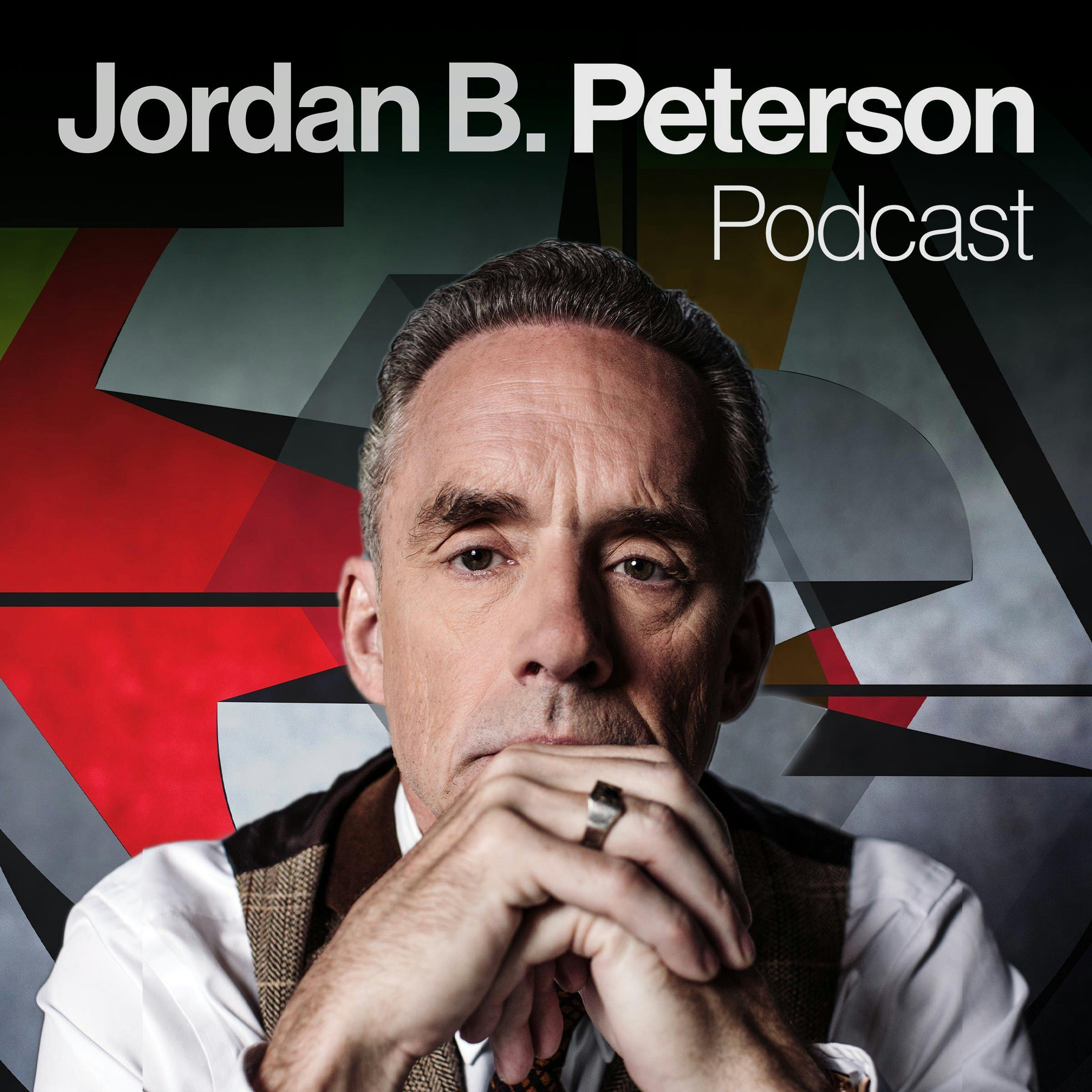
567. Five Great Moments From Behind the Paywall
In Answer the Call, Dr. Jordan B. Peterson returns to his roots, taking real calls from real people facing life’s hardest questions. Joined by his daughter, Mikhaila Fuller, the series transforms personal struggles into public insight—offering wisdom, empathy, and clarity in the face of chaos. Coming to DailyWire+ Monday, 8/4. A new podcast series, featured within Dr. Jordan B. Peterson’s episodes on YouTube and including an exclusive member segment on DailyWire+.
Have a question you’d like to ask? Share your story here: dailywire.com/answerthecall
| Sponsors |
Fatty15: Get an additional 15% off your 90-day subscription Starter Kit by going to https://fatty15.com/PETERSON and using code PETERSON at checkout.
SelectQuote: Get the right life insurance for YOU, for LESS, and save more than 50% at https://selectquote.com/peterson
Learn more about your ad choices. Visit megaphone.fm/adchoices
Press play and read along
Transcript
Speaker 1 Instagram Teen Accounts default teens into automatic protections for who can contact them and the content they can see.
Speaker 1 Explore Teen Accounts and all of our ongoing work to protect teens online at Instagram.com slash teen accounts.
Speaker 3
This Marshawn Beast Mode Lynch. Prize Pick is making sports season even more fun.
On prize picks, whether you're a football fan, a basketball fan, it always feels good to be right.
Speaker 3 Right now, new users get $50 instantly in lineups when you play your first five dollars the app is simple to use pick two or more players pick more or less on their stat projections anything from touchdown to threes and if you write you can win big mix and match players from any sport on prize picks america's number one daily fantasy sports app prize picks is available in 40 plus states including california texas florida and Georgia.
Speaker 3 Most importantly, all the transactions on the app are fast, safe, and secure.
Speaker 4 Download the PrizePicks app today and use code Spotify to get $50 in lineups after you play your first $5 lineup. That's code Spotify to get $50 in lineups after you play your first $5 lineup.
Speaker 4
PrizePicks is good to be right. Must be present in a certain states.
Visit PrizePicks.com for restrictions and details.
Speaker 5 10 years from today, Lisa Schneider will trade in her office job to become the leader of a pack of dogs. As the owner of her own dog rescue, that is.
Speaker 5 A second act made possible by the reskilling courses Lisa's taking now with AARP to help make sure her income lives as long as she does and she can finally run with the big dogs and the small dogs who just think they're big dogs.
Speaker 5 That's why the younger you are, the more you need AARP. Learn more at aarp.org/slash skills.
Speaker 2 So, Megan, how long have you been married?
Speaker 9 17 years.
Speaker 2 17 years. And
Speaker 2 you said you had your children in your later 30s?
Speaker 9 38, 40, and 42.
Speaker 2 Right. And that, and that,
Speaker 2 how did that work for you? I mean, you have three children, so obviously it worked pretty well, but that is, you're pushing the envelope at that point.
Speaker 2 My sister had her child, children at later at about that
Speaker 2 time.
Speaker 9
No, you're definitely pushing the envelope. Yeah.
you get the big ama on your chart and then you make the mistake of asking what that means and it means advanced maternal age
Speaker 9 which is you know you're still in your 30s you're not thinking of yourself as advanced age anything but yeah i was and um you know as i said to you earlier it i met my husband when i was 35 we got engaged um i turned 36 a couple months later We got engaged a year after that.
Speaker 9
So I was 37 and we got married when I was 37. So, you know, it was a fast turnaround once I met my husband.
I had a shorter first marriage that ended in divorce.
Speaker 9 We ended our relationship amicably and thankfully with no children because that's a whole sticky wicket, right? When you end a marriage and there are children involved.
Speaker 9 So anyway, then Doug and I met, we got married pretty quickly and we tried to have a baby very quickly because we saw that clock ticking and we both really wanted to have children with each other.
Speaker 9 To be honest, I wasn't feeling that urge prior to Doug. In my first marriage, I kind of knew I didn't didn't want to.
Speaker 9 I just, I think I might have had a sense like this wasn't going to work out with all due respect to my first husband, who is a great guy and now is happily married to another woman with kids of his own.
Speaker 9
In any event, so my husband and I met. We got married pretty quickly.
And pretty early on in that first year of trying, I went to the OBGYN to see whether I was okay.
Speaker 9
You know, just before we went down this exasperating path that everybody goes down in their mid-30s or women who wait. And the eggs, as it turned out, were very youthful and fine.
My eggs were great.
Speaker 9 So I wasn't suffering from what you can suffer from at that age, for sure, 37, of like old eggs that are really not that fertile. That's a very real risk you're taking.
Speaker 9 To me, it wasn't even like on my mind because I wasn't really focused on children. But I was glad to hear that the eggs were in great shape.
Speaker 9
But I, not to get too detailed, but I have what's called a T-shaped uterus. It's basically just a smaller uterus.
And so the doctor said, that'll make it a little tougher for you.
Speaker 9
Really, at any age, it would have. And so I did use IVF for all three of my pregnancies, and it worked like a charm.
And I had three beautiful babies, and it worked out perfectly.
Speaker 9 So, look, I'm lucky, and I realize that
Speaker 9
if children are important to you, and hopefully, they are. I mean, honestly, like I too am alarmed about the birth rate.
We're not going to have a society if we don't start repopulating.
Speaker 9 But anyway, if they're important to you, you definitely should know you're taking a risk if you wait.
Speaker 9 And I think people need to be actively searching for partners, and we need to do better about helping connect them.
Speaker 9 It's like one of my missions missions in life to, in my personal role as a human on this earth, be active about introducing men and women to each other who are single. Like I make it my mission.
Speaker 9 My husband hates it, but I just think it's part of our societal responsibility is to connect, especially good people with other good people.
Speaker 9
And in my mind, like good Christians with other good Christians and hopefully, you know, Let them populate. That's what happens next is up to them.
But we can't leave it all to Tinder.
Speaker 9 You know, at some point, actual loving, caring human beings need to help forge relationships the way we used to.
Speaker 9 So, in any event, we had the kids, and I left Fox so that I could spend more time with my children, who I was not seeing enough of. And that was a career problem of mine and a personal regret.
Speaker 9 But I rectified it, and things have been great ever since then.
Speaker 2 So,
Speaker 2 what
Speaker 2 as you pointed out on the YouTube side, you've had a
Speaker 2 unique and rare career,
Speaker 2 an archetypically desirable career, you might say. And as you also pointed out, that is a situation that typifies a very small percentage of people.
Speaker 2 And yet
Speaker 2 you speak of your children with immense fondness, let's say. And so tell me how you would explain to a younger woman
Speaker 2 how your priorities changed in the aftermath of having a baby and what that experience was like, because it's the experiential aspect of it that I'm curious about, you know, because
Speaker 2 my
Speaker 2 sense is that
Speaker 2 we have a category that's something like generic baby, but your own baby is not generic, right? That's an individual right from the
Speaker 2
onset. And so, and that's not well explained, especially to young women.
So, I'd like to hear your experience in that regard.
Speaker 9
I mean, it's cliche, but it is a before and after moment in your life. It is the before and after moment in your life.
And it's not just when you give birth.
Speaker 9
It's when you find out you're pregnant and you have a human life growing inside of you. That's when you become a mother.
I don't care if you're pro-life or not. There's no disputing.
Speaker 9
That's at least a potential life in you. Even the pro-choicers have to admit that.
And that's when you become a mother.
Speaker 9 That's when you start nurturing another human with your body and your energy and your chemistry and your aura, all of it.
Speaker 9 You know, your love, your faith, all of it starts nurturing that little being from that moment forward. And for me, it was like, okay, so I had the babies, I gave birth to the babies.
Speaker 9 And then you have this extraordinary moment where ideally you breastfeed your child.
Speaker 9 And that's too completely a mother earth moment where you are like back in connection with one of your core reasons for being, like that nurturing, that ability to nurture, grow, and
Speaker 9 take care of another human being to the point of independence. Like, this is one of the first steps.
Speaker 9 And here he is, or here she is, completely dependent on you, completely in need of you, and only you can solve it. It's a beautiful feeling where you feel incredibly needed, important,
Speaker 9 and bonded to this incredibly beautiful creature who knows nothing other than love for you. That's it.
Speaker 9 They love the dads, they put them on the dad's chest, and the dad loves holding the babies, but let's be honest, that baby only has eyes for his or her mother.
Speaker 9 And there's just no fulfillment like that.
Speaker 2 There's just
Speaker 2 that's the
Speaker 2 issue. You know, that's, I think, that's the crucial issue because, and this is
Speaker 2 a pathological reflection in part of the immaturity of our society, but also its consumerist element.
Speaker 2 People look for
Speaker 2 meaning, significance, purpose
Speaker 2 in the pursuit of
Speaker 2
self-centered gratification, happiness, so to speak. But that's not where you find it.
Now,
Speaker 2 it has to be that way, because first of all,
Speaker 2 We have this immense dependency period. And second, we're unbelievably social, social, right? Like you can punish psychopaths by putting them in solitary confinement.
Speaker 2
That's how social human beings are. You can take the most antisocial people and you can torture them by not letting them around other people.
Okay, so we're social to the core. So what does that mean?
Speaker 2 Well, it has to mean that we find our being in relationship to others. And the relationship that you're describing is one of opportunity and necessity.
Speaker 2 And that takes a lot of time.
Speaker 9
It's not just limited to the infancy years. I mean, like that's what, that's just the first experience upon arrival.
But I will say now my children are 15, 14, and 11.
Speaker 9
And it only gets better and more profound. I mean, for some women, the toddler years are the peak and they get, they're very sad when the kids age out of the toddler years.
For me, I was excited.
Speaker 9
I couldn't wait until I could have conversations with them, you know, back and forth that were more meaningful. And we're in that stage now.
And, you know, you just, whatever.
Speaker 9 I went to see my daughter at a talent show and these girls were out there having the time of their lives.
Speaker 9 Many of them were just being silly, happily and intentionally making fools of themselves, like in big costumes that bump into the other girls and then they fall down into fun music.
Speaker 9 And I cried like a small school girl myself because it was this feeling of camaraderie and they were rooting for one another.
Speaker 9 And you see your child get up there, whatever she's doing, and just give it her all, just stand in front of a microphone and try and ask the world to give her a shot, right?
Speaker 9
To give her a chance to see what she can do. It's just so bold and optimistic.
And so when you have children, you're around that bold optimism all the time.
Speaker 9 Not like whatever, your kids have vulnerable moments too. It's not all, you know, uniformly positive and wonderful, but the vast majority is.
Speaker 9
And so you're just immersed in such a happier, more promising world. My whole outlook on life got more positive as a result of my children.
Right.
Speaker 9 It brings into your life such positivity and promise and possibility and socialization for sure, because you're going to be not just with your kids, but with your kids, friends, parents, and interacting at school in the same way a dog gets you out into the world times X by a child and then more and more children and you'll have even more and more of it.
Speaker 9 So even though people know me as a career woman and I am and I love my career as we talked about on the on the other part of the interview, I love my career. It completely energizes me and excites me.
Speaker 9 And some days, coming out in front of this microphone is like a therapy for me.
Speaker 9 Just the chance to say what's real and correct the record for people out there who are being misled. There's zero competition.
Speaker 9 If you said, MK, you can go back and live these same 54 years over again, but one thing's not going to happen, either your children or your career. There's no decision to be made.
Speaker 9 As much as I adore this career, it doesn't hold a candle to my
Speaker 9 motherhood, my relationship to my children, my family, the core five, as we call ourselves, and the experiences we've had together through these last 15 years since I was 16, technically, since I became a mother for the first time as I got pregnant with my eldest.
Speaker 11 So
Speaker 9 I want, my thing is, Jordan, I want people to know that I want young women to know that. They need to know that.
Speaker 9 But I also, but I also want young women who feel that budding love for their career, whatever it is, whether it's journalism or it's as a doctor or whatever, whatever it is that's like really grabbing them, that that's okay too.
Speaker 9 You know, I worry about the conservative movement not making room for those women who've got that thing that I had, which is like, I've got to do this. This is amazing.
Speaker 9 I love it, you know, and I am a better person.
Speaker 9 And actually, I'm a better mother too, for the fact that I did become a journalist and I did all the things that I've done over the past whatever years before I had them. So
Speaker 9 my main point in speaking like to young conservative women today is, yes, valuing motherhood and understanding it alone is a valid choice and a really fulfilling one.
Speaker 9 But if you are somebody like I was who does feel a fire lit under them to pursue a career, that's okay.
Speaker 2 These are questions that take cultures thousands of years to answer.
Speaker 2 During answer the call, I take questions from people just like you about their problems, opportunities, challenges, or when they they simply need advice.
Speaker 12 How do I balance all of this grief, responsibility? How do you repair this kind of damage?
Speaker 2
My daughter, Michaela, guides the conversations as we hopefully help people navigate their lives. Everyone has their own destiny.
Everyone.
Speaker 12 At blinds.com, it's not just about window treatments. It's about you, your style, your space, your way.
Speaker 12 Whether you DIY or want the pros to handle it all, you'll have the confidence of knowing it's done right.
Speaker 12 From free expert design help to our 100% satisfaction guarantee, everything we do is made to fit your life and your windows. Because at blinds.com, the only thing we treat better than Windows is you.
Speaker 12 Black Friday deals are going on all month long. Save up to 45% off site-wide, plus an additional 10% off every order right now at blinds.com.
Speaker 7 Rules and restrictions apply.
Speaker 2
Well, let's talk about two things, or three things, maybe. I want to know what...
What you see happening on the government policy side.
Speaker 2 You were at the Bitcoin conference in Las Vegas. There are political figures there.
Speaker 2 Pierre Polyev in Canada has indicated some interest in Bitcoin. Nigel Farage in the UK, Trump in the United States.
Speaker 2 I'm wondering what you think is going to happen at the state level in relationship to Bitcoin.
Speaker 2
They haven't made it illegal, for example. So that's a good thing.
And I know that countries that have tried to
Speaker 2 go to war, so to speak, with Bitcoin have seen damaging consequences for their currency, which I think is extremely interesting and telling.
Speaker 2 Then I'd like to know what you see for the future in relationship to Bitcoin, let's say over a five or 10 year period.
Speaker 2 And I'd like to know what your advice would be for young people, practically speaking, in relationship to ensuring their financial future.
Speaker 2 All great questions.
Speaker 10 I think the last 10 months have been extraordinary for Bitcoin and the entire crypto ecosystem.
Speaker 10 An inflection point was in Nashville last July when Donald Trump, the presidential candidate, showed up, gave a speech, embraced Bitcoin,
Speaker 10 embraced the community, told everybody that if he was elected,
Speaker 10 the United States government would never sell their Bitcoin, and in essence, endorsed it as apex property and legitimate property that he respected.
Speaker 10 The entire crypto industry and the Bitcoin community were extremely active. And there are a lot of people that think that they tipped the election
Speaker 10
in favor of the red sweep. They were definitely very significant actors in November.
And so November 5th, there was a red sweep. The House, the Senate, and the White House went Republican.
Speaker 10
What followed next is an orange cabinet. And orange is the color of Bitcoin.
I'm wearing an orange tie. What that means is Robert F.
Kennedy is a Bitcoin believer.
Speaker 10 Tulsi Gobbert in Intelligence is a Bitcoin believer.
Speaker 10
Atkins at the SEC is a Bitcoin believer. Scott Besant at the Treasury is a Bitcoin believer.
Brian Contez at CFTC is a Bitcoin believer. The president is a Bitcoin believer.
Speaker 10 He created a cabinet position for David Sachs as the crypto czar, who is a Bitcoin believer. And so what you saw was the administration flipped from being,
Speaker 10 I would say, before this administration, they grudgingly accepted Bitcoin and were hostile to everything else. And Bitcoin was accepted under protest because they couldn't stop it.
Speaker 10 And then after November 5th, the administration moved aggressively. They established an executive order to develop a digital assets policy.
Speaker 2 When was that executive order?
Speaker 10 I guess it must have come.
Speaker 2 Well, sometime in the last 100 days, I guess thereabouts.
Speaker 10
It came in the first quarter. Yep.
Okay.
Speaker 10
And they established a strategic Bitcoin reserve. Okay.
And they and the most important thing that happened is
Speaker 10 David Sachs went on public record saying the Trump administration recognizes Bitcoin as the one decentralized crypto network in the world, an asset without an issuer, digital gold, a commodity, special.
Speaker 10 That's very, very important to unlock.
Speaker 10 A commodity, an asset without an issuer has
Speaker 10 legal superiority, ethical superiority.
Speaker 10 A public company can capitalize on a commodity.
Speaker 10 Under the SEC 40 Act, a public company cannot capitalize on securities. You can't have more than 40% of your balance sheet invested in securities.
Speaker 10
So a commodity means it's like soybeans or gold or land, and no one actor can manipulate it. And that makes it global property.
So that only happened just in the past few months.
Speaker 10 But what's happened since is you could say
Speaker 10 the United States has gone from being very regressive to being the most progressive digital assets
Speaker 10 nation in the world. And the agenda of the United States is
Speaker 10 to normalize the use of digital currencies, digital tokens, digital securities, and digital commodities on digital exchanges trading 24-17.
Speaker 2 Do you think that'll be Bitcoin-based?
Speaker 10
Do you think that that. Bitcoin is the base layer.
It is the reserve asset or the capital base of the entire crypto economy.
Speaker 2 Okay,
Speaker 2 when other jurisdictions are speaking, I'm thinking about the WEF types in particular, when they're speaking about digital, central bank digital currencies, they're generally not thinking about, they're not proposing that that's going to be founded on a Bitcoin standard.
Speaker 10 Yeah, that is
Speaker 10 viewed as anathema by the crypto community.
Speaker 2 Yeah, yeah.
Speaker 10 But here we get to this basic philosophical observation, which is:
Speaker 10 do I want all of the money and power in the world to be controlled centrally by one banker or one politician who will then decide what I can buy, what I can do, what I can think?
Speaker 2 Yeah, that sounds like a bad idea.
Speaker 10 Or do I want all of the money and the power of the world to be held by individuals apart from a corporation or a bank or a government where they have privacy, where they have sovereignty, where they have dignity, where they have power?
Speaker 10 You know, my, you know, my author, Heinlein, he said, you know, an armed society is a polite society, right?
Speaker 10 And the idea is, you know, a hundred people have guns in the room and, you know, you watch your step, you know, and you show civility. Well,
Speaker 10 the significance of Bitcoin is for the first time in the history of the human race, we have found a way to tightly bind economic energy to the individual, cryptographically bind it.
Speaker 10 If you know a secret in your your head, it could be a billion dollars of power.
Speaker 10 Thinking about fantasy, I know it, I can cast a billion-dollar spell. It's profound.
Speaker 10 If you want to go back 100 million years, the big breakthrough for mammals was when they could bind organic energy to their frame, and we call that fat.
Speaker 10
Right? If you have fat cells, you can eat a lot and go without food for 30 days. Take away the fat, you're a type 1 diabetic.
You know, you last a few days, you're dead.
Speaker 10 And so, this idea that I can bind organic energy is what makes human beings.
Speaker 10 This idea that I could bind cryptographic, cryptographically bind economic energy, that gives sovereignty to the individual. But you know what?
Speaker 10 8 billion people could have their own energy, but also 400 million companies. And the traditional central banking system of the CBDC and fiat currency is there's one bank, you know, the U.S.
Speaker 10 Reserve that controls everybody and then there's a hundred big banks and if they give you permission you're allowed to do stuff and if they take away your permission you can't I think the Trump family ran into that when they got debanked all the crypto people ran into it there was the Canadian trucker example oh god you do something we don't like we turn off your oxygen and with no court intervention whatsoever right no trial nothing yeah and if you look at the history of Austrians, they all lamented that the money is broken and that is the source of so many of our economic ills.
Speaker 10 And if you look at the history of libertarians, they say government intervention, government policy and medicine and commerce and foreign policy and domestic policy and monetary policy and education policy is generally counterproductive, iatrogenic.
Speaker 10 It does more harm than good.
Speaker 10 They both understood the problem. They both had a philosophy, Less government, more, you know, more civil liberties, more economic liberties, more freedom.
Speaker 10 We took a shot at that in the United States during the Revolutionary War, and we did it with the Constitution, the Constitution and the Bill of Rights.
Speaker 10 We found out in 2020 that sometimes your rights get suspended because they're inconvenient to someone with more power than you.
Speaker 10 But the truth is, your civil rights have been suspended every 30 years for the last 30,000 years by someone, and that's the story of civilization, rights being suspended
Speaker 10 for the normal by the more powerful. The crypto revolution and the Bitcoin ethos is
Speaker 10 Satoshi found a way to give power back to the people by combining cryptography with semiconductors, with the internet.
Speaker 7 Are you tired of spending countless hours and dollars on health and beauty products that promise to make you look and feel younger without seeing real results? That's where Fatty 15 comes in.
Speaker 7 It's actually the first new essential fatty acid discovered in over 90 years, which is pretty incredible.
Speaker 7 This nutrient called C15 strengthens our cells and cellular level and has three times more cellular benefits than omega-3 or fish oils.
Speaker 7 What's really interesting is that up to one in three people might be deficient in C15, which can cause something called cellular fragility syndrome, basically when our cells become fragile and age even faster.
Speaker 7 When our cells don't have enough C15, they break down more quickly, and since our cells age, our bodies do too.
Speaker 7 The good news is that C15 actually repairs age-related damage to cells and protects them from future breakdown.
Speaker 7 Studies show that 72% of users report seeing benefits within 16 weeks, like better sleep, healthier skin, improved energy, and even smoother-functioning joints.
Speaker 7 It's clinically proven to improve things like liver function and red blood cell health within just three months.
Speaker 7 Plus, Fatty15 comes in this gorgeous, reusable glass jar with convenient refills, shipping right to your door.
Speaker 7 Fatty15 is on a mission to optimize your C15 levels to help support your long-term health and wellness, especially as you age.
Speaker 7 You can get an additional 15% off their 90-day subscription starter kit by going to fatty15.com/slash Peterson and using code Peterson at checkout.
Speaker 2 Was it Watson or Crick who proposed an extraterrestrial origin for DNA because he couldn't understand how it could have possibly evolved?
Speaker 2 I don't remember which of the two co-discoverers of DNA it was, but.
Speaker 11
Well, there's two interesting papers that came out. One was looking at the half-life of DNA complexity as a Moore's Law equivalence.
So you know, Moore's law.
Speaker 2 Right, right, yeah, I saw that paper, yeah.
Speaker 11 And
Speaker 11 where if you extrapolate
Speaker 11 in a straight line back to the time at which DNA would have first
Speaker 11 been evolved, it actually
Speaker 11 goes back about 12 billion years ago, between 9 and 12 billion years, and yet Earth has only been around for 4 billion years.
Speaker 11 So it basically means that we got a jumpstart because it came from somewhere else. And people say, well, how could it come from somewhere else?
Speaker 11 Well, I said, just look at your watch if it's made of metal.
Speaker 11 Every piece, every atom in that metal came from an exploded star several billion years ago that coalesced in a cloud and you know, created the planetary ring that eventually became Earth.
Speaker 11
So you are made of star stuff. You are made of exploded materials.
Now what's interesting is
Speaker 11 about life is that
Speaker 11 the core components of life are what? Carbon, nitrogen, oxygen, and hydrogen.
Speaker 11 Just that. Those four things are the majority of what you are made of.
Speaker 11 They were all like the first elements that were available in the universe after the so-called Big Bang.
Speaker 11 They were the first iteration of the evolution of the elements. It wasn't until multiple stellar explosions later did you get the heavier elements.
Speaker 2 So,
Speaker 11 life in its most simple form
Speaker 11 could have happened within a few billion years of the start of the universe as we think of it.
Speaker 11 So, there's plenty of time for things to get around. So, I don't, that to me is
Speaker 11 that first question is not, is it here? It's can it be here? So yes, the answer is it can be here. Now the question is, is what is here,
Speaker 11 you know, manifesting itself in a way that it cares about humans in the first place?
Speaker 11 Right. I mean, people, you know, the Hollywood trope is they're here to
Speaker 11 take our planet or to take some natural resource from our our planet.
Speaker 2 I think that
Speaker 11 if anything that we see is a manifestation of its capabilities, we are the least of its concerns. If anything, we're,
Speaker 11 you know, we're a,
Speaker 2 you know, we're a
Speaker 11
zoo. I just came back from Africa, three weeks in Africa, going to the various nature preserves there.
So if anything, it's just,
Speaker 11
they're just watching what we were, what they were billions of years ago. And they have other concerns.
That's how I like to think about it.
Speaker 11 You know, just because I don't worry people, I was on Tucker Carlson once, and he says,
Speaker 11 does it worry me?
Speaker 2 Why should it worry me?
Speaker 11
I can't do anything about it in the first place. And if they were going to do anything about us, they would have done it more recently.
But what's interesting, though, is, and for your viewers,
Speaker 11
go look up where most of the UAPs are actually seen. They're seen around our nuclear aircraft carriers and they're seen around our nuclear facilities.
Why?
Speaker 11 Because maybe that's the one thing we can do that might hurt them in some way.
Speaker 11 And if we are about to break out into the local galactic arm and, you know, and we're a bunch of angry monkeys, maybe they want to basically keep an eye on what the angry monkeys are up to lately and what they can and can't do.
Speaker 2 Are those areas more
Speaker 11 surveyed? Perfect question.
Speaker 2 Yes.
Speaker 11 So maybe it's an observer observer bias.
Speaker 2 But
Speaker 11 because they're more observed
Speaker 11 with
Speaker 11 credible camera systems, right, and with credible observers,
Speaker 11 then it's more,
Speaker 11 you know, then it's more credible.
Speaker 2 Here's an interesting thing that happened.
Speaker 11 So about two years ago,
Speaker 11 we pushed to what we call open the filters on the, you know, so the U.S. defense system has a number of sensors.
Speaker 11 And as it turned out, when somebody looked, it turned out that our sensors are only, because we're collecting so much data, are so narrowly focused, we're looking for signatures of
Speaker 11 rockets, signatures of planes.
Speaker 11 And well, there's a lot of other information that's being collected, but it's being dumped in the garbage immediately.
Speaker 11 So we pushed to say, you know what, maybe there are are capabilities of some of our
Speaker 11 near-level adversaries that we need to pay attention to, like hypersonic rockets from Putin.
Speaker 2 So let's open the filters.
Speaker 11 And guess what they found? The first thing they found were the Chinese balloons. So the Chinese had found a loophole in our sensor systems.
Speaker 11 But because we in the UAP community said, you need to open your sensors, maybe something's missing, the first thing they found were those Chinese balloons, and they closed the loophole.
Speaker 11 So, you know,
Speaker 11 for all wants to say that this lobbying
Speaker 11 has no effect, it actually had
Speaker 11 a perfectly good outcome that prevented the Chinese from overflying these
Speaker 11 quiet drones, which were basically just high-altitude balloons with sensor systems.
Speaker 11 But
Speaker 11 all of that data is still there waiting to be processed. And so I'm part of other initiatives to get some of the data processed in a secure manner to look for signatures of UAP.
Speaker 11 But you don't even have to wait for me. Just look at what this guy, Tim Phillips, has been saying publicly and what even Sean Kirkpatrick, the former head of Arrow, has said.
Speaker 2 Yes, he's the one who talked about the Mosul orb.
Speaker 11 We're seeing these things all over the planet.
Speaker 2 And the orbs, is that a standard sighting?
Speaker 11 Yes,
Speaker 11 it's relatively, well, I mean, it's relatively frequently reported by the military as well as by individuals, you know, the public. But I have less,
Speaker 11
I don't have less faith in it, but it's so much more easily discredited. And these days, especially with AI.
But
Speaker 11 here's an interesting one.
Speaker 11 So
Speaker 11 there are several, let's call them legacy photos of UFOs going back 50 or so, 60 years.
Speaker 11 And somebody
Speaker 11 noticed that
Speaker 11 in these legacy photos, there's, of course, the central UFO.
Speaker 11 But there are three or four round orbs. in each of these pictures.
Speaker 2 So
Speaker 11 that leads to an interesting problem, right? Here you have
Speaker 11 things that some people claim were hoaxes, and yet they, even though nobody had even thought of it before, they thought to put these orbs in them.
Speaker 11 Or you have these multiple pictures, each of which have a central UFO,
Speaker 11 but then they have these orbs. It's almost like a signature of authenticity.
Speaker 2 And so it's these kinds of things that get me that I just,
Speaker 11 as a scientist, i hate a problem that can't be solved and so my mind is like always okay how do i solve it how do i solve it how do i you know how do i get there but then one of the other attributes that i think of myself as having is that i i i hate to see opportunity lost
Speaker 11 and so the unprocessed data the unrealized potential of what these things might mean, I've done enough for humanity with the technologies that I've developed for patients and whatever.
Speaker 11 So in my spare time, if you will,
Speaker 11 this is something that none of my colleagues are interested in, or at least fewer
Speaker 11 previously than they are today.
Speaker 11
That it's like, well, gee, a grain of silicon changed our civilization. Our civilization is based on silicon and germanium.
Imagine if any of this stuff is real.
Speaker 11 It represents thousands of technology revolutions. If we can just scrape one new idea off the top, what could we do with it?
Speaker 7 Remember when Bitcoin was under a dollar, or you could have just snagged property cheap after 2008?
Speaker 7 We have all got those what-if moments that haunt us, but here's one thing that you don't have to miss out on. Protecting your future.
Speaker 7 For about the same cost as Netflix, SelectQuote can help you find the right life insurance policy because some opportunities are just too important to regret later.
Speaker 7 Life insurance doesn't have to be complicated. Select Quote has been helping people like you and me for over 40 years finding the right coverage at the best price from the top rated companies.
Speaker 7
Here's how it works. Their licensed agents do all the heavy lifting.
They compare plants that fit your health, lifestyle, and budget completely free.
Speaker 7 You could even get coverage that same day up to $2 million with no medical exam required. Got pre-existing conditions like diabetes or high blood pressure? No problem.
Speaker 7 Select Quote works with companies that cover people with health conditions. The best part, life insurance rates will never be lower than they are right now.
Speaker 7
Just head over to selectquote.com and an agent will call you with options tailored specifically for you. They shop, you save.
Life insurance is never cheaper than it is today.
Speaker 7 Get the right life insurance for you for less and save more than 50% at selectquote.com/slash Peterson.
Speaker 7 Save more than 50% on term life insurance at selectquote.com slash Peterson today to get started. That's selectque.com/slash Peterson.
Speaker 2 I've been thinking a lot about foundational principles and I wrote in my last book a lot about sacrifice and
Speaker 2 that that catalyzed a realization for me which was that well this is what I want to run by you.
Speaker 2 So Judaism is
Speaker 2 predicated on the philosophy of upward sacrifice.
Speaker 2 So you aim at the good, which would be the opposite of hell, let's say,
Speaker 2 and then you swear, vow to shed everything that's not in keeping with that aim, that's sacrifice.
Speaker 2 And so, and you could sacrifice on behalf of your
Speaker 2 well-being, your own well-being, that would be an abandonment of a kind of narrow hedonism. You could sacrifice for your
Speaker 2 marital partner, for your family, for your community, for your nation, for
Speaker 2 then what? Then what's above that? The spirit of your nation, let's say, or the spirit of the upward aim of your nation.
Speaker 2 It caps out in some transcendent good.
Speaker 2 Christianity extends that by making
Speaker 2 it stunned me, this realization, by making voluntary self-sacrifice in the face of death and hell, the foundational principle. And then that's laid out in the
Speaker 2 architecture.
Speaker 2 As you have the crucifix at the center, on the altar, in the center of the church, at the center of the town.
Speaker 2 We've acted out the idea that voluntary self-sacrifice is the proper foundation of the world for 2,000 years without making it explicit. Right? And so.
Speaker 13 Because it didn't need to be made explicit.
Speaker 13 Because it already was explicit.
Speaker 2 Well,
Speaker 2
we acted it out at least. And that was sufficient, right? It was sufficient.
But now it seems to me that we have to be conscious of it. And there's alternative foundations.
Speaker 2 Power, but it's unstable pleasure but it it devours itself
Speaker 2 faithlessness that's nihilism and antinatalism cannot be sustained so okay so
Speaker 2 then one further issue
Speaker 2 one of the sticking points between islam and christianity let's say is
Speaker 2 conceptions of the death of Christ and the resurrection, right? That's the primary sticking point.
Speaker 2 Christ is that Jesus is a central figure in Islam, just as he is in Christianity, but there's a deep theological
Speaker 2 mismatch.
Speaker 2 It isn't obvious to me that in the Islamic world that the spirit of voluntary self-sacrifice upward is the foundation. It looks to me more like it's something approximating power.
Speaker 2 Now, I say that with trepidation because I've been watching the UAE and Saudi Arabia and the signatories of the Abraham Accords warn the West about
Speaker 2 radical Islamism, which they seem to regard as a form of dangerous psychopathy.
Speaker 2 And it seems to me that it would be a wonderful thing if the Islamic world, the sane Islamic world, could formulate a definition of psychopathic Islamism that would be applied universally and adopt.
Speaker 2 We're not going to do it in the West. We're too damn weak, as far as I can tell.
Speaker 2 Look at the UK.
Speaker 2 We won't draw
Speaker 2
boundaries in the UK. We won't draw boundaries in Canada or on the university campuses.
We're too guilt-ridden. So yes.
Speaker 13 Well, as I see it,
Speaker 13 and as you know, I've written about this for many years, principally in the strange south of Europe. What I've seen happening in our era has been
Speaker 13 two things happening simultaneously. One is the guilt-ridden
Speaker 13 societies that have effectively
Speaker 13 slowed off their
Speaker 13 faith structure,
Speaker 13 which in
Speaker 13 the which happens in the Jewish world as well. There's a movement within Judaism,
Speaker 13 mainly sort of Reform Judaism and what I call spilt Judaism, which is something called Tikkunu Olam, which is effectively
Speaker 13 that the end point of Judaism is sort of social justice.
Speaker 13 It's effectively for
Speaker 13 non-believing Jews, but who see themselves as Jews, still
Speaker 13 Jews, but who they
Speaker 13 cultural Jews, but that they can express their Judaism by a support for the downtrodden and
Speaker 13 so on. There's lots of good to be said for that, but it's just that
Speaker 2 on its own, it's the question, Douglas, is how do you support the downtrodden? And the answer to that is not necessarily by economic means. I don't believe that.
Speaker 2 Just as we talked about on the other podcast, is that economic incentives don't increase the birth rate. Why? Because people do not live by bread alone.
Speaker 2 Right.
Speaker 13 Exactly. And in Christianity,
Speaker 13
in what T.E. Hume might call spilt Christianity, you get it in the language of human rights and so on.
But again,
Speaker 13 it doesn't understand the water in which it's been swimming.
Speaker 13 And
Speaker 2 so
Speaker 13 this has been the case for, I know, you might say 200 years in the West. You might draw the line at different dates.
Speaker 11 But
Speaker 13 the interesting thing to me, which is the dangerous moment for our societies, is when these forms of very weak, sort of spilt religion encounter a religious fervor that is not weak,
Speaker 13 is not guilt-ridden, loves the fact that we are, is very keen to push it on us where it advantages it.
Speaker 13 and which in the house of Islam has, to put it quite frankly, not got its house in order.
Speaker 13 There are those who've told me for a quarter of a century.
Speaker 2 As evidenced by the
Speaker 2 almost complete absence of functional societies in the Islamic world.
Speaker 13 That's one piece of evidence. I would add one on the other side.
Speaker 13 It's a big one.
Speaker 13 I'd add one on the more personal level, which is why is it that even in every Western society where there are Muslim reformers who are outspoken as reformers and who are the most virulent opponents of the deaf cult, jihadists and extremists, even the not at the moment violent but Islamist movements within their midst.
Speaker 13 Why is it always the reformers who are at risk?
Speaker 2 You mean like Ayaan?
Speaker 13 Like Ayan.
Speaker 2 Dullified by the feminists.
Speaker 13 Well, of course, you'll get a double whammy because you're seen something to say because you're seen, among other things, as bringing the problem, because you identified the problem, so you're bringing the problem.
Speaker 13 We wouldn't have the problem if you hadn't identified it.
Speaker 13 Endless,
Speaker 13 I mean, I think I have a pretty good grasp of the extraordinarily brave individuals who, in Western countries, never mind in Muslim countries, who have put their head above the parapet and been shot at a hell of a lot, sometimes quite literally.
Speaker 13 Why is it the case, if the house of Islam is in any decent order, that it would be that way round?
Speaker 13 Why would it be
Speaker 13 that again and again the men of violence keep on being able to say,
Speaker 13 we have the truth on our side?
Speaker 13 Now, there are countries that have pushed this worst interpretation of Islam for centuries. There are specific strains,
Speaker 13 but we have seen in our own day that this can also be reversed.
Speaker 13 The House of Saud in the 1990s was pumping Wahhabist ideology
Speaker 2 through the now.
Speaker 13 If you speak to the Saudis, they will sometimes admit privately that what happened was that after the Iranian Revolution, the Khomeinist Shiite revolution in 1979 in Iran, the Saudis got spooked and realized they needed a Sunni fundamentalism equal to it.
Speaker 13 And they drew up the Wahhabist tendencies that were always there. And then they pushed that around the world.
Speaker 2 Oh, yeah. As a bulwark.
Speaker 13
Since 9-11, the Saudis started to get some pressure on that from the West and others. But that had always been there.
But they can diminish it.
Speaker 13
They can suppress it. They can, instead of propagandizing for the worst versions of Islam, they can try to do something different.
You see that, I would argue, in the Emirates.
Speaker 13 You see a very dangerous example of a 1980s, 90s era Saudi Arabia in Qatar at the moment,
Speaker 13 which, although putting out a very materialistic pro-Western face, certainly with a lot of money to pump into the West and pollute a lot of people are playing with money our idiot industry gives them absolutely but they are they are not just playing with but pumping out the same type of Islamist back to the universities back to the universities same ideology that the Saudis were pumping out in the past
Speaker 13 but I would come back to this central thing which is that the big problem for Islam as a faith is can they deal with this problem within the house of Islam or not?
Speaker 2 Well that that's a very that's a very old problem you know
Speaker 2 psychopaths are defined as predatory parasites and the problem of parasitism is so profound that sex itself evolved to deal with it.
Speaker 2 So one of the measures of the robustness of a system is its ability to
Speaker 2 contend with predators and parasites. And if the system is overwhelmed by those forces, then it's become pathological.
Speaker 13 But it does go back to the roots. And I always get myself into trouble when I say this, but I say it anyway because it's true.
Speaker 13 Everybody in the West who looks at this problem
Speaker 13 can identify endless examples in our own history and in the Western past where religious fundamentalism has erupted and gone very badly wrong. The history of Europe shows that.
Speaker 13 But
Speaker 13 if you ask a Christian today, or even in the 16th century in Europe,
Speaker 13 if you throw them a verse like, he who is without sin casts the first stone,
Speaker 13 you have got the texts on your side.
Speaker 13 You have got Jesus on your side.
Speaker 13 If you want to talk about voluntary self-sacrifice for the highest possible good, you do have
Speaker 13 the Christ on your side.
Speaker 14 This episode is brought to you by Progressive Insurance. Do you ever find yourself playing the budgeting game?
Speaker 14 Well, with the name Your Price tool from Progressive, you can find options that fit your budget and potentially lower your bills. Try it at progressive.com.
Speaker 14
Progressive Casualty Insurance Company and affiliates. Price and coverage match limited by state law.
Not available in all states.
Speaker 2 So it sounds like the
Speaker 2 findings from the genetic research, correct me if I'm wrong,
Speaker 2 are complex like the genetic findings in relationship to intelligence. That there's a plethora of contributing factors.
Speaker 2 There's no simple one-to-one correspondence between
Speaker 2 a genetic marker. It's more like a symphony of notes than
Speaker 2 a single causal factor.
Speaker 8 So I mentioned over a hundred rare genetic variants. So that already tells our listeners that autism isn't a single gene, it's polygenic.
Speaker 8 But when we factor in the common genetic variants or variation in the population, where autistic and non-autistic people may simply differ in the frequency of particular forms of a gene and the combinations of those genes, we may be talking about hundreds or thousands of genes, so very complex.
Speaker 8 And even then, we know that even if you have identical twins where one is autistic, the other one may not be. And even though
Speaker 8 they share all of their genes, that must mean that there are some non-genetic factors that also play a role in autism. So genes operate in an environment.
Speaker 8 And it's the interaction between genes and environmental factors that may be changing brain development, for example.
Speaker 2 Are there differences in
Speaker 2 androgen exposure prenatally in the twins who, the identical twins who differ in expression of autism? Do we know?
Speaker 8 That's a great question. I mean, back in 2015,
Speaker 8 our group was the first to demonstrate that autistic people are exposed to higher levels of prenatal testosterone. And then later we found estrogens too, prenatal estrogens.
Speaker 8 So in all likelihood, the hormonal environment in the womb
Speaker 8 that the baby is exposed to is interacting with the inherited genetic predisposition that the fetus or the baby is born with.
Speaker 8 So it's a gene-hormone interaction, but that's just the kind of beginning of the research.
Speaker 8 I mean, you're asking, you know, would it be possible to look at discordant twins where one is autistic and the other one isn't to see whether hormones might explain, hormone exposure might explain why they're not both autistic.
Speaker 8 You know, those kinds of experiments or studies could be done, but they're challenging because
Speaker 8 twins themselves are quite a rare occurrence. I think it's about
Speaker 8
one in 80 in the population. You know, autism itself is not completely rare, but it's only like 2 or 3% of the population.
So it's kind of looking for needles in haystacks.
Speaker 2 Right. And what do you make of the claims that, well, certainly rates of diagnosis of autism have skyrocketed? Now, my understanding as a clinician is that
Speaker 2 decreases in the diagnosis of other so-called developmental disorders account for at least some of that.
Speaker 2 So many people who would have been classified using the archaic terminology of mental retardation are now shunted into the autism category. And so I can't make heads or tails out of the claims that
Speaker 2 the prevalence of autism is increasing.
Speaker 2 What do you think about that? Yeah, so
Speaker 8 if we just take the prevalence data from the year 2000 up to today, so that's the last 25 years,
Speaker 8 the prevalence of autism has increased over 800%.
Speaker 8
So that's massive. So when I started in this field, autism was considered relatively rare.
All the textbooks back in the 80s said that autism was 4 in 10,000. And today it's 1 in 30.
Speaker 8 So, you know, our listeners would be
Speaker 8 quite reasonably asking what is causing the increase in the prevalence. I don't think it's just the explanation you gave, which is that people that we used to call
Speaker 8 learning disability or having a learning disability or an intellectual disability, we no longer use words like retardation
Speaker 8 because they're stigmatizing. You know, is it simply that they've been reclassified as autistic?
Speaker 8 That turns out not to be the explanation because the rate of autism in autistic people with a learning disability or an intellectual disability hasn't increased that much over 25 years.
Speaker 8 Rather, it's the other group, autistic people without a learning disability.
Speaker 8 And that can be explained because back in the mid-90s, the Diagnostic and Statistical Manual, DSM, that's the American Psychiatric Association's classification system, they introduced a new diagnosis of Asperger syndrome.
Speaker 8
That was DSM-4. You might remember that.
But
Speaker 8 suddenly there was a new diagnosis that was available, Asperger syndrome, which was
Speaker 8 basically autism without a learning or intellectual disability, autism without a language disability or delay.
Speaker 8 And suddenly that diagnosis became available to people in the general population. Prior to that, we tended to diagnose autism with an intellectual disability.
Speaker 8 In our previous conversation, you referred to to as more severe autism.
Speaker 8 In the US, they're using a term called profound autism to describe
Speaker 8 individuals who are autistic, but who've also got many other disabilities, like intellectual disability and language disability and motor disabilities.
Speaker 8 But the real increase seems to be in people whose IQ is in the average range or above, but who are seeking a diagnosis of autism. That's where the increase has come from.
Speaker 8 And I think that's because of things like social media. If we think about what's happened over the last 25 years,
Speaker 8
the internet has really taken off and social media has really taken off. People can learn about autism.
25 years ago, autism was still not very well known about.
Speaker 8 So there's been this huge increase in awareness and recognition, and particularly amongst people without a learning disability, who might start thinking, hmm, I wonder if I'm autistic, or I wonder if my child's autistic.
Speaker 8 So there's been a kind of just an interest
Speaker 8 in pursuing a diagnosis if a child is maybe having social and communication difficulties, or even in an adult who was overlooked in their childhood.
Speaker 8 never received a diagnosis at the age when it might have been particularly useful, but they struggled right through their teens and have made it into adulthood.
Speaker 8 But feeling, I've never really felt like I've fitted into social groups. I've always had difficulty making friends.
Speaker 8 But maybe those are individuals who show the other side of autism, the very positive side of autism, which is that laser focus on understanding how things work,
Speaker 8 understanding systems.
Speaker 8 So they may be doing very well in music or drawing or chess
Speaker 8 or activities or domains that are very predictable and highly structured and rule governed, even if they find it very stressful to have a conversation.
Speaker 2 Aaron Powell, is there a generalist specialist dichotomy there as well? Is it that the
Speaker 2 because it seems to me that the systemizer types
Speaker 2 their
Speaker 2 advantage is
Speaker 2 derived from a proclivity to hyperspecialize. And you could think of social intelligence
Speaker 2 in the way that we've defined it with its focus on
Speaker 2 high-order abstraction in the social domain and a tendency to
Speaker 2 operate in the social world primarily.
Speaker 2 It looks like a social/slash generalizer proclivity compared to a thing-oriented.
Speaker 2 Yeah, and that's also that in that systemizer empathy
Speaker 2 uh
Speaker 2 dichotomy how is that associated with interest in people and interest in things yeah i mean it broadly splits along those lines yeah yeah okay okay um
Speaker 8 yeah so so someone who's a systemizer who wants to understand systems has a preference for the specific We talked a little bit about this in the first segment. You know,
Speaker 8 if you're trying to to build a bow and arrow, imagine when you were a kid and you were fascinated on, could I make a bow and arrow? It's this specific bow and arrow.
Speaker 8 Why does the arrow fly further if I have a
Speaker 8
bow that's longer or shorter? So you're trying to vary the parameters to try and make a new tool. But it's this specific one.
You don't want to generalize it to all bows and arrows.
Speaker 8 It's just this particular one. And,
Speaker 8 you know, so when we think about autistic people, they do prefer detail rather than generalities.
Speaker 8 And it's, you know, and these different kinds of brains or minds, it's not that one is better and one is worse.
Speaker 8 We need people in the population who are good at the detail.
Speaker 8 You know, that's, you know, that's why the cameras that
Speaker 8 we're talking through right now, that's why they work, is because the engineers have made sure that every component are fine-tuned in this particular system to work.
Speaker 8 You know, engineers famously say that when they're developing a new tool, they put it on repeat a million times to make sure it works reliably. Think of a plane taking off and landing.
Speaker 8 A million takeoffs and a million landings happen without anything going wrong. And that's how they, so that's the standard that engineers want.
Speaker 8 For this, this very specific plane, you know, will it repeat the operation a million times? Reliably. Reliably.
Speaker 2 Yeah, well, you can see there that that proclivity to be sensitive to abnormality, to anomaly, is actually very useful in that regard because it has to work. Well, many of our systems are like this.
Speaker 2 They work
Speaker 2 so reliably that it's truly a kind of miracle. I mean,
Speaker 2 in a reasonable country,
Speaker 2
the lights are on essentially 100% of the time, right? Your car doesn't blow up 100% of the time. Your natural gas fittings and pipes don't ever leak.
It's not 99.99%.
Speaker 2 It's way better than that, right? And so...
Speaker 8 So engineers will accept a failure rate of one in a million.
Speaker 8
And that's considered to be near perfect. And that's when they'll release something into the market as being safe and reliable.
Whereas if you take something like
Speaker 8 empathy, where I'm trying to figure out what you're thinking,
Speaker 8 at best, all I can do is a guess.
Speaker 8 You know, I can guess that Jordan is feeling a little bit tired. I can guess that Jordan is interested in what I'm saying.
Speaker 8 But these are just guesses because other people's mental states are not transparent.
Speaker 8 I can use your facial cues, I can use your body language, I can listen to your words, but I'll never know for certain.
Speaker 8 Whereas in the world of systemizing, I can know for certain, I've checked all of the variables, that
Speaker 8 this particular tool will work
Speaker 8 999 times out of a thousand or
Speaker 8 there'll only be one failure per million. So there's a you know, so specificity
Speaker 8 and understanding a system can lead to control over the system. In the world of human relationships, there's very little control.
Speaker 8 There are too many unknowns, and it may be that that's why many autistic people find the social world too confusing.
Speaker 12 This next one's for all you CarMax shoppers who just want to buy a car your way.
Speaker 12 Wanna check some cars out in person?
Speaker 2 Uh-huh.
Speaker 2 Wanna look some more from your house? Okay.
Speaker 7 Wanna pretend you know about engines?
Speaker 12 Nah, I'll just chat with CarMax online instead.
Speaker 2 Wanna get pre-qualified from your couch. Woo! Wanna get that car ASAP?
Speaker 2 You wanna do it your way.
Speaker 2 Wanna drive?
Speaker 7 CarMax.
Speaker 6 The first impression of your workplace shouldn't be a clipboard at reception. Sign In App turns check-ins into a moment of confidence for your team and your guests.
Speaker 6 Visitors, contractors, and staff can sign in by scanning a QR code, tapping a badge, or using an iPad in seconds.
Speaker 6 We handle the security, compliance, and record-keeping behind the scenes so you can focus on people, not paperwork. Enhance security without compromising visitor experience.
Speaker 6 Find out more at signinapp.com. That's signinapp.com.