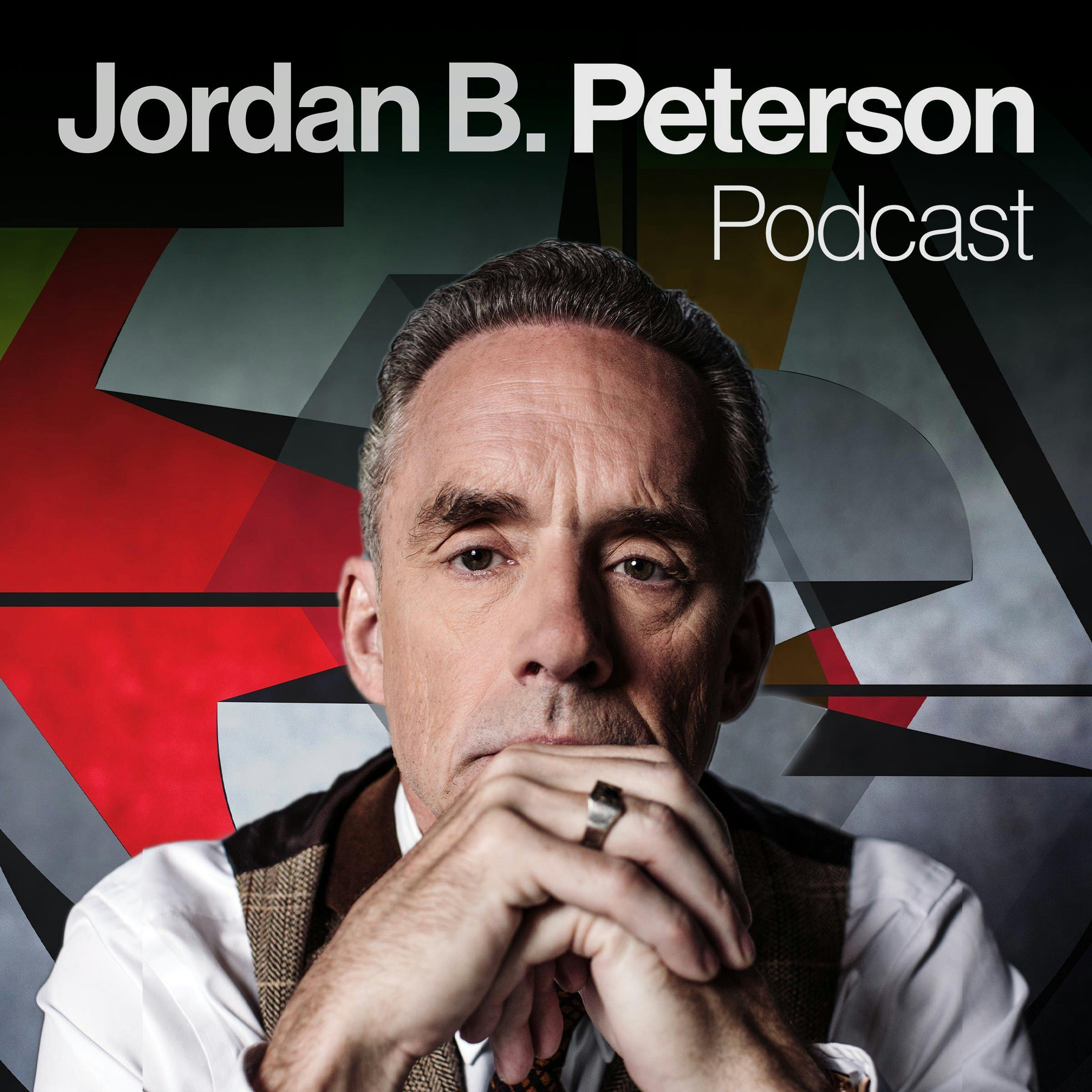
Episode 500: What a Long Strange Trip it's Been | Dave Rubin
Dave Rubin is the host of The Rubin Report, a top-ranking talk show with over one billion views and millions of subscribers. The Rubin Report is recognized as one of the most influential spaces for uncensored conversations about politics, culture, comedy, current events, and more. Rubin began his career in New York City as a stand-up comedian. He continues to perform throughout the United States and Europe utilizing his voice to illuminate the absurdities of the culture’s polarized political landscape. He accompanied Dr. Jordan B. Peterson on an international speaking tour where they addressed hundreds of thousands of people across three continents. In an effort to combat big tech censorship, Rubin founded Locals.com, a subscription-based digital platform that empowers creators to be independent by giving them control over their content and data. Locals.com has amassed tens of millions of users since its inception in 2019. Rubin sold the platform to Rumble in 2021 which went public in 2022. Dave is a two-time New York Times best-selling author.
This episode was filmed on November 14th, 2024
Press play and read along
Transcript
Speaker 1 If you
Speaker 1 say the truth and nothing else,
Speaker 1
you'll have an immense adventure as a consequence. Jordan Peterson said it first.
At somewhat of an existential crisis. Oh my god.
To get yourself out of trouble, you're going to come on my podcast.
Speaker 1
That's the adventure of our life. I'm going to put my story on babe.
Life is a constant process of death and rebirth. Why is it a horror show? You're toying with the dark side.
Wake up.
Speaker 1 It's not bravery. I know what to be afraid of, and I'm nowhere near as afraid of the people who would want to compel my language as I am afraid of the consequences of not saying what I have to say.
Speaker 1 Do you wrestle with God?
Speaker 1 With every word.
Speaker 1 It's a bit of a special occasion today, at least as far as I'm concerned, and maybe for some of you.
Speaker 1
It's the 500th episode of my podcast, and so that's a lot of podcasts. That's a lot of water under the bridge and a lot of learning.
And I have as my guest today, my friend and compatriot, Dave Rubin.
Speaker 1 And we had the opportunity to take a walk down memory lane. Dave was one of the first podcast notables back in 2016
Speaker 1 to bring the concerns that I was discussing in Canada to a broader international audience. And out of that initial encounter came a friendship and then a joint tour.
Speaker 1 I was on tour with Dave throughout 2018.
Speaker 1 We went to, we can't even remember, 150 different cities, maybe 200, a lot, a lot of places, a lot of water under the bridge, and talked to hundreds of thousands of people.
Speaker 1 And we've both been at the center of the podcast revolution, the new media media revolution, the inevitable demise of the legacy media. And
Speaker 1 we sat down today to remember that and to sort it out and to make sense of it and to be thrilled about it in all sorts of ways.
Speaker 1 And so join us for an evaluation of the radically strange trip that the last eight years has been.
Speaker 1
Well, Mr. Rubin, turns out that you're here for the 500th episode of my podcast.
I was told this is the last episode. Yeah.
Speaker 1
Well, hopefully not. Is that not true? Well, it depends on whether or not the world comes to an end now that Trump's been elected.
I think things are looking up, man. Things are looking real.
Speaker 1
Yeah, yeah, well, yeah. Had it gone the other way, this might have been the last podcast.
Well, definitely, yeah, definitely. Well, yeah, we'll walk down that avenue, no doubt.
So I'm going to start.
Speaker 1 I'm going to give you this book.
Speaker 1 So this is obviously an
Speaker 1
uninshamed promo, promo, but this is coming out this week. So I'd like you to have it.
I'm thrilled. Thank you.
Speaker 1 I appreciate that.
Speaker 1
You turn these out like nobody. I mean, you really do.
Yeah, well, I'm.
Speaker 1
That's your very thing with us writing these things, I think. Yeah.
Yeah, definitely. Are you happy with that?
Speaker 1 Yes.
Speaker 1 It's more difficult than the last two books that I wrote.
Speaker 1 It's a little bit more demanding on the reader, I would say.
Speaker 1 But it's less demanding than maps of meaning.
Speaker 1 But
Speaker 1 I'm very curious to see what sort of impact it has, because now that we know that we see the world through a story, we better get the story straight. And that's what I'm trying to do with this book.
Speaker 1 And so
Speaker 1 one of the things I figured out, which I think is extremely useful to know, is that
Speaker 1 there's converging evidence from multiple disciplines that we see the world through a story, that what a story is, is actually a description of the way that someone prioritizes their attention and their actions.
Speaker 1 So when you go see a movie, you see the person who's acting, the protagonist, the hero, you see what he attends to. And so you see how he rank orders his priorities.
Speaker 1 And then, of course, you see the same thing with regards to his actions. And you infer his frame of reference, and then you can occupy his value frame, and you can see the world through his eyes.
Speaker 1 And human beings are very good at that. We're very good at seeing the world through other people's eyes.
Speaker 1 That's even why our eyes have evolved the way they've evolved because our eyes are maximally visible so that we can see what other people are looking at, so that we can infer what they're
Speaker 1
what we can infer the value structure that's directing their attention, and we can occupy the same emotional and motivational space as they do. Human beings are unbelievably good at that.
And
Speaker 1 you have to prioritize prioritize your attention because there's too many things to attend to. And you prioritize your attention by weighting the things that you interact with.
Speaker 1
Some things you attend to, some things you don't. That's a one-zero weighting, essentially.
And there's gradations of that weighting.
Speaker 1 Anyways, the way we communicate about these weighting strategies is with stories.
Speaker 1 So once you know that, the only question becomes, Well, what's the story then? What is it? What should it be? Right? And the postmodernist insistence is that the story is one of power.
Speaker 1
And I don't think that's true because power is self-devouring. It can't sustain itself or it can only sustain itself with force.
And part of the problem with that is that if you use power,
Speaker 1
someone more powerful will definitely take you out. And you also don't get the best out of people when you compel them.
So they're not efficient strategies. They backfire.
Speaker 1 And you could say there's no story that's canonical, but then you fall into the nihilist hell and that's not useful. And you could say that the story is one of sexuality and hedonism, but
Speaker 1 if you orient your life in that direction, you'll end up alone. And so
Speaker 1 that's another self-devouring story. And so
Speaker 1 one of the insistences in the biblical narrative is that the fundamental story of the community is one of sacrifice.
Speaker 1
And I think technically it has to be true because to enter into a relationship with someone, you have to sacrifice. You sacrifice your own centrality, right? Well, you have kids.
Yeah.
Speaker 1 So what's the consequence of that for your story?
Speaker 1 Wow, you're going hard right from the beginning. Well, first off, I should note that you were integral in me having kids because we were on tour back in 2018,
Speaker 1 did something like 120 shows, 20 some odd countries, bouncing around. We were just saying right before the cameras started rolling that it was so much smaller.
Speaker 1 We had no idea what we were doing in some sense. I mean, you knew what you were doing on stage and I was making some jokes and we'd do the Q ⁇ A together, but there was no security.
Speaker 1
There was no managers. There was no entourage.
There was no film crew. I mean, we really were just out there bouncing around doing things.
Speaker 1 And one of the things that you were saying almost every night and the thing that, you know, I've said this to you many times, there's a million things, obviously, that everyone can say about Jordan Peterson.
Speaker 1 But one of the things that watching you as someone on stage to the extent that you're a performer do is that you would basically do an hour, hour and a half lecture every night and then just pick it up the next night where you left off.
Speaker 1 Except I was basically, me and the tour manager were the only two people that saw it the night before. You know, we didn't have roadies going every show.
Speaker 1 But one of the things that you consistently talked about is the need for people to truly, for almost everyone, you would say, to live a fully actualized life is to have a child, to learn what the experience of being a parent is and then ultimately a grandparent and maybe a great-grandparent, that that's just so integral to being a fully fledged human.
Speaker 1 And I'm hearing you do this night after night. And David, my husband, who you know,
Speaker 1
he's a little younger than me. He grew up in a time where he just thought he was going to get married.
It wasn't a thing. I'm a child of the 80s.
It was gay marriage. whatever else.
Speaker 1
And I struggled with all that. And we've done that on camera before, so I don't think we have to to rehash that too much.
But I grew up in a time not thinking I would get married.
Speaker 1 I never really thought of anything to the future, really. And I kind of just put everything towards my career.
Speaker 1 And now I've got David, who I'm FaceTiming with every night, whatever country in, telling me he wants kids. And I've got you on stage telling 10,000 people every night why they should have kids.
Speaker 1 And finally, I thought, man, if I don't do this, there's really something wrong with me. I'm with the person I'm supposed to be with.
Speaker 1 I'm touring with someone that I think has offered offered more to the world in terms of how do we do this right than anyone that I could possibly imagine.
Speaker 1
And I get the privilege of being part of that. If I can't do this, then this thing's really on me.
So we've got two two-year-olds now.
Speaker 1 And Justin's middle name is Jordan, which one of the great joys of my life was calling you up that day and asking you if we could do it. And we got the Jordan Peterson tears, which
Speaker 1 we've gotten every now and again. And so what that has done to me, I mean,
Speaker 1 I mean, the best example I can tell you is Luke was about two months old one night, you know, coughing terribly, really nasal and just
Speaker 1 so much fun.
Speaker 1 But so, you know, a couple hours of trying to get him better and doing everything we could and steam and calling the grandmothers and what do we do, what do we do? And finally, and calling the doctor.
Speaker 1 And finally, we were like, we have to take him to the hospital. And to be driving to that hospital, you know, with him in the car for the first time since we had taken him home from
Speaker 1
the hospital when he was born and literally talking to God. I mean, I don't know how often I do that, probably not that often, and saying, take me.
Like it was just the thing, take me.
Speaker 1
Like whatever's happening here, I could be done. Like, let me be done.
And obviously he's okay. But that, that's the thing.
I think in essence, that's the reason. that you're saying to
Speaker 1 really do it right. I mean, I've changed more in these two years and matured more and dealt with more of my stuff, whatever else was left than it certainly at any point in my, in my adult life.
Speaker 1
And I'm just at the beginning of that. You know, I'm also 48.
I have a lot of friends who have children that are mid-20s now.
Speaker 1
So think about that. My contemporaries, you know, I'm hanging out with my friends from childhood.
Two of my best friends are still from five and eight years old. They've got kids out of college now.
Speaker 1
And I'm just bringing these children into the world. And what that does to your perspective and change and everything else.
So I would say the most powerful piece of it probably is
Speaker 1 there's there is something way more important than you.
Speaker 1 And when you wake up and see that, when I get up every morning and I'm making my coffee and those two kids run at me with like the world is just you talk about the eyes like their eyes are open man.
Speaker 1 And like they just they think
Speaker 1
yeah. And they they think you are the best thing in the world.
And I think about it all the time. I'm like, well, now it's on me to be the best thing that I can be.
Speaker 1 I I don't know that I can be the best thing in the world, but I could be the best thing that I can be. And I'm really trying to do it.
Speaker 1 And actually, as I've tried to do it, it's becoming less difficult to do.
Speaker 1
You know, like eventually you start doing it right. And then it kind of works.
I'm not saying it's what you become, what you practice. Yeah.
And then, and then it's on you.
Speaker 1
Yeah. And aiming for that.
I do realize I was aiming for it, I think.
Speaker 1 For what do you think now?
Speaker 1 Well, you said you said. Well, I don't think I realized I was aiming for something bigger than myself in some sense.
Speaker 1 You know, that it was just I was going to, my career started working around the time that we were on tour, you know, six or so years ago, which feels like a lifetime ago.
Speaker 1 I just thought,
Speaker 1
I'll just do this and it's working and it's good. And that can really fill you up.
Yeah.
Speaker 1 You know, you had this conversation on Bill Maher's podcast about that, that there are some people that maybe can do it.
Speaker 1 Maybe you don't have to get married and maybe you don't have to have kids and maybe you can put it all into your career or your heart, but it's pretty damn rare.
Speaker 1 And I i thought even then you get one-dimensional man well you guys i thought you took that conversation to as close as it could get on camera probably without without going any further with him and i think and i don't we don't have to talk about him too much but i think he's as maybe as close as you can get to doing that for better or worse
Speaker 1 um i don't even mean that at all see you made you made a observation about the sacrificial element telling that story about taking your son to the hospital right so your
Speaker 1 fervent wish was if you could swap places and and take on the trouble you'd do that in a second right so it wasn't even a it wasn't even a choice right right it was just that was it obviously right well this is why i've said this and it's made me unpopular that people don't mature generally until they have a child and the reason for that is you're not mature until someone's more important than you and and it has to be like that it's like it's no it's there's no question Right.
Speaker 1 It's no, there's no question. And it's weird, eh? Because so
Speaker 1 one of the things that psychologists discovered kind of by accident using statistical investigation, so I think this is a very robust finding, is that all the negative emotion words clump together.
Speaker 1 So there aren't, there's really one tree of negative emotion with the central trunk, right? So the negative emotions are grief and disappointment, frustration and anxiety and pain.
Speaker 1 Those are the big ones.
Speaker 1 Maybe they branch off into more differentiated emotions.
Speaker 1 One of the experiences that's integrally linked with negative emotion is self-consciousness.
Speaker 1 Self-consciousness is so tightly associated with negative emotion that they're not statistically distinguishable. There's no difference between being concerned with yourself and suffering.
Speaker 1 And that's such an interesting,
Speaker 1 it's such an unlikely reality that that's the case, you know, because the hedonistic story is that you can please yourself and that why shouldn't you please yourself? Fill it up forever.
Speaker 1 Well, the answer to that seems to be, well, first of all, who are you going to do that with?
Speaker 1
That's a real problem. It's a real problem, unless you can please yourself and no one can.
You know,
Speaker 1 we can punish the worst criminals by putting them in solitary. That's how social human beings are.
Speaker 1 And so, and then even more directly, the experience of self-consciousness, so to be concerned with yourself, is associated with anxiety and shame and grief and disappointment and all the negative emotions.
Speaker 1
And so that implies then that there's a non-obvious relationship between being focused on, now exactly what? Focused on others? That's part of it. Focused on something higher.
It's not.
Speaker 1 It's certainly not the narrow self and it's certainly not the whims of the self.
Speaker 1 No, it's building something that's well beyond you.
Speaker 1 The best I ever heard you talk about it was the closing speech you gave in ARC, which I think for the hundred some odd events we've done together, could be almost 200 events we've done at this point, where you talked about building Jacob's ladder and why you do it and what that is and how that is the link from man to God.
Speaker 1 So that is right.
Speaker 1
I know that that is right. You know that's right.
Why do you know it?
Speaker 1 Because
Speaker 1 it's not just that suddenly you have this magical moment of I'm driving to the hospital, take me, right? I just met this kid, right? He doesn't speak yet. I just met him, take me.
Speaker 1 I can tell you in the other parts of my life, I'm in better shape now in these last two years because I thought, well, now I have to live longer. I actually have to live longer.
Speaker 1 And I have to, I play basketball every week with a bunch of guys who also have kids that are, you know, in their 20s and 30s. And then sometimes they bring their kids that are in 20s and 30s.
Speaker 1
So I'm talking about guys in their 50s and 60s. And I've started playing with them.
And I was like, wait a minute, I want to be able to play with my sons when
Speaker 1
they're 18. Well, if they're going to be 18, that's 16 years on me now.
I got to be able to play when I'm 64.
Speaker 1 So then I started eating right and getting better and working out more and all of these things.
Speaker 1 And then, and that's, that sounds like it's all about me, except when you start doing those things, David started doing those things. And then you've been to our house.
Speaker 1 We keep our house in a certain order and welcome people and share in the goodness that I suppose my career has been able to afford.
Speaker 1
So then you start building something that, well, my hands just went like that. You start building something that goes up.
And I think that that's real and tangible. And we all innately know it.
Speaker 1 I've been speaking with Jonathan Pazio about these sorts of things quite a lot, too. And so, in this book, one of the stories that I tell is, or that I investigate, let's say, is the story of Abraham.
Speaker 1 So, I'm going to tell you a little bit about that because it's
Speaker 1
once you understand it, you never forget it. It's absolutely striking.
So,
Speaker 1 in
Speaker 1 so we talked about Jacob's ladder a little bit, So you think that there's this upward spiraling process that brings you to, what would you say, to more and more sophisticated
Speaker 1
plateaus of unity, something like that. Okay, so that's what the Abraham story is about.
So
Speaker 1 when,
Speaker 1 and there's a pact made, this is the covenant between Abraham and God. So whatever's at that pinnacle of this ever-ascending, spiraling
Speaker 1
value structure and process. That's God, but it was at the pinnacle, and it recedes as you approach it.
So
Speaker 1 there's no
Speaker 1 final
Speaker 1 definition. God is ineffable in that way, right? So there's a never-ending spiral of up, just like there's a never-ending spiral of down.
Speaker 1 And so when Abraham, when the story opens, Abraham is a privileged infant, essentially. He's 70 years old, but he's never really had to lift a finger because he's wealthy.
Speaker 1
And so he has privilege in the modern language. And God comes to him as the spirit of adventure.
And this is a definition of
Speaker 1 one of the facets of the highest plane of being, let's say, and
Speaker 1 God makes Abraham a deal, which is the covenant. And so the covenant is a contract.
Speaker 1 And so one of the proclamations of the biblical text is that human beings exist in a contractual relationship with the divine.
Speaker 1 That's a very interesting claim. And we exist in contractual relationships with each other.
Speaker 1 That's what a marriage is, obviously, and all of our business arrangements and friendships, although the details of the contract and the friendship are implicit, but they're still there.
Speaker 1
It's an understanding. So our essential mode of being in the world is contractual.
And so God's contract with Abraham takes a very specific form. He says to Abraham, it's very well defined.
Speaker 1 He says to Abraham,
Speaker 1
if you leave your zone of comfort and you go out into the world and you put your heart into it, this is what I can offer. You'll be a blessing to yourself.
So that's a good deal, right?
Speaker 1 Because part of the reason that people suffer is because they're racked with self-doubt and guilt and
Speaker 1 lack of faith in themselves, whether that's deserved or undeserved. And sometimes it's undeserved and sometimes it's deserved, but they're not a blessing to themselves.
Speaker 1 They suffer more in consequence of their own being being than for any other reason. Okay, so if you
Speaker 1
abide by the voice of adventure, then that disappears. Okay, so that's a good deal.
And then the next part of the deal is
Speaker 1
you'll do that in a manner that will bring you renown among other people and it'll be justified. So that's a good deal.
So that's basically reputation, right? It's not fame. It's reputation.
Speaker 1 Those are different.
Speaker 1 Fame,
Speaker 1
you can can attain fame by being disreputable, right? And you can have a great reputation without being famous. So they're not exactly the same.
Right. And those are very, very different things.
Speaker 1 They are. And the reputation, it's also the case that the kingdom of heaven that Christ tells people to store treasure in is a reputational storehouse.
Speaker 1
So the gospel injunction basically is that the safest place to store value is in reputation. And that makes perfect sense to me.
I think that's exactly right.
Speaker 1 So, okay, so the second part of the covenant is
Speaker 1
you'll make a name among other people and it'll be justified. So that's a good deal.
And the third part is
Speaker 1
you'll establish something permanent, a dynasty. Right? So that's what makes Abraham the father of nations.
So now there's a new idea that enters into that. So
Speaker 1 the idea is that the pattern of following the spirit of adventure is the same pattern that makes for the best fatherly mode of being, and that that has a multi-generational effect.
Speaker 1
And so that if you embody the father properly, you radically increase the probability of the paternal success of your children. And I think that's true.
I think that's right.
Speaker 1 So I was thinking about this in relationship to Dawkins' theory of the selfish gene. It's like
Speaker 1 it's
Speaker 1 the implication of the selfish gene is that
Speaker 1 reproduction takes primacy and that there's no difference between reproduction and sex. But that's not true.
Speaker 1 There's a big difference between reproduction and sex, especially among human beings, because we're high investment
Speaker 1 parents. Right? We don't just, it isn't just sex and the offspring runs off into the world.
Speaker 1 It's a multi-generational investment. That's why we live as long as we do, because it's a grandparental investment as well as a parental investment.
Speaker 1 So imagine that to maximize the reproductive success of your offspring, you have to instantiate the pattern of the father. And that's the divine pattern of the father, right?
Speaker 1
And so, and God tells Abraham that you embody that pattern by pursuing the spirit of adventure. So that's cool.
That's cool. And then there's one last thing.
Speaker 1 He says, you'll do all three of of those things in a way that'll be a benefit to everyone else and so then you think so this is so you think about this biologically even so you see this in your kids they have this impetus to master the world right and now you want to watch that and you want to encourage that and you do that by establishing a relationship that's separate because I'm sure your boys are quite different.
Speaker 1
Oh, yeah. Yes, because children differ a lot from one another.
So you have to establish a different relationship with each of them.
Speaker 1
But there's commonality in the relationship because it's an encouraging relationship if you're a good father. So, now, Mitch, that you embody that encouraging relationship optimally.
Well,
Speaker 1 God's promise to Abraham is that's what makes you the father of nations, I think.
Speaker 1 That's such a lovely equation because
Speaker 1 it makes the case that the same instinct that
Speaker 1 calls a child out into the world and that underlies the excitement of adventure is the same,
Speaker 1 it's the same spirit that produces all four of those benefits.
Speaker 1 And I thought, well, it has to be that way because how would it possibly be that the spirit that calls us to move out in the world wouldn't also confer maximum social and reproductive benefit?
Speaker 1 It's literally everything. I mean, you're basically saying everything, right? Like, if you do what you are supposed to do,
Speaker 1 then everything will order the world.
Speaker 1 I can tell you that from being on tour with you and watching the people that you turned around, literally in tears, hundreds of people out of thousands, sometimes in tears at once, because they were off drugs or because they were in a better relationship or they mended a relationship.
Speaker 1
Do you remember when we went to, when we were in Dublin and we had done, it was like 10 different countries in 15 nights, something crazy. You did press all day long.
It was an exhausting day.
Speaker 1 And we end the show and
Speaker 1 it was a sort of very small old school theater in Dublin and we end up in the alley after because you don't walk out the front you know to where everybody's going to mob you and it was about 1 a.m.
Speaker 1 and we walk out and it's a dark alley and we had no security it was just me you Tammy and John the tour manager And there were two guys about 40 yards away from us and we could sort of see them and it almost seemed like they were fighting or something.
Speaker 1 They started kind of rushing towards us and we all thought for a second that they were, you know, going to jump us or something. And then as they got closer, we saw they were both in tears.
Speaker 1 One guy was probably about late 50s and one guy was probably early 20s.
Speaker 1 And they told us that it was a father and son who had had a falling out about eight years before, had not spoke in eight years, independently, went to the show alone, saw each other there and made amends.
Speaker 1 I mean, I just got chills up my spine telling you the story again. Like,
Speaker 1 what's the point of that? The point is that if you order yourself, that you will order the world. That's real.
Speaker 1 There's a line that I've been reading from Carl Jung, who I know had a little influence on you over the years that I've been ending a lot of my shows with lately.
Speaker 1 I'm going to slightly butcher the exact quote, but in essence, that if you don't do the call for adventure, if you don't go on the call for adventure, the exact thing you're asking for, you will be left with nothing but neurosis.
Speaker 1 The walls will basically close in on you. And we all know this.
Speaker 1
Think of all the interesting cool people. Yeah, that's all that's left is the suffering.
Right, because pointless suffering.
Speaker 1
Think of all the interesting, cool people that you and I have had the privilege of being around in these last eight years since we met. Eight years ago, this month, actually.
Right, right.
Speaker 1
Like I said, it's been eight years. It's been eight.
I think it was eight years ago this week. It was November.
It was the second week of November in 2016. I had just moved into a new house.
Speaker 1
We were building my home studio in the garage. I didn't even have internet.
I was stealing internet from my neighbor. We did this.
Speaker 1
You were just on the scene because of the free speech bill. Like month, month.
And suddenly my Twitter feed was blown up. You got to talk to this guy, Jordan Peterson.
We jump on a Skype.
Speaker 1
People can find this online. We jump on the Skype.
It's very, you know, sketchy, in and out. The picture's no good.
It's all pixelated.
Speaker 1
And you're in your office and I'm sitting in my house and we're talking. You're doing the Peter Pan story and everything.
And it ends. And I turned to David.
I swear on my life.
Speaker 1 And I said to him, that guy is either the most brilliant person I've ever talked to or completely insane.
Speaker 1 I leave it to you to decide.
Speaker 1 I guess I leave it to you. I leave plenty of discussion about that.
Speaker 1 Right, exactly. But
Speaker 1 flash forward eight years,
Speaker 1 we've both been on adventures that have kind of collided at times and then gone separately at times, good, bad, all sorts of health things, all the kids, all the stuff.
Speaker 1 And yet I think that we're probably both sitting here as good as we've ever been.
Speaker 1 That's a sort of scary, I don't like saying it in some sense, like, because then it feels like it's inviting doom or something.
Speaker 1 But I think it's only because I've seen that when you do what you're supposed to do, when you really do it and you say something true, even just connected to the political world of the last couple of years, like I think we had a little something to do with getting people to wake up to what was going on in the world.
Speaker 1
You know, you did it at the sort of psychological, personal front. I kind of did it on the political front.
And we have an unbelievably hopeful world coming right now,
Speaker 1 I think.
Speaker 1 So, in the Cain and Abel story,
Speaker 1 Cain
Speaker 1 makes second-rate sacrifices, right? So he doesn't bring his best to the table.
Speaker 1 And in consequence, he fails. This is one of these situations where
Speaker 1 the meaning of the pattern of human life is being acted out by people who can't propositionalize it yet, who can't conceptualize it explicitly. So they're acting it out.
Speaker 1 And so human beings discovered at some point that
Speaker 1 they could sacrifice the present for the future and themselves for the community and that that actually worked better as a medium to long-term strategy so that's why the community is based on sacrifice and you made reference to that with regard to the impulse that entered your imagination when you were taking your son to the hospital that realization that
Speaker 1 There's something more important, well, than you, even in total, in a way, but certainly than what you might merely want at the moment. Right.
Speaker 1 And so Cain,
Speaker 1 who's kind of Luciferian and he thinks he can get away with his tricks, he doesn't bring his best to the table and he fails. And so he could
Speaker 1 notice that and rectify his fault and
Speaker 1
confess and atone and fly right and succeed. That's on the table.
But instead, he becomes bitter and he shakes his fist at God.
Speaker 1 And so his presumption fundamentally is that the fact of his failure is emblematic of the dysfunction of the world. It's not him, even though he's not bringing his best to the table.
Speaker 1
It's the structure of reality itself. So it's unbelievably arrogant, right? So that's the Luciferian element.
Unbelievably intellectually arrogant.
Speaker 1 What wouldn't you do to the world if you believed that? What wouldn't you do? Yeah, you'd burn it to the ground. Well, and that's basically what happens in the story as it unfolds.
Speaker 1 So he goes, he shakes his fist at God, and then he has a conversation with him, with God. And God says,
Speaker 1 basically, he says, you think that you're suffering because you're not doing well, and that that's a consequence of your misery. First of all, if you did well, you would be accepted.
Speaker 1 So that's a very interesting claim. The idea is that if you
Speaker 1 gave it everything you had, it would work. And you can imagine that that's a kind of faith, right?
Speaker 1 That you have to have faith to do that because there's no evidence to begin with that if you brought your best to the table, it would work.
Speaker 1 And, you know, maybe you've had experiences where people betrayed you and so forth that made you doubtful or you betrayed yourself. So it is
Speaker 1
emblematic of faith to bring your best to the table. God's rejoinder to Cain is that if you you brought your best to the table, you would succeed.
Now,
Speaker 1 you can imagine people being skeptical about that, but I think the right response to the skeptics is,
Speaker 1 have you brought your best to the table?
Speaker 1 What's the other option?
Speaker 1 Well,
Speaker 1 that's what's explored.
Speaker 1 And then God says something even stranger to Cain. He says something like,
Speaker 1 you're also blaming your suffering on your failure, but that's not exactly right.
Speaker 1 And this is very interesting causally, because we like to think that
Speaker 1 people who go crooked, let's say, do that because they've been hurt, because terrible things have happened to them. And there's an intervening variable theory in this account between Cain and Abel.
Speaker 1
So, what God tells Cain is that there were many ways that he could have reacted to the fact of his own failure. And he picked one.
And the one he picked was
Speaker 1 rife with a terrible temptation. He says, sin crouches at your door like a sexually aroused predatory animal, and you let it in to have its way with you.
Speaker 1 And so the idea there is that Cain is turning to
Speaker 1 vengeful bitterness in consequence of his failure when that wasn't the only option. And so he's inviting the spirit of vengeful bitterness to possess him and then he's actually
Speaker 1
to have its way with him. And he's actually entering into a creative union with that.
and that's the conse that's the cause of his misery. And that's the end of the discussion.
And that enrages Cain.
Speaker 1
And that's when he invites Abel to go work with him. So it's a false invitation.
Then he kills him. And then Cain's children become more and more murderous, and his grandchildren make weapons of war.
Speaker 1 And the next story is the flood or the Tower of Babel, right? So it's a complete story of human degeneration. And it's a covenantal account, too, because
Speaker 1 Cain violates the covenant with God by
Speaker 1 not bringing everything he has to bear on the situation. And think, well, what's the counterproposition to that? Is that the counterproposition is that you can succeed by hedging your bets.
Speaker 1 Well,
Speaker 1 who would believe that? Like when you lay it out,
Speaker 1
you might just get away with it. Something like that.
Well, that's the hope.
Speaker 1 But then underneath that, there's obviously the idea that you're smart enough to pull the wool over what? Your eyes?
Speaker 1
Everyone else's God's eyes. everyone's eyes? That's who you are.
Or worse, that's the spirit that you've invited to possess you. Right.
Speaker 1 And then when it reveals itself completely, it turns out to be fratricidal and then genocide.
Speaker 1 That's probably how most of us operate on a day-to-day basis, right? I mean,
Speaker 1 most people probably operate on some version of pulling the wool over their eyes, right?
Speaker 1 Yeah, well, that's certainly not.
Speaker 1
I'm not talking about the most exceptional people. I'm not talking about like that.
That's the question of conscience for everyone.
Speaker 1 You know, it's like, well, if things aren't going your way,
Speaker 1 just whose fault is that? Well, the other thing you might want to realize, too, is that if you're lucky, it's your fault because you could do something about that.
Speaker 1 If it's the state of the world, let's say, or if it's God's distaste for you at some fundamental level, let's say.
Speaker 1 or the impossibility of existence in general, then you're really in hell. But if it's you,
Speaker 1
well, then you could possibly do something about it if you were willing to. Maybe clean your room perhaps.
Wouldn't that be something to do? Maybe.
Speaker 1 Well, you could start by straightening out what you can straighten out. Well, you said, you know, you saw on the tour repeatedly the fact that
Speaker 1 that worked for so many people.
Speaker 1 And so, you know, and that's part of the reason why we've kept this going. Well, it's the reason that we've kept it going.
Speaker 1
You know, it's extremely interesting and it's great to have the opportunity to think on my feet. And, but well, it's your adventure.
Yeah, right. It's your adventure.
Speaker 1 I saw it then, and I know, even though we're not on tour together right now, I know you're still doing it. You know, I had forgotten that
Speaker 1 you were,
Speaker 1 I wonder if you were the first
Speaker 1 relatively large podcaster to talk to me after everything blew up in Canada. It might have been, you know, because
Speaker 1 I made those videos on Bill C-16
Speaker 1 in about mid-October in 2016. And so it, it was, and what was happening in your career at that point? Like, you were established on YouTube already as a commentator.
Speaker 1
Now, at that point, I had left the left, so to speak. You know, I was still fighting for the same liberal values that I actually still believe in.
I just can't use the word liberal anymore.
Speaker 1 We can get into that if you want.
Speaker 1 It's just, it just becomes impossible linguistically to explain why liberal values are no longer associated with the liberals, which we both obviously talked a lot about. But
Speaker 1
I was really independent for the first time at that point. I had just bought my first house.
We were doing the home studio thing. Really, nobody had done that.
Speaker 1 You know, I really, I really was at the front end of building a TV-ready studio. I mean, you came to that house many times and we did a lot of, a lot of great shows there.
Speaker 1
And I was building something that could have just as easily been replicated in Fox or CNN or elsewhere. We turned a bedroom into a control room.
We had a proper lighting grid. We did it.
We did it.
Speaker 1 All the right equipment, right staff, et cetera. Yeah, right.
Speaker 1 But the main thing that I was still harping on politically was free speech because I saw the hysteria of the left.
Speaker 1 And then I started looking at Twitter and Twitter, obviously, was very different at the time, but you know what it was like.
Speaker 1 You'd tweet something and then you'd look at the mentions and suddenly everybody's going on and on about this guy, Jordan Peterson. I thought,
Speaker 1 Well, let's talk to this guy, Jordan Peterson, and my studio is not ready and he's up in Canada. So we'll jump on Skype and do it.
Speaker 1 I I think it might have actually been my first Skype interview ever, you know, and then during COVID, that obviously became kind of ubiquitous. But
Speaker 1 from that point,
Speaker 1 I think I
Speaker 1 just went in on the free speech thing.
Speaker 1 It was, well, I knew it was right, but it also felt, it felt deeply important. And now it's-
Speaker 1 Why did you decide to come on tour with me? Because that was pretty soon afterwards, right? You may not remember how it happened, but it almost, I, it almost was a joke. And
Speaker 1 this says a lot about you, actually.
Speaker 1 You, me, and Ben Shapiro did a show at my house in January, I believe.
Speaker 1
It was 2018. Yeah, yeah.
It was January 2018. The three of us did the show, and you were doing your first theater show that night at the Orpheum in L.A.
Okay.
Speaker 1
And we did like a three-hour show, the three of us. And I kept, I knew you and Ben could just do this all day long.
I barely had to be there.
Speaker 1 I just had to, you know, kind of look one way every now and again.
Speaker 1 But I knew you had this big theater show, so I wanted to end it a little bit early. We ended up going about three hours.
Speaker 1 And then as we were saying goodbye, and we had only met in person, I don't know, three times, maybe, maybe, maybe that was the second time we met. I'm not even sure.
Speaker 1 I said to you, and I was kind of joking, as you were standing on the stoop of my house, leaving to go to the theater.
Speaker 1 I said to you, hey, Jordan, do you want me to come tonight and I'll crack a couple jokes about lobsters and some of the other funny references? And you said, yeah, that would be a great idea.
Speaker 1 And then I came, the Orphume was sold out. It was the most people I had ever, you know, I'd been doing stand-up for years, but I had never done a 5,000-seat theater.
Speaker 1 And
Speaker 1
I guess I crushed it. And the whole CAA team was right there.
And I remember the two agents came right up to me. They said, this show is amazing.
We're going to take this on tour.
Speaker 1
You want to open for him? I said, well, we should probably ask Jordan. And then you immediately said yes.
And then it completely changed my life. I look back on it like it was a dream.
Speaker 1 Sometimes I really think back. I'm like, did we really do that thing?
Speaker 1 It was incredible. Well, even that renting that damn theater, you know, so because you had no idea.
Speaker 1 And do you remember? Do you remember one of the things that I would always say at the top of the show?
Speaker 1 And I tried to switch it up as much as possible, definitely not as much as you, because I felt my job was to be funny so that people would come and feel relaxed for the first. 10 or 15 minutes.
Speaker 1
Then Jordan could do his thing. And then I would try to be silly with you for the most part at the end.
That way it felt like a complete show.
Speaker 1
That was what I always felt. Because otherwise people were coming for hardcore stuff.
I mean, unbelievably impactful stuff. And I didn't want them leaving with that.
Speaker 1 I wanted them to walk out of there like, wow, we had a great time to tell their friends. So I always felt that that was my job.
Speaker 1 And I think that because we did it that way, I think something that you've told me a few times in the last year or two, that your audience now has matured with you.
Speaker 1 And I love that that actually, that's the Jacob Bladder story right there, right? You took what was largely young men.
Speaker 1 who had whatever their issues were at the time and the way maybe the way culture was treating them and everything else you helped order them they were getting dressed right all these guys coming up in suits that we were in sweden and i stopped at an h m in sweden because i wanted a new suit for that show and the guy in front of me is i hear him talking to the cashier and he tells the cashier in english he tells the cashier that he's buying his first suit because he's going to a jordan peterson show tonight and i tapped him on the shoulder i said i am too and then we called him out on the show that night but now you've said that your audience has matured with you and now some of them are in better you know they're in better relationships they now have kids you're talking to people who five years ago were a complete disaster.
Speaker 1 That's literally the story you're telling me right now.
Speaker 1 It's incredible. So,
Speaker 1 in the Abrahamic story,
Speaker 1 so
Speaker 1 you have the story of Cain and Abel, and it describes the way that the psyche and then the society deteriorates, right?
Speaker 1 This pattern of insufficient sacrifice, the invitation to the spirit of Luciferian bitterness and resentment, fratricide,
Speaker 1 and then the decay of society as a whole, right? And then you have the flood,
Speaker 1 which is
Speaker 1 the degeneration in the direction of chaos.
Speaker 1 Then you have the Tower of Babel, which is degeneration into totalitarianism, right? So it's pathology of chaos.
Speaker 1
It's like degeneration of the individual in society, pathology of chaos, pathology of order. Then you have the story of Abraham, which is the antidote to that.
So it's like Abraham is the new Abel.
Speaker 1 So he decides that that he's going to forego his comfort and follow the spirit of adventure. And one of the claims that I've been making
Speaker 1 in this book, but also on the last tour, was that
Speaker 1 so the divine is characterized in the Old and New Testaments also as the truth that will set you free. And so adventure is part of that and truth is part of that.
Speaker 1 And they're reflective of the same unified thing. And I think the reason for that is that there is no better adventure than the truth.
Speaker 1 And the reason for that, it touches on things we've already discussed, but I think there's a technical reason for that. It's like
Speaker 1 if you want something from someone, you can craft your words to get that thing you want.
Speaker 1
And maybe you'll get it, maybe you won't. And you might say that you succeed when you get it.
But the problem with that hypothesis is, how do you know that you wanted the right thing?
Speaker 1 That's a really big problem because lots of times we chase the wrong thing. Well, there's an alternative approach, which is
Speaker 1 you say what you believe to be the case and you make the presumption, that's faith, let's say, you make the presumption that whatever happens as a consequence of that is the best thing that could happen.
Speaker 1 So, but also, this is the adventurous part, you don't know what's going to happen.
Speaker 1
Right? And so you're throwing yourself into the fray. I'm going to say what I think and what, and there'll be consequences, but I don't know what they are.
Well, you think, well, that's scary.
Speaker 1 It's like,
Speaker 1 well, yeah,
Speaker 1 but
Speaker 1 it's extremely interesting. It's ridiculously exciting.
Speaker 1 Well, relative to what's happening in the world right now, just the results of this election and the fact that a bunch of us, the laundry list of people, whether it was you and I or Rogan or Brett Weinstein or Douglas Murray or just all of these people that just started talking, That's all we were doing.
Speaker 1 When that whole intellectual dark web thing happened, all it was was that we were talking.
Speaker 1 There was magic to it in that people were hearing things from you that maybe they hadn't heard before or they should have heard before or their parents didn't tell them or something like that or education didn't give them or they were hearing a biological explanation about evolution from Brett that they hadn't heard before or something like that.
Speaker 1 But really what was happening, we were having honest discussions and disagreements and agreements about a whole host of things. And there was no other outlet for that.
Speaker 1
So there was also no other agenda than that. And there was no agenda.
And that's the thing. And in some ways, that's why we couldn't all turn it into something.
Speaker 1 You know, there was this moment where everyone was like, oh, my God, are you guys a TV network? Are you a road show? Are you a podcast? Like, what is this thing?
Speaker 1 Is it everyone on tour together, whatever? And we couldn't quite figure it out because I think partly because we were just doing it for the sake of doing it.
Speaker 1
I was doing what I thought was best in my life. And I think it's, you know, I think it's borne out that way.
I think you did as well. And, but look what happened to the world since then.
Speaker 1
We were very early adopters of a very powerful technology. So that was that.
Right. So there were two things.
So right. So there are two parts, right?
Speaker 1 So the first part is just that we were talking, right? And nobody else was having mature conversations anywhere, anywhere.
Speaker 1 When I started doing long-form interviews, the reason I was doing it was because everyone started going on Snapchat and it was driving me crazy. I thought this thing's making everybody dumber.
Speaker 1 I'm not even sure that Snapchat really exists anymore, but it was, you know, 10 second and there were Vine. Do you remember Vine videos? It was a portion of Twitter, these six second looped videos.
Speaker 1
And I thought, this, this is insane. There's so many things to talk about.
There's so much going on in the world. Why are we just dumbing everything and clipping everything down like this?
Speaker 1
I had become friends with Larry King and I thought, that's what I want to do. I want to sit with somebody and hear what they have to say.
And then.
Speaker 1
Now, subsequently, in the last eight years, everybody and their brother has a podcast and everyone's doing it. But I think we were early in on that.
And then you're right. We were early in.
Speaker 1
There were people in before us for sure, but we were early in on leveraging what technology was going to do. Rogan.
Rogan got in around the same time I did.
Speaker 1 I mean, the network that I worked for, the Young Turks, I don't have a lot of good things to say about them, but Jank Uger did realize that online was going to matter more than mainstream.
Speaker 1 And I think if we've seen anything in the last week, I mean, my argument for these last two or three months was that this was not an election about Trump versus Kamala or liberals versus conservatives or Democrats versus Republicans.
Speaker 1 This was basically the election on reality and how many people are still going to swallow the lies.
Speaker 1 And we can go through the laundry list of things that they've lied about, that the machine has lied about from very fine people to, you know, the vaccine stops COVID.
Speaker 1 I mean, we can do the whole thing.
Speaker 1
And so that was one portion of people and the rest of us that were, it's messy. And maybe RFK is right about some things, maybe not.
But what's bringing Tulsi over?
Speaker 1 And we did that Rescue the Republic event.
Speaker 1 And it was like, what was bringing Russell Brand and you and me and RFK and Tulsi and Brett, all of these people,
Speaker 1 strange bedfellows. None of this would make any sense in an ordered world, but the world had gotten so out of control that suddenly it pushed us together.
Speaker 1 I think that's actually exactly what you just laid out in the story right there, right? It went so haywire that suddenly we all got pushed together. And
Speaker 1 so I guess my question to you then would be, are we now on the other side? Doesn't it feel like something has fundamentally shifted?
Speaker 1 Well, I think what really what put the capstone on
Speaker 1 was the last month of this
Speaker 1 presidential election I think what happened was that
Speaker 1 Baron Trump got the ear of Trump
Speaker 1 and knew the podcast world and Trump being very entrepreneurial and a risk-taker decided to
Speaker 1
pay attention. Yeah.
Because he picked a lot of podcasts that you'd only pick if you knew the podcast world. I think Rogan's an obvious choice because he's the 800-pound gorilla, obviously.
Speaker 1 Although I'm not saying it wasn't courageous and wise of Trump to go on Rogan because basically no other politician would ever do a three-hour unedited, you know,
Speaker 1 yeah, well, and there's still, there's certainly this delusion that I think the legacy media and perhaps even the Democrats are starting to realize, perhaps, that
Speaker 1 their consistent insistence that Rogan is a fringe figure and certainly like some kind of gateway to the right is ignorant and preposterous, both of those things.
Speaker 1 Yet yet bizarrely true now, also, right? Right?
Speaker 1
Yeah, but the thing is, it shouldn't be. It shouldn't be.
He's a gateway to,
Speaker 1
it's a very strange version of the right. Well, that's what they used to say about me.
I was because I left the left. But wait a minute, this guy's gay, still liberal, mostly mostly pro-choice.
Speaker 1
Like we could do the whole laundry list of things, but that I was just willing to talk to people. So then suddenly I'm talking to you.
And then I was like, I'll talk to Shapiro. Oh,
Speaker 1
I'll talk to Glenn Beck. That's a scary guy.
He's a crazy right-winger. I'll talk to Larry Elder, et cetera, et cetera.
So then that's what people used to say to me all the time.
Speaker 1 You're the gateway drug.
Speaker 1 The funny thing about Rogan is if you see what the media is doing with him now, is they're going, the mainstream media is going, you know, why is it that we don't have our own Rogan?
Speaker 1
Well, you idiots, you had him. Yeah, no.
You had him.
Speaker 1
You refused to talk to him, and you tried to get him kicked off. You tried to get him kicked off Spotify.
You see, Hurwitz made public, Greg Hurwitz made public
Speaker 1
this week. I thought that was really good.
That message that he, because Greg was a very influential
Speaker 1 consultant to the Democrats and a messenger, like very influential.
Speaker 1 And he sent them an invitation from all of us, essentially, back in 2017, saying, hey, the reason that none of you are on our shows is because you say no. It's not because you're not being invited.
Speaker 1 And I invited
Speaker 1 dozens of high-ranking Democrats to come on my podcast, and all of them said no. They would talk to me public, privately, but not publicly.
Speaker 1 As recently as I believe it was last March, when we were having the big bipartisan border deal fight, remember that there were three days of we're going to pass this bipartisan deal to deal with the border, even though we don't need a law passed.
Speaker 1
It's obviously the president is allowed to deal with the border. We went to DC.
We hunkered down in a studio for a day in Rumble Studios. We invited invited 20 Republicans and 20 Democrats.
Speaker 1 19 Republicans said yes.
Speaker 1 The only one who couldn't do it that day was Rand Paul because one of his staffers got stabbed on the street of D.C. That tells you everything you need to know about that.
Speaker 1
19 of 20 Democrats did not respond. The only one who responded was Ilhan Omar, which was kind of hilarious.
And she said no.
Speaker 1 But that tells you it right there. I am not thought of as
Speaker 1 a gotcha interviewer, right? Like
Speaker 1 the biggest knock on me for years is, is oh ruben's just gonna throw you softballs i was just interested in talking to people but the idea that
Speaker 1 rogan too rogan's but that's a little harsher than you but but he's not a gotcha interviewer ever no but if you have the entire cultural apparatus which the democrats in essence had in essence had and then you don't you just think you can ignore the thing you'll ignore it until you can't ignore it anymore i think what's now happened is they cannot ignore anything that is exactly what if my if i was getting the views or you were getting the views that MSNBC were getting, I would consider a new career.
Speaker 1
I actually mean that at this point. We're blowing them out of the water.
And I'm not telling you it's because I'm the best journalist in the world. I don't even consider myself a journalist.
Speaker 1
I tell people what I think. I see the news in the morning.
And then partly because of
Speaker 1 being on tour with you, I try to do in the hour-long show that I do every day, I try to tell a story. I don't just try to say, oh, there's 10 things going on.
Speaker 1 I try to loop it into some sort of narrative story. And you've met my producer, Phoenix,
Speaker 1 who you hugely helped in his own life and then we started working together and and now we craft a story so that if people give me an hour of their day which is an awful lot of time five minutes that's a and i'm very aware of that i'm very aware of that and i don't expect everyone to do it and maybe you can only give me five minutes one day and one day you'll give me an hour or whatever it might be but i want you to walk away with oh there's some context to what's going on here not just okay this guy said this and this one did this and and just the endless because otherwise we'll do that forever right we'll just do it forever and i think by all of us having these conversations, by starting to find these alliances, by the left being so hysterical, and you may remember we were in Miami a couple of years ago at a party
Speaker 1
in a backyard, and there was a big debate about what do we do. It was a lot of your friends.
a lot of our friends. And there was a big debate about what do we do with the Democrats.
Speaker 1 And I kept saying they are not coming around. They are not coming around.
Speaker 1
And Greg was taking the counter position. And I'm not saying that I'm not trying to pat myself on the back here because I would like them to come around.
I think maybe now,
Speaker 1 you know,
Speaker 1
right. So it's going to be years now because they still have an opportunity now.
But there's an opportunity at least. He was going to take the destruction.
And I think we have the destruction now.
Speaker 1 I don't know how haywire it goes on their side, but I think that was it.
Speaker 1
The only thing the people on the right did that somehow now makes Joe Rogan a Trump supporter is that they were willing to talk. That's it.
Willing to talk and willing to question things.
Speaker 1 And then it got put on steroids with COVID. It's so funny watching the MSNBC people do a post-mortem on,
Speaker 1 what's their claim, the right
Speaker 1 stranglehold on the new media. It's like, well,
Speaker 1
you can't really call it a stranglehold when the reason it exists is because you wouldn't participate. Right.
Right.
Speaker 1 And so you just, you, you refuse to admit to the reality of the new technology and you refuse to engage despite repeated good faith offers, like endlessly repeated good faith offers with
Speaker 1 people.
Speaker 1
It certainly wasn't inevitable that Rogan was going to transform into a Trump supporter. No, they have themselves to blame.
Yeah, definitely. They have absolutely themselves to blame.
Look,
Speaker 1 when I got the offer for my first book, we were on tour, we were in,
Speaker 1 maybe we were in Copenhagen, I think, and I told you backstage, and you know, of course, one of of the rules is be happy for your friends when you hear good news, slightly butchering it.
Speaker 1 And the way you smiled and slapped your hands, and
Speaker 1
you were sitting in a rotating chair. And I remember your chair fully spun around.
You were so happy for me. That book, Don't Burn This Book,
Speaker 1
became a New York Times bestseller. It should have been like number two or three, but you know, they fiddle with the numbers.
I don't even care about that.
Speaker 1
I mentioned that only because I could not get on MSNBC, CNN, or any mainstream media. Fox put me on constantly.
So again, it's like the same with 12 Rules.
Speaker 1 Like that was, I think that's the biggest selling nonfiction book in Canadian history, I think. Yeah.
Speaker 1 It's certainly close. And
Speaker 1 they said you weren't published. Well, that's
Speaker 1
the New York Times never did put it on the list. Right.
Never. And so that was pretty interesting.
And then
Speaker 1 I had no mainstream media interviews. about 12 rules in the United States, like zero.
Speaker 1 Fox.
Speaker 1 Fox, yes. Right.
Speaker 1 But then think about what happens. So then you do that unbelievable interview with Kathy Newman, right?
Speaker 1
And then suddenly this thing happens online. I mean, that was that Kathy Newman moment.
That was an unbelievably like tear the internet in half moment for people that were paying attention.
Speaker 1 So now this huge
Speaker 1 well of support is well, it's support, it's love and it's hate and it's anger and it's confusion, all the emotions that anyone could have about any of this, that's happening online and it's being completely ignored on the mainstream.
Speaker 1 So now people are
Speaker 1 that Channel 4, which was the interview, actually posted the whole interview online without even, I think,
Speaker 1 a moment's consideration. That just stunned me that they did that.
Speaker 1 Well, the best part of that was didn't she right after the interview, didn't she do a little selfie or something in her car where she was basically like, ah, you know, I sat down with this guy.
Speaker 1 It was no big deal or whatever. And then once, I think,
Speaker 1 and then once she realized how sort of bad she looked, then of course she wanted to play the victim and everything else.
Speaker 1 But the point that I'm trying to show there is that there has been something going on online with the thing that's in all of our pockets all the time that we're all paying attention to, probably way too much time of the day.
Speaker 1 that was being completely ignored by the mainstream. And that's why when you say, well, what's going on at MSNBC?
Speaker 1 And they can't do a proper post-mortem and now they're saying the Latinos are white supremacists or the gays are white supremacists.
Speaker 1 It's like, because you guys ignored, you lied about everything and ignored all of us the entire time. Not only did you not have to do it, if they would have been, I bet you, I bet you 10%
Speaker 1 better, we would not be in this situation right now.
Speaker 1 We would probably have Kamala Harris as the president-elect because most people are willing to swallow a lot of shit. You know what I mean? Like we all have our own problems, all of our own stuff.
Speaker 1 But they went so in on all of the lies.
Speaker 1 The fact that Barack Obama, two days before the election, gave a speech, I think it was in Wisconsin, where he said that Donald Trump went to a white white supremacist rally and said there were very fine people on both sides.
Speaker 1 The fact that he ran with that hoax again after it had been debunked by people who wouldn't debunk it unless it was seriously not true.
Speaker 1 I think the first time that got to mainstream media was me on real time because James Carville brought it up with Marr, and I had never heard it said on mainstream and I wasn't going to let him get away with it.
Speaker 1 And I said, what are you talking about? The next sentence out of his mouth was, but I'm not talking about the white supremacists and the neo-Nazis who should be condemned entirely.
Speaker 1 But Carville literally crumbles to the table because he did not know what to do when confronted with reality. And then Bill, Bill said, well, it was worded inarticulately or something to that effect.
Speaker 1 And I thought, well, that's an interesting way of playing a little bit of cleanup on that.
Speaker 1 But the point is, they thought, I think Obama, well, what would your psychological
Speaker 1 analysis of Obama be right there? It's two days before the election. He either believes it,
Speaker 1
there's no way he could be that dumb and ignorant. Simply impossible.
But maybe you want to give him a 5% chance. You You want to give him 5%? What do you want to give him on that?
Speaker 1 Let's give him 20%, right?
Speaker 1 Okay, great, 20%.
Speaker 1
So he's unbelievably dumb and ignorant. And he ran with speech by nobody who's willing to confront him with reality.
Or what would the only alternative be? He knows he can lie.
Speaker 1
It doesn't matter how big the lie is. And he thinks the lie will accomplish the goal, that the ends justify the means.
I think they got to the end of that road. I think that's what this election was.
Speaker 1
It will not work anymore. You cannot tell us that vaccines work when they don't.
You cannot tell us that there are very fine people on both sides.
Speaker 1 You can't tell us that Brett Kavanaugh is a serial rapist or that the Covington kids are racist or that Kyle Rittenhouse is a white supremacist.
Speaker 1 I mean, we could do a million versions that six-foot social distancing was scientifically backed. And I think that's actually what this election was about.
Speaker 1 It really, Trump then became the avatar that was sort of wrapped around that thing. And then she became, Kamala basically became the avatar for the machine.
Speaker 1 We talked too about the fact that in the last month, a lot of radical things happened around Trump the last month. Oh, yeah.
Speaker 1 I mean the fact that this weird coalition gathered around him which is you know completely preposterous it's completely preposterous that Elon Musk is now going to be running the Department of Governmental Efficiency and that
Speaker 1 has the same acronym as Doge
Speaker 1 that was a coin and it's a funny dog and it's do only good every day it's like what the hell is going on here it's ridiculously comical that Musk is actually an X-Man because that's the name of his platform and that idea has been obsessing him for years and that Gabbard is on board and that Robert F.
Speaker 1
Kennedy came along and that Vance is along and so is Vivek Ramaswamy. I mean, these are very unlikely, very unlikely Republicans, very unlikely.
And so that's weird as hell.
Speaker 1 And it's like, seriously, surreally, this is pulp fiction weird. So what do you think the unifying principle is? To me, it's that they love America.
Speaker 1 Like that's sort of like the, you would say local resolution.
Speaker 1 I think it's analogous in some ways on the political side to what happened with the media, the new media that we were describing. There wasn't anything really that
Speaker 1 we had in common, let's say you and I, or Weinstein or Rogan, Shapiro, like that, that was a very
Speaker 1 diverse group of people. It was free speech in the most
Speaker 1 yeah, yeah. It was, well, I think the thing we had in common, essentially, was our approach to discourse.
Speaker 1 That was really all.
Speaker 1 I mean, you know,
Speaker 1 each of us taken in pairs had things in common, but
Speaker 1 it was devotion to discourse, open discourse, conversational discourse, essentially.
Speaker 1 And
Speaker 1 in a sense,
Speaker 1
agenda-free conversational discourse. I mean, one of the things that makes Rogan so perennially popular is that he's just trying to figure out what's going on.
And that really is the case.
Speaker 1
And you know, Rogan, you know, that what you see is what you get. He's exactly, all you people, all the people in that group are exactly the same on camera and off.
Exactly. There's no persona.
Speaker 1 They're just exactly who they are. And
Speaker 1 so, and I, and, and all of those people were and are iconoclastic, right? They didn't fit well in organizations. They all started their own thing.
Speaker 1 And that's really the same thing that's characteristic of these people that have gathered around Trump. And then, as we alluded to, we also have this other strange occurrence, which is
Speaker 1 the death throes of the legacy media.
Speaker 1 Most Douglas Murray, I talked to him the other day, and he said, well, don't throw all of the legacy media under the bus. There is the New York Post, for example.
Speaker 1
The Fox News people are trying to do their best. Sure.
You know, you have the free press with Barry, but that's new media, too.
Speaker 1 So by and large, the liberal end of the legacy media have doomed themselves to perdition because they got partisan and deceitful.
Speaker 1 And they were also willingly blind because they didn't pay attention to the new media at all. Well, nobody could be that bad at their job.
Speaker 1
No janitor could be so horrible at his job and still have a job the next day. Joe Scarborough lies every day.
He sits in a chair at MSNBC at a giant corporation to lie.
Speaker 1 Somebody up there, I don't know who his boss is, but somebody up the chain of the corporation knows that he's lying about all of these things.
Speaker 1 They know that Joy Reed is in essence a neo-racist or that Rachel Maddows spent three years relentlessly lying about vaccines and COVID.
Speaker 1 So what people I think have to understand is they're paid to lie. Well, they are well paid to push a particular narrative.
Speaker 1 Part of the difference with the old media, let's say, the corporate media and the new media is that Those organizations are corporations and the people that you see are the frontmen for
Speaker 1 organization. Exactly.
Speaker 1 They're not investigative, they're not independent investigative journalists.
Speaker 1 Now, I know you claim that, you know, that you're not a journalist, and technically that's true, but that's the roughest equivalent because I don't know, apart from podcaster, I don't know what the definition is.
Speaker 1 So yeah,
Speaker 1
it's something like I'm trying to translate. the nonsense, but that's not it.
Talk show host. Yeah, I'm a talk show.
I'm a talk show host.
Speaker 1
Whatever Phil Donnegan was. that's what I'm talking about.
Yeah, yeah, well, that's, yeah, yeah, that's right, that's right. That's what I'm doing with my podcast, too.
They're talk shows.
Speaker 1 But why is it then that for the last four, let's say starting when COVID started, like that day, all of the hoaxes that we've all been through, why is it that I didn't fall for any of them?
Speaker 1
Why is it that my track record, I get political predictions wrong all the time. I thought DeSantis could win the primary.
I have no problem admitting that.
Speaker 1
I thought there was a different way the Republicans could go. And by the way, I'm thrilled with the result.
I couldn't be happier. I fought for Trump and all that stuff.
Speaker 1 So putting aside political predictions, why is it that I didn't screw up all, why didn't I fall for all of the hoaxes? Why when the Jesse Smollett thing came out and they said that two black guys,
Speaker 1 or that he was lynched by two guys with MAGA hats who said this is MAGA country, the other, and it turned out to be these black brothers that he paid, why is it that I didn't immediately fall for the hoax?
Speaker 1 Yeah, Kamala Harris immediately tweeted out that this proves we're a white supremacist nation. And I think that's still,
Speaker 1 I think that tweet is still up.
Speaker 1 Why is it that MSNBC fell for every hoax? Why is it that I didn't fall for all of the COVID hoaxes? By day 15, I thought, okay, two weeks to stop the spread, we're done now.
Speaker 1
And now they've moved on to something else. It's not because I'm some kind of genius.
Why did you not fall for all these hoaxes? Why did Rogan not really fall for all these hoaxes?
Speaker 1 And everyone, I'd say to some degree, we all got screwed up by COVID in some ways. And, you know, I think you've even said that you got, I think I had, I think I did your first interview back.
Speaker 1 after your health stuff and you said that you got vaxed and you thought the whole idea was now the government, if I can quote you directly, was leave me the fuck alone. Yeah, yeah.
Speaker 1
And that's what I thought. I thought, okay.
And it's interesting. I remember thinking when you said that to me on air, I thought, that's interesting because I never thought that.
Yeah, yeah.
Speaker 1
I thought if I do it, they'll never leave me alone. And I think that that actually turned out to be more true.
Oh, definitely.
Speaker 1 Oh, yeah. 100%.
Speaker 1 Yeah, well, I, but what is it about us then?
Speaker 1 Well, I think partly we put our finger on it with regard to the fact that you don't have a whole corporation behind you composed of people and advertisers that are all thinking the same thing and purveying the same message right so you can go out and scavenge for information that's the other thing too is the information environment that surrounds you
Speaker 1 this is a point they made on msnvc
Speaker 1 i think it was the guy who runs axios who was the commentator i think we're going to probably clip that into this show he pointed out that you know people
Speaker 1 who are on the cutting edge of the technological world, let's say the online media world, they're information scavengers.
Speaker 1 I gather information from, well, I'm on X a fair bit, but I gather information from a lot of different sources. It's not an easy thing to do.
Speaker 1 And so the information pipeline that you have isn't a legacy media monolith by any stretch of the imagination. And I think a lot of these people,
Speaker 1
rather than, I mean, the charitable interpretation is rather than being outright purveyors of falsehoods, they're in an ecosystem where it's like a monoculture. Everybody thinks the same thing.
Right.
Speaker 1 It's like, it's like a fish swimming in water that's so polluted, a tank that's so polluted that he can't see right in front of him, even though his memory is short anyway.
Speaker 1 But now he literally can't see where he's swimming. I mean, think about it.
Speaker 1 How is it that we all, why is it that I did a video in 2019, people can find it saying Joe Biden has clearly the beginnings of dementia or something cognitively wrong with him. 2019.
Speaker 1
Again, I'm not a doctor. I was just watching the videos like everybody else.
I watched the corn pop video. How much time do you spend every week looking at media information? No, an awful lot.
Speaker 1 How much? I mean, I would say I'm definitely within within the ex-Twitter ecosystem a couple hours a day. So that's a pretty significant amount of time.
Speaker 1 I try not to do it on the weekends.
Speaker 1 You know, I do my August off the grid thing, which I think also has helped me stay sane throughout this because I get out of the hamster wheel basically, you know, once a year for eight years now.
Speaker 1 But, but the Biden cognitive issue, they lied and lied and lied, and they kept saying, don't see what what you see.
Speaker 1 And
Speaker 1 he's still president right now. I know it's although something seems to have turned on because I think he's starting to realize, man, he's got a legacy and he can figure it out in the next two months.
Speaker 1 And I think his legacy, if he's smart, and I don't know that he, I don't know what's left of him, but if Jill and whoever else is around him that has sense with them, they have an incredible opportunity right now.
Speaker 1
And I hope they'll take this. The opportunity is you have no reason to placate to the left.
You were brought in because you were old Joe the moderate. You weren't crazy Bernie.
Speaker 1
You weren't Elizabeth Warren. You weren't one of the radicals.
You governed like one of them. They took advantage of you.
But now they clearly tried to screw you by forcing him out.
Speaker 1
He's basically said that. I mean, that's what he said on the view, that they forced him out.
He thought he was going to win.
Speaker 1 So we'll find out what happened there one day because eventually the truth will come out. But what an interesting moment he has right now.
Speaker 1
He has two months to say, I have no reason to play with you children anymore. And I can build a legacy.
So what could my legacy be? Well, maybe Donald Trump's not Hitler.
Speaker 1 And maybe I could do a few things like, I don't know, maybe somehow winding down some portion of the Iraq war or helping Israel win their war, getting our hostages back, the American hostages, if not the Israelis, or maybe doing something about the border, which they are doing a little more now.
Speaker 1 He has an interesting moment right now where his legacy could be, he took us to the precipice of hell.
Speaker 1 He got taken advantage of, right? They'll write about it one day. But then right.
Speaker 1 there when he had a moment the two months between administrations he did something right and i really i i don't think that's complete a lot of people are saying i'm nuts for that but but if you were if you were joe biden and again we don't know what's we don't know what's really in his mind or what he's capable of cognitively at this point but wouldn't that be a pretty good ending to the story that would be a good ending that would also help the democrats get back on track if it's a story or maybe we'll get lucky too and so In the last month of the campaign, we had all these strange people aggregate around Trump, and that was a game changer as far as I was concerned.
Speaker 1
That was it. It really helped put my concerns about a Trump administration to rest.
And then we had the spectacle of him turning to the podcast world. And he did that
Speaker 1 with accruing success. Like you could see that
Speaker 1 he had some trepidation to begin with. But as he found out what that ecosystem was like, you know, and we can forgive him for not discovering that earlier because he is 78.
Speaker 1
You know, I mean, and he did do some of it, by the way. I mean, he did my show.
He did my show when he was president. So he was bouncing in and out.
Speaker 1 But he, yes, you're totally right that he went hardcore. I'm going to sit down with the Milk Boys while they're talking about, you know, Spike Seltzer and then Rogan and everything.
Speaker 1
And with Theo Vaughn. And Theo, which was great, which was really great.
Yeah, it was great. It was great.
And then, of course, the capstone was obviously Rogan.
Speaker 1 And then they tried to censor that on YouTube, right? Which was just beyond comprehension, that they mucked up the search algorithms. I just couldn't believe that.
Speaker 1
But again, they knew they were going to get caught. And this is the thing that I'm still stuck on.
I'm not stuck on that they lie.
Speaker 1 And I'm not stuck on that they put themselves in an ecosystem where the lies then become pervasive.
Speaker 1 I'm stuck on the other part. Like, you know, you're going to get, Obama knows he's going to get caught.
Speaker 1 YouTube knows that they're going to get called out for the algorithmic tricks, and yet they still don't.
Speaker 1
And that shows that. YouTube took down the interview, the first interview I did with RFK during the presidential election.
They took it down.
Speaker 1 I thought the Democrats were screeching for months about Russian collusion and election interference, and yet you're willing to censor an actual presidential candidate with an actual two-hour interview.
Speaker 1 And that's somehow that's okay. Somehow that's okay.
Speaker 1
Well, it's funny. It's funny.
You say the Democrats and you're talking about YouTube. And
Speaker 1 that shows you the connection between these things, right? So that is what drove us all together.
Speaker 1 See, that's another thing to point out, too, when the Democrats are carping about not having access to this new media. It's like, well, all the YouTube censors,
Speaker 1 let's point out, are on your side. And you bloody well had Twitter too until Musk took it over.
Speaker 1 Jordan, I don't know what year it was, 2019, maybe, there was a cover story on Sunday New York Times with me, you,
Speaker 1 Thomas Sowell, Milton Friedman, I think Tim Poole, a couple other people, that we were the YouTube leaders of the alt-right.
Speaker 1 And they did an entire piece about, multi-page piece about how the YouTube algorithms were driving people to the right.
Speaker 1 Think how absolutely bananas that are.
Speaker 1
Now in retrospect, they had the entire machine. They had the entire machine.
They used it against all of us while telling us that we were the ones using them in essence.
Speaker 1 And I guess they got their comeuppance. And that's the beautiful part of this.
Speaker 1
Yeah, well, thank God for free speech. That's for sure.
Yeah.
Speaker 1 That's why we're happy to have you in America, because it's not going so well up in your country. Yeah, that's for sure, man.
Speaker 1 liberals up there.
Speaker 1 Well, so here's something interesting, I guess, insofar as Canadian politics is interesting, but the world is such now and so upside down that even Canadian politics has become interesting.
Speaker 1 It's like, oh, oh, that's not good.
Speaker 1 And so Stephen Guilbeau, who's the Minister of Environment, who's been waging war against the resource economy in Canada, which is, by the way, the economy in Canada.
Speaker 1 Right. And
Speaker 1
he declared. a week and a half ago publicly that he was a socialist.
And I thought, French Canadian socialist, and I thought, you son of a bitch, there's a socialist party in Canada. That's the NDP.
Speaker 1 It's like, what the hell are you doing in the Liberal Party, which was a centrist party, like the centrist Democrats forever and the natural governing party of Canada?
Speaker 1 It's like the progressives just invaded it. They didn't care that it was a complete bloody lie, that they had taken over the Liberal Party and turned it into left of the socialist party, actually.
Speaker 1 And now they're proclaiming that outright.
Speaker 1 So what does that tell you about the weak, the psychological, what I would say is weakness, but maybe I would want to hear your adjective on that, of the good liberal.
Speaker 1 The good liberal who allowed all of this to come in. This is a compassion issue?
Speaker 1 Well,
Speaker 1 you know, when all this started,
Speaker 1 and I think it was the same with you, you know, I regarded myself as a classic British liberal, essentially. But one of the
Speaker 1 I've come to understand something over the last eight years that I didn't understand
Speaker 1 in the beginning, as certainly not as well, anyways, is that
Speaker 1 that liberal individualism
Speaker 1 only works when the collective is so well established that you can take it for granted. Yes.
Speaker 1 So, as long as the self-evident truths remain self-evident, then you can have something like a liberal individualism.
Speaker 1 So, it's basically as long as the conservatives are holding the door from the barbarians, then the liberals can be liberal.
Speaker 1 Yeah, exactly that. And that's how a functional society society should work in essence well you know in the in the story of the hobbit and the lord of the rings so the shire is full of
Speaker 1 well let's call them liberals yeah right
Speaker 1 and and and they're smoking they're smoking some stuff yeah they're hobbits and they're all pursuing their own thing and they think their little kingdom is everything but you know the borders are protected by the striders aragorn is one of them and it turns out that he's the descendant of ancient kings and that's exactly right it's like as long as the perimeters are defended by the descendants of ancient kings, then there can be freedom inside the walls.
Speaker 1 And so, you know, I've been criticized, the more public books I've written have been criticized for, what would you say,
Speaker 1
making a case out of the self-evident. But we are at a point where the self-evident is no longer self-evident and needs to be explained and defended.
And
Speaker 1 that's actually,
Speaker 1 what would you say, that's what's turned me into a conservative to the degree that I am a conservative. It's like, well, all these things that are self-evident have to be restated and also explained.
Speaker 1 Right. You wouldn't have had to have written 12 rules for life
Speaker 1 had the system been operating properly. That's the point.
Speaker 1 You would think in the year 2000, when you wrote it 2017, 16, whatever it was, that had the world actually been operating as it should have with all the advancements of humanity, it would not be necessary to say things that are just, why would you pet a cat when you walk by it?
Speaker 1 Well, there's a reason.
Speaker 1
There's actually a reason. You remember the wait, I'll tell you a funny story in a sec.
But, you know, Douglas,
Speaker 1 the line on this about the walls that Douglas has that I love, I love this, and he said this years ago, was that one day the barbarians will be at the gate and we'll be debating what gender pronouns to call them.
Speaker 1 And I think that's what happened to the liberals.
Speaker 1 They saw the chaos and instead of confronting it, as the conservatives, and we can do the conservative version of this where their weak spots are too, obviously.
Speaker 1 But instead of confronting what was going on, how good they had it, they decided to just, ah, we'll let the crazy people just keep running around.
Speaker 1 And then, you know, the guy's trying to hold the door and we'll just sort of chisel it as Achilles' heel a little bit by not defending him. And we'll kind of call him racist too.
Speaker 1
Or when other people call him racist and he's not really racist, we won't say anything. And I think that that's really what's happened here.
It was sort of like,
Speaker 1
you know, when they took Alex Jones out originally. I had done Alex Jones' show one time.
It's the only time we ever spoke publicly.
Speaker 1 I remember I said a little something on Twitter, but I was just like, ah, I don't know how close I want to get to this thing. It's all crazy.
Speaker 1 You know, we all have certain pressure points that we deal with and how much heat you want to take and everything else. I think in retrospect, we all should have been screaming much, much louder.
Speaker 1 And a lot of people in our circles didn't say a word about that when he got booted off Twitter and kicked off YouTube and all of those things.
Speaker 1
That we all just thought, ah, it'll kind of never come for us. And to Trump's credit, by the way, what was his main line is they're not coming for me.
They're coming for you.
Speaker 1
I'm just standing in the way. Yeah, yeah, yeah.
The fact that he got kicked off Twitter was a perfect example of that. That was just beyond comprehension as far as I was concerned.
Well, what? Really?
Speaker 1 Really? You know, when I went on, when I went to Twitter, when I got a call one day from someone at Twitter, basically saying, Elon wants to meet you. Can you get here tonight?
Speaker 1
It was about three o'clock on a Tuesday or something, Tuesday or Thursday. And I called everybody I knew who had a private plane.
I was like, somebody's got to get me over there. Nobody can get on.
Speaker 1
I jump on a plane. I get to Twitter at about 12.30 a.m.
This is like a week or two after he bought Twitter. And he comes out, you know, there's all these people there.
It's just such a buzz, right?
Speaker 1
And he comes out. It's about 12.30 a.m.
His eyes are bloodshot. And he's clearly tired, right? And you've met him many times now.
He dresses like a normal guy. He's in like this ratty t-shirt.
Speaker 1
It's late at night. His sneakers are dirty.
And he's clearly been there for God knows how long. Probably hasn't slept in.
Five years. Yeah, probably hasn't slept in however, right? And he says to me,
Speaker 1 he goes, Dave, I heard about what's been going on with your account. He's like, He's like, do you want to do this tonight? Or if it's okay, could we do it tomorrow?
Speaker 1
This is insane. The world's richest man is basically like, can I work for you tonight at 1 a.m.
I was like, oh, it's actually okay. I'll come back tomorrow.
Speaker 1
And then I sat there the next day with a whole bunch of engineers who opened the hood of the thing. And the entire system, the entire Twitter system was built to shadow ban.
That's it.
Speaker 1 Everything under the hood of Twitter was built to put filters and tags. And you said this, so now you can't see this, or you connected with that person, so now you can't connect with this person.
Speaker 1 The entire system was built that way. So Jack Dorsey, who was the CEO for much of it, he testified under oath that they do not shadow ban, but the whole freaking system was built that way.
Speaker 1 Now, he probably legally didn't get in trouble because shadow ban is not a technical term and he may have, you know, been, I think he was just playing with the words there.
Speaker 1
But the point is, there was an entire system basically built to silence a certain set of people and promote another set of people. And And it didn't work.
And it didn't work. So how cool is that?
Speaker 1 How cool is that? And that's where we're at right now.
Speaker 1
Incredible, actually. Yeah, that's for sure.
That's for sure. Well, Dave, I guess we could turn back to Canada for a moment.
Yeah, sorry.
Speaker 1
I went on a tangent there. No, no, no, no.
That's fine.
Speaker 1 So the radicals have definitely taken over Canada, and it's really... It's really quite bad.
Speaker 1
So when Trudeau was elected, we were at parity for per-person GDP in Canada. And that's historically about where Canada has been.
Sometimes a little ahead. Parity with America, you mean?
Speaker 1
Parity with America. Sometimes a little behind, more often a little behind.
But now we're at 60%.
Speaker 1 Canadians are poorer in per capita GDP than Mississippi residents.
Speaker 1
Right. And our real estate is twice as expensive.
Right. And so now the upside is that,
Speaker 1 unfortunately, well, I said the upside. The upside is that it's over, but it won't come to its conclusion for a year, right?
Speaker 1 Polyev is going to be the next prime minister unless some bloody, completely unforeseen catastrophe occurs, and that strikes me as unlikely.
Speaker 1 And the liberals, who are now the socialists, farther to the left than the NDP, who are the actual socialists,
Speaker 1
They're going to get demolished so hard that they might disappear federally. It's going to be a bloodbath, and it's so well deserved.
But,
Speaker 1 this is a big but, you said, you know, that Biden now has an opportunity in the next two months to do the right thing, and maybe he will. Trudeau has a year, and I believe
Speaker 1 Trudeau is a wounded narcissist.
Speaker 1 So, I thought he was narcissistic right from the beginning. And the reason I believed that was because
Speaker 1
he had no right to put himself forward as prime minister. He had no resume, He didn't know anything.
All he had was a name that he didn't make known. His father didn't.
That's all he had. Well, no,
Speaker 1 he was a drama teacher.
Speaker 1 Well, he was also good-looking and he was graceful and he was charming and he knew how to behave in public.
Speaker 1 That's run pretty thin, though.
Speaker 1 I know, but it wasn't nothing.
Speaker 1 So you want to give the devil his too. But in terms of competence,
Speaker 1
that was just completely lacking. And also the ability to see that he didn't have the knowledge or the ability to run a country.
That was lacking. Now, when he was first approached, I thought, okay,
Speaker 1 you could refuse, or because of the heritage of your family, let's say, you don't want the Conservatives to win.
Speaker 1 And so you decide to stand for Prime Minister, but you understand very clearly that you don't know what the hell you're doing at all.
Speaker 1
And so you surround yourself with people who are experts and you let them teach you. And he did none of that.
I mean, he set up a cabinet that was half women in 2015.
Speaker 1 And that's why he said he did it, because it was 2015, even though only one in four MPs were women. So he set up a bad cabinet to begin with because he overselected from 25% of the population.
Speaker 1
And that was all virtue signaling. And so now, and so he started out as a narcissist and he never changed.
And now the problem, one of the problems with narcissists is that
Speaker 1 when everybody likes them, they can be quite benevolent because their greatness is recognized.
Speaker 1 But when people decide that they're detestable, which is pretty much where Trudeau has got in Canada, it's very hard for him to go out in public now without people like literally cursing him.
Speaker 1 then it's time for revenge. And he's got a bill tabled right now called Bill C-63, which has gone through first reading.
Speaker 1 So it's on the way to becoming law, which is, it makes Bill C-16, which was the one I objected to, look like child's play.
Speaker 1
This is the most totalitarian bill I've ever seen a Western country produce by a large margin. This is about registering the news organizations? That's part of it.
That's part of it. Well, it's a
Speaker 1
bill to reduce online harms. That's its name.
And it starts out with a description of how children are going to be protected from sexual predators online. and it ends with that.
Speaker 1 But in the middle, there's a whole new bureaucracy that has all the powers of a judiciary, and that's infinitely expandable, that isn't bound by the rules of standard evidence, which it says in the bill, which is just beyond comprehension to me.
Speaker 1 And it has pretty much unlimited powers of seizure and investigation and punishment, life in prison for hate crime with all these protected groups. And the worst of it is that
Speaker 1 this is, I can't even believe this can possibly be true.
Speaker 1 I can take you in front of a provincial magistrate.
Speaker 1 And if I convince the provincial magistrate that I'm afraid that you might commit a hate crime in the next year, say with your Twitter utterances, he'll affix an electronic surveillance bracelet to your leg and keep you in your house.
Speaker 1
for a year. It's pre-crime.
Pre-crime. So a minority report.
It's pre-crime. Pre-crime.
Absolutely. Absolutely.
And this is the weirdest part of it.
Speaker 1 I can't even believe that this can possibly be true. That
Speaker 1 you will have to provide samples of your bodily fluids when requested to assure that you're not, I don't know what, drinking, smoking pot.
Speaker 1 I think what happened was that's a requirement if you're in a domestic abuse case, right? Because, you know, if you're drunk, you're much more likely to be a domestic abuser.
Speaker 1 And so arguably, there might be some sense if you've been convicted of domestic abuse of making that a condition of, let's say, your release back into the community. But as a defense against what?
Speaker 1
The kind of pre-crime that, well, that's exactly it. It's like someone's afraid that you might do something that is hateful.
Well, that's just part of it. That's they need to take him up on that.
Speaker 1
That would be something. That's how the movie ends.
He gets taken up on the same law that
Speaker 1 so your concern, though, is that, so it's interesting because on one hand, you think that what I laid out with Biden is possible, right? Because there's a truncated period of time.
Speaker 1 Basically, what you're saying to me is because Trudeau now has too much time,
Speaker 1
it could really go much worse. We're virtually certain that that's what will happen.
Do you think if he had a truncated period of time like Biden does, that it would get better?
Speaker 1
Because he would be looking at the end much more closely. No, so that's interesting.
So you think there's something... So I agree with that, too.
Speaker 1 I think all of them will be out for revenge. I mean, I can already see that Stephen Guilbeau, who's
Speaker 1
the worst sort of progressive imaginable. He would sacrifice the poor to his green delusions.
He is, that's exactly what he is doing. That's what he's doing.
Speaker 1 He's already declared war essentially on the western provinces and Alberta in particular, even though his own province, Quebec, depends on the money Alberta sends them to maintain anything that resembles an advanced industrial economy.
Speaker 1 So I think they'll really do damage to Canada in the next year. And then Polyove will have to come in and mop up.
Speaker 1 And he's going to have a very tough fight on his hands because things are worse in Canada than Canadians believe, and they're likely worse than I know.
Speaker 1 And we won't know how bad they are till Polyev takes power, and then they'll all be blamed on him.
Speaker 1 So,
Speaker 1 yeah, so things are, so Canadians are in for a rough time. And
Speaker 1 they haven't woken up, I wouldn't say. You know, I wouldn't say that the typical Canadian, for example, was a Trump supporter, right? They're still trapped in that
Speaker 1 centrist
Speaker 1 progressive mindset that is completely ignorant of the danger of the radical leftists.
Speaker 1 Well, I can tell you that we have an awful lot of snowbirds, we call them down in Florida, who are Canadians who are not going back.
Speaker 1 Everywhere I go now, there are Canadians everywhere.
Speaker 1 And they're like, you know, I don't know that they're not, technically, they're supposed to go back at some point, of course, but like they're staying a lot longer than they used to for sure.
Speaker 1
I mean, even this summer, you know. You don't have a lot of Canadians usually coming to a Florida summer, but they are because they realize what's going on there.
Yeah, yeah.
Speaker 1
So you need Canada to wake up to its sense of advantage. That's for sure.
Well, there are signs of improvement. You know, Daniel Smith's tough as a boot, the Premier of Alberta.
And Pauli,
Speaker 1
as far as I can tell, he's a man with a spine. He's not easy to push around.
And I think he's sensible. And I actually do think that he...
he actually cares about working class people.
Speaker 1 So, like the Trump, like Trump, weirdly enough, because Trump actually cares about working class people.
Speaker 1 And so, having worked with them for so long as well, and so, and understands them as well, which is, and the Democrats made that decision under Hillary Clinton to throw the white working class in particular just under the bus.
Speaker 1
And so, celebrity, man. God, they had no reason to do that.
Well, I guess the reason was to attain power, and they did it. They made a
Speaker 1 calculated risk to go for the marginal. And
Speaker 1 your line about the fringe of the fringe, I quote on my show often, too, because that's the the other part that could sort of trap us.
Speaker 1 As we sort of split and we are all online getting our own news sources and scavenging, as you said,
Speaker 1 there's always going to be new fringes.
Speaker 1 That's really going to be the new thing. The one argument you could make for the mainstream or the corporate would be that it did keep the Oberdin window a little bit like this.
Speaker 1 So we all at least dealt with some, even if the reality was very skewed to what was really real, at least it was a little bit within the light. And now
Speaker 1 we're dancing out here all the time. And I think that's going to be, and then when you throw AI on top of that,
Speaker 1 that's going to really be the next challenge. Let me give you something before we wrap up this 500th Jordan Peterson podcast.
Speaker 1 You can read the card privately,
Speaker 1 but that's from a couple weeks ago. And I think it's a
Speaker 1
nice picture, man. Not bad, right? We're both much better looking at that picture than we actually are.
So that's good. Methane a little Photoshop, can't you? A little high-contrast Photoshop.
Speaker 1
Yeah, yeah, exactly. Exactly.
Did you run it through the AI filter?
Speaker 1 What does that do?
Speaker 1
That makes your eyes a little wider. I have a team of many people who can do all sorts of tricks.
You know what I mean?
Speaker 1 We're going to look as good as we can right there.
Speaker 1 But even just doing that together after all these years,
Speaker 1 it was like the perfect sort of next phase of where we're at with all of this. We talked about the ideas.
Speaker 1
I built a tech company in the middle of all this. Yeah, right.
We tried to
Speaker 1 do that. We didn't even tell that story today.
Speaker 1 Let me just say one thing because it's probably never been said publicly before, but everyone knows all the great great things about you.
Speaker 1 But when you were starting to get sick and we were working on the idea together, you had had your version of it at first. And I put in $100,000.
Speaker 1 And then you realized that you were not going to be available for a while. And I think the last time we spoke for then a year was you saying, Dave, take the money back.
Speaker 1
Cause if I can't be involved in this, you should take the money. I don't even know if you remember that even.
But like, you didn't have to do that. You didn't have to do that.
Speaker 1 And then with that money, I then started locals. And then
Speaker 1
that all worked. Yeah.
So we, we did.
Speaker 1 So anyway, I, yeah, I brought you that because I thought it was a nice that we then ended up on stage just weeks before the election with RFK and Tulsi and so many of these people we've talked about.
Speaker 1
Oh, so that was at DC. That was DC just a couple of weeks ago.
Yeah. And what a wild and crazy ride it has been.
That's
Speaker 1 that's for sure. And the thing is, it's not over.
Speaker 1 Yeah.
Speaker 1
Good to see you, Dave. Good to see you, my man.
Yeah. Thanks for coming in.
So as you know, everybody, we've got another half an hour on the Daily Wire side. And so,
Speaker 1 I'll continue my conversation with Mr. Rubin there.
Speaker 1 And you're obviously all invited to come over to the dark side with the Daily Wire people and throw a little support their way, which is, I always think, a good investment given that they've been staunch defenders of the very free speech that we've been talking about and right from the beginning.
Speaker 1 And so,
Speaker 1 with all this shake-up in the media world, what the Daily Wire is doing is, well, continues to be of
Speaker 1
who knows how much import. So, join us on the Daily Wire side.
Thanks again, Dave. My pleasure.
Pretty good to see you.