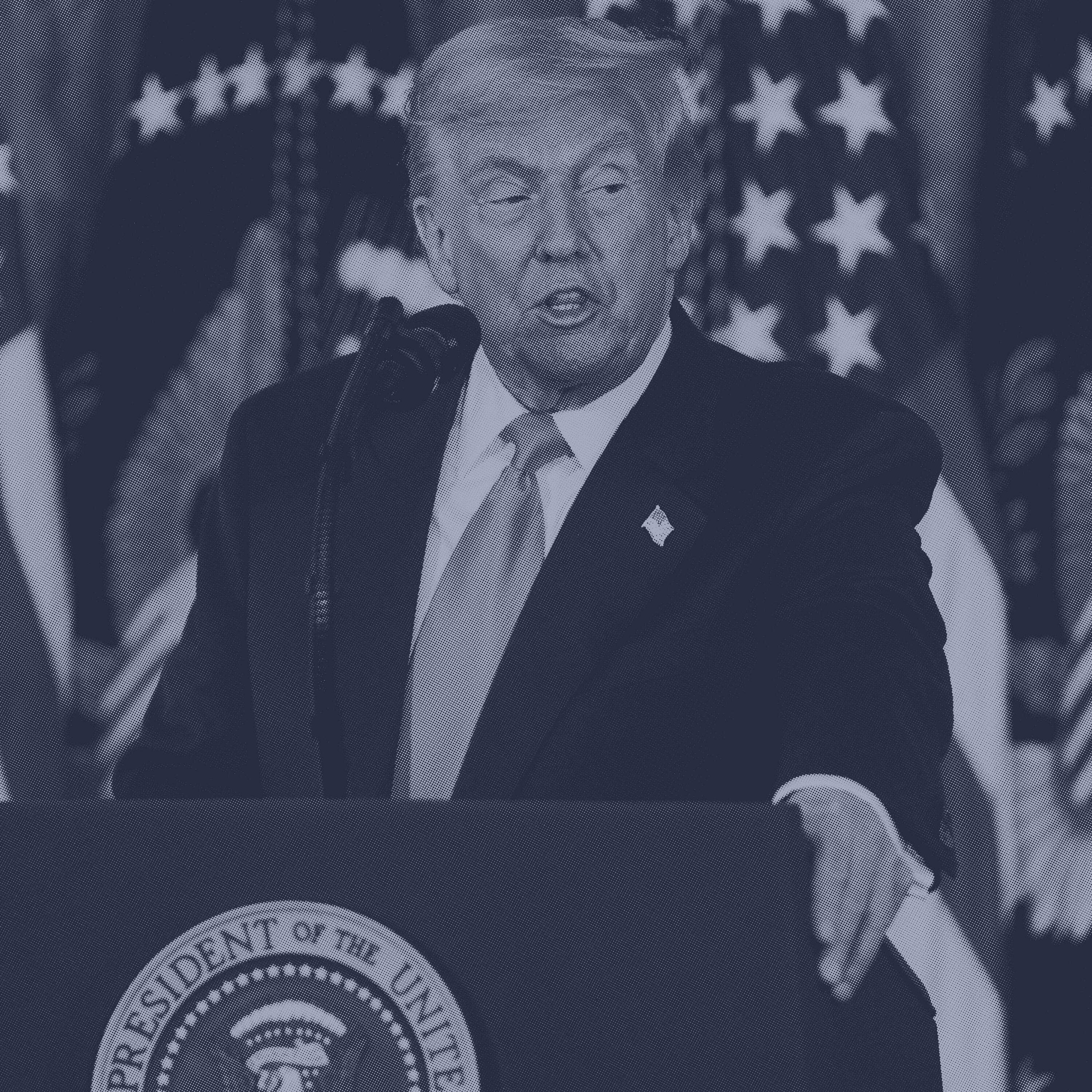
House Releases 23,000 Pages Of Epstein Documents, Trump Calls It A ‘Hoax’
This episode: national political correspondent Sarah McCammon, political reporter Stephen Fowler, senior White House correspondent Tamara Keith, and senior political editor and correspondent Domenico Montanaro.
This podcast was produced by Casey Morell and Bria Suggs, and edited by Rachel Baye.
Our executive producer is Muthoni Muturi.
Listen to every episode of the NPR Politics Podcast sponsor-free, unlock access to bonus episodes with more from the NPR Politics team, and support public media when you sign up for The NPR Politics Podcast+ at plus.npr.org/politics.
Learn more about sponsor message choices: podcastchoices.com/adchoices
NPR Privacy Policy
Press play and read along
Transcript
Speaker 1 Support for NPR and the following message come from Washington Wise. Decisions made in Washington can affect your portfolio every day.
Speaker 1 Washington Wise from Charles Schwab is an original podcast that unpacks the stories making news in Washington. Listen at schwab.com/slash WashingtonWise.
Speaker 2 Hi, this is Julie Chapman in San Diego, California, walking alongside thousands of others in the Susan G. Coleman three-day, a 60-mile journey powered by hope and laughter.
Speaker 2 This podcast was recorded at 1221 p.m. Eastern Time on Friday, November 14th, 2025.
Speaker 2 Things may have changed by the time you hear it, but I'll still be surrounded by my Pink Bubble family walking for a world without breast cancer. Okay, here's the show.
Speaker 4 I have always been so impressed with people that do that walk. It is endurance.
Speaker 2
It's a good cause. Good cause for sure.
Hey there, it's the NPR Politics Podcast. I'm Sarah McCammon.
I cover politics.
Speaker 5 I'm Stephen Bowler. I also cover politics.
Speaker 4 And I'm Tamer Keith. I cover the White House.
Speaker 2 And today on the show, the House Oversight Committee has released 23,000 pages of convicted sex offender Jeffrey Epstein's private files.
Speaker 2
We will talk about what we learned this week and what the White House has to say about it. So, Stephen, you have been combing through this massive document release this week.
What have you found?
Speaker 5 It is first important to note that these are not the Epstein files that everybody is talking about in the same way.
Speaker 5 As you mentioned, these are private files that the House Oversight Committee has obtained in batches using a subpoena from the Epstein estate.
Speaker 5 That is different from the Department of Justice files on Epstein and his various criminal cases, his life, his death, and everything that came after. So, these are private files.
Speaker 5 And on Wednesday, it started with House Democrats releasing three emails that show Jeffrey Epstein talking about Donald Trump.
Speaker 5 And shortly thereafter, there were 20,000, the full batch released by House Republicans who say that's not the full picture.
Speaker 2 So these documents, they come from Epstein's private files. They're not all emails, but who are the emails between and how did the House committee get these documents?
Speaker 5 These emails are to and from Jeffrey Epstein and various powerful associates over the years, and they were obtained by a subpoena from the House Oversight Committee from Epstein's estate.
Speaker 2 And Stephen, I mean, rumors about these documents or these kinds of documents have been obviously swirling for a long time, but how much of this is new information?
Speaker 5 Well, it's all new to a certain extent. The three emails that House Democrats highlighted were very specific.
Speaker 5 There was one email from 2011 where Epstein emailed Ghillain Maxwell, his associate, who's been convicted on trafficking charges.
Speaker 5 They called Trump, quote, that dog that hasn't barked and says says Trump spent hours at my house with one of the alleged sex trafficking victims.
Speaker 5 There was a 2015 thread with author Michael Wolf, where Wolf suggested that Epstein could get, quote, valuable PR and political currency if Trump ever denied being on Epstein's plane or at his house.
Speaker 5 There was a 2019 exchange where Epstein said that, of course, Trump knew about the girls as he asked Elaine to stop without the context.
Speaker 5 A few of us also looked at the full 20,000 document tranche, and it revealed that Jeffrey Epstein was pretty obsessed with Donald Trump.
Speaker 5 There were emails about Trump's coming and goings to the airport in Palm Beach that affected Epstein's travel, but there were a lot of correspondents tracking Trump's rise to the presidency and mocking various scandals.
Speaker 5 Epstein pitched himself as somebody who could help explain Trump to everybody from the Russians to other powerful people. And there were other emails in there.
Speaker 5 that kind of raised more questions about their relationship.
Speaker 5 For example, there was an email where Epstein said he had photos of Trump with girls in bikinis in his kitchen, Trump, quote, almost walking through the door, leaving his nose print on the glass as women were swimming in the pool, and referenced to a girlfriend that, quote, after two years, I gave to Donald.
Speaker 5 And another one that I think is worth pointing out is an email Epstein wrote to former Treasury Secretary Lawrence Summers saying that, quote, I have met some very bad people, none as bad as Trump, and quote, not one decent cell in his body.
Speaker 2 So
Speaker 2 there's a lot there, and a lot of it doesn't sound great for President Trump. Tam, what is President Trump saying about the release of these documents and what's in them?
Speaker 4 Yeah, and a lot of those documents come from after Trump has claimed to have completely severed ties with Jeffrey Epstein.
Speaker 4 And correct me if I'm wrong, but I don't think there are any correspondence between the two of them. He's just a topic of much conversation and fascination.
Speaker 4 Today, the president has been very active on Truth Social, and what he has been saying is that this is a hoax. Now,
Speaker 4 the exact part that is a hoax is not clear, but the president is now asking the Justice Department to investigate Jeffrey Epstein's ties to prominent Democrats, including Larry Summers and Bill Clinton.
Speaker 4 And he is also making it very clear that he sees this as an effort by Democrats to harm him and that he needs Republicans to push back on the effort to get these files out because it's just a Democratic hoax aimed at harming him.
Speaker 2 And as Stephen suggested earlier, there's quite a bit more to what's become known as the so-called Epstein files, sort of colloquially, right? I mean, what other documents might be out there?
Speaker 5 Well, there are these Department of Justice files that deal with the court cases and interviews and transcripts and other things that are completely separate from what the House has been able to get from Epstein's private files.
Speaker 5 Those are the things that require extra effort and this sort of wrangling through Congress to get done because these were court cases, these were federal cases in some cases, and it is not just something as simple as saying, okay, release the files.
Speaker 5 But it is confusing because there are these two separate but related tracts of information that all feed into this umbrella of this ecosystem about Jeffrey Epstein, what he did, when he did it, and who he associated with.
Speaker 4 So what Stephen is alluding to here is that for some time now, there has been an effort in the House, primarily led by Democrats, but there are a few Republicans who've signed on.
Speaker 4 And Congressman Thomas Massey of Kentucky has also been leading the charge on this to gather signatures on what is called a discharge petition to force a vote by the House of Representatives on instructing the Justice Department to release the so-called Epstein files.
Speaker 4
And on Wednesday, they they got the 218th signature on that discharge petition. What that does is it locks it in.
It says now there must be a House vote on the discharge petition.
Speaker 4 Well, right before they got that 218th signature, the White House invited Congresswoman Lauren Boebert of Colorado, a Republican, over to the situation room.
Speaker 4 The situation room being the room where secure, significant conversations related to national security have happened.
Speaker 2 This is not an invitation to the White House for tea.
Speaker 4
This is not. And so they met in the situation room, and it appears that it was an effort to get Lauren Bobert to withdraw her signature before it got to 218.
Well, she didn't withdraw her signature.
Speaker 4 Now it's locked. That vote is now set to happen next week.
Speaker 4 And it seems quite likely that it isn't just going to be a few renegade Republicans voting for it, but it could end up being a large number of Republicans in Congress who ultimately support this bill.
Speaker 2 Isn't House Speaker Mike Johnson pushing back a little bit though?
Speaker 4
Well, he was for quite a while. By keeping the House out of session, he didn't swear in a Democratic congresswoman who had been elected in a special election, Adelita Grijalva.
He didn't swear her in.
Speaker 4 As a result, they didn't have that 218th signature until he did swear her in this Wednesday, and that's when this all happened.
Speaker 4 But once it became clear that this discharge petition had the signatures and there was nothing he could do, he is not delaying the vote. He actually said, let's just get it out of the way.
Speaker 4 But even assuming it does pass the House, it then has to go to the Senate and would ultimately require a signature from the president.
Speaker 4 So if these files are going to be released through this mechanism, they'd probably need like a veto-proof majority in both the House and the Senate.
Speaker 4 And they haven't had one of those on much of anything.
Speaker 2
Yeah, that's a pretty high bar. Well, Stephen, thank you for pouring through those documents this week.
And thanks for bringing your reporting to the podcast.
Speaker 5 Thank you.
Speaker 2 Tam, you and I will stick around. We'll take a quick break and we'll have more in just a moment.
Speaker 6 This message comes from NPR sponsor CNN. Stream Anthony Bourdain Parts Unknown Prime Cuts Now exclusively on the CNN app.
Speaker 6 These rarely seen, never before streamed episodes dig deep into the Parts Unknown archives with personal insights from Anthony Bourdain and rare behind-the-scenes interviews about each season.
Speaker 6
Anthony Bourdain Parts Unknown Prime Cuts, now streaming exclusively on the CNN app. Subscribe now at CNN.com/slash all access, available in the U.S.
only.
Speaker 1 This message comes from Schwab. Everyone has moments when they could have done better, like cutting their own hair or forgetting sunscreen, so now you look like a tomato.
Speaker 1
Same goes for where you invest. Level up and invest smarter with Schwab.
Get market insights, education, and human help when you need it. Learn more at schwab.com.
Speaker 6 This message comes from the Council for Interior Design Qualification. Interior Designer and CIDQ President Siavash Madani describes his fundamentals of interior design.
Speaker 7
I think interior design is about responsibility. It's not just the way a space looks or the way a space photographs.
To me, better design means functional, safe, accessible, and inclusive design.
Speaker 6 Learn more at cidq.org/slash npr
Speaker 2
And we're back, and senior political editor and correspondent Domenico Montanaro is here. Hi, Domenico.
Welcome. Hey, great to be with you.
Speaker 2 I want to pick up where we left off in the first part of the podcast with Jeffrey Epstein.
Speaker 2 So, these documents that have just been released include references to President Trump, quite a few of them, both before he took office and during his first term.
Speaker 2 Domenico, how is Trump's base reacting to what's come out?
Speaker 9 You know, I think that they've been kind of on their back foot on a lot of this, Republicans in general. And I think that his base has wanted to see the release of these files.
Speaker 9 And a lot of that was because Trump himself campaigned on saying that he was going to release these files because there is this one sect of the Republican base that believes that there's this cabal of pedophiles that are high up in the federal government.
Speaker 9 And any day that Trump is having to talk about Epstein and his relationship with Epstein is not a great one for him. him.
Speaker 9 And his base, I think in a lot of respects, is confused on how to react to him. Some people want want these files completely released.
Speaker 9 Other people are going along with what Trump is saying and saying that this is a democratic hoax.
Speaker 2 Yeah, and what you're talking about there is the QAnon conspiracy theory, which is this idea that money deletes run the government and business, and there's secretly a cabal of pedophiles.
Speaker 2 And then here is convicted sex offender Jeffrey Epstein, who is associating with people in positions of power, and many in the MAGA base say these files are a hoax.
Speaker 2 Just help us make sense of this apparent disconnect.
Speaker 4 Well, President Trump says these files are a hoax, but but what he means by it being a hoax is not that they aren't real, but that Democrats are trying to draw attention to this to hurt him.
Speaker 4 And I think that he is working very hard to convince his base that that is the case. You know, the problem is it's not just President Trump, his FBI director and deputy FBI director.
Speaker 4 When they were out in the influencer world and hosting podcasts, they talked about the Epstein files all the time.
Speaker 4 And now that they they are in a place of power, the reluctance to release them that could well include a lot of perfectly reasonable reasons like protecting the victims or protecting the process that is normally part of how the justice system works, they're getting a lot of pushback on that.
Speaker 9 And look, Trump will never be on the ballot again. He's constitutionally barred from running in 2028.
Speaker 9 So this isn't necessarily about electoral politics when it comes to Trump himself, but his party is certainly on its back foot in thinking about this and talking about this.
Speaker 9 And this is something that politically Trump wants to go away. But that drip, drip, drip certainly makes it really hard to do that.
Speaker 2 I mean, is there a tipping point here, though?
Speaker 9 We've talked about a lot of times how Trump has a high floor and a low ceiling when it comes to his approval ratings.
Speaker 9 And this is something that Democrats are happy to continue to try to pressure him on. And it certainly puts him on the defensive.
Speaker 9 And, you know, if that keeps him talking about this and his approval ratings in the mid to high 30% range, Democrats will take that as a win.
Speaker 4 Yeah, I mean, he does not want to have to deal with this.
Speaker 4 And just as a piece of evidence to back that up, President Trump typically, almost every day of the week, takes questions from the press multiple times.
Speaker 4
He has not taken questions from the press since this latest tranche of documents came out. There have been multiple opportunities.
Didn't happen. There was a White House press briefing on Wednesday.
Speaker 4
It was extremely short. And a lot of the questions were about Epstein.
Trump now is doing that thing that he does where he spins his wheels and puts out a lot of messages on social media about it.
Speaker 4 But this is clearly a thing that he would like to just go away.
Speaker 4 He has said as much going back to July, and he just hasn't been able to make it go away in part because a lot of Republicans, including in Congress, feel like they owe it to their voters to get these answers.
Speaker 4
And as a reminder, there are victims. There are victims of Jeffrey Epstein.
He was a convicted sex offender.
Speaker 4 There are people whose lives have forever been changed by what happened to them related to Jeffrey Epstein.
Speaker 4 And so a lot of people are framing this not necessarily about Trump, but about justice for the victims.
Speaker 9 And there are a few things that seem to make Trump as visibly irritated as this issue does.
Speaker 9 You know, so many other things he seems to, you know, have a certain kind of alacrity in trying to change the subject on and trying to sort of finesse his way about.
Speaker 9 This one, he seems much more visibly irritated about. And there aren't, like I said, that many things that seem to get under his skin the way the Epstein story does.
Speaker 2
Now, all of this comes as the White House faces another separate challenge, and that is the economy. Tam, you've been reporting on this this week.
Prices, as we know, are stubbornly high.
Speaker 2
Inflation hasn't gone away. The labor market is weak.
Consumer confidence is low. And yet, the president continues to say that the economy is good.
Speaker 2 Tim, what is behind that cognitive dissonance?
Speaker 4
There are a lot of things going on. Part of it is that Trump is out there trying to claim credit for areas where prices have gone down, things like egg prices.
He says gas prices are way down.
Speaker 4 In reality, they're about the same as they were a year ago, maybe a couple cents higher, depending on the day.
Speaker 4 He has sort of a different conception of the economy than a lot of regular people do, right? He is extremely focused on the stock market.
Speaker 4 Almost every day, he talks about how well the stock market is doing, except yesterday, because it did not do so well yesterday. But he talks about record setting, record setting.
Speaker 4 Everything's a record setting. 401ks are super hot.
Speaker 2 Which is great for people who have a 401k.
Speaker 4 Yeah, that leaves out about 40% of Americans. And for people who are living paycheck to paycheck, hearing that everything is awesome is not helpful.
Speaker 4 So a White House official not authorized to speak on the record told me that the president is going to change the way he talks about the economy.
Speaker 4 This person said that the president is going to talk about the wins, but he's also going to talk about how much more work needs to be done to make sure that people who are feeling economic pain get the relief that they need.
Speaker 4 And that sort of sensitive messaging is just not the way President Trump normally talks.
Speaker 4 And so the very same day that this White House official told me this, President Trump again started boasting about the economy.
Speaker 10 My administration and our partners in Congress will continue our work to lower the cost of living, restore public safety, grow our economy, and make America affordable again for all Americans.
Speaker 10 Again, costs are way down.
Speaker 4
That was actually him delivering the new message. And immediately he turned to say, costs are way down.
Everything's cheaper. I don't know what people are talking about.
Speaker 4 He calls it a hoax, the affordability hoax. In fact, in a social media post today, he said, costs and inflation were far higher under sleepy Joe Biden's administration than they are now.
Speaker 4
In fact, costs under the Trump administration are tumbling down, helped greatly by gasoline and energy. Affordability is a lie when used by the Dems.
It is a complete con job. Yeah, I mean,
Speaker 2 the president and his cabinet can say whatever they want about this, but... Is there a tipping point here?
Speaker 2 If Trump's base sees the cost of everything going up for so many things and he says it's not happening, is there a point where they start to lose faith?
Speaker 9 Well, I mean, I don't know if it hurts him politically, quote unquote, with his base, but I think that people know what they pay at the grocery store.
Speaker 9 And, you know, no matter what President Trump wants to say, quote, costs are way down, you know, it's one thing to sort of message around, you know, some highfalutin idea that's really hard to prove when it comes to science and research.
Speaker 9
And one study says something that another study might not. And people don't have to dive into all of that research to try to understand that.
Look, people get to go to the grocery store.
Speaker 9 They get to see what it is that they pay. They get to know whether or not they can afford Christmas presents for their family, or if it seems like it's a lot harder to do so.
Speaker 9 They know whether or not they can go and afford a house based on the market that they live in. They know what interest rates look like.
Speaker 9 It's not something that Trump can just power of positive thinking his way through here to be able to say, I say it is, therefore it is. You know, people know what their costs actually are.
Speaker 9 And it's hard to message on affordability when people feel like it's it's harder for them to afford things.
Speaker 9 And if this sounds like a conversation we could have had in 2022 and 2023 about President Biden, you're not nuts.
Speaker 9 I mean, it's something that we certainly heard the Biden administration irritated about how they saw a stronger economy that was seeing GDP growth and recovering after the pandemic, try to attack this idea of affordability by also saying, you know, the economy is actually strong.
Speaker 9 And that wasn't something that resonated with voters. And now Trump is stuck in this vice as well.
Speaker 4 Congresswoman Marjorie Taylor Greene, a Republican from Georgia, suddenly finding herself publicly disagreeing with President Trump on a semi-regular basis.
Speaker 4 It's a point she made on the Sean Spicer show earlier this week.
Speaker 11 Gaslighting the people and trying to tell them that prices have come down is not helping.
Speaker 11 It's actually infuriating people because people know what they're paying at the grocery store. They know what they're paying for their kids' clothes and school supplies.
Speaker 11 They know what they're paying for their electricity bills.
Speaker 2 So, Tam, this issue does not seem to be going anywhere anytime soon. What is the White House trying to do to address affordability?
Speaker 4 Well, last weekend and into early this week, President Trump started talking about a 50-year mortgage, which would bring down the individual mortgage payments by a few hundred dollars.
Speaker 4 But then people did the math and discovered that it would dramatically increase the amount of money that people were paying on interest and would mean that people had less equity in their homes.
Speaker 4 In fact, there was a lot of MAGA pushback on that idea because they were saying, like, hey, this would just help the banks.
Speaker 4 Another thing that the White House is doing is rushing to reverse some of the president's tariffs.
Speaker 4 And we've talked a lot on this podcast about how much President Trump loves tariffs as a tool and believes that they solve all kinds of problems.
Speaker 4 Now, administration officials, including the Treasury Secretary and the U.S.
Speaker 4 Trade Representative, are talking about rolling back tariffs on key products that can't be grown in the U.S., like bananas, coffee, cocoa, vanilla beans, things where prices have really gone up because of the tariffs and where there is no great U.S.
Speaker 4 alternative. And they are rushing to get those out possibly as soon as today.
Speaker 4 It's not clear how quickly that would actually work its way through the economy, but it is a signal, a pretty strong signal, that the White House realizes there's an affordability problem and they are attempting to take actions to improve it.
Speaker 9 You know, Trump starts out behind the eight ball on affordability, not just because he's a rich guy surrounded by billionaires who say things like the American dream is not the right to buy cheap stuff, as his Treasury Secretary Scott Bessant said at one point, but because he has actively said he doesn't think costs are the most important thing.
Speaker 9 He talked about immigration being much more important and has said so on multiple occasions at the beginning of his second term here.
Speaker 9 And as Tam points out, he's actively made things more expensive with his tariffs.
Speaker 2
We know that costs are important to voters, though. Voters really seem to indicate that.
In last week's elections, Democrats did very well, largely based on economic messaging.
Speaker 2 How much could Democrats continue to capitalize on this economic message in the midterms, and what might it sound like going forward?
Speaker 4 Oh, they're going to do their best to keep capitalizing on it because it is something that they agree on. They are trying out a bunch of different messages.
Speaker 4 Those elections a couple of weeks ago were a sort of a test case for some of the messaging.
Speaker 4 Democrats are, in particular, focused on health care costs, which was a big theme of the government shutdown.
Speaker 4 And now Republicans are talking about it too and trying to come up with a plan, which they haven't been able to come up with in like eight years to replace the Affordable Care Act. Grocery costs.
Speaker 4
Democrats are also very focused on energy costs. You heard Marjorie Taylor Greene talk about power bills.
Power bills have gone up. Electric bills, gas bills.
Speaker 4 Democrats are trying to hang that on President Trump by saying that his opposition to green energy is actively working to make things more expensive for people.
Speaker 9 They're going to ride this message all the way to November.
Speaker 9 If costs and affordability are still something that is front of mind for a lot of people, then the party in charge, and that's the Republicans right now, are going to get the majority of the blame on it, most likely.
Speaker 9 That's what Democrats are certainly banking on. It certainly would help them in these off-year elections.
Speaker 9 I think you can be guaranteed that affordability and health care, by the way, which is an issue that Democrats helped elevate during the shutdown, are going to be two things that they certainly ride all the way to November.
Speaker 2 Okay, one more break, and then it's time for Can't Let It Go.
Speaker 6 This message comes from NPR sponsor SAP Concur. Atria Cure is a healthcare company that develops technologies to treat atrial fibrillation.
Speaker 6 Senior manager Latora Jackson shares how SAP Concur solutions help her team manage travel and meet their patients' needs.
Speaker 12 Surgery is not always a nine to five scheduling appointment.
Speaker 12 So when something does change, very last minute, we have sales reps and employees traveling cross-country to meet those doctors' immediate needs because a patient may need emergency surgery the very same day and they will be there.
Speaker 12 The efficiency and intuitiveness of the system and being able to utilize the Concur platform while on the go allows them them to take care of their administrative responsibilities en route to literally a ER room.
Speaker 12 So that allows for them to continue to stay focused on our patients, but still maintain their responsibility for administrative needs.
Speaker 6
Visit concur.com to learn more. This message comes from the Council for Interior Design Qualification.
Interior Designer and CIDQ President Siavash Madani describes the rigor of NCIDQ certification.
Speaker 7 An NCIDQ certified interior designer must complete a minimum of six years of specialized education and work experience.
Speaker 7 Being NCIDQ certified means that you've proven your knowledge and skills and are recognized as a qualified interior design professional.
Speaker 6 Learn more at cidq.org slash npr.
Speaker 1 This message comes from Wealthfront. It's time your hard-earned money works harder for you.
Speaker 1 With Wealthfront's cash account, you earn a competitive APY on your cash from program banks higher than the average savings rate with free instant withdrawals to eligible accounts.
Speaker 1
Go to Wealthfront.com. Cash account offered by Wealthfront Brokerage LLC.
Member FINRA SIPC, not a bank. Funds are swept to program banks where they earn the variable annual percentage yield.
Speaker 2
And we're back. And it's time for Can't Let It Go.
That's the part of the show where we talk about the things from the week that we just can't stop thinking about, politics or otherwise.
Speaker 2
And I'm going to start with mine. What I can't let go of is the fact that the U.S.
minted the very last U.S. penny this week in Philadelphia.
Did you guys hear this? Yeah. I did.
Speaker 2 And as you may know, this is a big deal for me personally in my home because...
Speaker 2
Oh, really? Oh, yes. So my spouse is a longtime lawyer for the U.S.
Mint. And at basically every party we go to for years, he has been asked.
Speaker 2 by someone who knows what he does, when are you going to get rid of the penny? Because everybody knows, right, that the penny costs more to make than it's actually worth.
Speaker 2 And that's been a point of contention for a really long time. But every single, I kid you not, dinner party, holiday party, I have to sit through this conversation.
Speaker 9 Do they start with, penny for your thoughts?
Speaker 3 Oh, God.
Speaker 2
They might as well. And to any friends who are listening, I love you.
But I have heard this conversation about the economics of the penny for so long. And
Speaker 2 the penny's done. And I think I'm done with that conversation.
Speaker 4 The problem, though, is how do you make change now?
Speaker 2 Well, is, this is, this is
Speaker 9
by not being on Twitter. You have to be an actual, you know, you have to knock on doors.
Oh, different change.
Speaker 4 Oh, punny, punny, punny.
Speaker 2 I should say, pennies still exist. They are still valid currency.
Speaker 2 They are not being taken out of circulation. And of course, so many things are now online and digital that people carry less and less cash and fewer and fewer coins.
Speaker 2
So it's less and less part of our day-to-day life. I think that's the thinking.
Anyway, Tam, how about you? What can't you let go?
Speaker 4 What I can't let go of is the Northern Lights.
Speaker 4 I was in bed earlier this week and all of a sudden I started seeing all of these amazing pictures of the Northern Lights and there were some pictures that were posted from the Washington DC area and so I got out of bed and I got my 13 year old son out of bed.
Speaker 2 That's impressive.
Speaker 4
I know. I was like, there's northern lights.
We're going to go find them. And we got in the car and we drove towards the country.
Speaker 4 We drove until we could get to an area where there was less light pollution
Speaker 4 and we didn't see the northern lights. Was it cloudy?
Speaker 2 Yeah, the clouds had come in.
Speaker 4
And it was like really devastating. And then I was like, oh my God, I've kept you up so long.
And it is so late. And I am so tired.
Speaker 2 I'm really sorry for you, Tam, but full transparency, I feel a little better because I saw those same pictures in bed and I did not get up.
Speaker 2 But I think I saw them the next morning and it was probably too late, but still.
Speaker 4 Yeah, no, I have, I just like have so much Northern Lights FOMO, you have no idea. And I'm going to be chasing this for the rest of my life, I'm afraid.
Speaker 2 All right, Domenico, how about you?
Speaker 9 Ugh, what I can't let go of is something that sounds like one of my worst nightmares: riding a bicycle, popping a wheelie, and doing it for six and a half hours, which is what a college student in France did, setting a world record for get this greatest distance covered while performing
Speaker 2 a wheelie? A A wheelie.
Speaker 9
Hold on. I gave you my own handwriting.
Forget this, greatest distance covered while performing a continuous bicycle wheelie.
Speaker 9
And that is a Guinness book of world record now given to 19-year-old engineering student. Seems like an engineering student might be someone who could pull this off.
And by the way, key word here, 19.
Speaker 2 Yeah, seems like a thing for a 19-year-old student. Yeah.
Speaker 4 I hope he was wearing padded shorts. Seriously.
Speaker 9 So when asked.
Speaker 4 Okay, good. We all had the same question.
Speaker 9
When he was asked, he said mentally he remained calm. Physically, as the Wall Street Journal puts it, encountered a few problems.
His arms and hands did fine. His legs held up too.
Speaker 9 The main pain was in my bleep.
Speaker 2 There you go.
Speaker 2 We can fill in the blanks.
Speaker 9 Yeah, and can you imagine trying to do that over 40? I don't think so.
Speaker 2 No, thanks.
Speaker 2
Thank you. I would injure myself in six minutes, let alone six hours.
Probably six seconds.
Speaker 9
Six hours, 93 miles, six and a half hours of a wheelie around a track. All right.
I'm not sure the Guinness Book of World Records means anything.
Speaker 2 It does to him.
Speaker 4
My kids have the book. They get the book like every few years.
And I think people want to have notoriety.
Speaker 2 I think you're right.
Speaker 4 Not everyone can be in the Olympics, but one person can pop a wheelie for multiple hours.
Speaker 3 Yeah.
Speaker 9
In fact, I mean, if you think about it, as the journal talked about, you know, you've had 12 people walk on the moon. 230 people have won the Nobel Prize in Physics.
One person did it twice.
Speaker 9 Only one person has popped a wheelie for six and a half consecutive hours.
Speaker 2 It's an achievement.
Speaker 9 Considering Tam's quest of the Aurora Borealis, I wonder if she's contemplating doing something like this now.
Speaker 3 Yeah.
Speaker 4 No, but I did once meet a pig that was in the Guinness Book of World Records for a while.
Speaker 2 What did it do?
Speaker 4 I think it was singing.
Speaker 4 Or dancing? Maybe it was dancing. I don't remember, but it's in the book.
Speaker 2 As today's host, I think we need to leave it right here.
Speaker 2
Okay, that is all for today. Our executive producer is Mathoni Matturi.
Our producers are Casey Morrell and Bria Suggs.
Speaker 4 Our editor is Rachel Bay.
Speaker 2 Special thanks to Christian Dev Callimer and Kelsey Snell. I'm Sarah McCammon.
Speaker 4
I cover politics. I'm Tamara Keith.
I cover the White House.
Speaker 9 And I'm Domenico Montserrat, senior political editor and correspondent.
Speaker 2 And thank you for listening to the NPR Politics Podcast.
Speaker 2 How does a pig sing? I wanted to know, but I was like, I need to stop right now.
Speaker 9 Wee, wee, wee all the way home.
Speaker 2 Wee, wee, wee.
Speaker 3 Oh my gosh.
Speaker 6 This message comes from Vital Farms, who works with small American farms to bring you pastor-raised eggs. Farmer Tanner Pace describes what makes a pastor-raised egg unique.
Speaker 8 Before we first started with Vital Farms, I thought, you know, an egg's an egg, not a big deal, but it's hard for me to even eat an eggs. It's not a Vital Farm egg now.
Speaker 8 Vital Farms eggs are usually brown to lighter brown in color. And when you crack a pasteur-raised egg,
Speaker 8 you have to hit it harder than what a person thinks just because the shell quality is so good.
Speaker 8 And basically, when that egg cracks in the skillet or bowl, that yolk is almost kind of an orange shade. And that is part of what I love about a vital vital egg is just the shade of yolk.
Speaker 8 I love pasteurised eggs because you can see the work and the pride that the farmers have and have put into these eggs.
Speaker 6 To learn more about how Vital Farms farmers care for their hens, visit vitalfarms.com.
Speaker 1
This message comes from AT ⁇ T, the network that helps Americans make connections. When you compare, there is no comparison.
AT ⁇ T.
Speaker 1 This message is sponsored by DSW, the birthplace of the humble brag, full of all kinds of shoes that get you at prices that get your budget.
Speaker 1 And when there are never-ending options for every style, mood, occasion, and budget, there is unlimited freedom to play. And that's something to brag about.
Speaker 1 So go ahead, stock up on fresh sneakers from your favorite brands, or try those boots you always secretly knew you could pull off. Find the shoes that get you at prices that get your budget.
Speaker 1 DSW, let them surprise you.