Trade Deals, Red Carpets And A Gold Crown: Takeaways From Trump’s Asia Trip
This episode: senior White House correspondent Tamara Keith, White House correspondent Deepa Shivaram, and national security correspondent Greg Myre.
This podcast was produced by Bria Suggs and edited by Rachel Baye.
Our executive producer is Muthoni Muturi.
Listen to every episode of the NPR Politics Podcast sponsor-free, unlock access to bonus episodes with more from the NPR Politics team, and support public media when you sign up for The NPR Politics Podcast+ at plus.npr.org/politics.
Learn more about sponsor message choices: podcastchoices.com/adchoices
NPR Privacy Policy
Press play and read along
Transcript
Speaker 1 Support for NPR and the following message come from Indeed. Hiring? Do it the right way with Indeed's sponsored jobs.
Speaker 1 Claim a $75 sponsored job credit to get your jobs more visibility at Indeed.com/slash NPR. Terms and conditions apply.
Speaker 2 Hey, it's Tamar Keith, and it can feel impossible to find your next favorite podcast. And we are very glad you're here listening to the NPR Politics podcast.
Speaker 2 But when you want to switch it up, check out NPR's Pod Club newsletter. Sign up, and you'll get fresh podcast recommendations every week handpicked by the people that live for this stuff.
Speaker 2 You can subscribe for free at npr.org/slash podclub. Okay, here's the show.
Speaker 3 Hi, this is Steve Thickleberg from Fullerton, California, but checking in from Tokyo, Japan, where I am finishing up a nine-day trip with my daughter, Kaylin.
Speaker 2 This podcast was recorded at 10.06 a.m. on Monday, November 3rd.
Speaker 3 Things may have changed by the time you hear it, but Kayla and I will be home in Fullerton, probably eating a big slice of pizza.
Speaker 4
How appropriate. Neighbors.
Yeah. Hi from Korea.
Speaker 2
Hey there, it's the NPR Politics Podcast. I'm Tamara Keith.
I cover the White House.
Speaker 4 I'm Deepa Shivaram. I also cover the White House.
Speaker 5 And I'm Greg Myri. I cover national security.
Speaker 2 Deepa, what time is it where you are right now in Korea?
Speaker 4 Oh, you don't even want to know. It's like almost 11:30 p.m.
Speaker 5 Wow.
Speaker 2 So today on the show, President Trump is back from a week-long trip to Asia where he received a warm welcome. But what did he bring home for America? And Deepa, you are still there.
Speaker 2 You flew into Malaysia, the first stop with President Trump on Air Force One. And I just want to talk to you about how he was received there and throughout the trip.
Speaker 4 Yeah, I mean, Malaysia was maybe the most fanfare on the tarmac, just in terms of the color and the music and everything else that was going on. There was a giant red red carpet that was rolled out.
Speaker 4 So as soon as President Trump stepped off of Air Force One, he stepped onto this red carpet and there was like at least 100 different dancers. And Malaysia is a really diverse country.
Speaker 4
So like people from all kinds of backgrounds are dancing on the tarmac. They're waving as President Trump is waving back at them.
There's like a military guard.
Speaker 4 There's people on the other side of the tarmac with like Malaysian flags and American flags.
Speaker 4 It was really like, especially after flying for like 30 hours almost, like a really, you know, very warm welcome, let's put it that way. And also literally warm because it was like 90 degrees out.
Speaker 2 Yeah, so talk about this. Like, you've observed that really this trip catered to the president.
Speaker 4 Oh my gosh, for sure. This was definitely, you know, it's kind of funny.
Speaker 4 The president came to Asia for a number of reasons, primarily to meet with Chinese leader Xi Jinping, but also to attend these two big summits that go on in the region.
Speaker 4
The first one was ASEAN, which is a summit of Southeast Asian countries in Malaysia. That was where it was held this year.
And And then the other summit was APAC held in Korea.
Speaker 4 Obviously, a global gathering, right? There's people from all over the world who are coming, world leaders from all these different countries.
Speaker 4 But it didn't really feel like that when you were on the ground.
Speaker 4 Like it really just felt like these events were almost created for Trump to the point that like the menus that were being served were just like so inherently American.
Speaker 4 And think about like the number of people from all over the world that are coming to these summits, but like there's thousand island dressing on the menu and like hamburgers being served to a president who, of course, we know, you know, loves things like hamburgers and ketchup.
Speaker 4 And that was what was on the menu. So it's sort of even down to these granular details really speaks to how much
Speaker 4 of the pomp and circumstance and how much catering was done specifically to the U.S. president.
Speaker 5
Yeah. And so, Deepa, it seems like we've seen this in Trump's second term where countries know how to fet Trump now.
They know what he wants.
Speaker 5 He wants big pomp and circumstance far beyond just what's on the menu, big announcements, big ceremonies, the way that you clearly play to what he wants.
Speaker 5 And it just seems that he's getting what he wants this time around. It's not the more traditional, low-key, behind-the-scenes negotiations, but big public expressions of celebration.
Speaker 4 Yeah, nothing about about this, I would say, was behind the scenes.
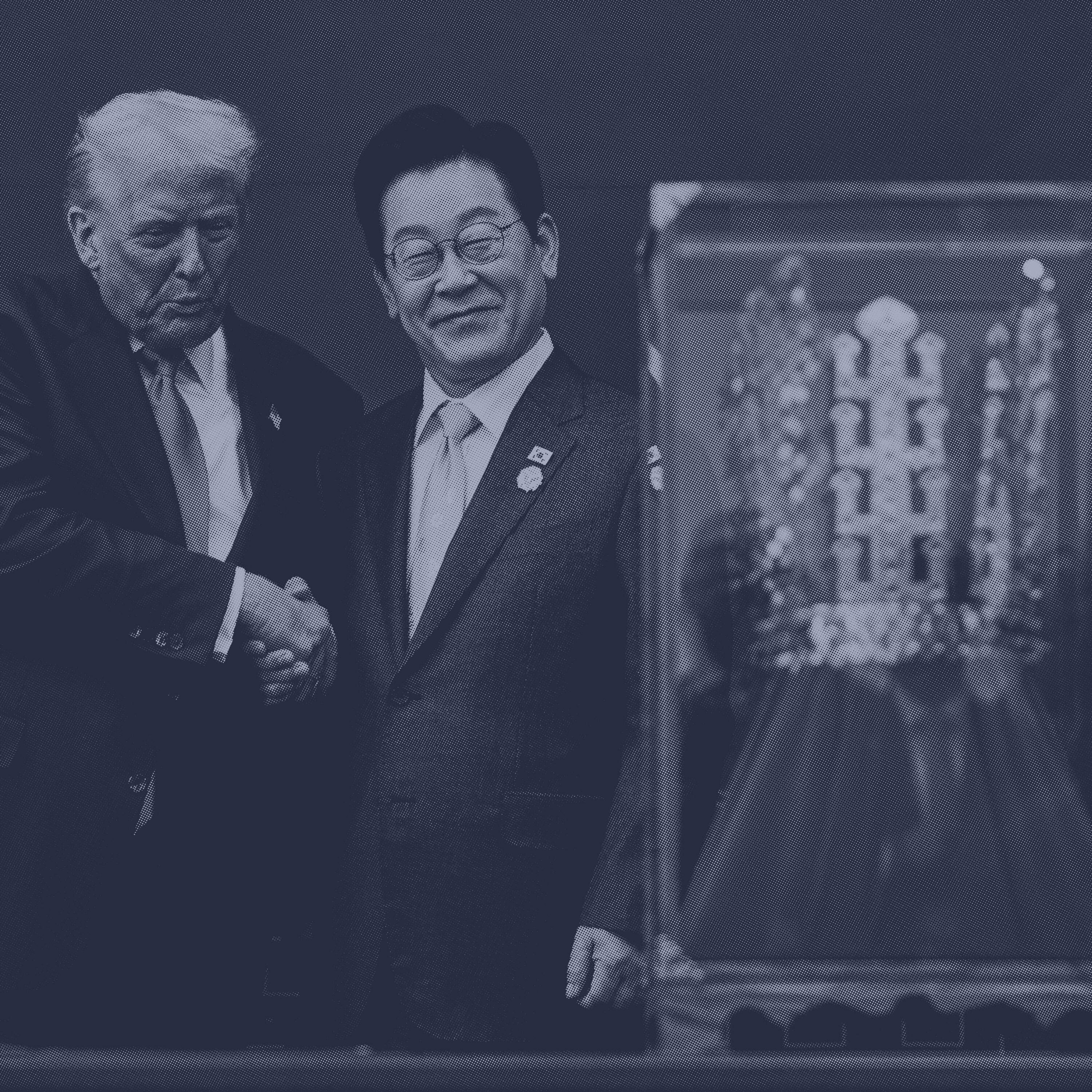
Speaker 4 And I think it's really interesting because one thing that was really notable in Korea was how the Korean president Lee had actually come to Washington about two months ago at this point.
Speaker 4 He was newly elected, came to the Oval Office, and people in Korea perceived that meeting as going very well because he was very complimentary of all the gold that is in the Oval Office that President Trump has put in there.
Speaker 4 And that meeting, you know, it came out positively.
Speaker 4 And so to then have Trump in Korea here on the ground, he was presented with this really large replica of a crown that's very significant to Korean history.
Speaker 4 He was even given the highest honor that can be, you know, bestowed by the president.
Speaker 4 Definitely not low-key. And that really just tracks with this president, right? Nothing about the Trump presidency is low-key.
Speaker 5 And the one additional thing I'd add is that normally if there's any agreements, they're worked out weeks, months in advance by aides. The president or leader show up.
Speaker 5 They sign it, it's a photo op, all very staged and choreographed.
Speaker 5 There's a lot of things that are very unpredictable because there are a lot of issues with these tariffs that go up or down according to Trump's whim, and you don't know which way they're going to go.
Speaker 5 So there's also this element of unpredictability whenever Trump shows up for these events beyond the big pomp and circumstance.
Speaker 6 Oh, for sure. Right.
Speaker 2
Keep him happy. Keep the tariffs low.
Deepa, let's turn to the big event, which came at the end of the trip when President Trump met with China's president Xi Jinping.
Speaker 2 What was the goal and what did they accomplish?
Speaker 4 Yeah, I mean, to Greg's point, like about a lot of these negotiations with trade and tariffs being sorted out beforehand, I feel like the whole back and forth with China has just been like a complete roller coaster.
Speaker 4 I know we've talked about it endlessly on the pod, but it was so tumultuous to the point that like a couple weeks ago, the president was throwing out posts on Truth Social saying he wasn't even sure if he was going to meet with Xi Jinping because China had inserted basically these new limits on exports of rare earths minerals.
Speaker 4 And Trump essentially said, well, that came out of left field for me. I'm not really interested in meeting with him anymore.
Speaker 4 So even just the meeting itself, there was a point where it wasn't really clear if this was going to happen. So that was like the context coming into it.
Speaker 4
But I would say the three big takeaways from the meeting were one about this rare earths exports. China agreed to back off from that.
And the U.S.
Speaker 4 also kind of tinkered with its own export limits as well. So there was some agreements reached there.
Speaker 4 The other big thing was about fentanyl, and Trump said he really believes that she is going to put some work in essentially. to decrease the flow of fentanyl coming into the United States.
Speaker 4 Because of that effort, Trump said that he would decrease the tariffs on Chinese exports from 57% to 47%. So there's going to be a 10% drop.
Speaker 4 And then the last thing that was really critical was that China agreed that they would start buying soybeans again from the U.S., which they paused.
Speaker 4 And that's been really detrimental for farmers in the U.S.
Speaker 4 And that is going to start getting picked up again as well.
Speaker 2 Greg, this sounds so familiar, like a deal that President Trump struck with President Xi during the first term, almost.
Speaker 5
Yeah, I mean, what you've heard a lot of Democrats is saying the arsonists want credit for putting out the fire. That in a sense, we've gone full circle.
Trump imposed tariffs his first term.
Speaker 5 He's done it again in this term, and then he goes back. And what we've essentially hit here is a true.
Speaker 5 So So that's significant in that this escalation of tariffs with China and threatening not only that relationship, but the larger global economy has been de-escalated for the moment.
Speaker 5 But essentially, we're back to where we were in January when Trump came into office, or you could perhaps even go back to his first term.
Speaker 5 You haven't really resolved these underlying issues of how the U.S. and China are going to trade for the long term, how they're going to work out some of these differences.
Speaker 4 And Greg's right, like the trade deal wasn't exactly completely finished. But what we do know is that the president announced he would be going to Beijing next April.
Speaker 4 So there's going to be another meeting with Xi Jinping coming up in months.
Speaker 4 It sort of bought some time for a lot of these trade negotiations to actually take place, some of the nuances to be sorted out until that meeting in April, where maybe we do get a formalized deal.
Speaker 2 Let's talk about more deals. President Trump also made announcements with Japan and South Korea.
Speaker 4
Yeah, that's correct. So Japan was interesting because they also have a newly elected prime minister, Sanai Takayichi.
She was someone that Trump was really excited to meet.
Speaker 4 And he was also really excited because Japan formalized essentially that they would be investing $550 billion into the United States. So that was a really big number.
Speaker 4 And, you know, Trump, ever the dealmaker businessman, was really thrilled about that investment. And then with Korea, similarly, they came to terms on a $350 billion investment in the U.S.
Speaker 4 So Trump walked away feeling really excited about the amount of cash money that is flowing in to the U.S. And he sees that as a win.
Speaker 4 That's definitely something that he's been touting is just the sheer number of investments that have come throughout the months of negotiating and the months of this tariff back and forth that he's
Speaker 4 started since he's come back to the White House. But some of those details were finalized in this past week.
Speaker 2 All right, we're going to take a quick break, and we will have more in a moment.
Speaker 6 This message comes from NPR sponsor CNN. Stream Anthony Bourdain Parts Unknown Prime Cuts Now, exclusively on the CNN app.
Speaker 6 These rarely seen, never-before-streamed episodes dig deep into the Parts Unknown archives with personal insights from Anthony Bourdain and rare behind-the-scenes interviews about each season.
Speaker 6 Anthony Bourdain, Parts Unknown, Prime Cuts, now streaming exclusively on the CNN app. Subscribe now at cnn.com/slash all access, available in the US only.
Speaker 6
Support for NPR and the following message come from Hydro. Don't let the holidays derail your fitness.
Stay on track with hydro.
Speaker 6 20 minutes rowing on a hydro targets 86% of your muscles as Olympians guide you from incredible locations worldwide. GQ named the Hydro Arc the best rower of 2025.
Speaker 6
And every hydro comes with free shipping, a 30-day trial, and warranty. Go to hydro.com, code NPR, save up to 600 bucks on your next rower.
Hydro.com code NPR.
Speaker 1 This message comes from Wise, the app for using money around the globe. When you manage your money with Wise, you'll always get the mid-market exchange rate with no hidden fees.
Speaker 1
Join millions of customers and visit wise.com. T's and C's apply.
This message comes from Wealthfront. It's time your hard-earned money works harder for you.
Speaker 1 With WealthFront's cash account, you earn a competitive APY on your cash from program banks higher than the average savings rate with free, instant withdrawals to eligible accounts.
Speaker 1
Go to WealthFront.com. Cash account offered by Wealthfront Brokerage LLC.
Member FINRA SIPC, not a bank. Funds are swept to program banks where they earn the variable annual percentage yield.
Speaker 2 And we're back and we're talking about President Trump's week-long trip to Asia. Deepa, what other highlights did you take away from this trip?
Speaker 4 Well, I mean, there was a lot that happened. I mean, this was compared to some of Trump's previous international trips that he's done, this one was quite long, hitting almost a full week.
Speaker 4 And so I would say by the time Korea was happening, I felt like Malaysia was like three years ago.
Speaker 4 But it really, it really came down to a couple other big things. But one was announced pretty much at the tail end of the trip.
Speaker 4 The president said that he was giving South Korea permission to build nuclear-powered submarines.
Speaker 4 And President Lee of Korea had asked Trump in his meeting with him in South Korea permission for South Korea to start doing this so that they could essentially keep better tabs on North Korea and China.
Speaker 4 And so that
Speaker 4 announcement that Korea would get permission to do this came pretty much at the tail end of the trip.
Speaker 4 A lot of details, though, still not really clear, just in terms of like, you know, the president said also that, you know, that South Korea would be building these submarines in Philadelphia, bringing more money to the U.S.
Speaker 4 essentially, but that part isn't really confirmed. Also, like, is there space for that? Is there manpower for that? How long does that take? Like, there's a lot of unanswered questions.
Speaker 2 Well, and Greg, I feel like it's actually even more complicated than just the president saying, and you have my permission with things like building nuclear-powered submarines.
Speaker 2 Doesn't it require congressional oversight or other things?
Speaker 5 Yeah, there will be many other things involved in this and more details we need to learn, but the word nuclear certainly gets your attention. but the key thing here is nuclear-powered submarines.
Speaker 5 So these are a more advanced than a traditional diesel-powered submarine, but it is not a nuclear weaponized submarine. And that of course is the big difference.
Speaker 5
South Korea does not have nuclear weapons. They've always been under the U.S.
nuclear umbrella.
Speaker 5 And that's why South Korea has been relatively relaxed about the fact that that North Korea has nuclear weapons. Obviously, that's a major security concern for them, but because the the U.S.
Speaker 5 is protecting them, they haven't pushed to develop nuclear weapons of their own.
Speaker 5 So this is an advance in their submarine technology, would give them a more advanced submarine to keep tabs on North Korea and other rivals in the region, but is not providing nuclear weapons.
Speaker 5 So it's China and North Korea, the two countries in Asia, that have the nuclear weapons with the protection of the U.S. on South Korea, Japan, other countries in the the region.
Speaker 2
And Deepi, the U.S. has a pretty significant military presence in the region, including in Japan, where President Trump spoke to U.S.
troops. That seemed like a place where he was
Speaker 2 delivering a message about what he thought his role was in the world.
Speaker 4 Yeah, that rally was really interesting. It was probably.
Speaker 2
Rally. That is a funny word to use for speaking to U.S.
troops.
Speaker 4 Yeah, it really did seem like a rally type vibe, though. It was on an aircraft carrier in Japan.
Speaker 4 Not only did Trump speak, but like I said, his budding relationship with the Prime Minister of Japan, he brought her up on stage to give her remarks.
Speaker 4 In the middle of his remarks, it was like, again, a lot of fanfare, a lot of pomp and circumstance, like we've been talking about.
Speaker 4 I will say one takeaway from that speech that I found kind of interesting that sort of fits into the larger theme of the trip was that Trump really wants to be known and validated as a peacemaker on the world stage.
Speaker 4 And it came about in so many different ways. When he was in Malaysia, that first stop on the trip, he presided over a peace deal between Cambodia and Thailand.
Speaker 4 They've been having this border dispute this past year that sort of reignited.
Speaker 4 And Trump essentially threatened both of those countries with more tariffs if they didn't get it together and sign a peace agreement. So he presided over that.
Speaker 4 And when he was in Japan, the prime minister said that she was going to nominate him for the Nobel Peace Prize. And, you know, all of that is sort of happening.
Speaker 4 And of course, you know, the recent ceasefire agreement in the Middle East is something that was mentioned a lot as well.
Speaker 4 But while all of that is happening, Trump is, you know, sort of toggling between this persona of wanting to be known as a peacemaker and making all these agreements all over the world, and also, you know, renaming the Department of Defense to the Department of War and attacking boats that allegedly have drugs on them in the Pacific and the Caribbean.
Speaker 4 And so it's sort of this twofold dynamic that Trump is trying to walk the line on, which I found very interesting.
Speaker 2 Yes, that sort of piece-through strength idea, I guess, is how he squares that circle.
Speaker 5 Yeah, I mean, it's interesting because, again, coming into office on an America-first, don't get bogged down in foreign conflicts. He's used U.S.
Speaker 5 military force three times in the first year: the boats off Venezuela that we've been talking about, the airstrikes against the Houthis in Yemen, and airstrikes against Iran.
Speaker 5 So, he's done this three times, which is pretty exceptional for a president president in his first year in office for conflicts that
Speaker 5 may or may not end quickly. And he's also inserted himself as a peacemaker in other conflicts as well.
Speaker 5 So yes, as Deepa noted, sort of going back and forth, one day announcing an airstrike, the next day announcing that he's trying to broker peace.
Speaker 4 Yeah, it really allows him to play. both sides of both equations, which is really interesting to watch, not only in the U.S., but then to see it on a global stage was very different.
Speaker 2 And while President Trump was overseas, the government shutdown here in the United States was dragging on. It's now entered its second month.
Speaker 2
We are just days away from it becoming the longest government shutdown in U.S. history.
Deepa, what did the president say about the shutdown during his time abroad?
Speaker 4 Pretty much nothing, to be honest with you.
Speaker 4 I don't really recall it coming up very much, except for on the flight over to Malaysia, which was at the very beginning when he was taking questions from reporters.
Speaker 4 And he said that he would potentially be open to meeting with Democrats once he came back from this trip, which has not happened. And so it really was not a main focus for the president.
Speaker 4 I don't think he wanted to factor any of that into the equation when he was making all these deals and meeting all these world leaders.
Speaker 4 It wasn't really top of mind for him, which is pretty interesting because, Tam, it's quite unusual that a president would even leave the country during a shutdown.
Speaker 2 That's right. I went and looked back, and President Clinton, President Obama, and even President Trump in his first term all canceled planned foreign trips because of a government shutdown.
Speaker 2
Going through the president's travel schedule, he's actually been out of town 15 days during the government shutdown, which began October 1st. So that's more than 40% of the shutdown.
He's been gone.
Speaker 2 He has golfed five times.
Speaker 2 He's just done a lot of things that don't involve him sitting in Washington and trying to make a deal.
Speaker 4 No, and it is quite a contrast to see that happening in Washington, or what's not happening in Washington rather, and to see him trying to, you know, bring different parties together, negotiate, be the peacemaker on the world stage.
Speaker 4 That contrast was just extremely stark.
Speaker 2 Yeah, I mean, he's over there making deals, but here at home, he has made it pretty clear he's not interested in negotiating. Democrats have said that they want to negotiate.
Speaker 2 They want to talk about finding a way to extend these tax subsidies for health care. The House of Representatives voted on a temporary spending bill in September.
Speaker 2 They left town and they have not been back. The message from the White House and from Republicans is essentially, we've done our job, you do yours.
Speaker 2 And the plan is, as it was on day one of the shutdown, to continue to pressure Senate Democrats to try to peel off the number that they need, five more, to vote to end the shutdown without any concessions.
Speaker 5 It's been quite striking both from the White House with Trump and Republican congressional leaders.
Speaker 5 There doesn't seem to be a sense of urgency that I recall from previous shutdowns, that they're happy for this to sort of play out.
Speaker 5
They presumably want to end it, but there's really just not that sense of urgency that we've seen. It's almost become business as usual.
We'll have a shutdown. We'll let it play out.
Speaker 5 We'll see who wins politically on this. But if it goes on, that's okay.
Speaker 2
All right, we're going to leave it there for today. I'm Tamar Keith.
I cover the White House.
Speaker 4 I'm Deepa Shivaram. I also cover the White House.
Speaker 5 I'm Greg Myri, and I cover national security.
Speaker 2 And thank you for listening to the NPR Politics Podcast.
Speaker 6
Support for NPR and the following message come from Hydro. Don't let the holidays derail your fitness.
Stay on track with Hydro.
Speaker 6 20 minutes rowing on a hydro targets 86% of your muscles as Olympians guide you from incredible locations worldwide. GQ named the Hydro Arc the best rower of 2025.
Speaker 6
And every hydro comes with free shipping, a 30-day trial, and warranty. Go to hydro.com code NPR, save up to $600 on your next rower.
Hydro.com, code NPR.
Speaker 1 This message comes from Schwab. Everyone has moments when they could have done better, like cutting their own hair or forgetting sunscreen, so now you look like a tomato.
Speaker 1
Same goes for where you invest. Level up and invest smarter with Schwab.
Get market insights, education, and human help when you need it. Learn more at schwab.com.
Speaker 1 This message comes from NPR sponsor eBay, who is home to millions of parts for your next project and free returns. If it doesn't fit or it isn't what you expected, eBay has your back.
Speaker 1
Eligible items only. Exclusions apply.
eBay, things people love.