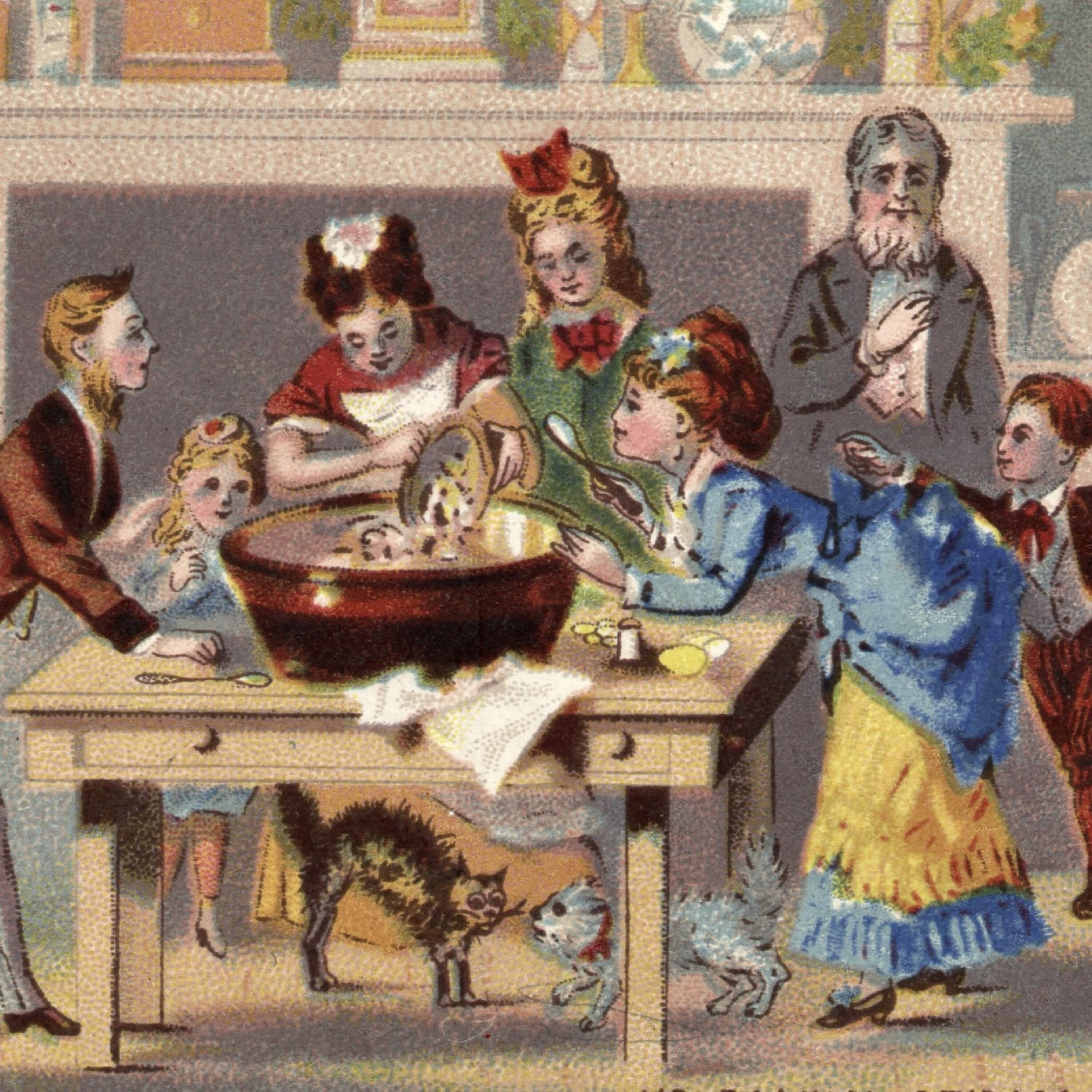
The Labor Of Love (Throwback)
Learn more about sponsor message choices: podcastchoices.com/adchoices
NPR Privacy Policy
Press play and read along
Transcript
Speaker 1 Support for this podcast and the following message comes from Humana. Your employees are your business's heartbeat.
Speaker 1 Humana offers dental, vision, life, and disability coverage with award-winning service and modern benefits. Learn more at humana.com/slash employer.
Speaker 2 You know, I felt like I did all the things that you're supposed to do. I read all of the books and I went to the prenatal classes, and I felt like pretty well-educated, I guess.
Speaker 2 And
Speaker 2 then
Speaker 2 my son arrived.
Speaker 2 When he was born, he was five pounds, 12 ounces. And when they put him on my chest for the first time, I just said,
Speaker 2 he's so tiny. He's so tiny.
Speaker 2 I, of course, like, was overwhelmed with joy and awe and wonder at this little creature.
Speaker 2 That sentiment of like, wow,
Speaker 2 he's so small and vulnerable, and now I'm in charge of him really
Speaker 2 was also very big for me.
Speaker 2 The transition to parenthood is like a really powerful time of growth.
Speaker 2 But in any kind of growth, there's a cost to it.
Speaker 2 And I just, I felt a lot of worry.
Speaker 5 Mother,
Speaker 5 you promised to have dinner ready at 6 o'clock.
Speaker 6 You need to be around that baby, around the clock. You're not compensated, and all of a sudden, you're paying.
Speaker 3 Motherhood is a hard, unending choice.
Speaker 2 Mommy, wake up, wake up, wake wake up, wake up. The United States is one of just seven countries in the world without national paid maternity.
Speaker 3 It's a week since I've delivered. How could I be expected to work at this time?
Speaker 6 Beautiful experience and the most rewarding experience.
Speaker 5 Looking 12 steps. She was accused of leaving her kids in the car alone while she went shopping.
Speaker 4 Women haven't rejoined the workforce and frequently stayed in first during the pregnancy term, even at the steepest personal estimate.
Speaker 2 It'll cost two or more years.
Speaker 5 All the possible things things that could go wrong.
Speaker 5 Just listen to your mom gun.
Speaker 3 Motherhood costs women everything.
Speaker 2 Everything is everything, right?
Speaker 5 Everything. It can cost you everything.
Speaker 4
There is a powerful fantasy in American society. The fantasy of the ideal mother.
You know who I mean. This fantasy mother is devoted to her family above all else.
Speaker 4 She raises the kids, volunteers at the school, cleans the house, plans the birthday parties, cares for her own parents. She's a natural nurturer, and she's happy to do it all for free.
Speaker 8
The mother we've just described is imaginary, and yet the idea of her permeates our culture, our economy, and our social policy. And it distorts them.
The U.S.
Speaker 8 doesn't have universal health insurance or universal child care. We don't have federally mandated paid family leave or a meaningful social safety net for when times get rough.
Speaker 8
Instead of all this, we have an imaginary mother. We've structured our society as though she exists, but she doesn't.
And we all pay the real life price for that fantasy.
Speaker 2 I certainly think that young women right now are looking at People of my generation and saying,
Speaker 2 that doesn't look that great.
Speaker 8 This is Chelsea Conaboy. She's a health and science journalist and the author of Mother Brain: How Neuroscience is Rewriting the Story of Parenthood.
Speaker 4
I first talked to Chelsea when I was pregnant with my son last year. I'm just gonna come clean.
So, I'm currently pregnant. You are? Yeah, I'm six months along.
Speaker 4 But I'm like, I've been gripped by the anxiety from the start.
Speaker 2 Yeah, it's hard not to have self-right.
Speaker 4
I mean, yeah, I was super anxious back then, and honestly, I still have my days now. There's so much noise, so much pressure.
It can squeeze up the joy, and it doesn't have to be this way.
Speaker 8 In this episode, we're going to dig into motherhood in the age of capitalism.
Speaker 4 We'll look at three myths of motherhood that prop up the fantasy. The maternal instinct.
Speaker 2 Women are... natural, innate caregivers, that it just sort of springs forth from us as soon soon as a child is placed in our arms.
Speaker 8 The welfare queen.
Speaker 3 The racialized stereotype of a woman of color who had multiple children out of wedlock, who was lazy, who was interested in living off of other people's tax dollar.
Speaker 4 And the doting housewife.
Speaker 10 The woman who gives all her life, all her work, all her thoughts to the people around her.
Speaker 8 You're listening to Thru Line from NPR. I'm Ramteen Arab Louis.
Speaker 4 And I'm Rand Abid Fattah.
Speaker 4 Coming up, we break open the myths of motherhood and tell the stories of real-life people, some mothers, some not, who have fought for a much more generous vision of family, labor, and care.
Speaker 11 This is Ricardo Nunez calling from Puerto Petchin Land and Pascuado Michoacán in Mexico. And you're listening to ThruLine from NPR.
Speaker 12 This message comes from Charles Schwab. When it comes to managing your wealth, Schwab gives you more choices, like full-service wealth management and advice when you need it.
Speaker 12 You can also invest on your own and trade on Thinkorswim. Visit Schwab.com to learn more.
Speaker 1 This message comes from LPL Financial. What if you could have more control over your future? LPL Financial removes the things holding you back and provides the services to push you forward.
Speaker 1 Because when it comes to your finances, your business, your future, LPL Financial believes the only question should be, what if you could?
Speaker 1
LPL Financial, member FINRA SIPC, no strategy assures success or protects against loss. Investing involves risk, including possible loss of principal.
This message comes from Babel.
Speaker 1 Babel's conversation-based language technique teaches you useful words and phrases to get you speaking quickly about the things you actually talk about in the real world.
Speaker 1 With lessons handcrafted by over 200 language experts and voiced by real native speakers, start speaking with Babel today.
Speaker 1
Get up to 55% off your Babel subscription right now at babel.com/slash npr. Spelled b-a-b-b-e-l dot com/slash npr.
Rules and restrictions may apply.
Speaker 4 Myth 1. The maternal instinct.
Speaker 13 We are here in the vast, rugged wilderness of Montana.
Speaker 13 As the sun begins to peek over the horizon, a gentle breeze winds its way through a web of leaves and branches, carrying the melodies of the western meadowlark with it.
Speaker 13 It is a land teeming with life, a land of untamed beauty and danger.
Speaker 13 Hidden amid towering mountains and dense forest, we meet a formidable resident,
Speaker 13 the grizzly bear.
Speaker 13 We find her foraging for berries alongside the river, where she'll score her next meal. And she is not alone.
Speaker 13 Nestled alongside her, we find her young cub.
Speaker 13 This mother bear leads her cub to the river, teaching them to patiently wait for the perfect moment to catch a leaping salmon.
Speaker 13 But nature is unpredictable.
Speaker 13 A male grizzly approaches nearby. The mother bear confronts the male grizzly head-on.
Speaker 13 Translation, stay away from my cub.
Speaker 13 The male grizzly retreats into the forest.
Speaker 13 The extraordinary bond between mother and cub has prevailed.
Speaker 2 So maternal instinct is something that feels true, right?
Speaker 4 It was hard for her to describe exactly how she knew her baby was in trouble.
Speaker 12 She called it instinct, even referred to it as a voice in her head.
Speaker 2 The story we've told about mothers is that women are natural, innate caregivers, that we come to this work automatically, that it just sort of springs forth from us as soon as a child is placed in our arms, and that it is really distinctly female.
Speaker 2 and that that's based in science. And none of those things are true.
Speaker 4 In her book, Chelsea Conaboy argues that this scientific story of the maternal instinct is actually pretty new, even though it might feel real when we observe nature.
Speaker 2 And that's one of the criticisms I've gotten the most of this book:
Speaker 2 how can you say maternal instinct isn't real? Like, have you ever tried to get between a mother bear and her cub?
Speaker 2 And that protectiveness is absolutely real.
Speaker 2 And I would not deny that it's real but when you look across all species you see that parenting is quite variable and it's not always just the mother who is doing that
Speaker 4 yeah because I think that that it feels true is something that a lot of people listening to this will
Speaker 4
like have that knee-jerk in reaction. Yeah.
Right. Yes.
Which is like, well, no, no, there must be something.
Speaker 4 So I guess my question is like, is it simply that the maternal instinct does not exist or is it something that exists in a different way than we conceptualize it and that it can be transferred to people beyond the biological mother?
Speaker 2 So we go through really powerful changes, fascinating adaptations that connect us to our children. That is real.
Speaker 2 It's just not a fixed pattern of behavior, which is what an instinct is. It's not this like Lego circuitry that like snaps into place once you reach the third trimester or something.
Speaker 2 It is something that grows from our brain and that is a process that takes time and that is shaped also by our babies and their particularities and who they are. It's a two-way street.
Speaker 2 We shape their brains and they shape ours.
Speaker 4 In other words, while mothers' brains can absolutely develop something akin to a maternal instinct over time, research shows they aren't the only ones who can do that.
Speaker 2
In fathers and other non-gestational parents, the same factors are at play, hormones and experience. Fathers go through hormonal changes as they approach fatherhood.
It's thought that there's
Speaker 2 small but potentially significant changes in testosterone.
Speaker 2 There's changes in their prolactin system, which we often think of as a milk-making hormone, but it's also present in males and related to bonding.
Speaker 2 And they experience very similar spikes in oxytocin when they interact with their babies as mothers do.
Speaker 2 And it's thought that all of that makes their brains more plastic, more moldable also, if they engage in direct care of their children.
Speaker 4 In fact, Chelsea says humans couldn't have survived as a species if only their biological mothers could care for them.
Speaker 2 What I'd like to say is human mothers have always been really important and they've never been enough in terms of caring for children.
Speaker 2 The very thing that propelled our species into being like the most dominant, most social primate on the planet is the fact that we relied on other people to help raise our children.
Speaker 2 The earliest humans distinguished themselves from other primates by having babies in closer succession. So we'd have another baby before our first was self-sustaining.
Speaker 2 And we did that because we relied on support.
Speaker 3 There were grandparents taking care of grandchildren. There were aunts and uncles, sometimes individuals who were not biologically related to a family who would join a family.
Speaker 3 And so family has traditionally been a very elastic category.
Speaker 4
This is Premila Nattison. She's a professor of history at Barnard College and co-director of the Barnard Center for Research on Women.
Her book is called Care, The Highest Stage of Capitalism.
Speaker 3 And so I think a better way to think about it is that community has been
Speaker 3 really the bedrock of human society for most of our history.
Speaker 8 So when does the myth of the maternal instinct and the mom who can do it all start to take hold?
Speaker 8 Chelsea says the idea took off in the early 20th century, thanks in large part to a guy named William McDougall.
Speaker 2 William McDougall was an early psychologist who was really one of the people who wrote maternal instinct into scientific theory.
Speaker 14 The maternal instinct, which impels the mother to protect and cherish her young, is common to almost all the higher species of animals.
Speaker 2 McDougall wrote that maternal instinct was so powerful it overpowered every other instinct, even fear itself.
Speaker 14 The protection and cherishing of the young is the constant and all-absorbing occupation of the mother to which she devotes all her energies, and in the course of which she will at any time undergo privation, pain, and death.
Speaker 4 His book, An Introduction to Social Psychology, is one of the most successful British-authored psychology books ever published.
Speaker 2 He also said that the more you educate a woman, the more her maternal instinct will decline.
Speaker 2 So it wasn't more powerful than education, in his view.
Speaker 8 McDougall was born in 1871, just a decade after Charles Darwin put forth his theory of evolution.
Speaker 8 And by the time McDougal was in university studying psychology, some people were expanding Darwin's theory to explain supposed hierarchies among humans, aka eugenics, a pseudoscience McDougal embraced when he eventually relocated to the United States.
Speaker 2 He was a
Speaker 2 notable racist and eugenicist who, like a lot of powerful white men of his day, was really worried about the influx of immigrants to the United States and preserving the state and white supremacy.
Speaker 3 White motherhood, in particular, was often associated with racial purity and elevated in status.
Speaker 2 So he advocated for maintaining gender norms that would preserve maternal instinct, especially in upper class, upper middle class white women.
Speaker 3 And other groups, on the other hand, were not considered worthy of reproduction, and this includes people who had low IQs or racialized minorities, people with disabilities, and other non-normative people.
Speaker 3 There was a whole eugenics program throughout much of the 20th century, beginning in the early 20th century, where non-normative people were denied the right and the opportunity to reproduce.
Speaker 2 McDougal, you know, promoted maternal instinct as biological destiny.
Speaker 4 This was happening in the wake of the Industrial Revolution and the rise of American capitalism, when the nature of work had radically transformed, pulling more and more people off of farms and into cities.
Speaker 3 Capitalism has created motherhood as an economic identity.
Speaker 2 Prior to the Industrial Revolution, like gender roles weren't quite as intensely divided as they became by the mid to late 19th century.
Speaker 4 Now men would go off to factories and offices to work, to make their mark on the world. And the home.
Speaker 2 The home became like a place of virtue and reprieve and it was no longer like a site of production. It was a place of consumption.
Speaker 4 And women were the caretakers of that place. That is, white women, because this ideal of womanhood was constructed with them in mind.
Speaker 2 Their like role became to uphold the virtue of the home.
Speaker 2 Their moral importance was really elevated as their societal roles shrank.
Speaker 2 As the 20th century went on, maternal instinct was kind of recast in different ways by a long string of scientists and carried forward under different names.
Speaker 2 I call it a classic case of disinformation because it's something that felt true and that got repeated over and over again until we believed it reflexibly.
Speaker 8 Though, of course, not everyone believed it.
Speaker 15 There is a strong and fervid insistence on the maternal instinct. We possess no scientific data at all on this phase of human psychology.
Speaker 2 So Lita Hollingworth was a pioneering psychologist in the early part of the 20th century.
Speaker 2 She wrote in 1916 an essay that was in response to William McDougall and she said, essentially, I see what you're trying to do here.
Speaker 2 I see that you're trying to make all of this look easy and it's not.
Speaker 2 She called maternal instinct a cheap device.
Speaker 15 There is no verifiable evidence to show that a maternal instinct exists in women of such all-consuming strength and fervor as to impel them voluntarily to seek the pain, danger, and exacting labor involved in maintaining a high birth rate.
Speaker 2 She said that women were being compelled to have more children using the same tools for social control that compel soldiers to go to war.
Speaker 2 And so she was saying, just as war is glorified and the horrors of war are hidden from soldiers, the same is true in motherhood.
Speaker 8 For example, the fact that pregnancy was incredibly dangerous then.
Speaker 2 Maternal mortality rate was something like 60 times higher than what it would be at the end of the century.
Speaker 8 Or that mothers, women, still couldn't vote or support themselves if they wanted to leave a bad marriage.
Speaker 2 There were these, you know, laws at the time preventing women from having their independence.
Speaker 4
Hollingworth was saying the quiet part out loud, which many mothers then and now would probably agree with. Motherhood isn't always easy or instinctive or joyful.
It is work. Rewarding work, sure.
Speaker 4 But still, hard work.
Speaker 2 She warned that the clock would run out, essentially on maternal instinct. And then you'll have to pay us.
Speaker 4 Then you'll have to pay us.
Speaker 4 Because in a capitalist system, that's how you reward hard work. An idea that was radical in Hollingworth's time and would remain just as radical in the decades to come.
Speaker 17
I'm a woman. I'm a black woman.
I'm a poor woman. I'm 45 years old.
I have raised six children. There are millions millions of statistics like me.
Speaker 8 Coming up, the clock runs out and one mother leads the charge to get paid.
Speaker 18 Hi, this is Suniti Schuter calling from Los Angeles, California, and you're listening to Through Line on NPR.
Speaker 4 Hey there, if you're a ThruLine Plus subscriber, we just want to send you a big thanks for all of your support.
Speaker 4 As a reminder to the rest of you, Through Line Plus listeners help support our work here at ThruLine, and they also get benefits like ad-free listening and special bonus episodes every month.
Speaker 4 Go to plus.npr.org.
Speaker 1 Support for this podcast comes from GMC. At GMC, ignorance is the furthest thing from bliss.
Speaker 1 Bliss is research, testing, testing the testing, until it results in not just one truck, but a whole lineup.
Speaker 1
The GMC Sierra lineup, featuring the Sierra 1500, the Sierra Heavy Duty, and the all-electric Sierra EV. Because true Bliss is removing every shadow from every doubt.
GMC, we are professional grade.
Speaker 1 Visit GMC.com to learn more.
Speaker 12 This message comes from Vital Farms, who works with small American farms to bring you pastor-raised eggs. Farmer Tanner Pace shares why Vital Farms' mission aligns with his goals.
Speaker 19 Vital Farms' mission is to bring ethical food to the table. We only have one earth and we have to make it count.
Speaker 19 Like my boys, I want to see them taking care of the land for them to be able to farm and then generations to come.
Speaker 12 To learn more about how Vital Farms farmers care for their hens, visit vitalfarms.com. Support comes from UC Berkeley's online master of public health program.
Speaker 12 Now more than ever, public health needs bold, informed leaders. Berkeley's flexible online program empowers professionals to advance their careers while making a real impact in their communities.
Speaker 12 Learn more at publichealth.berkeley.edu slash online.
Speaker 4 Myth 2. The welfare queen.
Speaker 17
I'm a woman. I'm a black woman.
I'm a poor woman. I'm a fat woman.
I'm a middle-aged woman. And I'm on welfare.
In this country, if you're any one of those things, you count less as a human being.
Speaker 17 If you're all of those things, you don't count at all, except as a statistic.
Speaker 7 Welfare is like a traffic accident. It can happen to anybody, but especially it happens to women.
Speaker 4
When Gwendolyn Fowler first read these words, like a light bulb went on in my head. The author was a woman named Johnny Tillman, and she'd penned this article more than four decades earlier.
in 1972.
Speaker 4 It moved Gwen to her core.
Speaker 21 Not in like, like, I was crying when I read this. You know, it was more of like, I was angry, I think.
Speaker 21 And I guess just kind of pissed off that the things that Tillman is addressing in 1972 is stuff we're still arguing about in 2023.
Speaker 4 The article Tillman wrote was called Welfare is a Women's Issue, and she published it in what would soon be the most prominent feminist publication of the time, Ms. Magazine.
Speaker 17
Welfare is a woman's issue. For a lot of middle-class women in this country, women's liberation is a matter of concern.
For women on welfare, it's a matter of survival.
Speaker 21 And then like just like looking at Toman and seeing how she looks, you know, she's a large black woman.
Speaker 20 She was older.
Speaker 22 I just never saw like activists looking like that.
Speaker 4 All Gwen knew was that Johnny was a black mother on welfare that became the head of the National Welfare Rights Organization, a civic group fighting for welfare reform in the 1960s and 70s.
Speaker 4 But she wanted to know more. So she focused her entire master's thesis on her.
Speaker 20 Why don't people know who she is?
Speaker 21 And why do I not know anything?
Speaker 22 Why is it so hard to find information about her?
Speaker 4 She wasn't finding much on Tillman until she stumbled upon the voice of the woman herself.
Speaker 23 My father used to tell me if I really want to know what my mother looked like and look in the mirror at myself because he thought I looked just like her.
Speaker 8 This is Tillman talking to oral historian Sherna Berger-Gluck.
Speaker 9 It's been a long time since I first interviewed Johnny.
Speaker 8 Sherna conducted a series of interviews with Johnny beginning in 1984.
Speaker 9 She welcomed me into her home and did this sort of
Speaker 9 kind of chaotic scene, let me put it that way. First of all, some piece of equipment
Speaker 9 was going that kept shorting out
Speaker 9 my recorder and sometimes shorted out the microphone.
Speaker 8
You can hear it on the tape. Her daily domestic duties don't stop just because she's being interviewed.
Johnny's house is bustling with activity.
Speaker 24 The washing machine was going. You know, the daughter came with her laundry to do the wash, and the son came to do something else.
Speaker 24 And Harmonica Pats, her husband, was in the back room making arrangements for gigs.
Speaker 8 The interviews Sherna conducted are some of the only remaining records of Johnny, from her early life to her catapult into activism.
Speaker 4 Here's what we know.
Speaker 23 I was born in a little place called Scott, Arkansas. It's about 17 miles north of Lou Rock.
Speaker 4 She was born in 1926.
Speaker 20 Middle Ejim Crow.
Speaker 4 A sharecropper's daughter.
Speaker 20 She also worked in the field.
Speaker 4 When she was five years old, her mother died in labor.
Speaker 21 And then just trying to live a life without a mother where you're probably the caretaker for your family.
Speaker 23 I learned to cook, learn to sew, learn to keep house pretty good, but don't really like it.
Speaker 4 She also worked as a domestic worker in other people's homes, but her dream was to be a blues singer.
Speaker 23
I always felt I didn't want to be a housewife. I didn't want to be no mother.
I wasn't interested in being no homemaker. That wasn't my thing.
Speaker 8 Eventually, she decided to move west to California.
Speaker 21 She had six children by 1960 by the time she moved.
Speaker 8 Even though it hadn't been her dream, she was a mother.
Speaker 4 Once in Los Angeles, they moved into a housing project, Nickerson Gardens. She's working at a laundry, but then she gets really, really sick and she can't work.
Speaker 21 And in the midst of that, also, she finds out that her daughter has been cut in school.
Speaker 4 At this point, Johnny had to consider something she dreaded, getting on welfare.
Speaker 20 She doesn't want to apply for welfare.
Speaker 21 She's heard terrible things about the experience of being on welfare in terms of like how caseworkers treat you.
Speaker 4 And she's like, I don't want any parts, but they're like, you can't work what are you gonna do so she does it johnny signs up for welfare and right away she starts to feel the stigma she was afraid of
Speaker 8 one sunday she overhears a lady from a nearby church complaining loudly about welfare recipients right outside of johnny's housing project And she just talks a whole bunch of crap about people on welfare, how they're lazy and things like that.
Speaker 8 At that moment, something just clicked.
Speaker 9 That's what got you going. That's what got me.
Speaker 8 She started to question why people thought she was some sort of criminal just for being on welfare.
Speaker 4 So, the following Tuesday, Johnny started to organize with other mothers to form what would become one of the first welfare rights organizations in the entire country.
Speaker 4 Today, a hope of many years standing is in large part fulfilled.
Speaker 4 Before we can continue with Johnny's story, we have to take a step back to the beginning of what we call welfare.
Speaker 13 This Social Security measure gives at least some protection to 50 millions of our citizens.
Speaker 4
Federal welfare programs began with the 1935 Social Security Act. The idea was simple.
Give cash to poor mothers with children.
Speaker 4 But historian Premala Nadison says other ideas were baked into the program's DNA.
Speaker 3 Well, the welfare system from the very outset was really centered on this idea that women, and the code word here was white women, needed a man to take care of them, that they should not be in the workforce, that they in fact needed economic support from the state if there was not a man available to provide economic assistance and to support the family.
Speaker 4 The program reinforced the gender division of labor, men as breadwinners and women as mothers and homemakers. But it didn't recognize all women's work the same way.
Speaker 4 In order to qualify for these funds, families had to be considered suitable homes.
Speaker 3 And this was very racialized. It did not apply to all women,
Speaker 3 which is why women of color were excluded from the welfare roles in the early years.
Speaker 3 In fact, there were always more white women on welfare than black black women on welfare.
Speaker 8 In her first book, Welfare Warriors, Pramala argues that welfare was uncontroversial until the late 1950s and 60s.
Speaker 3 More and more women of color started applying for and receiving welfare assistance.
Speaker 3 And along with that, we saw a deep racialization of the welfare system, as well as growing stigma and social isolation of welfare recipients.
Speaker 8 As more Black women used welfare, there were more attacks on the system and all the women that needed it. Mass migration of unskilled Negroes from the South.
Speaker 8
Deserted wives, sometimes turning to any man who comes along. And the self-perpetuating breeding grounds of city slums.
These fears would eventually crystallize into the myth of the welfare queen.
Speaker 3 A racialized stereotype of a woman of color who had multiple children out of wedlock, who was lazy, who was interested in living off of other people's tax dollars.
Speaker 8 Johnny Tillman was aware of this tainted image of welfare recipients long before the term welfare queen was officially coined.
Speaker 17 That's why Governor Reagan can get away with slandering welfare recipients, calling them lazy parasites, pigs at the trough, and such.
Speaker 17 We've been trained to believe that the only reason people are on welfare is because there's something wrong with their character.
Speaker 4 And that's what brings us back to the moment that sparked Johnny into action.
Speaker 4 Johnny saw how at every level, from the governor of California Ronald Reagan to church ladies, mothers on welfare were seen as less than. So she started organizing other mothers.
Speaker 3 In their living rooms, in their housing projects, in their kitchens, when they're waiting in line in welfare, they begin to talk to their neighbors.
Speaker 4 Groups like Tillmans were popping up across the country, pushing for a few key protections.
Speaker 4 Better worker training so they could re-enter the workforce, affordable childcare, a right to dignity and privacy.
Speaker 3 There was something very famously known as the midnight raids, where caseworkers would show up in the middle of the night.
Speaker 3 and search a recipient's apartment or home looking for some kind of evidence of a man who was present, maybe a man's shoes or a man's razor in the bathroom. And if they found anything,
Speaker 3 it would be grounds to cut the recipient off of public assistance because presumably the man would be able to support her and her children.
Speaker 4 And for Johnny and many of the women she organized with, it also meant addressing the fact that U.S. society didn't value black motherhood or even allow for it.
Speaker 3
Black women were never allowed to be full-time full-time mothers to their children. They were always expected to work.
They were expected to work during slavery.
Speaker 3 They were expected to give birth under slavery only to have their children sold from them. They were expected to work in the post-Reconstruction period.
Speaker 3 There were vagrancy laws that were passed in the South during this time that insisted that Black women, former enslaved women, in fact enter the job market.
Speaker 3 Everything in our society has worked against African-American women actually being able to stay home and take care of their own children.
Speaker 4 That's why Johnny first organized as ANC Mothers Anonymous. Being a mother and defining what that meant was key to the struggle because the value of motherhood wasn't a flat-rate system.
Speaker 3 For them to call themselves mothers and to insist on public assistance as mothers was in fact a radical reclamation of a role that they had been historically denied from the days of slavery.
Speaker 4 Unlike the white-led feminist movement, which in the 60s was pushing for the choice to work outside the home or to not have children, many black mothers wanted the choice to stay home and raise a child.
Speaker 4 And as the movement grew into the National Welfare Rights Organization, Welfare mothers began to expand their cause to include everyone.
Speaker 17 We put together our our own welfare plan called Guaranteed Adequate Income, which would eliminate sexism from welfare. There would be no categories.
Speaker 17 Men, women, children, single, married, kids, no kids, just poor people who need aid.
Speaker 3 In 1968, the amount they requested was $5,500 for a family of four, which was well above the poverty line at that time. It was a fairly high amount.
Speaker 4 And they saw it as something that would ultimately help more than just black mothers on welfare or even women.
Speaker 8 And the idea caught on.
Speaker 3 Martin Luther King endorsed a guaranteed annual income.
Speaker 26 We must develop progress that will drive the nation to a guaranteed annual income.
Speaker 3 Richard Nixon proposed before Congress a guaranteed annual income.
Speaker 8 Federal minimum would be provided, the same in every state.
Speaker 3 And so there was widespread discussion in the 1960s and early 70s about the possibility of the federal government providing an income floor for all poor people in this country.
Speaker 17 Maybe we poor welfare women will really liberate women in this country. As far as I'm concerned, the ladies of the NWRO are the frontline troops of women's freedom.
Speaker 17 both because we have so few illusions and because our issues are so important to all women. The The right to a living wage for women's work, the right to life itself.
Speaker 8 Imagine for a second, if this idea of a guaranteed annual income had actually become reality.
Speaker 8 Maybe we'd have significantly fewer families in debt, fewer kids unable to afford school lunches, fewer people living on the streets. But in the end, this idea faded.
Speaker 4 By the mid-1970s, another idea had come to dominate the public conversation.
Speaker 4 An idea that consolidated all of the stereotypes Johnny had been fighting against for decades into one phrase, the welfare queen.
Speaker 4 And it caught on like wildfire, thanks to that governor Johnny had called out, who was now running for president, Ronald Reagan.
Speaker 8 In Chicago, they found a woman who holds the record. Her tax-free cash income alone has been running $150,000 a year.
Speaker 4 The myth of the welfare queen seemed to prove what a growing number of lawmakers believed, that welfare made people dependent. In the battle of ideas, the myth won out, and it stuck.
Speaker 8 In 1996, President Clinton dismantled the aid to families with dependent children and replaced it with the system we have today, Temporary Assistance for Needy Families, or TANF.
Speaker 13 The new bill restores America's basic bargain of providing opportunity and demanding in return responsibility.
Speaker 8 Under TANF, less families receive less cash assistance. And as its name implies, the help runs out even faster than before.
Speaker 8 But even though welfare was largely dismantled, Johnny helped spark a revolution of ideas that questioned who got to be a mother and challenged the very core of the nuclear family ideal that powers American capitalism.
Speaker 10 That money that women on welfare were receiving was actually the beginning of a wages for housework.
Speaker 4 Coming up, what happens if the homemakers of the world unite?
Speaker 8 The mienome et Giorgio Guilare, affirenze, Italia. Estates intendo true line dal ene pierre.
Speaker 12 This message comes from BetterHelp. President Fernando Madera describes how BetterHelp online therapy has helped him.
Speaker 25 For me, sometimes I just need to go and talk to somebody that is not going to judge me, right? It's going to be there and going to listen to me.
Speaker 25
And I can't start just saying, Look, I'm not feeling right today. And it feels natural.
I love it.
Speaker 12 To get matched with a therapist, visit betterhelp.com/slash NPR for 10% off your first month.
Speaker 4 Myth 3: The doting housewife.
Speaker 10 I knew that I was not born in a perfect world.
Speaker 10 I knew that there was a lot of injustice,
Speaker 10 a lot of struggle,
Speaker 10 that life was precarious.
Speaker 10 My name is Silvia Federici. I was born in 1942 in the middle of World War II in Parma, Italy.
Speaker 10 My mother would speak about what it meant waking up every night in the city, seeing the sky turning red, a sign that the bombing would start soon.
Speaker 10 And then running with two little girls, running, Ivani, Ivani, to the nearby fields
Speaker 10 and squat there for much of the night.
Speaker 10 I think those accounts are partially one of the reasons why I decided never to have children.
Speaker 8 After the war, Sylvia remembers watching her mom, this brave woman who protected her and her sisters from bullets and missiles, fight a different battle, day after day, right in their living room.
Speaker 10 You know, my father was a teacher and he was the one bringing home the money. And my mother was a full-time housewife.
Speaker 10 I remember my father telling my mother that she was not being paid because their work was not real work. And my mother would complain, I'm working, I'm working, I'm working, and not being appreciated.
Speaker 8 What her mother called work, her father called natural love.
Speaker 10 As I started growing up, I made a big struggle, you know, not to become a housewife.
Speaker 4 A housewife.
Speaker 4 In the post-World War II era, as the myth about welfare mothers was starting to crystallize, so too was this myth of the doting, selfless housewife who was fueled by the power of love, a myth that crossed borders and traveled wherever capitalism did.
Speaker 4 Sylvia grew up half a world away from Johnny Tillman, but soon she would cross paths with the welfare mothers movement and help launch another movement that would take the cause of paid housework beyond class, race, or welfare status.
Speaker 4 An international movement for housewives everywhere to recast caretaking as labor, not just love.
Speaker 8 And it all began when Sylvia flew to Buffalo, New York on a scholarship to study at a college there.
Speaker 13 Pillage, looting, murder, and arson have nothing to do with civil rights.
Speaker 8 She arrived amid the long, hot summer of 1967, when civil unrest was reaching a fever pitch.
Speaker 13 I have
Speaker 22 witnessed a police office strike away.
Speaker 10 Listen, I was radicalized in the United States.
Speaker 5 Racism is an excuse used for capitalism. And we know that racism is just a byproduct of capitalism.
Speaker 10 In 1967,
Speaker 10 68,
Speaker 10
this was the height of the student movement. So basically I was catching up.
I was reading about American history. I was reading about slavery.
Speaker 8 Reading about Marx and feminism.
Speaker 4 Meanwhile, she was still keeping an eye on things back in Italy.
Speaker 10 I was reading some of the material coming out of the student movement in Italy.
Speaker 4 Pervederer la Casalinga coma centrale.
Speaker 4 In order to see the housewife is central, it was first of all necessary to analyze briefly how capitalism has created the modern family and the housewife's role in
Speaker 10 this article called The Power of Women and the Subversion of the Community by this woman that I didn't know called Maria Rosa de la Costa, was a turning point.
Speaker 10 The fact that the majority of women
Speaker 10 in the history, the last four or five hundred years of capitalism, have been engaged primarily
Speaker 10 in activities that have not been recognized as work.
Speaker 4 This article put into words what Sylvia had known from the time she was eavesdropping on her parents' conversations, that the work housewives do is not only hard, but essential to upholding the economic system.
Speaker 10 They are essential for every kind of work that takes place in our society.
Speaker 3 Women's labor of social reproduction, as feminists in the 1970s and 80s called it,
Speaker 3 is a work that really undergirds all other work.
Speaker 8 Again, Pramala Natisson.
Speaker 3 And what they meant by that is that this is work that is vitally important to our economic system because women are producing the next generation of workers and are also keeping humans alive.
Speaker 10 Communities is a big factory,
Speaker 10 but it's a factory that does not produce cars or the, you know, other gadgets. It's a factory that produces workers.
Speaker 8
Momentum was building around these ideas, both in the U.S. and abroad.
The same year Johnny Tillman published Welfare is a Woman's Issue, a movement called Wages for Housework was launched in Italy.
Speaker 8 Feeling inspired, Sylvia decided to start a chapter in the U.S.
Speaker 4 The Wages for Housework movement sat in an interesting political space. On the one hand, it could seem to be at odds with the mission of the feminist movement.
Speaker 10 The bulk of the feminist movement saw the solution, you know, to leave the home and to go
Speaker 10 and enter the male-dominated jobs.
Speaker 10 Equal pay for equal work. I have nothing against that, but we always said this is not enough.
Speaker 10 Unless we do something with the question of reproduction.
Speaker 10 We are not going to be able to change anything.
Speaker 4 On the other hand, while it seemed to maintain traditional family values, the conservative call of the day, it's more important than ever for our families to affirm an older and more lasting set of values.
Speaker 4 Sylvia believed compensating housework could actually spark a revolution in gender roles.
Speaker 10 We saw that demand, the struggle, as a transition,
Speaker 10 not as an end point,
Speaker 10 that would begin to change the power relation between women and men, women and the state, would change the way society looks at the work.
Speaker 10 Once the work was considered work, men would do it too. Men could also do it too.
Speaker 8 And just as the welfare rights movement understood the power of narratives, of the words they used, the wages for housework movement made sure to keep things like care and love out of the conversation.
Speaker 3 The welfare rights movement didn't use the language of care, and the wages for housework movement actually wrote very critically of the language of care.
Speaker 3 I'm sure that Silvia Federici told you this.
Speaker 3 If you give me a minute, I can find a quote from her.
Speaker 10 They call it love,
Speaker 10 we call it unpaid labor, and we say it is unwage work.
Speaker 10 They call it fragility.
Speaker 10 More smile, more money.
Speaker 10 Nothing will be so powerful in destroying the healing virtue of a smile.
Speaker 8 Now, you might be thinking, where does that leave love? Don't we care for the people we love because, well, we love them?
Speaker 8 And would paying someone for that care diminish the value of that love?
Speaker 4 According to Sylvia, true love and care requires a collectivist mindset where work is equally shared and valued. It takes a tribe.
Speaker 4 And just like the maternal instinct, the language of love can be a cover for all the ways our society makes the work of mothering atomized, individualized, and increasingly impossible.
Speaker 4 propping up these myths about motherhood and preventing real change from taking place.
Speaker 10 The whole issue of maternity is turning into a nightmare.
Speaker 3 We have to talk about growing economic inequality, the gap between the rich and the poor.
Speaker 3 There are a lot of people for whom it is a question of daily survival.
Speaker 3
We have to talk about the role of federal support. It is not just a question of how an individual family survives.
It's a question of our public sector.
Speaker 3 We live in a society that, despite the pandemic and the platitudes about care, we deeply undervalue care work.
Speaker 10 We're still waiting for the pre-K
Speaker 10 that Biden had promised. He sends billions
Speaker 10 to support wars.
Speaker 10 But he doesn't invest in the children of this country.
Speaker 2 We're failing. I mean, truly.
Speaker 2 In a sense, we're sort of saying like, okay, the time is up now.
Speaker 2 Now pay us. Give us paid leave and financial stability and
Speaker 2 affordable, accessible child care and health insurance that actually meets our families' needs.
Speaker 2 Or maybe
Speaker 2 we won't do this.
Speaker 4 I have to admit, while working on this episode, I have had that thought a few times. Why do people do this? Why am I doing this?
Speaker 4 Because objectively, I'm with Chelsea. Things don't look great.
Speaker 4 The lack of government support, the unrealistic expectations, the hours of work that many people still don't consider work, it makes me pretty mad, honestly.
Speaker 4
And yet, I made the conscious choice to have a child. Maybe you can never really be ready for a metamorphosis.
You just transform and learn to live live in that new normal.
Speaker 4
Even when you know that normal doesn't mean predestined. Maybe because you know that.
It doesn't have to be this way.
Speaker 4
And the mothers that I know are incredibly resilient. They find a way.
And they can be the most incredible support system.
Speaker 4 So maybe there's some hope in that. Maybe when everything else fails, that is the thing we can fall back on.
Speaker 4 Each other.
Speaker 3 What's been incredibly inspiring for me is to see people around the country who are actually finding alternative ways to care for themselves and to care for one another.
Speaker 3 And I cannot stress enough to you the value of that kind of
Speaker 3 community-based care or what I call radical care.
Speaker 3 The building blocks of human society are our connections to one another,
Speaker 3 our ability to develop deep, meaningful relationships,
Speaker 3 our abilities to provide care when somebody needs it,
Speaker 3 our ability to be cared for
Speaker 3 when we need it.
Speaker 4 That's it for this week's show. I'm Randa Dilfetta.
Speaker 8 I'm Ramteen Adabloui, and you've been listening to Through Line from NPR.
Speaker 4 This episode was produced by me.
Speaker 8 And me, and Lawrence Wu, Julie Kane.
Speaker 15 Anya Steinberg.
Speaker 16 Yolanda Sanguini.
Speaker 15 Casey Minor. Christina Kim.
Speaker 19 Devin Katayama.
Speaker 4 Sasha Crawford Holland.
Speaker 19 Amir Marshi.
Speaker 4 Thank you to Olivia Chilcody, Devin Katayama, Sasha Crawford Holland, Christina Kim, Anya Steinberg, and Lawrence Wu for their voiceover work.
Speaker 4 And a special thanks to all our listeners who shared your stories about what motherhood costs.
Speaker 8 Thanks also to Johannes Durkee, Micah Ratner, Tamar Tamar Charney, and Anya Grunman.
Speaker 4 The interviews with Johnny Tillman were conducted by Scherner Berger Gwuck for the Feminist History Research Project and were donated as its collection to the California State University Long Beach Library Archive.
Speaker 8 Fact-checking for this episode was done by Kevin Vogel.
Speaker 4 This episode was mixed by Josh Newell. Music was composed by Ramteen and his band Drop Electric, which includes Anya Mizani, Naveed Marvi, Show Fujiwara.
Speaker 8 And as always, if you have an idea or like something you heard on the show, please write us at throughline at npr.org.
Speaker 4 Thanks for listening.
Speaker 1 This message comes from Jackson. Seek clarity in retirement planning at jackson.com.
Speaker 1 Jackson is short for Jackson Financial Inc., Jackson National Life Insurance Company, Lansing, Michigan, and Jackson National Life Insurance Company of New York, Purchase, New York.
Speaker 12 Support for NPR and the following message come from HomeServe. Owning a home is full of surprises, and when something breaks, it can feel like the whole day unravels.
Speaker 12
HomeServe is ready to help, bringing peace of mind to four and a half million homeowners nationwide. Plans started just $4.99 a month.
Sign up today at homeeserve.com. Not available everywhere.
Speaker 12 Most plans range between $4.99 to $11.99 a month your first year. Terms apply on covered repairs.
Speaker 12
This message comes from Mint Mobile. Starting at $15 a month, make the switch at mintmobile.com/slash switch.
$45 upfront payment for three months. 5GB plan equivalent to $15 a month.
Speaker 12
Taxes and fees extra. First three months only.
See terms.