The Lord Of Misrule (Throwback)
But the book wouldn't be published that day. It wouldn't be published for years. Because agents for the Puritan colonists stormed the press and destroyed every copy.
Today on the show, the story of what's widely considered America's first banned book, the radical vision it conjured, and the man who outlined that vision: Thomas Morton, the Lord of Misrule.
To access bonus episodes and listen to Throughline sponsor-free, subscribe to Throughline+ via Apple Podcasts or at plus.npr.org/throughline.
Learn more about sponsor message choices: podcastchoices.com/adchoices
NPR Privacy Policy
Press play and read along
Transcript
Speaker 1 Support for this podcast and the following message come from Humana. Your employees are your business's heartbeat.
Speaker 1 Humana offers dental, vision, life, and disability coverage with award-winning service and modern benefits. Learn more at humana.com slash employer.
Speaker 2 In the year since the incarnation of Christ, 1622,
Speaker 2 it was my chance to be landed in the parts of New England where I found two sorts of people. The one Christians, the other infidels.
Speaker 2 These I found most full of humanity.
Speaker 3 It's the 1630s, and a man named Thomas Morton sits down to write a book. A book that almost changed America's origin story.
Speaker 2 If this land be not rich, then is the whole world poor?
Speaker 3 Morton journeyed across the Atlantic Ocean to New Plymouth, Massachusetts.
Speaker 2 The more I looked, the more I liked it.
Speaker 3 Except the pilgrims had gotten there first and had already set up one of North America's first European colonies.
Speaker 3 And Morton, by the time he writes his book, had already been kicked out of New England twice.
Speaker 2 The separatists, envying the prosperity and hope of the plantation at Merrymount, conspired together against mine host.
Speaker 3 The book tells his story.
Speaker 2 And made up a party against him and mustered up what aid they could, accounting of him as of a great monster.
Speaker 3 On November 18th, 1633, the book went to the press in London.
Speaker 3 The title of that book was New English Canaan.
Speaker 7 As it's being printed, full of lies and slanders and fraught with profane calumnies against their names and persons and ye ways of God.
Speaker 6 The agents of the New England people go to the press.
Speaker 8 Wickedness
Speaker 6 and they literally stop the publication of it
Speaker 6 and they destroy it.
Speaker 6
Sometimes we look at the past and we think it's all inevitable. What happened had to happen.
And we forget how much individuals shaped what happened.
Speaker 3 This is Peter Mancall.
Speaker 6 I'm a historian of early America at the University of Southern California.
Speaker 3 And he wrote a book called The Trials of Thomas Morton, an Anglican lawyer, his Puritan foes, and the battle for a new England.
Speaker 6 Central characters in this story, in the national national story, are the Pilgrims who go to Plymouth and the Puritans who go to Massachusetts Bay.
Speaker 6 And I think like anyone raised reading American history, they had this very privileged position in American myth, American lore.
Speaker 6 And it was often tied in with the idea that, especially with the Pilgrims, that they have come seeking religious freedom.
Speaker 3 A lot of us know that story isn't as clean as the textbooks say it is, but we're rarely taught just how contested the vision for early America was.
Speaker 3 Even the Pilgrims and Puritans themselves disagreed about how to colonize America. There was and is no single story of the birth of this country.
Speaker 3 And the book that Thomas Morton wrote offered a very different version of what that very bloody beginning could have looked like.
Speaker 6 What became the very destructive relations between Europeans and Native Americans didn't have to happen.
Speaker 2 They died on heaps as they lay in their houses.
Speaker 6 People chose that course to happen.
Speaker 2 For in a place where many inhabited, there hath been but one left alive to tell what became of the rest.
Speaker 6 These were choices, not the sort of unmovable laws of history.
Speaker 3 Choices we are still reckoning with.
Speaker 3 Way before today's book bans, way before laws restricting what history can be taught in schools, there were people in America trying to suppress ideas and silence dissent.
Speaker 3 And at its core, it was a battle over what narrative and whose story would define what America is.
Speaker 3 The English colonists who arrived on Massachusetts shores went to great lengths to make sure their version of America would win. But one man, an outlier named Thomas Morton, stood in their way.
Speaker 3 This is a story of what could have been a different version of America.
Speaker 3 On this episode of Thru Line from NPR, the story of what's widely considered to be America's first banned book: the man who wrote that book, and the people who tried to stop him.
Speaker 3 This is Samuel Troy from San Diego, California. You're listening to Thru Line from NPR.
Speaker 13 This message comes from Charles Schwab. When it comes to managing your wealth, Schwab gives you more choices, like full-service wealth management and advice when you need it.
Speaker 13 You can also invest on your own and trade on Thinkorswim. Visit Schwab.com to learn more.
Speaker 1 This message comes from Babel.
Speaker 1 Babel's conversation-based language technique teaches you useful words and phrases to get you speaking quickly about the things you actually talk about in the real world, with lessons handcrafted by over 200 language experts and voiced by real native speakers, start speaking with Babel today.
Speaker 1 Get up to 55% off your Babel subscription right now at babel.com slash npr spelled b-abbel.com slash npr. Rules and restrictions may apply.
Speaker 13 Support comes from UC Berkeley's online master of public health program. Now more than ever, public health needs bold, informed leaders.
Speaker 13 Berkeley's flexible online program empowers professionals to advance their careers while making a real impact in their communities. Learn more at publichealth.berkeley.edu/slash online.
Speaker 5 Part 1:
Speaker 5 Ghosts of the Clearing.
Speaker 3 It is a warm night in Massachusetts. The year is 1628.
Speaker 3 A group of men from one of England's first permanent American colonies, New Plymouth, are out on a hunt.
Speaker 3
They methodically cut through the shrubs, trees, and bushes in their way. They step over creeks.
Their cotton shirts and pants are damp from the summer humidity.
Speaker 3 They're armed with at least one sword and probably guns. They were sent by their leader, William Bradford, the governor of Plymouth, to find a gathering of people, a threat, deep in the woods.
Speaker 3 As they journeyed deeper into the forest, the Christian men from Plymouth prepared themselves for what might await.
Speaker 3 When I am afraid of evil to come, comfort me by
Speaker 3
William Bradford had warned them about what they would find. A rebel community led by a man named Thomas Morton.
Someone who Bradford later called Lord of Misrule. Lord of Misrule.
Speaker 15 Maintained, as it were, a school of atheism.
Speaker 3 This is scholar Sarah Rivet reading Bradford's exact words describing Thomas Morton and his followers.
Speaker 15 And after they had got some goods into their hands and got much by trading with the Indians,
Speaker 15 they spent it as vainly in quaffing and drinking, both wine and strong waters in great excess.
Speaker 3 After hours of searching in the darkness, they finally arrive at a clearing. In front of them stood the rebels they were looking for, and they are shocked by what they see.
Speaker 7 They encountered crosswinds and many fierce storms by which the ship was much shaken and her upper works made very leaky.
Speaker 3 Eight years earlier in 1620, about 100 colonists from England arrived in Massachusetts on a cramped wooden ship.
Speaker 16 Which is the Mayflower.
Speaker 3 The Mayflower.
Speaker 7 Having thus passed the vast ocean and that sea of troubles, they now had no friends to welcome them, nor inns to entertain and refresh their weather-beaten bodies.
Speaker 16 They arrive initially at the tip of Cape Cod,
Speaker 16 and a group of explorers from the ship go out and they explore the region.
Speaker 3 This is Paula Peters. She's an independent scholar who's studied and written extensively about the early history of Massachusetts.
Speaker 16 My traditional name is Sonk Wabin. I'm a citizen of the Mashby Wampanog tribe.
Speaker 3 Paula says that these English colonists from the Mayflower soon found a place to settle.
Speaker 16 They've encountered a village that is empty.
Speaker 3 The pilgrims who survived the voyage across the Atlantic Ocean were now determined to create a foothold in the Americas.
Speaker 3 They called their settlement
Speaker 3 New Plymouth.
Speaker 15 The primary
Speaker 15 vision was religious.
Speaker 15 They fled from England due to religious persecution.
Speaker 3 Pilgrims were similar to Puritans, English Protestants who viewed the Church of England as corrupt. And members of both groups came to Massachusetts.
Speaker 3 But while Puritans thought they could reform the church from within, the Pilgrims were more radical.
Speaker 15
The Pilgrims were largely considered separatists. And by separatist, it means that they wanted to separate out from the Church of England.
England.
Speaker 3 The leader of the pilgrims was a man named William Bradford.
Speaker 16 William Bradford was one of the leaders who had left England because
Speaker 16 of the tyranny of the king.
Speaker 3 Bradford was 30 years old when he landed on Massachusetts shores. He was a stern, religious man who believed that he was on a holy mission.
Speaker 6 Bradford doesn't like misrule. Bradford likes rule.
Speaker 3 He came from a wealthy, landowning family in England, and at a young age became inspired by Puritan beliefs. He dedicated himself to the settlement of Massachusetts.
Speaker 3 He became New Plymouth's governor and documented it all.
Speaker 6 And we know that because William Bradford, who's the governor and great historian of early Plymouth, writes his history.
Speaker 7 The place they fixed their thoughts upon was somewhere in those vast and unpeopled countries of America.
Speaker 18 which were fruitful and fit for habitation.
Speaker 3 These words are from William Bradford's book of Plymouth Plantation.
Speaker 7 Though devoid of all civilized inhabitants and given over to savages who rage up and down, differing little from the wild beasts themselves.
Speaker 6 The pilgrims, when they come over, in their rhetorical construction of their arrival, depict themselves as entering into a wilderness.
Speaker 7 What could they see but a desolate wilderness full of wild beasts and wild
Speaker 6 And as Bradford would later write about it, they enter into this wilderness, a word he uses more than once, where they're surrounded by hideous beasts and hideous men.
Speaker 6 So they create this rhetorical moment of descending into this dark wilderness place filled with menace.
Speaker 6 Though that's not true.
Speaker 3 For thousands of years, the area around New Plymouth had been inhabited by native people called the Wampanoag. What you're hearing is their music.
Speaker 15 There are about 2,000 Wampanoag, and that's a branch of the Eastern Algonquian. And they had lived there for over 10,000 years according to archaeological records.
Speaker 16 There were at least 69 coastal and inland Wampanoag villages that were thriving there.
Speaker 15 Their livelihood consisted of farming and fishing and they had a complex cosmology that included responsibility to all living beings.
Speaker 16 The coastal villages were places where families spent the summers. It was where they did their planting, and then whatever they harvested from that would be what would get them through the winter.
Speaker 16 It was a really vital place.
Speaker 15 But then in 1616, there was a plague.
Speaker 16 It spread terribly quickly from coastal villages in Maine all the way to the tip of Cape Cod.
Speaker 15 When Bradford and his crew arrived in 1620 on the Mayflower, they literally had to clear skeletons of Native people from the land because so many died in this plague.
Speaker 3 The plague was said to have been brought by European traders and it devastated the Algonquian people, including the Wampanoag.
Speaker 15 Tens of thousands of Eastern Algonquian died as a result of the plague.
Speaker 3 It became known as the Great Dying.
Speaker 16 When someone became ill, the families all gathered around that person to pray over them. So that probably made it spread even more quickly.
Speaker 16 That people just died so quickly that they couldn't even bury their dead.
Speaker 3 So this is what the pilgrims witnessed when they arrived.
Speaker 6
They go to a place that is already settled. There are cornfields right there.
There are other Europeans who've described this place as a settled place.
Speaker 6 What a great port this would make if we could eventually come and take this place.
Speaker 3
The pilgrims met the surviving community of the Wampanoag people. They saw their villages.
They knew this was their land. Yet...
Speaker 6 The English see them them as impermanent.
Speaker 3 Impermanent.
Speaker 6 The pilgrim construction of this is that they are agents of a divine plan. They believe in predestination.
Speaker 6 For whatever reason, God has sent them out into the wilderness, and they're to go into this place,
Speaker 6 and they are to live their life as they believe God is telling them to live it.
Speaker 3 Religion was not the only thing that inspired people to take on the long, treacherous trip from England to Massachusetts. Some came to pursue their desire for bounty and wealth.
Speaker 3 Even in its infancy, the business of America was, ultimately, business.
Speaker 6 About half of the colonists who've gone there aren't going there for religious reasons. They're going there to make money.
Speaker 3 And the money was in the fur trade.
Speaker 6 Europeans are obsessed with fur and what you can do with fur. And they're particularly interested in beaver.
Speaker 6 So there's sort of basically around this time a real demand for beaver pelts in England and across much of Europe.
Speaker 3 In 1624, an English colonist arrived in New Plymouth seeking to make his fortune in the fur trade. His name was Thomas Morton.
Speaker 6 He's probably born somewhere in the west country of England in the middle of the 1570s. We know that he trained for the law and he is a lawyer.
Speaker 6 He doesn't make much of a mark in the historical record until he appears around 1620 in a legal case.
Speaker 3
That legal case is complicated, full of drama, and extremely petty. Basically, Morton started representing a rich woman whose husband had just died.
He was hired to kind of sort out her estate.
Speaker 3 At some point while representing her, he starts a relationship with her and eventually they marry, which meant that as her new husband, he had access to the money her late husband left behind.
Speaker 3 Her children were obviously not very happy about that.
Speaker 6
I mean, they're really at each other. There are allegations of people, you know, shooting weapons and yada, yada, yada.
I mean, the level of animosity is very high.
Speaker 3 Morton battled her children in court for years.
Speaker 6 And what it tells me about Morton is that Morton doesn't shy away from a fight.
Speaker 6 And that seems to be the personal characteristic that I take from this legal case that then becomes important through the rest of his life.
Speaker 3 The case was still ongoing in 1622, but Morton was gone. And not long after, he shows up in New Plymouth.
Speaker 6 Maybe he's on the lamb, right? Maybe he says, okay, it's time for a new phase of my life.
Speaker 3
Morton was pushing 50 at this point, which for the 1600s is very late to start over. So Morton doesn't waste time.
Almost as soon as he arrived.
Speaker 6 Morton leaves the cluster of pilgrims and he goes down to a sort of failing little trade post.
Speaker 3 Morton would later call this trade post Marymount.
Speaker 6 And so he moves in to this tiny little...
Speaker 6 This little, it almost feels like a clearing in the woods, you know, where they probably thrown up a few, you know, ramshackle cabins.
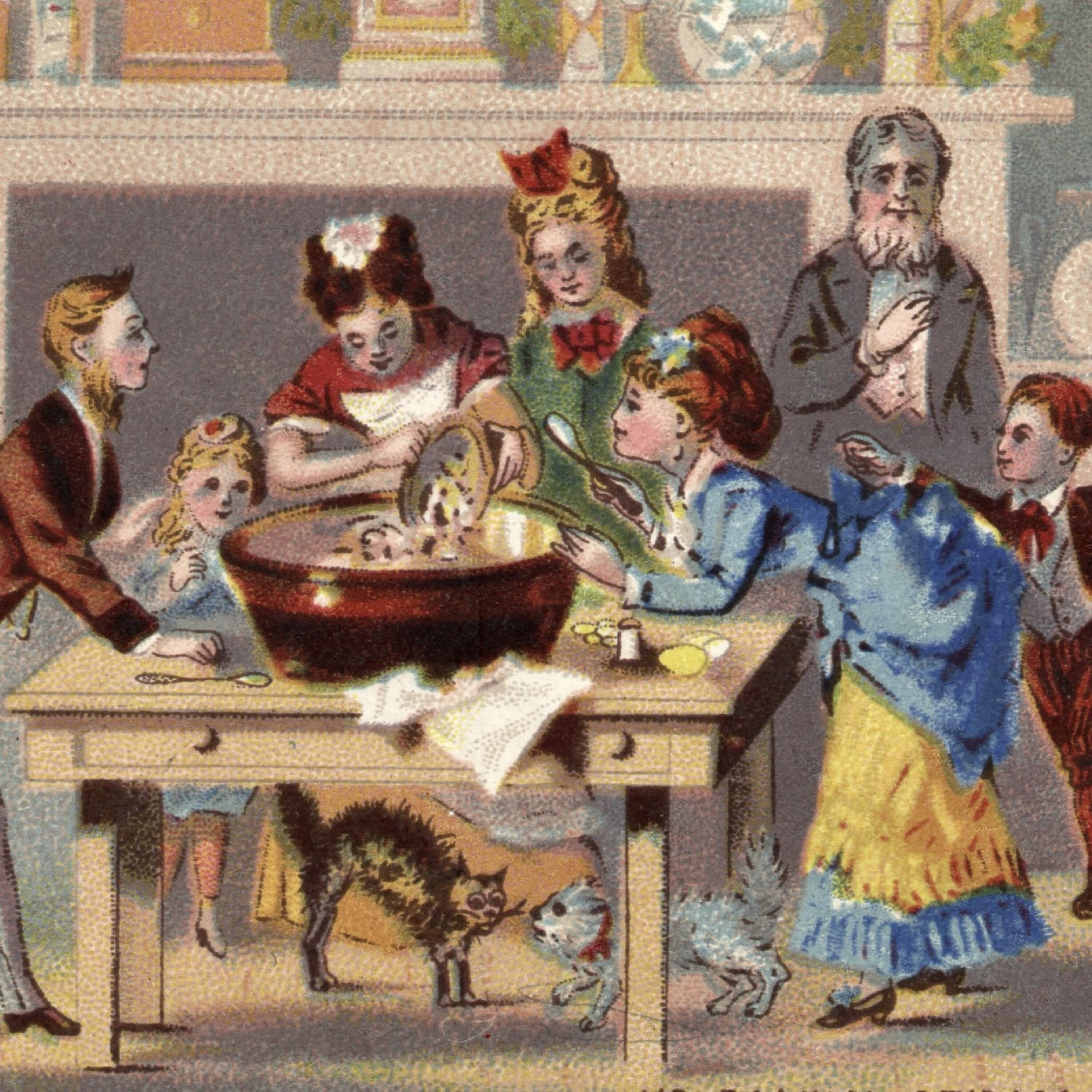
Speaker 6 And he gathers a few men around him as far as we can tell all men and not very many like half a dozen guys they're not very far from new plymouth and they decide they're going to make their fortune on the fur trade morton basically becomes the leader of merrymount and immediately makes decisions that show he was different from the pilgrims what morton figures out very quickly is that he can't succeed unless he establishes really good relations with native peoples and though he is not an unreligious person, religion does not seem to be at the forefront of his vision.
Speaker 6 At the forefront of his vision, and this may sound rather vague, is this idea of respect.
Speaker 3 Morton seemed to fundamentally respect the Native community he was trying to do business with.
Speaker 6 The Pilgrims, on the other hand, they were not as eager to embrace positive relations as Morton seemed to be.
Speaker 3 William Bradford, the governor of Plymouth, he was certainly not happy about Morton's approach.
Speaker 6 He singles out Morton for his what Bradford sees as overly friendly relations with Indigenous peoples.
Speaker 7 In order to maintain this riotous prodigality and excess, Morton, hearing what profit the French and the fishermen had made from trading guns, powder, and shot to the Indians, began to practice it hereabouts, teaching them how to use them.
Speaker 6 And one of the reasons that Morton comes to the attention of the pilgrims is he's competing with them for basically the supply of beaver to be found in southern New England in the 1620s.
Speaker 7 And here I must bewail the mischief that this wicked man began in this district, and which, continued by men that should know better, has now become prevalent, notwithstanding the laws to the contrary.
Speaker 3
Bradford viewed Morton as a sinful, godless man who was basically a traitor. But he was also just afraid.
The pilgrims were vastly outnumbered by the native people.
Speaker 6 And so when Morton is arming local natives with guns, this to the pilgrims just adds to their sense of
Speaker 4 doom.
Speaker 3 Initially, Bradford sent a letter to Morton requesting he stop trading with the native people. According to Bradford, this is how Morton responded.
Speaker 7
He answered as haughtily as before that the king's proclamation was no law and asking what was the penalty. That if they came to molest him, let them look to themselves.
He would be prepared for them.
Speaker 7 So they saw there was no way but to take him by force. They resolved to proceed.
Speaker 7 When I am afraid of evils to come, comfort me by showing me that in myself I am dying.
Speaker 7 Coming up, the pilgrims arrive in Merrymount.
Speaker 19 This is Deani calling from Melbourne, Australia, on the lands of the Yellicut Willem clan of the Bunnerung people.
Speaker 19 You're listening to ThruLine from NPR.
Speaker 20 Hey, it's Rund. Before we get back to the show, I want to take a quick step back and talk about what makes ThruLine and everything you hear from NPR possible.
Speaker 17 It's you.
Speaker 20 Think of NPR as civic infrastructure, freely available to everyone. We can do this all thanks to your support.
Speaker 20 So on behalf of the whole team at ThruLine, thank you for diving into history's incredible and complex stories with us each week.
Speaker 20 And a huge thank you if you already support this work through NPR Plus or by donating to your local station. Your generosity fuels one of the most trusted news sources in America today.
Speaker 20
If you haven't made the leap to contributing yet, Giving Tuesday is next week. So it's the perfect time to support what you love.
Sign up for perks across more than 25 podcasts with NPR Plus Today.
Speaker 20 It's a tax-deductible donation that helps make the world a more curious place so you can feel good about it while you enjoy sponsor-free listening and Through Line's monthly bonus episodes.
Speaker 20 Join us at plus.npr.org or you can always make a gift at donate.npr.org.
Speaker 20 Thank you.
Speaker 1 Support for this podcast comes from GMC. At GMC, ignorance is the furthest thing from bliss.
Speaker 1 Bliss is research, testing, testing the testing, until it results in not just one truck, but a whole lineup.
Speaker 1 The GMC Sierra lineup, featuring the Sierra 1500, the Sierra Heavy Duty, and the all-electric Sierra EV. Because true bliss is removing every shadow from every doubt.
Speaker 5 GMC, we are professional grade.
Speaker 1
Visit gmc.com to learn more. This message comes from Jackson.
Seek clarity in retirement planning at jackson.com.
Speaker 1 Jackson is short for Jackson Financial Inc., Jackson National Life Insurance Company, Lansing, Michigan, and Jackson National Life Insurance Company of New York, Purchase, New York.
Speaker 13 Support for NPR and the following message come from 20th Century Studios with Ella McKay, a new comedy from Academy Award-winning writer-director James L. Brooks.
Speaker 13 An idealistic young woman juggles her family and work life in a story about the people you love and how to survive them.
Speaker 13 Featuring an all-star cast, including Emma Mackey, Jamie Lee curtis jack loden kumal nanjani ioa debury spike fern julie kavner with albert brooks and woody harrelson see ella mckay only in theaters december 12th
Speaker 3 part two
Speaker 3 17th century troll
Speaker 18 Bright were the days at Merry Mount when the Maypole was the banner staff of that gay colony.
Speaker 18 They who reared it, should their banner be triumphant, were to pour sunshine over New England's rugged hills and scatter flower seeds throughout the soil.
Speaker 18 Jollity and gloom were contending for an empire.
Speaker 4 Nathaniel Hawthorne.
Speaker 6 The pilgrims, you know, getting word of shenanigans taking place at Merrimount,
Speaker 6 arm people to go into the town to arrest Morton and his fellows.
Speaker 6 And they are ready for what they think is going to be a battle.
Speaker 6 They show up.
Speaker 6 They find that the seven men are inebriated.
Speaker 6 The only blood that is shed that day is by one of Morton's followers standing up.
Speaker 7 One was so drunk.
Speaker 6 We can sort of imagine them standing up as these pilgrims are coming.
Speaker 7 So drunk that he ran his own nose upon the point of the sword that one held before him.
Speaker 6 There is no violence that takes place, but when the pilgrims get there, they find that not only have they erected this maypole, which they find offensive, they find salacious poems about the pilgrims, mocking the pilgrims.
Speaker 3 What kind of stuff is he saying about them? Like,
Speaker 3 what did he find worthy of
Speaker 3 making fun of?
Speaker 6 He mocks their seriousness.
Speaker 2 Captain Shrimp.
Speaker 6 He mocks what he sees as their inability to enjoy life's pleasures.
Speaker 2 Troubling their brains more than reason would require.
Speaker 6 He's messing with them.
Speaker 6 He's having sport with them.
Speaker 3 Yeah, he's trolling them. He's like a 17th-century troll.
Speaker 9 He's trolling them.
Speaker 6 They arrest them. It's unclear what happens to the guys, you know, the other guys.
Speaker 6 And they take Morton and they put him on this place called the Isle of Shoals, which is off Portsmouth.
Speaker 3 A remote island.
Speaker 7 They exile.
Speaker 3 And he waits.
Speaker 6 A ship's gonna come pick you up and take you back to England. You're gonna go to jail.
Speaker 6
Much to the pilgrim's disappointment. I have found no record of him being tried, going to jail.
Instead, nope, Morton comes back.
Speaker 3 Back, first to Marymount, then to Boston.
Speaker 6 I said, I'm going to try my luck with these people. And then he infuriates them for different reasons.
Speaker 3 And they torch his house and kick him out. In case you're counting, this is the second time Morton was exiled.
Speaker 6 So he's, what, 50?
Speaker 5 Wow.
Speaker 3
So he's not like some kid, swashbuckling kid. He is a grown man.
A grown man who ticked off the pilgrims and got sent away. But he's also not done with them.
Speaker 6 He goes back to England.
Speaker 6 And he starts to write a book.
Speaker 2 In the year since the incarnation of Christ, 1622, it was my chance to be landed in the parts of New England where I found two sorts of people.
Speaker 3 This is when he'd start to write New English Canaan.
Speaker 2 The more I looked, the more I liked it.
Speaker 3 It's what you might call a travel narrative, which at the time was popular for people who had traveled to the New World.
Speaker 6 It says, I went to this place.
Speaker 3 I met these people.
Speaker 6 Here's what I saw.
Speaker 3 And he divides New English Canaan into three books.
Speaker 15 So the first book is devoted to describing the native people. The second book is describing the natural landscape, but for the purposes of how to turn the land into a commodity.
Speaker 15 So it's almost like he's setting up a sort of missed opportunity that then gets explained explained in book three when he kind of articulates the kind of simple-mindedness of the pilgrims.
Speaker 3 Everyone who wrote these travel narratives was trying to be believed.
Speaker 6 They are writing books describing a world that the vast majority of English people are never going to see, have very little information about, and of which there are these competing claims over time.
Speaker 3 And as for William Bradford and Thomas Morton.
Speaker 15 It's hard to overemphasize how fraught their relationship was by this point.
Speaker 3 And so there's Morton, twice exiled, chip on his shoulder, riding away, trying to set the record straight as he saw it.
Speaker 15 There was a strong sense of historical narrative, a strong sense of we are making history through this New World endeavor, and we have to record it.
Speaker 3 And he starts by describing who was there first. Morton's experience with the Algonquin people was welcoming.
Speaker 2 If anyone shall come into their houses and there fall asleep, when they see him disposed to lie down, they will spread a mat for him of their own accord.
Speaker 15 He has other moments like this where he says that, in fact, the Massachusetts have more respect than the English.
Speaker 2 I have found the Massachusetts Indian more full of humanity than the Christians.
Speaker 15 And so he has several ways of kind of having a dig at the pilgrims by presenting the Massachusetts natives as more humble, more charitable, more respectful, and more humane.
Speaker 2 I cannot perceive that the separatists do allow of helping our poor, though they magnify their practice in contributing to the nourishment of their saints.
Speaker 3 Other times it feels like he's just straight up making fun of the pilgrims.
Speaker 15 Hoking fun is sort of one aspect.
Speaker 2 The setting up of this Maypole was a lamentable spectacle to the precise separatists that lived at New Plymouth.
Speaker 15 He's also intensely critical of what he sees as the pilgrims' sternness and kind of overzealousness and rigidness with trying to impose their religiosity on everyone in such kind of stringent ways.
Speaker 2 This harmless mirth made by young men that lived in hope to have wives brought over to them that would save them a labor to make a voyage to fetch any over, which much distasted of the precise separatists.
Speaker 3 He tagged the government of Plymouth.
Speaker 15 She talks about the government's in shambles.
Speaker 3 Even the town minister wasn't safe from his wrath.
Speaker 15 Anyone can be a minister, including a cowkeeper.
Speaker 2 The church of the separatists is governed by pastors, elders, and deacons.
Speaker 2 And there is not any of these, though he be but a cowkeeper, but is allowed to exercise his gifts in the public assembly on the Lord's Day.
Speaker 15 It's a pretty derogatory, you know, kind of thing to say,
Speaker 15 where he just says anyone can be in charge.
Speaker 3 And just to be clear, we shouldn't really view Morton as some kind of hero. He was still participating in the colonization of Massachusetts, and he was at his core a businessman.
Speaker 3 A whole section of New English Canaan is devoted to financial and economic opportunities the New World has.
Speaker 3 But the book does present a different vision for what the inevitable relationship between colonists and native people could have looked like. A different vision for what would become America's future.
Speaker 3 And that brings us back to London, 1633, when people representing the colonies in New England shut the book down.
Speaker 3 There aren't a ton of details about what happened next, but we know the bookseller, Charles Green, recorded that he'd lost 400 copies of the book.
Speaker 3 When some few sheets of the said book were printed, it was stayed, and those sheets taken away.
Speaker 3 This event is widely seen as the first example in American history of a book being banned or oppressed.
Speaker 11 But Morton didn't give up.
Speaker 3 He kept looking for ways to get the book published. And in the meantime, He didn't just try to get back to the colonies.
Speaker 3 He wanted to take over.
Speaker 6 He is at this point in touch with another group of English people who think that they are the proper owners of New England.
Speaker 3 And so Morton joins the fight from London to colonize the colonizers.
Speaker 6 So what happens is that various people go to court and they try to get patents. They say, okay, this is English territory and can you allocate some of it to us?
Speaker 6 And so there are these competing companies.
Speaker 4 Remember, Morton is a lawyer.
Speaker 6 A useful lawyer.
Speaker 3 And he's a boss.
Speaker 6 A guy who's spoiling for a fight, who has courtroom experience.
Speaker 3 And so he ends up fighting on behalf of this group, this company, in front of the king's bench.
Speaker 6 One of the highest courts in England.
Speaker 9 And
Speaker 3 they win.
Speaker 3 The court essentially gives Morton and his allies the rights to colonize New England. The colonists already in Massachusetts basically ignore the court's order.
Speaker 3 So Morton and his allies decide to take it by force.
Speaker 6 To militarily invade
Speaker 6 to get rid of the colonists.
Speaker 3 The plan was to get 1,000 soldiers and arms on a boat and send it to Massachusetts.
Speaker 6 There is no doubt that they are literally deadly serious.
Speaker 14 A ship was now in building and near finished.
Speaker 3 An eyewitness account is our only record of what happened next.
Speaker 14 When God, that had carried so many weak and crazy ships thither, so provided it that this strong, new built ship in very launching fell all in pieces.
Speaker 6 And it sinks in the docks before it ever leaves England.
Speaker 3
And that's it. The invasion fails.
But Morton's book is still alive.
Speaker 3 Coming up, the book is published and Morton returns to New England for the last time.
Speaker 8 My name is Atal Osama. I'm from Denver, Colorado, and you're listening to Through Line from NPR.
Speaker 13 This message comes from Mattress Firm. Restless partner keeping you up? Or maybe it's your pet or kids climbing into bed? Those constant movements can make it hard to get the rest you need.
Speaker 13 Mattress Firm's sleep experts will match you with a bed for deeper rest, like a temper-pedic. Its unique temper material absorbs motion for undisturbed undisturbed rest.
Speaker 13
Shop Mattress Firm's Black Friday sale and save up to $500 on select Temper-Pedic adjustable mattress sets with next date delivery. Restrictions apply.
See mattressfirm.com or a store for details.
Speaker 4 Part 3:
Speaker 13 Third Times the Charm.
Speaker 3 The ship ship has sunk. Morton lost yet another battle.
Speaker 4 But he didn't quit. Of course he didn't quit.
Speaker 3 This is Thomas Morton we're talking about. Instead, he tried to publish his book a few years later, but this time in a different city.
Speaker 6 Morton's book has come out of a press in Amsterdam, sort of evading English authorities.
Speaker 3 Now, why Amsterdam?
Speaker 4 A couple reasons.
Speaker 3
One is that Amsterdam was also a publishing center at the time, just like London was. And two, it would be far away from anyone trying to interfere.
Morton had reason to be worried.
Speaker 3 New English Canaan laid out an alternative vision for how European colonists could coexist with Native people.
Speaker 3 But in the time that it had taken Morton to write and publish the book, relations between Massachusetts Native communities and the pilgrims had only gotten worse.
Speaker 16 They had fled for religious freedom, but they did not not afford that same religious freedom to the Wampanoag or to any of the Indigenous people that they met.
Speaker 16 They considered them all to be heathens, and until they had been converted, they were not valued human beings. So that's where things began to fall apart.
Speaker 3 By the 1630s, English colonists were at war with a neighboring native people called the Pequot. The war was brutal, and it led to a massacre.
Speaker 3 On May 26, 1637, a group of armed Puritan colonists attacked the village of Pequot people.
Speaker 3 After killing most of the Pequot defenders, the Puritans blocked the village exits and set everything ablaze, burning everyone alive inside, mostly women and children. The attack killed hundreds.
Speaker 3 Those who tried to escape were shot.
Speaker 7 Most of those who survived were sold into slavery.
Speaker 3 And it was around this same time that Morton's book finally reached Massachusetts shores.
Speaker 6 Someone gets that book and ships that book over to Boston. So by the time Morton then decides to finally return, the book has gotten there before he has gotten there.
Speaker 3
Morton returns to Massachusetts in 1643. He's in his 60s.
And what he doesn't know is that the colonists already have his book. In reading it, they come to believe that.
Speaker 6 Morton is trying to undermine them, tell the world what terrible people they are, and now they should get rid of him.
Speaker 6 But they don't quite know what to do with him. Because publishing this book isn't necessarily a crime.
Speaker 6 So they put him in jail and they sort of debate, what should we do with this guy?
Speaker 6
They refer to him as old and pathetic, right? He's poor. They say we could beat him, right? They could literally, physically beat him and keep him in jail.
But what would be the point?
Speaker 6 He's this old man with no power. And so they decide,
Speaker 6 let's exile him again.
Speaker 3 Not long after Morton lands in Massachusetts, he's arrested and exiled.
Speaker 6 But this time, rather than send him to England, he goes up the coast to this little place, Achimenticus. There's hardly anyone there.
Speaker 3 Which is present-day Maine. There he's surrounded by trees and left to be alone with his own thoughts.
Speaker 6 Morton goes there,
Speaker 6 and that's where he dies.
Speaker 4 But what about his book?
Speaker 3 What happened to all those original copies?
Speaker 6 We don't know. Most things from 400 years ago don't survive.
Speaker 6 What's called 200 plus books?
Speaker 6 There are about 20 left today.
Speaker 3
Whatever happened to the books, we don't know. But what's for sure is that Morton's ideas were enough to make him a serious threat.
So much so that he had to be banished not once, but three times.
Speaker 6 He is a threat because he represents a different way forward.
Speaker 6 A way forward that would not have surrounded a village, set it on fire, and shot people as they came out. That he would have instead sought some other resolution.
Speaker 6 He has a radically different vision than the pilgrims had.
Speaker 6 So I think when he shows up again, even though he is, by their own admission, he is not a threat, but he does represent this idea. And that idea
Speaker 6 is different from their plan of colonization.
Speaker 6 I think that they hope to vanquish his ideas in, and to do that maybe symbolically by vanquishing his body.
Speaker 6 Now, they don't say all that, so I'm making certain inferences here. But I think that's the deeper meaning of that last exile.
Speaker 6 He represents a threat to a community that is still not as secure as it wants to be.
Speaker 15 I think New English Canaan is written with that sense of future generations in mind as much as the present day. You know, and in fact,
Speaker 15 it is the legacy more than his contemporaries that constitutes his readership. Nathaniel Hawthorne, writing in the 1830s, is the major popularizer and discoverer of Thomas Morton and his legacy.
Speaker 3
The Scarlet Letter. You remember it, that one book we all had to read in high school.
That was by the same guy.
Speaker 15 Hawthorne actually wrote an entire story called The Maypole of Marymount, in which he's clearly deeply engaged with the text and sympathetic to Morton's vision.
Speaker 3 This is Sarah Rivet reading a passage from that story.
Speaker 15
Old and young were gay at Marymount. The young deemed themselves happy.
The elder spirits, if they knew that mirth, was but the counterfeit of happiness, yet followed the false shadow willfully.
Speaker 15 And he describes Morton
Speaker 15 and Marymount, in contrast to the pilgrims, as a kind of war that jollity and gloom were contending for an empire.
Speaker 15 You know, he really sees this as a deep debate between joy and gloom, between severity and a kind of fuller embrace of humanity and of life.
Speaker 3 And it wasn't just Nathaniel Hawthorne. In 1812, John Adams wrote to Thomas Jefferson about Morton's book, saying, it is whimsical that this book, so long lost, should be brought to me.
Speaker 3
The two would later exchange a few more letters about the book. The ideas in New English Canaan rippled out for centuries.
The poet William Carlos Williams wrote about it.
Speaker 3 The novelist Philip Roth and others. The book changes how we understand what we consider to be America's origin story.
Speaker 15 It goes back to the counter narrative.
Speaker 15 In the early years of the United States, there was a strong attempt to create a story of the rise of the young nation that was coherent and chronological and began with the Pilgrims and the Puritans as a cohesive group.
Speaker 15 It was consciously constructed as such. And then here's the rise of this great democracy.
Speaker 15 There are a lot of reasons why that narrative is in place and actually continues to be part of the American story, but it is dangerous. It's a single story.
Speaker 15 It's never at any point in colonial or early national history was the United States quite that coherent. And so Morton's text is a really important counter voice.
Speaker 15 No matter what he's saying, he's showing that the 17th century was multivocal, that people disagreed, that there was possibility for dissent within these communities.
Speaker 3 That this is a very old practice, not just in the world, but in the U.S.,
Speaker 3 or in what we now call the U.S., that somehow by banishing the idea, you're protecting the ideal.
Speaker 6 Yes, I think that's one of the most important reasons to study Thomas Morton's life. As I mentioned,
Speaker 6 the Puritans want to banish his ideas. If they can get rid of the book and they can get rid of him, then they can get rid of the idea.
Speaker 6 That is as ridiculous a concept in the 1630s as it is today.
Speaker 6 Banning books is such an insult to human intellect. that we are so afraid that someone's going to read something that we don't like.
Speaker 6 Read something about an alternative lifestyle that is somehow not our own lifestyle or not those of the book banners.
Speaker 6 Book banning flies in the face of not only my 21st-century idea about why people should be able to read books, but it flies in the face of early Americans' ideas about the importance of ideas and being confronted with them and letting the marketplace of ideas, the discourse of how we do about things, sort out the right way forward.
Speaker 6 Guess what? It doesn't work. Getting rid of the physical manifestation of an idea does not crush the the idea itself.
Speaker 6 Morton's ideas don't die.
Speaker 6
Morton's story doesn't die. New English Canaan, despite the best efforts, doesn't die.
It comes back.
Speaker 13 That's it for this week's show.
Speaker 20 I'm Randabd Fattah.
Speaker 3 I'm Ramteen Adab Louis, and you've been listening to Through Line from NPR.
Speaker 15 This episode was produced by me and me and Lawrence Wu, Julie Kane, Anya Steinberg, Casey Minor, Christina Kim, Devin Katayama, Peter Balinon Rosen, Thomas Liu, Irene Naguchi.
Speaker 3
Fact-checking for this episode was done by Kevin Vogel. The episode was mixed by Robert Rodriguez.
Thanks to Johannes Durgee, Edith Chapin, Colin Campbell, and Anya Grunman.
Speaker 3 Thanks also to Neil Strickland, Chris Turpin, Thomas Liu, Peter Balanan-Rosen, Devin Katayama, and Lawrence Wu for their voiceover work.
Speaker 20 Our music was composed by Ramteen and his band Drop Electric, which includes Anya Mizanyi, Naveed Marvy, Sho Fujiwara.
Speaker 3 And finally, if you have an idea or like something you heard on the show, please write us at throughline at mpr.org.
Speaker 20 Thanks for listening.
Speaker 13 This message comes from Vital Farms, who works with small American farms to bring you pastor-raised eggs.
Speaker 13 Farmer Tanner Pace shares why he chose to collaborate with Vital Farms when he brought pastor-raised hens to his small Missouri farm.
Speaker 21 Probably the best thing about being a Vital Farms farmer is working with a group that is not just motivated for one thing.
Speaker 21 They're motivated for the well-being of the animals, for the well-being of the earth. They care about it all, you know, and that means a lot to me.
Speaker 13
To learn more about how vital farms farmers care for their hens, visit vitalfarms.com. This message comes from homes.com.
What kind of programs does this school have? How are the test scores?
Speaker 13
These are all things parents ask when they home shop. That's why each listing on homes.com includes extensive reports on local schools.
Homes.com, we've done your homework.
Speaker 1 This message comes from REI Co-op. Don't be surprised when you're this season's best gift giver.
Speaker 1 REI's curated outdoor gear takes the guesswork out of gifting, so you won't be surprised, but they will. Give without guessing.
Speaker 5 Shop in-store or at rei.com.