Japan’s next move
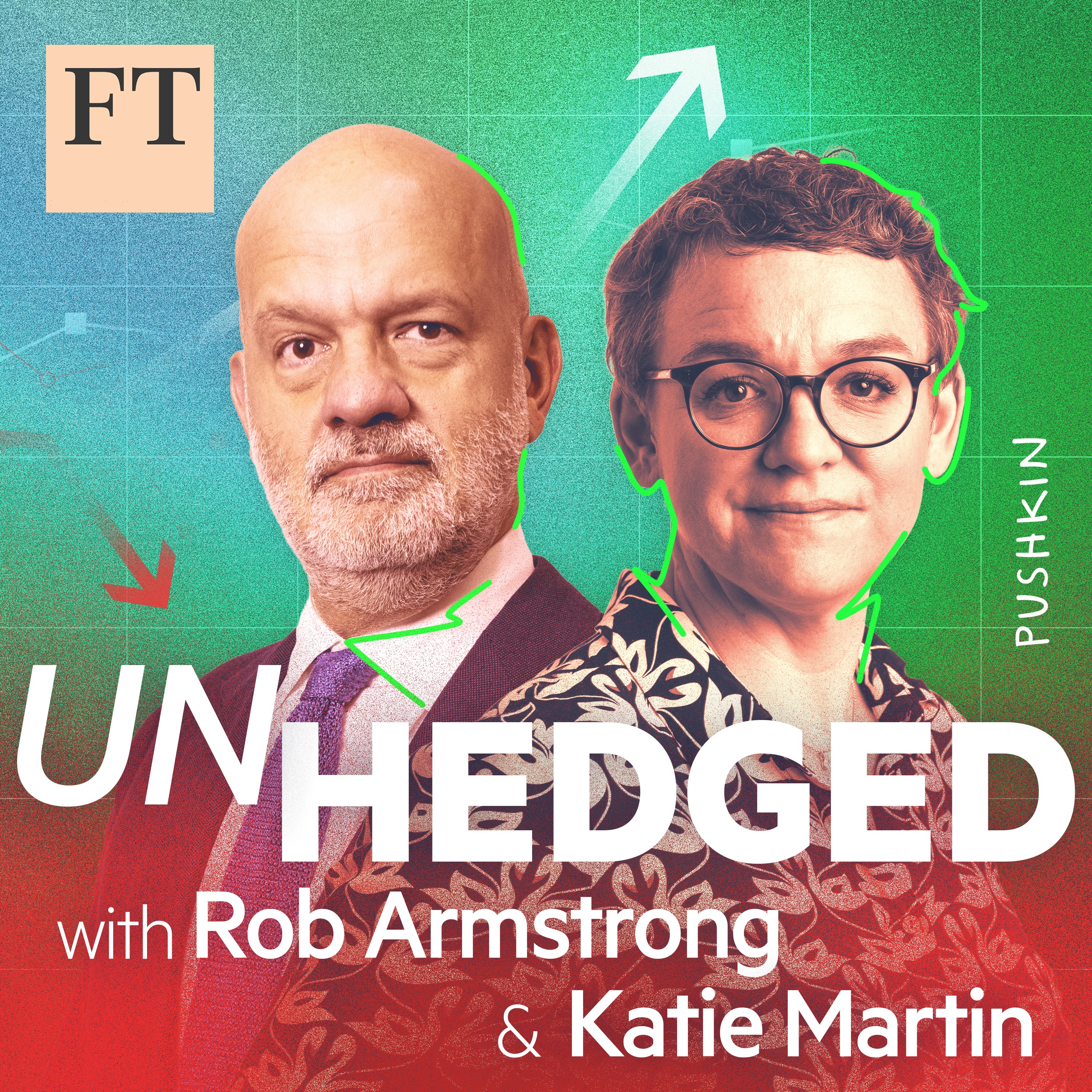
Sanae Takaichi is the first female prime minister of Japan. She also claims Margaret Thatcher as a role model. Today on the show, Katie Martin and the FT’s Tokyo bureau chief Leo Lewis discuss this historic election and what it might mean for markets in Japan and globally. Also, they go long shorts – for real this time.
For a free 30-day trial to the Unhedged newsletter go to: https://www.ft.com/unhedgedoffer.
You can email Robert Armstrong and Katie Martin at unhedged@ft.com.
Read a transcript of this episode on FT.com
Hosted on Acast. See acast.com/privacy for more information.
Press play and read along
Transcript
At PGM, we actively manage risk today while targeting outperformance tomorrow.
So, no matter what investment risks concern you most, from geopolitics to inflation to liquidity, PGM brings disciplined risk management expertise that spans 30 market cycles.
Our active approach finds opportunities and volatility, helping our clients to navigate risk and achieve their long-term goals. PGM, our investments shape tomorrow today.
You can join me, Katie Martin, with Chris Giles and Claire Jones, my colleagues from the FT, but also with former Fed Vice Chair Lyell Brainard and Fidelity International's Salman Ahmed on October the 23rd for a subscriber event.
All the details for you to register and ask questions in advance are available on ft.com/slash edge.
Kushkin
There was a bit of political Argybaji there for a bit, but Japan has a new Prime Minister after all, in the form of Sanai Takeichi, the first woman ever to hold the role.
And one of her first moves, appoint the country's first ever female finance minister. Markets have sat up and taken notice.
We've got a new record high in stocks, and that's all good fun, of course, but investors are also bugged by the idea that the new prime minister might lean on the bank of japan not to raise interest rates despite unusually high levels of inflation that points to a drop in japanese government bonds which have already had a tough start to the year so today on the show we're asking is the takeichi trade on and is this mix sustainable
This is Unhedged the Markets and Finance podcast from the Financial Times and Pushkin. I'm Katie Martin, economist in FT, desperately trying to make sense sense of markets in London.
And I'm joined by the magic of the internet today by a special guest, one of my favourite colleagues, Our Man in Tokyo, Leo Lewis. Now, listeners, it is midnight in Tokyo as we sit down to record.
This poor man has been on the go for hours. Leo, you are very good, police.
Thank you for coming on the show. Thank you for having me.
You must be kind of reeling, right?
You've been our man in Tokyo for a really long time. This is the biggest outbreak of political drama for a very long time, right? Yeah, absolutely.
It is.
And, you know, there is a quiet pride here that Japan has its first female leader before the Americans got theirs. So that's been very exciting.
There was the drama that you mentioned earlier, you know, of whether it would actually happen. There was a sort of slight wrinkle towards the end
and whether the opposition would be able to sort of gang up and make it not happen. But today it did.
And it happened pretty straightforwardly in the end. And I've just come from the press conference.
It's her first press conference as Prime Minister. And how did she seem, you know, prime ministerial, like ready for business, ready for action? 100% ready for business.
It was a very impressive performance. And what was interesting about it was I think the point about her is that she's self-made.
And unlike a lot of people in Japanese politics who have come from grand families of politicians, she made it on her own and she made it on her own in an environment that was not set up for people like her to make it on their own.
And she has finally succeeded. And she made this kind of mention at the beginning.
She said, you know, I've tried several times. I've failed several times.
I kept trying.
And it was just this kind of moment of, look, whatever we make of her going forward about what her politics are like and so on. This was a very important moment for Japan.
It was a very important moment for her. And I think it was a very important moment for the idea that things have changed quite substantially in the whole kind of setup.
It was a great moment. And as you say, she's a self-made woman.
Am I right in thinking she used to be a TV presenter? Yeah. And of course,
that is part of
the skill set, actually, that she is a very, very fine presenter of her ideas and her thoughts. So it just came across very strong.
By contrast with her predecessor, Ishiba, who had been a politician for a long time, is a smart guy, but just never managed to convey any of that.
It was a slick performance. And
a lot's been said about she's sort of ultra-conservative, that she's this big nationalist. All of that could be true, but she certainly presents in a very charismatic way, actually.
And so, what are her priorities? I'm thinking mainly in terms of the economy. You know, she's described as a hardliner.
She's described as kind of a capitalist through and through.
She models herself on Margaret Thatcher, as you say. But she's also made some quite weird noises about what she wants the central bank to do and not do.
So let's start with what the markets have done in response to her coming in. We've had a big rally in Japanese stocks pretty much all year.
We're up, what, 25%? Yeah, thereabouts.
And at about 11 o'clock this morning, I got a call from the press guys at Nomura because the Nikkei 225 was at, I think it was 49,9.
Yes. And
50,000 was sort of inside. There's a lunch break and there was a possibility it was going to happen in the afternoon session.
I love that Japanese markets take a lunch break. Yeah, well, I mean...
This is extremely civilized. You've got to have your ramen.
You've got to have your ramen. And they were inviting me, along with other journalists, to be on the trading floor.
if it went through 50,000. Right, cool.
Right.
And the last time this happened, by the way, that they invited us to the trading floor was when the the Nikkei went through, this is a couple of years back now.
Do you remember when it went through the 80s bubble peak, which seemed unattainable for decades, seemed completely unattainable?
And you wrote about it at the time, we all wrote about this sort of going through that moment.
And since then, obviously, it's come another 10,000 points up
from there. And this 50,000 level.
It's so tantalizing. It's so tantalizing.
It's an odd index, but it's the one that people watch.
And anyway, so it said the Nomura said come to our trading floor It didn't go through 50 It doesn't matter It closed at an all-time high on the day that Japan got its first female prime minister and As you referenced there the takaichi trade was the phrase that when we spoke to the brokers and the investors that was one they were using that it's you know it's a broad phrase but that was what they were saying yeah so get ready for like a rush of nikkei225 at 50 000 stories because journalists look we like round numbers they're very easy stories stories but also people love them anyway i guess my point is so japanese stocks are already up by about 25 percent so far this year is the takeichi trade already done you know is is she capable of pushing it further and and does she care is she using markets as a kind of benchmark a measure of her success in the same way that like donald trump does We still don't know is the answer to that question.
She has not made reference today or in the sort of the last sort of couple of weeks since she became leader of the LDP.
She hasn't talked about the stock market in that sort of way as a gauge of success, as you say. On the other hand, it has been going up effectively on her watch.
In this press conference I just came from, for example, she was very clear that the economy was her priority.
And she highlighted several parts of that. Obviously, there's a cost of living crisis.
That cost of living crisis in Japan feels more burdensome. It's the price of rice, right? This is what a lot lot of all this is about.
100%. And so food prices going up have this kind of stretch.
So when the Bank of Japan is looking as it is at inflation expectations,
you know, the sort of the food and the rice that you mentioned there, it's a big factor because
people are just talking about it. It's just a subject of conversation.
Yeah. So she mentioned that.
And obviously, when she talks about the economy, she's also, I mean, this is what the market is getting excited about, is the idea that, you know, like the late Shinzo Abe,
of whom she was an acolyte, there's this idea of a kind of reflationary stimulus for the economy and so on. And so, she didn't hold back from that today.
And I think that's what's getting the market excited. Yeah.
Or the equity market, the equity market. Yeah.
Yeah. Yeah.
So that's on the stock side.
But what we do have is a much weaker yen than we had, certainly, like a year or so ago. And we have pretty weak by historical standards Japanese government bonds.
Now, I guess this goes back to like, you know, Japan for like the longest time had no inflation or it had sinking inflation or it had, you know, flat out deflation.
And finally, we have inflation in Japan. And at first, everyone's like, great, I can go to my boss and ask for a pay rise.
But now it's like, hang on, this joke is wearing off a little bit here.
I'm bothered by the price of rice. I'm bothered by the price of beer, you know, or all of this stuff.
So all things equal, the Bank of Japan should be raising interest rates to try and pull inflation down.
But there has been a suggestion that the new Prime Minister might not kind of be down with that and she might put pressure on them to stay packed.
How much is this like, you know, people in London and New York misreading the situation? And how much of it is a genuine threat that she might interfere directly or indirectly? There are two things.
It's not just the market running away with it. There was a stage in the earlier phase of the Bank of Japan's what they're calling
the normalization process, which is a bigger phrase than the word alone, kind of, like you mentioned, the decades of falling or flat prices.
There was a, you know, the zero interest rate, sort of negative interest rate.
So normalization means a lot more in a context of Japan than it perhaps does or would do in another country, because you're undoing decades, really, of economic abnormality.
And so she's come in at this point.
Now, in the early stages of the Bank of Japan, you know, began this phase, which have left it at 0.5 on the short-term interest rate, rate the policy rate as that started and she was obviously not prime minister This was this was some time ago She said it was stupid She used the word stupid a Japanese word for stupid and so people have latched on to that and and I think that is driving what you just described there Which is this idea that you know is she now going to use this position She's in to lean on the on the Bank of Japan you know it coincides by the way with there is a Bank of Japan meeting, you know, there's a monetary policy meeting next week.
And
I suspect, along with the market generally, that
it was pretty unlikely that the Bank of Japan would come straight out of a period of political turmoil, a brand new prime minister, and the very next week do something that has in the past proved disruptive, right?
The Japanese household can stand to wait another couple of months before
a BOJ decision made. So I think over the last few weeks, There are sort of analysts who've been pushing, the economists have been pushing their expectation for a rate hike back back to January 26th.
Oh, really? That's quite quite a bit, yeah. It's a big pushback.
You know, I think people had a couple penciled in for this year.
Yeah, the other thing was she was asked today in this press conference, she was asked about the Bank of Japan. And I think every country that has an independent central bank
also has to acknowledge that there is quite a nuanced political relationship between the central government and the Prime Minister's office, the finance ministry, and whatever that central bank is.
And I think she's referencing the fact that there is quite a high level of cooperation. I mean, you know, discussion and cooperation between central bank and the government.
And so under Abe,
you know, the Kuroda bazooka and what the Bank of Japan was doing to stimulate the economy was part of a bigger plan. You know, it was playing its role in the world.
Yeah, there was this three arrows thing that Abe came out with in, was it 2013? And it was about monetary policy working together with economic policy.
And I can't remember what the third arrow was now.
but you know well the third arrow was structural reform right so that was the bits that you know corporate governance code all those sort of things that came under that so you know it has been a cooperative relationship and so it's not far-fetched to sort of say well look if she you know she's called
she's previously expressed you know in quite strong terms her let's say scepticism about what the bank of japan was doing and the normalization process uh it's not far-fetched to say well look when she starts the discussions that lead to her administration's cooperation banking japan she might say well are you sure about this are you sure about however i will say
that actually she has become markedly more measured in the language that she's used over the last four or five weeks you know she's strident on certain subjects but on that she's been much more cautious actually much more measured yeah the closer people get to actually coming into office the more they kind of try and play nicely with the central bank.
Leo, three letters for you. JGBs, right? Japanese government bonds.
People have been warning since the dawn of time that Japanese government bonds are going to blow up and they never blow up.
What is the danger that they blow up under Sanai Takeichi? Well, first of all, congratulations for not using the phrase the widow maker trade,
which is what always gets applied to the fact that shorting or, you know, selling short Japanese government bonds has always failed. Betting against JGBs never, ever, ever works.
Until it does.
and they have weakened quite a bit recently.
That's right. They have weakened.
And the other thing that has happened is that there is a liquid market.
So what you have to remember about the way that Japan has been is that during that period 2013 to the end of the Abinomics era, let's call it 2020, the Bank of Japan was right in the market for JGBs, dominant in that market for JGBs.
Buying, buying, buying all day long. To the point where there were entire desks of
bond traders who were twiddling their thumbs. There were days that went past where they set up some mini golf on trading floors.
Yeah, it was a glass at one end of the trading floor and putting into the glass. Yeah.
So to give you a sense of what has happened in the last,
let's say, 18 months, is that the market is... reviving.
There is liquidity in there. There are things happening.
And I think that because there is just more activity, we as observers, we as journalists covering all of this, are simply looking more closely at moves in a market that is
finding its feet. It's finding price in a way that it didn't have to for a long time.
And so, yes, the risks are there.
There is a possibility that this new administration will attempt to use stimulus, use government spending to get the country through.
The worst case scenario is that she uses stimulus, she uses spending, and she pushes it too far. And we have
another Liz Truss moment, except in Japanese government bonds, except rather than UK government bonds. That's your nightmare scenario, because the Japanese government bond market is huge.
It could send ripple effects kind of everywhere. But Takeichi, she knows what she's doing, right? She knows about Liz Truss, and she knows not to do that.
She knows about Liz Truss.
She knows not to do that. And also, as you referenced at the beginning, she is appointed a finance minister who also is steeped in Ministry of Finance.
You know, that's what she was.
She was a career bureaucrat before she became a politician.
Serious person
who knows where the dangers are. And, you know, fiscally hawkish, you know, having come from the Ministry of Finance.
And so, you know, certainly alive to those risks. And
anyone who who has been in Japanese politics for as long as she has is also aware of this massive gross debt to GDP ratio that Japan runs and where the risks are in that.
And so, like we were saying, she has come across, certainly in campaigning, as somebody that is quite strident and does have a lot of time for the late Shinzo Abe.
And
I think
the problem is that Abe was dealing with a different economy. And she's got a weak yen, which he didn't have, and she's got an active bond market, which he didn't have.
And so she will tread carefully. She knows that difference.
And so that's why I think there is always a concern, but I think she is going to try and limit that concern.
There's no particular infrastructure coach to that. And I think also,
I'm not to dwell too much on the politics. In her new cabinet, she put
three of the four people who ran against her. So she is...
already out of the gates.
She's being very pragmatic about this. She's got a party to to unify.
If we had seen a big line-up of people that were exactly in her image or just mates of hers that didn't have experience, or just wingnuts,
you know, long may that continue. But on the other hand, I think it's also
the case that she may end up as mired as previous Japanese prime ministers in precisely that pragmatism.
In other words, if there are an awful lot of things that need doing, she may not actually have the
scope to do it. Today you're feeling pretty optimistic
and mostly knackered so and mostly knackered we'll see how she gets on with trump next week i mean of course that's the other thing is that taking aside the markets and everything else she has a very big diplomatic challenge ahead of her which is you know trump and then xi jinping possibly at apec you know it's a it's a tough old couple of weeks ahead she really is stepping into the lion's den maybe the markets are the least of her worries given given everything else
leo you're a good man it's super late for you and it's almost time for you to hit the sack i promise i need just five more minutes of your time, listeners.
We are going to be back in just one second with long shorts.
From 1960 to 2000, we saw GDP per capita, roughly speaking, income per person, the measure of the standard of living.
It grew at an average annual rate of 2.3%, which means the standard of living doubles every 29 years. That's one working career.
In the 21st century, GDP per capita has risen at an average annual rate of 1.3%, which means the standard of living is doubling every 56 years.
And there is a palpable palpable sense of reduced opportunity for today's young. Hear more expert insights on investing with PJM's The Outthinking Investor podcast.
Subscribe today.
Okie dokie, it's time for Long Short, that part of the show where we go long, a thing we love, or short, a thing we hate. Leo, all the way over there in Tokyo, what you got? I am going long
shorts.
So I have decided that I'm going to wear shorts the entire year round. I am sick of long trousers.
And I know it gets cold in the winter here. Yes.
But shorts are the way to go. And I'm glad that Rob isn't on because satorially I can see some problems.
Also, the Nikkei building that we're in in Tokyo, they don't like shorts. However,
I think that things have changed and I think I can wear shorts all year round.
Well, I'm interested in this because Rob has been long shorts on this before, but not followed through and not worn them himself.
Whereas I think you're more likely to put your money where your mouth is. I am long.
I think everyone is long.
The jewelry heist on the Louvre in Paris.
So it's like broad daylight, and they like rack up a mechanized ladder on the side of the Louvre. And like, nobody says anything.
Nobody does anything. This is not caught on CCTV, apparently.
Whatever. They like climb through a window, nick a bunch of bling, and then just, you know, take off off on scooters.
What is not to love about this?
So the French justice minister said, we have failed and this is a terrible image. And I'm like, don't apologise.
This has given us all a very good laugh.
This is just what we needed in these dark days. I'm here for it.
Here, the immediate image that came up when this story came up is of one of Japan's favorite anime characters, Lupan III,
who is a jewel thief. And, you know, so from their point of view, this was a dream come true.
This was a real life anime happening in real time. Oh, fantastic.
It's been absolutely brilliant to watch the world reaction. Leo, please don't go and rob any priceless jewelry.
I am just here for the lulz of it, but you've been a very kind person. I know you're very tired.
Congratulations on getting this whole story over the line. You can now go to bed.
Listeners, I will be back in your ears on Thursday. So listen up then.
Unhedged is produced by Jake Harper and edited by Brian Erstadt. Our executive producer is Jacob Goldstein.
Topha Vorhez is the FT's acting co-head of audio.
Special thanks to Laura Clark, Alistair Mackey, Greta Cohn, and Natalie Sadler. FT Premium subscribers can get the Unhedged newsletter for free.
A 30-day free trial is available to everyone else.
Just go to ft.com/slash unhedged offer. I'm Katie Martin.
Thanks for listening.