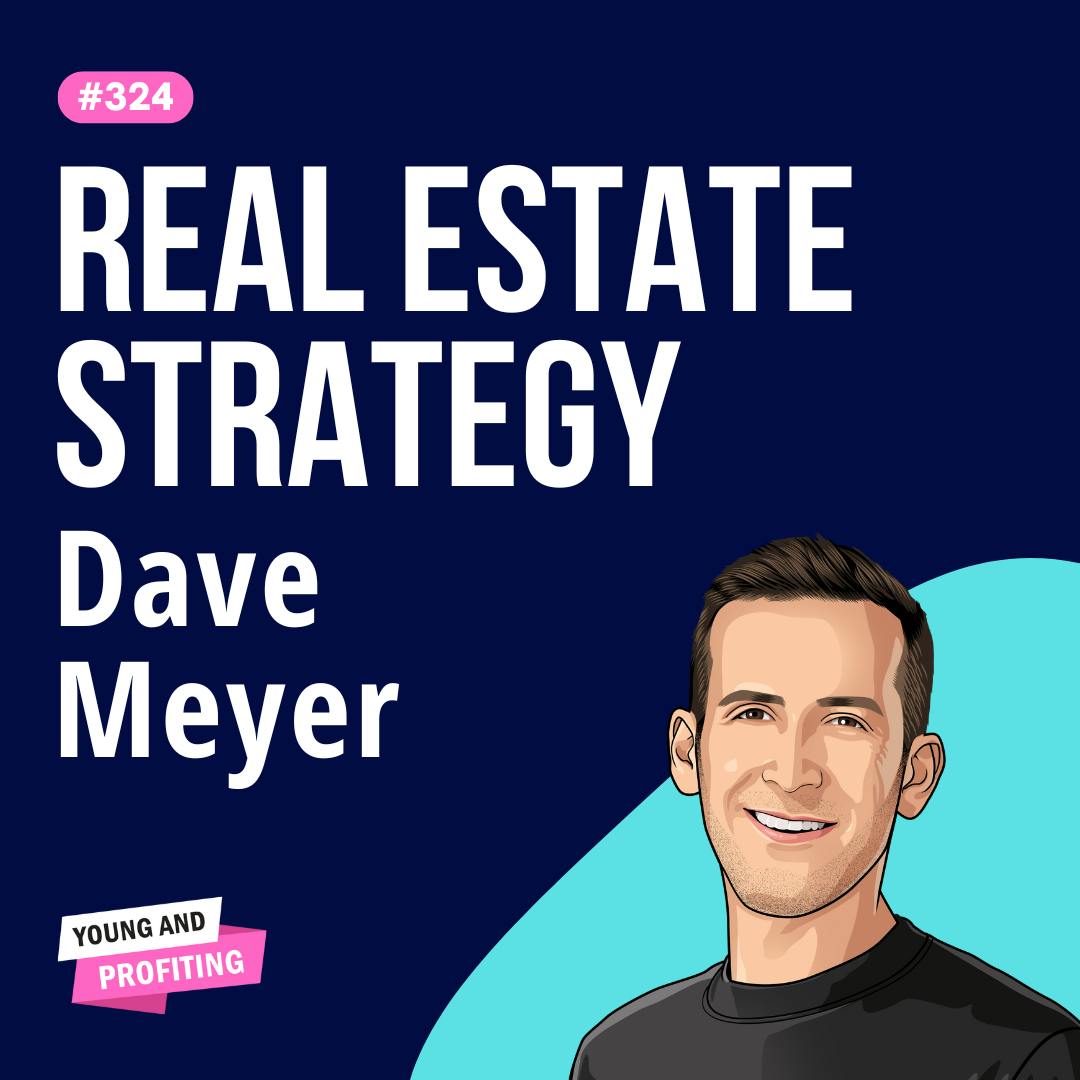
Dave Meyer: Build Your Real Estate Empire with Smart Investing | Entrepreneurship | E326
In this episode, Hala and Dave will discuss:
(00:00) Introduction to Real Estate Investing
(01:52) Why Real Estate is a Smart Investment
(05:50 Understanding Cash on Cash Return
(06:29) Real Estate as Entrepreneurship
(07:40) Dave's Real Estate Journey
(18:29) Managing Real Estate Investments
(25:59) Economic Considerations in Real Estate
(29:32) Understanding Depreciation and Tax Benefits
(32:31) Exploring Hot Real Estate Markets
(34:14) Overcoming Real Estate Investment Fears
(37:35) Quick Fire: Pros and Cons of Different Deal Types
(41:39) The Appeal of Commercial Real Estate
(44:03) Development and Lending in Real Estate
(48:43) Final Thoughts and Advice for Aspiring Investors
Dave Meyer is a seasoned real estate investor and the Vice President of Data and Analytics at BiggerPockets. With more than 14 years of experience, he has grown a thriving real estate portfolio, starting with a fourplex he bought at age 23. Dave has authored notable books like Real Estate by the Numbers and Start with Strategy, where he combines his analytical expertise with actionable advice for investors. As the host of two popular podcasts, On the Market and the BiggerPockets Real Estate Podcast, Dave educates listeners on smart investing strategies. Known for developing tools like the Market Finder, he has made data-driven decision-making more accessible for investors.
Resources Mentioned:
Dave’s Books:
Start with Strategy: Craft Your Personal Real Estate Portfolio for Lasting Financial Freedom: amzn.to/3ZLMG6e
Real Estate by the Numbers: A Complete Reference Guide to Deal Analysis, written with J Scott: amzn.to/4fo4BFY
BiggerPockets: biggerpockets.com
On the Market Podcast: youngandprofiting.co/3OZKWS5
BiggerPockets Real Estate Podcast: apple.co/4fpTZGo
Sponsored By:
Airbnb - Your home might be worth more than you think. Find out how much at airbnb.com/host
Found - Try Found for FREE at found.com/profiting
Shopify - Sign up for a one-dollar-per-month trial period at youngandprofiting.co/shopify
Active Deals - youngandprofiting.com/deals
Key YAP Links
Reviews - ratethispodcast.com/yap
Youtube - youtube.com/c/YoungandProfiting
LinkedIn - linkedin.com/in/htaha/
Instagram - instagram.com/yapwithhala/
Social + Podcast Services: yapmedia.com
Transcripts - youngandprofiting.com/episodes-new
All Show Keywords: Entrepreneurship, entrepreneurship podcast, Business, Business podcast, Self Improvement, Self-Improvement, Personal development, Starting a business, Strategy, Investing, Sales, Selling, Psychology, Productivity, Entrepreneurs, AI, Artificial Intelligence, Technology, Marketing, Negotiation, Money, Finance, Side hustle, Startup, mental health, Career, Leadership, Mindset, Health, Growth mindset.
Finance
Finance, Financial, Personal Finance, Wealth, Stock Market, Scalability, Investment, Financial Freedom, Risk Management, Financial Planning, Business Coaching, Finance podcast, Investing, Saving,
Press play and read along
Transcript
Speaker 1 Today's episode of Yap is sponsored in part by Indeed, Shopify, Quo, Revolve, Merit Beauty, DeleteMe, Northwest, and Spectrum Business. Attract, interview, and hire all in one place with Indeed.
Speaker 1 Get a $75 sponsored job credit to boost your jobs visibility at Indeed.com slash profiting. Shopify is the global commerce platform that helps you grow your business.
Speaker 1
Start your $1 per month trial period at shopify.com slash profiting. Quo, formerly Open Phone, is the number one business phone system.
Get 20% off your first six months at quo.com slash profiting.
Speaker 1 Shop the latest trends from today's top brands with Revolve. Head to Revolve.com slash Profiting and take 15% off your first order with code Profiting.
Speaker 1 Merit Beauty is a minimalist beauty brand that makes elevated makeup and skincare. Go to meritbeauty.com to get your free signature makeup bag with your first order.
Speaker 1
Delete Me makes it quick, easy, and safe to remove your personal data online. Get 20% off DeleteMe consumer plans at joindeleteme.com slash profiting.
Don't wait.
Speaker 1 Protect your privacy, build your brand, and get your complete business identity in just 10 clicks and 10 minutes. Visit Northwest Registered Agent at Northwestregistered Agent dot com slash yap free.
Speaker 1
Spectrum business. They don't just give you internet.
They set you up with everything that your business could need.
Speaker 1 Visit spectrum.com/slash free for life to learn how you can get business internet free forever.
Speaker 1 As always, you can find all of our incredible deals in the show notes or at young and profiting.com/slash deals.
Speaker 1 Hello, my young and profiters. I know most of us, if not all, have been in a situation where you open up your closet and you suddenly feel like you've got nothing to wear.
Speaker 1 That's just as real, especially if I've got a big speaking engagement or a major event and I need an outfit that makes me feel confident and great about myself. That's why I love Revolve.
Speaker 1 It's my go-to for every occasion, from weddings to work events to going out at night. I always wear Revolve.
Speaker 1 With over 1,200 brands and 100,000 styles, they've got everything from elevated basics to statement pieces. Plus, they drop new arrivals daily and the curated edits make finding outfits easy and fun.
Speaker 1 Whether it's a weekend away, a big night out, or just a little style refresh, your dream wardrobe is just one click away.
Speaker 1 Head to revolve.com slash profiting, shop my edit, and take 15% off your first order with code profiting. Fast two-day shipping, easy returns.
Speaker 1 Sometimes I do overnight delivery when I need an outfit in a pinch. It's literally the only place you need to shop from.
Speaker 1
That's That's revolve.com/slash profiting to get my favorites and get 15% off your first order with code profiting. Offer ends November 9th.
So happy shopping.
Speaker 2 Real estate is not that complicated. 90%
Speaker 2
of the rental properties in the United States are owned by people with one to 10 properties. These are just normal people who are doing this.
And the amazing thing about real estate investing is that.
Speaker 1 Why would you say that real estate investing is actually entrepreneurship?
Speaker 2 Because even if you buy a relatively simple type of real estate investment, you got to do something.
Speaker 2 You have to find tenants, you have to run the books, you need to be a good property manager, provide a quality place to live. To me, that's running a small business.
Speaker 1 What are some of the tax benefits that people can get from real estate?
Speaker 2 The most common one is just known as
Speaker 1 Yap gang, I was today years old when I learned that real estate investing was really just entrepreneurship. I learned this from Dave Mayer, the guest of today's episode.
Speaker 1 Dave is the VP of data and analytics at Bigger Pockets, the host of the popular on-the-market podcast, and the author of the new book, Start with Strategy.
Speaker 1 Whether you're a seasoned investor or want to start real estate as a side hustle, Dave is going to give us a masterclass in real estate investment, economic considerations, and an overview of deal types so that you can figure out the investment strategy that's right for you.
Speaker 1 Let's jump right into this amazing conversation with Dave Mayer on real estate. Dave, welcome to Young and Profiting Podcast.
Speaker 2 ALA, thanks so much for having me. I'm really excited to be here.
Speaker 1
Yeah, likewise. I can't wait to learn everything about real estate.
You're so knowledgeable about the topic. And so I want to start with a big big picture question.
Speaker 1 I want to understand why you feel like real estate is a good option to invest in over other assets, because I've heard you say in the past that you should get as many real estate assets as you can, as young as you can.
Speaker 1 So why do you believe that?
Speaker 2 Real estate is such a unique asset class. And I do believe that acquiring assets, particularly hard assets like real estate when you're young, is super beneficial.
Speaker 2 I'll just name a couple of the reasons I like. First and foremost, I am very entrepreneurship, as I know you are, entrepreneurial, excuse me, as I know you are and a lot of your audiences.
Speaker 2 And I just love the ability to control the performance of your investments. It's not something that you're able to do in the stock market or with cryptocurrency or with bonds.
Speaker 2 And to me, that makes it both fun and more profitable. And then there's other more sort of technical reasons where real estate and hard assets tend to keep pace with inflation.
Speaker 2 They appreciate over time. And if you know a little bit about the market, you know that supply is really constrained in the housing market.
Speaker 2 And so there are a lot of tailwinds that I think will help increase the value of real estate for the foreseeable future.
Speaker 1 And if you were to pay attention to the headlines, you might think that real estate is really like volatile and very risky. Why is it actually a pretty low-risk asset to invest in?
Speaker 2 I think a lot of millennials, I am one, have this sort of housing market trauma from the great financial crisis because that was a very significant crash.
Speaker 2
But if you look backwards in time, it's really the only crash of that magnitude as far back as we have reliable data. And so that's nearly 100 years.
We've never really seen a market crash like that.
Speaker 2 And if you look at other times where housing prices went down, like in the early 90s or there are some times in the 80s, it was basically a flattening where prices went down by 1% or 2%.
Speaker 2
And usually prices recovered within six quarters, eight quarters. So it's really quite quick.
And we can get into why that is.
Speaker 2 But if you often people, when people ask me that question, I say, just Google the median home price over time in the United States and you'll see that it's largely just gone up into the right for the last century.
Speaker 1
That reminds me of stocks. It's kind of like stocks just always go up, right? So you're saying housing prices just always go up.
So it's a good long-term investment.
Speaker 1 So talk to us about why real estate is a good way to achieve financial independence.
Speaker 2
Real estate is, in my opinion, the best way to earn cash flow from an investment. And for that reason, it's a great way.
And a lot of people use it to replace their income.
Speaker 2
It's not the only reason to invest in real estate. It's not the only benefit.
But I think rather stock market, if you even get great dividend stocks, you're talking about 2%, 3%.
Speaker 2 Bond yields are 3% or 4% in terms of cash flow.
Speaker 2 Whereas real estate, even when you buy something on the market, you can get something at 6%, 8% cash on cash return in addition to many of the other benefits like tax advantages and appreciation and loan paydown.
Speaker 2 So you get better cash flow.
Speaker 2 And the amazing thing about real estate investing is that for the most part, your biggest expense, which is your mortgage, will get fixed in place because you lock in that price.
Speaker 2 And then your rent, the income that you're generating,
Speaker 2 goes up over time.
Speaker 2 And so if you buy something that has a 6% or 8% cash on cash return today, by the time you want to retire, say that's 15 or 20 years from now, that could be a 30 or 40 or 50% cash on cash return, depending on a lot of decisions you make with your business over that time.
Speaker 2 But that's why it's so valuable is those rents tend to keep pace with inflation or at least exceed inflation, or sometimes exceed inflation.
Speaker 2 But your expenses are relatively fixed and that creates a growing margin over time.
Speaker 1 So for all the newbies out there, what is cash on cash return?
Speaker 2 So cash on cash return is a simple metric that we real estate investors love.
Speaker 2 And you basically just calculate it by how much cash flow you generate in a year and you divide that by the total amount that you have invested in a property.
Speaker 2 So if, for example, you had a rental property that made 10 grand in a year after all of your expenses and you invested a hundred grand into that property, you would have a 10% cash on cash return.
Speaker 2 And we just basically use this metric to measure one part of the benefits of real estate, which is just getting that monthly income each and every month.
Speaker 1
So I know before you mentioned that real estate is entrepreneurial. And that's something that I never really thought about.
When I think of real estate, I think about investing.
Speaker 1 But why would you say that real estate investing is actually entrepreneurship?
Speaker 2 The term real estate investing is somewhat of a misnomer because although you are typically taking some of your own capital and putting it into this business, you really are operating a business.
Speaker 2 Even if you buy a relatively simple type of real estate investment, like a long-term, you know, you just say you buy a single family home and rent it out to people.
Speaker 2
It's not a ton of work, but you got to do something. You have to find tenants.
You have to run the books. You need to be a good property manager, provide a quality place to live.
And so.
Speaker 2 To me, that's running a small business in a way that buying an index fund or buying cryptocurrency, which are both worthwhile investments or worthy of consideration, just aren't.
Speaker 2 You know, that's kind of set it and forget it. Where real estate, you need to be paying attention to your portfolio and decisions and performance, not every day, but on a weekly or monthly basis.
Speaker 1
And you actually started real estate sort of as a side hustle. You did it on the side of your career.
So talk to us about how you first got interested in real estate and how you got started.
Speaker 2 I graduated college in 2009. And if you remember that, it was a very bad job market.
Speaker 2
And I moved from New York to Denver and was waiting tables. And I had a lot of free time on my hands.
And so I would ski a lot. And that's partially why I moved to Colorado.
Speaker 2
And I had a friend who wound up buying a single family home with his girlfriend at the time. And they were just killing it.
And honestly, my friend was not super sophisticated.
Speaker 2
He wasn't some great investor. And I thought if he could do it, I could do it.
And I used the resource that I had at the time, which was time to find a good deal. I would drive around Denver.
Speaker 2
I'd bike around Denver and just look for properties. I went and looked at a ton of them.
I sort of taught myself a little bit of financial modeling, which I had a little bit of a background in.
Speaker 2 And the numbers just made so much sense to me that it felt like I was probably just so naive, I didn't really understand the risk or what I was getting myself into.
Speaker 2 But luckily back then in 2010, which
Speaker 2 the deals were relatively abundant. And so I was able to find something in my spare time while I was still working 30 or 40 hours a week.
Speaker 2 And that's a really common way for people to get into real estate. And honestly, despite what a lot of social media talks about, that is the most common way for people to continue in real estate.
Speaker 2 You don't need to be a full-time investor. It is very commonly used to augment your income, either from a W-2 job, from another small business, or just other investment classes.
Speaker 1
And so talk to us about this first deal. You were 23 and then you ended up buying like, I think it was like a multifamily home and you raised money to do this.
You didn't use your own money.
Speaker 1 So talk to us about this deal.
Speaker 2
I was, you know, I made decent money as a waiter, but literally they paid me in cash. And all the money I had at the time was in my bedside dresser.
So I could not qualify for a loan.
Speaker 2 And people look back on 2010 sort of nostalgically right now in real estate saying, oh my God, there was amazing deals.
Speaker 2 And there was, but getting loans was really difficult in the aftermath of the financial crisis. And so I, as a waiter, was not able to qualify for a loan.
Speaker 2 So I brought in three partners, two people I knew and a family member. And we each split the down payment on this property four ways equally.
Speaker 2 And the property was a four unit in Denver in a great neighborhood. And people will be jealous of this, but it was $457,000 for four units in Denver, which is not possible anymore.
Speaker 2
So that was the basic structure. The problem was I did not have my 25% of the down payment.
And so I wound up taking a secondary loan from another one of the partners at a 6% interest rate.
Speaker 2
So I was basically borrowing twice on this. And then I self-managed the property.
And normally in real estate, the property manager gets 8% to 10% of revenue.
Speaker 2 And so I basically took that 8% to 10% that I earned as the property manager to pay off my secondary loan and did that for seven or eight years until I built up enough equity.
Speaker 2 And then we sold the property.
Speaker 1 So it just goes to show you this really is entrepreneurship. You're like raising money, you're trying to manage stuff, you have like a business model going for it.
Speaker 1 So how did your portfolio grow from from there? And how much time did you spend in real estate?
Speaker 2
For the first couple of years, I didn't have money. So I think for the first four years, I just operated that one deal.
I was actually, I started a different business, not in real estate.
Speaker 2 And so I was very involved in a startup that I had created in technology and was really into that for quite a few years. And so it sort of went on the side.
Speaker 2
And I didn't have money to pay people to do anything. So I was still self-managing the property probably, I don't know, 20 or or 30 hours a month.
So it's still, it's a significant amount of time.
Speaker 2
That's what I did for a while until 2014. I bought a similar type of deal, another multi-unit in Denver and was continuing to self-manage.
And I lived in that one.
Speaker 2 And this is sort of one of the things I love about real estate is it's so. customizable to any circumstance.
Speaker 2 And what I chose to do, because I was looking at a bunch of deals, is I chose to buy a property on the same block as my first one because I was running a startup. I didn't have that much time.
Speaker 2 And I thought, hey, if I'm going to manage this business, I want to just be able to walk down the street and mow the lawn instead of driving all the way across town.
Speaker 2
So then for, I guess, two more years, I was just managing these two properties. It was seven units.
It's time consuming. Until 2016, the company I had started failed.
Speaker 2
And I was trying to figure out what I wanted to do. And I was like, I really kind of like this real estate thing.
It's fun. And I was getting a master's degree in data science.
Speaker 2 And so I was like just Googling real estate data jobs and Bicker Pockets, I had never heard of it was about a mile from where I was living. And so I went and worked there.
Speaker 2
And from that point, sort of my real estate career sort of took off. I, you know, it had been a hobby.
And then I got really into it and learned a lot from all the other podcast hosts.
Speaker 2 content creators at Bicker Pockets and people who have been around that community.
Speaker 2 And so from there, I can talk about it more, but my portfolio has gotten much more sophisticated to span many different asset classes, different markets across the country.
Speaker 1 That's such an amazing story. And so when it comes to your real estate endeavors, did you feel like just getting started with no experience was the best route for you?
Speaker 1 Or do you have any regrets in terms of how you got started?
Speaker 2 I think it's one of those things that is just true of entrepreneurship where you just need to jump in and learn. from mistakes.
Speaker 2 And real estate, although it is capital intensive, which can be intimidating, it's a pretty forgiving business.
Speaker 2 It's not like a tech company where you have like, need to have some super amazing go-to-market strategy and you need to be unique. It's like you're just renting out a property.
Speaker 2
In most markets, people want to rent that property. And so you can figure that out.
There is a learning curve. I always refer to it as short and steep.
Speaker 2 You need to learn a lot, but it doesn't take that long.
Speaker 2 And so if you can put yourself in a position to spend a couple of dozen hours learning about a property and then go out and buy something, you're going to be fine.
Speaker 2 The vast majority of the time, you're going to be just fine. And you'll learn so much in that first deal.
Speaker 2 And there will be hard parts, but once you get the first one, the second one, I would say, is maybe 20% of the effort.
Speaker 2 And from there, it just keeps diminishing in terms of how difficult it is, even as you get more sophisticated and take on more difficult projects.
Speaker 1
That makes total sense. It makes total sense to kind of just get your feet wet.
learn as you go. I feel like people learn so much better that way.
So you actually transitioned your career.
Speaker 1
You were really doing real estate and then now you're educating people on real estate. You're hosting Bigger Pockets.
You have books, which we'll get into in your new book in a little bit.
Speaker 1 Talk to us about that transition. Was that difficult for you as a data guy to now be like a public figure?
Speaker 2
Yeah, it's so weird. I never planned for this.
It just was one of these COVID things where I started writing.
Speaker 2 for the Bigger Pockets audience about economics, which I've always just been super interested in and data and what was was going on in the market. And it just caught on and I was having a lot of fun.
Speaker 2 And it was hard because just to be perfectly candid, I've never really felt like I fit in in the real estate education space.
Speaker 2 There's a lot of people in this industry, good people who want to scale to hundreds of units or thousands of units or to start funds and buy multifamily and build a big business and team.
Speaker 2 And that's never been me.
Speaker 2 Real estate, I find super interesting and I like doing it, but I have other professional interests and I like my job at Bicker Pockets, not just because it's real estate, because I just like being part of a tech company and a media company and that's fun for me.
Speaker 2 And so at first I was trying to figure out if that, if I fit in here.
Speaker 2 And I think over time, What I've found is that the vast majority of the Bicker Pockets audience and the people who want to be in real estate are sort of like me, have another career or have a family and don't want to do this full time.
Speaker 2 And that's been really fun and rewarding to be amongst people who have a similar perspective about this branch of entrepreneurship and this part of real estate, because it's so adaptable.
Speaker 2 As I've been saying that, like, I've made it work for me and to support my career. And I think that's what most people want to do.
Speaker 2 And I'm really glad that the way I think about real estate and talk about real estate has been resonating with people.
Speaker 1 And so even till this day, you only work 20 to 30 hours a month on your real estate portfolio. Is that right?
Speaker 2 Yeah, I have a rule for myself to only spend 20 hours a month on my real estate portfolio, which sounds really low, but it's, I rarely even come close to 20 hours, to be honest.
Speaker 1
Wow, that's amazing. I mean, that gives me a lot of confidence.
Like, hey, I could do this. I could start my Airbnb Empire or whatever I'm interested in.
Speaker 2 I'll be honest, it takes time to get to that level of passivity. At first, like I said, my first deal when I was self-managing that, it was taking me probably 10 hours a week.
Speaker 2 And then it was five hours a week on that property as I got better on it. Then over time, I've just designed my portfolio to suit my lifestyle.
Speaker 2
And I choose deals that are going to be relatively passive. And that means that I make trade-offs.
I don't flip houses. It's a super profitable, great way to make money.
Speaker 2
I don't do it because I don't have the time to do that. There are people who buy rental properties that do heavy renovations.
I choose not to do that. That means that I make trade-offs.
Speaker 2 And, you know, oftentimes I'm giving up some of my profit to property managers or general partners who manage my investments for me.
Speaker 2 That's my choice. And I've been able to sort of evolve my real estate portfolio with my lifestyle preferences.
Speaker 1 Let's hold that thought and take a quick break with our sponsors.
Speaker 1 Hey, young and profiters. It is that time of the year where we start doing all the holiday things like making lists and buying gifts for everyone else, but let me stop you right there.
Speaker 1 It is the season for gift giving, but that doesn't mean you should forget about yourself.
Speaker 1 Black Friday, Cyber Monday sales are around the corner and Merit Beauty is giving you early access to their only sale of the year.
Speaker 1 Merit is my go-to minimalist beauty brand brand for a routine that actually simplifies my life.
Speaker 1 I love that their products are clean, vegan, cruelty-free, and made with nourishing skincare ingredients. It's all about getting those essentials you'll use down to the last drop.
Speaker 1 Right now, you can get early access to Merit's only sale of the year when you go to meritbeauty.com and use code EA Profiting from November 21st through the 23rd.
Speaker 1
You will get 20% off-site-wide, plus a gift with purchase while supplies last. That's M-E-R-I-T-Beauty.com, promo code EA Profiting.
MeritBeauty.com promo code EAProfiting.
Speaker 1 Yap gang, I've been running my own business for almost six years now.
Speaker 1 And back when I was just getting started, I thought brand identity was just your logos, your colors, or your social media presence.
Speaker 1 But once I actually got into it, I realized it's also the stuff that nobody sees, the operating agreements, which are so important, the compliance docs, the boring but important things that keep your business legit and legal.
Speaker 1 That's why I always recommend Northwest Registered Agent. They've helped me and they've been doing this for almost 30 years.
Speaker 1 They are the biggest registered agent and LLC service in the entire country. With Northwest, you get more, more privacy, more guidance, and more free tools.
Speaker 1 I'm talking thousands of guides, legal forms, step-by-step resources, all in one place. Northwest Registered Agent makes entrepreneurship a breeze.
Speaker 1
It makes starting and protecting your business way easier. Trust me.
You don't want to do it alone. Don't wait.
Speaker 1 Protect your privacy, build your brand, and get your complete business identity in just 10 clicks and 10 minutes.
Speaker 1 Visit northwestregistered agent.com slash yap free and start building something amazing. Get more with Northwestregistered Agent at NorthwestregisteredAgent.com slash Yap Free.
Speaker 1 The link is in our show notes.
Speaker 1
Yap gang, if you run a small business, you know there's nothing small about it. As a business owner, I get it.
My business has always been all-consuming.
Speaker 1 Every decision feels huge, and the stakes feel even bigger. What helped me the most when things get overwhelming was finding the right platform with all the tools I need to succeed.
Speaker 1 That's why I trust Shopify because they get it. They started small too.
Speaker 1 Shopify powers millions of businesses around the world, from huge brands like Mattel and Gymshark to brands just getting started.
Speaker 1 You can handle everything in one place: inventory, payments, analytics, marketing, and even global selling in over 150 countries.
Speaker 1 And with 99.99% uptime and the best converting checkout on the planet, you'll never miss a sale again. Get all the big stuff for your small business right with Shopify.
Speaker 1
Sign up for your $1 per month trial period and start selling today at shopify.com/slash profiting. Go to shopify.com slash profiting.
Again, that's shopify.com/slash profiting.
Speaker 1
So, property management is really interesting. So, I have a really big company.
I have money to invest. I'm about to get some big distributions and stuff.
Speaker 1 And so, in my head, I'm like, well, I'll just get a property manager to help me with these investments because I don't have time to be so hands-on.
Speaker 1 Is that a bad idea? Like, should I learn how to do it myself first? Or what should I look for in a property manager or management company?
Speaker 2 Well, for an average person, I would say all things being equal, you should at least manage a property for a couple of of months and just learn
Speaker 2
what to look for. I will say that for you specifically, Holla, you are an entrepreneur.
You've, I'm sure, met, you know, interviewed many people. You understand operations.
Speaker 2
You could hire a property manager. It would not be that hard.
So I think if you have no experience in sort of managerial positions or entrepreneurship, get your hands dirty a little bit and learn.
Speaker 2 But I think compared to running a large business, selecting and overseeing a property manager is really quite easy.
Speaker 2 I'll just say that for most people, I have great property managers, but not all property managers are great. So it's really worth meeting with a few.
Speaker 2
On Bigger Pockets, we have tons of free resources to know what questions to ask. Go meet them in person.
It's worth a trip, even if you're going to invest outside of your local area.
Speaker 2 Those types of things are worthwhile, but it's really not that hard.
Speaker 1 What are they doing? Are they like taking care of the landscaping, the garbage? Like that's the type of stuff they're doing?
Speaker 2
Yeah. So it depends on the type of property and the level of service.
I do full service property management. I don't want to do anything.
Speaker 2 And so what they do is they do everything from identifying tenants and screening them, getting the leases signed,
Speaker 2
handling the turnover. So basically having one tenant move out, having a new tenant move in.
They also serve as the communication for tenants when something comes up.
Speaker 2 There's maintenance requests, repair requests, and they also are responsible for maintaining the physical structure. So that's like a full service person, and that's great.
Speaker 2 The one thing that I think is very difficult with property managers is I always split up the operational part of the real estate entrepreneurship game business into property management and then asset management.
Speaker 2
The difference to me is property management is very day-to-day. All the things I just described.
The investor, I believe, their job is to figure out how to make best use of this asset over time.
Speaker 2 So like, when do you refinance it? At what point do you sell? Should you add a new bathroom?
Speaker 2 The property managers, they can advise you on that, but they don't have a view into your entire portfolio, into your entire net worth, into your overarching financial plan.
Speaker 2 I still recommend to people that they are are active in that asset management part of their portfolio, whether or not they hire a property manager.
Speaker 1 What do you think about like as an investor? So for example, I have some friends and maybe I want to like give somebody a portion of the deal for property management. Is that something that happens?
Speaker 2
Yeah, I mean, that's basically what I did when I was, it's mine was more complicated, but totally. That's a great way to, for both parties.
This is another thing. Sorry, I love real estate.
Speaker 2 So it's like the thing I love about it.
Speaker 1 I love it too.
Speaker 2 Is that this is a perfect scenario for both people, right? Like you're in a position where you have capital to invest, but you don't have time. And so you can hire someone.
Speaker 2 You can basically trade your capital for someone else's time. And there are so many people who want to get into real estate who don't have capital, but have time to manage a business.
Speaker 2 And so that's why partnerships are extremely common in real estate. Even the most experienced real estate investors I know, I would say partner on the majority of their deals.
Speaker 2 It's why it's such a networking relationship business. It's why I think it's fun because you make a lot of friends and you build a great community around it as well.
Speaker 2 But that is extremely common way to do it for you.
Speaker 2 And you're also giving someone else another opportunity to sort of cut their teeth in the industry and to learn the property management part, which does take some practice, but is business most people can learn.
Speaker 1
So let me ask you this, like real life scenario. I want to buy a place in Miami.
I've got a friend in Miami who's got a lot of time and who has done like Airbnb hosting before.
Speaker 1
So she's got some experience. She doesn't have money to invest in a place.
I've got money to invest in a place. How would you structure that deal?
Speaker 1 Would it be me just paying her or would you give equity? Like, what are the ways that we could structure that?
Speaker 2
It depends on what you want to do. So the most common investor property manager relationship is about 10% of revenue goes to the property manager.
That's kind of the standard rate.
Speaker 1 Of the cash flow from the rent.
Speaker 2 The cash flow. So you could do that.
Speaker 2 But if you wanted to do it in terms of equity, I would sort of try and approximate what that value would be each and every month and sort of have the equity essentially vest over time.
Speaker 2
So let's just use easy numbers. Let's say it would be 10 grand in property management fees.
And perhaps she can earn a certain amount of equity up to a certain point.
Speaker 2 Cause obviously you don't want to have it eat into your equity equity over the time.
Speaker 1 A rev share on the cash flow sounds like just a great, easy plan where everyone's happy. I love that.
Speaker 2
That's a great thing to do. And depending on what your friend wants to do, it's a scalable business.
For people who are property managers, it could be a really good business.
Speaker 2 And speaking as an investor, we need more great property managers.
Speaker 2 So if people are looking for a business to start, both in long-term rentals and short-term rentals, it could be a really profitable business.
Speaker 1
Yeah. So you've got this new book, Start with Strategy.
Why did you put this book out? Who's it for?
Speaker 2 I wrote this book because I get a lot of the same questions about real estate. Things like that are make the decisions about real estate investing in your portfolio seem somewhat objective.
Speaker 2 Where the reality is that real estate decisions are entirely subjective. What's right for one investor is going to be totally different from what's right for another investor.
Speaker 2 And I wanted to create a framework to help people think through all of those many questions. Like how some of the questions you've asked me today, Holla, like how much time should I put into this?
Speaker 2 Should I, another common one I get is, should I flip houses or should I buy long-term rentals? Should I get into multifamily? Should I be passive? Should I be active? All great questions.
Speaker 2 And without a framework, I think for people, it can be overwhelming, the amount of decisions that you need to make. When reality, it's like 10 decisions.
Speaker 2 I tried to create a framework that that explains each of those decision points and help people essentially create a business plan for real estate investing.
Speaker 2 And it starts like a lot of business plans with a vision, what you want to accomplish, then goes into the right types of real estate deals that you can match to your vision, and then goes into explaining sort of the optimization of your portfolio over time.
Speaker 1 I loved reading this book. I can't wait to kind of pick your brain, especially on these deal types.
Speaker 1 But before we get into that, I want to talk about the economics and the economic factors related to buying a house.
Speaker 1 So whenever I want to buy a property, I've been toying with buying a property for like years now.
Speaker 1
I always get advice from people that are like, don't buy, market's about to crash. Don't buy, interest rates are too high.
Don't buy here, buy there. I always get told, don't buy, don't buy.
Speaker 1 It's not the time to buy. And it's frustrating to me.
Speaker 2 How many years have they been asked telling you not to buy?
Speaker 1 Like five years at least.
Speaker 2 Yeah, you should have bought.
Speaker 1 I know. So talk to us about, like, are there actually economic considerations to make or indicators that we should be looking at? Or is it just always the right time to buy?
Speaker 2
I'm biased. I don't think I could say that it's always the right time to buy, but I do think this.
The old adage is true that time in the market is more important than timing the market.
Speaker 2 It's extremely difficult to time the market. And my advice to people is think about your time horizon.
Speaker 2 If you are trying to make an investment for a year or two, or even three, real estate's probably not right for you. It's a long-term game.
Speaker 2
But if you give real estate time, it is extremely low risk relative to other asset classes. And I want to be clear: real estate is not risk-free.
There is no such thing as a risk-free investment.
Speaker 2 But when you think, and again, going back to your early question, like there's just not a lot of volatility.
Speaker 2 And so, if you own property for five, six, seven years, the chance of losing money on it is extremely low. I think that's a major variable.
Speaker 2 There are markets right now that are experiencing what I would say is like a correction, like a 1% or 2% decline in prices.
Speaker 2 As an experienced investor, I view that as an opportunity, not as a risk, because it means you can buy assets for lower than what they will be in the future.
Speaker 2 But I understand that people who are new to this, that seems a little bit daunting.
Speaker 2 But again, I would first advise people to think about the ways that you generate income from real estate because the value of the home is not the only and it's not even necessarily the main way you make money.
Speaker 2
So you get cash flow, which is one of them. You do get the appreciation from property value going up, but there's two different types of appreciation.
One is what the market does.
Speaker 2 The other is we call it forcing appreciation by renovating or improving the value of the property. When you take out a loan, you pay that back with your tenant's income over time.
Speaker 2 And so that provides you a really nice floor for your investment that usually outpaces inflation all by itself. And then you have wonderful tax advantages as a real estate investor.
Speaker 2 And so when you combine all those things, even when the housing market is flat, you usually do at least as well as an index fund, if not better. That's sort of how I help people understand that.
Speaker 2
Of course, if you are worried that there's going to be a market crash, I understand why you wouldn't want to buy. I have not bought.
I study economics.
Speaker 2 And, you know, for the last, in this cycle, I have not seen a point where it looks like the market is going to crash. And I still think that.
Speaker 2 Of course, there are a lot of opportunities for black swan events, things that you can't see.
Speaker 2 But if you look at the real estate market and data right now, and I'm happy to explain this more, it just doesn't look like prices are going to decline significantly on a national level.
Speaker 2 And even in the markets where they do decline a little bit, it will probably be pretty modest.
Speaker 1 So you were just mentioning these tax benefits. What are some of the tax benefits that people can get from real estate?
Speaker 2 The most common one is just known as depreciation, which is basically the value of your property goes down in the eyes of the government every year because it's wear and tear, basically.
Speaker 2 And you can use that as a tax deduction in year. It's this whole silly formula.
Speaker 2 It's basically you take the value of your property, you divide it by the useful life, which is 27 and a half years, and you can offset your income by that amount.
Speaker 2 And so what winds up happening for a lot of real estate investors is all of the cash flow that you generate in a given year is tax-free. I think true every single year for me is that you get these
Speaker 2 cash flow and you don't pay taxes on it. So that's really beneficial.
Speaker 1 What about when you're renovating or paying for a property manager? Is all that kind of stuff expensed? Cause it's a business expense.
Speaker 2
Yes. So all of that is expensed.
And this is what I'm saying is the cash flow, your profit after all of your expenses is also typically tax-free.
Speaker 2 Now, you do have to quote unquote recapture that money when you go and sell the property, but it is really beneficial if you are using real estate to live off of, or you just want to generate some capital to reinvest elsewhere.
Speaker 2 Some of the other benefits, and there are a lot of real estate tax benefits, but some of the more popular ones are something called a 1031 exchange, which is basically if you own a property and you want to sell it and reinvest it in a like property.
Speaker 2 So basically, say you buy a duplex, you want to sell it and buy a new duplex.
Speaker 2 If you meet these criteria, as basically buying within a certain amount of time, the gains on your first property are deferred.
Speaker 2 And so this is super beneficial and very different from other asset classes.
Speaker 2 If you, for example, wanted to sell stocks and then reinvest it into the housing market, you would pay capital gains on the stock and then reinvest it.
Speaker 2 In real estate, you can make that trade without paying taxes, which just allows you to keep more principal in your portfolio that generates more income.
Speaker 2 I'll just mention another one for people who are looking to just buy their primary residence.
Speaker 2 If you live in a property for two out of the last five years, when you sell that property, those gains are also tax-free. And then the most popular one, which is mortgage interest is tax deductible.
Speaker 2 So there's a ton of different ways that real estate is advantaged in the tax code, all perfectly legal, encouraged by the government. And so it's just one of those additional benefits.
Speaker 1 Wow. It makes me feel really stupid for not investing in real estate yet.
Speaker 2 It can be really,
Speaker 2 especially, I think, for a lot of high net worth individuals as you sort of grow your wealth, real estate becomes not just an investment vehicle for growth, which it is.
Speaker 2 but it's also just a very tax efficient asset class and a good way to balance your overall portfolio.
Speaker 1 So you mentioned that your first property was in Denver and, you know, you like doubled the amount. You sold it for double what you paid for.
Speaker 1 What other hot cities should we be looking at in America right now?
Speaker 2 So a lot of this comes down to what your strategy is.
Speaker 2 If you're looking for appreciation and building equity and the value of your property going up, it will be different than if you're targeting cash flow.
Speaker 2 This is a big debate in the real estate investing world, but I would say that trying to find properties that appreciate is a little bit riskier because no one knows.
Speaker 2 This is macroeconomic conditions that you don't really control, but it is a really powerful way to build wealth.
Speaker 2
And so these are markets where, in short, you're just looking for markets where demand outpaces supply. And so these are places.
Miami has been a really hot one over the last few years.
Speaker 2 And generally the southeast has been very, very popular.
Speaker 2 So places like Texas, Tennessee, North Carolina, even parts of Alabama, South Carolina, Virginia, those have been really popular over the last few years.
Speaker 2 In 2024, it's actually slowed down in the Southeast and we're seeing a very unusual pattern where actually the Midwest and the Northeast are seeing the hottest appreciation.
Speaker 2 And I think that offers a really unique opportunity because the Midwest in particular is where you find good cash flow.
Speaker 2 And so this is a great time, in my opinion, to buy in the Midwest because there's this great opportunity to get cash flow, to make money every month, but also see the value of your property go up in addition to those other benefits.
Speaker 2 And so I think that's the Midwest is quite popular right now.
Speaker 1 So when it comes to investing in real estate, I feel like it's a little bit more overwhelming.
Speaker 1 So for example, I've been investing in stocks since I was like 20 years old and I'll like not even bat an eyelash, transfer 20 grand, 50 grand to my account and like not care.
Speaker 1 But then when it comes to real estate, it's so, it feels like overwhelming. It feels like there's so much to learn.
Speaker 1 So for other people out there that are feeling like I am, where should they start learning? What's the best place to start?
Speaker 2
So, of course, at Bigger Pockets, this is basically what we do. Our whole goal is to help people learn how to invest in real estate.
And a lot of our,
Speaker 2 almost all of our education is entirely free. So if you want to learn, just the basics, I highly recommend you do that.
Speaker 2 And I'll take the opportunity to pitch my book because I basically wrote it to help people
Speaker 2 understand where they fit in the real estate investing ecosystem because there are so many different options out there and picking short-term rentals, multifamilies, self-storage units, you know, there's all these different things.
Speaker 2 But once you identify like what you're going for and why you're investing in real estate, you can really narrow it down to a couple. So I'd recommend reading a couple books.
Speaker 2
We have many on bigger pockets and then listening to our podcast. We have two that I would recommend.
One is the Bigger Pockets Real Estate Podcast, which I host.
Speaker 2 We talk about relatable stories to help people identify, learn. Also one called Real Estate Rookie, which is specifically for new people to help them get up up and running.
Speaker 1 And I know in real estate, it's sort of become like a pretty spammy place and scammy place.
Speaker 1 And I just feel like there's a lot of get rich quick schemes and a lot of conferences that seem really shady. I just want to get your opinion on that.
Speaker 1 Should people engage in that type of stuff or run away from it?
Speaker 2 Run away from it.
Speaker 2 I'll just be honest. Real estate is not that complicated.
Speaker 2 And I think a lot of people who want to profit off new investors try to make it seem really complicated so that they can sell you some course or some system or some strategy.
Speaker 2
This is not rocket science. This is a business that tens of thousands, literally millions of people have done before you.
And it's normal mom and pop investors. 90%
Speaker 2
of the rental properties in the United States are owned by people with one to 10 properties. So these are just normal people who are doing this every single day.
And honestly, I'm not special.
Speaker 2
If I could do this, anyone could do it. And I really encourage people to just try and learn for free.
We do this all in bigger pockets.
Speaker 2 The other thing I highly recommend is in almost every big city in the U.S., there's something called RIAs, the real estate investing groups, and they have meetups.
Speaker 2 They're just like at a bar or at a coffee shop once or twice a month. Go and just talk to local investors.
Speaker 2 It's totally free, and you will find the answers that you need for free rather than paying someone. Honestly, it's an exorbitant amount of money.
Speaker 2 Sometimes, like a cheap course could be five grand, some of them are 20 grand. And I've never really met someone who said it's worth it.
Speaker 1 We'll be right back after a quick break from our sponsors.
Speaker 1 yap gang as entrepreneurs we know one of the biggest obstacles to scaling is finding the right team fast i know firsthand how agonizing it can be when you're ready to hire but the perfect person takes forever to find in fact i was recently texting with my girl chat of entrepreneurs and one of the girls was saying don't you guys feel like hiring is the worst part of entrepreneurship that's because it is and that's where indeed comes in because when it comes to hiring indeed is all you need.
Speaker 1
Their sponsored jobs help you stand out so your listing reaches the right people quicker. And it really makes a difference.
Sponsored jobs get 45% more applications than non-sponsored ones.
Speaker 1
I love that Indeed doesn't lock you into contracts or subscriptions. You only pay for your results.
And get this, 23 hires are made every minute on Indeed, according to Indeed Data Worldwide.
Speaker 1 There's no need to wait any longer. Speed up your hiring right now with Indeed.
Speaker 1 And listeners of this show will get a $75 sponsored job credit to get your jobs more visibility at indeed.com slash profiting.
Speaker 1
Just go to indeed.com slash profiting right now and support our show by saying you heard about Indeed on this podcast. Indeed.com slash profiting.
Terms and conditions apply.
Speaker 1 Hiring, Indeed, is all you need. Hey AppFam, we talk a lot about protecting our businesses, but let's talk about protecting ourselves and our families for once.
Speaker 1 These days, we share so much information online and most people don't realize that data brokers collect and sell this personal information.
Speaker 1
Your phone number, your home address, even your family details can be listed out for anybody to buy. That's how risks like stalking or identity theft happen.
That's why I trust and recommend DeleteMe.
Speaker 1 DeleteMe is something that I personally use to remove my data online.
Speaker 1 They help remove private data from hundreds of data broker websites and their privacy experts keep an eye out on those sites and take care of my removals for me all year long.
Speaker 1 So I don't even have to think about it anymore.
Speaker 1 After I signed up, I got my first privacy report within a week and I saw dozens and dozens of sites that they took my information off of, and it was completely eye-opening.
Speaker 1 I feel so much safer being a creator entrepreneur with my face out there for the world now that I know that nobody can find my home address, nobody can find my family details thanks to Delete Me.
Speaker 1 Get 20% off Delete Me consumer plans when you go to joindeleteme.com/slash profiting and use promo code profiting at checkout. That's P-R-O-F-I-T-I-N-G at checkout.
Speaker 1 Again, that's joindeleteme.com/slash profiting. Use code profiting at checkout to get 20% off your consumer plan.
Speaker 1 Yap gang, this year has been a whirlwind.
Speaker 1 So much travel, so many big life changes between moving to Austin, flying to Portugal for my best friend's wedding, and bouncing back and forth to New Jersey to see my family.
Speaker 1
I feel like I've barely been home. And the travel just won't stop for me.
This fall, I'll be in Nashville for podcast interviews, and then I'm going to LA for podcast interviews as well.
Speaker 1 And I'm already eyeing a tropical beach vacation in the winter. I hate being cold.
Speaker 1 Through it all, booking my stays on Airbnb has made my travel experiences so much easier, thanks to amazing hosts who made each stay feel like home.
Speaker 1 All of these travel plans make me think about my own place just sitting idle while I'm away. Why let it go unused?
Speaker 1 With Airbnb, you can host your home and give your guests a great experience without having to manage everything yourself.
Speaker 1 Airbnb's co-host network lets you partner with a vetted local co-host who manages it all, setting up your place, handling bookings, guest communication, and even taking care of last-minute requests.
Speaker 1 That way, while you're busy traveling, your space is still running smoothly and earning extra income. Find yourself a co-host at airbnb.com slash host.
Speaker 1 So let's talk about these deal types. You've alluded to them throughout the whole interview.
Speaker 1 I thought we could do a fun, quick fire style segment where I'll read a deal type out to you and then you tell me the pros and the cons, the time commitment, the considerations for each deal type.
Speaker 1 Does that sound good?
Speaker 2 Let's do it.
Speaker 1 Okay, rental properties.
Speaker 2
Rental properties, bread and butter. It's like an index fund for real estate investing.
It's very low risk, but has a good upside to it. The amount of time required is not a lot.
Speaker 2 And I think it's accessible to almost any type of investor.
Speaker 1 Short-term rental.
Speaker 2 Short-term rentals are sort of like a growth stock.
Speaker 2 They're kind of a little bit exciting and they have better cash flow potential than long-term rentals, but they can be a little bit risky in today's market.
Speaker 2 There's a lot of supply of short-term rentals right now. And so you have to be really good at operating your business and standing out from the crowd.
Speaker 2 But if you're good at it, it can be more lucrative than long-term rentals. And honestly,
Speaker 2 I only own one, but I kind of think it's fun to own short-term rentals and sort of be in the hospitality business.
Speaker 2 But I will say one other thing I'll say is it's a little bit more capital intensive because I learned this the hard way. Furnishing them can be very expensive.
Speaker 2 So you need to make sure that you have a proper amount of money set aside to make the place really nice and stand out.
Speaker 2 Because again, there's so many competitors right now that if you just like do the cred Facebook marketplace kind of thing where you're just getting cheap furniture, it's probably not going to work.
Speaker 1
That's so interesting. So long-term rentals, you don't have to worry about furniture.
People are just renting them out for like a year at a time. Short-term rentals is like your Airbnb, your Verbo.
Speaker 1 Is that subletting too? Or no, that's different.
Speaker 2 I don't recommend people do that. It's kind of legally questionable in a lot of places and can be some places it's perfectly legal, but I don't think that's investing in my mind.
Speaker 2
I think it's like an arbitrage game. Yeah, it's kind of like a job.
And there's nothing wrong with that if that's what you want.
Speaker 2 But if you want to like build a business, I think you need to actually put some capital in okay fix and flip fix and flip is a great way to make money but it's basically a job i think people need to think about how much time they want to commit to it because
Speaker 2 it can be 20 hours a week it could be 30 hours a week it's a steep learning curve renovating properties can be very difficult you don't really know what you're going to get with any particular property Working with contractors is much harder than working with property managers.
Speaker 2 I said earlier that, you know, if you have some basic managerial experience, you can manage a property manager. Working with contractors kind of its own business, its own game.
Speaker 2 And so I sort of recommend to people sort of progressing to that. Maybe buy a rental property and do a small renovation and learn that way and sort of build up to doing an entire house flip.
Speaker 2
I just signed up to do my first one ever. I'm 15 years into it and I'm not managing it.
I'm just investing in it.
Speaker 2 But if you really love real estate and like you find it fun, like I and a lot of people do, it could be a great, a great avenue to building active income in addition to sort of building long-term rentals to sort of set you up over the long term.
Speaker 1 That also sounds like a great like partnership idea, right? One person being the investor, one person being the designer, somebody who has contractor experience or something like that.
Speaker 2
Yeah. So I'll just tell you, I basically with this deal, my friend, partner found the deal.
He's got a construction company, a designer. He's also an agent.
So he can do all of it.
Speaker 2
I put in 100% of the capital and we're going to split the profit 50-50. So basically, I'm taking the risk, but he's doing all the work.
And hopefully, it's going to work out.
Speaker 2 And we'll both make some good money off of it.
Speaker 1
It's a business. It's entrepreneurship, like you said.
Exactly.
Speaker 2 And can be structured however you want.
Speaker 1 Commercial real estate.
Speaker 2 I'm a big fan of commercial real estate because it's a lot more dollars and cents. For someone like me who's very analytical, it's a more efficient market.
Speaker 2 And what I mean by that is real estate, 80% roughly of residential properties that get sold are bought by home buyers. There's nothing wrong with this, but they buy largely based off emotion.
Speaker 2 And so as an investor, you're kind of contending with these less known quantities and it's a little bit confusing sometimes.
Speaker 2 Commercial real estate is just dollars and cents and it's a little, you know, it's more sophisticated players. And I think that that can be great.
Speaker 2 I will say, just so everyone knows, commercial real estate is in a bit of a, you know, when I said the market's not crashing, I was talking about residential. Commercial real estate has crashed.
Speaker 2 Like it's not as in the media, but prices are down 10, 15, 20% over the last couple of years. I don't know if it's bottomed yet, but I feel like we're kind of getting close.
Speaker 2
And so I actually think there's going to be great buying opportunities. But commercial real estate is, like I said, it's more sophisticated.
The loans are more complicated.
Speaker 2 Do not just jump into that without really educating yourself.
Speaker 2 Highly recommend finding a partner if you want to do that or starting super small with like a six unit or an eight unit to not just like jump to 20 units 30 units it's that's where i actually see people take on too much risk and potentially fail in real estate is trying to get really big really quickly yeah and it makes sense because right now everybody's working from home and everyone's buying stuff online so the need for commercial real estate is becoming less and less.
Speaker 1 So is that another reason why it's so risky?
Speaker 2 Commercial real estate, I think there's actually like something like 16 different subcategories. And it depends what office real estate is getting hammered.
Speaker 2 And it's in a lot of cities, you're seeing it down 50%.
Speaker 2
So this massive crash in terms of valuation. Retail for, is doing great.
So it's like kind of depends where you are and the market you're in, which is why another reason it sort of just makes it.
Speaker 2 more challenging is that there's a lot of nuances to understand.
Speaker 2 With single family homes, you know, it's kind of easy to understand, like, hey, this is a growing city, properties are going to go up, you know, where, whereas there's a lot of nuance to the macroeconomic conditions that influence commercial real estate.
Speaker 2 So it's a little more challenging.
Speaker 1 Okay, last one, development lending. And what is this? Because I feel like this is one that I never heard of.
Speaker 2
So there are actually two. So development is building stuff ground up.
I actually think it's great. It's super risky, but it's how you make a ton of money, especially if you can find great land.
Speaker 2 I've bought a few properties where I hope to tear it down.
Speaker 2 You know, these are literally 100-year-old houses that are in fine shape, but like one day I'm hoping to redevelop and you can make great money there.
Speaker 2 I want to talk about lending because I actually think it's a great business.
Speaker 2 So we talk about real estate and entrepreneurship as buying properties, but there's a whole other side of real estate, which is creating mortgages and hard money loans, which is rent.
Speaker 2 bridge loans, which are loans to either fix and flippers or developers that are at pretty high interest rates, you know, 10, 12, 15%.
Speaker 2 And so if you learn the business and you want to generate cash flow, it is quite easy to, not easy, but it is very common to generate 10, 12% cash on cash return for doing almost no work.
Speaker 2 It's extremely passive. And so if you can imagine, this is common for people sort of later in their investing career.
Speaker 2 So if you have a high net worth, and say you wanted to invest $500,000, you're getting a 12% return. That's 60 grand a year in passive income for doing very little.
Speaker 2
I don't know another industry where you can do that with as low risk. I'm saying low risk, presuming that you learn how to do it properly.
But if you do lending properly, it is relatively low risk.
Speaker 1 So, in terms of lending, is that basically real estate investors are like pitching you to lend them money, or are you saying to like open up like a mortgage firm?
Speaker 1 Like, sorry if this is a dumb question.
Speaker 2
That's a great question. There's different ways to do it.
So, the easiest, the least intensive way is something called buying notes.
Speaker 2
So people issue mortgages and you can actually just buy those mortgages from other people. Those are just traded.
So that's an easy way to do it.
Speaker 2 I think the most profitable and most common way that people like myself get into it is something called hard money lending, which is a lot of house flippers, they'll buy a property, but they don't have the money for the rehab or they may not even have money for the acquisition.
Speaker 2 And they are willing to usually pay 10 or 12 or 15% because their whole business is to renovate that thing as quickly as possible and then sell it off.
Speaker 2 And so, unlike a mortgage, no one in their right mind at this day and age would pay 12 to 15 percent on a 30-year mortgage.
Speaker 2 But if you're holding it for six months, you're willing to pay that interest. And so, people like myself will lend money to those people.
Speaker 2
And the interesting thing about it is it's a collateralized loan. And so, if the borrower defaults, you get the house.
And usually, they put 20% down.
Speaker 2 And so even if they default, you're getting the property at 20% off. You keep the equity and you get the house.
Speaker 2 That happens very, very rarely if you do it well, but it does limit your risk because it is backed by a hard asset. That is a common way people do it.
Speaker 2 Or you could really get sophisticated and like set up, you know, a bank essentially. But I think most people do it sort of in that middle tier that I was describing.
Speaker 1 And the reason is because banks wouldn't give a loan to somebody to do that.
Speaker 2 That's right.
Speaker 2 And so banks, like the way banks issue mortgages is for them, they want to do what's commonly called a conforming loan, which is basically they want it as cookie cutter as possible because the government has set these rules that if you meet these XYZ criteria, you can sell the loan to Fannie Mae or Freddie Mac and offload that on your books, right?
Speaker 2 Because banks, they want to give out money. They want to take their origination fees, collect a little bit of interest and then sell it, and then make another loan.
Speaker 2 And so, that's sort of their business. And to fit in that box of conforming loans, they can't be fixing up properties.
Speaker 2 They have to be in pretty good condition and relatively low risk for the government.
Speaker 2 And so, these types of fix and flip properties that need a new roof, that need a gut rehab, that need a new foundation. Banks, unless they're a specialized bank, are not going to do that.
Speaker 2 Like, you can't go to Chase or to Wells Fargo and get that loan. And so, they usually go to private money.
Speaker 2 The other reason they do it is for speed, because a lot of times when you're a fix and flip, you're dealing with off-market properties for sale by owner, and you don't have time to spend 30 to 60 days closing a loan.
Speaker 2 And usually a hard money lender will be able to deliver you cash in two weeks. And so it's just a little bit more efficient.
Speaker 1
Wow. This was like seriously a masterclass on real estate.
My last question to you is these new trends like fundrise, where you can basically invest online and in a really passive way?
Speaker 1 What are your thoughts about that? Is that a good way to get started? Or how do you feel about it?
Speaker 2 I haven't invested in fundrise myself, but I was actually looking at it like three days ago. No joke, because I know their CEO, Ben Miller, is a great guy, super smart.
Speaker 2
So I would trust him pretty well. Do your due diligence.
That's just my read on it.
Speaker 2 I think it's a great idea because you can buy REITs, which are just publicly traded real estate investment trusts, which are great and they can be really efficient.
Speaker 2 But private real estate, the money is a lot better. And so what people in the industry do is they invest in funds and syndications.
Speaker 2
These are basically ways of pooling your money together to buy large commercial assets. But you have to be an accredited investor to do that.
And it's kind of an insider's game.
Speaker 2 Like there's no public place where you can go look up these people. You kind of just have to know people.
Speaker 2 What Fundrise and their competitors are doing is trying to give you that benefit without being accredited and without being an industry insider.
Speaker 2 So I don't want to endorse any specific one because I don't know their investment criteria. I will say everything I've heard about Fundrise is extremely positive.
Speaker 2 I think the concept is a really good idea and will bring just people who are new to real estate access to a type of asset within real estate that was previously not available.
Speaker 1 Yeah. So basically like the law changed because of these apps where now anybody can invest in this one before it was only a certain type of investor that could.
Speaker 1 And they're typically really like lucrative deals, right?
Speaker 2
Yeah. So you can basically get access to all sorts of stuff.
I know Fundrise does build to rent, which is a really interesting asset. Multifamily, they do lending funds.
Speaker 2
So if you're interested in the type of lending I was just talking about and don't know how to do it, you can invest with them. They do the due diligence for you.
You're not going to make 12%.
Speaker 2 I'm sure they charge a fee for that, but you still get a really good return on that sort of thing. So I think it's great that they're doing that because it's otherwise it's almost, it takes years.
Speaker 2 Like it took me probably 10 years into investing to like get into that world. And I think that's probably a pretty common timeline.
Speaker 2 So if you're interested in that and don't have the industry knowledge, it's a great way to think about or it's something to think about.
Speaker 1
Well, I love that. And before we go, I asked two questions to all my guests.
Now, you can answer these however you'd like. It doesn't have to be about today's topic.
Speaker 1
You can let it come from the heart. You're speaking to entrepreneurs out there.
So what is one actionable thing our young improfiters can do today to become more profitable tomorrow?
Speaker 2 My biggest advice to people is to just understand
Speaker 2 why you want to get into entrepreneurship and to think really hard about the things that motivate you.
Speaker 2 When I first started in entrepreneurship, I just kind of wanted the vague notion of success and it led me astray and that business ultimately failed.
Speaker 2 And I think with real estate, I've been successful because I figured out the exact sort of lifestyle that I wanted, the exact amount and type of money that I wanted to make, the kind of leader I wanted to be.
Speaker 2 And that made becoming successful like actually quite easy when you actually have specific goals that you're shooting for, not just some like vague notion of growth.
Speaker 1 Really, really good. And what would you say your secret to profiting in life is?
Speaker 2 I honestly, I think that it's hard to, you know, people in entrepreneurship, it's really easy to buy into your own business and your own ideas and just recognizing that things can go wrong and they will go wrong and to be prepared for that.
Speaker 2 And when you prepare, I find that, you know, if you prepare for those things and you're humble about your own skill set and your own business, that you wind up avoiding a lot of the pitfalls because you're, you're thinking about them well ahead of time.
Speaker 1
That's really smart. Dave, thank you so much for everything that you shared today.
I feel like we got such great learnings knowledge bombs from you on real estate.
Speaker 1 Where can everybody learn more about you and everything that you do?
Speaker 2 Yeah, come find me on Bigger Pockets
Speaker 2 on the website and on the podcast, or you can find me on Instagram or I'm at the Data Deli.
Speaker 1
Awesome. And I'll stick your links in the show notes.
Thank you so much for coming on Yap.
Speaker 2 Thank you, Holly. I appreciate it.
Speaker 1
Well, there you have it. Another epic episode in the books.
And I learned so much from Dave Mayer about investing in real estate.
Speaker 1 And although they call it investing, like Dave said, it actually has more in common with entrepreneurship.
Speaker 1 You're really operating a business when it comes to real estate, and you can't just buy a property and forget about it if you want to maximize your return.
Speaker 1
And as investments go, real estate is a pretty unique asset class. It almost always appreciates over time.
Plus, you can earn easy cash flow from your investment.
Speaker 1
Rents tend to keep pace with inflation. And then you can use some of that cash flow to invest in more properties and grow your portfolio.
It's really not a bad deal.
Speaker 1 And how many investment vehicles give you that kind of tax break that real estate does?
Speaker 1 Still, the one thing to keep in mind is that you've got to play on a long-term horizon.
Speaker 1 It's really hard to time the market in real estate, but At the same time, there's really not that much volatility. So over time, you should see a decent return.
Speaker 1 And speaking of markets, when it comes to location, Dave says you should look for markets where demand consistently outpaces supply.
Speaker 1 Recently, that included the Sun Belt states like Texas, Tennessee, and North Carolina. And Dave thinks there's going to be some great opportunities in the Midwest soon as well.
Speaker 1 Finally, just like entrepreneurship, when it comes to real estate investing, you really just have to jump in and get started. Don't wait on the sidelines for too long like I did.
Speaker 1 I had money to buy a place years ago, and I wish I did. And it's just like starting a business.
Speaker 1 You need to be willing to work at real estate, take some risks, make some mistakes, learn as you go, but it's not rocket science and it's a pretty forgiving business, like Dave said.
Speaker 1
You don't have to come up with a unique offering or a brilliant come-to-market strategy. Just learn the ropes and do the work, step by step.
All right, guys, I'll catch you next time.
Speaker 1 Thanks so much for tuning in to this episode of Young and Profiting Podcast. If you enjoyed this conversation with Dave Mayer, then spread the word.
Speaker 1 Help us spread this podcast by word of mouth by sharing this episode with somebody else.
Speaker 1 And if you did enjoy this show and you want to thank us, the best way to do that is by dropping us a five-star review on Apple Podcasts.
Speaker 1
If you guys like to watch your podcasts as videos, all of my interviews are on video, uploaded to YouTube. Just look up Young and Profiting.
You can't miss us.
Speaker 1
You can also find me on Instagram at YapWithHala or LinkedIn by searching my name. It's Hala Taha.
And of course, I've got to thank my Yap team. You guys are all living legends.
Speaker 1 Thank you for all your effort on the show. This is your host, Halataha, aka the podcast princess, signing off.