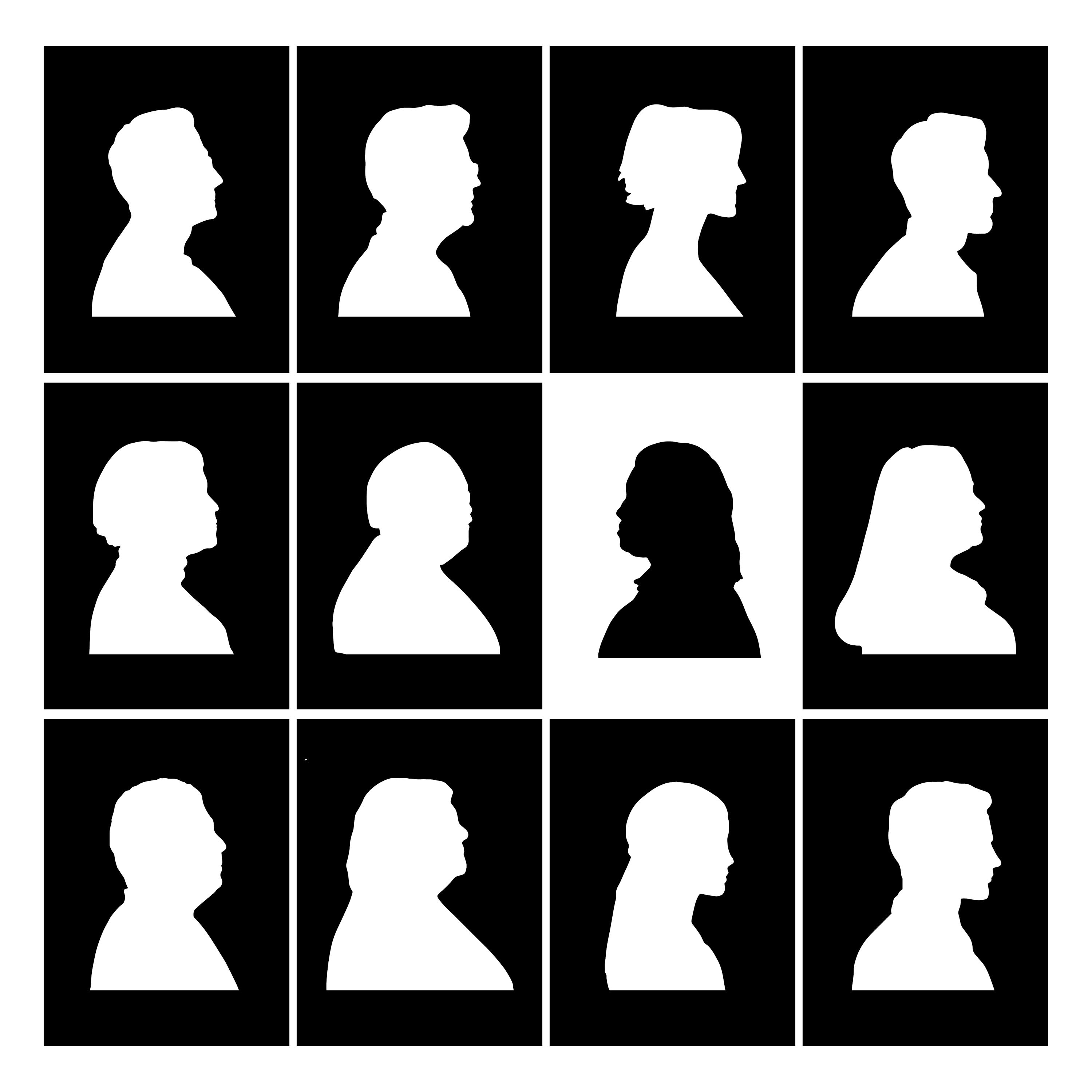
11 to 1
Say hello on Twitter, Facebook and Instagram. Sign up for our occasional newsletter, The Accomplice. Follow the show and review us on Apple Podcasts: iTunes.com/CriminalShow.
Sign up for Criminal Plus to get behind-the-scenes bonus episodes of Criminal, ad-free listening of all of our shows, members-only merch, and more. Learn more and sign up here.
Listen back through our archives at youtube.com/criminalpodcast.
We also make This is Love and Phoebe Reads a Mystery.
Artwork by Julienne Alexander. Check out our online shop.
Episode transcripts are posted on our website.
Learn more about your ad choices. Visit podcastchoices.com/adchoices
Press play and read along
Transcript
Speaker 1 Support for criminal comes from BetterHelp. Many American adults get the blues this time of year, sometimes as a result of seasonal affective disorder.
Speaker 1 But BetterHelp wants to encourage you to reach out, get coffee with an old friend, write a letter to a family member, and take that first step to connect with a licensed therapist using BetterHelp.
Speaker 1 This month, don't wait to reach out. Whether you're checking in on a friend or reaching out to a therapist yourself, BetterHelp makes it easier to take that first step.
Speaker 1 You can get 10% off your first month at betterhelp.com slash criminal. That's betterhelp.com slash criminal.
Speaker 1
Support for criminal comes from Ollie. Having a happy, healthy dog starts with what you put in their bowl.
That's why Ollie delivers fresh, human-grade food that your dog will love.
Speaker 1 Go to ollie.com slash Phoebe. Tell them all about your dog and use code Phoebe to get 60% off your welcome kit when you subscribe today.
Speaker 1 Plus, they offer a happiness guarantee on the first box. So if you're not completely satisfied, you'll get your money back.
Speaker 1 That's o-l-l-ie-e.com/slash phoebe and enter code Phoebe to get 60% off your first box.
Speaker 1
With a Spark Cash Plus card from Capital One, you earn unlimited 2% cash back on every purchase. And you get big purchasing power.
So your business can spend more and earn more.
Speaker 1 Capital One, what's in your wallet? Find out more at capital1.com/slash spark cash plus. Terms apply.
Speaker 2 the first time that we voted, it was 10 saying guilty and two saying not guilty.
Speaker 2 Um, but whenever we took a repoll, it went to 11 to 1.
Speaker 1 John Ree Taylor was the one, the only person who didn't vote guilty on all charges in a criminal trial in Louisiana in 2007.
Speaker 1 The person on trial was a teenager named Federick Edwards. What did the prosecution say he had done?
Speaker 2 The prosecution stated that he had been involved with,
Speaker 2 they refer to it as like a crime spree, basically like a weekend of robbing people.
Speaker 1 One weekend in May 2006, Two people kidnapped a college student at gunpoint and tried to withdraw money from his bank account.
Speaker 1 When that didn't work, they went to steal from his apartment apartment and the apartment of his girlfriend while she was home. They raped her and another woman in the apartment.
Speaker 1
There were other robberies that weekend. At least one other person was held at gunpoint and taken to an ATM to withdraw cash.
The police started investigating some of Thedrick Edwards' friends.
Speaker 1 The police recovered security footage from a bowling alley that showed Thedrick Edwards at a graduation party for the whole 12th grade class, socializing with three other teenagers they'd arrested.
Speaker 2 He was slated to graduate that year also, but he was an honor student. He was supposed to go to Southern University and enroll in their engineering program.
Speaker 1 The first kidnapping victim picked two people out of a suspect lineup. One was Thedrick Edwards.
Speaker 1 But the other person he picked was a, quote, filler, someone who definitely hadn't been there.
Speaker 1 Federick Edwards confessed to committing the crimes on video, but later he testified that he was threatened and physically intimidated by the police, that he didn't have a choice.
Speaker 1 John Reed Taylor remembers hearing about the interrogation process at the trial.
Speaker 2 I feel like the interrogation process that he went through
Speaker 2 was
Speaker 2
unfair. It was over the course of somewhere between two and three days.
They held him. He didn't talk to any of his family members.
He,
Speaker 2 by this point, after almost three days of questioning, he was almost delirious and just agreed to whatever the police said he did, even though the whole time previously, he was saying he was not a part of the things that transpired.
Speaker 1 When John Reed Taylor was summoned to be on the jury in the case, she was in her early 20s. a few years older than Thedrick Edwards.
Speaker 1 She had just graduated from college and was planning to go to law school and studying to take the LSAT.
Speaker 1 Before going into deliberations, what were you thinking about the case?
Speaker 2 I was thinking that they didn't have enough evidence to prove that he was with this group of guys.
Speaker 2 I was
Speaker 2 thinking that
Speaker 2 People deserve second chances. I was thinking that he hung out with the wrong crowd and was deemed guilty by association.
Speaker 2 it was
Speaker 2 a high number of years to life as the sentence so
Speaker 2 without the possibility of parole
Speaker 2 so
Speaker 2 the decision of this jury is gonna decide his his um his life and he was 18 or 19 years old at the time that this happened that's a kid like they don't really understand
Speaker 2 how the world works at that point i'm 40 and i don't still understand how the world works. So
Speaker 2 it just seems like it probably was a very shocking experience or
Speaker 2 traumatizing experience that he would have had during that time.
Speaker 1 The trial went on for four days. Then the judge sent the jury into a back room for deliberations.
Speaker 2 At no point in time was it like half and half, five and seven, or six and six or anything like that.
Speaker 2 Once they found out what my position on the situation was, it was kind of like we're just not going to pay attention to her.
Speaker 2 It was only two people who
Speaker 2 were of the train of thought that it was not guilty.
Speaker 2 And they swayed that other person over to them.
Speaker 1 How long did you deliberate?
Speaker 2 Maybe about an hour and a half, no longer than two hours.
Speaker 1 When they went back to the courtroom and some of the charges were read, John Rhea says she raised her hand for not guilty, and everyone else said guilty.
Speaker 1 Usually, when the members of a jury can't agree in a criminal case, there's a mistrial, and they'll do the whole trial again with a new jury.
Speaker 1
But that wasn't the case for Thedrick Edwards. There was no mistrial, and he was convicted of aggravated rape, rape, armed robbery, and two counts of aggravated kidnapping.
11 to 1.
Speaker 1 I'm Phoebe Judge. This is Criminal.
Speaker 1 What did you do when you went home?
Speaker 3 I cried. I cried in the car.
Speaker 2 So, yeah, it was traumatizing for me.
Speaker 2 Just
Speaker 2 being a black person on a jury in,
Speaker 2
I don't know if I'm going too deep now, but like a former slave state. It's like our voice has never been heard.
And
Speaker 2 for me to have that experience and feel like
Speaker 2
I didn't, I always said I didn't do jury service. I did a jury disservice.
Like, it was horrible for me. Like, I felt like the justice system doesn't care about
Speaker 3 black people.
Speaker 2 The thing that I can remember thinking is
Speaker 2 they're gonna send this young boy up the river for the rest of his life. And where I'm from, that's, you know, the way they refer to going to jail, going to the farm, up the river.
Speaker 2 Like, once
Speaker 3 the
Speaker 2 verdict was read out, it was just
Speaker 2 he didn't raise his voice or make any gestures of, I don't know, anger. He just lowered his head and stopped.
Speaker 1 He was sent to Louisiana State Penitentiary. And John Ree Taylor got a letter in the mail from the judge thanking her for her service.
Speaker 1 Did you go back to studying for the
Speaker 2 I did not. I did not.
Speaker 2 It changed what I actually wanted to do in my life. So
Speaker 2 after that, is whenever I stopped having ambitions of going to law school and just enrolled in school to get my master's degree in business administration.
Speaker 2 So,
Speaker 2 yeah, it had a big effect on the trajectory of my life.
Speaker 3 The laws of Louisiana state that 10 out of 12,
Speaker 3
a vote of 10 out of 12 can get you a conviction. Everett Norwood grew up in Baton Rouge.
When I was young,
Speaker 3 I pretty much was a person who was not in very much trouble.
Speaker 3 So I really wasn't familiar with the court system
Speaker 3 up until I had reached an age of my mid-30s and
Speaker 3 I started getting in trouble myself.
Speaker 3 And the court system really kind of confused me because of my ignorance of the law.
Speaker 1 He was arrested on November 14th, 2003.
Speaker 3 I can remember that night before that,
Speaker 3 going out, being wild.
Speaker 3 getting high on drugs.
Speaker 3 And
Speaker 3 the next morning, you know, I really didn't want to go home to my wife at the time because I always
Speaker 3 did whatever I did. I did it in the street, and I didn't take it home around my children or my family.
Speaker 3 So what I did was I waited till my wife went to work.
Speaker 1
Everett went inside the house. His daughter was still home.
She was running late for school, and he helped her get ready.
Speaker 3
Me, myself, I don't know how to do hair that much. I can kind of remember that she laughed at me.
She was about 11 years old.
Speaker 3 And
Speaker 3 I did a hair the best I could, watched her get on the bus,
Speaker 3 and I got myself ready to go to work.
Speaker 1 Everett remembers stopping by a friend's place and heading to buy cigarettes on the way.
Speaker 3 The police pull up on me
Speaker 3 and jumped out and say, get on the ground.
Speaker 1 They put him in handcuffs and drove him to a convenience store. Everett remembers that they didn't let him out of the car, and a man walked up.
Speaker 1 The police asked the man whether Everett was the person who had robbed him. He said yes.
Speaker 3 I suppose I am a guy five foot six,
Speaker 3 130 pounds, and here I am, a guy in the back seat of a police car,
Speaker 3 236 pounds, six feet, one inch.
Speaker 1 The police charged Everett with attempted armed robbery and took him to jail, where he waited for a trial.
Speaker 3 I mean, I've done some things in my life that I wasn't proud of, but a robber, I was not.
Speaker 3 Drug addict, yes, ma'am, I was, and I did need help.
Speaker 3 But for me to come and take something from someone else, purposely,
Speaker 3 knowing that it wasn't mine, it wasn't me.
Speaker 1 One of the first things that happened in the trial was the jury selection. Everett remembers sitting with his defense attorney and the prosecutor while they took turns picking who to eliminate.
Speaker 3 I would tell my attorney, well, what about him? I think he's adequate.
Speaker 3 I think he's going to be fair at that. We're interviewing the jurors.
Speaker 3 But at the end of the day,
Speaker 3 when it all came out,
Speaker 3 every time a black juror would come up,
Speaker 3
They would strike him. Okay, you can go.
You can go. You can go.
Speaker 1 When it was finished, there was one black member of the jury. The other 11 were white.
Speaker 3 When those 12
Speaker 3 were selected, when I looked at it, I knew off the top that I was going to have a hard time.
Speaker 3 Because most of them really were not my peers.
Speaker 3 They were mostly
Speaker 3 what I say, a lot of white collars. Nobody with really blue collar, People from the neighborhood that know how life is
Speaker 3 being
Speaker 3 in the environment in which I come up in.
Speaker 4 Ultimately,
Speaker 4 much of the time, jury selection was the whole game, essentially.
Speaker 1 Everett Norwood's lawyer, Thomas Ramton.
Speaker 4 In Louisiana and in most states, both sides get to exercise peremptory strikes, which means they get to strike potential jurors for good reason, for bad reason, basically for no reason at all, except that they cannot strike based on race or sex.
Speaker 4 So frequently, a black juror might be struck because they know somebody close to them who's been incarcerated or they've had negative experiences with the police.
Speaker 4 The U.S. Supreme Court has said that's a valid reason to strike somebody.
Speaker 1 Thomas Ramton started working as a public defender in New Orleans in 2014.
Speaker 1 He says he learned quickly that the outcome of a case would depend on who made it onto the jury.
Speaker 4 Prosecutors were looking for
Speaker 4 jurors who would trust prosecutors, who had a favorable or positive impression of the local police department. And generally speaking, those were jurors who tended to be whiter.
Speaker 1 He says there's generally a difference in who defense attorneys and prosecutors tend to strike.
Speaker 4 Prosecutors overwhelmingly use their peremptory strikes against non-white jurors, with the result of whitewashing jury pools and disproportionately overrepresenting white Louisianans as seated jurors.
Speaker 4 The same is true for the other side. Defense attorneys overwhelmingly use their peremptory strikes to
Speaker 4 reduce the number of white jurors in the pool.
Speaker 4 So it's this very interesting phenomenon where we have a,
Speaker 4 at least on paper, a legal prohibition on race-based strikes.
Speaker 4 But in practice, it's still extraordinarily prevalent.
Speaker 1 Thomas Frampton began to learn the details of Everett Norwood's case in 2021.
Speaker 4 So the state alleged that Mr. Norwood, early one morning, pointed a gun at the victim outside of a gas station, asked for his wallet, and then never actually even took the money.
Speaker 4 The wallet dropped on the ground and he ran away.
Speaker 1 The trial went on for three days.
Speaker 1 Everett Everett Norwood remembers that after the attorneys gave closing arguments, the prosecution called the man from the gas station back to the stand one more time.
Speaker 3 He asked the victim again. He said, are you sure
Speaker 3 that it was Mr. Norwood sitting right here in front of you
Speaker 3
that tried to rob you? And the guy said something like he was in Hollywood, dramatized. He said, I see him in my sleep.
I feel for my life. And all the jurors say, Oh, I said, Oh, Lord, it's over.
Speaker 1 The jury took around five hours to deliberate, which Thomas Frampton says is a long time in Louisiana.
Speaker 3 I don't know what happened in the jury room. I mean, I wasn't there, and I don't like to speculate.
Speaker 3 But when it was all over, when they called me in to announce the verdict,
Speaker 4 wow,
Speaker 3 when they said that it was 11:1,
Speaker 3 and the only vote that I got was the black vote.
Speaker 3 Wow, that broke me down.
Speaker 3 I buckled at my knees.
Speaker 3 It was a hard pill for me to swallow.
Speaker 1 He was sentenced to 25 years in prison.
Speaker 1 Did you know the history of the law in Louisiana, why it was this way, this non-unanimous.
Speaker 3 That goes way back.
Speaker 3 I can remember back, did my little research when it was 9-3,
Speaker 3 9-3.
Speaker 4 That got changed to 10-2.
Speaker 4 Anecdotally,
Speaker 4 everyone who practiced in Louisiana would tell you that when juries came back 10-2 or 11-1,
Speaker 4 it seemed like non-white jurors were grossly overrepresented amongst the holdouts. That was just sort of common knowledge, but there wasn't a lot of empirics to back it up.
Speaker 1 I mean, I just, in my head, it's, it has to be unanimous, right? Like,
Speaker 1
that's how our system works. It has to be unanimous.
And if it isn't unanimous, you go back to the drawing table. You know, like it didn't work.
And so there's another trial.
Speaker 1 But everybody has to be in agreement for a conviction to come down.
Speaker 4 Certainly that's the way it's worked in most of the United States, and that's the way it's worked throughout most of American history.
Speaker 1 But not in Louisiana.
Speaker 1 We'll be right back.
Speaker 1 Support for criminal comes from BetterHelp. The holidays can be a wonderful, but often hectic and sometimes lonely time of year.
Speaker 1 Therapy can help you make sure you're taking care of yourself, no matter what.
Speaker 1 BetterHelp does the initial matching work to find the right therapist for you so you can focus on your goals in the short and long term. This December, start a new tradition by taking care of you.
Speaker 1 Our listeners get 10% off at betterhelp.com slash criminal. That's betterhelp.com slash criminal.
Speaker 1 With the Spark Cash Plus card from Capital One, you can earn a limited 2% cash back on every purchase. And you get big purchasing power so your business can spend more and earn more.
Speaker 1 Stephen Brandon and Bruno, the business owners of SandCloud, reinvested their 2% cash back to help build their retail presence. Now, that's serious business.
Speaker 1 What could the Spark Cash Plus card from Capital One do for your business? Capital One, what's in your wallet? Find out more at capital one.com slash spark cash plus. Terms apply.
Speaker 1 On a Friday night in January 1893, a group of men in masks arrived at a jail in a small town outside New Orleans.
Speaker 1 They were looking for three black men awaiting trial. There were two sheriff deputies guarding the jail, but the men in masks knocked one of them unconscious.
Speaker 1 The other deputy showed them the way way and unlocked the men's cells.
Speaker 1 That night, the group murdered the three black men in the jail, Robert Landry, Alfred Jewell, and Jack Davis.
Speaker 1 A local paper published an article about the lynching, calling it entirely inexcusable and saying that lynchings and lawlessness should be stopped.
Speaker 1 But it suggested that the way to do it was by allowing juries to convict people without a unanimous vote.
Speaker 1 The paper argued that people felt the need to take the law into their own hands when they didn't trust that the courts would convict.
Speaker 1 The article read: It is too often the case that juries do not wish to punish criminals.
Speaker 1 Nine jurors should be competent to bring in a verdict and so overthrow the power of a single person to disappoint or obstruct justice.
Speaker 1 Almost 20 years before the three men were lynched in New Orleans in 1875, Congress had passed a new Civil Rights Act. It made it illegal to bar someone from serving on a jury because of their race.
Speaker 1 Thomas Frampton says he's found records of black Americans serving on juries long before that,
Speaker 1 including a man named Andrew Barland.
Speaker 4 Andrew Barland was serving as a juror in the 1810s and 1820s. So in fact, there's black jurors who were serving much earlier than folks have previously recognized.
Speaker 4 And I suspect there was plenty who served even earlier than him. But the standard account that there was no such thing as black jury service until the Civil War is certainly untrue.
Speaker 1 By the mid-1870s, almost one-third of the people called to serve on grand juries in New Orleans were black.
Speaker 1 But a new law gave judges and jury commissioners more power to decide which jurors were, quote, qualified.
Speaker 4 In the 1890s, black folks were still getting on juries.
Speaker 4 Not often, but they had enough political power in Louisiana that occasionally one or two black jurors would make it onto a seated petit jury in a criminal case.
Speaker 1 Then, in 1894, a 30-year-old black man who went by Jim Murray was accused of murdering a white private watchman in New Orleans.
Speaker 1 Jim Murray tried to run, but he was arrested around around 70 miles away in Mississippi. One newspaper wrote that when the police in Mississippi caught Jim Murray, he cooperated.
Speaker 1 He said that he'd been afraid to go back to New Orleans. He thought he would be lynched there.
Speaker 1 The newspaper said that Jim Murray admitted to killing the watchman, but said that it was an accident.
Speaker 1 Every member of the jury at Jim Murray's trial was white.
Speaker 1 Jim Murray tried complaining to the judge, but the judge just said that they had not discriminated against black men, quote, as a race or class, but instead because of, quote, their lack of intelligence and of moral standing.
Speaker 1 The jury deliberated for 10 minutes and announced a guilty verdict. Jim Murray was sentenced to death.
Speaker 1
A group of people in New Orleans heard that it had taken only 10 minutes. and they decided to try and do something about it.
They called themselves the Citizens Committee.
Speaker 1 One of the founders of the Citizens Committee was a black lawyer and newspaper editor named Louis Martinet.
Speaker 1 In March of 1895, Louis Martinet's newspaper published an article about Jim Murray's case.
Speaker 2 It read, quote,
Speaker 1 Such a 10-minute verdict is simply murder under legal forms. and serves to show what little consideration the average white juror in Louisiana has for even life when the possessor is colored.
Speaker 1 The Citizens Committee raised money to help in Jim Murray's case, and they declared the Jim Crow jury should be fought to the death.
Speaker 1 The next year, 1896, they made it to the Supreme Court. But the court ruled against Jim Murray, saying that there had been at least a few black jurors in the initial selection pool.
Speaker 1 Two months later, he was executed.
Speaker 1 In 1898, Louisiana held a constitutional convention, and representatives proposed a rule that would require only nine jurors to convict someone of a felony.
Speaker 3 It passed.
Speaker 1 In a speech to close the convention, a chairman said, Our mission was, in the first place, to establish the supremacy of the white race in this state to the extent to which it could be legally and constitutionally done.
Speaker 4 By amending the state constitution and allowing for non-unanimous verdicts in criminal cases, it almost didn't matter if a few black jurors every now and then managed to make it onto a jury because they didn't have to get you listened to.
Speaker 1 In the 1970s, the cases of three men convicted on non-unanimous verdicts made it to the Supreme Court.
Speaker 4 When the cases got to the U.S. Supreme Court in the early 70s, none of this history was known or briefed.
Speaker 4 So you go back and you read those opinions and the racial origins of the law and the racist discriminatory impact of it today barely figure into the opinions, if at all.
Speaker 1 The court didn't side with any of the three men.
Speaker 1 Around the same time, Louisiana changed their constitution to require 10 jurors out of 12 for a conviction, instead of nine. But it still didn't have to be unanimous.
Speaker 1 When Everett Norwood went to to prison in 2004, he and his lawyer tried to argue that the split jury was unconstitutional, but it didn't work.
Speaker 1 Still, Everett started learning to do his own legal work.
Speaker 3 I had to go to the law library myself and do a lot of research because I knew that, hey, my life is on the line here.
Speaker 3 If I don't fight,
Speaker 3 If I don't educate myself a sign of law, I'll never go home.
Speaker 1 Were there other people that you met who were incarcerated at the same time who had had non-unanimous jury verdicts?
Speaker 3 Oh, yes, indeed, ma'am.
Speaker 3 Yes, indeed.
Speaker 3 There are a lot.
Speaker 3 Every prison that I went during this term that I was incarcerated, I've been to a few prisons.
Speaker 3 They had multiple people.
Speaker 1 In 2018, people in Louisiana were voting on a constitutional amendment, one that would begin to require unanimous juries to convict.
Speaker 1 During a state hearing, one white district attorney said,
Speaker 1 You hear a lot about this being a vestige of slavery. No doubt that is true, but it is what it is, and that was 138 years ago.
Speaker 1 The amendment passed for cases going forward.
Speaker 1 That same year, a man named Evangelisto Ramos filed a petition to the Supreme Court.
Speaker 1 He'd already been convicted of murder and was serving life without parole in the Louisiana State Penitentiary, also known as Angola.
Speaker 3 They convicted him on a non-unanimous jury.
Speaker 3 I think it was 10-2, as a matter of fact, and that's what really got things started.
Speaker 1 Inside Angola, There was a man who'd been looking at a lot of non-unanimous cases. His name was Calvin Duncan, and he was serving a life sentence.
Speaker 1 For years, the prison had paid him to help people with their cases. He made 20 cents an hour as a jailhouse lawyer.
Speaker 1 He hadn't finished high school, but the New York Times later wrote about him, He knew how to spot a promising legal issue, and he was relentless. Seasoned lawyers sought his advice.
Speaker 1 Calvin Duncan had been convicted by a unanimous jury, but he started to notice one case after another with non-unanimous verdicts. He couldn't stop thinking about it.
Speaker 1 Then he started writing to the Supreme Court.
Speaker 1 Along with other men in Angola, Calvin Duncan tried to get over 20 cases to the Supreme Court, filing petitions.
Speaker 4 These jailhouse lawyers continued to press the issue until the U.S. Supreme Court finally decided that they were going to hear the case in this case called Ramos.
Speaker 1 This was in 2019.
Speaker 1 Everett Norwood remembers waiting to hear news about the case.
Speaker 3 When I saw Ramos on the front page of the newspaper, I jumped for joy.
Speaker 1 Evangelisto Ramos got a new trial, and the jury found him not guilty. It was unanimous.
Speaker 3 I said, man, it's all for us now.
Speaker 3 And I got right on it.
Speaker 1 Everett Norwood tried to appeal his case, but his appeal was eventually denied.
Speaker 3 It wasn't only me. Everybody that I knew that would file after Ramos
Speaker 3 and to the district court got denied.
Speaker 3 And everybody got the same answer.
Speaker 4 If you were convicted by a non-unanimous verdict in the 70s, the 80s, the 90s, the early 2000s, even up to a few years ago, the Ramos decision doesn't necessarily apply to you.
Speaker 1 It only applies to new cases and recent non-unanimous verdicts that haven't been finalized.
Speaker 1 But someone else in Angola had filed another petition to the Supreme Court around the same time.
Speaker 1 A man who'd been convicted 11 to 1 when he was a teenager, accused of crimes around the same time as his graduation weekend, Federic Edwards.
Speaker 4 So when the Supreme Court took the Edwards case, I
Speaker 4 got interested in looking through the files and saw that as in many of these non-unanimous cases,
Speaker 4 there were only one or two black jurors, and they were the holdout jurors.
Speaker 4 It turned out that John Ree Taylor was the sole black juror in Mr. Edwards' case,
Speaker 4 and she was the holdout on all of the counts.
Speaker 4 And then actually, it turned out we had like a mutual Facebook friend.
Speaker 1 They started talking and wrote a brief to send to the Supreme Court about the case.
Speaker 1 I expressed
Speaker 3 how
Speaker 2 my service as a juror jolted me.
Speaker 2 I felt like my opinion didn't count in the situation.
Speaker 2 I might as well have not even been there.
Speaker 1 The brief read, Over the past 13 years, Miss Taylor has thought frequently of the victims in this case, particularly the two college students who were sexually assaulted.
Speaker 1 But Miss Taylor has also spent the past 13 years troubled by the possibility that the wrong teenager was condemned to life imprisonment at Angola.
Speaker 1 It continued, this court can finally restore what was denied to Miss Taylor by the state of Louisiana 13 years ago, the right to have her participation as a juror recognized as meaningful.
Speaker 1 Juror votes that don't impact a court's decision, like John Reed Taylor's, Taylor's, are sometimes called empty votes.
Speaker 4 Because at the end of the day, they weren't necessary to forming a verdict.
Speaker 4 This idea that we all have about the jury system, about the deliberative process, about the importance of reaching consensus, it just doesn't work the same way when you don't have a unanimity rule.
Speaker 1 What about the counter-argument here, which is that
Speaker 1 we choose our elected officials by majority?
Speaker 1 Many things, the democratic system is based on the majority wins and that we trust the group
Speaker 1 as a whole. And,
Speaker 1 you know, why not use that system for a jury?
Speaker 1 Why throw the whole thing out or not allow a conviction? Because if you have 11 people who say, no, no, no, listen, we're smart people.
Speaker 1 We say we see enough here to think that one person should discount the whole thing.
Speaker 4 There's no doubt that non-unanimous verdicts are quicker,
Speaker 4 but I think there's two things that make jury deliberations in criminal cases in particular different than voting. One is we're talking about somebody's liberty.
Speaker 4 We're talking about taking them away from their families, from their future, and putting them in cages for decades.
Speaker 4 And when somebody's liberty is at stake, it's it's critically important to make sure that we get it right. That's why we demand proof beyond a reasonable doubt.
Speaker 4 And that's the traditional explanation for why we need unanimous verdicts. And I think that's all right.
Speaker 4 The second point, though, is it's very difficult to talk about criminal justice in the United States without talking about race and talking about the way that race and racial biases have infected almost every aspect of the criminal justice apparatus.
Speaker 4 Non-unanimity, study after study has shown, is a system that not only was intended to exacerbate and reinforce those racial biases, but that continues to have that effect by disproportionately silencing the voice of Black jurors and disproportionately harming the chances of Black defendants.
Speaker 1 In 2021, the Supreme Court released their decision in Thedrick Edwards' case that what they had said in Evangelisto Ramos' case wouldn't apply.
Speaker 1 Thedrick Edwards couldn't get a new trial.
Speaker 2 If you deem that a certain ruling
Speaker 2 should have this type of result, but you don't make it retroactive, it means that you know you were wrong and going forward I'll make it right, but I'm not going to go back and fix anything that I messed up.
Speaker 1 Federic Edwards is currently in Angola, serving a life sentence without parole.
Speaker 3 We'll be right back.
Speaker 1 Support for criminal comes from Saks 5th Avenue. Saks Fifth Avenue makes it easy to do holiday shopping your way, whether you're looking for the right gift or the right outfit.
Speaker 1 Saks is where you can find everything from a Jimmy Chew bag for a sister who's hard to shop for to a Prada jacket for yourself to dress up for holiday dinner.
Speaker 1 If you don't know where to start, Sachs.com will filter just for items that match your personal style so you can save time shopping and spend more time just enjoying the holidays.
Speaker 1 Make shopping fun and easy this season and find gifts that suit your holiday style at Saks Fifth Avenue.
Speaker 1
Time. It's always vanishing.
The commute, the errands, the work functions, the meetings, selling your car.
Speaker 1 Unless you sell your car with Carvana, get a real offer in minutes, get it picked up from your door, get paid on the spot so fast you'll wonder what the catch is. There isn't one.
Speaker 1
We just respect you and your time. Oh, you're still here.
Move along now. Enjoy your day.
Speaker 1
Sell your car today. Carvana.
Pickup fees may apply.
Speaker 1 Everett Norwood remembers hearing the news from the Supreme Court that Thedrick Edwards' case would not be reopened, that while juries would need to be unanimous to convict going forward, the decision wouldn't apply to older cases.
Speaker 3
A lot of us were hurt behind the decision that was made, but to be honest with you, ma'am, we were sort of in expectation. of it to turn out that way.
A lot of us had
Speaker 3 very negative vibes. So that left so many of us who had been fighting all of these years
Speaker 3 stuck behind.
Speaker 1 But Everett did get his case looked at again because of something else.
Speaker 1 The defense attorney at his original trial was arrested for something totally unrelated, smuggling drugs into a prison and trying to pay witnesses to not show up in court, constituting professional misconduct.
Speaker 1 Thomas Frampton was still working on the case, and he wanted to talk to the victim, the man from the gas station who'd identified Everett, and the juror who'd voted not guilty.
Speaker 1 So he looked up their addresses and showed up on a Sunday morning, hoping they'd be home.
Speaker 4 And I spoke with them both
Speaker 4
in the stretch of a couple hours. They actually lived about a mile from each other.
And it was a remarkable experience.
Speaker 4 The
Speaker 4
victim in the case was shocked to learn that Mr. Norwood, the person who he identified and believed had robbed him, was still in prison 20 years later.
And the juror, you know,
Speaker 4 remembered detail after detail after detail of this experience from two decades earlier.
Speaker 4 That's how much it had sort of burned into his mind, this experience of believing that somebody was not guilty, participating in deliberations, and then ultimately not having his voice matter.
Speaker 1 He asked the victim and the juror if they'd be willing to sign statements summarizing what they talked about.
Speaker 1 The juror's statement read,
Speaker 1
During the trial, we heard evidence that Mr. Norwood already had a felony conviction.
The other jurors seemed like that information was really influential.
Speaker 1 But I didn't think we should decide our verdict in this case, or any case, on a prior conviction. It didn't seem like the jurors could put themselves in the defendant's shoes.
Speaker 1 And last December, a judge granted Everett Norwood a new court date.
Speaker 3 I said, oh my God.
Speaker 3 Man, I didn't even have the words, ma'am. I've been gone 21 and a half years.
Speaker 3 I didn't think it was going to happen that fast. You know, he'd been working on my case for like two years.
Speaker 3 But when I went to the courts, I never will forget this.
Speaker 3 December 20th, 2023.
Speaker 3 And all the courts officials were off during that time, all of them, but they took me in on a special occasion. I was the only person in the courtroom, the whole courthouse, really.
Speaker 3 And I sit up in there and the judge, I can remember every word he said.
Speaker 3 He said, he told me, say, Everett, I'm going to preach to you.
Speaker 3 You got to hear me first. He said, You got a good record.
Speaker 3 He said, Man, we need you out here.
Speaker 3 And he told me to say these few words: Say, I am free.
Speaker 1 What happens now for all the people who are still
Speaker 1 incarcerated on non-unanimous verdicts?
Speaker 4 That's a really
Speaker 4 bleak question.
Speaker 3 There is a
Speaker 4 whole new wave of quote-unquote tough on crime legislation that is being passed. The pendulum is swinging hard right in Louisiana, and criminal justice is at the center of that effort.
Speaker 4 So the short answer is
Speaker 4 Those who are incarcerated continue to
Speaker 4 file petitions to try to keep their cases alive.
Speaker 4 Formerly incarcerated activists and their allies continue to fight and organize politically to try to get new laws passed that might reopen some of these cases.
Speaker 4 But it's pretty bleak.
Speaker 1 According to the Promise of Justice initiative in New Orleans, there are about 800 people still in prison in Louisiana who were convicted by non-unanimous juries.
Speaker 1 Thomas Rampton says that recently several judges in Baton Rouge tried to reopen non-unanimous cases, but their attempts were reversed by higher courts.
Speaker 1
Everett Norwood is 63 now. He says that he spent the last few months looking for jobs and taking computer classes.
He lives with his daughter and grandchildren and goes to all of their soccer games.
Speaker 1
Criminal is created by Lauren Spohr and me. Nadia Wilson is our senior producer.
Katie Bishop is our supervising producer.
Speaker 1 Our producers are Susannah Robertson, Jackie Segico, Lily Clark, Lena Sillison, and Megan Kinnane. Our show is mixed and engineered by Veronica Simonetti.
Speaker 1
Julian Alexander makes original illustrations for each episode of Criminal. You can see them at thisiscriminal.com.
And you can sign up for our newsletter at thisiscriminal.com/slash newsletter.
Speaker 1 We hope you'll join our new membership program, Criminal Plus.
Speaker 1 Once you sign up, you can listen to criminal episodes without any ads, and you'll get bonus episodes with me and criminal co-creator Lauren Spohr, too.
Speaker 1 To learn more, go to thisiscriminal.com/slash plus.
Speaker 1 We're on Facebook and Twitter at Criminal Show and Instagram at criminal underscore podcast. We're also on YouTube at youtube.com/slash criminal podcast.
Speaker 1
Criminal is part of the Vox Media Podcast Network. Discover more great shows at podcast.voxmedia.com.
I'm Phoebe Judge. This is Criminal.
Speaker 5 Support for this show comes from Nature Sunshine All-New Marine Glow Collagen. How much time do you think you spend with a screen in front of your face on any given day?
Speaker 5 Well, if you're anything like the average American, you probably spend about seven hours staring at a screen. Nature Sunshine knows that contact with blue light is unavoidable.
Speaker 5 That's why they've combined the skin-enhancing power of marine collagen and blue light-fighting lutein to support your eyes and skin in a blue light-filled world.
Speaker 5 Experience more radiant skin and proven eye protection with Nature Sunshine New Marine Glow, the only collagen product clinically proven to support eye and skin health and defend against blue light.
Speaker 5 Try Nature Sunshine New Marine Glow now at nature sunshine.com.
Speaker 6 Saks Fifth Avenue makes it easy to holiday your way. Whether it's finding the right gift or the right outfit, Saks is where you can find everything.
Speaker 6 From the perfect Chloe bag for your hard-to-shop for sister to a Prada jacket for a fancy holiday dinner.
Speaker 6 And if you don't know where to start, Saks.com is customized to your personal style so you can save time shopping.
Speaker 6 Make shopping fun and easy this season and find gifts and inspiration to suit your holiday style at Saks Fifth Avenue.