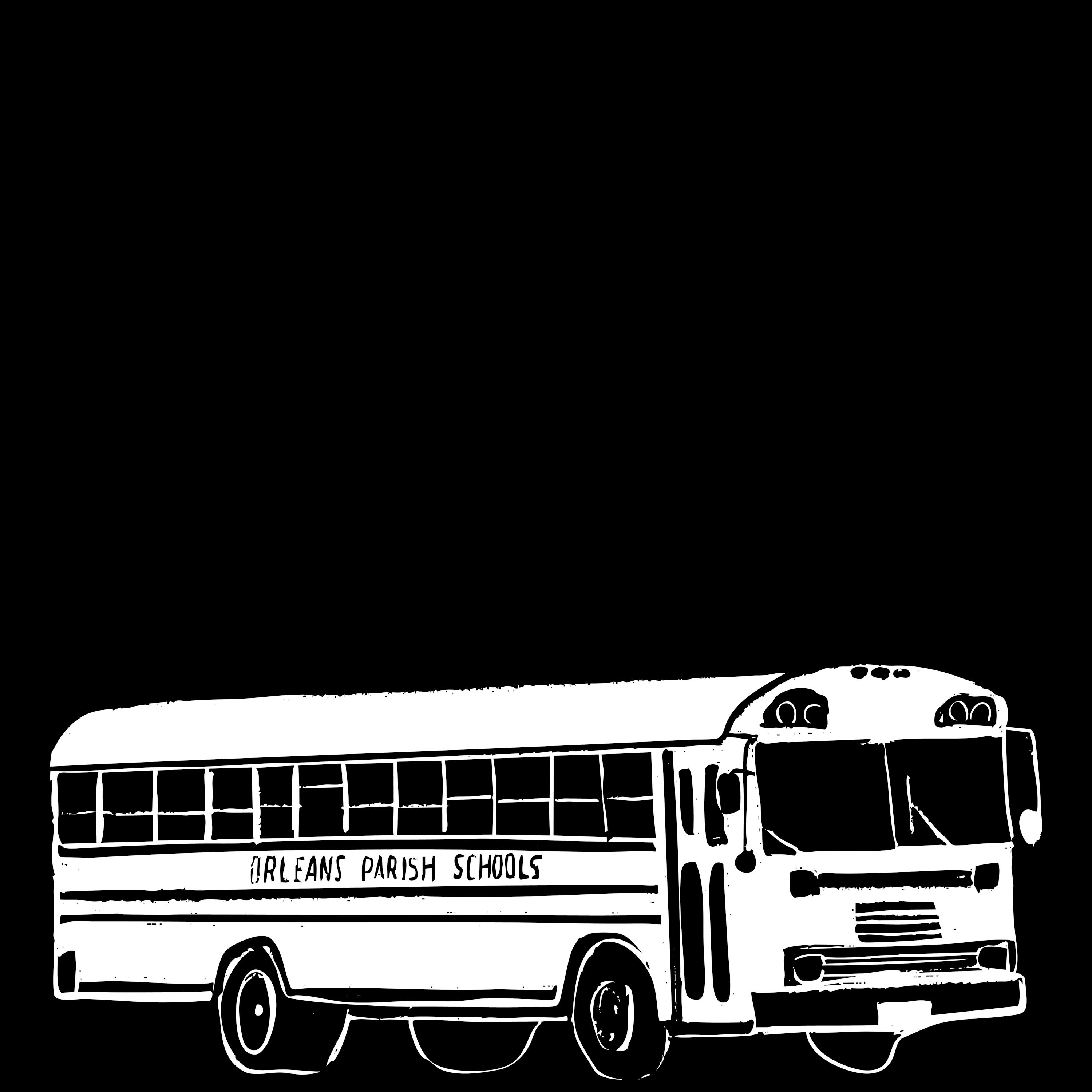
The Bus Ride
Say hello on Facebook, Instagram and TikTok. Sign up for our occasional newsletter. Follow the show and review us on Apple Podcasts.
Sign up for Criminal Plus to get behind-the-scenes bonus episodes of Criminal, ad-free listening of all of our shows, special merch deals, and more.
We also make This is Love and Phoebe Reads a Mystery.
Artwork by Julienne Alexander. Check out our online shop.
Episode transcripts are posted on our website.
Learn more about your ad choices. Visit podcastchoices.com/adchoices
Press play and read along
Transcript
Speaker 1 Support for criminal comes from BetterHelp. Many American adults get the blues this time of year, sometimes as a result of seasonal affective disorder.
Speaker 1 But BetterHelp wants to encourage you to reach out, get coffee with an old friend, write a letter to a family member, and take that first step to connect with a licensed therapist using BetterHelp.
Speaker 1 This month, don't wait to reach out. Whether you're checking in on a friend or reaching out to a therapist yourself, BetterHelp makes it easier to take that first step.
Speaker 1 You can get 10% off your first month at betterhelp.com/slash criminal. That's betterhelp.com/slash criminal.
Speaker 1 With a Spark Cash Plus card from Capital One, you earn unlimited 2% cash back on every purchase. And you get big purchasing power so your business can spend more and earn more.
Speaker 1 Capital One, what's in your wallet? Find out more at capital1.com slash spark cash plus. Terms apply.
Speaker 2 There wasn't an official evacuation order until August 28th. And that's when Katrina turned into a category five.
Speaker 2 The mayor of New Orleans at the time, Ray Nagan, on that day, he issued the first ever mandatory evacuation order.
Speaker 1 This is reporter Joel Anderson.
Speaker 2 And he called it at the time. He said, it's the storm that most of us have long feared and that it was a once-in-a-lifetime event.
Speaker 2 And so the city did start trying to make some plans for an evacuation.
Speaker 2 They did the contra flow lane reversal on I-10, which is the highway that runs east and west through New Orleans, and on I-55 and 59, which goes north out of town.
Speaker 2 And then at that point, they decided to turn the Superdome into sort of a refuge for folks who couldn't leave town. But keep in mind,
Speaker 2 getting out of town, like it's one thing to tell people to leave, but actually going through the process of evacuating,
Speaker 2 hundreds of thousands of people out of an area in one day, that's
Speaker 2 really, really difficult. And it's not a surprise that it didn't quite work out like everybody expected.
Speaker 2 So what ends up happening is that you got hundreds of thousands of people that are unable to evacuate and have to stay there.
Speaker 1 One of those people was a 20-year-old named Jabbar Gibson. Jabbar lived with his family in the Fisher Housing Projects, a complex of 15 apartment buildings on the west bank of the Mississippi River.
Speaker 1 Did the majority of people at Fisher leave or did people stay?
Speaker 2
Yeah, Jabbar stayed and the majority of people at Fisher stayed. I mean, consider this is public housing.
These aren't people that have a lot of access to wealth.
Speaker 2 Where are they going to go? Like, even if they had a car and a lot of people did not have cars,
Speaker 2 where are they going to go? Where are they going to evacuate to?
Speaker 2 Who has the money for a hotel?
Speaker 2 Maybe you don't have family anywhere else.
Speaker 2 So, I mean, what you're looking at is a really poor area with really poor residents who don't have the means to go. And so they sit there and say, well,
Speaker 2
people are saying this hurricane is bad. We've heard this before.
We're just going to wait it out. And it's not like they had any other options at that point.
Speaker 1 It was 6 a.m. on August 29th, 2005, when Katrina made landfall in Louisiana.
Speaker 1 I mean, Ray Nagan had had said, this is it. This is the worst we've ever seen.
Speaker 1 But when did it start to become clear that that wasn't just him saying the mayor saying that, but that things had gotten bad and were going to continue to get worse?
Speaker 2 Aaron Ross Powell, it was pretty clear, like right after the storm hit and the levee started to fail. And, you know, it wasn't the initial
Speaker 2
landfall from the hurricane that created all the damage. It was the flooding.
And so
Speaker 2 as people realize, oh, snap, the water is rising, we've got nowhere to go, that is when, you know, sort of the danger of the situation really starts to come through.
Speaker 1 Decades earlier, Congress had authorized what they called the Hurricane Protection Project, which involved the construction of a system of levees and flood walls to try to protect the city from both the Mississippi River and Lake Ponchatrain.
Speaker 1 One report estimated that when Katrina hit, 60 to 90% of the project had been completed.
Speaker 1 But before Katrina even made landfall in Louisiana, the levees started failing. Soon, at least 80% of New Orleans was underwater, as much as 20 feet deep in some places.
Speaker 1 It's been called the worst engineering catastrophe in U.S. history.
Speaker 1 What did residents at Fisher tell you about how dire the situation was becoming?
Speaker 2 They talk about, you know,
Speaker 2 that the drainage ditches got swollen, that, you know, tree branches and debris had, you know, broken windows, knocked down doors.
Speaker 2
And then keep in mind, like the store, the storm passes through, the heat comes back up. Well, now you don't have electricity.
You don't have running water. You don't have anywhere to go get food.
Speaker 2
Your toilets don't flush. If you have a health issue, you can't refill your prescriptions because nobody's running any other drugstores.
So
Speaker 2
it was really dire there. People were in really bad, in a really bad situation.
And at that point, you know, people are getting really desperate.
Speaker 2 I mean, you know, some people call it looting, but other people were just trying to get access to food, water, clothing, any other things that they ordinarily would not be able to get because they were basically abandoned in a drowning city.
Speaker 1 And 20-year-old Jabbar Gibson was in the middle of it.
Speaker 1
Jabbar was the oldest of four siblings. Their father wasn't around, and their mother wasn't all the time either.
So Jabbar often took care of his family as best he could.
Speaker 1 When he was in 10th grade, he got kicked out of school for fighting. So he spent his time working odd jobs and selling drugs.
Speaker 2 And Jabbar, you know, like any other kid,
Speaker 2 he sees all these kids that have nice things and wants them for himself and his family. So, you know, he hustled.
Speaker 2 Not only would he buy Jordans for himself, he would buy them for his family.
Speaker 2 You know, his brother, his younger brother Troy, told me that Jabbar regularly bought him and his friend brand new pairs of shoes for their youth basketball games.
Speaker 2 His sister said that
Speaker 2 he would often give her stuff that his mother said that she couldn't have.
Speaker 2
He got Christmas gifts for them. He took care of dinner a lot.
He just gave them cash. He was just sort of,
Speaker 2 I mean, in a way, he was sort of a parent, but, or, you know, I guess maybe a better way to put it is sort of like an adult figure in the house.
Speaker 2 It's not like he was, you know, making kids go to school and telling them to do whatever, but he tried to fill in the gaps when his mother and aunts couldn't be there.
Speaker 1 Joel says Jabbar would try to make it to every single one of his brother Troy's basketball games. Troy told Joel, Jabbar was my father, even though he was only two years older.
Speaker 2 Talking to people that knew Jabbar at that time, They said that he just seemed a lot older than his age, even though he didn't look it. I mean, he looked like a little boy.
Speaker 2 But even as a teenager, you know, he had a way about himself. He seemed much older than he was
Speaker 2 in terms of his personality and his bearing. You know, his sister told me
Speaker 2
it feels like he's a mastermind. Everybody listens to him.
And this is, we're talking about a teenager here.
Speaker 1
Two days after Katrina, people in the Fisher projects were still trapped. No food, no water, no electricity.
And it didn't seem like anyone was coming to help.
Speaker 1 So Jabbar Gibson and his friends came up with a plan.
Speaker 1 I'm Phoebe Judge. This is Criminal.
Speaker 1 We'll be right back.
Speaker 1 To listen without ads, join Criminal Plus.
Speaker 1 Support for criminal comes from BetterHelp. The holidays can be a wonderful, but often hectic and sometimes lonely time of year.
Speaker 1 Therapy can help you make sure you're taking care of yourself, no matter what.
Speaker 1 BetterHelp does the initial matching work to find the right therapist for you so you can focus on your goals in the short and long term. This December, start a new tradition by taking care of you.
Speaker 1 Our listeners get 10% off at betterhelp.com/slash criminal. That's betterhelp.com/slash criminal.
Speaker 1
With the Spark Cash Plus card from Capital One, you can earn unlimited 2% cash back on every purchase. And you get big purchasing power.
So your business can spend more and earn more.
Speaker 1 Stephen Brandon and Bruno, the business owners of SandCloud, reinvested their 2% cash back to help build their retail presence.
Speaker 2 Now, that's serious business.
Speaker 1 What could the Spark Cash Plus card from Capital One do for your business?
Speaker 2 Capital One, what's in your wallet?
Speaker 1 Find out more at capital1.com slash sparkcash plus. Terms apply.
Speaker 2 So they're sitting there in the fissure, you know, a couple days later, and they realize, well, you know, it's getting hot. We don't have any water, no food.
Speaker 2
And so they just said, we got to figure something out. And so Jabbar actually had the idea to go get some, to siphon some gas.
And so they siphoned some gas out of a car.
Speaker 2 And then they had a truck that they thought they were going to be able to use to escape, but it wasn't reliable enough and it just didn't work. So they had to abandon that plan.
Speaker 2 And so what happens then is that they're sitting at the Fisher and they notice a school bus coming down the main drag that runs through the Fisher projects.
Speaker 2 And,
Speaker 2 you know, Jabbar goes up to that bus, flags the people down and says, hey, man, where'd you get that bus from? And he said, hey, bro, I found that bus down at Algiers Point.
Speaker 2
It's about two miles away from the Fisher, and which is kind of a few blocks away from the Mississippi River itself. And so Jabbar gets the bright idea.
Hmm, I've got some gas.
Speaker 2 Maybe a bus will do the job.
Speaker 1 Had he ever driven a school bus before?
Speaker 2 No, absolutely not. He'd never driven a bus before.
Speaker 2 He figured out how to drive a bus the moment he got behind the wheel of a bus.
Speaker 1 Jabbar and his friends went to Algiers Point and found a barn filled with with park school buses.
Speaker 3 And I thought about it.
Speaker 3 I'm going to see can I drive one of these buses.
Speaker 1 Here's Jabbar.
Speaker 3 I decided right then and there that I was going to drive one of these buses, but I didn't know how.
Speaker 1 Jabbar and his friends found bus keys in an unlocked office nearby, so he started trying them. It took 30 minutes to find a bus that would even start.
Speaker 1 Finally, one did.
Speaker 1 Orleans Parish School Bus, number 232.
Speaker 2 And they had a full tank.
Speaker 3 I started it up.
Speaker 3
Didn't know what to do. Need the air brakes.
I pulled the air brakes off. The bus went to move and
Speaker 3 I kind of figured it out from there.
Speaker 2 And then they drive back to the Fisher. And so they get back to the Fisher.
Speaker 2 By this point, everybody kind of has an understanding of what is going on. They knew that Jabbar and some of his friends had gone looking for some transportation.
Speaker 2 And so there are people at the Fisher that are like, okay, we're gonna wait on this guy, like, maybe he'll be ready. And so, when they get back, all hell breaks loose.
Speaker 3 Everybody was just standing out there, ready to leave. Like, every neighbor's people coming from different
Speaker 3 parts of the project, ready to leave. This was basically ready to pack up and go.
Speaker 2 There's people waiting in line with all their stuff on them and just waiting to get on this bus because, of course, they were desperate.
Speaker 2 People immediately started getting on the bus, but then the police showed up Because, no, that's actually, we still in the bus, and we didn't have authorization to take those buses, but at that time,
Speaker 3 I didn't care. It was a state of emergency.
Speaker 1 But still, Jabbar was nervous to be around police.
Speaker 2 Even at that very moment that he's corralling this bus and trying to get all these people there, he's also facing a pending charge of possession of crack cocaine.
Speaker 1
And a few weeks earlier, Jabbar had been arrested after leading police officers on a high-speed chase. It had ended with a crash.
Some of the officers suffered minor injuries.
Speaker 2 So, you know, Jabbar is thinking, oh man, the police are looking for me or this is a little bit of a problem. Because also, Jabbar had had several run-ins with the police by that time.
Speaker 2 So he had a lot of stuff going on, and he was well known to the police. So when they showed up, it made sense that he figured that he better get out of there.
Speaker 1 The police took the keys to the bus and made everyone get off. But Jabbar's mother tried to convince them to give the keys back.
Speaker 2 Well, what she told me was that, well, look at these people.
Speaker 2
They're desperate. There's nowhere else to go.
Nobody is coming to save them. Nobody's doing anything for them, bringing them goods, services.
They don't have water.
Speaker 2 She said, look, we need somebody here to help these people. And for whatever reason, the officers listened to her and gave him back the keys and told them to get on the bus and don't stop.
Speaker 2 Like, y'all get on the buses.
Speaker 3 Y'all have to leave now.
Speaker 3 And he let us take him and leave out.
Speaker 1 People got back on the bus, about 60 in all.
Speaker 1 There weren't enough seats for everyone, so people sat on each other's laps and stood in the aisle.
Speaker 3 We got it done.
Speaker 3
Some people and some people were scared. Some people were scared.
I didn't know if I can drive that bus.
Speaker 1 Someone took a photo of the bus with Jabbar behind the wheel.
Speaker 2 So you've got Jabbar, who, as he says, he looks like he's 12 years old.
Speaker 2 like got a middle school student behind the wheel of a bus and there's a woman holding a toddler in her arms right next to him and it is crowded like it does not look like there's a lot of room in this tight little yellow school bus and you've got this uh young-looking jabbar gibson staring right ahead uh driving a bus for the first time in his life
Speaker 1 Were you, do you remember being scared, you know, as you were driving off thinking, I've got all these people's lives in my hand here on the bus.
Speaker 3 I was scared.
Speaker 1 What was Jabbar's plan?
Speaker 1 Where was he headed?
Speaker 2 He didn't really have one. Now, he had heard from some people in the Fisher and around
Speaker 2 about going to Texas, where some of the Katrina evacuees were already headed.
Speaker 2 So, you know, he figured that's as good a place as any, and that's probably far enough away from where the storm is going to be.
Speaker 2 So he gets on the freeway and gets the hell out of there and starts heading west on the freeway.
Speaker 2
But even before they get on the freeway or the highway, they're pulling up. to State Highway 90.
And this is the only route off of the West Bank in the New Orleans area.
Speaker 2 Like it's the, you know, there's only one way in and one way out. And so there's a barricade there that the police had set up for whatever reason.
Speaker 2 And right there at that barricade, the cops are standing outside with several people who had had similar ideas to Jabbar. Apparently, they had taken a few mail trucks and were trying to get away.
Speaker 2 So the police are dealing with these people at the barricade.
Speaker 2 And Jabbar, seeing that these police are preoccupied with the people at the mail truck, just gently glides by the barricade and gets onto the highway. And the officers never bothered them.
Speaker 2 They just let him go. And so they kept on going and headed west.
Speaker 1 Jabbar says the roads were packed. Cars were lined up bumper to bumper and moving slowly.
Speaker 1 There were also people trying to evacuate on foot.
Speaker 1 Eventually, Jabbar started taking on more passengers.
Speaker 3 Anyone that was on side of the road and that was flagging me down, I stopped.
Speaker 2
He told me about that, that the bus is already crowded. There's a lot of need on there.
It's just chaotic, right?
Speaker 2 But yeah, Jabbar sees people walking along the highway and he starts picking them up because he said he just couldn't leave them behind.
Speaker 2
And consider, I mean, some of the people that are on there, they're dealing with the trauma of the hurricane. They're sick, disabled.
Some were pregnant.
Speaker 2 So, you know, Jabbar just, you know, told me, he's like, I just could not let those people stay there. I had to bring them with me.
Speaker 2 So he picked up at least several people along the way, which is, you know,
Speaker 2 quite the generous thing. I mean, it's not like they had a lot of space on that bus already.
Speaker 1 Did they have any water or food?
Speaker 2 Not really, or not at first.
Speaker 2 But when they did get food and water, a surprise, it was Jabbar who took care of that.
Speaker 1 Every time they stopped, Jabbar was the one who got off the bus to buy whatever people on the bus needed.
Speaker 2 And Jabbar told me there's a reason he did that.
Speaker 2 He didn't want a bunch of people running off the bus trying to get stuff.
Speaker 2 Like, if they had to stop and go to a convenience store or go to a restaurant or meet each person's individual need, that probably would draw a lot of attention to law enforcement.
Speaker 2
And as we mentioned earlier, he had stolen a bus. So he figured that I'll be the one to take care of everything.
I'll be the one to buy stuff for people. And
Speaker 2
especially as one of the few people with money on there. And so that's the way that it worked.
He bought snacks and diapers. He told me that he thinks he spent about $1,200 during the trip.
Speaker 1 They also had to get gas, which Jabbar says was hard to figure out how to do with a school bus.
Speaker 3 You know, sometimes kind of pull up and get gas and don't know how I'm going to pull up to the gas pump. Like, I don't know if I can do this.
Speaker 1 It must have been a terrifying ride. I mean, you knew you were getting to safety of some sort, but also just
Speaker 1 total confusion.
Speaker 2 Yeah, no, I mean, imagine being driven from your home and not knowing what comes next, right?
Speaker 2 You know, it is terribly
Speaker 2
traumatic, scary. You don't know what the future is because in addition, I mean, you're leaving.
You don't know if your home is going to be there.
Speaker 2
The way that the forecasts were going, like, you don't know if it was going to be ruined by flood water. So you've got all your belongings there.
You don't have a job.
Speaker 2 You may not know anybody in Houston.
Speaker 2
And also, you've been split up from your family. And so you're worried about the people that you can't get in touch with.
And did they make it out safe?
Speaker 2 If they did make it out safe, where did they go?
Speaker 2 And yeah, so it was very, very tough, very scary.
Speaker 1 Jabbar drove for hours. And a little over halfway to Houston, they stopped in Lake Charles, Louisiana.
Speaker 2 And Jabbar is getting a couple chests of ice and some water for the people on the bus. And it was the cashier there who told them that the Astrodome in Houston,
Speaker 2 which the Astrodome, first indoor stadium in America, I have to say that as a proud Houstonian.
Speaker 2 But the cashier told him the Astrodome was being opened as a shelter for Katrina evacuees.
Speaker 2 And he says, hmm, maybe that's where we need to go then. So they head on to the Astrodome from Lake Charles.
Speaker 1 We'll be right back.
Speaker 1 Support for criminal comes from Saks 5th Avenue. Saks 5th Avenue makes it easy to do holiday shopping your way, whether you're looking for the right gift or the right outfit.
Speaker 1 Saks is where you can find everything from a Jimmy Chew bag for a sister who's hard to shop for to a Prada jacket for yourself to dress up for holiday dinner.
Speaker 1 If you don't know where to start, Sachs.com will filter just for items that match your personal style so you can save time shopping and spend more time just enjoying the holidays.
Speaker 1 Make shopping fun and easy this season and find gifts that suit your holiday style at Sacks Fifth Avenue.
Speaker 1 Amazon has everything for everyone on your list. Like your mom, who treats every bouquet like it's headed straight to the Smithsonian.
Speaker 1
She'll point to dried stems and say, those are from your sister's graduation. Like she's giving a museum tour of decomposed love.
Get her a floral Lego set.
Speaker 1 And with Amazon Black Friday week deals, you can save big on toys and games. Finally, flowers worthy of her permanent collection.
Speaker 1
Do you remember as you were getting closer to Houston thinking, I'm going to make it. This bus is going to make it.
We're going to be okay.
Speaker 1 Yes, and
Speaker 1 a truck driver guided me there.
Speaker 3 Like when I stopped at a truck stop, and I was asking him where the Reliance Center was at.
Speaker 1 The Reliance Center was very close to the Astrodome.
Speaker 3 Guided me all the way there.
Speaker 2 They get there late at night and they're the first bus to arrive at the Astrodome.
Speaker 2 Now, Jabbar could not have known this at the time, but there was a plan that was already being run concurrently by FEMA to bus other people into the Astrodome at that point.
Speaker 2 But Jabbar didn't know that. And he shows up at the Astrodome, the first bus, beating all these other buses by several hours.
Speaker 2 And they get there, and initially the people told them, no, you can't come in because they said, we didn't know anything about this bus. Nobody told us about this bus in particular.
Speaker 2 They said that the Astrodome was reserved only for those who were being evacuated from the Superdome in New Orleans.
Speaker 2
But eventually, Jabbar and some other people were able to talk to the people at the Astrodome and some Red Cross workers. And they said, okay, come on in.
And they welcomed them to the Astrodome.
Speaker 2 He let us in.
Speaker 3 We were the first, like, 71 people there.
Speaker 1 So you've got all these people at the Astrodome waiting there for these thousands of people that are going to start coming from New Orleans on FEMA buses and on Harry hired buses.
Speaker 1 And then the school bus pulls up, the first one.
Speaker 2 Yeah, yeah. It's sort of curious about how that happens because
Speaker 2 according to Jabbar and all the other people that were on the bus, this is a 12-hour bus ride they were on.
Speaker 2
And for people that are familiar with that drive from New Orleans to Houston, it's like five hours normally. Like it's a very quick ride.
But the bus was kind of beat up.
Speaker 2 It wasn't in great shape. It takes a very long time.
Speaker 1 Later, it was reported that the bus was overdue for several repairs.
Speaker 1 What was their time at the Astrodome like?
Speaker 2 Jabbar and his friends hated it. And after a few days, they were sort of ready to move into one of the nearby hotels.
Speaker 2 Jabbar told me that inside the Astrodome was really kind of scary and really kind of dangerous and filthy. And so, you know, after a few days,
Speaker 2 after he was able to sort of corral the rest of his family, they were able to move into a hotel room just a few blocks away from the Astrodome with money given to them by FEMA.
Speaker 2 And it didn't take long before reporters and TV cameras find Jabbar, this guy who looks like a baby.
Speaker 2 And he was the
Speaker 2 driver of what people started calling the renegade bus. And so they decide this person is as good as any to tell what happened.
Speaker 2 And so he starts talking about his story of stealing that bus for all the major cable networks and a bunch of other media outlets,
Speaker 2 you know, the Houston Chronicle, you know, CNN, whatever, whatever, you know, whatever major media outlet there was at that time that was there, Jabbar Gibson talked to them.
Speaker 1 And how is he portrayed?
Speaker 2 Well, you know, it's interesting. You know, the news media understandably created an elaborate, uncomplicated portrait of him as a hero, right? Like, just think about it.
Speaker 2 There's this man barely out of his teens who did what the government failed to do. He rescued all these poor people from impending disaster.
Speaker 2 And he did something for the public good while a lot of people there were, you know, focusing on looting and all this other stuff.
Speaker 2 Like, he actually had looted a bus, but he did it for the public good.
Speaker 2 And so that bravery, that courageousness, that earned him a kind of admiration that not many people in government or law enforcement got during that time.
Speaker 2 You know, he was willing willing to do things that a lot of people in much more powerful positions did not do.
Speaker 2 So, you know, finally, you know, this kid that had sort of made a way for himself, you know, since he was very little, taking care of himself and his family, his resourcefulness is being recognized for something good.
Speaker 2 And for once, people are talking about how smart he was, how courageous he was,
Speaker 2 instead of focusing on his rap sheet. And in fact, you know, his hometown newspaper, the Times Picayune, wrote this.
Speaker 2 And, you know, this this is maybe almost two months after the storm hits.
Speaker 2 They wrote, to some, he is a thug, but to the 60 people on the school bus he commandeered as a Hurricane Katrina's floodwaters rose, Jabbar Gibson is nothing short of a hero. So imagine that.
Speaker 2 You know, this kid who's a high school dropout
Speaker 2 has all these problems with the law, and now he's being called a hero.
Speaker 2 It was
Speaker 2 pretty remarkable.
Speaker 1 Was there any concern that the police were going to bring charges for the stolen bus?
Speaker 2 No, it actually seemed like they weren't going to create a fuss about it.
Speaker 2 You know, the department spokesman told the Times Piccadilly that they weren't looking for him, but they did kind of give this, you know, ominous warning.
Speaker 2 You know, he could go from a thug to hero, from hero to thug again.
Speaker 2 So, you know, they weren't going to pursue him on his active charges at the moment, it seemed like, but it seemed like they were going to be keeping an eye on him regardless.
Speaker 1 Along with his arrest for the car chase, Jabbar had the pending drug charges from earlier that summer.
Speaker 1 How long did he stay in Texas?
Speaker 2
A couple of months, which is long enough to get tired of Houston and want to go back home. You know, you know, Jabbar fundamentally is a homebody, and so is his family.
They love New Orleans.
Speaker 2
They did not. like being in Houston.
You know, he talked about that the food was bad, that you had to drive everywhere.
Speaker 2 Because keep in mind, I mean, we talked about how in New Orleans and the Fisher, that a lot of these people didn't have cars or even driver's licenses, and they kind of depended on public transit and the little taxis around there.
Speaker 2 Where in Houston, that's much more difficult.
Speaker 2 And Jabbar wanted to start making some money. You know, he didn't have a job.
Speaker 2
And so they were there, you know, until October. And then he says, you know what? Let's go back home to New Orleans.
And so that's what they did.
Speaker 1 What happened when he got back home to Fisher?
Speaker 2 So he went with the BBC TV crew that wanted him to lead them back into New Orleans. And when he got there, they discovered that the rescue workers had basically moved in.
Speaker 2 You know, I mean, and it makes sense, right? All the residents had vacated, and few of them were going to be coming back anytime soon.
Speaker 2 So his home wasn't quite his home, but you know, he still managed to figure it out. And it didn't take long before he got back into, you know, some of the things he'd been doing prior to the storm.
Speaker 1 He got arrested.
Speaker 2 In November November of that year, so this is, what, three months after the storm,
Speaker 2 he was arrested by New Orleans police on charges of possession with intent to just distribute heroin. And then he got arrested again a couple months later, again, for dealing cocaine and heroin.
Speaker 2 And this is the time that he gets sent to prison
Speaker 2 because, you know, I mean, he had that pending case and these are really serious charges. And so
Speaker 2 this was the case that ultimately puts that hero story to bed for a little bit. And by this time,
Speaker 2 when people start talking about Jabbar, because you know, he was a minor celebrity. He's one of the few people that covered himself with glory during Katrina, you know, just sort of a citizen hero.
Speaker 2 But when the media wrote about him and his arrest this time, you know, they put hero in quotation marks, you know.
Speaker 2 And so by that time, as sort of, you know, the Katrina stories and headlines faded from the daily news cycle, it was clear that Jabbar wasn't getting any sort of special consideration.
Speaker 2 And the moment that he was considered, you know, a hero had kind of passed by this time.
Speaker 1 Jabbar's mother, Bernice, told Joel, they can say he went from a hero to a zero or whatever they want. He saved my whole family's life and he saved everyone in the Fisher and the world should know it.
Speaker 1
Today Jabbar is 40 years old. He's in prison on drug charges.
He spoke with us from the Federal Correctional Institution in Berlin, New Hampshire.
Speaker 1 Do you still think about that drive sometimes? I mean, you're all the way up in New Hampshire now, but do you
Speaker 1 sometimes think about
Speaker 1 being that 19-year-old
Speaker 1 driving that big school bus full of people?
Speaker 1 Think about it all the time.
Speaker 1
Criminal is created by Lauren Spohr and me. Nadie Wilson is our senior producer.
Katie Bishop is our supervising producer.
Speaker 1 Our producers are Susanna Robertson, Jackie Zagico, Lily Clark, Lena Sillison, and Megan Kinnane. Our show is mixed and engineered by Veronica Simonetti.
Speaker 1
Julian Alexander makes original illustrations for each episode of Criminal. You can see them at thisiscriminal.com.
And you can sign up for a newsletter at thisiscriminal.com slash newsletter.
Speaker 1 We hope you'll consider supporting our work by joining our membership program, Criminal Plus. You can listen to Criminal, This Is Love, and Phoebe Reads a Mystery without any ads.
Speaker 1 Plus, you'll get bonus episodes.
Speaker 1 These are special episodes with me and Criminal Cook creator Lauren Spore talking about everything from how we make our episodes to the crime stories that caught our attention that week to things we've been enjoying lately.
Speaker 1 To learn more, go to thisiscriminal.com/slash plus.
Speaker 1 We're on Facebook at Criminal Show and Instagram and TikTok at criminal underscore podcast.
Speaker 1 We're also on YouTube at youtube.com/slash criminal podcast.
Speaker 1 Criminal is part of the Vox Media Podcast Network. Discover more great shows at podcast.voxmedia.com.
Speaker 1 I'm Phoebe Judge. This is Criminal.
Speaker 1
Time. It's always vanishing.
The commute, the errands, the work functions, the meetings, selling your car?
Speaker 1
Unless you sell your car with Carvana. Get a real offer in minutes.
Get it picked up from your door. Get paid on the spot.
So fast you'll wonder what the catch is. There isn't one.
Speaker 1
We just respect you and your time. Oh, you're still here.
Move along now. Enjoy your day.
Speaker 1
Sell your car today. Carvana.
Pickup fees may apply.
Speaker 4 Support for this show comes from Nature Sunshine All-New Marine Glow Collagen. How much time do you think you spend with a screen in front of your face on any given day?
Speaker 4 Well, if you're anything like the average American, you probably spend about seven hours staring at a screen. Nature Sunshine knows that contact with blue light is unavoidable.
Speaker 4 That's why they've combined the skin-enhancing power of marine collagen and blue light-fighting lutein to support your eyes and skin in a blue light-filled world.
Speaker 4 Experience more radiant skin and proven eye protection with Nature Sunshine New Marine Glow, the only collagen product clinically proven to support eye and skin health and defend against blue light.
Speaker 4 Try Nature Sunshine New Marine Glow now at nature sunshine.com.