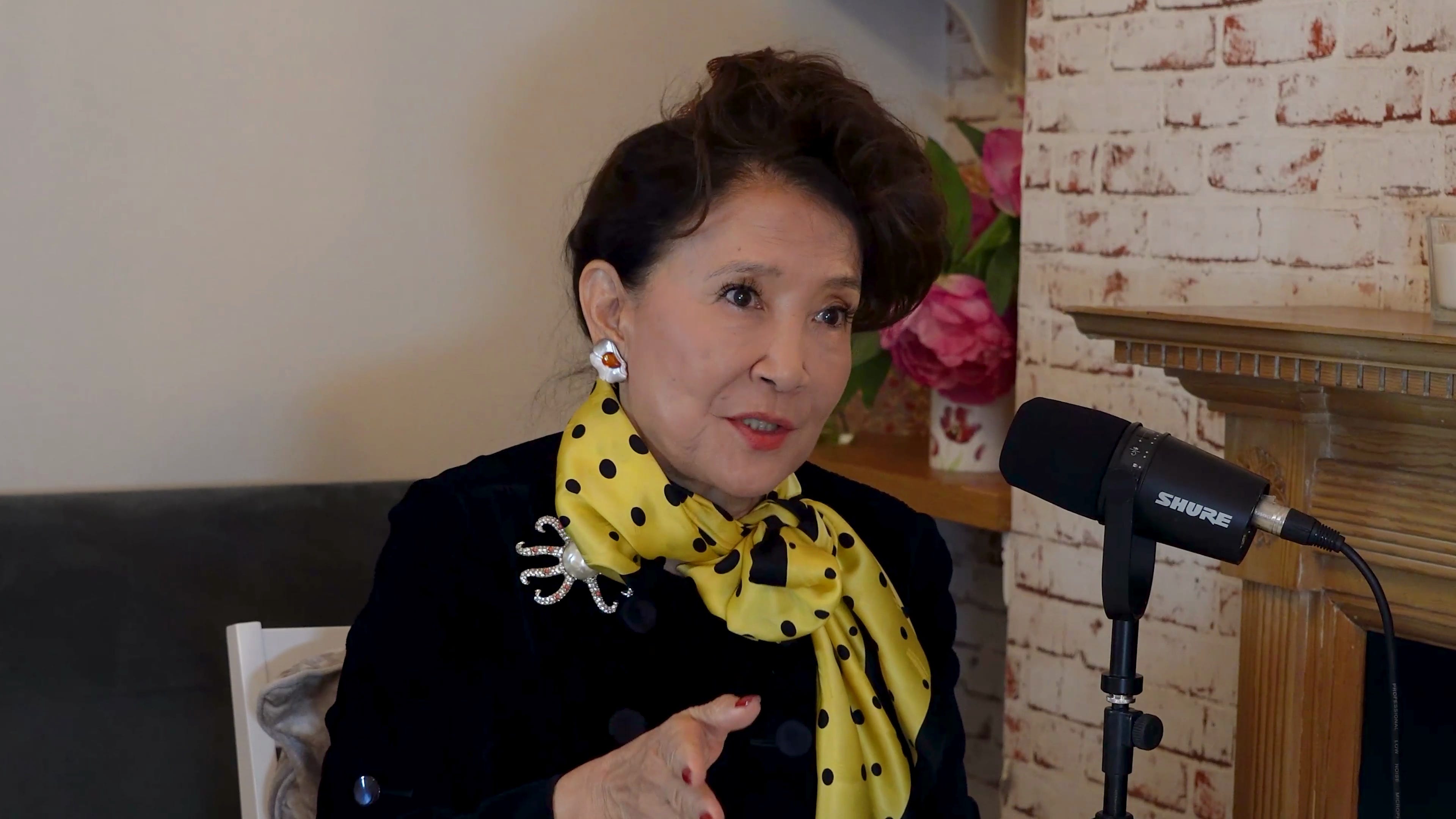
Jung Chang - Living through Cultural Revolution and the Crimes of Mao
A true honor to speak with Jung Chang.
She is the author of Wild Swans: Three Daughters of China (sold 15+ million copies worldwide) and Mao: The Unknown Story.
We discuss:
- what it was like growing up during the Cultural Revolution as the daughter of a denounced official
- why the CCP continues to worship the biggest mass murderer in human history.
- how exactly Communist totalitarianism was able to subjugate a billion people
- why Chinese leaders like Xi and Deng who suffered from the Cultural Revolution don't condemn Mao
- how Mao starved and killed 40 million people during The Great Leap Forward in order to exchange food for Soviet weapons
Wild Swans is the most moving book I've ever read. It was a real privilege to speak with its author.
Watch on YouTube. Listen on Apple Podcasts, Spotify, or any other podcast platform. Read the full transcript here. Follow me on Twitter for updates on future episodes.
Timestamps
(00:00:00) - Growing up during Cultural Revolution
(00:15:58) - Could officials have overthrown Mao?
(00:34:09) - Great Leap Forward
(00:48:12) - Modern support of Mao
(01:03:24) - Life as peasant
(01:21:30) - Psychology of communist society
Get full access to Dwarkesh Podcast at www.dwarkesh.com/subscribe
Press play and read along
Transcript
Speaker 1
And my father spoke up against Mao's policies. He was arrested, tortured, driven insane.
And my mother was under tremendous pressure to denounce my father. She refused.
Speaker 1 And my mother was made to kneel on broken glass.
Speaker 1 She was paraded in the streets where children spat at her and threw stones at her. The desire to write never left me.
Speaker 1 So, in the following years, when I was working as a peasant and as a barefoot doctor, as a steelworker and electrician, I was always writing in my head with an imaginary pen.
Speaker 2
Today, I have the pleasure of interviewing Hyung Chang. Her first book, Wild Swans, has sold over 15 million copies worldwide.
The U.S. diplomat George Cannon described the Gulak Archipelago.
Speaker 2 He said, this is the greatest and most powerful single indictment of a political regime ever to be leveled in modern times.
Speaker 2 And when I read that quote, I realized that this is exactly how I describe your books, Wild Swans, obviously, but also your biography of Mao, titled Mao, the Unknown Story, both of which we'll talk about today.
Speaker 2 It is a true honor to speak with you.
Speaker 1 Thank you very much for having me.
Speaker 2 So we will get it to Mao and his atrocities in a second, but let us begin by,
Speaker 2 would you mind laying the scene for us? What was it like? You grew up in China, under Mao.
Speaker 2 Let's begin there. What was it like as you started to grow up during this time?
Speaker 1 I was born in China, in Sichuan, in 1952. So I grew up under Mao.
Speaker 1 When I was a child, I led quite a privileged life because both my parents were communist officials. And we lived in this compound with
Speaker 1 servants,
Speaker 1 cooks, drivers. It was very class-ridden society, and I grew up so much taking
Speaker 1 class and privilege for granted that when I first came to Britain, I thought Britain was wonderfully class-less.
Speaker 1 And of course, my views were slightly modified over the years.
Speaker 1 And then
Speaker 1 in 1966, when I was 14, Mao launched his cultural revolution, which was his great purge. And my father spoke up against Mao's policies.
Speaker 1
So, as a result, he was arrested, tortured, driven insane. He was exiled to a camp and died tragically and prematurely.
And my mother was under tremendous pressure to denounce my father. She refused.
Speaker 1 As a result, she went through over a hundred of these ghastly denunciation meetings, which were everyday features in China at the time.
Speaker 1 And basically, the victims were put on the stage and their arms were ferociously twisted to the back, and their heads were pushed down.
Speaker 1 They were kicked and beaten. My mother was once made to kneel on broken glass.
Speaker 1 She was paraded in the streets where children spat at her and threw stones at her.
Speaker 1 But she survived.
Speaker 1 And today she still lives in Chengdu, aged 92.
Speaker 1 My family was scattered, and I was exiled to the edge of the Himalayas and worked as a peasant and then as a barefoot doctor, which was a doctor basically without any training, because Mao had said the more books you read, the more stupid you become.
Speaker 1 So schools were closed, you know, books were burned.
Speaker 1 I mean, China was literally a cultural desert without books, cinemas, theaters, museums for 10 years.
Speaker 1 And then I became an electrician, and again, there was no training. So I had five electric shocks in one month.
Speaker 1 And then in 1973,
Speaker 1 partly, you know, after Nixon's visit to China, I mean,
Speaker 1 but more also because for the internal political reasons, and universities began to reopen. And I was able to get into Sichuan University to learn English.
Speaker 1 But, you know, our teachers had never seen foreigners themselves because China had been closed to the outside world after the communists took power in 1949.
Speaker 1
So our textbooks were written by these teachers who'd never been abroad. I remember the first lesson was Long Live Chairman Mao.
And the second lesson was greetings.
Speaker 1 Because the Chinese in those years,
Speaker 1 when we bumped into each other and we said,
Speaker 1 which means, where are you going? Have you eaten? So those were the English greetings I learned.
Speaker 1 So when I first came to London, I used to go around and ask people where they were going and whether they had eaten.
Speaker 1 Well, the only foreigners I had
Speaker 1 spoken to were some sailors in a port in South China where we as English language students were sent to practice our English.
Speaker 1 So
Speaker 1 and that was up when I was 23.
Speaker 1 But
Speaker 1 of course we
Speaker 1 were at the port eagerly awaiting for our sailors and we had no idea what must be on their minds and how different this must be from their expectation of a port life.
Speaker 1 In 1976, Mao died and China began to change. And in 1978
Speaker 1 there was a
Speaker 1 national exam
Speaker 1 to select people to go abroad. For the first time under communist rule, going abroad was based on
Speaker 1
an academic basis. So I did very well at the exam.
So I became one of the first 14 people to come to Britain.
Speaker 1 And as far as I know, I was the first person to get out of Sichuan province, a province then of 90 million people to come and study in the West.
Speaker 1 So when I got my doctorate in linguistics, at the University of York in 1982,
Speaker 1 I became the first person from communist China ever to get a doctorate from a British university.
Speaker 1 So, okay, so I was in Britain and for 10 years I didn't want to think about the past
Speaker 1 because it was too painful.
Speaker 1 My father died, my grandmother who brought us up and died. And there was too, you know, I just wanted to spend time enjoying
Speaker 1 the West.
Speaker 1 I had actually always wanted to be a writer.
Speaker 1 When I was a child, I loved writing.
Speaker 1 But
Speaker 1 when I was growing up on the Mao, it was impossible to dream of even become a writer because nearly all writers were condemned, sent to the Gulag, driven to suicide, some were even executed.
Speaker 1 Even writing for oneself was dangerous.
Speaker 1 I wrote my first poem when I was 16,
Speaker 1 on the 16th birthday in 1978.
Speaker 1 I was lying in bed polishing my poem when I heard the door banging and some red guards had come to raid our flat.
Speaker 1 And if they had seen my poem, I would get into trouble and my family would get into trouble. So I had to quickly rush to the bathroom to tear up my poem and flush it down the toilet.
Speaker 1 And so that ended my first venture in writing.
Speaker 1 But the desire to write never left me. So in the following years, when I was working as a peasant and as a barefoot doctor, as a
Speaker 1 steel worker and electrician, and when I was spreading manure on the paddy fields and
Speaker 1 checking electricity supplies on top of the electricity post, I was always writing in my head with an imaginary pen.
Speaker 1 But I couldn't write in China. When I came to Britain,
Speaker 1
for 10 years, I didn't want to write. And then my mother came to stay with me in 1988.
And first time, she told me the stories
Speaker 1 of her life and stories of my grandmother. And then while I was listening to my mother,
Speaker 1 I thought
Speaker 1
I must write all this down. And then I realized how much I wanted to be a writer and how much I had always wanted to be a writer.
And so
Speaker 1 after my mother left, I transcribed the tapes she left for me, 60 hours of tape recordings. And then I wrote Wild Swans,
Speaker 1 which was published in 1991 first.
Speaker 1 And I became a writer.
Speaker 2 Yes. And
Speaker 2
I mean, saying you became a writer is understating it. The global impact of Wild Swans has been tremendous.
And in fact,
Speaker 2 a former guest of mine, Sarah Payne, recommended it to me, and I read it. And
Speaker 2
it's the most moving book I've ever read. It's truly tremendous.
Let me begin by asking what it was like growing up there in terms of the psychology of living in a totalitarian system.
Speaker 2 You mentioned in the book that until very late, you could not even bring yourself to question Mao, despite seeing the consequences of his policies and the cult of personality that was there.
Speaker 2 Tell me about the psychology of living in a system like that.
Speaker 1 Well, when I was growing up in China,
Speaker 1 you know, we were all subject to intense brainwashing and and indoctrination. When we were children, Mao was, we were told, you know, sorry, Mao was like our god.
Speaker 1 And if we wanted to say what I say is true, we would say, I swear to Chairman Mao. So Mao was, Mao had been given this godlike status.
Speaker 1 So, and also at the same time, we could see
Speaker 1
how dangerous it was to question Mao. You know, in China, there were these periodical political campaigns, and many people were victimized.
And the biggest crime was to question Mao.
Speaker 1 And my father, in the cultural revolution, suffered tremendously.
Speaker 1 And it was also because he
Speaker 1 sort of questioned the Mao.
Speaker 1 So when I wrote my poem when I was 16 years old, I had already
Speaker 1
started to doubt and to dread the society I was in. And we were always told, you know, socialist China was paradise on earth.
And I thought on that day, actually,
Speaker 1 if this is a paradise, what then is hell? Because my parents were away being detained.
Speaker 1 My grandmother was weeping next door because she's heard these ghastly things that were being done to my mother.
Speaker 1 So I questioned the society, but
Speaker 1 Mao never entered my mind and he was beyond questioning.
Speaker 1 This may be difficult for people
Speaker 1 to
Speaker 1 to
Speaker 1 understand
Speaker 1 maybe, I mean in the West.
Speaker 1 But in China, in those days,
Speaker 1 there were two most important
Speaker 1 things that enabled this brainwashing. One is the complete isolation of the society from the outside world, from alternative information, and from any other information.
Speaker 1 Even parents never told the children
Speaker 1 things that were different from the party line because they were worried about the future of their children, and they were worried that if children blabbed, it would be disastrous for the children as well as for the family.
Speaker 1 So, no alternative information. And the other is terror, this intense terror,
Speaker 1 which
Speaker 1 really scared people
Speaker 1 into
Speaker 1 suppressing any unorthodox thoughts.
Speaker 1 So I was living in that kind of society and it took me a long time to question Mao.
Speaker 1 Since my birthday, 16th birthday thought, in 1968,
Speaker 1 for many years I blamed what was happening in China to Madame Mao and to the so-called Gang of Four, which were basically assistants of Mao's.
Speaker 1 But I never dared to question Mao.
Speaker 1 And then I remember very well, 1976,
Speaker 1 I had learned a little English, and a friend showed me a copy of Newsweek.
Speaker 1 And there was an article about Mao, and there were two little pictures with the caption, Madame Mao is Mao's eyes, ears, and mouth.
Speaker 1 And suddenly, you know, Mao's name was spelled out for me and I suddenly realized of course it was Mao you know without Mao
Speaker 1 none of this could have happened and Mao was responsible and you know I'm an intelligent person but it took me eight years even from the moment I said to myself I dislike the society to the moment that I thought Mao was responsible.
Speaker 2 You mentioned that your father
Speaker 2 was purged because of his criticism of the government at the time. And in fact, your father's story
Speaker 2 through the book is a sort of tragic tale.
Speaker 2 But
Speaker 2 what I found interesting was that the way he criticized the party was to go through the official mechanism.
Speaker 2 He wrote a letter to Mao, which suggests that he even then still believed that sort of the mechanism of the party worked.
Speaker 2 And then you, you know, it would be imagining like somebody has a problem with North Korean government today, and he then writes a letter to Kim Jong-un, you know, which is obviously you're going to get in trouble for that.
Speaker 2 So
Speaker 2 tell me about how your father thought about that. And in retrospect, how should a high official like your father? Your father was the governor of Sechuan province, which you said 90 million people.
Speaker 1 My father wasn't governor, sorry. My father was a governor of a region
Speaker 1 initially. And then by the time of the Cultural Revolution
Speaker 1 in 1966, he was the head of a department
Speaker 1 of the Sichuan
Speaker 1 party, government, whatever they were.
Speaker 2 Yeah.
Speaker 2 A high official.
Speaker 1 A high official.
Speaker 2 What should he have done when he realized things were going to be well there was nothing one could do.
Speaker 1 I mean if you try to say your spell out your thoughts to
Speaker 1 other people, you will be instantly denounced and instantly, you know,
Speaker 1 probably
Speaker 1 executed. I mean, nobody was allowed to say anything against Mao.
Speaker 1 My father, and
Speaker 1 theoretically, in the charter of the Communist Party, a party member had the right to write to the leadership. So my father was using that as
Speaker 1 the kind of theoretically permitted way to voice his dissent.
Speaker 1 So that's why he wrote to Mao. And in any case, all these things, the atrocities, the violence, I mean, only Mao could stop them.
Speaker 1 So writing to Mao was
Speaker 1 the only way.
Speaker 1 was the only way he could express his opinion. And of course he also
Speaker 1 said something, you know, in the context of the denunciation meetings. But
Speaker 1 there were outbursts at denunciation meetings rather than his well-thought-out
Speaker 1 expression of dissent.
Speaker 2 So
Speaker 2 this is something I thought was confusing when reading accounts about the Cultural Revolution is China is a society, you know,
Speaker 2 they've rebelled in the past, they've rebelled against the emperors, they rebelled against the Japanese occupation,
Speaker 2 the nationalists were at one point in charge of lots of parts of China, the communists rebelled against them.
Speaker 2 How was Mao able to instill a regime where that became unthinkable, despite the fact that it was an incredibly chaotic and destabilizing time? How did the Chinese, which
Speaker 2 have a great sense of history, how did they allow this to happen?
Speaker 1 Well, that's a very good question. That is the key of a communist society, of a totalitarian society, is
Speaker 1 the control, the organization.
Speaker 1 I mean, neither the emperors nor any other rulers under the nationalists, under Chiang Kai-shek, was China so thoroughly organized down to the grassroots, controlled by layers of party organizations.
Speaker 1
It was totally thorough. That's why the 20th century totalitarianism was very different from the previous authoritarianism.
I mean, the key was the control, is that this total control of a society.
Speaker 1 I mean, the power highly concentrated at the very top, the one person.
Speaker 2 The thing that's really interesting is Mao is obviously a person who doesn't understand economics, and we'll talk about that greatly forward and the disastrous consequences it had because of his
Speaker 2 complete ignorance when it came to economics and industry and things like that.
Speaker 2 But what he did seem to have an incredible sense for, and Stalin and other totalitarian leaders as well, is the psychology of people and how to organize a society that has 800 million people, how to organize it so that
Speaker 2 every society has petty, sadistic,
Speaker 2 arrogant,
Speaker 2 and cowardly people and how to organize them so that they're elevated and you use them to your advantage so that there's no nook and cranny in the entire society where a single person can have a dissenting voice or even have an independent life.
Speaker 2 Maybe you can talk about the commune life and the way in which,
Speaker 2 how can you possibly have a society of 800 million people where each person is under such strict totalitarian control? How is that even possible?
Speaker 1 The thing is that in the cultural revolution, for example, Mao used
Speaker 1 the young people and used the bad things in their nature. They're prone to violence,
Speaker 1
destructive, you know, sadistic. I mean any society there were these people, but they were given license to indulge their bad instincts in the cultural revolution.
Now
Speaker 1 this took place for a couple of years in a cultural revolution. Then Mao reined them in
Speaker 1 by using the army. And the Red Guards, the former Red Guards, particularly the most militant, most aggressive, most sadistic and violent ones, were dispersed.
Speaker 1 And they were sent to the villages and to the mountains. I mean, the disobeyed, the disobedient ones were condemned themselves.
Speaker 1 I mean, they became the targets of the second round of purges, so to speak. And all the time, Mao made sure that the barrel of the gun was was in his hand, the army.
Speaker 1 So he always needed this person to control the army for him, to make sure he could wreak havoc and maintain control.
Speaker 1 He always used the Lin Biao until 1970.
Speaker 1 Lin Biao was completely cynical.
Speaker 1 He would come to Mao's residue when there was a dissent from Mao's other colleagues, like during the famine and when Mao started the Cultural Revolution.
Speaker 1 And until
Speaker 1 the day that he fell out with Mao,
Speaker 1 which was why Mao was suddenly a bit lost because he lost
Speaker 1 the arm with which he controlled the army. And
Speaker 1 so that's why in in 1972, after Lin Biao died trying to flee
Speaker 1 out of China,
Speaker 1
things suddenly became better. And then because then Mao had to rely on another person to control the army for him.
And this other person was Deng Xiaoping.
Speaker 1 And then suddenly the universities began to reopen. Things were much better from 1972.
Speaker 2 Yeah.
Speaker 2 And by the way, this is a great instance of as soon as Mao dies, the gang of four is rounded up and arrested, and the cultural revolution stops,
Speaker 2 which goes to show you that this was Mao's doing.
Speaker 2 This is also an interesting example where, you know, you have these cases where whether it's Stalin in Russia or Mao in China, where when the tyrant dies, you know, the system automatically improves because nobody else is as crazy as that guy.
Speaker 2 What does this show us about
Speaker 2 if Kim Jong-un died?
Speaker 2 Should we expect a sort of reversion to a more sane set of things? Again and again, we see tyrants die and things are not as bad as they used to be.
Speaker 1 Well, I haven't studied North Korea, so I don't know the inner workings of the regime. I mean, in that sort of Stalinist society, really, so much
Speaker 1 depends on one person. I mean, the Kim dynasty, they have arranged their kind of succession.
Speaker 1 The first
Speaker 1 Qing Song died, and his son succeeded, and the grandson then succeeded.
Speaker 1 Now it seems that the grandson has begun to look into a succession of him by grooming perhaps, I don't know, his daughter or someone
Speaker 1 close to him.
Speaker 1 I mean, Stalin
Speaker 1 couldn't do that, couldn't do the family
Speaker 1 dynasty thing.
Speaker 1 I think partly because his children were not like the Kim children. I mean, Mao
Speaker 1 also, I mean, Mao basically, he only cared about how he could enjoy life while he was alive, indulging his desires, which was mainly power.
Speaker 1 And he didn't care about
Speaker 1 what comes after him.
Speaker 1 I mean, he was completely
Speaker 1 materialistic, you know, in that philosophical way, in that sort of way.
Speaker 1 Sorry, for example, when he was in Russia, in Moscow, when he visited Lenin's tomb, he said,
Speaker 1 it's all very well, you know, we are visiting Lenin's tomb, but Lenin
Speaker 1
can't feel anything. He's dead.
So it doesn't matter. It means nothing to Lenin.
Speaker 1 So, you know, Mao, when he died, he didn't leave a well-structured structured.
Speaker 1 He didn't even sort of
Speaker 1 care about his own legacy.
Speaker 2 I thought the entire purpose of the Cultural Revolution was that he was concerned that because of the Great Leap Forward, that his legacy would be destroyed in the way that Khrushchev denounced Stalin, and therefore that that was the entire point of the Cultural Revolution, was to protect his legacy.
Speaker 1 That may be a factor, but the main factor was Mao's policy that had led to the great famine of nearly
Speaker 1 around 40 million deaths of the people,
Speaker 1 was so unpopular that his number two, Liu Shaoqi, then
Speaker 1 spoke up against him. Again,
Speaker 1 there was no way even for Mao's number two to topple him. And because basically, you know,
Speaker 1 under this tyrant, his colleagues couldn't get organized,
Speaker 1
which was necessary to topple him. They couldn't lay their hands on the army, which was controlled by Lin Biao.
So what Liu Shaoqi did was that in January 1962,
Speaker 1 when Mao had wanted to continue his policy of exporting food in exchange for arms industries to build in order for him to build a superpower so he could dominate the world.
Speaker 1 And Liu wanted to stop that
Speaker 1 and he used this occasion of a party congress to speak to the 7,000 party officials in that conference hall.
Speaker 1 And my father was in there. I mean, so these party officials
Speaker 1 spread spread all over China. They were, the vast, vast majority of them were against Mao's policies that had led to the famine.
Speaker 1 So they suddenly found Liu Shaoqi as their champion. And so together
Speaker 1 they managed to stop Mao's policies, which was how the famine was stopped. from 1962.
Speaker 1 And Mao was furious.
Speaker 1 He
Speaker 1 didn't like being thwarted and being ambushed, which he called that ambush. This was why he launched the Cultural Revolution in 1966 to punish Liu Shaoqi and the party officials.
Speaker 1 I mean, so that's how this great purge took place. For Mao, it was much less of,
Speaker 1
it was calculated because he wanted to have his way. He wanted to purge these people.
But there was also the gut feeling of revenge.
Speaker 1 And he wanted to revenge on his number two, who died in the most appalling way in the culture of Lu Xing.
Speaker 2 So sorry if this question sounds naive, but if you have somebody like Liu Xiaoqi and Deng Xiaoping and these other party officials who are seeing what is happening, and in the case of Liu Shaoqi, he was denounced before
Speaker 2 he was officially purged and removed from power, right? So there was a time when he knew he was going to be purged, but he was still in power.
Speaker 2 It's confusing from the outside of why, at that time, you don't, if you can't control the army because Lin Bao is in control of it, at that point, you don't, I don't know, try to tell the people what is actually happening.
Speaker 2
Go to the People's Daily and say, Here, you got to publish this article about what Mao is actually like. Go to all the communist officials, organize a coup.
Why didn't that happen?
Speaker 1 Well, it did happen.
Speaker 1 In the Mao biography, there were, I have a couple of chapters about Liu Xiaoqi, exactly what you were suggesting, what he should have done.
Speaker 1 But I'm going to expand it in my next book.
Speaker 1 Basically, Liu Xiaoqi knew Mao was going to purge him in 1962 after the Congress, because he'd ambushed Mao.
Speaker 1 And so he had started to build his own power base.
Speaker 1 First of all, by stopping the famine, making himself popular among the party officials, because only they mattered, and the ordinary people were too far away from power.
Speaker 1 And so Liu Xiaoqi became very popular. In 1965, a few years later, when Mao Wa tried to purge Liu Xiaoqi,
Speaker 1
he found he couldn't do it. I mean, Liu Xiaoqi had been powerful enough to put up a resistance.
I mean, there was a lot of, I mean, the Mao did this horse trading with Lin Bieo.
Speaker 1 And so Lin Biel spoke, you know, very forcefully in support of Mao.
Speaker 1 So there was all that going on.
Speaker 1 And why,
Speaker 1 Liu Xiaoqi was already,
Speaker 1 sorry, the Mao used the Red Guards to create such violence and terror in China from 1966 to basically 19, for a few months before he even mentioned Liu Xiaoqi's name, as you said.
Speaker 1 But Liu Xiaoqi was already under house arrest.
Speaker 1 I mean it's just he didn't make it public. So Mao first of all created this gigantic
Speaker 1 upheaval in China
Speaker 1 in order to create the kind of terror that people would only obey him, not Liu Shaoqi, not even the party, but only him. That's how he operated.
Speaker 1 So that's why in the cultural revolution, his first victims were school teachers. You know, I was in the secondary school in China.
Speaker 1 I saw how the teachers were being abused, beaten up, denounced, driven to suicide, and so on. When Mao actually didn't even dislike teachers,
Speaker 1 he said, for example, to Edgar Snow that
Speaker 1
he'd like to be known as a great teacher or whatever. He was a school teacher in his youth.
And
Speaker 1 he didn't care about them.
Speaker 1 But he just used them because the teachers were the obvious obvious target to excite, to arouse
Speaker 1 the passion, the violence, the atrocities in the young red guards.
Speaker 1 And so
Speaker 1 that's how he used them as a victim
Speaker 1 in order to rouse the victimizers, which were the school children.
Speaker 1 That's how he maneuvered, he spent quite a few years
Speaker 1 before Liu Shaoqi was,
Speaker 1 before the atmosphere was ripe for him to be able to purge Liu.
Speaker 2 So
Speaker 2
maybe for context, it'll be helpful first to start talking about the Great Leap Forward. The number you gave was around 40 million people.
And this becomes a statistic for people.
Speaker 2 You just think, oh, 40 million people died. whatever, it's a number.
Speaker 2 I want to make it concrete for people
Speaker 2 how much tragedy and suffering is involved in just a single person dying for starvation.
Speaker 2 Can you talk about the months-long agonizing process of what starvation is, when you see it happening to you, your family, your children, your spouse, your village, and what peasant life was like during the Great Leap Forward?
Speaker 1 the Great Leap Forward,
Speaker 1
my family was among the privileged. So I personally didn't starve.
But there was a lot of starvation around us.
Speaker 1 For example, I remember when I went to school,
Speaker 1 I was eight, nine, and when I went to school,
Speaker 1 one day I was munching a steamed bread
Speaker 1 and
Speaker 1 a young lad, a child, a boy,
Speaker 1 darted over and snatched the bread from my mouth and then he stuffed those into his mouth and disappeared. And then afterwards I told, when I told my father, my father was very sad and he sort of he
Speaker 1 touched my head and said, you know, you were very lucky, you know, other children are starving.
Speaker 1 And another thing that happened near home was
Speaker 1 our our maid, our domestic help, who'd come from a village and her family had been classified as a landlord, which was
Speaker 1 one of the categories of the desirables destined for discrimination and horrible treatment.
Speaker 1 And I remember very well one day
Speaker 1 after a visit to her family, she came back and she was weeping.
Speaker 1 And we lived in this courtyard and she had so much floods of tears that the frogs that were actually thriving in the courtyard were leaping up and down. So that was in my memory as a child.
Speaker 1 And my grandmother, with whom she was very close, was sitting
Speaker 1 in a mosquito net and also crying and said
Speaker 1 the communists are good except all these people are dead.
Speaker 1 I mean so I was because this was so much against my indoctrination about the communists that's one of the few things I heard that made me really scared.
Speaker 1 And
Speaker 1 then
Speaker 1 And before she,
Speaker 1 her whole family died. In fact, before that, her mother mother came to see her, to report the news that her father and
Speaker 1 the brothers or something had died. And her mother, as soon as she came into the house, she threw herself on the ground and called out to my mother and said, you know, thank you, you know, for
Speaker 1 having saved my daughter. Otherwise, you know,
Speaker 1
she would have been dead. I mean, after, soon after the mother went back she died herself.
But when she came she was already like a skeleton you know as though any wind could blow her away. It's just
Speaker 1 terrible and one thing that made my father speak up during the Cultural Revolution which is only a few years later was
Speaker 1 He felt so guilty and he volunteered to go to stay in a village
Speaker 1 and then he saw these horrible things, which I didn't see.
Speaker 1 And one day a man was sort of walking on the ridges of the paddy fields
Speaker 1 unsteadily, and suddenly he disappeared. And my father rushed over and this man
Speaker 1 had died.
Speaker 1 It's just like that.
Speaker 1 My father, just for his month of living
Speaker 1 in the village,
Speaker 1 he came back
Speaker 1 very seriously famished and suffering from this illness called enema or enema, which was because of lack of food.
Speaker 1 And
Speaker 1 yes,
Speaker 1 even my family and we all
Speaker 1 and we all drank
Speaker 1
this little thing, this little seed that fed on urine. I remember we all had to collect urine.
We don't
Speaker 1 throw away our urine, we collect the urine in order to grow this seed, which was supposed to have a lot of
Speaker 1 vitamin or a lot of some nutrition that could
Speaker 1
sustain people. And I remember how revolting the taste was.
I mean,
Speaker 1 I didn't suffer much because my family put all our food together and the adults were starving. I knew my mother, my father, and my particular grandmother,
Speaker 1 in order for us children
Speaker 1 not to starve. And also now, today, if you read, if you see the memoirs of China's super riches,
Speaker 1 I mean, I think most of them had a memory of
Speaker 1 my generation, of the generation who had lived in the countryside. They all
Speaker 1 remembered being hungry
Speaker 1 as children,
Speaker 1 how hungry they were in the villages. And that sort of was partly what gave them the impetus to change.
Speaker 2 While we're on this, let me just ask you about this before we return to the Great Leap Forward, now that you've mentioned it.
Speaker 2 So, Xi Jinping actually had a very similar experience to you in that his father is also a high communist official. He also gets denounced and purged.
Speaker 2 Xi Jinping has to go through these denunciation meetings and then he has to work as a peasant.
Speaker 2 And in fact, there's a story where he tries to come back, but his mother, to get a meal from his family, but he's supposed to be in exile, but his mother then chases him away and denounces him.
Speaker 2 And so it's like gruesome stuff, right?
Speaker 2 And then
Speaker 2 when he gives these speeches, he talks about we need to to return to Marxism-Leninism and Mao Zedong thought.
Speaker 2 How is it possible that somebody who has gone through your experience can still have any sort of sympathy left for Mao or Marxism-Leninism? I actually don't understand. I'm trying to understand.
Speaker 1 I'm afraid I don't understand either. I mean, don't fully understand.
Speaker 1 I mean, everybody is different.
Speaker 1 A lot of people had similar experiences
Speaker 1 and they still
Speaker 1 wouldn't sound Mao's praise
Speaker 1 and wanted to return to the Mao era. I think only
Speaker 1 no, not seriously returned to Mao era, but they were dreamed of the perhaps the tight, you know, the Kang Truo or something of the Mao era, but not really.
Speaker 1 I mean well, uh everybody was different, but I mean there were more indoctrinated people than others under the same indoctrination system.
Speaker 1 I mean maybe he was just not, he was just
Speaker 1 more thoroughly indoctrinated. And there were many reasons among the communist officials whose parents suffered a children of,
Speaker 1 a lot of them regard,
Speaker 1 identify Mao with the rule of the Communist Party.
Speaker 1
And they don't want the Communist Party to be discredited. So because they are the beneficiaries of of communist rule.
I mean,
Speaker 1 this is not necessarily she,
Speaker 1 he,
Speaker 1 but in a more general sense, because I haven't studied Xi. Again, I don't know the inner workings
Speaker 1 of the regime.
Speaker 1 But
Speaker 1 I think a lot of children of the old communists, in spite of the sufferings from their parents, they still want China to be under this one party dictatorship. And I think one reason now is
Speaker 1 this made them a lot of money.
Speaker 1 I mean all the corruptions or the, you know, whatever,
Speaker 1 if you are associated with the regime, you stood to gain.
Speaker 1 You stand to gain. So I think that that is one very important reason,
Speaker 1 which would not they would not have all the privileges if the party ended its its one-party dictatorship.
Speaker 2 Yeah.
Speaker 2 And,
Speaker 2 you know, in no other society is a tyrant like Mao still respected by the current regime. With Germany,
Speaker 2 nobody is, you know, yearning for the days of Hitler.
Speaker 2
There's a few people in Russia, for example, Stalinism is because of Putin's changing of the curriculum. But it's not a common thing.
Whereas in China, the regime officially
Speaker 2
derives its legitimacy from Mao. It hangs his picture off Tiananmen Square.
And
Speaker 2 this is doubly insidious, not only because this is a gruesome mass murderer killed 50 million people, more than anybody else in history, but because his victims were the people of China, the people who are expected to
Speaker 2 bow down to his figure and respect him are his own victims or the children of his victims. It would be like if a picture of Hitler hung off the Temple Mount in Israel or something, right? So, I mean,
Speaker 2 yeah,
Speaker 2 I guess maybe the question then is: how do the Chinese people who this happened to the Chinese people in living memory? How are they okay with having the figure of Mao up on Tiananmen Square?
Speaker 2 Why is there so respect for Mao in China?
Speaker 1 Well, first of all,
Speaker 1 China, as you said, is still a communist regime.
Speaker 1
For many years, I mean, that was underplayed, partly because the memory is fresh, and partly in the 1980s and 90s, particularly. The memories were fresh.
I think that was probably the main reason.
Speaker 1 And gradually after that,
Speaker 1 the memories of pain were gradually fading.
Speaker 1 And particularly, a generation, two generations have grown up without suffering.
Speaker 1 And so,
Speaker 1 given that there is no
Speaker 1 religion for people to worship, you know, unlike any time in Chinese history, and before Mao, there was Confucianism.
Speaker 1 You could have something to hang on to. And then there was Mao, Maoism, I mean, which
Speaker 1 didn't
Speaker 1 didn't obviously, openly endorse violence and atrocities.
Speaker 1 It could sound quite attractive,
Speaker 1 which is why Mao's Little Red Book was in vogue for a period in the West.
Speaker 1 And so people hung on to that. And in the post-Mao time,
Speaker 1 money was the god.
Speaker 1 But
Speaker 1 a lot of people made money, but a lot of people lost money, not only lost money, but had, you know,
Speaker 1 was
Speaker 1 disadvantaged in this money is God society. I mean, you know, in the society where there was no proper regulations and law, and people who were not very savvy with money lost out.
Speaker 1 They were conned, they were, you know, they were whatever. So there were some people who probably yearned for a more simple life,
Speaker 1 where you know, you were given what you were given, you m
Speaker 1 they wouldn't like to be starved and they wouldn't like to be a political victim. But a lot of people could live a very simple life of being just fed.
Speaker 1 I mean, there may be a certain nostalgia,
Speaker 1 but the most important thing, of course, is the promotion of the regime.
Speaker 1 I mean, particularly since she came to power. I mean, you know,
Speaker 1 you were taught from school all these
Speaker 1 lies about Mao.
Speaker 1 And so people grew up with this
Speaker 1 regarding Mao as God, like back to my childhood.
Speaker 2 Yeah, what has been the impact of your books? You know, Wild Swan sold 50 million copies. Your biography of Mao is also a bestseller.
Speaker 2 I know they're banned in China, but have they secretly been able to access, how has that revised their understanding of their own history?
Speaker 1 Well, when these books were first published in the 1990s and year 2000s, there were
Speaker 1 lots and lots of ways to get them into China. Hong Kong, for example, and Taiwan,
Speaker 1 pirated editions, which there are many, many, many.
Speaker 1 But now, I mean, since particularly Mr. Xi came to power in
Speaker 1 2012, 2013, I mean China has a total clampdown of
Speaker 1 banned literature and you could go to jail.
Speaker 1 And for an official to possess these books, I mean banned books including mine,
Speaker 1 you could face ghastly punishment, which you don't want to official, and for the general population as well. And when you enter China now, you see on this screen
Speaker 1 warnings of not to bring in bad literature.
Speaker 1 And not particularly not to bring
Speaker 1 books that
Speaker 1 said
Speaker 1
not very nice things about the previous revolutionary leaders. or revolutionary martyrs or someone.
So total, total clampdown, forbidding of people
Speaker 1 doing research on history, trying to understand the history,
Speaker 1
which created another generation of brainwashed people. And there is also one very important thing.
The Chinese are very pragmatic and they don't want trouble.
Speaker 1 They're very different from a lot of other peoples.
Speaker 1 And so parents
Speaker 1 who had bad experiences under Mao tend not to tell their children. And so there are a lot of children who were just genuinely not getting any alternative information
Speaker 1 from different, from
Speaker 1 the official line.
Speaker 2 Yeah, I do want to get back to the actual Great Leap and Cultural Revolution in a second, but on this theme,
Speaker 2 you know, Xi Jinping's own daughters studied at Harvard.
Speaker 2 Chinese elites are, their kids are studying in America.
Speaker 2 When they take power in a generation or two, will they still be devoted Marxist-Leninists? I can't imagine them having coming back from Harvard and then still believing in...
Speaker 1 Well, I mean,
Speaker 1 in the West, in American universities,
Speaker 1 there are a lot of Marxists.
Speaker 1 I mean, you know, a lot of people, if they're interested in the subject,
Speaker 1 I mean, they come to the West to have their views confirmed. And Maoists, you know, for example, when our Mao biography was published, there were some academics who
Speaker 1 even published a book, a collection of their criticisms against our book. And the title was, was Mao Really a Monster?
Speaker 1 I mean, you know, the preface was written by someone who was a senior lecturer in the LSE, London School of Economics. I mean, the language was Maoist language.
Speaker 1 You know, Mao was a great, a great revolutionary, a great Marxist Leninist, and so on. I mean, so, I mean,
Speaker 1 the West would certainly not put off
Speaker 1 a potential Mao successor.
Speaker 2 Yeah, I'm glad you brought that up, actually, because I read that book actually in preparation for this interview, and because I wanted to see if there were criticisms that I should be aware of.
Speaker 2 And honestly,
Speaker 2 I mean, there were certain quibbles about the part before Mao got into power about the long march and stuff, which I don't know enough about to comment.
Speaker 2 But the actual, when they start talking about the important things, the Great Leap Forwarded Cultural Revolution, they are not at all contesting the facts.
Speaker 2 It is the most
Speaker 2 sort of excusatory language of, it is the same sort sort of stuff, by the way, that is said about Cuba and Stalinist Russia, of, well, the literacy went up and this and that.
Speaker 2 North Korea today has high literacy. Are you going to say that North Korea was okay?
Speaker 2 Actually, can you talk about this?
Speaker 2 What do you think explains the Western,
Speaker 2 some parts of the left who want to find excuses for these regimes, whether it's Venezuela or whether
Speaker 2 Edward Snow writing his book about Mao?
Speaker 2 There's a sort of need to excuse these
Speaker 2 communist regimes and socialist regimes.
Speaker 2 What explains this?
Speaker 1 From what I know, I think
Speaker 1 there were
Speaker 1 people
Speaker 1 who had illusions about these regimes. And a lot of the academics
Speaker 1 who were kind of
Speaker 1 controlling the faculties to do with Mao and in the universities probably
Speaker 1 had got their
Speaker 1
sort of illusions because they had access to Edgar Snow's book. They were radicals in the 1960s.
I mean
Speaker 1
they want to hang on to their own. No, sorry, let me just not get into the subject.
Sorry,
Speaker 1 I'm faltering on this because
Speaker 1
I don't know. I don't know why, but I don't know why.
I don't know why they are like that. I mean,
Speaker 1 they don't know the facts,
Speaker 1
they don't care to know the facts. And also, I think probably some people think, oh, China has always been awful, you know, under the emperors and so on.
And so somehow the Orientals
Speaker 1 must feel differently.
Speaker 1 I know when, you know, when Deng Xiaoping visited America in 1979 and established diplomatic relations with America, with Carter.
Speaker 1 And
Speaker 1 he was seated at a banquet with
Speaker 1 some deluded film star or something.
Speaker 1 And then people were saying to him that
Speaker 1 when they visited China, they'd seen professors who'd been subject to forced labor.
Speaker 1 But they were told that they enjoyed it because all these hardships and being in the labor camp had turned them into the new men.
Speaker 1 And Deng Xiaoping just said they were lying.
Speaker 1 But I mean, they were lying to the Westerners
Speaker 1 who
Speaker 1 didn't know the truth, just took their words for it. And they didn't know people couldn't tell them the real truth.
Speaker 2 Even in
Speaker 2 the case of Stalin in Russia, there was a famous New York Times reporter who was doing the Russian coverage for the New York Times. And
Speaker 2 reports would come in about
Speaker 2 the Ukrainian famine or these other atrocities. And he would write his columns, you know, no, this is not happening.
Speaker 2 There's a famous headline that says, Russians are hungry but not starving.
Speaker 2 So actually, let's talk about Deng Xiaoping. And I want to ask about.
Speaker 2 So during the Cultural Revolution, he is exiled and purged. And
Speaker 2 his son, because he is known as a, I don't know what, the black, but basically.
Speaker 1
The five, the blacks, you know, that's one of the racist sides of the Chinese society. Black is bad.
So the son was one of the five blacks. And, you know, so on.
Speaker 2 His son is chased out of a window by red guards. The doctors refuse to operate on him because he's Deng Xiaoping's son, so he's paralyzed for life.
Speaker 2 And he's forced to do manual labor. This guy who was basically kind of running China under Mao, he's doing manual labor out in the countryside.
Speaker 2 When he comes back into power after the Cultural Revolution,
Speaker 2 from the outside, I don't understand how he
Speaker 2 doesn't immediately denounce Mao, talk about the horrible things he did. How did he allow, there's a quote from him, he says, we must be careful not to overemphasize the crimes of Mao or something.
Speaker 2 For somebody who was so personally harmed by Mao, how is he not immediately condemning Mao?
Speaker 1 This is something I don't understand. And I also think he made a big mistake.
Speaker 1 If he had dissociated from Mao, like Khrushchev had with Stalin, I mean, it would not have just been the right thing to do, but it would have been the popular thing to do.
Speaker 1 Because there is a great ground swell of the sentiment
Speaker 1 for denouncing Mao, or at least dissociating from Mao, not just from the population, from the victims, which virtually everybody was in China, but from the leading elite, from
Speaker 1 most of his closest colleagues. I mean, for the few olders who were in favor of Mao, he could easily have dealt with them, like Khrushchev had dealt with the Stalinists, the hardliners.
Speaker 1 But he chose not to.
Speaker 1 What got into his mind, I haven't studied him very carefully, but I did know something about him.
Speaker 1 I think he was probably
Speaker 1 thinking
Speaker 1 that if you reject Mao, it's inevitable that communism will collapse in China. I mean, unlike Khrushchev's time in 1956,
Speaker 1 he could denounce Stalin without endangering communist rule in Russia. But Deng, at his time, could not,
Speaker 1 well, at least probably he thought, could not
Speaker 1 have denounced the Mao without endangering the rule of the party.
Speaker 1 Because
Speaker 1 we're talking about the 1980s, late 70s, 80s now. There is a ground, you know, it's near, it's Gorbachev's, near Gorbachev's time.
Speaker 1 So I think that's probably his devotion to the party.
Speaker 2 Yeah. And but I think he might have been right.
Speaker 2 And then obviously
Speaker 2 the point is that he would have been right to say that, well, this is actually inherent in the communist regime.
Speaker 2 In Russia, when in the 80s, when they have Glasnost and Perestroika and they talk openly about the Gulag system, that is one of the main contributing factors.
Speaker 2 Then people say, well, how can a regime that allowed this to happen be allowed to exist anymore? How can this be a governing regime? And that does lead to the collapse.
Speaker 1
Yes, exactly, exactly, exactly. Which is why, by the way, Mr.
Xi's argument,
Speaker 1 because he was against the Gorbachev, against the perestroika Glasnost.
Speaker 1 And he's
Speaker 1
exactly that. I mean, the communist regime would collapse.
I mean, that is, you know, in today's terms, that is
Speaker 1 the wealth, the money,
Speaker 1 you know, that associated with the power.
Speaker 2 And in the book,
Speaker 2 you point out that Mao is acting in his self-interest and selfishly doing all these things.
Speaker 2 But it seems to me that a strong, if not motivation, at least enabling factor and organizing factor is definitely provided by the ideologies of communism and socialism,
Speaker 2
which sort of organizes social society. Otherwise, it doesn't make sense to collectivize farms and to close down shops.
And it also necessitates the purges because communism is a science.
Speaker 2
It has to work. And if it doesn't work, there must be internal capitalist saboteurs who must be condemned, brought out, and killed.
Do you think
Speaker 2 isn't it the communism and socialism the
Speaker 2 heart of the issue here?
Speaker 1 I think some people undoubtedly think that way.
Speaker 1 But having researched Mao for 12 years,
Speaker 1 my conclusion about him was he was highly pragmatic and the communist ideology suited him.
Speaker 1 I mean he joined the
Speaker 1 Communist Party not because he was a passionate believer,
Speaker 1 but because it gave him a livelihood. I mean, he was asked to open a left-wing bookshop selling communist and left-wing literature and his life would change and before that he was poverty stricken and
Speaker 1 then that started his life. But I mean the few things about the ideology that you just mentioned, for example the collectivization, it's highly conducive to Mao's
Speaker 1
requirement, to Mao's what Mao wanted, which was food. He wanted this food from the peasants.
If they had been private farmers, they would farm their food first and pay tax, so to speak, paid to them.
Speaker 1 And then it's far more difficult to control these hundreds of millions of peasants than
Speaker 1 to organize them into units, into communes.
Speaker 1 Then it's much better to control. I mean, Mao said so himself.
Speaker 1 Say the great advantage of collectivization, the communes, is easier to control. Bien Yu Guandi.
Speaker 1 So this was
Speaker 1 not just an ideology, abstract ideology, but it's for
Speaker 1 what he wanted to get.
Speaker 2 Yeah, but then at least we can say
Speaker 2 one of the problems with the ideology is that it attracts and is highly conducive to
Speaker 2 opportunists like Mao and Stalin and the Kim family. But so, let's go back to the Great Leaf Forward and to these communes.
Speaker 2 These communes are really what it's like to be a peasant is like chattel slavery. Can you talk about the working conditions, how hard they worked, while not being given food,
Speaker 2 the punishments?
Speaker 2 Tell us more about what the peasant life was like.
Speaker 1 Well, I was working in a commune for several years
Speaker 1 in the Cultural Revolution, in two places. And our lives consisted mainly of work.
Speaker 1 I mean, there were fixed hours. You were given, you were allocated food and, you know, fuel and other things, depending on how many hours you worked.
Speaker 1 So your life is
Speaker 1 centered on work.
Speaker 1 I mean, you know, then
Speaker 1 everything, the commune controlled everything. If you want to travel, to go somewhere, you need the commune to give you
Speaker 1 a kind of a note, a kind of a passport to allow you to travel.
Speaker 1 If you want to get married, you have to get permission from the commune.
Speaker 1 And during the famine, this is how Mao ensured that the peasants didn't rise up in arms because of the control from the commune. I mean, there is a thing,
Speaker 1 every now and then the regime would issue these stiff orders
Speaker 1 to stop peasants fleeing their villages. I mean, if the peasants did manage to flee into the cities and the beg, for example, for some food, the communes were told to get them back.
Speaker 1 So the commune is
Speaker 1 this thing we
Speaker 1 to control our entire lives. And of course, when I was in the communes, I was again in a privileged position because when we were sent down from the cities, we were guaranteed a certain food.
Speaker 1
I mean, it's too complicated, the details. But basically, the communes is the organization.
It may be in some ideology, but in reality,
Speaker 1 it's how the party controls China's 500 million peasants. I mean, there were only, I think,
Speaker 1 some few tens of thousands of communes. I mean, imagine this highly concentrated organization.
Speaker 1 So people were no longer individual farmers
Speaker 1 like what they were before the communist rule.
Speaker 2 And this is exactly also what happened in Russia.
Speaker 2 And when the famine happens, again, they're not allowed to leave Ukraine.
Speaker 2 There's roadblocks, so they're forced to starve there.
Speaker 2 So you have this really remarkable anecdote
Speaker 2
in the book about talking to these peasants about what life was like during the Great Leap Forward while you're working there. Because now there's no fuel left.
All the trees are taken down.
Speaker 2 And how at the time so many in the village starved
Speaker 2 because they were all distracted keeping the furnaces. Talk about how the effort to double steel output and
Speaker 2 what catastrophes that caused?
Speaker 1 Well, basically,
Speaker 1 Mao's ambition after he took power in China was to build a superpower to
Speaker 1
dominate the world. He needed to buy these machines, military-industrial complexes, mainly from Russia and from Eastern Europe.
But he didn't have the money to pay. China wasn't rich as today.
Speaker 1
So he exported the food. So he needed a lot of food.
Whereas in China, traditionally,
Speaker 1
we never produced enough food to feed the population. The emperors banned food export and bought a lot of food into China.
I mean, so traditionally, China was a food importer for a few hundred years.
Speaker 1 And Mao stopped that. So to start with, there was always a food problem problem throughout his rule.
Speaker 1
And now the great leap is basically to import vast quantities of technology and equipment mainly from Russia. That's why it's called the Great Leap.
He wanted to build industrialized water system
Speaker 1 in a few years.
Speaker 1 to be fast, fast, fast. You know, that's what
Speaker 1 he said.
Speaker 1 I mean, that's why his demand for food was vastly elevated.
Speaker 1
Mao's demand for food. And this food had to come from the peasants.
I mean, so he basically seized this food
Speaker 1 to export to Russia and Eastern Europe, knowing his people would die of starvation. I mean, there was a time Mao
Speaker 1 kept saying, seemingly philosophically, I I mean, death is a good thing.
Speaker 1 If we don't have death, you know,
Speaker 1 the earth can't contain us. You know, these seemingly philosophical things were taken at face value by some academics.
Speaker 1 But what he really, he said these things to his officials in order to harden their heart when they went to seize the food from the peasants, seeing how pitiful their conditions were.
Speaker 1
And that's the origin of the famine. It's as simple as that, it's food export.
I mean, Liu Shaoqi, his number two and his main target in the cultural revolution,
Speaker 1 it was thanks to a visit back to his old village that made up his mind. to stop Mao's policies.
Speaker 1 Because he went back to his village, his brother-in-law had died of starvation, his sister was on the edge of of dying of starvation. He saw the villages, saw the just heart-rending things, and
Speaker 1 he
Speaker 1 opened the lid of
Speaker 1 a work, a saucepan, and he saw there was nothing, just water, a few drops of grain. And he was...
Speaker 1 he did a very unusual thing and he bowed to the peasants and said, you know, I'm very sorry.
Speaker 1 It was after this, in 1961, he made up his mind to stop Mao's policies, which led to the cultural revolution and his tragic death.
Speaker 2 And then you also talk in the book about how these peasants, not only was all this grain being exported, which caused them to starve, but they weren't even allowed to harvest their grain because they had to talk about turning their own woks and their own stuff into iron and spending time doing that instead of farming.
Speaker 1 So,
Speaker 1 Mao was partly defeated
Speaker 1 by his own ignorance about the economy. I mean, because
Speaker 1
when you want to build a modern super industry, you needed the steel. And steel was the most important thing.
And China's steel producing capacities in the 1950s was very low.
Speaker 1 So he had this idea of making the the whole population to
Speaker 1 make steel. I mean, it really is quite ridiculous because I was a primary school, I was six years old, I was in the primary school.
Speaker 1 And I remember that my main occupation was somehow my contribution to steel, which is every day we walked on the street trying to find the little nails, the cogs, something of steel,
Speaker 1 and to hand in to our teachers because there is a backyard furnace in our school. All the teachers
Speaker 1 had to feed things into the furnace.
Speaker 1
The furnace also had to be kept going 24 hours a day. It couldn't be, you know, couldn't go off.
I mean, to feed that furnace consumed everything. I mean, in my village, I mean,
Speaker 1 we struggled every day to find a little fuel, you know, fast forwarding to the 1960s. And because the mountains, which used to be covered with great trees, have been laid bare
Speaker 1 for the fuel to feed the backyard furnaces.
Speaker 1 And the teachers were exhausted in my school. And so we were organized to babysit for them when I was a child.
Speaker 1 It was just, it was hugely wasteful, hugely wasteful. I mean, this, I mean, because for all this effort,
Speaker 1 this was 1958.
Speaker 1 Actually, most of what the backyard furnaces
Speaker 1 produced were completely useless.
Speaker 1 So he died, Mao died, thinking of himself as a failure because China was still poverty stricken at the time of his death.
Speaker 1 And he felt himself a failure, but he was partly sabotaged by his own ignorance about the economy.
Speaker 1 The other thing about Mao's ignorance was because food was so important and because sparrows eat food, so he ordered the whole population to
Speaker 1
kill sparrows. So as a child, I sat with other people in our courtyard.
We beat saucepans to make a tremendous thing.
Speaker 1 So the sparrows will drop on the ground. And so
Speaker 1 all these people will
Speaker 1 go and catch the sparrows.
Speaker 1 And it was just catastrophe because it not only killed sparrows, but many other birds, other birds as well.
Speaker 1 And of course,
Speaker 1 the worms, the pests, insects, pests,
Speaker 1 they flourished without
Speaker 1 their natural enemy.
Speaker 1 So
Speaker 1 it's an unbelievable situation
Speaker 1 that has consumed China
Speaker 1 for
Speaker 1 more than two decades.
Speaker 2 Just the complete lack of sense here. It would honestly be a joke if obviously you didn't know it led to 40 million deaths.
Speaker 1 But the thing is, you know, in the West, I
Speaker 1 indirectly know somebody who
Speaker 1 was a steel
Speaker 1 magnet.
Speaker 1 It was a great steel producer. And he thought Mao's steel bankyard furnaces were a brilliant idea.
Speaker 1 I mean, talking about people in the West, not just academics, but many other people, completely irrational.
Speaker 1 And I think maybe
Speaker 1 in their eagerness to find an alternative to the Western capitalist democracy.
Speaker 2 So say more about that. I know we did touch on that earlier when we were discussing, you know, why are people still defending Mao, but what motivated at the time and even still now
Speaker 2 people were so disillusioned with Western capitalism that they thought they would rather have Mao?
Speaker 1 I think there were a lot of people like that.
Speaker 1 With a young generation, I mean, they grew up after the collapse of the Soviet Empire. I mean, a lot of facts have come out.
Speaker 1 So people are no longer probably so starry-eyed and so wishful thinking about the communist regimes.
Speaker 1 But there was a time in those years,
Speaker 1 when communism seemed to be going strong strong in so many countries.
Speaker 1 There were a lot of
Speaker 1 wishful thinking Westerners.
Speaker 1 As I said, they may be pursuing for
Speaker 1 an alternative to a society they have a lot of discontent with.
Speaker 1 I mean, so they so wanted for such a miracle to happen and they believed in what
Speaker 1 they otherwise might have rejected as
Speaker 1 fantasy. Yeah.
Speaker 2 Speaking of which, tomorrow I'm interviewing Neil Ferguson, who has written a biography, volume one of his biography of Kissinger, and volume two, which will cover this period, will come out later.
Speaker 2 He's writing it right now.
Speaker 2 What should Kissinger have done differently?
Speaker 2 Should they not have tried to open up China under Mao? What should have been the policy of the United States at the time?
Speaker 1 China was not opened up by Kissinger and Nixon.
Speaker 1 I lived in China then. I knew after Nixon and Kissinger's visit,
Speaker 1 1971, 72, China was not opened up.
Speaker 1 I mean, all the liberalization,
Speaker 1 you know, relaxation after
Speaker 1 Nixon's visit was mainly because of the collapse of Lin Biao. And Mao's lost
Speaker 1 his arm with which he controlled the army. So I think to say Nixon and Kissinger opened up China is wrong.
Speaker 1 That's not the case. Kissinger,
Speaker 1 I think Kissinger is a very, very smart person.
Speaker 1 I think he probably was too fascinated with power.
Speaker 1 I mean, Mao had the kind of power he could turn the lives upside down
Speaker 1
of a quarter of a million of of the world's population. I think he was very fascinated with Mao.
I mean he said nice things about Mao.
Speaker 1 And even
Speaker 1 after Mao died, you know, with the regime
Speaker 1
was reviving Mao, there were a few people reviving Mao, like the current Mr. Xi and his political rival, Mr.
Bo,
Speaker 1 with whom Kissinger seemed to be very close. He attended these rallies
Speaker 1 to eulogize Mao, big rallies, and lending his
Speaker 1 whatever status he had
Speaker 1 to the Chinese regime's effort to stick with Mao's legacy. I think that's unforgivable.
Speaker 1
That's one thing. And the other thing is China's opening up to the West.
And that happened only after Mao died in 1976 and Deng Xiaoping came to power.
Speaker 1 I knew this very well because I was one of the first Chinese to be able to leave China in 1978.
Speaker 1
I mean, to see, you know, that's the very beginning of the opening up. I think it's a good thing.
I mean, China has grown, I mean, you know, sort of teaching Mao's
Speaker 1 economical lunacy and the ideology that has wrecked China. And
Speaker 1 the Chinese people are leading a much better life today.
Speaker 1 And all this could not have happened if the country had not opened up. And also, through all this contact with the West, any attempt to go back to the Maoist time would be futile.
Speaker 1 because the people knew what the West was like. The people don't want to be, be, really don't want to be isolated again,
Speaker 1 to lead a life of Mao's time, no matter how they may say they worship the Mao,
Speaker 1 no matter how they make
Speaker 1
pilgrimages to Mao's birthplace and so on. But deep down, I think nobody wants to go back.
So I think that's a very good thing, this opening up.
Speaker 1 But of course then a country may grow into a menace to the world. I mean, that's another matter.
Speaker 1 It's a challenge
Speaker 1 that the world needs to face now.
Speaker 1 But it's certainly not to make to
Speaker 1 it's not certainly not to
Speaker 1 say China shouldn't, we shouldn't have, the West shouldn't have allowed China to open up.
Speaker 2 I mean, you can't just dismiss a billion people coming out of poverty.
Speaker 2 It's the best thing that's ever happened in history.
Speaker 1 Exactly.
Speaker 2 So let's go back to the Cultural Revolution. One thing that I find really interesting about
Speaker 2 communism, especially in China, is the need for the victims to then incriminate themselves, to confess.
Speaker 2 Even Hitler wouldn't have the Jews in Auschwitz talk about renouncing their Semitic ways. And I've been an enemy to Germany in World War I.
Speaker 2 So what was...
Speaker 2 Explain why it it was important that the victims of these purges had to then talk about, oh, you know, I'm guilty, I'm complicit. Why couldn't they just be ostracized?
Speaker 1 I think Mao knows people's psychology very well.
Speaker 1 And
Speaker 1 I think he uses this as a weapon to break people.
Speaker 1
I mean, to humiliate them and to break them. I mean, so even his opponents then started to grow doubt about their own opposition.
So I think that's the main thing. I mean,
Speaker 1 I tell you, it's not very nice. I mean, in China, when I lived in China, I wasn't denounced, but we all had to attend criticism and self-criticism meetings.
Speaker 1 I mean, it really stirs up some
Speaker 1 very
Speaker 1 basic
Speaker 1 discomfort
Speaker 1 and
Speaker 1 upsetness, unsettling, upset feelings. If you have to criticize yourself, I mean, you know, not do it cynically because you have to,
Speaker 1 our days, it's not,
Speaker 1
you couldn't do it cynically because nobody has reason to understand the whole thing in order to be cynical. So you are starting with being quite sincere.
I mean, so
Speaker 1 it certainly breaks people, people and also it makes people denounce it makes people turn people against each other because
Speaker 1 when people are criticizing each other, you create a lot of animosities among the people, which is one reason why no opposition can get organized.
Speaker 1 I mean people can't don't dare to to talk to each other in case they were denounced.
Speaker 1 I mean in case they were it's all it's very very, it's a psychological warfare against his own population, which is quite effective.
Speaker 2 So, meaning that it wasn't just a campaign against political opposition, it was literally every part of your life.
Speaker 2 I think even in the book, you talk about embracing your family is anti-Maoist because it shows you're closer to your family than you are to Mao.
Speaker 1 Exactly. It's this warm feelingism.
Speaker 1 I mean,
Speaker 1 you know, I was constantly criticized
Speaker 1 because of my feelings for my family.
Speaker 1 And Deng Xiaoping, when he wrote to Mao about his son, the son you talked about, who was crippled, he wrote to Mao to ask Mao to allow his son to join him so he could look after his son.
Speaker 1 he and his wife, who was so heartbroken seeing his son, she wanted to kill herself. Anyway,
Speaker 1 Deng had to preface his appeal with,
Speaker 1 I'm afraid, you know, I'm committing warm feelingism,
Speaker 1 but could you allow my son to join me to be looked after?
Speaker 1 It's a device that really separates a society and making people against each other and being on guard against each other.
Speaker 1 I mean, earlier you were talking about why can't people get together?
Speaker 1 Because, I mean, this other person at the next criticism or self-criticism meetings could well say, so-and-so had said this to me and I hadn't reported to the party, therefore I'm guilty.
Speaker 2 And talk about the way in which it forced good people to be immoral. You have these quota systems where if you're in charge of a department or something,
Speaker 2 Mao says 5% are rightists, 5% 5% are capitalist voters. And so
Speaker 2 if you don't give 5% of names who are capitalists, we're going to get denounced, then
Speaker 2 you must be a rightist yourself.
Speaker 2 Talk about
Speaker 2 that aspect of the system.
Speaker 1 Well, I mean,
Speaker 1 the result is you are in a tremendous
Speaker 1 dilemma
Speaker 1 of either sacrificing you, your family,
Speaker 1 and other people,
Speaker 1 which is another way of breaking these people. I mean,
Speaker 1 these are all his weapons, psychological weapons, to force people
Speaker 1 to do what he ordered them to do.
Speaker 2 Why was there such a big reservoir of
Speaker 2 support for communist ideas and also the personality cult that formed around Mao in China?
Speaker 2 People give different explanations of the emperor worship beforehand led to this or peasant rice farming. What explains why China
Speaker 2 got taken over by this ideology?
Speaker 1 It's again not an ideology. And Mao himself said in 1923, he didn't believe that the Chinese would go for communism.
Speaker 1 I mean, he thought
Speaker 1
communism could only be brought to China by the Russian Red Army. And he was right.
I mean, in earlier years,
Speaker 1 the coming, you know, the Moscow's representatives to China and to other countries, and said it was China was a lot lost course. The people didn't, were the last people to go for communism.
Speaker 1 I mean, much easier in India, for example.
Speaker 1 So Mao was wise because
Speaker 1 after the war, the Second World War, the Russian army, Red Army, invaded China and occupied the north and northeast of China a large hunk of land that was more than the entire Eastern Europe. So with
Speaker 1 this land, Stalin then supported Mao to
Speaker 1 fight a war against the Chiang Kai-shek.
Speaker 1 I mean, Mao, of course, was
Speaker 1 main man who ensured his success.
Speaker 1 Because
Speaker 1 during the war against Japan, all his colleagues wanted to fight Japan.
Speaker 1 And Mao was the only person who was against it and tried everything he could to take advantage of the war, which destroyed Chiang Kai-shek's government, whereas Mao grew, the Red grew during the war.
Speaker 1 And so Mao was very smart.
Speaker 1 And this is one reason why Deng Xiaoping and a lot of other communist leaders were so totally devoted to Mao, because they realized if it were not for Mao, they would never have come to power.
Speaker 2 Right.
Speaker 2 And by the way, what do you make of the analogies people make when they say what happened in the U.S. and other countries a couple of years ago with the BLM movement?
Speaker 1 Of course,
Speaker 1 it's not at all comparable.
Speaker 1 I mean, the cultural revolution, I mean, I think maybe people just saw statues being toppled.
Speaker 1
I don't know what else. I mean, you know, a few things, superficial things.
The cultural revolution was nothing like that.
Speaker 1 I mean, nobody could, you know, you couldn't even comprehend the horror of the cultural revolution in the society, the fear, the destruction. I mean, you know, China is really totally destroyed.
Speaker 1 I mean, there was no antiquity in the private hands, you know, wiped out, taken by
Speaker 1 the regime.
Speaker 1 It's nothing like that. You know, for 10 years, there were no books, no cinemas, no theaters.
Speaker 1 I mean, my mother was in, cinemas and theaters were turned into prisons and torture chambers, and my mother was imprisoned in one.
Speaker 1 And, you know, I knew how to get code of one book. I mean, it was how difficult and how much
Speaker 1 how impossible that was. And that was 10 years of the cultural revolution.
Speaker 1 It's nothing like what happened in the West.
Speaker 2
Hey, everybody. I hope you enjoyed that episode.
As always, the most helpful thing you can do is to share the podcast. Send it to people you think might enjoy it.
Speaker 2
Put it in Twitter, your group chats, et cetera. It just splits the world.
I appreciate your listening. I'll see you next time.
Cheers.