Amid turmoil, firms cling to their employees
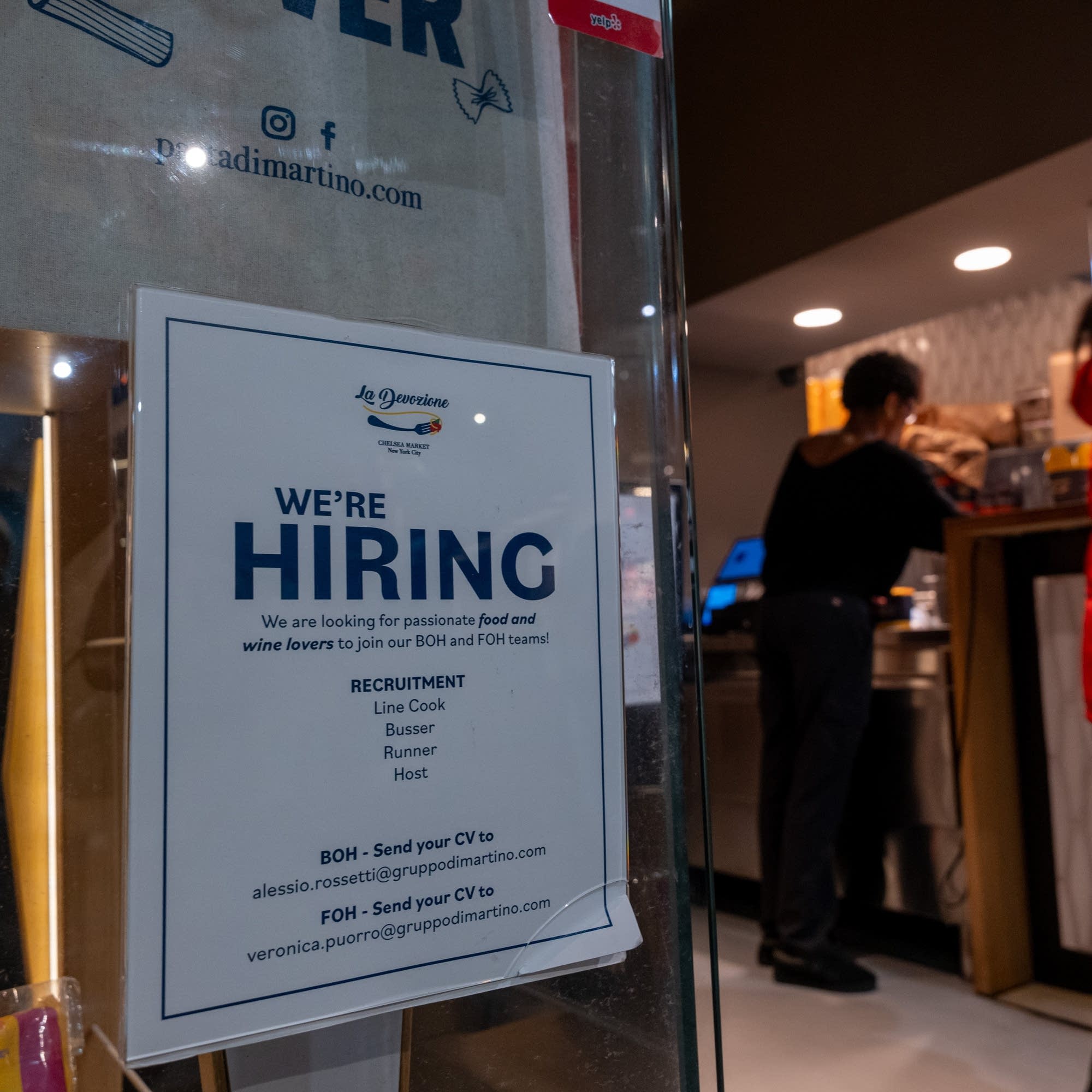
First-time jobless claims have been pretty stable since the start of March — unlike many other parts of the economy. President Donald Trump’s tariffs and immigration restrictions may not be ideal for businesses, but they could give companies a reason to hold on to workers. Also in this episode: The European Central Bank cuts its key interest rate, get that EV tax credit while you can, and a martial arts master stays in Altadena, California, after losing her studio in the wildfires.
Press play and read along
Transcript
Speaker 1 This marketplace podcast is supported by Wealth Enhancement, who understand that dreams don't happen by chance. It takes a plan.
Speaker 1 They're ready to build your wealth blueprint for retirement, investing, taxes, and everything else your financial life brings.
Speaker 1 It reveals gaps and highlights opportunities you may have missed at no cost to you. Find out more at wealthenhancement.com slash blueprint.
Speaker 3 Wix is the website builder that just keeps on giving. It's giving.
Speaker 4 I just built my whole site in under an hour.
Speaker 3 It's giving.
Speaker 1 I actually made that. Whoa.
Speaker 5 It's giving.
Speaker 6 Our sales are through the roof.
Speaker 3 So whether you need help expressing yourself or just need something to make your life easier, Wix has you covered. Try it out at Wix.com.
Speaker 8 On the program today, the politics of this economy, but not in a good way.
Speaker 8 From American public media, this is Marketplace.
Speaker 8
In Los Angeles, I'm Kai Risdahl. It is Thursday, today, the 17th of April.
Good as always to have you along, everybody.
Speaker 8 It has been a long while since we led this program with a social media post by the President of the United States, but all good things must come to an end, I suppose.
Speaker 8 In the wee small hours of this morning, President Trump took to his truth social account, and while complaining about Fed Chair Jay Powell and how the central bank is not cutting interest rates fast enough to suit the president, he said, and here I quote, Powell's termination cannot come fast enough.
Speaker 8 So the president was asked about that today in the Oval Office.
Speaker 9 He says he won't leave in it, even if you ask him to.
Speaker 10
Oh, he'll leave. If I ask him to, he'll be out of there.
But
Speaker 10 I don't think he's
Speaker 10 I don't think he's doing the job. He's too late, always too late, a little slow, and I'm not happy with him.
Speaker 10 I let him know it, and
Speaker 10 if I want him out, he'll be out of there real fast, believe me.
Speaker 8 That, of course, obliged us to go to our archives, Chair Powell's press conference, two days after the November election.
Speaker 12 Hi, Victoria Aguino with Politico.
Speaker 14 Some of the president's elects advisors have suggested that you should resign.
Speaker 13 If he asked you to leave, would you go?
Speaker 15 No.
Speaker 13 Can you follow up on his ⁇ do you think that legally you're not required to leave?
Speaker 15 No.
Speaker 8 I'm just going to stop here for a second to say this.
Speaker 8 There is litigation pending at the Supreme Court over exactly what powers a president does have to fire the heads of independent agencies like the Fed.
Speaker 8 Without adding any hyperbole, though, were Powell to be fired, it would be catastrophic.
Speaker 8 While Chair Powell's comments yesterday about having to sit tight on interest rate thanks to all the tariff-induced uncertainty were the underlying reason for President Trump's dyspepsia this morning, the proximate cause actually came from the European Central Bank, which today, as expected, did cut its benchmark interest rate.
Speaker 8 It's the ECB's seventh cut in the past 12 months, with perhaps more to come. Marketplace's Mitchell Hartman explains the central bank divergences.
Speaker 6 First thing to know is that the Eurozone economy was already pretty weak before President Donald Trump started imposing tariffs and threatening more, throwing global trade and financial markets into turmoil.
Speaker 6 The U.S., by contrast, headed into the year strong, says Gary Schlossberg at the Wells Fargo Investment Institute.
Speaker 11 We're coming off growth of close to 2.5%
Speaker 11 in the final quarter of 2024.
Speaker 11 Europe was running a growth rate about a third of that. that.
Speaker 16 And then, says Jacob Kierkegaard at the Peterson Institute for International Economics, Europe faced the negative economic shock from the uncertainty from the Trump tariffs, potentially reduced export opportunity.
Speaker 6 Bottom line, says Josh Lipsky at the Atlantic Council.
Speaker 18 These new headwinds in their economy could impact growth. It makes them feel an urgency to cut interest rates.
Speaker 6 Now, Europe does have other tools aside from lowering interest rates to strengthen its economy. Germany has launched a wave of fiscal stimulus, boosting defense and infrastructure spending.
Speaker 6 And, says Jacob Kierkegaard, the EU is moving to reduce its dependence on exports to the huge U.S. market.
Speaker 6 But all this takes time, and in the meantime, it's easy for the European Central Bank to cut interest rates now because it's gotten gotten inflation well under control and lower rates aren't likely to reverse that.
Speaker 6 The situation's totally different for the Fed, says Josh Lipsky.
Speaker 17 Because tariffs can lead to higher prices, this puts the Fed in a very difficult position, unlike its counterparts around the world.
Speaker 6 While other central banks can keep lowering interest rates to stimulate growth, Lipsky says the Fed is stuck. It's very reluctant to cut rates, while there's a risk that tariffs will push U.S.
Speaker 6 inflation higher again. I'm Mitchell Hartman for for Marketplace.
Speaker 8
On Wall Street, today the blue chips took a tumble. Everything else was kind of meh.
We'll have the details when we do the numbers.
Speaker 8
215,000 people filed for unemployment insurance for the first time last week. The Department of Labor tells us that number was down just a bit from a week earlier.
Key phrase there, just a bit.
Speaker 8 It was 9,000 fewer claims, to be precise. But, and however, while things economy-wise are increasingly uncertain, the labor market is still pretty much steady as she goes.
Speaker 8 Daniel Ackerman explains what's going on there.
Speaker 4 First-time jobless claims have held pretty stable since the start of March.
Speaker 19 And that is perhaps surprising when we think about what's going on with policymaking. There's a lot of chaos.
Speaker 4 Heidi Schearholtz is president of the Economic Policy Institute.
Speaker 4 She says chaos is not ideal for businesses, but it could be why some are clinging to their workers right now, says Tuan Nguyen, an economist at RSM.
Speaker 20 Businesses have been continuing to front-run tariffs.
Speaker 4 Firms are rushing imports before tariffs could go up. Plus, Nguyen says it's risky to let good workers go.
Speaker 20 Labor supply has been and will remain tight for years to come due to demographic shifts and restrictive immigration policy.
Speaker 4 Companies could shed workers if consumer sentiment or the stock market continued to fall, but Betsy Stevenson, economist at the University of Michigan, says Layuffs are not the first thing that happens when a company starts to get anxious.
Speaker 4 She says first, firms would stop hiring. Job openings have ticked down to start the year, but layoffs can be a lagging indicator.
Speaker 19 And so when we start to see unemployment insurance claims rise, we're already in a recession.
Speaker 4 She says, big picture, we're not there yet. But Andy Challenger, VP at Challenger Gray in Christmas, points out.
Speaker 21 We've seen significant job cut announcements in the private sector, really significant job cut announcements in government.
Speaker 4 Now, those workers don't get kicked off the payroll right away.
Speaker 21 Those announcements often take a little while to take effect.
Speaker 4 So, Challenger expects to see unemployment claims rise in the weeks to come. I'm Daniel Ackerman for Marketplace.
Speaker 8 Sometimes, when you go out to do an interview and you think it's going to go one way, it winds up going totally another.
Speaker 8 You know what's funny is
Speaker 8 I keep doing that thing I do, which is try to bring this back to the business of it and the economics of it and the marketplace of it, and you're not having it because that's not what it's about for you.
Speaker 2 No, it's not.
Speaker 22 I mean, business is business. Trust me,
Speaker 22 I need to work, I need to support myself, but that isn't, that's not what it is.
Speaker 22 Money is not
Speaker 22 what this is about.
Speaker 22 It's about human beings rising to their best self,
Speaker 22 transforming themselves on a journey to get to be the best that they can possibly be. That's what this is about.
Speaker 8 Shalene Hearing is the owner and head instructor of Two Dragons Martial Arts.
Speaker 8 She was the last interview for the series that we're doing on businesses in Altadena and how they're thinking about rebuilding after the Eaton Fire.
Speaker 8 And about eight minutes into talking to her, I got to that question, We Just Played You.
Speaker 8 Because what's become clear is that it's not only about how long it's going to take or how much it's going to cost.
Speaker 8 What's driving these business owners to rebuild is their commitment to this community.
Speaker 22 I have been
Speaker 22 studying martial arts for over 50 years.
Speaker 8 Really? Yeah. What got you into it?
Speaker 22 I had
Speaker 22 a need to want to defend myself.
Speaker 22 So that need led me to martial arts.
Speaker 8 And you turned it into a business?
Speaker 22 I actually didn't turn it into a business. My late husband did.
Speaker 1 Yeah.
Speaker 22 He turned it into the business. And
Speaker 22 I was
Speaker 22 the happy student.
Speaker 22 Couldn't be satisfied. Just needed more and more.
Speaker 2 So,
Speaker 22 yeah, it became a way of life.
Speaker 8 Shalene's been here for a while. Her family family moved to Altadena in the 1950s.
Speaker 8 And just like Joey Galloway, who owns those two buildings in Mariposa Junction, and Jimmy Orlandini, who owns the hardware store that was in the building that Joey owns that burned, Shalene is part of a multi-generational family business.
Speaker 8
She started Two Dragons with her late husband Steve. Now, her two adult children are involved as well.
This building right over here? Uh-huh.
Speaker 8 It's
Speaker 8 not gone, but it's certainly damaged. Yeah.
Speaker 22 That building
Speaker 22 served me well.
Speaker 22 That building, I spent 17 years of my 30 years in business. And at first, I was hurting and sad and could not believe that 30 years was gone.
Speaker 22 And then I became
Speaker 22 very
Speaker 22 clear. by the outpouring of people that called me and told me they were crying with me as we watched that building burn on TV.
Speaker 8
Tell me about those people. Tell me about your students.
Yeah. Tell me more.
Speaker 22 Yeah. Those students were the ones who made me understand and realize that that was not a build,
Speaker 22 that's the building. But it was all those people inside, all the spirits, all the energy, all the love, all those years
Speaker 22 were still living.
Speaker 8
Shalene's taught kids who grew up to be the parents of her future students. Before the fires, Two Dragons had around 90 students from toddlers to teens to seniors.
It's been two months since the fire.
Speaker 8 Have you been able to keep on teaching? Or what are you doing?
Speaker 22 You know,
Speaker 22 I'm blessed.
Speaker 22 Immediately, people started calling me asking me, you can come and use my space.
Speaker 8 Shalene was able to start classes again less than a month after the fires, first at a park near the Rose Bowl, then at a friend's studio in Pasadena, now twice a week at a summer campground nearby.
Speaker 8 She's also offering classes on Zoom for students who've been displaced, doing everything she can to keep classes running and give her students at least a sense of normalcy.
Speaker 8 You've been doing this 30 years. Yeah.
Speaker 8 I don't know how old you are, but certainly you,
Speaker 8 he says delicately,
Speaker 8 but you could retire, no?
Speaker 22 Yeah, that's true. I could, But I guess it's a matter of what you consider retire.
Speaker 8 Yeah, well.
Speaker 22
That to me is a perspective, right? For me, retirement, I've done what I feel like is my calling. Yeah.
And I've done this, and I'm blessed. I can do this for the rest of my life.
Speaker 8
You lost this building. which is more than just a building.
You lost your home, too, right? I did.
Speaker 8 What are you doing? Where are you staying?
Speaker 22 I'm in a hotel right now. Sometimes I stay with you.
Speaker 2 It's got to get old.
Speaker 8 It's been two months.
Speaker 2 Oh, Lord.
Speaker 22 It is old.
Speaker 22
It is old. It's old.
But, you know, I'm looking as I'm working.
Speaker 22 I have classes a couple of days a week. I just, you know, you persevere.
Speaker 8 It seems to me that what this is about for you
Speaker 8 isn't the actual running a business for business's sake. It's the running this business for the people in the community, right?
Speaker 2 Yeah.
Speaker 22 It's the people that make it.
Speaker 22 Without the people, it isn't.
Speaker 8 Yeah.
Speaker 22 I have all the generations all together coming and doing things
Speaker 22 for different events and things we do to celebrate each other. They all come here for that.
Speaker 8 Shalene does hope to come back to Altadena one day in a more permanent place, but for now, She's offering what she can, where she can.
Speaker 8 I said when we started this series earlier this week that Altadena's recovery depends on its businesses.
Speaker 8 Rebuilding is going to take literally years, but every single business we talked to, the ones that made it on the air and the ones that didn't, said they do want to come back.
Speaker 8 The reality is, though, that things have changed in this economy since we started recording these interviews a month ago.
Speaker 8 President Trump's tariffs have started to disrupt supply chains, and the cost of lumber and other building materials have gone up. Building back is going to be even more expensive than it was before.
Speaker 8 So here's where we leave things after this first round of interviews. Joey Galloway, the property owner at Mariposa Junction, still waiting to have his lot cleared.
Speaker 8 Jimmy Orlandini at the hardware store is starting up an online ordering system while the store is closed, has not yet found a temporary location though.
Speaker 8 And Craig Sloan, the general manager at Altadena Town and Country Club, is still looking for contractors to remove all that debris.
Speaker 8 We're going to be back talking to those businesses because when the people of Altadena do return, they're going to want something to come back to.
Speaker 8 And the hope is that these three businesses and many more are going to be ready and waiting for them.
Speaker 8 Coming up.
Speaker 23 I might have just ripped it up and thrown it in the trash. It looks like a scam.
Speaker 8 I mean, what else are you going to think when the bank writes to give you money? First, though, let's do the numbers.
Speaker 8 Now, Industrials off 527 points today, about 1.3%,
Speaker 8
39,142 for the blue chips. The NASDAQ down 20 points, about a 10th percentile, 16,286.
The SP 507 points to the good, a 10th, 1%, 5,282.
Speaker 8
A federal judge has ruled that Google is a monopolist when it comes to online advertising. That is the second such ruling against the company.
Parent alphabet subtracted 1.4 tenths percent today.
Speaker 8 Alcoa, which once upon a time was called the Illuminant Company of America, forecasts the tariffs are going to cost it $90 million in the second quarter. Alcoa descended 7%.
Speaker 8
Bond prices went down as well. The yield on the 10-year treasury note thus rose 4.33% on the the 10-year.
You're listening to Marketplace.
Speaker 5 This podcast is supported by Odoo. Some say Odo business management software is like fertilizer for businesses because the simple, efficient software promotes growth.
Speaker 5 Others say Odoo is like a magic beanstalk because it scales with you and is magically affordable.
Speaker 5 And some describe Odo's programs for manufacturing, accounting, and more as building blocks for creating a custom software suite. So Odoo is fertilizer, magic beanstock building blocks for business.
Speaker 5
Odoo, exactly what businesses need. Sign up at Odo.com.
That's ODOO.com.
Speaker 24 You've finally broken loose from work. Three friends, one tea time,
Speaker 14 and then the text.
Speaker 24 Honey, there's water in the basement.
Speaker 24
Not exactly how you pictured your Saturday. That's when you call us, Cincinnati Insurance.
We always answer the call because real protection means showing up, even when things are in the rough.
Speaker 24 Cincinnati Insurance, let us make your bad day better.
Speaker 24 Find an agent at CINFIN.com.
Speaker 25 Here for the Lowe's Early Black Friday deals? You're right on time for some of our biggest savings. We're talking up to 50% off select major appliances.
Speaker 25
Plus, up to an extra 25% off when you bundle select major appliances. Holiday lights going up soon? Select ladders are up to 50% off right now.
Get Black Friday prices without the Black Friday crowds.
Speaker 25
Lowe's, we help. You save.
Valent through 1119. Selection varies by location.
Select locations only. While supplies last.
See Lowe's.com for more details.
Speaker 26 El Servicio es gratis y receividadas un informe con soluciones verificadas por technicos maestros certificados ASE. Si necesitas ayuda or Riley auropars te puede recommendar unaller.
Speaker 26 Pregunta poro Riley Veriscan o y mismo.
Speaker 11 O, o, o'Riley.
Speaker 8
This is Marketplace. I'm Kai Rizdahl.
From literally day one of term two,
Speaker 8 President Trump has been going after electric vehicles.
Speaker 8 He's directed his administration to revoke a waiver that lets California and more than a dozen other states require car companies to sell an increasing number of EVs every year.
Speaker 8 And he's ordered them to reconsider tailpipe emission rules that encourage automakers to build more EVs.
Speaker 8 Those rules are, for now, still standing, as is another program more familiar to consumers, a tax credit of up to $7,500 for certain new EV models and up to $4,000 for used.
Speaker 8 Marketplace's Henriett has more on the state of electric vehicle economics.
Speaker 7 John Witt of Winston-Salem, North Carolina, had been thinking about buying an electric vehicle for months.
Speaker 7 When President Donald Trump was re-elected last November, he sped things up because he really wanted to get that federal tax credit for his new car.
Speaker 7 And given the way Trump derided EVs on the campaign trail, Witt wasn't sure the tax break would stick around.
Speaker 2 I just didn't know what would happen.
Speaker 2 I didn't know
Speaker 2 if they would just tell the IRS, like, hey, anyone request it? Just don't process it. I don't know if they were going to do that.
Speaker 7 So two days before inauguration day, he drove nearly two hours to a dealership to buy a used 2023 Kia EV6.
Speaker 2 They have a guy in the back who does the tax credit, and he came over and said, does this look good to you?
Speaker 6 I said, yep.
Speaker 7 Said, sign here.
Speaker 2 Bada bing, bada boom. The tax credit was included in price.
Speaker 7 $4,000 off. Three months later, he's crazy about the EV he just bought.
Speaker 2 Yeah, I am over the moon. I love telling people about it.
Speaker 7 But it turns out he didn't need to rush to get the credit because it's still available, which is a little bit surprising, but not terribly surprising.
Speaker 7 John Haim is on the board of the Electric Vehicle Association, a volunteer advocacy group that promotes EV adoption.
Speaker 13 The tax credit is
Speaker 6 enshrined in law, and only Congress can change that law.
Speaker 7 Republicans in Congress are pushing to make that change. Senator John Barroso of Wyoming introduced a bill in February that would repeal the tax credit.
Speaker 7 In a press release, Barroso said his constituents, quote, should not foot the bill for expensive electric cars they don't want and can't afford. The bill is in committee.
Speaker 7 Republicans in the House have taken aim at the credits, too, as part of their efforts to extend President Trump's first-term tax cuts.
Speaker 7 But John Hyam of the Electric Vehicle Association is holding out some hope that the credit may survive all that.
Speaker 6 The way the tax credit is structured, it's actually helping,
Speaker 6 I hate to be political, but just helping red districts more than blue districts.
Speaker 7 Here's why. The Biden administration structured the credits to boost domestic manufacturing, says Ingrid Malmgren, Senior Policy Director at Plug-in America, another EV advocacy group.
Speaker 27 These tax credits have very specific criteria that you have to meet in order to qualify for them.
Speaker 7 New EVs and a portion of their batteries need to be assembled in North America. So car makers built more EV assembly lines and battery plants in the U.S., mostly in Republican districts.
Speaker 7 So Maumgren argues members of Congress will have to decide whether they'll roll back the EV tax credit.
Speaker 27 or whether they're going to really represent their constituents and make sure that they have jobs in their district and are working to
Speaker 27 really boost the economy of their district.
Speaker 7 The federal tax credits are not the only financial incentive that's available to would-be EV buyers. Some states offer incentives of their own, and car makers have been offering discounts.
Speaker 7 Jeff Jackson is president of GE Automotive, a chain of 40 dealerships across the western U.S.
Speaker 9 We're not seeing the rapid growth in EV sales that we were before, but even the level of sales we are seeing is supported heavily by those three factors.
Speaker 7 Right now, at his dealerships in EV-friendly Washington state, for example, electric vehicles make up about 16% of sales.
Speaker 7 But as of next year, the state is going to require at least 35% of new car sales to be zero emission.
Speaker 9 And if the federal tax credit goes away, I think 35% is already, you know, effectively an impossibility, but it's just going to make it that much harder.
Speaker 7 Exactly how tough that becomes is up to Congress. I'm Henry App for Marketplace.
Speaker 8 You know how sometimes when you put on an old pair of pants or an old jacket or something and you find like a $20 bill in a pocket, or at least back when we used a lot of cash, that would happen?
Speaker 8 This next story is figuratively the same thing, but involving the pandemic and some questionable behavior by a big Wall Street bank. The Texas Newsroom's Rachel Osher Lindley tells the tale.
Speaker 3
Okay, you may not want to go, but let me take you back to this time five years ago. COVID-19, the country shut down.
Many of us were stuck at home. Uncertainty reigned supreme.
Speaker 3 As a journalist, I was busier than ever.
Speaker 3 But my husband Chase, he's a self-employed machinist, and working on huge metal lathes in his home shop wasn't exactly compatible with keeping our three sons, ages five, five, and eight at the time, entertained, fed,
Speaker 3 fed, and then
Speaker 3 and up to date with online school. Though I did record a lot of absurdist voice memos of us trying.
Speaker 24 Gotcha, pay attention.
Speaker 3 So, Chase put his business on pause to wrangle the kids while I ensured my paycheck kept coming. And like millions of other people, we started worrying about our largest monthly expense, the mortgage.
Speaker 3 At the time, a lot of lenders were talking about forbearance, basically an adjustment that lets borrowers put a pause on payments, but which can extend the life of the loan.
Speaker 23 It's so long ago, it's hard to remember.
Speaker 3 Chase and I both have a vague recollection of Wells Fargo sending us something.
Speaker 23 But then we looked into it for not very long at all and realized, oh, whoa, whoa, no, we should not do that. Taking a month off of our mortgage felt more like a trap than something that we should do.
Speaker 3
So we didn't do it. We scrimped, we saved.
I got really into grocery store couponing.
Speaker 22 Savings three dollars.
Speaker 3 We made it work. And we never thought about mortgage forbearance again until a few weeks ago when we got a letter from something called Wells Faro Forbearance Litigation Settlement Administrator.
Speaker 3 What did you think when you saw this envelope?
Speaker 23 I think I'm glad that you got it because I might have just ripped it up and thrown it in the trash. It looks like a scam.
Speaker 3 And then inside this envelope is a very non-scammy looking check.
Speaker 23 Paid to the order of us for $492.84.
Speaker 2 That's a lot of money. It was great.
Speaker 3 Yeah, it was great. But how did this happen? We made our payments every month.
Speaker 12 Well, usually you get something by an email or in the mail.
Speaker 3 This is Julie Forrester Rogers, a law professor at Southern Methodist University's Dedmond School of Law.
Speaker 3 It turns out we were part of what ultimately became a $185 million class action lawsuit against Wells Fargo.
Speaker 12 So I think it would be surprising to get a check without knowing about it. But it seems to me that they probably have correct contact information for you since you did get the check.
Speaker 12 So my guess is that you did get some sort of notice. Huh.
Speaker 3
To be clear, I have three kids and I get a lot of junk mail from Wells Fargo. So I gave myself a pass on this.
All right, back to the lawsuit.
Speaker 12 The allegations of the lawsuit are that Wells Fargo put some of their borrowers into forbearance without their permission, without them even asking or requesting a forbearance.
Speaker 3 Even just clicking a button saying you wanted more information could have landed borrowers in automatic forbearance. That's what Julie says probably happened to us.
Speaker 3 Now, here's the thing about forbearance. Even if you don't realize it and are still making your monthly payments, being in forbearance can negatively affect your credit.
Speaker 3 And that's how the class action lawsuit got rolling. I didn't notice, but other borrowers did.
Speaker 12 So they may have applied for a credit card and were denied. They may have applied for a home equity loan and were denied.
Speaker 12 They may have wanted to refinance their loan at a lower interest rate, and they were denied because of forbearance.
Speaker 3 While Wells Fargo settled the case last fall, they did so without admitting any wrongdoing. According to court documents, more than 300,000 borrowers were affected.
Speaker 3 So please, if you're a Wells Fargo mortgage customer, consider this a public service announcement. Sort through that giant stack of mail on your coffee table and open it.
Speaker 3 In Dallas, I'm Rachel Oger-Lindley for Marketplace.
Speaker 8
Once again, no time for a final today. That's on me.
Had to get that Trump and pal tape in there.
Speaker 8 John Buckley, John Gordon, Noia Carr, Diantha Parker, Amanda Petra, and Stephanie Seek are the marketplace editing staff. Amirba Bawe is the managing editor, and I'm Kai Rizno.
Speaker 8 We will see you tomorrow, everybody.
Speaker 8 This is APM.
Speaker 24 You've finally broken loose from work. Three friends, one tea time,
Speaker 24 and then the text. Honey, there's water in the basement.
Speaker 24
Not exactly how you pictured your Saturday. That's when you call us, Cincinnati Insurance.
We always answer the call because real protection means showing up, even when things are in the rough.
Speaker 24 Cincinnati Insurance, let us make your bad day better.
Speaker 24 Find an agent at cinfin.com.