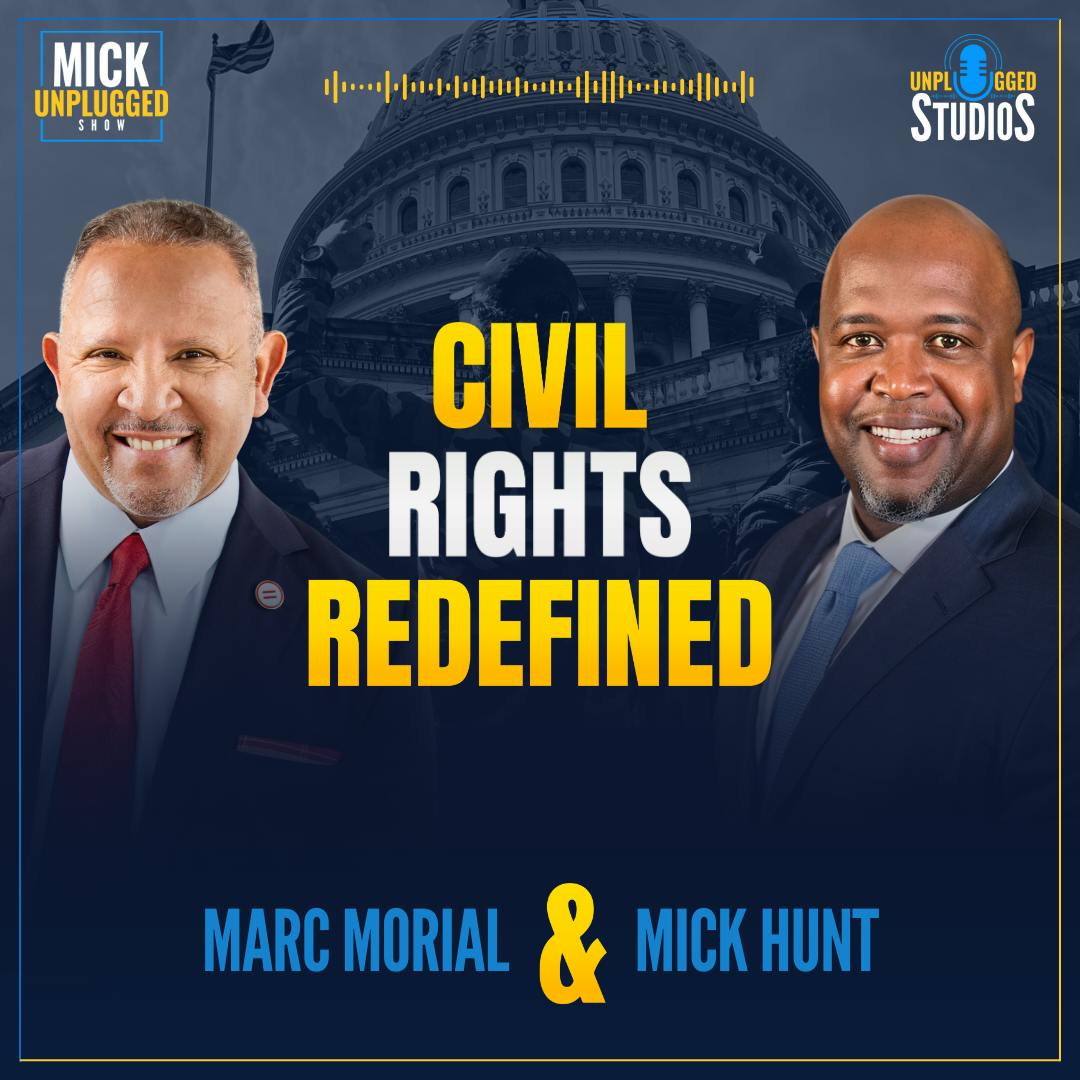
Empowerment Through Action: Marc Morial's Strategies for Community Transformation
The foundation of Morial's remarkable career began in childhood, watching his parents' civil rights work from the sidelines. What began as "childcare" – tagging along to NAACP meetings and voter registration drives – became the classroom where he absorbed leadership from community giants. This early immersion shaped his lifelong commitment to economic justice and equality of opportunity.
As New Orleans mayor, Morial tackled seemingly insurmountable challenges with innovative approaches. Faced with record crime rates, he refused to choose between enforcement and prevention, instead rebuilding the police department while simultaneously creating unprecedented youth programming – summer camps, job programs, and initiatives specifically for girls who had been overlooked by previous administrations. His "Gumbo Coalition" administration championed inclusivity, featuring record numbers of women and the first Asian American and LGBTQ cabinet members in city history.
When Morial arrived at the National Urban League, he found an organization proud of its history but "operating in the past tense." Through visionary leadership, he's expanded the organization fivefold, broadening its portfolio to include workforce development, housing assistance, entrepreneurship programs, and strengthened advocacy work – all while building powerful coalitions with other civil rights organizations.
Today, Morial warns of an unprecedented assault on civil rights progress and urges listeners not to succumb to complacency or despair. "In the short run, you hear noise but don't feel the damage. In the long run, the noise will subside, but the damage will be done," he cautions. His call to action is clear: defend fundamental American principles by getting involved, using your voice, and mentoring the next generation.
Ready to be part of the solution? Visit NUL.org to join advocacy efforts or find a local affiliate in your community.
Connect & Discover Marc:
Instagram: https://www.instagram.com/marcmorial/?hl=en
X: https://x.com/marcmorial?lang=en
LinkedIn: https://www.linkedin.com/in/marc-morial-59b05130/
Facebook: https://www.facebook.com/marcmorial/
FOLLOW MICK ON:Instagram: https://www.instagram.com/mickunplugged/Facebook: https://www.facebook.com/mickunplugged/YouTube: https://www.youtube.com/@MickUnpluggedPodcastLinkedIn: https://www.linkedin.com/in/mickhunt/Website:https://www.mickhuntofficial.com
Apple: https://podcasts.apple.com/us/podcast/mick-unplugged/
Press play and read along
Transcript
Speaker 1
You know, as leaders, we talk about performance all the time. Business performance, mindset, focus.
But let's be real, performance shows up in every part of life.
Speaker 1
Half of young people today face psychosexual challenges at some point. Things like performance anxiety, low desire, or just feeling off.
It's normal. It's human.
We just don't talk about it enough.
Speaker 1 And that's where Mojo comes in. Mojo is the world's first AI sex and relationship therapist built from over 50 years of sexology research.
Speaker 1 It gives you short, guided sessions that help you reduce anxiety, rebuild confidence, and improve communication, all privately on your own time.
Speaker 1 I tried it myself, and what I love is how practical it is. It's judgment-free, it's easy to use, and it's actually doable.
Speaker 1 No pressure, no awkwardness, just real tools that help you understand yourself and your relationships better. This isn't about quick fixes.
Speaker 1 It's about learning to show up with confidence and calm in moments that matter the most. Head to mojo.so forward slash MCU
Speaker 1
for your seven-day free trial and start feeling the difference. That's mojo.so slash MCUnplugged because great leaders don't avoid tough conversations.
They grow through them.
Speaker 1 Mojo offers educational psychological support and is not a substitute for medical care.
Speaker 1 This next one's for all you CarMax shoppers who just want to buy a car your way.
Speaker 2 Want to check some cars out in person?
Speaker 1 Uh-huh.
Speaker 1 Want to look some more from your house? Okay.
Speaker 1
Want to pretend you know about engines? Nah, I'll just chat with CarMax online instead. Wanna get pre-qualified from your couch.
Woo! Want to get that car. ASAP!
Speaker 1 You wanna do it your way.
Speaker 1 Want to drive?
Speaker 3 CarMax.
Speaker 4 Be part of the work of community.
Speaker 4
Yeah, things are tough out there. I don't have any time.
You got time to send some tweets. You got time to send some IG posts.
You got some time to put some messages out there.
Speaker 4 Follow us, retweet, repost, re-IG it.
Speaker 5 Welcome to Mick Unplugged, the number one podcast for self-improvement, leadership, and relentless growth.
Speaker 5 No fluff, no filters, just hard-hitting truths, unstoppable strategies, and the mindset shifts that separate the best from the rest. Ready to break limits? Let's go.
Speaker 1 Ladies and gentlemen, welcome back to another powerful episode of McUnplugged, and today we're going to get personal and emotional.
Speaker 1 My guest today led New Orleans through rebirth and now leads a national charge for equity, justice, and economic power.
Speaker 1 He's a civil rights titan, an author, and CEO, and his impact echoes from city halls to Capitol Hill.
Speaker 1
He's someone who's had a profound mark on my life, and we're going to talk about that a little bit today. He's commanding.
He's the visionary. He is unyielding.
He is Mr. Mark Moriel.
Speaker 1 Mark, how are you doing today, sir?
Speaker 4
Hey, I'm good to be with you, Mick. Thank you very much.
Thanks for the generosity of the introduction, too.
Speaker 1 Man, I told you offline, I am the honored one. Man, the impact that you have had, not just on me,
Speaker 1 I'm going to say millions of others, it is
Speaker 1 second to none.
Speaker 1 The man that you are, the leader that you are, but most importantly, the heart that you have and the inspiration that you showcase.
Speaker 1 Brother, you mean the world to me, Mark.
Speaker 4 Oh man, thank you for saying that. And I
Speaker 4 look, I stand on the shoulders of others. I always
Speaker 4 want people to know that that animates my spirit. And
Speaker 4 it has ruled my life,
Speaker 4 which is
Speaker 4 observation of others
Speaker 4 who've played leadership roles
Speaker 4 in my community that I grew up with, in my family,
Speaker 4 but over also on the national stage.
Speaker 4 They've always been inspirations to me, and
Speaker 4 I just
Speaker 4 appreciate the chance to continue to serve and put people first. You know, in this work,
Speaker 4
you have to be a public servant. You got to love people.
You got to love them with all of their,
Speaker 4 you know, good, bad, and ugly.
Speaker 4 Because we all have good, bad, and ugly.
Speaker 4 So I'm always, you know, honored
Speaker 4 and stand on these shoulders of others. You know, I was a young guy
Speaker 4 and because of my father and mother's involvement in civil rights and politics, I got a chance to, I kind of tagged along, saw things that, you know, child care was you come with me to the NAACP meeting.
Speaker 4 You come with me to the voter registration drive. You come with me
Speaker 6 while I run around town.
Speaker 4
You know, that was child care. You got to go.
We ain't got no babysitter. You got to come with me.
And, you know, in those times,
Speaker 4
sometimes you were. aggravated.
Man, why am I? I want to be home with my friends. I want to be on the block.
I want to be playing football. I want to be hanging out.
Speaker 4 You know, six, seven, eight, nine, ten, ten years old.
Speaker 4 And you don't realize how you were absorbing through observation
Speaker 4 the work of giants, legends, legendary leaders in New Orleans, legendary community leaders, and ministers, and labor leaders and politicians that I just got an opportunity to observe as a very, very young
Speaker 4 person.
Speaker 4 And I know now what I didn't know then, and that it was being poured into
Speaker 4 my being.
Speaker 1
That's amazing. That's amazing, Mark.
And you know, one of the things that I pride myself in is having a because that thing that's deeper than your why, right?
Speaker 1 Like, like people probably understand my kids are my why, my wife is my why, but there's a reason that they're my why. And I call that your because.
Speaker 1 So, if I were to ask you, Mark, man, like, what's your because? What's your purpose? Why do you keep doing what you do?
Speaker 4 I think it's about economic justice.
Speaker 4 It's about
Speaker 4 equality of opportunity. It is about people having a life of dignity,
Speaker 4 prosperity,
Speaker 4
and the ability to use their God-given talent. You know, that is what motivates me.
That's been my life's work.
Speaker 4 Whether government has been a vehicle to accomplish it, whether civil rights has been a vehicle to accomplish it, whether my private law practice, where I represented a wide range of people and institutions, is a vehicle to accomplish it.
Speaker 4 That's what really, really energizes and animates me. And I've got
Speaker 4 a special affinity for the youth, a special affinity for
Speaker 4 young people, because
Speaker 4 my career politically particularly was I was always the youngest guy in the room.
Speaker 4
I had an early start. I got elected when I was young.
I was the youngest.
Speaker 4 Cleo Fields and I served in the state Senate together back in the 90s, early, mid-90s, and he and I were the youngest guys in the U.S. Senate.
Speaker 4 I mean, rather than in the Louisiana State Senate. I got elected mayor at 35 as the youngest guy in the caucus, the conference of mayors.
Speaker 4 So being a young guy in the room,
Speaker 4 sometimes with a chip on my shoulder fighting for some respect,
Speaker 4 you know, was uh something that gives me uh this this real real idea that you know you got to nurture young people you got to give them an opportunity you got to let them be who they are yes sir yes sir you know one of the
Speaker 1 one of the things that i admire about you and this is how you touched me at a young age i had just graduated college you had just become the
Speaker 1
CEO of the Urban League, the National Urban League. And I saw you at a press conference one time, man.
Like I was, I I was, I was visiting New Orleans and you were having a press conference.
Speaker 1 And I didn't know what a press conference was at 22 years old, right? Like, I watched and I stopped.
Speaker 1 And
Speaker 1 you stood to me at the intersection of
Speaker 1 politics, activism,
Speaker 1
and business. And you're one of the few people that really have done that.
Like a lot of people don't understand. Like there are people that are career politicians.
Speaker 1 There are people that are career activists there are people that are career business leaders you stood at the intersection of all three and it was at that moment that i said there's a bigger purpose for me because i saw somebody that looked like me that was standing in a room talking so eloquently but talking with purpose and talking with clarity and so much
Speaker 1 inspiration that a 23 year old me stood there and said
Speaker 4 there's something more i can do with my life how do you that's uh that's just touching mick because you know sometimes you never know if people are watching
Speaker 4 you never know if people are listening you never know if uh if you're having an impact i mean you know i
Speaker 6 uh
Speaker 4 was able to you know i was a young entrepreneur uh first first venture was 15 years old it was a summer janitorial service that three friends we got together we cut grass we clean cars we cleaned windows we waxed floors in houses in the neighborhood i grew up in and then later
Speaker 4 another friend of mine, we actually incorporated a company,
Speaker 4 and we were party and special event planners, right? At 18, 19, 20, 21 years of age,
Speaker 4
we were event planners. You know, we would rent out clubs.
We'd cut a deal with the owner. We wouldn't rent.
We'd say, look, here's how this works. We'll take a slow night.
What's your slow night?
Speaker 4 Wednesday's my slow night.
Speaker 4
You take the bar. We're going to put a $5 charge on the door.
That's what it costs in those days. And we're going to promote this all over town.
And we're going to have a thousand people.
Speaker 4 And we're going to keep the door, and you keep the bar.
Speaker 4 And that was our business model. And we would
Speaker 4 put flyers and we'd go to every other club, every other party,
Speaker 4 college campuses, and pass these flyers out.
Speaker 4 And
Speaker 4 it was a venture. And a third venture I had was
Speaker 4 got in the cap and t-shirt business
Speaker 4 and won two customers.
Speaker 4
The New Orleans World's Fair was a customer, and the New Orleans Breakers U.S. Football League team.
They had a USFL team in New Orleans. They were a customer.
Speaker 4 So I had these
Speaker 4
entrepreneurial activities. And while I was doing this, I was in college or in law school.
So I was doing this while I was doing something else.
Speaker 4 And,
Speaker 4 you know, truly, business formation and entrepreneurship is part of civil rights.
Speaker 4 Because what it is, it's about building economic independence, income, and wealth.
Speaker 4 And, you know, our
Speaker 4 ancestors, forefathers, foremothers who lived from the end of slavery until the civil rights generation
Speaker 4
were incredible entrepreneurs and pioneers. They built businesses.
They built funeral homes, they built insurance companies, they built
Speaker 4 construction businesses. You know, I remember in my
Speaker 4 New Orleans when I grew up, black people could not, they wouldn't sell houses to black people.
Speaker 4 So, what black people would do would, and the working class and middle-class black people would buy a lot
Speaker 4 and get a black contract and build a house.
Speaker 4 They would build the type of house they couldn't buy.
Speaker 1 Right. Right.
Speaker 4
Get a lot, built a house, and there were black contractors, Mr. Barnes, Mr.
Gaino. I mean, these guys were incredible, right? Because they
Speaker 4 were great builders and they built with high quality. And they used all black artesians and craftspersons.
Speaker 4 You know, they used black carpenters and black drywall folks and black bricklayers and black concrete people and black guy with the pile driving company. You know,
Speaker 4 we had
Speaker 4 a true, you know, black economy. It was, you know,
Speaker 4 it was the economy where people were building independence,
Speaker 4 you know, and lived independent.
Speaker 4 We had that. I saw a census from New Orleans 1940 that there were 40 black grocery stores in New Orleans in 1940.
Speaker 1 You know, every morning before I walk into a meeting, before I hit record on the podcast, before I lead a team, I start with one scoop, AG1, because leadership starts with energy, clarity, and consistency.
Speaker 1 And that's exactly what AG1 gives me, a simple, foundational habit that keeps me one scoop ahead of the chaos. It's not another supplement sitting on the shelf.
Speaker 1 It's a micro habit that sets the tone for my day.
Speaker 1 Inside that one scoop, superfoods, B vitamins, antioxidants, probiotics, and functional mushrooms that support your energy, focus, and overall wellness, especially in seasons like this, travel, long days, and short nights.
Speaker 1
AG1 keeps me grounded. I don't chase health anymore.
I lead it. If you've been looking for something to help you stay consistent, stay fueled, and stay ready, AG1 is that move.
I use it.
Speaker 1 You should too. Head to drinkag1.com forward slash MC to get a free welcome kit with an AG1 flavor sampler and a bottle of vitamin D3 plus K2 when you first subscribe.
Speaker 1 That's drinkag1.com forward slash Mick, because great leaders don't just prepare for the day, they prepare their body for it. Have you ever felt like the banking system is stacked against you?
Speaker 1 I remember overdraft fees hitting me at the worst time and feeling like I was always playing catch up with my money.
Speaker 4 That's why I love QIIME.
Speaker 1
QIIME understands that every dollar counts. When you set up direct deposit, you get access to features that actually help you get ahead.
Getting paid up to to two days early.
Speaker 1 Fee-free overdraft coverage up to $200, and no monthly maintenance fees. CHIME has already spotted its members over $30 billion.
Speaker 1 That is real progress. Plus, with over 47,000 fee-free ATMs nationwide, more than the top three national banks combined, you can access your money when you need it without worrying about fees.
Speaker 1
I use QIIME, and you should too. Work on your financial goals through QIIME today.
Open an account in two minutes at chime.com/slash mick. That's chime.com/slash mick.
Speaker 1 Chime feels like progress.
Speaker 3 Chime is a financial technology company, not a bank.
Speaker 3 Banking services and debit card provided by the Bankor Bank NA or Stripe Bank NA, members of FDIC, spot me eligibility requirements and overdraft limits apply.
Speaker 3
Timing depends on submission payment file. These apply at out of network ATMs, bank ranking, and number of ATMs, according to U.S.
News and World Report 2023. Chime checking account required.
Speaker 4 That there were like 10 black newspapers in 1940.
Speaker 4 Because the account, you know,
Speaker 4 white New Orleans,
Speaker 4 you couldn't shop in white New Orleans generally.
Speaker 4 And so our folks, not only in New Orleans, but in Memphis and Birmingham and Montgomery and Atlanta and
Speaker 4 I'm sure in Greenville and Columbia and Charlotte and Raleigh and Durham, Durham being one of the capitals of black capitalism, I mean, built communities and built businesses and built sustainability.
Speaker 4 I mean, it was
Speaker 4 something to behold,
Speaker 4 you know, when we think about it. And then when civil rights came, we became much more mainstream.
Speaker 4 It was about the job in government or the job in the private sector, the job of the company that we couldn't get, that our parents couldn't get.
Speaker 4 In a place like New Orleans,
Speaker 4 before 1965, 66, 67, a black person could not even be a garbage man.
Speaker 4 Right? A black person could not drive a bus.
Speaker 4 A black person's only job in government was as a janitor, unless you were in the all-black school where you were teachers and administrators and coaches and principals.
Speaker 4 And so it's, you know, I reflect on that because I think you can't effectively navigate the future unless you have some sensibility of the past. And all of the work that helped generations of people
Speaker 4 get over it, move past it,
Speaker 4 and the struggles and the battles that
Speaker 4 they waged.
Speaker 1 Wholeheartedly, wholeheartedly.
Speaker 1 And I'm going to talk about some of your accomplishments now because I know you're very humble, right?
Speaker 1 But I think sometimes you need to hear about the goodness of things that you did, man. Like when you were
Speaker 1 the mayor of New Orleans, lowest crime rate that they had ever had, right? You brought economic growth back to the city. You cleaned up
Speaker 1 the perception of what New Orleans was on a national level. Like
Speaker 1 you did those things.
Speaker 1 And I don't think people understand the brevity of that because it's not like you can just go in there and snap your fingers in a house.
Speaker 4 Man, it was hard work.
Speaker 1 Yes.
Speaker 4 We created a bit of a movement.
Speaker 4
And it was a movement to rebuild New Orleans. Yes.
I mean, and I felt like we had to create a movement atmosphere. Yeah.
You know,
Speaker 4 a movement atmosphere to get people active and involved. And we tackled the, you know, the violence problem is what compelled me to run for office.
Speaker 4 We were having, you know, we had 450 murders, something of that sort. Yeah.
Speaker 4
1993, 1994. We had a corrupt and ineffective police department.
And all I drove, driving past some playgrounds,
Speaker 4 broken bottles, broken basketball goals. I said, this is not
Speaker 4
going to sustain it. This is not how it should be.
And it really, in almost a fit of
Speaker 4 just passion, I said, I'm going to do something about all of this.
Speaker 4
And so I embraced a strategy to deal with violence that was multifaceted. You know, in those days, people would get in these long debates.
Oh, you know, we need more police.
Speaker 4
No, we need more social programs. We need more this.
I said, you know, we're going to have more of all,
Speaker 4 right? But
Speaker 4
we're going to fix this police department. And ultimately, we're going to need some more policemen.
But we're going to have a different quality of officer.
Speaker 4 We're going to have a different set of standards.
Speaker 4 We're not going to have this underperforming, lackadaisical system.
Speaker 4 And then I said, we're gonna invest in youth so that first summer I was the first first summer I took office in May put together 40 summer camps
Speaker 4 put together
Speaker 4 3,000 summer jobs for youth
Speaker 4 and I told every agency in the government you all are going to contribute to this summer jobs program Nobody can have their own little program.
Speaker 4 And I'm going to have a lottery to pick the participants. I got no politics in this.
Speaker 4 And I had a big lottery, and I got some of the Saints football players to come out and pick the numbers out of the hat. So I wanted to change the system
Speaker 4
in terms of how you did, how you got involved. You don't have to know somebody.
Yeah. Right?
Speaker 4
You basically, you know, this is this is, and I divided up the slots by council manic districts. We had five.
But it set the template for investing in youth. We invested in midnight basketball.
Speaker 4
We invested in starlight basketball, which was for girls. We learned when we brought all the young people together that the recreation department did not have any programs for girls.
Nothing really.
Speaker 4 So we hired a women's athletic director and created a whole set of programming for girls.
Speaker 4 You know, we were just, you know, I was the kind of person, kind of, you know, if we talked and said, look, give me some ideas. And if people came up with a good idea, I'm like, let's go do it.
Speaker 4
You know, we're not going to get caught up in the paralysis of study. We're going to try to do it.
If it doesn't work,
Speaker 4 we'll chuck it, we'll put it on the side, and we'll go do something else. And so we had all of this, you know, youth programming.
Speaker 4 And it was contagious because as the city did it, then churches and faith-based organizations decided to create their own camps,
Speaker 4
their own youth programs. I mean, so we had this whole almost revolution in youth programming in New Orleans Orleans in those days.
I also did something that you know it was dramatic.
Speaker 4 I put a curfew in place and I'm a civil rights civil libertarian person but I said too many of these kids are getting killed at night. They're out.
Speaker 6 Look, we're going to help the parents. Yeah.
Speaker 4
You have to be in. Now if you're going to work you got you're an exception.
You're going to school activity. But, you know, New Orleans also has an attractive nightlife.
Speaker 4 You know, we got a French quarter.
Speaker 4
we got Frenchman Street. We got all kinds of.
So, you know, people like to be out.
Speaker 4 But we had to deal with the fact that we had too many youth getting hurt.
Speaker 4 And we did the curfew in a very different way. We did not take the young people
Speaker 4 we picked up off the street to jail.
Speaker 4
We brought them to a community center. We called it the curfew center.
And we called their parents.
Speaker 4 Come pick up your son. Come pick up your daughter.
Speaker 4 No questions asked.
Speaker 4 Come pick them up.
Speaker 4
And it had a dramatic impact. And so, you know, we were ideating and creating all these initiatives and these programs.
And then trying to do things differently, right?
Speaker 4
We were trying to do, so we had to clean up policing. We had to put police substations in public housing.
We put police officers on bikes. We put them on foot.
Speaker 4 The chief I had, Richard Pennington, was an incredible chief. He said, I'm going to find some guys who grew up in the Desire Public Housing Development, and I'm going to put on patrol there.
Speaker 4 He says, you can't put guys,
Speaker 4
officers, men and women, in these neighborhoods, and they're all, none of them have lived in these neighborhoods. Yes, sir.
You got to pick some folks, and they're going to be known.
Speaker 4
and they're going to be comfortable and they're going to understand the rhythm of the place. So they don't go in there like they're a bunch of outsiders.
Police officers are not the military.
Speaker 4 You know, they're there to protect and to serve.
Speaker 1 Yes, sir.
Speaker 4 Military is there to protect and defend. It's a different mission.
Speaker 4 So it was
Speaker 4 tremendously successful. I also was very aggressive about
Speaker 4
black business and minority business and women-owned businesses. having an opportunity doing business with the city and doing business on major projects.
And, you know, I had opposition from people
Speaker 4 in that regard. And
Speaker 4 I knew it was just people protecting their own economic turf.
Speaker 4 You know, and I had to break that up to the extent that I could. We had a very successful run.
Speaker 4 I left office with the highest approval ratings of any mayor in modern New Orleans history. I won two elections, both by significant margins.
Speaker 4 And we just worked every single day. They had
Speaker 4 open door policy at City Hall. And as far as community groups, and
Speaker 4 if somebody wants to come, you know, talk, raise an issue, I'm trying to hear you.
Speaker 4 That doesn't mean I'm going to agree with you.
Speaker 4
So I was at. And I also was, I think I picked this up from my father.
You know,
Speaker 4 being just a straight shooter with people.
Speaker 4
You know, you come down and talk to me. You're going to get an answer.
It might be a yes, might be a no, but you're going to get an answer.
Speaker 4 right that's it i'm not going to play you and delay and oh man i'm trying to think about it i'm gonna say look i don't think i can make that work or you know what your idea is good but it's it's half formed come back with a better idea so we you know we did a lot of uh you know i had an open door policy with the business community many of whom did not support me initially uh i had an open door policy and we we had a tremendous
Speaker 4
relationship with the ministerial and faith leadership in the city. We convened them on a quarterly basis.
We held a luncheon for them on a quarterly basis to talk about the affairs of the city.
Speaker 4 We had a great relationship with labor, right?
Speaker 4 Labor, again, you know, we have periodic, I believe in engaging with people on a periodic basis because, you know, I took the, I got to hear what they're saying.
Speaker 1
You know, people always ask how I juggle everything. the podcast, the book, the events, the coaching, and the team.
Well, here's the truth. I don't do it alone.
Speaker 1 I've got a new teammate, my Notion agent.
Speaker 1 When I'm prepping for an episode of Make Unplugged, it pulls every note, every bio, every question I've ever written, organizes it into my show template, and even suggests new angles based on past interviews.
Speaker 1 It's like having a producer who knows exactly how I think, only faster. Notion brings all your notes, docs, and projects into one connected space that just works.
Speaker 1 It's seamless, flexible, powerful, and actually fun to use. With AI built right in, you spend less time switching between tools and more time creating great work.
Speaker 1 And now, with Notion Agent, your AI doesn't just help with work, it finishes it. I still make the decisions, but now the heavy lifting? Done.
Speaker 1 Try Notion with NotionAgent at Notion.com forward slash MIC. That's all lowercase, Notion.com forward slash MIC to try our new AI teammate NotionAgent Today.
Speaker 1 And when you use our link, you're supporting our show. Notion.com forward slash Mick.
Speaker 2 The holidays are approaching and everyone knows that this time of year, the sooner you can get things done, the better.
Speaker 2 For both shoppers and businesses, the best time to score great deals during the holidays is during that Black Friday, Cyber Monday weekend.
Speaker 2 And if you have your own business, whether you've been around the block a few times or this is your first year going through the holiday sale rush, the most important thing you can have is a platform that can handle everything that's about to be thrown at you.
Speaker 2 This is a crucial time for your business and your customers. And with Shopify, you can be sure that your tools and platform are ready for anything that comes your way.
Speaker 2 Shopify is the commerce platform behind millions of businesses around the world and 10% of all e-commerce in the US, from household names to entrepreneurs who will be participating in their first Black Friday, Cyber Monday, this year.
Speaker 2 With everything else going on, you probably don't have time to spend hours poring over every little detail in your online store.
Speaker 2 That's why Shopify's thousands of templates and tools help you streamline website creation and make sure that your site isn't just aesthetically pleasing, but functional and easy to use.
Speaker 2 Shopify's expedited checkout, ShopPay, saves customer information and reduces hassle.
Speaker 2 And the best part is that it's been proven to boost conversions, meaning you'll see less abandoned carts and more profits.
Speaker 2 You can also stress less knowing that Shopify's award-winning customer support team is on standby 24-7 to help with any issues that arise, allowing you to get back to your business as fast as possible.
Speaker 2 This Black Friday, join the thousands of new entrepreneurs hearing
Speaker 2
for the first time with Shopify. Sign up for your free trial today at shopify.com slash realm.
That's shopify.com slash realm.
Speaker 2 Go to shopify.com slash realm and make this Black Friday one to remember.
Speaker 4 And
Speaker 4 I need to hear, and sometimes I i need to hear it uninterpreted by staff and others yeah you know i gotta hear i gotta hear and then say okay i i hear you but i'm not i'm not following help me follow so you know that's the kind of uh you know administration and leadership we had and look i had a tremendous amount of great people around me young people lots of young people some gray beards too a record number of women in leadership positions we had the first Asian Americans to serve in a cabinet.
Speaker 4
I had the first LGBTQ cabinet member in New Orleans history. I mean, I had an inclusive administration.
I called it the Gumbo Coalition.
Speaker 1 Yes, sir.
Speaker 4 And so that was,
Speaker 4 you know,
Speaker 4 that was a run. And
Speaker 4 being mayor of a major American city is a tough job.
Speaker 4
It is a demanding job. It is a painful job sometimes.
But I loved every minute of it
Speaker 4 because I felt close to the people. And the people treat you like you're their, you know, their big brother.
Speaker 4 Older women, you treat me, I'm like their son.
Speaker 4 You know, they treat you like
Speaker 4 you're their neighbor, right? Yep.
Speaker 4 And that relationship with the people is something I really, really treasure.
Speaker 1
Absolutely. And you did it with dignity.
You did it with grace. And you did it from a point of inspiration.
I'm always going to say the most inspiring person I know is you.
Speaker 1 And I mean that's what you call it. But you took that purpose, and I'm going to say you completed the mission, right?
Speaker 1 But then there was a bigger mission, right?
Speaker 1 The Urban League comes calling, right? So talk to us about
Speaker 1 accepting that call, accepting that purpose.
Speaker 4 You know, when I got the call to
Speaker 4 basically
Speaker 4 asking me if I would interview
Speaker 4 for the job, I was about six or eight months out of office. I begun practicing law at a great law firm.
Speaker 4 And the first thing I thought of was Whitney Young and Vernon Jordan.
Speaker 4 And I thought of they were role models of mine. I mean, Whitney Young, I followed his career
Speaker 4 through the pages of Jet magazine.
Speaker 4 Vernon Jordan, I met when I was a
Speaker 4 teenager.
Speaker 4 And
Speaker 4 later on, I met him again because his daughter went to college with me at the University of Pennsylvania.
Speaker 4 Mick, can you hear me? Is it going okay? Yeah, and so
Speaker 4
I thought, wow, this is a historic civil rights organization. This is a great opportunity.
This is the national stage of advocacy.
Speaker 4 I didn't know at the time, as I applied and got the job, that the organization needed a serious uplift and a serious makeover. Generationally, it had become proud and aging.
Speaker 4 Very proud, but we had a lot of, you know,
Speaker 4 the organization to some extent was operating in
Speaker 4 almost in the past tense,
Speaker 4 right?
Speaker 4 And
Speaker 4 sometimes what happens when you're operating in the past tense, you don't know it on the inside. But everybody on the outside knows it.
Speaker 4 Unless you can confront that as opposed to fighting it. I had someone who worked for the league the first month I was there said, well, you know,
Speaker 4
you want us to brag about our accomplishments. He says, you don't understand.
That's just not our way. I said,
Speaker 4 that used to be your way.
Speaker 4 I said, I believe
Speaker 4
in advocacy. I believe in promotions.
I believe in hype.
Speaker 4 I do not believe in, you know, let's just do it and don't tell anybody about it. And so we led, you know, a significant remake of the organization.
Speaker 4 I mean, the predecessors, the people who served before me, they were right for those times.
Speaker 4 When I took over, I was in my mid-40s and they wanted a younger person and they wanted someone with political chops. and
Speaker 4 some management ability.
Speaker 4
And I mean, the rest is history. You know, we created.
so now, you know, 20 years later, the organization is five times as large as it was back then.
Speaker 4 We're building a brand new headquarters building. We'll be moving in in September.
Speaker 4 We have seen a dramatic expansion of our programs, workforce development, housing. We've brought an entrepreneurship program into the portfolio of the league.
Speaker 4 We have
Speaker 4 expanded our advocacy on the national level. We have embraced coalition building with other civil rights and social justice organizations.
Speaker 4 It's been dramatic. And I've said, you know, we have to be there
Speaker 4 on major issues. And we have to be present.
Speaker 4
And we have to run quality programs. The Urban League is unique.
In that we do civil rights advocacy, but we also do direct services programming. And that direct programming is really what defines us.
Speaker 4
You You want a job, go to the urban league. You want to get trained for a job, go to the urban league.
You try to become a home buyer, go to the urban league.
Speaker 4 You are looking for a safe, wholesome after-school program for your child, go to the urban league.
Speaker 4 During COVID, we were vaccinating, I think we vaccinated a quarter of a million to a half a million people through a promotional campaign.
Speaker 4 We had we have an entrepreneurship initiative where we provide services, free technical services to entrepreneurs. We serve about 10,000 of them in any given year.
Speaker 4 I mean, this is the work that we do, and we've worked to expand that work. And it's the work that distinguishes us from other organizations.
Speaker 4
And so, you know, we're, you know, I like to use the term, I say we're sui generis. We're a unicorn in the space.
And some people say, well, you think you can do all of the above.
Speaker 4
Actually, all of the above is really singular in that we are fighting on behalf of people to build the policy. And then we're involved in the execution of the very same policy.
And
Speaker 4 that's the connective tissue
Speaker 4 between
Speaker 4 the work we do in public policy and advocacy and the work we do on the programmatic side.
Speaker 1 Yeah, and you're exactly right. Like I tell people all the time, I told you, I talked to Les.
Speaker 1 We talk about you specifically twice a month because for the 23-year-old old me so going back to that moment that i was touched i heard of the urban league i knew what the urban league was but i thought the urban league had ceased to exist i thought it was one of those things like snick and slick that just you know it was there but it's no longer here and i remember calling my mom and saying hey
Speaker 1
I thought the Urban League was no more, but the Urban League is back. And my mom was like, no, they're not.
Right. And I was like, no, they're back.
Speaker 1 And so I've been able to see over the last 20 years, the resurgence, the back in the community, the advocacy for what you're just talking about, inspiring youths, connecting with business owners, connecting with city and government officials that you are, in my words, these are the words of Mick and Mick only, that unique one of one
Speaker 4 for our community.
Speaker 1 And I genuinely mean that.
Speaker 4 Well, I feel that, you know, one of the other things I've tried to do here at the league is, you know, work closely with other civil rights leaders.
Speaker 4 And, you know, work closely with Reverend Al,
Speaker 4 Derek Johnson, Melanie Campbell,
Speaker 4 the Legal Defense Fund, the Lawyers Committee for Civil Rights, National Council of Negro Women, Leadership Conference with Civil Rights. And then we work with
Speaker 4 the Latino, Asian, and other communities as well. So,
Speaker 4 one of the philosophies that I try to embrace is coalition building. And in a coalition-building mindset, everybody swims in their own lane, but we're swimming in the same direction.
Speaker 4 It doesn't mean that we agree on tactics and strategy for everything under the sun. It means, and I just felt like there was too much petty personality rivalries
Speaker 4 you know among among African-American leaders and I just it to me it makes nice talk nice gossip but it doesn't get you anywhere
Speaker 4 and I also think the adversaries of
Speaker 4 our leadership they throw
Speaker 4 wedges in between us if we allow that to happen And I just, you know, I just feel like it's counterproductive, but that you can have constructive disagreements
Speaker 1 absolutely absolutely so for the listeners and viewers right now with you leading the National Urban League what's one shift
Speaker 1 that
Speaker 4 everybody needs to make that can not only support the urban league but but support America we are in an environment today with the new administration where there's an assault on civil rights
Speaker 4 there's an assault on much of the progress we've made. Many of these executive orders, efforts to shut down agencies, efforts to purge.
Speaker 4 Look, the head librarian of the Library of Congress, Carla Hayden, distinguished African-American woman, was fired for no reason. And then they say, well, she's D-E-N I.
Speaker 4 Well, you're not saying she's, you're saying she's black.
Speaker 4 She was fired.
Speaker 4 Because she was black.
Speaker 6 That
Speaker 4 sickens me. And so we're in a period now where people have to recognize how important it is for them to be engaged, use their voice, use their vote.
Speaker 4 It is not easy to deal with what we're dealing with, but there's an assault. There's really an effort to undermine
Speaker 4 progress. And see, in the short run,
Speaker 4
you hear noise, but you don't feel the damage. In the long run, the noise will subside, but the damage will be done.
You know,
Speaker 4 it's like a cut.
Speaker 4 You know,
Speaker 4 it bleeds and then it gets infected.
Speaker 1 Right?
Speaker 4 And so we have to recognize that in this moment
Speaker 4 and that
Speaker 4
to assert that is not just about, it's not about partisan politics. It's not what it's about.
It's about standing up
Speaker 4 for some basic American principles.
Speaker 4 It is a basic American principle to me that everyone should have fair access to the American dream. It is a basic principle to me that everyone should have an unobstructed right to vote.
Speaker 4 It is a basic principle to me that we should have freedom of speech and freedom to learn
Speaker 4 about our history and our culture. I think there's some basic things that are very fundamental that appear to be under attack, that are under attack.
Speaker 4 And I just feel like I don't want people, we can't be weary, tired.
Speaker 4 Complacency is our enemy
Speaker 4 despair
Speaker 4 is not a strategy
Speaker 4 being pissed off and angry is not a strategy
Speaker 4 except to the extent that it energizes us to do something
Speaker 4 that's where we are today and I you know would encourage people to get involved if you want to get involved in the urban league go to nul.org sign up you can be part of our advocacy efforts and that sort of thing you can join a local affiliate in 92 communities across the nation if the urban league is not for you join an organization that's committed to civil rights and social justice be a part use your
Speaker 4 social media
Speaker 4 to not only post beautiful pictures of yourself
Speaker 4 but also to
Speaker 4
advocate for the kind of change and community improvement. But mainly we have to we have to be active and involved.
Get involved through your church. Get involved through a community group.
Speaker 4 So important.
Speaker 1 Yes, sir.
Speaker 1 I love you more than you know, man. I respect you for
Speaker 1
the path that you have given to me. And I don't want to leave without giving you the floor, man.
I know
Speaker 1 you've got a lot going on, a lot that's upcoming. So talk to us a little bit about this gumbo coalition and some other things that you have coming up.
Speaker 4
Go to Amazon. Go to an online book sell.
I've got a leadership book called the Gumbo Coalition. Go to HBO Max.
There's a documentary on myself and Janet Merghia, a very, very
Speaker 4 incredible leader. She leads the largest Latino civil rights organization in the nation, UNITO SUS.
Speaker 4 Go check out some of the work that we are doing. But my appeal to people is to be active and involved.
Speaker 4 Be part of the work of the community.
Speaker 4
Yeah, things are tough out there. Some people, I don't have any time.
You got time to send some tweets. You got time to send some IG posts.
You got some time to put some messages out there.
Speaker 4 Follow us, retweet, repost, re-IG it. Yeah.
Speaker 4 You know,
Speaker 4 use your social media voice, but get active, be involved. And then the other thing, too, let's always reach back to the next generation.
Speaker 4 Reach back. And I,
Speaker 4 you know, I've got a 23-year-old son and an 18-year-old daughter. And my 23-year-old son, I've been, you know, encouraging him by example and by words.
Speaker 4 Say, look, you guys now are old enough to go back to your high school and talk to some young guys
Speaker 4 and just encourage them, right?
Speaker 4 Yeah.
Speaker 1 Absolutely. Absolutely.
Speaker 1 Mark Muriel, ladies and gentlemen, he's been an inspiration to be.
Speaker 4 To be in touch. And, you know, if you want to bring your podcast down to Cleveland for the National Urban League Conference in Cleveland in July, go to nur.org for more.
Speaker 4 If you want to come down there and set up, let us know.
Speaker 1
I will totally do that. I will do that.
I've got to go to the next one.
Speaker 4 Get Luke back in touch with us. And
Speaker 4 we usually have a podcaster's row and
Speaker 4 radio row, etc.
Speaker 1
We will totally make that happen. We will totally make that happen.
To all the viewers and listeners, remember, you're because is your superpower. And more importantly, like my guy, Mr.
Speaker 1 Morrell says, go make impact and go do it today.
Speaker 1 I appreciate you.
Speaker 5
Thanks for tuning in to this episode of Nick Unplugged. If today hits you hard, then imagine what's next.
Be sure to subscribe, rate, and share this with someone who needs it.
Speaker 5 And most of all, make a plan and take action because the next level is already waiting for you. Have a question or insight to share? Send us an email to hello at mickunplugged.com.
Speaker 5 Until next time, ask yourself how you can step up.