159: The Grand Old Duke Of Yuck
Press play and read along
Transcript
Speaker 1 Get ready for Malice, a twisted new drama starring Jack Whitehall, David DeCovney, and Carice Van Houten.
Speaker 1 Jack Whitehall plays Adam, a charming manny, infiltrates the wealthy Tanner family with a hidden motive to destroy them.
Speaker 1 This edge-of-your-seat revenge thriller unravels a deliciously dark mystery in a world full of wealth, secrets, and betrayal. Malice will constantly keep you on your toes.
Speaker 1 Why is Adam after the Tanner family? What lengths will he go to? One thing's for sure, the past never stays buried, so keep your enemies close.
Speaker 1 Watch Malice, all episodes now streaming exclusively on Prime Video.
Speaker 2
You ever sit there staring at your plate thinking, why can't this pasta be just a little healthier without ruining it? Yeah, me too. That's why I started using Monch Monch.
It's like a food wingman.
Speaker 2 It steps in when your meal's trying to sabotage you. It blocks extra carbs and sugars before your body gets them, adds fiber your gut actually loves, and keeps your blood sugar from roller coaster.
Speaker 2
So yeah, I still eat the pasta. I just don't pay for it later.
Make your food work for you, not against you. Go to monchmonch.shop and see what your meals could be with a little backup.
Speaker 3 Page 94, the private eye podcast.
Speaker 4 Hello and welcome to another episode of page 94. My name is Andrea Hunter-Murray and we're here to discuss all the latest goings-on in and out of the magazine and in the news over the last fortnight.
Speaker 4 I'm here with Helen Lewis, Richard Brooks, and Ian Hislop. Helen, we turn to you
Speaker 4 because we look to you, our society correspondent, to find out what's been going on with the royal family. Any news of them recently, or have they been maintaining their usual monastic silence?
Speaker 3 Do you know the worst thing is that for quite a long time, and I'm particularly when I worked at the Daily Mail, everyone used to say that I looked like Princess Beatrice.
Speaker 3 In fact, my leaving page from the Daily Mail is I'll be off. Anyway, the worst thing about it now is that my poor brother turns out he looks like quite a lot like Prince Andrew.
Speaker 3 Luckily, he's in New Zealand, so it's fine they don't have the newspapers there.
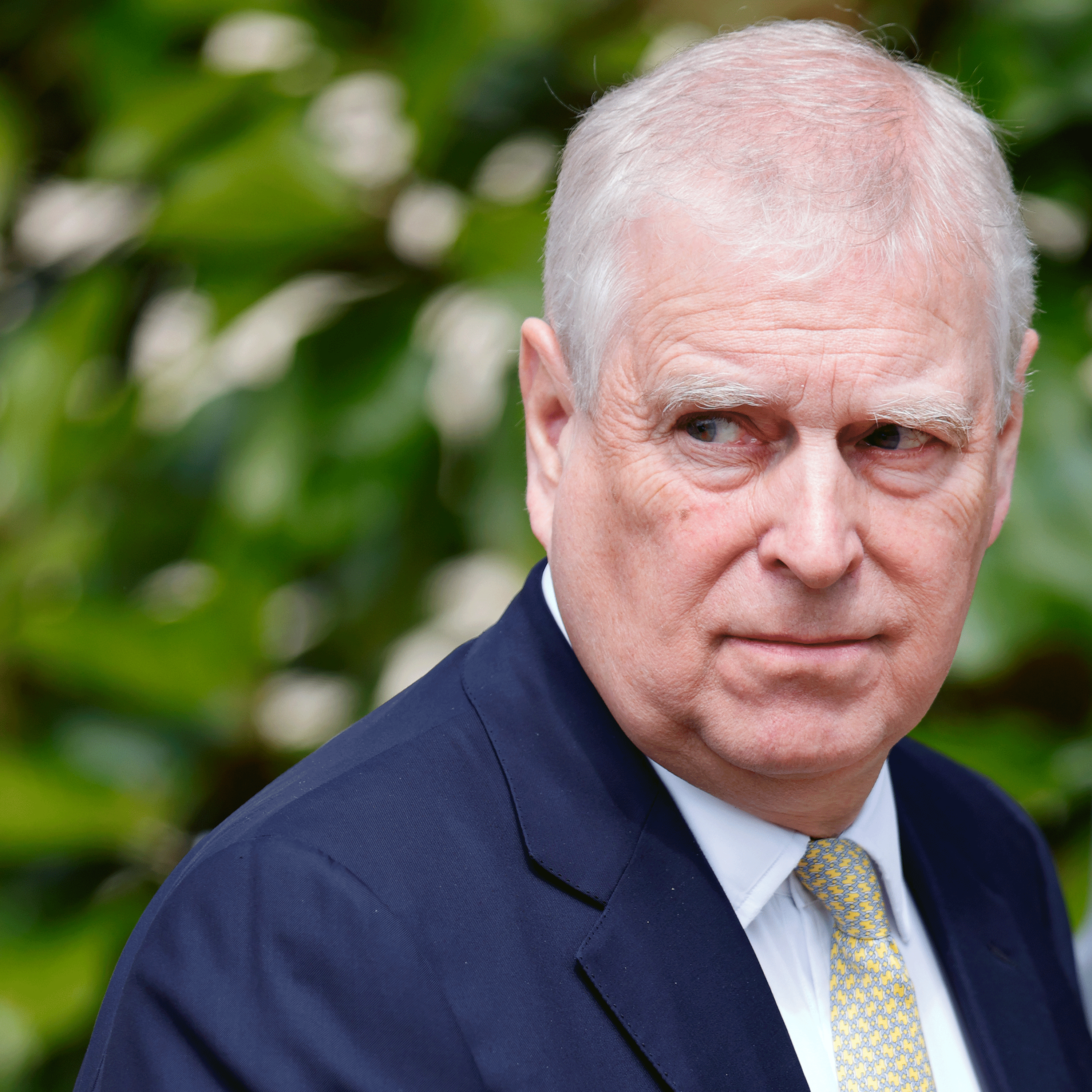
Speaker 3 Anyway, so I feel a personal involvement in this as a satellite branch of the Yorks. He is now of course Andrew Mountbatten Windsor.
Speaker 3 He's given up the Knight of the Garter, he's given up the Princetom, he's agreed not to use the titles. Would you like to know when the relevant legislation for this comes from?
Speaker 3 For giving up your having your Princetom taken away or your titles?
Speaker 3 1917, because, of course, quite a lot of Queen Victoria's grandchildren had got British ducal or princely titles and had ended up on the wrong side of the First World War.
Speaker 3 And so there were quite a few people called Ernst and various variations of that who got de-princed during the First World War. Wow.
Speaker 3 So that's the legislation that they will be used as a template, yeah, to kind of.
Speaker 3 I mean, that's, you know, the previous version, he had just agreed not to use them.
Speaker 3 But the statement from the King and Queen seemed to imply that they were actually going to move forward with an official debagging and de-princing.
Speaker 4 Yes, that's still, if you agree not to use them, but you've still got them, that seems like a bit of a fudge.
Speaker 3 He wrote this email, you know, the famous email to to Epstein, I think, really did for him, which proved that he had lied to Emily Maitlis.
Speaker 3 You know, this one he'd wrote in 2011 that said is that officially unacceptable now?
Speaker 4 Yeah, right.
Speaker 3 But he had, he'd, he said, you know, we're in this together, he'd said, um, about the photo of Virginia Roberts Giffray coming out. And, you know, we're in this together.
Speaker 3 And it was the one that ended, I hope, will play again soon. But kind of more importantly to our purposes, it also was signed off Andrew, you know, York KG, right? H-R-H-Andrew York KG.
Speaker 3 So he had, even in a casual email at that point, Andrew liked to put all of his titles in it. So I do feel that this is a fairly fitting punishment in lieu of any actual
Speaker 3 other consequences.
Speaker 4 Yes, I did read that the one of the last people to lose the Order of the Garter was Emperor Hirohito just after the Second World War. Wow.
Speaker 4 Which gives you an idea of the scale of the offence that this is being ranked alongside.
Speaker 4 So we know he'll be moving house.
Speaker 4
I mean, he may be moving to New Zealand. It's possible your brother will be getting some look-alike work before too long.
Don't know how much in demand that's going to be. What party?
Speaker 4 What corporate event? Well, Halloween.
Speaker 4 But he's going to be plain old Andrew Mountbatten Windsor.
Speaker 4 And I would just say to him, it's dangerous putting a middle name in your name because people think you're posher than you are.
Speaker 4 But that probably won't be a problem for him.
Speaker 4 Now,
Speaker 4 the reason we're still talking about this is largely of Virginia Duffrey's book, Nobody's Girl, and she took her own life earlier this year, before the book came out, and it details her life, as she put it, being a sex slave for Geoffrey Epstein, procured by Gelaine Maxwell, now in prison, serving 20 years.
Speaker 4 She says in the book that she had sex with Andrew three times, a claim he's always denied.
Speaker 4 But the details that have come out in the book, and the details that have come out in other things, like the emails of him sending his Royal Protection Officer her name and social security number, whether that's to discredit her account or dig up dirt on her, I think is not completely clear.
Speaker 4
But it just became clear this was no longer a sustainable situation. But it hasn't been for years.
And is there ever a way this can be put on a sustainable footing, short of Andrew
Speaker 4 cooperating fully with prosecutors in the America or whatever that might be?
Speaker 3 I mean, the interesting thing is lots of it has come out through either court discovery or records being submitted to Congress. So for example, her memoir was co-written with a journalist.
Speaker 3 However, bits of it are taken from a previous fictionalised account that she wrote that was called The Billionaire's Playboy Cup.
Speaker 3 Now this has become quite controversial because that wasn't fact-checked. She herself says in the book that some of the details in that were wrong because she was trying to disguise them.
Speaker 3 But it has become, you're right, there has been a kind of not exactly a full court press, but there have been a lot of people kind of questioning the whole content of her story just because of the fact that she has, she made mistakes along the way.
Speaker 3
For example, she accused Alan Dershowitz of sexually assaulting her. They then settled that out of court.
The American lawyer, Alan Dershowitz, she accepted that she had never been abused by him.
Speaker 3 He accepted that she'd made an honest mistake.
Speaker 3 And if you read the memoir, it's a very difficult read for a number of reasons, one of which is that between it being submitted to the publishers and it coming out, she accused her husband of domestic violence.
Speaker 3 He denies that.
Speaker 3
There's litigation ongoing about the estate. But there are kind of clues in the narrative that the relationship wasn't all that happy.
There's lots of very volatile arguments.
Speaker 3 And of course the other thing that comes out is that there's money involved in this.
Speaker 3 There's a lot of debate about her settling her estate, for example, and who's entitled to that.
Speaker 3 In the book, she writes about the fact that she was living really scratchy existence in Australia until she got the settlement from Epstein, the initial one, and then the settlement from Andrew.
Speaker 3 So that, you know, this really complicates it. And I think as, you know, she also is, like many abuse victims, obviously deeply traumatised by it.
Speaker 3 That's what emerges from the narrative, and hasn't actually always made her case in a kind of completely cast iron, compelling way, which again is not unusual in abuse cases.
Speaker 4 The people who are accusing her, there are other victims who are saying, and who are suing her, and then halfway through their narrative, you realise they've been given $50,000 by a fund.
Speaker 4 They've lived their lives on the basis of a settlement, and so accusing each other of being abusers rather than victims. It turns into an incredibly sort of messy story.
Speaker 3 That's one of the really messy things. The Sunday Times had a piece by Rina Oh, who's another Epstein victim, in which she said, you know, she's suing the Jaffrey estate.
Speaker 3 And she said, you know, I've been accused of, you know, procuring girls for Epstein. Now, actually, within the same piece, she admits that she did do that.
Speaker 3
This is one of the things that Epstein would do to women. He would encourage them to go out and recruit more women.
Giffray writes about that in a book and says she regrets it.
Speaker 3
And Rena O did the same thing. And obviously, she says that doesn't make me any less of a victim.
She says she was raped by Epstein. But it does really complicate that picture.
Speaker 3 Everybody needs to be very firmly, for moral and financial reasons, end up in the kind of victim rather than collaborator camp.
Speaker 3 And there was an attempt, I think, even to do do that with Gelaine Maxwell.
Speaker 3 So one of the more bizarre reviews of the book was a spectator got Ian Maxwell, Gelaine's brother, to review it under the headline, Don't Take Virginia Jeffrey's Memoir at Face Value.
Speaker 3 Which I thought, I mean, yeah, okay, always a good thing to do in cases like this, but I feel like you may have a certain personal interest in this one.
Speaker 3 And you know, as we've written about in the magazine, the very strategic leaks ahead of the manuscript kind of coming out do all point back to a journalist who was one of the very few who has interviewed Maxwell in prison.
Speaker 3 And she got transferred from a Florida jail to one, a low security, minimum security one in Texas, some point after having a conversation with a senior official at Trump's Department of Justice.
Speaker 3 So there is a kind of semi-conspiracy theory, but I don't think it's a completely ridiculous one, that actually all of this becoming a Prince Andrew story is actually very helpful for former friend of Geoffrey Epstein and current president of the US, Donald Trump.
Speaker 4 Yes, where was Virginia Duffray working when she was first picked up by Maxwell?
Speaker 3 Mar-a-Lago. She was working in the spa in Mar-a-Lago as a very young teenager.
Speaker 3 Yeah, so I mean, this is...
Speaker 3 This is a Trump story, and I've covered it in the US column before because it's been kind of fascinating how it was the massive conspiracy story, an obsession of the MAGA right, released the Epstein files.
Speaker 3 And then Donald Trump, first of all, tried releasing some old fight logs that everyone had seen already, and then said, I've actually looked at it, there's nothing really to see.
Speaker 3 And sent the swivel-eyed FBI director Cash Patel out to say, Well, actually, I've looked at it and it's all completely fine. Yeah,
Speaker 3 it's a very mysterious and murky story. Another complication that comes out in the book is that Virginia Geoffrey hired as her lawyer David Boyes.
Speaker 3 Now, you may know he's an incredibly aggressive New York litigator, and his other thing you might know of him, he was on the board of Theranos, which, if you're interested in money stories,
Speaker 3 fraudulent blood testing company collapsed.
Speaker 4 Also, have Rupert Murdoch on the board, it was a real government of all the talents, that one.
Speaker 3 But also, he acted for Harvey Weinstein, in which capacity he renegotiated a contract with a spying agency to essentially do background checks on all of Harvey Weinstein's accusers and also the journalists who are working on the story for the New York Times.
Speaker 3 So you have all of this. This is kind of speaks to the angels' protection upside.
Speaker 3 Yeah, if you want to, you know, realistically to get justice in a lot of these cases, you have to hook up with a very aggressive civil litigator because it doesn't end up in a criminal court before Epstein died, right?
Speaker 3 He got that very, very sweet plea deal in Florida and then died in prison before seeing the inside of a proper criminal trial.
Speaker 3 So, you know, these are really mucky and contested waters in which often there is a lot of reputation management or reputation kind of besmirching going on through PRs behind the scenes.
Speaker 4 The idea that there's unreliable narrators around in anything to do with the Maxwell family is hysterical.
Speaker 3 I do genuinely think that that was the original Gelane play was I've been sucked into this terrible web of sin, I didn't know and then it just became unfortunately it teetered over in the face of the overwhelming evidence that that she did know everything that Epstein was going on doing and therefore that's why she's now in prison.
Speaker 4 Do you think
Speaker 4 this is really hypothetical? Do you think this would have
Speaker 4 happened
Speaker 4 the Prince Andrew element of it if that photo had not existed and been made public of him aged 41 with Gaffrey, then aged 17?
Speaker 3
No, I think you're right. I think that concretised it in a way.
He has always denied that that photo is.
Speaker 3
He sort of sort of vaguely talked about Photoshop and all this kind of stuff or, you know, whatever. But I think people just went, oh no, you're standing next to her.
She looks like a teenager.
Speaker 3
She's dressed. She talks in the book about where she's wearing these trousers with like a horseprint on.
She's wearing the kind of things that young girls would wear, right?
Speaker 3 She's not a sophisticated adult at that point. And I think at that point, people went, ult.
Speaker 3 And then in a very concrete way, it's about that photo coming out that he sends that absolutely killer email to Epstein that ends, let's place them all, we're in this together. Andy KG.
Speaker 3 You know, so I think that photo absolutely precipitated the downfall.
Speaker 3 And she talks in the book, you know, she just had gone to grab an instant camera because she wanted to record the fact she was with a prince.
Speaker 3 I mean, it's before the advent of the smartphone, so the survival of that photo is also quite fragile.
Speaker 3 But I think you're right, because that is the image that's used to illustrate every news story of it, really, or her holding, as an adult, holding that photo up.
Speaker 4 Until then, he'd said he hadn't met her.
Speaker 4 And then after that, he had to say, oh, well, I just can't remember it.
Speaker 3
I think that's the problem: is that his story has evolved, shall we say. And also, just his unbelievable tone-deafness.
I went back. Did you watch when the BBC News were covering the story?
Speaker 3 Obviously, they're delighted to have all the clips of the Newsnight interview, so they aired as many of them as possible.
Speaker 3 And then Maitless asked him, Emily Maitlis asked him, Do you regret meeting Jeffrey Epstein? And he thinks about it,
Speaker 3 he thinks about it, and then he says, On balance, no, because all the things I learned of the people that I met, it's the most unbelievably tone deaf performance you've ever seen and actually watching it in retrospect it's even more boggling now than it was at the time.
Speaker 4 It's up there with the honourable comment isn't it that it was he was doing the honourable thing so many great I mean the simple shooting weekend is an incredible the I don't sweat anymore is an also an incredible I mean every every
Speaker 4 honourable thing again when he said he would voluntarily relinquish the titles.
Speaker 4 And I think the turning point came that you know the Royals may be be tone-deaf, but Charles can hear someone shouting at him in public.
Speaker 4 And he is not used to turning up at an ordinary event and someone shouting, How much did you know then? It was really fast after that. And
Speaker 4 if I was pushed, I would say he decided then this process of slowly acting, which the royal family tends to do, doesn't work anymore.
Speaker 4 Flunky, who's our royal correspondent, pointed out last issue, a lot of royal correspondents say, no, it's incredibly difficult for him to strip away these titles and you'd need a huge amount of parliamentary time and we can't possibly do that.
Speaker 4 We actually de-kinged someone once in the abdication and the amount of parliamentary time was one morning.
Speaker 4 We can do this stuff if we want to. You should say that's the second time we've de-kinged someone and the first time was actually
Speaker 4 even faster than that in 1649 now.
Speaker 3 Oh yeah, I thought we were doing Charles I, but you're right we're doing Edward VIII, yes.
Speaker 4 Okay, right, good. But it's the same, you know, like like the post office story.
Speaker 4 That couldn't really be dealt with, and it was all very slow until people in power's reputation was on the line.
Speaker 4 Then we can act incredibly quickly, you know, and we can exonerate hundreds of people at one full swoop.
Speaker 3 But
Speaker 3 this is my theory of why people like dictators because they just like the idea that one person might be able to make a decision and it would actually happen.
Speaker 3 And you might have to bribe that one person, but at least you know who the one person is who could make that decision.
Speaker 4 So you're saying it's anyone who's got experience of a meeting and what it's like
Speaker 4 who's more prone to accept dictatorial rule?
Speaker 3 But
Speaker 3 I do think there is a feeling that
Speaker 3
everything in modern life is so sclerotic and turgid. And I think it's why people like Trump are appealing to their base because his promise is action.
Right?
Speaker 3
And actually, what does Kier Starmer's Labour offer you? But, oh, we're going to do pip. No, we're not going to do pip.
Oh, we're going to do Winston. Oh, we're not going to do Winfrey.
Speaker 3
Oh, we've got these taxes. Oh, we're not going to do these taxes.
And that's why I think people just go, I wish something would happen. Unfortunately, when it does happen, it's often bad.
Speaker 1 Get ready for Malice, a twisted new drama starring Jack Whitehall, David DeCovney, and Carice Van Houten.
Speaker 1 Jack Whitehall plays Adam, a charming manny infiltrates the wealthy Tanner family with a hidden motive to destroy them.
Speaker 1 This edge-of-your-seat revenge thriller unravels a deliciously dark mystery in a world full of wealth, secrets, and betrayal. Malice will constantly keep you on your toes.
Speaker 1 Why is Adam after the Tanner family? What lengths will he go to? One thing's for sure, the past never stays buried, so keep your enemies close.
Speaker 1 Watch Malice, all episodes now streaming exclusively on Prime Video.
Speaker 5 At Carrington College, we're ready to help you begin your next chapter. We've been helping students launch healthcare careers for over 55 years.
Speaker 5 Our hands-on programs in nursing, medical assisting, pharmacy technology, and more are taught by experienced real-world professionals.
Speaker 5 With programs completed in as little as 9 to 12 months months and convenient learning options, we make sure your education works with your life.
Speaker 5
Classes start soon in Pleasant Hill, San Leandro, and San Jose. Visit Carrington.edu to find out more.
Programs vary by location.
Speaker 5 For information about student outcomes, visit Carrington.edu slash SEI.
Speaker 4 Right, now let's come to very excitingly, there is a new column in Private Eye. It's in the back of the magazine, confusingly, just after the in the back section, and it's in the money.
Speaker 4 And it comes after the very, very very long-running in the city column has ended, and that was written by Slicker for many years.
Speaker 4 This new one is written by Gold Digger, and Richard, I understand that Gold Digger is you et al. Yeah, I didn't realise I'd be outed after one issue.
Speaker 4 Sorry. Yes, it's a collection of financial stories that I'll be writing and pulling together from other people as well.
Speaker 4 The lead story in the latest issue of the MAG was about sanctions on Russian firms or on Russian shipping and how often they're actually enforced
Speaker 4 and what kind of fines are dished out, even on the rare occasions that people are found guilty of this kind of thing.
Speaker 4 And it's kind of staggering the scale of the sums that are dished out in fines compared to the scale of the offence. Yeah, I mean I mean like a lot of the stuff we do elsewhere in the MAG,
Speaker 4 it's about showing the reality
Speaker 4 against what we're told is happening.
Speaker 4 So with sanctions we've been told several times that we're stopping the the putin war machine he won't have any money to spend and then years on you find that oh we've we've got to do something else you know that machine we stopped 18 months ago we're going to stop it again you know so that kind of that's where we are with sanctions and we should say you have a lot of experience of this because of your
Speaker 4 can we call it a dark past as a financial criminal shady which part shady history for a bank robber yeah working for hmrc yeah until uh 20 years ago. I mean, you were part of the blob, weren't you?
Speaker 4 Well, I think I'm part of a smaller blob now.
Speaker 4 Smaller,
Speaker 4
slightly bit. You have a puddle.
I always felt that put you in quite a strong position as a journalist because you know how it works or it doesn't work in so many cases.
Speaker 4 Back then, when I stopped being a tax inspector and started working for the I,
Speaker 4 there was a sort of prevailing mood and attempt really to stop tax collection working almost. It was sort of politically unpopular.
Speaker 4 It was, you know, it wasn't very nice to people who were dodging their taxes. It wasn't in the sort of partnership spirit of the day.
Speaker 4 So there were a lot of cushy deals for big companies and people hiding their money in Switzerland and places like that. And without going into too many details and getting into any trouble,
Speaker 4 it was that kind of thing that led to me changing jobs.
Speaker 3 Can I ask you a question about tax, which is not actually a bit of a help on my VAT registration?
Speaker 4 20 years ago actually. No, no, no,
Speaker 3 no. About our tax code now, actually.
Speaker 3 Is it too complicated? Because one of the things I think that happened, Rachel Reeves, as we're talking, has just gotten into trouble with her registration as a landlord for renting at her property.
Speaker 3 Obviously, Angela Reina previously in trouble about cancel tax on her second home. Nadim Zahowi had to settle a very large bill with HMRC.
Speaker 3 Should we have any kind of sympathy with politicians who run into tax problems? Or are you cold-hearted about all of this kind of stuff?
Speaker 4 No, no, I think
Speaker 4
there is room for some sympathy. Administratively, it is complicated.
One of those I wouldn't have any sympathy with, Nadeem Zahar. Right, okay, I'll draw the line there.
Speaker 4 And, you know, and also Rachel Reeves, I think, you know, she should probably have been a bit more careful. She should be saying, look, I'm Chancellor, are we sure we've got all this right?
Speaker 4 Her husband found some emails, and she probably should have been saying, are we sure we've done everything we need to? Because it's... It's not the first little mistake that she's made, is it?
Speaker 4 You know, when you look at
Speaker 4 the book she wrote that
Speaker 4
puffed up CV. You know, there's a kind of string of these now.
And it's a bit rich, you know, post-Boris, who we all had a go at about detail, to say, look, we're in government, we're in detail.
Speaker 4 Yeah, I mean, that's what we wanted this time around, isn't it? Yeah, yeah, and the question to detail. Yeah, and the question for them is, how would you have reacted if Boris Johnson had done this?
Speaker 4 Yes.
Speaker 4
I think that's a valid question. We've got this budget coming up.
And lots of people are getting their defences in early.
Speaker 4 All sorts of special pleading articles and columns are being written. Why you cannot possibly tax blah,
Speaker 4 small sector.
Speaker 4 I saw a piece at the weekend, which was all about how, actually, if you tax the gambling industry anymore, betting shops will have to close, and they are an absolute lifeline for elderly, vulnerable, often very lonely, frequently men.
Speaker 4 I saw the article.
Speaker 3 It was like they were running some kind of like
Speaker 3 rotary club or something. It's like what you do is you get these people in and then you keep them in as much as you can in order for them to spend money.
Speaker 4 Like, come off it. It's a kind of like, and I'm sure a lot of people who've been going there every day for 20 years do find it really valuable and would be incredibly sad if it was closed down.
Speaker 4 But that's not really the point of the gambling industry or paying tax.
Speaker 4 I'm going to say that about pubs and then I tell you.
Speaker 4 Given the incredibly complicated tax system that we do have, because it is complicated and there are lots of different loopholes. Is it possible for a radical change to happen?
Speaker 4 in the budget that's coming up in a few weeks time?
Speaker 4 No, it's not possible in the budget.
Speaker 4 It's a longer-term job.
Speaker 4 The problem with the budget, as with every budget for decades now, is that they're very constrained.
Speaker 4 Rachel Reeves and her predecessors are working with the Office of Budget Responsibility, which takes a very conservative view of the effects of economic measures.
Speaker 4 So it sort of hems her in and she's left tinkering,
Speaker 4 looking at differences of 10 billion here, 5 billion here, what's going to raise this, what's going to give away that, over a pretty short term, over a forecast period that's four or five years.
Speaker 4 So it's very difficult to take the kind of steps that you would need to transform the system and which might pay off in 10, 20 years.
Speaker 4 You know, and that's not just in terms of the tax system itself, but the whole economic system. So it's very difficult to launch a big investment program and expect credit from that.
Speaker 4 because the the OBR is going to say, well, we can't be sure for the next three or four years. You look at changes to employment rights.
Speaker 4 There's a very good argument that stronger employment rights in the long run will be good for growth. You have a higher wage economy, better industrial relations, and so on.
Speaker 4 But there are people lobbying, and they might have their way, the Tories are lobbying, to say, no, the OBR has to say that's going to hit growth.
Speaker 4 And it may well do it in the next two or three years. But the Office of Budget Responsibility is presumably advisory.
Speaker 4 It's not an entirely democratic institution, is it? We don't have to do what they say on the grounds that
Speaker 4
we didn't vote for them, did we? It should be, but we've given them so much power. And if you don't do what conforms to what they think, then you end up in a Liz Truss position.
Yes.
Speaker 4 I'm not entirely advocating that. But there is...
Speaker 4 That's right.
Speaker 4 It has been given a really central role, and Rachel Reeves has made it even more important by putting in law that you must consult whenever you have a big announcement, you must consult the OBR.
Speaker 4 You probably should do that anyway, but you should also recognise it's not the only view.
Speaker 4 And then there's probably a case for
Speaker 4 not leaving it just to the OBR to do the fiscal and economic forecasts, the official ones, to have the Treasury do them again.
Speaker 4 Of course they're going to be politicised, but have them have the opposition do them, have a range of views.
Speaker 4 So you can say, well, look, this is our view, and we think these longer term measures we're taking, whether it's on investment, education, simplifying the tax system, we think they will work over 10-20 years
Speaker 4 and then let somebody else make
Speaker 4 the opposing argument. But at the moment, having one very small C conservative body hold sway
Speaker 4 is given us this sort of sclerotic system where we can't actually do anything.
Speaker 3 Do you think this has been one of the most frenetic pre-budget periods that you can remember?
Speaker 3 I'm just trying to think whether or not I've just dipped out of British politics for the last couple of years and therefore I've kind of forgotten the horror of it.
Speaker 3 But this one seems to have been really,
Speaker 3 really frenetic.
Speaker 3 You know, all the things that have been floated, like doubling the top two bands of council tax, you know, deciding that working people count is only people earning forty five thousand pounds or under a year, so you can put tax over that, swapping, you know, national insurance and income tax burdens.
Speaker 3 What else have they they've talked about an exit tax for
Speaker 3 high income you know, but it's just it just feels like there's they always say there's kind of kite fly. I mean all the like the big budget cliches, right?
Speaker 3 You move from kite flying to rolling the pitch to the rabbit.
Speaker 3 That's That's the usual way that it proceeds. But it just seems to me that there seems to be something very torrid going on this year.
Speaker 4
It's got that feeling, you know, like Christmas getting earlier every year, hasn't it? You know, pre-budget. Everybody's trying out their pet idea.
Yeah.
Speaker 4 And it's the media have a big part in it as well.
Speaker 3 Well, it's like football transfer system, isn't it, for nerds, basically. And that you it's unfalsifiable.
Speaker 3 That may like Rachel Rees may be considering any number of things and no one can kind of say she's not.
Speaker 4 You're in a sort of state of almost constant speculation, which isn't good for economic decisions, people investing, people employing people. It's, you know, this uncertainty.
Speaker 4 This was the point of the PURDA system.
Speaker 4 You know, this is when some of us were growing up, obviously.
Speaker 4
That nothing was said about it, and then it was announced. And you could criticise it or you could not like it.
Now we have a system where you seem to be saying, let's get public opinion to all these
Speaker 4
ideas for months beforehand. And there was a joke piece in the last issue.
And if you want public opinion, it's that nobody wants to pay any more tax. Thank you very much.
Speaker 4 They want everyone else to pay more tax. That is acceptable.
Speaker 4 But you can't make policy on the grounds that everybody else should pay more.
Speaker 4 And if you float those ideas, and particularly with the press and the media at the moment, you will get everyone saying, no, that won't work before they've listened to the idea.
Speaker 4 any amount of tax raising will be followed by someone saying, I don't want this. So what I don't understand is why you don't get to a system where the Chancellor says, this is what we're doing.
Speaker 4
That's it for a year. But this happened last time with the Rachel Reeves ICE grab.
Yeah.
Speaker 4 Which turned out to be largely a new three, but it was preceded by weeks and weeks of people saying, well, this is how to, you know, save yourself from Rachel Reeves' ICE ICE taxes.
Speaker 4 But that's going on now again.
Speaker 4 Yeah, but it happened last year and it was move all your money out of ICE now immediately and then...
Speaker 4 Either you do what Ian says and you have PERDA and you just make the announcement on budget day or six weeks in advance you have a proper discussion about what's possible and get people's views.
Speaker 4 What we have now is this sort of leaks, and oh, let's float this idea, and then the minister goes on the Koonsberg shoulder of a sort of says, Oh, I couldn't possibly comment on the budget, you know, having leaked 18 possible ideas.
Speaker 3 Yes, the words refuses to rule out suddenly appearing in news copy with horrifying frequency, don't they?
Speaker 3 But I also think it's a reflection of the fact that the media is only representative of one particularly quite small slice of British public opinion, right?
Speaker 3 I mean, I, like you, I've read a lot of pieces about ISIS, I've read a lot of pieces about the hundred grand, cliff edge, you know, all of this kind of stuff, but I haven't read so much stuff about the fact that one of the big economic stories of the last couple of years is the fact of wage compression at the bottom end.
Speaker 3 Like the minimum wage has now, you know, been raised so high that it now basically is the same as a graduate starting salary.
Speaker 3 So there's almost no benefit really for those people having gone to university. So they're starting on essentially minimum wage but with a huge debt.
Speaker 3 And you don't get that written a lot because those those people foolishly are watching TikTok rather than buying the Times and the Telegraph.
Speaker 4
There's this other thing, the sort of tinkering with smaller ingredients of the overall tax pie. Yeah.
Bad analogy.
Speaker 3 No, because a tax pasty.
Speaker 4
That's what that's. That's irrelevant.
I can't get back into pasties.
Speaker 4 But so one example of it is the... the now ancient tradition of freezing fuel duty,
Speaker 4 which has been going on, I think it's 14 years in a row.
Speaker 4 The Chancellor said I've said, I'm freezing fuel duty, and everyone cheers, and huge relief, which is basically to keep drivers on side because they're an important part of the electorate, whatever.
Speaker 4
That's the fiddle. It's part of the fiddle because the projections assume that it will be increased in line with inflation.
Right. But of course, it isn't going to be.
Speaker 4
It's just a fiddle for the Chancellor of the day, and none of them have been able to resist it. Right.
But it's going to break down at some point, because
Speaker 4 if cars do increasingly go electric, you won't get nearly as much fuel duty, even at the frozen rate.
Speaker 4 At some point, you're going to need to change that system over and be a bit radical and reform it to move to some kind of, like, if you're using the road per mile, that's the tax you pay.
Speaker 4 There just seems to be no appetite for a kind of bigger change. That's why this short-term view is so dangerous, because you can't deal with bigger changes in the world.
Speaker 4 You know, like the change to electric vehicles or increasing value of property, for example,
Speaker 4
which ought to be taxed more when it's not used. We can't sort of deal with that.
Yeah.
Speaker 4 Rise in property prices is not that recent, is it?
Speaker 4 Well, I mean, we've had a few decades to twig this one.
Speaker 3 But then you get the story about the pensioner who lives alone in a million-pound house and is, what's the phrase? It's always asset rich and cash poor.
Speaker 3 My big moan about the lack of the fancy economics of the budget is about fiscal drag, which is the fact that the rates for higher and additional rate tax have remained in place for a really long time, even though inflation has massively eroded the value of those salaries.
Speaker 3 So people are now paying those higher tax rates at the equivalent of like a mid-to-senior-range nurse is now a higher rate taxpayer in Britain.
Speaker 3 If they had moved up with inflation, Rachel Reeves would be looking at finding billions and billions more.
Speaker 3 So we can sort of say, you know, the income tax thresholds, essentially lots of people are paying way more income tax than they were a decade ago just because of fiscal drag.
Speaker 4 But that goes back to how what you have to say to get elected or what they think you have to say to get elected. I won't raise the rate of income tax.
Speaker 4 And you raise the same money with this fiscal drag thing.
Speaker 4 But could you not, I'd just be interested to know what would, if somebody actually tried as an experiment, being a bit more honest about what they were going to do and said, you know what, if we need to, I'll put a penny on the rate of income tax.
Speaker 4 Or it might even be 2p. Would that be electoral suicide?
Speaker 3 I would say, didn't someone do it in a penny on Ash Insurance hypothecated for the NHS? I can't remember the words. I want to say Gordon Brown, but I don't know if I.
Speaker 3 But I think when there's a tax rise for a thing, and I think one of the ways that they probably could have done it is coming out of COVID, gone, my gold, we spent a lot of money on all of that.
Speaker 3 And actually, we are just going to need to pay. Here's a time-limited measure with a sunset clause to pay back some of that.
Speaker 3 But there was a kind of that was one of the things that has baffled me about economics in the last couple of years, is that we came out of COVID having borrowed all this money, but not at any point recognising that there was a bill for that, right?
Speaker 3 That it just seems that there could be all this talk about the benefits bill and the number of people out of work.
Speaker 3 That is a really, really a big spike of people, particularly with mental health conditions, post-COVID. And again, I think you can see that as a legacy of COVID.
Speaker 3 Lots of people had a really tough time and they really struggled coming out of it. But we haven't treated this as kind of extraordinary times.
Speaker 3 We haven't treated the war in Ukraine as extraordinary times.
Speaker 4 No, and nobody has, as you say, suggested
Speaker 4 we have to put up income tax to pay for COVID for all the damage that was done then.
Speaker 4 I think we should maybe have an office of political responsibility that says during the election period, I'm afraid you have to say that you're going to put taxes up, otherwise you're not being honest.
Speaker 4 So the OPR demands that you all say 2P straight away. I mean, these things are not impossible would you want to chair that polly in
Speaker 4 response for five
Speaker 4 idea
Speaker 1 get ready for malice a twisted new drama starring jack whitehall david decovney and carice van houghten jack whitehall plays adam a charming manny infiltrates the wealthy tanner family with a hidden motive to destroy them.
Speaker 1 This edge-of-your-seat revenge thriller unravels a deliciously dark mystery in a world full of wealth, secrets, and betrayal. Malice will constantly keep you on your toes.
Speaker 1 Why is Adam after the Tanner family? What lengths will he go to? One thing's for sure, the past never stays buried, so keep your enemies close.
Speaker 1 Watch Malice, all episodes now streaming exclusively on Prime Video.
Speaker 6
I chose to become a nurse because I've always had a passion for helping people. My name is Francesca.
I studied nursing at Carrington College. The instructors at Carrington were great.
Speaker 6 Most of them are working as nurses still, so it's great to learn from somebody that's actually doing it.
Speaker 7 To start or advance your nursing career, visit Carrington.edu to learn more.
Speaker 6 Carrington is going to set you up for a career that you can have for a lifetime.
Speaker 8 For information about student outcomes, visit Carrington.edu forward slash SCI.
Speaker 4 Now, we should move north to Teesside.
Speaker 4 Now, regular listeners of of the podcast will know we have covered Teesside once or twice in the past, but I think it's probably worth just restating, Richard, what has been going on at the immensely valuable ex-industrial site around the port in Teesside.
Speaker 4 Teesside had a big knockback about a decade ago when the steelworks closed finally. Michael Heseltine was sent up there to pronounce what could be done.
Speaker 4 Said we need a a development corporation, which they got.
Speaker 4 Theresa May unveiled this development corporation the idea was to regenerate the area to reinvent it as a centre of green industry to do that the idea was that it would get a lot of money from Whitehall raise money locally borrow money create a fund develop the area lease it to industries who would then pay the rent to the public sector plus the rates and that would fund more regeneration and so on so you get this kind of virtuous circle.
Speaker 4 What actually happened was they brought in a couple of local businessmen.
Speaker 4 It's still not clear exactly why but they invented some cock and ball reason as to why they had come in and they were given options to buy the land which very soon were repriced to one pound per acre.
Speaker 4 So they could buy the land whenever they wanted for one pound an acre and of course they would want to buy it once a particular patch of it had been remediated at taxpayers' expense and was then very valuable.
Speaker 4 They'd exercise their option, get this land for next to nothing, and rent it out to a big company that was coming onto the site.
Speaker 4 And then they could sell that income in return for a lump sum for themselves. They've done that once already and made about £65 million profit instantly on a 90-acre site.
Speaker 4
And there's sort of 1,600 acres or so to cash in on. So the whole story is.
That's just one strand of the rip-off.
Speaker 4
But it's a huge transfer of public assets to private businessmen. Not a very well-explained reason why.
No, and crucially, with nothing from them.
Speaker 4 We wrote about the private finance initiative for decades and what a rip-off that was.
Speaker 4 And that involved businesses investing money and then taking profits out and they were taking too much and profit. But at least they put some investment in.
Speaker 4
This is, you know, there's no investment coming in. It's just all profit going out.
It's really quite perverse. So which genius thought of this then?
Speaker 4 Which political, you know, brilliant thinker came up with this model of how to redevelop Teesside? I think you've got to pin it really on Lord Houchin. So, this is Houchinism.
Speaker 4 So, it's public risk, private profit.
Speaker 3 But that happens everywhere, doesn't it? I mean, I remember Peter Thiel, the venture capitalist, essentially saying, you know, competition is for losers.
Speaker 3 The best thing you can possibly do is get a monopoly, right? Which is why Palantir has so many defence contracts.
Speaker 3 The best thing you can do is have a kind of government contract because you can be the only one that supplies it and there is zero risk to you.
Speaker 3 Whereas the whole point of capitalism is that it's supposed to, like a market is supposed to weed out the best possible people and find prices within it.
Speaker 3 Weirdly, the same thing happening in the energy industry at the moment, right? Where we're going to write off a lot of people's energy debt. That is just not functioning as a market, right?
Speaker 3 We just won't quite understand. We're not going to let people freeze to death in their homes in winter, so we end up bunging loads of money into it.
Speaker 3 But then you've lost the whole point of capitalism at that point. You might as well just be honest about it.
Speaker 4 Well, that's how this project started out. There was no competition for the deal.
Speaker 4 If you had said, right, this is the deal, you've got to sort of help us remediate a bit, but you don't have to put any money in, and you'll be able to buy the land for a pound an acre, whichever bit you want.
Speaker 4 Let's have some bids. You would have had big companies coming and saying, well, we'll pay you a bit for you.
Speaker 4
Everyone would have bid for that. You would have raised a lot of money if you'd opened it up.
But there was no open competition. It was just a gift.
Speaker 4 Can I just recommend our readers, who as usual have got the best views on this?
Speaker 4 One of them noticed that Lord Houchin made mention in his House of Lords speech of the 200th anniversary of the Stockton-Darlington Railway.
Speaker 4 It's Martin Maclean from Darlington, and he said the motto of the Stockton-Darlington Railway Company was Periculum privatum utilitas publica, which translates as at private risk for public good, which appears to be the complete opposite of events detailed in the report on Teesside.
Speaker 4 Brilliant. Got it in one.
Speaker 4 In Unum or whatever it is.
Speaker 3 I was going to say, I'm only surprised if people haven't written in this week offering their own Latin translations of the other way around. I'll be very private, I reader.
Speaker 4
So Ben Helchin, Conservative mayor of the area, recently elected and sort of disconcertingly young. I mean, I think he's about to be a little bit more.
I think he's 40 now or coming up to 40.
Speaker 4
He's roughly my age, which is good. You know, you do think, God, I could have made so much for myself by now.
You know, I could have dished over
Speaker 4 hundreds of millions of quid to my mates.
Speaker 4 Were they his mates? Were they, I mean, how did they meet? Do we know? Is that lost in the midst of time? One of them he'd had some dealings with when he was councillor locally.
Speaker 4
There are two property developers. One of them he'd had some dealings with.
The other he says he'd had no dealings with.
Speaker 4
I don't think they were mates. I think these people were very influential in the area and somehow they got this deal.
And there was no competition, as we've discussed.
Speaker 4 So, you know, it is all that is all a bit murky, I think. But as far as I can see, they weren't mates in the way you put it, although they seem to be becoming a fair bit friendlier.
Speaker 4 You know, we had a story
Speaker 4 in the current issue, actually, about Houchin going to the wedding of the son of one of these developers, the son who also runs
Speaker 4 a plant hire company. which is making money from the development that his father's controlling
Speaker 4 and which makes huge profits, just stupid profits
Speaker 4 for having a relatively small amount of kit. Which is a plant higher like heavy machinery, not like
Speaker 4 wisterio higher.
Speaker 4 I reckon they could make money from hiring out.
Speaker 3 But Richard, isn't the important thing to remember here that there was a report into all this which completely exonerated Ben Houchen and said he'd done absolutely nothing wrong and he was in fact the bestest boy in the world and you were very wrong.
Speaker 4 I think that's broadly what it said, isn't it? The Times odd.
Speaker 4 No, there was a review a couple of years ago when we sort of got this stuff out about the land transactions and the pound an acre.
Speaker 4 Michael Gove was forced to ask for a review and a chief executive of Lancashire Council at the time, Angie Ridgewell, did a review with a couple of other people and it was a very, very good review with limited powers, you know, no real powers to call for information and so on.
Speaker 4 She sort of confirmed the things we'd written. and found some more.
Speaker 4 That there was no risk they were taking on, that they hadn't invested a penny, that the deals with friends and family were questionable, that there wasn't proper procurement, all that kind of stuff.
Speaker 4 So it was really damning, but it had one line in there. One of the triggers for that review was that the local Middlesbrough MP, Andy MacDonald, had said that this was industrial-scale corruption.
Speaker 4 He said that in Parliament. And so part of her remit was to look at that.
Speaker 4 And she said she, based on what she'd seen, and she also said that they didn't cooperate with her, providing information but based on what she'd seen she hadn't she hadn't found any corruption anything illegal and that one line was latched on to by Ben Houchin you know in a pretty smart PR operation made sure everyone was briefed on it well before the report came out and could see how bad the content of it was.
Speaker 4 So everybody ran with that line and now he just repeats ad nauseam that she found nothing wrong, which is completely untrue. And he
Speaker 4 has completely misrepresented and lied about that report in quite important settings you know in a in a hustings for his re-election in 24 he said that the report found it was value for money when it explicitly said she could not find value for money based on what she seen she didn't say it wasn't but she said she couldn't find it
Speaker 4 so it's been misrepresented but people are still swallowing it and
Speaker 4 how chin is treated as if you know there's nothing to see here.
Speaker 4 He's sort of occupied this place in the political narrative as the future of the Tory party, you know, this Tory party that's completely useless. What do they have to do?
Speaker 4 Oh, we need someone like Houtchin who can deliver. That's the way, that's the future of Toryism.
Speaker 4 And everybody sort of goes along with it because it fits and it makes a good slot on a political panel.
Speaker 4 Does the change in government not change the appetite for actually finding out what's been going on here or officially recognising this?
Speaker 4 No, it should have done because Keir Starmer in opposition in 24 said it cries out for an inquiry. Angela Raynor promised one, but it just hasn't happened.
Speaker 4 You know, the problem is spineless.
Speaker 4
And he's not reform. The Andy's a Tory.
Who cares about them anymore?
Speaker 4 I mean, they've got other things to do. I mean, give it a year.
Speaker 4 I think if it was a Labour mayor, Starmer might have done something. I think he's kind of
Speaker 4 just
Speaker 4 too scared of appearing to, you know, opening up that challenge. Because the answer would be if he went in and
Speaker 4 demanded a full audit, what you need is a full audit with statutory powers, if he instituted that, you know,
Speaker 4 the response would be, oh, he's anti-growth, you know, he's trying to kill anything good that's happening in the north. I don't think he's got the stomach to fight that.
Speaker 4 How dispiriting.
Speaker 4 Any good news that we can.
Speaker 4 You've been covering the post office as well. Are you about to tell us that
Speaker 4 that's been going terrifically in the last year or so since we covered it on this pod the last time? There are some terrific things, mostly thanks to the postmasters,
Speaker 4
not the post office, and certainly not Fujitsu. Remind us of the total that they've paid out to date.
Yeah, zero, absolutely.
Speaker 3 I thought it was going to be back to 30 quid, but no, it's absolutely nothing.
Speaker 4 All right, okay. Fattest zero ever.
Speaker 4 They promised.
Speaker 4 It's now getting on for two years ago that Paul Patterson, their European boss, sat in Parliament, told a committee, Yes, we we have a moral obligation to chip in and he promised you know a particularly
Speaker 4 uh deserving group, the children of sub postmasters who weren't entitled to any compensation but suffered major consequences.
Speaker 4 Uh he promised them that he would fund a a programme uh to support them and absolutely nothing's happened, which is disgraceful and and I can't quite believe it, even even on a sort of PR level it seems pretty stupid.
Speaker 4 Does a moral responsibility mean you you don't ever have to pay? Well it's a crafted PR line.
Speaker 4 You confess moral but not legal responsibility. And I think it was first used by Union Carbide after the Bhopal disaster.
Speaker 4 But I mean there's some some sort of good news. The government's moved a bit.
Speaker 4
recently announced that those children of sub-posas will get some financial help. Right.
Compensation is m moving along but for some still far too slowly.
Speaker 4 You know, there's there's still a couple of hundred at least claimants from sort of original claimants who were bogged down in legal arguments and um or are being offered substantially smaller amounts, that kind of thing.
Speaker 4 Yeah, yeah, kind of fraction of what they asked for and then they're having to go back and offered a bit more and go back again.
Speaker 4 But, you know, the the whole set up, that whole system for calculating redress has been wrong from the start.
Speaker 4 They've always talked about putting sub-postmasters in the position they would have been if they'd never come across Horizon.
Speaker 4 And it's just nowhere near it. How do you calculate that? Well, yeah,
Speaker 4 of course it would always be impossible to calculate that, but they're doing it on, or have done it, on principles normally applied to more routine for unfair dismissal sort of cases.
Speaker 4 Well, we'll give you a couple of years' pay, lost pay,
Speaker 4 and oh, did you really have a nervous breakdown? Oh, well,
Speaker 4 can you prove that? You know, show us the paperwork kind of thing.
Speaker 4 Whereas this is more like your whole life derailed, you know, and your family prosecuted over it, yeah.
Speaker 4 And as you keep pointing out, I mean, Fujitsu's profit margins are very, very large. Yeah.
Speaker 4 And even, I remember going on
Speaker 4 Peston and being asked how much I thought Fujitsu should pay, and I said a billion pounds off the top of my head. They wouldn't even notice.
Speaker 4
I mean, it is ridiculous. That might be about a year's profit, but they should be on a.
This is more than a year's
Speaker 4 kind of persecution, yes.
Speaker 4 Is there any way that readers can find out a little more about the Post Office story? Maybe a book-length summary of it? Are we allowed to plug?
Speaker 4 Well,
Speaker 4
depends how gracefully and subtly it's done, I suppose. It might just get a lot of money.
The less the more you're allowed to do it.
Speaker 4 Well, our
Speaker 4 account of the whole story is called Postmortem, a book, is being published at the end of this month by Private Eye.
Speaker 4 Some booksellers have seen the cover, I'm sad to report in, and
Speaker 4 because it's got Private Eye as a banner and then the title Post Mortem. And some are billing it as Private Eye Post Mortem.
Speaker 4 Well, that's cheery for all of us. Well, it's good to work out finally where
Speaker 4 we should wrap it up there.
Speaker 4 But if you have enjoyed this episode and you'd like more page 94, but in a text version, then just go into your local news agent or supermarket and buy a copy of Private Eye. It's a terrific magazine.
Speaker 4 It's got a new columnist, Gold Digger, very exciting. It's got revelations about the post office, about Teesside, everything we've been talking about today.
Speaker 4 And it's got a cover that is literally prophetic.
Speaker 4 are christmas gift subscriptions available andy for for a loved one perhaps this festive season do you know i think they might be i think they might well so that is all available locally or at private-eye.co.uk until then thanks very much we'll see you next time bye for now you're gonna want to open this gift first because someone used too much tape there's apocalypse proof plastic packaging gifts that require some assembling um okay
Speaker 4
a lot of assembling stringed lights to check it's the 103rd bulb that's broken and boxes to break down. So many boxes.
This holiday, don't go into curse war debt.
Speaker 4
Give the most useful gift, a Leatherman multi-tool. Bonus offer, take 20% off select favorites.
Visit Leatherman.com for details.
Speaker 9
Nursing is tough. It is not an easy job.
It is not for everybody, but it is very rewarding. My name is Kenny.
I trained to be a nurse at Carrington.
Speaker 9 I get satisfaction from helping people, bringing them and their families some peace, and that does a lot for me. Carrington prepared us extremely well for our careers.
Speaker 9 Very fast-paced, a lot more hands-on. Class sizes are small enough that you really can get one-on-one time if you do need it.
Speaker 8 To start or advance your nursing career, visit Carrington.edu to learn more. For information about student outcomes, visit Carrington.edu forward slash SCI.
Speaker 10 Cal State East Bay was founded on a belief that every student holds incredible potential.
Speaker 10 And when that potential is unlocked, doors open to opportunity, to purpose, to a better future for their families and communities.
Speaker 10 Our students are modern-day pioneers, breaking new ground and paving the way for generations to come.
Speaker 10 Here, they find an intellectual oasis, a place to pause, reflect, and rise, gaining the knowledge and confidence to make their mark on the world. Enroll today at csueastbay.edu/start.