160: Shakedowns, Coups and COP 30
Press play and read along
Transcript
Speaker 1
Arizona State University, we're bringing world-class education from our globally acclaimed faculty to you. Earn your degree from the nation's most innovative university.
Online.
Speaker 1 That's a degree better. Learn more at asuonline.asu.edu.
Speaker 2
Life gets messy. Spills, stains, and kid chaos.
But with Anive, cleaning up is easy. Our sofas are fully machine washable, inside and out, so you never have to stress about messes again.
Speaker 2 Made with liquid and stain-resistant fabrics, that means fewer stains and more peace of mind.
Speaker 2 Designed for real life, our sofas feature changeable fabric covers, allowing you to refresh your style anytime. Need flexibility? Our modular design lets you rearrange your sofa effortlessly.
Speaker 2
Perfect for cozy apartments or spacious homes. Plus, they're earth-friendly and built to last.
That's why over 200,000 happy customers have made the switch.
Speaker 2 Get early access to Black Friday pricing right now. Sofas started just $699.
Speaker 2
Visit washable sofas.com now and bring home a sofa made for life. That's washablesofas.com.
Offers are subject to change and certain restrictions may apply.
Speaker 3 Page 94, the Private Eye Podcast.
Speaker 1 Hello and welcome to another episode of Page 94. My name is Andrew Hunter Murray and I'm here in the Private Eye studio with Helen Lewis, Ian Hislop and Adam McQueen.
Speaker 1 We're here to discuss everything that's happened since the last issue of the magazine came out a week ago.
Speaker 1 And let's start with a phone call that's happening right now, which is going to be Keir Starmer speaking to Donald Trump,
Speaker 1 begging him not to sue the BBC for $5 billion or whatever figure he's reached now. Helen, can you explain?
Speaker 1 I think,
Speaker 3 and I wrote in this week's magazine, that I think this is the one that the BBC are happiest talking about, because essentially they'd rather like to have an argument with Donald Trump, if anyone else, given his broad unpopularity in Britain.
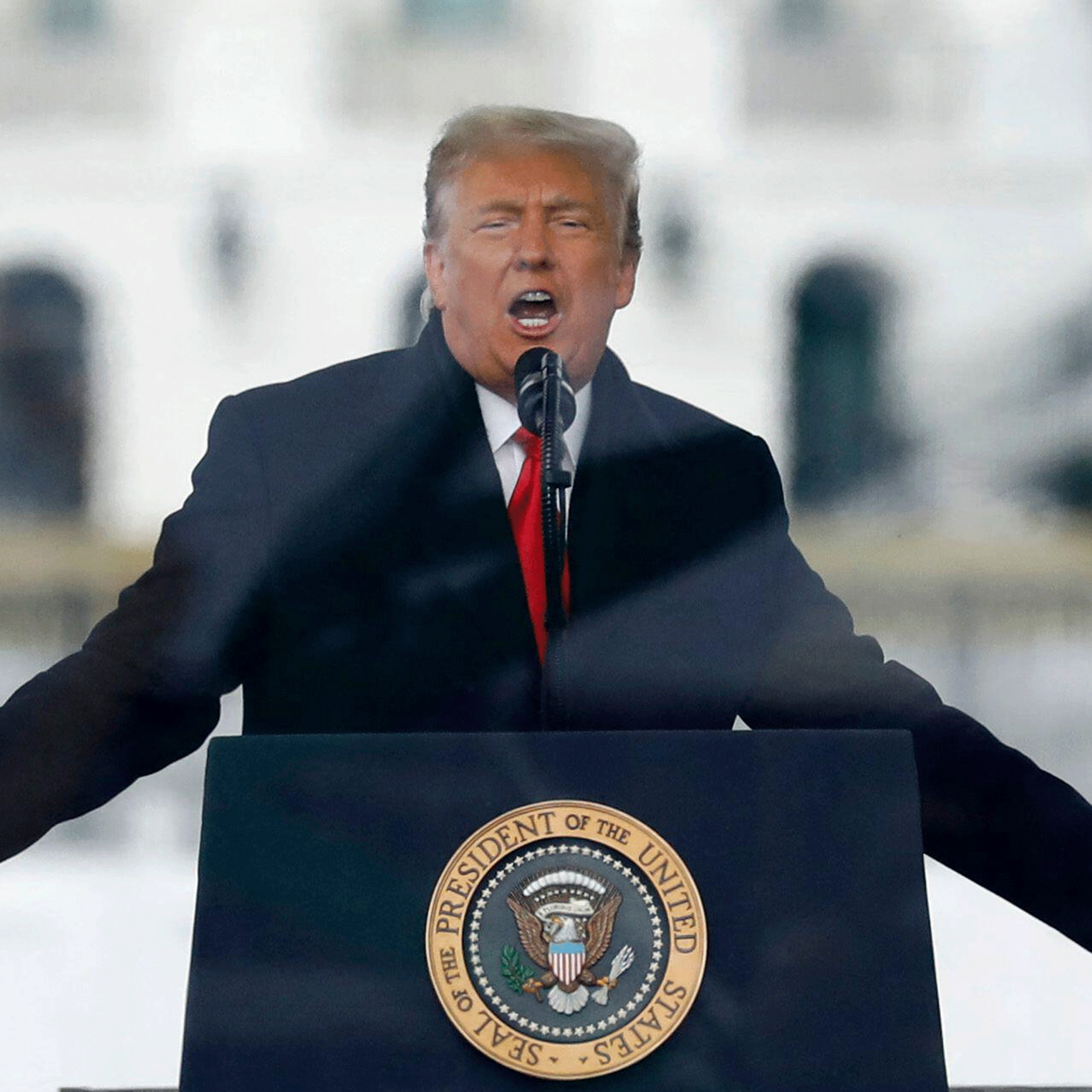
Speaker 3 Although actually polling did suggest that most people think that they were wrong to edit the they basically edited two bits of the speech from January the 6th, 2021, when he said, Let's all go down to the Capitol.
Speaker 3 And then there's a bit where they cut out where he said, and just have a lovely, peaceful protest, and definitely nobody shout, hang Mike Pence and bring a load of zip ties.
Speaker 3 And then a bit later in the speech where he says, you know, you go down there and we're going to fight like hell.
Speaker 1 Yeah, one of our readers said, can you make it absolutely clear that by the time he said fight, fight, fight, his supporters were actually fighting.
Speaker 1 So what he was doing was placating the crowd which i think is a good point from a reader and i'm going to pass it to the bbc's lawyers in case that helps i was surprised the bit they cut out was he said we're going to go down to the capital and i will be with you and then he wasn't lazy he didn't no he wasn't actually in a way they were making him look better by that cut weren't and can i check why they were all there in the first place was it because trump had spent weeks denying the legitimacy of the election result no you're you're trump deranged
Speaker 1 okay and probably worked for the bbc sorry i'm just summarizing the rest of the letters that have come in Yeah, it was a certification of the 2020 election results.
Speaker 3 But what ended up happening is, as you will have seen from the footage at the time, lots of people stormed into the Capitol building in Washington, D.C.
Speaker 3 A protester was shot trying to climb through a door. And since then, Trump...
Speaker 1 He was impeached subsequently. He was, yeah.
Speaker 1 There was enough kind of evidence to make him look bad that the BBC didn't need to do an absolutely idiotic edit. Right.
Speaker 3 And he pardoned violent protesters in that whilst constantly quacking on about Antifa and how how they're the real threat to America, threatening to certify them as a domestic terrorist organisation.
Speaker 3 But yeah, so you're right. Basically, Donald Trump didn't say exactly what the BBC accused him of saying.
Speaker 3 There is a larger context to that, which is that we may think he said some things that were nonetheless quite bad.
Speaker 1 Legally, the fact that you're all offering common sense views is of no interest.
Speaker 1 Can we get down to what the law in America will allow him to do?
Speaker 3 Well, luckily, we've got massive Florida legal expert Adam McQueen.
Speaker 1 Yeah, I've been on Wikipedia.
Speaker 1 No I'm going to slightly further than Wikipedia.
Speaker 1 Yeah no sort of standard thing that we say in the media in Britain is that American law is much much better than British law when it comes to libel you know because they've got free speech and you know they're much much more representative.
Speaker 1 I suspect in this case actually is one of these cases where Britain comes off rather better because there's a statute of limitations in Britain which says that you can only sue for libel for a year after the broadcast or the publication took place on the sort of very good grounds that if you've been horribly damaged by something and had your reputation introduced, you probably would have noticed before 12 months were out.
Speaker 1
In this case, Trump didn't. He had to have it pointed out to him by the Daily Telegraph.
Quite an awful thing had been done to him in October 2024.
Speaker 1 But he is still nevertheless claiming that his reputation was damaged so horribly that he has a case for libel. He's going to sue in Florida.
Speaker 1 How far could he have gone if he hadn't had his reputation damaged by this? I know.
Speaker 1 What's the promotion that he thinks he's missed out on? This, you would think, is kind of the key problem with this, is that you have to prove that harm has been done to your reputation.
Speaker 1 The fact that he then went on to win the election and be elected as president of the USA does kind of suggest that it didn't have an enormous material effect on things.
Speaker 1 I mean it was very unlikely that it was going to, given this was broadcast a panorama which was only made in Britain and not on BBC America. Was it screened there? It was never been screened there.
Speaker 1 It is apparently. It was screened in Britain, though no one noticed.
Speaker 1 But what if accidentally several million American tourists had come over here, watched it in the hotel rooms, gone home? You're an expert witness for him, aren't you?
Speaker 1
Yep, and deep cover. That is about the one case you can.
I suppose you could also say if people had downloaded VPNs, then presumably they would have been able to log into the BBC iPlayer.
Speaker 1 But I think even then you're getting into some quite sort of
Speaker 1 rope-y kind of issues. There was a case where the Barclay brothers, do you remember this? Ian sued John Sweeney over an article that appeared in the Observer, but they sued in the French courts.
Speaker 1 And it turns out, you know, there are one or two copies of The Observer that are kind of taken over and sold at Gardou Nord on Monday morning or something.
Speaker 1 So that was the grounds enough for them to be able to sue there. Yachting magazines used to be a good thing for these sort of oligarchs.
Speaker 1 and they would say that the story had been picked up in some magazine that they read when they were buying a yacht. I mean
Speaker 1 there are a couple of really spurious cases but in this one it looks like he'll end up in Florida. In Florida yeah that's where he's going to bring it which of course he is resident.
Speaker 1 He's a voter in Florida isn't he because he changed his registration.
Speaker 3 He registered
Speaker 1 from New York down to Florida. Yeah.
Speaker 1 That is a slight problem because in Florida they have one other thing which we don't have to our advantage in the British system anymore which is libel cases there are heard by a jury, which has not been the case in this country for a very long time.
Speaker 1 And just to clarify that, it is still possible. You can apply for a libel case to be heard by a jury here.
Speaker 1 The last case where someone tried to do that that I know was Lawrence Fox, famously actor-turned lunatic, who was sued by three people who on Twitter he had decided to call paedophiles.
Speaker 1 He counter-sued and said that they'd called him racist and said that was libelous of him.
Speaker 1 He wanted that to be heard by a jury on the grounds, and this is the sort of thing, I don't need to give you any advice on this, things that don't go down well with judges, but he said it on the grounds that the judge was bound to show involuntary bias.
Speaker 1
So could he please have a jury trial and said, didn't go down well with Mr. Justice McClan? He said, no, no, no, actually, I'm not biased at all.
I'm going to hear this.
Speaker 1 And Lawrence Fox did, I'm afraid, lose that case and had to pay damages for calling people Pedophiles.
Speaker 1 He is currently appealing the other half of the case, which is the bit about where he was called racist. So that part of the case is still ongoing.
Speaker 1 But in this country, other than that, we do not have jury trials hearing libel cases, certainly in England and Wales.
Speaker 1 Case is different, and I know private eyes come against this in a case in Northern Ireland, where you still do get juries, don't you?
Speaker 1 You do. And sometimes the make-up of the jury, say on religious or denominational basis, has some bearing on the outcome of the case.
Speaker 1 I felt, perhaps unfairly, that that was the reason that we lost so spectacularly
Speaker 1 in some of the cases there. But I don't feel we need to go into that.
Speaker 1 What I'm interested in is, can Trump find the equivalent process where Elon Musk can happily call someone a pedot man
Speaker 1 and get off?
Speaker 1 Is there a reverse where they'll say, yes, Trump was obviously given a very, very bad time by the BBC.
Speaker 1 And we should give him £5 billion. Well, there's potentially possible.
Speaker 1 Yeah, yeah, but I think that's where the jury come in, because the jury of Floridians are as likely to be biased in a particular political direction as, say, your hypothetical jewellery in Northern Ireland might be had to add one when written about a politician on either side there.
Speaker 1
They could be huge Gavin and Stacey fans in Florida. We don't know.
They might be devout Bieb defenders. It's very possible.
Can I interject?
Speaker 3 You know, I love Florida after having gone there to report on Governor DeSantis, but do you want to know the thing that's happened in Florida this week that might give you an indication of what the makeup of this jewellery pool might be like?
Speaker 3 Yes, God.
Speaker 3 In Florida, very recently, Russell Brand baptised someone to Christianity in a penguin pool at the zoo.
Speaker 1 With penguins? I don't know.
Speaker 1 It wasn't a penguin, it was a human.
Speaker 1 So the penguins were just witnesses, godparents,
Speaker 1 members of the congregation.
Speaker 1 It's only about a year since he was baptised in the River Thames by bear grills.
Speaker 3 Bear Grylls, yes.
Speaker 1
No, and now he's spreading it. So now he's allowed to baptise people himself.
Is this how it usually works?
Speaker 1 It's an apostolic succession.
Speaker 1 Surely
Speaker 1 you've got the hang of this. This is celebrity Christianity, isn't it? It's a specific sect.
Speaker 3 And it was also just quite unsanitary. I mean, I don't know what diseases penguins have, but I wouldn't really testify that you would want to.
Speaker 1 Do you know what diseases Russell Brown have?
Speaker 3 Russell Brown gave a penguin chlamydia.
Speaker 1 No, that's not a string. Would be an example of a libelous comment which Russell Brown would be justified in suing.
Speaker 1 And we were always told that it was much, much better in America because you had to prove, particularly with public figures, that the intent was malicious.
Speaker 1 And if you couldn't prove malice, which in America traditionally was a high bar, then you'd failed. Whereas in Britain, you don't have to prove malice.
Speaker 1 They sort of assume it, particularly when they're suing the eye.
Speaker 3 They just look at your face and they think, yeah, you meant it.
Speaker 1 Well, I
Speaker 1
look at you, Lord. You're absolutely right.
That isn't an obligation in Florida, particularly for public officials, they have to prove actual malice in it. I would have thought, actually, in that...
Speaker 1 point he has something of a case which comes in the Prescott memo which was raising you know the idea not just of one particular bit of bad editing but an actual bias by the entire newsroom and the BBC against Trump in general, which they have.
Speaker 1 They've apologised specifically for that particular edit, haven't they?
Speaker 3 The problem is that Trump does more bad things. I mean, I've had, as you know, many criticisms of Joe Biden than the Democrats.
Speaker 3 But if you look at Donald Trump's record of losing lawsuits and having criminal charges, impeachments against him, if you weigh that in the balance against the things that Kamala Harris was supposed to do, this is one of the allegations in the Prescott report, is that there was just a lot more on his rap sheet.
Speaker 3 The other thing to mention, I think, is the fact that none of these lawsuits that Trump ever raises against the media ever gets a judgment in his favour.
Speaker 3
I went looking, and I'm sure readers, listeners, can write in with one, because I just can't find one. So let's go through a couple of them.
Wall Street Journal, that's ongoing.
Speaker 3 That's the signature in the birthday card in the Epstein birthday book. 10 billion he wants off them.
Speaker 1 For what?
Speaker 3 For saying that he was friends with Jeffrey Epstein because he was. Which he was, which he obviously was.
Speaker 3 And there's a whole huge tranche of new emails reminding everyone just how friendly they were at one point.
Speaker 1 And extraordinary, with that case still ongoing, who was one of the guests of honour at Trump's state banquet at Windsor last month? Rupert Murdoch,
Speaker 1 who is named in the suit, that has been specifically sued, and they're trying to bring forward his witness statements in case he's not around.
Speaker 3 Nice to see if they can put that aside to get together at the state banquet. That's a real lesson for us all in the age of cancel culture.
Speaker 3 So that one's going on. Because the Wall Street Journal basically said, we're not folding, at which point he's, you know, where's it going to go?
Speaker 3 The New York Times, Times, similarly, he tried to cape them for 15 billion, saying that they'd said very mean things and endorsed Kamala. And they just went
Speaker 3 archae press dram on him, basically. And the ones that he actually has ended up getting a payout with, so Paramount and ABC.
Speaker 3 Paramount was over the editing of the 60 Minutes documentary on CBS, Kamala Harris's answers, which was another misleading edit. And they just basically folded.
Speaker 3 Some of the team at 60 Minutes resigned.
Speaker 3 They've now put Barry Weiss of the Free Press in charge of CBS, a more Trump-friendly voice, because essentially they want to to navigate the new media environment in which he's the president and source of all kind of access and power.
Speaker 3 And the same thing with ABC, parent company Disney, George Stephanopoulos, the anchor on that, said Trump had been found liable in a court for rape.
Speaker 3 He had merely, as I've said before, he'd merely been found liable for sexual abuse.
Speaker 3 They gave him some money to the presidential library, basically, to make him go away and to get their corporate goals back on track.
Speaker 1 So this is a clear motor soft brandy. It's a shake.
Speaker 1
It's always a shake. It's absolutely.
And actually, it extends way before his time as president already. I mean, he was engaged in all his time as a New York kind of real estate muggle.
Speaker 1 He was engaged in countless lawsuits.
Speaker 1 I mean, his thing then was to get contractors in to do work and then query the work and say he wasn't going to pay the full bill and tie people up in kind of legal costs, which, if you're a small building firm in New York going up against the Trump organization,
Speaker 1 even if you think you're going to win the case, it's tying you up in huge new cases. The journalists found, this was ahead of the 2016 election,
Speaker 1 3,500 lawsuits which have been brought in cases like like that with businesses trying to sue the Trump organisation for unpaid fees and things.
Speaker 1 So he's always been a man who uses the law to his own ends, not necessarily, as we were saying, in cases that get all the way to court, but in cases where just the sheer kind of terror and cost of fighting a case makes people back down.
Speaker 1 And this is the bit that worries me about the BBC, because the BBC do have quite a lot of form on bricking it and pulling out of these cases.
Speaker 1 And there is a problem in that he is a very wealthy private individual, as well as being the President of the United States.
Speaker 1 And the BBC is a state-funded license payer funded organization which is supposed to be responsible with money so they are terrified about being seen to waste license payers money and there were two stories in the press one was a warning from various sources i.e the usual suspects that you'd better not be using license payers money for this case and now i'm thinking that's the only money they have if they sell a program or a building or a picture it's because a license payer paid for it originally there is no other source.
Speaker 1 And the other story said, well, maybe the insurance will pay.
Speaker 1 Well, I have to say that during my history of fighting libel actions, occasionally Private Eye fought an action in tandem with someone who had libel insurance.
Speaker 1 Suffice to say, we never had libel insurance and still don't. But
Speaker 1 if you're in tandem with people who have libel insurance, there comes a moment where the people you've been sitting next to are saying, yeah, we're going to fight this, we're going to fight this.
Speaker 1 They suddenly say, Ian,
Speaker 1 we were thinking of settling, and that's because their insurers have said, you're settling now, and they get the say. So it is.
Speaker 3 Wouldn't that be something, though, if the BBC ends up basically donating money, sort of giving him a jet like the Qataris or donating to his.
Speaker 3 The question then becomes, what leverage does he have over them? Because what he's used in American media organisations is, I'll kick you out of the White House press pool.
Speaker 3
You won't travel on Air Force One anymore. I'll block your merger with another organisation.
You know, I'll set the regulators on you. None of that really applies to the BBC.
Speaker 3 I mean, he could be beastly to Gary Donahue,
Speaker 3 you know, sort of like summoning Sarah Smith to just say sort of mean things about her appearance. But, you know, that's there's not a lot of, he hasn't got a lot of, what can he do to the BBC?
Speaker 3 Or he can, as you said at the start, he can moan to Keir Starmer and say, no one from Britain is ever allowed a visa again.
Speaker 1 In terms of access, he's already giving first questions at press conferences to GB News and singing the praises of Beverly Turner at all times. So, you know,
Speaker 1 there's not a lot more that he can come take away from them.
Speaker 3 Have you watched the GB News interview with Beverly Turner and Trump? Because I haven't yet. And I thought you may be the only person I know who would voluntarily do that to themselves.
Speaker 1 I'm going to rush back to the office and watch
Speaker 1 that.
Speaker 3 Would you say you're a great president or the greatest president?
Speaker 1 It's going to be like that. That is the sort of coverage he likes, isn't it?
Speaker 1 Well, I'm hoping someone will come up with a statistic about the number of times that Ofcom have ruled already against GB News in a very short history of broadcasting and the number of times against the BBC it's in its entire history.
Speaker 1 I mean, that's very biased.
Speaker 3 Very biased, if you Ian.
Speaker 1 Very biased. No,
Speaker 1 it's genuinely outrageous.
Speaker 1 And also the spectacle of various British political figures falling over themselves to criticise the BBC and say, well, this is a clear argument the BBC shouldn't exist anymore.
Speaker 1 These people have no idea what exists in a country where you don't, where even the sort of fragmented version of the BBC we've got, where the people who work in the newsroom have to do endless layers of checks and compliance and referencing things upwards.
Speaker 1
Once that's taken away, you will really miss it. You will really miss it.
How is your radio 4 show, Anne? Good. Well,
Speaker 3 no,
Speaker 3 I went on various bits of the BBC to say I think some of the criticisms in the Prescott report are worth reflecting on.
Speaker 3 I think the BBC made mistakes in both directions on Israel, Gaza, I think on gender, it really found it difficult to kind of hold the space open for a discussion.
Speaker 3 But equally well, as somebody who spends a lot of time in America and covering the American media, the BBC is sort of squatting on the centre of British public life.
Speaker 3 That means people from very different political persuasions have to be represented on the same shows.
Speaker 3 And what you've got in America is you've got Fox and all the things now beyond Fox, and you've got MSNBC now rebranded as MS Now and all the things beyond that.
Speaker 3 And then there's just this cavernous space in the middle. And that's the bit that the BBC is holding us together as a society.
Speaker 1 You don't genuinely.
Speaker 1 You don't get versions of the World Service on Fox, where they hire Russian dissident journalists who've had to flee Russia to try and report some of the truth to people inside Russia who are brave enough to listen via a VPN.
Speaker 1 You just don't get it. Well, the closest equivalence of that were Voice of America and NPR, which he's already withdrawn funding for, hasn't he? So, yeah, that's direct.
Speaker 1 I mean, and again, for those of us who were brought up on an older generation of American journalists, you know, like Ed Morrow, I mean...
Speaker 1 Talking about impartiality, he said, you have to remember when you're talking about putting both sides of the case, sometimes there isn't another side.
Speaker 1 And obviously, I would try and use that with drugs.
Speaker 1 What I would just say about the BBC is that you should never, ever underestimate their ability to turn a crisis into a full-scale 100-story flaming clusterfuck.
Speaker 1 They will make, I mean, this is a case of it. Michael Prescott put that kind of dossier into the BBC board, did he not, in June last year? And it was ignored or not acted upon,
Speaker 1
nothing done about it to his satisfaction. Then mysteriously somehow ends up with the Daily Telegraph and causes this kind of enormous crisis.
Not very mysteriously, if you read last issue.
Speaker 1 We've lost a director of news, we've lost a director general.
Speaker 1 Traditionally, what the BBC tends to do is lurch in the opposite direction to the mistakes it was making last time, overcompensate horribly.
Speaker 1 I mean you remember this with when they failed to expose Jimmy Saville on Newsnight, then they lurched straight into exposing someone who wasn't a paedophile and
Speaker 1 we lost another director general over that one, didn't it? It tends to be a case of going madly in one direction, then madly in another.
Speaker 1 And what worries me is that they're urged to prove that they are not biased against Trump and that actually they don't have this kind of left-wing bias is that now they will do everything they can to compensate him and will come up with, because of those other financial pressures that we're mentioning as well, some sort of settlement
Speaker 1 out of court, which then
Speaker 1 essentially makes them the loser, doesn't it? My worry is... My understanding of
Speaker 1
the American judicial system is that he obviously has no case. He brings it.
He might get a jury. They might say yes, you can have five billion pounds or they might not.
Speaker 1
Even if he loses, he goes to a higher court. If he loses in there, despite not having the case, it goes to a higher court.
We end up in the Supreme Court. Guess what? Donald wins.
End of the BBC.
Speaker 1
Another 5 billion into the black hole. Britain bankrupt.
Well, that's true. And he has got a form for that.
Speaker 1 I mean, the Eugene Carroll case, where he was found guilty in civil court in New York of both sexual assault and of defamation of her.
Speaker 1
The defamation aspect of that is right up there before the Supreme Court now. He's trying to bring that case, and that's two years afterwards.
So, this could go on forever.
Speaker 1 And as we were saying, the pressure then from insurers and license fee payers and the government to just settle and get out of this becomes ever the greater.
Speaker 1 Can I just tell you the one fail I didn't get in there, which is that Florida still has a criminal libel law, but specifically only if you harm a bank's reputation or accuse a female of being unchaste.
Speaker 1 So, it's lucky the BBC didn't do that.
Speaker 3 That must be a big problem in Florida.
Speaker 1 People I met.
Speaker 2
Life gets messy: spills, stains, and kid chaos. But with Anibay, cleaning up is easy.
Our sofas are fully machine washable, inside and out, so you never have to stress about messes again.
Speaker 2 Made with liquid and stain-resistant fabrics, that means fewer stains and more peace of mind.
Speaker 2 Designed for real life, our sofas feature changeable fabric covers, allowing you to refresh your style anytime. Need flexibility? Our modular design lets you rearrange your sofa effortlessly.
Speaker 2
Perfect for cozy apartments or spacious spacious homes. Plus, they're earth-friendly and built to last.
That's why over 200,000 happy customers have made the switch.
Speaker 2 Get early access to Black Friday pricing right now. Sofas started just $699.
Speaker 2
Visit washable sofas.com now and bring home a sofa made for life. That's washablesofas.com.
Offers are subject to change and certain restrictions may apply.
Speaker 4 This is the story of the one. As head of maintenance at a concert hall, he knows the show must always go on.
Speaker 4 That's why he works behind the scenes, ensuring every light is working, the HVAC is humming, and his facility shines.
Speaker 4 With Granger's supplies and solutions for every challenge he faces, plus 24-7 customer support, his venue never misses a beat. Call quickgranger.com or just stop by.
Speaker 4 Granger, for the ones who get it done.
Speaker 1 As we are recording this, there is an exciting array of announcements made by Shabana Mahmood,
Speaker 1 who has decided that we're going to really stop the votes this time. Is that
Speaker 1 a fair summary, Helen? It is.
Speaker 3 As I say, we're recording this as she's actually speaking. I know people only have got the documents, but it was fairly heavily trailed in both The Guardian and The Sun.
Speaker 3 And she's the new home secretary, and she is determined to make our migration regime much tougher.
Speaker 3 But the reason I wanted to talk about this, I think I'm going to confidently predict this is not going to go well.
Speaker 3 I just, some of the stuff in there is relatively sensible and would command, when you poll, it commands majority support. But as a package, I think it looks a little bit grotesque.
Speaker 3 So there's a suggestion about whether or not you would take asylum seekers' wealth off them. And this has kind of been rendered as, would you take people's jewelry off them?
Speaker 3
Or at least they get to keep their wedding rings and anything of sentimental value. Which point, when you say that, a lot of people instantly recoil.
from that.
Speaker 3 It just feels very, very mean and cheap and small.
Speaker 3 But then there's other stuff about whether or refugees, for example, would now, if they arrive illegally, so through boats, have to wait 20 years before they could get a path to indefinite leave to remain.
Speaker 3 And that will be reassessed every two and a half years.
Speaker 3 So the idea being if somewhere if you come from somewhere like Syria and there's a change in government, Bashar al-Assad falls, then you say, Well, actually now you're a dissident against that regime.
Speaker 3 Maybe it's safe for you to go back.
Speaker 3 So not a completely crazy idea in in essence, but it is the idea that we've got enough capacity to interview people every two and a half years is again already worrying me.
Speaker 1 How big is the backlog already? I mean, that's one of the main problems is the years behind with it. If you're not going to add in all these extra levels of bureaucracy, yeah, it is shrinking.
Speaker 1 I mean, the backlog has come down. It's going to go straight up again if they've got to do it again every two and a half years, isn't it?
Speaker 3 But yeah, but so I think it's interesting because it's obviously a very big policy announcement.
Speaker 3 It is a big challenge to reform and the Conservatives and an attempt to own the issue of immigration and stop the kind of what they call the pull factors that are meaning people are getting on those boats.
Speaker 3 Stephen Bush and the FT had a good comment this morning saying that the reason that the boats become such an issue is that first of all we made it harder for people to get visas and have come here legally as refugees through orthodox channels and then we essentially managed to stop people getting on the underneaths of lorries.
Speaker 3 So this is the only method that's that's left but people are still willing to make that that journey because it's still the you know the chance of a life in Britain is still the prize that's worth a risk of I think a 2% chance of dying.
Speaker 1 And is the idea that even though lots of these proposals do command a kind of majority of opinion that doesn't overlap very neatly with Labour supporters.
Speaker 3 Yeah, I thought the most interesting intervention was by Tony Vaughan who's the MP for Folkestone. So two things.
Speaker 3 That's the place where obviously most of the small boats land and a very reform exposed seat, you would say.
Speaker 3 And he came straight out of the gate and said, Aren't we trying to make refugees integrate rather than keeping them in this perpetual limbo of whether or not they'll be sent home?
Speaker 3 Isn't that what people want from immigration? And by the time we're recording this, I think nearly two dozen Labour MPs have also come out and criticised the policy.
Speaker 3 And to me that has therefore given echoes of PIP, the personal independence payment, this attempt to reform welfare, which Labour you'd think had this massive majority, but actually they couldn't get their signature welfare reform through because over a hundred Labour MPs were ready to rebel on that.
Speaker 3 And this has got this feeling which is on the surface you think Labour should be able to put through really big changes, but they just, something about it is just not happening.
Speaker 3 And I think it's possibly because, and we can talk a bit more about this, last week's sense of Keir Starmer is now a sort of temporary leader, You know, or
Speaker 3 the other thing you might say is a lack of feeling of the direction of travel and the story that Labour are telling.
Speaker 3 You know, I think that's what Labour MPs felt over PIP, they were being asked, I think you said this, Adam, they're being asked essentially to take money away from disabled people, which was not what they'd got into politics to do.
Speaker 3 and that they just didn't want to do it. And then some of them said they wouldn't signed up for it reluctantly and then it got pulled anyway and then they felt really duped and cheated.
Speaker 3 And this used to happen a lot with Tory MPs under Boris Johnson where he would just reverse out of policies after everybody had had to go out and defend them.
Speaker 3 And so it is part of this general roiling sense that 15 months or whatever it is now after the Labour election victory, the wheels are already coming up.
Speaker 1 Is this part of a national desire for psychodrama? That, I mean, 15 months of the same PM. Boring.
Speaker 1 Why is he still there? Can't we have someone else?
Speaker 1 It just seems to me not a very useful thing to have inherited from the Conservatives, is a desire to decapitate your own party every year or so.
Speaker 1 Yeah, I mean if the decapitation has the effect of changing the underlying structural problems that the country's been wrestling with for years and years and years, then great.
Speaker 1 But there's a chance it might maybe not achieve everything if you just get Wes in.
Speaker 3 Well, it comes back to the idea that they didn't really campaign on a manifesto that was truthful.
Speaker 3 In the sense that we spoke about this on the last podcast, the kind of footsie about the budget, about am I going to raise income tax? Am I not?
Speaker 3 What they could have have done is come in, won that argument, made that argument and won that argument and come in on a... Actually, we're going to have to increase the tax base of the UK.
Speaker 3
That's going to require some hard sacrifices. But they just wanted to squeak over the line with an anti-Tory vote.
And sure enough, they did. But now there's no,
Speaker 3 you know, there's no kind of mandate really for the things that they've been thinking about doing.
Speaker 1 Do you think they could get anything through? At all?
Speaker 3 Well, so the other new proposals come in for this tourist tax, which they're going to tag onto the devolution bill.
Speaker 3 And something like that, which is essentially charged people who aren't British a couple of quid a night in order to give money to Metro Mayors.
Speaker 1
But immediately, the hospitality industry has said, no, no, this will stop people coming to Britain. Stop, stop this now.
I don't believe that one.
Speaker 1 I mean, the number of hotel bills I've had, which have had
Speaker 1 a few Euros added on for a tourist tax, and you're just kind of going, what the hell's this will? But it's not.
Speaker 1
But is that going to raise £94 billion? It's going to fill the black hole. Come on.
It's going to raise money, I think. The figure is not strictly accurate, can I just say?
Speaker 1 So they could get that one through, but you don't think they can get any of these other big things through? Well, I don't know.
Speaker 3 The income tax climb down is really interesting. So Rachel Reeves summoned everybody into a press conference on November the 3rd, 4th, and sort of went, well, things aren't looking good, guys.
Speaker 1 What are we going to do about it?
Speaker 3 She even submitted that plan to the OBR, the Office for Budget Responsibility. So it was really seriously far down the road.
Speaker 1 Everyone was prepped.
Speaker 1 Oh, will it be 1P? Will it be 2P?
Speaker 3 And then she went, oh, no, the guilt yields actually look much better.
Speaker 3
We won't do it. But then now is poised to keep the tax thresholds for higher and additional rate where they were.
So she's essentially putting a huge tax rise on a lot of people.
Speaker 3 If those had gone up in line with inflation, they'd be much, much higher than they are.
Speaker 3 So she's kind of managing, in the same way that putting employers' national insurance up, she's keeping to the vaguely to the letter of no taxes on working people.
Speaker 1 Well, so it's fiscal drag rather than
Speaker 1
putting the tax up. Yeah, rather than meaningful.
People don't think it's semantics, isn't it? Yeah, it absolutely is. People, you know, they're either paying more money in tax or they're not.
Speaker 1
And that's the way that people look at it. They go, well, no, it's in this tax, so that's absolutely fine.
But I do sometimes quite want Labour to be,
Speaker 1 this is a funny phrase, more unpopular. And I know they can't get much more unpopular, but what I mean is they kept saying before the election we are going to have to make hard choices.
Speaker 1 And you keep seeing these choices being swerved. Is that because of press screaming? Is it because of...
Speaker 3 I think it's because they've got seats that are facing in all different ways.
Speaker 3 They're vulnerable to a load of seats to the Lib Dems, load of seats to reform, load of seats, probably now a couple of more seats to the Greens, maybe some to the Gaza Independents.
Speaker 3
So they're just trying to face in all directions at once. And then Zach Polanski, the new Green leader, new-ish Green leader, is just going, I'd tax the rich more.
That's his answer to everything.
Speaker 3 And you can get into a dry debate about explaining there aren't that many additional rate taxpayers, right? So the top 1% of our income band pay 29% of the income tax.
Speaker 3
We have a good progressive tax system already. Like, that's good.
I support that. That's a very good idea.
But the idea that you can just find
Speaker 3 our seven billionaires to fight for the NHS is unfortunately silly, but they can't articulate if that's not right, well,
Speaker 3 who are the people who should pay more tax?
Speaker 1 The bit that really, really amuses me is how many of these problems are just of their own unnecessary making.
Speaker 1 I mean, Rachel Reeves, if you're going to end up not raising income tax, don't go out and do a speech in which you say, well, I might have to make a manifesto promise, by the way, because everyone goes, oh, it's breaking a manifesto promise.
Speaker 1 And don't do it. The whole stuff over Wes treating and the leadership was literally Kirstarma's number 10 going, oh, he's very weak, you know, he's in a very weak position, but he's going to fight on.
Speaker 1
He's going to take on anyone who's going to challenge him. And you hear, oh, he's weak and he's going to be challenged.
Can we explain the context of that? How that all blew up.
Speaker 1 It made no sense whatsoever.
Speaker 3 So on Tuesday,
Speaker 3 lobby journalists began to get briefings basically saying there's a plot for a coup against Keir Starmer, but he's well going to fight them in the car park.
Speaker 1 Right.
Speaker 3 And that came from who can say who, but almost everybody has agreed that it's from sources close to Morgan McSweeney, the number 10 chief of staff, Starma's key election strategist.
Speaker 3 And then Wes Streeting, who's the health secretary, then went for a media round the next morning in which he actually knocked it out of the park.
Speaker 3 Which is a huge problem for Starma. He essentially said, you're attacking one of the most loyal faithfuls like they did to Joe on Traitors.
Speaker 3 And everyone went, oh, we watch his television, he's just like us.
Speaker 1 Because
Speaker 1 people had, all the briefings had included the fact that Streeting was... Streeting was the kind of, you know, I thought you were going to explain what Traitors was there,
Speaker 1 which I thought would have been really helpful. But no, you two just assume everyone is.
Speaker 3 It's a popular BBC BBC One show in which people vote out the traitors.
Speaker 1 People are brief that Streeting was behind this.
Speaker 3 Yeah, Streeting was behind this, and he'd got 50 MPs ready to go. And he's denied it all.
Speaker 1 He probably has now, hasn't he?
Speaker 3 Yeah, I don't think anyone would be surprised to hear that Wes Streeting would like to be leader of the Labour Party, has ambitions in that direction.
Speaker 1 The other thing that intrigued me in my slightly conspiracy theory mindset was that the other person who was then talked about, if it wasn't going to be Wes, it was going to be Shimana Mahmood.
Speaker 1 Shabana Mahmood, as we've been discussing, then comes out with this sort of oven-ready policy that looks very kind of conservative, reform-facing. Is that a coincidence, do you think?
Speaker 1 I mean she's been she's only been the job about five minutes hasn't she as home secretary so she's come up with that pretty quickly.
Speaker 3 I'm just wondering whether or not that was pre-baked for Yvette Cooper her predecessor and she's just become the face of it.
Speaker 3 I think the thing that's very true is that she is very happy to be quite hard line. She was all for
Speaker 3 chemically castrating rapists. I mean you know she's say things that lots of people in Labour simply wouldn't be okay with saying.
Speaker 3 So it's interesting that it's under her because I think she does genuinely believe this stuff.
Speaker 1 If you're looking for people who would like to fight a leadership contest now, I would have thought, Wes Streeting, he's quite young. He can be leader later when everything isn't a shit show.
Speaker 1 And he's just winning over the
Speaker 1
resident doctor strikes. He's on a bit of a roll.
I think he might just stay where he is at the moment. Shabana Mahmood, you're introducing something that most Labour backpenchers don't like.
Speaker 1 I think you need a bit of time to wait until that's played out and then maybe you'll do it.
Speaker 1 So my guess is that the appetite for either of those two people to be leader at the moment is very, very small. For number 10 to make a fuss is crazy.
Speaker 3 Yeah, certainly among Labour members. The problem that both of them have is that they are on the centre-right of the party.
Speaker 3 And that what our evidence from leadership elections have passed is: this is that it's not the same constituency that selected Jeremy Corbyn.
Speaker 3 Lots of those people have left to go to your party or the Greens.
Speaker 3 But Keir Starmer's pitch in 2020 was exactly, I'm continuity Corbyn, but I wouldn't have done, I would have been stronger in Europe and I would have been tougher on anti-Semitism.
Speaker 3 It certainly certainly wasn't bury this man's leadership in a big hole.
Speaker 3 So I think you're absolutely right on that, is that actually both of those could probably benefit from cooking a bit longer to try and convince the members.
Speaker 3 Were Streeting came out and said, I welcome the election of Zoran Mamdani, a democratic socialist, very left-wing mayor in New York.
Speaker 1 And I was like, oh, okay.
Speaker 3 You know, after somebody who would, you know, would have agreed with Morgan McSweeney and Peter Mandelson and street urinator Peter Mandelson that the left should be locked into a sealed tomb.
Speaker 1
Please Google that. If you don't know the context, it is.
There is a story.
Speaker 3 Nothing but someone with the same thing.
Speaker 1 George Osborne's house.
Speaker 3
Nothing but sympathy for Peter Mandelson's small bladder. There'd be no condemnation here.
But anyway, but he once said the left should be put into a sealed tomb.
Speaker 3 And that is essentially Morgan McSweeney's view. It was Ware Streeting's view.
Speaker 3 But Ware Streeting has clearly reminded himself that the other way you could sort of describe the left is Labour selection contest voters. And you should probably start being nice to them.
Speaker 1 Yes.
Speaker 1 I think it's one of the very last popular Labour ministers is now Ed Miliband, who has, he said the other day in an interview, I've been thoroughly inoculated against wanting the Labour leadership job.
Speaker 1
Thank you very much. That would be my thank you.
The only thing that could make that more spectacular would be if his brother stood against it for a while.
Speaker 2
Time for a sofa upgrade. Introducing Anibay sofas, where designer style meets budget-friendly prices.
Every anibay sofa is modular, allowing you to rearrange your space effortlessly.
Speaker 2 Perfect for both small and large spaces, Anibay is the only machine-washable sofa inside and out. Say goodbye to stains and messes with liquid and stain-resistant fabrics that make cleaning easy.
Speaker 2 Liquids simply slide right off. Designed for custom comfort, our high-resilience foam lets you choose between a sink-and-feel or a supportive memory foam blend.
Speaker 2
Plus, our pet-friendly, stain-resistant fabrics ensure your sofa stays beautiful for years. Don't compromise quality for price.
Visit washable sofas.com to upgrade your living space today.
Speaker 2
Sofas start at just $699 with no risk returns and a 30-day money-back guarantee. Get early access to Black Friday now.
The biggest sale of the year can save you up to 60% off.
Speaker 2
Plus free shipping and free returns. Shop now at washablesofas.com.
Offers are subject to change and certain restrictions may apply.
Speaker 2 This is the story of the one. As a custodial supervisor at a high school, he knows that during cold and flu season, germs spread fast.
Speaker 2 It's why he partners with Granger to stay fully stocked on the products and supplies he needs, from tissues to disinfectants to floor scrubbers.
Speaker 2
All so that he can help students, staff, and teachers stay healthy and focused. Call 1-800-GRANGER, clickgranger.com, or just stop by.
Granger for the ones who get it done.
Speaker 1 Right, now we come on to the light-hearted third story.
Speaker 1 The end of the world. The end of the world
Speaker 1 is
Speaker 1
nigher than ever before. And to do something about it, the world is now having the the 30th COP climate summit.
This one is in Brazil which is quite circular because this is where it all began.
Speaker 1 The Earth Summit in 1992 was in Rio.
Speaker 3 Are we doomed Andy? Come on, catch the chase. Are we doomed?
Speaker 1 I mean yeah definitely. But
Speaker 1 the question people are asking a lot this year is
Speaker 1 is COP fit for purpose anymore? Is there a point this is the 30th we've had of these annual conferences now. Emissions are still rising, so the problem is getting worse faster.
Speaker 3 What is the point of COP?
Speaker 1
It's really interesting. All leaders assemble for a couple of days at the start.
There's a summit, there are photo ops, there are all of that, there are speeches.
Speaker 1 They leave for a couple of weeks and then each country's climate teams, you know, negotiators, diplomats, all of that, thrash out this huge number of subjects about things like finance, about things like emissions, about, you know, there's so much about forests, about whatever it is, about biodiversity.
Speaker 1 And at the end of it, you have this statement that is meant to be kind of gaveled through.
Speaker 1 It doesn't have to be exactly unanimous, but it does have to be consensus, which basically means almost everyone.
Speaker 1 And various things have been gaveled through with a few objections in the past, you know, when like the small island nations have nipped out for a cigarette or whatever, they say, right, right, that'll do for this year, you know, so it's not a perfect process by any means.
Speaker 1 But that's what you end up with.
Speaker 1 You end up with this statement of intent, and you end up with a load of very, very complicated language that any normal person observing this thinks is very baffling and confusing.
Speaker 1 Because it is, you know.
Speaker 1 There is a very, very good play called Kyoto, which I would recommend everyone go and see which recreates one of these conferences including representatives from the small islands the failure of the Saudis the Chinese the Americans to agree anything at all and the attempts to use really the powers of persuasion and punctuation
Speaker 1 to get through clauses that might mean something. I only say that because if you can get hold of it, it is a completely brilliant analysis of how the progress works.
Speaker 1
But that was a long time ago, Kyoto, and it's all moved on. The language is insane.
You get these nations debating furiously: are we going to phase out fossil fuels or phase down fossil fuels?
Speaker 1 And you know, that was a huge sticking point at Glasgow a few years ago. All of this can be said to not have a huge amount of impact on the real world.
Speaker 1 But despite all of this, despite the fact you're inviting every country and a lot of them are petro-states and want absolutely nothing to do with this process,
Speaker 1 nonetheless, progress has been made in very, very big and significant ways that have massively bent the curve of future climate change from four degrees, which is
Speaker 1
a profoundly toasty situation for the world. This is by 2100.
I mean, really disastrous, down to 2.6, which is still really bad.
Speaker 1 We're at about 1.3 at the moment, so all the kind of extra droughts, and ask any British farmer how their harvest doing, all of that is down to 1.3.
Speaker 1
We're on course for 2.6, but the curve has been bent. And the Brazilian hosts of COP this year have said we want this to be the COP of implementation.
They already have a target.
Speaker 1
It was set at Paris 10 years ago. They have a framework that was set at Glasgow.
We now need to speed this up.
Speaker 1 And so you're seeing the COP process change from one where everyone agrees something and then we all go away and do it, to one where there are lots of little bilateral processes going on.
Speaker 1 There's the Powering Past Coal Alliance, there's the International Solar Group, you know, all of these different little mini coalitions of the willing who are forming their own path.
Speaker 3 So it's not just the case that China or the Petrostates just can block things.
Speaker 3 Has that problem been overcome?
Speaker 1 No,
Speaker 1 I wouldn't say so. The Guardian wrote a brilliant piece outlining how Saudi Arabia have behaved over the last 30 years.
Speaker 1 And their position is very much: look, we know this transition is going to happen eventually, but we're going to sell the last barrel of oil on the planet because if we stop burning oil quickly,
Speaker 1 they're stuffed, you know. I was about to say they're toast, but if they keep burning oil, they are toast.
Speaker 1 Individual countries have been able to stymie, to slow down, to throw throw sand in the gears of the negotiations, all of that. It still happens a lot.
Speaker 1 Even the resolutions that are agreed make people pretend to behave.
Speaker 1 So even Saudi has a sort of green policy now and talks about building green cities, which obviously aren't going to happen, but it becomes performative in a sense that's quite useful.
Speaker 1 Weirdly, the innovation behind the Paris Agreement, which was in 2015, and which is the most significant of any of these 30 things, was to say these are now going to be voluntary.
Speaker 1 Instead of everyone arguing saying how much are you going to cut your emissions, the basis of Paris is countries come up with an NDC, a nationally determined contribution.
Speaker 1 Basically you set a line in the sand of let's say 2050 or 2060 whatever, that is your destination point and the way you get there is left up to you.
Speaker 1 Now again those are voluntary but there's a lot of evidence that Paris in particular hugely changed the course of things like solar power. You know in 2015 solar was 1% of the world's electricity.
Speaker 1
It was nothing. You know the One in 100 cars was electric.
Today, I think it's almost 9% of electricity is solar. One in five cars is fully electric, actually.
That has changed things a lot.
Speaker 1 It's quite hard to perceive in this absolute mess of...
Speaker 1
Well, when the populist narrative is drill, baby, drill, climate change isn't happening. I think that floods the media.
And underneath, that isn't the story.
Speaker 1 One of the main things that I think has slowed down America's path in particular is that people are not asking for this change to happen.
Speaker 1 China has made huge strides, partly because they've had big riots over things like air quality, and the Chinese leadership are quite nervous of further protests and riots. So they've acted.
Speaker 1 And they've acted partly through that and partly through the massive economic opportunity.
Speaker 1 You know, if you are producing the thing that powers the world in fifty years' time and you've secured 80% of the supply chain and you make 90% of the panels and you've got all the critical minerals stitched up.
Speaker 1 You're amazingly green.
Speaker 1
You're in a very good position. Green stuff.
Yeah, yeah, absolutely. Whereas in America, there simply isn't that demand at enough of a population level, you know.
Speaker 3 Yeah, it's a shame that Elon Musk's brain melted because actually he had a solar energy company, he had battery works, he obviously had Tesla making electric cars until he decided it was all woke nonsense.
Speaker 1 Oh, yeah.
Speaker 3 That model that you're talking about, which is let's tech our way out of this, he was a great proponent of that.
Speaker 1
America had a big lead and they absolutely threw it away. Yeah.
And there's a terrific line of, I think it's Bill McKibben who writes about this a lot.
Speaker 1 There's a chance that America will become a kind of colonial Williamsburg of fossil fuels.
Speaker 1 You know, you go there as a kind of quaint, oh my god, they're still doing this when we have something that's four times as efficient. How amazing.
Speaker 3 They did that with Czechs, where they were the last place in the world that were still using checks 20 years after everyone else.
Speaker 1 So the process is ongoing at the moment, but the cop is happening. And we will see what's produced at the end.
Speaker 1 But this idea that there's going to be a single document at the end of it that magically helps, I think is becoming more old-fashioned.
Speaker 1 And I think lots of voices are starting to say, this isn't working. We need to find other ways forward.
Speaker 1 Do they have any effect in countering the populist view that you go as far as you can towards saying it's all nonsense
Speaker 1 without quite making yourself look an idiot? Well the argument now is, obviously I'm not a climate denier, but I don't think we should spend any money whatsoever on it because times are tight.
Speaker 1 It's that. I mean the reform line is, well we're not climate deniers, but there's nothing we can do about it.
Speaker 3 I think the places where it's proving a persuasive argument to to adopt this new stuff whether it's solar or wind or whatever is where people are looking at their bills for the next 50 years so you know Ethiopia has a couple of years ago banned the import of petrol cars Kenya's bank banned plastic bags I mean they've some of the African countries have just done quite big yeah yeah ballsy things but you're right in a way they don't have to make an argument in the sense that people looked at the prices of electric cars and how much they would cost to run and the fact there was now infrastructure to run them and they went well I don't this isn't making a statement about me or my values it's just that's that's a very good value car.
Speaker 1
Yeah, yeah, yeah. And that's why Ethiopia did it.
You know, they were spending a lot on importing oil. I mean, most of the countries in the world import rather than export oil.
Speaker 1 I mean, it's part of the reason China's doing all this is they only produce, I think, about a quarter of their own oil.
Speaker 1 So, they would really like to find a way forward which doesn't involve being incredibly reliant on the world's oil market.
Speaker 1 And it's weird that because we talked about the Saudis earlier, even they have announced big new solar developments that I think actually will happen, unlike the hundred-mile-long city in the desert that NEOM.
Speaker 1 I know.
Speaker 3 Yeah, but it's currently 38 degrees and sunny over there in Saudi Arabia.
Speaker 1
Yeah, I was going to say that's the other thing they've got quite a lot of as well as oil. Oil down there, sun up there.
Absolutely. Yeah, yeah, yeah.
Speaker 1 I think they want to get 50% of their power through solar by 2030, which again is extremely rapid. So there are these international.
Speaker 3 But presumably then they could then sell all of their oil to other people, right? So you can produce it domestically and export internationally. That works as an economic model, that's pretty good.
Speaker 1 The Norwegian model, as I believe it's known, because Norway does a great deal of that. They just want to keep selling until they can sell no more.
Speaker 1 But your point, climate change means increased immigration
Speaker 1 from countries that are getting too hot. That level of self-interest surely should register with some of the larger blocks at COP.
Speaker 1 Back to the whole sort of solar nationalism thing, good old-fashioned British sunshine hitting good old-fashioned British land. It hasn't quite taken off.
Speaker 1 You know, the reform attitude is very much we don't want any large solar developments.
Speaker 1 They've claimed a lot of their efficiency savings in the councils they run through things like cutting electric car charging schemes.
Speaker 1 And I don't think there's a bright green bit of the reform movement yet.
Speaker 3 As a result of watching COP, have you become more or less optimistic?
Speaker 1 Good cop, bad cop. Yeah.
Speaker 1
We have to go for that headline. That's why they call it cop river.
So we could do that headline and they could say cop out as well for people don't agree or something.
Speaker 1
Fair cop. It's a sub-editor's title, isn't it? Capture point or copper.
It's really hard to say because it's such a huge thing.
Speaker 1 I mean, it's amazing that you're getting 190 odd countries saying right we're going to try and regulate the temperature of the planet.
Speaker 1 We've been kind of in essay crisis mode for a long time saying look if we're going to keep the rise to 1.5 degrees we're going to have to cut by oh gosh 40% of our emissions by 2035 and then we don't do it.
Speaker 1
And then we say oh well we right now I think we've got to cut 45% by 2030 and you start to realize in true essay crisis mode this is not going to happen. No.
That is pretty much baked in.
Speaker 1 I think we've got about four years of current emissions before 1.5 is pretty well nailed on.
Speaker 1 But when Paris was passed 10 years ago, there simply wasn't the infrastructure to build six or seven hundred gigawatts of solar energy a year, which is what we have now.
Speaker 1 One gigawatt is roughly a coal-fired power plant.
Speaker 1 It's pretty big.
Speaker 1
And back in 2004, it took a year to install one gigawatt of solar. It now takes about a day.
You know, there are now entire days where I think we're installing two gigawatts of power globally.
Speaker 1 So as long as renewable keeps outpacing the rise in energy demand, as long as clean energy keeps outpacing the rise, you will just see fossils forced off the system. It won't be in time for 1.5,
Speaker 1
seems to be the consensus that's emerging. But it could probably be in time for two, two degrees of warming if you keep things rising.
So I think that's the bit that does provide the optimism.
Speaker 3 Yeah, I think that's very optimistic.
Speaker 3 I mean also the fact that Gavin Newsom, governor of California, was there, obviously the Trump administration didn't send anyone, but he, as the governor of whatever it is, the fifth largest economy in the world, and the place that is home to lots of this technology, went along and met people.
Speaker 3 That if there is a non-Trump president in the White House after the 2028 election, again, that might be something that begins, that tech, our way out of it solution, begins to look more plausible again.
Speaker 3 I think two degrees sounds terrifying, and I'm sure will involve a lot of human misery, but it does also sound less terrifying than four degrees, which is broil.
Speaker 1
Absolutely. Broil territory.
Yes,
Speaker 1 let's try and set it for simmer,
Speaker 1 not broil.
Speaker 1 What an optimistic message to end on.
Speaker 1 Can I say, Helen, you've had an amazing number of baking analogies all the way through the show today. What is on your mind? We've had, were these policies baked in by Shobana Mahmood or by Vetku?
Speaker 1 Yeah.
Speaker 3 You know, fine well, it's because you made an amazing cake this morning, of which I've already had two slices.
Speaker 1 And I'm just thinking, can I go back to the office and have a third?
Speaker 1 All right, the private eye bake-off will be taking place later in the year.
Speaker 1
Back your horse now. Thank you so much for listening.
Thank you to Ian, Helen, and Adam for coming and playing.
Speaker 1 And we'll be back again in a fortnight with another of these.
Speaker 1 Before then, if you like Private Eye, just go into your nearest news agent and buy one.
Speaker 1 Or if you've already bought one and you think, oh, I'd love to get this delivered to me, get a subscription at private-eye.co.uk. That's all for now.
Speaker 1 The only remaining thanks is to Matt Hill of Rethink Audio for producing. Bye for now.
Speaker 4 This is the story of the one. As head of maintenance at a concert hall, he knows the show must always go on.
Speaker 4 That's why he works behind the scenes, ensuring every light is working, the HVAC is humming, and his facility shines.
Speaker 4 With Granger's supplies and solutions for every challenge he faces, plus 24/7 customer support, his venue never misses a beat. Call quickgranger.com or just stop by.
Speaker 4 Granger, for the ones who get it done.
Speaker 1 AI agents are everywhere, automating tasks and making decisions at machine speed. But agents make mistakes.
Speaker 1 Just one rogue agent can do big damage before you even notice.
Speaker 1 Rubrik Agent Cloud is the only platform that helps you monitor agents, set guardrails, and rewind mistakes so you can unleash agents, not risk. Accelerate your AI transformation at rubric.com.
Speaker 1 That's r-u-b-r-i-k.com.
Speaker 4 This is the story of the one. As head of maintenance at a concert hall, he knows the show must always go on.
Speaker 4 That's why he works behind the scenes, ensuring every light is working, the HVAC is humming, and his facility shines.
Speaker 4 With Granger's supplies and solutions for every challenge he faces, plus 24/7 customer support, his venue never misses a beat. Call quickgranger.com or just stop by.
Speaker 4 Granger for the ones who get it done.