The Making of America's Most Prominent Anti-Vaxxer
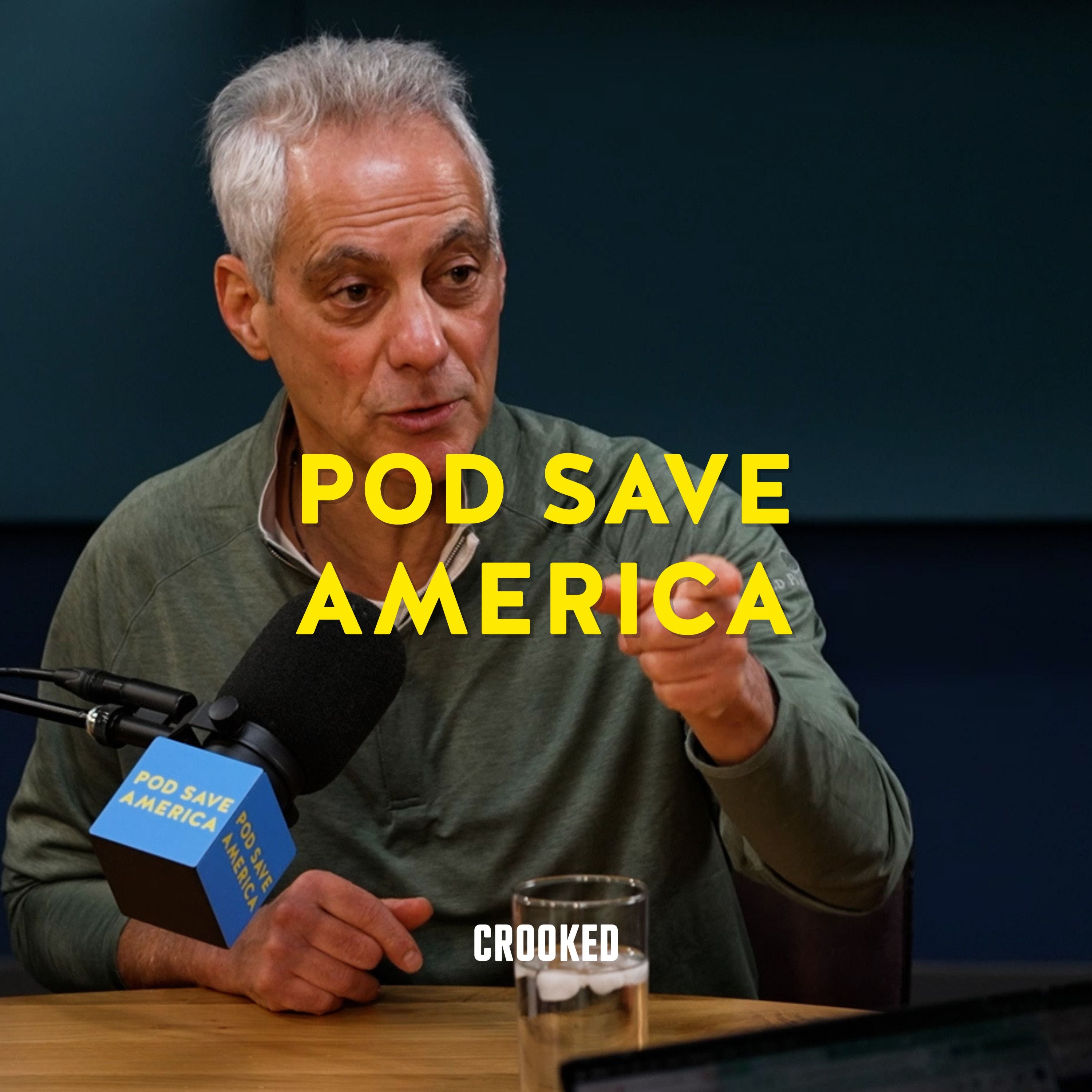
Press play and read along
Transcript
Pod Save America is brought to you by Policy Genius. When I was a kid, I liked Legos a lot and I lost the blue Lego man.
No. It was gone.
I looked everywhere.
Every time I went into my big red Lego box, I looked for the blue Lego man as if this was the time he'd be back for a long time.
It's a big part of my childhood looking for that blue Lego man, but it was gone. I wasn't going to ever be in that box.
But as a kid, you don't know what's possible. Is that a metaphor?
Yes, it is.
Do you know that that Lego man, that could be you?
I didn't have life insurance on my blue Lego man. Nearly half of American families say they would experience financial hardship within six months if they lost their primary income earner.
Well, what a turn. And there's an easy way to secure your family's future, and that's with Policy Genius.
Secure your future before the new year begins. Lock in your life insurance.
Today, Policy Genius is an online insurance marketplace that allows you to compare quotes from America's top insurers side by side for free.
Their license team helps you get what you need fast so you can get on with your life. Policy Genius helps you find the most affordable policy that meets your needs.
They answer questions, handle paperwork, and advocate for you throughout the process.
Policy Genius has thousands of five-star reviews on Google and TrustPilot from customers who found the best policy to fit their needs.
With Policy Genius, real users have gotten 20-year $2 million policies for just $53 a month. Don't wait until next year.
Give your family the gift of security today with Policy Genius.
Head to policygenius.com/slash crooked to compare life insurance quotes from top companies and see how much you could save. That's policygenius.com/slash crooked.
While the Who's of Whoville laughed and made cheery, the Grinch hatched a plot to make their season more dreary. Dell pickles seasoning on fries, knitted Argyle stockings.
That'll sure make for a shocking unboxing. The new Brinch Meal, now at McDonald's, as participating McDonald's while supplies last.
Welcome to Pod Save America. I'm Alex Wagner.
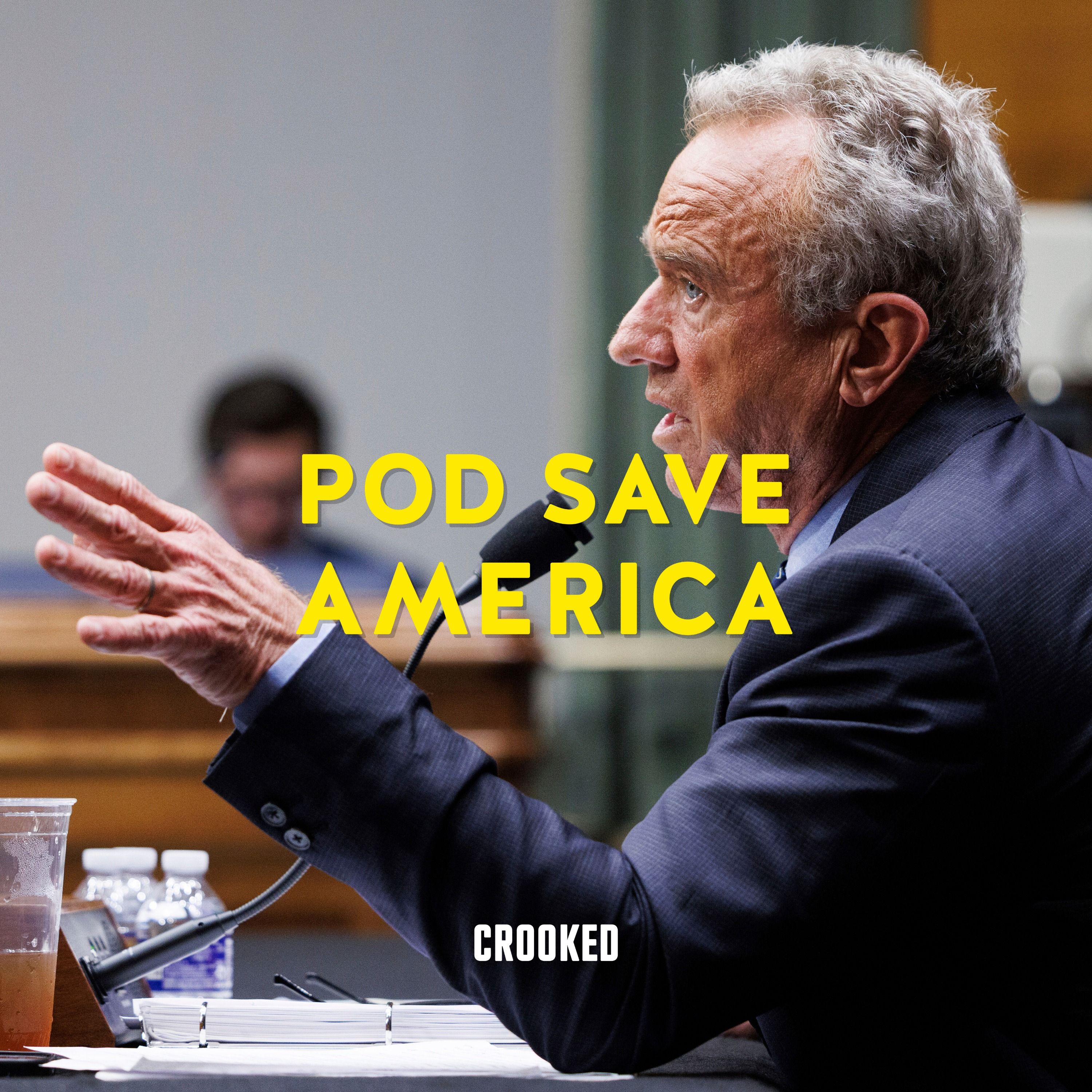
You might know RFK Jr. as the nation's Secretary of Health and Human Services, or as the loudest anti-vaxxer in American politics.
Maybe you know him as the conspiracy theorist, the raw milk evangelist, that guy in the Trump administration who had a worm in his brain and left a dead bear cub in Central Park and maybe had an affair with journalist Olivia Newsy, or more formally, the heir to the Kennedy legacy.
At 71, it feels like RFK has lived several lives, but in this current one, his actions are causing far more harm than good.
We're recording this on Friday, December 5th, and just today, a federal vaccine committee recommended delaying when most infants receive the hepatitis B vaccine.
It is a stark reversal of decades of guidance that newborns receive a dose within the first 24 hours of their birth.
This is a huge win, and I say win in quotation marks for RFK Jr., who has sought for decades to overhaul the childhood vaccine schedule. And it doesn't even scratch the surface of the chaos.
Since he took the helm at HHS, Kennedy has ousted the CDC director for refusing to rubber stamp vaccine changes that lacked scientific backing.
He's moved to slash roughly 25% of the HHS workforce, laying off thousands of people, and he has pulled $500 million in funding for mRNA vaccine contracts. Robert F.
Kennedy Jr.
was not always like this. He started off as an environmental lawyer who sued polluters and he founded a worldwide movement devoted to protecting waterways.
He was a committed Democrat in line with his family's views and legacies, campaigning for both Bill Clinton and Barack Obama. So what happened? What happened between now and then?
How did Robert F. Kennedy get so chummy with Donald Trump that he created his own MAGA spin-off franchise, Make America Healthy Again? And most importantly, was he always this goddamn weird?
To help me understand the complex history of RFK Jr. and how his reign as the head of HHS has impacted the health and safety of all Americans is Atlantic staff writer Michael Scherer.
Michael, it's like any excuse to talk to you, my friend. Thank you for doing this podcast.
Yeah, thanks for having me. Thanks for writing a really enlightening piece, a cover story in The Atlantic.
And I guess that's like maybe the place to start, right?
There's some news that is happening right now concerning HHS, which we'll get to in a second. But you've studied Kennedy up close.
You've studied the creature in the wild and your piece traces kind of his evolution. And I think a lot of people who remember the Kennedy part don't understand what happened to a guy who was like,
you know, he started as an environmental lawyer. He was a sort of committed Democrat in the mold of the rest of the Kennedy Klan.
He campaigned for Bill Clinton and Barack Obama.
And then all of a sudden, he's like the most prominent anti-vaxxer in the country working in lockstep with Donald Trump on Air Force One, sitting in front of a table of like McDonald's takeout.
So what, like, huh? How, what happened? Well, so that was exactly the whole premise of this story. You know, there's every day there's another story about Robert F.
Kennedy, and most of it is real shorthand. It's like anti-vaxxer, brain worm, sex scandal, heroin addict.
I mean, there's like all these things that people
are doing. Which is a lot.
No, and there's many more. I can keep going.
The bear, the whale. I mean, you can just keep going.
We're going to get to that. We're going to get to that.
And I had gotten to know him in 2023 when he started as a Democratic candidate and had kind of followed him closely. And we had tussled a bit with the story I wrote.
And then after that story.
And it struck me that like no one had really tried to explain how this happened, like how this guy had gone from being a sort of prince of not just the candy family, but then, you know, we're talking the 1990s, early 2000s, the Democratic Party.
I mean, magazine covers, the next senator from New York, you know, the environmental savior or hero of the planet.
And now he's, you know, obviously not that.
And he's sided up to, and he's found a way to sort of make the journey to stand next to President Trump. And so that was the premise of the story.
I went to him.
I said, look, I want to spend time with you. I want to talk a lot.
And let's explain this. Let's figure this out.
And his initial response to me was, okay, I'm willing to do it, but I don't think I should because I think you're going to burn me. I think you're going to screw me.
All these liberal journalists come in and they say sweet things to me and then they burn me in print.
And so the actual experience of reporting the story was an experience of negotiating that distrust.
Which was constant. It sounded like it was a constant constant back and forth.
Like
he's constantly semi-litigating issues with you, putting you in these strange positions. And I think, I mean, to answer your question, like, how does he make this journey?
This is a man who, you know, in 2003, 2004 is writing articles about how George W. Bush is a fascist
and who now believes President Trump, who all his liberal friends from 2003 to 2004 now call a fascist, is probably the, you know, the greatest president since his uncle, John F. Kennedy.
And he has made that journey for a number of complicated reasons. On the political front, it was opportunism.
He was given a chance to do what he has always wanted to do, which is to change how we approach medical policy in this country, particularly around vaccines.
And he took it and he convinced himself that Trump was
uh you know, not the malignant narcissist that he would describe him as before. You know, during the campaign, he'd said, this is the man who appeals to the darkest forces of our nature.
He now basically says Trump is a brave populist, someone who's ready to take on
the powers that be.
And then he has convinced himself also that he has not changed.
The liberalism of his family, the liberalism of his environmental work is still what he believes he's doing.
And his argument is that the Republican Party has taken all the best issues of the Democratic Party Party and the Democratic Party has lost its way. And so it's an enormous journey he's taken.
Almost no one's come along with him.
And he's had to face enormous backlash from that. And I think his willingness to do that, to lose his family, basically, to lose his
friend group, to lose much of the environmental community, to earn the derision of the entire medical establishment, the Democratic Party. I mean, you just go on and on and on,
helps explain actually
why he is doing this.
And it's a particular drive that I try to describe in this show. Well, you kind of like, to that last point,
you talk about the way, I mean, you suggest and maybe lay out the case that his years combating environmental polluters and chemical corporations served as kind of a gateway for a more florid, paranoid conspiracy about American institutions.
And now we see that in full bloom at HHS, where his leadership has literally been defined by distrust of medical science and medical institutions.
And that this is just kind of like the most extreme end point of a kind of worldview that actually informed the work for which he was celebrated in the
last 20 years. Can you elaborate a little bit on how he that sort of turn from activist to full-blown conspiracist?
Yeah, so there are a lot of consistent threads there.
You know, he grew up in the 1960s and was literally a child of the 60s. You know, he's first doing acid at the age of 15 in 1969.
So he's like followed quickly by meth, right? Yeah, followed quickly.
He's hitting it hard. His,
you know, the greatest conspiracy of the 1960s, the murder of his uncle, John F. Kennedy.
You know, it's clear now. I don't know, you know, exactly who was behind the assassination of John F.
Kennedy, but I think it's also clear that the Warren report and the investigation that immediately followed was not all up to snuff. I mean, like things were being hidden from the American people.
So there were real conspiracies. You know, the Pentagon Papers was a real thing that happened.
All those helped form him. Then he becomes a trial lawyer.
The dynamic of being a trial lawyer is you're basically exposing what... occurs to you as evil.
These are companies that are choosing to poison people for profit.
And so so that idea that there is good and evil and that my role is to fight in an almost like mythical sense between these powers
is given to him in the 80s.
And then the other through line here is that his environmental work was always about contamination. It was about contamination of rivers, contamination of the air.
And in the early 2000s, he's giving speeches about the environmental lawsuits he's bringing. He's
taking cases about pesticides, things like that. And mothers start showing up and saying, well, you're missing the big contamination scandal that no one's talking about.
And that is, at that point, the concern was thimerosol, a type of mercury in vaccines. And in his telling, he dismissed this.
He said, no, I don't think that's a big deal.
But then he starts reading and then he becomes entirely convinced that there is a grand conspiracy at work here.
And that much like you know, mercury poisoning of lakes and rivers because of you know coal pollution or uh uh you know general Electric dumping stuff in the Hudson River.
He comes to believe that pharmaceutical companies are knowingly seeding our health system with things that are hurting kids. And making us sick.
And then there's the whole pharmaceutical infrastructure to keep us dependent on big pharma. Well, no, and I think that's another complication of the story.
He's taking that vaccine view, which is very controversial, and merging it with a much less controversial view, especially after COVID, which is that the U.S. medical system is kind of broken.
You know, if you ask a poll of Americans, is the medical system primarily about making us healthy or primarily about making insurance companies and pharmaceutical companies profits?
It's like seven in 10 say the latter.
So that's a broad bipartisan view that there is something rotten about the way we care for our health. There is enormous broad bipartisan concern about our diet, about rising rates of chronic disease.
And I think one of the real innovations of last year for him was to take what started as like an anti-COVID vaccine campaign combined with this other
vaccine activism campaign, and then broaden it to incorporate all these other concerns, which actually are bipartisan.
I mean, you know, it's remarkable when I was reporting the story, I'd be up on the hill.
watching a hearing and Bernie Sanders and Robert Kennedy are, you know, cheering each other on because they both want to stop pharmaceutical advertising, for instance.
So there are a lot of crossover issues here. Well, yeah, and the environmental piece is obviously supported broadly by Democrats, if not Republicans.
We're going to get to that in a second.
I mean, you mentioned the RFK and JFK of it all.
And I wonder if you could talk a little bit about how beyond his conspiracy, you know, paranoid worldview, how much the Kennedy legacy hangs with him, how much the rejection by his family in no uncertain and very very public terms has informed his zealotry.
I mean, he fancies himself a young King Arthur, right? Am I getting that right? Was that the character? Yeah, just he thinks of himself as on a solo quest.
But I do, I mean, he had 10 brothers and sisters. He's one of part of the most storied family in modern American history.
And I wonder if you could just talk about how much the Kennedy legacy is something he's constantly reacting to, like against in his latter-day career and was and informed his sort of earlier years years on the side of activism and trial law.
Yeah, so he's nine years old when his uncle is killed, when the President Kennedy is killed. He's 14 years old when his father is killed.
And between those two
major events in his life, his father gave him his first red-tailed hawk. And he named it after a character in Once in Future King, the story of
King Arthur, who was, of course, the orphan king. He doesn't know when he's a child that he's the
part of royalty and he goes out into the woods and he, you know, studies with Merlin and then discovers the wonders of nature. Is Trump Merlin in this, in this like
vision movie? I think in this one, it would have been the education he had in his teen years. So I think Trump comes later.
Yeah, I don't know who Trump would play in this. But there was always, I mean, so.
Bobby Kennedy Sr. raised his kids in a sort of classic machismo literature, you know, reading Gunga Din and heroic tales and, you know, you should go out and adventure in the woods.
And, you know, Bobby Kennedy was known for taking these long hikes and things like that. And
his son inherits all of this,
but then is hit with these enormous traumas, like losing his father. His mother has 11 children.
He's basically unparented for a while.
And he falls deeply and very quickly into hard drug use, like not just, you know, marijuana or something like that, but hard, heavy drug use at the age age of 15.
um and his heroic tale is diverted he goes deeply into darkness and when we talked about this i asked him how much his recovery has to do with you know what he does now who he is now he said everything
he said that he he told me a story of a
article he remembers reading uh in the village voice in which a writer said that uh heroin addicts have a unique opportunity for redemption because they've literally been to hell and returned.
And Kennedy truly believes that about himself, that there is something that has, he is imbued with him,
that he has learned a power he has because of the darkness he has experienced.
And he is actually not,
he doesn't, I mean, he's not transparent about all his demons and not always forthcoming about all his demons, but he is,
he also doesn't try to sort of guild the lily on that stuff.
I read him, you know, Carolyn Kennedy, when he was up for his nomination, yeah, um, wrote this, you know, brutal letter opposing it.
And, you know, a lot of, you know, there's a paragraph in there about his teen years and how much damage he had done to people around him by sort of luring them into this drug world.
And, you know, they described his basement as a scene of despair and darkness. And I read that to Kennedy, and he didn't dispute it.
You know, he, he, he sees that as
like a core part of his story.
He comes out of that in the 1980s. And I think the rest of his life can be understood as trying to reclaim the birthright, right? Like he blew it.
These horrible things happened. This horrible trauma.
He didn't know how to deal with it. He went into drugs.
He came back and everything since then has been trying to reclaim it. And there is a fierceness about him.
that is rather unusual and extraordinary. And it explains this journey.
It explains why you would end up here, why you would decide that you have these pieces of wisdom that everyone in the medical establishment is saying isn't true. It's just not true.
There's no evidence for it. It's not real.
But he maintains that, no, it's here and continues to argue that case.
Positive America is brought to you by PDS Debt. Fresh start, same same system.
Banks win, you pay. Fees and calls piling up monthly, unless you fight back.
PDS Debt has already helped hundreds of thousands cut their debt and put money back in their pockets, not the banks.
Whether you're struggling with credit cards, personal loans, or medical bills, PDS Debt is custom options to help you get out of debt.
They go beyond the numbers to help understand your unique financial situation and craft a personalized plan designed just for you. There's no minimum credit score required.
They're here to help you save more, pay off your debt faster, and start putting money back where it belongs in your pocket.
PDS Debt is A-plus rated by the Better Business Bureau, boasts thousands of five-star reviews on Google, and holds a five-star rating on TrustPilot. Why?
Because PDS has helped hundreds of thousands of people get out of debt. Every month you wait costs you more in interest and fees.
The best time to start was yesterday. The second best time is now.
I think we've all been through that period of time when you overdraw your savings account or your checking account, or you get a credit card bill that is way bigger than you expected, and you look at it and you think, there's absolutely no way I will ever pay pay this down.
I don't know how I'm going to get out of this debt. And it can feel crushing.
What PDS Debt can do is help you figure out a plan to pay down your debt methodically over time and get the financial freedom you want and deserve. Don't wait another month.
Take back control in 30 seconds. Get your free personalized assessment and best option for you at pdsdebt.com/slash crooked.
That's pdsdebt.com/slash crooked. PDSdebt.com/slash crooked.
This podcast is presented by the Netflix film A House of Dynamite from Academy Award-winning director Catherine Bigelow, starring Idris Elba and Rebecca Ferguson.
Not only are critics raving about the film, with Deadline calling A House of Dynamite exceptionally powerful and brilliantly directed, but policymakers, experts, and scientists alike are weighing in proclaiming that the film is required viewing, a powerful and thought-provoking movie, and a movie of our time worth watching, mulling, and debating.
A House of Dynamite, now playing on Netflix, for your awards' consideration.
I want to talk a little bit more about the relationship he has with Donald Trump, who he recognizes initially as a force of evil and darkness.
There is news today that HHS is changing the schedule or is trying to change a schedule for hepatitis B vaccines for newborns.
There's the bonkers announcement that Trump makes from
the White House. Let's just take a listen to that for people who've forgotten.
This is about pregnant women taking Tylenol.
Effective immediately, the FDA will be notifying physicians that the use of acetum, well, let's see how we say that,
acetaminophen, acetaminophen,
is that okay?
Which is basically commonly known as Tylenol
during pregnancy can be associated with a very
increased risk of autism.
So taking Tylenol
is
not good.
All right. I'll say it.
It's not good. Okay.
So there's that announcement.
There's Kennedy ending federal funding for mRNA vaccines, which of course were the foundation for Operation Warp Speed, which developed the COVID vaccine, which is inarguably the greatest thing Trump has ever done as president.
Well, Kennedy would argue, but yes. Right.
Okay, fine. Fair enough.
Like, Trump is both Kennedy, I mean, in this, in my retelling, Trump is a useful idiot for Kennedy's endgame, but it's such a weird relationship. And I wonder if you got any insight into
how these two men work together and whether it's like the glow. First of all, Trump doesn't can't even pronounce acetaminophen.
Like, it's not like he's been a particularly, you know, public anti-vaxxer or anti-vaxx crusader, even as a candidate, but he's adopted Kennedy's issues as his own.
He's gotten further out there on something like Tylenol than even Kennedy suggested.
Is it Kennedy's glow of Kennedy that attracts Trump to him? And like,
there's mutual admiration. How did that happen? And what does it look like now? Well, so if you go back to the summer of 24,
early in the summer, Kennedy is now running an independent campaign. He's fighting to get on ballots across the country.
It becomes pretty clear that this isn't going to work.
I mean, he's spending a lot of money. He's going to be on the ballots, but there's no real chance of him becoming president.
And he and his campaign manager begin to make sort of
outreach to Democrats they know to see if they can cut a deal with Biden, to see if they can open a conversation with Biden, to sort of trade something.
You know, like Kenny at that point is trying to figure out what he can do with what he's done for the last year and a half and try and get something out of it. And the Democratic response is silence.
They won't meet with him. They won't talk to him.
They've been very hostile. The DNC has been very hostile to him all year.
Similar things start happening with Trump.
And it begins the night after Trump is almost assassinated in Butler, Pennsylvania. Kenny goes on a, I think News Nation does a hit about the horrors of assassination and how
we need to lower the temperature.
A friend of his connects him with Tucker Carlson, who connects him with Donald Trump. And that night, just hours later, they're talking.
And Trump at that point uh
wants to make a deal. I mean, he's there to make a deal.
He's like, come on, let's meet. Let's talk.
We can figure out, you know, what you can do. Days later,
they're meeting in Wisconsin right before the
Republican convention.
You know, according to Kennedy's telling, the conversation is broad. He thinks he might even have a chance at that point of being VP for Trump.
I mean, Trump is like sort of laying it on at that point.
It ends up going south. I mean, that part of the negotiation ends poorly for the two men.
But Kennedy comes away from that interaction thinking, wait, I can actually like he's a man who feels he has a destiny, who feels providence is guiding him.
And he begins to believe that providence is guiding him now towards Trump.
Um, because if he partners with Trump, he will be able to accomplish not all the things he wanted to do when he started running for president, but a lot of them, you know, particularly around this vaccine work and taking on the, you know, the regulatory deep state at HHS.
Kenny told me that his relationship with Trump is like like when you're dating a girl and you realize you start liking them more and more. And he said that he
had to realize, he had to decide that the defining feature of Trump's politics
was not this sort of radical republicanism, but was populism in a way that he could identify with as a sort of liberal Democrat who thought the Democratic.
$300 million ballroom is totally man of the people. But anyway, I digress.
I'm telling you his explanation.
And they basically woo each other. I mean, Kenny's a very charming man.
Trump is a very charming man. They're very good at wooing each other.
And they woo each other.
And they actually have a very strong relationship to this day.
You know, on that Tylenol example, the clip you played, I had talked to Kenny a few weeks before that, and I had talked to him about the Tylenol discussions he was having.
He was meeting with, you know, all kinds of scientists. He met with the company.
He was, he got really, he said one weekend he read 70 studies about Tylenol and neurodevelopmental disorders.
And he came out of that process with a pretty nuanced conclusion.
And when he went initially to Trump to talk to him about this, Trump's initial response to him, according to Kennedy, was, let's just tweet it out, tell people not to take Tylenol.
And Kennedy said to him, no, you can't do that. Don't tell people not to take Tylenol.
Like this is more nuanced than that.
And the reason is that Tylenol is really the only fever reducer available to women who are pregnant. Oh, don't I know? Yeah, because other ones are not there.
And no one disagrees that high fevers during pregnancy can be very dangerous for the, for the, yeah, for the mother, for the unborn child.
Like, so this is a, this is a, this is a very delicate place to be.
And if you read what the FDA put out at that conference, you know, when, when, when Trump begins to read that and he says, you know, the FDA is going to say this, what they say is there are studies that show correlation, but there's no studies that show causation.
Fevers are very dangerous for pregnant women. But our advice to doctors right now is that if you can avoid Tylenol for low fever, so not a serious case, it's better to.
Like just be aware of it.
The recommendation that came out of FDA was we're going to look into this more. There's a possible thing going on here.
We don't know it's sure for sure.
And in the meantime, don't take more Tylenol than you need to. That was basically the recommendation.
And then you hear what Trump comes out with. Yeah.
And you can even hear Trump make the switch.
He reads the paper. Yeah.
And then he's like, just don't take it. And then he's like, I'm going to tell you in my work.
That was what he wanted to do initially, which is, you know,
Kennedy now finds himself in that position trying to rein in the president of the United States. Good times.
Good times.
Glad they get along so well.
You talk about Kennedy being a charming man, and we're going to get to
the people he's worked his charm on in a minute.
But I, you know, you've spent time with him, and I I wonder if you could just give me a sense of what he's actually like as a human being, the degree to which the sort of mythic story he tells himself about himself is evident in his normal everyday interactions and his like sort of crusade against medical, you know, malpractice and corrupt institutions.
and his interest in sort of an alternative lifestyle, at least health-wise, is tangible in his,
you know, just in his day-to-day.
I was struck by this one anecdote, which is, in my opinion, really gross, but you have, he's situated on Air Force One, and we're going to get to why he was on Air Force One in a second, but National Guard stewards hand out reheated chicken quesadillas, which Kennedy declines in favor of the quart of plain, organic, grass-fed yogurt his body man had secured for him.
He later, which he's eating with a spoon, he later puts the spoon down in order to finish his yogurt in gulps directly from the container. Fucking disgusting, man.
Just eating quartz of plain grass-fed yogurt. I want you to tell me more.
I wanted to know more about what this, like, I know that we almost crossed paths at the gym once.
RFK was wearing jeans and working out in jeans, and that also seemed disgusting to me from a just a bacteria standpoint. But what is he actually like, this crusader in the flesh?
Well, so yes, there are a bunch of different parts of that. Yeah, sorry.
Yeah, I think on the on the on the diet and health stuff, he is enormous and ripped.
He's a guy in his 70s who looks like a comic book. I describe him as like a comic book character from a comic, you know, like a superhero character.
He's enormously ripped. He takes testosterone replacement therapy, which helps grow the muscles, but he works out every day deeply into weight training.
He has a very peculiar diet.
You know, his wife has talked about how he will travel to restaurants with sauerkraut, which is a
to eat sauerkraut. It's great for the biome.
Great for the biome. It also reduces your hunger.
So it helps you.
Yeah,
vinegar will reduce your appetite. So I think that's the reason.
The fact that he was eating the plain yogurt whole, like with nothing. I mean, I'm a fan of plain yogurt, so I'm not knocking plain.
I mean, so am I, but I don't gulp it from the container. Oh my God.
But he also pops ins regularly. So he takes the nicotine pouches.
You know, he tans. He's a very darkly artificially tans.
Like this is another thing he and Trump have in common. And I
yeah, I asked him about the nicotine and the tanning and he kind of got defensive. He said, look, I don't tell people to do what I do.
I just tell people to get in shape.
He told me he doesn't, he doesn't share his workout routines, although he...
he does you know social media stuff of him doing pull-ups and things like that but he doesn't like go into detail about his own thing and i think all this like he's got he's got a very peculiar
day-to-day way of living, which is, it's almost like a devout way of living. He's going every day to a
12-step meeting, no matter where he is in the country. He's been doing it for years.
He's taking calls in addition to his job from people he's mentoring
in that program.
On the how is he, like the hero's journey thing, I think, so I try and describe it in the story, but he's a he's a curious person. He's very well read.
He's constantly quoting other things and sort of trying to demonstrate how well read he is
about philosophy, about ideas, about the Enlightenment. I mean, all kinds of things like that.
But then, also, in my interactions with him, and I don't know if this is typical of other people, it was very hot and cold. Sometimes he'd be incredibly warm and joking and friendly
with me.
And then, you know, the next day he'd text me and say, I want to talk again. And he'd kind of berate me about how I was tricking him and going against him.
And
so it was the process of
going through my text messages, like we'd be having very pleasant text exchanges about particular issues or ideas. And then the next one,
I send him something, he'll say, no, you're, you basically, you know, you're, you're, you're screwing me on this and, you know, start attacking me. And then I'd have to sort of walk it back.
Oh, actually, this is what I'm doing. And so.
I think that the, I describe it as like a ferocious drive. I think that translates into how he deals with other people as well.
And he clearly had
a goal in mind of our interactions of
he wanted to win the argument. He wanted me to describe in the magazine that he had won the argument.
But he also wanted to protect himself from being,
I mean, he described me as the scorpion and the scorpion and the frog story at one point, of being tricked during the process. And so at times it was very tense.
At times it was very friendly.
And I think that's, you know, I think
in some ways there is a similarity to Trump, who
in my interactions with him, it's also been very similar. Like sometimes incredibly warm and gracious.
Oh, hi, Michael. So glad you called, you know, that kind of thing.
And the next moment he's sending out a truth social about how I'm a liar. And then the next moment, you know, he's warm again.
And it, and there's a transactional quality to it.
I think we call that an abusive relationship, Michael Sharer.
So this is a professional relationship. I don't mind being able to do that.
Well, you know what I mean?
Like that kind of erratic, like very charming, warm, one minute and cold and combative and like emotionally or if my wife was treating me like that, I would be it would not be a healthy relationship.
Today's episode is sponsored by strawberry.me. You know that feeling, that nagging sense that something in your life isn't working? Maybe it's your job.
It doesn't excite you anymore.
Maybe it's your routine. Every day feels the same.
Maybe it's your goals. They always seem out of reach.
Why am I reading this email from Peter? This isn't even the ad.
Instead of making a change, you tell yourself, I'll figure it out later. Stop waiting.
Start making progress with strawberry.me coaching. Strawberry.me isn't therapy and it's not advice.
It's just...
It's a success strategy for your future that helps you set clear goals, build a real roadmap, and follow through. Because let's be honest, knowing what to do and doing it are two different things.
Strawberry.me matches you with a certified coach who can help you tackle career changes and big life decisions. If you're stuck, this is how you move forward.
Sometimes it's just really important when it comes to your career to have somebody that you can talk to to help you think through your options, your direction, what you want out of life.
You can think you're thinking it all through in your head, but it's not until you say it out loud and get some feedback that you can really understand what you want.
So go to strawberry.me/slash crooked and get 50% off your first coaching session. That's strawberry.me slash crooked.
With Venmo stash, a tack on one hand, and ordering a ride in the other means you're stacking cash back. With Venmo Stash, get up to 5% cash back when you pick a bundle of your favorite brands.
Earn more cash when you do more with stash. Venmo stash terms exclude supply.
Max $100 cash back per month. C terms at Vimo.me slash stash terms.
You talk about how he wants to win the argument and he wanted the magazine, The Atlantic, to say he won the argument. And I want to bring to the fore this question, this quote.
He told you the entire purpose of science is to search for existential truths. It's not subjective.
It should be objective.
I believe science is a place where you can find unity if you can get a conversation going. Okay, like,
but does he actually want unity? It sounds like he wants capitulation. It sounds like he wants you to agree with whatever he thinks.
I mean, that seems to be, that was the feeling I got.
It's not that he genuinely wants a conversation. I mean, and he keeps saying, I'll debate these doctors and scientists.
And then they say, well, but no, he's the one that won't debate us.
Like, he actually has his little sheaf of bonk science and doesn't actually want to be challenged with real data i mean do you think he genuinely actually wants to find unity
that's a really complicated question there has been a breakdown generally i mean we've been covering politics a long time the political debate has
is eroded and collapsed over the last 20 years and that is happening at a much more rapid rate right now in the medical community the the the the peg for it was COVID, the thing that made it accelerated everything, like the enormous anger about the trauma we all went through in COVID and how some of the advice, the official advice may not have been ideal at the time.
But there is a total collapse of like that most basic conversation that makes science work in the scientific community.
And what's essentially happened is the the established scientific community, which is mostly the science, scientists, right?
You know, the PhDs, the universities, the people who've run public health, have have kind of thrown up their hands and said, we can't deal with these people.
And
the sort of group of dissident scientists and trial lawyers like Kennedy, who have different ideas about these things, have are deeply offended, are deeply aggrieved by that.
And instead of actually these two groups of people meeting and trying to work it out,
it's gotten worse. And Kenny is a lot to blame for that.
I mean, Kenny's been going around the CDC firing people who disagree with him. He's not trying to have the conversation.
At one point, I said to him, look, if you want to have this conversation, you run the CDC. Like, go to the CDC and sit down with these people.
They'll meet with you. You employ them.
And his response would be to say, well, a lot of them are biostitutes, which is a term he uses for bioprostitutes. Yeah, bioprostitutes.
You know, just before I came on here, I was watching the vaccine advisory committee hearing that's going on right now
at the CDC.
And they just had like a 30, 40 minute testimony from a lawyer named Aaron Siri, who's very close to Kennedy, shares his views on vaccines.
And there was nobody else presenting before the committee against Siri. So it's an again.
And some members of the committee were really upset about that. And
the organizers of the committee said, well, we invited these two people. They didn't come.
But to this day, there's just a breakdown.
And I kind of like, I can sympathize with both sides in terms of where they've been mistreated.
But I do think, and I, if I had a message for the story, like the purpose of me sitting down for seven or more hours with Kennedy in conversation was to try and demonstrate that this is our way out.
You know, the thing you didn't say is that when I was on the plane with him, it wasn't Air Force One, it was another charter.
You know, while we were in the air, we found out Charlie Kirk had been shot. And it was just such a bizarre thing.
And moments before we found out Kirk had been shot, Kennedy had been describing to me how his own security had come to him recently and said, like the levels of threats against you were at a whole other level.
He said it was above the threshold of lethality. I don't know exactly what that means.
What does that mean? What does beyond lethality mean? Don't know. It seems metaphysical.
Anyway.
Yeah, I think it was just, it just meant worse, you know, that like the threats were getting worse. Lethal seems about as bad as it could get.
Anyway, anyway, we're not, we're not, we're not a secret service. But, but like, that is the context in which all these conversations were happening.
Almost everyone I talked to for this story had had death threats against them. And many people had said they had, like I called vaccinologists, they said, you know, they threatened to kill my kids.
Well, but that's what I, I guess it's like, I understand we don't want anybody to get death threats. But the targeting of scientists, the targeting of Anthony Fauci began.
with one side in particular.
You know, it may have metastasized to become a sort of like bipartisan desire to execute people. But
the real suggestion that public health officials were out there and been co-opted and were doing bad things to the American public and should pay for it with their lives came from one side. Yeah, but
I think that is true.
There are radicals on both sides. So it's not like it's, you know, it's not blameless on any side now.
But my point, I guess, is that that's less important now than trying to figure out a way to listen to each other again. Because
if we're going to have any scientific consensus on anything,
there are two paths forward for us as a country here. We're stuck together right now, right? So either
we head towards more civil conflict and violence, or we try and understand our differences. We don't have to agree.
We have to understand where each other are coming from.
We have to understand what the actual specifics of the arguments are.
You know, like I spend 2,000 words in the story going through specific studies to wrestle with some of Kennedy's ideas about vaccines.
it's a little more laborious, but I think it is far more useful than just saying, oh, that guy's anti-vax.
Because there are facts he brings to bear, and you have to understand what those facts are. And then you have to present the alternate facts.
And then you have to weigh the value of these things.
You have to understand where there are gaps in the science, which there are gaps in science right now, and why those haven't been investigated further.
And I guess the thing I was hoping to accomplish with this story was to make the point that that conversation that's broken down, everyone is not to blame equally.
I'm not saying that, but the only path forward is to try and re-engage. But I guess in a way, do you think he really wants to do that?
I think that that was the suspense of the story. At the end of the story, I say to him,
not to give away the ending, but at the end of the story, I say
everyone go read it. Right.
But I say to him, you know, what if you're wrong?
What if you spend, he tells me he's going to spend billions of dollars investigating first-year vaccines and their connections to autism other neurodevelopmental chronic diseases i said what if you do all that and you don't find the thing you're looking for because it's not there and if in the interim because you've been doing all this because you've been redoing the vaccine schedule and telling people vaccines may be dangerous without the evidence
people stop taking vaccines and more people are dying from bacteria and viruses than before. What if you're wrong? And his answer to me was, I would listen.
We would listen, which was the answer I was hoping for the whole time. But then immediately he said, but here are the reasons I'm not going to be wrong.
And then he started listing off the other five or six other points that he was making about. So the answer, no one's like, that's not going to happen.
I won't be able to. That's not going to happen.
So no, there's not an easy solution to this. But I do think like there is a, at least on the surface, a willingness to listen.
And I think it has to that we have to engage each other on these. Respectfully, like I watched his, I've watched him on the hill.
I've watched him when he's challenged.
Nobody likes being backed into a corner. Nobody likes being publicly humiliated.
Nothing about his behavior and his, what he's said on the record thus far suggests to me someone who's genuinely curious to look at the data that the medical profession and the scientific profession have amassed over the course of 10, 20, 30, 40 years.
I mean, he just seems too far gone from that.
And so much of his ego is tied up in being a crusader that that if the thing he's crusading against turns out not to be an evil power, that undermines his entire vision of his life and himself.
So I feel like there's so many
enormous stakes for him riding on whether he's right or not. I agree with that.
And I also totally agree. I mean, I've been to a number of those hearings on the Hill.
They're humiliating for everyone involved. Yeah.
I mean, to see him go be where he just yells at centers and calls them names and calls them ridiculous. And then they say he's killing kids.
And he says, no, you're killing kids. Well, but I think this is the issue.
And this is why it's hard to find some sort of like liminal space in which people can present their ideas in a non-confrontational way, because we're talking about issues of life and death.
Absolutely. Right.
Like,
it's not tax policy, though economics are important. This is literally like.
Do I protect my child from this deadly disease or this deadly virus or not?
And I wonder, you know, because it's not as if Kennedy struggled with autism in his own, among his own children, at least, as I know.
From your article, it sounds like a group of activist moms whose children dealt with or deal with autism came up to him, basically kept at it and kept advocating for this sort of link between autism and vaccines, that he eventually takes this up.
But why is he so singularly focused on autism at the expense of these life-ending or life-threatening diseases that could roar back into existence if and when we stop vaccinating to get herd immunity?
I mean, like,
does the prospect of mass death from measles or hepatitis B not bother him in the same way that, I don't know, the exploding rates of autism do?
So his answer to that would be, and I'm not endorsing this, but his answer to that. Yeah, yeah, no, I know.
I'm sorry. I'm not trying to shoot the messenger, Michael.
Yeah, yeah.
His answer to that would be,
you are not accounting for.
the enormous harm being done that is not being measured right now, that we don't know about, that has not been directly ascribed to the things we've done. Like he does not accept
the idea that you said at the beginning, which I totally agree with, that the COVID vaccine saved lots of lives and obviously had an effect in the reduction of hospitalizations
at the end of that pandemic. He doesn't accept that as a fact.
He says, look, we don't know.
We don't know. The data is chaotic.
You have all these confounding things you have to look at.
And so a lot of these arguments end up being in
that space of having to wrestle with what the study said, what were the methodologies of this study, what does it mean. I think the other thing you have to say about Kennedy, though, is that
like a key part of his job as a trial lawyer,
his other public work in this was always being the person. And this is also kind of, I think, gets back to the King Arthur Tale.
who saw a truth that other people didn't see and then was willing to courageously pursue it. So he's a guy who's written that
Scakel, his cousin who was accused of murdering a woman and later released from prison, was innocent. He wrote a whole story about that.
He's argued that Sirhan Sirhan, the person who shot
his father, was not the sole shooter and that the shots that hit his father were actually shot by somebody else in the room based on the autopsy.
He's raised the possibility the CIA was behind the shooting of Kennedy. I mean, there are a number of these.
I mean, after the 2004 election, he wrote a long story for Rolling Stone about how the election had been stolen in part by voting machines in Ohio, which was then a liberal cause.
I mean, that was a liberal Democratic cause at the time.
But all these things have in common the idea that there is a truth out there that he perceives.
And that his role then is to bring it to the masses, that his role is to then share it with the rest of America and to fight courageously for that truth um and there is a sort of kennedy-esque yeah vibe to that yeah right and that's it and i think that is for him trying to embody
what i called the birthright like the the the the childhood he was born into that that was then sort of stolen from him i was so
horrified by this conversation you have with paul offutt
because you you do it you're put in a ridic ridiculously complicated position with kennedy right like on one hand you're trying to better understand him and the relationship between you two goes from i mean it's an unusual relationship where he's asking you to sort of mediate these vaccine debates in a way and you both have his trust but you're also an antagonist depending on what day of the week it is and you're also talking to the scientists who are i think in many ways paying the price for kennedy's crusade at HHS.
So you talk to Paul Offett, who's a pediatrician who helped invent a rotavirus vaccine that's been massively effective around the world and who's been a frequent subject of attacks,
courtesy of RFK, and death threats.
And you ask Offutt if he sees a way to reverse the public's distrust in science, which is only growing exponentially while Kennedy is at HHS.
And he says, I don't think there's any way to regain that trust other than have the viruses do the education and the bacteria do the education.
And then people will realize they paid way too high a cost. To that, I say, fucking yikes.
Is that where we are at?
Like, basically, people have to die or get very, very ill before they realize this guy was a charlatan.
Yes, the experiment is happening now. I mean, Florida has said that they're no longer going to require vaccines for schools.
Idaho has passed similar rules.
The rate of non-medical, non-religious exemptions, I think it's actually non-medical exemptions for vaccines that, you know, parents say, I don't want to have my kids take this vaccine and they can come into kindergarten, has been ticking higher.
Senator Cassidy, who, you know, Republican senator from Louisiana, who was the deciding vote for Kennedy, but is now really tangling with him behind the scenes and in public, very unhappy with where Kennedy is taking things.
His office is tracking pertussis cases, whooping cough cases around the country. And they have a theory that, and I think the data is still too early to tell.
So I say that in the store, I want to say that very clearly now.
We don't know that this is the case, but Cassidy's working hypothesis is you're going to have a greater increase in whooping cough cases among kids in red states states that that trump won than in states that um that harris won in the last election um so i think we're very much in a real experiment uh going forward you know that they just decided this week to
uh the the vaccine advisory committee recommending that what has become a standard procedure, that as soon as a baby is born in the U.S., they get a
hepatitis B vaccine,
that that is no longer recommended. And almost certainly, HHS is going to,
CDC and HHS is going to confirm that, and that will be the official federal recommendation. We don't know how that will change behavior.
It doesn't mean that mothers can't get their babies vaccinated on the first day they're born or in the hospital when they're born.
But it will likely lead to less babies being vaccinated, fewer babies being vaccinated.
And the concern is that some mothers who have tested negative for hepatitis B
or other family members will infect the baby.
And we have seen, because of the hepatitis B vaccine, a real reduction in liver problems and hepatitis for Americans, and that that rate will start going back up.
And if you listen to the vaccine advisory committee hearing, there's a debate about what's going to happen. The people voting to get rid of this think it's going to be a good thing.
The people voting against it think it's going to be a bad thing. But we're going to find out because it is happening, right? All this stuff is happening right now.
Quite a fucking roll of the dice, Michael. Quite a fucking roll of the dice.
We're going to jump to a quick break, but before we do, we got some quick housekeeping.
The Trump administration is using the tragic shooting of two National Guard members to justify an immigration crackdown and shutting the door on refugees and asylum seekers.
Really, just a wholesale reinvention of American immigration policy at a time when millions are seeking safety here in the United States.
And so, on the latest episode of my new show, Runaway Country, I unpack what is actually happening on the ground. I speak with an Afghan aid worker who helped the U.S.
for years on the ground in Afghanistan and then escaped Afghanistan after the fall of Kabul and came to America on a green card for which he was vetted for months.
And now, thanks to Trump, may get deported and sent back to the Taliban. His entire life and his family's life, everything is at stake.
And then I sit down with my friend and former colleague, Joy Reed, to get into the MAGA playbook. Here is a hint: it doesn't end well for black and brown people.
If you want to understand how all of this is shaping the direction of the country, don't miss this episode. Tune into Runaway Country on YouTube or wherever you get your podcasts.
Potive America is brought to you by Bombas. This time of year, it's sensory overload everywhere.
But one feeling we're still chasing: cozy season. That's right.
And Bombas has the socks, the slippers, and basically everything to get you there.
There's something weirdly therapeutic about fresh socks, and the socks scientists at Bombas have found a way to channel that energy into everything.
From slippers with sink-in cushioning to the perfect fitting ankle sock, and that feeling doesn't stop after one wear, it just keeps going.
They've got answers for all your gifting questions, like, what do I get my son's new marathon training girlfriend?
Get him socks.
Answer. Bombas running socks have sweat wicking and impact cushioning.
What about my neighbor's fussy newborn? Get socks!
Baby Bombas feel like a hug in there to sock to feel soft and stay snug on even the wiggliest toes. By the way, Bombas is really stepping up their slipper and slide game this season, too.
They've got new shapes, new styles, fluffy things, suede things, a little something for every foot. And there's one thing Bombas knows: it's feet.
And we haven't even gotten to the best part.
For every pair of Pambas you purchase, Bombas donates one on your behalf to someone facing homelessness. So anytime you get something cozy, someone else does too.
Just the other day, during an ad session, I treated myself to a sixer of men's performance cushioned no-show socks from our friends at Bombas. They showed up yesterday.
Nice. Wearing them right now.
Super comfortable. Get a pair.
Throw out all your old crappy socks. Yeah.
Replace them with Bombas. Get them.
It's just better.
Head over to bombas.com/slash crooked and use code crooked for 20% off your first purchase. That's bombb-as.com/slash crooked.
Code crooked at checkout.
With Venmo Stash, a taco in one hand, and ordering a ride in the other means you're stacking cash back. Nice.
Get up to 5% cash back with Venmo Stash on your favorite brands when you pay with your Venmo debit card.
From takeout to ride shares, entertainment, and more, pick a bundle with your go-tos and start earning cash back at those brands. Earn more cash when you do more with Stash.
Venmo Stash terms and exclusions apply. Max $100 cash back per month.
See terms at venmo.me slash stash terms.
I would be remiss if I didn't ask you about the bear carcass.
This is what's known in the podcasting industry as a hard pivot.
The whale head, the brainworm. I mean, what was
when you asked him about that stuff, and you don't need to go into each one, but sort of how, does he think that this is just like a smelly trail that keeps following him from room to room?
Does he have any, in the way that he owns his dark period and adolescence that Carolyn Kennedy, his cousin, so publicly brought up? I mean, does he, what does he say about the strange,
abnormal, distressing behavior that he's exhibited as an adult?
Well, I think first thing he would say is that all those stories which have been used to define him are an effort by the media to disqualify him, to distract from his arguments about science.
So that's the first thing he would say. The The second thing I think is that he doesn't, I mean, he is an unusual guy.
He has an unusual relationship with animals.
When he sees a whale on the beach, his thought is, let's bring it home, you know, or when he sees a bear,
yeah, a bear on a country road that's been hit by a car, he thinks, oh, it would be funny if we put it in Central Park.
Those aren't disputed stories.
You know, he's, he, he has lots of stories that are very strange. He's also, I think, you know, we should mention
someone who doesn't claim to be cured of his addictions. I mean, he
said that his brain is sort of like a formulation pharmacy, by which he meant that he can turn things like rock climbing or sex into a drug. And then he's kind of compulsive about chasing after them.
I mean, he's that there's a reason he's going every day
to a 12-step meeting. It's not.
This is a
current constant struggle for him.
And he's had enormous success. I mean, much more success than most heroin addicts of 14 years and sort of rebuilding his life.
Right.
You can look at him through the prism of being a Kennedy or being a heroin addict.
And your estimation of his accomplishments, I think, is probably inversely proportional, depending on which prism you look through. Oh, that's right.
And you haven't mentioned the, you know, the biggest story of the last few weeks. Well, I was about to.
You gave me the, you, you, you gave me the, you mentioned his addiction to sex. Yeah.
And I know your colleague at the Atlantic, Helen Lewis, read Olivia Newtsie's book. Olivia Knutsie is a journalist who
reportedly had an affair. Well, I guess we don't have to say reportedly because she sort of owns up to it in her own book.
And Helen in The Atlantic writes of the book and of the love triangle between Olivia Newtsie,
her ex-fiancé, Ryan Lizza, who has populated his sub stack with various installments of his version of what happened.
And RFK Jr. She writes, the only person in this story with real power is RFK Jr.
And he is, I cannot believe I am typing this sentence, maintaining a dignified silence.
What do you think? You're about to give me your thoughts on this scandal.
We're just like, well, or whatever you want to say about it. I mean, I know you weren't interviewing him at the time that this broke.
Is that right? Yeah. I mean,
I mentioned to him while we were talking. that I was going to put in the story stuff about his, some of the sex scandals around him.
I was going to mention the alleged affair with Nuzzie and the fact that she lost her job at the New York magazine. I mentioned also something that came out in Vanny Fair last year.
A former babysitter of his,
you know, 20 or 30 years younger, said that
of his children, not of his, said that, you know,
he had sort of propositioned her and groped her inappropriately. He apologized to her in a text message at the time.
I think the and, and I, the other thing I want to say is that even if I had known the details of what Liz and Nuzzie had written, have written since when we were doing these interviews, I don't think I would have focused on them so much.
Um, that wasn't the curiosity I had. I do think the fact that he still struggles with addiction, including sex addiction, is a central part of who he is.
And I do mention that.
And so I think that's the way to understand it. I mean, this is a guy who,
you know, he's, he describes himself as having returned from hell, which is an unusual thing for someone to say. Yeah.
And I think the demons are still very present, right? Like that he, in a way that you and I probably don't have to struggle on a day-to-day basis, he does have to struggle.
And so I asked him before we published, you know, if he wanted to comment on the Nuzi stuff.
And I think he has not commented at all i mean you know she says he talked to her about it last year um and and sort of urged her to keep it quiet and liza says i need you to take a bullet for me i think is right and liz says he had a conversation with kenny so it's not that he's never talked about it but his his policy on this is just to keep going um and and i mean he said in his announcement speech uh when he ran for president in 2023
uh i have so many skeletons in my closet that if they could vote, I'd be king of the world.
I wasn't a choir boy, yeah. Right.
I wasn't a choir boy. So that is true.
And that is still true. And, you know, once upon a time, if you had that many skeletons in your closet, you didn't get to be in public life.
But well, unless you were Kennedy.
I was going to say, right.
Yeah, I mean. You've got to cut away with it.
Although their skeletons weren't public at the time, they came out later. Right, right.
Private life, I should say. Yeah.
Who knew what would have happened if Marilyn Monroe had given a press conference?
Or written a book called American Kanto. Right.
It would have been a different, different world.
Yeah, he's returned from hell and is now bringing us to his own, the hell of his own creation. I mean, I do think it's an important story.
It's such an, first of all, it's a great story.
It's so well reported. Hats off to you on doing a very complicated thing.
But it's also really important because when we look at the legacy of the Trump administration, there's going to be a, it's going to have a long tail.
And I think the distrust, the paranoia, the erosion of,
you know, belief in our institutions is going to be one of the longer-lasting ones.
And what this is doing to medical institutions and science and facts and the central role RFK is playing in all of this is going to have a profound effect, both in the near term in terms of the health of Americans and on our body politic in terms of whether half the country decides to believe what the federal government and its related institutions are saying.
It's just, he is a linchpin and
this overhaul of the way we think about institutions writ large. So, you know, understanding him and how he grapples with it.
And I guess the peace he's made
in this crusade with actors he previously understood to be bad actors is like, I guess, it's the work we need to do as citizens and voters and journalists.
The other thing I would add is I think we're still early innings here. I mean, we're still in the first year of the second term.
I think he plans to stay.
There's no, he doesn't have the same problems as some of the other cabinet heads have right now. So there's no sign that he's leaving.
The Republicans really do want to use this Make America Healthy Again thing in the midterms next year. It's not clear at all to me how it's going to play, but they're going to lean into it.
They're not going to lean away.
And Kennedy has many more plans to continue, specifically on the vaccine stuff, which is the most, I mean, he's dismissed or fired or pushed out a quarter of the workforce at HHS.
So that's a big thing. There's a lot of cut funding at NIH.
I mean, there's other things we haven't talked about that are transforming the way medical research is done. But
on the vaccine front, I think we have just begun to see this changes that he intends to make over the next couple of years.
God help us all.
You know where I am on this side of it. Michael, it is, like I said, it's a complicated thing to try and get the trust of the subject without necessarily co-signing on what the subject is
espousing, the views he's espousing. And I think you do a really masterful job of giving, you know,
a good look at a very central player in American life. So thank you for taking this time to chit-chat with me about all of it.
put the visual of Robert F. Kennedy Jr.
gulping down a quart of plain yogurt
Well, thank you. It's a matter of course.
Thank you for helping us understand that visual. Thanks for highlighting the story.
All right, go to theatlantic.com and read it. Oh, it's so good.
Everyone should read it.
It's like, it's very, it's a very good read. Thanks for your time, Mike.
It's great to see you. Thank you.
That's our show for today. Thank you to Michael Scherer for joining.
John, John, and Tommy, we'll be back in your feeds on Tuesday.
If you want to listen to Pod Save America ad-free and get access to exclusive podcasts, go to crooked.com/slash friends to subscribe on Supercast, Substack, YouTube, or Apple Podcasts.
Also, please consider leaving us a review that helps boost this episode and everything we do here at Crooked. Pod Save America is a crooked media production.
Our producers are David Toledo, Emma Illick Frank, and Saul Rubin. Our associate producer is Farah Safari.
Austin Fisher is our senior producer. Reed Sherlin is our executive editor.
Adrian Hill is our head of news and politics. The show is mixed and edited by Andrew Chadwick.
Jordan Cantor is our sound engineer, with audio support from Kyle Seglund and Charlotte Landis.
Matt DeGroote is our head of production. Naomi Sengel is our executive assistant.
Thanks to our digital team, Elijah Cohn, Haley Jones, Ben Hefcote, Mia Kelman, Carol Pellevieve, David Toles, and Ryan Young.
Our production staff is proudly unionized with the Writers Guild of America East.
Did you know you can save up to 70% on top brands this holiday season at fromrebel.com? From trending toys to espresso machines, Rebel is your one-stop shop for gifts that wow for way less.
Every day, Rebel drops thousands of new products for up to 70% off from brands like Uppa Baby, Nuna, Baby Vill, Brevel, Nespresso, KitchenAid, La Crusée, and more.
But deals go fast because each is one of a kind. From holiday gifts, home upgrades, and treats for yourself, all for way less at fromrebel.com.
Clorox,
It's all in one.
Clorox toilet wand. It's all in one.
Hey, what does all in one mean? The catty, the wand, the preloaded bag.
There's a cleaner in there,
inside the bag. So Clorox toilet wand is all I need to clean a toilet?
You don't need a bottle of solution
to get into the stilettere revolution. Clorox clean feels good.
Use as directed.