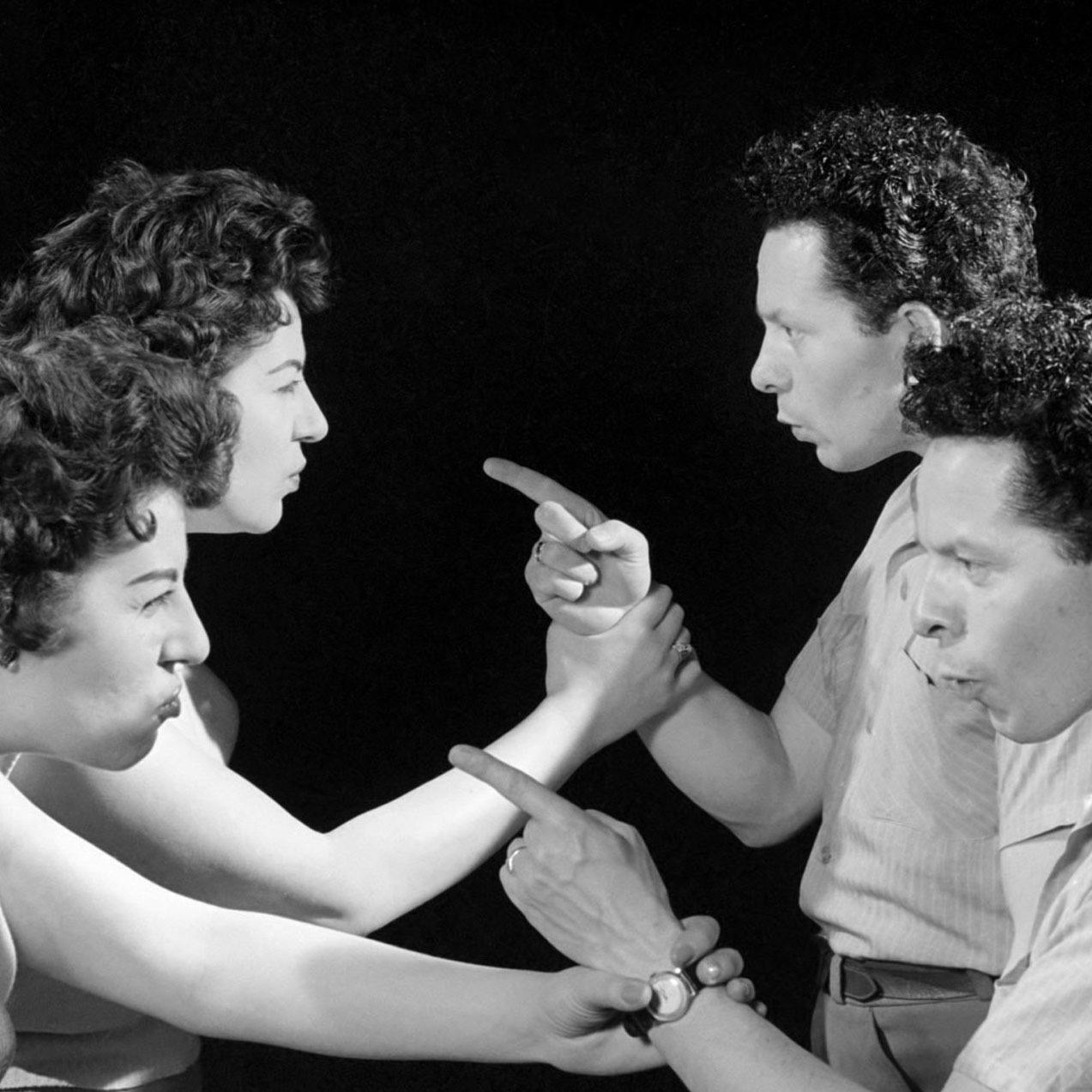
How to Have a Healthy Argument
Want to share unlimited access to The Atlantic with your loved ones? Give a gift today at theatlantic.com/podgift. For a limited time, select new subscriptions will come with the bold Atlantic tote bag as a free holiday bonus.
Learn more about your ad choices. Visit megaphone.fm/adchoices
Press play and read along
Transcript
Speaker 1 and Alyssa are always trying to outdo each other. When Alyssa got a small water bottle, Mike showed up with a four-litre jug.
Speaker 1 When Mike started gardening, Alyssa started beekeeping.
Speaker 2 Oh, come on.
Speaker 1
They called a truce for their holiday and used Expedia Trip Planner to collaborate on all the details of their trip. Once there, Mike still did more laps around the pool.
Whatever.
Speaker 1
You were made to outdo your holidays. We were made to help organize the competition.
Expedia, made to travel.
Speaker 4 At blinds.com, it's not just about window treatments, it's about you, your style, your space, your way.
Speaker 4 Whether you DIY or want the pros to handle it all, you'll have the confidence of knowing it's done right.
Speaker 4 From free expert design help to our 100% satisfaction guarantee, everything we do is made to fit your life and your windows. Because at blinds.com, the only thing we treat better than windows is you.
Speaker 4 Visit blinds.com now for up to 50% off with minimum purchase plus a professional measure at no cost.
Speaker 3 Rules and restrictions apply.
Speaker 5
This is Radio Atlantic. I'm Hannah Rosen.
Today is Thanksgiving, a time for families to get together and often to disagree.
Speaker 5 In an era when a lot of us have totally lost the art of disagreeing well.
Speaker 5 I could explain or give you so many examples, but I think you probably know what I mean. One of our presidential candidates just called his opponents vermin.
Speaker 5 So today, we're going to have a conversation about learning to disagree better.
Speaker 5 And I know that there are some people out there who hear that and think I mean we need to be quiet or just stop protesting or be more polite. But it's not that.
Speaker 5 It's about how to talk to people you disagree with, not in a polite, avoidant way, but in a way that's more effective, that lets everyone get something done. Now, we're going to hear from two people.
Speaker 5 One is a prominent politician, maybe one of the few who is actively trying to change how political opponents talk to each other.
Speaker 5 From him, I want to know how productive disagreement actually works in the wild, given the high level of vitriol out there. But before we get to him, we're going to hear from Amanda Ripley.
Speaker 5 She's a journalist who wrote a book called High Conflict, Why We Get Trapped and How We Get Out.
Speaker 5 A couple of months ago, Amanda and I did a live event together where she explained the ideas in her book.
Speaker 5
Ideas that once I absorbed them, they changed how I digest the news and also how I talk to almost everyone in my life. Here's our conversation.
Let's start by saying, why are we here?
Speaker 5 Why write a book or talk about high conflict right now at this moment?
Speaker 2 Well, I went into this. I spent about five years following people who were stuck in really toxic, awful conflicts, political, you know, gang conflict, civil war, all different kinds of conflicts.
Speaker 2 And I was really obsessed with, like, how do you get out? How do you get out of conflict? And then I realized that that is the wrong question.
Speaker 2 Because conflict is our greatest asset.
Speaker 2
Conflict is how we get stronger, how we push each other, how we get pushed. So we need conflict with an asterisk, which is the right kind of conflict.
The kind really matters, it turns out.
Speaker 2 It is the fastest shortcut to transformation, right, for a company, for a family, for a country. So, that, I think, is why we're here: is how do we use conflict for good?
Speaker 5
Amanda had suggested we start small and personal. She wanted us both to talk about a fight we'd had with our partners so she could dissect it.
I went first.
Speaker 2 So, here we go.
Speaker 5 Example one: the toxic croissant.
Speaker 5 So,
Speaker 5 I was talking to my partner on the phone yesterday, and she says the innocuous sentence, yeah, I think we ate pretty healthy this weekend. Now, we don't really talk about food, whatever.
Speaker 5
It's not a big deal. But the first words that flashed up were, no, we didn't.
And then
Speaker 5
I could hear the tension on the phone. This is so dumb and meaningless.
I don't know why I said it. I don't care how we ate.
But I did say it. And then I felt my brain kind of of go into a mode.
Speaker 5 And I actually had the thought.
Speaker 5
I can't believe I had this thought. Amanda's, I can already, I'm not even going to look at what your face is doing right now.
But no judgment exists.
Speaker 2 But I had the thought, like, prove it.
Speaker 5 Like, do the food log.
Speaker 2
I'm right. So you were like, let's go.
Let's go. Okay.
Let's go to the mat. Let's go to the mask.
Immediately.
Speaker 5 Like, what would you think of croissant is healthy?
Speaker 2 Like, what is wrong with me? I don't care about what we ate.
Speaker 5 I genuinely don't care at all about any of it. But that's the place that I went.
Speaker 2 And then how did she respond?
Speaker 2 She got angry.
Speaker 2 So am I right to say that you felt like a sudden, overwhelming urge to argue this? Yes. Yeah.
Speaker 5 Is that right?
Speaker 2 And to prove to her
Speaker 5
that I was right. To win.
To win.
Speaker 2 100%.
Speaker 2 I'm assuming it didn't end in a super, you didn't feel better off for me. No.
Speaker 2 Oh, okay.
Speaker 5 No, it ended just everybody feeling worse. Yeah, so that is the petty mystery we started with.
Speaker 5 Why did I so instinctively feel the need to be right about something that I actually didn't care about and which another version of me knew was going to ruin a perfectly pleasant interaction?
Speaker 5 What was I getting from that? Example two, the wolves. Now it was Amanda's turn.
Speaker 2 So I was the other day, this is soakly shade, but I was every night I have to like reload the top rack of the dishwasher because my son and husband are just like just throwing stuff in almost like a like a wolf or something like an ant
Speaker 2 and
Speaker 2 and I can argue the facts of that forever I could be like the water cannot reach to stop the surfaces are all covered with Tupperware like that is not you know and I will happily engage in that with a ferocity everyone holds in your mind that feeling like that's that thing that happens immediately when you're like, you're wrong, I'm right.
Speaker 5
Like it's just like you're possessed. This is an important insight.
High conflict is a very specific state of mind, different from annoyed or angry.
Speaker 5 It's more like being possessed by some combination of fury and logic. And it's not pleasant exactly, but it is a kind of high.
Speaker 2 Has anyone ever had that feeling? Raise your hand.
Speaker 2
Okay, see, we're not alone. Yes.
Anyone here have no idea what we're talking about?
Speaker 2 Okay, all right, so we're not alone.
Speaker 5
Conflict is not just croissants and dishwashers, though. Often the stakes are way higher, like in politics, which is built on disagreement.
How do you know when conflict is productive?
Speaker 2 When I said the kind of conflict you're in really matters, there is a kind of conflict that I like to call good conflict, like good trouble, like John Lewis called.
Speaker 2 Good conflict is, and we can see it in the research, in the data.
Speaker 2 Good conflict, questions get asked, there's anger, there's frustration, there's sadness, and then there's flashes of curiosity and humor even and understanding, and then back to anger and frustration.
Speaker 2
It's like a galaxy of emotions, and there is movement. High conflict, you're stuck.
You feel it, right? You feel it in your chest or your stomach.
Speaker 5 Yes, that's like going through sludge.
Speaker 2
Yeah, and there's nowhere to go. Yeah.
Like it just feels like a trap. I have shifted my goal in conflict, and I'll throw this at you and you see what you all think.
Speaker 2 I'm not interested in resolving it. I'm also not interested in avoiding it, although I would like to sometimes.
Speaker 2 My goal as a journalist and as a human is if I can do one of three things.
Speaker 2 Can I myself
Speaker 2 understand the other person, the problem, or myself a little better through this encounter?
Speaker 5 Understand
Speaker 2
if you disagree. Totally.
Continue to disagree. That's great.
Speaker 5
Okay, let's pause. What Amanda is suggesting is that you should engage in a conflict with no intention of resolving it.
In fact, if you have that intention, you'll probably make the conflict worse.
Speaker 2 That's hard.
Speaker 5 And what she's proposing seems straightforward, except it's tricky because understanding might mean in some cases, giving a lot of airtime to a person who quotes false statistics or spreads conspiracy theories.
Speaker 5 And that's especially tricky if this person has power. And why does the person who you think is harmful deserve your understanding? What is the point of that exercise?
Speaker 5 Why is that putting good in the world for you to take the trouble to understand someone who you feel is doing harm?
Speaker 2 Because we have kids together.
Speaker 2 It's a lot like divorce. You can get divorced,
Speaker 2
but you've got kids together. You still have to work together, as we keep seeing.
You cannot get jack done in this country.
Speaker 5 The kids being genuinely a next generation of Americans.
Speaker 2 It's always the people who suffer the most in high conflict, whether it's in Colombia or Northern Ireland or South Africa or Chicago, it's always kids.
Speaker 2
Or a divorce. Right.
A high conflict divorce. So high conflict, the phrase actually comes from family law.
Speaker 2 From a quarter of American divorces can be termed high conflict because they're stuck in perpetual cycles of blame and hostility.
Speaker 2
And it's conflict for conflict's sake, and that's what high conflict is. It takes on a life of its own.
And any intuitive thing you do in high conflict to get out, arguing the facts, makes it worse.
Speaker 2 So your only option, and this is really hard, is to do counterintuitive things.
Speaker 2
Half of what people want in conflict is to be heard. There's a listening technique that I'm talking about called looping.
That's like, I heard you.
Speaker 2 I'm going to prove to you that I heard you because I'm going to distill it into my own language and I'm going to play it back. Right.
Speaker 2
And I'm going to then, this is the thing that people, this is the piece that usually we forget. I'm going to ask if I got it right.
Ooh.
Speaker 5 Can you give me an example of when you've employed them, we're coming back to the beginning in a personal space? You want to try the dishwasher one?
Speaker 2
Sure, sure, let's do that. Okay, great.
So
Speaker 2 every conflict has the thing it seems to be about that we argue about endlessly, and then what it's really about. That's the most interesting part.
Speaker 2 That's where I think journalists can do their best work if we can get to that, which is like the understory of the conflict.
Speaker 2
Understory. Understory.
What is it really about?
Speaker 2
And do you know, ever listen listen to S. Sarah Perell? Does anyone know Esara Perell this podcast? Okay.
So she's basically reduced the understory to six possible,
Speaker 2 there's just a handful of them in every conflict she's seen. Care and concern,
Speaker 2 respect and recognition,
Speaker 2 power and control.
Speaker 2 Care and concern. Care and concern.
Speaker 5 Respect and recognition, power and control. Yeah.
Speaker 2 So if you think back, let's use the dishwasher example. For me, it is clearly about respect and recognition, obviously.
Speaker 5 You mean because you've told those wolves a thousand times?
Speaker 2 Yeah, it's like, and it feels like it's not important because it's somehow women's work.
Speaker 5 I see.
Speaker 2
Like, this is just for like, I'll just throw this bowl in there. I don't know, because I'm a man.
Do you know what I mean?
Speaker 2 I'm 100% sure they would disagree.
Speaker 2 Right? Like, they're just not putting that much thought into it. But for me, it feels like, and now I'm spending my time
Speaker 2
correcting all of your mistakes. Right.
Because my time is worth half of your time, apparently.
Speaker 2 Wow.
Speaker 2 That's the other
Speaker 2 story. So now, wouldn't it be better if I could say to them, look, this may sound irrational to you, and maybe it is irrational.
Speaker 2 But when I see like 400 dishes piled up in the top rack of the dishwasher, it feels like you don't actually respect the need to take care of our stuff and that it's somehow on me to do that is that the story that's the story I'm telling myself is that the story is that right
Speaker 2 for sure they're gonna be like what
Speaker 2 right but if they could then show me they hurt me they're like wow so when you see this dishwasher we're looking at you see like disrespect Is that right? If they could loot me.
Speaker 5 And they don't have to agree that it's disrespectful
Speaker 5 or that they're the patriarchy or anything like that.
Speaker 5 Or that they're dirty animal wolves just throwing things at them. They just have to hear you and do it.
Speaker 2 Prove it, though. Prove you heard me by distilling it into your own language and playing it back to me and checking if you got it right.
Speaker 2 Which my husband now does better than I do, by the way, because he's heard enough of this.
Speaker 5 And it really doesn't matter that they don't have to adopt your view of the thing. That's actually like a small and radical idea.
Speaker 2 It's radical.
Speaker 5 They don't have to see it the way you see it or adopt that same prism. They just have to know that you have that prism and respect that prism, and everything quiets down.
Speaker 2
Right. Like, literally saying that takes all of the energy out of my body.
It's like, yes, exactly. Right.
Right? So, if you loop someone and they say, exactly, then you know you got it.
Speaker 2 What percentage of the time do you think people feel heard in their day-to-day lives?
Speaker 2 On average.
Speaker 2
Five percent. Yeah, that's great.
Yeah, five percent. Okay, so a lot of the conflict that we're seeing right now that is unhelpful comes from that.
Speaker 2 People just don't feel heard. And the research on listening shows that when people don't feel heard, what does it lead you to do?
Speaker 2 Shut down. Shut down.
Speaker 2 Shut down. Or
Speaker 2 talk louder. Yes.
Speaker 2 Yes. And so, and we see in the research that when people don't feel heard, they tend to say more and more extreme things.
Speaker 2
They wash away all the complexity and internal doubt, and they say more and more violent, extreme things. So think about what that means for journalism, right? For America, exactly.
Yeah, so.
Speaker 2
But if they do feel hurt, they admit to more internal uncertainty. They admit to being torn about certain things.
They reveal vulnerability. And they will listen to you.
Speaker 5 Let's show people examples of good conflict because Amanda has seen a lot of it. And I want to leave you all with, you know, positive vibes.
Speaker 2 Yeah, so this is just a small example of trying to step out of the dance. Remember I was saying you got to do something counterintuitive?
Speaker 2 So this is a little ad in the governor's race in Utah, Spencer Cox, a Republican and his Democratic opponent. And this ad went viral, to much of their surprise.
Speaker 2 So
Speaker 2 let's watch this.
Speaker 9 I'm Spencer Cox, your Republican candidate for Utah governor.
Speaker 10 And I'm Chris Peterson, your Democratic candidate for governor.
Speaker 10 We are currently in the final days of campaigning against each other, but our common values transcend our political differences, and the strength of our nation rests on our ability to see that.
Speaker 9 We are both equally dedicated to the American values of democracy, liberty, and justice for all people.
Speaker 10 We just have different opinions on how to achieve those ideals.
Speaker 9 But today, we are setting aside those differences to deliver a message that is critical for the health of our nation.
Speaker 10 That whether you vote by mail or in person, we will fully support the results of the upcoming presidential election regardless of the outcome.
Speaker 9 Although we sit on different sides of the aisle, we are both committed to American civility and a peaceful transition of power.
Speaker 10 And we hope Utah will be an example to the nation nation because that is what our country is built on. Please stand with us on behalf of our great state and nation.
Speaker 10 My name's Spencer Cox, and I'm Chris Peterson, and we approve this message.
Speaker 2 So,
Speaker 5 I mean, you know, what does it say about either
Speaker 5 me or America that I'm like, where's this SNL skip going?
Speaker 5
After the break, we'll hear from Spencer Cox himself. The now governor of Utah heads something called the Disagree Better Initiative.
And to him, this is nothing to laugh at.
Speaker 13 I absolutely believe that that's where we're headed-to complete collapse of our democratic institutions, our republic.
Speaker 13 And if we can't have productive conversations, we won't be able to save this incredible gift that we've been given over 240 years ago.
Speaker 18 This episode is brought to you by Progressive Insurance. Do you ever find yourself playing the budgeting game?
Speaker 18 Well, with the name Your Price tool from Progressive, you can find options that fit your budget and potentially lower your bills. Try it at Progressive.com.
Speaker 18
Progressive Casualty Insurance Company and Affiliates. Price and coverage match limited by state law.
Not available in all states.
Speaker 20
Attention, all small biz owners. At the UPS store, you can count on us to handle your packages with care.
With our certified packing experts, your packages are properly packed and protected.
Speaker 20
And with our pack and ship guarantee, when we pack it and ship it, we guarantee it. Because your items arrive safe or you'll be reimbursed.
Visit the ups store.com/slash guarantee for full details.
Speaker 20
Most locations are independently owned. Product services, pricing, and hours of operation may vary.
See Center for Details. The UPS store.
Be unstoppable. Come into your local store today.
Speaker 5 As chair of the National Governors Association, Spencer Cox tours the country evangelizing what he calls disagree better.
Speaker 5 Now, that term can sound cute or vague, so I asked him what he meant by it, because politicians appeal for civility all the time. And his answer echoed a lot of what Amanda and I talked about.
Speaker 13 It absolutely is not just another civility initiative.
Speaker 16 It's not just be nice to each other.
Speaker 13 It's actually about healthy conflict.
Speaker 7 In fact, I think having zero conflict may be as bad and sometimes worse than having
Speaker 13 bad conflict.
Speaker 22 I just, I think it's very unhealthy for us as a society.
Speaker 16 Our form of government, our constitution was founded on profound disagreement.
Speaker 6 We have to be able in a pluralistic society to disagree.
Speaker 5 Cox has field-tested disagree better in Utah, which is arguably a low-risk place for him to start. Utah is a solidly red state.
Speaker 5 And when he ran that political ad in 2020, he was already ahead in the polls. Of red states, Utah also generally seems more open to this kind of message.
Speaker 5 Donald Trump is, of course, popular there, but Utah is also the place that sent Trump critic Mitt Romney to the Senate. Are you trying to change people's minds? Like, is that part of it?
Speaker 5
Or not really. It's just sort of defending your own position.
Because I feel like people, you know, debate about that.
Speaker 5 If you go into a conversation thinking you're going to change someone's mind, that's already a bad start.
Speaker 13 It is a bad start, but here's the key.
Speaker 16 It's a bad start because if you go into a conversation trying to change someone's mind, you'll never change their mind.
Speaker 5 You mean like you can't start that way because it's arrogant or righteous or something?
Speaker 16 Yes, it immediately puts people in a defensive position.
Speaker 16 And again, it's not just about changing people's minds.
Speaker 15 To me, it's about solving problems.
Speaker 16 And if I'm interested in what you have to say, legitimately interested, like really trying to understand where you're coming from, the odds of you being interested in where I'm coming from go up significantly.
Speaker 5 Before he was a politician, Cox was a trial lawyer. And that's a profession that argues in order to win, not to understand the other person.
Speaker 5 And now, as a public figure, Cox does not always control his tongue, which I asked him about.
Speaker 13
I'm practicing this. I believe in it.
I had had already launched my initiative, or I was about to launch my initiative.
Speaker 17 And
Speaker 13
I'm at a press conference and I get asked about immigration. And I've been asked, you know, 75 times about immigration.
And so I get frustrated with something Congress had done.
Speaker 13 And I said, you know what? I just kind of lost it for a second.
Speaker 22 I said, you know what?
Speaker 13 Congress is, they're all imbeciles and they should all lose their jobs.
Speaker 7 I saw that.
Speaker 5 I saw that. I was going to ask you.
Speaker 5 So is that like we're all human moment?
Speaker 13 Well, very much human.
Speaker 16 And I think it is human nature.
Speaker 3 There's no question that we're all craven political beasts.
Speaker 13 That moment, I knew as soon as I was done, and sure enough, it led every headline from my press conference.
Speaker 14 Every newspaper, every media organization covered it.
Speaker 13 Within 20 minutes, it was out there. I started getting texts from people all over, say, people I hadn't heard from in years, like, yes, you're right.
Speaker 12 So proud of you. Thanks for speaking up.
Speaker 6 Thanks for saying that. You're right.
Speaker 13 They're all imbeciles. And I apologized an hour later
Speaker 13 because it was against everything I believe in.
Speaker 6 But that's the incentive structure.
Speaker 13 The one thing I got the most credit for was the thing I shouldn't have been doing.
Speaker 5 Is the problem your language? Is it because you call them imbeciles, you essentially make them defensive? And then the conversation starts. So this is my point.
Speaker 13
Did any member of Congress read that and think, you know what, he's right. I'm an imbecile.
I should resign.
Speaker 12 And, and, you know, or did any of them think, you know, let's go solve immigration because that governor thinks we're imbeciles.
Speaker 21 Like, no, it doesn't.
Speaker 7 It didn't help anything.
Speaker 13 It didn't, it didn't work. And again, not only that, but but I'm dehumanizing people.
Speaker 3 I'm othering them, right?
Speaker 15 I'm very frustrated.
Speaker 15 I could have said that, right?
Speaker 14 I think this is a mistake.
Speaker 13 I think what they're doing is wrong, and here's why.
Speaker 23 Yes, we should point out the things we disagree with, the things that are wrong, the things they're doing wrong, but I don't need to call them imbeciles to do it.
Speaker 13 My nature, and I think the natural human being in most of us is towards conflict when presented with opposing views.
Speaker 7
We fight back. That's what we do.
We're fighters.
Speaker 13 So that's been my journey. It's something I still have to work on every day.
Speaker 13 My staff reminds me when I head into what's going to be a tenth situation to go 65 miles an hour because I can go from zero to 100 very quickly.
Speaker 13 So I have to constantly remind, keep it at 60, keep it at 65, you know, keep it, keep it toned down.
Speaker 5 Do you think that Donald Trump embodies the principles of disagree better?
Speaker 4 Of course not.
Speaker 16 And I think Donald Trump would be the first to tell you that he doesn't embody the principles of disagree better.
Speaker 5 You're a Republican governor. Donald Trump is the nominee.
Speaker 2 How do you handle that scenario?
Speaker 5 It's a genuinely difficult scenario.
Speaker 16 It's impossible.
Speaker 22 It's an impossible scenario.
Speaker 3 And every governor, every Republican governor, every Republican member of Congress, we're all trying to navigate this, and people are choosing different ways to do that.
Speaker 16 Some just pretend it doesn't exist. Some people try to nuance it.
Speaker 23 Some people, you know, push against it.
Speaker 13 Has it gone great for most of those people?
Speaker 12 And so I think.
Speaker 5 No, So what's your choice? Like what do you, you're the face of disagree better, and this is your nominee. So what do you personally do?
Speaker 5 Like somebody's going to ask you the question, are you endorsing, you know, are you endorsing that?
Speaker 2
Sure, sure. You get asked it all the time.
So what's your question?
Speaker 13 And right now I'm focused on hoping someone else gets out there.
Speaker 21 It's this crazy time where.
Speaker 5 So you don't say yes, you just say like maybe the wishful think, like magical thinking.
Speaker 7 We're all doing the magical thinking thing right now.
Speaker 3 And I'm admitting that.
Speaker 16 What I can do is try to offer a different approach, a different vision, and hope.
Speaker 13 I'm not just trying to convince other governors and other candidates that this is the right thing to do for our country, although it is the right thing to do for our country.
Speaker 23 And I think we are further down that road of complete failure than most people understand.
Speaker 2 Complete failure of what?
Speaker 15 Of our democratic republic.
Speaker 23 If you look at other failed democracies, other failed states, we're checking all of the boxes.
Speaker 14 I mean, we really are in a very, very dark place.
Speaker 19 And our tolerance for that type of rhetoric and for actual political violence has gone up significantly, which is scary.
Speaker 23 We can't keep doing what we're doing.
Speaker 5 I just had one last question for Cox.
Speaker 5 It's a question Amanda always advises to ask, which is, does the person you're talking to have any regrets or doubts about their position or about something that they've done?
Speaker 5
Because doubts are a place where opponents can find common ground. And Cox did share one big doubt.
It was about when he signed a controversial congressional map back in 2021.
Speaker 5 This new map split the biggest Democratic-leaning county in the state and divided it among the state's four districts, which faced immediate accusations of gerrymandering.
Speaker 5 If you look back on your last few months, all these divisive issues.
Speaker 5 Is there one that you wish you'd handle differently or that you are like, did I do the did I do the right thing on that one?
Speaker 13 Yeah, I think if I look back, the one that I worry about is the gerrymandering piece for sure.
Speaker 13 As I look back, because I think that's one issue that probably did drain some trust out of the system because that's changing boundaries, right, in a way that
Speaker 11 feels like now your voice is being neutered even more.
Speaker 13 And I also push back and say to most of my Democrat friends, what you really want us is to gerrymander for you.
Speaker 21 You want a Democratic district in a state that is overwhelmingly Republican.
Speaker 13
It's just not going to happen. The numbers are just not in your favor.
So go out and change the numbers and then you have something to argue about.
Speaker 13 But I want to give them credit in saying, like, I understand that to me is a valid argument that gerrymandering does impact trust in the system, that it does make it harder for someone's voice to be heard, for someone to get someone that they believe in elected.
Speaker 12 And so I think.
Speaker 5 And you feel like you didn't get that across?
Speaker 13 I feel like I didn't get that across.
Speaker 11 And I understand why people are angry about that.
Speaker 22 And that's one where I have had some second thoughts over the course of the past couple of years.
Speaker 2 Okay.
Speaker 5 I see your people waiting for you.
Speaker 5 The governor's people were waiting outside the studio to take him to his next thing.
Speaker 5 And before I say my goodbye to you and happy Thanksgiving while I'm at it, I wanted to return for a moment to my conversation with Amanda Ripley.
Speaker 5 Amanda and I wrapped up by circling back to my argument about the croissant and figuring out the real reason why I reacted the way that I did.
Speaker 2 Now going back with this food argument about whether you ate healthy, which are the understories, care and concern, power and control, respect and recognition?
Speaker 5 I think it's respect and recognition.
Speaker 2 Oh, okay, same one.
Speaker 5 Because actually, I think it's just my mother.
Speaker 5 We're not going to go there.
Speaker 5 I think it's a sense, like I get really freaked out when people,
Speaker 5 like in truthiness, like when when people just adopt strong stories that I feel are not related to what happened on this earth, I get real panicky.
Speaker 2 So there's something dangerous about that.
Speaker 5 There's something dangerous about people. Like it doesn't matter what the subject, if
Speaker 5 somebody had said we watched this thing on TV and we didn't, I couldn't get through to them, I would get really panicky and angry. It's not about the food.
Speaker 2
So it's maybe control as well. Like if you could, yeah, if you can kind of keep tabs on what actually happened, then things are less chaotic.
Is that right? Yes.
Speaker 5 Like, and I'm not, I'm not forever trapped under
Speaker 5 this false idea, and I have to agree with it when I know it's not true. That makes me feel crazy, you know?
Speaker 2
Yeah, okay. Yeah.
So do you think you could tell your partner that tonight on the phone?
Speaker 5 Just that?
Speaker 2 Yeah.
Speaker 2 Yeah, I will. I will.
Speaker 5 I mean, yes. Yes, absolutely.
Speaker 5 This episode was produced by Kevin Townsend with editing from Claudina Bade. It was fact-checked by Isabel Cristo and engineered by Rob Smirciak.
Speaker 5 Claudina Bade is our executive producer, and Andrea Valdez is our managing editor. Thank you to SeaChange Sessions for giving us the audio of my talk with Amanda.
Speaker 5 Thank you all for listening and happy Thanksgiving. If you're at the table and you're overcome with that feeling that you're about to fight, do it right.
Speaker 5 Good luck to you and see you next Thursday.