Will 2026 Be a Fair Fight?
Get more from your favorite Atlantic voices when you subscribe. You’ll enjoy unlimited access to Pulitzer-winning journalism, from clear-eyed analysis and insight on breaking news to fascinating explorations of our world. Atlantic subscribers also get access to exclusive subscriber audio in Apple Podcasts. Subscribe today at TheAtlantic.com/listener.
Learn more about your ad choices. Visit megaphone.fm/adchoices
Press play and read along
Transcript
Speaker 1 You're cut from a different cloth.
Speaker 1 And with Bank of America Private Bank, you have an entire team tailored to your needs with wealth and business strategies built for the biggest ambitions, like yours.
Speaker 1 Whatever your passion, unlock more powerful possibilities at privatebank.bankofamerica.com. What would you like the power to do? Bank of America, official bank of the FIFA World Cup 2026.
Speaker 1 Bank of America Private Bank is a division of Bank of America NA member FDIC and a wholly owned subsidiary of Bank of America Corporation.
Speaker 2 Black Friday savings are here at the Home Depot, which means it's time to add new cordless power to your collection.
Speaker 2 Right now when you buy a select battery kit from one of our top brands like Ryobi or Milwaukee, you'll get a select tool from that same brand for free.
Speaker 2 Click into one of our best deals of the season and stock up on tools for all your upcoming projects. Get Black Friday savings happening now at the Home Depot.
Speaker 2 Limit one per transaction exclusion supply full eligible tool list in store and online.
Speaker 3 It was a clean sweep for Democrats last night as the party clinched victories in key races across the country.
Speaker 4 Democrats won big.
Speaker 4 That's the main takeaway from this week's elections. It's the first time that voters across the country got to voice their opinion since Donald Trump was re-elected.
Speaker 4
And their answer in this this admittedly limited test run was no thank you. It was blue, blue, blue everywhere.
This was true of the governor's races.
Speaker 5 The Associated Press has determined that Democrat Mikey Sherrill has been elected as governor of New Jersey.
Speaker 6 And in the Commonwealth of Virginia, Abigail Spanberger, the former congresswoman, handily winning the governor's race.
Speaker 4 It was true in California's Proposition 50.
Speaker 7 Voters have approved a ballot measure on redistricting that could boost Democrats in next year's midterm elections.
Speaker 7 It's the theme of the night: voters turning out, signaling they want change and they are not happy with the president's party.
Speaker 4 And it was true in local races all around the country, like most notably New York City, where Zoran Mamdani made history as a young Muslim progressive, now elected mayor.
Speaker 4 So, Donald Trump, since I know you're watching,
Speaker 4 I have
Speaker 4 four words for you:
Speaker 4 Democrats are, of course, enjoying their victory parties, measuring how big their tent could get, daring to dream of retaking the House in 2026 to be some sort of check on Trump.
Speaker 4 But that is still a ways away. And in the meantime, there's another important election story brewing, which is that the president does not want to play by the normal rules.
Speaker 6 Trump is working to make the election system systematically disadvantage Democrats and make sure that he can win and the Republicans can win.
Speaker 4
I'm Hannah Rosen. This is Radio Atlantic.
That was staff writer David Graham.
Speaker 4 For the latest cover story of the magazine, he examined how Trump and his allies could dispute and disrupt the election process.
Speaker 4 With this week's voting behind us, we're going to talk about the big one, the one all election watchers are watching, 2026, and just how wild the attacks on the voting system might get.
Speaker 4 David, welcome to the show.
Speaker 6 Thank you for having me.
Speaker 4 So, did anything surprise you about the election results this week?
Speaker 6 I think it's not the results, but the size of them.
Speaker 6 You look at New Jersey where Democrats seemed really nervous going in, and there were some polls that showed Mikey Sherrill just a few points up, and she won by nearly as much as Abigail Spanberger did.
Speaker 6 So, it really does look like a Democratic romp.
Speaker 4 After the election, Trump made this cryptic post, and so it begins. Obviously, we don't know what he was referring to, but what do you think he was referring to?
Speaker 6 Great question, as always, with him. I was just before we got on here watching a clip of him saying, you know, if Democrats take power, they're going to make D.C.
Speaker 6 a state, they're going to make Puerto Rico a state, they're going to do all these horrible things.
Speaker 8
You think you have problems? They're going to do all of the things, they're going to pick up electoral votes. It's going to be a very, very bad situation.
And it's done. It's done.
Speaker 8 As soon as they attain power, now if we do what I'm saying,
Speaker 8 they'll most likely never attain power because we will have passed every single thing that you can imagine that it's good and all good for the country.
Speaker 6 It sounds certainly very threatening.
Speaker 6 And I think you can connect that to the sorts of seizures of power and attempts to intimidate and sideline Democrats and political opponents that he's been doing all along.
Speaker 6 So if it hasn't already begun, I'm curious what it might look like now that it begins.
Speaker 4 So then, is there a chance that the Democratic victory, the decisiveness of it will kick something up in Trump world, like will cause them to view the 2026 election
Speaker 4 with some new urgency?
Speaker 6 I think that they already view it with a lot of urgency, and I think this is going to make them more worried about it. And I don't think what they're going to do is moderate their policies.
Speaker 6 I think what they're going to do is go even harder on the things that they've been doing.
Speaker 6 You know, charging Democrats, pressuring the media, pressuring local elections authorities, doing what, you know, pushing for gerrymanders in Republican-led states, doing anything they can to make the election closer without having to actually change the policies that they want to pursue.
Speaker 4 And is this broad category that you're describing, intimidating opponents, intimidating the press, do we call this, what, election disruption? How do you categorize this?
Speaker 6 I think it's hard to describe because it's kind of on a spectrum with, you know, typical politicking. You know, everybody tries to work the refs.
Speaker 6 And I found it really helpful to think about it as what political scientists call competitive authoritarianism, where you try to tilt the playing field well ahead of the election and just sort of set society in a way that makes it very hard for the opposition to ever win.
Speaker 6 Opposition candidates are allowed, but they might be investigated or intimidated or arrested for offenses that don't have to deal with elections.
Speaker 6 So you do all these things simply to make it really hard for them to really compete, even though they're allowed to exist and you have this kind of impression of democracy going on.
Speaker 6 And so if you look at all the things he's doing together, I think, and using government power to do those things, I think they fit under that rubric.
Speaker 4 David, the president has repeatedly threatened to pull federal funding from New York City. Republican members of Congress have proposed deporting Momdani, who's born in Uganda.
Speaker 4 Are these threats a kind of election interference? Like, is this the kind of thing that you mean?
Speaker 6 I think the threat to take funding away from New York very much is. It's telling voters, if you vote for this candidate, we will make you suffer for it.
Speaker 4 So we have no indication that Trump is going to, say, cancel the midterm elections. So in general, when you talk to election experts, what form of election interference were they worried about?
Speaker 6 They were worried about every kind.
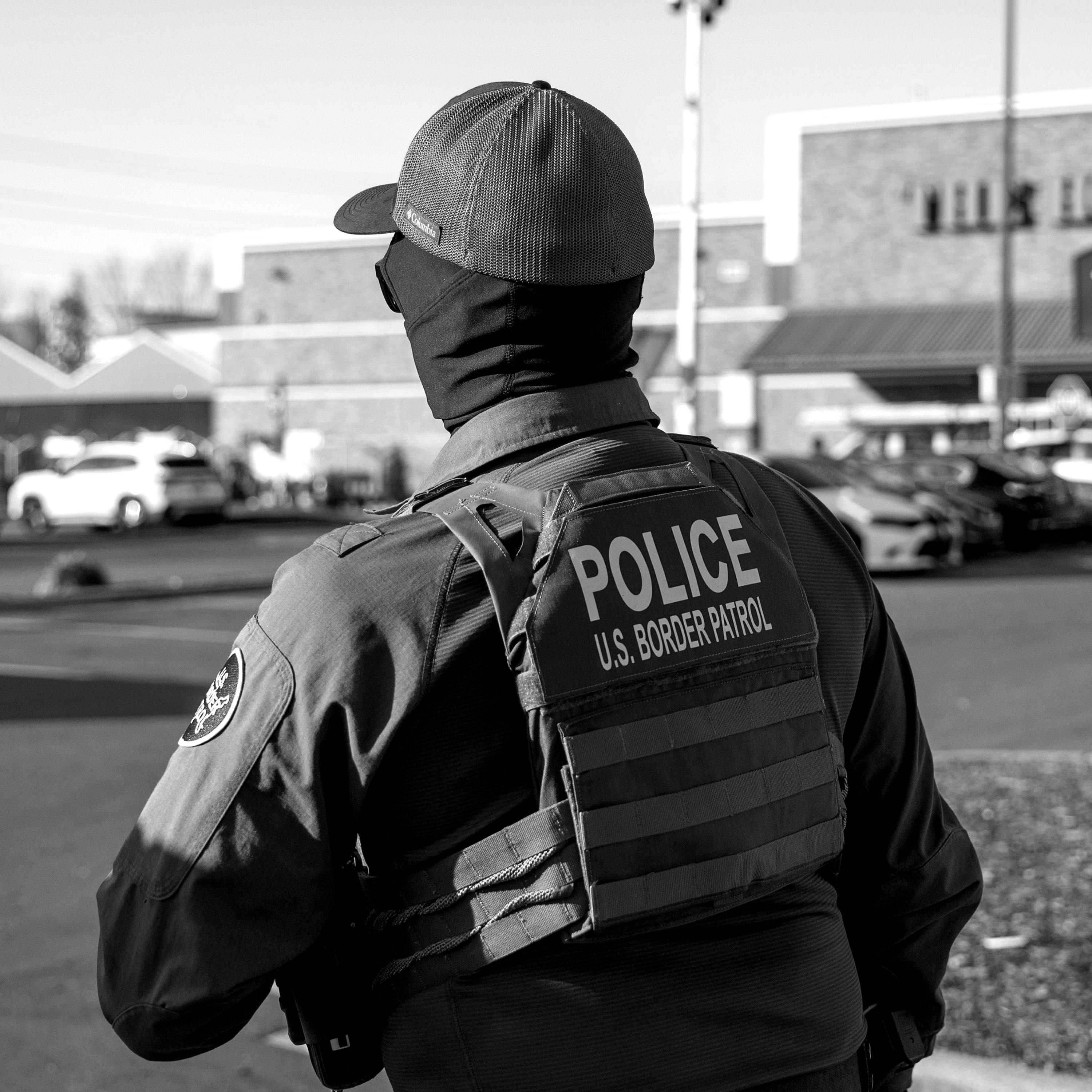
Speaker 6 The thing that jumped out to me was their concern about the involvement of the military, which is the sort of thing that I thought was maybe, you know, just paranoia.
Speaker 6
But these are people who I don't think are prone to paranoia, and they were very concerned about that. But they're also concerned about everything else.
They're worried about
Speaker 6 having a media that is cowed. They're worrying about
Speaker 6 whether the media will refuse to take ads from Democrats because they're afraid of retaliation from the FCC, for example. They're worried about seizure of voting rolls.
Speaker 6 They're worried about the federal government pressing local officials to do things that are against the law. They're worried about withdrawal of funds for cybersecurity and physical security.
Speaker 6 They're worried about sowing doubt. It's this whole smorgasbord of ways that Trump can undermine the integrity of the elections.
Speaker 4 And what were you watching in this election? Because this election is a prelude to 2026, which is where it's really heated up and intense.
Speaker 4 Did you see anything in this election that indicated some of these shenanigans?
Speaker 6 The thing that I thought stuck out most was the Justice Department announcing that it was sending monitors to New Jersey and to California to take a look at elections.
Speaker 6 And, you know, this is the kind of thing, on the one hand, DOJ monitors elections. It's something they do.
Speaker 6 But it's really conspicuous in both a race that affects the balance of power in the House in California and in what was considered to be a close race for governor in New Jersey.
Speaker 6 It looks like pressure on election officials and pressure on voters. And more than that, it seems like a way of sort of testing methods ahead of the midterms.
Speaker 6 So first you send out people to these kinds of things, and then maybe maybe you do more of that in the midterms and you start using DOJ as a way to suppress votes or to mess with local officials.
Speaker 6 You know, the election officials who I've talked to were less concerned about what would happen in this election than how it's kind of a dry run for a bigger effort in a year.
Speaker 4 Let's talk about one of the big things that happened, which is the redistricting ballot in California. What do you think Gavin Newsom was trying to accomplish?
Speaker 6
I think two things. One of them was getting attention for Gavin Newsom, which is always a top priority for him.
But the other one was trying to even the score on this gerrymandering.
Speaker 6 We've seen Texas, Missouri, North Carolina all redistrict in order to add basically safe Republican seats to the House in what we expect will be a close midterm election.
Speaker 6
And so I think this is Democrats trying to find ways to strike back on that. And we see Maryland doing the same thing potentially.
We see other states talking about it.
Speaker 6 But California has the most room to squeeze Republicans
Speaker 6 and had to do it by a vote of the people because there is a law that sets up independent redistricting already in place.
Speaker 4 Trevor Burrus, Jr.: One thing that surprised me about the California ballot was how explicitly it referred to Texas.
Speaker 4 Like it talked about attacks by the Trump administration and his MAGA Republicans and a Republican power grab orchestrated by President Trump.
Speaker 4 This struck me as unusual to include in a state proposition.
Speaker 6 I think that's right. It's really weird.
Speaker 6 I think it's it's a sign of how nationalized these elections are, that California voters are concerned more about the balance of power in Washington than they are about the specifics of their state.
Speaker 6 And I think it's particularly
Speaker 6 glaring in California where voters passed a law insisting on independent redistricting to avoid this kind of gerrymandering. And then...
Speaker 6 by a wide margin in these elections,
Speaker 6 basically temporarily reversed themselves. And this seems like backsliding on a lot of fairness reforms we've seen.
Speaker 6 And it seems a way in which, like, Trump forces his opponents to become more like him in order to compete. And I think that's a kind of race to the bottom.
Speaker 4 Right, right. So, so it's not necessarily healthy for a democracy for redistricting to become this kind of national showdown.
Speaker 6 Right. I think it's really bad for democracy and it's bad for voters.
Speaker 6 I mean, there are lots of Democrats in Texas and lots of Republicans in California who are going to be less fairly represented because of these changes.
Speaker 4 After the break, if the president is test running ways to disrupt an election, what would that actually look like in 2026?
Speaker 9 Some tech leaders question whether we're in an AI bubble, but others say the best of what AI has to offer is yet to come.
Speaker 12 Maybe in 10,000 years, AI will be based on physics that we don't even understand right now, and we'll have many different approaches.
Speaker 10 Join us weekly starting October 15th for the most interesting thing in AI, brought to you by Rethink, the Atlantic's creative marketing studio, in collaboration with PwC, wherever you get your podcasts.
Speaker 13 Say hello to the all-new Alexa Plus and see how Alexa can do so much more for you. Need tickets to see your favorite artist? Craving your comfort restaurant? Just sit back, relax, and talk naturally.
Speaker 13
Alexa's on it. It learns your style, anticipates what's next, and makes it happen across Echo, Fire TV, and more.
Learn more at amazon.com/slash new Alexa.
Speaker 4 Okay, David, let's get specific. Play out a scenario for me in 2026 that's reasonably plausible.
Speaker 6 So let's imagine that it's election night.
Speaker 6
The ballots are being counted. And as the night closes, Republicans are up in a couple of these races, but we still have a lot of ballots left to count, as we saw in 2020.
So Trump declares victory.
Speaker 6 He has a White House address. He says the GOP has held the House, but warns the Democrats are going to try to steal that.
Speaker 6 He immediately starts concentrating all the firepower he can on making sure that voting stops and that the elections are called that way.
Speaker 6 So, you know, maybe he has the Justice Department sending letters to Arizona's government where there are really close races, let's say. He sends the FBI there.
Speaker 6
He has Republican lawyers filing lawsuits. Even as this happens, ballots are still being counted.
Democrats start to pull ahead.
Speaker 6 At this point, amid, you know, extensive claims of fraud, Trump sends in Marines from a base in Yuma on the basis that there's a national emergency going on in Phoenix.
Speaker 6
They go in and they seize the voting machines. So we have already broken the chain of custody on these machines.
The FBI arrives.
Speaker 6
They say that votes have been tampered with, insist that Republicans have won. So now you have Marines on the street.
You have protests going on.
Speaker 6 Trump is saying that he needs to use the Insurrection Act, that he's going to send the military out to Democrat-run cities around the country. And it's unclear who has really won.
Speaker 6 And I can imagine this going further. You know, Democrats maybe are eventually certified as the winners of these races, but a slim house house majority of Republicans reject that.
Speaker 6 They see Republican candidates, and that helps Republicans hold the House. And the election is rejected by a lot of Americans as being obviously unfair.
Speaker 4 So this is where you have a gray situation, a lot of thinking and infrastructure in place, and it's ambiguous enough that Republicans could claim they won.
Speaker 6 Right. I think the ambiguity is really important.
Speaker 6 And that's one reason why you see Trump and people around him talking about quote-unquote election integrity, talking about fraud now, because they want to lay the groundwork for arguing that the election was unfair once the results have come in.
Speaker 6 We see a lot of states being pressured to do things like get rid of their voting machines ahead of the election and get new voting machines. There are questions about the security.
Speaker 4 Wait, wait, what's wrong with what? So what's the problem with getting new voting machines? That seems like a good thing.
Speaker 6 It seems like a good thing if you have the money for it and if you have the time to train employees on it. But so many of these offices are working basically on a shoestring.
Speaker 6 You know, the machines they have are basically functional.
Speaker 6 And the reasons Trump is questioning whether or not they are up to par don't really have to do with genuine security concerns. They seem to have to do with fomenting conspiracy theories about whether
Speaker 6 Venezuela or Italy is getting into the voting machines, as we saw in 2020.
Speaker 4
I see. So fake reasons to have new voting machines, the ultimate result of which is just making it more difficult for elections to go smoothly and everybody to vote.
Aaron Powell, right.
Speaker 6 I mean, this is just another variation on the false claims of fraud that we've seen from Trump since 2016.
Speaker 6 And they've already also seized voter rolls from local authorities, and they're claiming that there are a lot of people voting illegally.
Speaker 4 What about Democratic donors and candidates? What are we seeing there, and what could we see?
Speaker 6 We see attempts to basically intimidate them out of participation. You know, you charge somebody like James Comey, you charge somebody like Letitia James with crimes.
Speaker 6 you attempt to investigate somebody like Senator Adam Schiff, and you don't have to go after everyone.
Speaker 6 All you have to do is convince some people that it's not worth running because they are going to become a target, or it's not worth running for a higher office, or it's not worth donating since the White House is going to know you gave that money.
Speaker 6 You know, what if you lose? Is it really worth your while to put your neck out there? And what that does is that starts undermining the party's candidates. It undermines the party's major donors.
Speaker 6 And you also undermine minor donors by, for example, launching an investigation into Act Blue, which is the heart of the Democratic small dollar donation machine.
Speaker 4 And we should say James Comey and Letitia James, who you mentioned, have both pleaded not guilty in those cases. But just to connect all the dots, how does that affect election?
Speaker 4 Like, how does something like that, this kind of low-simmering intimidation, ultimately affect a 2026 or any election?
Speaker 6
It means you may get worse candidates. You know, the best candidates may decide that they they don't want to run.
It means they will be underfunded potentially compared to Republican candidates.
Speaker 6 It means they'll have to spend money on things like legal defense and time on things like legal defense instead of using that time to campaign.
Speaker 4 Okay.
Speaker 4 Another aspect you've reported on is the Trump administration creating a new position to oversee future elections and then appointing a woman named Heather Honey, who has a history of election denial.
Speaker 4 So who is Heather Honey and what effect could she have?
Speaker 6 So Heather Honey was was one of these people involved in raising questions about the 2020 election. And now she is the Department of Homeland Security's top official for election integrity.
Speaker 4 So
Speaker 4 what could that mean?
Speaker 6 It's a little bit hard to know because, and this I think is where a lot of these things get fuzzy.
Speaker 6 The federal government, in particular the executive branch, really don't have a lot of authority over elections.
Speaker 6 And what Trump is trying to do is claim that he has power to change things he doesn't have. So on the one hand, DHS might try to, you know, deem results unfair.
Speaker 6 We saw in 2020 Trump saying to top officials at the Justice Department, just say the election was unfair and leave the rest to me and the Republican congressman.
Speaker 6 And so you can imagine something like that. If DHS says that a tally was tainted, then that gives Trump an excuse to do a lot of other things.
Speaker 6 The other problem is, separate from Heather Honey, DHS, and in particular CISA, which oversees cybersecurity and infrastructure, used to be a really important helper for a lot of local election authorities who, you know, they'd get walkthroughs that would tell them about where do you have physical vulnerabilities, you know, your power supply, are your doors locking?
Speaker 6
They get help with cybersecurity. A lot of those things have been cut.
So CISA has been cut drastically.
Speaker 6 And so not only are these local officials being pressured by potentially DHS, they're also not getting the help that they've traditionally gotten to make sure that systems are safe.
Speaker 4 So where does that put us in 2026?
Speaker 6 I think it puts us in a place where we are, we need to be really wary and really nervous, but not a place of hopelessness.
Speaker 4 A lot of these things are scary.
Speaker 6 Something that you hear a lot from elections people is that free and fair is a spectrum. We've never had a perfectly free and fair election.
Speaker 6 Obviously, if you go back to before 1965, you have segregated Jim Crow elections, which are a very clear example, but there's always, there are always issues.
Speaker 6 But we're moving potentially in the wrong direction on free and fair and in a major way. And we're giving the, you know, we see the federal government trying to assert powers that it hasn't had.
Speaker 6 We see people who are trying to effectively sabotage elections, getting into important positions, both at the local and national level. All those things are bad.
Speaker 6 But I don't think they mean that we cannot have good elections. Partly because the system is so diffuse that it creates, it makes it hard for someone to meddle with it all the way.
Speaker 6 And also if people are paying attention, whether that's, you know, officials being being ready for interference or voters casting their ballots ahead of time and taking care of what they need to do, there are a lot of ways that an election can still turn out pretty well, despite attempts to tilt the scales.
Speaker 4 Okay, so let's talk about those ways. Because what I hear you saying is election officials, also journalists, are saying be vigilant.
Speaker 4 There's this undercurrent trying to mess with elections, but there are also ways to push back against that. So maybe we'll start by talking about the courts.
Speaker 4 In 2020, Trump and his allies filed something like 62 lawsuits contesting the election process and voter certification. Nearly all those were dismissed or dropped or not decided in Trump's favor.
Speaker 4 So are the courts one of these backstops that we can count on in the 2026 elections and beyond?
Speaker 6
They're a backstop that we need. Whether we can count on them, I think, is an open question.
But there are positive signs.
Speaker 6 We have seen lower courts consistently ruling against things that Trump is doing that he simply doesn't have authority to do.
Speaker 6 And, you know, there's a lot of concern, especially from liberals, about the Supreme Court.
Speaker 6 But what I heard from election experts, including, you know, Democratic ones, was: look, first of all, most of these things don't make it to the Supreme Court.
Speaker 6 And second of all, the Supreme Court has been more tempered on voting issues than it has been on some things.
Speaker 6 So there is, I would say, cautious optimism from a lot of people in the election space about the courts as a backstop.
Speaker 4 What about state election officials? Because many of them did hold the line in 2020.
Speaker 6
It's a mixed bag. Some of the people who held the line really courageously have been forced out of office.
You know, they lost their elections. They were harassed so much they decided to leave.
Speaker 6
They've been replaced by people who are more Trump friendly. And we don't know how they'll perform in the moment.
Even when you have those people, though, like the laws are the laws.
Speaker 6 And that's something that I think was important in 2020 as well.
Speaker 6 There were times where officials tried to do Trump's bidding and sort of get out of line, and they were often stopped by courts, which said, hold on, you have no authority to do that.
Speaker 6 That's simply not how this works.
Speaker 4
Interesting. It does seem like a thin line of defense.
You know, a local election official who can get leaned on by DOJ or military pressure, like it feels precarious.
Speaker 6 That's right.
Speaker 6 I mean, I talked to Stephen Richer, who was an official in Maricopa County, and he said, you know, it's just really hard when you're a local official trying to deal with pressure from the president of the United States and from members of your own party.
Speaker 6 All these people are pressuring you and to hold the line against that is not easy to do.
Speaker 4 Okay, so 2026, putting ourselves, you know, fast forwarding to that, where are you going to be watching? Everyone watches Maricopa County, Arizona.
Speaker 4 Always, are there other places where you'll be, you know, keeping an eye?
Speaker 6 I think that's the big one for me right now. And it's a little bit hard to know because so many of our districts are still in flux as these states work on these gerrymandering things.
Speaker 6 You know, the fact of the matter is there aren't that many districts that are actually competitive.
Speaker 6 We have already gerrymandered this country so far that we're probably only looking at, you know, a couple dozen, three dozen competitive house districts to decide control of the house.
Speaker 6 And so I think we'll know closer to the election what those districts are going to be. The other thing I'm watching is just how many of them are really up.
Speaker 6 So I heard people telling me numbers like, if it's a 10-seat difference in the race, it's very hard to steal that race.
Speaker 6 But if it's three to five races, it's a lot easier to get shenanigans in because there's not that many things to mess with and you can sort of concentrate your energy and you can maybe flip a couple of those, flip three of those, and that could make all the difference for House control.
Speaker 4 David, I would say that you and I have maybe painted a fairly bleak picture of elections to come for Democrats.
Speaker 4 However, this week was largely talked about as a moment of tremendous optimism for the party. Like good news after a year of Trump running wild and doing whatever he wants to do.
Speaker 4 Do you see any strains of optimism about the upcoming year? How do you balance these two things?
Speaker 6 I think this election is a good sign for Trump critics.
Speaker 6 It shows that voters are really opposed to him, and it shows that they're willing to turn out even if they have hesitations about the Democratic Party writ large.
Speaker 6 a really broad margin like this would be really hard for Trump to cheat in 2026.
Speaker 6 That said,
Speaker 6 none of this changes the balance of power between now and January 2027.
Speaker 6 And so that gives a lot of time for Trump to continue to abuse his powers, including doing things to make sure or to try to make sure that the 2026 elections are less fair.
Speaker 6 So a lot of the danger remains, even if there are some kind of hopeful signs for Democrats. I mean, it's ultimately about democracy.
Speaker 6 And if people come out to vote, I think that triumphs over almost anything else. And we saw people doing that this week.
Speaker 4 Well, David, thank you for helping us understand that.
Speaker 6 Thank you.
Speaker 4
This episode of Radio Atlantic was produced by Rosie Hughes. It was edited by Kevin Townsend.
Rob Smirciak engineered this episode and provided original music. Will Gordon fact-checked.
Speaker 4 Claudina Bade is the executive producer of Atlantic Audio, Audio, and Andrea Valdez is our managing editor.
Speaker 4 Listeners, if you like what you hear on Radio Atlantic, you can support our work and the work of all Atlantic journalists when you subscribe to theatlantic at theatlantic.com slash listener.
Speaker 4
Finally, I have a favor to ask. I am interviewing chef and cookbook writer Allison Roman next week.
If you have any questions for her, recipe related, cookbook related, Thanksgiving
Speaker 4 send them over. Please email them to us at radioatlantic at theatlantic.com.
Speaker 4 I'm Hannah Rosen. Thank you for listening.
Speaker 14 Go Beyond the Lab in the new season of When Science Finds a Way, a podcast from Welcome, a global charitable foundation supporting science to solve urgent urgent health challenges.
Speaker 14 You'll join me, Alicia Wainwright, your host for Bold's conversations about the scientific breakthroughs changing lives around the globe.
Speaker 15 In this season, each episode explores how science is not just in the lab, but alive in homes, supermarkets, hospitals, schools, and communities.
Speaker 14 We'll hear from a Nigerian artist who's channeling his lived experience into creative ways to support mental health, from Brazilian researchers who are using climate data to forecast and prevent disease outbreaks, from European scientists developing new imaging technology that reveals disease in the body in unprecedented detail.
Speaker 14 We'll even explore a groundbreaking new study that's reimagining reproductive healthcare.
Speaker 14 These are all stories about how communities and researchers are working together to meet urgent health challenges with empathy and impact.
Speaker 14 Listen to When Science Finds a Way, a science podcast that tells the human story wherever you get your podcasts.