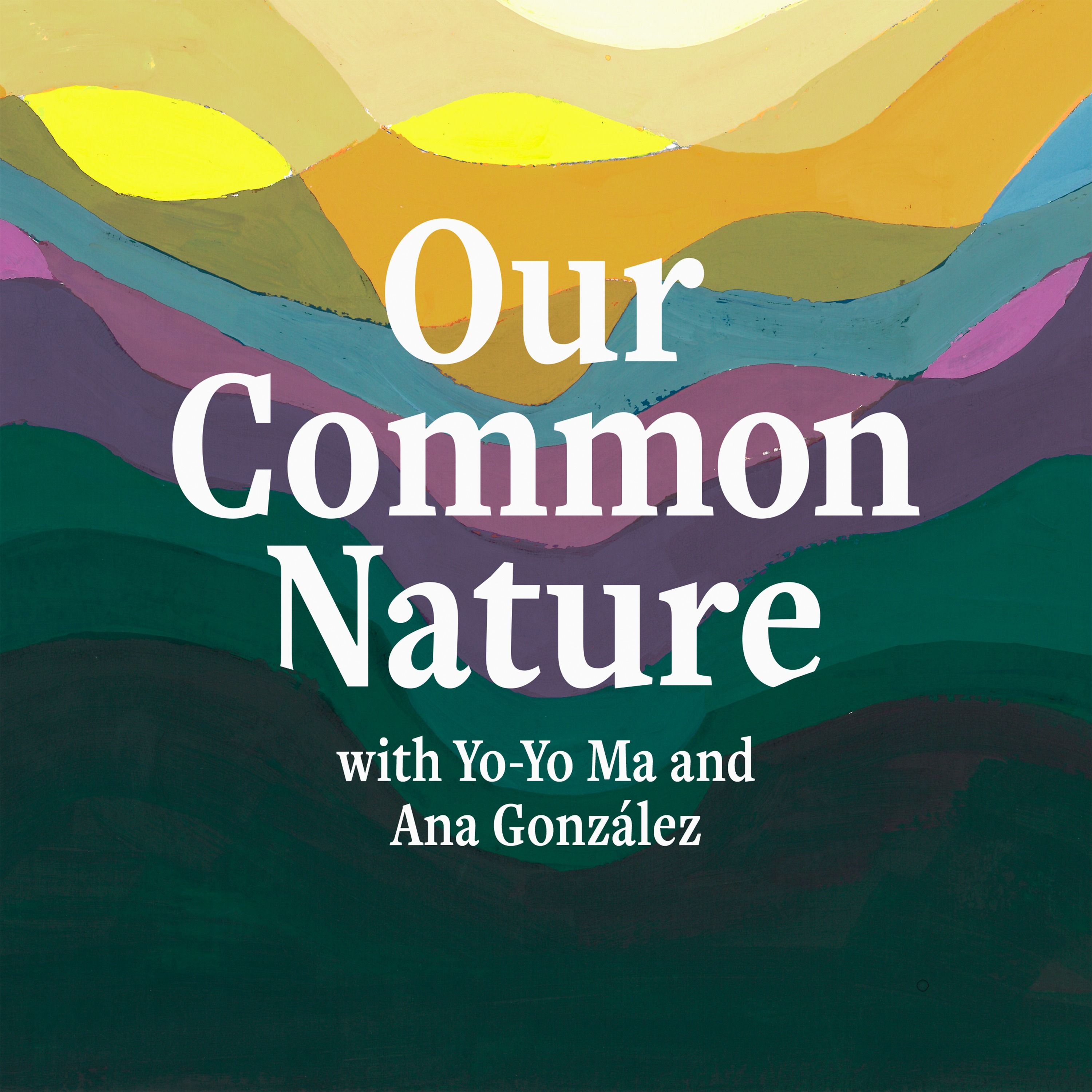
Our Common Nature: West Virginia Coal
Listen to the full series Our Common Nature.
Featuring music by Yo-Yo Ma, Dom Flemons, and Kathy Mattea and poetry by Crystal Good.EPISODE CREDITS: Radiolab Bits Produced - Anisa Vietze (Radiolab bits)
Signup for our newsletter!! It includes short essays, recommendations, and details about other ways to interact with the show. Sign up (https://radiolab.org/newsletter)!
Radiolab is supported by listeners like you. Support Radiolab by becoming a member of The Lab (https://members.radiolab.org/) today.
Follow our show on Instagram, Twitter and Facebook @radiolab, and share your thoughts with us by emailing radiolab@wnyc.org.Leadership support for Radiolab’s science programming is provided by the Simons Foundation and the John Templeton Foundation. Foundational support for Radiolab was provided by the Alfred P. Sloan Foundation.
Press play and read along
Transcript
Speaker 1 Radio Lab is brought to you by Progressive Insurance. You chose to hit play on this podcast today? Smart choice.
Speaker 1 Make another smart choice with Auto Quote Explorer to compare rates from multiple car insurance companies all at once. Try it at progressive.com.
Speaker 1 Progressive casualty insurance company and affiliates, not available in all states or situations. Prices vary based on how you buy.
Speaker 3 Oh, wait, you're listening.
Speaker 4 Okay.
Speaker 4 Okay.
Speaker 4 Alright.
Speaker 4 You're listening
Speaker 4
to Radio Lab. Lab.
Radio Lab. From
Speaker 1 WNYC.
Speaker 1
Hey, this is Radio Lab. I'm Lethif Nasser.
A little while back, Lulu and I had... We were basically starstruck because we got to sit down with a living musical icon.
Speaker 5 Oh!
Speaker 4 My goodness.
Speaker 4 It's so great to meet you.
Speaker 4 Oh my God.
Speaker 6 I can't believe it.
Speaker 1 Yo-Yo Ma.
Speaker 1
Yo-Yo, of course, is a famous cellist, kind of the famous cellist. He's won 19 Grammy Awards, produced more than 90 musical albums.
But the reason we were sitting down to talk to him was...
Speaker 6 I'm a newbie at podcasting.
Speaker 1 We got together with our friend, producer, and host, Ana Gonzalez, and they made a whole podcast series called Our Common Nature.
Speaker 1 And we loved the podcast so much that we wanted to sit down and talk to the two of them about why they made it.
Speaker 7 Yeah, so the idea for the podcast started with Yo-Yo, right?
Speaker 7 Like he'd been doing these outdoor performances for about a year, and he was basically trying to reconnect to nature himself and bring music outside of the concert hall, playing in locations that you wouldn't necessarily expect to find a classical music concert like on a riverbed or by a coal mine in a cave in the woods and they were these really intimate performances kind of to whoever was around and at a certain point yoyo wanted to get this to more people he decided he should have somebody on the ground with him with a microphone making recordings making stories and at some point he and his team came to me and they asked, do you want to be that person?
Speaker 7 Do you want to be on the ground with a microphone making recordings with me? And I was like, Yes, please, that sounds amazing.
Speaker 6 Well, I was so happy to meet Anna because she also works with children.
Speaker 1 You may recognize Ana's voice because she's also a producer on our sister show for families, Terrestrials.
Speaker 6 She has this wonderful podcast with children. And
Speaker 6 actually,
Speaker 6 I never grew up.
Speaker 6
So I started from a child's point of view. You know, we've all pestered adults with the question, why at a certain age? It's usually around two or three years old.
Why? Why daddy? Why mommy?
Speaker 6 But I think I never stopped.
Speaker 6 And then, of course, in the natural world, which I came to later, although I think the fascination was there always, I think who hasn't looked out in the night sky and wondered, what's out there?
Speaker 7 I mean, just all of that that Yo-Yo just said made it so fun to go with him because he is this great combination of childlike wonder, you know, just having fun playing such a people person and then would like prank me by like saying like, oh, I want to say something important and then like make duck sounds into my microphone.
Speaker 7 And the way that people opened up with Yo-Yo there, him having his cello, playing music as an offering, it opened up these worlds that otherwise would take years, honestly, of relationship building that we could do in a day.
Speaker 6 What I do as a musician is not unlike what a reporter does. I just have to report it through sound and you report it through words.
Speaker 6 Although Anna comes pretty close to reporting it through sound because in West Virginia, we had a
Speaker 6 lovely dinner for all the participants that were going to come in and they had a cider press. And guess what? Ana was there with her big fuzzy microphone recording listening.
Speaker 7
I think that was the first thing I recorded was Yo-Yo pressing apples on an apple for her. Like I recorded people eating food and fire crackling and the crickets chirping.
And so, yeah,
Speaker 7 I also thought the same thing in that moment, Yo-Yo. I was like, oh, we're doing the same thing.
Speaker 7 You have a cello and I have a microphone, but we're like relaying energy and sound and feeling in our own mediums. What
Speaker 6 Anna
Speaker 6 did
Speaker 6 and does
Speaker 6 is she's able to do not reporting on facts or even on knowledge, but reporting on experience.
Speaker 1 The series they ended up making together, I mean, it's basically Ana and Yo-Yo going around to different locations across the country, climbing mountains, rafting rivers, chanting to whales, bringing music to people in these places and then telling stories about those places and their connection to the natural world.
Speaker 6 And that hopefully
Speaker 6 these podcasts are there to give a sense of
Speaker 6 through sounds and words
Speaker 6 what it feels like
Speaker 6 to be there and to be part of
Speaker 6 every special community that we've visited. That gives us the best possible way of sharing a deep experience of a place with a radio audience.
Speaker 1 I think I said this to Ana when I first heard it.
Speaker 5 Like it, it's sort of spiritually refreshing.
Speaker 3 It's kind of so at odds with all the
Speaker 1 news or other media that I feel like is out there right now. It feels
Speaker 1 like
Speaker 3 slower and richer and more human somehow.
Speaker 7 Thank you, Latif.
Speaker 7 I mean, yeah, I felt that way the whole time making it. It made it all worth it because everyone deserves that kind of four-dimensional view of their lives and where they live.
Speaker 1 So, we decided to pluck one episode out for you to hear.
Speaker 1 It takes place in West Virginia and covers, among other things, a huge recent tragedy I had never even heard of, one of the oldest rivers in the world that is improbably called New River, and a famous song that you may have even sung at karaoke that's based on a lie.
Speaker 1 Take a listen
Speaker 8 as a little girl. I would go with my granddad to the company store
Speaker 8 and all the coal miners would be around and they would say, sing me that song and they would pay me. So I would get a few pennies for penny candy and it was 16 tons.
Speaker 4 So I would sing
Speaker 8 16 tons and what do you think?
Speaker 4 Another day older and a deeper hit debt. Saint Peter, don't you call me? Cause I can't go.
Speaker 4 I owe my soul to the company store.
Speaker 4 So cool.
Speaker 7 That's Diane Williams. She's sitting with me and Yo-Yo and a group of coal miners in New River Gorge National Park in West Virginia.
Speaker 7 It's the first weekend of fall, and we're outside of a historical mine called Nuttleberg. The Appalachian hills around us are tight and thick with with summer leaves.
Speaker 7
The river behind us is a constant flow. We just had a picnic of pepperoni rolls and Mr.
Pibb from real-life coal miner lunch buckets. And then Yo-Yo stood up.
Speaker 4 As a stranger, I'm so overwhelmed with a sense of appreciation and gratitude for what you have done. It's important to unite all of us because you've united us once before in what you've done.
Speaker 6 So what would you like us to take away?
Speaker 7 Coal has formed the lives of so many West Virginians. It's formed this country, really.
Speaker 7 But there's a dark irony to coal.
Speaker 7 You hear it in that song, 16 Tons.
Speaker 7 And that irony makes it hard to get to know coal if you're an outsider, especially today as coal faces another challenge. The industry, especially in West Virginia, is shrinking.
Speaker 7 Coal is changing, but the culture of it is still there in these Appalachian towns.
Speaker 7 So in this episode, we dig into the music and the stories of West Virginians whose lives are defined by coal to see what keeps people holding on to this place and the black fossil falling out of its hills.
Speaker 7 Hi, I'm Ana Gonzalez and this is Our Common Nature, a musical journey with Yoyoma through this complicated country to help us all find that connection to nature that so many of us are missing.
Speaker 7 We climb mountains, play music, drive dirt roads, recite poetry, traverse rivers and oceans, and even our own brains, all to figure out how to better live on our planet together.
Speaker 7 Can I get you to do the classic intro? Who are you and what do you do?
Speaker 4 I'm Yo-Yo Ma, and I play the cello.
Speaker 6 Always great to see you.
Speaker 7 Always great to see you.
Speaker 4 Thanks for watching.
Speaker 7 Isn't it weird that we have a podcast together?
Speaker 6 I know, it's fantastic.
Speaker 7 Yo-Yo and I traveled deep into the heart of West Virginia because it's a place we both don't know very well.
Speaker 7 And this trip, winding through Appalachian mountain towns, was a way to learn more about this place that holds so much of our country's history and identity.
Speaker 6 I was struck by the immense beauty of the landscape and the rivers and the mountains and how extraordinarily
Speaker 6 kind
Speaker 6 the people we met were.
Speaker 4 I lost all my money, but a $2
Speaker 4 bill. I'm on my long journey home.
Speaker 7 Back on that riverbank in New River Gorge by the old mine, we're here with a bunch of people whose lives have been touched by coal. Miners, of course, but also a poet and some musicians.
Speaker 7 We want to get to know this place, so we start on some common ground.
Speaker 4
You know, Colt Myers is gospel music, country music. Oh, lovely.
Kathy Matea.
Speaker 7 Kathy Matea, he said. She's a West Virginian singer-songwriter, and she's here too.
Speaker 11 Well, they're my people. I mean, they just are.
Speaker 7 Both of Kathy's grandfathers worked in West Virginia mines.
Speaker 11 My grandfather mined a 30-inch semicole. He did it with a pick and would pick sideways into the coal and work his way in.
Speaker 11 And my grandmother would sew leather patches onto the backs of the top of his shirt so that when he wedged himself in against the ceiling, it wouldn't wear through his shirts.
Speaker 7
Kathy grew up hearing stories like this from everyone in her family. They'd all gather in one of her grandparents' homes and tell stories and play music.
That's where Kathy started playing guitar.
Speaker 7 Her parents would get her to perform, and this was around the 1970s when a new song was taking over West Virginia Radio. How many times would you estimate you've played Country Roads in your lifetime?
Speaker 4 Hundreds and hundreds and hundreds.
Speaker 4 Most ever.
Speaker 4 West Virginia.
Speaker 7 Y'all have to sing with me though because that's the whole point, you know?
Speaker 4 Life is all.
Speaker 7
Take Me Home Country Roads is quintessential Americana music. People all over the world know it.
And in West Virginia, this song is the song.
Speaker 7 West Virginia University football games, high school graduations, weddings. It is so nostalgic for this version of West Virginia that feels good and it's absolutely beautiful.
Speaker 7 But it's not really true.
Speaker 11 Because all the specific locations they mention are in Virginia.
Speaker 7 Blue Ridge Mountains, Shenandoah River, those are Virginia landmarks. And while the mountains and the river both technically travel into West Virginia, it's the most eastern side.
Speaker 7 And the song is just clearly not written for West Virginia. Kathy said that the songwriters had never even been to West Virginia when they wrote the lyrics.
Speaker 7 They were singer-songwriters in Washington, D.C., who started naming pretty landmarks in that general area.
Speaker 7 One of them was even thinking about his home in Massachusetts, but they decided to use West Virginia because it sounded really nice.
Speaker 11 The people who wrote it didn't know, but you know, where else are you going to find a song that's coming out of all the dashboards of all the radios and all the cars in the country that screams, West Virginia, Mountain Mama, take me home?
Speaker 11 Down country road,
Speaker 11 all right.
Speaker 11 It's like a place where people feel invisible. And so to have that celebratory song that's proclaiming our existence and that yearning to be there is profound for people who are from there.
Speaker 11 And we might be on completely different sides of the political spectrum and the social spectrum and all those things, but we can sing country roads together.
Speaker 7 So the song that the whole world thinks of as representing West Virginia actually doesn't. At least not like literally.
Speaker 7 And as we sit along the riverbank, a coal miner named Dorso brings up another musician that he thinks represents West Virginia.
Speaker 7
Bill Withers, like, ain't no sunshine when she's gone. Just the two of us.
Bill Withers, he grew up in a coal mining town in West Virginia.
Speaker 4 Yeah.
Speaker 4
Flat force. Flat for him.
Flat for? Lean on me.
Speaker 4 He told me, Dorzel, that he wrote Lean on Me about living in the coal camp.
Speaker 4 You just call lonely brother when you need a hand.
Speaker 7 Kathy met Bill one time and he told her that this song about people leaning on each other, supporting each other, was written about coal miners. And nobody cared what color anybody was.
Speaker 4 That's what was on the ground.
Speaker 7 Yeah, he said that's it, and nobody cared. It just wasn't a thing.
Speaker 7 In the community, everybody just helped each other.
Speaker 4
That's right. So, you always look out for each other.
As long as you're on that same crew, everybody's the same crew.
Speaker 4 Always look out.
Speaker 4 Black men, and they worked just as hard as the white men. And as long as everybody did their job, everybody got along really good.
Speaker 7 So they're saying that Lean on Me is about about the ways miners supported each other, no matter their race. And I'd love to believe that life actually played out like that.
Speaker 7 But in the crowd, there are two black women, Diane, who spoke at the top of the show and sang 16 tons, and her mom, Zora.
Speaker 12 I'm Zora.
Speaker 4 Yup, I've worked at the ground 20 years.
Speaker 7 It's hard to hear Zora because she spent decades in the mines and now her lungs are damaged. So her daughter, Diane, who's sitting right next to her and holding her hand, she speaks up.
Speaker 8 This is my mother Zora. She worked in the coal mines down at Maple Meadows for 20 plus years until it closed.
Speaker 8 She told us as we were growing up about the young men that she worked with. But she always had a story to tell about how the men would pick at her and would make her do their work.
Speaker 8 If she cleaned her belts, they would always leave some more for her to do. And how she used to threaten to beat their you-know-whats when she got them outside.
Speaker 7 Okay, that's a little different from Kathy Mataya's read on Lean on Me. And it turns out that Zora and Diane come from a big mining family.
Speaker 8
We talk about history. So, my granddad was a coal miner.
My uncle was a coal miner. My mom, I still have a brother, Christopher Saunders, that's still working in the coal mines.
Speaker 7 If I want to get to know this place a little bit more, I have to meet Chris.
Speaker 4 I mean,
Speaker 4 in coal mining, we always say everybody gonna be black at the end of the day.
Speaker 7 Chris Saunders, after the break.
Speaker 1
Radiolab is supported by Apple TV. It's 1972.
A young British family is attempting to sail around the world when disaster strikes. Their boat is hit by killer whales and it sinks in seconds.
Speaker 1 All All they have left is a life raft and each other. How will they survive? The true story of a family's fight for survival, hosted by Becky Milligan.
Speaker 1
This is Adrift, an Apple original podcast produced by Blanchard House. Apple TV subscribers get special early access to the entire season.
Follow and listen on Apple Podcasts.
Speaker 9
Hey, it's Christopher Kimball from Mill Street Radio. Sounds like I'm bragging, and I am.
We're the number one most downloaded food podcast in America.
Speaker 9 You know, Mill Street Radio travels the world in search of the very best food stories.
Speaker 9 You'll hear about smuggling eels on the black market, the secret intelligence of plants, and insider tips to eating in Paris. And every week, listeners call in with our toughest culinary mysteries.
Speaker 9 Discover a world of food stories by searching your podcast app for Mill Street Radio.
Speaker 7 Our common nature is back. We're in West Virginia meeting up with present-day coal miner Chris Saunders, who also happens to be black.
Speaker 4 And when you underground, you put all that aside. If you have any prejudice in you, all that, because you got to work together, you got to work safe.
Speaker 4 Now, when they come back up, it might be a different story.
Speaker 7 We met up at a local history museum in West Virginia. It focuses on coal mining, and there was an exhibit dedicated to his mom, Zora.
Speaker 4 Yeah, here.
Speaker 4 And this is one of the pictures. This was the crew that she worked with at the inn on the bank.
Speaker 4 Whoa. That's her.
Speaker 7 There's this great photo of Zora in a hard hat and aviator sunglasses leaning up against a chain link fence. And she has the face of a woman who's put up with a lot of shit.
Speaker 4 And it's so true because there's still a stigma about women being in the coal mines.
Speaker 4 So, plus she was a black woman. So that stigma was there.
Speaker 7 Chris told me his mom came to coal mining as a single mom of four. She had moved down from New York York City to take care of her aging parents, and her dad actually was a coal miner.
Speaker 7 For Zora, working in the mines was a livable wage. It would pay for the house, the kids, the parents.
Speaker 7 But the other miners let her know that a woman, and a black woman at that, wasn't part of the boys' club.
Speaker 4
My mom's a hard worker. She said, I'm going to prove to you.
I can outwork you. I can outthink you.
Speaker 4 I'm going to treat you with love and kindness regardless of what you say or do to me. She said, sometimes you just got to let it roll off your back and keep on doing what you got to do.
Speaker 4
She had a guy that was always wanting to tell her the N-word jokes. She said, oh, baby, I ain't got time for that.
I'll tell you what you do. Write them out for me and let me read them.
Speaker 4 So every day he writing these big long jokes and she'll just fold them up, fold them up.
Speaker 4 And then he come to her one day and he say, I'm the one dumb enough to be writing these jokes out and you ain't doing nothing but throwing them away. She said, no, I got them all.
Speaker 4
I'm making you a book. Like that.
And, buddy, he just laughed. He said, Mama, I'm sorry, you know.
And that's just the way she was.
Speaker 4 She said, now he's gonna set up and waste his time writing these jokes out every day. And I let him do it.
Speaker 4 That's my mom, y'all. I mean, that's just her.
Speaker 7 And this was just one of the stories Chris had about his mom warding off bullies. They'd steal her lunch.
Speaker 4 She baked brownies and put X-Facts in them.
Speaker 4 And so she knew exactly who was getting in her lunch buck or her bucket. That's what they call it.
Speaker 7 Some days she didn't have a good comeback or the energy to bake brownies.
Speaker 7 Some days she was tired.
Speaker 4
She would always say, I done the best I could for y'all. I said, I know that mom, you know.
And she would apologize
Speaker 4 for
Speaker 4 not being there a lot.
Speaker 4 So,
Speaker 4 but I had a great mom. Yeah.
Speaker 4 Still do. And I'm a big softy.
Speaker 4 yes but yeah she she's uh
Speaker 4 and she taught us how to love people
Speaker 7 the sentiment behind lean on me is probably not true for zora
Speaker 7 but it is for chris he's committed to the job and his co-workers through thick and thin
Speaker 4 you know it's the money was good to be in appalachian to go to high school and get out and can make a hundred grand right out the gate 18 years old
Speaker 4 Huh?
Speaker 4 I'm just telling you, that's the type of money they're paying you and give you health insurance for everybody in the family.
Speaker 4 And I look at it like this, I chose to do this, but if I got to be on oxygen again, I don't want it. Yeah.
Speaker 7 Do you think about that with your mom?
Speaker 4 Yeah.
Speaker 7 Zora's condition has worsened since I saw her along the banks of the river, and now she can't speak without oxygen. Chris is worried about her, but that's not the only thing he's worried about.
Speaker 4 We have what I call, I'm going to keep it right, kiss my butt curves. Like you're going to go around and then you go.
Speaker 4 So we
Speaker 4 get ready to go through a few of them down this way.
Speaker 7 If you look at a map of Route 3 heading west from Beckley, West Virginia, it looks like a squiggle. It follows every twist and turn of the Coal River.
Speaker 7 Through Eccles, Glen Daniel, Rock Creek, and Dry Creek, my producer Alan is swerving in the rental car with Chris Saunders as a passenger. And I'm I'm in the back seat trying not to get car sick.
Speaker 7 I see a lot of Trump.
Speaker 4
Yeah, oh, yeah, yeah, yeah. All of us.
We love Trump.
Speaker 4 Everybody here.
Speaker 4 Well,
Speaker 4 and now he's an outlaw. So
Speaker 4 it doesn't get lost.
Speaker 7 Like, how much of the population is related to coal?
Speaker 4 Like,
Speaker 4 probably
Speaker 4 90%.
Speaker 4 Yeah.
Speaker 4 It's either railroad, coal, or timber.
Speaker 7 Yeah, and the railroad is how you move the the coal, the timber.
Speaker 4 Right, right.
Speaker 4 Right.
Speaker 7 Is this weird for you to be in a car when people ask you all these questions?
Speaker 4 Yeah, yeah, but it's all right. I like to talk.
Speaker 7 Chris, like a lot of miners, isn't quick to trust people with microphones. We couldn't get permission to even enter the parking lots of any of the coal mines that were driving by.
Speaker 7 People are even suspicious of the North Carolina plates on the rental car.
Speaker 4
Oh, yeah, we're in the line. He knows he can't drive down here.
What are he doing up here? Yeah.
Speaker 4 But this one here, Lil, this is the kiss your butt when I call it.
Speaker 7
West Virginia is an isolated place. It's not only the geography, but the culture.
People not from here don't always get it. And the truth is that coal formed these towns.
Speaker 7 Coal built these houses and set these families up for generations.
Speaker 7 Coal formed unions and made billion-dollar deals.
Speaker 4 But coal kills.
Speaker 7 And coal releases massive amounts of of pollution into the world. People today don't usually understand why anyone in the 21st century would work in this industry.
Speaker 4 Yeah.
Speaker 4
And that's why I was kind of leery about talking to you at first. Yeah.
I'm just being truthful. You know, because I said, now I don't want to say, you know, be nothing negative to what I do.
Speaker 4
And it's negative to every job. It really is.
But it has been great to my family financially and stuff like that. Yeah.
Speaker 7 Yeah.
Speaker 7 But for for Chris, mining is about more than just making money. It's about survival.
Speaker 4 In the 80s and stuff, I got into the drug trade and got
Speaker 4 on some stuff and had no business doing, you know.
Speaker 4
And then I started going to church in 93 is the year I went into mines. That was just a prayer.
I was like, well, God, here I am now. I need to provide for my family.
Speaker 4 The street life ain't going to get it, you know.
Speaker 4 And God opened doors.
Speaker 4
I wanted to follow in my mom's footsteps. Yeah.
And it's been a great way to provide for my family. I think that's what we're trying to get at.
Right. And
Speaker 4 it's complicated. Yeah, it is.
Speaker 7 The history and culture of coal is complicated.
Speaker 7 Human beings have actually used coal for fuel for thousands of years.
Speaker 7 People would just pick it out of the hills and burn it because coal itself is just fossilized plant material that's millions of years old.
Speaker 7 But it's only in the past century or so that coal mining in the United States has grown to be king coal.
Speaker 7 So much of our world is made with coal and specifically West Virginia coal because this is a special type of coal.
Speaker 7 They call it high metallurgical coal, meaning it's higher in carbon and lower in moisture than thermal coal, which we use for fuel and heat.
Speaker 7 High met coal is some of the best in the world to turn into iron and steel.
Speaker 6 That's the pride that I think the people in West Virginia must feel for having actually been the power source behind the development of iron and steel in this country, which meant westward movement, building railroads, cities.
Speaker 6 That connection was completely lost on me until I went there.
Speaker 7
Yeah, and it's still going today. So there is still that pride.
The people who mine coal for generations, they still love it.
Speaker 4 The company I work for, I know they export to China, South Korea. You have a lot of big steel mills in India.
Speaker 4 And then you have Ukraine right now, Shitan, but Ukraine was a big steel producer for Europe. Yeah.
Speaker 7 And they're buying U.S. coal.
Speaker 4 Yes, yeah, because again, you have the best coal in the world to make steel.
Speaker 7 The culture of coal mining is baked into West Virginia, but it's from another time when more people could get coal jobs. The mines themselves have become more automated and mechanized.
Speaker 7 The work is different, and they need fewer workers.
Speaker 7 Even though coal is still being used to make everything from electric cars to solar panels and housing, As we drive deeper down Route 3, the towns get smaller.
Speaker 7 We We see abandoned company stores and downtown ghost lands.
Speaker 4 This was the old grade school. All right, during the explosion, they were lined up from there on both sides of the road.
Speaker 7 He's talking about TV reporters from CNN and other outlets.
Speaker 4 Yep, all the way down.
Speaker 4 Yeah, that's where I had to drive through them every day. They would start right there.
Speaker 7 What those news outlets were covering after the break.
Speaker 13 RadioLab is supported by ATT.
Speaker 13 There's nothing better than that feeling like someone has your back and that things are going to get done without you even having to ask, like your friend offering to help you move without even having to offer drinks and pizza first.
Speaker 13 It's a beautiful thing when someone is two steps ahead of you, quietly making your life easier. Staying connected matters.
Speaker 13 That's why, in the rare event of a network outage, ATT will proactively credit you for a full day of service. That's the ATT guarantee.
Speaker 13 Credit for fiber downtime lasting 20 minutes or more or for wireless downtime lasting 60 minutes or more caused by a single incident impacting 10 or more towers.
Speaker 13
Must be connected to impacted tower at onset of outage. Restrictions and exclusions apply.
See ATT.com slash guarantee for full details.
Speaker 7 ATT, connecting changes everything.
Speaker 9
Hey, it's Christopher Kimball from Mill Street Radio. Sounds like I'm bragging, and I am.
We're the number one most downloaded food podcast in America.
Speaker 9 You know, Mill Street Radio travels the world in search of the very best food stories.
Speaker 9 You'll hear about smuggling eels on the black market, the secret intelligence of plants, and insider tips to eating in Paris. And every week, listeners call in with their toughest culinary mysteries.
Speaker 9 Discover a world of food stories by searching your podcast app for Mill Street Radio.
Speaker 7 This is Our Common Nature.
Speaker 6 I'm Anna.
Speaker 7 Before the break, coal miner Chris Saunders was taking us on a road trip all along Route 3 in West Virginia. And now we've reached our destination.
Speaker 4 Now look on top the hill right here.
Speaker 4 And you see where the tube went in? That's the coal seam right there.
Speaker 7 We pull off the road and park on the gravel beneath a long metal tube connecting one mountain to another. It's the conveyor belt that transported coal between mining operations.
Speaker 4 I don't know if you can see the black on top the hill, then you usually have other seams below it. But that's the eagle seam that we mined.
Speaker 7
Seams are layers in the earth where the coal is. It's where the mines are set up to extract the coal.
And until I saw this, I didn't really understand how modern coal mining worked.
Speaker 7 I thought it was still like Kathy's grandfathers described, 30 inches tall and picked out with hand tools. This mine, the Upper Big Branch mine, is a colossal compound in the hills.
Speaker 7 Upper Big Branch used to be one of West Virginia's largest coal producers. It was owned by Massey Energy, a huge name in coal for decades.
Speaker 7 And even as there were more safety regulations placed on mining, Massey was consistently cited and fined for not following them.
Speaker 7 The heavy machinery used today to dig into coal seams brings up more and more coal dust, which, suspended in air, is explosive.
Speaker 7 In a perfect world, coal dust is blown out of the mines with giant ventilation systems. but nothing is perfect.
Speaker 7 On April 5th, 2010, a little after 3 p.m., one of the teams at Upper Big Branch burrowed into a pocket of methane gas that exploded and ignited the unventilated coal dust.
Speaker 4
I was on the ground. I was a section boss that evening, and it was just a crazy evening outside.
You could see this storm coming in.
Speaker 4 And we was doing our safety meeting about the time the explosion hit.
Speaker 4 I heard Everett telling Leon, it's bad.
Speaker 4 I said, Leon, what's going on? He said, been an explosion.
Speaker 4 He said, 32 people could be dead or trapped.
Speaker 4 He said, don't say nothing yet. I don't want to cause panic.
Speaker 7 But the news got out.
Speaker 4 And see, they actually suffocated. Everything pulls out of the air, and they was all like packed in there, you know, like instantly, you done dropped down to 15, 16% oxygen.
Speaker 4 These are friends of yours. Yeah.
Speaker 4 Yeah, I lost a lot of friends. Yeah.
Speaker 4 Knew every one of them.
Speaker 6 I'm sorry about that.
Speaker 4 Yeah, yeah. 29 people that day.
Speaker 7 Chris has led us to a makeshift monument. 29 hard hats sit on 29 crosses.
Speaker 7 Family and friends have placed Christmas trees and lunch pails, necklaces, bottles of liquor next to the names of their loved ones killed in the explosion.
Speaker 4 I actually worked with Joel, Robert Clark, Steve Hurrah, we called him Head, Maynard,
Speaker 4 Willingham, Persinger,
Speaker 4 and Spanky. Me and Spanky was close.
Speaker 4 Only two people lived. Moussey, but he's,
Speaker 4 his mind went, I guess the lack of oxygen. then another boy named Bennett he
Speaker 4 he doing fine he was younger
Speaker 4 like losing this many people was that fear ever there when you went into it oh yeah after this yeah yeah but before this did you ever think possible no you don't I don't know you like I say you get complacent you never think about no disasters like is
Speaker 7 The Upper Big Branch explosion was the worst mine disaster in the United States in 40 years.
Speaker 7 In its aftermath, the families of the miners who died were thrust into the headlines of national news cycles.
Speaker 7 Meanwhile, they had 29 funerals to plan and attend, and 29 families had to face a new reality and begin rebuilding their lives.
Speaker 7 The surviving miners, like Chris, had to show up for work the very next day.
Speaker 4
Why didn't we just take at least a day? Yeah. For respect.
At that time, you know,
Speaker 4 as far as, I guess, in the corporate mind, well, we don't want to admit that we done nothing wrong.
Speaker 4 Buddy, you're already in this now. You might as well just shut down, regroup.
Speaker 4 You know, 29 people dead, regardless who wrong.
Speaker 4
Let's show some type of respect. And that always bothered me.
It still bothers me. Because if I was the CEO of a company, that's what we would have done.
Speaker 4
Regardless. Who wronged, who right, what happened.
You know, we going to hash that out later. These people, the lost friends, family, regardless, show some kind of compassion.
Speaker 7
Chris never speaks too harshly about his employer. He's careful to toe the line.
His life, his livelihood, his identity as a coal miner would all be at risk. But Crystal Goode can speak up.
Speaker 14 The poem came, but it came, what you know about black diamonds, black diamonds, black diamonds.
Speaker 4 Hey,
Speaker 4 For like two years.
Speaker 14 So I just walk around the house singing just that, right?
Speaker 7 Crystal is a writer, an activist, and a West Virginian who watched the news of Upper Big Branch as it played out on TV.
Speaker 8
Black diamonds form on days like April 5th, 2010. The day that started just like all the other days.
The other days, just like all the days, the hundreds of days that the earth fell in
Speaker 4 on
Speaker 12 miners,
Speaker 8 trapping them underground with nothing but their prayers. This time on April 5th, 2010, 29 men died in what they call a mine disaster.
Speaker 14 Others. So much of the Upper Brig Branch was like national news organizations seeing black people on the news and being like, wait a minute, black coal miners?
Speaker 14 Like, this country doesn't even know about the history, you know, the labor of black men in West Virginia and the families, you know.
Speaker 7
The injustice of it all stuck with her. West Virginia, a place where people feel invisible on a national platform for a disaster.
She watched some massey executives pay fines and go to jail.
Speaker 7 And she talked to the widows of miners who never got a chance to tell their side of the story.
Speaker 8 When every coal miner's wife sheds a tear, there comes the pressure. Compacted, compacted, compacted.
Speaker 7 This is her performing the poem Next to the New River.
Speaker 8 Industrial homicide, homicide, homicide, dead 29 miners.
Speaker 8 Black diamonds, black diamonds.
Speaker 8 In pages where black ink fades until somebody digs and some brave heart will always hear the call and dig deep inside the earth so that millions and millions of years from now, they will hold up and marvel at our diamonds and wonder at their priceless, priceless love.
Speaker 6 Formed by the pressure, the pressure, the pressure, and the salt of her tears.
Speaker 7 Crystal has performed this poem on the steps of the West Virginia Capitol. She's performed it on stage and among people, and whenever she performs it, people cry.
Speaker 7 The biggest thing I've learned about West Virginia is just how much coal seeped out of these hills and into people's lives.
Speaker 7 Everyone has a story about how coal has either enriched their lives or taken from them. And a lot of the time, it's a mixture of both.
Speaker 7 Crystal knows that as a writer and a poet, she has almost the responsibility to articulate those complex emotions that people aren't always able to express themselves.
Speaker 7 And part of that responsibility comes from, yes, identifying as an artist, but the other part comes from identifying as black in Appalachia.
Speaker 14 West Virginia is 3% black.
Speaker 7 It's survival.
Speaker 14 Tell me how you're going to survive in a coal mine talking about, you know, black power and, you know, fuck the police. And, you know, so I think people have to survive here, right?
Speaker 7 Like Zora and like Chris, there are days where it's harder for Crystal to find the energy to survive here. Like the day that she woke up to find that a coal company had poisoned her water supply.
Speaker 14 And it stunk the whole air.
Speaker 10 Everything smelled like licorice.
Speaker 14 I can't even eat licorice to this day. It makes me sick just even thinking about it.
Speaker 7 After weeks of buying water to drink and shower and cook, Crystal found it in her to sue the company. And she won.
Speaker 14 And then folks got their checks,
Speaker 14 which weren't much. I think people might have got 500.
Speaker 14 It It just kind of made me think, what really is a win?
Speaker 7 Like it wasn't worth it.
Speaker 14 I lost all of my friends.
Speaker 4 They all left.
Speaker 7 A lot of Crystal's friends who could leave West Virginia did because of the fear that this could happen again.
Speaker 7 Crystal stayed, but now it's been over 10 years and she's tired of fighting.
Speaker 14 I only have so much energy and I only have so much time on this planet. And living in West Virginia, the statistics, you die earlier, like if the statistics suck.
Speaker 7
West Virginia's life expectancy is the second lowest in the nation. Its population is declining faster than any other U.S.
state.
Speaker 7 That's because of new epidemics like drugs, but also old ones like poverty and the pollution from coal.
Speaker 7 If Chris Saunders and Crystal Good met, they probably would disagree on some core things.
Speaker 7 But they're also both part of that 3%
Speaker 7 of black West Virginians who have chosen to stay in this place despite the statistics, the disasters, and the daily grind of finding a way through.
Speaker 7 Because outside of all of that, West Virginia is more than coal.
Speaker 7 And that's where Crystal finds her strength.
Speaker 14 You know, the coal barons are going to coal barren.
Speaker 14 But maybe the coal barons couldn't coal baron so hard if we actually kind of built our everyday lives in our school systems and our nursing homes and everything, you know, with nature in mind.
Speaker 14 And I have no idea how to do this or what I'm talking about. But what I can do is take another group of kids down the new river next year and the next year and the next year.
Speaker 6
Absolutely. I mean, the natural world is all energy.
It's the transfer of energy and life takes place. That's the miracle.
Speaker 7 I asked Yo-Yo about how he finds the energy to keep going in his life.
Speaker 7 When the days feel long, where does he go in the world or in his mind to get through and still perform and be Yo-Yo-Ma for the world?
Speaker 7 And it turns out he also goes to a place in the mountains.
Speaker 6 There's a stream. The sound of a rustling brook is maybe one of the most beautiful sounds in the world.
Speaker 6 And you could see the stars.
Speaker 6 I saw birds, some blue jays, there was a cardinal. I was listening to the chirping, the tweeting, and it was the most beautiful music in the world.
Speaker 6
So I carry this memory. It stays there.
That will help me get through what I need to get through.
Speaker 6 I think about really the whole cycle of living. it's inseparable that we are part of this world, we are part of nature, we are part of the stars, we are part of the earth.
Speaker 6 And I used to not think that, but I now do think that more and more.
Speaker 9 And let's go forward five strokes again.
Speaker 15
Greetings, greetings, recording friends. I'm wearing the newest fur fashion.
I got the new blanket.
Speaker 7 What do we just do?
Speaker 4 Water rafting and I'm cold.
Speaker 7
It's early fall on the New River. There are three big blue whitewater rafts filled with kids from a middle school program called Step by Step.
So who am I talking to?
Speaker 10 You're talking to Josiah.
Speaker 4 And who else?
Speaker 15 My name is Brandon Lee. Israel Angel.
Speaker 7 You ever been whitewater rafting before?
Speaker 10 No, this is my first song.
Speaker 7 I'm in one raft.
Speaker 10 Crystal Good, the poet, is on another.
Speaker 7 And we're all paddling down the new river to meet up with Yo-Yo.
Speaker 4 Yo-Yo!
Speaker 8 Are you on a first-name basis?
Speaker 7 Yeah. Yo-Yo is waiting on the banks of the river with his cello and he begins to play Bach Cello Suite, number one, prelude in G major, obviously.
Speaker 4 I told you there was a cello everywhere.
Speaker 7 After he finished playing, Yo-Yo hopped on one of the rafts and challenged everybody to a race.
Speaker 6 Well, of course.
Speaker 7
You were like yelling at you. You were like Coach Yo-Yo.
Like, come on, everybody.
Speaker 6
I think we lost, but that's okay. We had such a good time.
We had such a good time. There's nothing like being in nature and doing something participatory, and that breaks the ice.
Speaker 6 And the kids were so different
Speaker 6 from before and after.
Speaker 4 Oh, yeah, big time.
Speaker 7 At the end, a couple of them performed a song that they wrote from scratch.
Speaker 4 A beauty nerd time.
Speaker 4 They got all that.
Speaker 4 I've been making that money.
Speaker 4 I've been making it since I was 10. Hey!
Speaker 7 That's the main part of the chorus.
Speaker 4 It's great.
Speaker 6 It's fantastic. And that's how it comes out, right?
Speaker 6
You're relaxed enough, you're safe enough, and it's fantastic. It's goofy, it's fun, and guess what? It was memorable.
You still remember it.
Speaker 7 Oh, yeah.
Speaker 7 The sun set, and we made it off the river to get a good West Virginia dinner of barbecue and mac and cheese under the string lights of a riverside pavilion.
Speaker 7 There's a mix of river guides and kids of all ages fixing plates and chit-chatting.
Speaker 7 It's our last night in West Virginia, so a lot of familiar faces have come out to join in on the food and get a little song going.
Speaker 4 You ready, Maestro?
Speaker 6 I know Maestro.
Speaker 4 I'm not sure I'm ready.
Speaker 4 All right, well let's see if we can get it. One, two,
Speaker 4 one, two, three.
Speaker 7 Banjo player Dom Flemons is here playing this tune that he wrote with Yo-Yo.
Speaker 7 And pretty soon he switches to an old line dancing song.
Speaker 4 And this is a piece called Great Big Eight here.
Speaker 7 And starts calling dances.
Speaker 4 Yeah, when I used to play this one with Joe, he would kick his head back and he'd do a couple of
Speaker 4 And he'd go like this. Baby game!
Speaker 6 Boy,
Speaker 6 we need one another in order to function and survive and thrive.
Speaker 6 We need one another and we need to do things together in order to break the ice and to break the cycle of fear, of mistrust and territoriality.
Speaker 6 We build up these walls when we're kind of scared and when we're on the water together and we're doing something. Afterwards,
Speaker 6 it's different.
Speaker 4 Thank you all so much.
Speaker 7 There was time for one more song.
Speaker 4 Oh, yeah, get a harmonica, dog.
Speaker 7 Any guesses?
Speaker 7 So this would be like the national anthem for West Virginia.
Speaker 7 Except that all the geographical references are wrong.
Speaker 7 People were requesting it this afternoon, and it's just always like a great,
Speaker 7 it's a great opportunity for everyone to sing along.
Speaker 7 If I wanted to get to know West Virginia, I think this is a good start. It's singing the words to take me home country roads, even though I know they're not technically right.
Speaker 7 Because it feels good to sing by a river with people who love this state and will continue to love it even through disaster and heartbreak, and who all share a future in this place if they keep fighting for it.
Speaker 7 A notable absence, though, was Chris and his mom, Zora.
Speaker 7 Hello? Hey, Chris, it's Anna from the podcast. Yeah.
Speaker 7 I was just calling because I was just so sad to hear about your mom, and I just wanted to see how you're doing.
Speaker 7 A few weeks after recording with Chris, he texted me and said his mom, Zora, had died.
Speaker 12 You do, Mama.
Speaker 6 She done everything
Speaker 6 her way.
Speaker 12
And so she told us all she was ready to go. She said, Jesus got my house ready.
That's what she told us. We read her lips.
And my sister sung to her. She patted her foot and just smiled.
Speaker 12 And she looked at me and said, ain't you got to go to work?
Speaker 4 No.
Speaker 4 Yeah, yeah.
Speaker 4 Yeah. So, I mean.
Speaker 7 What did your sister sing to her?
Speaker 12 She liked this one song, Jesus on the Main Line. Tell him what you want.
Speaker 12
If you need a healing, tell him what you want. If you need a miracle, tell tell him what you want.
Well, that was one of her favorite songs.
Speaker 12
Yep, Jesus on the main line. Call him up.
Call him up.
Speaker 4 Tell him what you want.
Speaker 4 Yeah, that was one of her songs.
Speaker 7 Are you having services for her?
Speaker 12 Yes, yes.
Speaker 12 And I'm going to work up until Monday anyway. I know you probably think I'm crazy.
Speaker 7 You can't get time off?
Speaker 12 Yeah, but
Speaker 12 they're only going to give me three days, so I'm going to work
Speaker 12
tonight, tomorrow, and then Monday morning, I won't go back. My boss is like, I never seen nobody like you.
He said, you all right.
Speaker 12
You know, because they worry about me getting hurt or something, too. Yeah.
And I said, no, I'm fine. I said, I talked to my mom.
I said, my mom loved me and I loved her. I said,
Speaker 4 and
Speaker 12 we just coal miners, you know.
Speaker 7 Chris told me that when the funeral parlor found out his mom was a coal miner, they gave him a discount. And they're talking about building a monument to her in the cemetery.
Speaker 4
And now for this one here, there's going to be one line that comes up a a whole bunch. We are almost down to the shore.
And I'm just going to run it one time so you can hear it. We are almost down
Speaker 4
to the shore. Let's try it one time.
We are almost
Speaker 4 down
Speaker 4 to the shore.
Speaker 4 Moses died on the mountaintop. Praise the Lord, said Moses hot.
Speaker 4 We are all.
Speaker 7 I want to end with this song that Dom Fleming sang on the banks of the New River by that old coal mine where we ate pepperoni rolls.
Speaker 7 He sang it to me and Yo-Yo and Kathy Mattea, to Crystal and to Zora.
Speaker 7 He found this song in the Library of Congress recorded by John Lomax. It was written and performed by a black musician named Jimmy Struthers.
Speaker 4
He worked in a coal mine outside of Baltimore. He was caught in an accident.
He was blinded by it. And he met John Lomax about a year after he had gone blind.
Speaker 4 And that was the one recording they had made of that song, We Are Almost Down to the Shore. Peter, Peter, out on the sea, drop your nets and follow me.
Speaker 4 We are almost down
Speaker 4 to the shore.
Speaker 7 Despite it all, Cole led us here to this sweet moment along the New River.
Speaker 7 And maybe the lyrics of this song aren't quite true either. Not literally.
Speaker 7 But the feeling I get every time I hear it transcends that.
Speaker 7
I go back to the hills and the river. I see Zora holding her daughter's hand.
I see Chris and Crystal and the kids on that raft racing yo-yo down the river.
Speaker 7 I see a place where the river flows clean under cloudless skies
Speaker 7 and the country roads take everybody home.
Speaker 4 Fight Fight on,
Speaker 4 fight on,
Speaker 4 children don't
Speaker 4 turn back.
Speaker 4 We all
Speaker 4 mosed down
Speaker 4 to the shore.
Speaker 7 That's Dom Fleming singing us out.
Speaker 7
Our Common Nature is a production of WNYC and sound postings. Hosted by me, Anna Gonzalez, produced by Alan Gofinsky with editing from Pearl Marvel.
Sound design and episode music by Alan Gofinsky.
Speaker 7 Mixed by Joe Plord, fact-checking by Anna Alvarado. Our executive producers are Emily Botine, Ben Mandelkern, Sophie Shackleton, and Jonathan Bays.
Speaker 7 Our advisors are Mira Bertwintonik, Kamaka Diaz, Kelly Libby, and Chris Newell. Music in this episode by Kathy Mattea and Dom Flemins.
Speaker 7 If you want to hear a beautiful studio recording of We Are Almost Down to the Shore, check out Dom's album, Traveling Wildfire.
Speaker 7 Special thanks to Matt Ike for letting me use his phone to record on a river raft, to Leslie Baker at the Beckley Coal Mine and Exhibition Museum, and to New River Gorge National Park.
Speaker 7 And if you want to listen to more music from this series, you can check out the Our Common Nature EP, featuring Yo-Yo playing with Eric Mingus, Jen Kreisberg, and an Icelandic choir, now available on all streaming platforms.
Speaker 7 This podcast was inspired by a project of the same name conceived by Yo-Yo Ma and soundpostings with creative direction by Sophie Shackleton in collaboration with partners all over the world.
Speaker 7 Our Common Nature is made possible with support from Emerson Collective and Tambourine Philanthropies.
Speaker 16
Hi, I'm Cordelia and I'm from New York City. And here are the staff credits.
Radio Lab is hosted by Lulu Miller and La Tif Nasser. Soren Wheeler is our executive editor.
Speaker 16
Sarah Sandbach is our executive director. Our managing editor is Pat Walters.
Dylan Keefe is our director of sound design. Our staff includes Simon Adler, Jeremy Bloom, W.
Speaker 16 Harry Fortuna, David Gable, Maria Paz Gutierrez, Sindhu Yan Nassan Bandan, Matt Kielce, Mona Magavkar, Annie McEwen, Alex Neeson, Sara Kari, Anissa Vitza, Arianne Wack, Molly Webster, and Jessica Young.
Speaker 16 With help from Rebecca Rand, our fact-checkers are Diane Kelly, Emily Krieger, Anna Pujol Mazzini, and Natalie Middleton.
Speaker 17
Hi, I'm Edina. I'm calling from Greensburg.
Leadership support for Radiolab science programming is provided by the Simons Foundation and the John Templeton Foundation.
Speaker 17 Foundational support for Radio Lab was provided by the Alfred P. Sloan Foundation.
Speaker 2 The Who's Down and Who Newville were making their list, but some didn't know. Walmart has the best brands for their gifts.
Speaker 9 What about toys?
Speaker 7 Do they have brands kids have been wanting all year?
Speaker 13 Yep, Barbie, Tony's, and Lego.
Speaker 7 Gifts that will make them all cheer.
Speaker 2 Do you mean they have all the brands I adore? They have Nintendo, Nespresso, Apple, and more. What about? So the who answered questions from friends till they were blue.
Speaker 2 Each one listened and shouted, from Walmart? Who knew? Shop gifts from top brands for everyone on your list in the Walmart app.