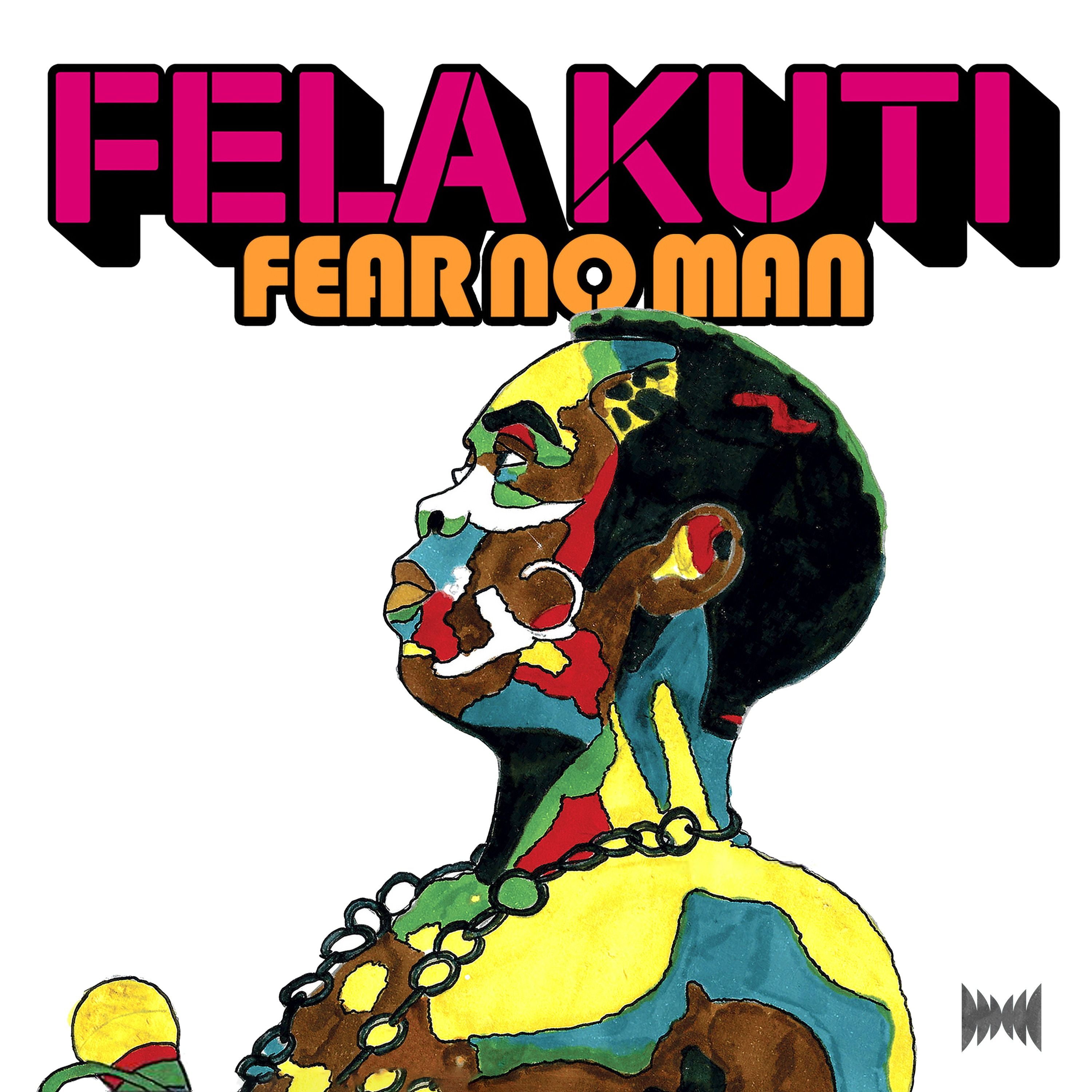
Fela Kuti: Enter the Shrine
Sign up for our newsletter!! It includes short essays, recommendations, and details about other ways to interact with the show. Signup (https://radiolab.org/newsletter)!
Radiolab is supported by listeners like you. Support Radiolab by becoming a member of The Lab (https://members.radiolab.org/) today.
Follow our show on Instagram, Twitter and Facebook @radiolab, and share your thoughts with us by emailing radiolab@wnyc.org.
Leadership support for Radiolab’s science programming is provided by the Simons Foundation and the John Templeton Foundation. Foundational support for Radiolab was provided by the Alfred P. Sloan Foundation.
Press play and read along
Transcript
Healthcare can feel complicated. That's why Optum uses technology to connect the people and processes that make healthcare easier, more affordable, and more effective.
We're making it clearer for you to know exactly what your benefits cover. And to help you better manage your health, we're coordinating care between your doctors and your technology.
We believe better, simpler healthcare is always possible. That's Healthy Optimism.
That's Optum. Visit optum.com to learn more.
Winter's the perfect time to explore California, and there's no better way to do it than in a brand new Toyota hybrid.
With 19 fuel-efficient options, like the stylish all-hybrid Camry, the Adventure-Ready RAV4 hybrid, or the rugged Tacoma hybrid, Toyota has the perfect ride for any adventure.
Every new Toyota comes with Toyota Care, a two-year complementary scheduled maintenance plan, an exclusive hybrid battery warranty, and of course, Toyota's legendary quality and reliability.
Visit your local Toyota dealer and test drive one today so you can be prepared for wherever the road takes you this winter. Toyota, let's go places.
See your local Toyota dealer for hybrid battery warranty details.
Hear that? That's me in Tokyo learning to make sushi from a master. How did I get here? I invested wisely.
Now the only thing I worry about is using too much wasabi.
Get where you're going with SPY, the world's most traded ETF. Getting there starts here with State Street Investment Management.
Before investing, consider the fund's investment objectives, risks, charges, and expenses. Visit state street.com/slash IM for prospectus containing this and other information.
Read it carefully.
SPY is subject to risks similar to those of stocks. All ETFs are subject to risk, including possible loss of principal.
Alps Distributors Inc. distributor.
Oh, wait, you're listening. Okay.
Door listening to Radio Lab. Lab.
Radio Lab. From
WNYC.
Is Radio Lab? I'm Latif Nasir. And I'm Lulu Miller.
And I am
Chad Abu Mrod here to hang out with Lulu and Lattev. Woohoo!
Welcome back, old man.
Thanks, youngster. Happy to be here.
Yeah,
where have you been this whole time?
I've just been here in Brooklyn, just, you know,
being a dad, making stuff.
So pretty much the first thing that happened when I handed you guys the show proudly is I became a professor, kind of a fake professor at Vanderbilt, but teaching all kinds of things relating to storytelling and interviewing.
Dr. Abu Marad.
Well, you know,
none of the other faculty are fooled.
But also, alongside that, I have been making all kinds of weird music and theater things. We just had a big thing in Brooklyn that launched in May.
It's about the Brooklyn Navy Yard, America's war-making engine, in a way. And
I don't know. It felt like, what if journalism were sung by 60 women?
And then somewhere along the way, early, I got into a conversation with Ben Adair, old friend, who has been making audio stories as long as I have.
He approached me and he was like, hey, do you want to do a podcast about Felakuti?
Felakuti, the Nigerian musician who invented a whole new genre of music and started a political movement. and toppled a government just with music.
I was like, cool, that sounds interesting.
And I said yes to it in the way that you say yes to things that you know are never going to happen.
You know, I was like, this would be really fun.
Sure, I'd love to have dinner at your house. It sounds great.
Well, I wasn't saying yes in a note, like I don't really want to do it. I was just like, I don't know if I'm doing another podcast.
But let me just, you know, let's just explore it. Because I knew a bit about Fella.
I mean, he was sort of the record that came on at a party and everyone was like, oh, and it was like the party got started. So I knew him from that, that angle, but I didn't know his backstory at all.
So
I started making some phone calls.
And
I don't know, it just didn't stop.
In this series, we're going to look at the life and the music of Felakuti.
Fela Anikulapo Kuti. Fela Nicolapo Kuti.
Anikul Poli. I I always get that.
My tongue always trips over that. Anikulapo Kuti.
The father of Afrobee. The black president, the chief priest.
I had never heard of Fela until you got obsessed with him.
And I was like, who is this guy? And why is Jad spending like three years obsessed with this guy?
I mean, yeah, one of the first things that you discover when you're trying to unravel who this man was is that all of these people that you love love him.
Io Adebari, actor, writer, someone I really respect. She's in the bear.
Great show. On some red carpet somewhere, she was asked, oh,
this question. A musician I have a cult-like fascination with.
Her answer. Fela Kuti, who is a like Nigerian legend.
Year is a very complicated man. But Fela has to be the epicenter.
And Quest Love, one of the great musical minds of our time.
I mean, Fela is the one figure whose story resonates with modern American hip-hop culture. The passion, the pain, Jay-Z.
The strength, the need to get the message out there. Beyonce.
I don't know. It just presents a question.
You're like, okay, what are they hearing? You know?
And
can I hear it? Can I make other people hear it? Yeah.
Okay, so you dive in, you end up turning out this 12-part series called Fela Kuti, Fear No Man, which people can go listen to right now, anywhere, everywhere.
And, you know, okay, people clearly love his music, but what drove you to make the series? Yeah.
He is the answer to a really
important
question for me personally, which is like, right now, you're looking out in the world. None of it makes sense.
It's all it's all insanity.
And if you love music, as I do, and you kind of look around, you're like, what is the point? What's the point? What's the point of making music? Like, what's it going to do to make our world better?
And then you look at like the streaming hellscape that we all live in. And artists are now content creators and they just sell their content to Spotify for precisely 0.01 cents.
And you're like, what's the point? What's the point? Like, why?
And he answers the question for me that the music itself
wasn't just music. It became the catalyst for like a political movement.
that had, you know,
many, many tens of thousands of young people ready to march into the streets. And just with the music, he almost toppled a dictatorship.
He's like, this is the point of making music. This is the point of making art is
to try and make a new world, try and change the world in some way.
And the music itself, though, like how it functions, how is that changing the world? Just what's the almost
mechanism? Sure. Okay, so here's, so, so, Lulu, I love that question because the political aspects of his music weren't just lyrical, although they were.
It was baked into the very grammar of the music itself. It's like in the notes.
It's below the notes.
It's in the structure of the music.
It's in the impact and the sequence of impacts that the music creates. Like, which sounds so pretty, but like, what the F does that mean? Well, okay, so
this is, this is, this, this episode that I think you're going to play. Yeah.
And okay, just for context, the first episode, we met a bandmate of Fela's. We got the story through his eyes.
Then in the second episode, you traced his evolution into a revolutionary. And then in the third one, the one we're going to play, this is the one where we really get into the music itself.
Yeah.
It really tries to
first give you the experience and then explain what the experience is. Yeah.
So it's called The Shrine. Anything else before we walk in?
I should explain: The Shrine is
his club in Lagos.
And
it really was sort of the epicenter of his movement. And we interviewed, God, so many people who described what it was like to be there.
People
who were once asleep and are now awake.
My experience and being in the shrine was like, like the music was like inside of me was all around and just like you know being hypnotized
like you're all inside the music
The secret of life is to have no fear
We all have to understand that
This is Felicuti fear no man chapter three enter the shrine one of the ingredients of a movement, necessary ingredients, is to have a place where you can experience the promise of that movement right here, right now, in the present.
Can you tell us about your first visit to the shrine?
Yes, of course.
What do you remember about them? It was very, very funky. This is Michael Veal, musician.
Professor of music at Yale. He's also one of our advisors on the project.
To hear that music in New York is one thing.
You know, you listen to that music in New York, you're like, oh
Then you get closer, you start in your
I remember that very clearly. But it was at night
and there was no power.
Blackout. It's like going to Times Square, but there are people all in the street, like thousands and thousands of people.
It's a jam-packed mob of people.
It's total darkness, but thousands of these little sterno lamps illuminating the place.
Because the power went out all the time in Lagos, but there are thousands of these sternos.
So you imagine the scene. It's like almost like Woodstock of a cotton thing.
You know what I mean?
Yeah.
Yeah. To hear that music in New York is one thing.
You're like, oh yeah, whatever. But then, if you ever get in a plane and go to Lagos,
ladies and gentlemen, we'll come to the town called International Airport. They open a hatch
and it goes
with the humidity and the heat.
You know, the minute they open the hatch, it's like BAM!
And then you walk out of the plane and you got to go down the steps. And you're like,
oh,
now I get it. Welcome to Nigeria.
That's the way reality feels in this setting.
You know what I'm saying?
That interview with Michael Veal was one of the many reasons why when we finally got to Lagos,
after a 13-hour flight,
the top item on our agenda was to go to the shrine.
Radiolab is supported by AT ⁇ T. AT ⁇ T believes hearing a voice can change everything.
And if you love podcasts, you get it. The power of hearing someone speak is unmatched.
It's why we save those voicemails from our loved ones. They mean something.
ATT knows the holidays are the perfect time to do just that. Share your voice.
If it's been a while since you called someone who matters, now's the time. Because it's more than just a conversation.
It's a chance to say something they'll hear forever.
So spread a little love with a call this season and happy holidays from ATT. Connecting changes everything.
Radiolab is supported by Capital One. With no fees or minimums on checking accounts, it's no wonder the Capital One bank guy is so passionate about banking with Capital One.
If he were here, he wouldn't just tell you about no fees or minimums. He'd also talk about how most Capital One cafes are open seven days a week to assist with your banking needs.
Yep, even on weekends. It's pretty much all he talks about in a good way.
What's in your wallet? Terms apply. See capital1.com slash bank, capital One, NA, member FDIC.
Winter's the perfect time to explore California, and there's no better way to do it than in a brand new Toyota hybrid.
With 19 fuel-efficient options, like the stylish all-hybrid Camry, the Adventure-Ready RAV4 hybrid, or the rugged Tacoma hybrid, Toyota has the perfect ride for any adventure.
Every new Toyota comes with Toyota Care, a two-year complementary scheduled maintenance plan, an exclusive hybrid battery warranty, and of course, Toyota's legendary quality and reliability.
Visit your local Toyota dealer and test drive one today so you can be prepared for wherever the road takes you this winter. Toyota, let's go places.
See your local Toyota dealer for hybrid battery warranty details.
Bob Evans' creamy mac and cheese and buttery mashed potatoes are made for the moments you can't plan, like last-minute school costumes, glitter explosions, or when little Liam brings three friends for dinner.
No plan? No problem. Say hello to Plan BOB from Bob Evans.
Because when you bring out the Bob, you can take comfort in knowing you'll always have something delicious on the table, no matter what the day brings.
When you need comfort, bring out the bob, available now in your refrigerated section.
Let me fill in a few gaps. 1969.
After the whole Sandra Isidore experience in LA, Fela comes back to Nigeria, radicalized, steps off the plane, and takes the country by storm.
He becomes the massive star that we know him to be.
And then between 1973 and 1979,
he releases this fire hose
of music. Something like, by my count, 27 records in six years-ish.
One hit after another after another.
Now, The Shrine. During that time, early on, he sets up a club that he calls the Shrine.
And it's important to understand where. Lagos, Lagos City,
the most populous city in Africa.
Lagos is on the coast, the Atlantic Ocean, and it consists of a giant landmass, a mainland, that curves around this bay.
And in the bay are two major islands that connect back to the mainland with bridges.
On the islands,
this is the sound you hear:
Peacocks,
golf.
It's very lush, very beautiful.
On the mainland,
very different sound.
You will find places on the mainland where the sheer density of people
is just breathtaking.
For example, this audio that you're hearing is from a market that we visited in a neighborhood called Mushin,
a poor working-class neighborhood where a million people are packed into seven square miles.
In this neighborhood, not the island, this spot is where he decided to put the shrine.
To say basically, I am the voice of the people.
The sufferheads, as he called them.
When we visited the shrine, at night it was more or less as Michael Veal described it. People all in the street, like a jam-packed mob with people.
He was there in 92. We were there 2024.
And the shrine has closed a few times and reopened and moved around a bit.
But it was kind of the same. It was dark.
You had about 50 food cellars lining the block, this very long block in front of the shrine. People smoked weed openly,
which in Nigeria can carry a heavy prison sentence.
Our fixer in Lagos told us that even now, 28 years after Fela died, this is the one place where that can happen.
One of the sellers that was there explained it this way. Fela is like life
after death.
Evergreen. Yes.
But you feel like Fela still protects this street, this place?
Yes. Exactly.
His sense was the ghost of Fela is still there protecting this one block.
And as he said that, he nodded towards the end of the block where there were policemen waiting, standing almost like on the other side of an invisible line. You've done your research.
You know that the
shrine and also Fela's compound, the Calicuta Republic, he had kind of declared independent of Nigeria.
That's Lisa Lindsay, a professor at the University of North Carolina, Chapel Hill. She specializes in the history of West Africa, and she brings up an important point.
Is it in 1970 when Fellag got back to Nigeria? He declared his club, the shrine, and also his house nearby, which he called the Calicuta Republic.
He declared them a sovereign nation within Nigeria. Sort of like the Vatican is to Italy, that he was a country unto himself.
Lisa Lindsay visited the shrine in the early 90s. It was just all this craziness that we saw.
Well, okay, so outside, there's a dictatorship dictatorship that was shooting people.
At that time, and there are videos of this on YouTube, the government would hold public executions of criminals and dissidents
on the beach.
There were soldiers in the streets. It wasn't safe to be out at night.
You go in.
And it's
just this alternate universe. Describe what it looks like.
It was like a warehouse, warehouse, sort of. Everybody smoking.
A lot of weed smoking. Giant, giant joints.
Joints the size of police megaphones. Keep in mind, at that time, people were getting thrown in jail for 10 years for
a half-smoked joint. It was just this massive cloud up at the top of the thing.
It's hot, it's humid. There are a lot of people in there.
People dancing and people stoned out of their minds.
And it was such a contrast to how scared people were outside of the shrine. The shrine was not far from his house, a couple of blocks.
That's John Darton, Pulitzer Prize-winning journalist who wrote for the New York Times, worked as a foreign correspondent based in Lagos in the mid-70s, wrote many, many articles about Fella, including this one where he watched Fella get ready right before he performed at the shrine.
Would you mind reading this? This is you. You reading you.
Because Ruby and I have been trying to find as vivid descriptions as we can of the atmosphere, and this is actually one of the more vivid that we've ever read.
New York Times. New York Times.
That voice is Nina Dartin-John's wife, also a longtime journalist. Fella's pregame ritual.
The show begins at 1 a.m. Inside the nearby Calacuda Republic.
Fella prepares for it laboriously.
From a jar, he spoons up liberal doses, glitter-gooey substance nicknamed Fella Gold, distilled extract of marijuana. Full-length mirrors are brought before him and held by two young boys.
He slowly slips into skin-tight sequined pants and a white shirt open to the waist, arranging his strings of beads as if he were smoothing a necktie.
Six bodyguards draw near. Let's go, Fella says, and the entourage moves outside where there is a crowd of several hundred people.
Some have been waiting for hours, clinging to the barbed wire to catch a glimpse of him. A chant, Fella, Fella, rumbles out of the dark.
That's good, Jennifer. It is really good.
And as he walked, and...
He got on a donkey. Well, that was the second.
He got on a donkey. What? Okay, wait, sorry.
As he walked. He was a showman.
Drivers would get out and raise a fist and yell, Ferla, Ferla. Anyway, then he starts playing.
And I have never seen, I think, a performer quite as dynamic as that. He was absolutely incredible.
Before we go back into the shrine. Well, first, let me give you a picture.
It is an
open-air club. Fits about 500 people.
There's a tin roof over the stage, but no roof over the dance floor. And to either side of the stage are four studio 54-ish cages where dancers dance.
Also to one side, there is an altar where Fella had a picture of his mother, a picture of Malcolm X, and a picture of Kwame Nkrumah, the first president of Ghana.
But I'll be honest, what's most interesting to me is not so much the shrine itself. I mean, it was a club, but rather what happened to people when they went inside of it.
Because
Do you know how people talk about psilocybin now? Right? Like we all have one of those friends who did some mushrooms and it changed their life and they can't stop talking about it.
And there's a way to explain those experiences. You can say in neurochemistry, right? There's something about these drugs, they rewire your brain.
Fine.
We ran into so many people who described listening to Fella's music at the shrine in the same way that it had the same effect on them, which is a little harder to explain, though I will try in a moment.
But first,
let's re-enter the shrine from their perspective.
And as you're listening, see if you can let yourself notice, what are you paying attention to? How does that change over time?
1 a.m., Fela arrives on his donkey, takes the stage with 35 other musicians, and he begins a riff
that will last most of the night. My experience in being in the shrine was like, like the music was like inside of me, it was all around, it was just like, you know, being hypnotized.
Like you're all inside the music. A kind of hypnotic dancing reacts to music.
Dancing in this way.
I remember being lost in music.
All the people are smoking around me, and we are in the mist.
So you're in a different world.
This idea of the spiral, spiral, spiral, and
circle,
spiral, catarro, spiral,
spiral, spiral, spiral, it's another way to deal with time.
Reacts to you.
I always describe it as a swirl.
You know when you have a cyclone,
it starts off as this little thing that builds up. And it builds up the more you allow it to circulate, it just starts to get bigger,
get bigger,
get bigger,
get bigger,
ankle,
get bigger,
get bigger,
Fella starts his music
to enchant
this repetitive pattern, the power of the musical cosinato
is part of that enchanting strategy.
You've been captured.
I thought this is really an amazing new form of music.
It was
almost like a field of sound
that sits there for a long time, and you explore it.
You kind of enter it and live in it. This is a place.
This isn't a song.
And meanwhile,
the rhythm sections keeping going, going,
going, going,
going,
This is a place
and when you start listening to it you are entering into that place.
The music was like inside of me, it was all around him, just like you know being hypnotized by
the hole inside me
kind of hypnotic dance.
And so with Fella,
you could tell that there was a different kind of intention behind this paradigm of groove.
Music is
so nasty,
you have to dance. But that's just the ground level.
Because why would you play a song for 30 minutes or 40 minutes unless you really have something to say?
Unless you really have something to say.
Rhythm sections, don't, don't, don't.
And then suddenly
after half an hour, forty minutes,
fire going,
He starts singing.
You go die for nothing.
We go carry your boss the go,
leave be sure you die wrongfully.
When his voice came in, I was like, what the hell? There are words too?
Hold up, what is this? He sings in a gravelly, low-pitched voice and sings about things that no one else ever even mentioned. Any newspaper, any columnist.
He talks about the United Nations.
He talks about Thatcher. He talks about Reagan.
It's really, it's really everything. It's like a history lesson.
You see it sinking in.
You could see ideas in the air, floating from the stage like thought balloons and then sinking into somebody's skull.
I just felt,
where has my mind been
all my life?
complete surprise like i i was immediately captivated why did we not know this why aren't we thinking about this stuff when fellas singing to a microphone
i saw the
the light i was just like you know like he sucks you in and then it has that light bulb effect on you you come into yourself and you know It's a moment of introspection too because you realize that you haven't been as attuned as you probably should have.
All the stuff he was singing was just new to me. You know, I was just learning so much about Nigerian history through Felat that I had not learned in school.
Before we go on, the voices you just heard, in addition to Michael Veal and John Dartin, were Stephanie Shonikan and Bode Omujola, both professors of ethnomusicology at the University of Maryland and Mount Holyoke, respectively.
Afrobeat musicians Dele Shoshimi and Duro Ikujenyu, activist, filmmaker, musician, Saul Williams musician and producer Brian Eno, artist Lemi Garialku, photographer Marilyn Nance, designer Lorraine Animasen, and our advisor Moses Uchunu, who's a professor of history and my colleague at Vanderbilt University.
He was one of the last voices you heard, and I asked him. He said the music made you feel like you needed to tune into things you hadn't been tuning into.
Like Like what?
You know,
when I was growing up in Nigeria, you know, we would hear about corruption, about thousands of naira being embezzled by some politician or government official. And we would open our mouths in shock
because
our brains couldn't compute how one person would make off with thousands of Naira. How would the person carry this money? What would they put it in?
In some boxes, in some cars, you know, physically, how would they move this money? You know, we just couldn't fathom it. And then over time, we started hearing about millions, not thousands anymore.
Then billions.
And now,
as we speak, the corruption numbers have entered the trillions. So that, over time, has had a numbing effect.
a dulling effect.
The shock value, the kind of shock that I felt as a child growing up in Nigeria, the moral outrage that I felt, that's gone. That's long gone.
And that is what would come back when you heard his songs. Right, exactly.
Moses said that Fellah's music would remind him of the insanity that he had been sainwashed into believing was normal.
And I think that there's something really interesting about
how the music can
move him to that thought.
Music is all about structure, right? Structuring the relationship between notes and chords and melodies. But here you have structure
on an entirely different level, almost like a phenomenological structure.
For the first 15 minutes, it's just loops.
Ostinatos going round and round. The power of the musical ostinato.
Ostinato in Italian, by the way, means basically stubborn. The loops stubbornly repeat.
And at first, it's not so bad. It's kind of grounding, actually.
But then the natural response is then to want some change. Like, can we go to the next section now, please?
Please?
No?
This is what the Buddhists call our monkey mind. Our monkey mind wants distraction.
It wants anything to keep us from having to live with our own thoughts. But the music doesn't give us that.
It doesn't change. It only builds.
Layers get added piece by piece, instrument by instrument. And at some point,
a few minutes in, you arrive at this mysterious moment where you stop wanting it to change. This is phase two.
Now that part of you that wants novelty starts to notice things. Like, whoa, listen to all the interlocking parts of this groove.
Whoa, the ostenados, they're like machine gears.
They don't grind. The gears are tying in between each other so they just subtly fit onto the little gaps and holes like techniques.
The way that the conga plays off the shaker, call and response.
The way that the three guitar lines spin around endlessly like gears and a higher level clock. My God, this groove is a whole world.
This is the trance state. Usually when we talk about trance, we mean a kind of dulling of our senses, but actually it's the opposite.
It's a state of hyper-focus.
You are noticing things, you're hearing things you've never heard before because your neurons are rewired. You are open.
And it is at this very moment that Felah begins to sing.
I was like, what the hell? There are words too?
In comes his voice, booming like the voice of God. This is phase three.
And because you are open,
you really hear what he is saying. You see it sinking in.
You could see ideas in the air floating from the stage like thought balloons and then sinking into somebody's skull.
And in that way, as the final piece of this progression, he gives you a new conception of what your life can be.
I saw the
lights that you can now dance to.
My music,
my main,
my main preoccupation right now, music is
a small part of it.
This is a clip from an interview Fella gave in 1988 where he describes his musical form almost as this vehicle designed to move people step by step by step so that they can hear what he has to say.
Is your music kind of a tool? It's a weapon.
It's a weapon to say so I can talk when I have the chance to. I consider music to be effective, like a weapon to inform people.
My music is like an attraction to inform people.
It is the information side of the music that is important.
In that same interview,
he suggests that there's something else going on here too. It has to do with time itself.
If anybody tells me 20 years is a long time, I would tell him no.
Time
is meaningless unless you want to understand what time is about.
There is time for everything.
Coming up,
that idea of cycles is going to become not just about the music, but so much more. Cycles of history, of violence, of resistance.
We're going to follow all of the interlocking ostinatos of Fellas Groove
across time and space
into the deep past to an incredible story of a rebellion that deposed a king that created a sound that continues to echo to this day on the streets of Lagos and the world.
That's next.
Um, okay, so Jazz, thank you. The series is
a magnum open special. It is so it is.
It is. And yet there'll be another magnum because you know he'll keep going despite trying to leave.
But it is so special. It's amazing.
Let's see.
This might be the last one. We'll see.
Where else is the series going and where can people find it? What's it called?
So the series is going to go all kinds of places. It's called Fela Kuti Fear No Man.
The next one is my fave. It's a story about Fela's mom.
Oh, yeah. Who is so good? Who is
so extraordinary that it immediately made me being like, wait, why are we talking about him? Right, it felt like you could flip it.
You could do the 12-episode series about her and then one episode about him in the middle. Exactly.
Because what she accomplished is so
bananas. Yeah.
And again, just with music. So, yeah, that episode is next.
Wait, and can you share the title of that episode? It's called Vengeance of the Vagina Head.
And
it's not a title we made up. It was what the newspapers called the revolt that she led at the time.
They called it Vengeance of the Vagina Head. Just let that be a tease.
This has been a higher ground and audible original produced by Audible, Higher Ground Audio, Western Sound, and Talk House.
The series was created and executive produced by me, Jad Abunrod, Benadair, and Ian Wheeler, written and hosted by Yours Truly.
Higher ground executive producers were Nick White, Mukta Mohan, and Dan Fearman. Jenna Levin was creative executive, and Corinne Gilliard Fisher was executive producer.
Executive producers for Audible were Anne Hepperman, Glynn Pogue, and Nick DiAngelo.
Our senior producer was Gofen Utu Bule. Ruby Heron Walsh was lead producer and researcher.
Our producers were Feifei Odudu and Oluakemi Aleusui.
Benadair was our editor with editing help with Carla Murthy. Consulting producers were Bolu Babalola, Dotun Ayubade, Nik Abdurrakid, Michael Veal, Moses Ochunu, and Judith Bifield.
Our fact-checker was Jamila Wilkinson. Alex McInnes was the mix engineer.
Also, special thanks to Knitting Factory Records and BMG, to the Kuti family,
Melissa O'Donnell, to Inside Projects and Maggie Taylor. And big thanks to Carla Murthy, Leah Friedman, and Shoshana Scholar.
The head of creative development at Audible is Kate Navin, Chief Content Officer, Rachel Piazza. Copyright 2025 by Higher Ground Audio LLC.
Sound recording copyright 2025 by Higher Ground Audio LLC.
Hi, I'm Shivan Shamuri and I'm from Mumbai and here are the staff credits. Radio Lab is hosted by Lulu Miller and Latef Nasser.
Soren Wheeler is our executive editor.
Sarah Sandback is our executive director.
Our managing editor is Pat Walters. Dylan Keefe is our director of sound design.
Our staff includes Simon Adler, Jeremy Bloom, W.
Harry Fortuna, David Gable, Maria Paz Gutierrez, Sindhu Niana Sambandhan, Matt Kielty, Mona Madgaukar, Annie McEwen, Alex Neeson, Sarah Kari, Anissa Vitza, Ariane Wack, Molly Webster and Jessica Young.
With help from Rebecca Rand, our fact checkers are Diane Kelly, Emily Krieger, Anna Pujol-Mazzini, and Natalie Middleton.
Leadership support for Radiolab science programming is provided by the Simons Foundation and the John Templeton Foundation. Foundational support for Radiolab was provided by the Alfred P.
Sloan Foundation.
Winter is the perfect time to explore California, and there's no better way to do it than in a brand new Toyota hybrid.
With 19 fuel-efficient options like the stylish all-hybrid Camry, the Adventure-Ready RAV4 hybrid, or the Rugged Tacoma hybrid, Toyota has the perfect ride for any adventure.
Every new Toyota comes with Toyota Care, a two-year complementary scheduled maintenance plan, an exclusive hybrid battery warranty, and of course, Toyota's legendary quality and reliability.
Visit your local Toyota dealer and test drive one today so you can be prepared for wherever the road takes you this winter. Toyota, let's go places.
See your local Toyota dealer for hybrid battery warranty details.
Hear that? That's me in Tokyo learning to make sushi from a master. How did I get here? I invested wisely.
Now the only thing I worry about is using too much wasabi.
Get where you're going with SPY, the world's most traded ETF. Getting there starts here with State Street Investment Management.
Before investing, consider the fund's investment objectives, risks, charges, and expenses. Visit state street.com/slash IM for prospectus containing this and other information.
Read it carefully.
SPY is subject to risks similar to those of stocks. All ETFs are subject to risk, including possible loss of principal.
Alps Distributors Inc. Distributor.