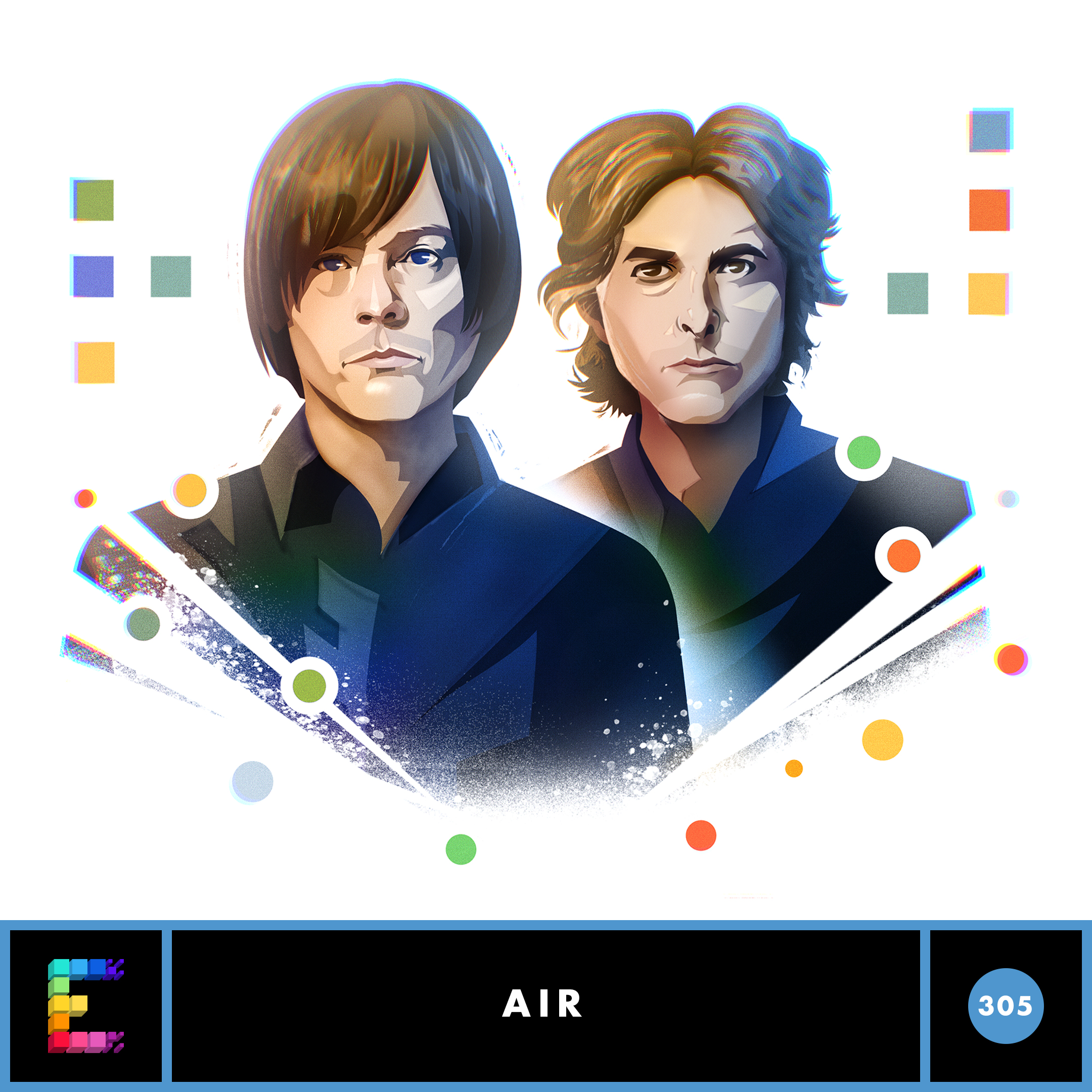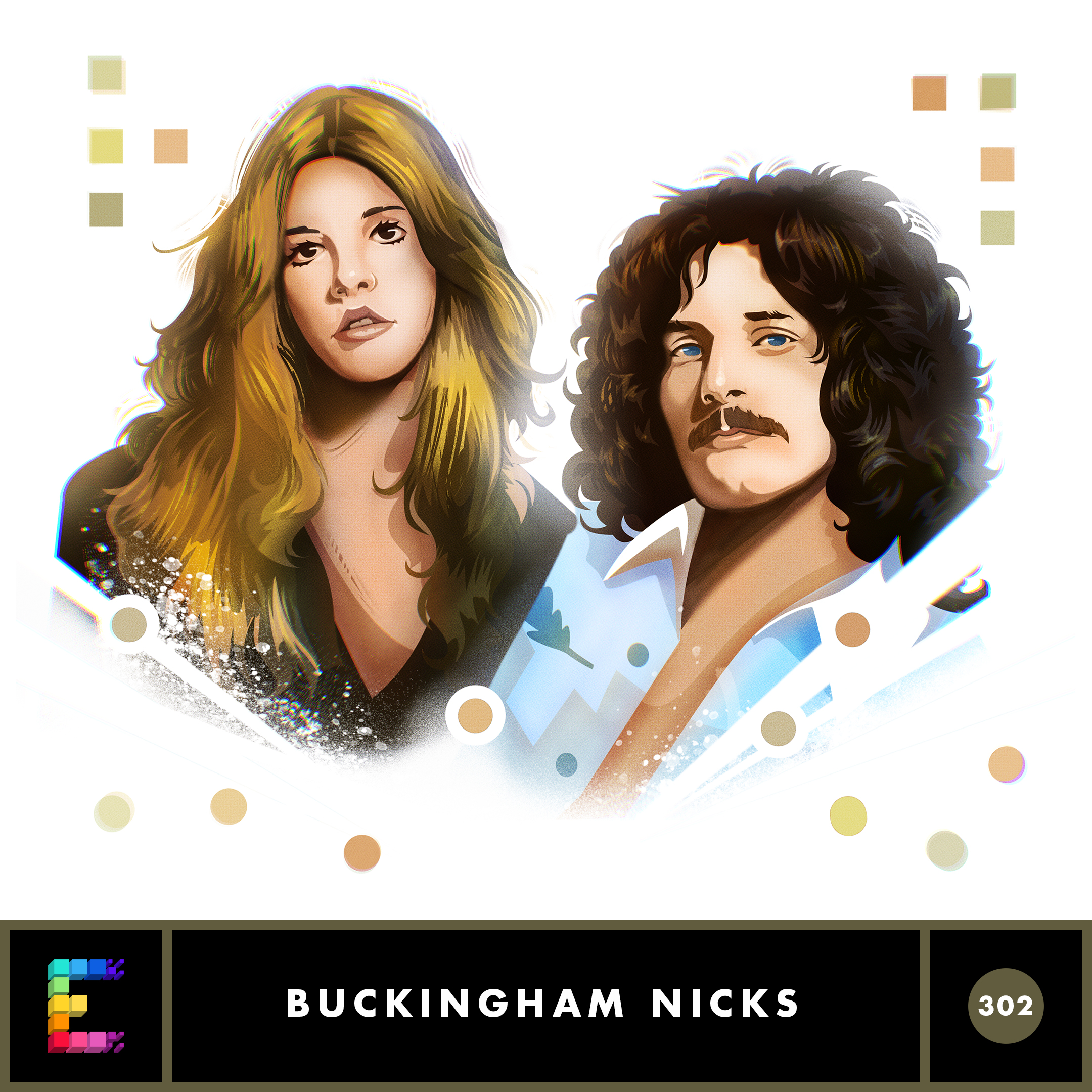
Buckingham Nicks - Frozen Love
On September 5, 1973, the first and only Buckingham Nicks album was released. It wasn’t a huge hit, but it was how the world was first introduced to the music of Stevie Nicks and Lindsey Buckingham, before they went on to become members of Fleetwood Mac. Their time together in Fleetwood Mac led to some of the best-selling, most critically acclaimed, and most influential albums of all time. Their individual talents, their musical chemistry together, and the ups and downs of their romantic relationship all eventually became legendary.
And yet, despite all that, the Buckingham Nicks album went out of print not long after it came out. For over 50 years, it wasn’t available, until it finally got re-mastered and re-released in September 2025. So for this episode, I spoke to both Stevie Nicks and Lindsey Buckingham about the making of one of the songs from that album, called “Frozen Love.” It’s the only song on the album where they’re credited as co-writers, and it’s the song that led Mick Fleetwood to invite Lindsey Buckingham to join Fleetwood Mac. But Lindsey would only join if Stevie could, too, and that’s how that story began. So this episode is about a beginning and an ending. It’s the story of how Stevie and Lindsey first met, and how they made "Frozen Love," and how that song really led to the end of their band.
I also want to mention that not only was Buckingham Nicks out of print for all those decades, no one has heard the isolated tracks that you’re about to hear. To make this episode, there was an epic search for the original master tape from Sound City, the studio where they recorded the album with producer Keith Olsen. It took months, but the tape was finally tracked down and digitized, and it feels very special to be able to present this for the first time here, along with the memories and stories from Lindsey Buckingham and Stevie Nicks.
For more info, visit songexploder.net/buckingham-nicks.
Press play and read along
Transcript
Speaker 1 You're listening to Song Exploder, where musicians take apart their songs and piece by piece tell the story of how they were made. I'm Rishikesh Hirway.
Speaker 1 Before we get into the episode, I want to say thanks so much for listening to Song Exploder. This might be your first episode, or maybe it's your 300th.
Speaker 1 It's crazy to me to think that the podcast has even been around this long.
Speaker 1 But I will say that, unfortunately, over the last couple of years, it's been getting harder and harder to see what the future might look like for the show, or if there even is a future.
Speaker 1 And part of that is because while the number of podcasts out there in the world keeps growing, the sort of middle class of podcasts where Song Exploder lives is getting hollowed out.
Speaker 1 The one thing that can keep shows like this afloat these days is if enough people out there are passionate enough about it that they're willing to put a few dollars every month towards the work.
Speaker 1 I've learned the hard way that ads come and go unpredictably. But the support of individual listeners is real and much more dependable.
Speaker 1 So I'm here asking if Song Exploder is a meaningful show for you, would you consider supporting us and donating to the Radiotopia fundraiser that's happening right now?
Speaker 1 We're looking for 1500 new donors who believe in the kind of podcasts that we make. Intimate stories made with careful production and sensitive editing.
Speaker 1 It's a lot of work, but I really believe in making something that feels like every second is worth paying attention to. And I hope you believe in that too, and that's why you're listening right now.
Speaker 1 If that's the case, please visit songexploder.net slash donate. And know that whatever amount you're able to chip in, it's making a huge difference over here.
Speaker 1 It can kind of feel like a very lonely vacuum sometimes, and even just knowing that there are people out there who care is huge. The link again is songexploder.net slash donate.
Speaker 1 And sincerely, thank you. There's nothing like knowing someone's in your corner, especially in the moments that really matter.
Speaker 1
That's why AT ⁇ T has connectivity that you can depend on, or they'll proactively make it right. That's the AT ⁇ T guarantee.
Terms and conditions apply. Visit att.com slash guarantee to learn more.
Speaker 1 ATT, connecting changes everything.
Speaker 1
This episode is presented by the new podcast about the great Felakuti. It's called Felakuti, Fear No Man.
It's the true story of one of the great political awakenings in music.
Speaker 1 Felakuti was a classically trained Nigerian musician who made songs of protest against government corruption. And in doing so, he created a whole new genre called Afrobeat.
Speaker 1 This show is the first project from podcast legend Jad Abimrad, and it features interviews with Felakuti's family, David Byrne, and President Obama.
Speaker 1 Check out Felakuti Fear No Man on Audible or wherever you get your podcasts.
Speaker 1 On September 5th, 1973, the first and only Buckingham Nicks album was released.
Speaker 1 It wasn't a huge hit, but it was how the world was first introduced to the music of Stevie Nicks and Lindsey Buckingham before they went on to become members of Fleetwood Mac.
Speaker 1 Their time together in Fleetwood Mac led to some of the best-selling, most critically acclaimed, and most influential albums of all time.
Speaker 1 Their individual talents, their musical chemistry together, and the ups and downs of their romantic relationship all eventually became legendary.
Speaker 1 Despite all that, the Buckingham Nicks album went out of print not long after it came out. For over 50 years, it wasn't available, until it finally got remastered and re-released in September 2025.
Speaker 1 So for this episode, I spoke to both Stevie Nicks and Lindsey Buckingham about the making of one of the songs from that album, called Frozen Love.
Speaker 1 It's the only song on the album where they're credited as co-writers, and it's the song that led Mick Fleetwood to invite Lindsay Buckingham to join Fleetwood Mac.
Speaker 1 But Lindsay would only join if Stevie could too, and that's how that story began. So this episode is about a beginning and an ending.
Speaker 1 It's the story of how Stevie and Lindsay first met, and how they made Frozen Love, and how that song really led to the end of their band.
Speaker 1 I also want to mention that not only was Buckingham Nicks out of print for all those decades, no one has heard the isolated tracks that you're about to hear.
Speaker 1 To make this episode, there was an epic search for the original master tape from Sound City, the studio where they recorded the album with producer Keith Olson.
Speaker 1 It took months, but the tape was finally tracked down and digitized, and it feels very special to be able to present this for the first time here, along with the memories and stories from Lindsey Buckingham and Stevie Nicks.
Speaker 3 And if you go forward,
Speaker 3 I'll meet you there.
Speaker 3 And if you climb up through the cold, freezing air,
Speaker 3 look down below you.
Speaker 3 Search out above,
Speaker 3 cry out
Speaker 3 for
Speaker 3 those
Speaker 3 in love.
Speaker 3 Cry
Speaker 3 below.
Speaker 2 My name is Lindsay Buckingham.
Speaker 4 And my name is Stevie Nix.
Speaker 1 Do you still remember the first day you two met?
Speaker 4 I do. Lindsay and I started talking about it last night and I was like,
Speaker 4 this whole thing seems really like yesterday to us.
Speaker 2 I was a junior in high school and she had transferred in as a senior.
Speaker 4
We met at a party in San Francisco. I heard this guy singing from a long way away in this big room, and he was singing California Dreaming.
And I thought, oh, I know that song.
Speaker 4
So I kind of made my way over and I saw him. And I thought, I'm going to walk up there and sing.
Oh, he's going to hate me. Oh, I don't care.
I'm going.
Speaker 4 So I went up and I just smiled at him and I stood behind him and I sang the harmony to California Dreaming. And it was fantastic.
Speaker 4 And I thought, oh, I better get out of here now before he gets really mad when it was going to end, right? So I just like like disappeared into the shadows. And so we didn't meet.
Speaker 4
I didn't turn around and say to him, Hi, I'm Stevie Nicks. And he's like, oh, hi, I'm Lindsey Buckingham.
That did not happen. I just disappeared.
And I really didn't know who he was.
Speaker 4 And then we didn't see each other or talk to each other again for like, I think, close to two years.
Speaker 2 It wasn't until really my senior year of high school that a friend of mine, who was a drummer, asked if I would be in a band called Fritz just to play at an assembly.
Speaker 2 And the guy who was sort of leading it was a guy named Javier, who was actually quite a good songwriter and played keyboards.
Speaker 1 And so you were one of the singers and you played bass in Fritz?
Speaker 2 That's right. And so we got up and did two or three songs for the assembly.
Speaker 2 And I think it blew a lot of people's minds. Hallelujah, Halloween.
Speaker 2 We graduated high school and when we all got to the same college, junior college, the next fall, there was some interest in picking up what we'd done.
Speaker 2 But the girl who had been singing in the band at the assembly had gone off somewhere else to school.
Speaker 2 But Stevie, who was a year older but was still going to that same junior college, was around and so we sought her out.
Speaker 4 It was actually Bob Aguirre that called me who was the drummer and he just said how would you feel about joining a band and I said what kind of a band is it?
Speaker 4 And he said well it's a hard rock and roll band and I kind of said just a minute and I walked around the room for a second and like went yes
Speaker 4 Because I'd always had it in my heart of heart, even though my granddad was a country singer and there was a lot of other kind of music in my life and I said like, that's just what I wanted.
Speaker 4 It was really Javiero's band because he wrote the songs. And, you know, in two or three weeks, we were like playing shows and it was really, really exciting and fun.
Speaker 4
We got to the point where we were playing like big shows. We opened for Chicago at Fillmore West.
We opened for Jimi Hendrix for 75,000 people.
Speaker 4
And so it was like in our own minds, we were already famous and we loved it. And then Keith Olson was there with his kind of partner after we played.
And it was a big show.
Speaker 4 And they said, we would really like to maybe work with you. Why don't you guys come down to Los Angeles?
Speaker 2 And so Fritz went down and did a bunch of performances for people at labels. Keith was extremely supportive, but Fritz was never able to secure a record deal.
Speaker 2 But what did happen was that not just one, but a number of labels labels expressed interest in Stevie and me.
Speaker 4 So Keith Olson called us and said they really like you and Lindsay, but they don't appreciate the importance of the other three members of the band, which was terrorizing to us because we loved these guys.
Speaker 4 So we were not at all happy about that, but there was nothing that we could do. And that was very sad and very hard.
Speaker 4 It hurt us, you know, it was our first like super disappointment, I think, in the music business.
Speaker 1 But it must have been a little bit mixed, right? Because even though you had to leave those three other guys, it was still sort of an invitation to maybe get to another level.
Speaker 4 It was an invitation to greatness. And we both knew it.
Speaker 2 We thought, well, okay, if we're going to pursue that and we still want to keep going with music, then what does that mean? So one of the things that it meant was that I had to start writing songs.
Speaker 2 You know, Stevie was already a fairly prolific writer.
Speaker 4 I think I wrote my first song when I was 15 and a half, and it was about a lost love.
Speaker 4 Therefore, began my tragic love song.
Speaker 2 And for me, the timing couldn't have been better because I was now being influenced by a new kind of music that had started to come in.
Speaker 2 when James Taylor hit the scene or when Joni Mitchell hit the scene. These were people who were right up my alley in terms of my style of guitar playing.
Speaker 2 All of this was obviously and ultimately going to help define myself as a writer. So I just started writing songs.
Speaker 2 So while we came back to Northern California somewhat in defeat from having not been able to get a record deal as Fritz,
Speaker 2 it became a catalyst for Stevie and me to bond in a different way.
Speaker 4 We probably never would have have even had a relationship had it not been that we had to fire the rest of our band.
Speaker 4 That was just such a crushing blow and it drove us together because we just couldn't figure it out.
Speaker 4 And then we fell in love, you know, with each other and that was it. We were together.
Speaker 4 We started writing songs, you know, like ourselves and brought our songs in to each other and decided which ones we wanted to do.
Speaker 2 My dad, who was in the coffee business and had a coffee plant south of San Francisco, let me go up there nights and take my four-track tape machine.
Speaker 2 So I would take my songs and I would take the songs Stevie had and I'd go up and work and she'd come up some of the time and sing.
Speaker 4 And we just sat on the floor and he worked on the music and I crocheted and was the cheerleader. And we started to work on the songs that then became the Buckingham Knicks album.
Speaker 4
And Frozen Love started kind of as a full-on folk song because I wrote it on guitar. I'm not the greatest guitar player in the world.
I play just good enough to write.
Speaker 4 The song, I think, is about two people that were in love that had a lot of differences
Speaker 4 and saw the world slightly differently, but had this like relationship that seemed to be you know, like a gift. So it was like a strong relationship and then also a strong musical relationship.
Speaker 4 And those two relationships together made for a pretty determined relationship.
Speaker 4 If you read just the poem from me before it ever went to Lindsay, it was, you may not be as strong as me and I may not care to teach you. That's pretty flippant, isn't it?
Speaker 4 It may be hard to keep up with me, but I'll always be able to reach you. Even more flippant.
Speaker 4 But I like to think of it as like Wuthering Heights or Great Expectations, you know, like modern day love affair tragedies, because nobody really loves happy songs.
Speaker 4
Certainly I didn't and neither really did Lindsay. So for us, the more dramatic it was, the better.
And so Frozen Love to me was a lot of fun because it was so dramatic.
Speaker 4 That was where we, I think, found that string that was like, don't be afraid to write a poem that's a little bit about me, because what else are you going to write about?
Speaker 4 It was never like, was that about me? How come you wrote that about me?
Speaker 4 Because we never went there. We were just like, that is great.
Speaker 4 If I went in there with two verses of it and the chorus, you know, with my simple, simple guitar playing, and he would just go like, keep writing. I like it.
Speaker 2 She was very confident as she should have been in her lyrics and didn't necessarily have a motivation to run them by me or to discuss them.
Speaker 4 Sometimes after we started living together, I would write a song and I'd put it on a cassette and I'd leave it by the coffee pot and I'd just put a note saying, you know, here it is, produce it, but don't change it.
Speaker 4 Don't change the actual core of it.
Speaker 2 I don't think she craved my input on that level, nor did I crave hers on production or instrumental level either.
Speaker 2 You know, I mean, she understood that I was transforming things for her, and I understood that I wouldn't have had anything to transform without the beautiful center that she'd given me to work with.
Speaker 4 And I would just wait to see what he did.
Speaker 2 And so the center of the song was there, but rhythmically,
Speaker 2 I wanted to create something that would have interest in terms of guitar.
Speaker 2 I was interested in coming up with my own tunings, and that was, what was that? It was like an Open D tuning.
Speaker 2 Do you want me to show you?
Speaker 1 Yes, please.
Speaker 2 If I can, I don't know if I'll.
Speaker 2 You get the idea.
Speaker 3 Amazing.
Speaker 1 What an honor!
Speaker 1 Thank you so much.
Speaker 4 From the very beginning, I wanted us both to take one of those verses so that it was both of us, so that it was more a relationship made of two instead of a relationship just made of one.
Speaker 2 Both the verses lyrically are written from Stevie's point of view, at least in my opinion, but I think we had just an idea that it was going to play better if it felt a little bit more like a dialogue.
Speaker 2 You may not be
Speaker 3 strong as me,
Speaker 3 and I may not care
Speaker 3 to teach you.
Speaker 2 It may be hard to keep up with me,
Speaker 3 but I'll always be able to reach you.
Speaker 2 The song is about sort of love interrupted, so to speak.
Speaker 2 This love that we had, which somehow got intruded upon by other things.
Speaker 2 Some of those were my fault and some of those were her fault.
Speaker 4 This was a pretty, like, not really hateful song, but it's a little bit mean.
Speaker 4 That's what I said about great tragedies. They're not always nice.
Speaker 4 Our relationship was up and down and up and down and up and down and difficult, but at the same time, fantastic.
Speaker 4 And what we were doing was so fantastic that it was worth putting up with the trials and tribulations of a relationship that's difficult.
Speaker 2 But I think she just saw herself in that role that even then,
Speaker 2 even though I was sort of the producer and I was sort of the musical leader, I think she felt like she was the one who was ahead of the game in some ways. And she was probably right.
Speaker 5 Love gave me you, there, the change was made.
Speaker 5 There's no beginning,
Speaker 3 no voice.
Speaker 5 You are not happy, but
Speaker 5 what is love?
Speaker 5 It gave you me for love of.
Speaker 4 Life gave me you, the change was made, and there's no beginning over. You are not happy, but what is love? That sounds like an old person, doesn't it?
Speaker 4 And then I've got here written, this is a question that I've gone back and forth over for the last few days. Fate gave you me for a lover.
Speaker 4 I would swear to God, the words I wrote was fate gave you me for a lover, fate.
Speaker 4 But when I hear myself sing that line, it sounds like I'm saying hate.
Speaker 5 Hate gave you me for a lover.
Speaker 4 But I would never have written hate gave you me for a lover because I never felt that way. i can't even imagine that i didn't hear that in time to change it so that's not good
Speaker 4 i'm sorry lindsay
Speaker 4 i'm calling him later
Speaker 4 and then we would just play around with it and have really a lot of fun working out harmonies
Speaker 3 If you go forward, I'll meet you there.
Speaker 3 And if you climb up through the cold, freezing air,
Speaker 3 look down below you.
Speaker 2 That was always something Stevie and I would figure out, you know, sitting in our living room, basically.
Speaker 4 We would sit and start going like, okay, let's sing the words. You sing the lower part and I'll sing the higher part, and then we'll both sing a higher part above that.
Speaker 2 And when you balance my vocal and her vocal and listen to it as a two-part, I mean, that's that's a thing that we had, you know, that was noteworthy, and it was ours.
Speaker 3 Cry out to life
Speaker 3 for
Speaker 3 all
Speaker 3 of
Speaker 1 my conversation with Stevie Nix and Lindsey Buckingham continues continues after this.
Speaker 1 Staying connected matters. Whether you're checking in with your parents or roasting your friends in the group chat, just letting the people you care about know that you're there is important.
Speaker 1 And with AT ⁇ T, you're backed by a network that comes through for you. In the rare event of a network outage, they'll proactively make it right with a credit for a full day of service.
Speaker 1
That's the AT ⁇ T guarantee. AT ⁇ T, connecting, changes everything.
Terms and conditions apply.
Speaker 1 Credit for fiber downtime lasting 20 minutes or more, or for wireless downtime lasting 60 minutes or more, caused by a single incident impacting 10 or more towers.
Speaker 1
You must be connected to the impacted tower at onset of outage. Restrictions and exclusions apply.
See ATT.com slash guarantee for full details.
Speaker 1 I'm really excited that Sundays for Dogs is now sponsoring the podcast because I can tell you firsthand what a game changer their fresh dog food has been.
Speaker 1 I have a senior dog named Watson, who's 13 and a half years old. Earlier this year, I was getting really worried because there would be mornings when he just wouldn't eat his food at all.
Speaker 1 But things have really changed in the time since I introduced Sundays into his meals.
Speaker 1 Sundays is fresh, air-dried dog food made from clean ingredients, and he gets so excited to eat it, which makes me very happy.
Speaker 1 Especially because Sundays has the absolute highest standards for quality and food safety, with no artificial ingredients or synthetic nutrients. Make the switch to Sundays.
Speaker 1 Go right now to sundaysfordogs.com/slash song exploder and get 50% off your first order. Or you can use the code SongExploder at checkout.
Speaker 1 That's 50% off your first order at sundaysfordogs.com slash song exploder. That's sundaysfordogs.com slash song exploder or use the code song exploder at checkout.
Speaker 2 Keith Olson had been a producer for a while, plus was an excellent engineer as well, and had a studio, which was Sound City. That became our home away from home, and we're off to the races.
Speaker 2 It wasn't a song you could really think about cutting live with drums because the number of twists and turns rhythmically that the guitar manifests.
Speaker 2 So we pieced it together with a click and then when the rest of it was done, or most of it anyway, we had our friend Gary Hodges, who was quite a good drummer, come in and
Speaker 2 overdub drums, which is not an easy thing to do anyway.
Speaker 2 But on a song like this, what a difficult evening that was for him trying to get the drums on this. And yeah, I can see why.
Speaker 1 So, you two would write songs individually.
Speaker 1 Frozen Love is the only song on the album that's credited to the two of you as co-writers.
Speaker 3 And I was wondering, how did that work?
Speaker 1 What did that collaboration look like and how did that come about?
Speaker 2 Well, I mean, it isn't strictly a collaboration, you know, like two writers who are co-captaining the entire process.
Speaker 2 With Frozen Love, the verse and chorus parts where the singing is, that was Stevie's basic song.
Speaker 2 But we wanted to do this one song that would have this epic quality to it in order to create sort of a mini movie in the middle, still allowing you to get back into the song at the end.
Speaker 2 Because I was a huge Jimmy Page fan, not just of Led Zeppelin as a whole, but just of him as a producer and how he approached what he did.
Speaker 2 If you think of Stairway to Heaven or something, they would start off with a basic song and it would go through all sorts of angular changes and work its way back to the beginning.
Speaker 2 So all of that, I think, helped get me to where I needed to be for Frozen Love.
Speaker 2 It really evolved into an opus of sorts because those middle sections that it goes through were not part of the original plan in her mind.
Speaker 2 The middle is probably longer than the song itself. So that was the main reason for a co-writership.
Speaker 4 The orchestrated part, that's my favorite part. Pretty much of the whole record, it's my favorite part.
Speaker 4 Because I started to look at it as a dark ballet,
Speaker 4 you know, with one of us standing on each side of the stage and having like, I don't know, the Bolshoi ballet or something, dancing to this recording.
Speaker 4 and how like Swan Lake-esque it was, you know, total tragedy, which I just absolutely loved. And so it just couldn't be better.
Speaker 1 How did you write your electric guitar parts?
Speaker 1 Because you recorded three different guitar tracks,
Speaker 1 even in the guitar solo. And so, was everything written out, or would you improvise the solo and then go back and retrack what you already did?
Speaker 2 Most of my solos are a balance between what you discover when you improvise and things that will help it to remain thematic.
Speaker 2 I needed to be paced exactly right over a very long period of time, so it had to be very specific.
Speaker 2 It may be hard
Speaker 2 to keep up with me.
Speaker 2 up with you.
Speaker 1 I'll always, yes, I'm always
Speaker 3 going to be able to reach you.
Speaker 1 How did you feel about the song when you'd finished the recording?
Speaker 2 Well,
Speaker 2 I think we loved it. I think we were really quite happy with the album as a whole.
Speaker 2 And having this be the last track felt like it really finished up in an artful and ambitious way that satisfied both of us.
Speaker 4
When I listened to Frozen Love, I remember when I first wrote it. I remember when I brought it in.
I remember Lindsay and me working on it in different places.
Speaker 4 I remember thinking that the world was going to be Frozen Love's oyster.
Speaker 4 I remember being so proud of it because it is the stepping stone of how Lindsay and I sang together, how we like just were so good at doing doing harmonies together.
Speaker 4 And if it had just remained my song and Lindsay hadn't have written that whole French ballet part, it wouldn't have been the same song. And I felt that it was going to lead us to other places.
Speaker 2 And then the Buckingham Knicks album had been put out
Speaker 2 and it had not done great.
Speaker 2 We had gone out and done some shows,
Speaker 2 but there was a kind of a feeling that whatever its arc was, that it had happened.
Speaker 2 So, Stevie and I were in the process of putting together a new album. And one of the things about Sound City as a studio was that Studio B, the small room, was almost never used.
Speaker 2 And Joe Gottfried, who is the owner of Sound City, was very supportive of us and let us use that room for free whenever there was time in there.
Speaker 2 And so we were in Studio B working away
Speaker 2 with some sense that Buckingham Knicks had happened and now we got to move on.
Speaker 2 You know, we're picking ourselves up, brushing ourselves off, getting on with Buckingham Knicks 2, whatever.
Speaker 2 We were in Studio B.
Speaker 2 I knew Keith was there and I thought I'd go over and say hi to him at some point. And I walked over to Studio A
Speaker 2
and I could hear Frozen Love at really like top volume being played. You know, I could hear it through the door.
And I'm going, what the hell?
Speaker 2
And so I open the door and I go in and I see this tall guy like standing there listening to Frozen Love. And he's just rocking away to this song.
And I'm going, what is going on here?
Speaker 2 And so the song finishes
Speaker 2 and Keith says, oh, Lindsay, hey.
Speaker 2 This is Mick Fleetwood.
Speaker 4 Fleetwood Mac came out of the woodwork and it's like I would have been happy to have been in Buckingham Next for years.
Speaker 4 And I think he would have too, you know, because we really thought we had something great.
Speaker 2 I think we did pretty good for a couple of kids, yeah.
Speaker 1 And now, here's Frozen Love by Buckingham Nicks in its entirety.
Speaker 1 You may not be as strong as me,
Speaker 1 and I may not care
Speaker 1 to teach you.
Speaker 1 It may be hard to keep up with me,
Speaker 1 but I'll always be able
Speaker 1 to reach you.
Speaker 1 And if you go forward, alone,
Speaker 1 I'll meet you there.
Speaker 1 And if you climb up through the cold, freezing air
Speaker 1 look down below you
Speaker 1 search out above,
Speaker 1 cry out your eyes
Speaker 1 for
Speaker 1 all
Speaker 1 cry
Speaker 1 Love.
Speaker 1 Life gave me you there, the change was made.
Speaker 1 There's no beginning and over.
Speaker 1 you are not happy, but
Speaker 1 what is love?
Speaker 1 Hey, gave you me for
Speaker 1 lover.
Speaker 1 And if you go forward,
Speaker 1 I'll meet you there.
Speaker 1 And if you climb up to the cold, freezing air
Speaker 1 to look down below you,
Speaker 1 switch out above,
Speaker 1 cry out to light
Speaker 1 for
Speaker 1 those
Speaker 1 in love.
Speaker 1 Cry
Speaker 1 love.
Speaker 1 You may not be
Speaker 1 as strong as long
Speaker 1 I am
Speaker 1 not giving a gift to change everything
Speaker 1 in limit home
Speaker 1 to keep up with me.
Speaker 1 I always, yes, I'm always
Speaker 1 going to be able to reach you.
Speaker 1 And will you go for
Speaker 1 the Lord?
Speaker 1 I'll meet you there.
Speaker 1 And if you climb up to the cold, freezing air,
Speaker 1 look down below you.
Speaker 1 Set out above and cry out to light
Speaker 1 For frozen love,
Speaker 1 visit songexploder.net to learn more. You'll find links to Buy Frozen Love and the Buckingham Nicks album back in print after more than 50 years.
Speaker 1 You'll also find links to the Fritz albums and footnotes for the other artists that were mentioned.
Speaker 1 This episode was produced by me, Craig Ely, Mary Dolan, and Kathleen Smith, with production assistance from Tiger Biscuit.
Speaker 1 The episode artwork is by Carlos Lerma, and I made the show's theme music and logo. Thanks to Karen Johnston for recording Stevie Nix's side of the conversation when I interviewed her.
Speaker 1 And a huge thanks to everyone at Sound City who was involved in tracking down the original recording of of Frozen Love so that we could make this episode.
Speaker 1 Song Exploder is a proud member of Radiotopia from PRX, a network of independent, listener-supported, artist-owned podcasts. You can learn more about our shows at radiotopia.fm.
Speaker 1 I also write a newsletter where I talk about the making of some of these episodes and about music, film, and TV, and the creative process.
Speaker 1
You can find a link to the newsletter on the Song Exploder website. You can also get a Song Exploder shirt at songexploder.net slash shirt.
I'm Rishi Kesh Hirway. Thanks for listening.
Speaker 3 Radiotopia
Speaker 3 from PRX.
Speaker 1 Thanks again to Sonos for their support of Song Exploder.
Speaker 1 I know I talked about how great their speakers sound, which is obviously the most important thing, but I do also want to mention how beautiful they look too.
Speaker 1 So you don't have to compromise compromise on either audio quality or visual beauty when you start putting Sonos speakers in your home. Check out sonos.com to see for yourself.