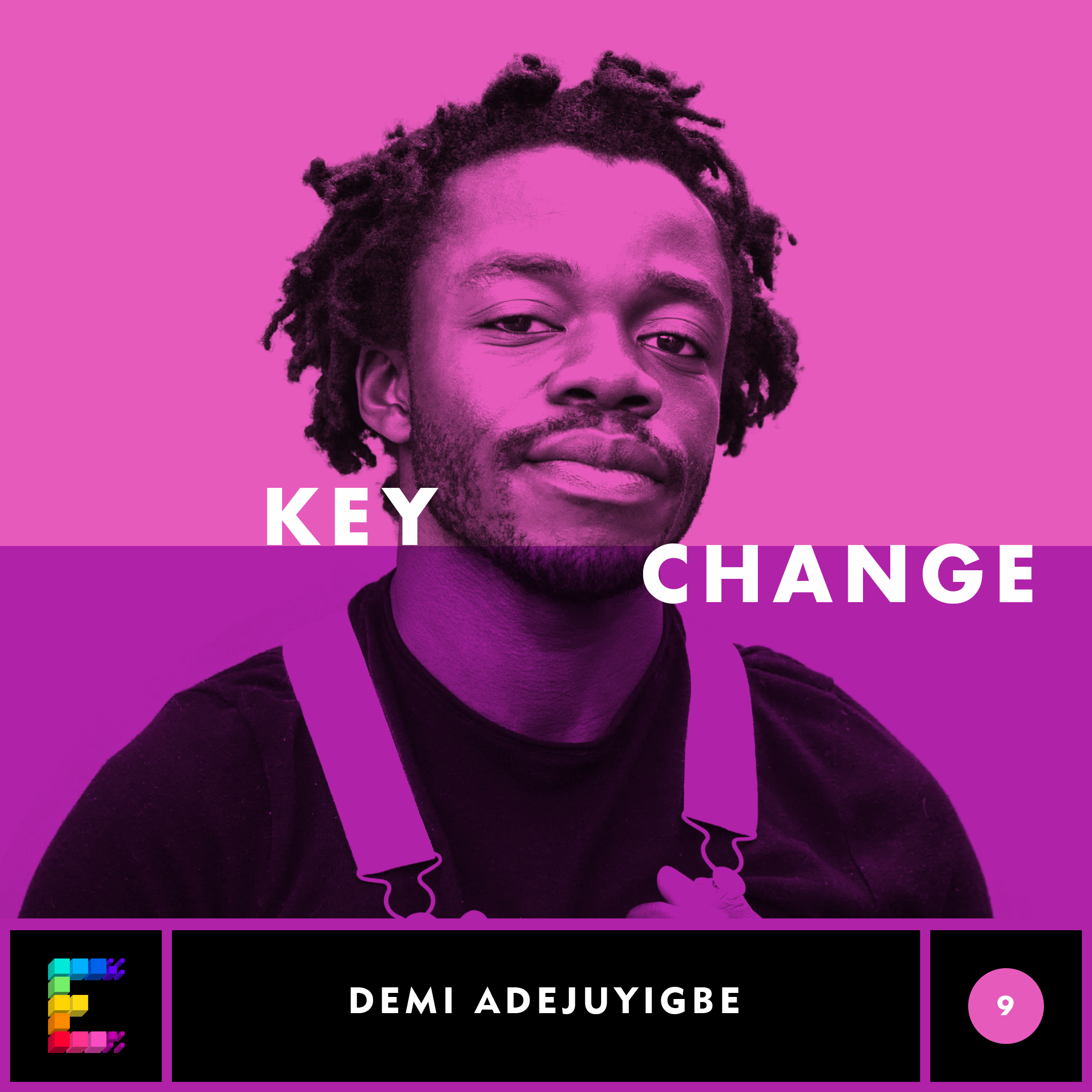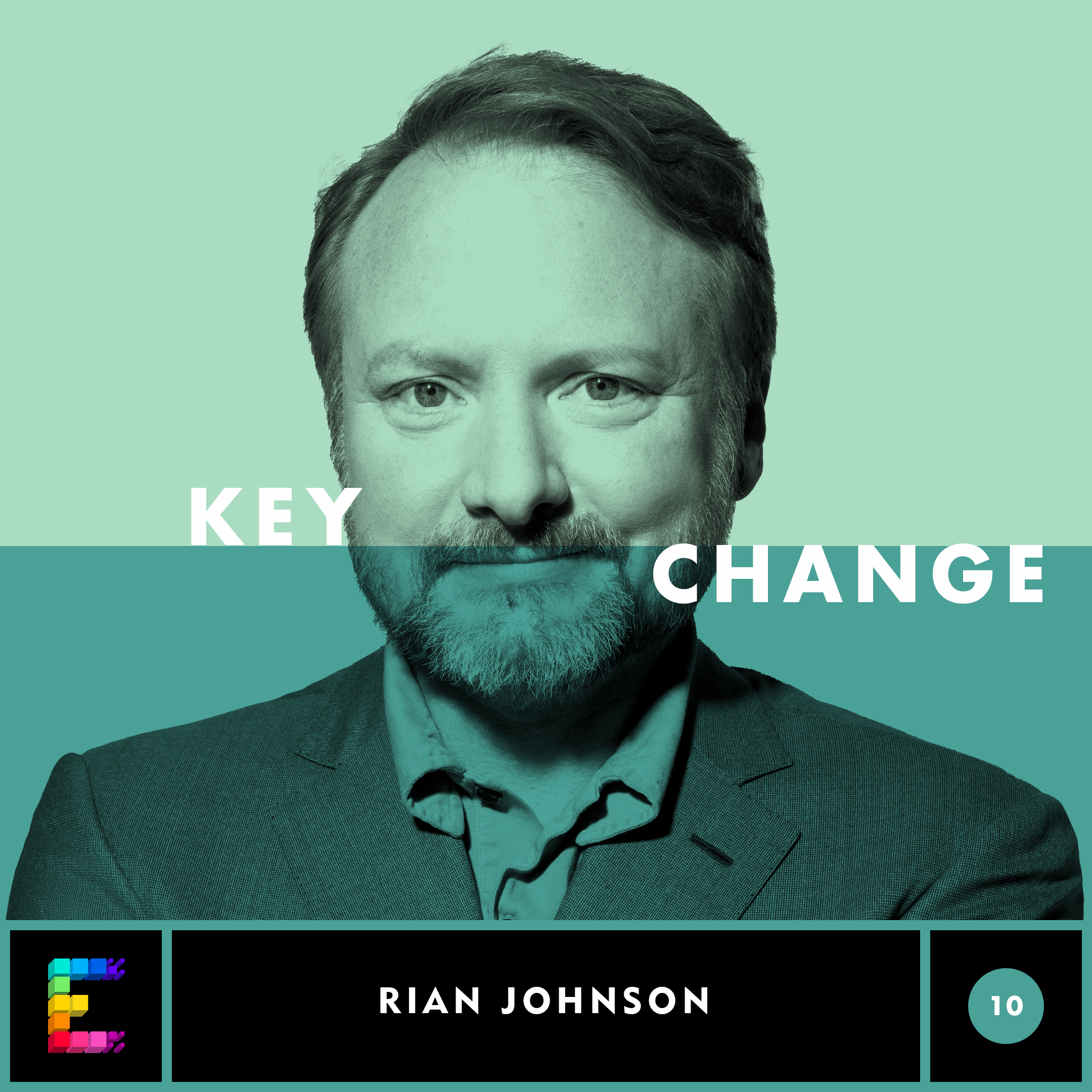
Key Change: Rian Johnson on Wagner's 'Das Rheingold'
My guest today is director Rian Johnson, which is exciting for me, because I’ve been a huge fan of his ever since seeing his first feature film, ‘Brick,' in 2006. Since then, he’s made six more feature films, including ‘Looper‘ in 2012; ‘Star Wars: The Last Jedi‘ in 2017; the murder mystery ‘Knives Out‘ in 2019; and his most recent movie, another in the 'Knives Out' series, ‘Wake Up Dead Man,‘ which is already out in theaters, and comes to Netflix on December 12. I talked to Rian about a piece of music that had a profound impact on him, which was the overture to ‘Das Rheingold‘ by Richard Wagner.
For more info, visit songexploder.net/rian-johnson.
Press play and read along
Transcript
Speaker 1 You're listening to Song Exploder, where musicians take apart their songs and piece by piece tell the story of how they were made. I'm Rishikesh, Hirway.
Speaker 1 So I just wanted to say a couple words about how this show works. Song Exploder is part of Radiotopia, which is a group of independent podcasts.
Speaker 1 And if you look around these days, independence is becoming more and more rare.
Speaker 1 Everything from record labels to movies to newspapers, everything is getting consolidated and controlled by a small number of corporations.
Speaker 1 To me, one of the tragedies of this means you get less original, weird, unexpected, and creative stuff out in the world.
Speaker 1 And this podcast is all about celebrating the surprising ways that creativity gets manifested. That's really interesting to me, the way that actual people turn their experiences into art.
Speaker 1 And if you're listening to this, I hope that means it's interesting to you too. But in order to maintain the show and that philosophy, it takes a lot of hustling to keep things going.
Speaker 1 This spiel is part of the hustle, and I hope you'll forgive me for it. But Song Exploder and all the shows at Radiotopia need the support of listeners like you.
Speaker 1 It's the annual Radiotopia fundraiser right now, and we're looking for 1,500 new donors who believe in unique, independent media and the messiness of creativity, and more importantly, just love listening.
Speaker 1
If that's you, please consider making a tax-deductible donation at songexploder.net/slash donate. That's songexploder.net/slash donate.
Thank you so much for making the show possible.
Speaker 1 Song Exploder is sponsored by AT ⁇ T. Hearing a voice can change everything.
Speaker 1
So AT ⁇ T wants everyone to gift their voice to loved ones this holiday season, because that conversation is a chance to say something they'll hear forever. AT ⁇ T.
Connecting changes everything.
Speaker 1 Song Exploder is sponsored by Sonos.
Speaker 1 If you're looking for ideas for a holiday gift, you kind of can't go wrong with Sonos, because in addition to the whole connected speaker system that you can get with them, they also make fantastic headphones, which I gave to my brother-in-law as a gift one year.
Speaker 1 Or you could get someone the Rome 2, which is their little portable speaker. I pack that in my carry-on whenever I'm traveling.
Speaker 1 So if you're looking for the perfect last-minute gift, Sonos is offering up to 25% off now through December 28th, 2025 at sonos.com.
Speaker 1 This episode contains explicit language.
Speaker 1 This is Key Change, where I talk to fascinating people about the music that changed their lives.
Speaker 1 My guest today is director Ryan Johnson, which is exciting for me because I've been a huge fan of his ever since seeing his first feature film, Brick, in 2006.
Speaker 1 Since then, he's made six more feature films, including Looper in 2012, Star Wars The Last Jedi in 2017, the murder mystery Knives Out in 2019, and his most recent movie, another in the Knives Out series, Wake Up Dead Man, which is already out in theaters and comes to Netflix on December 12th.
Speaker 2
I talked to Ryan about a piece of music that had a profound impact on him, which was the overture to Das Rheingold, the opera by Ricard Wagner. Call him Richard.
His friends call him Richard.
Speaker 2 So this is either going to be really fun or really pretentious and boring.
Speaker 1 For the record, I think it was really fun. Here we go.
Speaker 2
I think what people think with Wagner is the Bugsbannia cartoon. Yeah, Killed the Wabbit.
Kill the Wabbit. Killed the Wabbit.
Killed the Wabbit. Killed the Wabbit.
Speaker 2 Also, by the way, if any true true opera scholars or fans are listening, I don't know when I'm talking. I'm a casual, I'm a fan of opera.
Speaker 2 I'm not like a, I'll probably say dumb shit, probably, in the context of opera.
Speaker 1 But you were not an opera listener when you were growing up?
Speaker 2 When I was a kid, no.
Speaker 2 And then I was pretty broke in my 20s and trying to get my first movie made. I never traveled, and so I scraped together some money and did a backpacking type trip to Berlin.
Speaker 2
But the nice thing about Europe is, you know, opera is subsidized by the state. And so you can get good tickets for not that much.
I went to see La Traviata, the Verde opera, and the opera bug got me.
Speaker 2 It was just so powerful and beautiful. And I was just completely at, and from that point onward, I would say I was an opera fan.
Speaker 1 And so how much time passed between seeing that first opera and then seeing Das Rheingold?
Speaker 2 So that trip happened maybe
Speaker 2
late 90s. And it was 2011 when I saw Dust Wrangled for the first time.
Oh, okay.
Speaker 1 So you at this point you'd already made brick?
Speaker 2 I made brick.
Speaker 2 You know, it got picked up by focus features and that meant I was able to make my second movie, The Brothers Bloom, which was a big, beautiful experience and a very personal project and nobody saw.
Speaker 2 So I saw it.
Speaker 2
Thank you for watching it. And then I have a very good producer, so he was able to get my third movie, Looper, off the ground.
And I had made Looper at that point.
Speaker 2 And it had been well received and had done pretty well. And I felt really, really good about it.
Speaker 2 But there's this strange thing that happens when you make something and put it out in the world where suddenly people start talking about it.
Speaker 2 And it's not even like everything they say is great about it, but it becomes an object outside of yourself.
Speaker 2 And for the first time, I experienced the thing of me kind of feeling like it became kind of a foreign object and I couldn't remember how I made it.
Speaker 2 And this led to me kind of getting stunted in writing the next one, basically.
Speaker 1
Yeah, I definitely feel like there are albums where there's a band that I love. Yeah.
And then they make another album and you start to think, did they read their reviews?
Speaker 1 And now they're playing into what people think they're supposed to be or something like that.
Speaker 2
It's interesting, man, how it like, yeah, it can get in your head. It can mess you up.
It can, I don't know. It's a strange thing.
Speaker 2
So I had an idea for like a science fiction movie to follow up Looper with. And it was a very clever idea.
And I was really proud of it. So I had started kind of like working on it.
Speaker 2 And my girlfriend at the time, now my wife and I, we went to Paris for the summer.
Speaker 1 And you were feeling good at this point.
Speaker 2
I was feeling pretty good. There was something that was slightly grinding about it.
I was like, okay, this isn't quite clicking. But I was like, okay, this is going to be the next one.
Speaker 2
Let's go to Paris and write it. Oh, this will be great.
And I'll be sitting there in my beret writing.
Speaker 2 And when I was there, we lived in the Marais. We lived on this little street, Rue Chapon, and it was a quick walk down to the Bastille Opera House, which is like the big modern opera house in Paris.
Speaker 2 And I saw that they happened to be playing a ring cycle.
Speaker 1 Could you explain what the ring cycle is?
Speaker 2 So the ring cycle is four operas, or really technically three operas and one prelude opera. So it's 18 hours worth of opera, and it's one big, massive story.
Speaker 2 And it's kind of drawn from Norse mythology. It's got gods, it's got giants, it's got mermaids, it's got dragons.
Speaker 1 And it's Wagner's Magnum Opus.
Speaker 2
It is Wagner's Magnum Opus. It's also, if I may be so bold, one of the great works of art that a human being has ever created.
It's a magnificent, huge work on every single level.
Speaker 2 And the essence of it is in opera number one, nature is in harmony, and the Rhine gold, which is this golden treasure, is at the bottom of the Rhine River. Everything is good.
Speaker 2
And then the Rhine gold is stolen and turned into a ring of power. This obviously very much influenced Tolkien eventually.
This is where he got the notion of like a ring of power.
Speaker 2 It takes four operas and acts of grand sacrifice and some incest,
Speaker 2 a bunch of weird, weird Norse shit and German shit, and just a bunch of weird shit to get that gold back into the Rhine and restore order to the natural order of things.
Speaker 2
So I was like, all right, I'll take it. I'll grab a ticket for this.
That sounds good. And so I went and I just walked down alone and sound the theater.
Speaker 2 And
Speaker 2 the
Speaker 2 lights go down, and in darkness, that overture begins.
Speaker 2 It's basically one chord. It's an E-flat chord.
Speaker 2 And it starts as almost nothing and then slowly just rises and builds this single chord over the course of like three minutes.
Speaker 2 It just is a slow hypnotic rising wave
Speaker 2 that evokes nothing less than the birth of everything.
Speaker 2 Immediately, I found myself just closing my eyes and it pulled me and lulled me into this state where by the time it reached the climax of it
Speaker 2 I just felt like my heart was going to come out of my chest. It was just an amazing experience.
Speaker 2 It kind of really mucked me up because I went home that night and looked at my clever little idea
Speaker 2 and it just wasn't happening. It was not like I can't make it as good as that, but the emotional place that that had taken me to, I realized that's what was not in the thing I was writing.
Speaker 2 I realized I'm writing a clever sci-fi idea. I don't know what the emotional resonance of it is.
Speaker 2 And I need to find that.
Speaker 1 I did not expect that this is where the story was going to go.
Speaker 2 I thought that you were going to feel so inspired by the opera that you were going to come home and like. Exact opposite.
Speaker 2 It fucked me up for electric.
Speaker 2 I was like, yeah, I can't. And because Looper also had been that for me, Looper had been a very emotional, I knew the emotional heart of it.
Speaker 2
I knew the thing that it was actually about the story I was telling. And so, I don't know, the experience of this just kind of shattered all illusions and just cast me adrift, kind of.
Yeah.
Speaker 2 It completely crashed me out.
Speaker 1 The fact that you saw Das Rheingold by yourself,
Speaker 1 do you think that that played into how much of an effect it had on you?
Speaker 2
100%. Yeah.
Yeah. I think.
Speaker 2 Especially because it is an essentially weird thing.
Speaker 2 I love going to movies alone. I love going to opera.
Speaker 2 I love going to things alone, partially because of the type of person I am. If I go with someone, part of my brain is always, are they okay? Are they enjoying it? Do they think this is dumb?
Speaker 2 But also, there's a surreal space you're in when you go to something alone because you're surrounded by people, but you're isolated and you're kind of just in your own head the entire time.
Speaker 2 And I think that aids the transition into sort of the dreamlike state that can lead to the heightened experience, I think.
Speaker 1 Couldn't you tell me a little bit about your relationship with cleverness and emotional resonance? You know, I'm a huge fan of cleverness. Yeah.
Speaker 1 Probably too much of a fan of it, but it took me a while before I realized that it was maybe at odds with something that felt emotional.
Speaker 2 Yeah, yeah. I feel like it's impossible for me to get motivated to make something out of cleverness, which is a little bit of a saving grace.
Speaker 2 And I'm sure my movies, I think that I do have kind of a puzzle maker's brain, and I'm sure they definitely feel clever. For some people, maybe to a fault.
Speaker 2 For me, I know, though, that the longer i do it and the more of these like murder mystery movies i make i don't know the more i come to sort of distrust cleverness i think but in a way that i think has been really helpful because the clever elements of a murder mystery you have to remember that they're not going to entertain an audience you have to have an actual story going on that people are following and they care about the fate of a character.
Speaker 2
So that character wants something, they can't get it. The audience gives a damn.
That's a basic ingredient. But it's not a matter matter of taking that and then pasting the cleverness on top of it.
Speaker 2 For me, it's finding that these two things fit together like two gears and turn each other. And the cleverness is often some genre mechanics.
Speaker 2 So for example, in Looper, the fact that with a time travel movie, you can literally have not just a father or son, but you can have the elevated mythological version of that, which is you sitting across from your older self.
Speaker 2 It's literally you.
Speaker 1 Because I talk to musicians so often and because I write songs myself, I feel like there is something that feels really special in the moment where you can come up with a melody and a lyric that go together, that feel like they were born together.
Speaker 2
Yeah, feel like they're inseparable. Yeah.
Yeah.
Speaker 1 And it sounds like it's a similar kind of journey of trying to find a thing that
Speaker 1 what you're saying and the way that you're saying it are married.
Speaker 2
100%. Yeah, that they serve each other.
And it's alchemy.
Speaker 2 And so with that in my mind, I kind of stopped working on this and didn't know what I was going to do next.
Speaker 2 And suddenly it was three three years later, and I didn't even have, I like had fragments of that script. And finally, I was like, I just have to stop.
Speaker 1 Did you feel like you were any closer to cracking it? Nope.
Speaker 2 I tried all of, I went down all the different ways. I had also wasted a lot of time just because I was avoiding it.
Speaker 2 And honestly, it was the siren song of how clever the idea was that kind of, and that was a very good lesson for me, I think, you know.
Speaker 2 So my producer and my agent were like having interventions with me, sitting down saying, Maybe it's time to look for something else, basically.
Speaker 2 And the next thing that happened is I was offered a Star Wars movie to write and direct. And so, I was like, oh,
Speaker 2 if there's anything in the world that you can kind of strap yourself to, that's a rocket that's going to take you to the place that I went in the dark listening to the opening of this opera,
Speaker 2 it's a Star Wars movie.
Speaker 1 My conversation with Ryan Johnson continues after this.
Speaker 1
Song Exploder is sponsored by AT ⁇ T, who believe that hearing a voice can change everything. And if you love podcasts, you get it.
The power of hearing someone speak is unmatched.
Speaker 1
It's why we save those voicemails from our loved ones. They mean something.
For me, when I need a one-on-one holiday boost, I call my sister.
Speaker 1 She's always been there for me, and her voice always feels like home. And when I have an idea that I'm amped about and need to talk through, I call my friend Umeth.
Speaker 1
He's always down to brainstorm, and I know I'll be able to hear the excitement in his voice, too. AT ⁇ T knows the holidays are the perfect time to do just that.
Share your voice.
Speaker 1 So if it's been a while since you called someone who matters, now's the time, because it's more than just a conversation. It's a chance to say something they'll hear forever.
Speaker 1
So spread a little love with a call this season. Happy holidays from AT ⁇ T.
Connecting changes everything.
Speaker 1 I want to thank Function for sponsoring Song Exploder because I've gotten so much out of my Function Health membership.
Speaker 1 It's given me data about what's happening in my body, data that most people never get.
Speaker 1 Most importantly, by learning stuff like my vitamin D level is low and my zinc level is low, I was able to take steps to fix things.
Speaker 1 I had my first lab visit this summer and now I'm getting ready to go in for my follow-up visit, which is also included in the annual membership.
Speaker 1 So if you're thinking about a gift for someone who you really care about, Function is a great idea, and it shows them that their their health matters to you.
Speaker 1
With their membership, they can understand their health and they can make informed decisions all year round. You can own your health for $365 a year.
That's just a dollar a day.
Speaker 1 So learn more and join using the Song Exploder link. Visit functionhealth.com/slash song exploder or use the gift code songexploder25 for a $25 credit towards your membership.
Speaker 1 So with the Star Wars movie, you were picking up from the J.J. Abrams one.
Speaker 1 Did you feel the same kind of panic about coming up with something that carried the kind of emotional content that you were looking for? Since it, because it was the second movie?
Speaker 2
So second movie, so no, not at all. I'd say, because first of all, story-wise, I had, you know, JJ's script.
And so my job was to kind of continue. the line straightforward from there.
Speaker 2 And I was coming up with how that was going to happen, but that dictates a very specific path. But the bigger thing I'd say is it wasn't coming up with it whole cloth because I grew up with Star Wars.
Speaker 2 It's something that for me was almost akin to religious stories when you're growing up.
Speaker 2 It's something that's so deeply in the bedrock of who you are and not only who you are, but why you tell stories. That emotional resonance and its connection to the material was not just there.
Speaker 2 It was this big throbbing thing inside me that was just ready to come out.
Speaker 1 Was there a moment in the process, either in the pre-production or in the production or whenever, during that Star Wars experience where you felt like you had connected to the thing that you'd been looking for that night you came home from Dath Rhein Gold?
Speaker 2
Oh, yeah, absolutely. There were many, many moments.
I would say that the experience of making Star Wars and this more than
Speaker 2 just the cool things about being on the Millennium Falcon or getting to work with Carrie and Mark or the creature guys, more than any of that fun stuff, for me, the reason that making that movie was the best experience in my life is because every single day I felt like I was tapping back into the power of that story that I had grown up with.
Speaker 2 For me personally, I'm not saying that like, you know, I perfectly captured or whatever, but for me personally, I, it was nothing but just emotional resonance from the start, man.
Speaker 2 It was, it was really nice.
Speaker 1 Can you perhaps remember a specific moment that you had where you were like, oh, right, this is the thing I've been looking for?
Speaker 2 Yeah, there was a moment on set. I mean, there are other moments in the finished movie, but there was a moment on set where,
Speaker 2 spoiler alerts, kind of for the last Jedi, it's near the end of the movie, the rebels are trapped in a cave, they think they're doomed, there's no way out, and then out of nowhere, we don't explain how he got there, but Luke Skywalker shows up, and it's a goodbye scene between Luke and Leia.
Speaker 2 No one's ever really gone
Speaker 2 when Mark and Carrie did that scene together. It felt like church on set.
Speaker 2
And Mark did a thing which he came up with on the day where he like kissed her forehead before he left. And it was just this powerful, beautiful moment.
No, so it was for me, for everyone on set.
Speaker 2 And I felt both the
Speaker 2 Star Wars-iness of it and also the emotional resonance of it tied to the emotional resonance of these two actors who have been on this journey together since they made the sci-fi movie in the 70s.
Speaker 2 It was so powerful. And I thought, okay, yeah, that's, I never want to make something that doesn't feel for me in some way like I'm getting to this place.
Speaker 1 Yeah, I was thinking about how for us, Star Wars is essentially our Norse mythology.
Speaker 2 Yeah, I think it is. Yeah.
Speaker 2 When I was a kid, there was no way to really watch the movies beyond going to the re-release in the theater or signing up for a waiting list where you waited six months to get the VHS tape and had it for 24 hours.
Speaker 2 The reality is we didn't see the movies very much. The toys were almost the bigger thing.
Speaker 2 And playing with the toys meant that more than anything, I think, fused it to kind of the birth of the creative instinct in a lot of us because when we were telling our first stories, they were in that world with those characters, with those toys.
Speaker 2 And I think that's why you hear stories of adults walking onto the Millennium Falcon set and bursting into tears. It happened to me.
Speaker 2 And what I was imagining was my Kenner toy in my bedroom when I was a kid, you know? Yeah.
Speaker 2 So, yeah, I think there's something to that.
Speaker 1 Have you ever tried to find a place for the prelude from Das Rheingold in one of your films?
Speaker 2 I think I've tried to slap it in a few plays, and it never, it's a very specific piece of music that both always works and never quite works. I mean, you know, Malik can get away with it.
Speaker 2 He's Malik and he's a genius and it fits, but unless you're Terrence Malik, it's a tough thing to kind of just temp a scene with. Yeah.
Speaker 2 It'd be ballsy to try.
Speaker 1 Your cousin Nathan is your composer.
Speaker 2 Nathan's my composer, yeah.
Speaker 1 And have you talked to him about this obsession?
Speaker 2 So not only have I talked to him about it, but we now have a tradition.
Speaker 2
We've done it, God, three or four times now where my buddy Noasi again, Nathan, who's my composer, and Steve, who's my cinematographer and like. best friend since I was 17.
We now travel together.
Speaker 2 We do broad trips to go see ring cycles. We went to San Francisco for the first one.
Speaker 2 We went to Bayreit, which is the, I probably pronounced that wrong, Bayreit, I think, which is a small town in Bavaria in Germany where Wagner built his opera house exclusively to kind of show the ring cycle and the other thing I should say about Wagner also a terrible person a raging anti-Semite and it's interesting when you go to Bayreut just outside of the theater grounds like in the air mission you can stroll over They have kind of a garden that's pretty incredible where it's not like they sugarcoat anything.
Speaker 2 They go hard at it. They have essentially plaques of all the Jewish artists and performers that worked with Wagner, worked on these operas, and what their fates were a few decades later.
Speaker 2 And then at the head of it, they have a sculpture. I forget the artist's name, but it's a sculpture that was done by Hitler's favorite artist, and it's a bust of Wagner.
Speaker 2
Wagner died before the Nazis came to power, but Hitler was obsessed with him. And if you read Wagner's writing, it's obvious.
The only reason he wasn't up there
Speaker 2 on the platform with Hitler is because he died before they came around, I think.
Speaker 1 So, does that complicate your appreciation for tremendously, of course?
Speaker 2
Yeah, absolutely. And much more insightful people have written lots and lots about.
My buddy Alex Ross, who's the music critic of the New Yorker, he's a huge Wagner scholar.
Speaker 2 He wrote a book called Wagnerism that anyone who's kind of interested in this, I would highly recommend. It's almost a cultural history of the past 200 years through the lens of Wagner fandom.
Speaker 2 So, yeah,
Speaker 2 it's a big complicated thing, man.
Speaker 1 To go back to this balance between cleverness and emotional connection, is that something that you were consciously looking for, trying to find when you were making Wake Up Dead Man?
Speaker 2 Oh, yeah, absolutely. So, the last movie, Glass Onion, which was the second one, which I was really proud of.
Speaker 2 It was exactly what we wanted to make, and it does have some personal things in it for me, but it was a little bit more of kind of a big broad comedy.
Speaker 2 So, with this movie, it was not a corrective, but it was almost just like, oh, I had done that for a few years. I wanted to kind of dig in deeper and make it more personal.
Speaker 2 The Wake Up Dead Man, it's a Benoit Blanc murder mystery, so it's a big fun murder mystery, but it really is about faith and it's about religion.
Speaker 2
And I think it kind of, yeah, hopefully, genuinely kind of digs into some of that. And that's a personal thing for me.
I grew up very religious.
Speaker 2 I grew up very Christian, very Protestant, evangelical, up through my mid-20s, and I'm not anymore. And so it's something I have a lot of complicated feelings about.
Speaker 2 And there's an emotional place that the movie gets to at the end that that essence of being risen on the tide and brought someplace emotionally was absolutely very much in my head when I was trying to construct it.
Speaker 1 Nowadays, besides going to see the ring cycle in person, do you ever find yourself just putting on Das Rheingold to listen to?
Speaker 1 I mean, it's kind of an intense emotional experience to sign up for, but do you ever just put it on in the car?
Speaker 2
Oh, hell yeah. Yeah.
Blast that shit in the car.
Speaker 1 Oh, it's so good.
Speaker 2 Blast some Wagner.
Speaker 2 Driving down sunset.
Speaker 2
Yeah, I know. I come back to it.
I listen to it a lot, actually.
Speaker 2 I listen to a lot of different opera, a lot of different, I've been listening to a lot of classical music lately, but the Ring Cycle is something that I come back to.
Speaker 2
And I do find actually it's very good writing music. I think all opera is because it has a drive to it.
It has emotion.
Speaker 2 It has a human voice, but you can't understand a word they're saying, which is really nice. And so, yeah, no, Wagner is something that I'll definitely tap into that well pretty often.
Speaker 1 So, the thing that you had gotten stuck on, how did you find your way around this idea of people talking about this thing that you made, being out in the world and not being blocked by it? Yeah.
Speaker 1 How did you get around that? How do you stay not being blocked by that?
Speaker 2 I mean, i i think that it's hard because it's like a lifelong journey i think if you're lucky enough to be able to take that journey and keep making stuff it's a journey in part i think it's a muscle that you do develop in terms of how to kind of isolate yourself and your mind from the things that can kind of mess you up it's also though something it's not like you learn it and then you've got it it's something that you constantly have to be a little aware of, I think.
Speaker 2 But ultimately, there's also, I mean, it is a danger, but it's not as big a danger as you'd think because I find that once the actual creative process takes hold and you start into something, it's very hard for me to hold abstract external pressures in my head.
Speaker 2 You got your head down and you're doing the thing and you lose track of what time it is. And if it's working, if it's connecting and working, I actually find it hard to have that problem.
Speaker 2 It's when it's not working that that problem creeps in.
Speaker 1 Ryan Johnson's new movie, Wake Up Dead Man, is out now in select theaters, and it'll be streaming on Netflix starting on December 12th. Also, Ryan's website is very cool.
Speaker 1 It has behind-the-scenes photos and the shooting scripts from his movies. It's at ryan-johnson.com.
Speaker 1 Visit songexploder.net slash keychange for more keychange episodes and for a playlist with all the music that's been discussed.
Speaker 1 This episode was produced by me, Craig Ely, and Mary Dolan, with production assistance from Tiger Biscuit.
Speaker 1 Song Exploder is a proud member of Radiotopia from PRX, a network of independent, listener-supported, artist-owned podcasts. You can learn more about our shows at radiotopia.fm.
Speaker 1 If you'd like to hear more from me, subscribe to my newsletter. You can find a link to it on the Song Exploder website.
Speaker 1
You can also get a Song Exploder t-shirt at songexploder.net/slash shirt. I'm Rishikesh Hiraway.
Thanks for listening.
Speaker 2 Radiotopia
Speaker 2 from PRX.