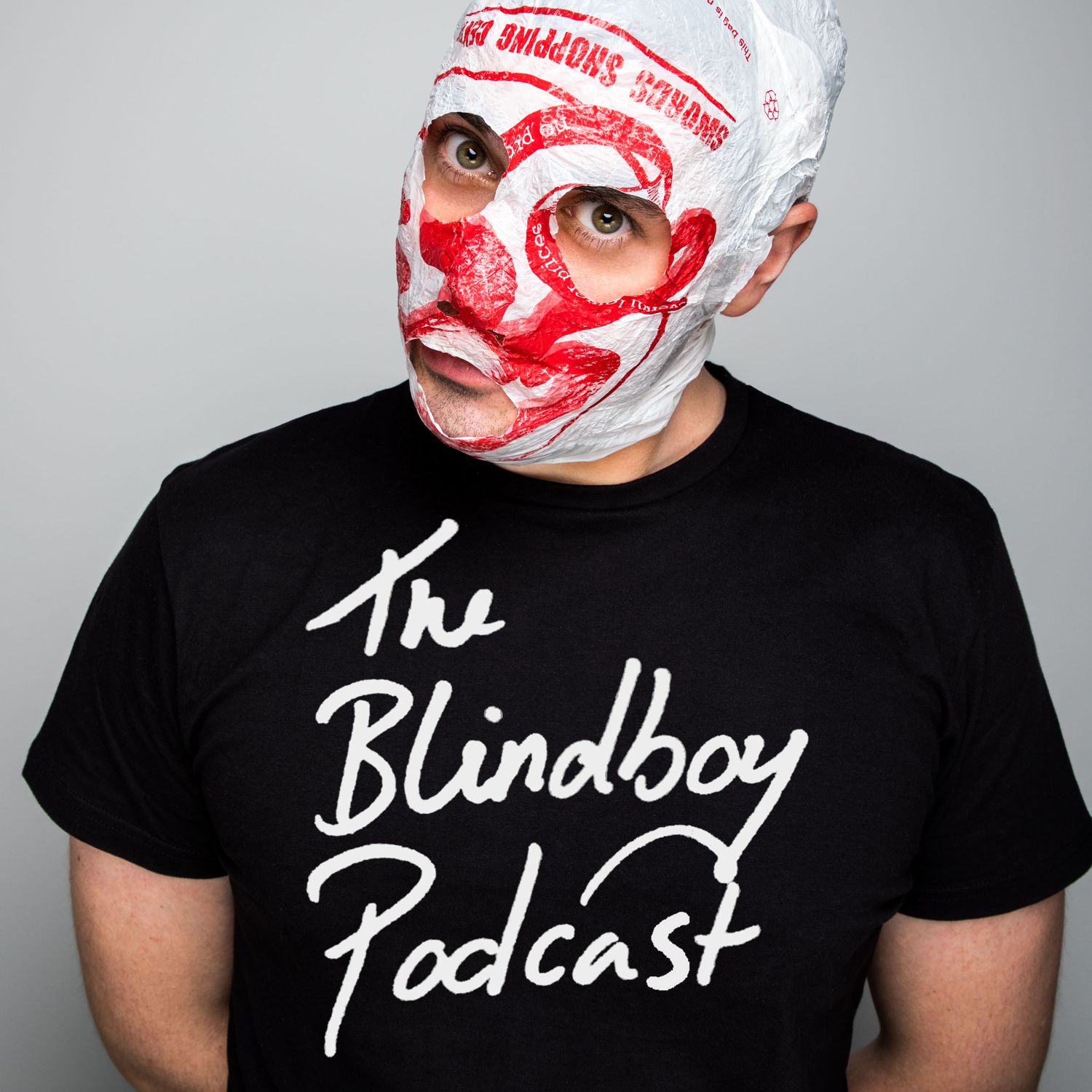
I've recorded a podcast every week for the past eight years and I'm taking one week off
Hosted on Acast. See acast.com/privacy for more information.
Press play and read along
Transcript
Speaker 1 AI agents are everywhere, automating tasks and making decisions at machine speed.
Speaker 4 But agents make mistakes.
Speaker 6 Just one rogue agent can do big damage before you even notice.
Speaker 8 Rubrik Agent Cloud is the only platform that helps you monitor agents, set guardrails, and rewind mistakes.
Speaker 10 So you can unleash agents, not risk.
Speaker 12 Accelerate your AI transformation at rubrik.com.
Speaker 13 That's r-u-b-r-i-k.com.
Speaker 11
Bend heaven in the end of a tenement, you ten-foot declines. Welcome to the Blind By Podcast.
This week is the eighth year anniversary of this podcast.
Speaker 11 This week, in 2017, fucking 20 the before times of 2017,
Speaker 11 I put out my first ever podcast.
Speaker 11 Not expecting anyone to be interested or to listen to it.
Speaker 11 It's just I'd written a book, I'd written a book of short stories, my first ever book of short stories.
Speaker 11 And I was like, how am I going to convince people? Because I adored my first book of short stories, The Gospel According to Blind Boy.
Speaker 11 Absolutely loved it.
Speaker 11 And I'm like, how can I convince people that my book is worth reading? Well, I'm going to fucking read it to them. I'm going to read my book to people.
Speaker 11 I didn't think the podcast would last beyond maybe four episodes.
Speaker 11 My actual book, The Gospel According to Blindby, that came out, I think it was the 27th of October 2017.
Speaker 11 So
Speaker 11
I'd initially thought, I'm going to put out maybe, I'm going to read four short stories, four short stories to try and plug and promote this book. Fuck it.
Why not? What's the worst that can happen?
Speaker 11 What happened
Speaker 11 was the podcast was the most successful thing to ever happen to me in my career up to that point.
Speaker 11 I'd been
Speaker 11 an unsuccessful comedy musician before this podcast. That book, my first book of short stories in this podcast, completely changed my life, changed my life and changed my career.
Speaker 11 And that started eight years ago this week. And since then,
Speaker 11
I've released the podcast every single week, every single week. I have not missed one week in eight years.
And I've written three books in that period. And I've made,
Speaker 11 I don't even know, five or six documentaries, and I've been nominated for awards.
Speaker 11 And the first ever episode of this podcast, Did You Read About Arsene Fogarty, was turned into an award-winning short film.
Speaker 11 So I was thinking this week, how the fuck do I celebrate eight years of this podcast?
Speaker 11 And I think,
Speaker 11 I think I'm going to take the week off.
Speaker 11 And I say that because
Speaker 11 it's what feels right.
Speaker 11
Every week I follow my passion. Every week I follow my passion.
This week, the universe is telling me to take a break.
Speaker 11
It's not just the universe that's telling me. So there's this neuroscientist called Dr.
Michael Keene. He was a medical doctor, then he became a neuroscientist.
And he's an expert in neurotechnology.
Speaker 11 He scans people's brain activity. He's done it to thousands of people to map the activity of people's brains.
Speaker 11 And
Speaker 11 so anyway, a couple of months ago, Dr. Michael Keane,
Speaker 11 he'd read one of my short stories.
Speaker 11
Specifically a short story called Pamela Fags. from my last book, Topographia Hibernica.
He read Pamela Fags.
Speaker 11 And whatever it was about that particular story, the way that I was able to connect seemingly unconnected ideas and to connect them and to make them make sense.
Speaker 11 Michael Keane just went, I need to scan the brain of the person who wrote this. I'm very fascinated to see what this person's brain activity is like.
Speaker 11 So he reached out to me. He reached out to me and said, can I scan your fucking brain? Can I give you an EEG scan? Which is, it's an
Speaker 11 encephalography scan and it measures brain activity so I went and had the scan and it was wonderfully fascinating
Speaker 11 and I wanted to speak about I wanted to speak about that scan and the findings of it this week and what it showed me about my brain it was fascinating it was absolutely fascinating and it painted it painted a fairly fucking accurate picture of me but one thing that it did point out is
Speaker 11 I I do have the brain of a person who's under chronic stress, prolonged burnout,
Speaker 11
a consistently active brain that doesn't seem to switch off. At one point of the scan, he showed me an image of my brain and said, this is something I'd have to clarify with him.
But the gist was
Speaker 11 there's neurons firing in my brain that
Speaker 11
Other people would have to take drugs in order for that to be going on. Whereas for me, me, that's just how it is.
But I also said to him,
Speaker 11 look, every week for the past fucking eight years,
Speaker 11 I do a deeply intense podcast where sometimes I might work from seven in the morning until six or seven the next day. I'll go like 24 hours straight working with no sleep.
Speaker 11 I go into obsessive, deep focus and research and writing that I don't come out of. And I do it because I love doing it.
Speaker 11 I adore doing it, but I've done this every single week for eight years and now I'm looking at a brain scan that's showing that to me.
Speaker 11
It's showing me that. It's a quite a stressed brain, quite a stressed brain burnt out that doesn't get a chance to stop.
And that's not
Speaker 11 That's not autism, but the autistic part.
Speaker 11 maybe a neurotypical person would have given up by now
Speaker 11 the the thing with being so this scan obviously can't show if somebody's autistic
Speaker 11 but it will show results that you would see in other neurodivergent people or other people who are engaged in in high levels of performance or creativity the thing is with with autistic people if we're engaged in our passions
Speaker 11 like there isn't an off switch flow as i call it or hyper focus as other people would call it. When I'm in flow, I don't know, I don't notice time passing.
Speaker 11 I don't, I'll forget how to eat or when to eat. I fucking I'll walk out into the street with one shoe on.
Speaker 11 All of this stuff comes at a price.
Speaker 11 And
Speaker 11 all I'm saying is this week I saw a scan in my brain and it showed me the fucking price. And the thing is, when you're seeing that much stress in your brain, it's a tough one because
Speaker 11 I'm not necessarily deeply mentally unhealthy there's different types of stress there's positive stress and negative stress so positive stress that's energized focus purpose excitement creative flow I get loads of that and then you've got your negative stress which is feeling overwhelmed fatigued anxious depleted burnout I don't want to get into it too much because if I get into it too much, now I'm doing a podcast.
Speaker 11 My biggest fear is having to work a normal job.
Speaker 11 What I mean by that is
Speaker 11 a job that requires me to perform as a neurotypical person, a job that requires social interaction with people.
Speaker 11
I don't want to be back in school. I don't want to be back in school.
A lot of jobs are like being back in school. Okay, school didn't go very well for me.
Quite a lot of neurodivergent people
Speaker 11 tend to have difficulty with employment. and the neurodivergent people who
Speaker 11 find employment
Speaker 11 you tend to see a lot of a lot of people in the arts a lot of people in the arts whether they know that they're neurodivergent or not they will end up finding and creating jobs and environments that actually are subtle accommodations for their own neurodivergence And this can mean working in isolation for long periods of time, making your own schedule with your work, having a job where you don't have to wear a uniform or don't have to wear a suit or whatever clothes that might be uncomfortable.
Speaker 11 That you can have a job where you can wear your comfy clothes all day or be nude if that's what works for you. Or most importantly, a job
Speaker 11
whereby you are focusing on the things that you're passionate about. and that is also what pays your bills.
So the lucky Nora Divergent people,
Speaker 11 they tend to find these type of careers for themselves because we live in a capitalist society, okay? And at the end of the day, it comes down to how are you paying your bills? How are you surviving?
Speaker 11 I'm one of the lucky Nora Divergent people in that I've found
Speaker 11
a job and a career whereby I can earn a living while accommodating most of my fucking needs. And I try to live on the edge of that.
Like you know I work in a fucking office building. I'm here now.
Speaker 11 I'm in a corporate office building surrounded by solicitors, accountants, all of this shit.
Speaker 11 Like the reason I do that, and when I explained this to the neuroscientist,
Speaker 11 again he looked at me like I was fucking mad, but again,
Speaker 11
this is that, this is why he was scanning my brain. It's the connecting things that seem seemingly unconnected.
The reason I work in an office, I'm actually inspired by
Speaker 11 tibetan monks that meditate around rotting corpses and i've mentioned this many times but there's buddhist monks in tibet okay and in this area of tibet in the mountains
Speaker 11 the soil is very rocky so when someone dies they don't bury this person in the ground instead what they do is a tibetan sky burial they leave the body on a mountain and vultures pick at the bones and scatter the dead body around the valleys.
Speaker 11 So you have these valleys in Tibet which are full of rotting corpses, skulls, legs, the whole shebang, people that you know.
Speaker 11 And
Speaker 11 these monks
Speaker 11 sit amongst the valley of the rotting corpses and they meditate. And they do that so that they can confront their greatest fear, and their greatest fear is death.
Speaker 11 They sit with, and smell with, and live in death
Speaker 11
in order to accept it. That's why I work in this fucking office building.
Because it's my greatest fear. I work in this office building and I meet all my fucking needs.
Speaker 11
I'm sitting in here in my office in a ridiculous looking baggy track suit. 3XL baggy tracksuit.
Giant rubber crocs. A carpet.
A carpet that I'm gonna have to
Speaker 11 I'm gonna have to replace this carpet when I leave the office because I have worn a path in the carpet from pacing up and down so much all day thinking about ideas. I'm here because I want to
Speaker 11
meditate amongst the corpses. I want to meditate beside my greatest fear.
My greatest fear is if I worked in this building, okay, and I was working in here for a company, and I would have to wear
Speaker 11 clothes
Speaker 11 that don't meet my sensory needs, or that I'd have to pretend to be interested in things that I'm not interested in and then suppress whatever fucking mad shit I need to focus on that day.
Speaker 11 And then the biggest fear of all is
Speaker 11
that engaging in small talk with colleagues would be a necessary part of my life. Not that.
And you have to remember I have worked in this environment before. I've worked in a call center.
Speaker 11
Okay, so I'm this is from lived experience. And I did 16, 17 years of school.
Every neurodivergent person is different.
Speaker 11 But by far, the most stressful and hardest thing for me is
Speaker 11 needing to maintain office relationships. What I mean by that is when I worked in a call center long ago, now what I did get fired for, I got fired because
Speaker 11
First off, I was sitting horizontally in my chair. You're not supposed to do that.
I needed to do it because I wanted wanted to get up and walk around.
Speaker 11 I was sitting horizontally in my chair frequently. I was, I printed out 93 pages about CIA crack cocaine smuggling and was reading them under my desk.
Speaker 11 But the other thing that got me fired, and this was a big one,
Speaker 11 I didn't know that
Speaker 11 you're expected to go for lunch with your team. So, the team of people that you work with in the fucking office, there is an expectation
Speaker 11 to sit down and have lunch with these people just because.
Speaker 11 And I used to not do that because when lunchtime happened, I just desperately needed to go to the car park by myself and be alone with my thoughts and pace up and down. Pace up and down the car park.
Speaker 11 Like, I don't know if you can hear this, but someone next door is removing packaging tape,
Speaker 11 long reams of seller tape.
Speaker 11 Um,
Speaker 11 in in the room next door, I think it's an accountant.
Speaker 11 But isn't it great that I don't have to say, hey, what are you doing with that cellotape? and have a cellotape.
Speaker 11 Well, we couldn't have a cellotape conversation because then I would need to start speaking about what is this still going on? Can you hear that?
Speaker 11 That person would need to hear about the history of cellotape. No, do you know what I'd do? If I was actually next door, I hope you can't hear me now.
Speaker 11 If I was, so someone next door is aggressively pulling reams of cellotape because they're packaging something together.
Speaker 11 If they were my co-worker and I was stuck in that office and they were doing that, I'd just simply turn around and go on my cellotape monologue.
Speaker 11 What's the most interesting cellotape fact I can think of? Like
Speaker 11 this is fucking fascinating, right? But there's this phenomenon called triboluminescence and they only discovered this in the fucking late 2000s, right?
Speaker 11 When you rapidly, like what you're hearing there, when you rapidly unpeel cellotape, okay?
Speaker 11 You use friction to very suddenly break chemical bonds, okay?
Speaker 11 But when that happens, it actually gives off a fairly significant electrical charge, right?
Speaker 11 If you turned the lights off, now this is what I'd start doing if that was my co-worker. First off, we wouldn't be able to turn the lights off.
Speaker 11 Do you know why we wouldn't be able to turn the lights off? Because
Speaker 11
his office doesn't have a light switch. My office has a fucking light switch because I'm autistic.
I had to request a light switch. Everyone else's office?
Speaker 11
They've got these lights that turn on whenever people move. Sometimes other people's lights just turn off because people are able to sit at their desks and not move.
But anyway,
Speaker 11 if this was my office, I'd say to him, let's turn off the lights and open your cellotape really fast so we can see, so we can possibly see the let's turn close the curtains as well.
Speaker 11 Let's close the curtains and turn off the lights. Now,
Speaker 11
Roy, I want you to rapidly unpack your cellotape and make that noise you were making. And let's see if we can see a little spark.
Because, and then what happens? Who's this fucking lunatic?
Speaker 11 Who's this lunatic? What's he talking about? I'm just trying to pack this package here with some cellotape. Why is he speaking about electrical charges? And I'd say, you don't understand.
Speaker 11 And if you're thinking, come on, blind boy, you wouldn't really ask him to close the curtains and turn off the lights and play with the cellotape, would you, in an office environment? I fucking would.
Speaker 11
Yes, I would. If I got passionate enough about the cellotape, if the idea of it excited me enough, then I'm gonna forget about propriety.
I'm gonna forget about social rules.
Speaker 11 I will say or do an eccentric thing which invites social rejection. I'll be stared at like a weirdo and I'll be thinking, why is this not fascinating to you?
Speaker 11 Let's turn off the lights.
Speaker 11 Let's turn off the lights and let's put down the curtains, please. And we'll see.
Speaker 11 Your cellotape is gonna glow if you you rip it apart rapidly and then i'd follow that up by saying and this is a fact by the way this is fucking fascinating
Speaker 11 so if if the lights were off in the office and you started tearing the cellotape apart rapidly right you might see those a little faint blue glow you might see it but and this is what the scientists discovered in in 2008
Speaker 11 if that was to occur in a vacuum so if
Speaker 11 if you took cellotape apart in a vacuum, so there's no air, so this effect triboluminescence, right?
Speaker 11 So light or radiation gets released when chemical bonds are broken suddenly by friction in a vacuum, right? No air, where you don't have the friction of the air.
Speaker 11 If you were to rip the cellotape apart in a vacuum, that the light jumps into the x-ray range and you could see the bones of your fingers.
Speaker 11
So let's go back to the office now because your man's next door opening his cellotape. If I was in that office I'd be talking this shit.
I'd be saying, do you know if we had a vacuum right now?
Speaker 11
We could actually look at the bones of your hands just by opening that cellotape. And that's a fact.
They found that in 2008 at the University of California. Look it up.
Look up.
Speaker 11 Cellotape can produce x-rays when it's
Speaker 11
unrolled in a vacuum. You can see the bones of your own fucking hand.
Isn't that amazing? Isn't that fascinating? The point I'm trying to make, that shit doesn't fly in offices.
Speaker 11
I know. I was fired for it.
I was fired for that many fucking years ago.
Speaker 11 The fuck was I talking about?
Speaker 11 That's actually not the hardest part. That would not be the hardest part of being in an office because
Speaker 11 some people like interesting facts like that.
Speaker 11 That can actually.
Speaker 11 The hard part about working in a normal job or an office for me was I would desperately need lunchtime breaks any opportunity to be by myself
Speaker 11 because
Speaker 11 being around humans was so overwhelming and so stressful that I'd need to be by myself just to meet my needs, the needs of my nervous system to experience anything resembling calm.
Speaker 11 And if you do that in an office or in school or any system which is designed within capitalism to meet the needs of neurotypical people.
Speaker 11 If you are a loner in these situations, it is interpreted as rejection and you're punished and people think you don't like them.
Speaker 11 I've lived it. It's happened to me.
Speaker 11
I think I could tolerate. I could tolerate an uncomfortable uniform.
I could probably tolerate
Speaker 11 The small talk in the office, even if it meant bringing up the set of tape facts. People would just have to live with it.
Speaker 11 The thing that I would not be able to do would be sitting down with people at lunch just because that's what you're supposed to do and not having my own time for pacing other banging doors, not having my own time for pacing up and down.
Speaker 11 Unfortunately, this is turning into a fucking podcast now, and this was not, this was supposed to be five minutes long.
Speaker 11 Lads, I work in this office building so that I can meditate amongst the rotting corpses. I'm not referring to the accountants and solicitors and people who work in this building as rotting corpses.
Speaker 11 What I'm saying is, at all times,
Speaker 11 I'm surrounded by the thing that I fear the most.
Speaker 11
I have the grey fire retardant carpets here. People walk around dressed in office clothes.
This is the real deal. I'm in the belly of the fucking beast here.
This is as uncreative.
Speaker 11 This is as far from art as you can imagine. And yet within this space, I've found somewhere where I can be an artist and also meet all my needs as a NeuroDivergent person.
Speaker 11 This is my office, the door is closed, I can wear whatever clothes I like, I can do whatever the fuck I want because I'm my own boss. I say hello to people.
Speaker 11 If I want to chat to someone down in the canteen, I'll do it, but it's on my own terms. So by meditating with the rotting corpses,
Speaker 11 you know, the Buddhist monk who is present with death.
Speaker 11
That's what I do. I am present every single day with the thing that I fear the most.
And why do I do that?
Speaker 11 The Buddhist monk is present around death
Speaker 11 so that that monk can appreciate being alive at the present moment. I work in a corporate office.
Speaker 11 To help me appreciate how fucking lucky I am that I don't have to work in a corporate office.
Speaker 11 That even though I'm in the building, even though I can smell the stench of death, actually I can spend the entire week reading about Cellotape.
Speaker 11 And my job is to try and connect that fact about Cellotape with some other fact and generate it into a hot take that I write to record and put out as a podcast. And that's what my job is.
Speaker 11 And it's also that gratitude that has me releasing a podcast every single week for eight years and not missing it.
Speaker 11 I've managed to find a way to be autistic under capitalism.
Speaker 11 But that fucking brain scan this week has shown me that maybe I've been a little bit too autistic for too long and I need to chill the fuck out.
Speaker 11 And if you're thinking, there's other people Blind Boy who have podcasts that they release every single week.
Speaker 11 Most podcasts.
Speaker 11
Most podcasts are interview podcasts. It's people sitting down talking to each other.
The cognitive demands of data are quite different.
Speaker 11 Like I even saw a report recently that like the reason like it's something I struggle to understand. It's like why are so many podcasts, people just sitting down chatting to each other?
Speaker 11
Why is that the format for so many podcasts? I mean a podcast is a space where you can do anything. You can do anything you like.
A podcast is just it's a unit of time. that contains audio.
Speaker 11 You can fill it any way you like. Why are so many people sitting down talking to other people? Why is that what a podcast means?
Speaker 11 And
Speaker 11 it's because of capitalism. If you have a podcast where it's you and another person chatting, that's actually the friendliest model for advertisers.
Speaker 11
Because it's not written, it's not planned in advance. You can very easily drop an advert into a chat.
You can discuss a product.
Speaker 11 Also, it's just easier, it's easier to make a podcast where two or three people are chatting.
Speaker 11 You arrange a time, you have some talking points, you all sit down and you chat and then maybe edit a bit of it afterwards. Whereas
Speaker 11 I do monologue essays that are written, that take days and days to make and most weeks require me to
Speaker 11 to work for almost 24 hours straight to make sure that something good goes out on time. So that puts me into a very small
Speaker 11 category of podcasters.
Speaker 11 Even other monologue podcasts that I know of, a lot of it seems to be
Speaker 11
they have a few notes and they sit down with the mic and they freestyle. Like this week's podcast is this isn't a fucking podcast.
This wasn't supposed to be a podcast.
Speaker 11 This was supposed to be me showing up for five minutes saying I'm not doing a podcast. This is what I call a phone call, where I just press record and talk.
Speaker 11 The vast majority of monologue podcasts out there are phone call podcasts, usually by a comedian where
Speaker 11
they'll just riff on a topic, press record and that's it. I don't.
I do very heavy research and I write with my mouth for you to read with your ears.
Speaker 11 I use audio software to edit with the same precision. that a word processor has.
Speaker 11 So generally when you listen to one of my monologue podcasts, you might be hearing an hour of audio, but it could have taken 18 or 19 or more hours to record that one hour.
Speaker 11 Because it's a piece of writing.
Speaker 11
It's a piece of writing that you don't hear it as a piece of writing, but it's a piece of writing. That's why I call this podcast a novel.
Long story short.
Speaker 11 I saw a scan of my fucking brain this week
Speaker 11 that showed very, very significant stress as a result of sustained cognitive load without rest across eight years and it made me want to take a week off It was like a little sign from the universe take a fucking week off because I know what I need to do.
Speaker 11 Here's the thing with that scan
Speaker 11 Like it's it's
Speaker 11 it records my my
Speaker 11 My brain activity right now.
Speaker 11
As it is right now. It showed showed high beta waves and low frontal midline theta waves.
And that paints a picture of consistent alertness and hypervigilance and not a lot of calm at all.
Speaker 11 But just like if I was going to the gym every week for eight years and was only working on my legs,
Speaker 11 then it would show evidence of that. I'd have massive leg muscles.
Speaker 11
Neuroplasticity comes into this. The neurons that fire together wire together.
I need to take a break.
Speaker 11 I need to meditate. I need to get back to meditation.
Speaker 11 Focusing on staying in the here and now.
Speaker 11 Really working on my breathing and chilling the fuck out.
Speaker 11 So that my brain can get back to experiencing a feeling of safety.
Speaker 11 That scan showed a brain that doesn't feel safe. The scan showed that.
Speaker 11 So I chase the dragon of flow.
Speaker 11 That's what I do each week.
Speaker 11 I research and write because I love it. I love it when I get that hot take and get to be absorbed in my interest
Speaker 11 and reach the wonderful dreamland of flow where writing comes from. But the next day, it feels like an ecstasy come down.
Speaker 11 Exhaustion and dizziness. My scan showed this high beta activity, right? And that shows that
Speaker 11 there's a thing called the dopamine and the noradrenaline system, which is
Speaker 11 its rewards, anticipation, the feeling of novelty, the feeling that the
Speaker 11 chemical rewards from the feeling of achievement. When I research and research until I eventually find a hot take that turns into a good piece of writing, I'm engaging that system in my brain.
Speaker 11 But I've done that every week for eight years without any rest or recovery afterwards. And I've done that for so long on a loop that my brain also releases cortisol, which is the stress hormone.
Speaker 11 And now I'm seeing that in a scan of my brain.
Speaker 11 And the morning after I record a podcast, even if I loved making that podcast the night before,
Speaker 11 I sometimes wake up with a jump scare and I don't know why, I never know why.
Speaker 11 Like if I work on a monologue podcast and maybe I did 17, 18, 19 hours and I get to bed like a zombie and finally sleep, I will wake up the next morning
Speaker 11 like suddenly in sweats with my heart thumping and I don't know why. It's almost like that hangover feeling where
Speaker 11 if you get the fear, I don't know, you were on a night out and you can't remember who you spoke to or if you said something foolish and then you wake up suddenly the next day with that hangover going, oh my god, did I meet that person?
Speaker 11 What did I say? I'll get that on a Wednesday morning after a podcast goes out.
Speaker 11
And it's like, for no reason. It's like, why the fuck is that happening? And now I know why.
It's so intense that the stress hormones get released too.
Speaker 11 And then the next day I get like an ecstasy skag. I get an ecstasy skag
Speaker 11 from putting out podcasts but here's the thing i mentioned neuroplasticity
Speaker 11 and like i said if i'd been going to the gym for eight years and just training my legs
Speaker 11 you know you'd see that in my musculature and the brain is quite similar
Speaker 11 and that
Speaker 11 the evidence of the the the high stress and the hypervigilance in my brain waves that is reversible that's reversible
Speaker 11 because of neuroplasticity the neurons that fire together together wire together.
Speaker 11 And what I need to work on is its calm to normalize my dopamine and cortisol cycles.
Speaker 11 Meditation.
Speaker 11 Meditation isn't a daily part of my life anymore.
Speaker 11 Like a playful, enjoyable part of my life. as opposed to like a thing that I must do or
Speaker 11 using words like discipline. I'm not disciplined enough with my meditation.
Speaker 11 If you're a proper 10-foot declin and you remember the earliest, earliest episodes of this podcast, going back eight years,
Speaker 11
I used to speak a lot about meditation and I used to speak about meditating by a river. And an otter called Yarti Aharn would appear.
It's eight years ago. Before this podcast started,
Speaker 11 I was literally meditating every single day,
Speaker 11 15 minutes by a river. It was a really important
Speaker 11 and, like I say, playful part of my day. And when I say playful there,
Speaker 11
I wasn't doing it to feel a certain way. I wasn't doing it like I need to do now to become less stressed.
Meditation was a
Speaker 11 deeply enjoyable part of
Speaker 11 being alive.
Speaker 11 If you cook yourself a nice dinner,
Speaker 11 or even something as simple as
Speaker 11 a new bag of coffee, like if you make coffee and you enjoy coffee, I'm supposed to reduce my caffeine as well, by the way. I do quite a lot of tea.
Speaker 11 But anyway, look, when you open a new bag of fucking coffee beans
Speaker 11 and you that first sniff where you're like,
Speaker 11 oh my god, that's amazing. That little moment where you inhale
Speaker 11 or simply take time to absorb yourself in the wonder and beauty of something you really enjoy.
Speaker 11 Meditation is like that,
Speaker 11 but for being alive, for your day, for the gratitude of just existing. That's what meditation is like: playful, enjoyable meditation.
Speaker 11 The stillness of it, the wonderful, beautiful stillness of meditating. Sitting so still
Speaker 11 that you become a little leaf
Speaker 11 or a frog or an ant
Speaker 11 and just existing for 15 minutes with this
Speaker 11 unbelievable slowness and deep diaphragmatic breaths. That's a proven way of changing your fucking brain chemistry.
Speaker 11 That's a proven way over time to have the type of brain and nervous system that can switch off and be calm and feel safe when it needs to.
Speaker 11
I don't meditate daily anymore. I meditate occasionally.
I don't meditate daily because I'm too busy. I'm too busy or else
Speaker 11
I can't switch off my thoughts if I have a hot take or if I'm deep in my research and writing. I start to feel guilty.
I would feel guilty and shameful.
Speaker 11 I would consider it extravagant. to go,
Speaker 11 I'm going to take 15 minutes or a half an hour to sit down beside a river or near a tree.
Speaker 11 So I re-engaging with a mindfulness practice, mindfulness and meditation practice and breathing practice and body scanning and all of these things that
Speaker 11 I used to do these before the podcast started. This here is the vicious loop.
Speaker 11 When I began this podcast eight years ago and when I started to write short stories eight years ago, I was actually in a state of chronic stress before then, too.
Speaker 11 Except it was
Speaker 11 I was approaching the end of my 20s. I thought my entertainment career was over, and I'd more or less just given up and said, Fuck it, that's not gonna work.
Speaker 11 Let's start looking for that normal job that you're so scared of.
Speaker 11 And that's when I started to engage in
Speaker 11 daily meditation practice.
Speaker 11 The stress and fear of that was so great
Speaker 11 that I started to engage in daily meditation practice I'm talking
Speaker 11 maybe 2016 but then after months of daily meditation practice and finding this wonderful calm feeling of safety within myself it was out of that that I first started to write short stories creativity came from that feeling of safety and then the short stories became successful and then this podcast became successful.
Speaker 11 And then I found myself so busy that I wasn't meditating daily anymore. And that's something I'd like to work on on my week off from this podcast.
Speaker 11 I want to figure out how can I get a daily meditation practice in again.
Speaker 11 So I know that because of because of neuroplasticity with self-compassion and being nicer to myself and allowing myself to have that time in my day
Speaker 11 to meditate and not to self-flagellate and tell myself you're wasting wasting time.
Speaker 11
You're supposed to be working. You should be working and thinking about hot takes, not meditating.
I want to challenge that internal criticism.
Speaker 11 Because I know enough about psychology that that's
Speaker 11 that's a teacher who wasn't very nice to me when I was a kid and their voice is popping back up in my own head.
Speaker 11 So that's why there's no podcast this week, even though I've just recorded 30 minutes of whatever the fuck that was. Listen, there's nearly 500 podcasts.
Speaker 11 If you want to listen to a podcast this week, there's nearly 500 episodes that you can go back to.
Speaker 11 And I know some people have listened to them all. I've seen the sopranos the entire entire seasons of the sopranos like 19 times now at this point in my life.
Speaker 11 And I can still go back to like season one or season two and watch an episode and it's just gone. It's gone from my brain as if I'm seeing it anew.
Speaker 11 So even if you've listened to every podcast this week, go back and listen to an earlier podcast. You can listen to Pamela Faggs if you like.
Speaker 11 The story that was so strange, a neuroscientist wanted to scan my brain.
Speaker 11
So I suppose that's all I've time for this week. It's only 30 minutes because it's not really a podcast this week.
I'm taking the week off.
Speaker 11
I'm gonna have Dr. Michael Keene on as a guest.
I really should have recorded the chat that we had when he was scanning my brain.
Speaker 11 He's really fascinating. He's a very fascinating person.
Speaker 11 And his area of expertise is actually the neuroscience of Irish trauma. Like how are the years of our colonial history, the impact that that can actually have on Irish people's brains.
Speaker 11 So when I was finished chatting with Dr. Michael Keane and said, thank you for scanning my head,
Speaker 11 I asked him to be my guest at my gig on Halloween night, my last gig of the year.
Speaker 11 Polka Festival up in Mead.
Speaker 11
My guest is going to be Dr. Michael Keane and we're going to, we'll probably speak a little bit about my brain scan and also the neuroscience of Irish trauma.
But there's a few tickets left for that.
Speaker 11
It's in Mead, you see. It's in Trim and Mead, which is a little bit out of the way.
But if you fancied going to that on fucking Halloween night,
Speaker 11
work away, Polka Festival, Halloween night in Mead. My guest is gonna be Dr.
Michael Keene. Look, let's do a fucking ocarina pause.
I don't have an ocarina. I've a...
Speaker 11
We go for the yogurt lid again. Actually, I do have an ocarina.
Hold on.
Speaker 11 Oh, yeah, someone give me this in Belfast.
Speaker 11 Very large ocarina.
Speaker 11 I don't know how to play this one yet. It's got, I'd say, about 19 holes.
Speaker 1 AI agents are everywhere, automating tasks and making decisions at machine speed.
Speaker 4 But agents make mistakes.
Speaker 6 Just one rogue agent can do big damage before you even notice.
Speaker 9 Rubrik Agent Cloud is the only platform that helps you monitor agents, set guardrails, and rewind mistakes so you can unleash agents, not risk.
Speaker 12 Accelerate your AI transformation at rubrik.com.
Speaker 13 That's r-u-b-r-i-k.com.
Speaker 14 You check your
Speaker 14 You check the score and the restaurant reviews.
Speaker 14 You check your hair and reflective surfaces and the world around you for recession indicators. So you check all that, but you don't check to see what your ride options are.
Speaker 11 In this economy, next time, check Lyft.
Speaker 3 AI agents are everywhere, automating tasks and making decisions at machine speed.
Speaker 4 But agents make mistakes.
Speaker 6 Just one rogue agent can do big damage before you even notice.
Speaker 8 Rubrik Agent Cloud is the only platform that helps you monitor agents, set guardrails, and rewind mistakes.
Speaker 9 So you can unleash agents, not risk.
Speaker 12 Accelerate your AI transformation at rubrik.com.
Speaker 13 That's r-u-b-r-i-k.com.
Speaker 11
Hey, Ryan Reynolds here from Mint Mobile. Now, I don't know if you've heard, but Mint's premium wireless is $15 a month.
But I'd like to offer one other perk. We have no stores.
Speaker 11
That means no small talk. Crazy weather we're having.
No, it's not. It says just weather.
It is an introvert's dream. Give it a try at mintmobile.com/slash switch.
Speaker 15
Up front payment of $45 for three-month plan, $15 per month equivalent required. New customer offer first three months only.
Then full price plan options available. Taxes and fees extra.
Speaker 15 See Mintmobile.com.
Speaker 11 It sounds like I'm hearting the ocarina this one. This was a very, very whiny ocarina.
Speaker 11
Look, you'd have heard an advert for bullshit there and know what the fuck they're advertising. I'm actually trying to take the day off.
I'm trying to take the day off.
Speaker 11 You know the crack with Patreon, all right? Patreon.com forward slash the blind boy podcast.
Speaker 11 This is how I earn a living. It's how I rent out the office.
Speaker 11 If you want to pay me, you can.
Speaker 11
If you don't, that's fine. Listen for free.
Patreon.com forward slash the blind by podcast. You know the crack.
Just looking for the price of a pint or a cup of coffee once a month.
Speaker 11 Look, there's a lot of gigs in early 2026.
Speaker 11
I list them out for the crack. Starting at the end of January.
Waterford Theatre Royal, you into that? February, Vicar Street. We love a bit of Vicar Street, don't we? Belfast Waterfront Theatre.
Speaker 11 That's nearly sold out. Is that the Waterfront Theatre? Am I playing the Waterfront Theatre?
Speaker 11
Where's the Waterfront? Oh yeah, that one. Yeah, that's nearly sold out.
Galway, Leisureland. Glamorous shit there.
Speaker 11 Um, Killarney and the Ineck. There was a Cork Opera House gig there in fucking
Speaker 11
March 26. Limerick, good old Limerick at the University Concert Hall.
Then a big massive tour of
Speaker 11
England, Scotland and Wales. I don't want to be reading out gigs this week.
Fan.co.uk forward slash blindboy if you want to hear of any of the gigs in Tanland.
Speaker 11 Alright, I will be back next week with a hot take.
Speaker 11 But this week,
Speaker 11
there's no podcast. What you just heard there wasn't a podcast, it was a phone call, it was a voice note.
I'm gonna go and work on
Speaker 11 rebuilding my nervous system and make time for
Speaker 11 I don't always have to be meditating amongst the rotting corpses.
Speaker 11 I need to make time for meditating in beauty.
Speaker 11 Instead of meditating around the thing that I'm terrified of,
Speaker 11 to meditate and be present
Speaker 11 in the wonderful, gorgeous beauty of
Speaker 11 life and the sound of wind and trees
Speaker 11
and water tinkling and bubbling. And the joy of a fresh breeze up my nose.
I mean, that's what it's about, isn't it?
Speaker 11 I want to regain the skill, the skill to switch off and quiet my mind down to nothing. God bless you, glorious cunts.
Speaker 1 AI agents are everywhere, automating tasks and making decisions at machine speed.
Speaker 4 But agents make mistakes.
Speaker 6 Just one rogue agent can do big damage before you even notice.
Speaker 9 Rubrik Agent Cloud is the only platform that helps you monitor agents, set guardrails, and rewind mistakes so you can unleash agents, not risk.
Speaker 12 Accelerate your AI transformation at rubric.com.
Speaker 13 That's r-u-b-r-i-k.com.
Speaker 11 You check your feed and your account.
Speaker 14 You check the score and the restaurant reviews.
Speaker 14 You check your hair and reflective surfaces and the world around you for recession indicators. So you check all that, but you don't check to see what your ride options are.
Speaker 11 In this economy, next time, check Lyft.