The Push to Revise American History at the Smithsonian
Officials are trying to change exhibits at the center of the country’s culture wars and reshape American history at one of the largest museum complexes in the world.
Robin Pogrebin, who covers cultural institutions for The Times, discusses the clash over who gets to tell the American story.
Press play and read along
Transcript
Speaker 1 We all have moments when we could have done better.
Speaker 2 Like cutting your own hair.
Speaker 1 Yikes.
Speaker 3 Or forgetting sunscreen so now you look like a tomato.
Speaker 5 Ouch. Could have done better.
Speaker 6 Same goes for where you invest.
Speaker 8 Level up and invest smarter with Schwab.
Speaker 9 Get market insights, education, and human help when you need it.
Speaker 7 Learn more at schwab.com.
Speaker 11 From the New York Times, I'm Rachel Abrams, and this is the Daily.
Speaker 12 President Trump is now calling for an overhaul to the museums in the United States.
Speaker 12 The president accusing the Smithsonian of making our country look horrible by focusing on topics like, quote, how bad slavery was.
Speaker 11 In the last few weeks, the Trump administration has turned its sights on the Smithsonian, the latest target in a campaign to remake cultural institutions in its image.
Speaker 15 The White House will be reviewing material in some of the museums to make sure that they align with the president's view of history.
Speaker 11 Officials are attempting to change exhibits at the center of the country's culture wars and reshape American history at one of the largest museum complexes in the world.
Speaker 16 We want the museums to treat our country fairly. We want the museums to talk about the history of our country in a fair manner, not in a woke manner or in a racist manner.
Speaker 11 Today, my colleague Robin Pokerbin is on the fight over who gets to tell the American story and how.
Speaker 11 It's Wednesday, September 3rd.
Speaker 11 Robin, since taking office, the Trump administration has been trying to exert control over some of America's most important cultural institutions.
Speaker 11 And it really feels like we're seeing that effort crescendo at the Smithsonian, which you have been paying a lot of attention to.
Speaker 11 You are a reporter who has for a very long time covered arts and culture in the United States. Can you tell us what has been happening?
Speaker 14 Yeah, so it's been a remarkable few months that amounts to essentially a wholesale attack on the arts.
Speaker 14 I think what's been happening, you can see most clearly in a recent post from President Trump himself, where he described museums as the last remaining segment of woke.
Speaker 14 And he called the Smithsonian, in particular, out of control.
Speaker 14 And to go after an institution as big and prestigious and as critical to American culture as the Smithsonian is just a really dramatic escalation.
Speaker 11 Why does the attack on the Smithsonian feel like such an escalation?
Speaker 14 Well, the Smithsonian has both historic and symbolic power.
Speaker 14
It is comprised of 21 museums, as well as libraries, research centers, and the National Zoo. A lot of those museums are on the National Mall.
It is very much a tourist destination.
Speaker 14 It's free, and also it is considered America's attic, a repository of U.S. culture and history.
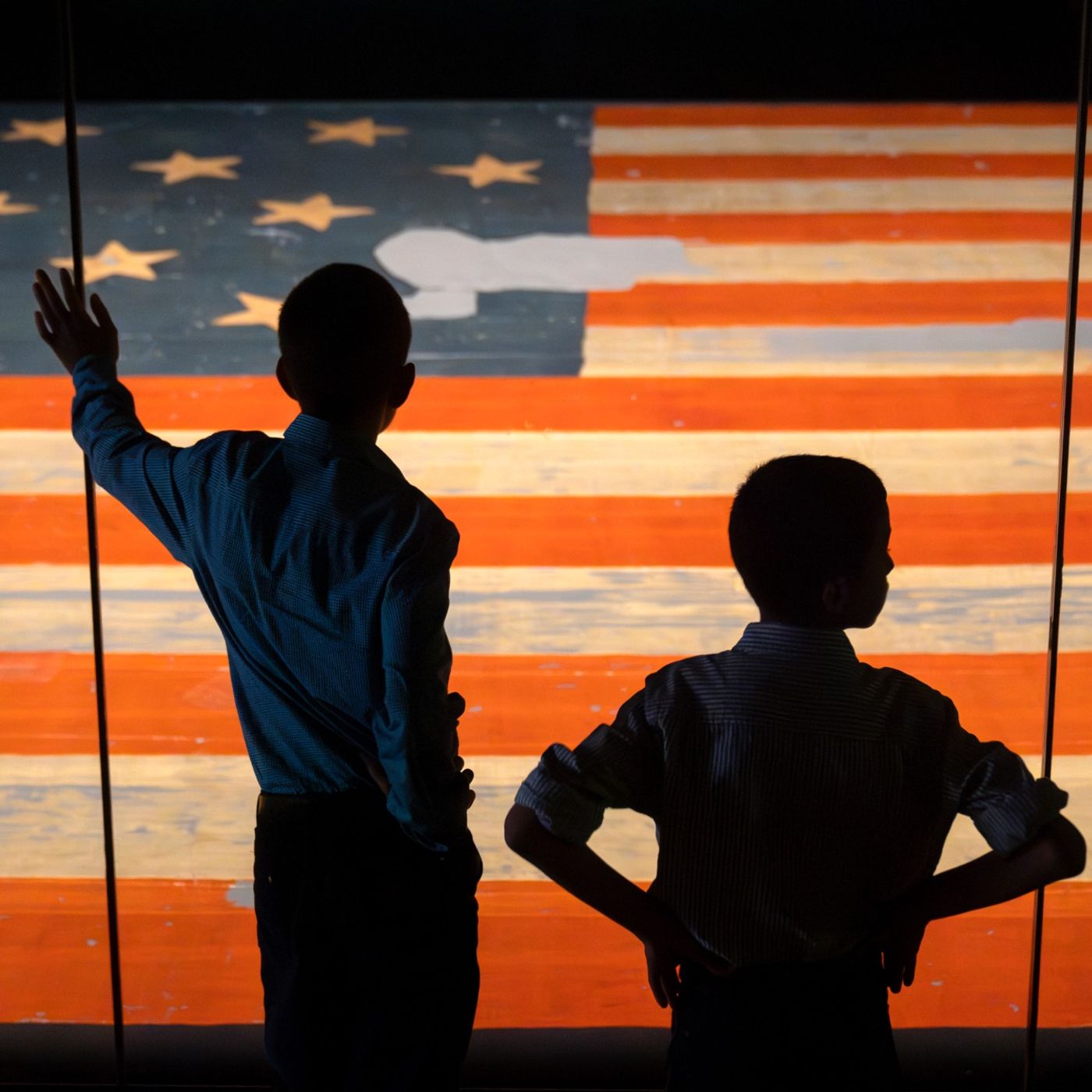
Speaker 14 It has important pieces of art and artifacts from all over the world, and things that are very familiar and iconic to us, like the star-spangled banner flag that originally inspired the national anthem, the Wright brothers' first airplane.
Speaker 14 But it also has things like the original lunch counter from the civil rights sit-ins and some of the signage from Japanese internment camps in California.
Speaker 11 So really a wide-ranging collection.
Speaker 14 Yeah, exactly. And the Smithsonian gets more than half of its $1 billion annual budget from the government, 62%.
Speaker 14 But that said, this is an independent institution.
Speaker 14 It has historically operated as such, and that means that artistic decisions are made by museum directors and curators, and not by the board, and not by the government.
Speaker 14 And it has been extremely successful as an institution running itself and doing its own thing.
Speaker 14 And that is why this is such a big deal to have this kind of an intervention from not only the government, but from the president himself, taking an interest in the minutia of what these museums show.
Speaker 11 All of these efforts to interfere in the independence of the Smithsonian and sort of this general takeover of the arts, where does that story start exactly?
Speaker 14 Actually, I think the story really starts with another cultural icon in Washington, the Kennedy Center for the Performing Arts. It's not part of the Smithsonian, but it is in the nation's capital.
Speaker 14 And it's where President Trump first focused his attention when he returned to office. In February, he accused the center of programming that was too woke.
Speaker 14 He complained about drag drag queens performing there. He said in one tweet that it was anti-American propaganda.
Speaker 14 And he went so far as to eliminate the Biden appointees on the board, to get himself elected as chairman and to install an interim president of one of his kind of most loyal associates.
Speaker 14 And it was also striking that the chairman of the Kennedy Center, David Rubenstein, decided to just kind of go quietly. There wasn't any real outrage or protest in reaction to this.
Speaker 14 And I think it kind of whet the appetite of the Trump administration for more.
Speaker 14 They saw the success of this playbook and therefore turned to another kind of quintessentially American institution, which was the Smithsonian.
Speaker 11 And what did President Trump do?
Speaker 14 So in March, the president issues an executive order that essentially accuses the Smithsonian of trying to promote a divisive, race-centered ideology, describing what he sees as a revisionist movement that undermines the United States in terms of narratives that portray America and Western values in a way that's harmful and oppressive.
Speaker 14 So instead, what he did was intensified his push to impose his vision of American history, and that is one that is more positive, that demands that the Smithsonian make itself into a symbol of inspiration and American greatness, rather than focus on the more negative aspects of our heritage.
Speaker 11 So what does that look like exactly?
Speaker 14 Well, it starts with Trump publicly calling for the firing of the National Portrait Gallery director, Kim Sayet.
Speaker 14 The National Portrait Gallery Gallery is perhaps one of the most important Smithsonian museums because it contains all of these what are considered official portraits of every president.
Speaker 14 And those are a huge draw for the public. And Sayet made no secret of her interest in reimagining the museum and making meaningful changes.
Speaker 14 She told us in 2022 that for centuries, portraits and busts in the museum were reserved for capturing images of the elite, and that that had left a distorted historical record that was largely limited to, quote, the wealthy, the pale, and the male.
Speaker 14 And it was actually that very phrase that the Trump administration picked up on in calling her, quote, a highly partisan person and a strong supporter of DEI, which is totally inappropriate for her position.
Speaker 11 And so how does the Portrait Gallery respond to all of this?
Speaker 14 Well, initially, what the Smithsonian Board of Regents did, because that is the kind of governing body that runs the the Smithsonian, was they said that this is not the purview of the president.
Speaker 14 It's ours, but we will take your concerns into consideration and do our own review.
Speaker 11 In other words, thank you so much for your input, but you can't just fire the head of one of our museums. That's not your job.
Speaker 14
That's our job. Right.
But we will consider your complaints.
Speaker 14 We will evaluate the portrait gallery for bias along with all of our other museums and kind of make a good faith effort to respond to your concerns.
Speaker 14 That obviously did not prove sufficient for the Trump administration.
Speaker 14 And also, actually, the pressure that was brought to bear actually became too much, and she left of her own accord within two weeks of all of this.
Speaker 11
Wow. So, basically, even though the Smithsonian maybe tried to seem like it was compromising, the administration does eventually get what it wanted.
Like, she resigns under threat of firing.
Speaker 14 Yeah.
Speaker 14 It also spoke to an effort on the part of the Smithsonian governing board to walk this line between trying to satisfy the Trump administration and not antagonize it while adhere to its own kind of mission and principles.
Speaker 14 And the person at the heart of that and leading that effort is its secretary, Lonnie Bunch.
Speaker 11 And who is he? What is his background?
Speaker 14 Lonnie Bunch is the first black secretary to serve at the Smithsonian.
Speaker 14 He's been in the job for six years, and he kind of made a name for himself as the founding director of of the National Museum of African American History and Culture, which opened to great fanfare in 2016 and last year had 1.6 million visitors.
Speaker 14 And what Bunch succeeded in doing is making sure that this was not a controversial museum, as most Smithsonian museums have not been over time.
Speaker 14 They are generally fairly benign and not provocative historically.
Speaker 14 And even though this was a museum that was about some very difficult topics, Bunch managed to raise money for it and kind of enlist both Democrats and Republicans in supporting it.
Speaker 11
Right. Basically, his job at all of these museums is to make them as open and inviting to the general public as possible.
Is that right?
Speaker 14
That's right. These should be museums that appeal to a broad public and ideally don't alienate.
any particular groups. And it's a place where all Americans feel comfortable coming.
Speaker 14 But walking that kind of moderate centrist line has become more and more difficult.
Speaker 14 And it really escalated over the summer where the artist Amy Sherold was supposed to have a major exhibition at the National Portrait Gallery.
Speaker 14
So Amy Sherold is a prominent painter. She's been widely celebrated.
And she is the most famous. She really broke out with this official portrait of Michelle Obama.
Speaker 14 And the artist has a big retrospective that was just in New York and was supposed to travel travel on next to Washington this fall.
Speaker 14 But there was one painting in that exhibition that apparently started to make some members of the Smithsonian board nervous.
Speaker 11 Why is that? Tell me about the painting.
Speaker 14
Well, the painting depicts a transgender statue of liberty. It's called Transforming Liberty.
It really shows a proud black trans woman holding the torch.
Speaker 14 And it's emblematic of Charles' work, which often has political undertones undertones and raises issues of gender identity and race.
Speaker 14 And I think the Smithsonian board started to worry that this was exactly the kind of hot-button issue that would set off the Trump administration and they were not spoiling for another fight.
Speaker 14 So they started to have internal discussions about perhaps pulling it from the show. And when Cheryl got wind of this idea, she was not happy about it and chose to cancel the entire thing.
Speaker 11 She basically felt like the museum had crossed some kind of red line and into, it sounds like censorship, basically.
Speaker 14 Yeah, exactly. And I think what was also troubling about this was this was the Smithsonian deciding to censor itself even in advance of any complaints from the Trump administration.
Speaker 11 Aaron Powell, did the administration react at all to her pulling out since they hadn't even asked for it?
Speaker 14 The administration celebrated this decision and almost seemed to try to take credit for it.
Speaker 14 A White House official described the work as an effort to reinterpret one of our nation's most sacred symbols through a divisive and ideological lens.
Speaker 14 So this was exactly the kind of effort or kind of curtailing of certain artistic expression that the Trump administration has been seeking.
Speaker 11 You know, it really sounds like the Smithsonian is really stuck between a rock and a hard place because they're trying to maintain some level of independence without angering the Trump administration too much.
Speaker 11 And yet they're still making all of these concessions. And so I wonder how far are these concessions going in actually appeasing the Trump administration?
Speaker 14 Not far at all. I mean, if anything, the pressure ramps up.
Speaker 14 On August 12th, the administration announced what essentially amounted to an audit of exhibitions, both those currently underway and those planned for the future.
Speaker 14 It gave the Smithsonian a deadline of 120 days to make concrete changes that it wanted to see.
Speaker 14 And in that time, the Smithsonian had to replace any language that the White House deemed divisive or driven by ideology with descriptions that the administration found acceptable.
Speaker 14 So, this is a very new challenge to the Smithsonian's independence and mission.
Speaker 14 And it really begs the question of how is Lonnie Bunch and the Smithsonian institution going to respond.
Speaker 11 We'll be right back.
Speaker 17 This podcast is supported by the American Petroleum Institute. Energy demand is rising, and the infrastructure we build today will power generations to come.
Speaker 17 We can deliver affordable, reliable, and innovative energy solutions for all Americans, but we need to overhaul our broken permitting process to make that happen.
Speaker 17 It's time to modernize and build, because when America builds, America wins. Read API's plan to secure America's future at permittingreformnow.org.
Speaker 1 We all have moments when we could have done better.
Speaker 2 Like cutting your own hair.
Speaker 1 Yikes.
Speaker 3 Or forgetting forgetting sunscreen so now you look like a tomato.
Speaker 5 Ouch. Could have done better.
Speaker 6 Same goes for where you invest.
Speaker 8 Level up and invest smarter with Schwab.
Speaker 9 Get market insights, education, and human help when you need it.
Speaker 7 Learn more at schwab.com.
Speaker 9 Your home is an active investment, not a passive one.
Speaker 2 And with Rocket Mortgage, you can put your home equity to work right away.
Speaker 9 When you unlock your home equity, you unlock new doors for for your family, renovations, extensions, even buying your next property.
Speaker 19 Get started today with smarter tools and guidance from real mortgage experts.
Speaker 2 Find out how at rocketmortgage.com.
Speaker 9 RocketMortgage LLC, licensed in 50 states, NMLS Consumer Access.org, 3030.
Speaker 11 Robin, you said that the administration has really started raising some specific objections at the Smithsonian.
Speaker 11 So can you give us a few examples of the exhibits that they actually have taken issue with?
Speaker 14 Well, they actually come back to the Smithsonian with a real list of some of the exhibitions and content that they find objectionable.
Speaker 14 In a document that's titled President Trump is Right About the Smithsonian. They highlight several examples.
Speaker 14 Among them is a exhibition that features art commemorating the act of crossing the southern border.
Speaker 14 They call out an installation of the pride flag, a stop-motion drawing animation examining the career of Anthony Fauci.
Speaker 14 But what they really focus on is the issue of slavery and feeling that the Smithsonian overemphasizes slavery in its exhibitions.
Speaker 14 They cite, for example, an installation at the American History Museum on Benjamin Franklin that looks at his achievements around electricity.
Speaker 14 but also talks about the fact that the people who enabled those experiments were enslaved people in his household.
Speaker 14 And this is reflected in the post that Trump put up recently, where he said that he considered the Smithsonian out of control, where everything discussed, quote, is how horrible our country is, how bad slavery was.
Speaker 14 And a lot of what the Trump administration is essentially reacting to is a kind of wholesale racial reckoning that took place in the wake of the George Floyd murder and has been underway at institutions around the country since 2020.
Speaker 11 How did that reckoning play out specifically in the museum world and the art world?
Speaker 14 Well, I think that it was a real kind of moment of truth for these institutions where they started to take a hard look at themselves and whether or not they accurately reflected the sort of diversity and range in our country.
Speaker 14 And that had to do with everything from what was on their walls, what they showed, to the kind of artwork they acquired, to the leadership who sat in the boardrooms and the directors of these museums.
Speaker 14 The Baltimore Museum of Art, for example, pledged to acquire only work by female artists for a year. The Met also acknowledged that it had neglected the Harlem Renaissance.
Speaker 14 And there were many people in the art world and in the broader culture who felt that this was a revision that was overdue.
Speaker 14 But there was also a camp that felt that it amounted to an over-correction, that perhaps it had gone too far.
Speaker 14 And that when you're dealing with someone like Ben Franklin, shouldn't we perhaps be focusing on his scientific contributions and not so much his flaws or his history of owning slaves?
Speaker 11 Obviously, though, figuring out how to portray a complicated history is not a new idea for museums and certainly not a new idea for the Smithsonian.
Speaker 11 And I think a lot of people understand that the work of historians and curators is in part, maybe large part, figuring out how to portray and revisit and reimagine perhaps ugly parts of our history.
Speaker 14 Right. This is definitely not the first time the Smithsonian has been at the center of a debate about how history is told.
Speaker 14 One famous example is from the 1990s. The Air and Space Museum planned an exhibition around the bomber plane called the Enola Gay,
Speaker 14 which dropped the first atomic bomb on Hiroshima. And originally it included details about Japanese victims and it talked about it as a mixed moral legacy.
Speaker 14 And there was a real outcry from veterans groups and members of Congress who felt that the thrust of the exhibit had become too negative.
Speaker 14 And in response to that, there were actually adjustments made to kind of moderate the telling of that episode so that it didn't necessarily dwell on some of the uglier aspects of the bomb.
Speaker 14 So there is a long history of debating how history gets told, but this is an unusual instance of the presidential administration imposing its will on how that story gets told.
Speaker 11 Which brings us to what is happening right now with the Smithsonian and the pressure for the Smithsonian to change what it actually displays in its museums museums against what some people would say is its very mission, which is to be independent.
Speaker 11 So where do things stand with the administration's demands?
Speaker 14 Well, the response from the Smithsonian really lies with its governing board, which is called the Board of Regents.
Speaker 14 It has 17 members that include members of Congress, both Democrats and Republicans, as well as civilians. Interestingly, it also includes the vice president, J.D.
Speaker 14 Vance, and it is overseen and run by John Roberts, the Chief Justice of the Supreme Court.
Speaker 14 And Chief Justice Roberts famously is an institutionalist who is looking to avoid controversy, to focus on procedure and rules, and not to enter partisan debates.
Speaker 14
So we're waiting. It's been several weeks.
We know Bunch had lunch with the president last week, but we don't know exactly what happened there, except that the meeting was described as cordial.
Speaker 14 But there is still no official response from the Smithsonian to the White House's list of demands. And it's a big moment for Bunch and the Smithsonian.
Speaker 14 Will they take a stand and enforce the independence of the Smithsonian or not?
Speaker 11 What would it look like for Lonnie Bunch to take a stand? And what would it look like if that stand didn't work?
Speaker 14 Well, I think if Lonnie Bunch says this is our purview and not yours, then the Trump administration is likely to not be satisfied with that because basically the Smithsonian would be refusing to abide by this mandate.
Speaker 14 Right now, Trump doesn't have the votes on the board to dominate decision-making, but that could change in a short amount of time.
Speaker 14 In a few months, several members are due to cycle off, and members do need to be approved by Congress. And Trump could have a lot more influence in appointing those who succeed them.
Speaker 14 And then he would have control of the board going forward. And that's largely what is expected to happen.
Speaker 11 This is really reminding me of this old adage about how history gets written by the victors, right? Like by the people in charge. And Trump is the one in charge.
Speaker 11 And he's trying to, as you said, impose his version of history on the institutions that help define it. for the broad American public.
Speaker 11 We're obviously in a moment of backlash against what some people see as an over-correction in 2020.
Speaker 11 And so I wonder, is what we're seeing now just another swing of the cultural pendulum that could, of course, swing back with a new administration? Or is what we're seeing more enduring?
Speaker 14 I do think that this is a moment where larger questions are on the table and we're not sure of the answers. And
Speaker 14 historically, art institutions and artists have been kind of the watchdogs of our nation to some extent and
Speaker 14 the victors in culture wars that free expression has carried the day. And this is a case where you actually see an administration and a political point of view kind of shutting that down.
Speaker 14 And I think there is some concern that that could have lasting chilling effects.
Speaker 14 It's certainly one we're already seeing in institutions across the country, besides the Smithsonian, a sort of anticipation of needing to be silenced.
Speaker 14 And I had lunch today with a European museum director who said that he saw this as a frightening pattern in terms of having seen this happen in other countries under authoritarian regimes where propaganda infects almost everything.
Speaker 14 And there is worry about what this moment means for scholarly independence and artistic expression.
Speaker 14 A lot of museum leaders feel this is a moment to take a firm stand in favor of open debate and critical thinking and freedom of expression, which are foundational values of American cultural institutions.
Speaker 14 At the same time, they also want to protect their organizations from landing in the crosshairs of the Trump administration right now, which could threaten them in a more long-term way.
Speaker 14 And I think they're also seeing that outrage doesn't have a whole lot of effect. So the result is places just keeping their heads down.
Speaker 11 Robin, if the president was, in fact, able to gain control of America's attic, as you put it earlier, I wonder what you think that means, just in terms of curating the story of America and presenting it to the public.
Speaker 14 I think what it means is that he would have remade these institutions in his own image as kind of an extenuation of his values, his worldview, and his priorities.
Speaker 14 I think it will also be a simplified version of America, a story with kind of less nuance and complexity.
Speaker 14 And interestingly, in Lonnie Bunch's memoir, he recalls during the first Trump administration walking the president through the National Museum of African American History and Culture when it had just opened, and that the president didn't want to see anything too difficult.
Speaker 14 And Bunch writes that actually it's really important
Speaker 14 to look at history's fullness and complexity, even though that can be hard to do.
Speaker 14 All of this is coming to a head as the president has talked a lot about the upcoming 250th anniversary of the signing of the Declaration of Independence next summer.
Speaker 14 I think the president has made clear he would like that to be largely celebratory.
Speaker 14 And it really raises questions about what kind of a country we're going to be commemorating on an anniversary like that.
Speaker 14 Is it one where we are just sort of applauding progress as triumphant?
Speaker 14 Or are we looking more frankly and squarely at progress in all its complexity as being both our successes and our failures?
Speaker 14 That mix is also very much a part of who we are and what there is to celebrate.
Speaker 11 Robin, thank you so much.
Speaker 14 Thank you for having me.
Speaker 11 We'll be right back.
Speaker 1 We all have moments when we could have done better.
Speaker 2 Like cutting your own hair.
Speaker 1 Yikes.
Speaker 3 Or forgetting sunscreen so now you look like a tomato.
Speaker 5 Ouch. Could have done better.
Speaker 6 Same goes for where you invest.
Speaker 8 Level up and invest smarter with Schwab.
Speaker 9 Get market insights, education, and human help when you need it.
Speaker 7 Learn more at schwab.com.
Speaker 9 Your home is an active investment, not a passive one.
Speaker 2 And with Rocket Mortgage, you can put your home equity to work right away.
Speaker 9 When you unlock your home equity, you unlock new doors for your family, renovations, extensions, even buying your next property.
Speaker 19 Get started today with smarter tools and guidance from real mortgage experts.
Speaker 18 Find out how at rocketmortgage.com.
Speaker 9 Rocket Mortgage LLC, licensed in 50 states, NMLS Consumer Access.org, 3030.
Speaker 13
With a variety of options, U.S. Cellular Prepaid makes finding the right wireless plan for you easy.
That means you can get what you need at a price you can afford, all while staying connected.
Speaker 13
Like two lines of unlimited data for just $60 a month and a free device like the Samsung Galaxy A165G, U.S. Cellular Prepaid.
Terms apply. See USCLU.com for details.
Speaker 11 Here's what else you need to know today.
Speaker 11 Google avoided the harshest penalties in a landmark antitrust case when a federal judge ruled on Tuesday that while Google needed to hand over some of its search data to rivals, it did not have to give in to the government's toughest demands, including spinning off its Chrome browser.
Speaker 11 The ruling is a blow to the government's push in recent years to challenge the dominance of the biggest tech companies, including Google, Apple, Amazon, and Meta, which both the Biden and Trump administrations have accused of anti-competitive behavior.
Speaker 11 And, in a stunning departure from the traditional tactics of America's war on drugs, President Trump said on Tuesday that the military had carried out a strike against a boat run by a Venezuelan, quote, narco-terrorist organization.
Speaker 11 The move comes as the Trump administration has stepped up its belligerent rhetoric about fighting drug cartels and has labeled Venezuela's president, Nicolas Maduro, as a terrorist cartel leader.
Speaker 11 Today's episode was produced by Sidney Harper, Olivia Knatt, and Claire Tennis Getter. It was edited by Patricia Willans and was engineered by Chris Wood.
Speaker 11
That's it for the daily. I'm Rachel Abrams.
See you tomorrow.
Speaker 1 We all have moments when we could have done better.
Speaker 2 Like cutting your own hair.
Speaker 1 Yikes.
Speaker 3 Or forgetting sunscreen so now you look like a tomato.
Speaker 5 Ouch.
Speaker 5 Could have done better.
Speaker 6 Same goes for where you invest.
Speaker 8 Level up and invest smarter with Schwab.
Speaker 9 Get market insights, education, and human help when you need it.
Speaker 7 Learn more at schwab.com.