Sunday Special: A Sea of Streaming Docs
On today’s Sunday Special, Gilbert is joined by The New York Times’s chief television critic, James Poniewozik, and Alissa Wilkinson, a Times film critic, to talk about the documentaries that are worth your viewing time.
Discussed on this episode:
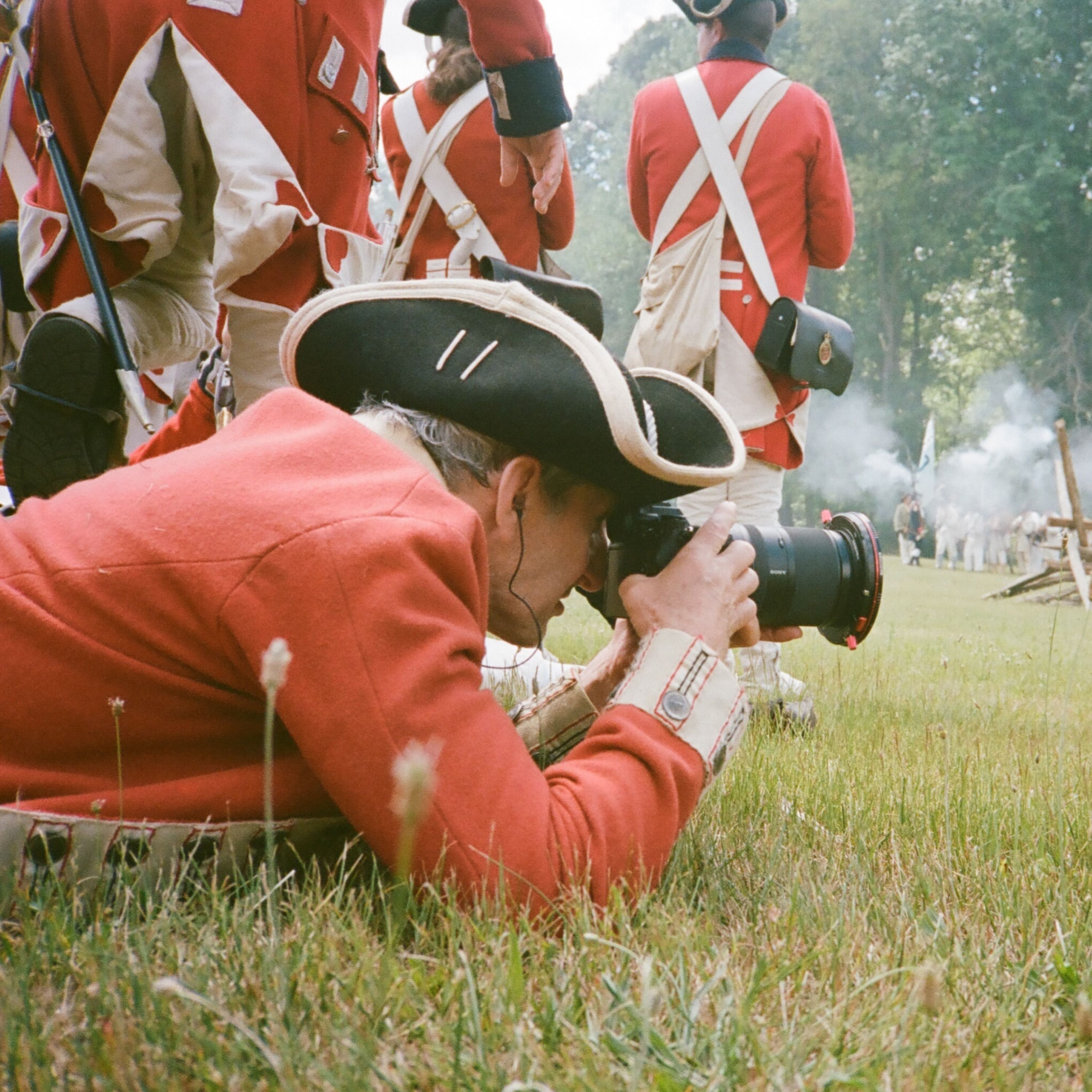
“The American Revolution,” 2025, directed by Ken Burns
“The Alabama Solution,” 2025, directed by Andrew Jarecki and Charlotte Kaufman
“The Jinx: The Life and Deaths of Robert Durst,” 2015, directed by Andrew Jarecki
“Making a Murderer,” 2015, directed by Laura Ricciardi and Moira Demos
“The Yogurt Shop Murders,” 2025, directed by Margaret Brown
“The Perfect Neighbor,” 2025, directed by Beet Gandbhir
“The Last Dance,” 2020, directed by Jason Hehir
“Copa 71,” 2023, directed by Rachel Ramsay and James Erkine
“Cheer,” 2020, created by Greg Whiteley
“Last Chance U,” 2016, directed by Greg Whiteley, Adam Ridley and Luke Lorentzen
“Pee-wee as Himself,” 2025, directed by Matt Wolf
“The Remarkable Life of Ibelin,” 2024, directed by Benjamin Ree
“Ladies & Gentlemen … 50 Years of SNL Music,” 2025, directed by Questlove
“Cameraperson,” 2016, directed by Kirsten Johnson
“An American Family,” 1973, created by Craig Gilbert
“Look Into My Eyes,” 2024, directed by Lana Wilson
“When We Were Kings,” 1996, directed by Leon Gast
Press play and read along
Transcript
Speaker 1 The New York Times app has all this stuff that you may not have seen.
Speaker 1 The way the tabs are at the top, with all of the different sections, I can immediately navigate to something that matches what I'm feeling. I go to games always.
Speaker 3 Doing the mini, doing the world.
Speaker 2 I loved how much content it exposed me to, things that I never would have thought to turn to a news app for.
Speaker 3 This app is essential.
Speaker 2 The New York Times app.
Speaker 3 All of the times, all in one place.
Speaker 2 Download it now at nytimes.com/slash app.
Speaker 3 I'm Gilbert Cruz, and this is the Sunday Special.
Speaker 3 There was a time when documentaries could only be found on public television and maybe at your local arthouse theater.
Speaker 3 But today, if you fire up almost any streaming service, you'll find that they're chock full of documentaries.
Speaker 3
True crime documentaries, celebrity documentaries, music documentaries, poop cruise documentaries. Maybe there's just the one poop cruise documentary.
Today, we're going to talk about it all.
Speaker 3 We're talking about documentaries, and if we're talking about docs, even in this era of incredible glut, there's one gentleman we have to talk about, and that is Ken Burns.
Speaker 3
He has made more than 40 documentaries. He's done jazz, which is the first one that I saw.
baseball, the Civil War, country music, and so many other subjects.
Speaker 3 This month, he's got a new one out, a six-part 12-hour opus called The American Revolution. Here to talk about Ken Burns and the wide, wide world of docs, I've got two of my wonderful colleagues.
Speaker 3
Alyssa Wilkinson is a movie critic at the Times. She writes our documentary lens column about new documentaries.
Hello, Alyssa.
Speaker 2 Hello.
Speaker 3
And James Ponowazic is our chief TV critic. He needs no introduction.
He has reviewed the American Revolution for us. Hello, Jim.
Speaker 4 Good day to you, sir.
Speaker 3 Good day. Well, let's start with the American Revolution.
Speaker 4
It's a great place to start. America started there.
Why not us?
Speaker 3 This one is directed by Burns, as well as his co-director, Sarah Botstein and David Schmidt. Jim, tell us about this new one.
Speaker 4 So the American Revolution is sort of what you would expect from
Speaker 4 your experience of Ken Burns.
Speaker 4 The celebrity guest voices, the sort of assembled roster of historians commenting on the historical events and their context, all the tricks he's developed to bring history to life, make it more kinetic, make it more auditory.
Speaker 4 But it is also, you know, I would say
Speaker 4 not
Speaker 4 just the version of the American Revolution that you learned in grade school, depending when you went to grade school.
Speaker 4 Right up front, you were sort of set at the beginning of the stirrings of revolution.
Speaker 5 From a small spark kindled in America, a flame has arisen, not to be extinguished.
Speaker 4 But the narrative also turns to the Iroquois Confederacy, which was a democratic governance arrangement among Native American groups that predated the American Revolution by centuries.
Speaker 6 We know our lands are now become more valuable. The white people think we do not know their value,
Speaker 6 but we are sensible that the land is everlasting.
Speaker 4 So it makes clear that this is going to be a story of all the Americans. colonists, loyalists, yes, but also Native Americans, also enslaved Americans.
Speaker 4 To that extent, I think it is a broadening of the story. And at 12 hours, he's got a lot of space to broaden the story.
Speaker 4 I would say that it's not one of his most surprising documentaries in terms of departing from his style.
Speaker 4 But with the 250th anniversary of America's independence coming up and a lot of culture wars going on over America's history and how it's told and what people should and shouldn't say about it,
Speaker 4 there were certainly things that surprised me. Things like one of the takeaways that I got from it was George Washington, you know,
Speaker 4 great American figure, not necessarily a great general in terms of winning a lot of battles.
Speaker 3 Well, if you remember the musical Hamilton, I think there is a line that he says there about having lost his first battle or something of that sort.
Speaker 4 Yeah, you know, I need it wrapped at me a few times before I really retain it.
Speaker 3
I'm not going to do that here. Alyssa, what's your relationship to the work of Mr.
Ken Burns?
Speaker 2 So I wasn't a big TV watcher as a kid, but I was a big PBS TV watcher as a kid. And
Speaker 2 my main memory of watching PBS as a kid is watching Ken Burns documentaries during pledge drives.
Speaker 2
I don't know which ones they were looking at the dates. I'm thinking it was possibly the Civil War or maybe the Congress.
Although I think I also was watching the Shakers.
Speaker 2 I think they just used to run them during pledge drive.
Speaker 3 Just like blurring in your mind?
Speaker 2 They're just, you know, a lot of photos being panned across and like experts and people being interviewed. So it's sort of a blur of history.
Speaker 2 But I assume that's sort of where I got my idea of what a documentary was in the early part of my
Speaker 2 life.
Speaker 2 And also I was homeschooled from the sixth grade onwards, which means that, you know, that was a big part of my history understanding was this is, you know, these photographs, the experts, the first-hand accounts.
Speaker 2 That was really what I understood a documentary to be for a long stretch of my youth.
Speaker 4 So at least you learn a lot about the three tenors from these pledge drives.
Speaker 3 I did. From Riverdance?
Speaker 2 The three tenors.
Speaker 3 I've heard a great deal about Riverdance.
Speaker 2 Yeah, you know, I don't know. I was kind of a pledge drive kid, I guess.
Speaker 3 How many tote bags does your family have?
Speaker 2 Oh, we didn't never donate it. I just watched the pledge drive.
Speaker 3
I donate now. I don't.
You're giving back. You're giving back.
You're giving back through your work.
Speaker 3 Sucked all this information. Oh, my God.
Speaker 3 Look, I have so many tote bags now. You don't even know.
Speaker 3
I think we all do. Yes.
I'd love to hear more about this perception in your mind of what you thought a documentary was, what it should be, how it should feel.
Speaker 3 We're going to talk a little bit more about things that subvert that form. But what did young Alyssa understand a documentary to be?
Speaker 2 Yeah, I think like a lot of people, we think of documentaries as a information-giving giving vehicle. You know, it's sort of like a visual magazine article or a visual newspaper article.
Speaker 3 It's sort of like a visual podcast is almost how I start to think about it, which is like
Speaker 3 look at all this information being delivered to me.
Speaker 2 And in fact, you know, Burns often has a book.
Speaker 2 In fact, I think there's a book that's in the book. There is.
Speaker 3 We just reviewed it at the book or something. That's right.
Speaker 2 So there's like a book that goes with the documentary. And so they're kind of, they go hand in hand and they're information delivery vehicles.
Speaker 2 And a lot of us, I think, get that idea because we then, when we're kids, kids, we watch those documentaries in our history classes
Speaker 3 when our teachers just can't deal with us anymore or for whatever reason, right?
Speaker 2 But it's a good way to learn about history.
Speaker 2 Certainly, we get the visual images and the ideas, and we get these history clips also from, you know, to understand what did the civil rights movement look like.
Speaker 2 It's more exciting than just reading about it in a book. I remember the feel of
Speaker 2 being in a wave and being part of something bigger than yourself, and that's a very great feel.
Speaker 3 Jim, what would you say the reputation of Ken Burns is or the perception? And do you think that reputation or perception is earned?
Speaker 3 Or do his documentaries sort of subvert this very basic idea of what Ken Burns is?
Speaker 3 Well,
Speaker 4 I was not
Speaker 4 always
Speaker 4 early in my TV critic career and even before then, a huge Ken Burns fan.
Speaker 4 I think I had the perception that maybe a lot of people have that his stuff was very earnest and worthy, but very sort of middle of the road, that it was making
Speaker 4 eloquent, well-produced case for things that people already agree on, right? Like war is hell, you know.
Speaker 3 Jazz is good.
Speaker 4 Yes, exactly. You know, we love baseball.
Speaker 3 You know,
Speaker 3 and
Speaker 4 there is that. You There is a reason that this sort of thing is broadly appealing and is pledge drive gold.
Speaker 4 But I've also come to see what he does as kind of more pointed and radical over the years than I initially perceived it being, which I think partly is my just growing up and seeing more in it and partly as maybe a change in the times.
Speaker 4 What he is trying to do is sort of create a canon of American history.
Speaker 4 You know, whatever we think about the present, we agree, you know, this stuff happened in the past and it happened for, you know, probably these reasons and this is, this is where we came from.
Speaker 4 And that, that is, you know, that it's gotten increasingly contentious over times. I also think that
Speaker 4 a lot of his documentaries
Speaker 4
They're really about more than the subject. And to me, this is the thing that I come to documentaries for.
Like, you know, I'm not just trying to get like a Wikipedia download of information.
Speaker 4 I want there to be a take and idea.
Speaker 4 His
Speaker 4 national parks documentary, I remember writing about when it came out somewhere, it was like around the beginning of the Obama administration.
Speaker 2 And I think each American can look into their own hearts and tell you, this is my national park. And it might be the great significance.
Speaker 4 You know, and the idea was like, you know, the national parks were like America's greatest idea and we preserve this land.
Speaker 4 And, you know, but it was also about an idea that was very much currently being debated at the time, which is, do we need government to do things collectively that the private sector is never going to do?
Speaker 4 You know, and it doesn't come out and say that, but it is engaging with ideas. All this stuff is engaging with ideas that are, you know, current and timeless.
Speaker 9 That wonderful stone arch that says, for the benefit and enjoyment of the people.
Speaker 9
It doesn't say for the benefit and enjoyment of some of the people or a few of the people. It says all of the people.
And for me, that meant democracy. And for me, that meant I was welcome.
Speaker 4 And I stepped outside. And I think to try to do that to everyone, as opposed to your own personal amen corner, is really kind of a like, that's metal.
Speaker 3 You know, that's like a very like radical thing to do nowadays.
Speaker 2 And it's interesting that, you know, he's so inextricable from PBS
Speaker 2 too. You know, you think of PBS, you think of Ken Burns, basically.
Speaker 3 Yeah.
Speaker 2 Because there's other filmmakers, I'm thinking of Frederick Wiseman, who've tried to take on institutions throughout their long, long, long career.
Speaker 2 And Fred Wiseman's been made 50 movies at this point, but they're not airing on every public television station in the country,
Speaker 2 which is significant. at this moment in history, obviously, with public funding getting cut and all of those things.
Speaker 2 But I think Ken Burns doing what he does on public TV, those two things can't be taken apart from from one another.
Speaker 4 And it's kind of an embodiment of the idea of public TV, which again, you know, I think just with the passage of time to me seems more radical and quaint.
Speaker 3 So Ken Burns, Frederick Wiseman, Alyssa, who you just referenced, these are familiar names. They've been around for a very long time.
Speaker 3 But we have had this explosion in documentaries and so much so, Alyssa, that you now write a weekly column about documentaries that tries to
Speaker 3 help people navigate the sea of work that's out there.
Speaker 2 Yeah, Yeah, I mean, I write about at least a documentary a week for the paper, and I see more than that. I go to a lot of documentary festivals and try to see as many as I can.
Speaker 3 There's one happening right now in New York.
Speaker 2 There is one happening right now in New York, Doc NYC, and there's a bunch more around the country all year long.
Speaker 2 And it's, you know, it's really interesting because there's been a lot of ebbs and flows even over the last 10 years.
Speaker 2 Documentaries are really affected by where the money is.
Speaker 2 I mean, that's true of films generally, but because there's not kind of the same star power, it's often driven by, you know, where the platforms are, what the stories are that are being told.
Speaker 2 And right now, the industry is really struggling.
Speaker 2 There's not a lot of money for documentaries unless they fall into a couple of different categories, one of which is cults, one of which is true crimes, one is sort of the reputation-burnishing celebrity marketing documentary where the celebrity is the executive producer of the documentary.
Speaker 2
And those are the kinds of films that get made. And then a lot of other filmmakers want to make other kinds of films.
They want to tell other kinds of stories.
Speaker 2 One thing about really, I would call quote-unquote important documentaries, the ones that are telling stories that can actually change things in the world, they take a lot of time.
Speaker 2 I wrote about one documentary recently called the Alabama Solution that uses footage shot by prisoners inside the Alabama prison system.
Speaker 7 The Alabama Department of Correction, the ADLC,
Speaker 3 they don't want the public. They can see
Speaker 3 the conditions they hear.
Speaker 2 You know, you can't just walk in and shoot that in two weeks. You have to have years of footage.
Speaker 2 That kind of thing is hard to convince funders that it's worth doing.
Speaker 3 So let's talk about documentary subgenres, what's getting made a lot right now. As you mentioned, you cannot talk about documentaries without talking about true crime.
Speaker 3 I was TV editor here at the Times in 2015 when it feels like a lot of this really started to pop. The beginning of that year, you had HBO's the Jinx.
Speaker 7 What were the divers for?
Speaker 4 Obviously, they're looking for body parts, looking for something you can use as evidence.
Speaker 3 And then at the end of 2015, Netflix is making a murder came out.
Speaker 2 The county did something or whatever and trying to plan evidence on me or something. I don't know.
Speaker 3 And that seemed to sort of spark something or set something off.
Speaker 4 Jim, they have a lot to answer for.
Speaker 3 Do you have to
Speaker 3 deal with true crime sort of material as a TV critic here?
Speaker 4 I mean, to some extent,
Speaker 4 there is just so much television now that
Speaker 4 there has to be a bar for me to pay attention to it.
Speaker 4 I was thinking about the question, you know,
Speaker 4 am I into true crime documentary? And I feel that that's like saying, you know, do I like cop shows? You know, well, I like The Wire. You know, I like Happy Valley.
Speaker 4 Like, I like something that has a voice and ideas
Speaker 4 and is, you know, saying something beyond what happened or just like, you know, look at these people.
Speaker 4 And there is certainly true crime that's thoughtful and does that.
Speaker 4 The yogurt shot murders
Speaker 4 earlier this summer on what HBO was.
Speaker 2 I don't know that the city of Austin has ever been the same since the yogurt shot murders. I mean, that was a loss of innocence for this town for sure.
Speaker 2 You wouldn't think it would be thoughtful from the name, but it actually was a, yeah.
Speaker 4 It was really less about
Speaker 4
giving you the lurid details behind a crime. And it was much more about how our society reacts to shocking crimes.
And, you know,
Speaker 4 very much in a meta way about the same impulse that drives the Godzillion true crime documentaries, podcasts, et cetera, that we see out there now. So that's interesting to me.
Speaker 4 That's an idea that's something I can do something with. Right.
Speaker 2 It's interesting that true crime has gone so far down the path that there's actually a bunch of projects this year that, including that one, that have like kind of come back around and are commenting on it like the perfect neighbor is one of the highest um or most watched movies on netflix
Speaker 2 That one is kind of a comment on true crime in addition to being a true crime documentary.
Speaker 2 There's an upcoming film called the Zodiac Killer Project that's sort of a satirical film about how I would have made the Zodiac Killer true crime movie if I could have.
Speaker 2 The film Predators is also about the To Catch a Predator show. And then there was another HBO show a couple of years ago, Mind Over Murder, which was also kind of an unpacking of the genre.
Speaker 2 So it's sort of like we know the tropes of true crime so well that we can watch shows about true crime and understand what they are because we know what they are.
Speaker 3 Yeah. Yeah.
Speaker 3 The, you know, there's been a true crime boom in documentary filmmaking, certainly in podcasts.
Speaker 3 But if we go back even farther than that, it feels like there's a giant category that we all have watched.
Speaker 3 Maybe we watch with our family members over the holidays, but we never really talk about, which is the nature documentary.
Speaker 3 If there's something that maybe is more sort of anodyne than a history documentary, it's a nature documentary.
Speaker 3 But now we have reached the stage where we have the sickest cameras ever invented, and you can just go places you never were able to go to before.
Speaker 4 Yeah, and probably like, certainly for me, like my first experience of documentary was that, you know, we get to watch a movie day in school and, you know, there would be something where I don't know, like, an otter is trying to escape from a wolf and it has a voice.
Speaker 4 And, you know, those, those, like, you know, normally like Disney type documentaries. I will admit, in the right mood to being a sucker for this sort of thing, like
Speaker 4 the technology and just the ability to capture rare moments
Speaker 4 is stunning nowadays. and also, and I don't mean this disparagingly, like they can be sort of screensavory for me
Speaker 3 in
Speaker 3
the best way, and voyeuristic too. It's like I could never watch this otherwise.
Yeah, see,
Speaker 4 can one be voyeuristic toward like penguins?
Speaker 3 I guess you can, and I think they deserve their prize.
Speaker 3 Others are already courting, parading back and forth with a special ritualized walk.
Speaker 4 I mean, the thing that I find funny is that there are so many iterations in a lot of these series and productions that it becomes like a challenge of classification.
Speaker 4
It's sort of, you know, this one is organized by continent. This one's going to be by biosphere.
This one's going to be by, you know,
Speaker 3 this is about the forests. This is about the oceans.
Speaker 4 You can't just say, you know, a bunch of cool nature crap, volume 50.
Speaker 3 There needs to be some sort of taxonomic principle that says this is a different.
Speaker 4 But we all know we just want to watch a bunch of cool nature crap.
Speaker 3 Another big category, and I say this as someone who is not a person who watches sports generally, but is the sports documentary. Yeah.
Speaker 3 You know,
Speaker 3 the 30 for 30 series, which was the ESPN series, feels like one of the big touchstones of TV documentaries over the past decade plus.
Speaker 12 I distinctly remember the officials threatening to throw a flag on us if we did not shake your opponent's hand. Some of the language that was said there, the coin toss, it was just not right.
Speaker 3 You have all of those, and then you sort of peak the first year of the pandemic with the last dance. Yeah, yes.
Speaker 5 Michael Jordan's the only player that could ever turn it on and off, and he never freaking turned it off.
Speaker 3
It was a very odd experience. Maybe the both of you remember this.
March 2020 was Tiger King, a genuine sensation on Netflix. And then the month later, the last dance premiered.
Yes.
Speaker 3 And it felt like documentaries sort of ruled those first few months for me at least of the pandemic.
Speaker 2 Yeah, and those two could not be more different as watching experiences. Absolutely.
Speaker 2 Even though it was very watching Michael Jordan just kind of sit there in the last dance and talk was almost an uncanny experience for me. I remember watching those games.
Speaker 3 Oh, yeah.
Speaker 4 Totally. Like what? Not a sports guy at all, but, you know, in the 90s, you could not not know about the Chicago Bulls.
Speaker 4 And, you know, it's kind of, you know, is it partly that this is one of our few remaining areas of mass culture, you know,
Speaker 4 thing that all kinds of people know about?
Speaker 3 Yes. Well, also, I, I.
Speaker 2 have as a not a huge sports person myself, but the raw material of sports is so cool to see how documentarians shape it into different kinds of stories.
Speaker 2 During, I think the last Olympics, I went on the Criterion channel and realized they had the full collection of all of the Olympic documentaries. Incredible.
Speaker 2
And some of them are made by some of the greatest documentarians of our time, of their time. Yeah.
I mean, I very much recommend watching them.
Speaker 2 And you get to see them grappling with like actually the moment and what the Olympics are supposed to say at that moment, sort of the message of the Olympics at that moment, which gets pretty dark in some moments of the Olympics, you know, especially right around World War II in particular.
Speaker 6 The for victory.
Speaker 6 Victory not in war, not in wealth, not in tyranny,
Speaker 6 but in sportsmanship and in peace.
Speaker 2 I wrote recently, I think last year, actually, about a movie called Copa 71, which pulled footage footage from this World Cup event. That's a massive stadium.
Speaker 2
It's a men's football match. Where a women's soccer tournament took place.
It's women's football. What?
Speaker 2 And it was sort of like the footage was buried because they were so mad that this event had taken place and nobody knew it had happened. And so it was brought back out and made into this documentary.
Speaker 2 Why didn't they know about this?
Speaker 2 So you see like all these interesting types of stories being political stories or like stories about gender, stories about the potential of the human spirit, or also the sort of dark side of that,
Speaker 2 able to be told out of the raw material of sports. I really, I think that's part of why they make for such interesting documentaries.
Speaker 4 Yeah, I know that this had its critics, but I remember, and this is more series than the sort of thing that you're talking about, but I was very captivated by cheer when that was on Netflix a few years back.
Speaker 13 I just didn't have a heart. I just didn't care about anything or anyone.
Speaker 13 And without Chillian, I would have not made it.
Speaker 4 It would have been over for me. In the same way,
Speaker 4
well, why do I like watching Friday Night Lights? Yeah. You know, it's because it's about people and wanting things and, you know, a certain culture.
And it's about, you know, what people will
Speaker 4 do. to get the things that they want.
Speaker 3 Last Chance, You, I also felt the same way.
Speaker 2 A great, great show about just, you know, what will you do to get to where you need to be when you have no other options?
Speaker 6 I sit in the bed and I think, like, okay, I'm playing football for him, but I'm also missing him growing up. But if I get to the NFL, I'll be able to give him
Speaker 6 whatever he wants, whatever he asks for.
Speaker 3
All right, we have talked about a lot. I think it's time for break.
And when we come back, we are going to have some very hearty recommendations for documentaries that our listeners might enjoy.
Speaker 3 Okay, Jim and Alyssa, I'm going to ask you two to recommend some documentaries, both new and old, that you think listeners should watch. Jim, let's start with you.
Speaker 4 A show I really loved from earlier this year was Pee-Wee as Himself.
Speaker 10 Hi, kids! Guess what?
Speaker 4 I'm having a party, and you're invited.
Speaker 4 This was a film about Paul Rubens/slash Pee-Wee Herman,
Speaker 4 the late great children's performer and artist who cooperated with the movie and didn't.
Speaker 3 You hear that? I don't hear that.
Speaker 3 You would hear it.
Speaker 10 You'd see.
Speaker 3 You see, you see.
Speaker 4 He's interviewed for it, gave access to much of his materials.
Speaker 4 Also, throughout the documentary and his interviews, he is very ambivalent about the idea of how much he wants to reveal about himself and how much control he can have and cannot have.
Speaker 3
Go ahead. I'm ready.
I'm ready.
Speaker 6 You had conceived of a whole arsenal of fully developed characters before Pee-Wee, right?
Speaker 3 Had I?
Speaker 4 It ends up being, to me, not just a fascinating portrait of like an artist who I just think can't be rated highly enough in pop culture, but also about the effects of creating and living under a persona and
Speaker 4 very much about the documentary process itself and what it can tell you and what it can't tell you. I kept who I was a secret for a really long time,
Speaker 4 and that served me very well as I wanted it to, and then it didn't.
Speaker 3
That is a great recommendation. I've wanted to watch that for a while.
I was going to watch it this weekend, I didn't get it.
Speaker 4 You can find it on HBO Max or Max Plus or whatever they call themselves now.
Speaker 3 Whatever they are, by the time this airs.
Speaker 3 Alyssa, give us one.
Speaker 2 I'm going to start with a documentary from last year called The Remarkable Life of Ebelin.
Speaker 7 Our deepest sorrow lay in the fact that he would never experience friendships, love.
Speaker 3 This is
Speaker 2 a good example of how documentaries can be totally unlike anything that you think a documentary can be.
Speaker 2 So it's about a young man who had a degenerative disease and passed away when he was in his early 20s.
Speaker 2 And after he died, his parents went into his blog to post something about his passing and started getting emails from all these people.
Speaker 10 He was an incurable romantic.
Speaker 2 They kept talking about how their son had meant so much
Speaker 2 to them and
Speaker 2 how he had changed their lives. And they didn't understand because their son had been literally confined to a wheelchair, hadn't left the house in years and years.
Speaker 15 He would listen and
Speaker 15 like remembering back then that he was there for me.
Speaker 2 And I could also talk to him about the stupid things.
Speaker 2 And come to find out he had been part of this guild on World of Warcraft.
Speaker 3 Oh, I've heard about this one.
Speaker 2 Yeah, and so they went in and got hundreds of thousands of pages of logs from World of Warcraft, which keeps the chat logs, and got animators and recreated basically all of these scenarios.
Speaker 10 And then he just wrote back, this is too emotional for me.
Speaker 15 And I was like, well, you need to be emotional as well from time to time. Then you know you have met two people.
Speaker 2 I mean, it sounds corny when I say that, but it is the most amazing documentary that I saw, I think, last year entirely.
Speaker 2 So I highly, highly recommend it, not just for, you know, seeing what a documentary can be, but also because it's incredibly moving about how we connect with one another.
Speaker 2 It's just, it's really quite moving. So the remarkable life of Ebelin, I-B-E-L-I-N, it's streaming on Netflix.
Speaker 3 Jim, let's go back to you.
Speaker 4 Yeah, so you may not have heard it, but Saturday Night Live had a 50th anniversary race.
Speaker 3 What? Are you kidding?
Speaker 2 Why didn't they say anything about that?
Speaker 3 That was this year?
Speaker 3 Well, it was this year
Speaker 3 and last year. And
Speaker 3 we're going to have a semi-year centennial.
Speaker 4 SNL loves having a birthday and it celebrates it for like five years.
Speaker 4
And the one good thing to come out of this one was a film. Let me make sure I get this right.
Ladies and gentlemen, 50 years of SNL music.
Speaker 4 Ladies and gentlemen, saturday new york jolt of electricity iconic musical history game they turned over s n l's you know entire library of musical guests to quest love and now here's prince
Speaker 4 I was there when Prince came on the very first time and he only got one song he sang party up he is a he's a an excellent documentarian and musician obviously and His filmmaking is so musical.
Speaker 4 It's just it's percussive. It's it's you know, he knows just when to cut.
Speaker 3 I remember at the end he's saying, I'm not gonna fight no more.
Speaker 18 Threw his mic down and walked off the stage.
Speaker 18 Gonna have to fight our own damn law. Cause we don't wanna fight no more.
Speaker 4 Obviously, there's a lot, as with all these things, just a lot of, you know, remember when and nostalgia.
Speaker 4 And oh, I remember seeing that performance, this, that, you know, Sinead O'Connor, Elvis Costello, blah, blah, blah. But, you know, it's also just, it's like a cultural history of the last 50 years
Speaker 4 that you can dance to. Ladies and gentlemen, you are so lucky tonight.
Speaker 18 Charlie XCX.
Speaker 2 Tame and Paula.
Speaker 3 Lil Wayne.
Speaker 1 Justin Bieber.
Speaker 3 Brianna.
Speaker 4 That's still on Peacock and highly recommend.
Speaker 3 Excellent recommendation. Alyssa.
Speaker 2 I want to recommend Kirsten Johnson's documentary Camera Person from 2016, which I believe is streaming on HBO Max.
Speaker 16 Entertainment is okay, but journalism is
Speaker 16 a film that's cinema.
Speaker 16 It's a movie.
Speaker 2 I have documentarian friends who would say there's kind of before camera person and after camera person in documentary world.
Speaker 2 Kirsten Johnson is a cinematographer who shot
Speaker 2 like Citizen 4, Fahrenheit 9-11, just some of the great documentaries.
Speaker 2 but for this film which she describes as kind of a memoir
Speaker 2 she went back and got b-roll essentially like kind of all the stuff on the cutting room floor and put together a memoir of seeing
Speaker 3 so it's kind of stuff that she saw while shooting these we never go to our own trauma we are just putting things inside of ourselves
Speaker 3 by thinking this is something what we need to do and it's a work
Speaker 2
But it's really happening. And it's all footage that sort of describes what it is to watch all these things happen while you're shooting these films.
Because she's shot in war zones.
Speaker 2
She's shot with sexual assault victims. She's shot, obviously, you know, very funny moments.
She's shot with Jacques Derrida. So you get kind of all the funniest.
Speaker 3 I mean, a laugh riot, that guy.
Speaker 2 And so what you end up getting is a film about the ethics of seeing and the act of seeing and what it means to look at things, what it means to look at people, what it means to look through a camera at people and to ask people to do that as they're chronicling, you know, the world's real kind of
Speaker 2
horrors and also beauty and all of those things. So it's really, it's a stunner.
It's a, it was a, as the kids like to say, it was a game changer
Speaker 2
in the world of documentary. Camera person.
It's on HBO Max or whatever, whatever it's called today.
Speaker 3 Jim, one more from you, please.
Speaker 4 Okay, so I want to recommend,
Speaker 4 we've been talking about a lot of recent stuff. I want to recommend that you watch An American Family, which is the
Speaker 4 television documentary.
Speaker 19 For seven months, from May 30th, 1971, to January 1st, 1972,
Speaker 19 the family was filmed as they went about their daily routine.
Speaker 4 It was a PBS series aired in 1973
Speaker 4 that was a
Speaker 4 raw cinema verite look at we're just gonna we're gonna take cameras and we are going to shadow and
Speaker 4 you know California American family living, I believe it was Santa Barbara, and just see what their lives are like without commentary.
Speaker 20 If you
Speaker 20 may need to go to a doctor tomorrow, but it's just mainly this aching.
Speaker 10 I hate doctors, and that's mostly.
Speaker 20 Well, Lance, just put a coal cloth on your head
Speaker 21 and you don't have any aspirins.
Speaker 4 You may not believe it now, ended up being like a tremendous hit and sensation and controversy at the time because it ended up capturing a great deal of
Speaker 4 dysfunction and the dissolution of a marriage and the the coming out of
Speaker 4 a son.
Speaker 4 And it is both a cultural landmark of just kind of just the 70s. Like it is just the most 70s thing that ever 70s.
Speaker 4 And is just a landmark of television
Speaker 4 in the sense that
Speaker 4 it was a big influence, for instance, on the early seasons of The Real World when that was being created, which in turn influenced 50 of the reality tv that you're you're watching today um now here's the situation unfortunately as far as i can tell the series is not widely available in streaming
Speaker 4 I'm not, you know,
Speaker 4 suggesting that you do this, but, you know, if someone were to go to YouTube and type in a search, one might find uploaded at least partial versions of many of the episodes.
Speaker 4 And it's fascinating and it's a
Speaker 4 landmark piece of American culture that I wish more people had the opportunity to see.
Speaker 21 I'm not saying that we led such a super average ordinary life.
Speaker 21 But you went into your room one year and you didn't come out for about two more years except at night when you lurched out the weekend.
Speaker 3 Release the American Family Tapes.
Speaker 3
Please. That's a real classic.
We're going to give you one more.
Speaker 2 Well, then, the one I want to talk about is Look Into My Eyes, also from last year, directed by Lana Wilson. Grandma, Sierra.
Speaker 2
That doesn't surprise me. Okay, because she's like partying and pulling up a chair.
She's like, okay, so let's have a discussion. She's like, let's chat.
Speaker 2 It's about psychics.
Speaker 3 Sort of. Okay.
Speaker 2 So Lana reached out to seven different psychics in New York City and asked if she could
Speaker 2 readings that they conducted with clients.
Speaker 2 And so you basically are in the room with them as they're conducting readings and you're watching them.
Speaker 2
I feel like your birth mother still thinks about you, but it's like a very and the movie is not there to credit or discredit them. You're just there.
And then
Speaker 2 in the course of the movie, they talk to her about what they think is going on.
Speaker 22 What I kind of fall back to is I really feel like I have this presence and this energy and this spirit with me.
Speaker 22 And I hope that I'm channeling something outside of me.
Speaker 2 And one of them's a pet psychic. Like the first month I diagnosed a UTI in a cat.
Speaker 2 It's a movie putting you in the room and it's just asking you to say
Speaker 2 what's happening or maybe not ask what's happening, but just to be there. And not that I thought I could really do this this either, but I was
Speaker 2 hearing such great feedback and it was a way I thought out of my situation, which it was and I don't just
Speaker 2 not a movie that really
Speaker 2
gives you any preconceptions about what's happening. And that's so hard to find in the documentary world.
I think that we normally walk into a documentary with a lot of like, this is the angle.
Speaker 2
It's just very open-ended. It's very emotionally intimate.
It's actually quite beautiful. So yeah, A24 actually released it and it's streaming, I believe, on HBO Max as well.
Speaker 3 As someone who has lived in New York for a while and has walked by many a storefront psychic, that actually sounds pretty fascinating. And I think I want to check it out at some point.
Speaker 3 I want to toss a recommendation out of my own, if that's okay here. It's
Speaker 3 one of my favorite movies of all time, which is weird, again, because I'm not a sports guy, but it is a documentary from 1996 called When We Were Kings. Oh, yeah.
Speaker 14 Fast. Last night I cut the light off my bedroom, hit the switch, was in the bed before the room was dark.
Speaker 3 It's a documentary directed by Leon Gast. It's about the rumble in the jungle, the 1974 fight in Zaire between George Foreman and Muhammad Ali.
Speaker 3 It features some of the greatest talking heads I've ever seen, primarily Norman Mailer.
Speaker 14 Most dictators are unbelievably ugly or plain.
Speaker 13 Franco, Hitler.
Speaker 3 And George Plimpton.
Speaker 8 The fatisher had said that a woman with trembling hands would somehow get to form an
Speaker 3 a succubus.
Speaker 8 And that impressed me enormously.
Speaker 3
And George Plimpton is wearing a seersucker suit the entire time. Amazing.
Talking about Muhammad Ali, the phenomenon,
Speaker 3 witnessing him, writing about him, and being there for the Rumble in the Jungle. Spikely is one of the talking heads.
Speaker 3 Muhammad Ali is one of the greatest shit talkers of all time, right? So just having access to all of
Speaker 3 his mockery of George Foreman in the lead up to the fight.
Speaker 14 Yeah, when I get to Africa, we're going to get it owned because we don't get alone.
Speaker 23 I don't like him. He talks too much.
Speaker 3 And then it's intercut with footage from the Zaire 74 Music Festival, which was this music festival that was organized to happen at the same time of their performances by B.B.
Speaker 3
King and James Brown and a bunch of other people. It's just, it is fascinating.
I've watched it several times, which is not something I feel like people do normally with documentaries. It's fantastic.
Speaker 4 I still remember seeing that.
Speaker 4 The scene where, you know, Ali's like he's training and locals are like chanting from Ali, Ali, Beaumaye.
Speaker 3 Ali, Ali, Beaumaye.
Speaker 4 Something that when I try to psych myself up for something, though, I died still. Beaumaye!
Speaker 23 Let me kill him.
Speaker 3 I think Norman Mailer saying Ali Bumaye over and over again has been stuck in my mind for about 15 years.
Speaker 3 The world of documentary and of nonfiction filmmaking is so vast, and there's so many things, obviously, listeners that we have not had time to mention.
Speaker 3 Concert documentaries as a genre, the 7-Up films, political documentaries like Fahrenheit 9-11, the two documentaries that were on our 100 best movie list of the 21st century, which were the Gleaners and I and the act of killing.
Speaker 3 We could just talk forever about this stuff, but we cannot. We're going to have a list of all the documentaries that Jim and Alyssa and myself talked about in the show notes.
Speaker 3 So please look at those. And when we come back, we're going to end this week, as we end every week, with a little game.
Speaker 3
Okay, Alyssa, Jim, it is game time on a scale of one to ten. One being Poop Cruise, Ted being Ked Birds.
How excited are you?
Speaker 3 Six, fifteen.
Speaker 3 Okay,
Speaker 3
our game today is in three rounds. Buzz in when you know the answer.
Winner will get a point. Hands on buzzers, please.
Hands on laptop buzzers.
Speaker 3 Here we go.
Speaker 3
Round one, which we call Burns Baby Burns. The answers to all of these questions in this round will be the subjects of documentaries by Ken Burns.
Here we go.
Speaker 3 In addition to the work for which he is best known, this 19th-century icon was a newspaper reporter, a steamboat pilot, and the inventor of the board game memory builder.
Speaker 3 J.P.
Speaker 4 Mark Twain?
Speaker 3
Mark Twain. That is correct.
Mark Twain, 2002 film. In 1884, P.T.
Speaker 3
Barnum marched 21 elephants, including his most famous elephant Jumbo, to cross this structure to prove its stability to an anxious public. Alyssa.
The Brooklyn Bridge. The Brooklyn Bridge.
Correct.
Speaker 3
1981 film, Ken Burns' directorial debut. The first of these federally protected areas was created in Wyoming in 1872, the most recent one in West Virginia in 2020.
He hits me.
Speaker 3 I buzzed in too fast.
Speaker 3 I think you paused a little too much, but I'm disqualifying myself.
Speaker 3 Calm down.
Speaker 3 That was a setup. Jim Ponawaza.
Speaker 4 No, no, no, no. Alyssa, I buzzed in too early.
Speaker 4 We live in a society. Alyssa.
Speaker 3
We do. The National Parks.
National Parks. That is correct.
Speaker 3 This athlete released a comedy album called I Am the Greatest six months before becoming a world champion and changing his name
Speaker 4 Jim.
Speaker 4 Muhammad Ali.
Speaker 3
Muhammad Ali. No lesson that one.
Subject of a 20 at the beginning. You guys are being too nice to each other.
Stop it.
Speaker 3 Stop it.
Speaker 3 Thomas Jefferson believed that these two explorers might confront woolly mammoths, Welsh-speaking natives, and volcanoes on their journey west to the Pacific Ocean.
Speaker 3
Jim. Lewis and Clark.
Lewis and Clark from Lewis and Clark, The Journey of the Corps of Discovery, 1985. That was round one.
We are headed now into round two, which is called Netflix and Kill.
Speaker 3 I'll give you the title.
Speaker 3
I will give you the title of a film. You tell me if it's an Academy Award-nominated documentary or a Netflix true crime documentary.
Here we go.
Speaker 3 Cutie and the Boxer. Alyssa.
Speaker 2 Academy Award-nominated documentary.
Speaker 3 Oscar nominee 2013 about the marriage of Japanese artists Nariko Shinhara and Ushio.
Speaker 3 The betrayal.
Speaker 3
Jim. Netflix.
This is an Oscar-nominated documentary about a Laotian immigrant living in New York City. Who killed Vincent Chin?
Speaker 3 Jim.
Speaker 4 Oscar.
Speaker 3 Oscar-nominated documentary.
Speaker 3 Manson.
Speaker 3 Alyssa.
Speaker 2 Netflix.
Speaker 3 This is an Oscar-nominated film from 1972. No? You're confusing it with
Speaker 3 Chaos, the Manson murders.
Speaker 3 Which is a Netflix documentary. Next,
Speaker 3 the the hatchet wielding hitchhiker
Speaker 4 that's not real someone buzzing in i'm not buzzing in on this one
Speaker 3 alyssa it's not real it is real it is a 2023 netflix documentary about the rise and fall of internet celebrity turned convicted murderer kai the hatchet wielding hitchhiker are you okay well round three
Speaker 3 no objections will be noted round three final round raise your voice we are calling it i am going to play you a clip of the narration from a documentary. You name the narrator.
Speaker 3 You get a bonus point if you can tell me what documentary they are narrating.
Speaker 3 Oh boy.
Speaker 3 From now on, the couple has but a single goal:
Speaker 3 keeping their egg alive.
Speaker 3 Melissa
Speaker 2 wants to see Morgan Freeman, and it is the
Speaker 2 March of the Penguins.
Speaker 3 Correct, you got both rights.
Speaker 24 Perfection belonged to the bears, but once in a while, Treadwell came face to face with the harsh reality of wild nature.
Speaker 3 Alyssa did not fit into his mind.
Speaker 2 I mean, it's Werner Herzog, and it's
Speaker 3
a universal man. Grizzly Man by Werner Herzog.
Correct. All right, you're doing great.
Next.
Speaker 5 Although over a hundred million people live on America's east coast,
Speaker 5 This is also where you find 200,000 square miles of history.
Speaker 4 Well, I mean, it's Tom Hanks. It is Tom Hanks.
Speaker 3 Do you know the name of the film?
Speaker 4 I certainly do not.
Speaker 3 Okay, that is called the Americas.
Speaker 4 Oh, yes.
Speaker 4 One of those taxonomical
Speaker 4 nature shows.
Speaker 3 Okay, next celebrity narrator.
Speaker 2 By the late 1930s, movie going had become an essential part of American culture.
Speaker 2 More than half the adult population went to the movie.
Speaker 3 Alyssa.
Speaker 2 I don't remember the name of this.
Speaker 3 This is the Netflix documentary Five Came Back
Speaker 3 about American filmmakers
Speaker 3 who also went to World War II.
Speaker 3 Next celebrity narrator.
Speaker 17 He said all our modes of transportation, boats, trains, planes, cars, the way we produce our food, the way we build our cities, almost everything we do releases carbon dioxide, CO2.
Speaker 3 Jim.
Speaker 4 It's Leo DiCaprio.
Speaker 3 It is Leonardo DiCaprio.
Speaker 4 Something, something, climate. Yeah,
Speaker 3 pretty close. Pretty close.
Speaker 3
This is a film called Before the Flood. Oh.
All right.
Speaker 4 I think it was called Something, Something Climate.
Speaker 3 Something, something climate.
Speaker 3
Yeah. Ten points to Jim.
Okay.
Speaker 25 Frédéric Dumas and I, after all this time, still think it is a privilege to go down again and live for a while inside the sea.
Speaker 3 Jim.
Speaker 4 Jacques Cousteau?
Speaker 3 Jacques Cousteau. Jacques Cousteau? Jacques Cousteau.
Speaker 3 Do you have any idea what the name of this film is?
Speaker 4 I do not. Neither,
Speaker 3 I would not have been able to guess this one. The film is called The Silent World.
Speaker 3 I could not name a single Jacques Cousteau movie, but
Speaker 3
we could all name Jacques Cousteau. Okay, that was the final question.
We are going to tally up the score here.
Speaker 3
Holy cow. Alyssa pulled it out.
True.
Speaker 3
Wow. I think this is the closest score we've ever had.
You won by one point. Wow.
Speaker 3 So, Jim, next time, don't make jokes about something in our mental documentary. If you guessed correctly, we would have gotten to a sudden death round.
Speaker 2 Amazing.
Speaker 3 You should have called that.
Speaker 3
You win something. It's over here.
Okay.
Speaker 3
We call it the Gilby. Oh, I'm aware.
It is
Speaker 3 a
Speaker 3 cheap mass-purchase small golden trophy with my face on it.
Speaker 2
Oh, my God. Amazing.
It's going right on my desk.
Speaker 3 Congratulations.
Speaker 4 That looks exactly like the Spelling Bee trophy I got in second grade.
Speaker 2
Thank you. I'm honored.
It's just, it's, it's, I'm honored.
Speaker 3 Thank the Academy. Yes.
Speaker 3 It is. Put some fireball in there.
Speaker 3
I will. I am honored that the two of you came on to talk documentaries.
What a great conversation. Alyssa, thank you.
Speaker 2 Thank you.
Speaker 3 Jim, thanks so much.
Speaker 4 I enjoyed this, and that is non-fiction.
Speaker 3 This episode was produced by Alex Barron, who's also our quiz master, with help from Dahlia Haddad and Luke Vanderplug.
Speaker 3
It was edited by Wendy Dorr and engineered by Sophia Landman. Original music by Dan Powell, Marion Lozano, Alicia Baitoupe, and Diane Wong.
Special thanks to Paula Schuman. Thanks for listening.
Speaker 3 See you next week.
Speaker 26 This podcast is supported by the American Petroleum Institute. Energy demand is rising, and the infrastructure we build today will power generations to come.
Speaker 26 We can deliver affordable, reliable, and innovative energy solutions for all Americans, but we need to overhaul our broken permitting process to make that happen.
Speaker 26 It's time to modernize and build, because when America builds, America wins. Read our plan to secure America's future at permittingreformnow.org.