Inside the Tech Company Powering Trump’s Most Controversial Policies
Palantir, a data analysis and technology company, has secured federal contracts worth hundreds of millions of dollars during President Trump’s second presidency, including to develop software to help Immigration and Customs Enforcement deport people.
Michael Steinberger, who spent six years interviewing Palantir’s chief executive, Alex Karp, for the book “The Philosopher in the Valley,” explains how Mr. Karp went from a self-described lifelong Democrat to a champion of Mr. Trump, and the impact this transformation could have on American democracy.
Press play and read along
Transcript
This podcast is supported by the Capital One Venture X Card. Venture X offers the premium benefits you expect, like a $300 annual Capital One travel credit, for less than you expect.
Elevate your earn with unlimited double miles on every purchase, bringing you one step closer to your next dream destination. Plus, enjoy access to over 1,000 airport lounges worldwide.
The Capital One Venture X Card, what's in your wallet? Terms apply. Lounge access is subject to change.
See capital1.com for details.
From the New York Times, I'm Natalie Kitroev. This is the Daily.
President Trump pushing ahead with sweeping plans to trim the size of the federal government.
President Trump is ramping up deportations in Democrat-led cities. The U.S.
has attacked three nuclear sites in Iran.
At the heart of many of President Trump's most controversial policies, there's been one company. Palantir.
The core mission of our company always was to make the West, especially America, the strongest in the world, the strong it's ever been.
According to Palantir's CEO, the company exists to defend Western ideals. But to its critics, some worry that Palantir could give the government sweeping, almost futuristic surveillance capabilities.
Palantir is enabling the administration's illiberal tactics.
Today, Times contributor Michael Steinberger on how Palantir's CEO, who's described himself as a lifelong Democrat, became a champion of President Trump, how his political transformation shaped one of the most secretive companies in the world, and the impact that transformation could have on American democracy.
Palantir
is here to disrupt and make the institutions we partner with the very best in the world, and when it's necessary, to scare our enemies and on occasion, kill them.
It's Tuesday, December 16th.
Michael, welcome to the show. Thank you for having me.
You just published this book. It's called The Philosopher in the Valley about Palantir and its CEO, Alex Karp.
And in the process of working on that book, you spent a lot of time with Karp and inside the company, this company that is playing a very unique role in the second Trump administration.
So I can't think of anyone better to ask. What exactly does Palantir do?
Well, first, I should say that it's a quite secretive company. A lot of its work is done with intelligence services, the military.
So there's a lot of stuff they do that they can't talk about and we can't know about. The work is also technologically quite complex.
Essentially, Palantir makes software that enables organizations to make faster, better use of their data. Typically, we're talking about large organizations that collect sizable quantities of data.
Palantir's software pulls in all the data, merges it, and then finds patterns, trends, connections in that data, stuff that might elude the human eye.
One very powerful example of Palantir's work was in the war in Ukraine. Palantir's software is the backbone for the Pentagon's AI-driven targeting program.
And this was used extensively in the first months of the war to help the Ukrainians withstand the Russian assault. So a lot of satellite data was being pulled in by the U.S.
military, along with intercepted Russian communications. And the U.S.
military was able to say to the Ukrainians, okay, here's where there's a troop formation. There's a general here.
If you fire a missile at these coordinates, you might be very happy with the results.
And Palantir's technology was instrumental to this and played a very significant role in enabling the Ukrainians to withstand the initial Russian assault.
So that example of the war in Ukraine obviously shows the value of this software, but this is a company that also prompts a lot of concern, right? Can you just explain that part?
Yeah, it not only only prompts a lot of concern, many people regard Palantir as possibly the most dangerous company in the world.
Part of this is some of the clients it has. It's used by the CIA.
In fact, the CIA was an early investor in Palantir. It's also used by the Mossad and other clandestine services.
It's used extensively by law enforcement. A lot of personal information is flowing through Palantir's pipelines.
And the company has also been at the center of the issues that have dominated the headlines this year and have generated a lot of controversy. ICE and deportations, Doge, Gaza, Iran, and AI.
Can you just go a little deeper on one of those examples? Like, how has it been at the center of things?
Well, for instance, Palantir's technology is integral to the immigration crackdown taking place right now. ICE is making extensive use of Palantir's technology to identify and facilitate deportations.
And what has people particularly concerned is that ICE appears to be building a massive surveillance apparatus, and Palantir appears to be at the center of that.
Now, Palantir sees itself as a force for good in the world, but even people at the company acknowledge that its technology could be used to do harm.
And it's been clear for some time that its technology in the hands of an authoritarian regime would be a very powerful tool.
And who gets to use Palantir's software and for what purpose is decided by one person, the company's CEO, Alex Karp. Tell me about Alex Karp.
Who is he?
Alex Karp is maybe the most unique figure on the global business scene. He and I first started talking in 2019.
We had a couple conversations that year, including one at a home that he owns in Vermont.
So you just found this place.
It's a little bit of a dump, but I like it. It's nice, I think.
To say the home was off the grid would be an understatement. I'm happy with it.
I like it. And I mean, you've got privacy here.
Yep.
You know, my neighbors, I don't know if you saw the neighbors, they're like with a farmer to the left here.
We had a conversation over lunch, but it's difficult for Karp to sit still and as soon as we were finished. You know, why don't we go for a walk in and I'll tell you about it.
We took a long hike.
We were trailed by two of his bodyguards. We had the bodyguards with us again.
And two more bodyguards remained in the parking lot. If my phone's around, someone's listening.
Someone is listening, definitively.
So a foreign intelligence agency. Absolutely.
It would be irresponsible for them not to listen to my phone call. So the conversation.
He's very security conscious and for a good reason.
He's running a company that works with the CIA and other clandestine services that is a major defense contractor. Do you worry about your personal safety? Absolutely.
You do?
It would be insane not to. Yeah.
I mean, when they got me to bodyguards, I thought I was insane.
But now I think it's prescient because historically we've gotten lots of threats from like far-right neo-Nazis.
Now, I mean, it's like people who hate us
come in very different stripes.
He's had a very unusual path to this role.
And what is that path? He's a Philly kid. He grew up in Philadelphia, grew up in a very left-wing household.
His father was a Jewish pediatrician. His mother is black and an artist.
He's biracial, Jewish, and also severely dyslexic. It's like, I have this weirdly structured brain.
The motorists are structured differently. Yeah, you think differently.
And Karp and his brother, who's two years younger, spent a lot of time going to anti-war protests, anti-nuclear protests.
And he ends up going to college locally, to Haverford College, a small liberal arts school with a strong tradition of dissent.
Perfect place for someone who grew up in the political milieu that Karp did. I should acknowledge at this point that he and I were classmates at Haverford.
Amazing.
I should acknowledge at this point that I grew up on Haverford College's campus because my parents taught there.
Haverford's a small place, but it is converging in this moment here, isn't it? Indeed.
So in any event,
he insists that he didn't work that hard at Haverford. I think his path in life would suggest otherwise.
I think the library saw a lot more of him than it did of me, which may go some way to explaining why he became a billionaire and I did not.
But as a young man, he identified very strongly with his black heritage. At Haverford, he was very involved with black student affairs.
In our senior year in college, he helped organize an anti-racism conference at Yale University. After Haverford, he goes to Stanford Law School,
which he considers one of the biggest mistakes of his life. I just hated that.
He's miserable there.
He finds the intellectual climate very dissatisfying. The only thing that makes law school tolerable for Karp is the friendship he strikes up with another first-year law student at Stanford.
Peter there. Peter Thiel.
I really like that. Peter Thiel, the now very prominent libertarian conservative, now a big Republican donor.
Exactly.
They bonded over their shared dislike of law school, and they also bonded over their love of political argument. As Thiel said to me, He was more the capitalist and Karp was the socialist.
We've been having these feral discourses now for 25, 26 years. Karp says that they argued like feral animals.
Wow. These dorm room bull sessions were apparently epic.
Got it.
They had their own little debate club. That's right.
So, you know, Karp and Thiel graduated from Stanford Law in 1992. Karp had no intention of pursuing a career in the law.
Instead, he went to Germany to pursue a doctorate in philosophy. But I became myself in my adolescence in Germany.
Yeah.
You'd say Seischen Falben, which means like I was able to expand into my true self. Yeah.
Or the self I was most comfortable with. Gotcha.
He went to Germany because he was, you know, the writers that he found most impactful were German, but he was also drawn there because he was Jewish. His father's family had come from Germany.
And he wanted to gain a deeper understanding of the Holocaust and why Germany, which had been the pinnacle of European civilization, descended into such barbarism and turned on its Jewish population so savagely.
And he ends up writing his dissertation on the rhetoric of fascism.
Meanwhile, Peter Thiel is back in the United States. He works for a time for a New York law firm, then ends up working at an investment bank.
Unsatisfied with that, he heads back out to Silicon Valley, where the dot-com boom is underway, and co-founds an online payments company, PayPal, in 1998.
Three years later, the world changes. Just a few moments ago, allegedly a plane has crashed into the World Trade Center when 9-11 happens.
There's another one. Another plane just hit.
Right? Oh, my God. Another plane.
The unthinkable happened today. The World Trade Center, both towers, gone.
The American people want the answers
to so many questions around 9-11.
Teal wonders if the attack could have been prevented had government agencies been able to more readily share information with one another. The FBI had information, the CIA had information.
If that information had been pooled, it's possible the attack could have been prevented.
The 9-11 Commission, when it issued its final report in 2004, said that there had been a failure to connect the dots, in part because information was siloed.
And this is the idea that gives rise to Palantir.
Teal believed he could create a company that would help intelligence analysts connect the dots, find the needles in the haystack, and prevent future attacks.
And it's around this time that Karp resurfaces in the Bay Area. He's back from Germany, and he and Teal reunite.
Teal asks Karp to help him raise some money for Palantir.
This company's trying to get off the ground.
Teal interviews a couple of people for the CEO position, but then he and the other people involved in founding Palantir realize Karp is probably the right guy for the job. Can you say why?
Because Karp actually seems to me an unlikely pick to be CEO. He isn't really in the Silicon Valley tech scene at this point, right? No, he's not.
I mean, in some ways, he's a very unlikely choice, and he admitted as much to me.
I have no skills.
That's the truth. I wasn't trained in business.
I didn't know anything about startup culture. I didn't know anything about building a business.
I didn't know anything about financing a business.
He's got no background in business, no training in computer science.
And of course, he's coming from a left-wing household, and now he's going to be working for a company that's at the nexus of technology in the national security state.
He is, yeah, on paper, a very unlikely fit. And yet, he is very passionate.
I mean, the moment he gets involved, he is very passionate about what Palantir is doing.
I just thought this sounds like the coolest idea ever. You thought, yeah.
So if I pass this up, I'll regret it.
What exactly about what Palantir is up to at this point is Karp passionate about? Well, Palantir is this rare burden that's a very ideological company. It doesn't exist just to help the U.S.
government fight the war on terrorism, but it exists more broadly to help defend the West. That is their view.
And he's passionate about this, defending the West, but also defending what he sees as core Western values: freedom of speech, freedom of assembly, freedom of religion, what we know as civil liberties.
He believed that Palantir could develop technology that would enable the government to find the bad guys without becoming a massive dragnet pulling in lots of innocent Americans.
And he's drawn to Palantir's mission for very personal reasons, reasons that are tied to his own identity.
If you're me and you wake up every morning like i still do thinking i am totally screwed that's how i wake up every morning that's how i've been waking up every morning my whole life you wake up every morning thinking i'm totally screwed yeah because he understands from a young age he says that he had in his view some strikes against him and i am this racially amorphous jewish kid who's also dyslexic i am fucked that's how i see myself that's how i saw myself at half and it's a sense of vulnerability he carries into adulthood and brings with him him two palantirs there's no aspect of my life that was not motivated by absolute terror that propelled almost every decision it propels a lot of decisions for this company and i don't have less of it than i did when i was a little kid so then in the aftermath of 9-11 there was obviously a lot of concern that there were going to be many more terrorist attacks and carp's view is that when people feel threatened whether because of crime or because of terrorism they inevitably turn to the far right.
And why do I care about this tendency of the far right? Because who's the first person that's going to get hung when they come to power?
By the way, the far, far, far, far, far left isn't much better either. You make a list, and I will show you who they get first.
It's me.
And he wants to prevent that because liberal democracy, robust protection of minority rights, these are things that matter greatly to him personally.
And so he sees Palantir as a a way of possibly preventing that political outcome. It's interesting.
He views preventing terrorist attacks as key to preventing the American public from turning to the far right out of fear.
Exactly.
He thought that if there were more terrorist attacks and many more mass casualty events because of terrorism, voters were inevitably going to turn to the far right because they think that the far right will protect them and they will become much less inclined to protect minorities and so forth because they're scared and they want protection and they think the far right will protect them.
They will turn to authoritarianism. He wants to prevent that outcome and he sees Palantir as a means possibly of helping prevent that.
Okay.
And how does this ideological bent, this commitment to defending the West, actually manifest in Palantir's work? Well, it begins with the CIA, which becomes a Palantir client.
They then develop a business with the U.S. military.
This is very much in keeping with their mission. They want to be the software supplier of choice to the national security state.
But then in the 2010s, they start developing business on the civilian side of the federal government with a number of government agencies, including ICE.
And this contract becomes a flashpoint for Palantir, the most controversial part of Palantir's work for the government. And what is Palantir doing for ICE, at least at the beginning?
Aaron Powell, it's a relationship that began actually under the Obama administration. A lot of Palantir's work begins with clients in moments of crisis.
And ICE had a crisis on its hands. And now news about the shooting of two Americans south of the U.S.
border in Mexico. One immigration and customs enforcement agent killed another wounded.
An ICE special agent had been assassinated by a Mexican drug cartel. Driver Special Agent Jaime Zapata was shot several times in the chest and killed.
And ICE needed help
finding the assassins. There's an intense manhunt underway in Mexico right now for the killers of an American immigration officer, both U.S.
and Mexican investigators involved. And
turned to Palantir.
And within a matter of hours, Palantir engineers had the software up and running for ICE and were putting in a wide variety of data, including phone records, bank records, any footage that might have been pulled from surveillance cameras.
And within two weeks...
After Jaime Zapata was laid to rest yesterday, a Mexican authorities took one of the suspects into custody today.
They have apprehended the assailant and also confiscated millions of dollars worth of drugs.
After that, ICE awards Palantir a contract in 2014, working with a branch of ICE called Homeland Security Investigations, which deals with things like human trafficking and drug trafficking.
It's a relationship that doesn't draw much attention until Donald Trump is elected president the first time in 2016.
He had run on a promise to crack down on immigration, and ICE is instrumental to enforcing that crackdown. And Palantir becomes the object of protests because of its relationship with ICE.
How so?
Palantir!
There are protests outside its headquarters in Palo Alto.
And outside other other Palantir offices, protesters held signs like Palantir, wake up, you're complicit.
There are boycotts on campuses, people saying that they don't want Palantir's recruiters to appear on their campuses.
Palantir is kicked out of several major tech conferences because people don't want it there. And there's also a fair amount of internal dissent.
There are hundreds of employees at Palantir who make known their objection to working with ICE and to having any role in Trump's immigration crackdown.
I'm interested, how does Karp, this one-time activist himself, this son of leftists, how does he respond to the outcry on the left over this contract?
Well, he makes clear back in Trump's first presidency that he is not a fan of Donald Trump.
I understand why the protesters protest us. I grew up protesting people.
But he also thinks that the protesters and Democrats more broadly are very misguided on the issue of immigration.
And, you know, I am a progressive, and many progressives believe that we should have strong border enforcement. So that's going to be part of the progressive tent if we progressives want to win.
Voters are not happy about scenes of chaos at the border. They don't like illegal immigration because they think that it would depress the wages of working-class Americans.
And Karp's view is that if Democrats and progressives don't take those concerns seriously, they're going to turn to people who do. That's why Donald Trump was elected in 2016, in Karp's view.
And this is a very consistent position all along for Karp. It's the same view that informed his view of terrorism.
If people on the left don't take concerns about public safety seriously, voters are going to turn to people on the right who do, and people on the left are not going to like the results.
Interesting. He justifies the work Palantir is doing with ICE as very much fitting into this idea of securing the border, something he views as a progressive stance.
He does. He says at this time that he is the progressive warrior.
He's the true progressive. He is doing more to defend the values that liberals claim to cherish than they are.
He believes that Palantir, and whether it's helping enforce immigration laws or fighting terrorism, is defending liberal progressive values.
But he's also stung by the criticism that he and Palantir are getting from the left, by the vitriol directed at them. And over time, he grows increasingly disenchanted with the Democrats and the left.
Disenchantment that grows during the Biden presidency and that culminates with a massive event that ends up cementing his break with the Democrats, the October 7th terrorist attack in Israel.
We'll be right back.
This podcast is supported by the International Rescue Committee. Co-founded with help from Albert Einstein, the IRC has been providing humanitarian aid for more than 90 years.
The IRC helps refugees whose lives are disrupted by conflict and disaster, supporting recovery efforts in places like Gaza and Ukraine, and responding within 72 hours of crisis.
Donate today by visiting rescue.org/slash rebuild. This podcast is supported by Doctors Without Borders.
Now more than ever, the world is in crisis.
Hospitals bombed, children facing starvation, families displaced. Now more than ever, your support is needed.
Doctors Without Borders is on the ground, providing medical care, delivering aid, and saving lives wherever the needs are greatest.
Now more than ever, Doctors Without Borders patients need them, and they need you. Donate today at doctorswithoutborders.org slash the daily.
Pancreatic cancer has long been one of the deadliest cancers, but at Memorial Sloan Kettering Cancer Center, we are changing that story.
Our groundbreaking mRNA vaccine trial is showing early promise, training patients' own immune systems to fight pancreatic cancer with encouraging results in preventing recurrence.
This Pancreatic Cancer Awareness Month, your gift will be matched to advance this promising research and fund the next breakthrough.
That means $50 becomes $100, doubling your impact on life-changing pancreatic cancer research. Donate now at msk.org/slash give.
Okay, Michael. So by the time of the October 7th attack on Israel in 2023, you'd been interviewing Alex Karp for several years.
So how did you see him change after that moment?
Well, Karp is shaken by the events of October 7th, as many people were. He's very supportive of Israel.
He sees Israel's security in very personal terms.
At one point, he had said to me that if things go sideways, Israel's a place I can go. So it's very much bound up in this sense of vulnerability that he feels as someone who is Jewish.
And October 7th just kind of crystallizes all these fear and sense of vulnerability. He says to me at one point, this is a survival situation.
And he means that as much for himself as it is for other people.
And how does his really strong reaction to this moment, to these attacks, shape Palantir's work?
There is no such thing anymore of being on all sides. Palantir only supplies its products to Western allies.
I am proud that we are supporting Israel in every way we can.
Palantir already has an office in Tel Aviv. The software has been used by the Mossad for a number of years.
But not long after October 7th, it sends multiple engineers there because the Israeli Defense Forces want to use the software.
There's interest from Shinbet, which is the domestic intelligence services. And CARPS view is we're going to give them anything and everything they need.
Palantir takes out a full-page ad in the New York Times saying that Palantir stands with Israel.
And this messaging is not just directed at the general public, it's also directed at Palantir employees because he says to me privately that he wants it understood that whereas he was very willing to tolerate the dissent back during the first Trump presidency over Palantir's work with ICE, he's really not in the mood to tolerate any internal dissent over the work Palantir is doing to support Israel after October 7th.
Have you lost employees because of this? We've lost employees. I'm sure we'll lose employees.
I'm sure we'll lose, you know, it's like, if you have a position that does not cost you ever to lose an employee, it's not a position.
He says very clearly: if you can't abide by what we're doing, then maybe Palantir isn't the place for you.
And all this is in a context in which we're seeing growing protests on college campuses and elsewhere in the U.S. over Israel's response to these attacks.
The wide-scale bombing of Gaza. This is very much top of mind.
Exactly.
And he is furious about the protests on campus.
And I'm telling young people, you are breathing the vapors of a dangerous, new, fake, and self-destructive religion when you are sitting at your elite school pretending because you watched TikTok twice and got an A-plus on some crazy paper that you actually understand the world.
He is very outspoken and following October 7th, very outspoken about the protests on campuses, using every opportunity he can get to lash out at the protesters to say that they are delusional, that they are misguided.
And they don't see the contradiction in their behavior of writing papers about micro-discrimination and then excluding the longest existing minority overtly.
They literally don't see the contradiction. He thinks the protests are riddled with anti-Semitism and are very dangerous, and he sees this as reflective of a broader rot in his mind on the left.
He remains supportive of President Biden.
He has written checks to the Biden campaign and says he's going to continue to do so because Biden has been very supportive of the Israeli government, but he's he's less happy with the Democratic Party in general.
He believes that the far left is the tail wagging the dog and that the far left of the Democratic Party is anti-Israel and is now becoming increasingly anti-Semitic.
So this kid who grew up a lefty progressive no longer really sees himself in the progressive wing of the Democratic Party. That's right.
Not all criticism of Israel is anti-Semitism, but a larger portion of it is than we realized. And we have to call it out.
And he goes to an event in California, the Reagan National Defense Forum in December 2023.
And I'm one of the largest donors to the Democratic Party. And quite frankly, I'm calling it out and I'm giving to Republicans.
If you keep up with this behavior, I'm going to change.
A lot of people like me are going to change. We have to really call this out.
It is completely beyond the bounds.
And he says that he wants the Democratic Party to speak in unambiguous terms, to unambiguously denounce the protesters for being anti-Semitic, and he thinks that needs to be shut down.
And if it's not shut down, he's saying that he's prepared to walk away from the Democratic Party. And does he make good on that threat?
Yes, he starts donating much more aggressively to Republicans after October 7th.
And in the private conversations that he and I had, he makes clear that he is looking much more favorably on Republicans. And he's even warming to the idea of a second Trump presidency.
Not long after October 7th, we had a conversation, and he had asked me not to record the conversation, but said I could take notes. And Trump's name comes up, and he says, and this was unprovoked.
I didn't even say anything. And he says, I don't think Trump is a fascist.
I don't think Trump is an anti-Semite. I don't think Trump is a bigot.
It really felt like he was trying to convince himself of something.
And at that point, it became clear to me that he believed that Trump was likely to win the 2024 election and that he was, in a sense, in a way, talking himself into getting behind that.
It's kind of wild to conceive of because, you know, you told us that in the first Trump term, Karp was very open about being against the administration, against Trump himself.
Do you think he was trying to talk himself into supporting Trump in part because he saw there could be just a huge business opportunity there?
Well, I think he certainly recognized that he was going to have to say nice things about Trump this time around.
I mean, the first rule of doing business in Donald Trump's Washington is don't piss off Donald Trump. The second rule is do everything you can to curry favor with Donald Trump.
And if you're a major government contractor, as Palantir is, you have a particularly acute need to curry favor with Donald Trump.
So Karp recognizes that a second Trump presidency is potentially a huge opportunity for Palantir.
And he writes a million-dollar check to the Trump Vance Inauguration Committee. And Palantir lands a number of deals during the first months of Trump's second presidency.
Its software is used extensively by Doge. It gets a $10 billion contract with the Army.
And it also gets another contract with ICE, this one for $30 million to help with deportations.
And amid all this,
I'll tell you something I think Trump does very, very well.
He says, I'm not going to accept a paradigm that essentially leads to a stupid conclusion. Carp starts publicly singing Trump's praises.
Honestly, I think he's quite brilliant at this.
So what I'm saying is saying lots of nice things about Donald Trump in public.
I'm very supportive of the president's border and national security thing is really the only two things that I actually focus on. And I guess in that sense, I support the president a lot.
He says that on the issues that are of paramount concern to him now, the border and national security,
he thinks that Trump is doing a great job. Like getting the peace deal, closing the border, degrading Iran are world historic accomplishments.
And I don't see why you wouldn't acknowledge that.
And when confronted during interviews, if this represents a big shift in his own position, he insists
I didn't shift my politics. The political parties have shifted their politics.
The idea that what's being called progressive is in any way progressive is a complete farce.
He continues to insist that he's a true progressive, and he thinks that the left has stopped being progressive.
I grew up in a highly intellectual, mostly Jewish, incredibly left-wing environment.
And every Saturday and every Friday, I heard a lecture about how the conservatives are going to destroy this country with illegal immigration because it's going to undermine the fabric of the American worker.
That's what it means to be a progressive. Being progressive doesn't mean just, oh, I oh, it feels so good to be involved with this progress.
So I want to ask, given the trajectory that you've sketched out for us of this incredibly powerful company, Palantir, being driven, at least in part, by the evolution of its CEO, CARP, Karp.
We've been talking about the work that Palantir does as being influenced by Karp's personal politics, but I have to ask, do you see his journey from anti-Trump to now all in on the administration as purely ideological?
Or is it about money? Because the shift has obviously been incredibly profitable for the company. That's a combination of the two.
And what proportion of each, I can't really say. I will say this.
One of the things that makes Karp such an interesting figure is opportunism isn't good enough for him.
He has to find an ideological reason, something personal/slash ideological to really get on board with something. It can't just be opportunism.
You see, with a number of major tech executives have gotten on board with Trump the second time around, and with some of them, the cravenness drips off them like sweat. Karp is a little different.
He has found reasons to get on board with Trump, reasons in his own mind, reasons that go beyond necessity and opportunism. He thinks Trump is the right guy.
On the issues he says he cares about, immigration, for example, does he engage at all on the questions that people are raising about ICE using the data that it has on the people in this country to, you know, snatch people off the streets, break up families, that kind of thing?
He and I have had a number of conversations, and he's kind of dismissive of those concerns. He doesn't really want to talk about them.
And he deflects them by saying that I and other people just have Trump derangement syndrome. Meaning what?
Meaning that the people who are raising these issues, raising these concerns, are just so hostile to Trump, so blinded with rage at Trump that they can't think rationally about these issues.
But I also know that Karp's views on immigration have changed. And this goes back to October 7th.
Before October 7th, he saw the immigration issue, he saw the chaos at the border as bad for the Democrats.
After October 7th, he also sees the immigration issue and the border as bad for American Jews. Why?
Because he thinks it's poking the bear that an uncontrolled border, lots of illegal immigration, is radicalizing Americans against diversity, which he sees as really bad for the Jews.
Because if the voters want the border controlled and a democratically elected government doesn't deliver on what they want, they may turn to more radical solutions.
The backlash next time may be even more severe and people might turn to a genuine autocrat, which would be, in Karp's view, really bad for the Jews.
It's worth noting that there are people who believe that Donald Trump, while democratically elected, is leaning toward autocratic tactics himself.
And it sounds like Karp doesn't believe that. He believes there are many worse options out there.
He pushes back furiously against any suggestion that Trump is an autocrat or a fascist. In a recent interview with Andrew Ross Sorkin of the Times, for instance.
Okay, so I want to ask you this.
And it's a Trump question. There's a view, and I'm curious where you land.
Do you think that President Trump is a fascist? Of course not. I think that's stupid.
Honestly. And you know what? Again,
you can go all day on this stuff. It's honestly idiotic.
He said that any suggestion that Trump is a fascist is just stupid.
I grew up half my life in Germany. I spent time with actual fascists.
I went and talked to lots of former Nazis. We have a democratic society, and, you know, he won in a landslide.
I don't.
But did you ask him at all about the rise of this anti-Semitic wing of the far right?
I'm thinking specifically in this case of Nick Fuentes, the white nationalist who is apparently quite popular with young conservative men in particular.
Yes, we've discussed it, and he has admitted to being concerned about it. And I think this goes some way to explaining why he is so ardently behind Donald Trump.
Because again, he fears that if Trump doesn't deliver on his campaign promises, particularly on immigration, that what's going to come after this could be even worse, that a demagogue in the mold of a Fuentes or someone like that could come to power, which Karp thinks would be very bad for the country.
And I think he sees the work that Palantir is doing with the Trump administration as preventive in nature in some sense.
Just to step back, Michael, you've described this evolution of CARP, a guy who grew up as a progressive and is now out defending Trump on some of his most aggressive policies.
I'm wondering how we should think about the fact that KARP is running a company that essentially enables Trump's work.
Do you think that CARP can accurately assess when the Trump administration's policies potentially tip over into violating people's civil liberties or potentially become more authoritarian in nature?
Like, do you think CARP would be willing to do basically anything the Trump administration wants his company to do?
Or not?
I don't know the answer to that, which is kind of unsettling. I've been talking to him for six years.
He expresses very strongly held views on a range of issues, but he has not said to me in private, nor has he said publicly, what his red lines are, what things the Trump administration might do that would cause him to reconsider Palantir's work with the administration.
I understand why he doesn't want to say that, because Palantir is a major government contractor, and it's not in Karp's interest.
to tell the world what things, for instance, ICE might do that would cause Palantir to reconsider its work with ICE.
But what this really comes down to, in a lot of ways, is: do you trust Alex Karp's judgment about the moment we're in? This is someone who is a scholar of fascism.
He knows what it looks and sounds like, and he's basically asking us to believe that what we're seeing here is not what many people fear: that this is not incipient authoritarianism, that the Trump presidency is nothing out of the ordinary.
And the question is: do you take his word for it?
And so this really does come down in a certain sense to how much you trust Alex Karp.
How much you trust his assessment of Donald Trump and of the policies the Trump administration is pursuing. Karp has said very candidly that Palantir's technology can be used for good or bad.
If abuse has happened, do you trust Alex Karp to pull the plug on the work that Palantir is doing with government agencies? And do do you trust him to correctly assess when that's happening?
And do you trust him ultimately to be willing to sacrifice Palantir's business interests in defense of those values?
Well, Michael, thanks so much for coming on the show. Thank you for having me.
We'll be right back.
This podcast is supported by Planned Parenthood Federation of America. As a listener of the daily, we know you want the facts.
Fact one, some lawmakers are making it harder for Americans to access health care.
Two, a new policy threatens to prevent patients from using Medicaid insurance for life-saving care at Planned Parenthood health centers.
This could mean cancers going undetected, STIs left untreated, and patients not receiving care they need. Three, Planned Parenthood will not back down, but they need your help.
Donate at plannedparenthood.org slash defend. We all have moments when we could have done better.
Like cutting your own hair. Yikes.
Or forgetting sunscreen so now you look like a tomato. Ouch.
Could have done better. Same goes for where you invest.
Level up and invest smarter with Schwab. Get market insights, education, and human help when you need it.
Learn more at schwab.com.
A biotech firm scaled AI responsibly. A retailer reclaimed hours lost to manual work.
An automaker now spots safety issues faster.
While these organizations are vastly different, what they have in common sets them apart. They all worked with Deloitte to help them integrate AI and drive impact for their businesses.
Because Because Deloitte focuses on building what works, not just implementing what's new. The right teams, the right services and solutions.
That is how Deloitte's clients stand out.
Deloitte together makes progress.
Here's what else you need to know today.
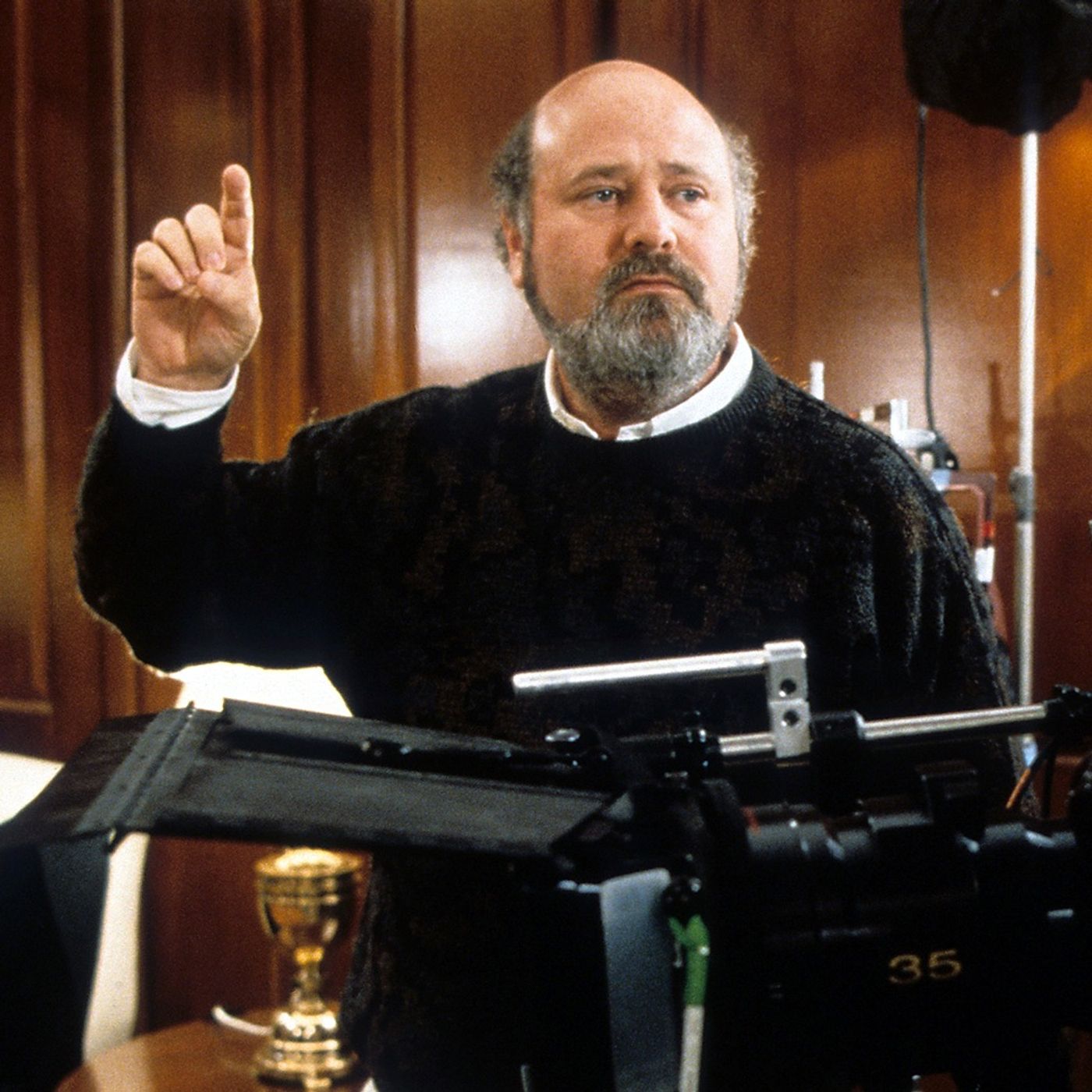
Nick Reiner, the son of the Hollywood director Rob Reiner and Michelle Singer Reiner, has been arrested on suspicion of murdering his parents, the police said on Monday.
The couple were found dead in their Los Angeles home on Sunday afternoon. Two people briefed on the case said they'd been stabbed to death.
Rob Reiner directed a series of iconic and beloved films, including This Is Spinal Tap, The Princess Bride, and When Harry Met Sally.
Michelle Singer Reiner was a photographer and later a producer.
Their 32-year-old son, Nick, had spoken out over the years about his struggles with drug abuse and bouts of homelessness. The police said he's being held without bail.
Today's episode was produced by Caitlin O'Keefe, Ricky Nowetsky, and Stella Tan.
It was edited by Lisa Chow, fact-checked by Susan Lee, contains music by Marion Lozano, Pat McCusker, Dan Powell, and Rowan Nemisto, and was engineered by Alyssa Moxley.
Special thanks to Larissa Anderson.
That's it for the Daily. I'm Natalie Kitrowev.
See you tomorrow.
This podcast is supported by Planned Parenthood Federation of America. As a listener of the Daily, we know you want the facts.
Fact one, Some lawmakers are making it harder for Americans to access health care.
Two, a new policy threatens threatens to prevent patients from using Medicaid insurance for life-saving care at Planned Parenthood health centers.
This could mean cancers going undetected, STIs left untreated, and patients not receiving care they need. 3.
Planned Parenthood will not back down, but they need your help.
Donate at plannedparenthood.org/slash defend.