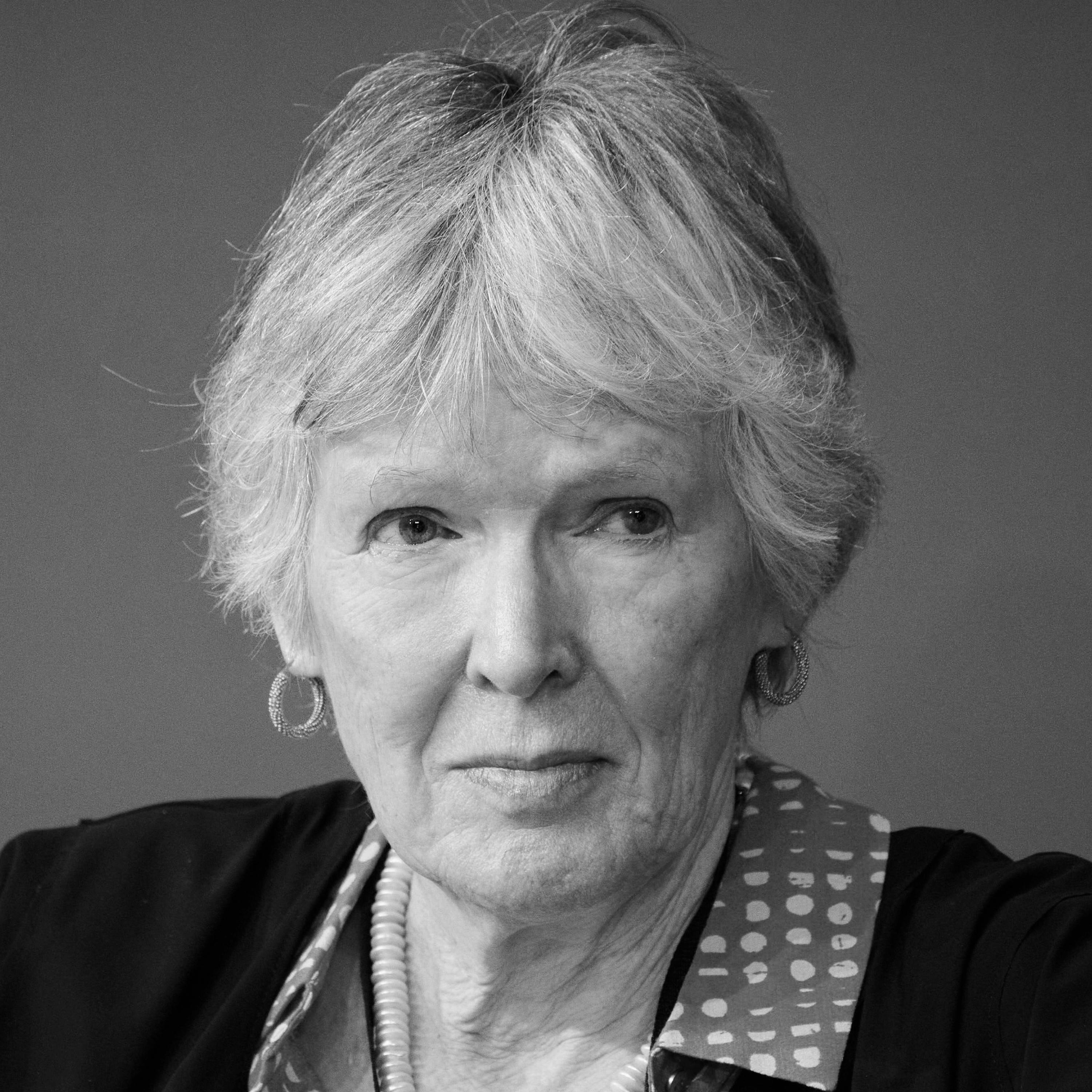
Architect of Obamacare: Health Care Is Still a Mess

46m
On this week’s episode of “The David Frum Show,” The Atlantic’s David Frum opens with his thoughts on the shocking alleged corruption that has informed President Donald Trump’s actions towards Ukraine and the scandal of the recently proposed “peace plan” by the United States. He goes on to discuss how the many scandals of the Trump presidency make it hard it to focus on just one, as it is quickly replaced in the news cycle by another.

Then David is joined by Jonathan Gruber, an economics professor of Economics and the chairman of the economics department at MIT. Gruber discusses the backlash he faced as a key architect of the Affordable Care Act and why the American health-care system still feels so broken. David and Gruber also talk about the war on both vaccines and science that is being waged by the conservative right.

Finally, David closes the episode with a discussion on They Thought They Were Free, by Milton Mayer, and what we can learn about teaching soldiers to commit crimes.

Get more from your favorite Atlantic voices when you subscribe. You’ll enjoy unlimited access to Pulitzer-winning journalism, from clear-eyed analysis and insight on breaking news to fascinating explorations of our world. Atlantic subscribers also get access to exclusive subscriber audio in Apple Podcasts. Subscribe today at TheAtlantic.com/Listener.
Learn more about your ad choices. Visit megaphone.fm/adchoices

Press play and read along

Runtime: 46m

Transcript

When was the last time you indulged your desires, felt true Range Rover refinement? The last time you felt total serenity, total confidence, no matter the terrain? Limitless, effortless, peerless.

How far can Range Rover take you? Range Rover, designed for distinction. With Vimmost, a tackle in one hand, and ordering a ride in the other, means you're stacking cash back.

With Venmo Stash, get up to 5% cash back when you pick a bundle of your favorite brands. Earn more cash when you do more with stash.
Venmo Stash Terms includes the clock. Max $100 cash back per month.

C terms at vimmo.me slash stash terms

hello and welcome to the david from show i'm david fromm a staff writer at the atlantic my guest today will be jonathan gruber professor of healthcare policy at the massachusetts institute of technology and one of the principal architects of the affordable care act obamacare in the final segment of the show i will discuss the book they thought they were Free by Milton Mayer, a 1955 study of a small German community where people had to come to terms with the terrible things that were done by them, by their neighbors, and by their government during the Third Reich.

It's a book full of historical interest, but also with implications for any society trying to come to terms with its past to build a better and more honorable future. Before the dialogue.

and before the book discussion of the week, some preliminary thoughts.

In November, the United States adopted as its own a diplomatic document that imposed Russian terms on the independent country of Ukraine.

The document imposed terms of territorial surrender, compromise of Ukrainian sovereignty, limits on the Ukrainian armed forces, all of them Russian wish lists in return for nothing more from Russia than a temporary cessation of violence against Ukraine.

It was a shocking surrender document.

And the question that bothered a lot of people is, as bad as the Trump administration has been on Ukraine, as far as they have gone toward the Russian point of view, nothing like this, this is beyond anything ever seen before.

How could it have happened? Well, on November 28th, the Wall Street Journal produced a report that explained how it could have happened.

It turns out that at the same time as the Trump team was negotiating with the Russians over Ukrainian surrender, connected insiders were working with their Russian counterparts on a series of business deals to enrich themselves after the end of conflict with deals on energy, rare earth,

and highly favorable terms to the Americans. The Russians, it looks very much like, were simply paying Trump insiders to get gain clout to put pressure on Ukraine to surrender to Russian terms.

Now, this story, highly detailed, would have been one of the most shocking stories of the Trump administration so far if it hadn't been juxtaposed by another terrible story that very same day, where President Trump announced his intention to pardon the former president of Honduras, Juan Orlando Hernandez, convicted as one of the biggest cocaine dealers in American history, sending tons of cocaine into the United States, arranging for bribes and murders, and convicted and sentenced to 45 years in an American prison.

And Trump announced his intention to pardon this tremendously sinister drug figure at the same time as he's sending little boats to the bottom of the Caribbean with their small-scale drug dealers still aboard, some of them apparently or reportedly killed in cold blood.

How does this make sense? Well, Hernandez is, of course, wired and connected to all kinds of people. He had influential influential friends.

And it's just one of a pattern of strange commutations and pardons from the Trump administration. Here's another.

President Trump commuted the sentence of David Gentile, a private equity guy, convicted of defrauding hundreds of investors of more than a billion dollars.

The cavalcade, the onslaught of corruption stories just never stops. It seems like there's one a week.
Some of them are so familiar that we've stopped even mentioning them. Like in October, the Senate

voted down, the Republican majority in the Senate voted down a Democratic proposal not to finance the Qatari jet. Remember that?

That the Pentagon accepted on Trump's behalf and that the taxpayer is now spending hundreds of millions of dollars to outfit for Trump and that, according to the terms of the gift, are to be taken with Donald Trump to his so-called presidential library, but for his use after he ceases to be president.

That is no longer a big story, but it still continues. We continue to remark the novelty news of the glitzy, crazy White House ballroom, now enlarged to hold 1,350 people.

There are all kinds of problems with the asbestos and the wiring and the windows.

And it's financed by hundreds of millions, hundreds of millions of dollars in gifts from corporations with interest before the Trump administration. It's just one thing after another like this.

You know, the first Trump administration was beset by many, many scandals. But there was still, despite the scandals or along with the scandals, an administration there.

There was some sense of policy, some things they wanted to do. This administration seems like a series of scandals masquerading as an administration.

Even the seeming policies, like the tariff policy, turn out to be mechanisms and vehicles for scandal politics. The value of a tariff is not that it's going to do anything for American industry.

Industrial employment, manufacturing employment is trending down under Donald Trump.

But it is a thing that you can do to an industry, you can afflict upon an industry that some industries will pay you to have relief from.

And it's precisely this ability to buy and sell relief from tariffs that makes the tariff policy so extraordinarily interesting to the Trump administration.

When this all ends, and I am confident it will end and that the end is coming and maybe pretty soon, we're going to need more than to treat this episode as a chapter in American history.

The bygones will be bygones approach taken by the Biden administration seems not adequate. to the needs of the moment.

It seems not adequate to what has happened and been done in this first year of Trump. There's going to need to be a serious investigation to get to the bottom of things.

There's going to need to be serious publicity. There's going to need to be accountability and consequences to the limits of the law.

And where the law does not provide for consequences, where Trump and the people around him have invented some new way of being corrupt that no one ever wrote a law to prohibit, is no one ever imagined a president would do such a terrible thing, well, then we're going to need some new laws, some serious reforms, things that were generally not done during the Biden years, but that need to be done now.

It's not just a chapter of history. It's a warning to the future.
It's a challenge to Americans to do better, to make sure that such things never happen again.

And while we can't restore the lives of those who were wrongfully killed by the Trump administration in the Caribbean Sea, we can ensure that the kind of disregard for law that enables those killings, that that at least comes to an end.

That's at least the hope. That's at least the conviction.
Maybe that's a promise we need to make to ourselves. And now, my dialogue with Jonathan Gruper.

But first, a quick break.

You're cut from a different cloth.

And with Bank of America Private Bank, you have an entire team tailored to your needs with wealth and business strategies built for the biggest ambitions, like yours.

Whatever your passion, unlock more powerful possibilities at privatebank.bankofamerica.com. What would you like the power to do? Bank of America, official bank of the FIFA World Cup 2026.

Bank of America Private Bank is a division of Bank of America NA member FDIC and a wholly owned subsidiary of Bank of America Corporation.

We just made the lightest insulated Lululemon jacket ever. The new featherweight jacket is here, and it's ready to keep you super warm every day this winter.

Throw it on with your best outfit when the temperature drops and pack it into its tiny bag when you don't need it. Shop the new featherweight collection now at lululemon.com.

Unless you follow health debates closely, you may not immediately recollect the name of my guest today.

But a dozen years ago, Jonathan Gruber stood nearly at the top of the roster of demon figures on the American far right.

If you watch Glenn Beck's program on Fox News or listen to Rush Limbaugh on the radio, Jonathan Gruber ranked with Hitler and Stalin among history's greatest monsters.

I don't mean that as a figure of speech either. On a November 2013 program, Limbaugh literally accused Gruber of believing in eugenics of the kind that directly led to the Holocaust.

Gruber's offense was his leading role in the design of the Affordable Care Act, nicknamed Obamacare.

A professor at the Massachusetts Institute of Technology, Gruber is a career scholar of the American healthcare system. The fight over the Affordable Care Act has not ended.

In fact, the longest shutdown in government history was just fought over the issue of subsidies to the Affordable Care Act program.

But while the fight has continued, the issues behind the program has never really been resolved.

The Trump administration, meanwhile, is advancing a health agenda of its own that rejects vaccines and even such basic science as the germ theory of disease.

So I thought it might be a good moment to reconnect with Jonathan Gruber about the future of the American health care system, the opportunities, the hopes, and the fears.

Professor Gruber, thanks for joining the program today. My pleasure.
Good to be here, David. So let's do a little tour of the horizon of how things stand in American healthcare.

The American healthcare system is unbelievably expensive.

According to the Kaiser Family Foundation, healthcare spending of all kinds, public and private, will add up soon to about $5 trillion annually.

To put that in context, that's a little less than the GDP of Germany, the world's third

economy, and larger than the GDP of Japan, the world's fourth largest economy. For this $5 trillion, the outcomes are not great.

The United States is one of the very few highly developed countries with an average life expectancy below 80, slightly higher than 80 for women, but well below 80 for men.

And child mortality numbers are not so great. Meanwhile, it's still true that about 8% of the population is uninsured.
So how should we understand all of this? Where are we going?

How satisfied or dissatisfied should Americans be with what they get for their money? Well, David, that's a big question.

So let me try to break it down in a few parts. Let's start with what I think is the most important, which is sort of value for a dollar.
It's useful to put this in terms of GDP.

The dollars can be confusing. So we spent about 18% of GDP on healthcare.

In 1950, we spent 4% of GDP on healthcare. Guess what? Healthcare sucked in 1950.
Okay.

Infants were four times as likely to die before the first birthday. Those who had a heart attack were four times as likely to die in the first year afterwards.

Healthcare has gotten a lot better and a lot more expensive. It's important to put in context the facts you have about life expectancy and things.

David, for people like you and I, the life expectancy in the U.S. is as good as anywhere else in the world.
The difference in the U.S. to the rest of the world is our disparities.

A white baby born in the U.S. today has the same infant mortality rate as one born in Scandinavia.
A black baby born in the U.S. today has a worse infant mortality rate than one born in Barbados.

So the issue in the U.S. is there are the haves and the have-nots.
The haves get comparable health care to the rest of of the world at a much higher price.

The have-nots get worse health care at a much higher price. So there's really two fundamental challenges in U.S.
healthcare. There's disparities and there's costs.

Are the disparities healthcare problems or are they connected to things that are much bigger than the healthcare system?

I mean, I sometimes wonder if the healthcare wishing well gave you a magic wish and you could have any healthcare innovation at all, or you could simply say 100%

rate of wearing helmets among motorcycle drivers, which would make the bigger impact.

I think you're absolutely right, David. It's embarrassing as a health economist or a little humbling to think that really healthcare is third in our list of things that determine our health.

First and second are our genes and our behaviors. Healthcare is third.
That doesn't mean healthcare can't play a huge role.

That, for example, the estimates are that the expansions of Medicaid under the Affordable Care Act save tens of thousands of lives. Healthcare can play a big role.
It's just not the biggest role.

So those disparities that we talked about, they're more driven by socioeconomic conditions and by other differences, but healthcare disparities play a large role in adding to that gap.

And

when you say a healthcare disparity, what does that mean practically?

If you're poor and black, if you're non-poor and non-black, what do you encounter that's different? That's a great question.

Here's how to think about it, which is, first of all, you're much more likely to be uninsured. What does being uninsured mean?

It doesn't mean that if you get hit by the car, you won't go to the hospital.

America has a law called the MTALA law, which says every hospital emergency room has to treat you regardless of your health insurance coverage. What it does mean is you won't get preventive care.

You won't get maintenance for your chronic diseases. You won't get the things that, besides accidents, are crucial determinants of health.
And that is the major disparity.

There's other disparities in terms of access to healthcare providers, which are also important.

But the fundamental disparity is that people who are uninsured don't get the care they need to maintain their health. Americans don't like comparing their way of doing things to anybody else.

And when they do compare,

the comparison they typically will most often make is to my native Canada, which partly because it's next door and speaks English, and partly because it's a system as different from the United States just about as there is in the developed world.

So you get a very extreme compare and contrast, very different from what you would do if you compared it to, say, Switzerland or Germany. But how do other countries approach these things?

What do they do right that Americans could learn from if Americans were ever minded to learn from anybody?

I think fundamentally they do two different things. And this comes to really debate over single payer.
Let's step back and talk about Bernie and single payer. Okay, what is single payer healthcare?

It really is three different pieces. The first piece, the one we talk about the most and that's the least important, is having one single payer.
The second piece is universal coverage.

That's something other countries do right. Most countries in the world do right, and that's something we should do.

The third piece, which we don't talk about nearly enough, is regulating health care prices.

We're the only developed country in the world which lets the free market determine the prices we pay for health care. Healthcare is a broken market.

The free market should not be determining the prices. There should be government regulation.
to help determine the prices. Every other country in the world has learned that lesson.
We have not.

Well, it's not quite a free market because the whole structure of the market, you know, those little codes that we all get,

when we get a doctor's bill, you see that you've got this set of codes for each step of the process. Those are decreed by the Medicare system.
And since most of the...

doctoring that is done in this country is done for Medicare patients. Doctors don't maintain two separate ways of doing business, one for Medicare and one for everybody else.

The Medicare system drives it. And Medicare sets prices and not only sets prices, but sets ways of charging that create

the market that we create is an artifact of the way government regulates the market.

So, let's remind the listeners: Medicare is universal coverage for those over 65 in America. It's also the name of the universal coverage plan in Canada.
So, it can be a confusing term.

Medicare is a regulated program that applies to a large share of healthcare spending in the U.S., but it does not apply to the majority of healthcare spending in the U.S.

The codes you're referring to, those are medical codes not determined by Medicare. Those are ICD-9 codes and procedure codes that come from, that are, that are not regulated by Medicare.

Medicare does dictate what we pay for those on Medicare, and often it can drive what the private sector pays.

But the key thing is if you look at what we pay for drugs, what we pay for medical devices, what we pay doctors and hospitals outside the Medicare program, there is no regulatory mechanism that drives the vast majority of the spending in the U.S.

today.

So what do you make of the claim that you sometimes hear that one of the reasons that American healthcare costs so much more than healthcare in Switzerland or Germany or Norway is that everybody in the American healthcare system, except for the people at the very bottom, like the healthcare attendants at the very bottom, but everyone else from the executives, doctors, even the nurses, are all paid much more than their counterparts in other countries.

That's not quite right.

So let's work from the bottom up. The very bottom, I recently wrote a book, David, that compares long-term care in the U.S.
to other countries.

What you see at the very bottom, the healthcare aides, they're paid about half as well as they are in other countries. countries.
Our nurses are paid about as well as they are in other countries.

Our primary care doctors are paid about as well as they are in other countries.

It's our specialists, our executives, and in particular, the vast array of healthcare middlemen that we have that are not only paid more, but don't exist in other countries.

That's the big driver of the costs. And when you say a middleman, what does that middleman do? Great.
So let's talk about how we price drugs in the U.S. versus other countries.

In other countries, there's a a regulatory body which says the drug shall cost this much. So

everybody buys the drug at that price. In the U.S., there's a negotiation between every single payer and every single drug company.
That negotiation is complicated.

So we've introduced a middleman called a pharmacy benefit manager, a PBM, that helps with that negotiation.

There's an ongoing debate to which we don't know the answer of whether PBMs lower or raise costs for consumers. We do know the PBMs themselves cost,

earn billions and billions of dollars that just wouldn't exist if we regulated the prices. We wouldn't have a need for this middleman.

Maybe what we're seeing here is the triumph of American lobbying, that America is, it's not that America is worse at healthcare than other countries.

It's just much, much better at lobbying than other countries.

I think what we're seeing here is the triumph of what we're seeing here is America not learning the lesson that was determined in 1963, the very first article in health economics by the Nobel Prize winning economist Kenneth Arrow, talked about how you could not have a more broken market than healthcare.

What I teach my students in introductory microeconomics, David, is if the market works, government should stay out. But when the market doesn't work, government needs to be in.

And the rest of the world's learned that lesson, we haven't. Now, the problem is, having done that, we've now set up a class of groups that lobby and have power, so it's hard to get rid of them.

And that is the fundamental challenge going forward as we think about controlling healthcare costs.

In the days before the big right of center argument about healthcare became that we don't need vaccines or that vaccines are bad,

in the before times, the main right of center argument about healthcare was that if you made the consumer feel costs more, the consumer would make better choices, and that would result in important economies to the system.

What do you think of that argument? Any merit to it? There is merit to it. Absolutely.
I think that there's a lot of evidence. Think about two ways you can make people feel costs.

One way is how much care they use. The other is where they go for that care.
Both do they go to the doctor more than they need to? And also, do they choose the cheapest doctors?

Along both those dimensions there is some evidence that putting consumer skin in the game matters but it is not a prime driver of costs so it is absolutely right that a proper system should have consumer skin in the game particularly for what we call low value care things like back surgeries things like knee replacements these are things which consumers need but which can be delivered it's not low value but things which can be delivered at equally good at lower cost options and where consumers often spend more than they have to.

So there is a room for consumer skin in the game.

But it's not, but where the right is wrong is it's not, where the right is incorrect, is it's not the primary driver of spending. Most spending is not places that are consumer price sensitive.

The journalist and

publisher Stephen Brill had a project some years ago where he tried to find out what did things cost in the United States? How much did a knee replacement cost at different hospitals?

And he published a big article, I believe in Time magazine, comparing and contrasting these costs.

And then he wanted to have some kind of long-term project, which I think he gave up just because it was too difficult to find out the answers of what things cost, where, why.

When you talk about a new replacement, how does the consumer know that the new replacement will cost so much at one hospital and a different price at another hospital?

This is why it is the consumer shopping is not the answer.

It's not, there's a role for consumers to get in the game, I agree, but it's not going to solve our problems because it's hard to shop when you don't know the prices.

Once again, in a regulated system, the prices would all be public and we'd know them. The problem is the price you pay, there's great work by Zach Cooper at Yale,

Marty Gaynor at Carnegie Mellon and others, showing that even within a market, even within Boston, the price of a knee replacement varies widely across hospitals in unknown ways.

And we need to address that before we're ever going to have a consistent role of consumer shopping as an important determinant of our healthcare system.

You said early on that our genes and our behaviors are more important than our healthcare or as important in determining what our outcomes are.

There's not a lot we can do about our genes once we're already born. But our behaviors are variable.

And at different moments, the United States has tried to bring home to consumers the cost of behaviors. It was successfully able to impose taxes on cigarettes, for example.

It's been less successful at imposing taxes on alcohol. There's been a complete breakdown in the attempt to control drugs, a very contentious issue, sugars.

And we control driving behaviors by a random system of tickets for speeding and sometimes not wearing seatbelts, sometimes not wearing motorcycle helmets. I think in many states,

I'm going to forget the figures on how many of the states, but a considerable number of the states' helmets are not required of motorcycle drivers.

So how do we bring those costs home to anybody in a way that makes the consumer the center of the story?

It's a great question. We can look to the success of smoking.
Remember, we've known smoking is bad for you since 1954. It was scientifically clear in 1954, but smoking rates were rising in the U.S.

until about the mid-1980s. So it took 30 years to even get reversal on that.
What caused it was just a concerted campaign that brought home the costs, not just to the smoker, but to society.

The cost of excess medical care, the cost of fires started by smokers, the cost of what

smokers are imposing on society. We need a campaign.
In particular, we have a crisis of overuse of alcohol in this country. We need a campaign campaign to recognize the enormous cost imposed.

But let's be clear, David, this is hard. With smoking, it's kind of easy, which is every cigarette's bad for you.

Drinking is harder because the first few drinks aren't bad for you. We used to think they're good for you.
Now we're, no, they're not. But they certainly aren't bad for you.

It's only when you drink a lot or get behind the wheel it's bad for you. If you take sugars, Sugars aren't bad for you except in excess.

So it becomes a much more challenging public health issue, which we're going to need to figure out how to develop a consensus on how we address those external costs.

When you talk about a debate, let's talk about how we do those things because you are at the center of a debate. We've been having a fairly clinical conversation to this point.

But for your role, you had a role in the design of the Massachusetts program that was brought and signed into law by Governor Mitt Romney in the early 2000s.

You had, again, a role in the Affordable Care Act debate. And you became, I can't imagine that you enjoyed the kind of publicity that you got for your roles in those debates.

Look, it was quite awful how

mean people were, both in emails, death threats, et cetera, to me over something I did to try to make people's lives better.

I continue to think that most people who do that are really misinformed, that they don't understand the Affordable Care Act. They don't understand the benefits delivers for people like themselves.

And I think my role is to have a thick skin and continue to try to inform people as well as I can about how the law works.

It is absolutely true that once people understand this law, they like it better. You know, it was paraphrased in the famous Jimmy Kim Alasier versus Obamacare video.

But in general, once people understand this law, they like it better. And that's been seen what's happened to public approval, which has gone from underwater to 65% over time.

Well, just to your point about people, whether people are or not misinformed, there's a difference between being uninformed and being misinformed.

Uninformed is the natural state of humanity.

We all start out uninformed about everything, and we all remain to the end of our lives uninformed about most things because there's a lot of knowledge and we have a finite number of minutes in our lives.

So there's no disgrace to being uninformed.

It just meant that you didn't decide for yourself that such and such a topic was important enough for you, to you personally, to acquire the pay the expense and time and trouble of acquiring knowledge.

No disgrace to being uninformed. But misinformed is a different thing.
Somebody has to set out to misinform you.

And that's a much more ambitious and costly and

determined is the people who do the misinformed, the misinforming are not uninformed. They may often be the best informed.

One of the things I think that where I sort of touched, and we've never met before, but I remember taking part in these debates in 2010, I was working at a right-of-center DC think tank, and I

tried to argue that

the Democrats were not going to repeat the experience of 1994, that this time they had the votes, votes, they would pass something in 2010, and Republicans should negotiate, which was correct.

I was sacked from my job, which I don't exactly object to at this point because they sort of had to do it. But

the effort of making sure that people did not understand,

that was a top-down program. And we're today seeing another top-down program to make people not understand that they need to vaccinate their kids, that infectious diseases are caused by germs.

We have a top-down misinformation problem.

I didn't know that story, David. That's very interesting.
And thank you for taking a courageous position there on that. Look,

I agree we need to distinguish lack of information or misinformation.

You're right. As our president famously said, healthcare is a hard topic.
I don't expect most people to understand it. What's frustrating is when people think they do

when they haven't thought about it. And it's, of course, what's even worse is the effort to misinform.
I think, David, you've been in politics longer than I have.

I think the game-changing feature of the ACA politically was historically before that, there would be a fight till the bill passed. The bill would pass and move on to the next fight.

I think what happened is the fight just never stopped once the bill passed. In fact, shortly after the bill passed, a huge share of Americans didn't know it had passed.

They thought it was still being debated. And I think that was the game changer, was just the lack of any willingness to budge on a law that had actually passed Democratically.

Remember, David, a law that was originated with a Republican governor in Massachusetts, and not many people know this, was literally written by a bipartisan group of three Democrats and three Republicans on the Senate Finance Committee.

Despite this,

the fight got even more heated, and that sort of promoted this misinformation. Yeah.
I want to talk about especially the misinformation that surrounds vaccines.

Now, some of this is just

truly crazy people. Some of this is some very bad actors who are bad acting for reasons that are kind of hard to decode.

But I think one of the reasons that, for less bad actors, that the anti-vaccine argument appeals is there's a human desire to believe that healthcare is something we deserve, that somehow fate rewards effort.

And that if you eat right,

if you exercise, that you will be protected from any kind of disease, even the infectious disease, even the genetic disease, and you will somehow deserve your health.

And if you have bad health, you must have done something to deserve that. And we're all in this individually, that each of us does our deserving one by one.

So the idea that I can make all the right choices, but still be felled by a disease that was spread by a microscopic agent through no one's intention, they find that a very sort of upsetting idea.

You know, it's a great point, David. It's broader than healthcare, of course.

If you poll people in countries around the world and ask them what is the primary determinant of success, hard work or luck, the U.S. leads the world in saying it's hard work versus luck.
The U.S.

also has the least progressive system of taxation and taxation and spending in the world.

Basically, we're a system that believes that we're a country that believes in this sort of Calvinist doctrine of kind of hard work will be rewarded and that hard work determines success.

You can look no farther than our president who got where he got by pure luck, yet is rewarded as a great businessman. Essentially, that is true as well in healthcare.

People believe that your health is determined by your hard work until they get sick.

This is what's fascinating, David, is I remember people who wrote editorials and reached out to me who said I hated the Affordable Care Act until so-and-so got cancer, until someone got sick, and then I realized how important it is in my life.

And that, David, to me is

the key way to swinging this debate, is getting people to relate to the role of healthcare disasters in their lives and people's lives. My wife's a breast cancer survivor.

She would have been uninsurable without the Affordable Care Act. Millions of Americans are in the situation.
Tens of millions more know them.

The question is, how do we fight the misinformation and get people to realize that luck is a key determinant of our healthcare outcomes? Well, this is a topic that especially makes my blood boil.

The remark of yours that got Rush Limbaugh to call you a Nazi was: you referred to people who were born with good health as winners of a genetic lottery. And this is a topic that haunts me.

My mother died young.

children. One of my children died young.
I'm 65. I've never spent a night in the hospital.
Did I deserve deserve that? Did I do something good? Am I better than my mother?

Am I better than my daughter? I'm worse in just about every single way. I've never spent a night in the hospital.
Their lives were cut short.

It is a lottery. And there's something kind of,

you had this with your wife, something kind of infuriating about people who won't credit their good luck for whatever health outcomes they have. And yes, of course you should wear a seatbelt.

But that's not everything. You know, David, I'm so sorry to hear about the tragedies you've had.
And many of us have.

And I think that if I look at all the messages I get, if I strip away the hate, the number one insight I got was people would say, why should I pay more for insurance for my fat neighbor?

That was sort of the summary. And it's a difficult issue.
If your neighbor is fat because they will not take accountability for the personal health, then they should bear some of the consequences.

But many people are fat for reasons beyond their control. And so this comes back to the skin in the game comment.

We should all have some skin in the game where we can, but most of health is determined by our genetics. And we have no skin in the game on that.

And let me just raise one other point, David, because this is something we're not paying enough attention to. We're talking about the vaccination.

We're not paying enough attention to the fact that we are killing research. into things that could address those genetic deficiencies.

We are at the birth of an unbelievable era of genetic medicine that can cure the uncurable, that can fix illnesses that come just because of our bad genes.

That research is being crushed by the cutback in financing the Trump administration is also doing.

Your fat neighbor may well attend your funeral if you have some genetic time bomb ticking away inside your body. Well put.
And it's just that kind of arrogance.

But you're right about the research. So let's talk about that.

I've tried, I don't know enough of the subject you've got to fix. How lasting and damaging? are the attacks of the past year on healthcare research.

Is this something that can be quickly reversed if science gains more clout in a future administration? Or are we here at a

fork in the road where we'll be paying for this for decades? Look, this is not as bad. Compare it to climate change.
You can ask a similar question.

It is absolutely true that if a Democratic administration, Democratic Congress come in in 2028 and they're aggressive on climate change, we could start to reverse some of the damage that's being done now, but it's going to take decades to reverse it.

It's similar with research. People do not realize, David, the lifeblood of economic growth that is publicly financed research.

I have a book called Jumpstarting America with Simon Johnson, a Nobel Prize-winning economist here at the Sloan School. And we highlight that in 1965, 2% of the entire U.S.

economy was government-funded science. Today, it's less than half a percent.
That government-funded science was what gave birth to every technology.

That microphone you're speaking to, the GPS on your phone, the drugs you take, the computers you use, all came out of basic science funding from the U.S. government.

When we cut that back, we don't just cut discovery, we cut economic growth. It is not a surprise that the U.S.

economic slowdown started shortly after we started reversing our investment in public science in the U.S. This is a crucial long-run problem.
And how lively is this debate over

research?

Is there an effective advocacy coalition?

Is it disparate and divided? It's disparate and divided. It's a bipartisan issue.

Spending on public science went up under both Democrats and Republicans and came down under both Democrats and Republicans.

This is something that's hard because the returns are long run and politicians don't take a long run view.

This is why I was fortunate to help work on the Chips and Science Act.

And a key piece, I worked with Senator Schumer's team on a key piece of the Chips and Science Act, which was setting up new technology hubs around our country.

It was something Simon and I suggested in our book, which is to get communities invested in the fact that science equals jobs.

The way we're going to get politicians focused on this is to recognize that by cutting science, they cut jobs.

So we need to invest in communities, not just Cambridge and Berkeley, which are doing fine, but communities all around the country that can benefit from public investments in science.

Isn't that letting the lobbyists win?

I mean, what I hear there is the way to get people to support research is to say, you can bring, we can have 435 labs in 435 congressional districts and you can have your piece of the pie when probably it does make sense to concentrate research in a few places.

That's absolutely right, David. So So here's, and once again, this is what we lay out in the book.
The answer lies between today, where 90% of technology jobs are created in six coastal cities,

and

where you say where every congressional district gets a lab. There's a lot of space between that.

David, there are 102 cities in America that are big, that are well educated, that have excellent universities, and have an average housing price of less than $200,000 a year.

Places like Rochester, New York, Houston, Salt Lake City, we are talking about taking advantage of the incredible depth of skill we have around our country. And in doing so, get people to understand

outside of the six coastal cities where people do understand this, get people to understand that science delivers growth.

And this moment that we're living through now, where we're debating whether germs cause diseases, do you see this as a passing mood?

or something that really reflects something deeper in the American character? I think it's both.

I do think you mentioned earlier, I think there is this notion, the American character of individual responsibilities drives everything. And I think that we need to address that.

I think the way we address that is by getting people. Look, I think people in this are fundamentally decent.

And I think if they can understand that the people with genetic illness did nothing wrong, that they had bad luck, and that they know people like that,

I'm hoping we can turn this around. Jonathan Grubert, thank you so much for your time today.
I'm really grateful we are all a little better informed, less misinformed, less uninformed. Thanks to you.

Did you know that at Chevron, you can fuel up on unbeatable mileage and savings? With Chevron rewards, you'll get 25 cents off per gallon on your next five visits.

All you have to do is download the Chevron app and join to start saving on fuel.

Then you can keep fueling up on other things like adventure, memories, vacations, daycations, quality time, and so many other possibilities.

Head to your nearest Chevron station to fuel up and get rewarded today. Terms apply.
See Chevron TexasCorewards.com for more details. Minute Made Zero Sugar tastes so amazing.

You've just got to say great taste and zero sugar. And Minute Made Zero Sugar sells itself.

Great.

Taste. Zero Sugar sells itself.

Thanks to Jonathan Gruber for joining me this week on the David Fromm Show. As I mentioned at the top of the program, my book this week is They Thought They Were Free by Milton Mayer.

They Thought They Were Free, published in 1955, is an account of a study of a mid-sized German city, the city of Marburg, about 100 kilometers north of Frankfurt, by an American journalist who interviewed a group of men, all men, who had been in one way or another survivors of the Nazi period.

Most of them had been some kind of supporter of the Nazi Party. One was some kind of critic.

And he interviewed these people to understand this question: how does a society climb back up and out of moral degradation?

Now, not to make any exaggerated comparisons, there is nothing in common between the Trump administration and Nazi Germany.

But there is a feeling, I think, that many people have that the United States has fallen into a kind of moral pit.

And I felt this feeling very intensely when I read the reports, and they remain only reports, that U.S.

armed forces may have killed in cold blood survivors of a wrecked ship accused of drug smuggling.

Now, even if the Trump administration's claims are true that these boats are indeed carrying drugs, and even if

the claims are true, the allegations are true that all the people on board the boats

are involved in the drug trafficking, even if all of that is true, the United States does not kill alleged drug traffickers in cold blood on the high seas, or at least it didn't used to.

If you buy the Trump's theory that these alleged drug smugglers are somehow combatants, if you buy that, then killing them in cold blood after their ship has been sunk is a war crime.

And if you don't buy the argument that these alleged drug traffickers are combatants, if you just think they are alleged criminals, then shooting them in cold blood is plain murder.

The United States does not kill suspected drug traffickers in cold blood without a trial. That's murder.
That's an extrajudicial killing.

And it's just one of many deeply disturbing things that have happened in this second Trump year.

And it caught me thinking about people who've lived through other things that were, of course, much more disturbing to

grapple with the question, how do you build back? How does it happen?

So Milton Mayer, who spoke very imperfect German, was an American journalist of some fame, spent half a year in the city of Marburg, 100 kilometers north of Frankfurt, which he fictionalized in the town.

He gave it a different name to protect the identities of the people he interviewed, who, again, he did not name, to get a sense of how they coped. Now,

Meyer was, Milton Meyer was a very perceptive in some ways and very strange and clueless in other ways, observer.

Himself, Jewish by origin, he rejected his Jewish background, became a Quaker, and he had very complicated feelings about his own Judaism.

He actually pretty outrageously in March of 1942 published an article in the Saturday Evening Post, where he was a contributor, and the Saturday Evening Post was then one of the most influential magazines in the United States.

In March 42, when the Germans have unleashed their murder campaign against the Jews of Poland, he published an article called The Case Against the Jew.

Now, he didn't mean it in any kind of Nazi way, but it's still a pretty disgusting piece of work and a pretty disgusting piece of timing and pretty clueless and detached from reality to do such a thing.

But it flowed from Mayer's sense of deep moral individualism, that everything that happens is a result of individual choice.

And while that may not be good history, that may not be a good description of what happened in Nazi Germany, it's sometimes a good way to think about the aftermath, how people build back.

As I say, this book is not exactly social science. Marburg was not a representative place.
It was much more pro-Nazi than most places in Germany. It had no industry.
It had very little working class.

It didn't suffer much from bombing during the war.

But in his interviews, Mayer surfaced some thoughts that I think are very relevant to us in the much less extreme situation of we hope soon to be post-Trump America.

And I want to quote one thing from one of his interviews that really stuck with me. He's interviewing a university professor who is describing how things just went wrong all around him.

And this professor said, life is a continuing process, a flow, not a succession of acts and events at all. It has flowed to a new level, carrying you with it without any effort on your part.

On this new level, you live more comfortably every day with new morals, new principles.

You have accepted things that you would not have accepted five years ago, a year ago, things that your father, even in Germany, could not have imagined. Suddenly it all comes down all at once.

You see what you are, what you have done, or more accurately, what you haven't done for all that was required of most of us. For that was all that was required of most of us, that we do nothing.

That's what the Trump program requires of most of us. Just do nothing.
Let us proceed. Let us do the things we do.
And we have to all think about how we climb back from that.

There's a haunting incident in They Thought They Were Free, which is the description after the fact, again, this book is based on interviews conducted in the early 1950s, of recollections of an incident that took place in 1938 during the German wave of

criminal assaults on shops and businesses owned by Jews, Kristallnacht as they're collectively known.

In the town, a group of Nazi thugs smashed the window of a Jewish candy shop, and parents brought their children to watch.

And some of the parents encouraged their children to help themselves to the candy that was now exposed to view because of the broken window.

And one of the onlookers said to the German parents, the German non-Jewish parents, you think you don't understand what you're doing.

You think you are hurting the Jewish owner, and you are, but you're also teaching your children to steal, and they will never forget that lesson.

When we teach American troops to kill in cold blood, we're not just harming the victims of the killing, although, of course, they are dead and wrongfully dead, at least reportedly wrongfully dead.

We are teaching American soldiers to commit crimes. And that's not a lesson that they will forget.
It will change them in some way. Maybe they will recoil against it.

Maybe they'll become more contemptuous of civilian authority. Maybe they will get used to it and habituate it.
Maybe they will be ready to carry out future crimes. But we're all going to be different.

And the only way to not be different is to resolve to find some way to come back to the people we were, to rediscover the old principles. This very interesting book.

by this very strange, not altogether reliable narrator offers some deep insights into how we recover.

There are millions of words written about the drama, billions of words, about the drama and terror and horror of the Second World War.

Not enough is thought about the aftermath, how we rebuilt a more peaceful and better world after the war, and especially how the people of democratic West Germany built a better country after the war.

But it's a subject we're thinking about, and it's a subject from which Americans may have some lessons to learn. That's it for this week's David From Show.
Thank you so much for joining me.

I hope you will like and subscribe to the program on whatever platform you use, whether you watch or whether you view. I hope you will consider subscribing to The Atlantic.

That's the best way to support the work of the program. You can sign up for Atlantic News Alerts when I post an article.
You can follow me on Instagram and Twitter if you're so minded.

And I continue to appreciate your viewership and listenership so very, very much. Thank you, and see you next week here on The David From Show.

This episode of The David Frum Show was produced by Nathaniel Frum and edited by Andrea Valdez. It was engineered by Dave Grime.
Our theme is by Andrew M. Edwards.

Claudine Abayad is the executive producer of Atlantic Audio, and Andrea Valdez is our managing editor. I'm David Fromm.
Thank you for listening.

Go Beyond the Lab in the new season of When Science Finds a Way, a podcast from Welcome, a global charitable foundation supporting science to solve urgent health challenges.

You'll join me, Alicia Wainwright, your host for bold conversations about the scientific breakthroughs changing lives around the globe.

In this season, each episode explores how science is not just in the lab, but alive in homes, supermarkets, hospitals, schools, and communities.

We'll hear from a Nigerian artist who's channeling his lived experience into creative ways to support mental health.

From Brazilian researchers who are using climate data to forecast and prevent disease outbreaks.

From European scientists developing new imaging technology that reveals disease in the body in unprecedented detail.

We'll even explore a groundbreaking new study that's reimagining reproductive healthcare.

These are all stories about how communities and researchers are working together to meet urgent urgent health challenges with empathy and impact.

Listen to When Science Finds a Way, a science podcast that tells the human story wherever you get your podcasts.