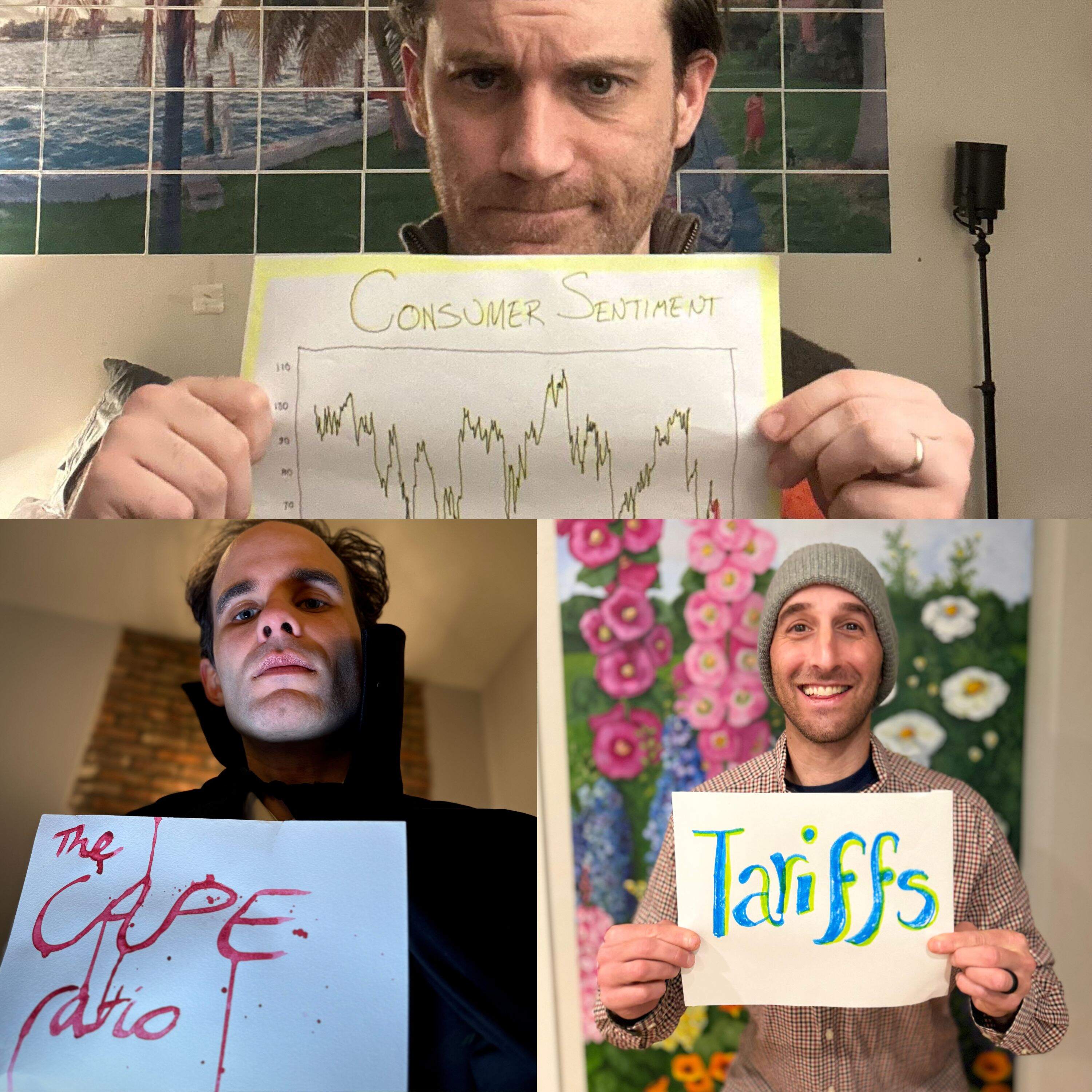
A school cellphone ban study, white collar jobs wither, and spooky candy prices
On today’s episode: How cell phone bans in schools affect grades, white collar workers get the axe, and AHHH! Halloween candy inflation!
Related episodes:
Are you afraid of inflation?
A finance fright fest
For sponsor-free episodes of The Indicator from Planet Money, subscribe to Planet Money+ via Apple Podcasts or at plus.npr.org. Fact-checking by Julia Ritchey and Corey Bridges. Music by Drop Electric. Find us: TikTok, Instagram, Facebook, Newsletter.
Learn more about sponsor message choices: podcastchoices.com/adchoices
NPR Privacy Policy
Press play and read along
Transcript
Speaker 1 NPR.
Speaker 1 This is the indicator for planet money. Happy Halloween, by the way.
Speaker 1 I'm your spooky host, Adrienne Ma, here with
Speaker 1 the witchy Wayland Wong.
Speaker 2 That's the witch music from Wizard of Oz. Oh, happy.
Speaker 1 And we are joined by the dreadful Darien Woods.
Speaker 3 Happy Halloween to you, too.
Speaker 1 We're here not to scare or to freak you out. Let's leave that to your, you know, everyday lives.
Speaker 1 We're here to bring you some indicators. Ah!
Speaker 1 Indicators of the week.
Speaker 2 Yes, it is that show where we take interesting economic headlines from the week and we bring them to you.
Speaker 3 It's the same indicators, but this time covered in spiders.
Speaker 2 I actually am looking at a big spider right now in my studio.
Speaker 2 I'm hoping it doesn't come any closer.
Speaker 1 On today's show, we have got the evidence comes in on cell phone bans in schools, white-collar workers getting the axe.
Speaker 2 And the spookiest indicator of all, higher Halloween chocolate prices this year.
Speaker 3 Terrifying.
Speaker 4
This message comes from LinkedIn ads. One of the hardest parts about B2B marketing is reaching the right audience.
That's why you need LinkedIn ads.
Speaker 4
You can target your buyers by job title, company, role, seniority, and skills. All the professionals you need to reach in one place.
Get a $250 credit on your next campaign so you can try it yourself.
Speaker 4
Just go to linkedin.com/slash npr pod. That's linkedin.com/slash nprpod.
Terms and conditions apply only on LinkedIn ads.
Speaker 5 This message comes from NPR sponsor CNN. Stream Anthony Bourdain Parts Unknown Prime Cuts Now exclusively on the CNN app.
Speaker 5 These rarely seen, never before streamed episodes dig deep into the Parts Unknown archives with personal insights from Anthony Bourdain and rare behind-the-scenes interviews about each season.
Speaker 5
Anthony Bourdain Parts Unknown Prime Cuts now streaming exclusively on the CNN app. Subscribe now at CNN.com slash all access, available in the U.S.
only.
Speaker 4 This message comes from Wealthfront. It's time your hard-earned money works harder for you.
Speaker 4 With WealthFront's cash account, you earn a competitive APY on your cash from program banks higher than the average savings rate with free, instant withdrawals to eligible accounts.
Speaker 4
Go to WealthFront.com. Cash account offered by Wealthfront Brokerage LLC.
Member FINRA SIPC, not a bank. Funds are swept to program banks where they earn the variable annual percentage yield.
Speaker 3 Indicators of the week, Adrian Ma, you sought us off.
Speaker 1 My indicator is about Amazon. And obligatory disclaimer here, Amazon is a financial supporter of NPR and pays to distribute some NPR content.
Speaker 1 So the number is 14,000, which is the number of corporate jobs Amazon says it'll soon be cutting. And one of the explicit reasons for trimming about 4% of its workforce is AI.
Speaker 3 So is the AI apocalypse here?
Speaker 1 Well, that's not quite the way that Amazon puts it.
Speaker 2 Oh, they didn't say apocalypse in their statement.
Speaker 1 So in a statement to Amazon employees, a senior vice president named Beth Galetti said, quote, the world is changing quickly.
Speaker 1 This generation of AI is the most transformative technology we've seen since the internet, and it's enabling companies to innovate much faster than ever before. Dot, dot, dot.
Speaker 1 We are convinced that we need to be organized more leanly with fewer layers and more ownership, unquote.
Speaker 2 If I were a laid-off worker or I was worried about losing my job, this would not do anything for me, I have to say.
Speaker 1 You mean being told that you're one of too many layers doesn't really,
Speaker 2
oh, AI is allowing us to innovate so much faster. It's like, great.
So I'm not going to have a job right before Thanksgiving. You know what I mean? Right.
Speaker 1 Well, you know, what Amazon is saying here. It actually reflects a wider pattern of what we're seeing from a lot of America's biggest companies.
Speaker 1 In recent weeks and months, we have seen companies like Salesforce, Accenture, and Goldman Sachs all announce thousands in layoffs and at the same time talking pretty optimistically about AI's potential to basically make up the difference.
Speaker 1 And a few weeks ago, the CEO of Walmart said it plans to freeze hiring for the next few years while it gets AI more integrated into its workforce.
Speaker 3 Okay, so these are generating headlines, but what do the numbers say? Like, are these... really making a difference in the wider workforce.
Speaker 1 There is a kind of interesting data point I saw from the St. Louis Fed.
Speaker 1 Some economists there did some research which suggests we might be in the early stages of AI-driven job displacement, which is especially hitting knowledge workers.
Speaker 1 At the same time, they say, you know, it's still early days and the picture still could change. Like, who knows, maybe in the long run, AI could actually create jobs.
Speaker 2 Or maybe companies will realize that they overinvested in AI and then they actually need the humans back.
Speaker 1 That's my indicator of the week. Who wants to go next?
Speaker 3
All right, so I'll go next. My indicator is 1.1 percentile.
That's the boost to grades that schools can get from banning cell phones.
Speaker 3 In other words, when school kids take the big spring test at the end of the school year, they can boost their placement nationally from, say, the 50th percentile to being a little over the 51st percentile on average.
Speaker 1 So taking these pocket-sized distraction machines away from kids during the day helps them do better better in school. I am shocked.
Speaker 1 Shocked, I say.
Speaker 3 So it's not the largest effect overall, but it's from a working paper where the authors say the real effect might be higher, but this is the amount that they calculate hand on heart is due to cell phone bans.
Speaker 3 The authors did a really diligent job looking at Florida's ban on cell phones in schools in 2023. Florida had the country's first statewide ban on cell phones in school.
Speaker 1 Wait, when you say they did a diligent job, what do you mean by that?
Speaker 3
Yeah, so in science, you want a control group. You'd ideally randomly ban cell phones from some schools, but not others, and see what the effect was.
Now, that didn't happen.
Speaker 3 So the researchers had to be creative about what the control group was.
Speaker 3 They got data from a private company that tracks cell phones pinging cell phone towers, and they compared schools where the ban had a large effect on cell phone usage to schools with a low effect on cell phone usage because the students there there weren't using phones much to begin with.
Speaker 3 These schools without much changes in cell phone use, this was kind of the control group and then the authors basically looked at the grades of how the schools that were reducing cell phone usage a lot compared to how they did previously.
Speaker 2 Hmm. And then they found kind of this moderately happy ending, right? Slightly better grades and that means that maybe these kids will be more productive in the future, less addicted to their phones.
Speaker 3
Yes, a happy ending, but I've left out an important point. Uh-oh.
Schools that saw dramatic reductions in cell phone use also had big rises in suspensions the year after the ban.
Speaker 2 Oh, because like they were punishing kids for trying to sneak their phones out?
Speaker 3 That is the implication. Yeah, the schools with higher cell phone reductions also saw higher suspensions.
Speaker 3 Though that seemed to settle back to normal after the first year, leaving only good trends, better attendance and higher grades.
Speaker 1 I thought the
Speaker 1 suspensions were because of kids going through like cell phone withdrawal and just being super irritable.
Speaker 3 That could be part of it too.
Speaker 2 Acting out.
Speaker 3 Well, speaking of children of the neighborhood getting up to no good, what's your indicator?
Speaker 2 My indicator is 10.8%.
Speaker 2 That is the average increase in the price of Halloween candy from last year to this year. That's
Speaker 1 a pretty good hike.
Speaker 2 Yes, it's way over the baseline inflation rate. And this number crunching comes critic of the Groundwork Collaborative and the Century Foundation, which are left-leaning think tanks.
Speaker 2 They analyze the prices of candy staples. So that's stuff like Tootsie Roll Pops are up 34% from last year.
Speaker 2 Candy made by Mars, so that's Eminem, Skittles, some other brands, that's up 12%.
Speaker 2 And the Century Foundation blames these higher prices on tariffs. It says that most products made with cocoa got hit with tariffs between 15 and 39%.
Speaker 2 And that's because the majority of cocoa beans come from West Africa and a lot of the processing is in Europe.
Speaker 1 You know how there's like usually a house in the neighborhood that gives out toothbrushes and pennies? Like maybe there'll be more of those this year.
Speaker 2
Not at my house, though. I'm holding the line.
I'll show you what I got this year. Look at this.
Look at this.
Speaker 2
Look, it's bigger than my head. Yeah, I got three of these at Costco.
It's a 5.6 pound variety pack, and it's got Snickers, Butterfingers, Kit Kats. It's like a pretty good assortment.
Speaker 2 And yeah, we got a ton of trick-or-treaters every year, so I got a little neurotic about having enough.
Speaker 3 Did you end up spending more?
Speaker 2 Okay, so I paid $23.99 for this bag, and I don't remember how much the Costco pack cost last year, but I found a YouTube video of someone who's kept tabs on this variety pack.
Speaker 2
And I love YouTube. And they said that this year there were 165 pieces of candy in here compared with 169 last year.
So even if the price stayed the same, this bag has less candy in it.
Speaker 2 And so that is shrinkflation. Shrinklation strikes again.
Speaker 1 Okay, but did you fact-check this YouTube video?
Speaker 2 You know what? I will open this bag and count the candy right now, live if you want.
Speaker 1 So I hope everybody has a happy and safe Halloween. And before we go, just to let listeners know, I'm going to be taking some time off from the show.
Speaker 1 So you might not hear me very much for the next few months, but stepping in to help out here will be friend of the show, Stephen Basaha of the Gulf States Newsroom.
Speaker 1 So look forward to hearing Stephen on the show. I'll see you before too long.
Speaker 3 This episode was produced by Angel Carreras with engineering by Kotakasuki Chernovin. It was fact-checked by Corey Bridges and Julia Ritchie.
Speaker 3 Keiken Cannon edits the show and the indicators are production of MPR.
Speaker 4 This message comes from Vanguard. Capturing value in the bond market is not easy.
Speaker 4 That's why Vanguard offers a suite of over 80 institutional quality bond funds, actively managed by a 200-person global team of sector specialists, analysts, and traders.
Speaker 4
They're designed for financial advisors looking to give their clients consistent results year in and year out. See the record at vanguard.com/slash audio.
That's vanguard.com/slash audio.
Speaker 4 All investing is subject to risk.
Speaker 1 Vanguard Marketing Corporation, distributor.
Speaker 5 This message comes from Greenlight. Ready to start talking to your kids about financial literacy?
Speaker 5 Meet Greenlight, the debit card and money app that teaches kids and teens how to earn, save, spend wisely, and invest. Start your risk-free trial at greenlight.com/slash npr.
Speaker 5 This message comes from Ameriprise Financial, proud sponsor of public media.
Speaker 5
For over 130 years, clients have relied on the strength and stability of Ameriprise to help them feel more financially confident. Learn more at AmeriPrize.com/slash advice.
Member FINRA and SIPC.