Pay transparency. The WhatsApp and Instagram decision. Our beef with screwworms.
On today’s episode: the effects of pay transparency, Meta’s big win, and freaky flies and beef.
Related episodes:
Are we entering a new dawn for antitrust enforcement?
Why beef prices are so high
For sponsor-free episodes of The Indicator from Planet Money, subscribe to Planet Money+ via Apple Podcasts or at plus.npr.org. Fact-checking by Sierra Juarez. Music by Drop Electric. Find us: TikTok, Instagram, Facebook, Newsletter.
Learn more about sponsor message choices: podcastchoices.com/adchoices
NPR Privacy Policy
Press play and read along
Transcript
Speaker 1 NPR
Speaker 2 This is the indicator from Planet Money. I'm Darian Woods.
Speaker 3 I'm Waylon Wong.
Speaker 2 Did you hear that crash landing, Waylon? Visiting from a galaxy far, far away, the fantastical Nick Fountain.
Speaker 1 Ah, here I am.
Speaker 3 Do you come in peace, Nick?
Speaker 1 Oh, absolutely. I'm here for
Speaker 1 indicators of
Speaker 3 on today's show. We have.
Speaker 2 The results are in on pay transparency.
Speaker 3 We have people being paid to use social media less.
Speaker 1 And we have a man-eater. What's a flesh eater?
Speaker 1 A surprising reason that beef is more expensive these days.
Speaker 2 All the topics too, sure, after the break.
Speaker 4 This message comes from NPR sponsor CNN. Stream Anthony Bourdain Parts Unknown Prime Cuts Now exclusively on the CNN app.
Speaker 4 These rarely seen, never before streamed episodes dig deep into the Parts Unknown archives with personal insights from Anthony Bourdain and rare behind-the-scenes interviews about each season.
Speaker 4 Anthony Bourdain Parts Unknown Prime Cuts now streaming exclusively on the CNN app. Subscribe now at CNN.com slash all access, available in the US only.
Speaker 4 This message comes from AppleCard. AppleCard members can earn unlimited daily cash back on everyday purchases wherever they shop.
Speaker 4 This means you could be earning daily cash on just about anything, like a slice of pizza or a latte from the corner coffee shop.
Speaker 4 Apply for Apple Card in the wallet app to see your credit limit offer in minutes.
Speaker 4 Subject to credit approval, AppleCard issued by Goldman Sachs Bank USA, Salt Lake City Branch, terms and more at applecard.com.
Speaker 3 It's Indicators of the Week. Darian, you're up first.
Speaker 2 My indicator is 2.5%.
Speaker 2 That's the average amount wages have changed following pay transparency laws. That's according to a new economics working paper.
Speaker 1 Oh, so this is how recently employers have had to, because of various laws, post salary ranges on their job postings. Is that what's going on here?
Speaker 2 In certain states, yes.
Speaker 3 So are we talking 2.5% up or down?
Speaker 1 I'm going to go with up. Transparency increases wages.
Speaker 2 I'm going to keep you in suspense for a little bit because a bit of background is that some economists have been a little wary of pay transparency laws.
Speaker 2 To them, it's not obvious that it necessarily increases wages.
Speaker 1 Huh, why?
Speaker 2 So, on one hand, if an employer is paying less than the going rate for, I don't know, accountants, then this law might pressure them into raising wages. So, that would be good for workers.
Speaker 2 But pay transparency could also mean employers can tacitly collude with each other. They can see that the accounting firm down the block is keeping wages at, say, $70,000.
Speaker 2 They think if we can all just keep our wages at $70,000, maybe we can avoid competition for workers that would eat into our profits.
Speaker 2 Now, obviously, that can't last forever, but for at least a short time, it might mean that wages don't grow by as much.
Speaker 3 So, this is related to that dreaded question you sometimes get at job interviews where they say, How much did you earn at your last job, right?
Speaker 3 Because if the potential employer knows I didn't earn that much in my last job, then I don't really have any leverage.
Speaker 2 Yeah. So with pay transparency, that new boss is going to have more of a clue about how much you have previously paid.
Speaker 2 So all of this is to say the economy is complex and we don't always know the effects of a policy ahead of time. Like which of all the effects is going to dominate?
Speaker 1 All right, but you have new research. What does it say?
Speaker 2 Yeah, so the authors looked at states like Colorado that introduced pay transparency and they found that these types of laws increase wages 2.5% on average.
Speaker 1 Yay!
Speaker 3 But it's not totally settled, right? This is probably going to be one study out of many studies.
Speaker 2 Yeah, this is the first rigorous analysis we've had on how these laws have worked for pay. Now, remember, this is a working paper, not yet in a peer-reviewed journal.
Speaker 2 So it'll be interesting to see what further research shows. Love it.
Speaker 1 All right, Whaylan, what do you got for us?
Speaker 3
Well, speaking of getting paid, my indicator is $4 an hour. This is what some participants in a study were paid to use Facebook and Instagram less.
And the study, yeah, yeah.
Speaker 3 And this study actually helped persuade a federal judge to side with the tech company Meta in a major antitrust lawsuit. Meta prevailed this week against the Federal Trade Commission.
Speaker 1 First of all, that's a terrible wage, but I think I would take it to use Instagram less. Remind us what this case was all about.
Speaker 3 Yes, well, just, that wasn't like the sole income for these people.
Speaker 1 It was just a token amount they were paid in the study, which I'll get into.
Speaker 3 But
Speaker 3 this is a big antitrust case. It dates back to late 2020.
Speaker 3 The company was still known as Facebook then, and the FTC accused Facebook of having an illegal monopoly over what it called personal social networking services.
Speaker 3 The government said Facebook maintained this market control by acquiring rivals like Instagram and WhatsApp.
Speaker 2 So the government was saying that people don't really have other options for social media besides these apps that are all owned by Facebook or Meta.
Speaker 3
That's right. And the judge was pretty openly skeptical of the FTC's arguments.
So ultimately, he sided with Meta. And this brings us back to my indicator of $4 an hour.
Speaker 3 One of Meta's witnesses in the case is an economist named John List from the University of Chicago.
Speaker 1
I don't know John List, super famous economist. He's been on both of our shows.
He's worked for rideshare companies and Walmart as an economist.
Speaker 3
Yes. John List ran an experiment.
He got 6,000 people to join this study, and they installed software on their phones that tracked how much time they spend on apps.
Speaker 3 Some of those people were paid $4 an hour to use Facebook and Instagram less. And the result was that people who got paid did spend a lot less time on Facebook and Instagram.
Speaker 3 They ended up switching their usage to other apps like YouTube or TikTok. And Meta used this study in court to show that it does, in fact, face competition.
Speaker 3 And I think it's pretty neat that an economic field study got the spotlight in a big antitrust case.
Speaker 1 This is a huge deal, right? This was the highest profile antitrust case going through the courts right now.
Speaker 3 Yeah, it was one that people were really watching and for, you know, five years, almost five years. So finally got a resolution.
Speaker 2 Thanks for that, Wayland. Nick, what's your indicator?
Speaker 1 Yeah, my indicator is 16.6%.
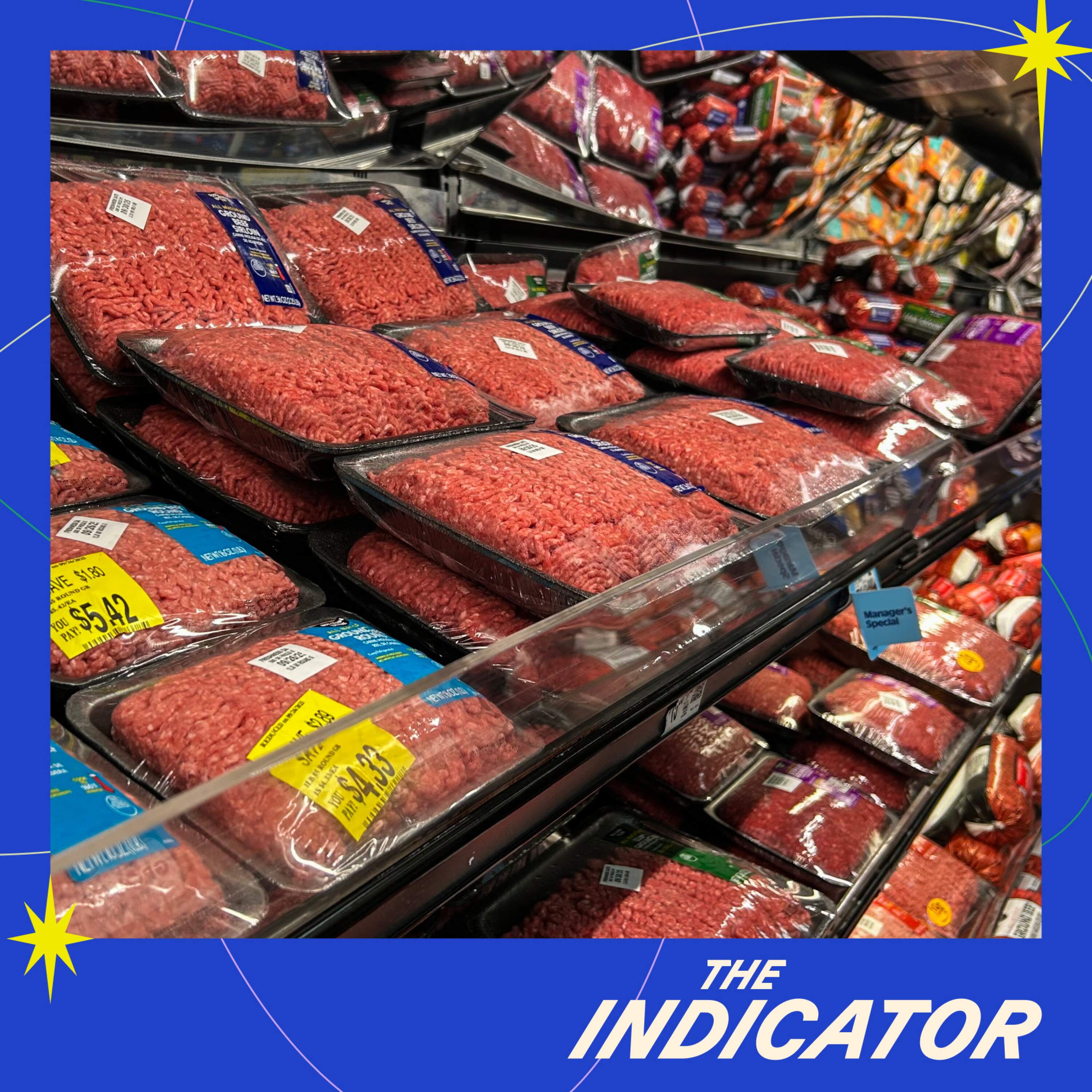
Speaker 1 That's the percentage increase in the price of steak over the last year, according to the Bureau of Labor Statistics.
Speaker 3 Beef is so zeitgeisty right now.
Speaker 1 Yeah, and there's a lot of causes for the increase in beef prices, but the one I'm going to focus on today has to do with a secret war that we've been fighting with an insect, a fly known as man-eater.
Speaker 3 Really? That's the name?
Speaker 1
Yes, it's the Latin name translated to English. Some backstory here.
In the U.S., there used to be this terrible scourge on cows. It's called the screw worm.
Speaker 1 It's a fly that deposits its larvae onto the wounded flesh of cows and basically destroys them. It can kill them.
Speaker 1 This was terrible for the beef industry, as you can imagine, but some scientists figured out that if you bred the flies and sterilize the males, they could eradicate screw worm.
Speaker 1 Because females only reproduce once, so when they got with these sterilized flies and things didn't work out, that was sort of the end of the family name, so to speak.
Speaker 3 Things didn't work out.
Speaker 1 Exactly.
Speaker 1 And in this amazing feat of international coordination, we started literally dropping these flies from planes, first in the U.S., then in Mexico, then further and further south, down into Central America, until we eradicated the screw worm north of Panama.
Speaker 2 Kaya Real public health victory.
Speaker 3 I mean, this sounds disgusting, but also very innovative.
Speaker 1
It's fascinating to me. We were winning this war until a couple of years ago.
when the flies started making their way north. Now they have been spotted in Mexico.
And this is bad.
Speaker 1 The USDA estimates that if there was an infestation that broke out, it would cost the economy of Texas alone $1.8 billion a year.
Speaker 2 Okay, so are we helpless or is somebody going to come save us?
Speaker 3 Do you have a fly swatter, Darian?
Speaker 1
The U.S. government says they have a big plan.
They halted imports for Mexican cattle. That's one reason the prices of beef are going up.
Speaker 1 They've also employed so-called tick riders, which are these guys that like ride on horseback along the U.S.-Mexico border and try to make sure that infected livestock don't cross the border seems like an amazing job and when you said tick riders I thought that was a kind of tick I thought we were talking about another kind of bug no it's a guy on horseback a cowboy of ticks
Speaker 1 and they are just gonna pump out way more flies so they've just opened a new sterilized fly factory in Mexico last week and they're planning on opening a fly factory and they're gonna open up another one in Texas next year there's gonna be sterilized screw worm flies all over the place You hit it here first.
Speaker 3 One day, kids will ask, what did you do in the Great War, Grandpa? And Grandpa will say, I dropped millions of flies from a plane.
Speaker 1 It would be sick, right?
Speaker 3 To save the beef supply.
Speaker 2 Boy, I would love to be a fly on the wall there.
Speaker 1 Hopefully, not a sterilized fly.
Speaker 3 On that note, thank you, Dick, for joining us on Indicators of the Week. It's time for breakfast now.
Speaker 2 This episode was produced by Angel Carreras with engineering by Koisei Lee. It was fact-exchanged by Julia Ritchie and Cooper Katz-McCimb.
Speaker 2 Kate Kinkana edits the show and The Indicator is a production of NPR.
Speaker 5 This message comes from NPR sponsor Charles Schwab with its original podcast on investing. Each week, you'll get thoughtful, in-depth analysis of both the stock and the bond markets.
Speaker 5 Listen today and subscribe at schwab.com slash on investing or wherever you get your podcasts. This message comes from NPR sponsor Capella University.
Speaker 5
With Capella's FlexPath Learning Format, you can set your own deadlines and learn on your schedule. A different future is closer than you think with Capella University.
Learn more at capella.edu.
Speaker 4 Support for NPR and the following message come from Rosetta Stone, the perfect app to achieve your language learning goals no matter how busy your schedule gets.
Speaker 4 It's designed to maximize study time with immersive 10-minute lessons and audio practice for your commute. Plus, tailor your learning plan for specific objectives like travel.
Speaker 4 Get Rosetta Stone's lifetime membership for 50% off and unlimited access to 25 language courses. Learn more at rosettastone.com/slash npr.