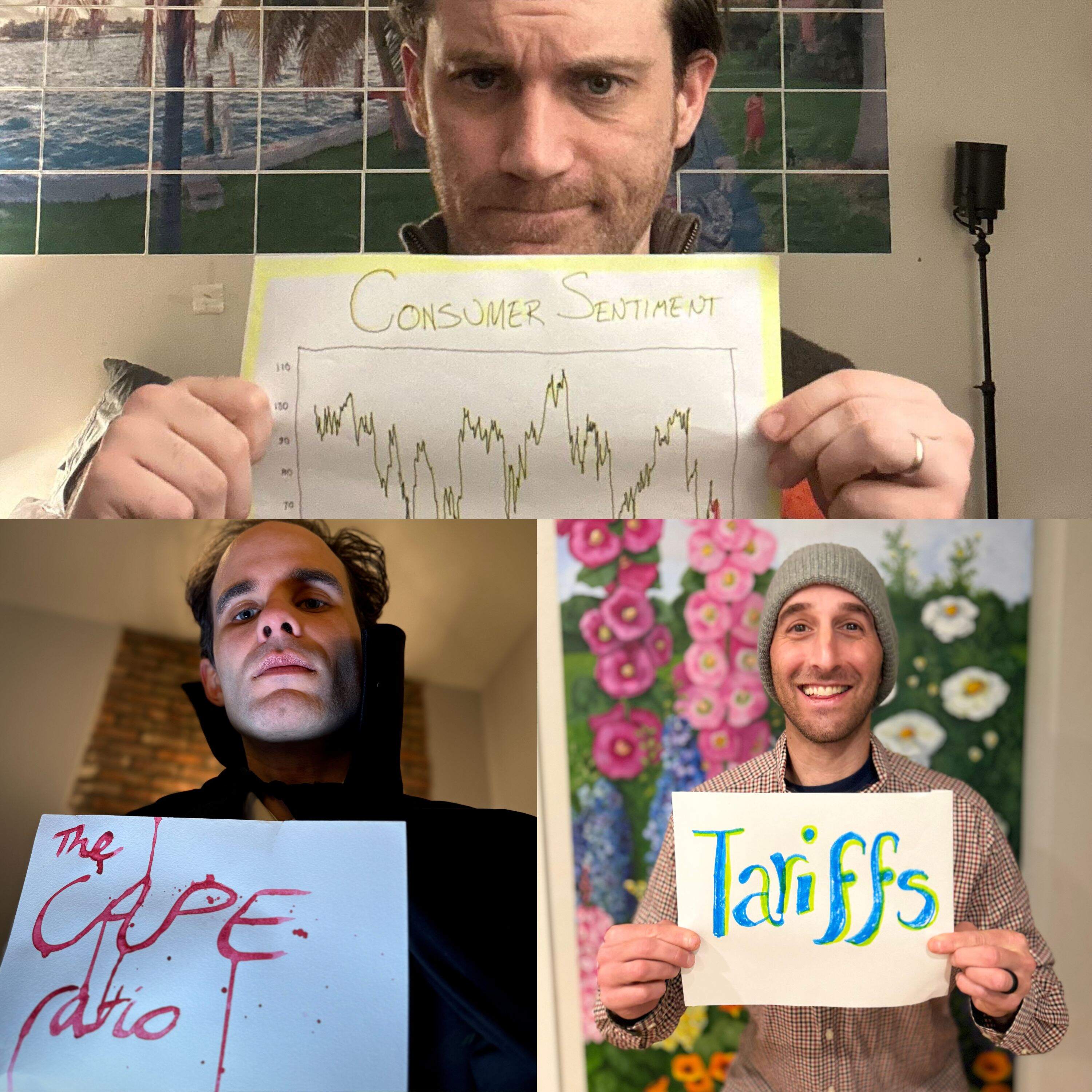
Chips up, rent down, and are people really skimping on holiday gifts?

9m

It’s … Indicators of the Week! Our weekly look at some of the most fascinating economic numbers from the news. 

On today’s episode: A big goshDRAM memory problem, a holiday spending mystery, and apartment rental prices … decline?! 

Related episodes: 
The highs and lows of US rents 
Taking the temperature of the US consumer 
We Buy A Lot Of Christmas Trees

For sponsor-free episodes of The Indicator from Planet Money, subscribe to Planet Money+ via Apple Podcasts or at plus.npr.org. Fact-checking by Corey Bridges and Julia Ritchey. Music by Drop Electric. Find us: TikTok, Instagram, Facebook, Newsletter.  

Learn more about sponsor message choices: podcastchoices.com/adchoices

NPR Privacy Policy

Press play and read along

Runtime: 9m

Transcript

NPR

This is the indicator from Planet Money. I'm Darian Woods.
I'm Waylon Wong. And joining us today is Jeff Grow, all the way from Planet Money.
Hello, Earthlings. Hi, Jeff.
Good to see you.

You have picked an ideal time to go with the flow. Oh, my God.

Sorry. Whoa, like, whoa.

Because today

is

Indicators of the Week. Yay.

I'm the only one who cheered, and nobody clapped. It was just me.

Please clap.

They will clap after they hear the lineup of today's show. We have big drama in the market for computer chips.
There's a little mystery going on with holiday shopping.

And some possible holiday cheer for apartment renters. That's after the break.

Support for NPR and the following message come from Warby Parker, the one-stop shop for all your vision needs. They offer expertly crafted prescription eyewear, plus contacts, eye exams, and more.

For everything you need to see, visit your nearest Warby Parker store or head to warbyparker.com. Support for NPR and the following message come from Edward Jones.

What does it mean to live a rich life? It means brave first leaps, tearful goodbyes, and everything in between.

With over a hundred years of experience navigating the ups and downs of the market and of life, your Edward Jones financial advisor will be there to help you move ahead with confidence.

Because with all you've done to find your rich, they'll do all they can to help you keep enjoying it. Edward Jones, member SIPC.

This message comes from Charles Schwab. When it comes to managing your wealth, Schwab gives you more choices, like full-service wealth management and advice when you need it.

You can also invest on your own and trade on Thinkorswim. Visit schwab.com to learn more.

All right, so the cut is the week. Chef Corv, tell us what's going on.
So my indicator of the week has to do with something wild happening to the price of microchips and specifically memory chips.

They're called RAM or DRAM chips. They've been around for decades and these chips are like the short-term memory in your computer.
So they're everywhere.

They're in laptops, they're in phones, they're in your PS5,

and they're also used in data centers. Oh, all we do around here is talk about AI data centers.
I guess they're just what, wall-to-wall memory chips? Yeah, yeah, yeah.

And so, thanks to all that demand from AI, just in the past couple months, the price of these chips have quadrupled.

And just to show you guys how bonkers the market is right now, a lot of computer stores, they have stopped putting price tags on their RAM chips.

Like you actually have to go to an associate and have them tell tell you what the current market price is.

So, that sounds almost like when your restaurant has something like, I don't know, gevar or lobster that fluctuates in price and they just don't even tell you what the price is, and you have to kind of inquire within.

Yeah, that's exactly how they're selling ram chips now. They're selling it like it's the catch of the day.
They're like, please ask your waiter. Well, you know what they say.

If you have to ask, you can't afford it. Right.

And okay, so this is because ram chips, their prices are changing that quickly. And this is actually not the first time RAM prices have spiked like this.

The RAM market is famous for having huge price swings. It's the classic example of this cyclical industry that's always going through big booms and big busts.

And there is an underlying economic reason for all of this, which is that it takes years to build one of these RAM chip factories. So the supply of Ram chips is always trying to catch up to demand.

Right now, that means there is a shortage and the price of ram is skyrocketing. But, you know, just a couple years ago, ram prices were crashing.
Companies had way overestimated demand.

They had ramped up too many factories. This actually reminds me of an old Planet Money episode where the exact same thing happened in Christmas trees.
Takes years to grow a Christmas tree.

Classic cyclical industry. Just like it takes years to grow a ram chip.
Yes, exactly. They grow them on trees, actually.

But you also see this in industries like oil and beef, anything with these long lead times. Ram chips are just the most dramatic example.

But given the current data center building spree and the fact that it takes years to spin up one of these ram factories, people don't think that these prices are coming down anytime soon.

Thank you, Jeff. And now to more spending.
Waylon. Yes, so my indicator is $778.

This is the average amount that Americans plan to spend on holiday gifts this season, according to a new survey by Gallup.

And what Gallup does here is pretty interesting because it asks people about their planned holiday spending in October and then again in November.

And Gallup found that this year Americans cut their budgets by $229.

And this decline from October to November is the biggest drop Gallup has ever recorded. It's even bigger than what they saw during the financial crisis in 2008.
People were very naughty then.

They didn't get many gifts. Oh, that was the...
The bankers were naughty, Darian. The bankers.

Okay, so this is what people say they plan to spend. We've been seeing that even when consumers say they feel bad about the economy, overall we do see the US spending a lot.

And so we just had Black Friday, Cyber Monday. So I'm curious, what did people actually do then? Okay, so the plot thickens.

Adobe, the software and analytics company, said online spending on Black Friday hit a record, almost $12 billion.

And that's up 9% from last year. So it's not just inflation.
And then Adobe says online spending on Cyber Monday was up 7%.

Okay, so you're saying people told Gallup that they were going to spend less, but then they got on their phones, they saw the sales, and then what, their budgets just went out the window?

Yeah, I mean, I think it's a very relatable experience. I'll just speak for myself.
That is certainly one explanation.

And we've also seen a big divide between how people with higher incomes are spending versus lower income people. And so I wonder if this year's holiday spending was driven by wealthier shoppers.

Yeah, and this is called a K-shaped economy, right? That's a term you might be hearing a lot these days. Higher earners are spending more.
People with fewer resources are falling further behind.

So there's definitely a lot going on that's not fully captured by these big headline numbers.

Thanks for that cheerful news, Weylon. Darian, what do you have for us? All right.

So you might be a bit sarcastic with that one, but this one actually could be happier for renters at least, maybe less cheery for landlords. My indicator is negative 1.1%,

as in the asking price for rental apartments is down 1.1% compared to last year. That's based off listings on apartmentlist.com.
So that's amazing for renters, right? That's a huge deal.

This is interesting because it's contrary to the overall affordability narrative we've otherwise been hearing, right? Yeah, and so it's worth unpacking exactly what this means.

It doesn't mean everyone's getting a 1.1% rent reduction in the mail. Nuts.
It's an average. And this is for new leases from apartments listed on that website, apartmentlist.com.

But also you see it on others like Zumper, which is another listings website that is showing similar discounts for two-bedroom rentals. You see a similar story on Realtor.com too.

Now, renting a single-family home does seem to still be rising, but only at a modest 1% annual rate, according to Cotality, a company that provides property information and analytics.

Okay, so these are the national averages, but give us the geographic breakdown. Yeah, so I can already hear listeners in San Francisco or Chicago

or St. Louis screaming at the devices, yelling, what are you talking about?

In those cities, apartment rents are still rising at about 4% or 5% a year.

But when you go further south to Texas, to Louisiana, to Florida, there you're seeing some hefty rent declines with Austin leading the way. And so is this because they're building more there?

Yeah, the big overall driver seems to be more apartments getting built. 2024 saw the most apartment buildings being constructed in a single year nationally since 1986.

And in Austin, the city that's leading the way in those price reductions has also been leading the country in permitting new homes.

And I think in the South, the restrictions on home building are a little looser, right? So it's just easier to build there.

You know, it's almost as if the more homes you build, the lower the prices get. It's almost as if supply and demand sometimes works.

You'll have a hard time fighting against basic economic principles.

Jeff, it was so fun to have you today. Come back anytime.

You can't get rid of me, guys. I'll be back.

This episode was produced by Angel Carretos with engineering by Jimmy Keeley. It was fact-acted by Julia Ritchie and Corey Bridges.

Kate Kincannon edits the show and The Indicator is a production of NPR.

Hey there, it's Stephen Basaha with a quick message.

You are so necessary and helpful. Thank you.
Well, Kathleen, thank you, and thanks to everyone else who's donated this year. Because NPR, as of October 1st, is operating without federal funding.

It is a big challenge, but it's one we can all take on together.

We know you value the indicator and our bite-sized episodes explaining what's going on with the economy, jobs, housing, tech, and so much more. So please help us keep it all going.

Make your gift by signing up for NPR Plus. It's a simple recurring donation that gets you perks to over 25 of NPR's podcasts.
Just head to plus.npr.org and thank you.

This message comes from Vanguard. Capturing value in the bond market is not easy.

That's why Vanguard offers a suite of over 80 institutional quality bond funds, actively managed by a 200-person global team of sector specialists, analysts, and traders.

They're designed for financial advisors looking to give their clients consistent results year in and year out. See the record at vanguard.com/slash audio.
That's vanguard.com/slash audio.

All investing is subject to risk. Vanguard Marketing Corporation, distributor.
Support for NPR and the following message come from Washington Wise.

Decisions made in Washington can affect your portfolio every day.

Washington Wise from Charles Schwab is an original podcast that unpacks the stories making news and how they may affect your finances and portfolio.

Host Mike Townsend and his guests explore policy initiatives for retirement savings, taxes, trade, and more.

Download the latest episode and follow at schwab.com slash WashingtonWise or wherever you listen. This message comes from NPR sponsor Shopify.

No idea where to sell, Shopify puts you in control of every sales channel. It is the commerce platform revolutionizing millions of businesses worldwide.

Whether you're a garage entrepreneur or IPO ready, Shopify is the only tool you need to start, run, and grow your business without the struggle.

Once you've reached your audience, Shopify has the internet's best converting checkout to help you turn them from browsers to buyers.

Go to shopify.com/slash NPR to take your business to the next level today.