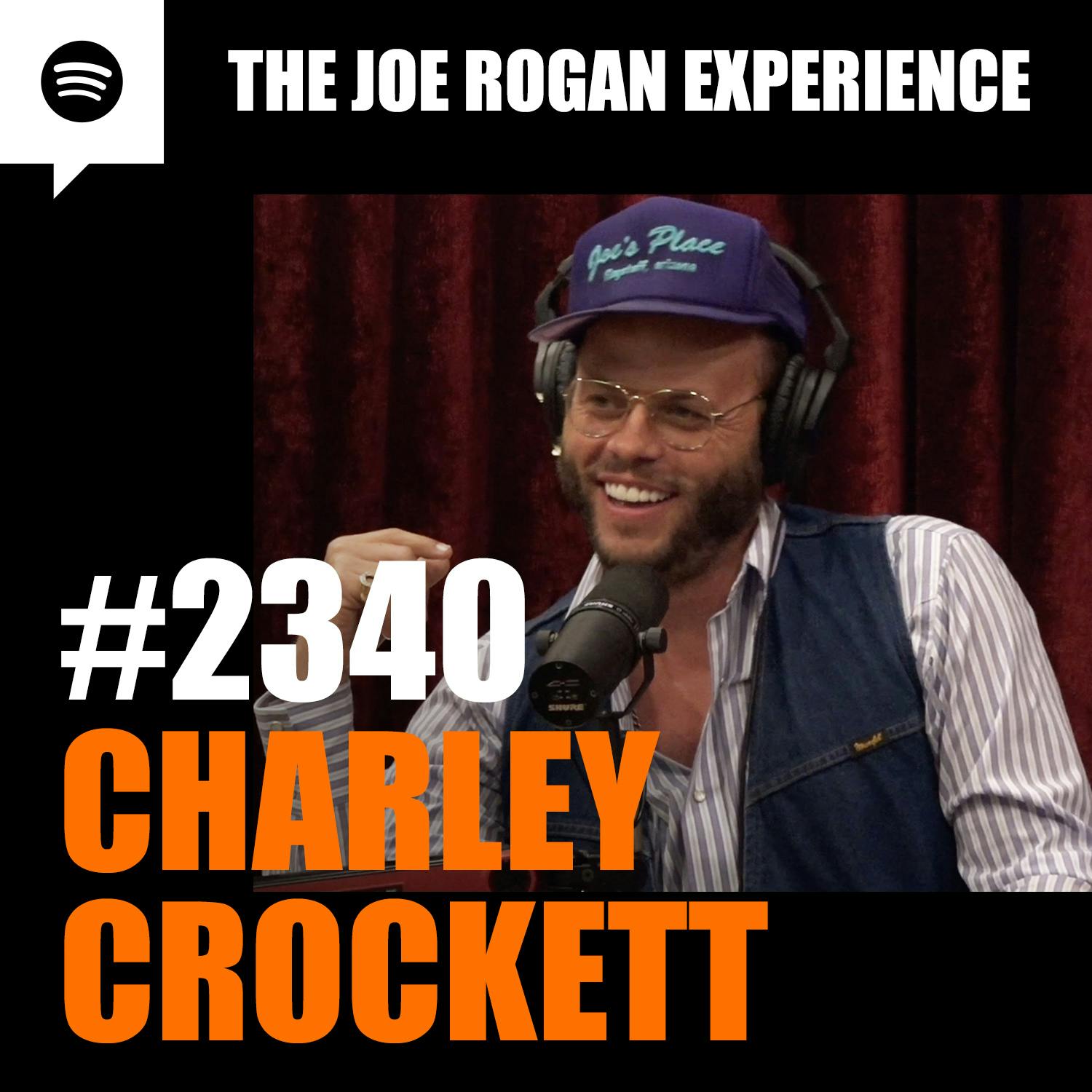
#2340 - Charley Crockett
www.charleycrockett.com
Go to https://ExpressVPN.com/ROGAN to get 4 months free!
THE WATERFRONT - NOW PLAYING, ONLY ON NETFLIX
Learn more about your ad choices. Visit podcastchoices.com/adchoices
Press play and read along
Transcript
Speaker 0 Joe Rogan podcast, check it out!
Speaker 1 The Joe Rogan experience. Train by day, Joe Rogan podcast by night, all day.
Speaker 1 Yeah, but
Speaker 1 doing something at the Viper Room and then trying to come here the next day.
Speaker 1 The Viper Room is just notorious. Like, even when you're in the building, it just feels like, oh, it is notorious.
Speaker 3 And it's funny because I, the only way way i'd ever been in there is through that you know the door on the side street there uh-huh you know and uh but they
Speaker 3 you know they had all the cameras out and took me around the i'd never come in through the door on sunset before even recognized the place no i've never been through that door either yeah i've only like i said i've only been there once i was there for a comedy show it just feels weird it's a there's certain buildings that just have bizarre history yeah well shooter was telling me last night man uh river phoenix died on the sidewalk right out that door on the i didn't know that i thought it was in front of the I thought it was in front of the whiskey for some reason.
Speaker 1 No, no, it was the Viper room.
Speaker 3 I never realized that.
Speaker 1 No,
Speaker 1
it's a fucked up place. Hey, man.
Nice to meet you.
Speaker 3 Pleasure is all mine, Joe. Thank you.
Speaker 1
I love your music. Really? Yeah, yeah.
Yeah, my friend Jake turned me on to you. Your music is like you've lived a life.
You can't fake that. You know what I mean?
Speaker 1 There's something about certain dudes' voices and songs. They're like, all right, that guy's done some living.
Speaker 1 You know, you can't create that with AI.
Speaker 1 Right. They're going to try.
Speaker 3 Everybody, I mean, it's crazy. We're,
Speaker 3 I mean, we're, we're kind of reaching singularity, you know? Yeah. Where nobody can tell the difference.
Speaker 1
I know. I think we're right about there.
There was a new one that just got released today. Did you hear the new one today? It's even better than the Google one that was insane.
Speaker 1
It was released last week. Yeah.
It's weird.
Speaker 3 What are you talking about?
Speaker 1 Some new AI engine that does video. I'll send it to you, Jamie.
Speaker 1 It's pretty incredible.
Speaker 1 The way they're able to make stuff now where it looks exactly like real human beings.
Speaker 1 It doesn't look fake even a little bit.
Speaker 1 I'll send it to you, Jamie.
Speaker 1
It's called Byte Dance. So is that the China one? That's the company.
Oh, okay. Bite Dance is the company that owns TikTok and stuff.
Oh, yeah, China.
Speaker 1 Yeah.
Speaker 1 Yeah.
Speaker 1 Um, this is their new AI.
Speaker 1
So this is all fake. All fake people.
All done by computers. Indistinguishable.
Speaker 1 You know, it's like it's it's very strange. You got it? Yeah.
Speaker 1 Throw that up.
Speaker 1 Give me some sound.
Speaker 1 You gotta click on it.
Speaker 1 This is all fake.
Speaker 1 I mean, what the fuck, man?
Speaker 1 We are living in the weirdest time ever, Charlie Crockett. Oh man, you're right.
Speaker 1
This is the weirdest time ever to be alive because we are so close to not being able to tell what's real and what's fake. We're so close.
I mean, we're essentially right there with video.
Speaker 1 And then eventually it's going to move into some sort of perception. It's going to be feel.
Speaker 1 You're going to be able to put a helmet on and
Speaker 1 go into some bizarre world.
Speaker 3 And you can't stop it.
Speaker 1 You can't stop it.
Speaker 3 It's coming.
Speaker 1 It's coming.
Speaker 1 And the people that are working on it in America, like we have to, because China's working on it. I'm like, okay, I guess that's just what we're doing.
Speaker 3 Space race, even if it's just a show.
Speaker 1 Yeah, it's essentially the Manhattan Project for artificial intelligence. There's a race around the world.
Speaker 3 Joe, did we go to the moon?
Speaker 1 I don't think so.
Speaker 3 I don't think so either.
Speaker 1 I don't think so.
Speaker 1 It makes you sound fucking completely insane to say it, but.
Speaker 3 I lost a lot of friends when I was younger younger when I started talking like that.
Speaker 1
I did, too. I gained a lot of friends, too, though.
I gained a lot of skill. Listen, man, I've talked to scientists that don't want to talk about it publicly.
Yeah. Scientists.
Speaker 3 Well, see, you know what I figured? I figured that would be the one time in the history of civilization that human beings got to a new place and said, nah.
Speaker 3 I'm good and turned around.
Speaker 3 Exactly. I don't want to look around there anymore.
Speaker 1 Well, Bart Sobrell, he's this researcher that's been doing these documentaries on the moon landing, and he's been saying it's fake since like I met him sometime in the early 2000s, I believe.
Speaker 1 And he put out this documentary called A Funny Thing Happened on the Way to the Moon, and he's got a great quote. And he says, there's not a single thing that's not easier.
Speaker 1
faster and cheaper to reproduce today from 1969 except the moon landing. It's the one thing.
Well, and everybody go, oh, but they spent so much money. Why would they spend the money on that again?
Speaker 1 Well, why would they spend money on all the things they spend money on? Like, what are you talking about? It doesn't make any sense. The moon has trillions of dollars in rare minerals on it.
Speaker 1 There's all sorts of shit on the moon that would be very beneficial to society.
Speaker 1 And it was always going to be that we're going to have a base on the moon and we're going to use that to go to other places.
Speaker 1 I don't think so. I mean, if you look at
Speaker 1 just the
Speaker 1 way they filmed it, like when you watched it on television, the people that watched it on television, it was the first time ever where there was a news thing where the news stations, the the networks didn't have a direct feed what they had was they filmed the moon landing they they showed it on a projection screen and then the networks pointed their camera at the projection screen that's why it looks so shitty
Speaker 3 wow you do you remember there was a a movie that came out it wasn't that far back and it's all about this like a legit movie and i i should remember this actor's name because he's getting better and better known he's a really great actor he played the
Speaker 3 He played the law man in Killers of the Flower Moon that shows up there
Speaker 3 near the end and finally kind of takes them down.
Speaker 3 But he's been on a lot of other stuff and it's this really great movie about faking the moon landing and all that stuff for like, you know, American kind of
Speaker 3 cultural and economic dominance over Russia and all that.
Speaker 1 Oh, so it's like...
Speaker 3 It's recent.
Speaker 1 Oh, okay.
Speaker 1 Hey, Jamie, can you tell Jeff to bring in some coffee? Oh, yeah, yeah.
Speaker 1 So it's
Speaker 1 a doc, a drama.
Speaker 3 It's a drama, yeah. It's a
Speaker 3 Hollywood movie.
Speaker 1 Oh, Jamie will find out what it is when he gets back.
Speaker 3
I only saw it once, but it was good. And you know this actor because he's been everywhere, man.
He's been in everything. I should know his name.
I need to call him out.
Speaker 3 I think I saw him at the airport in Burbank a few months ago, actually.
Speaker 1 It seems like a stupid thing to say, but I don't think it is.
Speaker 1 And then after COVID, realizing how much stuff they can lie about, how much stuff the government can hide, how much stuff that people would just accept as being true, despite all the evidence to the contrary, how much experts will go along with things, how easy it is to keep a secret.
Speaker 1 It's not that hard to keep a secret, especially a secret that is essentially set up to let us think, sir.
Speaker 3 Dang, that's how I know my wife stopped by.
Speaker 1 Your ramate? Is that what you're into?
Speaker 3
I love them, man. Yeah, they're good.
You know why I like it, really? I didn't realize it for like a year or two, and now I realize it because it tastes just like Coca-Cola.
Speaker 1 Does it really?
Speaker 3
It does. It's close.
I think that's the secret. It tastes like Coca-Cola.
Speaker 1 Yeah.
Speaker 1
This episode is brought to you by the farmer's dog. I think we can all agree that eating highly processed food for every meal isn't optimal.
So why is processed food the status quo for dog food?
Speaker 1
Because that's what kibble is, an ultra-processed food. But a healthy alternative exists.
the farmer's dog. They make fresh food for dogs.
And what does it look like?
Speaker 1 Real meat and vegetables that are gently cooked to retain vital nutrients and help avoid any of the bad stuff that comes with ultra-processing. And it's not just random ingredients thrown together.
Speaker 1 Their food is formulated by on-staff board-certified vet nutritionists. These people are experts on dog nutrition and they're all in on fresh food.
Speaker 1 The farmer's dog also does something unique: they portion out the food to your dog's nutritional needs. This ensures that you don't overfeed them, making weight management easy.
Speaker 1 Research shows that dogs kept at a healthy weight can live up to two and a half years longer. Head to thefarmersdog.com slash Rogan to get 50% off your first box plus free shipping.
Speaker 1
This offer is for new customers only. This episode is brought to you by Squarespace.
If you've got something to sell or want to take your business online, Squarespace has you covered.
Speaker 1 Their built-in SEO tools help people find you
Speaker 1 and you can sell products, take payments, even manage bookings all from one easy platform. Go to squarespace.com Rogan for a free trial.
Speaker 1
And when you're ready to launch, use the code Rogan to get 10% off your first purchase of a website or domain. Would like to try the original Coca-Cola with cocaine in it.
Oh shit.
Speaker 1 I wonder what none was like.
Speaker 3 Non-habit forming.
Speaker 1
Yeah, allegedly. Right.
Yeah, another lie.
Speaker 3 Was it true, right, that
Speaker 3 Bear at first had heroin in it? Or opium? Really? The original version of it? Yeah,
Speaker 3 the original product.
Speaker 1 We'll find that out.
Speaker 3 Yeah, I think it did.
Speaker 1
Well, that makes sense. I'm sure.
That's real great for headaches.
Speaker 1 I mean, more lies, right? How many times have we been lied to?
Speaker 3 But you know what it is? It's
Speaker 3 you know, I think it's I'm preaching to the choir here, but I think it's a perception thing, right? With,
Speaker 3 you know, it's like planting that flag on the moon
Speaker 3
was a cultural thing. Yeah.
You know,
Speaker 1 an American pop culture thing sure right well they wanted us to be dominant militarily over russia shit worked yeah i mean sort of kinda kind of i guess yeah i mean we definitely are dominant over you know militarily we definitely were back then essentially
Speaker 1 here it is heroin whoo
Speaker 3 wow barehead heroin non-habit forming right i gotta get the non-habit forming kind
Speaker 1
but i mean like what is the difference between that and doctors prescribing OxyContin? It's not that much. Sears Roebuck once sold heroin.
Jesus Christ. Must have been a wild time back then.
Speaker 3 Man, that's a great,
Speaker 3 that's a great illustration there. Yeah, look at that.
Speaker 1 Two needles, two vitals of heroin, only $1.50.
Speaker 1
Less than $50 adjusted for inflation. Wow.
This is the 19th century. So the 1800 Sears catalog used to offer a heroin kit.
Speaker 1 I think the actor you're talking about was Jesse Plemons, but I don't know what he was doing. That's him, bro.
Speaker 3 See if you can find Jesse Plemons.
Speaker 1 Just
Speaker 3 moon. Yeah, moon, moon.
Speaker 1 Yeah, well, the flowers of the summer moon keeps popping up.
Speaker 3 But do
Speaker 3 space.
Speaker 1 The discovery?
Speaker 1 That's 2015? No.
Speaker 3 2017? Try Jesse Plemons' moon conspiracy or space conspiracy.
Speaker 1 Huh.
Speaker 1 Are you sure it wasn't AI?
Speaker 1 Because there's a lot of those.
Speaker 1 I thought Keanu Reeves really wasn't a new Dracula movie.
Speaker 1 Fake? I don't know, no, I'm just going to look.
Speaker 1 Possibly fake. What was the other question we had?
Speaker 1
Oh, bare heroine. Yeah, man.
They've been, you know, they've been tricking people for a long fucking time. You know, if they can make money, they'll trick you.
Yeah.
Speaker 1 And back then, they were probably being tricked themselves. People didn't really understand what was addictive and what wasn't.
Speaker 1 You know, doctors used to recommend cigarettes for people with emphysema.
Speaker 1 You got asthma? Yeah. You need cigarettes.
Speaker 3 Yeah, they were drinking, athletes are drinking Coca-Cola
Speaker 3 on the court.
Speaker 1
Well, you know who drinks Coca-Cola? Floyd Mayweather. Floyd Mayweather, after training, would drink Coca-Cola.
And there's actually some science to that.
Speaker 1 Like having sugar, like right after a really hard workout actually
Speaker 1 replenishes glucose in the body.
Speaker 3 Like Gatorade. Yeah.
Speaker 1 It's probably not a bad idea.
Speaker 3 My wife's got me drinking Gatorade again.
Speaker 1 That shit's not good for you.
Speaker 1 There's better versions of electrolytes, you know.
Speaker 3 Yeah, you're right.
Speaker 1
Electrolytes are good for you. Gatorade's okay.
It's just, it's got a lot of shit in it. Yeah.
Corn syrup. All right.
There you go. Here it is.
Fly me to the moon. Channing Tatum.
Oh, Channing Tatum.
Speaker 1 Is that it?
Speaker 3 Oh, that's the one.
Speaker 1 That's it.
Speaker 1 Wait, 2024?
Speaker 1 2024.
Speaker 3
Oh, that's the one. Yeah, he's not even it.
No, he is in it, I think.
Speaker 1 Historical romantic comedy drama.
Speaker 1 Huh.
Speaker 1
Tasked with creating a false moon landing. Apple TV.
I didn't see it.
Speaker 3 Interesting. What year was it?
Speaker 1 It came out last year, like a year ago. I never even heard of it.
Speaker 3 Oh, I think it's still a.
Speaker 1 How do you have a movie with Channing Tatub and Scarlett Johansson and you never heard of it? Isn't that crazy? There's too many goddamn movies. Bro, you know what I saw last night?
Speaker 3 I think I'm still thinking of a different one, but I never, there's another one.
Speaker 1 There's another one? Really?
Speaker 3 I think so. I saw it, man.
Speaker 3 It was a wild movie, and
Speaker 3 they realize that the whole landing is
Speaker 3 being faked.
Speaker 3 And then, I mean, I don't want to spoil it, but then they get taken out.
Speaker 3
Apparently. Moon landing, JFK.
I mean, what's the damn difference?
Speaker 1
Yeah, there's a lot of those, man. There's a lot of those.
I mean, there's almost nothing. Vietnam, Gulf of Tonkin.
There's almost nothing from history that's exactly as we're being told.
Speaker 1 Almost nothing.
Speaker 3 Yeah.
Speaker 3 It's all cracker shit. It's Coke and Pepsi, you know, because
Speaker 3 I was thinking like,
Speaker 3 you know, that's the one thing that they did that everybody liked. And then they've kept that, as long as they keep that flavor.
Speaker 1 Right. Right.
Speaker 3 They can muscle everybody out. You know, it's like, that's like my RC Cola, shit like that.
Speaker 1 Yeah. Nobody's into that.
Speaker 3
Yeah. And only if you couldn't afford the Coca-Cola price.
Right. And the, you know, Coke machines.
Speaker 3
Excuse me. Bless you.
Thank you. When I was a kid, that was the only reason we drank RC-Cola is because it was 25 cents.
Speaker 1
Right, because it was cheap. That's it.
And you drank it and you knew it wasn't Coke. Yeah.
Yeah. They tried New Coke.
Do you remember that?
Speaker 1
When I was a kid. God, I think I was in high school.
They came up with a new formula of Coca-Cola somewhere around the 80s, I think. It was terrible.
Speaker 1 They tried New Coke and everybody's like, what the fuck are you doing? Why would you get rid of Coke? It's perfect. Yeah.
Speaker 3 Don't change that.
Speaker 3 They can change and try everything else and buy everybody out as long as they keep Coca-Cola flowing.
Speaker 1 Yeah, and then Pepsi is always like for weirdos. People who prefer Pepsi.
Speaker 3 I never liked it.
Speaker 1 Yeah, it's weird.
Speaker 3 I like Dr. Pepper.
Speaker 1 Well, you know, Coca-Cola is to this day flavored with cocaine. Do you know that? You mean like the coca leaves? That's the secret to the flavor of Coca-Cola.
Speaker 1 Coca-Cola, the company that makes Coca-Cola, they are the biggest producers of medical-grade cocaine.
Speaker 1 For real Wow, so they take the coca leaves They extract the flavonoids out of the coca leaves and they extract the cocaine So there's no cocaine in Coca-Cola But then they take those coca leaves and the flavor goes into Coca-Cola and then the cocaine goes into medical cocaine.
Speaker 1 Wow. Yeah
Speaker 1 to this day. I think they're the only company that's allowed to use coca leaves I think they're grandfathered in.
Speaker 1 I think that's exactly is that how it works? I believe they're grandfathered in but
Speaker 1 to this day that's what they use as i sniff as i sniffle but these are real sniffles folks these are allergy sniffles
Speaker 1 i watched the fucking craziest movie last night the substance have you heard of that movie i've heard of it that's that new demi moore movie yeah i was afraid to watch it holy shit man it's intense oh my god one of the most insane movies i've ever seen in my life it's about this lady who's getting older and uh someone approaches her with this new experimental drug that allows you to live as a young person for seven days, and then you have to switch back to the old person for seven days.
Speaker 1 I don't want to spoil it for anybody, but it was fucking insane.
Speaker 1 Like, I left, I was like, I gotta watch something stupid on YouTube for a couple hours before I go to bed because I'm weirded out by this movie.
Speaker 3 Yeah, that's the reason I haven't watched it yet.
Speaker 3 I'm just saying,
Speaker 3 I never liked, I never liked
Speaker 3
the sensory overload, like horror movies. Oh, yeah.
I like classic horror movies.
Speaker 1
This is a sensory overload times 10. I mean, it's fucking insane.
It's an insane movie.
Speaker 3 It's really good.
Speaker 1
I mean, it really grips you. It's very entertaining.
But just like, good lord.
Speaker 3 Have you seen
Speaker 3 Uncut Gems?
Speaker 1 Yes.
Speaker 3
Love that movie. Wasn't that a good movie? Oh, my God.
It was like a little much for me, but it was so good, and it wasn't so crazy, you know?
Speaker 1
Yeah. Well, I grew up with a lot of gambling addicts.
So for that movie, that movie really hit home for me. I was like, oh, God, gee, got anxiety.
Speaker 3 Howard, is that his name? Howie Howard? You know,
Speaker 3 Sandler's character.
Speaker 1 Is that what his name is? Howie?
Speaker 3 Yeah, and he's selling diamonds on 42nd Street or whatever.
Speaker 3 That's every manager in the music business. Is that guy? Really? A lot of them.
Speaker 1 A bunch of gambling addicts?
Speaker 3 That guy right there, you know? Oh, God. They're juggling all these balls in front of you.
Speaker 3
Which is fine. I don't mind guys juggling.
What I don't like is when somebody's got all these balls in the air, they're juggling in front of me. And and they're like, Charlie, I'm not juggling.
Speaker 1
Oh, yeah, the music business. Yeah, well, there he is.
He's great in that movie.
Speaker 3 Man, yeah, he's incredible.
Speaker 1
You know, I never knew he could act dramatically. You know, I mean, he's always been great in comedies, but he's incredible in that movie.
Incredible.
Speaker 3 He had another one he did that was like a serious flick way back. You remember Punch Drunk Love? Do you ever see that one?
Speaker 1 No, I never saw that.
Speaker 3 That's a masterpiece.
Speaker 1
Yeah, I never saw it. Yeah.
But Uncut Gems, the gambling aspect of it, like that sickness.
Speaker 3 The gambling sickness is a wild sickness i grew up around gamblers too yeah yeah my uncle was always a big gambler and my cousin i spent a lot of time in casinos with him down in new orleans on the mississippi coast and all that oh riverboat gamblers man yep exactly craziest man i did i did i i didn't mind you know he let he let my me and my cousin run all run all over the place
Speaker 3 so we were we were stoked so you like the fact that he was a degenerate yeah oh and anytime he won like if he won big we used to play his bingo He used to run this bingo hall in
Speaker 3 New Orleans. And me and my cousin,
Speaker 3 both of us, with those bingo daubers, we could play like, we could play nine card pages for him. We got that good that we could keep up with it.
Speaker 3 And because he was running the place, nobody in there ever said shit about me and my cousin being like, you know, 8 and 11 or whatever. And if we hit, though.
Speaker 3 It was always a good time. It was Toys R Us and
Speaker 3 Fried Shrimp.
Speaker 1 with how much your privacy is being invaded online vpns are no longer just a nice thing to have it's a necessity some people think i don't need a vpn because i have nothing to hide but that's exactly what data brokers want you to think because their profits depend on you having nothing to hide What you do online is your business.
Speaker 1 And if you want to keep it your business, you need ExpressVPN. With ExpressVPN, 100% of your online activity travels through secure, encrypted servers.
Speaker 1 It hides your IP address, so no one can use it to track and sell your online activity and your privacy is restored. ExpressVPN is also a great tool to secure your sensitive information from hackers.
Speaker 1 If you're using public Wi-Fi like at a hotel, airport or coffee shop, anyone can hijack your connection and access your most sensitive information.
Speaker 1 With ExpressVPN, you know that your passwords and banking info are safe and secure. ExpressVPN is the number one ranked VPN by the experts at CNET and The Verge.
Speaker 1 And right now, you can get an amazing deal. They're offering four extra months free if you go to expressvpn.com slash Rogan or tap the banner.
Speaker 1 And if you're watching on YouTube, you can get your four free months by scanning the QR code on screen or clicking the link in the description. For some people, that's their juice, man.
Speaker 1 That's what keeps them going in life. Just that next bet.
Speaker 1 You know, I grew up around a lot of pool halls. And, you know, when I was in my early 20s, and I was just around so many people that just lived for gambling.
Speaker 1
They would go straight from off-track betting right to the pool hall. And, you know, they'd bet on anything.
They'd bet on two raindrops coming down a window pane. They'd bet on roaches.
Speaker 1 They'd bet on anything.
Speaker 1
You name it. They'd flip a coin for 10.
I saw dudes flip a coin for thousands of dollars.
Speaker 1
A guy would win a tournament. Like, this is like a famous thing in pool.
Guys will win a tournament, win $10,000, flip a coin, lose the whole thing.
Speaker 1
And you had to have heart. You had to be willing to, like, that was like part of the culture.
You had to be willing to bet.
Speaker 3 Right.
Speaker 1 And everybody's always, because
Speaker 1
it's fun. Yeah, the only way it's fun is if money's constantly flowing.
So if someone's trying to be conservative, someone's trying to save them, they call them a knit. Like, you're a nit.
Speaker 1
They didn't like you. You know, nobody likes a knit.
Like, those are the guys that get shunned by the pool hall. They're a bad action.
Speaker 3 Where did you grow up?
Speaker 1 Well, all over the place, really.
Speaker 3 Where were those pool halls?
Speaker 1 New York. I moved to New York when I was in my 20s, my early 20s, like 23.
Speaker 1
And that's when I got indoctrinated into pool culture. Wow.
Yeah, it was just the most fun group of degenerates and weirdos and outcasts.
Speaker 1
And, you know, as a comedian, I never felt like I fit in in normal society. You know, and then I'm around those dudes.
I'm like, oh, okay, you guys are just like me. You don't fit in either.
Speaker 1 Like, you're a bunch of fucking weirdos.
Speaker 3 Man, you know, the thing, what I just thought about, Joe, when I was on the street in New York,
Speaker 3 I played up there, and I'm sure you know, but
Speaker 3 I'd play on the street all day. And at first I was playing in the parks, and then I moved downtown.
Speaker 3 I was trying to play on street corners in the villages and all that, and you're dealing with traffic and cops. And that's what drove me down into
Speaker 3 the subway platforms, and those were really competitive too.
Speaker 3 So even there, I started playing at the stations that nobody wanted or, you know, weren't desirable or weren't, weren't you know nobody's really competing for the spots or whatever and I would do that all day and then I would hit open mics all over the five boroughs every night everywhere
Speaker 3 and the comedy the comedy guys were always the coolest because all of them because we weren't in competition you know like I know comedians can be really competitive on the circuit And obviously same thing on the music side.
Speaker 3 But I ended up like playing a lot of, I would open up for a lot of guys like i'm like at the red door and like in the circuit there in the city and shit oh cool open guys up with two or three songs or play their breaks or whatever and you know all the comedy folks liked me i think because you know i wasn't one of them yeah we were cousins or something right right that's there's always been a relationship like that like oliver anthony was at the mothership this weekend and it's the first music act we've ever had performed there that's cool yeah you could perform there too if you ever want to man i know where it's at yeah it'd be fun i like that you've got it down there man it's a great spot 6th Street is just such a fucking wild place.
Speaker 1
It is. To have it right there, it's perfect.
And to have it at the old Ritz, yeah, it's amazing. So, you know, it was great.
Speaker 3 Is that what it is in the old Ritz?
Speaker 1
Yeah. Yeah, we bought the old Ritz.
Yeah. Yeah.
We have to keep the Ritz sign because it's, you know, one of those historical buildings.
Speaker 3 That was a great sign. Oh, it's a great sign.
Speaker 1 It's got so much history. In the tunnel on the way to the stage, there's a big picture of Steve Ray Vaughan on the stage in 1983.
Speaker 1 Yeah.
Speaker 1 you like srv yeah come on come on man come on he's the only dude that could play voodoo child doesn't make me sick man you know other than hendrix that's right two dudes yeah you're right hendrix and him i mean other people i'm sure other people can do it i've never no fuck that just them
Speaker 1 oh yeah man there's certain songs there's certain songs that you can't fuck with although i did see one time i saw honey honey and gary clark jr played midnight rider and i didn't think anybody else could play midnight Rider.
Speaker 1 And to hear Gary's song with Midnight Rider with that, you know, like Gary's signature sound.
Speaker 3 Oh, man.
Speaker 1 Yeah, that signature guitar. You've seen Gary?
Speaker 3 You've seen Gary live?
Speaker 1
Oh, yeah, I'm friends with Gary. Man.
Yeah, I've seen him a bunch of times. Yeah, I love Gary too.
Speaker 3 I love that dude. That guy.
Speaker 1 He's so good.
Speaker 3 Man, I remember.
Speaker 1 Oh, I gave something to him and I got it for you, too.
Speaker 3 What is it?
Speaker 1 This is a real genuine woolly mammoth guitar pick that is made out of woolly mammoth tusk.
Speaker 3 Damn, that is something fierce, bud.
Speaker 1 10,000-plus years old.
Speaker 1 That's a shout-out to my friend John Reeves from the Boneyard in Alaska.
Speaker 1 I got a buddy of mine who has this spot in Alaska where they just pull all kinds of crazy mastodon, woolly mammoth, fucking cave bear, all kinds of skulls, all kinds of wild shit out of this one piece of property where a lot of animals died.
Speaker 1
And he's taken a lot of the woolly mammoth. That's where I got this, too.
This is a tooth.
Speaker 1 This is a tooth that was carved
Speaker 1 into
Speaker 1 a piece of art with a mammoth in it.
Speaker 3 That's a big old goddamn tooth, sir.
Speaker 1 Imagine
Speaker 1 how heavy that is. Isn't that crazy?
Speaker 1 It's crazy, right?
Speaker 3 It's beautiful too, man.
Speaker 1 Yeah, so that guitar pick is yours, brother.
Speaker 3 Man, thanks, Joe.
Speaker 1 Any cool guys that play guitar, I give them one of them picks.
Speaker 3 You know, I've never been good at holding a pick.
Speaker 3 So I've learned how to play with my hands, and I, because I could never hold a pick well, but
Speaker 3 a lot of guys I know that are really great pickers, they play these really hard picks, you know, and can real precise with them. And I just, I still can't hold them.
Speaker 1 You learned with your fingers?
Speaker 3 Yeah.
Speaker 3 Yeah, I never, never held, I just couldn't hold a pick. I would try to hold it and it get sideways.
Speaker 3 And I never, like all this, you know, like the straight cowboy cords, you know,
Speaker 3 CFG, whatever.
Speaker 3 I couldn't hold any of those cords.
Speaker 3 Like when I was teaching myself, the positioning was weird for me, you know, and so like I kind of threw away the book and I did what you call choking the chicken on the on the fret, you know, kind of hold it like you're choking the chicken.
Speaker 3 And that's kind of where I developed my style. And then I learned all the regular chords many years later,
Speaker 3 you know.
Speaker 1
Did you, are you totally self-taught? Oh, yeah. Wow.
When did you start?
Speaker 3 I was 17. My mama got me a guitar out of a pawn shop in South Irving.
Speaker 3 Wow. This Honer guitar.
Speaker 1 And you just started messing around with it?
Speaker 3 Yeah.
Speaker 3
Yeah. You know, my mama had tried to get me on the piano when I was younger, and I just couldn't focus.
And
Speaker 3 yeah, I don't know. 17 was like the right age.
Speaker 3 I needed it, you know.
Speaker 3 Started banging around on that guitar. And
Speaker 3 I mean, it must have sounded terrible.
Speaker 3 And
Speaker 3 my mama lived in this little ass place, this tiny place.
Speaker 3 I was like scared to play in front of her, you know.
Speaker 3 But I was at first, and I would say, Mama, am I any good?
Speaker 3 You know, she wasn't going to lie to me. And she said, well, son,
Speaker 3 when you play, people will believe you. She wasn't going to lie to me and tell me I was good.
Speaker 3 But she was trying to say, you know, just be honest with your music and the rest will take care of it.
Speaker 1
That's great advice. Yeah.
When you play, people will believe you.
Speaker 3 That's what she said. Yeah.
Speaker 1 Yeah.
Speaker 3
Yeah. And then the next time anybody believed in me wasn't until I started hitchhiking.
And I remember because I've been out in California a bunch recently.
Speaker 3 And it was,
Speaker 3 I had caught a ride with this guy. We were playing at this place called the shanty up in the
Speaker 3 Farmer's Branch, Dallas-Fort Worth area years ago. And there was this witch lady that, I mean, they called her a witch, this kind of
Speaker 3 magic woman, who had a barn out behind her house, and they called it the shanty.
Speaker 3 And she would have people over on the weekends and just kind of any random night, travelers, misfits, whatever, back there in the barn.
Speaker 3 And everybody'd be telling stories and trading songs and, you know, taking potions,
Speaker 3 stuff like that. Long story short, this guy I met one night, his parents had like worked, they worked for like Texas Instruments and he had disowned them, you know, because...
Speaker 3 His parents were like scientists and he woke up one day as a young man and realized they were like, his parents were manufacturing like weapons, you know and i never saw this guy again but that was his whole deal why he left texas oh wow and he was just back visiting this this gal that had this shanty deal and uh
Speaker 3 i talked that guy that he promised he would he was describing this town of boonville uh which is this community in mendocino county northern california and uh
Speaker 3 The way he was describing it to me at this, in this barn or whatever, it sounded like
Speaker 3 the Garden of Eden or something. You know what I mean?
Speaker 3
And I wanted so badly to go with him. And he promised me and this other guy that was playing guitar too, that he would take us.
And we passed out at the lady's house. And we woke up that next morning.
Speaker 3 He was still there. And I was like, man, you ready to go to California? And he was like, what are you talking about?
Speaker 3 What are you talking about? Like, when I pressed him, he's like, man, I was on acid.
Speaker 3
I was on acid. I don't remember any of that.
I don't have any room for you. And
Speaker 3
I begged him like my life depended on it. And he took me and this old boy who was playing guitar, actually taught me a lot of songs back then.
He took us to California.
Speaker 3 But as we got closer to Booneville and we were talking to naive young Texas boys who had never been anywhere, he realized he, you know, didn't want us going anywhere near those hippies he was living with there in Booneville.
Speaker 3 So he left us, like he pulled into like a grocery store and left us in this parking lot in Vacaville. And that's when I really started hitchhiking in my life.
Speaker 3 Is like when we kind of got abandoned in a parking lot, kind of along the five, right? How old were you?
Speaker 3 21, probably 22, something like that. And I had done some a little bit of hitching before, like around the South, Texas, and like Louisiana, but I'd never really been way out there.
Speaker 3 And anyway, I started hitchhiking around
Speaker 3 because I had to.
Speaker 3 But I remember it was in California the first time about anybody besides my mama
Speaker 3 ever looked at me playing guitar as it having any kind of value, you know, like any economic value or like it was a, it was a
Speaker 3 trade of, you know, recognition, you know. It was kind of the, was the first time it was out there out there.
Speaker 1 So you'd been playing about four, four or five years back then? Yeah. Yeah.
Speaker 3 I was playing outside because our place was so small. I wasn't playing outside to like make money or anything like that.
Speaker 3 I would go to this park, have like a baseball diamond on it, sit on these bleachers or whatever. And I'll never forget the first time anybody threw like just a pocket full of change in my case.
Speaker 3 I'm sure it's because they, you know, were worried about me or felt bad for me
Speaker 3 or whatever, you know, and it wasn't like that, it wasn't like that money hit the case.
Speaker 3 And then like a light went off or anything, you know, it was a slow,
Speaker 3 it was a slow, gradual deal like i was playing outside
Speaker 3 because there was you know there wasn't enough room to play in the house in the house or whatever you know and then you know i got in a lot of trouble with the law um
Speaker 3 which kind of put me on the run put me on the road
Speaker 3 and
Speaker 1 what was the trouble with the law uh
Speaker 3 you know my i've said it a lot and it's funny i'm a lot better known than i used to be so it's like you say stuff about your family and they hear about it and they get mad they get mad yeah but uh it's so funny because it's all over the internet and uh
Speaker 3 they're the ones that had the government on their ass not me but anyways yeah we just kind of you know shit hit the fan got up in the newspapers my brother didn't go to high school you know neither my sister neither of them went to high school they both dropped out you know because I'm from South Texas.
Speaker 3 I was born in the Rio Grande Valley. They were born up in Dallas, but my mama had moved down there to
Speaker 3 South Padre Island area, McCallan, Harlingen area there. And
Speaker 3 anyway, it's poor and pretty hard living down there. And, you know, hell, I didn't wear shoes till I was probably nine or 10 years old, you know, playing outside.
Speaker 3
And my brother and sister, they're 10 years older than me, half brother and sister. And we have different daddies.
And they really lived wild. You know, it was...
Things were
Speaker 3 pretty tough back then or whatever. I'm telling you that background because
Speaker 3 my brother became a hustler, you know, because he had to, because of a lack of education, lack of access, you know, because of poverty.
Speaker 3 And I've honestly always respected him for that, you know.
Speaker 3 He used to take me around door to door selling newspapers when I was 11, right? And you want to know why? Because I had broken my arm.
Speaker 3 And he realized if you carted that young boy out in front of those apartments when that lady answered the door and it's these two brothers and one of them's got a broken arm, she's going to buy the, she's going to go ahead and subscribe.
Speaker 1 Yeah, she sounds bad.
Speaker 3 Yeah. And
Speaker 3 in a nutshell, man, he,
Speaker 3 you know, through all that stuff, you know, he started out as a door-to-door salesman, you know, hustling newspaper subscriptions, right?
Speaker 3 Then he started like selling neckties and like men's clothing door-to-door in downtown Dallas office buildings, you know, and as a very young man. And eventually he graduated to,
Speaker 3 you know, hard knock boiler room type of guys. You know, you keep knocking on those doors in that wild west business scene of towns like Dallas, you know, or Houston.
Speaker 3
You know, eventually you're going to find what you're looking for. And he got in with some big old wolves, you know, and eventually it knocked everybody out.
And a lot of people died.
Speaker 3 A lot of people went to prison. And,
Speaker 3 you know, we were in the paper and
Speaker 3 I couldn't, I found myself not being able to get a bank bank account and nobody I knew would go near me, you know. And
Speaker 3 so it ended up being like a Bob Marley type of thing, you know, like, you know, he said, if you're not living good, travel wide.
Speaker 3
Right. And I literally just walked out of town because, you know, we had scarlet letters on our chests.
And
Speaker 3 that's when I really started learning how to stand behind that guitar and write songs and slowly but surely start I learned how to play basically in front of people and people just were giving me money kind of over time.
Speaker 3 That and, you know, food and shelter in exchange for my story at their back door.
Speaker 1
This episode is brought to you by Netflix. You think your family's got drama? Wait till you meet the Buckleys.
I'm talking about the new Netflix drama, The Waterfront.
Speaker 1 Set in a coastal town in North Carolina, it follows the powerful Buckley family who've ruled Havenport for decades, but now their fishing empire is falling apart fast and their legacy is on the line.
Speaker 1
There's power grabs, addiction, legacy, love. From the creator of Scream and Dawson's Creek, the waterfront is messy, twisty, and totally binge-worthy.
Watch the waterfront now only on Netflix.
Speaker 1 Do you ever wonder
Speaker 1 how things could have gone? Because things turned out great.
Speaker 1
Like, look, you're a popular music artist now. Yeah.
You know, worldwide.
Speaker 3 You're famous. I'm surprised I, you know what I'm surprised by? I'm surprised I never got heavily addicted to drugs.
Speaker 3 Yeah, I am you know my sister passed away 10 years ago from substances and hard living and all that kind of stuff and hell my whole family is in AA everybody top to bottom left to right turn them inside out.
Speaker 3
I think about it a lot, but I really do, you know, and I remember I was living with that guy who was at the shanty that was playing guitar. He's on the football team.
I knew him from sports.
Speaker 3 His name was Daniel Harmon.
Speaker 3
And he went out there to California with me that first time. And we were living on farms.
And I was working for ganja farmers, working on horse farms, working for
Speaker 3 winemakers, all kinds of people, you know, just doing grunt work for them, doing the fence work
Speaker 3
they didn't want to do. Moving soil for people, you know what I mean? Digging ditches, you know, laying pipe across really hard, you know, rocky roads.
not anything anybody can do.
Speaker 3 You just need, you know, broad backing up, you know, to be young.
Speaker 1 Right.
Speaker 3 And uh,
Speaker 3
but before I ever left Texas, I moved in with his his sister. And I remember, and she was just my friend.
I was never in a relationship with her or anything.
Speaker 3
But she was working at Silver City in West Dallas, the gentleman's club at 18 and making more money than anybody I'd ever seen. The girl was 18.
you know, and just making crazy, crazy money. And
Speaker 3 I was living she let me rent a room from her and kind of gave me a deal and all that. And uh,
Speaker 3 I ended up writing a song kind of about it more recently called Easy Money that I did with Shooter on this on the Lonesome Rifter Record.
Speaker 3 And that's kind of that thing, you know, if you're a poor kid from Texas, there's no such thing, you know, as easy money. But
Speaker 3 I can't remember why I was telling you that, but
Speaker 3 it was hard on. I just remember like seeing, you'd see like young young women working in strip clubs, making big money.
Speaker 3 And the ones that I was around and have been around,
Speaker 3 very, very hard for that line of work, my line of work, your line of work, not to become addicted. Yeah.
Speaker 3 You know, and I don't have a problem with, you know, a lot of the best, shit, most, best artists I ever saw, like struggled, struggled with addiction, you know.
Speaker 3 But I have, in that way, I have been very fortunate, very, very fortunate.
Speaker 1 How did you avoid it?
Speaker 3 I don't know. You know what it is, man? I never had no kind of, I never
Speaker 3 had no kind of tolerance. You know, I've always been like, I just get drunk off of one drink.
Speaker 3 It's never changed.
Speaker 3
I just felt it all like really strong, you know. That's probably good.
Yeah.
Speaker 1 Maybe it's a survival instinct, too.
Speaker 3 I've never really thought about why, you know, but I have considered it because my brother's been through, you know, he did a lot of time in prison.
Speaker 3 And, you know, my, let me see, my sister had, and my mama, you know, I mean, they both had their first kid, you know, and they were teenagers, you know.
Speaker 3 A lot of it I do credit to my mama, you know, it's like, you know, she told me something I remember that stuck with me. I've been saying this all the time, Joe.
Speaker 3 And like, we had a lot of trouble in our family and a lot of people that we knew, a lot of dysfunction,
Speaker 3 a lot of trauma.
Speaker 3 But what my mama kind of got out of that, she kind of is the person in the family that said, I'm going to change the trajectory of this line now in my generation.
Speaker 3 You know, and she didn't have an education.
Speaker 1 And,
Speaker 3 you know, she took herself back to school after I was born,
Speaker 3 you know, and.
Speaker 3 cleaned up her act and
Speaker 3 got out of it and
Speaker 3 isolated me from a lot of that shit. And
Speaker 3 um which i think is a big part of the reason that i maybe didn't
Speaker 3 right you had a role model yeah i had a role model yeah you know i did there was no male role models at least not at home they were only they were only pro athletes and coaches at school you know i mean it's increasingly difficult for young men to find
Speaker 3 strong men of courage and vision that can help them grow into good men too. I mean,
Speaker 3 it seems almost impossible these days. It's unbelievable.
Speaker 1 It's very difficult to find in your personal life.
Speaker 3 It's hard, man.
Speaker 1 You have to find it in other ways. You have to find it people online.
Speaker 1 I found it in the world. Athletes in
Speaker 3 like
Speaker 3 excellence in like athletics.
Speaker 1 Right.
Speaker 3 You know.
Speaker 1 Where the only way you can get there is hard work.
Speaker 3
Yeah. And odds are stacked against you, and it requires incredible focus.
I mean, I've just, I think that's why I'm always
Speaker 3 in such awe of those people when they're able to
Speaker 3 succeed like that. But what I wanted to say to you that my mama said, she said,
Speaker 3 what happened to you when you were young is not your fault, but now you're a man and it's your responsibility.
Speaker 3 And
Speaker 3 I've been living off of that. you know, for a long time, you know, because it's like, if you don't take responsibility at some point, man,
Speaker 1 it'll never leave you alone right you can't think that you're a victim
Speaker 1 yeah you can't think that it's not your fault you got to take responsibility that's hard for people to accept when they know they've been victimized when they know they've been dealt a shitty hand of cards you can just kind of wallow in it
Speaker 1 but that's a trap that's a trap that'll fuck you up
Speaker 1 it'll fuck up everybody around you too damn right yeah but it's a mindset thing it's like you can you can think your way out of that you just You have to have an example, though.
Speaker 1 Either you have to be your own example or you have to find an example of someone else who thought their way out of it.
Speaker 3 And
Speaker 3 for my brother, for all the trouble that he's been in,
Speaker 3 in a way,
Speaker 3 I think he was trying to
Speaker 3 help me.
Speaker 3 And so, you know, his hustle and his work ethic in another sense, you know, was
Speaker 3 that's been helpful to me too, you know, because I remember he used to hand out flyers and shit all over the place. And when I'd be like a teenager, he'd be like,
Speaker 3 he'd be like, listen to me now.
Speaker 3 If you go, if you leave an event at the other day that you're handing out flyers and you're flooding it with promotion, if you can even see that pavement underneath the, you know, pamphlets that you're handing out, you didn't promote it.
Speaker 3 Wow.
Speaker 3
That's what he used to tell me. I was like 15, 16.
And that all has come, that mentality came in handy for me because, you know, I was just a street performer, just an itinerant performer and
Speaker 1 um
Speaker 3 you know i did have to learn how to market myself you know and and um part of the reason that i was
Speaker 3 man sometimes being underestimated is like the best thing that could happen to you you know because i think one of the biggest challenges for like in the music industry at least is that the way the business works now
Speaker 3 is they're almost exclusively,
Speaker 3 you know, you ever seen Moneyball? Brad Pitt flicked Moneyball? Yeah.
Speaker 1 Right? Yeah.
Speaker 3 How they, you know, they introduced that concept of looking at the data to like maximize the potential of the athletes and all that kind of stuff, which has totally changed the game, you know, all the games.
Speaker 3 I kind of call it money guitar, right? Which is like, you know, the business is seeding the young amateur.
Speaker 3 And
Speaker 3 for the way that they spend and invest and can move on if it doesn't work out, it's like kind of a
Speaker 3 you know
Speaker 3 It's kind of a pump and dump, you know, and
Speaker 3 The thing about that it works like if somebody has a you know if somebody Like some of these guys like you mentioned Oliver Anthony and some of these guys they have a viral hit out of nowhere.
Speaker 3 They've never played a venue or anything in their life,
Speaker 3 you know
Speaker 3 It can happen really fast. And then obviously there's tremendous challenges, you know, down the line trying to keep that, you know, astronomical, you know, quick rise up there.
Speaker 3
But back in the day, the business deals weren't any good. You know that.
They were terrible. Right.
What they were good about, though, in a lot of cases, was developing these artists on these rosters.
Speaker 3 Even if they were taking advantage of these poor farm boys, taking advantage, you know, of, you know, poor black artists from the South or women or whatever. Nobody was getting a good deal, basically.
Speaker 3 But, you know, like guys like Willie Nelson and
Speaker 3
Wayland Jennings, those guys were making two, three records a year. Wow.
You know, and you think about when Wayland breaks through, right, in the mid-70s, you know, and like
Speaker 3 as he's doing, you know, coming into his own
Speaker 3 in 1974, 1975.
Speaker 3 I mean, how many records in is he at that point? You know,
Speaker 1 he's,
Speaker 3 how many, I mean, you know, Willie's Red-Headed Stranger, which
Speaker 3 revolutionized country music, or like the Outlaws compilation record that the two of them were on together, which was basically a compilation and kind of marketed as the Outlaw subgenre.
Speaker 3 You know, those guys were 15,
Speaker 3 those guys were 15, 16, 17 records in. You know,
Speaker 3 Aretha Franklin popped off on her ninth or tenth record.
Speaker 1 Wow.
Speaker 3 You know, and these, most of these artists, the way the business works, they won't make nine or ten records in their career.
Speaker 1 Right.
Speaker 3 That's crazy to me.
Speaker 1 That is crazy. And what better way to develop than to just keep constantly producing new music and learn along the way?
Speaker 3 And
Speaker 3 being neglected or
Speaker 3 misunderstood by the business when I was first dealing with it,
Speaker 3 it was really
Speaker 3 a blessing. Because I ended up making so many records, you know?
Speaker 1 Yeah.
Speaker 1 This episode is brought to you by activision you know me i love a bit of action that's why i'm excited to tell you that call of duty black ops 7 is out now and let me tell you this game is the biggest black ops ever if you're into intense action strategic gameplay and just straight up kicking ass this is it kicking ass sounds like that's right up my alley black ops 7 drops you right into three massive modes first you've got the co-op campaign where you can team up with your buddies to tackle some serious missions.
Speaker 1
Then, the multiplayer. It's explosive.
18 maps that keep the fights fresh and the stakes high. And zombies.
Speaker 1 Oh boy, this is the best zombie mode yet, featuring a brand new drivable wonder vehicle that completely changes the game.
Speaker 1
Seriously, whether you're a hardcore gamer or just want to jump into some crazy action, Black Ops 7 delivers. Call of Duty, Black Ops 7 is available now.
Rated M for mature.
Speaker 1
This episode is brought to you by Dodge. The 2026 Dodge Durango SRT Hellcat is all about one thing.
unlocking performance.
Speaker 1 With 710 horsepower, 645 pound feet of torque, and a supercharged 6.2 liter Hemi V8 under the hood, the Dodge Durango SRT Hellcat is the most powerful SUV in the segment.
Speaker 1
It's also insanely capable, towing up to 8,700 pounds with seating up to seven. That's best-in-class muscle in a three-row SUV.
Plus, you can jailbreak it and customize the hell out of it.
Speaker 1
The SRT Hellcat jailbreak has over 6 million possible configurations. You can customize everything from paint to wheels to badging to seats.
Make it your own. This isn't a quiet SUV.
It's loud.
Speaker 1
It's fast. It's powerful and unapologetically Dodge.
Learn more now at dodge.com based on the latest competitive information available, IHS standard full-size CUV segment and horsepower.
Speaker 1 The music business has always been so predatory.
Speaker 1 But it's like it's the way I describe a lot of things. It's like when you get something that's good combined with a bunch of people that want to make money off that something that's good.
Speaker 1 You know, whether it's medicine or whether it's music or even in comedy, you get the same thing. You get a bunch of people that just think they can make money off you.
Speaker 3 Man, I always thought comedy was the hardest. Always figured it was the hardest, right? Because you mean like you got to make them laugh or they're going to fucking kill you.
Speaker 1 And you have new shit all the time.
Speaker 3
There's nothing behind you. There's not even a guitar covering you up.
Right. It's crazy to me.
Just to watch all those guys do their bit and shit. So like I was always amazed by even
Speaker 3 a tent people going up at like the open mics and like trying out their routine. You know, that always terrified me.
Speaker 1
It terrifies me still when I watch open mics. I watch open mics and I watch someone bombing.
I gotta leave the room.
Speaker 1 I fear that it's contagious.
Speaker 1 Like if I if I was on the road and I didn't get to pick my opening acts, like if I was working at a club and they had uh some local act in Florida or something like that and the guy was fucking terrible, I would literally have to like not listen.
Speaker 1 I'd have to leave the room and to sort of time when I was gonna go on stage, so I'd go on stage with a fresh mindset. I couldn't think that this audience had been poisoned by this guy's shitty comedy.
Speaker 1 I get that. You know what I mean? It's like,
Speaker 1
it's terrible, and it's like you think that nothing could be funny. Yeah.
He just, it's like this, like he's hypnotized them into this like mediocre state of mind. Like,
Speaker 1 I can't listen. I got to hide.
Speaker 3 Yeah, and it's crazy that they could have that.
Speaker 3 that strong an effect on the audience like that that quick. I mean, somebody can be up there fucking it up like crazy musically, and you kind of get a pass, you know,
Speaker 3 poetic license or whatever.
Speaker 1
Well, you know, people, it's tolerable if the guy's into it. You know, he could be into his own music, and you're like, I'm not into it, but he's into it.
At least he's like doing his song.
Speaker 1 If you're not into,
Speaker 1 if you're doing comedy and the audience is not into it, you're fucked.
Speaker 1 You're like, really fucked. You have to engage those people.
Speaker 3 Yeah, I see that. It's unbelievable.
Speaker 1 You got to be connected to those people and you can't fake it.
Speaker 1 Like, you can't even be saying the words perfectly and not be thinking about it you have to be thinking about what you're saying they know they're little animals they smell you they know they know if you're faking it
Speaker 1 and you just gotta lock in man and you gotta learn how to lock in it takes about 10 years it takes 10 years of eating shit
Speaker 1 just yeah fucking bombing and traveling around and opening up for people yeah and barely getting by that's the same thing with music though about the 10-year deal you know the 10,000 hour thing
Speaker 3 there's no doubt about it.
Speaker 1
I think it's probably almost everything. Yeah.
Almost everything.
Speaker 3 Anything you dedicate yourself to. You know,
Speaker 3 you like Noam Chomsky?
Speaker 1 Yeah, sure. You ever seen it? I like old Noam Chomsky.
Speaker 1 I listened to him today. I'm like, Jesus, stop talking.
Speaker 3 Yeah, he's popping off, isn't he?
Speaker 1 Well, he just went, the COVID vaccine stuff. He was out of his fucking mind.
Speaker 1 He wanted people to be isolated and quarantined and taken away from society if they weren't willing to take this fucking experimental shit that turned out to be a fucking money.
Speaker 3 I haven't kept up with him in recent years.
Speaker 1 Well, Well, he's old, right? And old people, unfortunately, also, he's an academic, so academics tend to trust experts in whatever field they're in.
Speaker 1 And if he doesn't have an understanding, he has a deep understanding of how compromised people are politically by money.
Speaker 1 And he's written some brilliant work on essentially the way the
Speaker 1 media is compromised and the way
Speaker 1 politics are compromised. I don't think he applied that same skepticism towards the pharmaceutical industrial complex.
Speaker 3 Which is strange.
Speaker 1 Well, people have their blind spots. Yeah, we all.
Speaker 3 We all do.
Speaker 1
And they trust experts. And if he, you know, he's got experts that are academics and you trust them.
And also he's old. And old people get real scared of diseases.
Speaker 1 They get real scared because they know how fucking vulnerable they are. All the people that I knew that were old had the craziest reaction to COVID.
Speaker 1
Terrified. Even my own parents tried to, you know, talk them through some of this stuff.
They didn't want to hear it. They only wanted to listen to doctors.
They only wanted,
Speaker 1 I'm like, I don't think this is what they're telling you. Yeah.
Speaker 3 Doctors are crazy. They're just
Speaker 3 they got a cabinet full of pills that they've been
Speaker 3 they've been sold to
Speaker 1
sell you. And they're incentivized.
That's what's really crazy.
Speaker 1 When I found that out, that I mean, I learned so much during the pandemic about the medical industry where I just thought they were there to I didn't even I'm so naive.
Speaker 1 I didn't even realize that hospitals are privately owned i thought these were things set up by the government to make sure that people can get healed right you know i thought it was all about making people better and well they're not public the closest thing to public they're is if they're owned by like a you know religious organization right a church yeah crazy it's crazy yeah it's crazy and they're just fucking shuffling people in and out trying to prescribe them as many things and they're financially incentivized to prescribe things
Speaker 1 and then they have extreme overhead because they have liability insurance, they have student loan debt, and they have, you know, a high overhead to keep their practice running.
Speaker 2 And
Speaker 3 where's Bernie Sanders when you need him?
Speaker 1 Yeah, well.
Speaker 3 Well, no, see, so I had open heart surgery right here in Austin
Speaker 3 to fix a
Speaker 3
valve here. Well, I was born with Wolf Parkinson's white disease.
It's an electrical issue.
Speaker 3 And your heart basically like
Speaker 3 your heart misfires. all this electricity is moving through it all the time.
Speaker 3
You know, like a semiconductor or whatever. And there was like a section of it that was like misfiring and it would cause my an arrhythmia with me.
Wow.
Speaker 3 And when I was a kid in South Texas, we were told that was all I knew about. And we were told that it was an annoyance.
Speaker 3 Because I almost died a couple times when I was really, really young from it. And, you know, my mama noticed and saved my life a couple of times by getting, driving in, you know,
Speaker 3 into the city there into San Benito and them hooking me up to all the wires and saving me. Anyways, they told me as I got older that it would just,
Speaker 3 I could get, you know, an ablation for it where they apply heat basically and close this electrical channel that's stuck in a loop or whatever.
Speaker 3 But it, but it wasn't life-threatening.
Speaker 3 And then I got out here, you know, I was on the street for years.
Speaker 3 And then when when I was coming off the street through kind of blues jams and I had been, you know, I was working on Ganja Farms and had started selling, you know, weed in the mail and all that to kind of get off the street, buy myself some better clothes, get myself a good guitar and an amp and all that, started showing up at blues jams.
Speaker 3
And then I could like, you know, because everything takes money, you know, like. The problem of being a street player was you can go play the open mics.
They'd have a two-damn drink minimum.
Speaker 3 And they'd see my crazy ass come in and knew that I was, you know, pretty wild and they didn't have any money and it didn't smell and i didn't smell good so they really didn't like me for the you know for the longest time or whatever but
Speaker 3 i threw blues jams i started leading bands and bars and deep elum first gig i ever got in austin was uh right there at darwin's pub you know on 6th street playing kind of solo in the afternoon it was the only guy cj was the only guy that gave me a gig even on 6th street I always owed him for that.
Speaker 3 And I mean, he was giving me 50 bucks. You know, he wanted me to get paid out of the uh well whiskey and those
Speaker 3 those uh
Speaker 3 what does he sell over there? Those uh gyros or whatever the hell he's got over there. Um anyway, I get on the road, I get an agent.
Speaker 3
I hand I was I was standing down at Green Hall handing C D's out on a street corner because I couldn't get into the show. Handed a guy a C D.
His name's Evan Felker.
Speaker 3 He I didn't know who he was at the time, but he's front man for Turnpike Troubadours.
Speaker 3 I gave him a C D and
Speaker 3 he took it home and he listened to it with his then girlfriend and now wife. And lo and behold, his agent, John Folk, called me up and started booking me.
Speaker 3
And then that's when I started playing the old red dirt. I like to call it the Hank Williams circuit, you know, the kind of old country Chitland circuit.
John Folk had kind of
Speaker 3 inherited it from like Buddy Lee Attractions from an earlier generation that goes all the way back to Lucky Moeller and that old South circuit that all the R ⁇ B and the Hillbilly Country Boys were on.
Speaker 3 And folk kind of inherited it and re-built it. And then they, you know, then Coke and Pepsi came in, you know, CAA and
Speaker 3
William Morris and Wazerman and bought it all off, you know, bought it all out. And you had no choice.
I mean, they were going to part it out no matter what. And that's the way that it works, right?
Speaker 3 When you get Coca-Cola's attention, right?
Speaker 3
And they show up and they're like, good job. You're taking some of our money away from us.
We're going to buy you out, son.
Speaker 1 And right?
Speaker 3 I think you can refuse them once or twice and they'll come back with a better deal, right?
Speaker 3
After that, if you keep turning them down, then they put all their energy into knocking you out, you know? Yeah. That's what I mean.
As long as Coke doesn't change the flavor of Coca-Cola, right?
Speaker 3 They can,
Speaker 3
you know, that gangster shit, all the other gangster shit they do works really well. As long as they don't fuck up the original flavor, right? Right.
So I'm on that circuit working my ass off.
Speaker 3 200 and whatever shows a year for a bunch of years in a row. Playing all over the place.
Speaker 3 Seems like sometimes we play 21 nights in a row out there, you know, for shit kickers at Bonita Creek Hall and punk rock clubs in New Jersey and shit, you know, playing at the fucking, you know the Saint?
Speaker 3
That little club, the Saint in Asbury Park? It's like a 40 cap, man. It's a badass place.
Anyway,
Speaker 3
I was like blacking out. I moved up to a bus and shit and I was like, my, I was getting really lightheaded.
And I'd be sitting in the back of the bus and I would be so lightheaded.
Speaker 3
I'd be blacking out a lot, right? Just sitting there, short of breath. But I just thought, you know, I'm grinding.
I'm playing all these shows.
Speaker 3 I'm going as hard as you can go. Taking potions, you know,
Speaker 3 just doing all this dumb shit, working hard.
Speaker 3
And I was playing at the old Shady Grove here in town. that's now closed down.
They used to do, it was the KGSR radio thing.
Speaker 3 Marsha Millum put it on or whatever, and then it turned into, you know, ACL Radio, and then Shady Grove closed down there on Barton Springs or whatever.
Speaker 3
But I played it a handful of times. First time I played it, there was nobody there.
Second time I played it, it was packed, and I had Willie's old tour bus, the Red-Headed Stranger.
Speaker 3 It was one of the ones he lost in the IRS era that he never got back.
Speaker 1 Oh, wow.
Speaker 3
And this fucking shyster. Chuck Ligan.
I remember he
Speaker 3
some motherfucker was selling this thing on the side of the highway up in Oklahoma. The Red-Headed Stranger with the murals on it and shit.
It's a beautiful bus. Somehow this guy gets it.
Speaker 3 I shouldn't call him a shyster, but he definitely shister me.
Speaker 1 That's a shyster then.
Speaker 3 Yeah, yeah. You know,
Speaker 3
the music business is crazy because it's so. There it is.
Yeah.
Speaker 1 Wow.
Speaker 3
That's the one, man. Yeah, that's the one.
On the other side, it says,
Speaker 3 driven only by the finest bass players.
Speaker 1 Wow.
Speaker 3
You know, because somebody in the band always drove those old buses. I had that bus.
I used that bus exclusively for about a year or whatever.
Speaker 3 And we get off the stage at Shady Grove, and my heart had gone out of rhythm.
Speaker 3
I just say this. I almost died in the back of that bus.
I end up finding because it won't go. Here I am, 30-something years old, or in my early 30s.
My arrhythmia is out.
Speaker 3 It's going out and it's getting harder and harder to get back in, to shock it back into normal rhythm.
Speaker 3 And I just kept ignoring it because somebody told me in South Texas in the 80s not to worry about it.
Speaker 3 Anyway,
Speaker 3 you know, it turned out that my heart had enlarged and all this shit was going on. And I had to get surgery.
Speaker 3
The point, long roundabout point that I'm making to you about medical industry that I learned the hard way, man, is like, no one's advocating for you. Only you.
You have to be your own advocate.
Speaker 3
They don't give a fuck. You know, they don't.
Like, they were just going to automatically put a mechanical valve in my heart, right? Automatically. Didn't present any other options, anything, right?
Speaker 3 And I get there on the American Heart Association webpage or whatever, because I have insurance at the time or anything. Nothing, you know.
Speaker 3
The only reason that they covered me at the time was the Affordable Care Act and I had the right window where they could not deny me. Right.
Otherwise, I don't know what I would have done.
Speaker 3 And that is absolutely an imperfect system, right? I just didn't have health insurance.
Speaker 3 So here they are covering me and probably because i don't have money and they're dealing with you know how it is you know
Speaker 3 american business practices or whatever they're like here's this mechanical valve and i go and look it up joe and it's like
Speaker 3 you know
Speaker 1 um
Speaker 3 if you have a mechanical valve you automatically are on blood thinner the rest of your life automatically no matter what there's and you can't that's just how it's gonna be uh
Speaker 3
it lasts twice as long as a prosthetic valve, which I had not heard of at that point. But that was the whole thing.
This can last up to 20 years. But guess what?
Speaker 3 You have like 300% higher risk of a stroke with a mechanical valve as a prosthetic, a bioprosthetic cow valve.
Speaker 3 And then the third thing was that you can hear that thing clicking. You can hear the valve
Speaker 3 ticking.
Speaker 1 My buddy Everlast has one of those. Really? Yeah, he could go like this.
Speaker 3 You can hear it. Yeah, you hear it.
Speaker 3
And I was reading about that, and man, I'm like neurotic. Like I knew, I'm like, I'll never get over it.
So that's when I found out about the about the bovine cow valve.
Speaker 1 So it's made out of a cow?
Speaker 3
Yeah. Edwards Scientific makes it.
I carry a little card around in my wallet with the tag of the of you know that product number in case somebody sees me on the s finds me on the sidewalk.
Speaker 1 Wow.
Speaker 3 You know? And that how long does that last? They're supposed to last around 10 years. And I had mine and
Speaker 3 I had mine done in right there at Seton,
Speaker 3 you know, Seton Medical there on 38th
Speaker 3 in January 2019. So we're coming back around to it.
Speaker 1 So you have to get another operation?
Speaker 3 Yeah, but what they did is they put a, they put a, the way they did it, and here's the thing about, right, medical and anything, right?
Speaker 3 The medical industry is, I think, really fucked up and really predatory, totally profit-driven. And like, you know,
Speaker 3 people's health and preventative well-being and all that. I mean,
Speaker 3 we don't give a fuck about that in this country. You know, I mean, there's no money to be made off of people taking care of themselves and eating right and being preventative.
Speaker 3 And like, you know, there's nothing in that. The part about it that is amazing, though.
Speaker 3 even in the like kind of insanity of all the land of cheap traders is the technological advancements. Yeah.
Speaker 3 The technological advancements in the medical field, though not really, you know, available to the common person,
Speaker 3 they are incredible advancements. Right.
Speaker 3 So it's like they're moving so quickly that by the time I need to get another one, I don't think they'll ever have to open me, cut me up open again because they can like go in through a scope now.
Speaker 3
Wow. They could do it at that time.
It was just more experimental and they didn't want to do it.
Speaker 3 They were only doing it on really high-risk older patients, you know, but I think it's already kind of gone more mainstream from where when they cut me open to like if I did it right now, I could probably get around cutting it.
Speaker 1
Right. So they're going through an artery.
Yeah. And then what do they have to do to it?
Speaker 3 Well, so with me, what was happening was, is, so I had the Wolf Parkinson's white.
Speaker 3 I had to get the ablation first to deal to, before I could deal with what it, aortic valve disease is what it's called. And what it, what it basically is, is that
Speaker 3 over your aorta,
Speaker 3
there's these three valves that sit on the over the top of your aorta that they look like a Mercedes symbol is what they look like. It's like the best example.
It really looks like a Mercedes symbol.
Speaker 3 And
Speaker 3 some people,
Speaker 3
it's a bicuspid or whatever. Some people are born with two of the three fused together or just one missing altogether.
And it turned out that I'm just missing one.
Speaker 3
It's like a leaky carburetor, you know? So like as the time goes, that old carburetor in that truck over time just leaking more and more and more. Wow.
You know?
Speaker 3 And I mean,
Speaker 3 I just got lucky, man, because I was like in the back of that fucking bus and there was this lady driving us back then that like was like holding seances and burning sage over the top of me while I was like laying in the back of that bus like that was going to heal me.
Speaker 3 That shit didn't work
Speaker 3 and she doesn't drive me anymore.
Speaker 3
Get yourself a good bus driver. You have to get a good bus driver.
You'll never get good sleep.
Speaker 1 Yeah, because you'd be freaking out. You'd be thinking, what if this person falls asleep?
Speaker 3 Yeah, there's a lot of them.
Speaker 1 Especially the late night drives.
Speaker 3 Oh, man.
Speaker 1
Ooh, late-night drives are scary. That highway starts hypnotizing you.
This episode is brought to you by Visible. When your phone plans as good as Visible, you've got to tell your people.
Speaker 1 It's the ultimate wireless hack to save money and still get great coverage and a reliable connection. Get one-line wireless with unlimited data and hotspot for $25 a month.
Speaker 1 Taxes taxes and fees included all on Verizon's 5G network. Plus, now for a limited time, new members can get the Visible Plan for just $19 a month for the first 26 months.
Speaker 1
Use promo code switch26 and save beyond the season. It's a deal so good, you're going to want to tell your people.
Switch now at visible.com slash Rogan.
Speaker 1
Terms apply, limited time offers subject to change. See visible.com for planned features and network management details.
This episode is brought to you by Traeger.
Speaker 1 The holidays are right around the corner, and whether you're hosting festive feats or gifting the ultimate backyard upgrade, there's no better time to join the Traegerhood than during Traeger's holiday savings event.
Speaker 1 Right now, you can save up to $300 on select Traeger grills, including the all-new Woodridge and the top-of-the-line Timberline.
Speaker 1 These grills are loaded with innovative features and deliver that signature wood-fired flavor with set-it-and-forget-it convenience.
Speaker 1 Perfect for holiday roast, smoked barbecue classics, and game day cookouts.
Speaker 1 Thinking about trying the Flat Rock Griddle, it's on sale too, so you can whip up holiday breakfasts for the whole family and anyone else who's coming to town.
Speaker 1 Don't miss Traeger's biggest savings of the year. Head over to Traeger.com and use the code Rogan25 for free shipping.
Speaker 3
There was this guy, there's a video going around. He drove us around for a little bit.
And there was this video passing around the industry, this guy called Jimbo.
Speaker 3 It was this bus driver that was like, you know, just a speed freak.
Speaker 3 And it was like this video of him where he was like on whatever he was on and somebody had recorded him or like they'd put a phone up or something because they knew his nuts and he was like having one of those fucking like, you know, methamphetamine freakouts, like
Speaker 3 you know, driving the bus down the road, and it was getting all passed around the industry. I saw it because, like, he was driving us at the time.
Speaker 3 I remember we woke up, and I remember we woke up somewhere in New Mexico one morning because we're going on this road all of a sudden.
Speaker 3 And I get up, and I go to the front of the bus, and he's we're like on some fucking
Speaker 3 two-track,
Speaker 3 you know, caliche fucking
Speaker 3 dirt road that was like behind behind a gate in a bus that bus right and I get up there and he's looking all crazy and the door handle the inside door handle the bus had been pulled off and shit It was crazy man.
Speaker 3 We got when we got to the when we got back down here in Texas man. I never saw a fool again Jesus Christ.
Speaker 1
Well, you got to think if you're driving buses all through the night There's a high likelihood you're on amphetamines. Yeah, exactly.
It's a high likelihood. Yes.
For the business.
Speaker 1 It's like probably the best way to stay awake.
Speaker 3 Oh, no doubt about it.
Speaker 1 Yeah. And then obviously that shit's very addictive.
Speaker 1
And you need it. This band has to get to Cincinnati.
Yeah. You got to get to Cincinnati.
It's an eight-hour drive. There's only one way to do it.
Speaker 1 You got to drive through the night.
Speaker 3 And that's why all the old performers were all on pills, you know? They were getting prescribed. I mean, you know, they were getting prescribed that shit by the doctor.
Speaker 1 Yeah.
Speaker 3 You know?
Speaker 1 Oh, yeah.
Speaker 1 Does this give you a greater appreciation for life, the value of life, like knowing you almost lost it?
Speaker 3 Yeah. Oh yeah.
Speaker 3 Yeah, I don't know.
Speaker 3 I hadn't thought about
Speaker 3 immediately after that, I started think I just cut started thinking about my mortality. You know, I hadn't really thought about it before, you know?
Speaker 1 Of course. Everybody feels invulnerable when you're young.
Speaker 3 Yeah.
Speaker 1 Especially if you're young and you live you're living that wild, you know, transient, moving around. No roots.
Speaker 3 When I was in my twenties, I guess I really
Speaker 3
looking back now, I was like, man, I was young. Like, I thought I could live like that forever.
I thought I, I thought I could live hand in mouth and,
Speaker 3 you know, sleep in people's pastures and,
Speaker 3 you know,
Speaker 3 do the gentleman hobo thing forever. But, you know, I was 26.
Speaker 1 There's something romantic about that, too, right?
Speaker 3 Yeah.
Speaker 3
Oh, I loved it. I wouldn't take it back, man.
I mean, like, you know, I believe that, you know,
Speaker 3 I think mental slavery is something that is real.
Speaker 3 But so much of it is us.
Speaker 3 Like, we do it to ourselves.
Speaker 3 You know?
Speaker 1 Yeah.
Speaker 3 And so that's what I was going to say about Chomsky. I haven't kept up with him in years.
Speaker 3 But I remember something he said a long time ago that stuck with me, where he was talking about like American, you know, consumerism over the last hundred years,
Speaker 3 it really kind of illuminated my
Speaker 3 kind of mind. Was
Speaker 3 he was saying, He was like, There are people working really, really, really hard to eliminate your sense of purpose for the explicit goal of making you a more efficient consumer, right?
Speaker 3 All human beings live for and desire
Speaker 3 a life of purpose.
Speaker 3
Yeah. Purpose.
It doesn't matter what it is, something that you can dedicate yourself to, the 10,000 hours, the 10 years. It can be
Speaker 3 anything, wood making, or your buddy with this ancient tooth that he's carving into this beautiful piece of art or whatever it is, you know? Yeah.
Speaker 3 I don't know. I guess it's like a heavy thing, but I kind of realized when I became a transient that
Speaker 3 a lot of who I was
Speaker 3 was like this amalgamation of a bunch of people just trying to fucking sell me products, you know, 90s radio just blasting my brain as a kid, right? Like
Speaker 3 programming
Speaker 3 that like it's like the so much programming is so hard for me to watch because you know that it's only a vehicle for the commercials.
Speaker 1 Right. Right?
Speaker 3 Right. So whenever I'm watching something
Speaker 3 and as soon as I think that it's not that good, I can't stop thinking about like, well, this is just a vehicle for me to fucking, you know.
Speaker 3 Think I need whatever the fuck they're selling.
Speaker 1 Yeah.
Speaker 3 You know, so
Speaker 3 I Feel like I I feel like I killed like a lot of the false version of me that I was becoming that I I only realized when I walked when I like walked away from Crystal City. You know what I mean?
Speaker 3 And then and then I could um
Speaker 3 and then I really started becoming, you know, me. That's when I really started becoming me.
Speaker 1 A lot of people are prisoners to that their whole life'cause the the only value they place is in how much stuff they're able to acquire. That's the only value that they see in life.
Speaker 1 They look at numbers on a ledger, so they look at numbers in their bank account, and they look at the stuff they're willing to acquire or that they're able to acquire. Right.
Speaker 1 And that's their only measure of success in this life.
Speaker 3 Yeah, the very definition of the word rich has
Speaker 3
changed so much over the last, you know, hundred years. You know, it's kind of moved entirely.
It really, richness wasn't a
Speaker 3 material idea. You know, but it.
Speaker 1 What did it used to be?
Speaker 3 You know,
Speaker 3 richness of life, uh, fullness of life.
Speaker 1 Right.
Speaker 3 You know, fulfillment. Fulfillment.
Speaker 1 Purpose.
Speaker 3 Health.
Speaker 1 Health. Yeah.
Speaker 3 You know, community.
Speaker 1
Community. Family.
Yeah. Yeah, friends.
Yeah, real life.
Speaker 1 But so many people,
Speaker 1 they forego all that.
Speaker 1 They'll throw everything out the window just for the numbers.
Speaker 3 For numbers and they they think they're successful i mean it's the way that it's being run you know like
Speaker 3 i mean
Speaker 3 there's no such thing as a free lunch you know all this free social media shit ain't free no you know you give up your attention your attention is very very valuable your data privacy yeah your privacy the transparent society yeah but man like you know you're pulling y'all pulled up that ai stuff
Speaker 3 i remember i i won't tell you the whole thing but i i was playing on the street in europe when uh when i was younger i I had met a guy down on the Lower East Side.
Speaker 3 It's a Danish jazz singer, and he would show up over in the States a couple times a year, and he was doing really well there in Denmark, and the state really sponsors the arts there in a big way, and it's a small country,
Speaker 3
high quality of life. Like he really had it made over there.
And when he was coming over to the States to play music, it was almost more of a leisure thing for him. Benjamin Augerbach is his name.
Speaker 3
Great singer. Great jazz singer.
And he'd show up at the open mics and all this shit. And he, I think he really liked me because he saw the way that I was living this American gypsy lifestyle.
Speaker 3 And he eventually helped me get over to Europe. And I played the club circuit in Copenhagen for like six weeks or whatever.
Speaker 3 And I was really rough around the edges. And like the American novelty in the folk and like blues clubs around Copenhagen wore off really quick.
Speaker 3 And I wound up back on the street, but this time in Europe. And as soon as I started playing on the street in Copenhagen man
Speaker 3 then being a real Texan in Europe in front of tourists on the street man I start that's when I started making money it was crazy my money like quadrupled because all of a sudden I was like a truly exotic Texas is exotic and everywhere you go in the world it means something right they either want to shake your hand or they step back and it doesn't matter where you go in the world there's no there's not an inch of the world that hasn't heard of Texas you know, and
Speaker 3 that's and so musically, you know, it, and I think culturally it means something no matter what, you know, and to play music and be a Texan is worth a lot on its own. You know what I mean?
Speaker 3
It's a big part of it. It's just being a Texan.
Gary Clark Jr.
Speaker 3 learning how to hold his own under the tradition of Austin blues players in Texas, guitar slingers, I mean, that's, it's second to none in the world, you know?
Speaker 3 So if you've seen them live, you know what it is.
Speaker 3 But I remember seeing like,
Speaker 3 there were no self-checkouts at grocery stores and shit in the United States back then.
Speaker 1 Not one.
Speaker 3 And then I was like, I ended up down in France because it was getting cold in Copenhagen and I had like, I had like two or 300 kroner left.
Speaker 3 And I put it all on a bus ticket to Paris because it was my mama's favorite city. And I grew up quite a bit in Louisiana, having some of that French heritage and
Speaker 3 I went down there I'm glad I didn't think about it man because the language barrier was really difficult and I didn't really realize it till I was pulling into the city you know actually there was an Algerian guy who spoke English that was like man go to Montmartre go to Les Sacré-Corps go to Les Sacré-Corps that's where the tourists are whatever and I kind of learned how to hustle tourists with gypsies kind of that would were let were using me kind of as a decoy on the steps and I thought this is great.
Speaker 3 These gypsies love me.
Speaker 3
And I'm sitting there playing. And while I'm playing, I realize that I'm just a distraction while they're pickpocking these tourists.
It was a good trick. Of course, I didn't say anything.
Speaker 3 Also, I didn't stick with them too much. But
Speaker 3 like, so, like, the automation thing, you know,
Speaker 3 Europe is way ahead of us on all of that.
Speaker 3 Because in a lot of ways, America, when you try to like analyze America against Europe and these countries over there like in some ways it's similar but we're more similar to Latin or South America in a lot of ways with just how big the country is you know and
Speaker 3 you know the
Speaker 3 the ag the
Speaker 3 you know
Speaker 1 um
Speaker 3 because the country's so big, we got the states that are divided up, all that type of shit, those kind of technologies to like hit the people and become mainstream,
Speaker 3 it's a slower process here, right? And one of the things, you know, about the pandemic that is obvious to me now is
Speaker 3 you know a lot of people realize that they could speed that up, you know, and
Speaker 3 you know, I mean, they think they've been trying to eliminate you know the the risks
Speaker 3 and what's the word, what are they like, you know, externalizing cost, right? Once, like, how do we get, how do we get these machines in here and these people out?
Speaker 3 and it we probably jumped ahead in that process in America a decade or more in just a couple of years and I just remember this was probably 2010 you go into a grocery store in Paris and there was there was only one person working there and everything else was self-checkout and that was years before I saw it here And then you think about the way that that's hitting in every single industry in America.
Speaker 3 Yeah. Right?
Speaker 1 Well, it's so easy for people to be completely disconnected from other people now.
Speaker 1 You know,
Speaker 1 you don't have to interact.
Speaker 1
You know, and that's part of it. And if they don't have to pay people, they can maximize their profits.
And then it becomes a very impersonal experience.
Speaker 3 Soil and green is coming, baby. It's coming.
Speaker 1
You seen that movie? Yeah. It's a good movie, man.
It's a good movie. It's a scary fucking movie.
Speaker 1 Well, I think all the dystopian movies about the future, they undersold it. It's going to get real weird real soon.
Speaker 1 And because automation is not just going to apply to self-checkout, it's going to apply to everything.
Speaker 1 All that truck driving shit, that's all gone. That's going to be gone.
Speaker 1 It's all going to be self-driving trucks. And they're going to be more efficient, less accidents, safer.
Speaker 3 Just remember those big business people. Just remember those people.
Speaker 3 I know a whole lot of people.
Speaker 3 who have relied on undocumented workers in this state for decades voting against the very thing that they were using themselves this entire time. Yep.
Speaker 3 How are you going to rely on undocumented workers
Speaker 3 yourself?
Speaker 3 You ain't paying taxes on it. You're not, you know, those people got no safety net or anything.
Speaker 3 And then, you know, here comes the
Speaker 3
that's where it's going to happen. And I'm not saying this as a negative thing.
Like,
Speaker 3 I think you can already see in social media, I do think there's this
Speaker 3 exhaustion, even in the youth, with this, with this monolith, you know, with this thing.
Speaker 1 The phones.
Speaker 3 Yeah, you know, and
Speaker 3 I've been saying that in the music business, like in country music, you know, like Mark Twain said, history doesn't,
Speaker 3 it doesn't repeat, it rhymes.
Speaker 1 Right.
Speaker 3 You know, and so it's like...
Speaker 3 It's 25 now, but I was thinking of it last year in 2024, because like 1974 in music was this crazy year you know and like thinking about the Nashville system
Speaker 3 the reason that Wayland Jennings is different than anybody else is because Wayland's the specific guy who breaks the stranglehold that the Nashville system has on its artists that you can't use your band you can't choose your studio right like any of that like Wayland You have to think how crazy that is.
Speaker 3
You couldn't use your band and you couldn't even pick the studio. You couldn't produce.
You didn't have creative control at all. Wayland's the guy that breaks that through that wall.
Speaker 1 How did he do it?
Speaker 3 I think a couple of ways.
Speaker 3
It's the yin and yang of Willie Nelson and Wayland Jennings. They were both on RCA.
Willie was, you know, at first, you know, it's like Stapleton. Stapleton made his career as a songwriter.
Speaker 3 early on, you know, and that's what catapults really
Speaker 3
for everything, you know, that he's got going on now. There's a really great foundation there of a guy that's spent his whole life writing songs.
And that's what Willie did.
Speaker 3 So Willie actually had success pretty early when he got to Nashville with
Speaker 3 songs like Nightlife and
Speaker 3 Crazy and all that kind of stuff. And Farron Young and Patsy Klein and these kinds of really big artists were cutting his songs pretty early on, right?
Speaker 3 But he was so weird to the establishment at the time. And so,
Speaker 3 you know, kind of had this like philosophical
Speaker 3 thing
Speaker 3 to his writing that was going over the heads of the hillbilly deal. So he was really neglected as a, you know, Willie Nelson records with him singing them.
Speaker 3 Whelan was more favored, actually, by like Chet Atkins and them.
Speaker 3
But like, you'd be number one on the country charts in Nashville in the mid-60s and be in debt. Wow.
You know, that's what Whalen said.
Speaker 3 Whelan was like, man, I'd be number one all the time and I was fucking dead broke.
Speaker 3 You know, he's like, man, they got you out there seven nights a week and you're coming back and Lucky Moe's telling them that you owe him fucking 10 grand.
Speaker 3
You know, that was, it was a crazy system. Willie ends up leaving RCA.
They're over him.
Speaker 3 He leaves RCA because Jerry Wexler is coming down and A ⁇ R and Texans out of this progressive Central Texas scene of that era that was so unique. And it happened then and just totally unique.
Speaker 3 The whole scene, everything here, the movement, the hippies and the cowboys, the
Speaker 3 where everybody could like here in the capital of Texas, you know,
Speaker 3 it was weird, but they were in the same rooms.
Speaker 3 We're still doing that here, you know, which is what I'm what I'm really proud of, you know, and glad that this town never turned into Nashville or LA or any of those towns.
Speaker 3 The best thing that ever happened to us is that the business didn't grow up like that.
Speaker 1 Right.
Speaker 3 I really do believe that because it's allowed our unique culture to continue to grow,
Speaker 3 even if it's, like I said, and sometimes it's good to be neglected by that machine. For sure.
Speaker 3 But so Willie leaves, because Jerry Wexler pulls him out of there because RCA doesn't give a fuck about him anyway. Right? He goes to Atlantic, sells 400,000 records.
Speaker 3 The boys up in New York don't even realize there's a country division after Willie sells 400,000 records, which is a lot, right? They close the division. And that's when Willie lands at Columbia.
Speaker 3 And
Speaker 3
he's having success. Well, they were starting to think that Whalen was past his prime too.
But then Willie's blowing up on the other label.
Speaker 3
And Willie and Whalen got the same manager at the time, Neil Russian. And what's Russian doing? Russian's leveraging it all.
And so Whalen was about to leave RCA.
Speaker 3 And they doubled down and matched kind of Willie's deal
Speaker 3 because
Speaker 3 they didn't want to lose Wayland. And Wayland was like,
Speaker 3
I'm only staying, you know, if I like, I got to be producing my own records. I got it.
Got to be my band, and I got to pick the place that I'm playing.
Speaker 3
And he manages to do that. So it's not just Wayland.
I mean, it's Willie and Wayland together. That's why they're so tied together, you know, as these two guys that
Speaker 3 their careers just kept,
Speaker 3 you know,
Speaker 3 they just kept chasing each other kind of through the record books.
Speaker 3 You know what I mean? And,
Speaker 3 you know, because you'd be in Nashville. It's still like this now, right? Like when I got signed to Nashville by 30 Tigers, it was purely because John Folk was my agent.
Speaker 3
And those guys, they'd tell you this themselves. They didn't understand what I was doing.
They didn't get it. I was only put.
Speaker 3 on the roster as a favor to my agent because they were having success with some other artists. Openly saying, I don't understand this.
Speaker 3 Right? Which at least they're being honest about, you know?
Speaker 3 But then what they would do that was so weird is like they'd give you,
Speaker 3 like, if a major label would give you, you know, half a million dollars on your deal, these guys would give you 50 grand, right? Like a tenth of that.
Speaker 3 you know, kind of on the independent, alt-country Americana circuit.
Speaker 3 but they would what frustrated me what frustrated me about it Joe was that they're only giving you a tenth the money but they're behaving like major labels with these like two-year record cycles that just kills an artist that's like that no that hasn't broken through it just kills you that's a that's a 100%
Speaker 3 industry model because they can always get another horse. You know what I mean? They can always get another horse and they can always,
Speaker 3 you know, they bet on 10 young guys, and one of those kind of amateur realists blows up, you know,
Speaker 3
they're good. Right.
But you're never going to get a Wayland Jennings out of that model. Right.
It's not going to, you know what I mean? It's not, it's not going to happen. You know?
Speaker 1 And so how did,
Speaker 1 but how did Waylon get it so that he could do whatever he wanted?
Speaker 3 Because Willie left, right?
Speaker 3
And they, because Willie left, and all of a sudden Wayland was really going to leave. That's all of a sudden.
That was his leverage. They gave him everything.
They gave him everything.
Speaker 3 And everything was changing.
Speaker 3 Everything was changing in Nashville because we're talking about, when I say like 1974 here, you got to think about it, you know, this is America in
Speaker 3 Vietnam.
Speaker 3 You know, this is America coming out of
Speaker 3 the 60s. You know, it's coming.
Speaker 3 Everything was, you could, I feel like, in a lot of ways, what was happening is like the, you know, the commercial
Speaker 3 culture was really starting to take off. You know what I mean? And then by the time we get to the 80s, you know, it's like this level of like pop culture and like American pop culture as a
Speaker 3 global export, you know, by it's like,
Speaker 3 I guess maybe it's finally truly truly realized by maybe by the time Michael Jordan becomes the like most visible person on the planet you know kind of in the 80s and 90s it's like
Speaker 3 Nashville was such an old system it's kind of like in country music today like
Speaker 3 one of the reasons everybody's sprinting into it right is because it's one it's like one of the only places left
Speaker 3 where
Speaker 3 there was like
Speaker 3 loyalty, long-term loyalty in the fan base compared to like, you know, what happened with pop music in the last 20 years with pop and hip-hop and all that.
Speaker 3
I mean, I can't, every one of those guys called me at one point and were like, I want to get into country music because you got loyal fans. Wow.
All hip-hop industry guys. Wow.
Speaker 3 All of them, every last one of them. And they've had success with a whole bunch of guys since then.
Speaker 1 I just didn't do it. Well, country music has always been connected to authenticity.
Speaker 3 Yeah.
Speaker 1 And that's the reason why you keep the loyal fans, right? Because the people know that it's real. Whether it's Colter Wall or whoever it is, it's authentic.
Speaker 1 You hear it and you go, this is not mass-produced. This is not a bunch of executives sitting around looking at a focus group trying to figure out what's going to hit.
Speaker 1 This episode is brought to you by Life360. I bet the first things you think of before leaving the house are, where are my keys? Did I leave my wallet somewhere?
Speaker 1
Well, you can now keep tabs on them with Life 360's tile trackers. They're small Bluetooth devices.
you can stick on anything that can go missing. They are great.
Speaker 1 Use Life 360 with your keys, your phones, gear. It's a game changer.
Speaker 1 You never have to search your house from top to bottom to find your most important items when they were on the counter the whole time. You can just open up the app and know exactly where you put them.
Speaker 1 If you like hunting like me, you could put them in your gear or in your cars and track where they are using the location sharing app.
Speaker 1 Tile trackers also also have safety features like anti-theft mode, an SOS button, and car crash detection with emergency dispatch for that extra peace of mind.
Speaker 1 And now, Life 360 just launched something really cool: a new weekly in-app giveaway called Life 360 Pays For.
Speaker 1 Every single week, they're choosing winners and paying their bills, covering the costs for things like your rent, or mortgage, tuition, your car, gas, or even holiday gifts for the fam.
Speaker 1
Get peace peace of mind in the palm of your hand with Life360's tile trackers. Use code Joe30 for 30% off tile trackers on life360.com slash Joe30.
This episode is brought to you by Simply Safe.
Speaker 1 If you've been on the fence about getting a home security system from SimplySafe, now's a great time to take that leap because they have their Black Friday sale going on and it's an excellent deal.
Speaker 1 Plus, you'll get peace of mind knowing you, your family, and your home have top-notch protection going into the holidays.
Speaker 1
There's a reason SimplySafe continues to be named best home security systems by U.S. News and World Report.
It can help stop crime before it happens.
Speaker 1 Traditional security systems typically only respond after someone breaks in, but SimplySafe and their agents take action the moment someone is spotted outside your home.
Speaker 1 They can talk to suspicious people, scare them away, and dispatch police. You also don't have to worry about any long-term contracts or fees.
Speaker 1 Try it out and if somehow it turns out to not be for you, you can easily cancel anytime. Get security and peace of mind this holiday season with SimplySafe.
Speaker 1 And remember to take advantage of their biggest deal of the year, my listeners can get early access to Simply Safe's Black Friday sale where you can save 60% on any new system.
Speaker 1 Just go to simply safe.com/slash Rogan. That's simply safe.com/slash Rogan.
Speaker 3 there's no safe like simply safe that's right yeah man you mentioned coulter i wanted to say this this is something i wanted to bring up with the willie and whalen thing and i've been meaning to tell coulter this i'll just tell him on your show so we were both on the 30 tigers roster for years i met coulter out at willie's ranch goddamn 10 years ago right
Speaker 3
and uh he's one of my favorites i've always Always loved his songwriting. I mean, everything he puts out is great.
Don't you agree?
Speaker 1 Yeah, I love him.
Speaker 3 Special, you know, really special.
Speaker 1 Jamie turned me on to him when I heard Kate McCannon the first time.
Speaker 3 Jamie Johnson?
Speaker 1
No, Jamie this Jamie. Oh, this Jamie.
Yeah.
Speaker 1
He texted me and he's like, you're going to love this guy. Yeah.
He sent me that song. I was like, holy shit.
When I found out he was 21 when he made that song, I'm like, you got to be kidding me.
Speaker 1 That sounds like a 60-year-old chain smoker.
Speaker 3
Man, it bowed us all over. And you know what's funny, man? He's just getting better.
Yeah. You know, he is.
He's incredible. Here's something about that.
Speaker 3
I told him, I'm going to, I wanted to buy him a pickup truck as a gift for this. This is why.
So he was on the roster.
Speaker 3 I was on the roster. And I started way down at the back of the line, right?
Speaker 3 And
Speaker 3 made a lot of records.
Speaker 3 And
Speaker 3
more and more of the labels are calling. And each record I'm putting out is doing better than the previous one.
And
Speaker 3 there's more money and promotion going into each album.
Speaker 3
But a lot of outside guys are calling. All the coastal labels are calling.
New York and LA are all over me.
Speaker 3
Culture ends up pulling up stakes and going to RCA. And he didn't just go to RCA, he took everything with him.
He took the whole catalog over there.
Speaker 3 And I wasn't really aware of that. I didn't know what was going on.
Speaker 3 And RCA wasn't like, they had hollered at me like there's one of their AR guys or whatever, but their big guys were never really interested in me out there, right?
Speaker 3 So they weren't one of the ones that was really hot on me.
Speaker 3 But David Macias at 30 Tigers, very similar to what I'm saying is, is Coulter to me is kind of like Willie left RCA back in the day.
Speaker 3 And when he left, all of a sudden, those guys, because he took everything with him, were about to lose me. And they fucking handed the keys over to me.
Speaker 3 You know what I mean? Because, and I think a lot of it had to do with the fact that Coulter had left and just took everything. And so that ended up happening
Speaker 3 on a record cycle for me for an album called $10 Cowboy.
Speaker 3 And I was this close to going to the New York Boys.
Speaker 3 And Macias comes in last minute and beats them all on the royalty rate, on the money, on everything.
Speaker 3 So
Speaker 3 I guess what I'm saying is Coulter's kind of my Willie Nelson.
Speaker 1 Appreciate you, bud.
Speaker 3 You're doing good.
Speaker 1
Yeah, he won't do podcasts. I tried to get him in.
Yeah, I know. He sent me a bunch of records, sent me some cool shit, said sorry, but no.
Speaker 3 Yeah.
Speaker 1
But I mean, that's probably better. I mean, he wants to just be as authentic as possible.
The dude spends time actually working on a ranch.
Speaker 3
Well, that's what he loves to do. Yeah.
You ever been up there to Saskatchewan? No. Man, it's in their blood.
Speaker 1 Yeah.
Speaker 3 That's what that land is.
Speaker 3 That's what they do up there.
Speaker 1 Yeah.
Speaker 3 I've been right through Saskatoon, even that big town there, you know, and he's, I guess he's not too far down south from there, but like
Speaker 3 it's a,
Speaker 3 those are ranching folks yeah well it's in his music clearly you know i mean that that guy screams authenticity yep he does and he grew up on on you know whaling and all that stuff you know and all the cowboy and all the you know he knows that cowboy music probably better than anybody yeah
Speaker 1 yeah that well that's that's the thing that when you're talking about these hip-hop artists and pop artists that that's what they feel you know all artists i mean even someone is a pop artist what do they want to be they want they want something that resonates with people.
Speaker 1 They want something that really connects with people. You know, and if they think the vehicle to doing that is a hit pop song, they'll take that route.
Speaker 1 But then they'll hear something like Kate McCann and they're like, God damn.
Speaker 1 That's what I really want to do. Yeah.
Speaker 3 And you can't duplicate that.
Speaker 3 The only way to do that is to live it.
Speaker 1 Yeah, it's got to be real. It's got to be.
Speaker 1
You know, there's something, just like I was talking about with comedy, like, they have to know that you're really thinking that. It's something in music, too.
They have to know that this is...
Speaker 1 And they like when you write your own shit, too.
Speaker 1 You know that it's coming from
Speaker 1
someone's mind and their soul. It's coming from their life experience.
It's who they are as a human being. This is their art.
This is a true expression of their being.
Speaker 1 And that's what makes people loyal.
Speaker 3 Those pop artists just want to take a picture standing next to authenticity.
Speaker 1 Yeah, they do. Well, they want to be it, but they don't know how to get there and they don't know how to do it.
Speaker 1 And they've never lived it, and they've been, you know, they've been paying attention to all the polls and the focus groups, and they've been listening to the executives, and they've been taking the advances, and driving the Mercedes.
Speaker 1
They're doing all the shit that leads you down the wrong path. And then one day you realize, like, fuck, it's not what I want.
You know?
Speaker 1 It's interesting, because it's like...
Speaker 1 You know, there's always going to be these examples of something that pops through that's real, that people gravitate towards.
Speaker 1 And then there's always going to be these people trying to capitalize on it and make money off of it and trying to figure out how to recreate it in an inauthentic way. And it's not possible.
Speaker 1 And that's the one thing that might save us from this AI shit.
Speaker 3 Yeah, exactly.
Speaker 1 Because AI is going to create a bunch of really catchy songs, you know, but it's never going to create an Oliver Anthony song. It's never going to create hard times, you know.
Speaker 1
It's never going to create some of your shit. It's not, it's.
It's not going to. It's got to come from a real human being.
Speaker 1 And there's a thing that people are always going to want.
Speaker 1 You're always going to want something that you know a real human being made, that there's something in it. You know, that's why this building's filled with art.
Speaker 1
You know, I love looking at something that somebody made. You know, it came from their soul.
It came from whoever they are as a human.
Speaker 1
They laid it down, whether it's music or whether it's art, comedy, whatever it is. It's like that's coming from a human being.
You know, and that's, we're always going to want to be connected to that.
Speaker 3 Hey, I was looking at you saying that with your Joe Rogan experience sign, and you telling me in the hallway that it's named for Hendrix.
Speaker 1 Yeah, yeah, I stole it from Jimmy. Oh, look when we first started doing that.
Speaker 3 The greats never reveal their sources.
Speaker 1
Wow, I couldn't help it. I'm just kidding.
I had to.
Speaker 1 Well, it's obvious. I had to give it up.
Speaker 3
It wasn't obvious to me, man. That's what I'm saying.
I'm kind of slow.
Speaker 1
Well, I had to give it up. It's like, but you know, I'm just- Austin, Texas, Robust says right there.
I used to listen to Jimmy all the time on the way to the comedy store.
Speaker 1
That was like Jimmy and Led Zeppelin. I'd listen to a whole lot of love, and if six was nine, I'd listen to that all the time on the way down Laurel Canyon.
Doo-doo.
Speaker 1 Doom, doom, doom, doo-doo.
Speaker 3 Can you imagine how crazy that must have sounded
Speaker 3 coming through the radio or coming through like people's sound systems in America in the late 60s?
Speaker 1
Well, my friend Phil Hartman, when he was a kid, he used to work at the whiskey. He was like, you know, like a grip.
And it was his job.
Speaker 1
The speakers were precariously placed on the edge of the stage. And Jimmy performed there.
And it was his job to stand there and make sure that Jimmy didn't kick over the speaker into the audience.
Speaker 1 So he stood right there while Hendrix played right above him.
Speaker 1 And the way he talked about it, man, it's like, it was just, to him, it was like this magical moment because I think he was a teenager at the time.
Speaker 1 And it was
Speaker 1 he like in somebody else's band or something no he was just working for the club you know he was just a guy that was hired to work there you know just a kid
Speaker 1 and he was basically literally just there to make sure the speaker doesn't fall into the crowd
Speaker 1 and uh you know Jimmy was playing right above him just right there and he said it was incredible it was insane he said it was just like this magical moment because Jimmy live you know there's something about
Speaker 1
seeing someone live you know like I was talking about when I saw Gary play Midnight Rider. There's something live.
And I was with my oldest daughter, and we were at this downtown L.A.
Speaker 1
club, and it was like a Monday or Tuesday night. It was a weeknight, and it was a midnight show.
It was like a real late-night show. And it was sponsored by an alcohol company.
Speaker 1 I wish I could remember the company. But they put together this very small show, and it was just.
Speaker 1 It was a total impromptu session. And Suzanne, my friend Suzanne Santo, who's the lead singer of Honey Honey at the time, she's incredibly talented.
Speaker 1 She was singing it and she didn't know the exact words, so she had to get the words off of her phone. So she's singing Midnight Rider off her phone, and Gary's in the background.
Speaker 1 And I recorded it on my phone, and I upload, see if you can find it, Jameson. Well, I have
Speaker 1 your version, but I have somebody else's version.
Speaker 3 Oh, shit.
Speaker 3 That's what I'm talking about right there.
Speaker 3 Jameson.
Speaker 1 It was Jameson.
Speaker 1 Come on.
Speaker 3 I just love what he gets into.
Speaker 3 Yeah.
Speaker 3 The blues will never go out of style.
Speaker 1 Come on, Gary, let's go.
Speaker 3 That's a nice jacket, Jamie.
Speaker 1 Yeah.
Speaker 3 Oh, that's the.
Speaker 1 Jamie, see if you can find Midnight Rider on my Instagram. I know it's on there.
Speaker 1
I want to play that part because it's just, it was fucking insane. It was just one of those magical moments where you see someone perform live.
There's just something about
Speaker 1 you get a lot of it. There it is.
Speaker 1 See how she's looking at her phone? She had to read the lyrics off her phone.
Speaker 3 They're all doing that now. It's crazy.
Speaker 1 She had to because she didn't know exactly the lyrics.
Speaker 3 What if you didn't have this fucking thing, though? Well, then you might remember, I mean, you might have to remember them.
Speaker 1 Well, she would have had to get a piece of paper.
Speaker 3 Or make some shit up.
Speaker 1 Yeah, make some shit up.
Speaker 3 Man, you know, listening to Gary do that and you talking about how much you love Stevie Ray Vaughn, it just, you know, it reminds me, it's like, you know, this,
Speaker 3 to me, it's like, you know, it's like country is everything and country is nothing, you know, because if you're in, if you're in Texas, all that shit over there on the other side of Mississippi, it goes away for us.
Speaker 3 You know,
Speaker 3 there's a brashness,
Speaker 3 there's a boldness.
Speaker 3 any sound, whether it's coming out of honky-tonk or coming out of a blues joint, in Texas, it's a totally different sound you know it's like Billy Gibbons talked about this a lot you know like when those guys were trying to break through on the national scene the idea of Texas is just a total stigma right it's all hillbillies it's all provincial yeah you know and all this shit you know and
Speaker 3 so it's like you go to Nashville or whatever and it's all Appalachia It's all you know what I mean? It's because it's and that's the thing.
Speaker 3 It's like I didn't give a fuck about some genres, you know, because you get classified. But one thing you can't explain away is place, right? You can't explain away region, right?
Speaker 3
Like you are from where you're from. Yeah.
Gary Clark Jr. is from right here.
Yeah. And he fucking sounds like it.
You know what I mean?
Speaker 3 He sounds like it. And it's like, it's not that it's rock, blues, soul, country.
Speaker 3
whatever. It's it's Texas.
And what happens with Texans of any background, right? They discount you for sure, look at us as provincial, right?
Speaker 3 I mean, people got some ideas about what Texas is who have never stepped foot in the state.
Speaker 3 That's not any different than, you know, people who've never been to California claiming to be an expert on it, right? And so it's like there's two roads for a Texas artist.
Speaker 3 You either let somebody in Nashville or New York or LA convince you to lose your accent,
Speaker 3 you know,
Speaker 3
wash the Texas off, do it our way, or, which is the only way, is to take your brand of Texas to the world. Whatever it is, whether it's Gary or Selena or anybody.
Steve Rayvon.
Speaker 1
Stevie Rayvon, man. Yeah.
Yeah. Yeah.
That's with comedy, too, man. I mean, Bill Hicks, who's one of the greatest of all time.
Speaker 3 He's my favorite. Right from here.
Speaker 1
That's right. The scene was hot, man.
The scene was hot. It was hot because of him.
It was hot because of him and Kinnison. It was Texas.
You know, I remember. Did you know Hicks? No.
Met him once.
Speaker 1
Met him once real briefly. Didn't even get a chance to talk to him.
But I saw him perform live a few times before he died. You did see him live? Yeah.
Saw Kinnison a few times live.
Speaker 1 I saw Kinnison live before he died, too, but he had already passed his prime. Kinnison passed his prime real quick because
Speaker 1 he's a cautionary tale because of the partying, you know. Like,
Speaker 1 he was the fucking man. Oh, y'all got a party scene.
Speaker 3 You comedians got a party scene.
Speaker 1 Well, that party scene in L.A. at the time was the cocaine party scene.
Speaker 1 It was a different party scene.
Speaker 1
Mark Maron said that he hung out with Kinnison, and they did so much Coke that he had voices in his head for a fucking year afterwards. A year.
Like, literally, like, schizophrenic.
Speaker 1 You know, like hearing voices in his fucking head for a year before they stopped talking to him.
Speaker 1
Yeah, they were doing cocaine, man. Yeah.
They were doing it. At the hyper room.
Speaker 1 Everywhere.
Speaker 1
Yeah, he was doing it everywhere. But Kinnison became almost like a caricature of himself.
It became sort of captured by this
Speaker 1
perception, by this character that they had created. And Kinnison is what birthed Hicks.
You know,
Speaker 1 Hicks was a great comic, but he was one of the outlaws. It was Kinnison and Hicks that sort of defined the Texas style.
Speaker 1 And when we were living in,
Speaker 1
at the time, I was living in New York, and there was really two places in the country. There was L.A., where you wanted to go to get on TV.
Everybody wanted to go get a fucking sitcom.
Speaker 1
They all wanted to be Jerry Seinfeld. And New York, which was like the club comics.
That was like the David Tells and these guys that would like, you know, the
Speaker 1 guys would do the clubs. And they were thought of as like the real pure comics.
Speaker 1 You know, and then there was this new scene, this new scene out of Houston, this new scene out of the laugh stop in River Oaks. And I remember the first time I ever worked there.
Speaker 1
Man, you could feel it in the building. You could feel that they had been there.
You know, they were both gone. By the time I had worked there, they were both dead.
Speaker 1
But you could feel it in the building, man. You could feel it in the comics, the open mic scene.
You could feel it. They were pure.
Speaker 1
There was a Texas quality to the way they were doing comedy. It was a fuck you.
Yeah.
Speaker 3 Fuck you. That's what I like.
Speaker 3 Hicks would fuck with both sides of the room. Absolutely.
Speaker 3 And then just fuck them up and
Speaker 3 cross them over and put them in his pocket.
Speaker 1 And no one knew
Speaker 3 what he was.
Speaker 1
They didn't know what he was. That's right.
The first time I ever saw him, he bombed.
Speaker 1 He bombed except for the comedians. We were dying laughing.
Speaker 3 Because, you know, there's quite a bit of video of him from these clubs here and in Houston when he was younger because they were even in the, you know, in the 90s, they were filming. Yeah.
Speaker 3 And I've seen some of those clips where he's like, like, you're talking about he just couldn't fucking, the whole room's afraid of him. Like,
Speaker 3
no one's laughing. Everyone's afraid.
He's like super fucked up.
Speaker 1
Well, he was the first comic really that had a message. Right.
You know, he had like a, there was a, there was a social commentary to his, like a dark poetry to his comedy.
Speaker 1 And so many people tried to emulate it that at the green room, the punchline in Atlanta, there was a, like, people wrote a bunch of shit on the walls in the green room.
Speaker 1 But one of the big ones that said, quit trying to be Hicks.
Speaker 3 Wow.
Speaker 1
I remember seeing that going, yes, everybody did. We all did.
It's crazy. Everybody wanted to be Hicks.
Speaker 3
Dude, you'd come. So after Stevie Rayvon passed, right? I remember, you know, we were up in Dallas-Fort Worth, and you'd come down here.
We'd come down here
Speaker 3 in high school and shit
Speaker 3 and go up and down 6th Street. I will never forget this.
Speaker 3
Every single guitar player in every little bar on 6th Street, every single one of them was playing like Stevie Rayvon. Yeah.
Every single one of them. And there were 30 of them.
Speaker 3 Like, there were 30 different ones coming in and out of bars doing all the shit.
Speaker 3 It was unbelievable.
Speaker 1 Yeah, there's always going to be someone like that that sets this stage.
Speaker 3 Quit trying to be Hicks.
Speaker 1 Yeah, quit trying to be Hicks. But it was like that was a...
Speaker 3 My daddy died for that flag.
Speaker 1 Oh, really?
Speaker 3 How about mine at Kmart?
Speaker 1 It's made in China.
Speaker 3 But he could do it because
Speaker 3
he was a Texan. Yeah.
The vernacular is real. And then he'd turn around and
Speaker 3 fuck up the other side.
Speaker 1
Yeah, no, it was genius. Well, when I first saw him, he went on in Boston, and it was at Nick's Comedy Stop.
And the guy who went on before him was this, he was a nice guy, but he was a hack.
Speaker 1
You know, he was just like cops and donuts, normal shit, stupid jokes. But the stupid jokes were working.
It was cartoon characters smoking pot.
Speaker 1 You know, what would happen if Daffy Duck smoked a joint with Donald Duck? It was dumb.
Speaker 3 Watered down Dangerfield.
Speaker 1 But it was getting people to laugh. And then Hicks went on stage and
Speaker 1 immediately started bombing.
Speaker 1 Immediately he opened up with saying that he's tired of performing and tired of of going up and telling people a bunch of shit you couldn't possibly think up on your own.
Speaker 1
But the comics were dying. And there was like 300 people in the room.
By the time he was done performing, there was 50.
Speaker 1 There was 50, and it was maybe me and my friend Greg Fitzsimmons were in the back of the room, just dying, laughing, and maybe 10 comics. We had all come to see Hicks because we had heard about him.
Speaker 1
And then I saw him a month later at the comedy connection, and he fucking murdered. The Comedy Connection was this little tiny club.
It was like 150 seats, real low seats. Where?
Speaker 1
Boston as well. This is when I was first starting.
So this is like 1988. And it was before he had really popped.
I had heard about him from the Rodney Dangerfield HBO special.
Speaker 1 You know, so the Rodney Dangerfield had these young comedian specials. Rodney was the best at like introducing the world to talented comedians.
Speaker 1 And he had these Rodney Dangerfield young comedian specials where he'd have on like Robert Schimmel and Lenny Clark Clark and Andrew Dice Clay and that's where Kinnison emerged and Hicks.
Speaker 1 Hicks was one of them too.
Speaker 1 And I remember I had seen Hicks on that so I went to see him live and like I said the first time he bombed the second time he fucking murdered. It was Tiffany meeting Jimi Hendrix at the mall.
Speaker 1 He was doing this bit
Speaker 1 about Jimi Hendrix, like Tiffany playing at the mall and Jimi Hendrix shows up. And it was this fucking just genius bit.
Speaker 1 It was so funny, man.
Speaker 3 Is that something that's out there? Can you see that?
Speaker 1
I wonder, man. I wonder.
Because I don't think he ever put that on anything. It might be on an album somewhere.
Speaker 1 But it was back when there was all this like pop mall comedy or pop mall music and he fucking hated it. You know, and it was, and he was just rallying.
Speaker 3 There's a genre for you right there.
Speaker 1 Yeah, rallying against corporatism.
Speaker 3 It's going to make a comeback, that little sub-genre.
Speaker 1 Yeah, I mean, it has.
Speaker 3 They would do something new with it.
Speaker 1
It kind of has. Austin has a great comedy scene right now.
It really does. And it's really just emerged from the pandemic.
Speaker 3 Was that like the main thing that drew you here?
Speaker 1
Well, we all moved here to start it. We didn't even move here to start it.
We moved here to just keep doing what we were doing in L.A.
Speaker 1
But L.A. had shut down.
And in 2020, we were all like,
Speaker 1
we were all without a country. You know, we were living in L.A.
and the comedy store was shut down for a fucking year and a half. Man, y'all were wild, man.
Speaker 3 It was so, so shut down out there.
Speaker 1
It was so shut down. And I knew I'm one of those dudes.
It's just like, I've never had faith in systems and government. And I'm like, these motherfuckers are going to keep us shut down.
Speaker 1
They're going to keep. And I came to Texas and Ron White was already here.
So Ron White, who's a very good friend of mine, and Gary,
Speaker 1
I knew Gary from L.A. He used to hang out at the comedy store too.
And that's when I became friends with him. And he moved here, I think, 2017 or 2018.
And I talked to him on the phone.
Speaker 1
I'm like, why'd you go back to Austin? He's like, man, I can't fuck with those people in L.A. It's just like, I'm tired of it, man.
He goes, I love Texas. I just, this is real.
Speaker 1 And it's like, I need to go back home.
Speaker 1
And I was like, wow, that sounds right. That sounds right.
And then when I talked to Ron, and Ron's the same way, Ron's a Texas boy, too. And he was like, I just don't want to do this anymore.
Speaker 1
I'll stay here. It's great.
He goes, it's great. It's the middle of the fucking country.
I can fly anywhere. Fucking food's good.
People are nice. And so I knew when I came here.
Speaker 3 That's all you need to know.
Speaker 1 I was like, at the very least, Ron's here. And Ron's a good friend.
Speaker 1 And then when we came here, we could perform live.
Speaker 1
I first started doing shows outside. Me and Dave Chappelle started doing shows at Stubbs.
And we were doing outside shows where we had to test the whole crowd. Everybody had to get tested.
Speaker 1
So everybody had to show up like two hours in advance. We tested everybody for COVID.
They had to wear a mask outside. It was so fucking stupid.
The whole thing was so ridiculous.
Speaker 1
But we were hanging out in the back, getting drunk, smoking weed. And it was like, it was like normal.
It was like normal times. And it was like this cultural thing.
Speaker 1
Like we were the only ones doing comedy. And, you know, everybody just started coming here, man.
They all just started coming here.
Speaker 1 And then we started doing shows inside at the Vulcan, the Vulcan gas company, which is a music club that's on 6th Street. So we started performing there.
Speaker 1
And, you know, Nick, the guy who was the owner, is just a wild dude. He's like, fuck it.
Let's just do shows. And we started doing shows in November of 2020.
Speaker 1
And it just felt like we were baby killers. We were killing grandma.
You know, we were out there just spreading diseases. We were super spreaders.
Speaker 3 If you spend enough time on 6th Street, anyway, it'll make you immune.
Speaker 1
We had developed some strong antibodies. I never got sick off of 6th Street.
I got sick in Florida.
Speaker 3 That's what I mean, though. Sixth Street will make you bulletproof to
Speaker 3 accept the bullets.
Speaker 1
So we yeah, accept the bullets. And there's a lot of that going on there, too.
So we we started doing shows there live and then comics started moving. Man, they started moving in droves.
Speaker 1
They started all moving to Texas because they could do shows here. We were just lost.
I didn't know that. Without doing shows, we just all felt lost.
Speaker 1
And then by the time 2021 rolled around, there was like 15, 16 world-class comics living in Austin. Wow.
And then I was like, fuck it. I'm buying a club.
And Ron talked me into it.
Speaker 1
He's like, you got to get a fucking club. We got to do this.
Because, you know, he knew I got a bunch of money from the Spotify deal. So I was like, all right, let's fucking do it.
Speaker 1 And so then in 2022 or three, I guess, we opened up. And it's just been gangbusters ever since.
Speaker 1
And now it's like, this is the hub of comedy in the country, which makes it the hub of comedy in the known universe. It's all here in Texas.
It's all at that club.
Speaker 3 I like that.
Speaker 3 Well, that's really cool, man. Props to you for pulling that off.
Speaker 1 Well, I mean, I think I pulled it off, but I think it's
Speaker 1 everybody pulled it off.
Speaker 3
People are proud of the comedy, you know, history in this town. Yes.
You know?
Speaker 1
And it's a great place, and it's all walks of life, man. You know, everybody likes to use that term inclusive and diversity.
Well, our scene is diverse and inclusive, but everybody's great.
Speaker 1
It's only diverse because they just happen to be, everybody's fucking diverse. We're all, you know, you get artists.
They're all different weird people. And we didn't seek that out.
Speaker 1
It was just what happened. It was just who's good.
Who's good? And who's really all about this? Who really wants to live this life? Who really wants to just do comedy? And we set it up.
Speaker 1 We have two nights of open mic nights. And, you know, we've got Kill Tony on Monday nights.
Speaker 1 So all the amateurs get a chance to be seen in front of the whole world and the biggest live comedy show in the world on YouTube. And it just became this hub, man.
Speaker 1
And now it's just fucking every night. It's sold out.
and it's crazy. It's just, it's a vibrant, wild scene.
And now on 6th Street, there's five full-time clubs within two blocks of my club.
Speaker 1
Comedy clubs? Comedy clubs. Oh shit.
Yeah. The scene is insane.
I mean, it's the best scene in the country. It's like there's never been a scene like this before that just emerged.
Speaker 1 And
Speaker 1
we had to hit every green light. Like the comedy store had to be closed down.
So I hired everybody that was working at the comedy store before we even had a club.
Speaker 1
I said, I'm going to pay you full-time. You get benefits.
You get all insurance, all that shit. Just come move to Austin.
We'll call on you in like a year.
Speaker 1
It's going to take like a year to build this place. But meanwhile, you'll get paid.
You'll be able to just like live here,
Speaker 1
set your roots, get established. It's a beautiful place to live.
Everybody fucking loved it. And then when we opened, we hit the ground running.
Speaker 1
We opened up one night. We did a couple of test shows.
Like, let's try the venues, make sure everything works good.
Speaker 1 And then it was like, fuck it, let's stay open and we just stayed open before you know it was seven nights a week and then it was just it's been almost three years now you're gonna keep it rolling fuck yeah yeah fuck yeah we're talking about doing it in other places now that's cool we just don't want to water it down you know we've talked about doing it in some other city and trying to figure out what the next one would be but it would have to be a city that has a real group of talent you have to have talent like that's every comedy community the only way it works is you have to have a lot of great comics that live in that town it's the only way it works and then we feed off of each other.
Speaker 1 That's the only way. There's no lone wolves in comedy.
Speaker 1
Comedy only, it's only iron sharpens iron. There's no like the best comic in the world living in Pittsburgh.
It doesn't exist. Like they all live where they all,
Speaker 1
they're in, not in competition, but in cooperation with each other. Like we're all inspired by each other.
You have to have that.
Speaker 1
And so we had to have like every green light. The comedy store had to be, comedy store had to be shut down for a solid year and a half.
All those people had to be unemployed.
Speaker 1 I had to have all this money from Spotify. I had to be in a place like Texas that allows you to open up and have a show indoors when everything in California was closed.
Speaker 1
They wouldn't even let you do outdoor shows. We weren't even allowed to do shows.
We tried to do shows in the parking lot at the comedy store, and they wouldn't allow us. It was crazy.
Speaker 3 No,
Speaker 3 I remember how shut down it was.
Speaker 1
70% of all the restaurants went under. I mean, it was fucking madness.
Yeah, it's crazy. Yeah.
Speaker 3 A lot has changed.
Speaker 1 Yeah.
Speaker 3 Really fast.
Speaker 1
Yeah, real fast. Real fast.
Really fast. You know.
So we had to hit every green light, and we had to have all these people that were willing to take a chance.
Speaker 1
All the Tom Seguras and Tim Dillon's and Tony Hinchcliffe's and Duncan Trussells, all these great comics. It just was like, fuck it.
We'll move there.
Speaker 1 Brian Simpson and Tony Hinchcliffe and all these guys just said, fuck it.
Speaker 1 Let's take a chance. Like, I don't want to live like this.
Speaker 1 I don't want to live where I can't do comedy. It's like we were just like junkies with no
Speaker 1 fix, you know?
Speaker 3 Yeah.
Speaker 3 i was on i was still working the red dirt circuit when the pandemic hit so to be honest with you those old those boys was like it never closed wow it didn't not those all those all those old dance halls and beer joints and
Speaker 3 thank god none of those places closed thank thank fucking god it kept us thank god they were right it kept us working man you know that was the thing and i was just working so hard i never really thought about anything else but something about the california shutdown that that's funny when you we talk not funny but but um
Speaker 3 like the pandemic hit and I was unknown but I had just finished that record Welcome to Hard Times and it didn't have anything to do with anything. I had had the two surgeries.
Speaker 3 I'd like gone through a relationship that crashed and burned in a tailspin. You know,
Speaker 3 I'd gotten rid of a management relationship that going nowhere.
Speaker 3 And I wrote Welcome to Hard Times just kind of out of my own personal
Speaker 3 kind of dark feelings about where I was going through. And just the whole like rigged
Speaker 3 casino,
Speaker 3 you know, America's a casino, you know, and I have thought that since I was a kid because I kind of lived in them. You know, you're talking about being pool-alls.
Speaker 3 And then the rec, I cut the record in Georgia, South Georgia, with Mark Neal.
Speaker 3 The whole thing, I cut it. Like I wrote the record in November, cut it in December, got the masters back.
Speaker 3 And like a week or two later, I remember me and Taylor Grace, my and my wife, we were dating and we were at a diner in Cloudcroft, New Mexico.
Speaker 3 And my manager at the time called me and said that South by Southwest was canceled. And that, for us here at that time, that's when we knew shit was real.
Speaker 3 Nothing could could stop that machine that was South by Southwest at the time.
Speaker 3 And strangely for me, I'm not,
Speaker 3
I knew a lot of people that, have known a lot of people that have passed away or anything. So I'm not saying that all the stuff that happened is a good thing at all.
But for me,
Speaker 3 my career trajectory totally changed early on in the pandemic because
Speaker 3 No one was putting out records.
Speaker 3 No one had any interest in putting out records.
Speaker 3
And for that reason, David Macias, because I was riding his ass, actually, thanks to John Folk at the time. He's like, don't let him shelve your record.
Put that record out right now.
Speaker 3
You know, we're talking about July 2020. Wow.
You know, and
Speaker 3 I demanded more money.
Speaker 3
No one had ever put a dollar into marketing my records. I'm talking about nothing.
Before...
Speaker 3 The shit hit the fan, these guys were talking about spending like $10,000, $15,000 total marketing Welcome to Hard Times.
Speaker 1 Wow.
Speaker 3
Total. I mean, shit, I spent twice that or more making it.
And that's still a cheap record.
Speaker 3 But I mean, I remember a publicist told me once, like, you should spend at least double the money marketing your record that it costs you to make it and at least match it.
Speaker 3 You know, and here I was, like, that's what I mean. I was like caught on this like broke dick Americana scene, you know, on these two-year record cycles, you know, with no money.
Speaker 3 You know, I was on a, I was on a broke dick deal, just like Wayland was talking about, you know, just didn't, I don't, I'm not, I'm not bagging on Americana or anything, you know.
Speaker 3 I mean, I'm, I'm glad I showed up on the map somewhere, but we went ahead and put it out in July of 2020.
Speaker 3 And I had been wanting to buy billboards, and it just so happened, especially in California, but even in New York, I mean, everything was shut down. I mean, totally shut down.
Speaker 3 So I remember we bought a billboard in Silverlake and in Times Square, right? Static, traditional static billboards for like 80% off because nobody was buying shit.
Speaker 3 Not a single other billboard over the course of like a nine months or a year in those neighborhoods changed. Right.
Speaker 3
And I bought a one, all those billboards, I bought like one month billboards, and some of those motherfuckers stayed up over six months. Wow.
You know what I mean? At like 75% off, you know. And,
Speaker 3 you know,
Speaker 3 sometimes you write a song
Speaker 3
that gets lucky. I was writing about personal experience and it spoke for me.
It wasn't a big record, but it changed my trajectory because Welcome to Hard Times, the song
Speaker 3
really spoke to what was happening in America. Yeah.
And that's when my train really started rolling. That's when it really started rolling.
You know what I mean? It's like...
Speaker 3 And then I did all those records and Welcome to Hard Times and Music City USA coming like kind of right for the
Speaker 3 right for the Nashville machine. And then the man from Waco that I made down in Lockhart with Bruce Robinson, which was like the first time really that I'd made a studio record with my guys,
Speaker 3 you know, with more money. And Bruce Robinson, a songwriting friend that was not stopping me from being me, you know, and, and, and then that one was my first one to hit the like Billboard 200.
Speaker 3 And then $10 Cowboy really took off another another big step from there.
Speaker 3 And then I got hooked back up with Shooter. See, I used to open up for Shooter because Shooter was getting booked by John Folk too, right?
Speaker 3 And the two guys that took a liking to me early on, like pretty much nobody else did, was Evan Felker and the Turnpike Troubadours and Shooter Jennings.
Speaker 3
You know, Shooter would take me out and like, he didn't have to be cool to me. He's a fucking Wayland son.
But he was always so cool.
Speaker 1 Oh, he's just cool.
Speaker 3
And so thoughtful, you know. Yeah, he's a great guy.
And he would give me little things to live by.
Speaker 3 Like when he saw how hard I was working working out there, he's like, it says you can't park behind the Nashville Palace, but between me and you, you fucking camp there. Nobody's going to say shit.
Speaker 3
And then I lived in that fucking parking lot. That's the kind of shit you get by on.
You know what I mean?
Speaker 3 And we,
Speaker 3 I've got this movie that I funded, you know, how slow the movie business is, that I was going to be called $10 Cowboy. And I made, it's this thing I put together.
Speaker 3 I like finished my touring season at the rodeo finals in Vegas. And then I get back to Texas and all the pressure of the business is mounting on me.
Speaker 3 And I'm just trying to get away from my manager and the machine and my phone and all that shit. And I decided to leave the phone at the house.
Speaker 3 And I had heard from a journalist about this secret shrine in a liquor store dedicated to Wayland Jennings in his hometown of Littlefield, Texas there on 84.
Speaker 3 I'd known about it, but we in the movie, I... I'm playing like I've never heard of it and I'm going on this pilgrimage, you know, to find out if this little museum really exists, which it does.
Speaker 3 It's run by his youngest brother, James D, Whalen's youngest brother. Oh, wow.
Speaker 3 And so to get the movie going, I needed to get on the phone with Shooter, you know, to get hooked up with James D and them. And we got the idea to get his mama, Jesse Coulter, involved and all that.
Speaker 3 And I was, and I wanted to use some of Whalen's music for the film, and I was scared to death to ask for it.
Speaker 3 But Shooter had always been good to me. And so we ended up having the conversation.
Speaker 3 We caught up on a lot of stuff because, see, I'd been hearing that he was producing, right?
Speaker 3 But I couldn't make heads or tails of it where he was going with it. And truthfully, I was like avoiding producers altogether.
Speaker 3 Because a lot of these guys, it's like, you know, they're such, they're such big names, it overshadows the artist.
Speaker 3 You know what I mean? And then they have the deal. Like, they have the artist deal.
Speaker 1 Right.
Speaker 3 Then the artist just kind of, in a lot of ways, gets limited to like acting talent, you know, showing up at the fucking, you know, movie lot or whatever. Yeah.
Speaker 1 And, um,
Speaker 3 and
Speaker 3
but I kept hearing records that he was making by people I knew, like Jamie Wyatt. I said, man, it's the best thing she's ever done.
Shooter Jennings.
Speaker 3
Vincent Neal Emerson, this is the best thing he's ever done. Shooter Jennings.
Like over and over. And I had been noticing that.
And so we're on the phone and he's all about the movie.
Speaker 3
Yeah, I'm going to help you license the songs. We'd love that.
You know, my mama loves your music and all that. You know, she decided she's in the movie uh he just was helpful with everything and um
Speaker 3 i had almost made a record at sunset sound there in old downtown hollywood the old sunset sound studio i'd wanted to go in there because mark neal had told me about it and i was tired of making records in georgia and didn't want to go over to the wrong side of mississippi uh i wanted to make a record in california And I told Schooter in passing on the phone that it had fallen through.
Speaker 3
And, you know, did he know such sound? And he was like, man, Charlie, this is crazy. I'm signing the lease on Studio 3, the Print Studio tomorrow.
Wow. Just in passing, you know?
Speaker 3
And I'm like, man, well, then let's make a record. And we're right in the middle of a trilogy now.
I did Lonesome Drifter with him.
Speaker 3
Man, and then the next one that's coming out is Dollar a Day on 8.8, which I think is a lucky number. And then I've got a third one coming after that.
that we're calling the Sagebrush trilogy.
Speaker 3 And Shooter is the first guy I've ever been in a studio with where I truly don't feel judged. You know what I mean?
Speaker 3 And now I can, and because I've got all these, it's just the perfect timing. It's like, wow, that have been out on the road with him 10 plus years ago.
Speaker 3 And then, you know, like, think about what he's been through in the business, right? I mean, he started cutting records 20 years ago. I mean,
Speaker 3
he's a crucified son automatically. Right.
You know what I mean? Walking, you know, walking in that shadow. That shadow.
Yeah. Man, he said a crazy line to me on the the other day
Speaker 3 he said uh in regards to some other situation he was in he was like i was he said
Speaker 3 i went from one shadow to another just a beautiful line i think he was talking about like an old relationship he was in or something but um but like he's overcome that because you know what i mean like he's stepped into like if you listen to his records you know when he's starting out and you compare it to the field you know in country music in nashville at the time.
Speaker 3 Like, he's totally
Speaker 3
like, he's totally swimming upstream. He's totally going against the grain.
Nobody's sounding like that. They're not sounding traditional and pushing the boundaries.
Like, he just was,
Speaker 3
you know, and I can tell you, constitutionally, he's just like his daddy. I mean, he'd drink me and smoke me under the table.
I'm like, you are Waylandsa.
Speaker 3 And for some reason, you like get smarter
Speaker 3 the more weed you smoke. And I'm, and, and my brain is like, my brain is just like pulverizing.
Speaker 3 But I'm really proud and excited about everything that I'm doing with him because
Speaker 3 I've just taken me so long
Speaker 3 to get where I'm at.
Speaker 3 And here I've got a partner, you know, in making records that isn't judging me, but also is pushing me to take it higher. You know, because I'm trying to figure out how to transcend it too.
Speaker 3 You know, everybody's always, there's a lot of,
Speaker 3 you know, I've always been a pretty
Speaker 3 polarizing figure for some reason with audiences. It's either, it's a love-hate thing.
Speaker 3 And I've done a lot of styles, you know, and they've called me a stylistic chameleon.
Speaker 3 Here in Austin, even the first time they put me on the Chronicle, you know, they called me a stylistic chameleon. And I had a hard time with that, you know, because I didn't.
Speaker 3 Wasn't taking it as a compliment.
Speaker 1
Right. Right.
It's not a compliment. No.
Yeah.
Speaker 3 But
Speaker 3
it's that whole thing where it's like, okay, I can play the blues. I can play country music.
I can play folk music. Learn how to play all that shit on the street.
Matter of fact. Right.
Speaker 3
It's surprising to me that people would question my authenticity and point to me playing in subway cars as this aha moment that I'm not who I said I was. I'm like.
Isn't that hilarious?
Speaker 3 Why don't you go try to play in those New York City train cars?
Speaker 1 Well, that's people that are just talking.
Speaker 3 Brother, I'd rather get on a fucking bull.
Speaker 1 You know?
Speaker 1 Yeah. Yeah.
Speaker 1 Do you think, man, like it's synchronicity, that like fate is a real thing? Because just think about how all that lined up. I feel like sometimes, I mean, it's a very
Speaker 1
egocentric thing to think, you know, the things are meant to be, like, there's a plan for you. It's silly, but it also isn't.
You know, fate.
Speaker 1 seems to somehow or another be a real thing.
Speaker 1 And sometimes the way way things synchronize and the way things line up, you're like, man, this seems like it's meant to be.
Speaker 1 There's certain things that just seem like they're meant to be. And I feel like
Speaker 1 if you're on the right frequency and you're following the right path,
Speaker 1
those doors open. And these things do happen.
And they happen when they're supposed to happen. They happen at the right time for the right reasons.
Speaker 1 You know?
Speaker 3 I believe completely in fate. Yeah.
Speaker 3 I don't really believe in faith.
Speaker 3 I think
Speaker 3 there's a
Speaker 3 surrender and a helplessness in a lot of ways to a lot of people's idea of faith.
Speaker 1 Right.
Speaker 3
When people are like, love your struggle. I never liked that saying.
It's like, no, love the strength that
Speaker 3
your creator gave you to overcome the struggle. Don't love the struggle.
Nobody fucking loves the struggle.
Speaker 1 Right? Right.
Speaker 3 Right. It's the strength.
Speaker 1
Especially real struggle. Yeah.
Like real real struggle is not knowing if it's going to work out. You're not going to love that.
Speaker 3
That's what I mean. I never understood that.
I mean, I guess I get it, but like, but you get it after it's successful. Fate is a thing that's like, that's destiny.
Yeah.
Speaker 3 You know, like Waylon, like shooter and like the Wayland Jennings thing for me, you know, it's like, you know, I was out there, you know, we were, I did my, I debuted at the Houston Rodeo back in the spring.
Speaker 3 And for me, that was like my career goal, you know, because of Selena and George Strait and
Speaker 3
everybody. Hell, Elvis played there twice.
I mean, it doesn't matter what your background is as a Texan, any background, the Houston Rodeo, that's the top.
Speaker 3 Culturally, I think, as like a stage for an artist to perform, I think is the Houston Rodeo, you know, and it was the Astro Dome and now it's the NRG Stadium.
Speaker 1 I would have never known that.
Speaker 3
It's the truth. And it crosses, you know, everything, economic, racial, everything.
It's, it's the Houston Houston rodeo, you know. And it's the biggest rodeo on earth, you know.
Speaker 3
Which is why you got everybody from, like I said, you know, Whalen, Jennings, Merle, George, Straight. Nowadays, you got Post Malone and Beyonce both playing it.
Wow. I mean, it doesn't...
Speaker 3 It doesn't matter who it is.
Speaker 3 That's the platform. Anyway, I played there, and
Speaker 3 we're putting a live record out on it. And me and Shuder were mixing it there at Sunset Sound.
Speaker 3 And then I stayed the extra night because he had the party at the Viper Viper Room for the announcement of these three unreleased Wayland Jennings records. And they're legit unreleased.
Speaker 3
It's not AI bullshit. It's not remixes.
This is truly, legitimately unreleased music by arguably, you know, the king, certainly the king of all the outlaws.
Speaker 3 But in my opinion, when it comes to like Nashville country music, whatever you want to call it, man, like
Speaker 3 a buddy of mine, John Spong, a journalist here in town, a Texan,
Speaker 3 we were at the Sagebrush doing an interview a couple years back, and he was saying that, like,
Speaker 3 if Willie Nelson to country music is like Che Guevara, right?
Speaker 3 Waylon Jennings was the long-haired Prince of Darkness, right? And like,
Speaker 3 he's the guy that,
Speaker 3 like, he's from West Texas, right? The guy learned, he learned how to play bass on stage. He learned how to play bass on fucking stage backing up Buddy Holly,
Speaker 3 right? Who at the time was bigger than Elvis, man. You know, I mean, that style of rock and roll, right? It's coming from everywhere.
Speaker 3 I mean, nobody's just making their, nowadays they're kind of strangely making music in a vacuum in a bedroom, but like, in some ways, right?
Speaker 3 But these guys, it's like whether it's Robert Johnson or B.B. King in the Delta or whatever, or Buddy Holly out in West Texas, you're influenced by the radio and all that.
Speaker 3 But there's something to be said for like what's out, how hard that earth is out there in West Texas. And like people talk a lot of shit about Lubbock, right?
Speaker 3
It smells like shit because it's cows everywhere. It's so fucking flat.
You know, the thing you can stand on a fucking 10 can and like, you know,
Speaker 3 see 100 miles or whatever they say out there, right? But like the best people to play a show for, probably anywhere in America in many ways, in my opinion, is like a show in Lubbock.
Speaker 3 Like there's something about the people in that town where it's like, it's just the best place to play. And then, like, Willie Nelson is now in the Rock and Roll Hall of Fame, and he deserves it.
Speaker 3
Dolly Parton, now, too. But Wayland Jennings was always rock and roll.
Like, he was never traditional country.
Speaker 3 There's nothing about him, if you know what you're listening to, even on his very first record, like country folk, folk country, right? There's nothing straight ahead.
Speaker 3
Listen to anything coming out of Nashville in like 1965, anything next to Wayland Jennings. He's the long-haired Prince of Darkness.
You know, he is like, he is going to be their undoing of the.
Speaker 3 Because what they did is they built a wall around Nashville because the coast had all the money and all the zeitgeist's power. And in response, Nashville walled themselves off, right?
Speaker 3 You know what I mean? That's really what they did. And then
Speaker 3 Wayland busted through.
Speaker 3 And I know I'm going back on that a lot, but like my path that led to making records with Shooter was that when I started figuring out like
Speaker 3 the map is when I like cracked the code and realized why what Wayland was doing musically. Like I just I finally fell in love with him musically.
Speaker 3 And it was on this specific record from 1968 called Hanging On, right?
Speaker 3 And like every swinging dick in this business that I ever knew coming up in Texas that had anything to do with Texas songwriters or country, every one of them wanted to be Wayland Jennings, Willie Nelson, Towns Van Zandt, and Billy Joe Shaver.
Speaker 3 Every single one.
Speaker 3 And I naturally stepped wide of that because everybody I knew was trying to do it. And like imitating an artist,
Speaker 3 like for the advanced part of their movement,
Speaker 3 in and of itself, that's worthless.
Speaker 3 It's not that it's worthless. It's that
Speaker 3 You will never touch it if you don't go walk your own path.
Speaker 3 So a lot of guys I knew when I started playing all the shows with Willie, Willie called me up and got me on with his agent and shit and put me on like 50 shows.
Speaker 3 And a lot of guys I knew were like looking at me like, Man, why do you get to play with Willie? You know, and at first I didn't even, I didn't know,
Speaker 1 right?
Speaker 3
Because I was realizing guys that I knew like they knew Willie Nelson's shit in and out. We're literally trying to sing like him.
So they're like, fuck you, I should have that spot.
Speaker 3 And like, you know, I'm nobody at the end of the day, right? I'm, I, I'm the best at being me, Right. You know, when, sometimes, right?
Speaker 3 But, like, how I think I've landed with Shooter and his family and
Speaker 3 playing all those shows with Willie and getting married on his ranch and all that stuff is because, not because I worship Willie Nelson, but because I think Willie looked at me and was like,
Speaker 3
I like what you're doing. I like how you got where you're at.
You can play with me. You know, you don't ask to take your picture with Willie.
Speaker 3 He fucking lets you know when you're going to take your picture with him.
Speaker 1 You know what I mean?
Speaker 3
He's going to let you know. It's time to get your picture taken with Willie.
That's how it, that's how they did it. Wow.
And we're standing, there's like 100 nitrous cans behind us and shit.
Speaker 3 It was like the greatest photo of my life.
Speaker 3 You know?
Speaker 1 Yeah, it's a natural inclination that people have when they want to be authentic, to imitate authenticity. And that's the thing: you got to find your own path.
Speaker 3 You have to put yourself out there.
Speaker 3 When I was playing on the street, people knew I was different. And
Speaker 3 artists, the hipsters, like in the Brooklyn scene and in Bushwick and Williamsburg and
Speaker 3 all over the boroughs and shit, like to be on the street playing, like there's credibility to that. Right.
Speaker 3 But, and, like, I didn't want to play in subway cars. Actually, what it was, is young rapper Jadon Jadon Woodard is his name and
Speaker 3 He kept seeing me at the
Speaker 3 Metropolitan Avenue stop playing there at the platform, you know for the for the for the cars coming by on the L-train or whatever G-Train down there on Metropolitan G-Train sucks to ride on it's great for Subway performers because there's like it's the slowest train in the world, right?
Speaker 3 So you get huge audience between every fucking, you know, train. So it's a gold mine for a street performer and a terrible drag for the, you know, New Yorkers waiting on it, right?
Speaker 3 Anyways, this kid kept trying to get me.
Speaker 3 He would always show up with like a different guitar player and shit with like an amp on his shoulder, which I copied. I got an amp, ran off a nine-volt battery.
Speaker 3 You'd get about seven, eight hours of it in this telecaster.
Speaker 3 And I learned it from this guy Ghost who was already doing it, that was playing with Jadon, who was like kind of part of Citizen Coke, Clarence greenwood street team and he kept trying to get me to go on the subway cars i was like man this kid's crazy like he's rapping and shit and
Speaker 3 man the subway car was like ah i'm all right you know and eventually he like kind of cornered me actually what it was i kept dodging him and then i was finished one day and i get in the car it's on the l train
Speaker 3 And I'm riding in the car and I'm just sitting there looking down the train. And all of a sudden I see that skinny motherfucker in a white tee
Speaker 3
walking toward me. And he's moving, but he can't really, you know how the trains can be loud.
And I'm looking at him. I'm trying to put it together.
And when he gets closer, I realize he's rapping.
Speaker 3
And he's got that guitar player with him with the amp behind him. It's playing this like really badass bluesy hip-hop beat.
And he's freestyling. Like, you know.
Speaker 3
the hat you're wearing, he's rhyming to it. The next stop, he's putting it in the verse and shit.
And he's got all these mixtapes in his hand. And he's handing them out and shit.
Speaker 3 And he sees me and he hands me one. And that's how he got me.
Speaker 3 Because I saw saw like it working and he was making money and like dropping product you know i thought holy shit right because so like comedy scene music scene whatever say you got a place on sixth street holds right 100 people and you play there 30 you get a residence and you play there 30 nights a month right and you get a hundred you different people show up there every night that what is that 3 000 people It's like, dude, you could hit 3,000 people in like half a day
Speaker 3 on the train cars once we started working it and so it was like it was his it was his and he was a spoken word poet this kid this kid started fucking rapping on trains at like 15 wow in like philly which is fuck man philly's tough i don't have to tell you philly's tough like train cars in philly that's mind-blowing you know and then he comes to new york with that and like takes that spoken word improvisational thing and like all the best rappers I saw in that town, they were all like spoken word poets because you know, they just were smart and quick, you know, and like we then we got together and like
Speaker 3 mashed it up. And again, like I went from making where I would make $30,
Speaker 3 you know, all of a sudden, like we would make $300 and split it, you know, 50-50. Wow.
Speaker 3 And we turned that into a whole, like, a really fine, pretty well-oiled machine where there started being five or six of us. And we were bringing guys up and down from New Orleans and shit.
Speaker 3 So that's where you see the trumpet players, different spoken word rappers.
Speaker 3 We were squatting in warehouses, you know, owned by Hasids that were like renting out space that was supposed to be for rehearsal, but really everybody was living there and selling drugs and shit, whiling out.
Speaker 3 And,
Speaker 3 you know, I cranked that up.
Speaker 3 We cranked that up and did get and did get discovered by like the heart of the pop machine right there on the R-train.
Speaker 1 Wow.
Speaker 3 And like, just what you would think. You can see video of this stuff, but it's like, they saw that we were believable.
Speaker 3
Yep. And we're just trying to figure out.
And that's one of the spoken word dudes right there was Eric. He was from Jacksonville, Florida.
Speaker 3 And that hippie right there, that was my friend of mine, younger brother from high school down here in Texas.
Speaker 1 There's something about street performing that is there's no net.
Speaker 1 You're performing for people that are involuntary.
Speaker 3
Oh, man, they don't want you in there. And you're breaking like 10 laws.
You're breaking 10 laws and they don't want you in there.
Speaker 1
Right, but if you're good, if you're good, it means a lot. You ever see the video of Biggie when he's performing when he's 17 on a street corner in Brooklyn? Oh, yeah.
Oh my God.
Speaker 3 You pull that one up. Can we see it just for fun?
Speaker 1 That fucking video is like you watching this kid. This kid with this.
Speaker 3
Talk about it. Even though he, I mean, I know he's the king, but he's still underrated.
Do you know what I mean? Yeah. He's crazy underrated for that.
How smart he was.
Speaker 1
Oh, he was so good. He was so good.
Yeah,
Speaker 1 standing on a street corner.
Speaker 3 Yeah, that's the one. Let me hear this.
Speaker 3 I'll be
Speaker 3
Yeah, I cheese and I'm murder, that's the hurdle. I stay close to my like she's a mortar.
Victor's over, the cup motherfucker undercover. First of all, I forbove ya.
And I love ya.
Speaker 3
Cause you're a sweet bitch, bitch, a crazy rap and right with my dickhead. I'm so used to the mission, I can boost the bitch, I cheat me aboard.
True for my ice cream, I spook ya.
Speaker 3 My music is gonna get loose to stay dip, and I'm not a booster. So, what you got to say? If McIntyre is born, and go with that judgement, I gotta go more.
Speaker 3 I'm not gonna see it,
Speaker 3
every day. Even though my mother be not my head together, make a whoop, whoop, hoo, get loud.
Put on a soccer, and loud to the crowd. Take a little hit and see, cover one or two or three or four.
Lock
Speaker 3 The blues never goes out of style. Never.
Speaker 3 What do you say? Like a like a
Speaker 3 ice cream, I'll scoop you. Yeah.
Speaker 3 It's so clever.
Speaker 1
Oh, he was so clever. It was so clever.
There was comedy in his lyrics. You know, it was just
Speaker 3
I met his aunt on the train. Really? Yeah, we did.
And like Jadon knew who she was because
Speaker 3 he was running the trains before I was. And like, he knew all those people because he'd been working it so hard.
Speaker 3 And it was like, it was crazy some of the people that we'd come in, like, who you come in contact with on those subway cars. You know what I mean? It's like, I saw Jake Gyllenha on the train one day.
Speaker 3 And then some other day on the, you know, six train, it'd be like the NBA commissioner and shit, gave us a hundred dollar bill.
Speaker 1 Wow. You know, it's like,
Speaker 3 to me, that's like,
Speaker 3
that's all, that's, that's all it is. You know, it's like whatever the circuit is.
It's like, putting yourself out there.
Speaker 3 And when you go out in public, man, and stay, when you go out in public and you put yourself out there and you really do that,
Speaker 3 that's a transformation. That's a metamorphosis
Speaker 3 for anybody.
Speaker 1 For anybody.
Speaker 1 Yeah,
Speaker 1
it's just undeniable. It's the most authentic form of performance ever.
You know, that's not your audience. They don't know you.
Speaker 1 You have to earn it.
Speaker 1 You have to break through.
Speaker 1 You have to break through.
Speaker 1 It has to hit.
Speaker 1 It has to be real.
Speaker 3 That's all I've been doing is swinging on the whole time, Joe.
Speaker 1 Yeah, man. Well, you're killing it.
Speaker 3 They used to call sometimes they call me the Muhammad Ali of country music.
Speaker 3 That's too good a compliment, but I like it.
Speaker 1 But this, you know, that's the only way you make Charlie Crockett. You gotta, I mean, your story isn't it is important for people to hear because it's the only way you make someone like you.
Speaker 1 You know, you don't make someone like you in a mall. You don't make someone like you with a bunch of executives making these decisions based on what they think is going to be popular.
Speaker 3
Man, it was crazy. They were doing that shit you'd think they would do.
So, this woman, Nell Muldary,
Speaker 3 saw us in the R-Train, and she was in the Sony system and managing artists, and like kind of the star maker, that pop machine of like 2010, 2011.
Speaker 3 So, they bring us up into the offices in Koreatown, right?
Speaker 3 And like on the edge of Hell's Kitchen there. And her office was off the side of this Sony Legacy
Speaker 3 like kind of catalog room because at the time she was married to to Rob Santos, one of the guys at Sony Legacy.
Speaker 3 And she had this, so she had this little office off the side of the like library thing, whatever. And she brings us in there
Speaker 3 and they're putting us in front of these like computer screens and showing us like gym class heroes and the gorillas and odd future and Janelle Monet and like all the doing these focus group.
Speaker 3 training things, you know, and where they're going to plug you into the thing. And it was like, what was so difficult about it for me?
Speaker 3 I'm, I'm not, they didn't do anything wrong, you know, we were young, desperate men playing in public transit, you know, you yeah, be careful what you asked for, you know, and yeah, I was mad for a long time, but I've been eating off that plate forever because it I realized, man, I was like, man, if you don't know what you want, if you don't know where you're going, if you don't know what you're selling, they're going to sell it for you.
Speaker 3
Yes. You know what I mean? Yeah.
It doesn't matter who it is. Yes.
Speaker 1 It's not their fault. That's what they do.
Speaker 3 No, I need that was the best thing that could have happened to me. It's because I believed that there was some deal.
Speaker 3 I wasn't on the trains for it, but I knew we'd find it. I really did.
Speaker 3
It was fate. It was fate.
And like,
Speaker 3
you know, it's that whole thing. Like, I got there.
It fell apart quick. It wrecked me, man.
And I got, that's when I found, that's when I got off the street.
Speaker 3 And I went back to California, started working on the ganja farms because I realized, you know, like Big L said or whatever, you know, I was going to get street struck.
Speaker 3 You know, you can't stay out there forever. You really can't.
Speaker 1 Right.
Speaker 3 And
Speaker 3 that's when, you know, that's when I looked at, that's when I looked at it and it's like, man,
Speaker 1 okay,
Speaker 3 what
Speaker 3 am I willing to sell? You know, like, what
Speaker 3 is Charlie Crockett willing to sell?
Speaker 3 And I think that that's stronger than playing it cool, right?
Speaker 3 And letting somebody else figure it out for for you. You know, that's where it, that's where
Speaker 3 it gets dangerous, you know. And so it's like, I know a lot of these guys in the business, they're like, oh, man, you know, I don't pay attention to the business shit and all that type of stuff.
Speaker 3
You're crazy for that. Because I don't care if it was Willie Nelson or James Brown.
They were poorer than you. They both picked cotton and they learned the business because they had to.
Speaker 3 Someone gave me that bullshit.
Speaker 1
Well, you need to understand the business if you're in the business. If you don't understand it, you'll be taken over by it.
There's no doubt.
Speaker 3 Even if they got you on top.
Speaker 1
Yeah. And then you have to have autonomy.
You have to have, you have to have this personal sense of self where you could avoid the influence. You have to be able to just stick to your guns.
Speaker 1
And that's the hard part, right? Because then they dangle that carrot in front of you. Man.
That carrot is juicy, especially if you've been out in the street.
Speaker 3 It's right there.
Speaker 1
Oh, it's right there. It's right there.
And it's so juicy.
Speaker 1 And a lot of people bite it.
Speaker 1 A lot of people bite it and then they don't want it anymore. and then they don't know how to be authentic.
Speaker 3 Were you dealing with the, like in the, on that circuit?
Speaker 3 Because, I mean, I know you're a comedian, and I know you also got into the, like, dealing with the network, TV shows, and all that kind of stuff. Like, did anybody ever fucking get you pretty good?
Speaker 1
Well, I got lucky in that. I got on television so early, and I didn't want to be on television.
It wasn't something that I wanted. Yeah.
But they offered me so much money to be on TV.
Speaker 1 I was like, what?
Speaker 1 Okay.
Speaker 1
But I kept growing and doing my comedy at the comedy store. And that was the most important thing that I just kept doing comedy.
And then the money was just like, fuck you, money.
Speaker 1
So it's like, because I had the fuck you money, I could kind of be myself. Yeah.
And, you know, there was a lot of temptation. Like, I remember the producers of Fear Factor, like, what are you doing?
Speaker 1 Like, because some of my comedy was just out there. Like, you know, this gets you in trouble.
Speaker 1 People are going to be, this is not network television comedy. I was like, well, then I won't do network television anymore.
Speaker 1 Like, once I had a certain amount in the bank, I was like, all right, this is more money than I ever thought I'd ever have in my whole fucking life. And I never thought I'd ever be wealthy.
Speaker 1 And then all of a sudden, I have money. And so if you have fuck you money and you don't say fuck you, what's the point?
Speaker 1 What's no one's going to say fuck you then? If you're going to be a prisoner
Speaker 1 to that money, like you're the, like, everybody says, man,
Speaker 1
just afraid to be you. Afraid to be yourself.
Like, that's the only time you can really do it is when you have, you know, it's like the universe gives you this gift.
Speaker 1
The gift is the gift of freedom. And you have to choose to either accept it and take it and run with it or be captured by it and then want more and more and more forever.
Forever. And there's no end.
Speaker 1
You know, we were talking about my friend Brian has this friend who's worth $3 billion. And he feels poor because his friend is worth $80 billion.
You know how crazy that is? Think how crazy that is.
Speaker 1
Like this guy is just constantly chasing to keep up with his friend who's worth $80 billion. Man, that's a true.
Because he's got three.
Speaker 1
That's how it works. You could get trapped.
And then, you know, still keeping up with the Joneses. Yeah, you got to hit show.
You want to hit movie. You got to hit movie.
You want to be.
Speaker 1 I want to have a Grammy. I want to start singing.
Speaker 1 You know, you start getting crazy. You start,
Speaker 1
you chase that demon, that demon of success that just lures you deeper and deeper into hell. And the next thing you know, you don't even know who you are.
No one knows who you are.
Speaker 1
And if you don't know who you are, they'll decide. They'll decide who you are.
They'll sell you. They'll sell you as a thing.
Speaker 3 You know what's crazy about the music business? The manager
Speaker 3 is, in many cases,
Speaker 3 the most powerful
Speaker 3
and the least regulated. You know? I think that's what's wild about the music business.
There's basically no regulation. You know what I mean? Yeah.
Speaker 3 It's like, I think that's what makes people say it's, you know, the shadiest business.
Speaker 3 I don't think it's the shadiest business, but a guy told me that in New York, actually, when I got caught up in the Sony thing with the train robbers deal y'all were showing on the screen,
Speaker 3 a lot of guys were, a lot of people were trying to sign us. Actually, the guys at A ⁇ R Wu-Tang, like DJ Scott Frey and Maddie C,
Speaker 3 they were trying to get us into a deal.
Speaker 3 Citizen Cope had a deal on the table and all that shit. And it was like.
Speaker 3
He was the one that told me that. He was like, man, fuck what you heard.
This is the shadiest business.
Speaker 3 Now, I had come from a background of dealing with some pretty crazy shit in Texas, you know, and with everything.
Speaker 3 But even in that business, like people that are, if you're trying to play the stock market or whatever, Wall Street, it's a corrupt business and it is really fucked up, but it's highly regulated.
Speaker 3 I mean, compared to the music business.
Speaker 1 Right. You know what I mean?
Speaker 3 And you're dealing in, like, you're, you know,
Speaker 3 the stock exchange there. It's like, it's like, you're like, it's like, they're like dealing in culture,
Speaker 3 cultural power, cultural wars, whatever you want to call it.
Speaker 3 And there's no, there's just very, very little regulation.
Speaker 1 And a lot of power. Man, it's so much power and influence and the people that make the most money, the people that don't even create the art.
Speaker 3 Because like you're talking about, let's say you got a old boy's got his buddy that's worth 80 billion or whatever. Still doesn't make you a,
Speaker 3 it doesn't make you a star.
Speaker 1 Right. Right?
Speaker 3 It's still not fame, actually. That's what's crazy.
Speaker 1 You know, I have a friend who's a billionaire who desperately wants to be famous.
Speaker 3 That's what I, well, I think it seems like a lot of them want to be. They do.
Speaker 1 Because that's the thing they don't have, right? They have everything.
Speaker 3 You can't exactly buy that.
Speaker 1 They can't. Well,
Speaker 3 you kind of can.
Speaker 1 Kind of, but then it turns on you.
Speaker 3 Yeah, that turns out.
Speaker 1
Yeah, it turns on you. Yeah, to be the rich guy.
Like, then you want to.
Speaker 3
Watching those. I mean, I see some of that stuff playing out.
I'm like, man, I don't want nothing to do with that.
Speaker 1 Nothing. Look what they did to Elon.
Speaker 1 Yeah.
Speaker 1
Crazy. You don't want that.
Yeah.
Speaker 1 It's a harsh world because there's no sympathy for you you know you you're the wealthy oligarch oh and you want everybody looking at you right yeah and then all of a sudden
Speaker 1 they're looking at you
Speaker 1 yeah
Speaker 1 you just got nervous they got you under that eye of sauron they're trying to find all your flaws and
Speaker 3 everybody's got them so i got this little bird right here it tells me what is that tells me all the secrets what is that bird i didn't know what this was when i bought it right this is this is horse right oh wow and i just i found it in this place this this found items place about 10 years ago, and I just liked it.
Speaker 3 Actually, I just thought I thought it was native, right? I didn't realize it was like Egyptian, and I've always liked this one because it felt like it was a little bit of both.
Speaker 3 And I didn't know anything about it at first. Um, but the reason I never take it off anymore is like when I started reading about like
Speaker 3 what it meant to the Egyptians, was that it meant like safe passage as you journey through this world
Speaker 3 and get ready to go on to the next one. You know what I mean? And protect you against evil, protect you
Speaker 3 and,
Speaker 3 you know, and
Speaker 3 for health and happiness.
Speaker 3
They call that initiation. So it makes a lot of people tie it to stupid shit like a, you know, Illuminati and all that kind of stuff.
But, I mean, it's just a... It's just a thunderbird.
Speaker 1 Well, you know, the eye of Horus is essentially the pineal gland, where the seat of the soul, where the brain produces dimethyltryptamine. That's the eye of Horus.
Speaker 1 Have you ever seen the image of the eye of Horus next to the pineal gland?
Speaker 3
I'm not sure. Maybe I have, but I'm ignorant.
I didn't.
Speaker 1 The ancient
Speaker 1
pineal gland is a gland that's in the center of your brain. It's essentially the third eye.
In reptiles, it actually has a retina and a lens. Wow.
Or a cornea and a lens. And
Speaker 1 it's where they n now they believe that DMT is actually produced by the entire brain. It's also produced by the liver and the lungs, but it's like the most spiritual of all the psychedelics.
Speaker 1
And they believe that the Egyptians had some sort of, you know, there's so little understood about truly ancient Egypt. But look at that.
Look what it looks like.
Speaker 1 I mean,
Speaker 1 the eye of Horus essentially is
Speaker 1 a diagram of the pineal gland.
Speaker 1
Which is kind of crazy. It's kind of crazy when you see it that way.
Wow. Because they knew things, and we don't know what they knew.
We don't understand how they built the pyramids.
Speaker 1 We don't understand how old they are. There's so much speculation about the true age of that civilization.
Speaker 3 They're figuring out how they harnessed energy and all that stuff.
Speaker 1 We have no idea. I mean, there's this group of scientists that believe that there's structures under the pyramids that go two kilometers deep into the earth.
Speaker 1 And there's a lot of controversy about that. But these guys are, they've had multiple readings of these things, and they're pretty sure that they're accurate.
Speaker 1 And they've been accurate with other things, like other temples that are underground, that are 50 feet underground. They've mapped those things out with the same technology.
Speaker 1 So there's a precedent to it. These people knew things, and we don't understand how they knew it or what they knew.
Speaker 1 And we don't know if the people that lived in ancient Egypt that we considered ancient Egypt, like you know, 2000 BC, we don't know if they found those structures or if those people built those structures.
Speaker 1 There's so much weirdness with Egypt because the construction is so beyond beyond anything else that exists anywhere on earth and especially when you're dealing with 4,500 plus years ago.
Speaker 1 4,500 years ago is the conventional estimations. But there's a lot of these heretic archaeologists that think, no, this is a lot older than that.
Speaker 1 I mean, there's a kings list that goes back 30,000 years ago.
Speaker 3 It's been more than 30,000 years.
Speaker 1 Yeah, I mean,
Speaker 1 it sounds nuts to people that want to have this conventional dating of the, you know, the dawn of civilization being about 6,000 years ago but there's a lot of evidence that that's not accurate there's a lot and I think the most profound evidence is just the vastness of the Egyptian empire and what what they were just the vastness of the the construction the way they were able to bring these stones from 500 miles away through the mountains that are 80 tons how how did they cut them perfectly how did they put them 120 feet in the air and put them in the ceiling like what what the fuck was going on then?
Speaker 1 What the fuck was going on with people who were supposedly just getting out of hunter and gathering? I mean, this is like the emergence.
Speaker 1 Like, a couple thousand years earlier, we're supposed to be like using stone tools and throwing them at animals.
Speaker 1 And now you have these people that build this immense structure that's perfectly aligned, a true north, south, east, and west, has 2,300,000 stones in it. What?
Speaker 1 It's aligned with Orion stars, the stars in the Orion belt. Like, what?
Speaker 3 Maybe what happened was
Speaker 3
AI took them down too. It might be.
Way, way back.
Speaker 1 It might be.
Speaker 3 I'm just saying, right? It could be.
Speaker 3 Stuff could be... I forget who said that, but it's like, I mean,
Speaker 3 I'm all for science, but in the end of the day,
Speaker 3 you know, no matter what we think we know, it's still just like a, you know, it's like a flame in a dark night. You know, there's, there's so much out there
Speaker 3 beyond what we can see. Yeah.
Speaker 3 So I always kind of
Speaker 3 thought that myself. I mean, it's a basic thing nowadays.
Speaker 3 You know, when I was like a kid, you know, a lot of people have had this thought, but it's like, you know, I'm always like looking up here in the stars, and it's like,
Speaker 3 if they're saying that the stars are basically infinite, then it's an infinite possibility for other planets with life on it, which basically is a certainty, right?
Speaker 1
It's basically a certainty. It's a certainty.
Yeah, it's basically a certainty.
Speaker 1
And the more we explore in the known universe, the more we understand that it's much more likely that this is not an anomaly. That there's many, many planets out there.
Who knows?
Speaker 1 Maybe an infinite number that have life.
Speaker 3 So who knows what's going on with those Egyptians?
Speaker 1 Well, we don't know how long ago they did this. You know, there's just so much speculation.
Speaker 3 Well, in the version of Egypt that we're taught about, it was like just the latest stage of it. Oh, yeah.
Speaker 3
Like I read where there was just, it went on for so many thousands of years and there was this whole evolution of those kingdoms. I'm talking about throughout Africa.
Yep.
Speaker 1
All the sub-Saharan area. All of that, too.
That's where they believe that Atlantis was.
Speaker 1 I mean, there's this thing called the Reshot structure that there's, again, these heretic archaeologists believe was the site of Atlantis.
Speaker 1
I mean, the South Saharan, the Saharan, Sub-Saharan Africa was a rich rainforest thousands of years ago. There's whale bones.
They find whale bones in the Saharan desert. That's crazy.
Speaker 1
It's fucking madness, man. The history of Earth is so confusing.
Like Graham Hancock says it best. We're a species with amnesia.
You know, and that's what's wild about
Speaker 3 all this ancient. We don't remember anything.
Speaker 1
Well, we definitely don't remember shit from 20,000 years ago. It's all just speculation.
And, you know, and people have been in this form.
Speaker 1 you know, the form of Homo sapiens now for 300 plus thousand years. Like, who knows how long? And who knows where they learned this stuff from?
Speaker 1
I mean, who knows if they learned this stuff from visitors? We don't know. We don't know.
I mean, if we did get visited 20,000, 30,000 years ago, what evidence would be left?
Speaker 1 You know, and are we being visited now? Well, we're about to find out because if this shit keeps popping off with Israel and Iran and they start going nuclear. You know, that was
Speaker 1 the great hope of the people that really believe in aliens is that what they're watching over us is to make sure we don't fuck everything up. That we're so close to emerging as a type 1 civilization.
Speaker 1 We're so close to getting out of this barbaric, you know,
Speaker 1 territorial apes with thermonuclear weapons. We're so close to passing this stage that we're in right now, as long as we don't fuck it up.
Speaker 1
And who knows how many times people might have fucked it up in the past. I mean, that might be what we're looking at when we're looking at ancient Egypt.
It might be the remnants.
Speaker 1 And there's also natural disasters.
Speaker 3 Yeah, and that's all I meant by AI.
Speaker 1 Yeah. You know what I mean?
Speaker 1 It could be our greatest natural disaster.
Speaker 3 You get there.
Speaker 1 But I like your.
Speaker 1 There's a a
Speaker 3 very positive outlook, though, when you're talking about getting to the next
Speaker 1 one. Type 1 civilization.
Speaker 3 What does that mean?
Speaker 1 Okay.
Speaker 1 There's type 1, type 2, and type 3 civilizations. And I don't remember who was the one who formulated this.
Speaker 1 It might have been Sagan.
Speaker 1 Jamie, you can pull it up so I don't fuck this up.
Speaker 1 It's essentially our...
Speaker 1 Here it is.
Speaker 1 Type 1 civilization known as a planetary civilization defined by our Khartoum scale as the one that's harnessed and controls all available energy on its planet.
Speaker 1 This includes utilizing all forms of energy from sources like solar, wind, geothermal, and potentially even harnessing nuclear fusion.
Speaker 1 A Type 1 civilization is also characterized by a global technologically advanced society with a high degree of interconnectedness and the ability to manage planetary scale resources and weather.
Speaker 1
So we're on the way to that. And AI, in best case scenario, helps us achieve that.
And we're close. We're probably a lot closer to that than we think.
Speaker 1 Type 2 civilization is stellar, meaning we populate other planets. Type 3 is galactic.
Speaker 1
We populate the cosmos and we explore the cosmos. Wow.
We're on our way to that.
Speaker 1
It's inevitable. If we used to live in caves and now we fly in hypersonic jets, this is what's coming.
And it's whether or not we fuck it up along the way.
Speaker 3 That was
Speaker 3 beam me up, man.
Speaker 1
We should probably end on that. Charlie Crockett, you're the man.
I appreciate you, brother. Thank you very much for being here, man.
Speaker 3 Pleasure is mine, man. Texas.
Speaker 1
It's been a lot of fun. Yeah, thanks for that.
Texas, sir. Thank you, sir.
Come on, man. Thank you very much, man.
Thank you. Thank you.
All right.
Speaker 1 Tell everybody where they can find all your shit.
Speaker 1 Do you have a social media?
Speaker 3 Yeah, but you don't got to do all that.
Speaker 1 Okay.
Speaker 3
I mean, it's Charlie Crockett. Charlie with an E-Y, like Charlie Pride.
That's it. Crockett with two T's, just like Davey.
Speaker 1
That's all they need to know. That's it.
All right.
Speaker 3 Thank you. Bye, everybody.