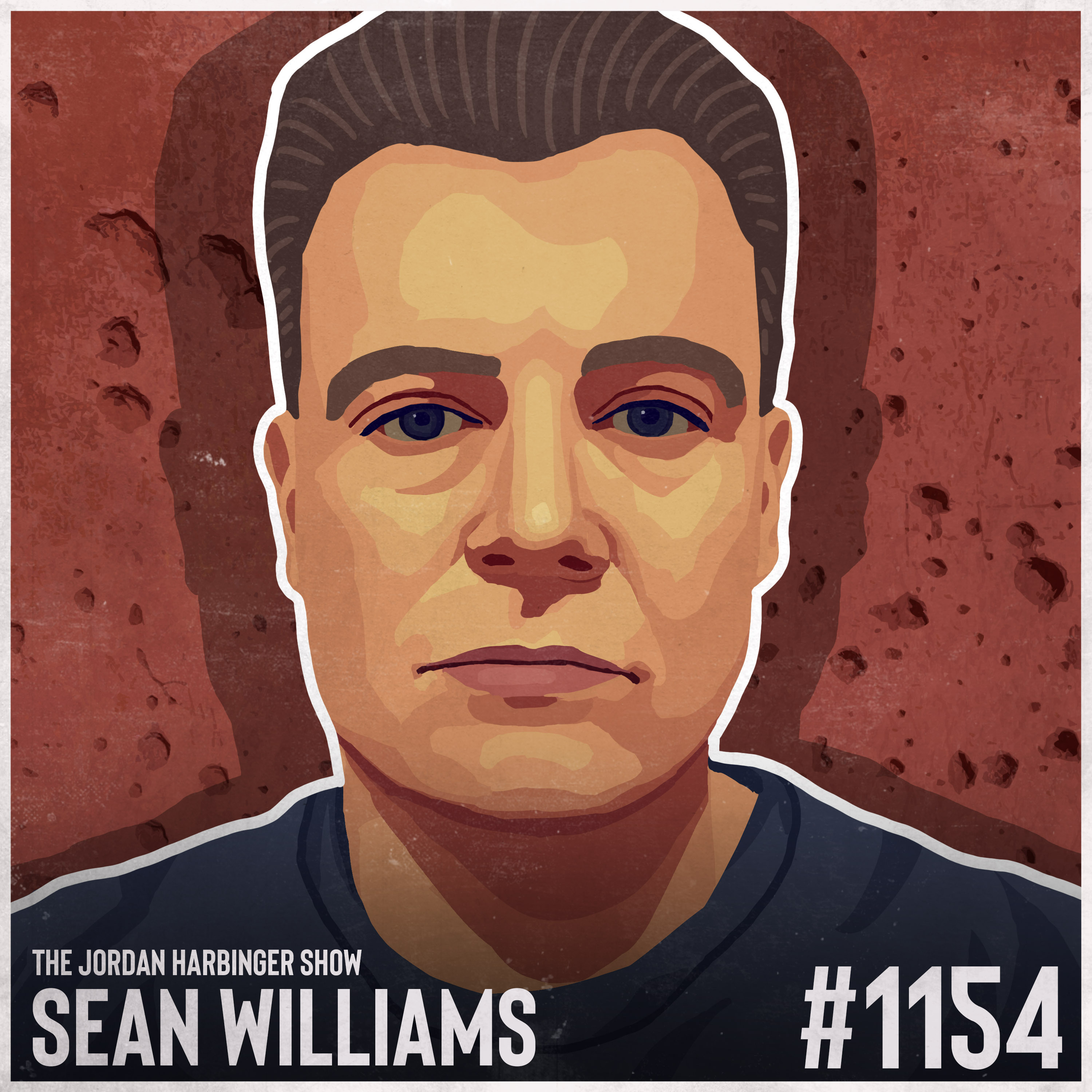
1154: Sean Williams | The North Korea-China-Drug Cartel Connection
Sean Williams gives us a peek beneath a global shadow economy that thrives as countries like North Korea and China operate like criminal enterprises.
Jordan's must reads (including books from this episode): AcceleratEd
Full show notes and resources can be found here: jordanharbinger.com/1154
What We Discuss with Sean Williams:
- North Korea operates as a massive organized crime outfit, generating revenue through forced labor, human trafficking, drug production/trafficking, and cybercrime to fund the regime's survival.
- North Korean hackers (Lazarus Group) have become sophisticated cybercriminals, stealing $1.5 billion in cryptocurrency from ByBit exchange in February 2025.
- Chinese "flying money" (Fei Chen) operates as an ancient, untraceable money transfer system now widely used by drug cartels and for capital flight from China, possibly totaling $2 trillion annually.
- Chinese money laundering has had a visible impact on real estate markets in Vancouver, Toronto, Sydney, and Los Angeles, where properties purchased with laundered funds remain unfinished or abandoned.
- Despite public diplomatic cooperation between US and China on financial crimes, both countries have conflicting incentives — China benefits from US drug chaos while the US benefits from Chinese capital flight.
- And much more...
And if you're still game to support us, please leave a review here — even one sentence helps!
- Sign up for Six-Minute Networking — our free networking and relationship development mini course — at jordanharbinger.com/course!
- Subscribe to our once-a-week Wee Bit Wiser newsletter today and start filling your Wednesdays with wisdom!
- Do you even Reddit, bro? Join us at r/JordanHarbinger!
This Episode Is Brought To You By Our Fine Sponsors:
- Jordan's must reads (including books from this episode): AcceleratEd
- IQBAR: 20% off: text "Jordan" to 64,000
- BetterHelp: 10% off first month: betterhelp.com/jordan
- NordVPN: Exclusive deal: nordvpn.com/jordanharbinger
- Shopify: 3 months @ $1/month (select plans): shopify.com/jordan
- Homes.com: Find your home: homes.com
See Privacy Policy at https://art19.com/privacy and California Privacy Notice at https://art19.com/privacy#do-not-sell-my-info.
Press play and read along
Transcript
Speaker 1 This episode is sponsored in part by Dell. It's time for Black Friday, Dell Technologies' biggest sale of the year.
Speaker 1 Enjoy huge savings on select PCs like the Dell 16 Plus, featuring Intel Core ultra-processors, and with built-in advanced features, it's the PC that helps you do more faster.
Speaker 1 Plus, earn Dell rewards and enjoy many other benefits like free shipping, price match guarantee, and expert support.
Speaker 1 They also have huge deals on accessories that pair perfectly with your Dell PC and make perfect gifts for everyone on your list. Shop now at dell.com/slash deals.
Speaker 1
Extra value meals are back. For just $5, get a savory and sweet sausage, egg, and cheese McGrittles, plus hash browns and a coffee.
Only at McDonald's.
Speaker 1 For limited time only, prices and participation may vary. Prices may be higher in Hawaii, Alaska, and California and for delivery.
Speaker 2 The first impression of your workplace shouldn't be a clipboard at reception. Sign-in app turns check-ins into a moment of confidence for your team and your guests.
Speaker 2 Visitors, contractors, and staff can sign in by scanning a QR code, tapping a badge, or using an iPad in seconds.
Speaker 2 We handle the security, compliance, and record keeping behind the scenes so you can focus on people, not paperwork. Enhance security without compromising visitor experience.
Speaker 1 Find out more at signinapp.com.
Speaker 2 That's signinapp.com.
Speaker 1 Welcome to the show. I'm Jordan Harbinger.
Speaker 1 On the Jordan Harbinger Show, we decode the stories, secrets, and skills of the world's most fascinating people and turn their wisdom into practical advice that you can use to impact your own life and those around you.
Speaker 1 Our mission is to help you become a better informed, more critical thinker through long-form conversations with a variety of amazing folks, from spies to CEOs, athletes, authors, thinkers, performers, even the occasional former jihadi, gold smuggler, Russian spy, or special operator.
Speaker 1 And if you're new to the show or you're looking for a handy way to tell your friends about the show, I suggest our episode starter packs.
Speaker 1 These are collections of our favorite episodes on topics like persuasion and negotiation, psychology and geopolitics, disinformation, China, North Korea, crime and cults, and more.
Speaker 1 That'll help new listeners get a taste of everything we do here on the show. Just visit jordanharbinger.com slash start or search for us in your Spotify app to get started.
Speaker 1 Today on the show, journalist Sean Williams and I rap about North Korea, how they generate revenue for the regime using illegal operations such as human trafficking, drug trafficking, cryptocurrency heists.
Speaker 1 They're really big on those these days. We also dip into Chinese money laundering, drug cartels, and more.
Speaker 1 I talk a lot during this episode because China, North Korea, money laundering seem to be a nice, the Venn diagram of those passions and interests overlap quite a bit for me personally.
Speaker 1 So yeah, don't email me whining about how much I'm talking during this episode. I think this is fascinating and you'll be able to tell my enthusiasm during the episode itself.
Speaker 1 And I hope that you share that with us. Here we go with Sean Williams.
Speaker 1
We've been trying to have this conversation for quite some time. Your Underworld podcast, you guys do so many amazing episodes.
We had your compadre Danny Gold on a long time ago as well.
Speaker 1 And you and I share this, can we call it a passion for North Korea? Is that a thing?
Speaker 3
Yeah, we can say that. Yeah, yeah.
It's healthy.
Speaker 1 I know that you covered some pretty interesting topics about North Korea. We talked about meth, which we'll get to a little bit later in the show.
Speaker 1 But I want to talk about the forced labor and the way that North Korea generates revenue. Because I think this is, that old cliche is follow the money, right?
Speaker 1 And so when you look at North Korea, people are like, how is this place still around?
Speaker 1 What's going on with it? How come they're causing trouble internationally? What's the deal? It really does all come down to the money.
Speaker 1 And a lot of people who watch North Korea casually read the news about North Korea.
Speaker 1 Once you realize that North Korea is essentially not a quote-unquote real country in that it's more of a mafia that runs a country, it makes way more sense.
Speaker 1 Does that ji with your understanding of the place?
Speaker 3 Yeah.
Speaker 3 It's like when you drill down into it, there's not a lot below the surface in a way because it's just the Kim family and then a bunch of very benighted poor people around them that happen to be within the borders of a country called North Korea.
Speaker 3 And the way that it makes money, like you said, there's just so much illicit stuff that goes on.
Speaker 3 And it pretty much has become the economy now, apart from some stuff going into China, which they're still kind of friends with.
Speaker 3 They just use their people as capital now to try and get foreign exchange, which is the gold dust for them, going back all the way to the 60s and 70s when Kim Il-sung, the like godfather of this mafia, He basically ditches like the Soviets and ditches the Chinese and their views of communism.
Speaker 3 He's like, I'm going to go full out, despot cult of personality. This is going to be a country that revolves literally around me and nothing else.
Speaker 3 And this is what we know as Juche's like cult of personality around the Kims and I guess a communist royal family, if that even sort of makes sense.
Speaker 1
Yeah, it doesn't, right? Like communism, we're all equal. And the guy's like, by the way, I'm God, just to start.
And it's okay.
Speaker 1 What? Yeah.
Speaker 3
And they're like, I'm king now. I've changed the rules.
Yes. It's fine now.
It's okay. And so, like, from the 70s onwards, he's just getting sanctioned to the hilt by the UN, by everyone.
Speaker 3 And the way that they figure out that they need to make money is by getting onto the black market.
Speaker 3 And so one of the ways they do this is by dispatching hundreds of thousands of their own people abroad to work in what essentially are kind of labor camps in the worst form of the word.
Speaker 3 And most of them go to the Soviet Union at the time.
Speaker 3 So they work in logging, which is the typical one out in the Russian Far East, which if people don't know, Russia is way big and it has a bunch of forests out in the middle of nowhere near Japan, which is crazy how huge Russia is.
Speaker 3
So, the North Koreans use these forced laborers. Basically, like nearly all of their wage goes back into the state and into the coffers of the dictatorship.
And so, that continues.
Speaker 3 And then, in the 1990s and the mid-1990s, especially are kind of like the breaking point for a lot of things in North Korea.
Speaker 3 You've got Kim Il-sung dies, his son, Kim Jong-il, who people will know from Team America and other funny things.
Speaker 3
He basically leads the country through this insanely devastating famine. Crops fail.
Many people die. I mean, it's only a country of what, like 24, 25 million people.
Speaker 3 And I think several million people die. And then they ramp up this illicit economy to try and just claw back anything like grain, gold.
Speaker 3 absolutely anything they can get their hands on they will and that's when this illicit activity including the labor stuff just really goes crazy and so like today you even see north korea has laborers i think it's like between a hundred and two hundred thousand north koreans working abroad these days they're still in the logging camps out in the far east of russia all over the border there's some people working in china i think there was like a vice documentary a few years ago where someone followed them all the way to western poland yes in poland and they found them i think welding ships or something like that or doing some kind of welding thing.
Speaker 1 And I remember watching this. This guy is welding, and he has no eye protection and no protection at all.
Speaker 1 Like, he's not even wearing anything but like gloves, I think, and a shirt and like a regular shirt. And he's welding inside this enclosed space, no breathing apparatus, nothing.
Speaker 1 He just has on like a pair of crappy sunglasses. This man is going blind, getting burned, and inhaling all of that, whatever that gas is from welding.
Speaker 1
And there was this Polish lady who was the labor agent, and they filmed her secretly. And she was just like, I don't care.
It's illegal. Screw it.
Speaker 1
And they're like, yeah, is this going to be a problem? And she's like, no one's going to find out. It's definitely illegal.
They basically had her on camera being like, this is 100% illegal.
Speaker 1
We just don't care. And it's organized crime.
It was shameless. She wasn't sugarcoating it.
She wasn't like, no, this is all above board and totally fine. And they're not from there.
Speaker 1
It was just like, yeah, these are slaves. You can do whatever you want.
It was just crazy to me.
Speaker 3 When you hear the stories of the guys who defect from the north as well, like the way that they describe Juce or this cult of personality is like there is no god right there are kims so you serve them and serving them is like a kind of semi-religious just an incredible honor right so people are out there laboring in the worst conditions imaginable on earth and this guy with like no protection i mean it must cost a dollar to protect him but that's too much for the polish woman and they're doing it because there is a religious belief that the country is the kims i met a guy actually in Seoul a few months ago, and he was a defector.
Speaker 3 And the way that he described, he'd been pretty high up in the Politburo. He'd been a propagandist.
Speaker 3 Now he works one of those radio stations that broadcast stuff across the border, like Kim Jong-in's a dick, basically, over and over again.
Speaker 1 Yeah, he's a human with a butthole that is working overtime, or whatever they said in the movie.
Speaker 3 Yeah, and the way that he described it was, I didn't know that religion exists or anything like philosophy existed. There was one philosophy that was the Kims.
Speaker 3 And so anything you do, therefore, for them, no matter what you go through, is good, including starvation and forced labor and trafficking, drugs, and whatever. I mean, I used to live in Berlin.
Speaker 3 I've lived in Berlin for many years. And the North Korean embassy there was in the Old East, obviously, and it ran a backpackers motel.
Speaker 3 So all these foreign backpackers coming through Berlin were heading to this like crappy motel in the middle of town, but it was run by the North Korean embassy and it was funneling foreign exchange straight back to Pyongyang.
Speaker 1 How does that fall under the diplomatic rules?
Speaker 1 I know you can do pretty much anything out of an embassy, but running a business that's open to the public seems like one thing that might not totally qualify.
Speaker 3
Yeah. I don't know.
I don't know, to be honest. I should know.
My partner's a diplomat. I should figure this out.
But they do this all over the world.
Speaker 3
There's a bunch of North Korean restaurants all over the world. There's one in Dubai.
I think in Abu Dhabi.
Speaker 1 I've been to one. In Dandong, China.
Speaker 3 They have all these crazy dance shows, traditional female dancers doing these crazy dances in traditional dress, and that's funneling money back to the Kim.
Speaker 3
So it's quite an impressive racket, and it's just so global. And it's happened for so many years now, it's so entrenched.
I think the Backpackers Hotel in Berlin was shut down in the end.
Speaker 3 And I think a few more have shut down.
Speaker 3 A few of these restaurants and other businesses had shut down during COVID and they haven't popped up because I think countries that they're in realize, oh, yeah, this is a good excuse to shoot this thing on without anyone really making a stink about it.
Speaker 3 But it's still up and running. And there's far more naughty stuff happening than traditional dances and noodle soups.
Speaker 1 I'm curious about that because when I was in Dandong, first of all, I didn't know that there were like 100,000 North Korean workers in China and like 80,000 in Dandong. I didn't know that.
Speaker 1 I mean, now I assume that every Korean person I met in Dandong was actually from North Korea, which is probably a safe-ish assumption.
Speaker 1 We went to one of those, I forget what they're called, but it's the floor is heated and you like lay down in this sauna and you hang out.
Speaker 1 And I remember a lot of guys in there were korean they were like chinese koreans and there was a girl who was very pretty and young who was talking with us and the guys that she was with were old enough to be her dad and they were just laying around and i remember thinking like wow there's so many chinese koreans but now i'm like were they chinese koreans or are these like north korean dudes that work in this area or are somehow allowed by the regime because they were really unfriendly that could be anything that doesn't mean anything but the restaurant we went to the women there were really interested in me and my friend because we showed them photos of our trip to North Korea that my friend had on his iPad he's a photographer so we had like really good photos of North Korea that they had also probably never seen something taken on a Sony whatever DSLR camera they'd probably never seen a photo of North Korea like that or very rarely right they had these crappy phones that barely took photos at the time this is like 2011 or something like that So we were showing them the photos and they were hanging out and talking with us and stuff like that.
Speaker 1 And these Chinese tourists came in and I thought, oh, okay, now it's their turn to get the treatment that we're getting. And it wasn't like that.
Speaker 1
The women were really like all hanging around me and my friend. My friend has tattoos from head to toe.
So he was also a really interesting looking guy for them.
Speaker 1
And they kept touching him and lifting up his shirt and stuff. And we were just having a good time.
And we went there two days in a row. And then one of the women was like, oh, do you guys live here?
Speaker 1 And my friend was like, no, we're just tourists.
Speaker 1 And he goes, but you should come out with us and we should go eat at a different restaurant here in China and like hang out and you can see more photos. I'll bring more photos and stuff like that.
Speaker 1
And the girls were like, leave this place and go with you. And my friend was like, yeah, sure.
Why not? We can just figure it out. Do you have a night off tomorrow? And they were like, hold on.
Speaker 1 And the manager came over and I was like, I think we're going to get in trouble slash kicked out. The manager was like, you want to take the girls out of the restaurant?
Speaker 1 And we're like, not right now, but maybe tomorrow or the next day. And he was like, huh, I'll think about it and I'll talk to you after the meal.
Speaker 1
And I remember thinking, like, I want to be really clear that we are not purchasing these women. Yeah.
Like, I don't understand what's going on.
Speaker 1 And then as we left, the girls were like pushing each other out the door jokingly and like laughing and saying stuff in Korean to my friend, especially who was like really flirting with them.
Speaker 1
And the boss guy came down and he's sorry, it's not possible. And we were like, yeah, we understand.
Okay, bye.
Speaker 1 And I remember the girls were disappointed when he told them because I think that was news to them too.
Speaker 1 I think they thought like, oh, our time's going to get purchased and we're going to go out on today. And then after we got back to the hotel, my friend was like, that would have been so fun.
Speaker 1
And I was like, I'm pretty sure. that was on the table and we just didn't say the right things.
We didn't flash cash to like rent these women, but I don't want to do that.
Speaker 1
And he's like, yeah, me neither. That's really weird.
But it seemed like they weren't allowed to leave. They also, oh, by the way, they told us they lived upstairs, which I thought was extra creepy.
Speaker 1 They told us they lived upstairs in the restaurant.
Speaker 1 Right. One of the women had said something, and again, could be lost in the translation, but she had said something like, I've never been out of this building since I've been to China.
Speaker 1
And I was like outside in the restaurant. And she's like, no, I've never been anywhere but here.
And I was like,
Speaker 1 am I understanding her? And I think she'd never left the building.
Speaker 3 Yeah, that makes sense. Is Dandong like a happening place? Is it like a
Speaker 1
Dandong, China? If the river's frozen, you can walk to North Korea. Now there's a fence, but before there wasn't a fence and you could just walk there.
This place was so bizarre, man.
Speaker 1
I got to tell you, like, there's all these coffee shops. Now every place has Wi-Fi, but back then I was like, I need Wi-Fi to do stuff.
So I'd go to the coffee shop that had Wi-Fi.
Speaker 1
And I remember sitting in one place and they had the blonde white girl working the register. And I thought, oh, that's cool.
She works abroad. And then my friend's like, what is this music?
Speaker 1
And I was like, oh, yeah. It's all like, Jesus is the Savior, blah, blah, blah.
Every song is like super Jesus-y, huh? Crazy. So I went up to the girl and I go, what's up with the religious music?
Speaker 1 Is this like a religious establishment? She's like, no, we're all Mormon. And I am like, who's all? And she's like, everyone that works here and a bunch of these cafes, we're all Mormon.
Speaker 1 And I was like, so are you on mission? She's like, nope, we live here. And I was like, what on earth is going on? And then I noticed that there were a ton of people in the back of this place.
Speaker 1 And they weren't all white, but they were mostly Asian.
Speaker 1 I don't know if they were doing Bible study or what, but people would also come in and they would go back there and they'd be like, oh, hi, Angela, or whatever. And they would walk in the back.
Speaker 1 And I just thought, like, okay, something else is going on here because this building is huge. They obviously have the whole building, but only the front is this coffee shop and literally the front.
Speaker 1
So I told my buddy, I was like, something is going on here. He's like, I know.
I just can't figure out what it is. So we went back the next day and we started asking her like, so what's up?
Speaker 1 You guys have the whole building? And she would not answer a single freaking question. Years later, I get back home and I'm talking about North Korean refugee smuggling with some people from this NGO.
Speaker 1
And they told me almost certainly what's going on there is these Mormons. are smuggling refugees from North Korea.
And North Koreans have instructions to look for a certain sign.
Speaker 1 And they're like, walk in and there's a white person there. Cause this place was open late AF too, by the way.
Speaker 1 It was open open to like one o'clock in the morning, which is weird for a Mormon coffee shop. And don't Mormons also not drink coffee? So I was just like, what is going on?
Speaker 1
So I think what they did was they had these coffee shops. By the way, they were all right on the river.
They were on the street next to the river.
Speaker 1 I think they have these people cross the river, run to that place, say a code word or whatever it is, run to the back. and get hidden from any authorities that might be pursuing them.
Speaker 1 And then they get smuggled through South Korea because this woman had no time for our bullshit.
Speaker 1
Like she was just like, take your coffee, sit over there, shut up, don't ask me any more questions, basically. And all of it was off.
Every single bit of it was off.
Speaker 1 And it was only when I finally started talking to people who smuggle refugees through China and into South Korea that there's safe houses everywhere. And a lot of them are run by.
Speaker 1 Mormons and other religious people who
Speaker 1
essentially have a calling to risk a lot. Because if you get arrested doing this in China, I can't imagine they're like, ah, it's fine.
Here's your fine or here's your flight home.
Speaker 1 I think they probably put you in prison, even if you're a cute, blonde, 18-year-old.
Speaker 3 Yeah, I don't think you're going to be like cleaning up graffiti on the side of a building for that. I think you're going to be in a bit of trouble.
Speaker 1
No. So me and my friend were creeped out by Dan Dong, man.
We were uber creeped out. And we'd already been to North Korea a couple of times.
Speaker 1 That was the time, and I'll shut up now at some point here and let you talk during your interview. But that was the time I also went on a boat tour of North Korea from Dandong.
Speaker 1 And I didn't speak Chinese at the time, but you're driving around in this boat and it was summer, so the river wasn't frozen.
Speaker 1 But we were driving around on this boat and you could see the North Korean guards on the shore. And I remember the captain of the boat was kind of alarmed and people were taking photos.
Speaker 1 And I said, what's going on? And one of the Chinese guys was like, oh, usually the guards are in the tower. They don't come out, but now they came out to look at the boat.
Speaker 1
So this guy was snapping photos with a telescopic lens. And then you hear the boat captain go something.
And then I was like, what's that? And he's like, oh, they don't want us to take photos.
Speaker 1
But the guy was like, screw it. Everybody was just like, screw it.
I'm going to take photos anyway. The guard on the shore raises his rifle and aims it directly at the boat and is angry.
Speaker 1 And then the captain over the loudspeaker is screaming in Chinese and turns the boat around. And that was the end of the tour.
Speaker 3 I mean, that's more exciting than most boat tours I've ever taken.
Speaker 1 However, when I got back, I read that a few months or years prior, some Chinese fishermen had been fishing in the river. Their engine died and they drifted to the North Korean side.
Speaker 1
And when they got out, they were just summarily executed by the border guards. They just got shot.
It wasn't like, oh, let's push your boat out. Let's call the other guy.
Speaker 1 No, they just shot them like on the beach and were like, hey, come pick up the bodies of these guys who tried to get into North Korea.
Speaker 3 Wow. Yeah.
Speaker 3 They don't do those fishermen on Discovery Channel shows, do they?
Speaker 1
No. Second deadliest catch is now the one with crabs.
The deadliest one is the one where you get executed by North Korean border guards for setting foot on the beach because your boat is disabled.
Speaker 1
Yeah. So Dan Dong, no, it's not happening.
It's just a bed of spies espionage and human trafficking, basically.
Speaker 3 I once met a guy in Yangon who, I think he was a Chinese national, but he was basically, he got more and more drunk and told me that he was a gunrunner. And he was working in Dandong.
Speaker 3 So he must have been working on this like illicit arms trade that goes through there as well, which is another way that the Koreans make a lot of money.
Speaker 1 Tell me more about that because I've heard things like the North Koreans get caught smuggling heroin to Australia in boats.
Speaker 3 Yeah, you're thinking of the Pong Su thing in 2003, right? They found that freighter off the coast of Australia.
Speaker 3 I think it was flagged in Tuvalu, which is, I don't think Tuvalu has a particularly huge fleet. That's probably a big blue flag.
Speaker 1
What's like Liberia also, right? Panama, Liberia, those flags of convenience. I've done a few shows on flags of convenience.
And for those who aren't interested, go listen to those episodes.
Speaker 1 But the summary is you basically, when you have a ship, and it's American, you go, oh, I'm subject to American law. And then you go, nah, and you buy a flag of convenience from Liberia.
Speaker 1 And suddenly you're under, you have to follow Liberian law, which says, do whatever you want, bro. Just whatever.
Speaker 1 Give us $10,000 a year and you can have slaves on your ship and we'll never inspect it, basically.
Speaker 3 Yeah. Feels like a loophole they should have closed quite a while ago.
Speaker 1 But there's no incentives to close it, right? I remember learning this. Who's going to close it? The people who make millions of dollars a year for their countries? No.
Speaker 1 The boat owners who are like, huh, I can be subject to the laws of Denmark where I have to pay fair wages and repair the ship or the laws of Liberia, where I can keep human captives on here and force them to fish for me for years and then kill them.
Speaker 1 Like, all right, I'll choose the one that allows me to make money and has no ethics.
Speaker 1 And so there's no incentive to change that because even if every government in the free world was like, you can't do that, well, the boat's in international waters.
Speaker 1 What are you going to do about that? You're going to change that law too?
Speaker 3
Yeah. Multilateralism is not going so well at the moment.
No. There's probably no chance of that happening.
Speaker 3 I think that 2003 incident, I think it was the Pong Su, they found over 125 kilos of heroin stashed in the hole.
Speaker 3 This was at a time, I think it was moored off Victoria Cosa, like Melbourne basically is one of the richest drug markets in the world. So that was all going there.
Speaker 3
But even in 22 years since that happened, the whole drug industry has changed for North Korea. So they've got more into meth.
I mean, who isn't into meth these days?
Speaker 1 Let he who's not into meth cast the first stone. Exactly.
Speaker 3 Wait, can I chuck us?
Speaker 1
Yeah, I don't know. So tell us about the North Korean meth problem.
Then we'll wrap up the slave labor and human trafficking stuff and go into Bureau 39.
Speaker 3 Yeah, again, it's the 90s that changed everything, right? So the 2003 Pong Su, that's the tail end of North Korea being deep into heroin because it's poppy fields. It was growing its own, basically.
Speaker 3 It was homegrown heroin and it was selling it on the international market.
Speaker 3 Until the mid to late 90s, the famine hits, all of these poppy fields freeze over and they kind of lose the entire industry from that point. They never get it back.
Speaker 3 So, they do what is happening in the Golden Triangles, I'm sure you know, well, in the mid-90s, is they just switch to Yabba, meth, crazy pills.
Speaker 3 It's all the rage all over the Golden Triangle, especially in Burma, Myanmar, where it's getting made by the WA, this crazy kind of ethnic Chinese tribe on the border with China.
Speaker 1 I did a show about the Wah.
Speaker 3 Yeah, they are an interesting bunch. I've met a few of those guys, they're really nice, actually, because they don't give a crap.
Speaker 3 No one cares what they do in Myanmar, so they're under no threat whatsoever. So they just like chat to you openly.
Speaker 1 Episode 966, Patrick Wynn, WA State. It's basically when a drug cartel becomes a country.
Speaker 3 Yeah, he knows better than anyone. He's such a great writer.
Speaker 1 Yeah, he went there, wrote a book about it.
Speaker 1 He's basically just homeboys with a bunch of WA people who are famous for putting heads on spikes from outsiders, which is kind of a thing that I didn't think happened anymore. Yes.
Speaker 3 But in my sample size of about five guys, they're lovely.
Speaker 1 Yeah, I think it's if you're welcome, you're fine. If you show up unannounced, you're getting your head put on a spike.
Speaker 3
But my head is still firmly attached, so I'm all right. But in the mid-90s, middle to late 90s, North Korea goes with the flow and it starts making meth.
Obviously, it's way cheaper to produce.
Speaker 3 You can make it in factories if you've got the know-how. And if you've got the backing of an entire state that's willing to chuck a few mil at the industry, then you can do it overnight almost.
Speaker 3 So meth starts becoming the drug of choice in North Korea and they start becoming a major sort of shipper of the drug around the region, especially over to Australasia and Southeast Asia.
Speaker 3 They become a big player in it. You get to the point now where meth has taken over in the North Korean state to such an extent that they've got a huge domestic consumption issue.
Speaker 3 There's a bunch of stories came out late last year about it being more easier to get a wrap of meth than it is to get cigarettes or a loaf of bread or something like that, which is pretty grim.
Speaker 3 From what I've read and what I know about this, like it's state-driven. There is a state-driven meth
Speaker 3 industry for domestic consumption consumption as well as selling it overseas it's doubly disgusting to kind of poison your own people as well as incarcerate and send them out the labor market you know all of this horrible stuff is you would think with north korea surely it's going to all implode at some point soon but it hasn't so far i mean it looks like it's getting even more bellicus between them and the south so i remember one time when i was there we asked our guide about marijuana because we saw some growing just randomly and it grows everywhere and i said do people smoke it and he's like, some people do, but I don't know anyone that does.
Speaker 1
But he told us a lot of people will chew it or something like that. And it sounded like he didn't really know.
We asked him about meth and he said that it wasn't a problem, but kids did it sometimes.
Speaker 1 And I was like, that sure sounds like a problem.
Speaker 1 It was if you ask an adult who doesn't really know a lot or is trying to conceal how bad things are if kids do marijuana, like, oh, only those hippie kids do that.
Speaker 1
And it's okay, but we're talking about meth. So the fact that any kids that do it is a little bit alarming.
Yeah, slightly. Yeah.
Slightly alarming.
Speaker 3 They also big into moonshine as well, because I think alcohol is just far too expensive. And they make vodka basically out of like spuds and other stuff.
Speaker 3 And we were talking about the stuff that the diplomats do.
Speaker 3 And I think one of the things I saw was that in Pakistan and Kuwait and some other dry countries, North Korean diplomats have been selling whiskey and beer and other black market alcohol.
Speaker 3
So they're like, even if it's making them sort of 10 bucks, they're doing it. It's like any little helps the Kim.
So it's a crazy place.
Speaker 1 The fact that diplomats are self-funded in North Korea, like if you're a North Korean diplomat, they're not like, here's all the money you need to run your embassy.
Speaker 1 It's for many countries, they just have to figure out how to survive there.
Speaker 1 If you're the North Korean ambassador to Sierra Leone, you're essentially in charge of running organized crime rackets so that you can run the embassy and then send proceeds back. to the Kim family.
Speaker 1 And if you can't do that, I assume they recall you and put somebody else in place who's just maybe more enterprising because the idea is you're generating revenue.
Speaker 1 They don't really probably care that much. I mean, diplomatic relations for the Kim family is what are you bringing to the table? How much money are you generating for North Korea?
Speaker 1 It doesn't matter if it's legal or not. And so the legal stuff would be like, hey, we're going to have guest workers come over here and build an airport and clear a jungle and do that.
Speaker 1 That's going to be brutal. And the illegal stuff is, oh, and also we're going to sell people or run guns from here through there or run drugs through the country to another country.
Speaker 3 There's some Australian guy in Melbourne needs a new fix and he gets a text from his dealer, meet me here, and he goes to the house and it's just got a North Korean flag flying out of the top of it.
Speaker 3 You're like, oh, okay, this is weird.
Speaker 1 Whatever. But you know what, though? I get it.
Speaker 1 Because sure, state security is monitoring all embassies, but they're maybe not able to figure out exactly what's going on inside because it's not like they can get a warrant to go in there.
Speaker 1 So yes, state security might be monitoring them, but if they start arresting random small-time drug dealers that pop out, out, they're going to figure out that they're under surveillance and maybe do something about it.
Speaker 1 So essentially, if you go in there and you buy a kilo of cocaine or heroin, the government has to decide whether or not they really care about that enough to potentially disclose sources and methods in how they catch you.
Speaker 1 And if it's a place with rule of law, they have to say, we have a wiretap on the North Korean embassy and here's them talking with you about this.
Speaker 1 And they're not going to do that because they want real intelligence.
Speaker 1 So what they're going to try to do is catch you randomly coming out with it, but that's going to eventually add up and be too much for a coincidence.
Speaker 1 And if you're not selling the drugs in that country, right?
Speaker 1 If you're going through Sierra Leone, but you're only selling your drugs in Ivory Coast or something, are they going to do anything about it?
Speaker 1
Are they going to be like, look, the guy doesn't sell the stuff here. Screw it.
He's bringing money back. He's greasing the palms of certain people high up in the government.
Whatever.
Speaker 1 What do we care?
Speaker 3 And that's why you keep that backpacker motel open in Berlin, right? Letting them have some crappy hostel keeps them in the tent.
Speaker 3 Then, yeah, I guess you're going to just keep them in the city no matter what to find out what the hell they're doing.
Speaker 1 I think that's probably true. And also, oh, they're making a bunch of money from a backpacker hostel.
Speaker 1 And they said, hey, if we ever close this place down, let's just sell guns and drugs to neo-Nazi gangs. All right, let's keep the hostel open.
Speaker 1 And if they start selling guns and drugs to the neo-Nazi gang, we'll crack down on all of their operations.
Speaker 1 But until then, I feel like having cheap bunk beds and some cheap beer is probably relatively harmless. I'm just trying to get in the head there.
Speaker 1 A friend of mine, Charles Rue, again, also an episode of this show, he mentioned that he was repatriated from China because his dad was Chinese, also a drug dealer.
Speaker 1 He got repatriated to North Korea after escaping, and they put him in a labor camp domestically because we were talking about working outside of North Korea and that generating revenue.
Speaker 1
But there's people inside North Korea, tremendous numbers of them. He was a kid.
He was like 12 at the time or something, or 15, I can't remember.
Speaker 1
And he worked in the mines, like he worked in coal mines, basically. And he actually said it wasn't that bad.
And he stayed after his punishment to continue working there.
Speaker 1 And he spent his money on alcohol and saved a little bit and then escaped to China again.
Speaker 3 Geez, what a life.
Speaker 1
Wow. Yeah.
Yeah. He's a really interesting dude.
I'm going to have him back on the show now that his English is better.
Speaker 1 But I wanted to highlight that because a lot of people think, oh, why escape from something and then go work in this other place? Or why volunteer to work abroad like this?
Speaker 1 And the truth is, it's actually better to be in a North Korean mine than it is to be maybe unemployed in North Korea because he was homeless before that.
Speaker 1 And it's better to be working abroad welding with no glasses and no protective clothing than it is to be working in North Korea where maybe you just don't even have food.
Speaker 3
This is a cold place, right? I was doing an interview in January and just south of the North Korean border. It's like minus 12 degrees C.
It's crazy cold. You're going to die if you're not inside.
Speaker 3 So maybe just being inside is the reason that you work. It's grim stuff.
Speaker 1
Since I don't traffic in meth or stolen crypto, I'm stuck relying on you to support the amazing sponsors who support this show. We'll be right back.
This episode is sponsored in part by Kachava.
Speaker 1 Someday as I get so deep into recording for you guys that I end up having to skip a meal or just forget to eat one, I'll look up from the mic like, wait, it's 9 p.m. How did that happen?
Speaker 1
All in the name of another great episode or three. So on those late nights, when the house is quiet, Jen, and the kids are asleep, my reward for a long day of work is cachava.
It's convenient.
Speaker 1 It's really tasty. It's actually whole body nutrition that is ready in seconds, which for me is key because if it takes longer than 30 seconds, I'm just going to bed at that point.
Speaker 1 With every two scoops, you get 25 grams of 100% plant-based protein, 85 plus superfoods, nutrients, plant-based ingredients, all the good stuff your body needs without the junk, no artificial flavors, no preservatives, no soy, no gluten, none of that nonsense.
Speaker 1 It's packed with fiber, probiotics, and B vitamins that support metabolism, digestion, even cognition.
Speaker 1 Basically, all the things I need after talking for eight hours straight, my voice is about to give out. My go-to actually is the strawberry flavor.
Speaker 1 I blend it with ice, a little bit of milk, but the chocolate and a little peanut butter.
Speaker 1 That is next level good. You also got vanilla, matcha, coconut, acai, all legit options.
Speaker 4
Your future self will thank you. Go to kachava.com and use code Jordan for 15% off your next order.
That's cachava. K-A-C-H-A-V-A.com code Jordan for 15% off.
Speaker 1
This episode is sponsored in part by Vital Proteins. You've probably heard of Vital Proteins.
They're the number one brand of collagen peptides in the U.S.
Speaker 1 And for good reason, a lot of people, myself included, take it pretty much daily to support things like healthy hair, skin, nails, bones, joints, all the good stuff.
Speaker 1 That starts to matter more the longer you've been walking around on this planet. But now, Vital Proteins is shaking things up.
Speaker 1 Literally, you can tell a dad wrote this copy with a brand new collagen and protein shake. And this isn't your average protein shake that tastes like chalk and sadness.
Speaker 1
This one's light, chocolatey, super smooth, and it's got something pretty unique going for it. High quality protein, 30 grams of it plus collagen.
That's pretty good ROI.
Speaker 1 Usually you're choosing one or the other, but Vital Proteins gives you both a ready-to-drink shake you can toss in your bag or fridge, zero added sugar, no artificial sweeteners, and no carrageenin.
Speaker 1 And I don't know what that is or if that's even how you say it, but you're you're supposed to avoid that if you're already taking collagen or you're just curious about how it might support your hair skin nails joints and you don't want any carra genin this is a super easy tasty way to try it get 20 off by going to vitalproteins.com and entering promo code jordan at checkout When someone walks into your workplace, a guest, a contractor, a delivery, do you really know who they are?
Speaker 2 That's where Sign In App comes in. It's the simple secure visitor management system that replaces paper logs with instant visibility.
Speaker 2 Scan an ID, sign in, and you'll know exactly exactly who's on site and why they're there because confidence starts with control.
Speaker 2 Over 22,000 businesses already trust SignINAP to keep their workplaces safe, professional, and welcoming.
Speaker 1 Try it free at signinapp.com.
Speaker 2 Smart, secure sign-in for workplaces.
Speaker 1 If you're wondering how I manage to book all these great authors, thinkers, and creators every week, it is because of my network.
Speaker 1 And I'm teaching you how to build your network for free over at sixminutenetworking.com.
Speaker 1 Some of you are probably not booking for a podcast, but let's say hypothetically you're a meth trafficker from North Korea.
Speaker 1 You're going to love this course because it inspires other people to build a relationship with you. And it does it all in a super easy, non-cringe, down-to-earth way.
Speaker 1 No awkward strategies or cheesy tactics, just practical exercises that'll make you a better connector, a better colleague, a better friend, a better peer, and maybe even a better money launderer.
Speaker 1
But I can't really guarantee you that. Just six minutes a day is all it takes.
And many of the guests on the show subscribe and contribute to the course. So come on and join us.
Speaker 1
You'll be in smart company where you belong. You can find the course again, it's all free at sixminutenetworking.com.
Now, back to Sean Williams.
Speaker 1 The slavery element or the forced labor element inside North Korea is so widespread. I read in a piece that I think you wrote, some farms and factories don't pay wages or provide food to the workers.
Speaker 1 And it says, during implementation of short-term economic plans, factories and farms increase workers' hours and ask workers for contributions of grain and money to purchase supplies for renovations and repairs.
Speaker 1 So basically, you have to work there and you don't get paid. That's slavery, basically.
Speaker 3
Yeah, straight up and down. Yeah.
If you don't work for us, you die. We're not going to pay you.
We're not going to give you anything. You might live.
You'll probably die anyway.
Speaker 3 But yeah, it's better to go with us. What a great offer.
Speaker 1
Yeah. Not that compelling when you phrase it like that, but sure.
On one of my trips in North Korea, we saw so many people working in the fields. And our guide told us that every year
Speaker 1 they have to stop going to school for a couple of months and they go and help the farmers harvest food, which is nuts.
Speaker 1 And you're working for free for a couple of months in the fields because it's just so labor-intensive and they don't have machinery to do it. Oh, man.
Speaker 3 Increasingly, all of this money is just going into making bombs that Kim can threaten everyone with so that he stays going for another, what, a few months or a year until whenever his heart gives out.
Speaker 3 But it's not changing.
Speaker 1
These guys are bastards. I wouldn't trade my life for theirs.
I'll tell you that. There's no way they're not under constant chronic stress.
Speaker 3 Yeah, you can see it on the cut.
Speaker 1
He looks like a guy who's got some things on his mind. He was 27 a few years ago, and now he's 67 by the look of it.
He is just aging terribly.
Speaker 1 Ironically, my guide in North Korea, she said that she loved working in the fields because you get to meet new people.
Speaker 1 And you almost never actually get to do that in North Korea because you go to school with the same people, then you go to college.
Speaker 1 But if you go to the college that she went to, which is like a foreign language university, it's basically the same privileged cadre of people that you've known your whole life from other schools in Pyongyang.
Speaker 1
There's maybe a few new people, but that's kind of it. And then, so when you go work in the fields, they just assign you geographically.
So you just meet all these new people.
Speaker 1 And she's like, so many girls that she knows met their boyfriends while working in the fields, because otherwise you're just with the same people you grew up with.
Speaker 1 And you know how it is in your dating? You're tired of those people, right? You've seen those people grow up.
Speaker 1
It's like, eh, then you meet some new guy and he's like working with his shirt off outside. And you're just like, woo, it's hot out here.
She loved it. She said everybody loved it.
Speaker 1 And they would play music at night and stuff. It sounds fun until you realize that you're actually a slave for the Kim family working on a farm.
Speaker 3 Yeah, I was going to say, like, sometimes my WhatsApp groups and my friends from home get a little bit meme-y and boring.
Speaker 3 But I guess if we all had to work in the fields for no money and we were dying, it'd be a little bit worse. So I don't have a lot to complain about.
Speaker 1 So to put a bow on this forced labor thing, they work 12 to 16 hours a day, sometimes 20 hours a day.
Speaker 1 They're allowed two days off per month, and they work in a wide range of industries and hazardous conditions.
Speaker 1 Apparel, construction, footwear, manufacturing, hospitality, information technology services, logging, the IT services thing.
Speaker 1 I want to put an asterisk by that and find out more because that doesn't make a ton of sense to me.
Speaker 3 Yeah, they're not working for Airbnb. I think they might be something less lubricant.
Speaker 1 Yeah, well, like, what IT services are you providing when you're a forced laborer? That screams dodgy to me. Logging, medical, pharmaceuticals, also, I don't know.
Speaker 1 I assume they're packaging medications, maybe. Restaurants.
Speaker 3 PPE, I think they did loads of that during COVID as well.
Speaker 1
Seafood processing, textiles, and shipbuilding, the stuff we were talking about in Poland. GOs report that the government manages these workers as a matter of state policy.
This is from an NGO report.
Speaker 1 They're under close, constant surveillance by government security agents. They live in shared dormitories, poor living conditions, obviously no freedom of movement, freedom of communication.
Speaker 1 Their passports are confiscated. And if they complain or attempt to complain to outsized parties or escape, their families are punished inside North Korea.
Speaker 1 And their salaries, of course, are appropriated and deposited into accounts controlled by by the government of North Korea. If they're a shipbuilder, the average pay, I think, was 90 euros per month.
Speaker 1 They cover your food and your living conditions, which are terrible, but they take all of your money except for 90 euros per month, which is actually a lot.
Speaker 1 That's why people take these jobs if they're allowed to choose, because it's actually way better than working inside North Korea.
Speaker 3 Yeah, I mean, the real bastards in this story are the Poles, right, who are doing it, because... Those are the kind of countries that you can control.
Speaker 3
You would think of being in the Western sphere or whatever you want to think of it. And they're taking slave laborers for 90 bucks a month.
It's just, that's the terrible part.
Speaker 3 You can't really change a lot what happens in North Korea, but you can change that.
Speaker 1 You can change the demand for this kind of thing. Yeah, exactly.
Speaker 1
It's estimated that the regime earns up to a billion dollars a year from this because they're all over Africa, Middle East, things like that. And apparently Europe.
And women are trafficked as well.
Speaker 1
I'll let you imagine what happens there. They're sold as wives many times.
And that's horrific. And this is illegal in China.
So the kids they have, what happens to the kids? You have any idea?
Speaker 1 Because if you have kids with your illegal North Korean wife who doesn't exist on paper, is your kid Chinese or are they stateless?
Speaker 3 Yeah, I would assume they're Chinese, but I don't know. Like, where's the money coming from? Where's it going?
Speaker 3 I would assume that the Chinese have genuinely tried to crack down on that a bit because I think they have with the drugs as well.
Speaker 3 They did a big anti-drug drive in 2014-15, which is part of the fentanyl problem now. They drove a lot of meth production out of China and I think they stamped out a lot of North Korean stuff.
Speaker 3
Arranged marriages. It's just like a dark economy upon a dark economy.
Where the hell is that money going? I have no idea.
Speaker 1 So tell us about Bureau 39. We've touched on some of these money-making activities, but Bureau 39 is the organization in charge of this whole thing.
Speaker 1
So this is not just like accidentally these people are earning money for the regime. This is a very conscious process.
It is one of the top priorities, if not the top priority, of the Kim family.
Speaker 3
Yeah. If it's a mafia, then this is the guys hanging out at the strip strip club in the Sopranos.
These are the guys devising all the scams and schemes. They're going to get all this money.
Speaker 3
It goes back a long way. It goes back to the 70s again with Kim Unsung.
It's not new and it's called Bureau 39 because it's in the ninth room of the third floor of the finance department in Pyongyang.
Speaker 3 And it's supposed to maintain the various informal networks of money that keep the despots afloat.
Speaker 3 One of the most famous or infamous ones of this is this thing called the kipunjo which is like the pleasure squat which back in the day kim il-sung had some pretty weird views about sex and women that veered into i'm going to say problematic that's the phrase that everyone uses right okay but he had basically you know sex was the fountain of youth so he just had this conveyor belt of young women coming through bureau 39 that basically was a state brothel but then it branched into other stuff like we've been talking about dealing in weapons dealing in drugs One of the things is counterfeiting, which was a huge deal back in the 90s.
Speaker 3 Still going forward now, stuff called these things called super dollars, which are counterfeit, usually $100 bills that are so good that they've actually caused a genuine dent in the value of the U.S.
Speaker 3 currency at various points in history. I think there was one story where there was so much of it floating around parts of Africa at the time that U.S.
Speaker 3
officials even thought about stopping runs on $100 bills at the mint. So these things are pretty hardcore.
There's all other kinds of illicit that Bureau 39 does.
Speaker 3 It deals in ivory, wildlife trafficking, DVDs, Blu-rays, whatever you can think of as pirate, kids' toys, just crappy electronic devices, gold, cars, guns, grenades, whatever you can think of.
Speaker 3 It's like the nerve center of everything illegal that happens in the North Korean state. And then part of that, of course, is the cyber crime, right?
Speaker 3 Which has become a huge earner, if not the biggest earner, bigger than the billion that they're getting from these poor people working in fields in the middle of nowhere.
Speaker 1 Yeah, let's talk about that in a second. By the way, if you're interested more on the arms trade with North Korea, episode 527, we have this guy, my friend, Ulrich Larson.
Speaker 1 They made a movie called The Mole. You've heard of this, right?
Speaker 3 Yeah.
Speaker 1 So this guy, Ulrich, he is a retired chef.
Speaker 1 And he basically got really bored and infiltrated the North Korean Friendship Association, which is basically like unemployed losers and old people who are really lonely all across the world who have these meetings to talk about how great North Korea is, but it's the height of pathetic.
Speaker 1 Anyway, he stays in there for like a decade or some crazy amount of time going to these meetings and it comes up with an idea to earn money for the regime and that it gets run up the flagpole and they end up meeting these arms traffickers in Beijing.
Speaker 1
And it's an absolutely batshit crazy story. with Ulrich and another guest on the show, Mr.
James, place Mr. James in the movie.
And it's just, it's fascinating.
Speaker 1 It's one of the coolest documentaries I've ever seen.
Speaker 1 It's basically a civilian-run sting operation that showed that North Korea was willing to sell arms to anyone, especially if they were going to get to, you know, whatever, Syria or Africa.
Speaker 1 They just don't care. So, Bureau 39, they get the money back to DPRK to North Korea through diplomatic channels.
Speaker 1 Are they literally carrying duffel bags full of money through the airport and just having them not be inspected because they're diplomats? Is that how this works?
Speaker 3
Yep, that's exactly what's going on. Just big old bags of stuff in the diplomatic bags and cases going through the airports.
You can't search them. That's how a lot of this stuff is being done.
Speaker 3 Genius,
Speaker 3 in a way, just use your entire diplomatic corps as a mafia who are working under threat of death and the deaths of their entire families. So it's a pretty well-oiled system.
Speaker 3 But yeah, like just about any illicit market that you can imagine in the world, North Korea is skimming some of it somewhere, whether it's old books or headphones or whatever they're flogging on the black market.
Speaker 3
But the stuff that they've become world leaders in is cybercrime. There's a group called the Lazarus Group.
I think some of your listeners probably would have heard of it before.
Speaker 3 It basically started out as a sort of asymmetrical warfare group, which just still is to some extent. And I think it started in 2009, carried out a bunch of attacks.
Speaker 3 People might remember the WannaCry ransomware attack in 2017, ran into billions of dollars of damage. All of these hackers working out of Pyongyang, most of them trained in China.
Speaker 3 I I remember putting together a piece for the Economist back in 2012, and me and my co-writer figured out that some of these hackers have been using keyboards that would have initially been into the Korean alphabet.
Speaker 3
As the years go by, they realize they can also not just do attacks, but they can actually pwn a lot of people's money. They start doing smaller attacks.
They start like malware, ransomware.
Speaker 3 People who remember the internet when it was really good, when there were more than sort of four websites, there were a bunch of getting a virus from some geo cities website was an actual thing and some of that was run by the north korean regime but then like in the last what 10 years or so they've really ramped up these schemes to be serious financial crimes so your bangladesh bank heist in 2016 is one of the biggest cyber crimes in history they managed to basically convince people to trade a bunch of money but it's being stolen by North Korea on the way.
Speaker 1 It's the Bangladesh bank heist. I remember learning about this, but I don't understand how it worked.
Speaker 3 It's basically that they managed to imitate the trading systems of the bank. And I mean, the clue as to where the weaknesses were in the system are in the title of the heist.
Speaker 3 So Bangladesh wasn't using the most up-to-date security to run some of his systems. So basically, what they did was they tried to ape the bank, trying to trade a bunch of money.
Speaker 3 And they would have actually gone away with nearly a billion dollars if it weren't for those pesky guys at the New York Federal Reserve.
Speaker 3 Because what they did was that the hackers, in trying to mimic a transfer, they actually misspelled one of the words. And that's what gave them away.
Speaker 3 So as the money was pouring out, they were able to actually just shut the valve down because they're like, oh, okay, I don't think that's actually spelt like that.
Speaker 3
It's like proper Nigerian print scam style stuff. Yeah.
But it was incredibly successful.
Speaker 1 That guy got fired out of the cannon.
Speaker 1 So you mean to tell me we lost $900 million because you don't know how to spell Bangladesh? I was typing really fast. Where's the anti-aircraft gun and the dogs? Exactly.
Speaker 3 Yeah, you wouldn't want to be that guy. No.
Speaker 1
That's a bad Monday. No, that's a bad Monday.
Wow.
Speaker 1 But I don't know a lot about the inner workings of this type of thing, but isn't this all digital when you're talking about bank wires for this amount of money?
Speaker 1
So can't you go, oh yeah, we wired a bunch of money to North Korea? No, we're undoing that. That's ridiculous.
Any money from North Korea is not valid. This came from Bangladesh.
This is ridiculous.
Speaker 1
You're not getting it. It's not like they had a truck full of money going across the border.
So I don't get why you can't undo something like that. It's not cryptocurrency.
It's not in the blockchain.
Speaker 3 I'm really not sure. I think the key was that they mimicked the bank and that the bank had sent some of the money before they realized they've made a terrible error.
Speaker 3
But I think once you reroute some of that money, it is gone and it goes into sort of dark bank accounts, probably in Switzerland. Everyone loves a Swiss bank account.
And then it's disappeared.
Speaker 3
That's it. That That money's off the books.
That's part of the reason that there is such a problem with dark money in the world.
Speaker 3 I think they're like one in eight dollars that's traded in the entire planet is part of the dark economy, shadow economy. So yeah, once it's gone, it's gone.
Speaker 1 Speaking of methamphetamine and money laundering, how about a word from our sponsors? We'll be right back.
Speaker 5 What can 160 years of experience teach you about the future?
Speaker 5 When it comes to protecting what matters, Pacific Life provides life insurance, retirement income, and employee benefits for people and businesses, building a more confident tomorrow.
Speaker 5
Strategies rooted in strength and backed by experience. Ask a financial professional how Pacific Life can help you today.
Pacific Life Insurance Company, Omaha, Nebraska, and in New York.
Speaker 5 Pacific Life and Annuity, Phoenix, Arizona.
Speaker 6
This episode is brought to you by Progressive Commercial Insurance. As a business owner, you take a lot of roles.
Marketer, bookkeeper, CEO.
Speaker 6 But when it comes to small business insurance, Progressive has you covered.
Speaker 6 They offer discounts on commercial auto insurance, customizable coverages that can grow with your business, and reliable protection for whatever comes your way.
Speaker 6
Count on Progressive to handle your insurance, while you do, well, everything else. Quote today in as little as eight minutes at ProgressiveCommercial.com.
Progressive Casualty Insurance Company.
Speaker 6 Coverage provided and serviced by affiliated and third-party insurers. Discounts and coverage selections not available in all states or situations.
Speaker 7 Looking for a cruise experience that's truly different? Virgin Voyages offers all-in-voyage pricing with over $1,000 in value included.
Speaker 7 From Wi-Fi to dining at more than 20 restaurants, it's all covered. As an adults-only cruise line, every experience, from wellness to nightlife, is thoughtfully curated.
Speaker 7 It's no wonder Virgin Voyages has been voted world's best by travel and leisure for three consecutive years and by Condé NAS Traveler Readers.
Speaker 7 This winter, discover seven-night Caribbean escapes from Miami. Choose between Grand Cayman and Jamaica or Puerto Rico and the Dominican Republic.
Speaker 7
Plus experience the exclusive beach club in Bemini, Bahamas. And in 2025, even more adventures await as Virgin Voyages expands to new destinations including Aruba, St.
Lucia, and Curacao.
Speaker 7 Whether relaxing in a private terrace hammock or enjoying world-class entertainment, there's never a dull moment on a Virgin Voyages sail.
Speaker 7 Learn more at virginvoyages.com or contact your travel advisor.
Speaker 1 If you like this episode of the show, I invite you to do what other smart and considerate listeners do. Take a moment and support the amazing sponsors who make the show possible.
Speaker 1 All of the deals, discount codes, and ways to support the show are searchable and clickable over at jordanharbinger.com/slash deals.
Speaker 1 If you can't remember the name of a sponsor or you can't find the code, feel free to email us over here, jordan at jordanharbinger.com. We are happy to surface codes for you.
Speaker 1 It is that important that you support those who support the show. Now for the rest of my conversation with Sean Williams.
Speaker 1 I know that North Korea has something like 1600 hackers, which might not sound like a lot, but it's a lot since they're all working with each other.
Speaker 1 I mean, this is not like the United States has 10,000 hackers, but it's kids in their mom's basement who are like, dude, I totally took down Pornhub for five minutes. It's not that kind of hacker.
Speaker 1 These are people who sit in office buildings and run heists for the regime. And wasn't there a crypto heist recently where they stole like a billion dollars or more?
Speaker 1 Like a crazy huge crypto heist recently.
Speaker 3 Yeah. The good thing about crypto is the blockchain, but the bad thing about crypto is the blockchain.
Speaker 1
The blockchain. This is like March 2025.
Yeah.
Speaker 1 North Korean hackers cash out hundreds of millions, stole 1.5 billion from something called Bybit, which I've never heard of because I don't keep my money in exchanges, which is because they get hacked by North Korea.
Speaker 1
Yeah. Wow.
Record-breaking $1.5 billion crypto heist, unrecoverable funds. They've converted at least $300 million of that into cash.
Speaker 1 Yep, the criminals known as the Lazarus Group swiped the huge hall of digital tokens in a hack on crypto exchange Bybit in February.
Speaker 1 It's been a cat and mouse game to track and block hackers from moving the crypto into usable cash, which is a losing proposition.
Speaker 1 Of course, the hacking team is working nearly 24 hours a day, funneling the money into the regime's military development, most likely. Interesting.
Speaker 1 Every minute matters for the hackers who are trying to confuse the money trail, and they are extremely sophisticated in what they are doing. This is on the BBC, so we can link to this article
Speaker 1 as needed.
Speaker 3 That's a hell of a lot of money.
Speaker 3 And it just shows you that I think when we talk about these groups, we think of it in the West as individuals and hacking groups and kind of bands of disparate punky outfits trying to rip off people.
Speaker 3 But out there, and it's the same when you talk to people about Russian and Chinese misinformation groups, these aren't just a couple of dozen people sitting in an office like typing out tweets, although that is sometimes what they do.
Speaker 3 But this is extremely professionalized. people working in North Korea's case, probably 20 hours a day just trying to pull off that one heist.
Speaker 1 Smoking that meth.
Speaker 1
Smoking that domestic meth. Yeah, exactly.
Jeez.
Speaker 3 Double shift, guys.
Speaker 1
Yeah, it says they're working 20 hours a day. And I'm like, how do you stay up for? Oh, no, never mind.
I got it. I got it.
20% of the money has gone dark.
Speaker 1
And multiple people are sharing rewards for identifying the money. So essentially they've crowdsourced.
tracking a lot of this as well. That's so blockchain, isn't it?
Speaker 1
Being like, hey, everybody, track this money. And it looks like they're funneling it through like really shady exchanges a little bit at a time.
This is so interesting. God, this is fascinating.
Yeah.
Speaker 1
Oh my God. Oh, and here's a wanted by the FBI.
They identified someone in the Lazarus group. This guy looks so North Korean.
He's just dressed like
Speaker 1
a North Korean guy. Right on the nose, man.
Yeah.
Speaker 3
Yeah. Good luck catching him.
I don't think he's going to be walking around Florida or California anytime soon, but I don't know. Maybe he wants to come on holiday in the States.
Speaker 3 Yeah, then when you look at the back catalog of these guys, the ROI on this is unbelievable, right?
Speaker 3 In the case of the drugs or the labor, you've got to put in a hell of a lot of effort sending thousands and thousands of people into the world trying to get some money back.
Speaker 3 And like I just said, some of them are just selling bottles of whiskey to Pakistani diplomats. Whereas this is you making billions overnight potentially.
Speaker 3 So no wonder they're pouring all their funds into this.
Speaker 1 That's really interesting. The problem here is hacking is a fungible skill set, right?
Speaker 1 If you're really that good that you can change a digital wallet address inside a company that really cares a lot about security, like Bybit or any crypto exchange, you can certainly take down the power system in Boston, which hasn't updated its crap and uses Windows 95 or something on most of its other systems and doesn't have any sort of updated infrastructure.
Speaker 1 Security is an afterthought because it's expensive. That's going to be taking candy from a baby if you can do something sophisticated like steal $600 million from a crypto exchange.
Speaker 3
Yeah, and like on the attacking front as well, right? They downed parts of the NHS in the UK. It's one of the biggest systems in the whole world.
They were just running on like Windows XP.
Speaker 3
So North Koreans hacked them, sent a bunch of stuff down. People missed their surgeries.
People died. It's crazy the kind of chaos that you can cause.
It is actually like one of those.
Speaker 3
crappy Hollywood movies they made in the 90s about Y2K. Like it's happening.
It's just not quite as shocky as that.
Speaker 1 Yeah, it's really terrifying. And the only upside is the Kim family really has no
Speaker 1
real incentive so far to do something truly horrible to the U.S. because what they don't want is for the U.S.
to do something truly horrible back. Like, we're sanctioning them right now, all this.
Speaker 1
But what they're afraid of is a real effort to take down North Korea. Yes, they have nukes.
They can hold us off.
Speaker 1 for a while, but I'm going to go ahead and guess there's a lot more that we could do to the Kim family specifically. He's not looking well.
Speaker 1 Him and a lot of his family members could suddenly die tomorrow. And I know that the Chinese, this sounds way more heavy duty and cool than it is, but I'll say it anyway.
Speaker 1 I have an inside source who deals with negotiations between China and North Korea, stuff like that. China is so sick of dealing with the North Koreans' shit that it's not even funny.
Speaker 1 Yes, they have them as a buffer state so there's not a refugee crisis on the Chinese border from North Korea, but they are beyond sick.
Speaker 1
Instability is bad for business. And China is all about business.
And so when North Korea is like, we're going to nuke you, China's like, shut up, man.
Speaker 1
We're trying to sell cheap shit to the whole planet. Can you not? And Kim's, but I need food and money.
And China's like, God damn, shut up already. We'll figure this out.
Speaker 1 You don't need to spout off and piss off everybody who's got missiles, right? So they're super sick of these guys.
Speaker 1
And doing something truly horrible, China's kind of like, you're putting us between a rock and a hard place. Right.
And so they're sick of this crap too. So that's the upside.
Speaker 1 The downside is that it could all change in a second. If the Kim family feels truly threatened by something, they could do something truly horrible because they have nothing to lose.
Speaker 1
They certainly don't care if their country gets attacked. If they're already going down, screw it.
Burn it all to the ground. That's where these guys are going to be.
Speaker 3
Yeah. Korea got flattened once before because of that.
Why not do it again?
Speaker 3 It's crazy, like you're talking about the embarrassments of the Chinese and what the North Koreans are doing now, sending these troops into Ukraine as well.
Speaker 3 That must be terrible for their relationship with China. The Chinese are doing stuff that is somewhat sophisticated, sending material and weapons and things like this to the Russians in the war.
Speaker 3 And then the North Koreans are sending these basically under-equipped slaves to fight on the front line who are getting captured and parading around in the media. That's not good for the Chinese.
Speaker 3 I mean, it's just terrible.
Speaker 1 North Korea sends their special forces, shock troops, or whatever. I know there's Chinese troops getting caught in Ukraine.
Speaker 1 And I'm saying this just based on what I know about China and no inside information.
Speaker 1 I'm no expert by any means, but I don't think that if you pick up a Chinese guy in Ukraine, that it was sent by Xi Jinping secretly.
Speaker 1 I think it's a guy who went, man, my job really sucks over here in rural Hu nonprofit.
Speaker 1 I am going to walk into this recruiting office that my friend told me about and I'm going to go to Ukraine and I'm going to make $37,000, which is five times what I make here on this farm.
Speaker 1 And I'm going to come home and buy stuff for my family. And then they get sent to the front and they get blown up or captured and they're like, whoops, that didn't work out how I planned.
Speaker 1 I really don't think China is sending handfuls of Chinese troops.
Speaker 3 China does not need to do this.
Speaker 1
They don't need the money. It's a bad look for China all around.
I just really don't see that being a state-sanctioned thing.
Speaker 1 If China decides to help Russia and Ukraine, everyone is going to know because they're going to have massive shipments of tanks and armaments and 100,000 troops or something shoring up the back lines and the supply lines and logistics in Ukraine.
Speaker 1
It's not going to be 50 guys or five guys or whatever they've caught so far. It's just not going to be that.
No, not so.
Speaker 1 One thing I wanted to ask about was the forced labor that we see in China from North Koreans. Are Chinese factories outsourcing this stuff to North Korea?
Speaker 1
Because if that's the case, you know how Nike will go to China, inspect the factories and then tell us, like, hey, these are all above board. It's fine.
We inspected the factory.
Speaker 1 I'm wondering if China doesn't outsource some labor to North Korea, because what I might consider doing doing if I was a shady Chinese factory owner.
Speaker 3 Yeah, I think that has happened in the past. People have flagged it up that places like Dandong being a good example where people are being forced into work in factories.
Speaker 3 It's kind of part of the synergy between China and North Korea, right? When one needs money or the other needs labor, it seems to be a rule between the two that you can exchange the two pretty freely.
Speaker 3 And there's plenty of factories and manufacturing centers in China where a lot of North Korean labor is showing up.
Speaker 3 I think there's a place, I'm going to get the name name wrong, but it's a really famous city in southern China, which I think they call it the world's largest small economic goods marketplace, which is basically when you think about when you go on Timu or Alibaba and you look at tripod for iPhone or USB port for this, it's all that kind of tiny electronic stuff.
Speaker 3 It's coming out of this one city. I think it's called Yu Woo.
Speaker 3 And there's a lot of North Korean labor in that city where they're building pretty cheap, pretty unsophisticated electronic equipment that just gets flooded onto Western markets.
Speaker 3 And I have heard of people working in mines and other really dirty industries as well. So yeah, it definitely does happen.
Speaker 3 And I think it's probably going to continue to happen because that's the stuff that no one really in the West can do anything about, nor truly gives much of a crap about changing because China has become so powerful now.
Speaker 3 And there are all these flashpoints around the world where we're terrified of China kicking off in Taiwan or the Philippines or Europe or wherever that we're not really going to bother the Chinese Communist Party if they are using forced labor from North Korea and propping up the regime there in their own borders.
Speaker 3 So it's just beyond anyone's purview.
Speaker 1 Okay, let's say we laid down the law and sacrificed a bunch of goodwill to get them to not do that with North Koreans. They're just going to have Burmese people do it instead or Cambodians, right?
Speaker 1 It's not sort of a unique thing. Forced labor exists where there's a market for it, and there's always going to be a market for it in China.
Speaker 3 It's the same thing in drugs.
Speaker 3 China went on this massive anti-drugs run because it realized all its people were getting addicted to meth, but all it did was push all of these ethnic Chinese gangs across the borders of its neighbors.
Speaker 3 And now you have gigantic gangs in Burma and Laos, wherever, producing maybe more drugs for international markets, which are causing even more chaos, even as far away as where I am in New Zealand.
Speaker 3 You've got stuff coming from the Golden Triangle now, and meth addiction is a real huge issue. It's always the incentives below the incentives with China.
Speaker 3 I think there's always a top line, a headline of what we think China is incentivized to do. But below it, usually the reverse is true.
Speaker 3 And I think something else that we're going to talk about with money laundering as well, that is definitely the case with drugs and money laundering.
Speaker 1 You're right. There's this strange tradition, if I can say that, among China, the nation of, and I'm not even blaming them for this.
Speaker 1 I think it was like essentially just a consequence of their history. But you see...
Speaker 1 All these people come from China pre-Mao because they're poor and they settle in San Francisco and they settle in, I don't know, whatever, Australia and all these other places.
Speaker 1 And there's this massive diaspora. And then Mao comes and all these people leave and they go to Taiwan and they go to America and they go to Canada, increases the diaspora again a hundredfold.
Speaker 1
And then now, oh man, this place is pretty rough. I want to get my capital out of here.
So it increases the diaspora and the money from China again in the West.
Speaker 1 And then they go, hey, we got to get all these drugs and crime out of here. So they push them into Southeast Asia and all over the rest of Asia.
Speaker 1 And so there's this massive Chinese that's fled or left or been exiled. And it's just like a consequence of all the crazy crap that keeps happening there.
Speaker 1 And people leave so they can do business elsewhere, whether it's legal or not. It's just a fascinating way because there are Chinese people literally everywhere.
Speaker 1 It's in part because they fled for better, greener pastures, or they were going to get prosecuted at home. So now they're doing whatever they're doing overseas.
Speaker 1 And every wave of that has had massive amounts of organized crime.
Speaker 1 It pales in comparison, I would imagine, to the amount of legitimately talented immigrants that end up leaving China and coming to places like the United States.
Speaker 1
I always try to clarify that because I don't want people to think, oh, he hates China and he hates Chinese people. My family's literally Chinese.
So I'm not doing that.
Speaker 1 The biggest victim of anything that's ever happened in China, Mao, pre-Mao, post-Mao, it's always the Chinese people.
Speaker 1 They're the biggest victims of all this, as well as the people that end up taking the most flack. So I try to be as fair as I can about that.
Speaker 1
Yeah, on that note, let's talk about Chinese money laundering. Here we go.
What a segue. So tell me about this.
This is called flying money, right? Fei Chian. Fei Chian, yeah.
Speaker 1 Where did this come from?
Speaker 3 It's like you say, Chinese people have been traveling the world for a hell of a long time. And
Speaker 3 this
Speaker 3 form of money laundering or mirror transactions, whatever you want to call it, people might know it better by its Arab version, which is Hawala, which is networks of formal money networks.
Speaker 3
This has been going on for around about 13, 1400 years. It starts out in the Tang Dynasty, around the 7th century, we think.
Could be a bit earlier. But it's basically the invention of paper money.
Speaker 3 And some people consider flying money to be the first form of banknotes, essentially. So, what would happen is Chinese merchants would till the fields, do whatever they do, and make a bunch of money.
Speaker 3
It's all in coins, but you don't want to be carrying coins across a provincial border because there are bandits. And I don't want to be carrying coins across a provincial border today.
No kidding.
Speaker 3 So, what do you do?
Speaker 3 You get a note from the local treasury in your region saying okay he's got the funds like here's a note to prove it you take that note you travel across the country you give it to the other treasury okay it's early banking basically it's a promissory note very similar to what we even do today basically and so the money hasn't physically changed locations it's still in a lockbox in Guy A's home back in Xi'an, but now he's picked up a bunch of money in Beijing and the transaction has taken place, but the money hasn't physically moved.
Speaker 3 And that's the key thing to remember with flying money or Fei Chian. It's even to this day, it's almost impossible to detect because the money hasn't changed location.
Speaker 3 So you can't just check a bank's details. You can't just see money going over a border where authorities would traditionally get a look in to see where money's going.
Speaker 3 So as Chinese merchants, they're not just traveling in China anymore, say 12th, 13th, 14th century, you get great Chinese travelers who have been lost to Western history because we tend to focus on European settlers and colonists.
Speaker 3
But that is when you get Chinatowns popping up all over the world. Incidentally, the first Chinatown in the world is in Manila in the Philippines.
I did not know that.
Speaker 3
It's one of my favorite places on earth. It's so cool.
But in these Chinatowns, obviously, then you'll get people wanting to remit money back home.
Speaker 3 They're not going to use traditional systems where it's going to cost them a ton of money in commissions to financiers or bankers, whomever is existing at that time.
Speaker 3
So they're going to use flying money. So then this system goes global, right? This Fei Chen.
And it works on this system of Guan Qi, which is an honor system. It's like a familial honor system.
Speaker 3
It's almost like an omerta in the in the mafia. You don't snitch, you don't speak out.
No one tells you where the money is except for the guys who do it.
Speaker 3 So this all dies down when Mao mao takes over in the people's republic of china comes into existence in 1949 because obviously they want the state to be all-powerful they don't like these informal money lending or money remittance networks a lot of these informal feiqian networks that are profligating all around the world they get shut down in favor of huge state institutions but they carry on obviously because where there's money there's going to be a way to move it.
Speaker 3 They kind of bubble around in the early years of communist China.
Speaker 3 And then in 1978, when the economy opens up and Den Xiaoping sends Chinese merchants again all over the world to try and get exchange for the benefit of China, then it kind of ramps up again.
Speaker 3
And so it's never gone away. It's always been incredibly popular.
It's the thing that everyone knows but doesn't really talk about. Even now, if you go on WeChat or...
Speaker 3 any other Chinese social media network, you can type in flying money or you can type in money bank or transferr.
Speaker 3 you'll find hundreds if not thousands of people popping up like all of these identities willing to do flying money transactions and it's just not worth the government's time and investiture to get involved in this because everyone is using it right is the grease that lets this informal money network prosper in china huh interesting you'd think that the state would have an interest in knowing where and who has money especially a state like china which is authoritarian Even the United States wants to know, hey, where you got your money.
Speaker 1
All right. We just want to know where it is.
That's all. We're just making sure you're paying taxes.
That kind of thing. They want you to declare your cryptocurrency.
Speaker 1
They want you to declare that you have money hidden under the mattress. They don't care that it's under the mattress.
They just want to know that you have it. You'd think China would be like that.
Speaker 1 And I'm sure they are, but I think part of the problem is, man, have you ever tried to transfer money from a Chinese bank to another bank?
Speaker 3 Thankfully, no.
Speaker 1 I will tell you, I don't know how fast Fei Chian is. I'm going to guess it's basically instant.
Speaker 1 You better bring a sack lunch if you go to a Chinese bank and you want to do a complicated transaction that's international, especially.
Speaker 1 And you also better hope that it's under $50,000 per year that you are transferring because if you want to transfer $400,000 out of China, good luck.
Speaker 1 You can wait eight years and do it the legal way, or you can probably do it in a day or less because there's capital flight restrictions.
Speaker 3 There's stories that I heard from people who had worked in.
Speaker 3 Shanghai, Beijing, major international cities, and they're going into banks to try and send funds back to Europe or the US or wherever they're headquartered.
Speaker 3 And they've got people walking around the bank for court saying, would you like to save yourself an entire day and a lot of money by sending a flying money transaction with me?
Speaker 3 And even the banks sometimes don't stand in the way of those guys because it's so prevalent.
Speaker 1 The best gig in China would be the person who handles these transfers. And we can do this one of two ways.
Speaker 1 You can do it through me or you can do it through my brother who happened to have his phone right next to me.
Speaker 1 And I can set it up right now and you can do it in this Fei Chen system because to clarify what I was saying before, $50,000 a year, I think it's one of the capital flight restrictions in China.
Speaker 1
So this is a real case study. Somebody I know sold a house somewhere in Beijing and I don't know, it was probably 400 grand or more.
Who knows?
Speaker 1
Beijing, a house you've owned since the 90s, could be worth a lot. So that house gets sold.
You have all this money in a Chinese bank account, hundreds of thousands of dollars.
Speaker 1 You can transfer $50,000 a year.
Speaker 1 What you can also do is call your friends who aren't transferring money back to another country and you can say, hey, if I give you $51,000, can you transfer 50 of it to my friend in Canada?
Speaker 1 And you do that with five of your closest friends.
Speaker 1 Suddenly you've got all your money and your friends are very thankful because you just paid for their entire Christmas season or whatever with the little commission that they got.
Speaker 1
But you have to trust them because they can also go, thanks for the money. I'm not transferring this, sucker.
So you have to really trust these people to do that.
Speaker 1 But there's whole networks of people that do that essentially for a living.
Speaker 1 If you can earn an extra grand a year doing this, these people don't want that gravy train to stop, and they certainly don't want to get kneecapped by Chinese gangsters either.
Speaker 1
So, they're going to do it that way. And that is very common.
Fei Chen makes perfect sense, right?
Speaker 1
If I've got to do a bunch of transactions like that, I don't want to have to count on 300 different people to do it. I just want to get it done.
But are drug cartels not using this?
Speaker 1 It seems like they would be using this.
Speaker 3 Yeah, to bring it up to where it is today, like the whole modern history of Fei Chien is basically bumping up the system by a series of blunders or missed opportunities by the authorities, either in the U.S.
Speaker 3 or China. I guess we're going to mostly talk about those two countries because we're talking about how cartels use them as well to sort of wash.
Speaker 1 Canada, I did a show on this a zillion years ago, but basically like real estate Canada is bought up with a lot of Chinese funds that have been transferred.
Speaker 1 And then they take fentanyl money locally and then that's the money that they use to buy the real estate. It's not necessarily the Chinese people who buy the house who are selling the fentanyl.
Speaker 1 It's just that gangs who have fentanyl money, they move it into real estate by using the Fei Chen system. This reporter in Canada uncovered that.
Speaker 1 So that's one of the reasons why there's so much money off the books. And they literally will walk into a laundromat and there'll be like $400,000, $500,000 on the floor of this laundromat.
Speaker 3 Yeah, it's fully insane. It comes into the public consciousness in the 90s, right? Because there's this famous case of a woman called Sister Ping, who's a so-called snakehead.
Speaker 3 She's like smuggling people into New York's Chinatown from Fujian in China. And she gets rumbled when one of her ships grounds off the coast of Queens and a bunch of people die and it's big news.
Speaker 3 And it turns out that she's been using Fei Chien to get money to smuggle people illegally into the US. And it becomes like a news story for a short while.
Speaker 3 But in 2001, the World Trade Center is attacked. Then the US focuses not on Chinese stuff, but on stuff coming out of the Middle East.
Speaker 3 Hawala networks, which it believes are funding like al-Qaeda and whatnot, which they are. And so flying money literally flies under the radar.
Speaker 3 And it gets another boost in 2007 when you, like you say, that the Chinese Communist Party is trying not to leak cash out of the country.
Speaker 3 So it slaps this $50,000 sort of personal limit on how much money you can transfer. And that kind of gives another incentive to use informal banking networks, right?
Speaker 3 Like you say, it just gives the Fei Chen networks another boost. You get to this point in 2010, 2015, when fentanyl is becoming a huge issue in the States, meth as well.
Speaker 3 The general power of the cartels to flood the US with drugs is an all-time high, whether it's Coke meth or anything else. They realize at that point, the Sinaloa cartel is safe.
Speaker 3 They don't have to use their friend in Panama City or Bogota anymore who's taking 15 to 20% off the top of every single money laundering deal that he's making. There's these Chinese guys.
Speaker 3 And by the way, Chinese community in Mexico has been there a very long time, and they were instrumental in early marijuana smuggling going back over 100 years. So they're very embedded.
Speaker 3 And then the cartels realize, why are we doing it over here? We could just be using the Chinese and use them with their own system.
Speaker 3 You get this increasing synergy between the cartels and Chinese professional money launderers who are just rocking up in Mexico City and whatnot.
Speaker 3 I spoke to some people for an article I wrote a couple of months ago, and they said it could be a $2 trillion industry, Chinese money laundering alone.
Speaker 3 And with the amount of unknowns there are, this is all a shadow economy, right? It could be way more. The cartels are almost unilaterally using Chinese money laundering techniques now.
Speaker 3
There is no point using any other stuff. And like you say, they're just like pumping money into real estate.
In Canada, I think Vancouver, right, is like a huge place for this.
Speaker 3
Toronto is also massive. Sydney and Australia, I think they've got a big problem with this.
I was in LA in November and there's that huge tower block in downtown LA.
Speaker 3 It got like shuttered and it's now covered in graffiti.
Speaker 1 Yeah, what is that?
Speaker 3
Yeah, that is a Chinese money laundering story as well. I think a lot of that was bought with drugs.
So it's like it's now become so big that it's visibly there in major cities.
Speaker 1
I saw that and I couldn't believe it was like, it's like a symbol of how screwed LA is. Yeah.
It's like a skeleton of a skyscraper that, yeah, it's just covered in graffiti.
Speaker 1 And you're like, wait a minute, they're just not working on that. That's something out of North Korea, an unfinished skyscraper that's just a concrete hulk and it's
Speaker 3 right. Yeah.
Speaker 1 It's so gross. And I'm like, can we do something about this? For God's sake, just the blight is ridiculous.
Speaker 3
Yeah. And so this gets to the nub of what is going on.
And this is why I'm saying that the incentives are all kind of skew with and back to front.
Speaker 3 So you would think, I think it was talked about during the Biden years that like this is a great chance for cooperation with China, right? Because on the face of it, we want to stop the fentanyl ODs.
Speaker 3 China also wants to build a bridge, wants to try and help the states out in a sort of moralistic way, but it's pretty cheap to do for the Chinese. So it will be an easy diplomatic win.
Speaker 3 And for America, we can help the Chinese keep their economy afloat by stopping all that money coming out of the Chinese economy.
Speaker 3 You've got Janet Yellen going over there and eating psychedelic mushrooms and going, hey, I'm best friends with the Chinese now.
Speaker 3 And we're going going to help each other on money laundering laws because it helps both countries. And by the way, it stops terror networks, whatever the hell they mean by that.
Speaker 3 They're talking about Hawala again.
Speaker 3 But actually, when you dig below the surface of those incentives, they're the other way around because they can talk all the talk. But
Speaker 3 at the end of the day, the Chinese want chaos in the US, and chaos is being caused by the cartels and drugs.
Speaker 3 And the Americans would like nothing more than for the Chinese economy to collapse and the CCP to go under. So it makes it even worse, right?
Speaker 3 Because they're talking about and they're committing funds to not busting it.
Speaker 1 It's a weird dance.
Speaker 3 The appearance is actually providing cover for it to become even bigger.
Speaker 1
Yeah, that's so ugly. It does make perfect sense, right? This serves the U.S.
to have Chinese capital flight.
Speaker 3 100%.
Speaker 1 But then China's like, well, cool, we're not going to stop the fentanyl thing because no skin off our nose.
Speaker 1 And if you're going to have a bunch of dead people and drug cartels and violence, like good, we want that. The U.S.
Speaker 1
State Department estimates something like $154 billion in illicit funds a year passed through China. It's probably more than that now that that estimate is a couple years old.
That's way more.
Speaker 1
154 billion. So that's a fraction of it.
China launderers have emerged as the number one underwriter of drug trafficking in the Western hemisphere.
Speaker 1 So that means they're not doing the trafficking themselves, but they're laundering the money. from drug trafficking.
Speaker 1 It says the Chinese government is at least tacitly supporting the laundering activity. It's hard to say, though, right? Is it state-sanctioned? Because China is actually corrupt in general.
Speaker 1
A lot of people don't realize that. It doesn't necessarily seem like that, but it is, especially at the higher levels.
So you get crackdowns on things, but it doesn't really matter.
Speaker 1 It becomes really hard to separate official state policy from just generalized criminal activity when it comes to things like that.
Speaker 3 Yeah. And every time that you have a kind of totalitarian state to whatever degree, if you're on the other side, if you're in...
Speaker 3 the treasury or whatever in Washington, you can easily say this is state sanctioned just because everything in China ostensibly is state sanctioned, right? Because the state is all powerful.
Speaker 3 But, like you say, the level of corruption in China is huge.
Speaker 3 They know full well that if they busted a bunch of these like flying money networks, the whole small economy, like mom and pop, restaurants, whatever, they would collapse and then you would have a massive problem on your hands.
Speaker 3 So they can't just go in and bust all of these guys.
Speaker 3 They have gone in and gone after some of the high-level corruption in the financial institutions, the Chinese, but again, the incentives don't really work. It still makes money for the CCP.
Speaker 3
I don't really see a way that they can stop it, to be honest. The problem is the drugs for Americans.
That's the bottleneck you want to get. You can't really strangle the money transactions.
Speaker 3 Yeah, well, well, they're not even transactions. That's right.
Speaker 1 I asked my federal prosecutor buddy, I said, is this illegal? And I basically explained Fei Chen. And he's like, huh, no money's actually moving.
Speaker 1 And I said, okay, you're a federal prosecutor. How do we go after these people if we're working together?
Speaker 1 And he goes, I would look for weird declarations violations where it's like, hey, you're technically importing over $10,000.
Speaker 1
Even if you're not actually bringing the money in, you're technically doing it. It's constructive.
And he's like, but would a judge really believe that? It's not the same thing.
Speaker 1 And then he said, we'd probably actually go after not even the individual clients or even the drug cartels who are doing this unless we can find them and we can prove that they know they're laundering money, then it's money laundering.
Speaker 1 But if it's just like a Chinese kid who's going to college in Vancouver and he's buying a $3 million apartment and his family sent him the down payment and the mortgage payments via Feichan,
Speaker 1 it's not really money laundering unless you could prove that guy and his family knew that this was laundered money, which they wouldn't know because the Chinese gang's not, hey, launder some of our fentanyl money.
Speaker 1
Here it is. They're just saying, here's how your parents send you money.
The only real thing that they can do is go after these little technical things.
Speaker 1 And of course, my friend said the best case scenario off the top of his head was going after the literal Chinese restaurant or laundromat where they're holding the money and saying, you are dealing in a financial service without a license.
Speaker 1
So we're shutting you down. But like, that's not a crime where everybody involved goes to prison for 15 years.
Exactly. That's like a, don't do it again.
Speaker 1 You're on probation and you're getting a 90-day jail suspended sentence and blah, blah, blah. And then the person's like, cool, my cousin's doing this now out of his garage.
Speaker 3
Yeah. And there's like, what's the term? Like smurfing, I think they call it.
You would get a bunch of Chinese students, all of whom can max out the 50 grand.
Speaker 3
Like you said, then you can take a million out of the country because you've got 20 students or whatever. And they don't know anything.
They're just literally selling their limit.
Speaker 3
That's all they're doing. They don't know anything about the stuff.
You can't prosecute them. You can't prosecute the guys in China.
It's almost impossible. You have to go for the cartels.
Speaker 3 You have to do the hard bit.
Speaker 1
Yeah, exactly. Yeah.
Even if you got money couriers in Canada and the US, you're busting a kid who's 18 and an engineering student. He's got a duffel bag full of $50,000.
Speaker 1 And he says, my friend's uncle's cousin told me to go pick this up and drop it off at a restaurant. What are you charging that guy with? Being a dumbass?
Speaker 1
That's it. You got nothing, man.
And then you go after that person.
Speaker 1
Yeah, this is money from my family in China and I needed somebody to drop it off at the restaurant because I'm really busy and I trust this kid. I wanted an excuse to give him 500 bucks.
Okay.
Speaker 1 There's just no crime here that you can prove without a ton of work and no ROI.
Speaker 3 Yeah, there was a great political piece from, I think, a couple years back about one guy who's a Mexican-Chinese national, and he had done some crazy stuff, and he was sitting on tens of millions of dollars that he was directly liaising with the Sinaloa cartel.
Speaker 3
Okay, he's gone down for a while. He's screwed.
But beyond that, there's really not a lot that you can do.
Speaker 3 And the good thing is, I guess, from an American's perspective, that fentanyl deaths are down a lot in the last year.
Speaker 3 So something is working either on harm reduction or strangling the supply at the border. But I think it's around 75 to 80,000 people dying per year from fentanyl IDs.
Speaker 3
And now, of course, like it's not being made in China. It's being made in Mexico by the cartels using precursors from China.
That step of the process is being taken out of the game as well.
Speaker 3 It's not all bad news. There are some wins being made by law enforcement against the drug issue, but the money thing is going to continue going for God knows how long.
Speaker 1 By the way, the episode I did about this was was episode 677, Sam Cooper about the real estate and the Chinese Fei Chen and the fentanyl cash. That was episode 677.
Speaker 1
We'll link to that in the show notes as well. Sean, thank you so much, man.
North Korea, Chinese money laundering, meth. Just a typical Tuesday here on the Jordan Harbinger Show, I guess.
Speaker 3 It's been a pleasure. Always nice to talk about the darker sides of the world.
Speaker 1 You're about to hear a preview of the Jordan Harbinger Show with a retired chef that somehow infiltrated the illicit North Korean arms trade.
Speaker 8 There was a meeting where people could come and see how North Korea is, the propaganda way.
Speaker 8 It was like three hours praising Kim Il-sung by what he did for the country. When people ask me, how is it to go to North Korea?
Speaker 8 Well, it's quite difficult to describe because it's like your whole body is on overtime. You know you are being followed and what do I say and what do I do? How do I react to things?
Speaker 8
I'm going to the U.S. to meet up with the CIA agent.
I was like, wow.
Speaker 8 And I I find out how agent thinks. One of the most important things he taught me was to be a perfect mole or undercover agent is that you have to be 95% yourself and then 5% mole.
Speaker 8 The last 5% is the one who observed and I was really good to networking with people without people actually know I was networking with them. Everything was recorded.
Speaker 8 So I just literally took the pants down on a whole regime exposing their weapons program. It's a never-ending story.
Speaker 1 For more on how Ulrich the Mole, a Danish chef and familyman, wound up working undercover in North Korea to expose its illicit arms trade, check out episode 527 of the Jordan Harbinger Show.
Speaker 1 I forgot to mention during the show that North Korea armed Syria with chemical weapons and knowledge, which Assad ended up using against his own people.
Speaker 1
That was, of course, also to generate revenue for the regime. They also use false flagships.
I talked about this with Ian Urbina on the show a while ago.
Speaker 1 They essentially use false flag ships to do sanction busting oil trades. So they'll have a ship that is, let's say, from Iran go and drop anchor somewhere off the coast in international waters.
Speaker 1 They'll pump the oil from that ship into a North Korean ship after turning off transponders and trying to sort of disguise what they're doing. And then the North Korean ship heads back to North Korea.
Speaker 1
New York Times did a really interesting piece about this a year or two ago. We'll try to link it in the show notes.
They show the ships.
Speaker 1
They show satellites of them doing it. They show how they figured out what they were doing.
It's really interesting.
Speaker 1 A little bit in the weeds on oil and sanctions busting, but you know, if you're a nerd on this stuff like I am, you're in the right place.
Speaker 1 All things, Sean Williams will be in the show notes at jordanharbinger.com. Advertisers, deals, discount codes, ways to support the show, all at jordanharbinger.com slash deals.
Speaker 1
Please consider supporting those who support the show. Also, our newsletter, WeeBitWiser, I love writing it.
You guys love reading it.
Speaker 1 The idea is to give you something specific and practical that'll have an immediate impact on your decisions, your psychology, your relationships in under two minutes.
Speaker 1
We send it out every Wednesday-ish. And if you haven't signed up yet, I invite you to come check it out.
It is a great companion to the show. JordanHarbinger.com slash news is where you can find it.
Speaker 1
Don't forget about six minute networking as well over at sixminutenetworking.com. I'm at Jordan Harbinger on Twitter and Instagram.
You can also connect with me on LinkedIn.
Speaker 1
I love chatting with you wherever you might find me. This show is created in association with Podcast One.
My team is Jen Harbinger, Jace Sanderson, Robert Fogarty, Ian Baird, and Gabriel Mizrahi.
Speaker 1 Remember, we rise by lifting others. The fee for the show is you share it with friends when you find something useful or interesting.
Speaker 1 The greatest compliment you can give us is to share the show with those you care about.
Speaker 1 If you know somebody who's interested in crime, drug smuggling, gun smuggling, arms dealing, North Korea, definitely share this episode with them.
Speaker 1 In the meantime, I hope you apply what you hear on the show. That sounds a little weird for an episode about drug trafficking and money laundering, but y'all know what I mean.
Speaker 1 So you can live what you learn or not. And we'll see you next time.
Speaker 1
This episode is sponsored in part by the Something You Should Know podcast. Finding a great new podcast can feel like searching for a needle in a haystack.
Let me save you some hassle.
Speaker 1 Check out Something You Should Know with my friend Mike Carruthers. Every episode is packed with fascinating insights that you can actually use.
Speaker 1 Mike interviews top experts on topics that shape your life, like how to optimize your brain chemistry, the best and worst ways to apologize, probably could have used that recently, why couples hate to talk about money.
Speaker 1 No matter the topic, Mike asks the questions you'd want to ask, getting straight to the good stuff.
Speaker 1 And the conversations are always engaging, always insightful, guaranteed to leave you a little smarter than before. They've got thousands of five-star reviews, but do you even need that?
Speaker 1
I'm recommending it. You don't need other people's opinion, right? At this point, I would hope.
Anyway, give it a listen. Just search for something you should know wherever you get your podcasts.
Speaker 1 Look for the bright yellow light bulb and start listening to something you should know.
Speaker 9 Thank you for listening to the Murdoch Murders Podcast, the show that started it all. 93 episodes will take you on a journey of twists and turns, ups and downs, tears and belly laughs.
Speaker 9
We continue this mission with our newest evolution, True Sunlight. Luna Shark's True Sunlight podcast is the antithesis of true crime.
True Sunlight values accuracy over access journalism.
Speaker 9 True Sunlight is shed with empathy, not exploitation. True Sunlight is the intersection of journalism, true crime, and systemic corruption.
Speaker 9 We continue to shed light on Stephen Smith's case and Alex Murdoch's co-conspirators, but also we like to take deep dives into other cases around the country.
Speaker 9 True Sunlight empowers listeners to understand their legal and judicial systems with our unique brand of pesky journalism.
Speaker 9 Listen to True Sunlight wherever you get your podcast, or visit truesunlight.com to learn more.