#0001 Introduction
In this short episode Cecil and Marsh introduce themselves.
Press play and read along
Transcript
Speaker 1 Degree Advanced, the world's number one antiperspirant, provides up to 72 hours of protection against the sweat and odor that comes with life.
Speaker 1 Degree is the wake up, work out, make a fully family breakfast antiperspirant, the dashing, darting, carpool honking, get the kids off to school antiperspirant, the work from home and do the laundry, grocery shop on your lunch hour, never take a break, antiperspirant.
Speaker 1 So you can do what you need to do and work how you need to work.
Speaker 2 Sweat moves you forward.
Speaker 1 Degree is here to make sure it doesn't hold you back. Degree, here for sweat.
Speaker 2
No fees, no interest. I used it to get this portable spa with jets.
Now the bubbles can cling to my sculpted but pruny body. Make the most of your money this holiday with PayPal.
Speaker 2
Save the offer in the app. NS1231, see paypal.com/slash promo terms, points keep your renewing for cash and more paying for subject to terms and approval.
PayPal Inc. and MLS 910-457.
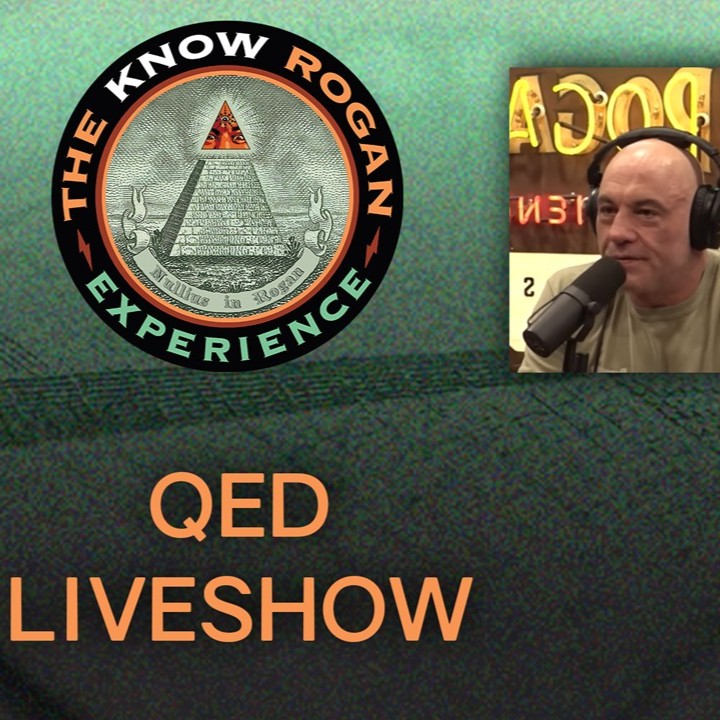
Speaker 3 On this episode of the No Rogan Experience, we tell you who we are.
Speaker 3 The No Rogan Experience starts now.
Speaker 3 All right, well, welcome to the first episode ever of the No Rogan Experience,
Speaker 3 a program that sort of has come about in a whirlwind, very specifically after the last election.
Speaker 3 So we want to talk a little bit about ourselves and then also talk a little bit about the program and see if this is the right show for you. So Marsh, why don't you introduce yourself to the audience?
Speaker 2
Yeah, sure. Thanks.
So I am Michael Marshall. I'm over in the UK, which is why I'll have the UK accent and the UK perspective on things.
And I am the editor of the Skeptic magazine.
Speaker 2 I've been a podcaster for for 15 years with a show called Skeptics with a K. And across those 15 years, several other shows, Be Reasonable and various other ones as well.
Speaker 2 And I'm also a full-time skeptical investigator.
Speaker 2 And I'm really interested in why people believe stuff that might not be true and what kind of biases lead people into those positions and how they justify those positions to themselves and to the people around them.
Speaker 2 So I was really interested to be part of this project where I actually listened to Joe Rogan and his guests tell us what they think and why they think it.
Speaker 3
So my name is Cecil Cicarello. I started podcasting a very long time ago, sort of one of the very like early podcasters, early adopters.
I started a show
Speaker 3 that kind of petered out and didn't go anywhere. And then I started a show that very specifically focuses on atheist, skeptical, political news and how it affects atheists and skeptics,
Speaker 3
specifically politics. And it's a show called Cognitive Dissonance.
And I've been doing that show for, at this point, a decade and a half.
Speaker 3 I also do another comedy show with another group of guys that also happen to be atheists and skeptics called Citation Needed.
Speaker 3 But those two shows, very specifically, for many, many years, have been sort of the thing I've been putting a lot of time into.
Speaker 3 But over the years, I've really learned a lot about how right-wing pundits sort of how they how they talk, what they have, what sort of tactics they use.
Speaker 3 I definitely see that often, you know, obviously everyone that is in politics tries to distort the truth, but I've become very good at picking out how people on the right side of the aisle have distorted the truth.
Speaker 3 And
Speaker 3 I also feel too, one of the things that's interesting about sort of my relevant expertise isn't that I'm like a professional skeptic or anything like that.
Speaker 3
I mean, I've been doing it for a while, but I don't think I'm a professional in that sense. But I also have a tie in some ways to people who believe.
I used to be a believer. I used to be a Christian.
Speaker 3
I used to be a Republican. I used to be a right-leaning thinker.
And I've thought a lot about these things over the years and I've changed my opinion.
Speaker 3
And I feel like I might be able to relate to some people who happen to be in that space. And so I think this is an interesting project for me.
So I can help sort of reach people who might be
Speaker 3
very much not. in the same sort of mindset that I am and people who might be skeptically thinking how they might think.
And so hopefully I can reach those people.
Speaker 2
Yeah. And like for me, I was never a believer.
I grew up religious in the sense I'd go to church and went to a Catholic school, but I was never really a believer in that kind of sense.
Speaker 2 But I grew up around a lot of people who would not just believe in religious stuff, but would believe in many of the sorts of things that would come up on Joe Rorgan's shawl.
Speaker 2 So that's kind of the world that I was
Speaker 2 in.
Speaker 2 In my skeptical activism, I've been a skeptical activist, as I say, 15 years.
Speaker 2 But 10 years of that, it's been my full-time job for a charity where I'm an investigator who will go along and try to essentially pick up the pieces.
Speaker 2 When pseudoscience and health misinformation actually has an effect on the choices people make, when they're told this is the cure for you, this is the thing that will heal your illness.
Speaker 2
When that stuff doesn't work, people are left in pretty bad situations. And that's kind of where I come in in my day job.
So watching how people come to believe in those things that aren't true.
Speaker 2
gives me a sense of like this stuff isn't just hypothetical. This isn't just like mucking around throwing around ideas ideas in a vacuum.
This has a real downstream effect.
Speaker 2 And so that's one of the reasons I'm really interested. And I guess the other thing that I think is
Speaker 2 relevant to what we want to do here is for most of the last 15 years, intermittently on and off, I've hosted a show called Be Reasonable, which is a very unusual show in that I have interviews with people I completely disagree with.
Speaker 2
But those disagreements, I work very hard to make sure they're very civil. disagreements.
I try,
Speaker 2 rather than try to have an argument and win an argument and show how smart I am and how stupid they are or anything like that, I try to actually understand, well, why do you think that?
Speaker 2
Tell me about you. Tell me what you think.
Convince me, but we'll also, we'll just have a proper conversation here. This won't just be shouting back and forth.
Speaker 2 This is about actually trying to close that gap. And I think that's kind of what I want to try and bring to this show as well is that idea of the people who are
Speaker 2
following Joe Rorgan into certain ideas. I'm going to disagree with those ideas.
I'll even disagree with some of those people, but I want to try and understand them.
Speaker 2 I don't want to just kind of write them off or assume that they're lesser than or anything like that.
Speaker 3 So, why did we decide to do this, Marsh?
Speaker 2
Yeah. So, for me, like Joe Rogan, he understandably styles himself as like an everyman, he's counterculture, he's an outsider.
And I totally understand that that's how he sees himself.
Speaker 2 That's certainly how his show started. But it's now, like, the truth is, it's now so much larger in terms of audience size than many mainstream broadcasters, mainstream publications.
Speaker 2 There are TV channels who could look at his viewing figures with envy.
Speaker 2 So people definitely pay attention to Joe, but they also definitely listen to what he has to say.
Speaker 2
They listen to what his guests have to say. And that exerts an influence.
And I don't think Joe is really
Speaker 2
always upfront with himself about how much of an influence he has. He'd like to sort of play it out as, well, I don't know.
I'm just mucking around.
Speaker 2 And he may be mucking around, but he's got an influence there. And with an influence of that size, you should expect and require scrutiny and accountability.
Speaker 2 And I think that's what this show for me is here to do.
Speaker 3 I also saw, you know, very, I would say in the last several years,
Speaker 3 probably
Speaker 3 I would say since 2016, we've seen sort of a rise of sort of this group of people who have rejected a lot of,
Speaker 3 you know, and there's no other way to call this like sort of woke ideas, right? There's been this sort of push from a lot of people that have sort of rejected these ideas, these ideas of empathy.
Speaker 3 And Joe has captured a lot of these people. And in a lot of ways,
Speaker 3 he's taking and he's laundering these ideas and getting people to go down these very problematic rabbit holes. He's taking people.
Speaker 3 You know, we heard this term a lot in the last election, this sainwashing is a term we've been hearing quite a bit, where people will say, well, Trump is, the media is trying to sainwash Trump.
Speaker 3 And in a lot of ways, Joe is doing that for a lot of his guests.
Speaker 3 He's making it seem like some of the things they're saying aren't problematic and some of the things they're saying aren't just outwardly untrue.
Speaker 3 And it gives his guests a sort of sheen of credibility that he is giving to them. And that's really something that's that we need to pay attention to.
Speaker 3 And I also think the other real important part here is that a lot of people are mistaking informal conversations on Joe's podcast for real, true, actual information, like news.
Speaker 3 They are listening to this and they are thinking, this person said something about this. You know, one of the first episodes we're going to do is an episode about the banking industry.
Speaker 3 They're going to hear this and then they're going to repeat it.
Speaker 3 And it will be repeated in news sites as if it is news and it hasn't been fact checked, hasn't been run through the rigors of journalism.
Speaker 3 And instead, what it is, is just someone saying something on a podcast in a free foreign conversation that we as media consumers are mistaking for news. And I want to try to put a stop to that.
Speaker 2
Yeah. Yeah.
I completely, completely agree.
Speaker 2 And I think the other thing is more and more the world is kind of siloed into what information we listen to which channels we tune into what shows we watch there's not often as much um you know back in the day you had tv channels radio channels and everybody would watch a handful of those but these days everything is so split now everything is so kind of individualized almost that you can choose your version of reality and never have to have that bubble uh challenged in any way
Speaker 2 and i think joy is in a way for me doing some of that he's building a bubble around around him and that's reflecting back on him his ideas, but not necessarily other people's ideas.
Speaker 2
And I think it's really, really important that we step outside of the bubble. We listen to things that are from outside of our bubble.
We listen to arguments that we wouldn't normally seek out.
Speaker 2 And it's also important that people know what other ideas are out there.
Speaker 2 So they're also kind of aware of things. And I think it's really, really important that they, us, everyone, tries to figure out if they're wrong, why they're wrong.
Speaker 2 Like why are the ideas out there wrong? and why are our own ideas wrong? If it turns out that I'm wrong about something, I want to know that and I'm going to try to seek out places to do that.
Speaker 2 And I think it's important that we all try and do that. So listening to what other people have to say is a crucial first step in that.
Speaker 3 So I want to talk for a second about what this show is not. And I think very specifically, this is a review of a part of Joe Rogan's shows for the week.
Speaker 3 We will listen to one episode and then we will do some tape, listen to some tape about that episode and talk about that episode. But it's not an exhaustive review of everything Joe says.
Speaker 3
Joe puts out an immense amount of tape. There's no way we could cover all that.
So we want to make sure that people know this isn't everything Joe says.
Speaker 3
So if you ever are listening and think, oh, you guys missed this episode. No, we didn't miss the episode.
We just don't have enough time in the day to cover all of Joe's tape.
Speaker 2 Yeah, that said, if anyone does think we've missed an episode that is worth covering, by all means, let us know because we're not listening to every single Rogan episode.
Speaker 2 We're dipping in to see which ones we think are worthwhile.
Speaker 2 If there's an absolutely vital conversation that goes on in the middle of an episode we think is innocuous enough not to not to pay attention to, by all means, let us know.
Speaker 2 But I think the other thing this show isn't, and I think this is pretty key, is it's not a roast. It's not a mockery.
Speaker 2 This isn't us just listening to Joe Rogan and then taking the piss, just looking for opportunities to take the piss. That'd be an easy thing to do.
Speaker 2 And, you know, there'll be times we'll do a little bit of that.
Speaker 3
I'm going to probably do a little of that, Marsha. I'm warning you ahead of time.
Yeah, of course.
Speaker 2 And that's natural, right? Because we're going to disagree with some of these things. But first and foremost, we do genuinely want to know what Joe and his guests are actually talking about.
Speaker 2 And, you know, I, you, we both want to be very fair to them. We want to be as fair as possible, but we also want to understand and be able to explain when and if they get things wrong.
Speaker 2 So we're going to try and be fair.
Speaker 2 We're going to take the piss a little bit here and there, just naturally, but it's not the jokes and the comedy and the roasting and the insulting is not what we're here primarily to do.
Speaker 2 We're here to try and understand and explain first and foremost.
Speaker 3
Yeah, but we will enjoy doing that occasionally. I 100% enjoy it.
I also want to say, too, we are human beings. And so we will have biases.
Speaker 3 100% everyone in the world you run into has biases and we will have biases. We are going to try to be open-minded.
Speaker 3 But, you know, there's a skeptical saying, we're not going to be so open-minded that our brain falls out of our head.
Speaker 3 So we're going to do our very best to try to be open-minded, to listen to the people who say certain things, and then sort of talk about
Speaker 3
what kind of conversations they're having and what we think is true and what is untrue. But genuinely, those biases are going to come up.
I'm not going to apologize for my own biases.
Speaker 3 I genuinely have them. I'll try to be aware of them, but
Speaker 3
you don't need to send me a message and be like, you're biased. I know I'm biased.
I will tell you 100%. I'm biased.
Speaker 3 I'm going to do my best to try to keep those in check, but they are there and I have to contend with them. Yeah, yeah, completely.
Speaker 2 Absolutely.
Speaker 3 So, Marsh, who is this show for?
Speaker 2 So I think there's a few different people that this show is for.
Speaker 2 First and foremost, I think anybody who wants to know what Joe Rogan, you know, one of the most influential media figures in the entire world, if you want to know what he's saying and what he's showcasing, what his guests are saying, what's on his platform, but you haven't got the time or the inclination to listen firsthand, we're here to do that for you.
Speaker 2 We're here to actually pay attention and to tell you what's happening so you can be informed about what's going on in this incredibly influential space.
Speaker 2 And that'll be for people who might naturally disagree with Joe Rogan, but don't have the time and the energy to spend their time listening to a lot of stuff they disagree with.
Speaker 2 But we also want to be approachable to people who might like Joe Rogan, who might be a regular listener. They might really love Joe Rogan and agree with a lot of what he has to say.
Speaker 2 Because a lot of his audience will acknowledge that sometimes Joe will say stuff or will allow things to be said that aren't true, that aren't well-evidenced, that aren't reflective of the best version of reality.
Speaker 2 And for any of Joe's listeners who are open-minded enough to actually want to know what those things are, who are curious enough to know where Joe's wrong and why he's wrong, and to know what the truth might be.
Speaker 2 That's kind of who we also want to have listening to us as well.
Speaker 2 So the open-minded, curious Joe Rogan listener who's willing to hear the other side in a way that will that might challenge them, but they're willing to actually hear that challenge out.
Speaker 3 Well, we hope you join us for this experience because we're going to be experiencing with you.
Speaker 3 We don't have a deep knowledge of Joe Rogan. Both of us have listened to many clips, but we've never really dug into many episodes.
Speaker 3 So far, we've listened to a few and we're looking forward to this journey with you. So we hope you join us on it and we'll catch you on the next episode.
Speaker 3
If you love the show, please rate and share it. If you want to get in touch with us, become a patron or check out the show notes, go to knowrogan.com.
K-N-O-W-R-O-G-A-N.com.