Episode 239: Blank Pages
Order The Memory Palace book now, dear listener. On Bookshop.org, on Amazon.com, on Barnes & Noble, or directly from Random House. Or order the audiobook at places like Libro.fm.
The Memory Palace is a proud member of Radiotopia from PRX. Radiotopia is a collective of independently owned and operated podcasts that’s a part of PRX, a not-for-profit public media company. If you’d like to directly support this show, you can make a donation at Radiotopia.fm/donate.
Music
- The Lady With the Golden Stockings from the Sun Ra Arkestra
- The Sage from the Chico Hamilton Quintet
- Falling in Love with a New York Pigeon by Birb
- Bocherini's fourth quintet as performed by the Ensemble of St. Martin of the Fields
- From a Dream by Oregon
- Jaybird from the great Charlie Parr
- Pool of Love by Les Baxter
- And House Tuner Theme from Will Bates' gorgeous score to The Sound of Silence.
Learn about your ad choices: dovetail.prx.org/ad-choices
Press play and read along
Transcript
Speaker 1 This episode of Memory Palace is brought to you by ExpressVPN.
Speaker 1 Going online without ExpressVPN is like scuba diving in a suit made of meat, which is a great idea if you are trying to meet a lot of sharks. There are sharks in the water, people.
Speaker 1 These are data-stealing sharks.
Speaker 1 Every time you are out and about in the world and you connect to an unencrypted network, you're at a hotel, a coffee shop, in some office waiting room, and you realize you've just got to take care of that one little quick thing.
Speaker 1
And lo, there's free Wi-Fi. Anytime you do that, some some shark, a hacker, a fraudster, they are the sharks in this metaphor, can get access to your computer.
It can get bad fast.
Speaker 1 ExpressVPN is an easy way to protect yourself. It is like putting a shark cage, a secure encrypted shark cage around you and your computer.
Speaker 1
ExpressVPN is easy, works on all devices, it is a simple app. You are just a click away from online security.
And it is cheap, cheaper than ever actually, with plans starting at just $3.49 a month.
Speaker 1 And I literally just spent that on a Diet Coke, which is going to do nothing for my online security.
Speaker 1 Now I have to admit, I kind of used to think that VPNs were for nerds like, oh, you have a virtual private network. You must be doing some important coding.
Speaker 1 But once you start to notice just how often you are connecting to an unsecure network, you realize that VPNs are really for anyone.
Speaker 1 Secure your online data today by visiting expressvpn.com slash memory. That's exp r e s v p n dot com slash memory to find out how you can get up to four extra months expressvpn.com slash memory
Speaker 1 this episode of the memory palace is brought to you by our friends at factor
Speaker 1 the other day Felt like a Tuesday. I was sitting there thinking about the week ahead, thinking about how I was going to organize the rest of my week to get everything I needed to get done.
Speaker 1
And then I realized it wasn't a Tuesday, it was a Wednesday. And that, my friends, is this time of year in a nutshell.
There is simply too much to do all the time. Just too many things.
Speaker 1
You've got your urine projects, you've got holiday shopping, you have travel and big meals to plan. And this is where Factor comes in.
These are easy meals.
Speaker 1 These are delicious meals, chef-prepared, dietitian-approved. They are ready in just minutes, and there is so much choice.
Speaker 1 Why spend so much time during the week worrying about what you're gonna eat when once a week, this is how I like to do it with Factor, you look at this terrific ever-expanding menu.
Speaker 1 And it's not just going to take things off your plate while putting easy, delicious meals onto your plate.
Speaker 1 It will take the work out of eating the way that you want to eat, whether that is keto, or vegetarian, or Mediterranean, whether you're trying to cut calories, whether you are shifting to GLP-1-friendly meals.
Speaker 1
Factor is the way to go. They have premium seafood choices at no extra cost.
They have a whole new array of Asian-inspired meals. Eat smart at factormeals.com/slash slash memory50off.
Speaker 1 Use code memory50off to get 50% off your first box plus free breakfast for one year. That's code memory50off at factormeals.com for 50% off your first box plus free breakfast for one year.
Speaker 1 Get delicious, ready-to-eat meals delivered with Factor. Offer only valid for new Factor customers with code and qualifying auto-renewing subscription purchase.
Speaker 1 Hey folks, before we get started, I just wanted to say that we are heading to the very end of our annual Radiotopia fundraiser, the time once a year when I ask you to support the show directly.
Speaker 1 The show survives and thrives because of listener support. This network is unlike pretty much anything else out there in this landscape of corporate-owned podcasts and venture capital-backed networks.
Speaker 1 We are all independent artists just trying to make our shows and our art work.
Speaker 1
And you guys do that. If you are in the mode of making your year-end contributions, if you would like to contribute to this show, please do.
Visit radiotopia.fm slash donate.
Speaker 1 This is the Memory Palace. I'm Nate DeMayo.
Speaker 1 Ponce de León was born to a time of blank pages.
Speaker 1 His first breath was drawn in a Spanish village called Santervas de Campos at some point between 1460 and 1474.
Speaker 1 Which means that at the time of his last breath, which was drawn in July of 1521, he was 47 years old, or maybe he was 61, or maybe he was somewhere in between.
Speaker 1 There will likely never be any definitive proof that could settle the matter.
Speaker 1 However, many of the things that he did during his years on Earth, however many years those were, were well documented.
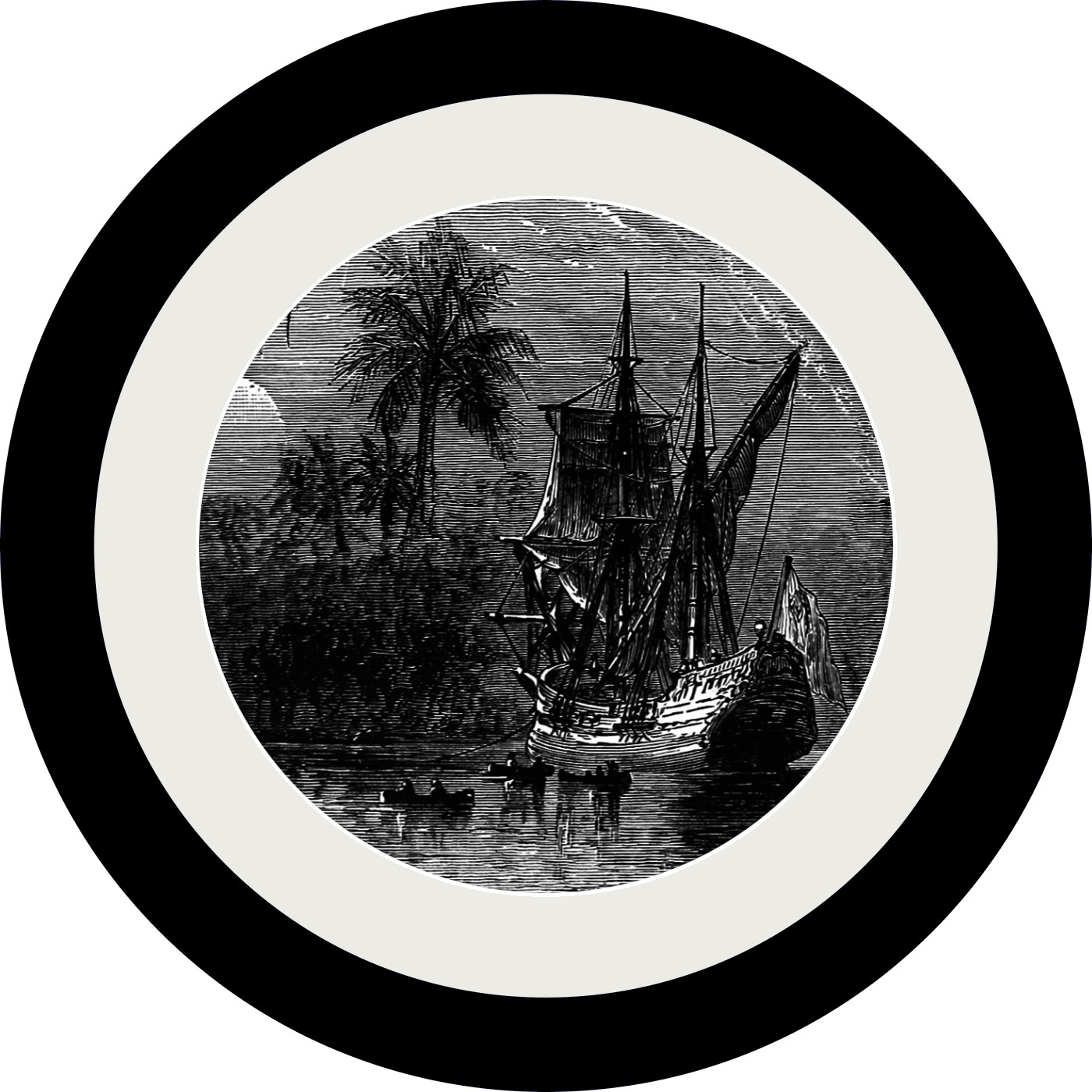
Speaker 1 The pages in the story of his life begin to fill in in 1493, when he arrives in the Caribbean as a member of Columbus's second expedition.
Speaker 1 Christopher Columbus returned to Spain in Ponce de León, stayed in the New World, and stayed in history's spotlight for much of the rest of his life.
Speaker 1 That spotlight finds him thriving in the New World, largely on the strength of his ability to make sure the people that were there before he'd arrived did not.
Speaker 1 His first big colonial appointment was given to him as a reward for crushing a rebellion of the Tajano people
Speaker 1 who were native to the islands that had just been claimed in the names of Ferdinand and Isabella of Spain.
Speaker 1 Before long, the royal couple had commissioned De Leon to conquer the rest of those people and enslave them. He soon put them to work and often to death, planting farms and famously digging for gold.
Speaker 1 He did such a good job forcing people to do jobs that when word of more islands not far off to the northwest trickled back to Spain, Ponce De Leon was tapped to lead the expeditions to what we now call Florida because he called it Florida.
Speaker 1 And he spends the next several years on this project, first just kind of sussing things out, making some maps, some late exploration, encounters with the local population, typically violent ones.
Speaker 1 There was a tribe the Spanish history is called the Calusa, who from the moment they first saw the Spanish wanted none of it, and kept repelling De Leon's attempts to trade or settle or even just to come ashore.
Speaker 1 They were a real thorn in the side of the Spanish, heroically so, in those earliest years of contact between Europe and the indigenous peoples of North America.
Speaker 1 The Calusa do not exist anymore as a tribe. Their story ends in blank pages.
Speaker 1 De Leon's story shifts again to the Caribbean, where he is called back to Puerto Rico to do what he did best and crush a rebellion from the native population.
Speaker 1 During that period, the Spanish pretty much left North America alone. But in 1521, De Leon headed back to formally colonize Florida.
Speaker 1 Lots of ships, lots of weapons and supplies, lots of men, not just soldiers, but farmers and carpenters and priests.
Speaker 1 It was a big deal and a high priority for the Kingdom of Spain, but despite that, there is very little documentation that remains from this period.
Speaker 1 De Leon kept trying to establish a proper colony and kept failing, though historians aren't entirely sure why.
Speaker 1 There are just these years when he is in the swamps and woods of Florida, wandering around in the shadows of cypress trees and black mangroves.
Speaker 1 What he was doing there on a day-to-day basis, what he thought, who he was there in the shadows, It's largely unknown.
Speaker 1
But one day in July of 1521, he was shot in the neck by a Calusa arrow. His men took him back to Havana to recover.
We know that he didn't, but we don't know much about any of it.
Speaker 1 Just that he died at the age of 47,
Speaker 1 or maybe 61,
Speaker 1 and that is the end of his story.
Speaker 1 But when there are a lot of blank pages in one story,
Speaker 1 other people get to fill them in.
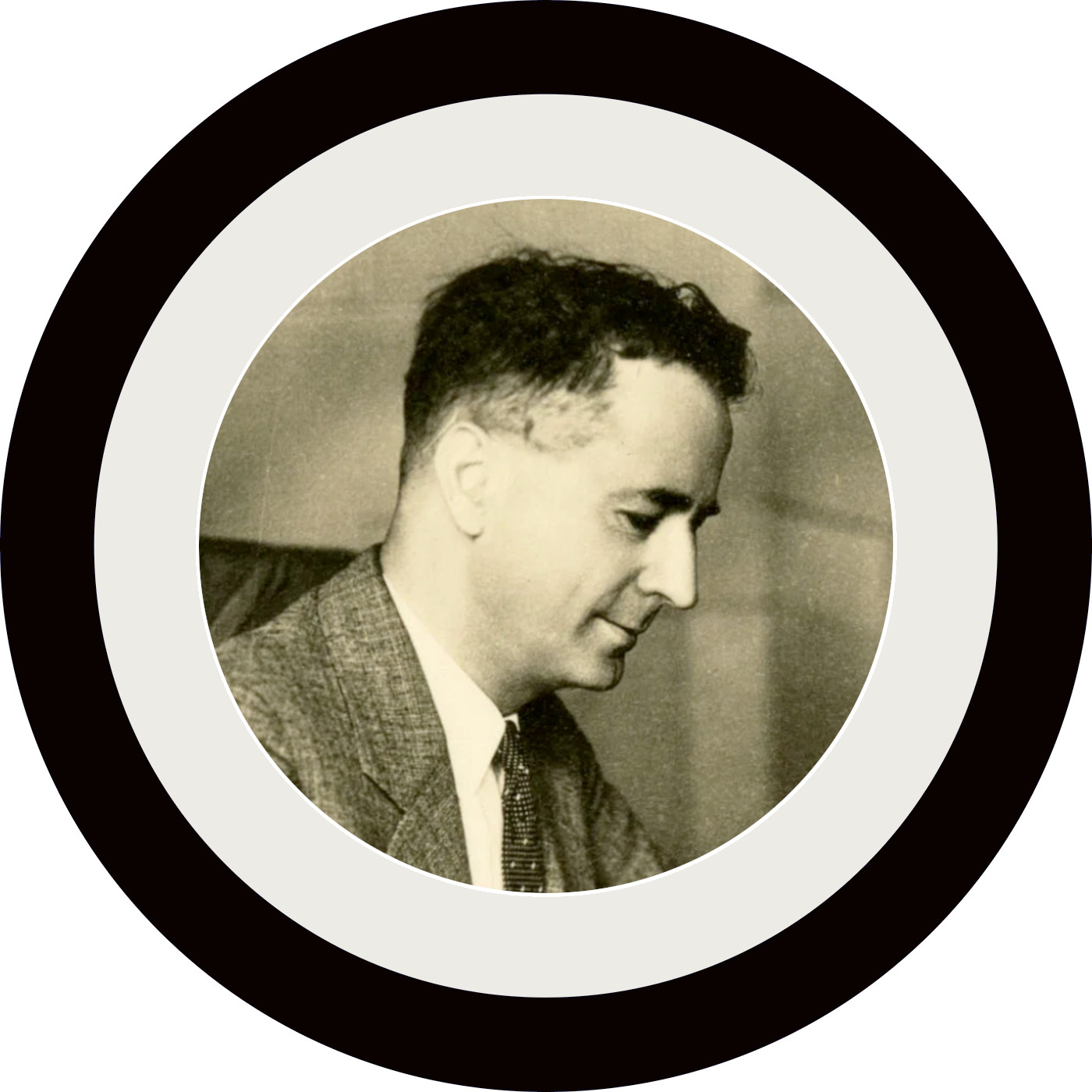
Speaker 1 A little more than a decade after De Leon's death, a man named Gonzalo Fernandez de Oviedo y Valdez kind of went to town in those pages.
Speaker 1 The Spanish government had put him in charge of writing an official history of the then previous 25 years or so since Columbus had arrived in the Caribbean.
Speaker 1 And that thing about Ponce de León, that you probably know if you know anything about Ponce de León, that thing about this conquistador wandering through the woods of Florida searching for the mythical fountain of youth, this guy completely completely made that up.
Speaker 1 It seems the writer was settling a political score. And so he set up De Leon to look kind of nuts.
Speaker 1 Because the fountain of youth was not only not a real thing,
Speaker 1 no one really thought it was. So even in the early 16th century, people in Spain were reading this history about what had been happening in the Caribbean, and they get to the De Leon part.
Speaker 1 and this whole thing about the fountain of youth and they're like what deleon that's bananas It's like you run into a friend from high school and you said, whatever happened to our old French teacher?
Speaker 1 She was such a nice lady and then your friend says, oh, you didn't hear? She's been searching for Bigfoot.
Speaker 1 Given the opportunity to shape De Leon's story, this writer decided to make the guy look like an idiot to the people back in Spain, a superstitious rube bumbling about the New World until he caught an arrow in the neck.
Speaker 1 And of course that version shaped De Leon's story for the rest of the world too, particularly here in the United States, particularly among those in charge of shaping the American story and its textbooks in the 19th and much of the 20th century.
Speaker 1 Folks who were really into firsts, first people to discover things that tons of other people already knew about, or invent things that they didn't really invent, or at least not as some lone genius, you know the drill.
Speaker 1 And these people and these histories turned Ponce De Leon into a sort of proto-founding father somehow, supposedly founding Florida while not finding a fountain he never actually looked for.
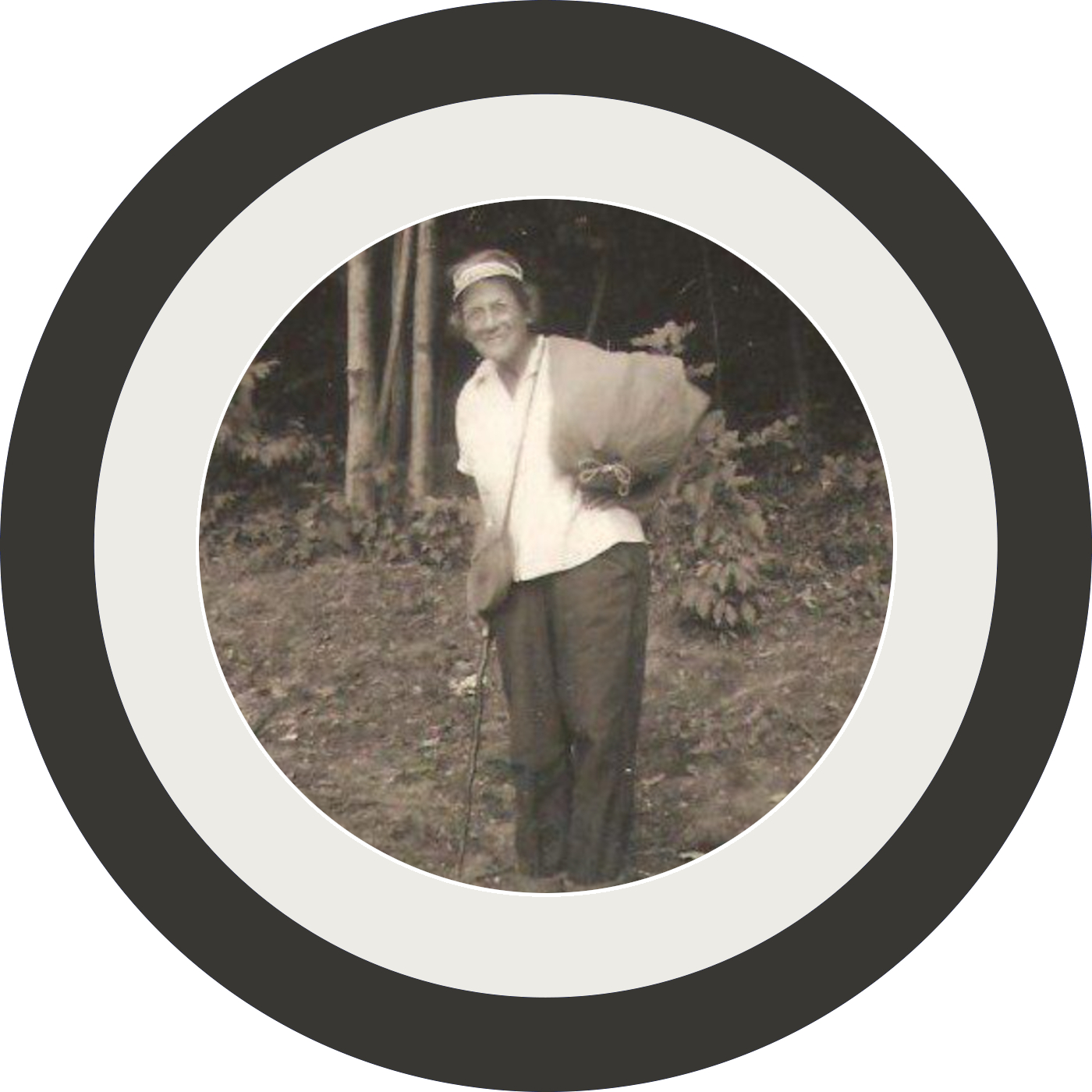
Speaker 1 Luella McConnell was born into a time of blank pages.
Speaker 1 She drew her first breath in Baltimore, maybe in 1858, maybe in 1870, making her 56 or possibly 69 when she drew her last, right as or right after the car she was driving smashed into a tree on the road to Island Grove on the evening of June 23rd, 1927, 406 years nearly to the day after Ponce de Leon got shot with an arrow at a spot about three and a half hours away down Route 75, depending on how bad traffic is in the Tampa-St.
Speaker 1 Pete area.
Speaker 1 Much had changed between Ponce's time in Florida and Luello McConnell's, not the least of which was that Florida had since, of course, become part of the United States of America.
Speaker 1 And in America, at least the one that Luella McConnell was born into, born to as a white person in 18 whatever, you get to fill in your own blank pages. If you were bold enough, anyway.
Speaker 1 Luella McConnell became a doctor, which was an extraordinarily rare thing for a woman then. Nursing, even, hadn't yet become a field that was widely open to women.
Speaker 1
But she got her degree at the University of Iowa, and then practiced for years in Chicago. Or so it seems.
There's little in the historical record to confirm the details.
Speaker 1 She was apparently particularly good at setting bones, though we don't know if that's true.
Speaker 1 She supposedly founded and operated her own hospital for a time, quite successfully, again, supposedly, because again, blank pages.
Speaker 1 And all of this might have been enough for McConnell to grab history's attention, if briefly, if only as a footnote, or fun fact, this lady doctor ahead of her time.
Speaker 1 But then she decided to leave that life behind.
Speaker 1 She went to Alaska, seeking adventure and gold in 1898,
Speaker 1 traveling alone save for a trusty Saint Bernard.
Speaker 1 She got married when she was up there to a hotel owner, made some money and poured it into mining investments, some of which did quite well, one of which made her the first woman in the Yukon territory to own her own gold mine.
Speaker 1
It's there in the historical record. She wrote a memoir of her time in the north.
It is filled with adventure, trials, tribulations, triumphs, and a bunch of lies.
Speaker 1 Readers then and now have found all manner of fabrications. So many big details are verifiably false that it makes all the little ones at least a little suspect.
Speaker 1 But I suspect Luella didn't care.
Speaker 1 She went north to do that most American of things, to reinvent herself. And like so many Americans before and since, Her reinvention included a lot of inventing.
Speaker 1 For most of America's history, all of that history that preceded the invention of things like social security numbers and faxes and cell phones and social media feeds and digital footprints, you could show up somewhere where no one knew you and fill in the blank pages with whatever story you wanted to.
Speaker 1 Luella McConnell made up much of her life story
Speaker 1 and then made a life out of it.
Speaker 1 And she made a lot of that life by making stuff up about Ponce Dillion.
Speaker 1
Luella McConnell showed up in St. Augustine, Florida around 1904.
Showed up alone. No one was quite sure what happened to her hotelier husband.
Speaker 1 Showed up with a diamond set into one of her two front teeth. Showed up with a bunch of cash and spent it on a plot of land in the coast with a white sand beach and a natural spring.
Speaker 1 And before long, she had set up a visitor center and a gift shop, and signs pointing to where they could drink from Ponce Deleon's famous fountain of youth.
Speaker 1 Soon she was also claiming that a tree had fallen down on her property, revealing a large cross made of white stones that Ponce de Leon had placed to thank God for leading him to the fountain of youth.
Speaker 1 She also found a metal salt container engraved by Columbus, given as a gift to his buddy Ponce, and a piece of parchment that contained a first-hand account of the Spaniard finding the famed Fountain of Youth right there on that spot that she happened to own.
Speaker 1 She charged people to drink from the spring.
Speaker 1 And for postcards of the spring and of the Columbus gift and the parchment, which was useful because the gift went missing, and the parchment mysteriously faded beyond legibility, faded into a blank page.
Speaker 1 But the cross was there. It was probably put there by McConnell herself, but it was there.
Speaker 1
And that was good enough. Some visitors believed the stories.
Some visitors didn't.
Speaker 1 Their nickels were worth five cents either way.
Speaker 1 Luella McConnell, Diamond Lil as she came to be known, spent her remaining years, too few, you'll recall the other damaged tree in this story, building out this tourist attraction.
Speaker 1 She spun a bunch of other stories while doing so, some in benign, all-American, self-mythologizing tradition, said she was a descendant of Napoleon, that sort of thing.
Speaker 1 Others were a little more suspect, more conspiratorial, more paranoid, likely delusional, but who can say for sure?
Speaker 1 And like she had done with the gold mine thing, she cashed out on a high and sold off this regular old spring that she said was the fountain of youth to the first of what ultimately has been a number of companies that continued to claim that same thing on a shifting spectrum of straight-faced and winking.
Speaker 1
It is still there. It is worth a visit.
It has displays about the indigenous people who lived on that land, and about an actual Spanish settlement that archaeologists discovered in the 20th century.
Speaker 1 It also has dioramas of Ponce de Leon discovering the fountain of youth, which are simultaneously terrible and fantastic.
Speaker 1 She sold it about eight years before the accident that ended her extraordinary life.
Speaker 1 Spent those last years there in and around St. Augustine.
Speaker 1 A town that was just booming in that period right before her death, with hotels and resorts popping up all the time.
Speaker 1 Thanks, in no small part, to the attention and the tourists that the story she told about Ponce de Leon brought to that corner of Florida.
Speaker 1 She may have, in fact, played a more pivotal role in the state's history than that guy ever did.
Speaker 1 You know what? Let's just call it.
Speaker 1 She's more important than Ponce de Leon.
Speaker 1 He is not around to tell us otherwise.
Speaker 1 This episode of The Memory Palace was written and produced by me, Nate DeMayo, with research assistance from Eliza McGraw, in December of 2025.
Speaker 1 When Radiotopia, the network of independent, artist-owned, listener-supported podcasts of which this show is a proud, proud member, is having its annual fundraiser.
Speaker 1 If you would like to support what I do here at the Memory Palace, if you would like to help this odd little place that I have built and so many of you listening have come to over and over again over the years to spend some time,
Speaker 1 You can make a donation at radiotopia.fm slash donate.
Speaker 1 If you are looking for a terrific gift for literally anyone over, I don't know, say the age of 10-ish,
Speaker 1 depends how precocious they might be, then look no further than my book, The Memory Palace, True Short Stories of the Past, available anywhere you get books.
Speaker 1 I prefer one's local bookstore, but you do you. Now, this is, of course, a promotional statement, but I kind of believe this.
Speaker 1 When pulling the stories together for the book and writing new ones and writing this whole series of memoir-based stories that I keep hearing from readers come up as this kind of stirring surprise toward the end of the book,
Speaker 1 I did so with the thought,
Speaker 1
the hope really, that this would be a gift. That this book would be beautiful enough and special enough and fun enough that you would want to share it with someone.
put it under the tree.
Speaker 1
Hand it to them as a host gift at a New Year's Eve party, or for Hanukkah. And that someone would be kind of anyone.
So buy it wherever you get your books. And let me know how that goes.
Speaker 1 If you have the book yourself, if you have already given it to someone else, maybe tell that story on social media and help spread the word.
Speaker 1 Tell me all about that, or tell me about whatever you want to, by sending me an email to nate at theememorypalas.org, or through Instagram or threads at thememorypalace podcast, or on Facebook at thememory palace.
Speaker 1 I'm also on Blue Sky at Nate DeMayo, and I will talk to you again soon.
Speaker 1 Radiotopia
Speaker 1 from PRX.